By T.C. WORLEY
Before my trip to Chile this year, where I worked as a journalist covering the Wenger Patagonian Expedition Race, I searched for a set of trekking poles with three specific characteristics: Durability, lightweight, and “compactability” for stowing away when not in use.
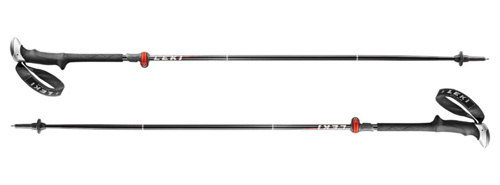
Originally designed for the climber and mountaineer Ueli Steck, Leki’s Micro Poles looked like a fit for the task. Available starting this summer (GearJunkie got a pre-release test pair), the $150 poles have high-strength aluminum shafts and a carbide tip.
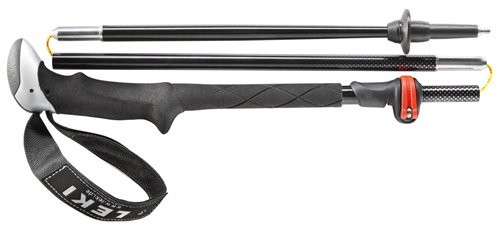
What makes them most unique is the poles’ three-part shaft, which breaks apart and connects with a thin cord similar to the way tent poles are hooked together. The result is a super packable pole that breaks apart to make a package that’s just 15 inches long. This small storage size makes stowing them away inside a backpack or lashed to the outside not a problem.
At about 9 ounces per pole, the Micros are light though not the airiest model on the market. But the stout aluminum shafts are in many scenarios worth the extra ounce or two. (See GearJunkie’s misadventure with a lighter, carbon-shaft pole in the post “Breaking Point: Trekking Pole Test.”)
Despite a sturdy build, I did bend one Micro pole slightly after repeated abuse — and many miles trekking in mountains and in swamps — in the Patagonian wilderness. Another abuse story: On the trek, when my pole baskets sunk into the mud, I found that the locked-together pole segments would separate slightly and “thunk” back together in place once freed from the mire. This was merely an annoyance, not a performance issue.
The poles’ simple, lightweight design demands that some features be eliminated. For one, the Micros are not height-adjustable. They are offered in three fixed-length sizes — 110, 120, and 130cm. Another thing: There is no built-in shock absorption with the pole, a feature some people may miss (but I did not).

In the end, the good far outweighed the ill with these poles. They lived through Patagonia, one of the toughest gear-test environments on the planet that indeed snapped other trekkers’ poles in two. With a simple design, durability and relative light weight, the Micro poles are a good pick for people in need of durability on weekend hikes on up to mission-critical, fast-and-light outdoors feats.