With the promise of a “new benchmark” in the world of products made for sleeping outdoors, this spring Sea to Summit unveiled a line of down-insulated sleeping bags, the company’s first foray into the space. The line, which includes four categories and nine sleeping bag models, is not just another average range — the bags in the series include neat new tech like nano treatments for water repellency, silicone-encapsulated fibers for moisture control, as well as top-quality, 850+ loft European goose down.
Says the company founder, Tim Macartney-Snape, in a document on the bag line, “I’ve owned many different sleeping bags but I’ve never been entirely happy. . . they’ve always suffered a few inadequacies.” Macartney-Snape cites snagging zippers, poorly-fitted hoods, cold spots, “day-to-day growing dampness” of the down, and difficult drawcords as the culpable causes for many bags’ underwhelming performance in the field.
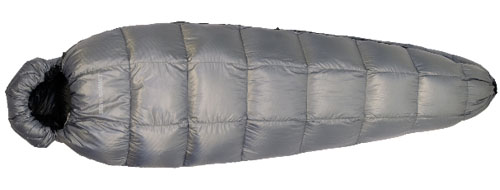
The company’s new sleeping bag line attempts to remedy the above concerns as well as offer a spread of trail- and expedition-ready down bags for a variety of environments.
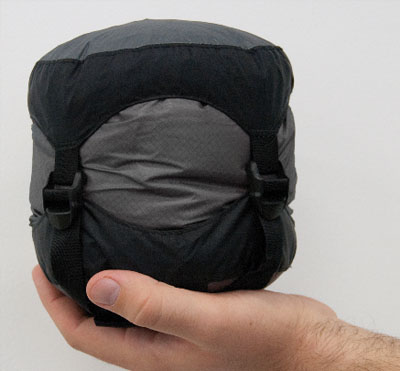
I tested one of Sea to Summit’s ultra-light models, the Micro MC III, on a recent expedition in New Zealand. It has a “lower limit” temp rating of 28 degrees F, which is based off the EN13537 Temperature Rating System, a European standard for sleeping bag temperature ratings. (Barry Robertson, a representative for Sea to Summit, cited the bag’s 28-degree “lower limit” rating as applying to the lower comfort range for an average adult male.) All this warmth came in a 1.5-pound bag that packed approximately down to the size of a small melon.
In the past, for climbing trips and expeditions, I have long been on the fence in the down-versus-synthetic insulation debate. Down bags are warmer, lighter, and more compressible, but they also require more maintenance on the trail or mountain — if they happen to get wet they become almost worthless. Sea to Summit’s new sleeping bag shell material — the 2D Nanoshell technology, cited as the “lightest, most breathable water-resistant shell” available — would have to seriously stand in and help in New Zealand’s famously rainy environment.
In my test, the 2D Nanoshell tech — which is a proprietary, nano-based dwr (durable water repellent) treatment — did indeed keep the bag breathable while still maintaining water resistance to keep the down insulation inside dry. I have found that moist down tends to be the big negative feature of many bags, as the sleeper’s body moisture eventually turns the whole bag a bit soggy after days of use. It is not at all uncommon, in my experience, for a down bag to sleep much colder at the end of a trip than it did at the beginning.

I tested the bag during an expedition in Fiordland on New Zealand’s South Island, including a weeklong pack-rafting and exploration trip into one of the wettest and most humid environments on earth. I was thrilled with the bag’s light weight and packability, and I took care to keep it safely packed in a dry bag during the day. The temperatures hovered near freezing after the sun set, but I stayed cozy and dry night after night. The bag never seemed to take on any of the abundant moisture that hung in the air.
Bonus: The Micro MC III bag has a drawstring closure at the feet, allowing the user to open the foot area without unzipping the bag. This is made to help regulate personal temperature without exposing the core of the body to cold. It also allows the bag to breathe better when the temps are warm. For the warmest temps, you can unzip the bag fully to turn it into a duvet.


Overall, I was impressed with the Micro MC III. I have very few criticisms except for the price — at $419, the bag is not a bargain item. But in my use, the bag functioned as advertised — which is to say a bit amazingly. Its down insulation stayed dry, despite rain and rafting adventures. It kept me warm on the damp, chill New Zealand nights.
—Jason Magness is a founder of the YogaSlackers. He raced on Team GearJunkie.com in the 2010 and 2011 Wenger Patagonian Expedition Race.