Upstart Company to make Sports Helmets out of Wood
August 24, 2011, 2:43 pm / Categories: Technology, Water & Boats
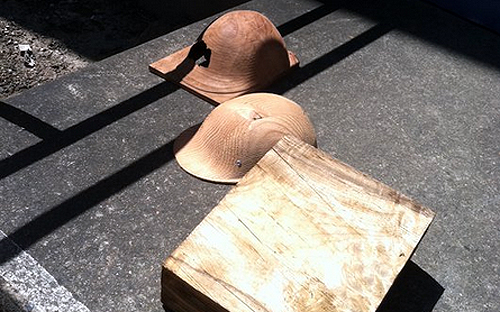
Handmade in Oregon, a new line of sports helmets will eschew plastic and composites as protective shell material and instead rely on old-fashioned wood. Coyle Wood Design is run by Dan Coyle, a man with a personal interest in woodworking and outdoors sports. In the past, Coyle has built his own clothes, gear, paddles, helmets, and even eyeglasses by hand. With the helmet project, which will launch later this year, Coyle hopes to introduce a natural alternative to an industry dominated by ABS plastic and foam.
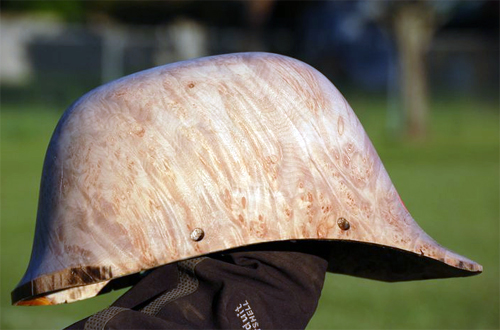
Coyle says he has spent significant time climbing, paddling, mountain biking, surfing, and canyoneering, and he has worn a plethora of different helmet types. His first wood prototypes were made for fun with a chainsaw and various hand tools. This year he got more precise with CNC machining tools, and he recently acquired a patent-pending status for “natural fiber helmet shells” products.
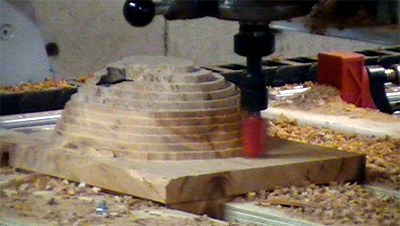
Coyle Wood Design has now built about 20 prototypes, and the outfit sees its wood line growing to include biking, paddling, snow sports, equestrian, and climbing helmet models. The process begins with prepping the pieces of wood and then CNC machining them for an hour or more. Coyle and his partners then take the “helmet blank” that the machine creates and begin a process of hand building, during which they are able to customize each helmet shell and change the profile shape or style.
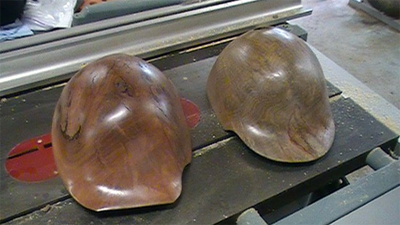
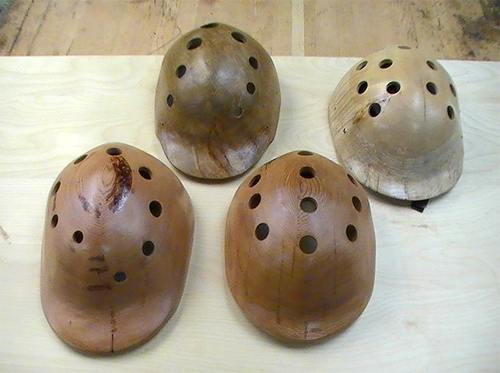
Coyle and his team can change the brim, size of venting holes, helmet shape, and then add burned-on engravings to customize the helmet. “We hope that this will come to be recognized by folks as being as novel and exciting as the wood construction itself,” he said.
Safety and performance is a “huge subject” for the startup, Coyle said, and the company has a priority to validate its products. The company will seek certification in various sports (CE, Snell, CPSC) to assure safety of each helmet design.
For now, Coyle is working with the Oregon State University Wood Science and Engineering program to do impact studies with various materials. Based on existing material science data, Coyle said he believes he will be able to show that wood is a more effective energy-damping material than ABS, Mylar or other composites when used as a shell.
Wood type will vary on helmet type, Coyle said, and they may use softer woods that have mechanical properties similar to EPS foams for helmets designed for catastrophic impacts like those encountered biking and skiing. Harder woods with more durable grain patterns, such as burls, may be used for sports that demand “multi-impact durability” like climbing and paddling.
In addition to the lab work, Coyle Wood Design is beta testing its helmets with athletes so that it can “get feedback, make adjustments and then share these testimonials,” Coyle said.
Coyle believes there is a big market for the wood head-buckets, but he said he is “not driven to figure out how to sell a million of these.” Coyle continued, “I believe that finding ways to reincorporate natural materials into our everyday makes life a little richer.”
—Stephen Regenold is founder and editor of www.gearjunkie.com. Coyle Wood Design has a Facebook page and an under-development blog at coyledesign.wordpress.com.

Shop the GearJunkie Store
I can tell you right now that these aren’t going to be strong enough. Wood is a composite, and as such it gets its tensile strength from its fibers; the fibers in this helmet are not in the optimal orientation throughout the part. IE, all the fibers are short. The way he’s done it, you can either orient the fibers so that the top of the helmet is strong, or just the sides. Not both.
He would have to do it either in molded plywood, or laminate smaller pieces together with the grain oriented in different directions so that in the finished product has an approximation of proper fiber orientation.
As a Montana woodworker I applaud your efforts. Fiberglass applied to both sides of my Kayak paddles have survived many whitewater(Class 2 & 3) trips. I would be interested in a half dome for my motorcycle riding. As it is, I’ll be putting veneer on an older one to check the look. Any helmet the recieves a solid impact should be replaced! The DOT helmets especially. With the same amount of padding as my climbing helmet, I’d wear one!
Thank you all for the responses,
We are hoping to have the helmets available within the next 2-4 months, with prices varying between $350-$400 for the standard line and more for the “custom” line.
Be sure to check out our Facebook page for more information on pricing and important dates.
Every piece of wood is different. The comments about grain and fiber orientation are great observations. Thanks for taking the time to point these out. Generally speaking most species of wood are better at dampening impact energy than hard plastics or composites like carbon fiber in ANY orientation of the grain and wood fibers. So, while it is possible for us to optimize the grain orientation for those who want that, all of our shells will offer better energy dampening performance than would be available if we made them out of plastic or carbon fiber.
As to how we will ensure that all of the helmets meet safety specs. There is currently no process available for testing custom made products, wood or not. Our standard line of helmets will be tested for safety incorporating common industry standards for foam cushioning and harness systems. Generally it is the type and density of foam used and not the type of shell that is most critical for commercial helmets to pass many of the testing standards. Our custom helmets will use these same technologies.
We are really pioneering the use of this material in this application and as such we are very involved currently in further research and testing. We feel wood has not been used this way before in part because it does not lend itself well to current commercial mass production of helmets as plastics and composites do. Once we have more results and data we will share them on our facebook page and coming website so that people can better understand our process and how it works.
And, thanks, genuinely, for sharing the thoughts and challenging us to be better.
That is a great looking helmet! However the business portion of safety is the ability of the EPS liner to slow the acceration/deceleration of the brain in the event of a catastrophic impact. Unless there have been some recent changes in how helmets are made, these helmets as well will depend primarily on the EPS liners to keep rider’s heads as safe as possible. The outer covering is merely cosmetic.
- Weekly E-Newsletter
Sign up for our e-news for a weekly update on new gear, adventure travel, and prize giveaways.
- Latest Articles
- 10 'dirtbag' climbers convert vans into mobile homes
- $15k Prize Pot brings Olympians, National Champs to Mountain Games MTB
- 'Sexy Bodies, Naughty Words' are Hallmarks in Pearl Izumi Campaigns
- 100+ Years as 'Adventure Equipment' (yes, the Thermos)
- Shoelace of the Future? Tour of Boa Technology in Denver
- 100 Miles of Twisting, Climbing, Gravel Road Biking at Almanzo Race
- Hot or Cold? Thermos 'Travel Tumbler' Test
- Video: 'Gear Junkie Challenge" Urban Adventure Race
- Winners! 'Ragnar Trail' Sweepstakes with Salomon
- 'Pro-Level' Air Attack Helmet Put to Test
- Popular Articles
- 10 'dirtbag' climbers convert vans into mobile homes
- 'Sexy Bodies, Naughty Words' are Hallmarks in Pearl Izumi Campaigns
- World's 10 Most Dangerous Mountains
- Survival Gear: 10 Items To Survive
- Camping Gear Reviews | Gear Reviews
- 'Fat Bike' Trend: Overrated or For Real?
- 'Pro-Level' Air Attack Helmet Put to Test
- Workout Wear
- 100 Years as 'Adventure Equipment' (yes, the Thermos)
- Shoelace of the Future? Tour of Boa Technology in Denver
- Fat Bike trend Dead? Walmart sells 'Beast' bike for $199
- Climber makes couch out of old rope (and 9 other odd uses)
- First Look: Suunto 'Ambit 2' for multisport market
- SylvanSport GO Camper Trailer Review
- You’re Grounded! 'Earthing Sandals' Provide Electrical Link To Planet
- Chimney Stove: Boil Water with Sticks and Grass
- The Lukla Airport Experience | Everest Expedition
- 100 Miles of Twisting, Climbing, Gravel Road Biking at Almanzo Race
- Hot or Cold? Thermos 'Travel Tumbler' Test
- First Look: Bear Grylls unveils line of Camping gear
- Friends of Gear Junkie
- Monopoint Media
- The Goat
- Alpinist
- Adventure Blog
- YogaSlackers
- Checkpoint Tracker
- Outdoorzy
- Get Outdoors
- Gear Flogger
- Feed The Habit
- Gear.com
- Adventure Journal
- SuperTopo
- Trailspace
- Outside Online
- iRunFar.com
- UpADowna
- About Adventure Travel
- Cold Splinters
- UpNorthica
- Sender Films
- Venture There
- Wend Magazine
- No Boundaries
- Breathe Magazine
- Elevation Outdoors
- Rock and Ice Magazine
- Trail Runner Magazine
- REI Blog


These are neat, as long as they’re safe…