I met 67-year-old Charlie Gandy at the last Walmart on the xTx trail. He still had 943 miles left to go — including long linkages through the Chihuahuan Desert with no water, bracing segments on narrow roadways, and a thicket of property lines in a state that’s 95% private land.
A friend of Gandy’s and fellow long-distance Texas route developer put the challenge in perspective. Lawrence Walker contributed to the Texas portion of the Southern Tier bike route in the ‘90s.
“Sure, it was hard, but I didn’t have to borrow a donkey to try to find Gatorade 400 miles from somebody’s ranch house!” he told me in the Walmart vestibule. “I’ve gone over the maps with [Gandy], and it’s the real deal. Pretty soon after you get past here, you fall off the edge of civilization.”
Charlie Gandy: ‘Sightseer of Life,’ Founder of xTx

Falling off the edge of civilization doesn’t concern Gandy. He beams when he calls the xTx “remote, rugged — and for those reasons, romantic.” GearJunkie covered the xTx in July 2025, when Gandy’s idea was just starting to take shape.
The self-proclaimed “sightseer of life” looks at the trail as an opportunity. And he’d better, if he’s going to do his part as the leading man in what has become a financially ambitious, long-term development plan.
When complete, the Cross Texas Horse, Hike & Bike Adventure Trail (or xTx, pronounced “ex-Tex”) will cover 1,437 miles between the Toledo Bend Reservoir on the eastern border and the Franklin Mountains outside El Paso.
His big idea started as a wild hare during a desperate weather episode on an unrelated hike in 2024. By the time I rendezvoused with him in Kerrville, it was becoming a runaway train of trail development across Texas.
Cross Texas Trail (xTx): The 3 Bs
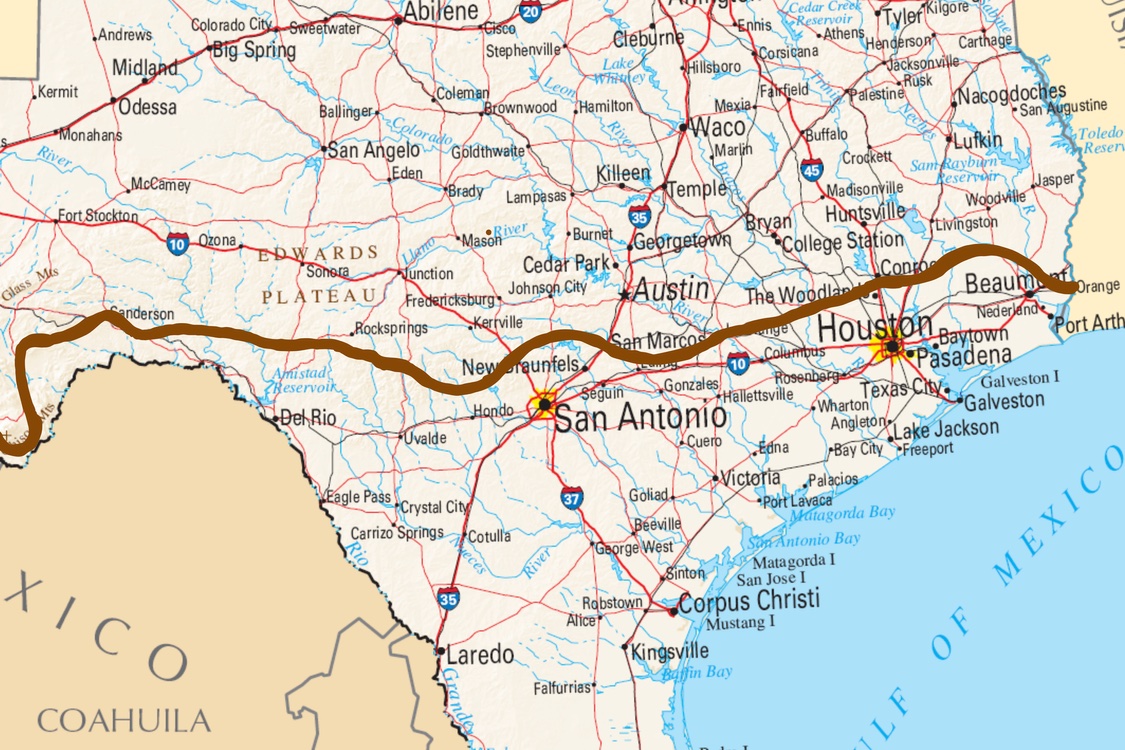
Land access wins, windfalls of generosity from powerful tycoons and zany Texas characters alike, and all-important investor capital had piled up into a promising project. xTexas Trail Association executive director Beckie Irvin noted that over 150 contributions have been made so far, enabling the initial mapping.
“People are coming in at the grassroots level to make the xTexas Trail a reality. The energy is inspiring,” Irvin told GearJunkie.
Gandy is on track to finish the “ground proof,” or first thru-hike, in spring 2026. He is stridently optimistic that the xTx will gain popularity, and he’s rolled his energetic attitude into one success after another. Still, the future promises challenges such as water access, land agreements, and overall safety. To meet them, Gandy is banking on a long track record of success in public and private concept development and a penchant for garnering what he calls the “3 Bs.”
“Brains, brawn, and bucks,” Gandy said with a chuckle. “That’s the three things we keep trying to recruit to this project. People don’t know how it’s going to happen, but there’s something about it that makes them believe in it. The power of imagination gets stirred.”
Which is exactly how he came up with the xTx idea in the first place.
From Post-Holing to Panhandle
In spring 2024, Gandy was post-holing the Tahoe Rim Trail for “about a third” of the 171-mile route, he recalled. That’s when the idea for the xTx first took root.
“There’s a line between adventurous and stupid,” he said. “I’m familiar with that line.”
Gandy is a fifth-generation Texan, but he grew up in Denver. He backpacked and hitchhiked the world in his 20’s, and found meaning in cycling advocacy and entrepreneurship.
Gandy is the founder of BikeTexas.org. He played a leadership role in shaping the framework for the state’s bike-friendly cities.

A ‘Horse Trail’ (Open to Hikers & Bikers)
When he realized he wanted to build a thru-hike in his home state, he knew he needed to consult his better half. Melissa Balmer is Charlie’s partner-in-crime and the Chief Storytelling Officer of the xTx.
“We went back and forth about it for quite awhile,” he said.“And eventually she said yes, on one condition: we have to include horses.”
Gandy reluctantly accepted his wife’s terms, vaguely forecasting a small impact on the project overall. However, he drastically misjudged the importance of Balmer’s stipulation. It became a key negotiation point for land access as the project has moved forward.
“You know what we never could have come this far without?” Gandy said. “Horses.”
Turns out it still may be true that there’s nothing Texans love more than horses. And that’s especially true in the western part of the state, where Gandy establishes corridors by calling the xTx a “horse trail” (and mumbling mentions of hiking or biking).
The technique has helped open doors to big players in the Texas land development world (more on that later). It’s also become the roadmap for a safety standard and improved access across the entire trail.
Mapping the Route

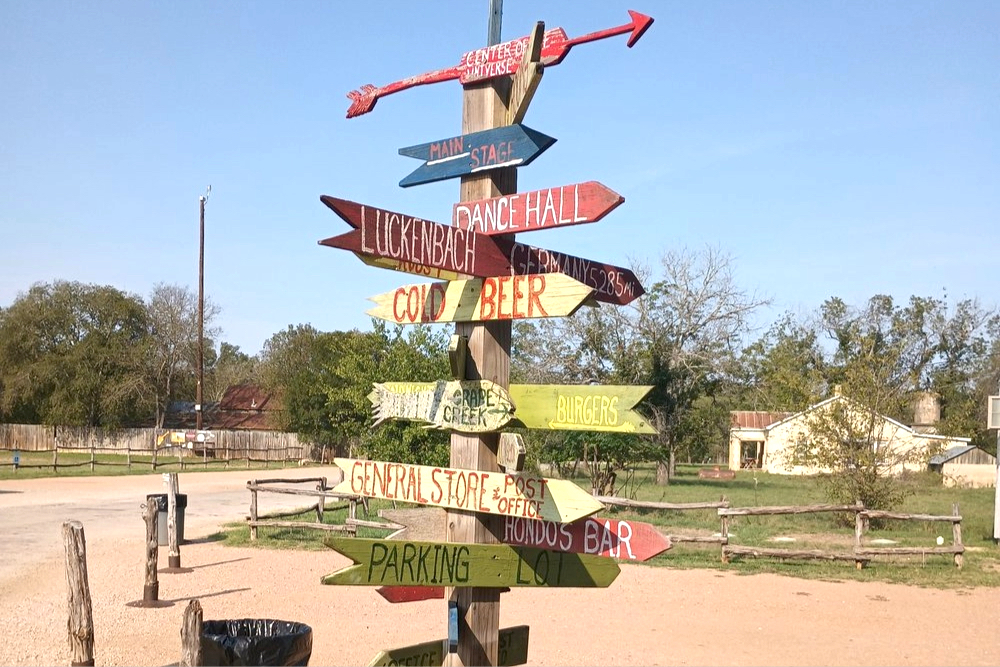
Gandy bootstrapped the initial route development the same way most people probably would — on the internet. He first established an east-west route on Ride with GPS, prioritizing dirt roads and scouring for singletrack and any public land. Not worried about the route being too road-heavy, lived experience guided his process.
“Texas started as private roads, which became dirt roads, which became farm-to-market roads, which became highways, and eventually interstates,” he said. “And every time, people in cars have migrated to the fastest, most efficient route. We get on those back roads, and we see nobody — except for the deer who aren’t expecting us and the livestock who are curious.”
Once the initial route was mapped, he started “touring” it with a partner, using the white Sprinter van he affectionately calls “Vanna White.” He wanted to confirm the trail’s continuity. Unknown cutoffs were probably out there, he reasoned, because state regulations for landowners to report developments (like the construction of new gates or fences) were fuzzy.
With cellphones and Vanna White, Gandy and his partners plunged into the task. Their outcomes varied.
“We drove the whole thing about four times just to root out dead ends,” he said.
After the general line was drawn months later, linkages kept rearranging themselves.
“We’ve moved the first 100 miles back and forth twice based on tips we got during trial runs,” Gandy said. “Right now we’ve got a pretty good route — but I’m open to new input because we’re always trying to improve.”
Whether in the choked piney woods of East Texas or the vast Chihuahuan desert out west, relationships have helped draw the trail map.
Trail Burgers and the King Ranch Land Man

There are women like Regina, a Coldspring, Texas, legend who serves up burgers at a food truck off TX-156. You can get a burger and fries for a fair price, or take a walk on the wild side and order a baked potato with shrimp. It’s called the Kitchen Katch, and it has never received a Google rating lower than 5 stars. It’s a Gandy recommendation.
“We’d stopped by her place one day on our way to camp at the Sam Houston National Forest. It’s a couple of miles down from her truck,” Gandy explained. “She insisted that the next day, she would bring us cheeseburgers before we left. So we just went with it, said thanks, and didn’t think too much more of it.
“Then sure enough, the next day bright and early, here comes this voice and the smell of cheeseburgers down the trail!”
It’s a prime example of the southern hospitality that xTx hikers might encounter on the trail. And it wouldn’t be the only meal ticket Gandy scored on his way, but he was bound to land bigger prizes, too.
James King was one of Gandy’s work contacts from the Nature Conservancy in the late ‘80s. King is also a descendant of the King Ranch family — and now happens to be a realtor in the Fort Davis area.
King helped Gandy open access to land tracts totaling up to a half-million acres near Big Bend National Park. Some of those areas hadn’t seen human footprints in decades. He helped build relationships with people with property holdings as vast as their financial resources (one of whom is a founding partner of a cigarette brand you’ve definitely heard of).
“It all led to a much more adventuresome route. Near the border, where there are a lot of stories, there can be a lot of outlaws. So being in touch with some of the particular people, the landowners and the personalities, was really vital to making this route what it is.”
Cowboy Corridor and the Horse Healthy Standard
Puzzling these pieces together and landing powerful allies will certainly help the xTx bid. But significant gaps still need to be shot. The distances between water sources make it impractical to travel without a prearranged drop-off for all but the most experienced hikers. There are locked gates, cattleguards, sensitive cultural resources, and (of course) places without cell service for miles in all directions.
Gandy realized that without organizing principles and a safety standard, the xTx could dead-end for many everyday users.
Enter his next trail concept — the “Horse Healthy Standard.”
The initiative began on one of the first 100-mile group outings on the xTx. Balmer noticed that horseback riders came very prepared and had a strong orientation to safety. With a riding background herself, she realized the capital the equestrians brought to the table.

“Of course, there’s all this in-depth knowledge about horse health and safety. But then we realized some of what they were saying resembles what Charlie has done in the cycling advocacy world — like, what if we could cut across that yard instead of taking this blind turn on the highway?”
If fences, cars, and cattle guards were what stopped cowboys, they could also stop hikers and bikers. Or, Gandy thought, he and his team could create a safe trail for all.
“If it’s healthy for horses, it’s healthy for everybody else, too,” Gandy reasoned.
Building Continuity of the xTx
Sometimes, the work of ensuring the standard is convincing one family at a time to allow an easement. Sometimes the path runs through local government, and the pace slows significantly. A bulk of xTx’s funding plan will go toward continuity in infrastructure for all users.
“The last 800 miles are remote and hot,” Beckie Irvin said. “Our biggest challenge at this stage is water access and shelter infrastructure. Ensuring reliable water sources and shade is essential to making the trail enjoyable for everyday users.”

Eventually, Gandy visualizes the xTx as a gravel bike trail. General roadside walking will likely persist in some areas, but wide corridors for human and animal safety are the priority. (Irvin described the long-term vision as a “singletrack, soft-surface trail” traversing the state.)
“We’re applying the same principles as Benton McKay used on the AT and Clinton Clarke used on the PCT. Constant improvement of the route, based on opportunities that present themselves along the way,” Gandy said. “This has been done before. It’s just about adapting it to Texas to achieve the same result.”
xTx: What to Expect

Don’t head out on horseback just yet. Now on Ride With GPS, the trail is in the final stages before going live on the FarOut GPS platform. The team will encourage hikers to hit sections of the trail before the punishing Texas heat slams the door shut.
But only local sections (marked on the maps, Gandy confirmed) will be ready for equestrians until further notice.
Long-term plans also include a “pass” system to serve a dual purpose. Hikers will provide identification and pay a nominal fee to secure their park passes in advance, and the Texas Trail Association will file the information as a form of permission to cross private property in West Texas. The PCT uses a similar system, albeit there’s notably less private land along its route.
“We’ll be taking the step of knowing who we’re giving these passes to. It’s not a background check, but these are people we’re going to have a relationship with — and if they cause a problem, we won’t have a relationship with them [anymore],” Gandy said.
In no particular order, any other takers should be ready for: narrow bridges, copperhead snakes, reactive dogs (particularly in east Texas — “bring pepper spray!” Gandy says), southern hospitality, police, livestock, I-35, tarantula hawks, questionable water sources, extreme cold, extreme heat, flooding, and more.

Gandy batted away every effort I made to provoke him into telling a horror story. Blame his roots in cycling advocacy or as one of the youngest-ever members of the Texas House of Representatives, but he’s unrelentingly positive. Prompted on injuries, he told me about a cramp and pointed to his tree-like lower leg.
That was despite what I saw within the first mile outside Kerrville, when we waved the group off into a shoulder as narrow as Gandy’s waist between 65 mph traffic and a guardrail.
For a hiker “about to fall off the edge of civilization,” Gandy didn’t seem flustered.
“There’s so much of this thing that people just don’t get to see. Especially not on foot, on a bike, or on the back of a horse. It’s experiencing Texas differently. It’s experiencing the generosity of Texans in a new way. And that’s part of the magic of the trail,” he said.
Gandy and his xTx team are about to reach the town of Ft. Davis as of this writing — roughly 200 miles from the end of their journey. They’re averaging about 20 to 28 miles a day and should complete the first-ever xTx thru-hike by the end of March 2026.