Mummy bags are all the rage for backpacking, but sometimes you need a bit more room to spread out. And where those bags prioritize weight and packability, the best camping sleeping bags go fully luxe.
In our latest lab session, testers Meghan LaHatte and Nick Belcaster logged more than 100 nights and 300 miles outdoors, testing five of 2026’s best new sleeping bags. Whether you’re after the roomy REI Co-op Siesta Hooded 20, the premium versatility of the Sea to Summit Basecamp 15, or the wallet-friendly nature of the Kelty Wayback 20, we’ve got an option for most anyone.
From the forests of the Pacific Northwest to Colorado’s alpine and the hills of Appalachia, we put these bags through in-depth field tests. Tuck into our recommendations below.
Editor’s Note: We updated our Camping Sleeping Bags guide on August 24, 2026, to add the Kelty Eclipse 35 — an excellent zipperless sleeping bag with an integrated comforter, along with the Universal One Bag from The North Face, and an updated Comparison Chart.
The Best Camping Sleeping Bags of 2026


REI Co-op Siesta Hooded 20
-

-
(Photo/Meghan LaHatte)
-
(Photo/Meghan LaHatte)
-
(Photo/Meghan LaHatte)
-
(Photo/Meghan LaHatte)
-
(Photo/Meghan LaHatte)

Specifications
Pros & Cons
Pros
- Roomy headspace can accommodate a full-size pillow from home
- Affordable price for the quality and warmth
- Quilted design helps retain heat
- Low price
Cons
- Synthetic fill won’t compress as much as a natural down
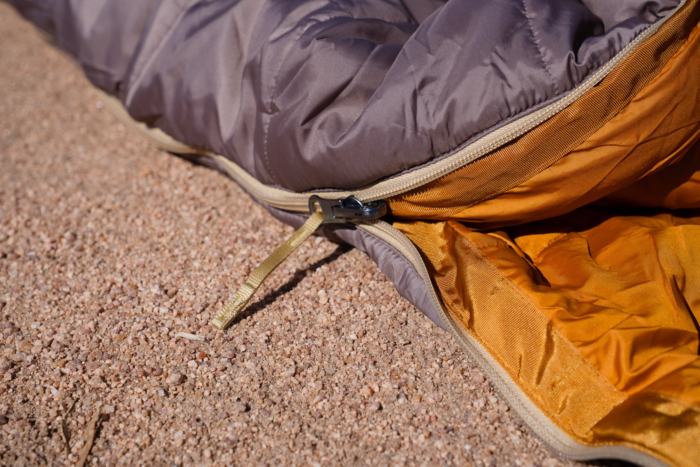
- Zippers have tendency to snag
Bottom Line: This sleeping bag hits all of our needs at a nearly unbeatable price, and we think it’s the best bag for most campers. It’s not as warm as down, but it’s cozy all the same.
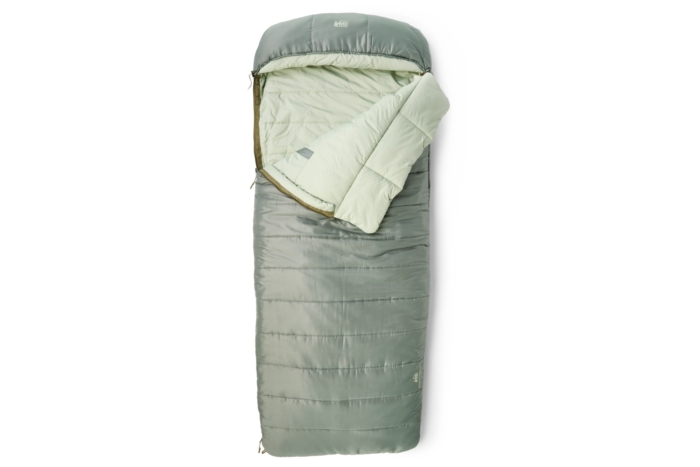
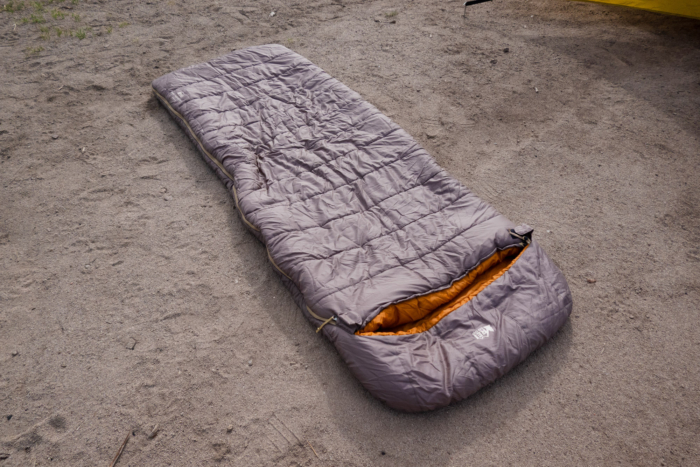
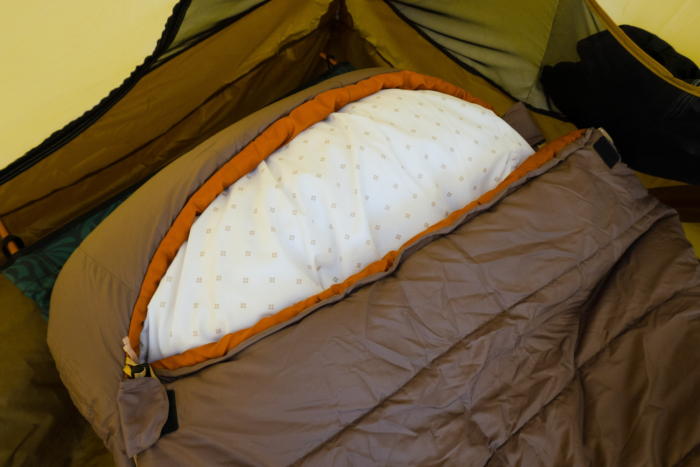
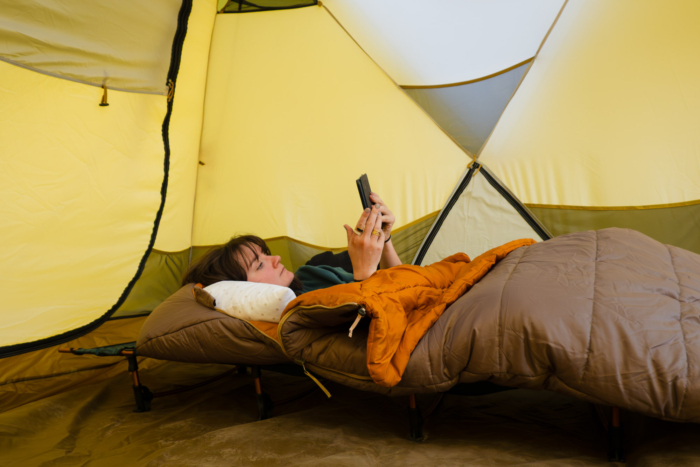
Meghan LaHatte tested the REI Co-op Siesta Hooded 20 Sleeping Bag ($149) while camping under the stars on the Western Slope of Colorado, where temperatures ranged from the low 40s to the upper 30s at night. This bag kept her plenty warm, and the massive, adjustable hood made snuggling up super cozy. When she didn’t quite feel like using the hood for extra insulation, she put a pillow from home into the wide slot, which definitely helped her catch some proper z’s.
The Siesta is constructed with polyester insulation (also Bluesign-approved) that is baffled through the quilted stitching. Despite being synthetic, this bag was perfectly insulating for the conditions we camped in. LaHatte tends to sleep hot, and wore fleece pants and a sweater in the bag. At no point did she feel too hot or too cold throughout the night.
When settling in for the night and ready to read a few pages of our book, we used the mini side zipper to fold down the top portion of the bag. This gives the entire setup a “bed-like” feel and prevents any awkwardness when only your arms stick out.
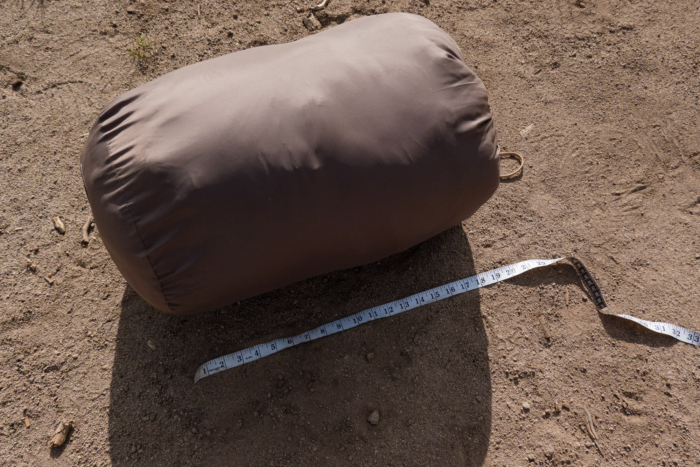
Truthfully, the only noticeable issues with this bag were some zipper snagging on the fabric, and it was not the most packable. However, since it is designed for car or walk-in camping, this really shouldn’t be an issue for most.
There are plenty of other sleeping bags out there, but we think the Siesta Hooded 20 is right on the money for most folks. Its hood places it higher than purely rectangular bags like the Kelty Wayback or North Face Wawona, and it expertly balances features with price.
Kelty Wayback 20
-
-
(Photo/Ian Graber-Stiehl)
-
(Photo/Ian Graber-Stiehl)
-
(Photo/Ian Graber-Stiehl)
-
(Photo/Ian Graber-Stiehl)
Specifications
Pros & Cons
Pros
- Classic rectangle shape with some modern features
- Budget price
- Separate blanket is soft and cozy
- Flannel-lined interior
Cons
- Not as thermally efficient as a snugger-fit bag
- Packed size is a bit large
- Blanket isn't fully removable
Bottom Line: This cozy rectangular bag really captures the vibe and sports a super-cozy blanket, along with a flannel-lined interior. We wished that blanket were fully removable, and that it packed down a bit smaller. Otherwise, a great alternative to our top choice.
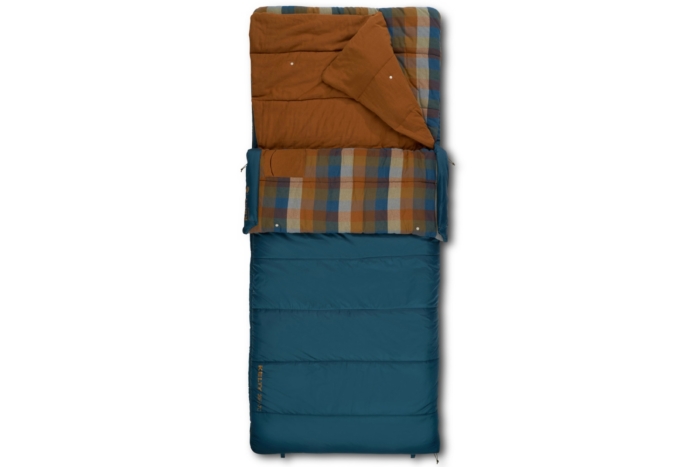
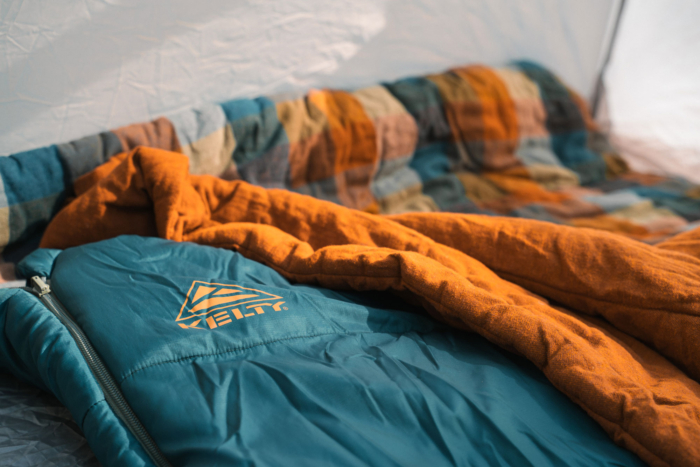
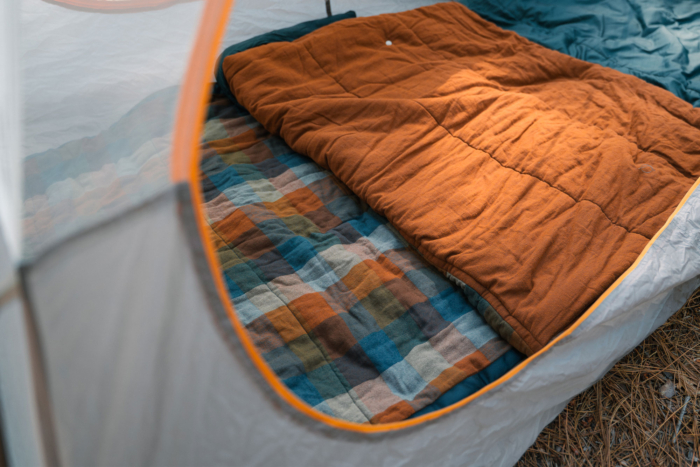
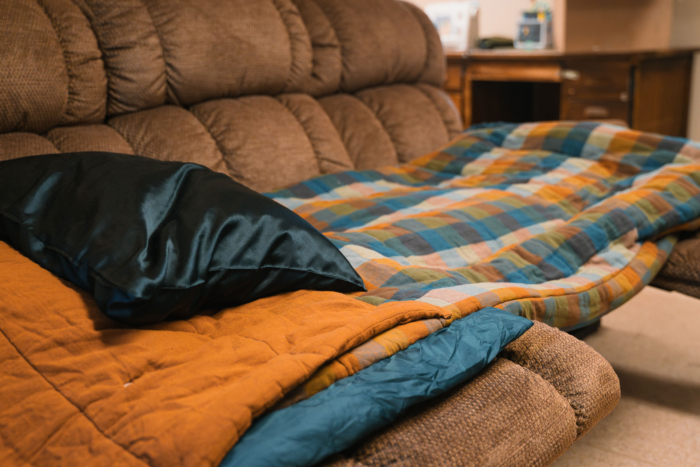
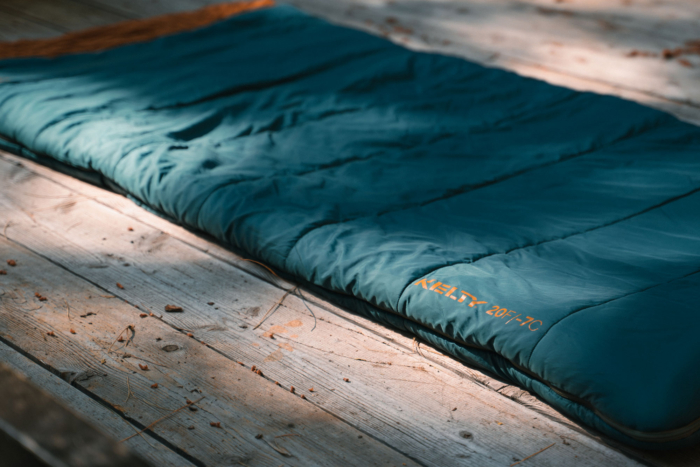
A true blast from the past option, the Kelty Wayback 20 Sleeping Bag ($180) brings some classic vibes to camp with a plush flannel-lined interior, square profile, and a built-in blanket that ensures you don’t short-sheet yourself. But what really sets this OG option apart are the small modern tweaks that make it better than most bags that offer similar specs — and at a budget-friendly price.
This bag doesn’t quite have the ‘weighted blanket’ heft of the ALPS Redwood, but it’s still an excellent option for a weekend at the cabin or camping close to home. We found it wide enough to kick out a knee fully, and it won praise from our stomach sleepers. The 72-inch width is wider than bags like the North Face Wawona or Kelty Galactic, but not so wide that we couldn’t efficiently warm it up while sleeping this summer.
The organic cotton flannel lining and blanket are the highlights here, though. They make the Wayback cozier than purely polyester-lined bags. The blanket acts like an oversized draft collar and makes up for the occasional draftiness that rectangular bags can endure. We found it much more snuggly than the synthetic version on the NEMO Jazz.
Inside the bag, a phone pocket is one of the tweaks that brings this classic bag into the modern day, and it’s one of those features that we now look for in any bag we’re sleeping in. The second zipper opposite the main one also bumps up the venting options on this bag, which again is something that lesser-featured rectangle bags won’t bring to the table.
The 20-degree temperature rating is perhaps a bit optimistic (we were comfortable in this bag down to 45 degrees and could probably hit 40 without needing more layers). But for most summer nights, it’s right on the money and a great option if you’re into the flannel options.
Sea to Summit Ascent Sleeping Bag
Specifications
Pros & Cons
Pros
- Extremely warm
- Dynamic free-flow zipper system
- Made with water-resistant Ultra-Dry down
- Zips together with other Sea to Summit Ascent bags
Cons
- The phone pocket does not fit all sizes of phones
- The hood is wide and comes off somewhat easily
Bottom Line: The Sea to Summit Ascent wins for best ventilation, using a triple-zip system to transform between a warm cocoon and a breezy quilt. It offers campers perfect temperature control and easy packability.
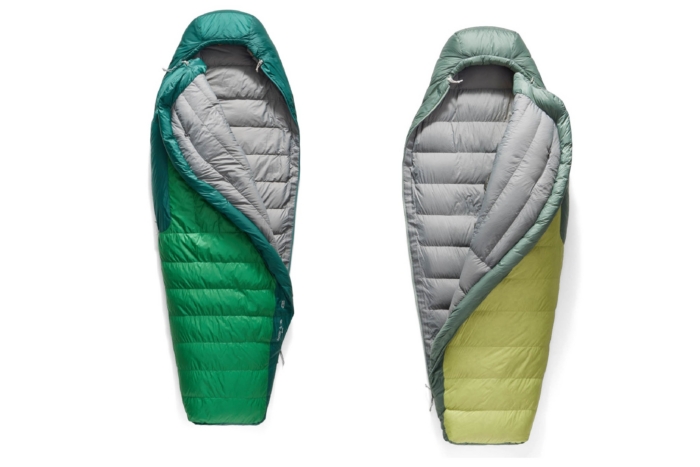
The Sea to Summit Ascent ($399-499) series earns top honors for the best ventilation on the market, offering climate control that traditional bags simply can’t match. Recently redesigned and available in both men’s and women’s models, the Ascent has a “Free-Flow” triple-zipper system. During testing in the high desert, this versatility was essential: we started the night with the bag unzipped like a quilt, then easily closed up the bag as the evening dropped in temperature.
The Ascent is tailored to the sleeper’s anatomy, with the women’s version featuring a wider hip cut and the men’s providing more shoulder room. One female tester, a dedicated side-sleeper who usually feels trapped in narrow bags, raved about the relaxed shape. She reported that even at 28 degrees, the oversized draft collar kept her cozy while the extra width allowed her to pull her knees up without creating cold spots.
The 750-fill power down provides a significant leg up over competitors like the NEMO Disco, which uses lower-tier 650-fill. On a damp Pacific Northwest trek, camper Nick Belcaster was impressed by how the down maintained its loft and then compressed effortlessly for the morning hike. The bag also has neck snaps that allow you to pop your arms out while staying insulated. We found this addictive during morning transitions; we’ve even brewed a full pot of coffee while still cocooned in this bag.
While the price, ranging from $399 to $499, is a jump from budget alternatives, the investment pays off in sheer adaptability. Whether facing a surprise frost or a humid summer evening, the Ascent’s ability to act as its own thermostat makes it the ultimate choice for those who refuse to settle for a single sleep temperature.
Therm-a-Rest Boost 650
-
-
(Photo/Erika Courtney)
-
(Photo/Nick Belcaster)
-
(Photo/Nick Belcaster)
-
(Photo/Nick Belcaster)
-
(Photo/Nick Belcaster)
-
(Photo/Nick Belcaster)
Specifications
Pros & Cons
Pros
- Convertible zipper opens up the bag for room, or closes for more warmth
- Down insulation mapped out across the bag to consolidate warmth
- YKK anti-snag zippers
- Wide size range
Cons
- Armholes seem unnecessary
- Bit heavy for weight-conscious backpacking
Bottom Line: The Therm-a-Rest Boost 650 earns our best crossover superlative, utilizing a unique center-zip expansion system that shifts from a snug 20-degree mummy to a roomy 32-degree sanctuary.
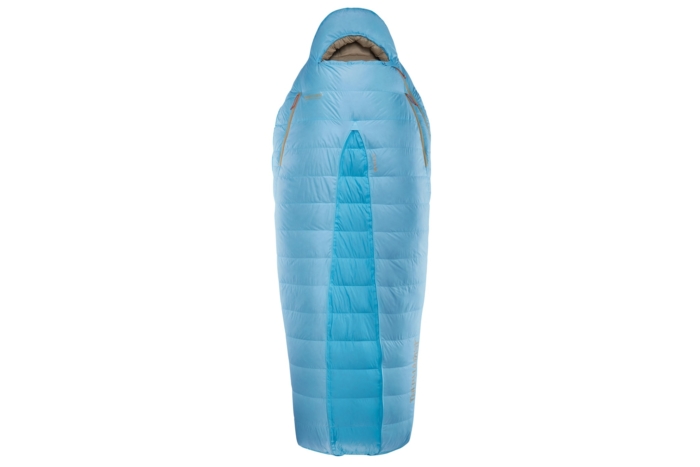
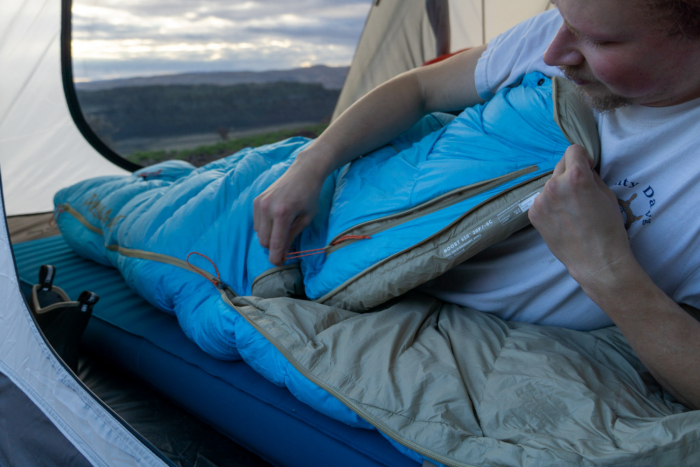
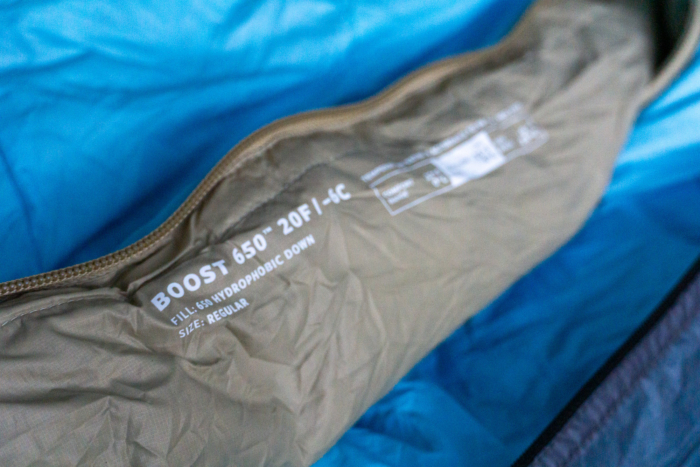
Sporting the innovative ‘WarmZip’ center panel, the Therm-a-Rest Boost 650 ($340) expands from a thermally efficient mummy to a roomy semi-rectangular bag, effectively giving you two temperature ratings in one. It bridges the gap between the backpacking world and camp comfort better than anything else we’ve tested this season.
For years, we’ve recommended the NEMO Disco as the go-to for side-sleepers who want to transition from the trailhead to the trunk of a car, but the Boost 650 might have just knocked it off its pedestal. While the Disco uses ‘Thermo Gills’ to vent heat, the Boost actually changes its internal volume. Unzip the center WarmZip, and the down thins in the baffle; zip it shut, and it snugs the down tight against your body, effectively boosting the bag to a 20-degree rating.
During a testing stint in the Cascades, tester Erika Courtney found this center zip much more intuitive than traditional side-zip systems, especially when we were exhausted and just wanted to let the heat out without fumbling in the dark.
The materials here lean heavily into the camping side of the crossover equation. The 20-denier recycled nylon shell is exceptionally soft, reminiscent of the REI Siesta but in a much more packable format. At 2 pounds 11 ounces, it’s certainly heavier than a trim backpacking specialist like the Feathered Friends Swallow, but the trade-off is massive livability.
Like many options in the Sea to Summit line, the Boost also converts into armholes you can wear. We used these to stay tucked in while firing up the Jetboil for morning coffee, a feature that feels like a total luxury, until you’ve tried it. If you’re a one-bag kind of person who wants the comfort of a camp bag with the optional warmth of a high-end mummy, this is your winner.
Kelty Eclipse 35
-
-
(Photo/Nick Belcaster)
-
(Photo/Nick Belcaster)
-
(Photo/Nick Belcaster)
-
(Photo/Nick Belcaster)
Specifications
Pros & Cons
Pros
- Integrated comforter is cozy and secure
- Self-sealing foot vent helps modulate temperature
- Durable shell and liner fabric choice
Cons
- A bit bulky and heavy when packed up
- Comforter attachment points can be difficult to get done up
Bottom Line: A zipperless sleeping bag with a built-in blanket that stays where you want it. Fairly bulky for anything but car camping, but worth it for the quality of sleep you’ll get.
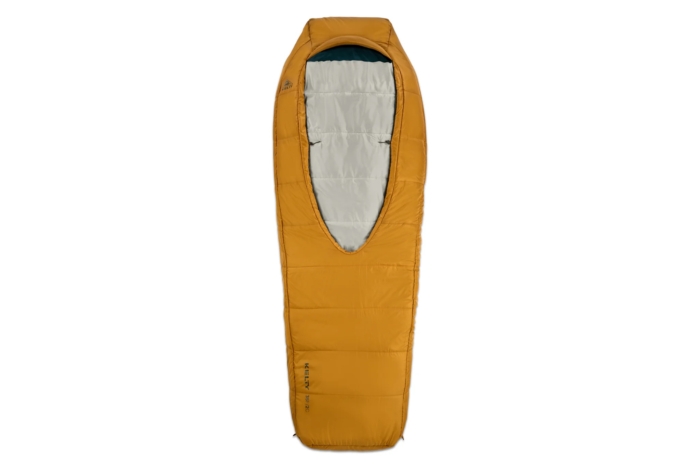
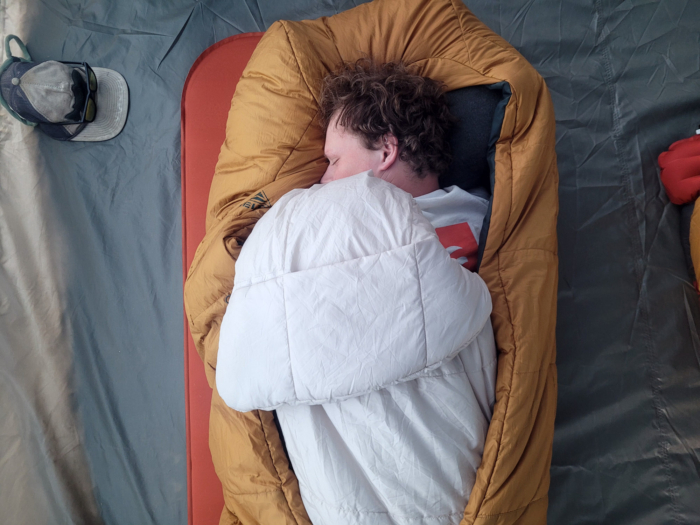
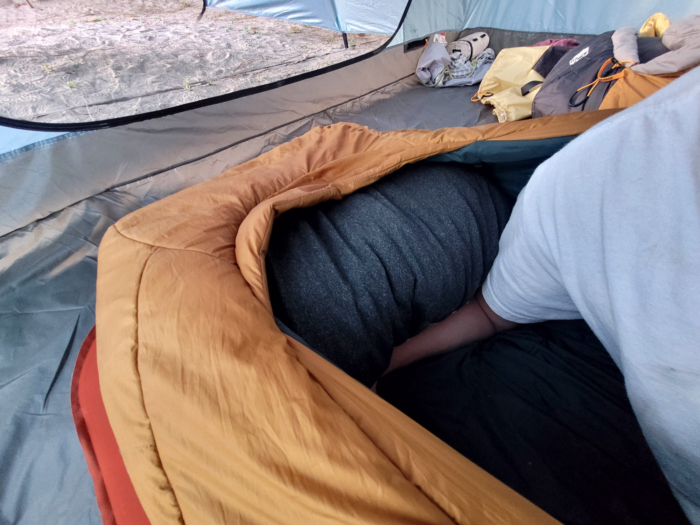
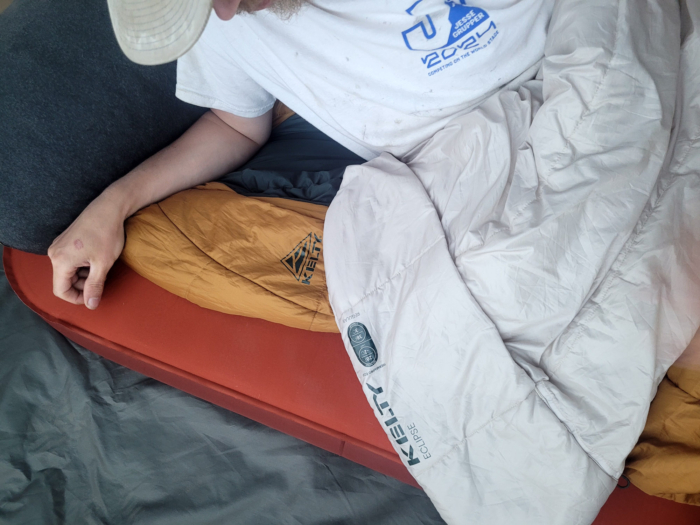
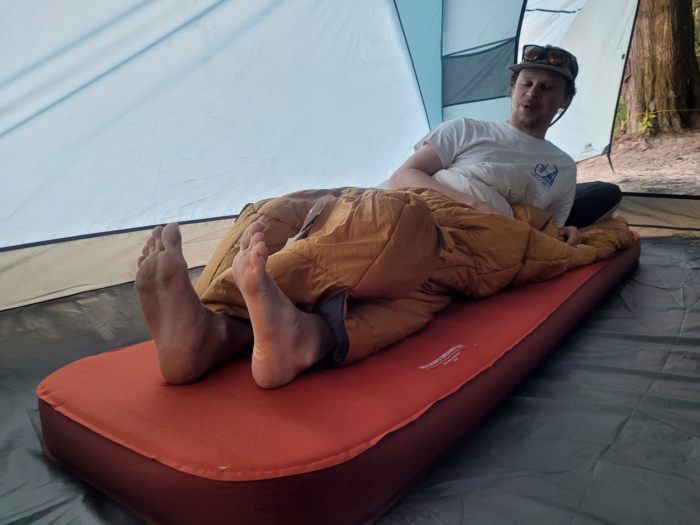
During a summer of car camping across Washington state, Senior Editor Nick Belcaster repeatedly grabbed the Kelty Eclipse 35 ($155) for trips where comfort was king, and being couped up inside a bag wouldn’t fly. Ditching traditional zippers entirely, this 65-inch-wide bag leans into a blanket-style setup that eliminates snags, and if standard mummy bags leave you feeling claustrophobic, the Eclipse offers a bed-like experience under the stars.
The core of its design is an oversized, integrated comforter flap that tucks neatly inside the shell. Kelty built corner hand pockets directly into the top blanket, allowing you to wrap the insulation snugly around your shoulders on chilly mornings. For hot sleepers, a self-sealing foot vent lets you push a foot outside for instant airflow without completely unmaking your bed, while the roomy hood easily wrangles bulky pillows brought from home.
To keep you warm down to 35°F, Kelty stuffed the bag with 2 pounds, 5 ounces of ThermaPro Eco synthetic insulation. The 100% recycled fill is wrapped in a 30-denier recycled polyester shell treated with a PFAS-free DWR finish. Bringing the total packed weight to 3 pounds, 10 ounces, it’s strictly built for vehicle-supported adventures, but its dual-layer quilt construction ensures the insulation stays anchored without creating drafty thin spots.
Within the spread of alternative camp bedding, the Eclipse 35 occupies a sweet spot. It offers a big jump in comfort over entry-level rectangular options like the Coleman Brazos 30, while undercutting higher-end models. Compared to the Sierra Designs Backcountry Bed 35 (which shares a similar zipperless comforter design and foot vent), the Kelty comes in roughly $50 less while providing a wider, more relaxed cut for side and stomach sleepers.
If you want the intuitive, wrap-around warmth of your home duvet without paying premium down prices, the Eclipse 35 delivers exceptional frontcountry performance.
Sea to Summit Basecamp 15
Specifications
Pros & Cons
Pros
- Very roomy fit with dual zippers for different venting options
- Quite warm for the shape with plenty of duck down
- Premium feature set
- Large hood can fit pillow from home
Cons
- Large packed size and weight
- On the pricier side
Bottom Line: A super-warm 15-degree bag with plenty of space to spread out in. The top half is entirely removable to be used as a quilt, and the bag can also be worn around camp. You’ll pay for the features, but they’re worth it.
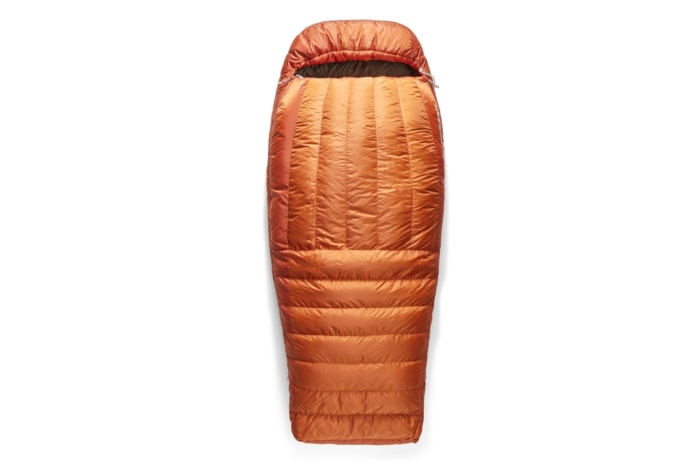
The Sea to Summit Basecamp 15 ($414) goes long and wide to create an uber-spacious camp bag that’s more similar to our comforters at home than most other sleeping bags. This 75” wide bag allows you to go full starfish while sleeping, and the versatile zipper options mean wearing it around camp is fair game.
This bag packs in 1 pound, 13 ounces of 650-fill down that’s been treated with a non-PFAS DWR finish, making it the heavyweight champ of our review with the most down. That insulation is smartly spread across a mix of vertical and horizontal baffles, and in practice, it didn’t shift awkwardly or lead to cold spots.
Sea to Summit integrates smart zippers into its bags, and the Basecamp is no different. The entire top half zips off, meaning it can be used as a quilt, and two snaps at the shoulders allow you to create arm holes for fixing early morning coffee without leaving the bag.
Senior Editor Nick Belcaster used this bag through a summer in the Pacific Northwest, where it became his car-camping go-to choice. The broad sleeping profile was easy to get comfortable in, and the lofty hood wrangled our pillows from home. It’s easy to think of this bag as the down alternative to the REI Siesta Hooded — just know you’ll pay $265 more for the performance bump.
This bag rivals the Feathered Friends Penguin YF in many ways. Both are roomy down bags with versatile alternative uses, with the Penguin being able to convert to a double bag, and the Basecamp top zipping off for use as a quilt. The big difference is obviously price: the Penguin will run you $160 more, and that’s before adding the optional $84 hood.
For a premium feature set without the premium price, the Basecamp 15 makes a strong case for itself.
NEMO Jazz Double Sleeping Bag
-
-
(Photo/Xiaoling Keller)
-
(Photo/Xiaoling Keller)
-
(Photo/Xiaoling Keller)
-
(Photo/Xiaoling Keller)
Specifications
Pros & Cons
Pros
- Super comfortable and plush
- Removable, washable, bed sheet attached with buttons
- Well designed
Cons
- Cumbersome to pack and carry
- Price
Bottom Line: This double sleeping bag is about the best we’ve tested, and sports an inner sheet that can be removed and a broad hood for both of your pillows. It’s pretty dang bulky, and best carried around in the back of your car or RV.
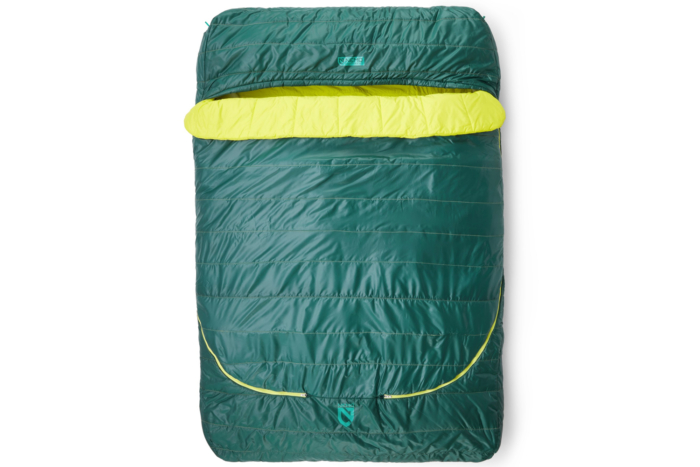
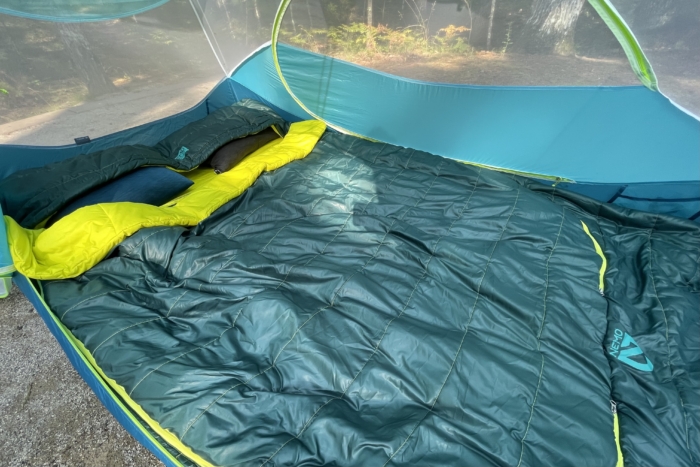
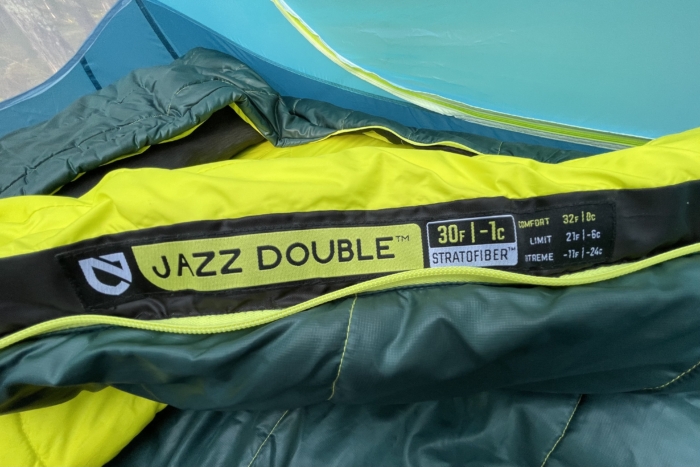
The NEMO Jazz 30 Double Sleeping Bag ($380) sleeps like a dream for both campers, leaving us not too hot, not too cold, but just right. All told, this is the best overall double camping sleeping bag we’ve tested in 2026.
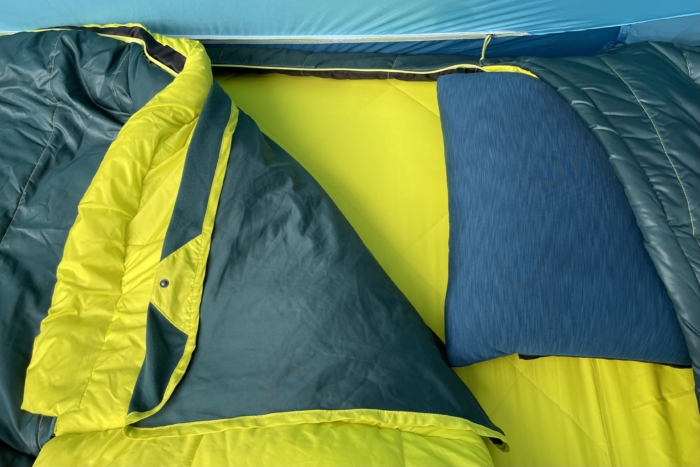
That longstanding ability to be top dog is owed to a lot of features, but primary among them are the overfilled quilt design, along with a signature NEMO BlanketFold draft collar near your face, and a featherbed-style bottom for an incredibly cozy experience. A removable, washable sheet means the bag feels extra soft on bare skin. More akin to our own beds at home than many other sleeping bags — this bag just oozes comfort.
The Jazz Double sports a symmetrical rectangle cut, which means that zippers run down both sides and allow for customized venting throughout the night. We especially appreciated the integrated sleeping pad sleeve, which anchors the bag in place (and is sized perfectly for the NEMO Roamer Double Pad — one of our favorites).
Topped off with a pillow pocket that’s large enough to wrangle our favorite pillows from home all night, the Jazz Double hits all the right notes when it comes to camping comfort.
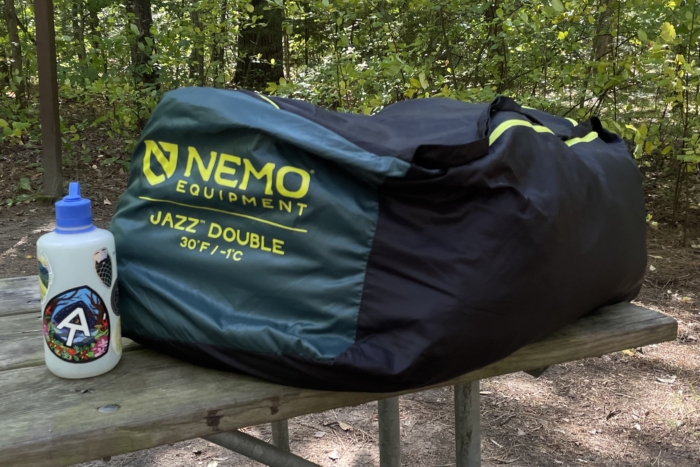
Negatives were hard to come by, but packed, this bag’s a hog. Thankfully, it comes with a duffel bag for easier storage. At $380, it’s also a bit on the pricey side for a purely car-camping setup, but the absolutely plush comfort it offers helps salve our wallets.
At the end of the night, we found the Jazz 30 Double so comfortable — we didn’t want to get out of it, even to make a piping hot cup of coffee. In terms of a bed-like camp sleeping experience, the Jazz is about the closest thing we’ve slept in so far.
Other Sleeping Bags to Catch Some Zs In
While the seven award-winning sleeping bags above are our go-to choices, there are literally hundreds more we’ve tested over the years, and a number of excellent alternative bags we’d have no problem recommending. Check out the eight below as great options for your next camping trip.
Specifications
Pros & Cons
Pros
- Can zip with another Wawona bag to make a double bag
- Roomy shape works well for folks who toss and turn
- Upper fleece lining is soft on the face
Cons
- Polyester insulation less warming than natural
- Lack of hood may be bothersome for colder sleepers
Bottom Line: Another great budget option that sports soft touch points, durable synthetic insulation, and a roomy shape. The lack of a hood keeps it from landing higher on our list.
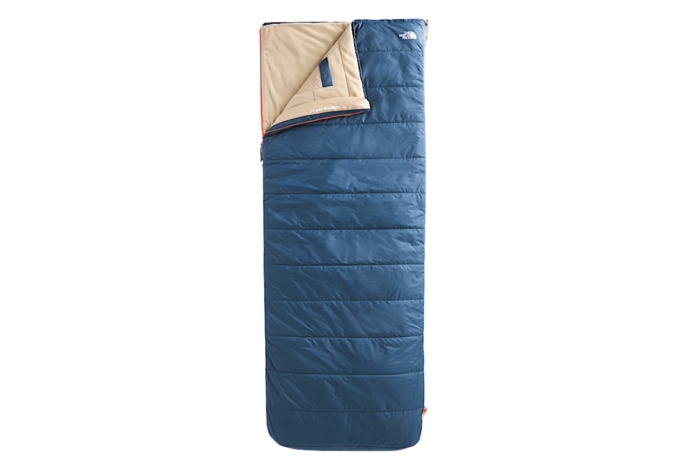
Maybe you’re only planning on a few weekend trips here and there during the summer, or you’re just looking for something super wallet-friendly. This is where The North Face Wawona 20 Bed Sleeping Bag ($150) comes into play.
With no frills, extra components, or bulkiness, this sleeping bag is just plain good. Its square shape and wraparound zipper help even the most restless sleepers find a good position for snoozing. Camper Meghan LaHatte is a major toss-and-turner, so she was delighted that this bag could accommodate that without getting too twisted up.
We tried this bag out when temperatures dropped to the mid-30s and 40s at night and stayed comfortable with just baselayers and a sweatshirt on. Upon waking in the morning, we didn’t find any moisture on the bag, thanks to the DWR-coated outer material.
Despite its lower price, the Wawona 20 has expert construction. At the top of the bag, a fleece liner provides some softness on your chest and face. Furthermore, the zippers are durable, and the glow-in-the-dark pull tabs are easy to see at night when you need to crawl in and out of the bag.
And while we wouldn’t use this sleeping bag for any extreme climate camping, it is a solid choice for the price. Combined with one of our cots, the Wawona 20 Bed Sleeping Bag helped us sleep like a rock. Plus, you can zip it to another Wawona 20 Sleeping Bag to easily form a double bed. The lack of a hood will send some folks into the REI Siesta, but we still think the Wawona ranks high for warmer nights.
Specifications
Pros & Cons
Pros
- Burly cotton canvas outer resists dirt and debris
- Oversized zipper slides easily
- Soft flannel interior is super cozy
- Thick synthetic insulation is very resistant to moisture
Cons
- Heavy at nearly 12 pounds
- Packed size is quite large, with little compression possible
Bottom Line: Similar to our best budget pick, just a bit nicer with a real flannel lining, and a slightly higher price. Quite hefty due to the canvas and thick insulation, but the comfort is likely worth it.
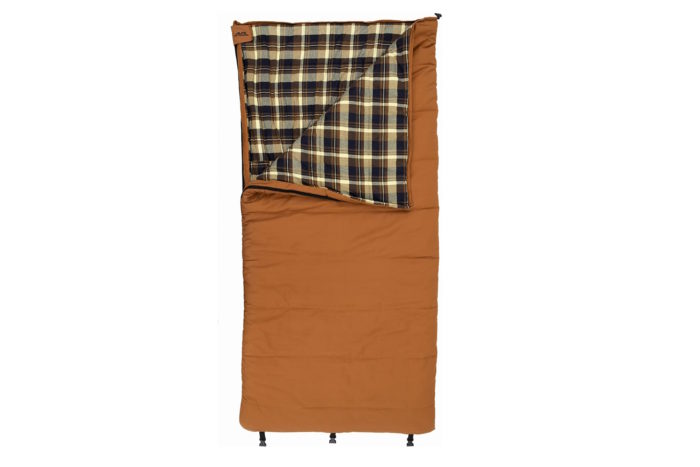
Classic look, classic feel: the ALPS OutdoorZ Redwood ($170) might not be the bag you reach for on backpacking trips, but it certainly makes the cut for front-country basecamp, hunting trips, and impromptu stints of van life. The flannel lining on the interior won us over, and after two years of testing now, we still haven’t been able to put a ding in the rough-and-tumble canvas shell.
ALPS calls this a “heavy-duty” sleeping bag, and based on its rugged cotton canvas outer and thick zippers, we’re inclined to agree. We had no qualms with chucking this bag around the campsite while setting up, nor would we have any worries about open-air cowboy camping in it. We’ve woken to a soaked exterior from morning dew but have been none the wiser tucked inside all night.
Inside the bag, two layers of synthetic insulation are quilted into place, and sewn in offset in order to avoid cold spots forming. Add onto that a 100% cotton flannel liner, and you’ve got one cozy bag to slip into. The heft of this bag is almost weighted-blanket status, and it was a highlight to snuggle into. We were also pleased to see a cinch cord encircling the head-end of this bag — something not often on rectangular bags, but is appreciated when temps drop.
Regarding the stated temperature rating of -10: we’d estimate that this is likely the survival rating, and not the comfort rating, which is probably more around 15-20 degrees F. The Redwood was also the largest packed size and heaviest in our testing — at nearly the size of a 3-foot by 1-foot cylinder — and a fact that likely will keep this bag out of your pack.
Perfect for rolling out under the stars, the Redwood is a rugged sleeping bag that isn’t afraid of a little dirt or dew. Our hunters have taken to borrowing this bag for shoulder season hunts when a short approach and a canvas tent are in order, but it’s also become an easy go-to for a cozy bag.
-
-
(Photo/Nick Belcaster)
-
(Photo/Nick Belcaster)
-
(Photo/Nick Belcaster)
-
(Photo/Nick Belcaster)
-
(Photo/Nick Belcaster)
-
(Photo/Nick Belcaster)
-
(Photo/Nick Belcaster)
Specifications
Pros & Cons
Pros
- Very easy to get in and out of
- Fidlock closures are secure and self-seat
- Soft interior fabric is cozy
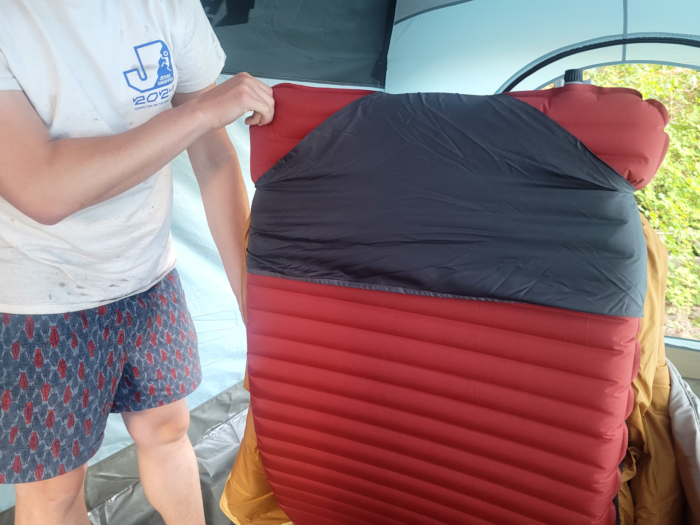
- Pad strap system locks the bag down
Cons
- More expensive than similar zipperless designs
- No way to entirely open the foot box
Bottom Line: An adaptable zipperless design that can be managed by pretty much anyone. There are less expensive designs that accomplish the same goals, however.
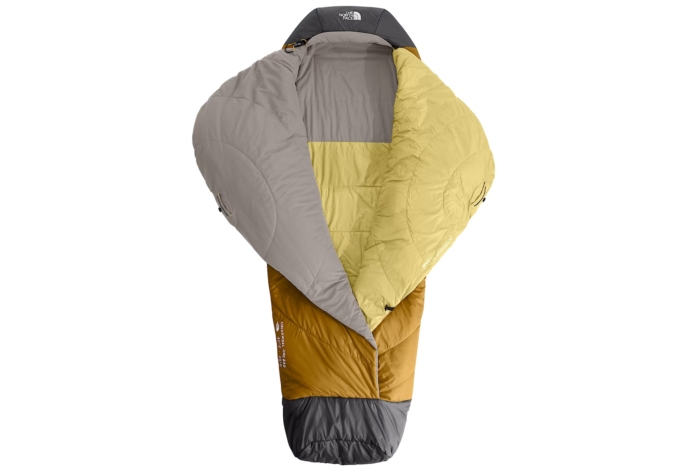
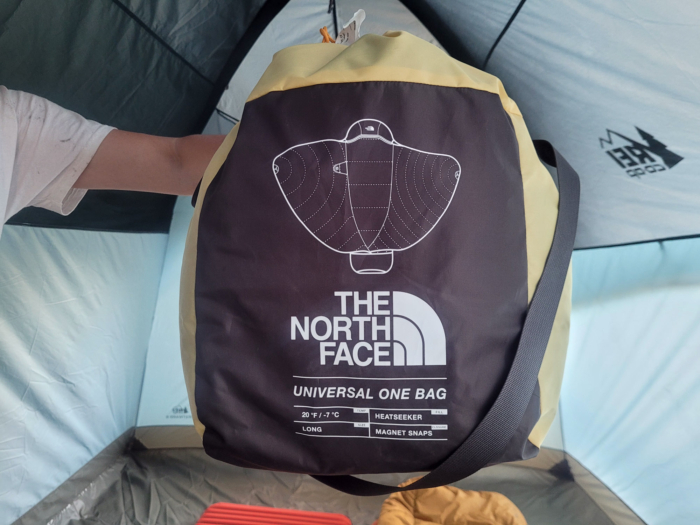
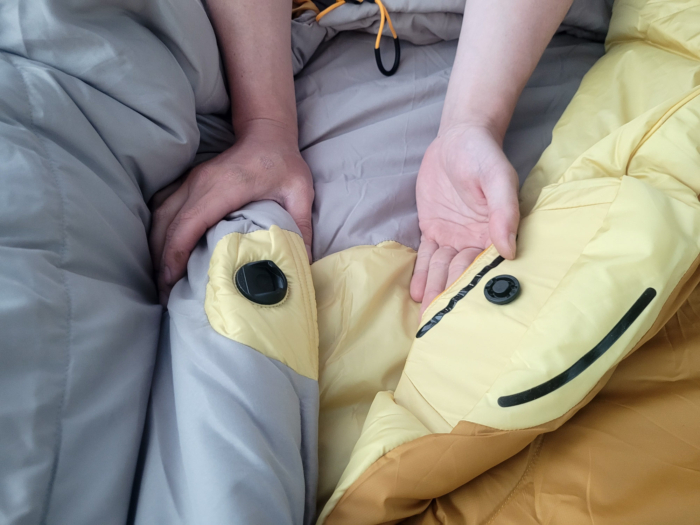
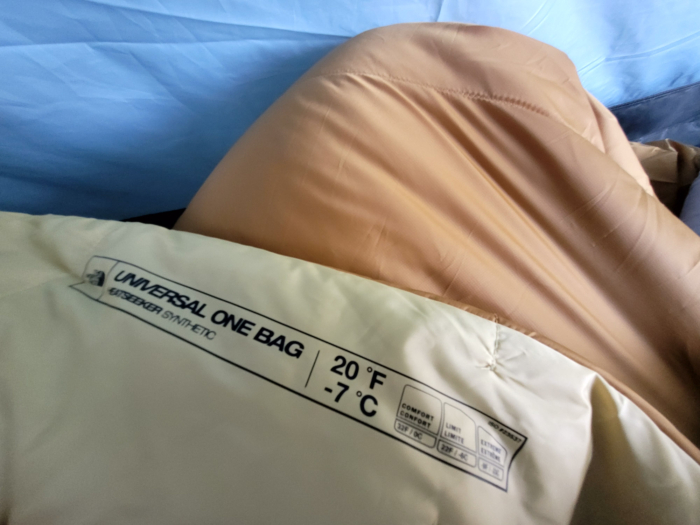
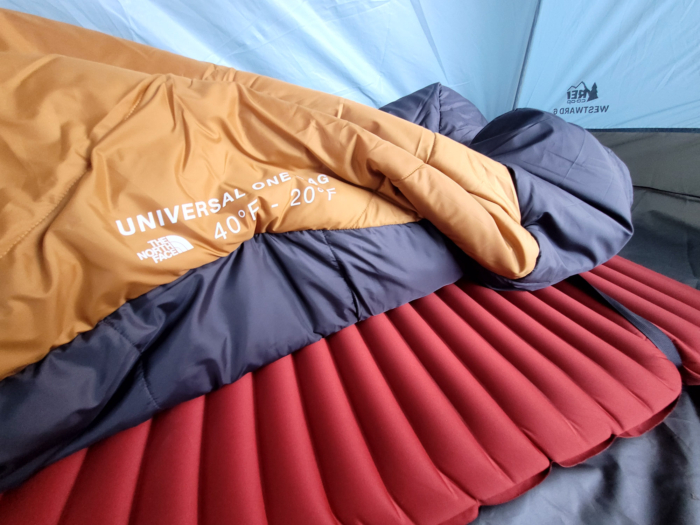
The North Face Universal One Bag ($270) leans into universal design principles to create an ultra-adaptable camp bag that’s more similar to a modular bed system than traditional mummy sacks. This zipperless design replaces hardware with magnetic closures and a dual-wing layout, making entry effortless while allowing all sleep styles to fine-tune warmth throughout the night.
This bag packs up to 2 pounds, 11 ounces of synthetic polyester insulation in a 30-denier recycled polyester shell with a non-PFC DWR finish, bringing total weight to 4 pounds, 3 ounces (Short). That fill is distributed across a body layer and two distinct folding wings, efficiently trapping heat down to its 20°F limit without creating draft gaps.
The North Face integrates smart, sensory-friendly details throughout its Universal line, and the One Bag is no different. The closure system uses magnetic FIDLOCK fasteners instead of zippers, while independent wings allow three warmth configurations: light for summer, heavy for autumn, or both layered when temperatures drop. Tactile silicone highlights along seams make adjustments easy in total darkness.
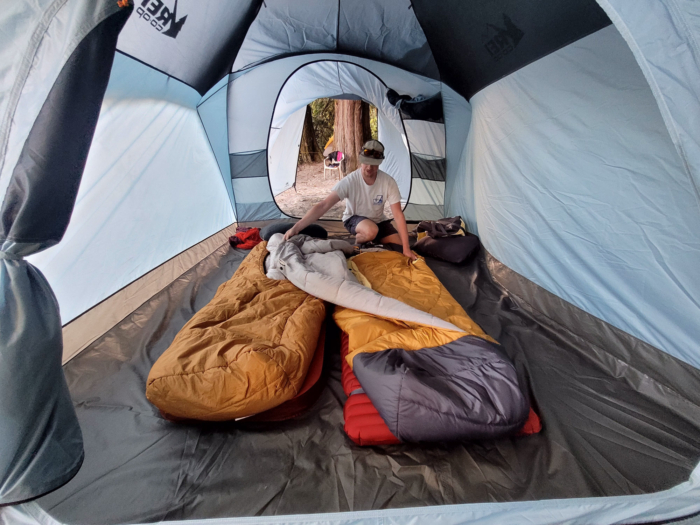
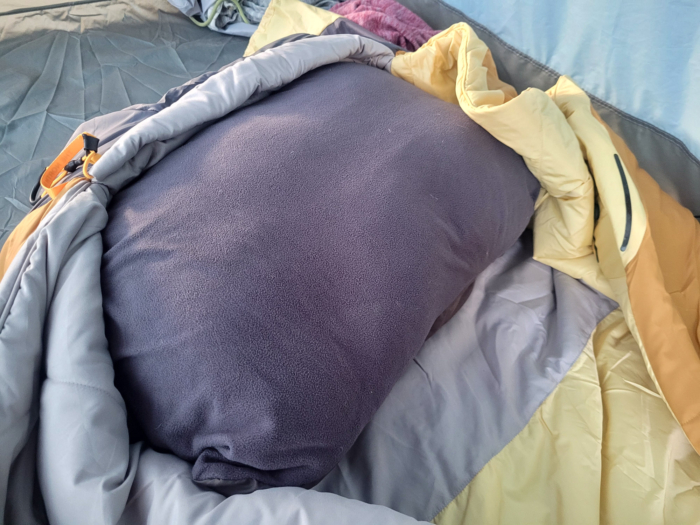
Senior Editor Nick Belcaster used this bag through late summer, where it quickly became a camp favorite for its zero-fuss entry. The straight-tapered profile was easy to move around in, the soft-touch lining felt great next to skin, and the hood kept pillows anchored. It’s easy to view this as a high-tech evolution of the Kelty Eclipse (just know you’ll pay $115 more for magnetic hardware and multi-temperature adaptability).
This bag rivals the Sierra Designs Frontcountry Bed 20 in many ways. Both are zipperless synthetic bags trading rigid seams for multi-layer coverage, with Sierra Designs using an integrated comforter and TNF employing a magnetic wing system. The big difference is versatility: the Frontcountry Bed is heavier and bulkier, while the Universal One lets you select brushed or smooth fabrics next to skin.
For an accessible, multi-season sleeping system that eliminates zipper frustration, the Universal One Bag makes a strong case for itself.
Specifications
Pros & Cons
Pros
- NEMO's spoon-shape bag is uber-comfortable, especially for those who toss and turn or side-sleep
- Updated Thermo Gill vents help modulate temperature
- Oversized draft collar is cozy to tuck into
- Smart manufacturing choices mean this bag is 100% recyclable at end-of-life
Cons
- More of a backpacking bag, and might be more than you need for camping
- No footbox venting
Bottom Line: This sleeping bag has a profile that allows for really any sleeping position, and can modulate its warmth. There’s unfortunately no way to vent the footbox, and it is a little pricey for a camp bag.
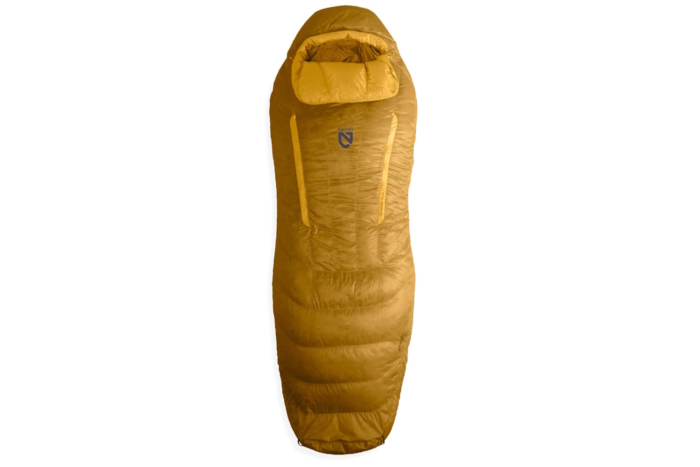
The NEMO Disco Endless Promise ($280) is a 100% recycled version of the brand’s bestselling backpacking bag. This one has a totally recycled PET shell, PFAS-free waterproofing (even on the hood), a 3D footbox and draft collar, and 650-fill power RDS-certified down. It is also, we found, wickedly comfortable, and nigh-impossible to extract yourself from once cozied up inside. If you can only get one bag for both camping and hiking, it’s tough to go wrong with the Disco.
Most notably, this bag has some unique design elements, like both vertical and horizontal baffling to prevent down migration and draftiness. However, our favorite element of NEMO’s Disco is the Thermo Gills — vertical vents that zipper open or close to dump heat and make adjustments throughout the night so you are always comfortable.
This system teams up with the unique spoon shape to create a bag that’s amenable to being turned around in all night. We had no issue stomach sleeping in this bag, which typically requires a knee jutting out where slimmer bags just can’t accommodate. It isn’t as spacious as a full-on rectangle bag, but it also is a good bit easier to warm all of the bag up (no chilly corners, here). This is what makes it such a great hybrid option.
Also notable with the Disco, and something you see less often with many bags, is that two bags can be zipped together. We haven’t had two of the same Discos on hand to test this out yet, but can confirm that the zipper slides well and the “anti-snag” design seems to work great every time. Overall, this bag packs in a lot, and the regular size is still fairly affordable. We’d compare the warmth rating’s accuracy and performance up there with the likes of Sea to Summit or Big Agnes.
The Disco 15 (the version we tested) works great if you are someone who can run warm, but still wants a bag around 15 degrees that can be versatile across three seasons and various conditions. It kept us warm, but was also easy to vent, unzip, and tailor to different comfort levels. For backpacking one weekend and camping the next, the Disco dances between both.
Specifications
Pros & Cons
Pros
- Impressively overstuffed with 1 lb. + of goose down
- Can be converted into a sleeping bag for two
- Option to take or leave hood based on needs
- Pertex shell is slick and soft feeling
- Twin zipper baffles locks out drafts
Cons
- Quite pricey, with additional kit needed to turn into a two-person bag
- Packed size is a bit large at 17 liters
Bottom Line: This is an ultra-lux camping bag that is very warm, uses high-quality down and shell materials, and can be turned into a double bag with an optional groundsheet. It’s also quite expensive, but it should last many years.
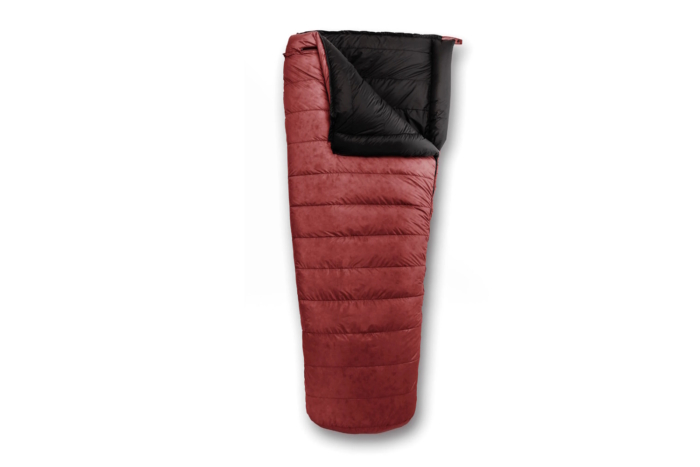
The Feathered Friends Penguin YF ($619) is a bit of a departure from the lean and backpacking-savvy bags typical of the Seattle brand, but let us assure you, this bag has all of the same DNA in a camping-friendly envelope. This semi-rectangular cut is packed to the brim with 900+ FP goose down and even tucks away a hidden ability: pair it with a groundsheet, and this bag sleeps two.
Available in four different temperature ratings (we tested the 20-degree version), the Penguin YF is dialed in for everything from staying cozy on summer nights to downright real cold. The roomy cut isn’t so roomy as to be difficult to warm — as it tapers in at the feet — but provides enough space to toss and turn as needed. When coupled with the optional hood, makes for a snug oasis on any evening.
When we brought the Penguin to an early spring in the high desert, temps were dropping precipitously, but that proved no match for the 7(!) inches of loft in the 20-degree version. This bag is one of the loftiest 20-degree bags we’ve ever slept in. Compared to the NEMO Disco 15, the Penguin YF 20 actually uses the same amount of down fill but because it is 900 FP compared to 650, there’s way more of it!
Backing up that loft are twin draft tubes that are equally ample, meaning no drafts snuck in. And when things got nippy, we unzipped the Penguin and attached the optional groundsheet to convert the bag to a twin-occupancy quilt. This groundsheet also interfaces with your sleeping pads, and the whole system worked a treat.
Granted, fully decking out this bag with two hoods and the optional groundsheet starts to run up the bill (to the tune of $817 — ouch), but when you look at the price of two decent camp bags together, the upsides begin to jive. Given the choice, whether or not to get the Penguin for co-sleeping will come down to whether you or your partner is a snuggler. If you’re looking for the best sleep in the front country, however, dive into one. You won’t regret it.
Specifications
Pros & Cons
Pros
- Fully removable top cover
- Independent sheets for both sleepers
- Generous sleeping space
Cons
- Large packed size
Bottom Line: The double sleeping bag does what many fail at, and that’s give you enough sheets. Two separate blankets give you the draft protection that bags like this require, and if you’ve got the space to move it around, this is a great choice for couples.
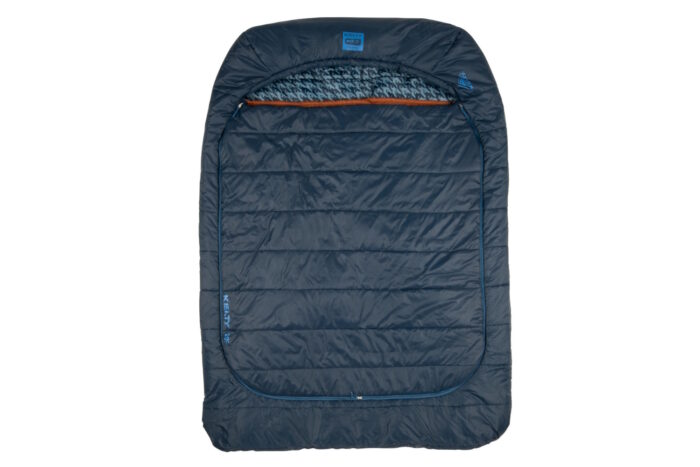
The double sleeping bag can be an elusive creature, and one that’s tough to pull off well. But jumping into the Kelty Tru.Comfort 20 Doublewide ($200) this past spring with our partner, we couldn’t help but grin — this is the double bag done well. Double sleeping bags can be a great investment if camping with your tent-mate frequently is a sure thing, or if you tend to sleep cold and want to borrow some body heat.
First, let’s address the truth about double sleeping bags: everyone is liable to be a bed hog from time to time. That’s why we dug the built-in synthetic-filled blankets in the Doublewide so much — each person gets their own on either side of the bag, so there’s less fussing over who gets the covers. Very nice.
On top of that, the cover layer is entirely removable for those extra warm nights, or can be opened up just at the bottom to adjust for venting — a feature we employed often during our testing. This adjustability really addresses some of our top concerns with double bags typically, which is control over your temperature.
While it isn’t the lightest or most packable bag, we’ve found that the places we typically take a double sleeping bag just don’t require much hoofing into, and this bag certainly excels at car camping — and especially tossing in the back of a pickup bed. For a more packable doublewide bag, consider the down-filled Marmot Sawtooth Doublewide Bag ($429), or, as a premium and convertible pick, the Feathered Friends Penguin YF ($560) — a single bag that can be modded for two sleepers.
Specifications
Pros & Cons
Pros
- Spacious rectangle cut
- Affordable price below $50
- Durable polyester insulation won't pack out quickly
Cons
- Not as warm as rated for most campers
- Heavier weight
- Oversized for most sleeping pads
Bottom Line: A super-budget option that will work in a pinch, or longer if your needs are limited and your wants few. Makes an excellent loaner for kids sleeping over.
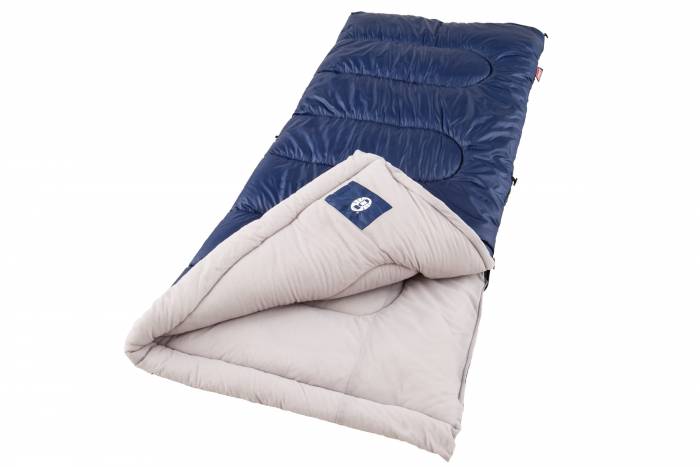
Clocking in at $59, the Coleman Brazos packs in a lot of features for the budget-minded camper. Not only is this bag a value among sleeping bags, but it also targets those who sleep at the campsite the way they do at home: the tossers, turners, and sprawlers.
A whopping 2.75 feet of shoulder room accommodates a broad torso and large individuals, and it also allows more freedom to move while sleeping. Plus, the gaping hood is big enough to bring your favorite pillow from home.
The Brazos’s synthetic fill is typical of many camping sleeping bags, which are often less concerned with overall weight and bulk. Synthetic fills do, however, provide a number of advantages in camping situations: they resist dampness, are hypoallergenic, and are less costly than their down counterparts.
The bag only goes down to a 30-degree comfort rating (and that’ll be a chilly 30 degrees), so bring layers for cooler nights or prepare to be cold. We have found in our testing that bags that incorporate more roomy cuts are more difficult to warm efficiently, and so when the temps do dip, reach for a bag with more of a roomy mummy cut, such as the Mountain Hardwear Yawn Patrol or Sea to Summit Ascent.
The Brazos 20 is a great fit if you’re looking for something simple and designed for comfort, and a bag that won’t break the bank.
Specifications
Pros & Cons
Pros
- Simple and classic rectangle design
- Cheaper price for a down sleeping bag
- Zips together with another bag
Cons
- Low fill weight down
- No alternative sizes offered
Bottom Line: A classic rectangular bag done up in down, with the ability to zip two bags together for couples. Down can be tough to warm into corners, however, and this bag can develop cold spots.
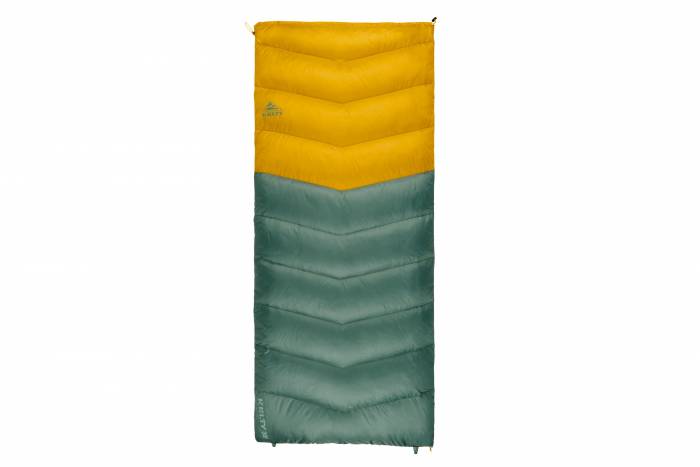
With all of the warmth and compressibility of down combined with a classic rectangle shape, this is one solid bag — especially for beginning adventurers. Kelty’s Galactic 30 ($190) also sports one standout feature for cuddly couples — two bags can zip together to turn one rectangular bag into a double-wide snuggle factory.
Otherwise, it’s a basic bag with fewer bells and whistles (like cinchable hoods, advanced venting, mummy shape) than the pricier models on this list. But as the saying goes, sometimes more money = more problems. The beauty is in the simplicity of this sleeping bag.
At about $190, the Galactic manages to pack in value for the budget-minded car camper. Due to its rectangular shape, we wouldn’t recommend testing that 30-degree lower limit, but for warmer summer nights under the stars, it’s a winner.
Sleeping Bag Comparison Chart
| Compare |
|
|
|
|
|
|
|
|
|
|
|
|
|
|
|
|---|---|---|---|---|---|---|---|---|---|---|---|---|---|---|---|
| Price |
$149
|
$180
|
$399
|
$340
|
$155
|
$414
|
$380
|
$130
|
$170
|
$270
|
$280
|
$619
|
$200
|
$59
|
$190
|
| Shell fabric |
Recycled polyester, Bluesign approved
|
Recycled 40D nylon ripstop
|
20D recycled nylon
|
20-denier ripstop nylon
|
30D recycled polyester body; 50D recycled polyester liner
|
100% RCS recycled polyester
|
50-denier 100% recycled polyester ripstop w/ C0 DWR
|
50D recycled polyester ripstop With non-PFC DWR
|
Cotton canvas
|
70D nylon taffeta
|
Recycled polyester ripstop with C0 DWR finish
|
Pertex YFuse nylon
|
75-denier polyester taffeta
|
Polyester
|
5-denier polyester
|
| Available temperature ratings |
20°F (tested)
|
20°F (tested)
|
15, 30°F (tested)
|
20 (tested), 32°F
|
35°F (tested), 15°F
|
15°F (tested)
|
30°F
|
20°F (tested), 35°F
|
-10 (tested), -25°F
|
20°F
|
15 (tested), 30°F
|
10, 20 (tested), 30, and 40°F
|
20°F (tested)
|
20 (tested), 30°F
|
30°F (tested)
|
| Available sizes |
Medium (tested), Medium Wide, Long, Long Wide
|
Regular
|
Regular and Long
|
Short, Short Wide, Regular (tested), Regular Wide, Long, Long Wide
|
Short, Regular, Long
|
Regular (tested), Long
|
Double
|
Regular and Long
|
Regular (tested)
|
Short, Long (tested)
|
Men's (tested) and Women's; Regular and Long
|
Regular (tested) and Long
|
Double
|
Regular
|
Regular
|
| Tested packed volume |
17.7 L
|
37 L
|
8.5L
|
14.5 L
|
22 L
|
14 L
|
138 L
|
27 L
|
31 L
|
22.5 L
|
6.4 L
|
17 L
|
65.8 L
|
32 L
|
14 L
|
| Tested weight |
5 lbs., 5 oz.
|
6 lbs.
|
1 lb., 12 oz.
|
2 lbs., 11 oz.
|
3 lbs., 12.2 oz.
|
4 lbs., 0.3 oz.
|
9 lbs., 5 oz.
|
4 lbs., 14.3 oz.
|
11 lbs., 8 oz.
|
5 lbs.
|
2 lbs., 11 oz.
|
2 lbs., 10.8 oz.
|
9 lbs., 8 oz.
|
5 lbs.
|
2 lbs., 11 oz.
|
| Insulation |
98% recycled polyester/2% polyester
|
Recycled Cloudloft Eco
|
750+ fill Ultra-Dry down
|
650 fill-power hydrophobic duck down
|
Thermapro Eco synthetic insulation
|
650 FP duck
|
Synthetic 100% recycled Stratofiber
|
100% polyester fiber batting
|
TechLoft Silver synthetic
|
Heekseeker synthetic polyester
|
650 fill-power duck down
|
900+ FP Goose down
|
Synthetic
|
Synthetic
|
550 fill-power down
|


How We Tested the Best Camping Sleeping Bags
For this comprehensive guide, our Buyer’s Guide team leveraged a collective decade of experience and hundreds of nights in the dirt. Our current rankings are built on 45+ sleeping bags tested, a diverse team of eight testers, and a regimen that demands three separate bench tests before these bags even hit the dirt. Then, they’re in for a solid week of testing overnights before we render a verdict.
Our Testing Process and Testing Grounds

1. Backcountry & Campground Field Testing
To ground-truth manufacturer claims, our team took these bags into the wild, ranging from 35°F nights in camping tents in Washington state to mid-40s Colorado evenings in rooftop canopies. We didn’t just guess the temperature; we utilized overnight data loggers to track ambient air versus internal bag warmth, giving us a precise look at thermal efficiency. This allows us to tell you exactly how a bag handles a 28-degree frost versus a humid summer night.
2. The Active Sleeper Fit & Feel Assessment
A bag’s comfort is only as good as its cut. Our lead tester, Meghan, is a self-described active sleeper who requires significant tossing and turning before falling asleep. We specifically monitored how these bags responded to movement: checking for zipper snags, fabric twisting, and the mummy-bag snugness. To ensure our findings weren’t subjective, every bag in this guide was cycled through multiple testers of different body types to reach a consensus on interior volume and fabric softness.
3. In-House Lab: Weights, Volume, and Weatherproofing
Manufacturer specs are often “best-case scenarios,” so we verify them in-house.
- True Weight: Every bag is weighed on our digital scales to check for discrepancies against brand claims.
- Standardized Pack Volume: To compare packability fairly, we stuffed each bag into a standardized compression sack to measure its minimum possible volume.
- The Drench Test: To simulate a leaking tent or heavy condensation, we subjected each shell to a controlled moisture test, monitoring for water ingress and checking how well the DWR (Durable Water Repellent) finish protected the down or synthetic loft.
Our 100-Point Camping Sleeping Bag Rating System
To provide a transparent ranking, each bag is scored across four weighted categories:
- Warmth (30%): This is our highest priority. We evaluate the accuracy of the EN/ISO temperature ratings against our field data and tester consensus.
- Comfort (30%): We look for livability. This includes the shape of the cut, the hand-feel of the lining, and the inclusion of luxury features like oversized draft collars or integrated pillow sleeves.
- Feature Set (20%): Unlike minimalist backpacking quilts, camping bags should offer utility. We award points for integrated pockets, multi-zipper ventilation systems (like the Sea to Summit Ascent’s Free-Flow system), and specialized materials like flannel or canvas.
- Packed Size (20%): While less critical for car camping than for backpacking, we still value efficiency. Bags that utilize high-lofting 750+ fill down score higher here than bulky synthetic options, as they offer the most versatility for those who cross over into the backcountry.
Our Expert Testers

Our foray into camping sleeping bag testing began in 2021, when GearJunkie Editor-in-Chief Adam Ruggiero assembled a slate of bags and winnowed it down to a set of 11 essentials. Since then, we’ve seen a blizzard of new bags and technologies, and every year we have measured up the newest offerings against the old guard.
Current tester Meghan LaHatte has spent more time under the stars than not since she moved to Colorado in 2017. As an avid adventurer and lover of her beauty sleep, Meghan had no hesitation in helping tackle this buyer’s guide. From backpacking in the backcountry to classic car camping, she finds a lot of comfort in that cozy feeling of nestling into a plush sleeping bag.
Meghan tested out our most recent round of camping sleeping bags during the late spring and mid-summer in the Colorado Rockies. From nights spent in the dispersed camping areas of Crested Butte to the granite-encrusted deserts of Gunnison, Meghan made sure to evaluate these sleeping bags in more ways than one.
The final list of recommended sleeping bags is the combined result of thorough firsthand experience across the nation and various conditions. Beyond our field tests and personal experience, we determined the best sleeping bags based on metrics like reported warmth, packability, weight, material durability, and intended use. Ultimately, these bags serve a range of campers in their quest for ample quality sleep outdoors.

Buyer’s Guide: How to Choose a Camping Sleeping Bag
It’s worth spending time finding the right sleeping bag. After all, this is a piece of gear that will not only keep you comfortable at night but can easily last through years of use. And while there isn’t a single sleeping bag that’s best for every camper out there, this buyer’s guide will help identify the best bag for you.
We’ll note that this article is aimed at general camping. While some may be fine for backpacking, due to their size and weight, most are better suited to car camping or short hike-in scenarios. For longer trips in the backcountry, check out our review of the best backpacking sleeping bags.

Fit, Shape, and Ergonomics
No two adventurers are shaped the same, and your sleeping bag shouldn’t be either. In our pursuit of the best camping sleeping bags, we prioritized “livability”—selecting models that allow you to kick back, toss, and turn without feeling restricted. Through hundreds of hours of testing, we categorized the market into four primary silhouettes based on their balance of comfort and thermal efficiency.
- Relaxed Mummy Bags: While traditional mummy bags are the gold standard for ultralight backpacking, they can feel claustrophobic for front-country use. The “relaxed mummy” softens the corners and widens the girth, offering a generous cut that remains thermally efficient. The Sea to Summit Ascent is our favorite example of this hybrid design, while the Sea to Summit Basecamp 15 offers an even more casual fit for those who want a bed-like feel.
- Spoon-Shaped Bags: A proprietary innovation from NEMO, the “spoon” or hourglass shape adds significant real estate at the elbows and knees. This design is a game-changer for acrobatic sleepers who move throughout the night. Our testing highlighted the NEMO Disco as the standout here; its unique geometry provides an oasis of space that allows side-sleepers to shift positions without the bag getting twisted or tight.
- Rectangular Bags: The classic standby, rectangular bags make no apologies for their sprawl. By providing maximum room to stretch, bags like the REI Co-op Siesta Hooded and Kelty Wayback offer unmatched comfort. The trade-off is often thermal efficiency (rectangular cuts have cold corners where heat can escape) unless you opt for a powerhouse like the ALPS OutdoorZ Redwood, which uses sheer insulation mass to overcome its boxy shape.
- Double Sleeping Bags: Designed for couples, double bags are typically rounded rectangles that prioritize shared warmth and snuggling. The NEMO Jazz Double remains our top recommendation for duos, offering enough internal volume for two people to spread out comfortably without feeling like they are fighting for the covers.

A New Era of Inclusive Sizing
The industry is finally moving beyond the basic “Regular” and “Long” constraints to better represent the diverse bodies of the outdoor community. Our testers specifically lauded the REI Siesta for its four distinct size options, which combine varied lengths with extra-wide widths. When shopping, always check the manufacturer’s “Maximum User Height” and shoulder girth specs to ensure you aren’t carrying more bag — or less — than you actually need.
- Women’s Specific Bags: While some manufacturers are moving away from gendered sleeping bag sizing, it’s important to know what you’re getting when you’re looking at a women’s-specific sleeping bag. These bags are very often wider at the hips and narrower at the shoulders, aiming to increase thermal comfort and eliminate dead space.
Women’s specific bags might also use a different insulation design, where more insulation is added to the core or feet to accommodate different needs. The Sea to Summit Women’s Ascent is one such bag, and our female testers lauded the changes compared to the men’s cut.

What Does a Sleeping Bag Temperature Rating Actually Mean?
A sleeping bag’s temperature rating is often the most misunderstood spec in the aisle. For some, a 20-degree bag is a cozy sanctuary at freezing; for others, it is merely a survival limit. To eliminate this ambiguity, we weighed thermal efficiency as 30% of our total score, moving beyond the marketing claims to see how these ratings actually panned out in the backcountry.
- Understanding Comfort vs. Lower Limit: Most modern bags are tested using the ISO/EN standard, which provides two primary metrics:
- Comfort Rating: The lowest temperature at which a “cold sleeper” (traditionally modeled on a female body) can sleep comfortably. This means no overnight wakeup to adjust your sleeping bag.
- Lower Limit: The lowest temperature at which a “warm sleeper” (traditionally modeled on a male body) can sleep without shivering. It is crucial to remember that these ratings assume the sleeper is wearing a base layer and socks while utilizing an insulated sleeping pad. In our field tests, we ground-truthed these numbers by tracking overnight lows and surveying our testers on their perceived warmth throughout the night.
- The Top Thermal Performers: During our most recent testing cycle, the ALPS OutdoorZ Redwood -10 emerged as the undisputed heavyweight champion of warmth. While its massive footprint makes it strictly a car-camping luxury, the sheer volume of synthetic insulation outperformed everything else when the frost hit. For those seeking premium warmth in a more portable format, the Therm-a-Rest Boost 650 and Feathered Friends Penguin YF followed closely. Though both utilize high-lofting down, their distinct shapes offer different thermal advantages: the Penguin’s classic cut traps heat efficiently, while the Disco manages to stay warm despite its roomy, side-sleeper-friendly silhouette.
- The 20° to 30° Sweet Spot: For the majority of three-season campers, a bag rated between 20°F and 30°F offers the best versatility. This is the Goldilocks zone where the REI Co-op Siesta Hooded 20, Sea to Summit Ascent, and Mountain Hardwear Yawn Patrol thrive. We discovered that geometry plays a massive role in thermal regulation; generously cut bags like the NEMO Disco provide excellent airflow for warmer summer nights, while the tapered mummy cuts in this category excel at trapping body heat as you push into the shoulder seasons.
Tester’s Insight: Field testing proved that internal volume is the ultimate ‘X-factor’ for warmth; high-volume bags like the NEMO Disco require more body heat to warm the dead air inside, making them feel cooler than their rating suggests. If you run cold, we recommend picking a bag with a comfort rating 10 degrees lower than your expected overnight lows.

Down vs. Synthetic Sleeping Bags: Which Is Better for Your Trip?
Down Insulation
As the best insulator nature has come up with yet, down is able to insulate by trapping air in between the fibers and holding it there. It also has the ability to release moisture from within, meaning sleeping bags made with it are more breathable than those made with synthetic fill.
All down lands on a sort of continuum of efficiency that measures how much loft the fibers have. A higher fill power down will do the same insulating power of a higher amount of lesser down, meaning that a sleeping bag will need less of it to sport the same temperature rating. For example, a 32-degree sleeping bag made with 650 fill down will have more bulk and weight than a 32-degree bag made with 850 fill down.
The final metric to pay attention to in a down sleeping bag is the total fill amount. Knowing both numbers will give you an idea of how warm the sleeping bag is bound to be. Down does have its problems, and once damp, it loses insulating power and is tough to dry. It also can be on the pricier side when compared to synthetic insulations, and shouldn’t be left compressed for long periods of time.
Synthetic Insulation

Synthetic fills are man-made polyester fibers that are designed to mimic the warmth-retention properties of down, but still provide some warmth once wet. These fibers are woven in different patterns to provide differing levels of warmth, breathability, and compressibility.
Synthetic fills are measured by the grams per square meter (GSM) metric. This gives users an idea of how warm the sleeping bag will end up being. For example, a synthetic fill with a 2.5-ounce GSM can expect to provide a temperature rating of around 50 degrees Fahrenheit.
While there has been considerable improvement in synthetic fills over the years, we still haven’t been able to brew up a material that can match down in terms of weight-to-warmth ratio. Because of that, sleeping bags made with synthetic materials will need more insulation to provide the same amount of warmth. This will also mean that they will often be bulkier when packed. While our best overall bag, the REI Co-op Siesta Hooded 20, was cozy as all get-out, it also packs up to a substantial size.
It’s important to note that synthetic fibers are quite durable, but over time will compress down and lose the loft that they once had. Compared to down bags, however, they need a good bit less care in order to keep the sleeping bag rolling for a long time.

Packed Size
Packed size is of particular importance when backpacking, but isn’t as much of a concern for casual camping trips. But still, keeping things compact means more space in the back of the rig for snacks, and when choosing a sleeping bag that’ll be used for a bit of front and backcountry, packed size is much more important to pay attention to.
Anyone looking to minimize pack weight should consider a crossover backpacking/camping sleeping bag like the NEMO Disco or the Mountain Hardwear Yawn Patrol. These bags are often not quite as trim cut as a full-on backpacking bag, and make space at the feet and shoulders to accommodate more active sleepers.
More comfort-oriented bags with wider cuts won’t compress as well, and may even opt to forego the compression stuff sack entirely. The NEMO Jazz 30 Double travels in a spacious duffel-bag-like sack, and bags like the Kelty Wayback will roll up into themselves and secure with attached compression straps.
At the far end of the compressibility scale, the ALPS OutdoorZ Redwood has little use for a small packed size, and even less for your sympathies — this bag is large and in charge, and takes up the entire backseat of some sedans. But the comfort provided is well worth it, and the same can be said of the Kelty Tru.Comfort 20 Doublewide, which takes up an impressive 65 L of space in its laundry-bag-sized stuff sack.

Sleeping Bag Construction
- Shell and Liner Fabric: Most bags will use a ripstop material for the outer shell. Ripstop is a nylon or polyester fabric woven with heavier threads to resist abrasion and tearing. The unique construction of ripstop also allows it to remain fairly breathable. As for bag liners, taffeta is among the most common choices. This is also a nylon or polyester material, but unlike the coarse feel of ripstop, taffeta has a pleasant, silky feel. And it is more breathable. This makes it an ideal choice for next-to-skin pieces. Some of the bags we reviewed, like the NEMO Jazz Double, have a removable insert sheet that’s washable and soft.
- Zippers: Sleeping bag zippers may be seemingly simple, but can actually contribute heavily to a bag’s functionality and convenience. From LH and RH zippers to closeable vents, here are some different zipper aspects with camping sleeping bags:
- Left-Handed vs. Right-Handed Zippers: You’ll often see sleeping bags labeled as having left-handed (LH) or right-handed (RH) zippers when perusing options. Depending on your dominant hand, these configurations help with the ease of opening and closing the bag while lying down on your back.
- Full vs. ¾ Zippers: Another design aspect of sleeping bags is how much the zippers open. This often takes the form of being fully openable and closeable or at the ¾ length. A fully zippered sleeping bag is fantastic for doubling as a blanket at camp or if it is a relatively hot night and you need maximum ventilation. These bags tend to allow for more temperature customization since you can open them up all the way. The North Face Wawona and REI Siesta Hooded Bag can both fully unzip, allowing users to use them as a quilt or stick their feet out when the temps rise.
- Ventilation Zippers: As sleeping bag designers use more ingenuity, they are creating bags that allow for temperature customizations. Sometimes these venting options are footbox zippers for airflow to the lower extremities, while others, like the Mountain Hardwear Yawn Patrol, have multiple zippers for ventilation options. Another sleeping bag with added ventilation zippers is the Sea to Summit Women’s Ascent, which has a side zip and footbox zip for added airflow. Even better, you can wear this sleeping bag like a snowsuit around camp, since it frees the arms and legs.

Pad Straps/Sleeves
To prevent slippage, many sleeping bags come with included sleeves or straps for attaching to a sleeping pad. While this is not a necessary feature to have on a sleeping bag, it can definitely be helpful if you tend to toss and turn throughout the night. Waking up on the ground next to your sleeping pad is never a fun feeling.
The NEMO Jazz 30 Double has two wide straps at the top and bottom of the sleeping bag for attaching it to a pad. These features will help keep you warm, as you can retain maximum insulation between yourself and the sleeping pad.
Furthermore, some of the sleeping bags listed also include a sleeve to keep your pillow stationary. If you’re car camping and have the space, a comfortable pillow is definitely a plus. The REI Co-op Siesta can fit a full-size pillow from home, so definitely consider that one if you seek this sort of feature.
Similar to liners, pad straps or sleeves are not required when it comes to a well-made sleeping bag. Some folks have success with just placing their pads inside the sleeping bag itself, but the shape and silhouette of your bag will need to be almost identical to your bag for this to work well.
Extra Features: Phone Pockets and Removable Sheets

Camping sleeping bags have the luxury of retaining some of the niceties that backpacking sleeping bags have to leave behind, and we made sure to roll these considerations into our general impression as well. The top of the heap has to go to the NEMO Jazz Double, which piles on smart features such as an integrated and removable sheet, a pad sleeve, and a pillow pocket for wrangling your camp pillow in place.
Adjustable cinch cords on hoods are nearly universal on more comfort-mummy-shaped bags, and the better-designed versions will use two separate cords (often with different cord locks for midnight recognition) to adjust the upper and lower aperture openings. More modern functions like an internal phone pocket can be handy for keeping your phone warm all night, and we’re pleased that many bags are now jumping on this trend and incorporating them.
Price & Value

With a range of prices from $100 and all the way up to $550+ there’s plenty of variety in terms of what you get for your money when it comes to camping sleeping bags, but it generally comes down to a few important differences.
The first is going to be materials. Down versus synthetic will be the first big schism, with down-filled bags always asking for a more handsome sum compared to more affordable synthetic options. Sizing and design, too, will play a big part, with more mummy-style bags being cheaper and luxuriously wide bags going for more. Finally, smaller details, such as additional zippers for ventilation, integrated phone pockets, and pillow-sized hoods can nudge the price up as they are added on.
Budget
If this camping thing is all new to you, or you just don’t find yourself getting out all that much, it may not make sense to really splurge on a luxe sleeping bag (there’s plenty of other kit to get, after all). Budget camping sleeping bags will almost always be synthetic-filled, as it’s far cheaper to source, but don’t think that these bags are less for it. Synthetic bags fare far better with occasional moisture, and won’t lose loft as fast as down bags.
The REI Co-op Siesta Hooded 20 ($149) is an excellent option for those just getting into camping, as its a robust construction and available in a number of different sizes to accommodate any body type. Those looking for a more typical rectangular cut might also consider the Kelty Wayback ($149), which sports a classic shape and even tucks in a little luxury with the flannel interior.
Mid-Tier
If camping is one of your weekend go-tos, we’d suggest spending a bit more to get into a bag that will be ready to take on a wider variety of trips and conditions. Spending a bit more will also often mean you get a warmer-rated sleeping bag.
It will also open up the possibilities of getting into a down-filled sleeping bag, which compresses much more than synthetic bags and can be used for some backpacking as well. Down fills are most often around the 650 FP mark in this price range, where you’ll expect to spend between $200 and $350, depending on the temp rating.
Premium
For van lifers or those who find themselves bedding down in frontcountry camps more than they do at home, spending the extra cash to get a seriously nice sleeping bag can be a great investment into your sleep. Expect to pay north of $400 for the privilege, but for the money, you’ll be getting bags that use higher fill power downs and nicer shell fabrics such as Pertex materials.
The Sea to Summit Women’s Ascent 30 ($429) is a very nice bag, and is dialed in to be perfect for female bodies to nestle down into. Equally nice is the Feathered Friends Penguin YF 20 ($560), a camp bag from the boutique Seattle manufacturer that borrows from their knowledge in backpacking bags to trim out a seriously cozy camp bag that’ll even convert into a space for two.
Frequently Asked Questions
In general, every sleeping bag has a temperature rating — from -40 to 55 degrees Fahrenheit — that signifies the warmth of the bag. In the past, each brand conducted its own testing and assignment of temperature ratings. This made for a lot of variances across sleeping bags.
Luckily, most brands now use European Norm (EN) temperature ratings. Bags are therefore tested by a third party in internationally certified labs, using a series of standardized tests. This makes it much easier to compare bags, but not completely foolproof.
As noted above, a rating that may be comfortable for some could mean a shivering night of survival for others. So to make sense of sleeping bag ratings, it’s useful to know if you tend to sleep warm or cold.
Women generally sleep cooler and prefer a bag with a corresponding rating. So for the same camping trip, one person may prefer a 20-degree bag while another is completely comfortable in a 32-degree bag.
Hoping to snuggle up under the stars? Then it’s great to have two sleeping bags that zip together. The Kelty Galactic is a great budget-friendly option that zips together. Its rectangular shape also maximizes the room for two.
In general, mummy-style bags that share the same zipper type can be zipped together — although you’ll need one right- and one left-side zip bag.
And if you plan to always sleep together, it’s worth considering a double sleeping bag. These bags are designed for two and offer up the best features for a cuddly night’s sleep. We particularly like the Kelty Tru.Comfort 20 Doublewide.
Each material has pros and cons. Down, the plumage found underneath a waterfowl bird’s feathers, is loved for its warmth and its easy compressibility. Down sleeping bags tend to pack down small and light. But down can clump and stop insulating as well if it gets wet. Many companies treat down in order to avoid this, but don’t leave a down sleeping pad out in the pouring rain and expect anything less than a very soggy sleep.
Synthetic bags tend to be cheaper than down. It also dries quickly and insulates even when damp. But alas: synthetic is bulkier, packs less warmth at the same weight, and can lose insulating power slowly every time it’s compressed. Both types of bags have a time, place, person, and budget.
They’re nice to have, but by no means essential. Many amoung us have camped for over a decade, never used one, and is no worse for wear. We’re used to cramming into a backpacking tent where other people and pads keep movement to a minimum anyway. It really depends on how much you thrash around at night, and how big your tent is.