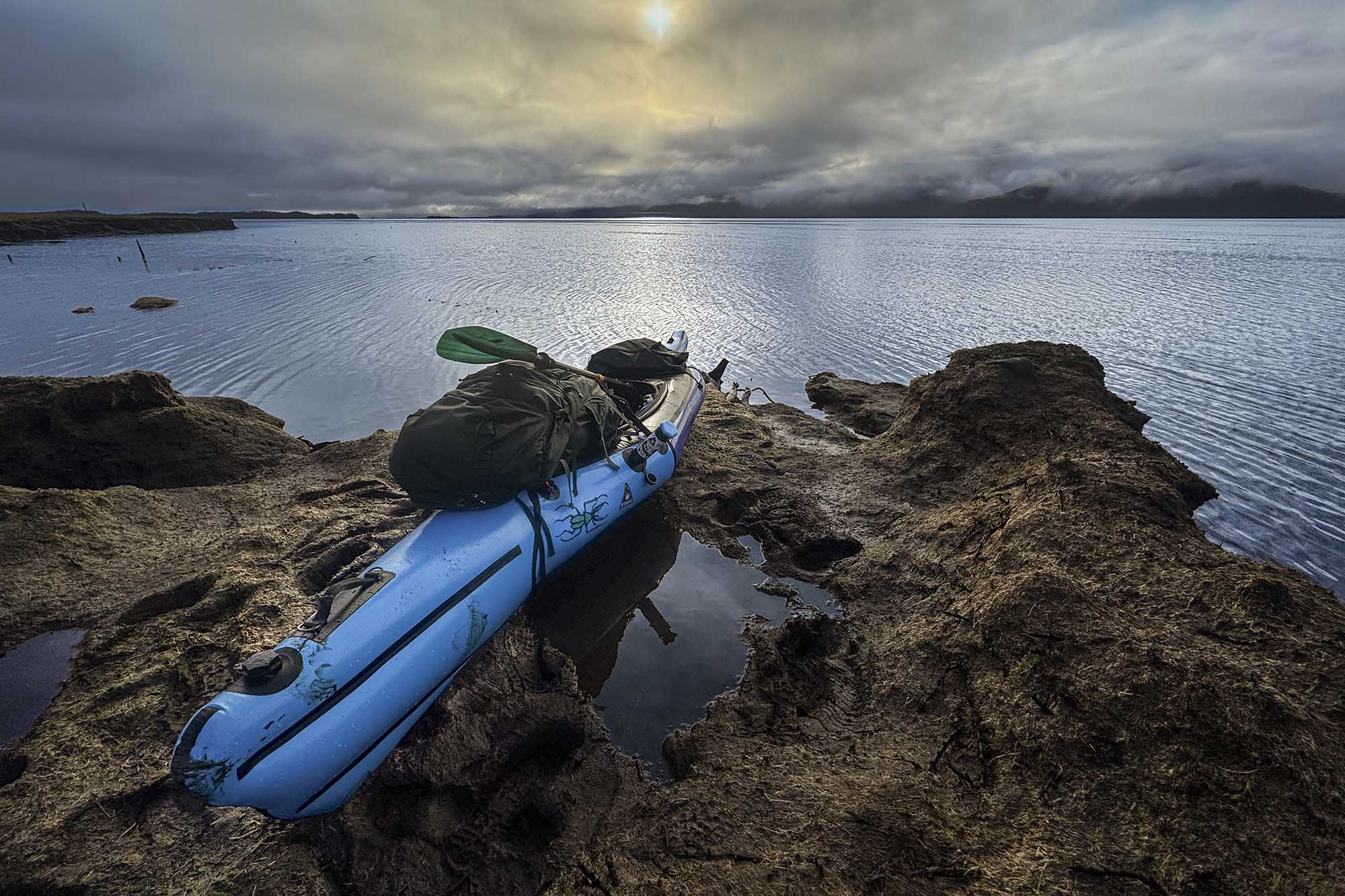
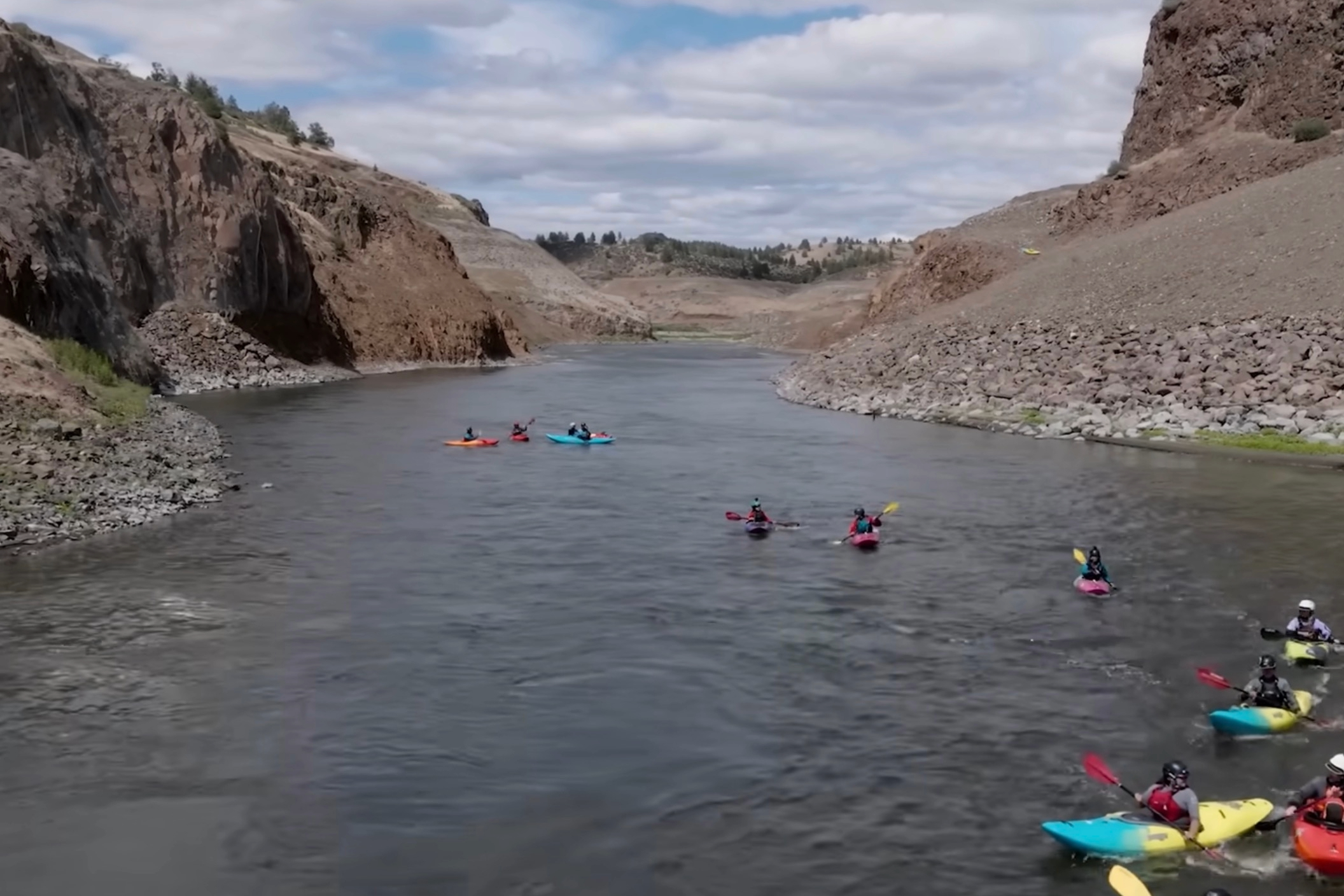
Dry bags have a single goal — keeping your gear dry. Whether your raft gets flipped, you take a spill in a creek, or you get caught in an unexpected downpour, it’s essential that clothing, sleeping bags, electronics, and other necessities stay dry.
If your gear has ever been soaked in the wilderness, you know how difficult — or even life-threatening — it can be, taking a toll physically and mentally. We’ve been there, and it inspired our hunt for the best tool for the job.
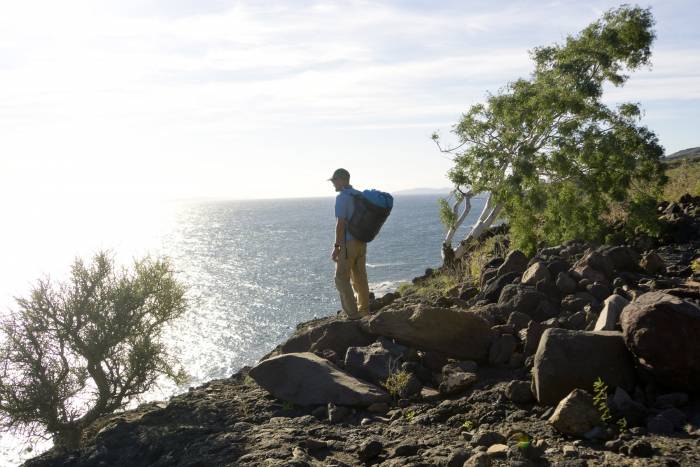
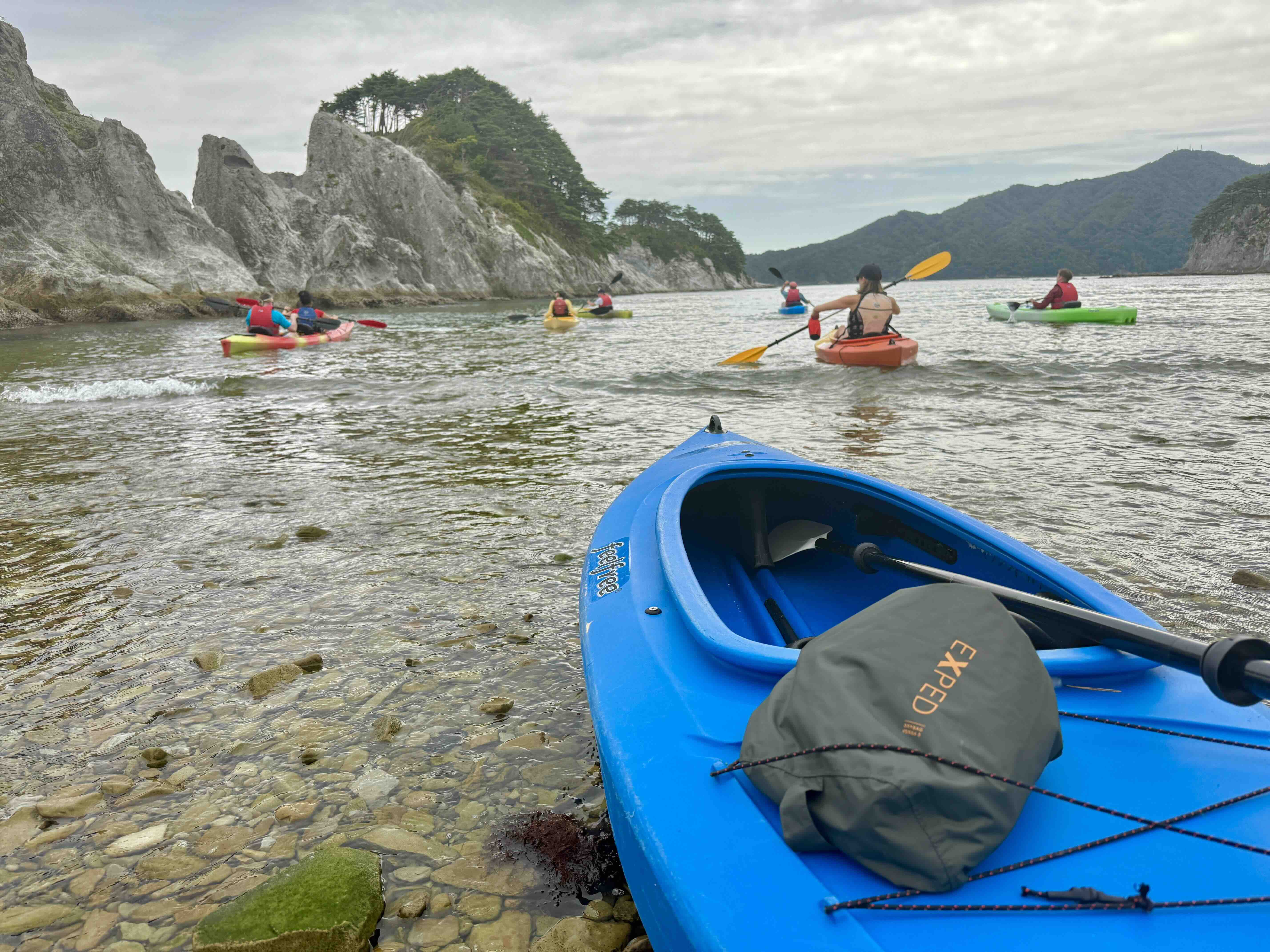
Whether you’re hiking along Japan’s Michinoku Coastal Trail or sea kayaking off the pristine Jodogahama Beach, where Senior Editor Morgan Tilton recently tested a range of dry bags throughout the Tōhoku Region, there are plenty of adventures where a dry bag is foundational. Our team used these dry bags for backpacking, paddling standup paddleboards, hunting with fourth-season elk tags, and linking up national parks by motorcycle.
Editor’s Note: We updated our Dry Bags buyer’s guide on March 31, 2026, with our new award-winning Best Overall pick — the tenacious YETI Panga 28L Waterproof Backpack — and the award-winning budget choice, the Exped Drybag Versa, a buttery-soft everyday set. We also added extended ratings to help you find the best waterproof sack.
The Best Dry Bags of 2026
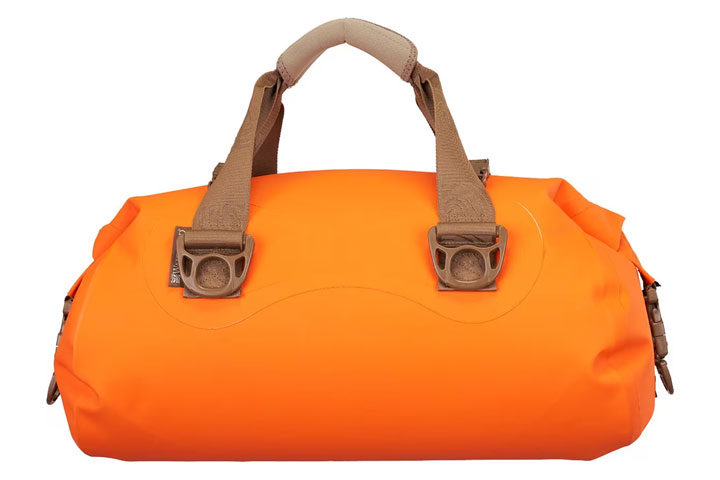
YETI Panga 28L Waterproof Backpack Dry Bag

Specifications
Pros & Cons
Pros
- Puncture- and abrasion-resistant
- Airtight, fully submersible design
- Grab handles on three sides
- Roomy
Cons
- Central waterproof zipper is abrasive when rummaging
- Pack is fairly stiff versus compressible
- Expensive
- Lacks water bottle sleeve
Read Review: YETI Panga Backpack: A Standout Submersible Dry Bag You Can Count On
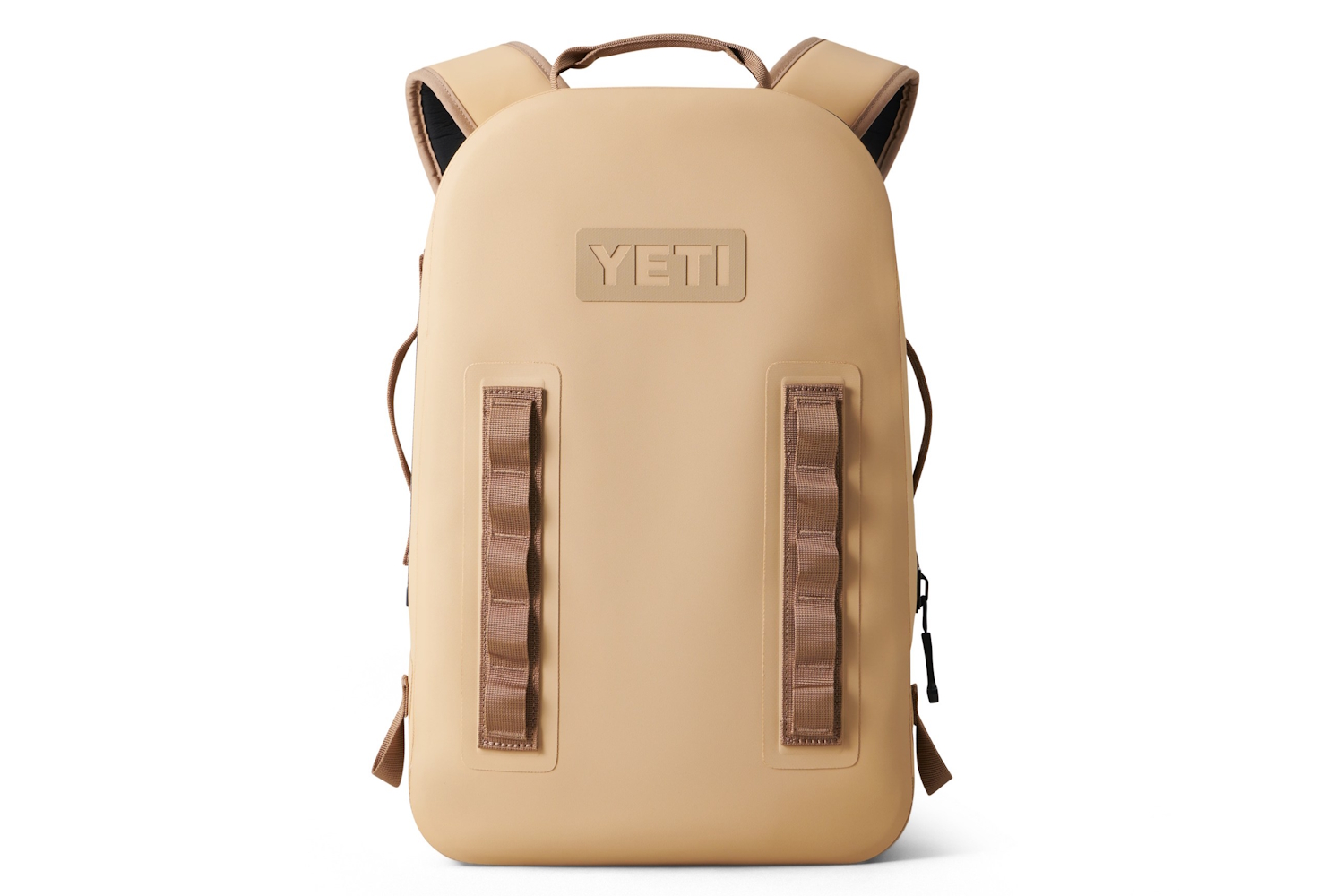
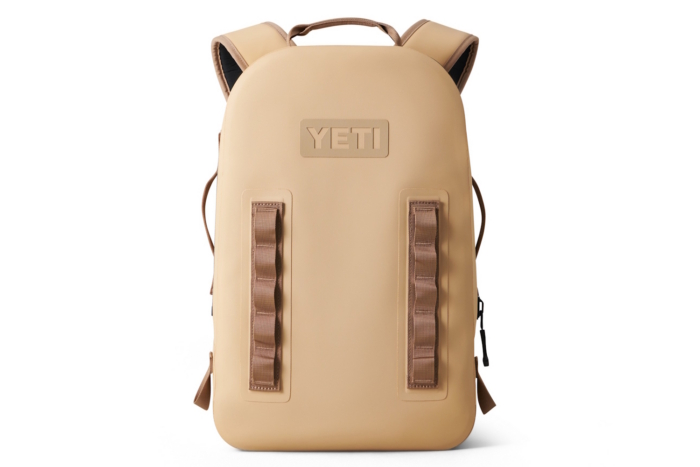
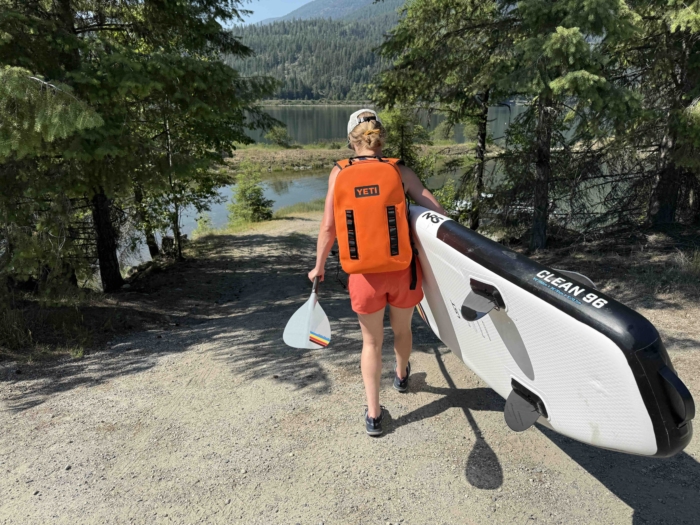
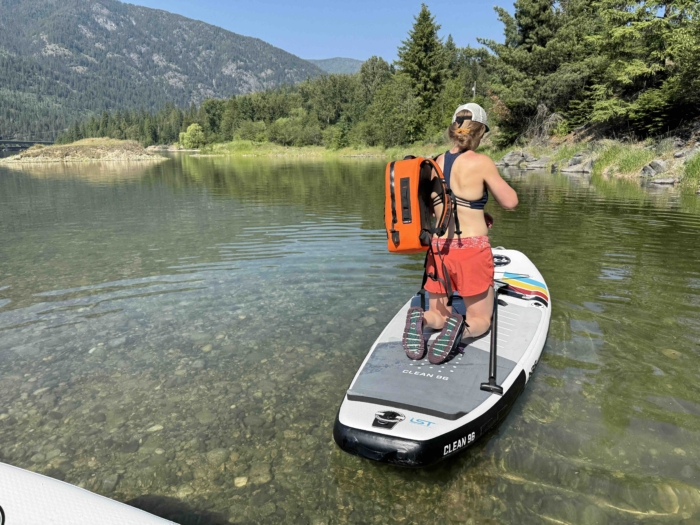
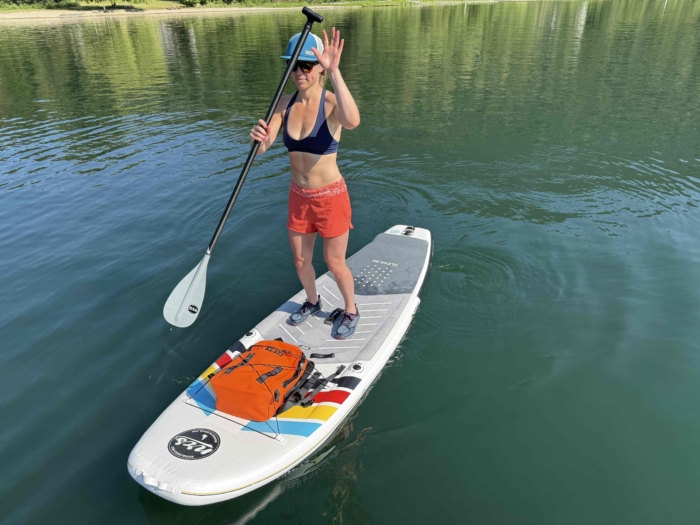
Nothing beats the convenience of two shoulder straps when carrying a bag of gear with your hands full. We love throwing on the YETI Panga 28L Waterproof Backpack Dry Bag ($325) when we haul our inflated standup paddleboard to the water’s edge or hop onto dry land for a scramble or hike. The roomy compartment provides plenty of space for dry layers, water bottles, a camera, our phone, food, and more. The pack protects everything inside from water since the design is fully waterproof and submersible.
Not much is piercing through this reinforced, puncture-resistant shell. That’s good news for us since we standup paddleboard in the heavily forested rivers and lakes of British Columbia and Colorado. While this bag is on the pricier side, the Panga is customizable, so various paddlers in our family can use it. Though streamlined and unpadded, the sternum strap and hip belt are removable, and the lengths are adjustable, as is the height of the sternum strap. We appreciate the large grab handle on top of the backpack.
Six lash points, including robust daisy chains, are on the pack’s sides, which YETI calls a Hitchpoint Grid. The grid also provides ten attachment points on the front. Two accessories we miss on the pack’s exterior are a waterproof zipper and a water bottle holder.
Inside the pack, there’s a sleeve in the back, which helps organize slender items like a map or guidebook. There’s also a mesh zippered pocket that’s easily accessible toward the top. We wish this were a tad wider so we could more easily slip a large, case-protected phone inside.
While the waterproof zipper feels abrasive when rummaging inside the bag, it does its job superbly. Everything inside stays dry. The zipper fully locks when pulled shut, and the wide zipper pull is easy to grab. While we might opt for a smaller bag on shorter outings, like the 20-liter BOTE Highwater Slingpack or 3.6-liter BOTE Highwater Belt Pack, this one allows us to carry extra apparel for various weather conditions and half-day mountain adventures.
Exped Drybag Versa
-

-

Photo/Morgan Tilton
-
Photo/Morgan Tilton
-
Photo/Morgan Tilton
-
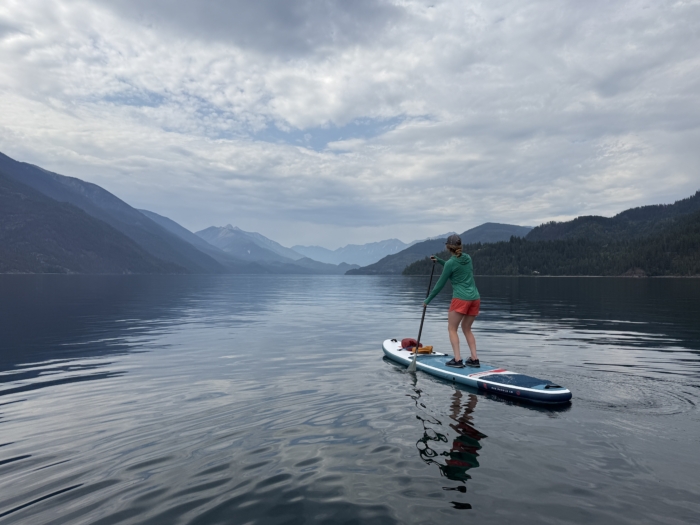
Morgan Tilton testing the Exped Versa dry bags on Slocan Lake; (photo/Morgan Tilton)
-
Morgan Tilton testing the Exped Versa dry bags on Slocan Lake; (photo/Morgan Tilton)
-
Morgan Tilton testing the Exped Versa dry bags on Slocan Lake; (photo/Morgan Tilton)
Specifications
Pros & Cons
Pros
- Buttery smooth and lightweight
- Easy carry while empty with slender shape and stitching
- Adaptable, practical design
Cons
- Not submersible
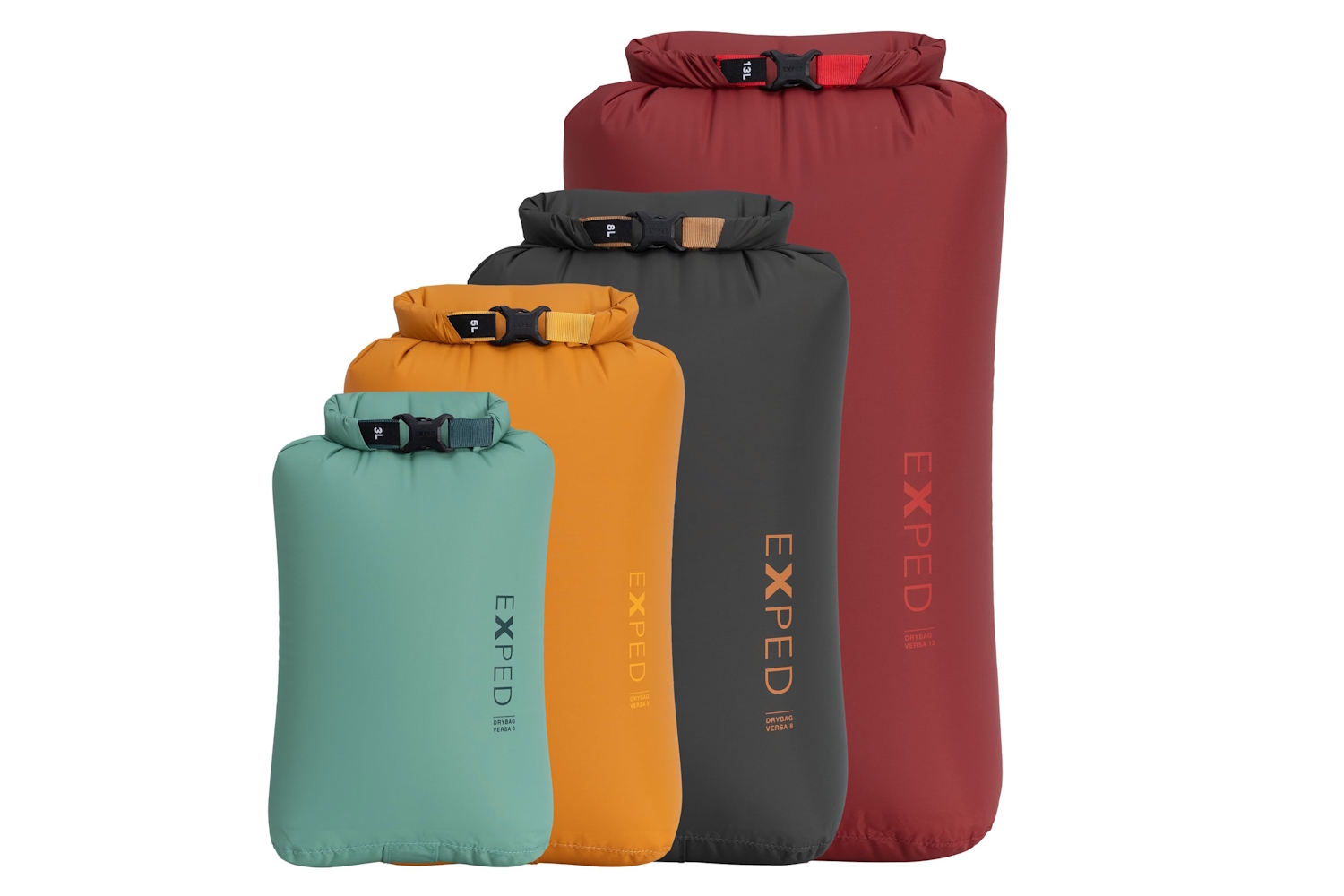
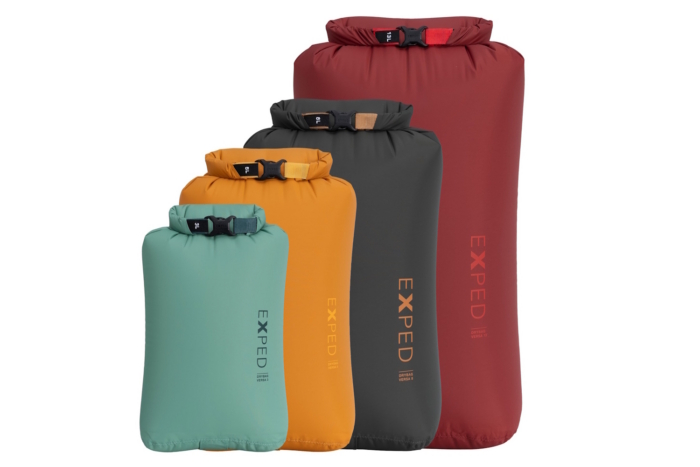
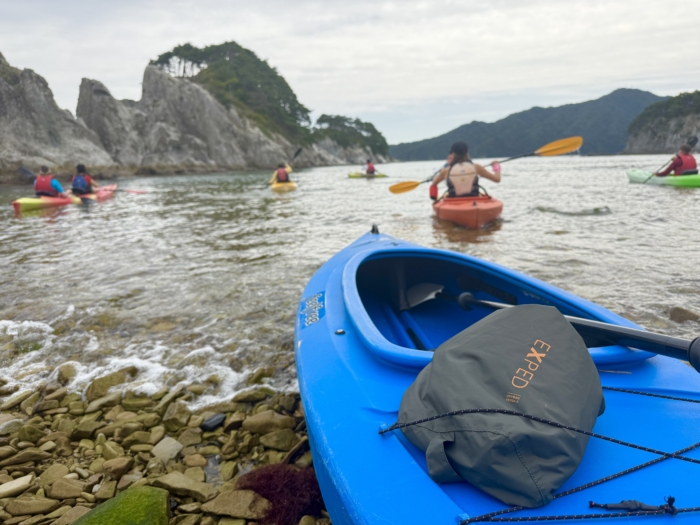
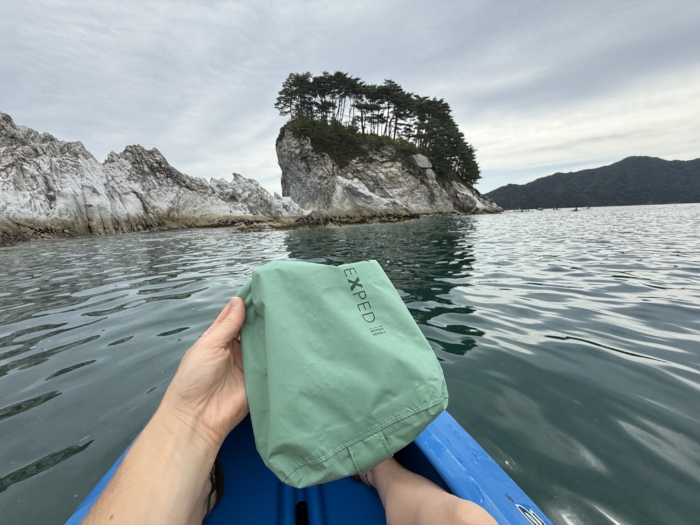
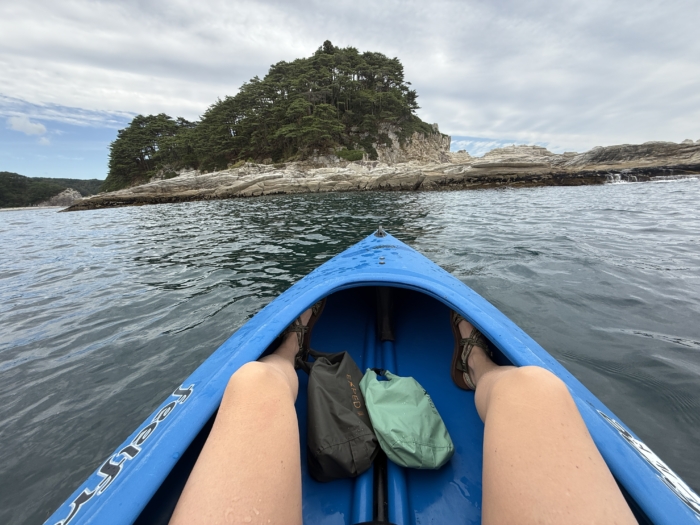
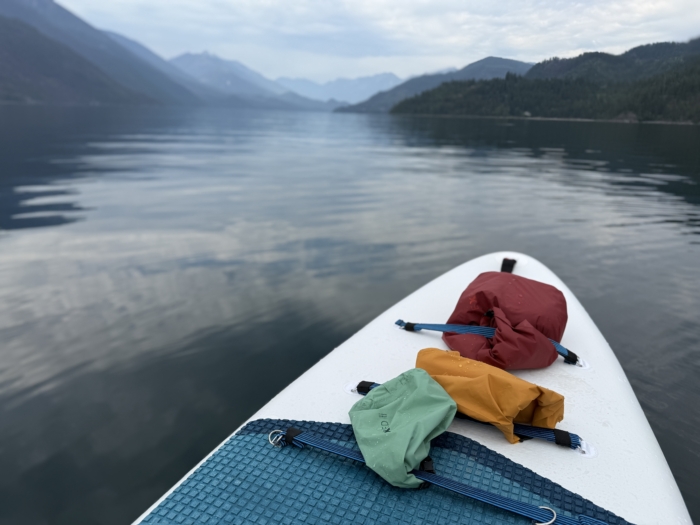
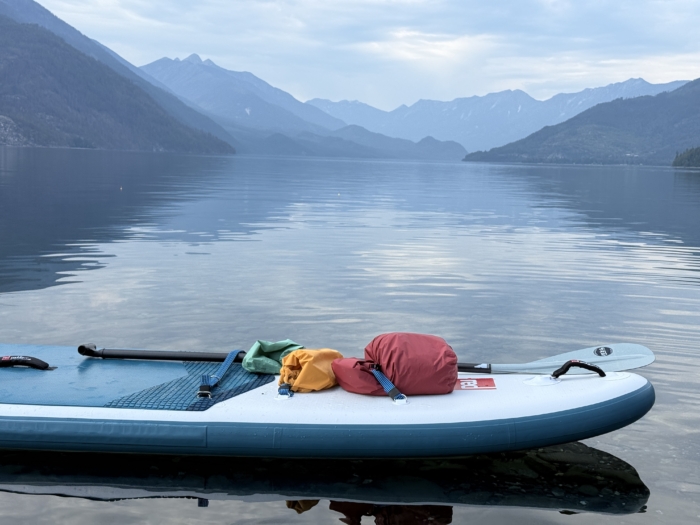
If you’re not looking for a fully submersible sack, the Exped Drybag Versa ($90) kit is a gloriously soft and adaptable collection that Senior Editor Morgan Tilton used for international travel to Japan, hiking Honshu’s Michinoku Coastal Trail, and sea kayaking off Jodogahama Beach. Tilton also tested the Versa standup paddleboarding in British Columbia, including a day trip on Slocan Lake.
With a range of four color-coded size options, Tilton used the entire lineup while traveling internationally from North America to Honshu, Japan’s Tōhoku region. The week included more than a few downpours. Tilton’s explorations ranged from hiking to the summit of 6,394-foot Mount Issaikyo in Bandai-Asahi National Park to foraging with Matagi hunter-gatherers in Akita’s Moriyoshi Mountains. The 3-liter and 5-liter bags worked splendidly for electronics like phones and chargers. For larger gear, the 13-liter pouch easily swallowed damp hiking shoes, keeping them isolated from clean clothes in a roller bag.
What sets these dry bags apart is the adaptable curved base, which is stitched in such a way that it can be flattened and easily carried empty in a travel bag. A practical design, there’s a generously long and wide grab handle across each sack’s bottom. Tilton appreciated being able to snatch and carry each bag from the bottom or top when the bag was rolled and buckled shut.
Buttery smooth, the collection feels luxurious to handle and classy to carry along inside or outside travel luggage. The recycled and PU-coated 70-denier fabric didn’t show any wear and tear after two weeks of travel in Tōhoku and summer river days.
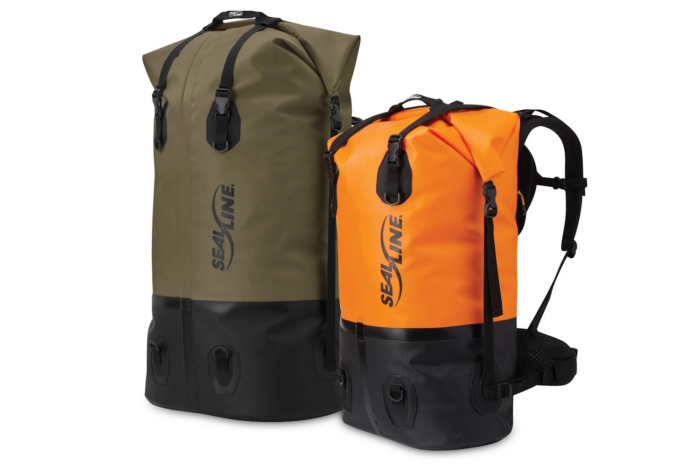
SealLine Pro Dry Pack 120L
-
-
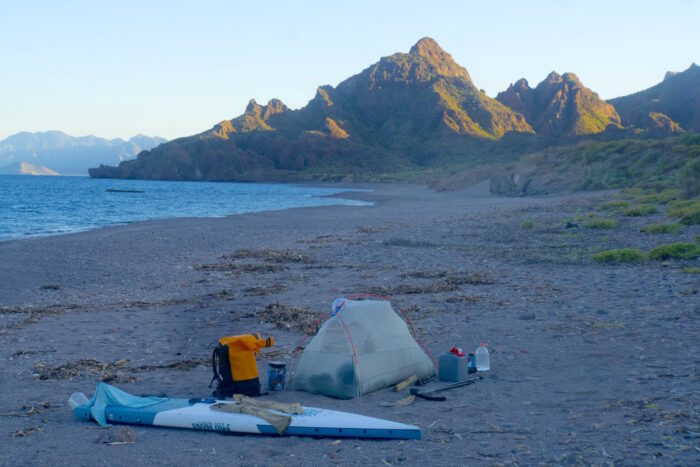
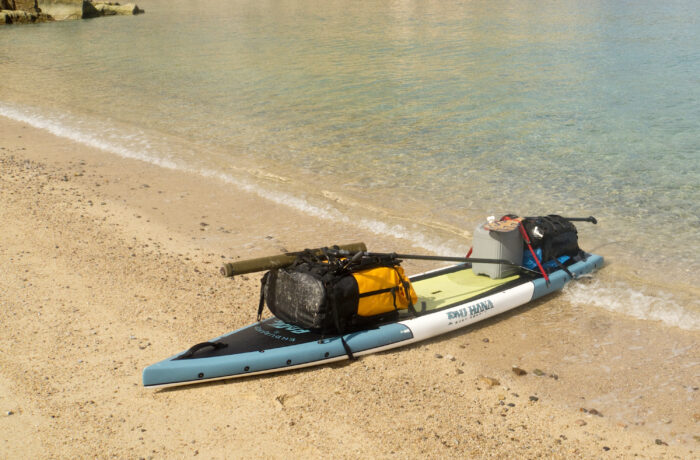
Sean Jansen paddled 535 miles over 60 days with the SealLine Pro Dry Pack; (photo/Sean Jansen)
-
The SealLine Pro Dry Pack withstood rigorous, months-long testing on water and shore; (photo/Sean Jansen)
-
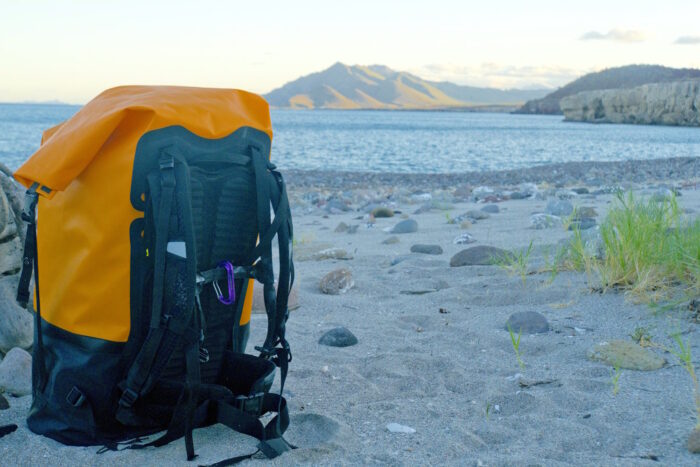
The shoulder straps, sternum strap, and hip belt are removable; (photo/Sean Jansen)
Specifications
Pros & Cons
Pros
- Mega volume
- Submersible
- Reinforced, sturdy foundation
Cons
- Expensive
- Heavy
Read Review: SealLine Pro Dry Pack Review: The Armored Megamouth of Dry Bags
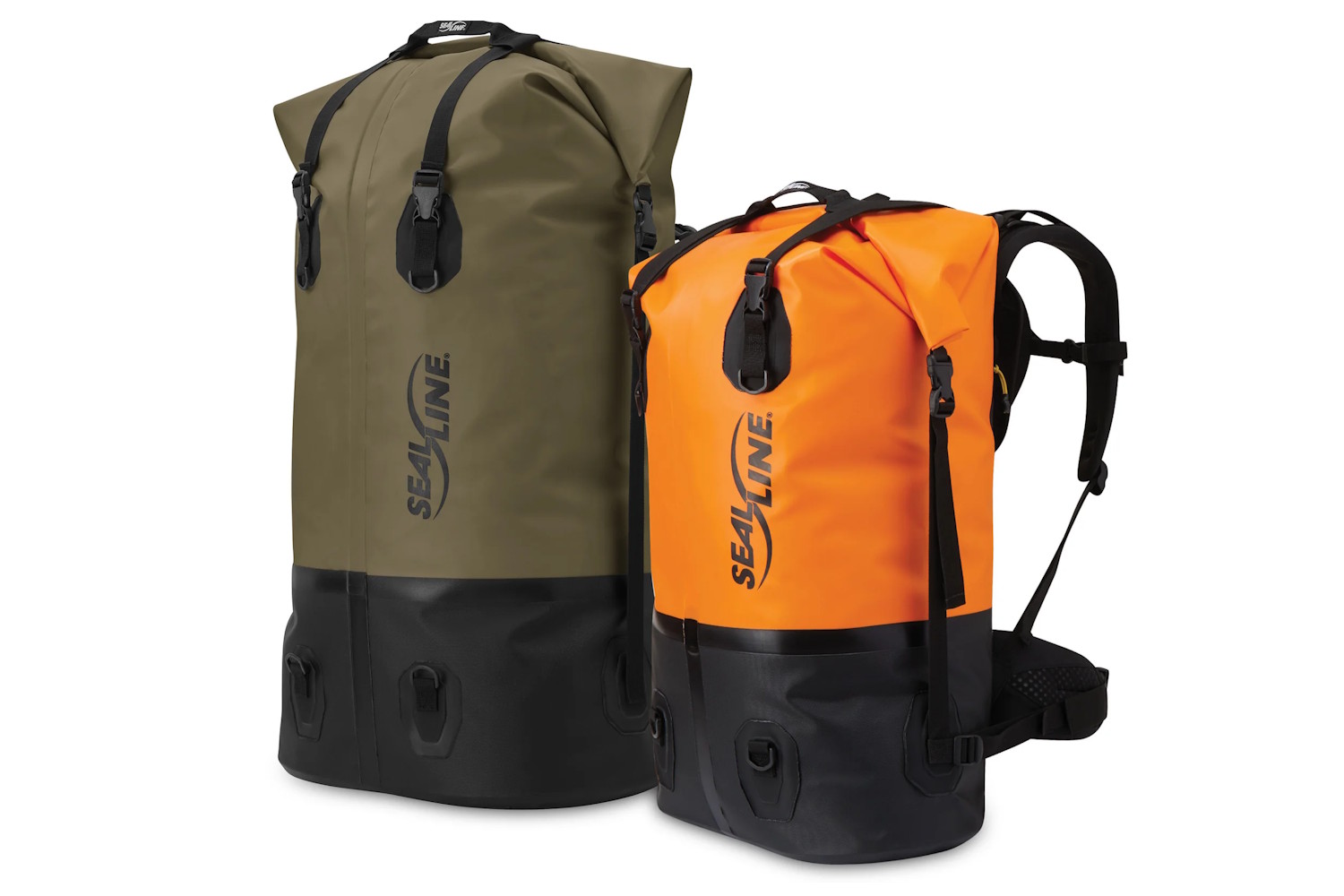
Welcome to the megamouth of dry bags, the SealLine Pro Dry Pack ($360). While it isn’t lightweight, it was never designed to be. This premium bag is a champion at swallowing gear. It keeps things safe and secure, and regardless of how much you pack to the brim, the performance isn’t compromised. At a warrior status for durability, one tester dropped this pack on cacti, spiny bushes, and even sharp, dry coral on beaches: There isn’t even a scratch on the material.
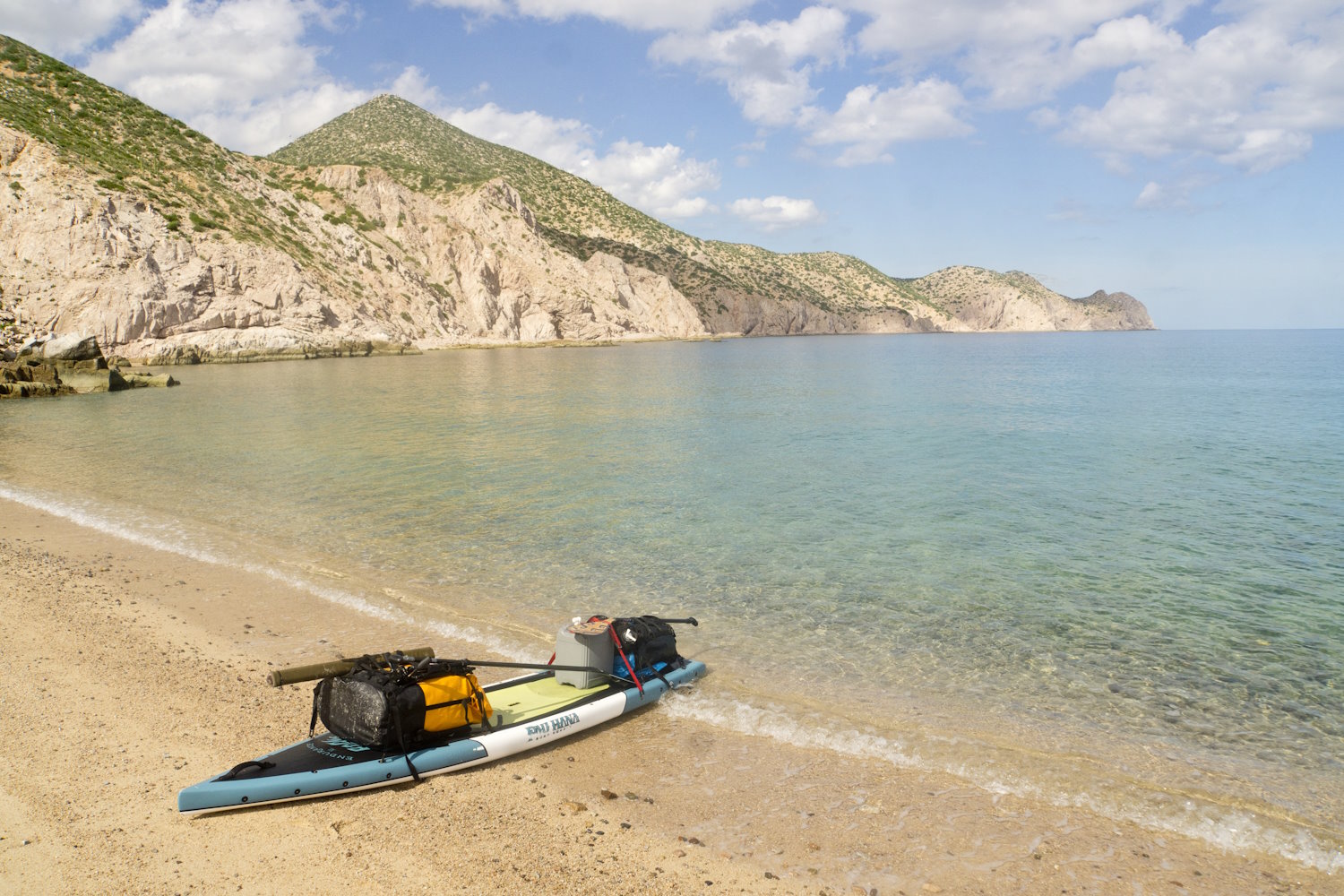
When we paddled down the Baja Peninsula via SUP, we opted for this dry bag for the roomy blueprint. With 70L and 120L options, there isn’t another dry pack on the market that matches this capacity of storage: 18.5” x 12.5” x 32″ is the scope for the larger of the two. The design has a DrySeal roll-top closure that we found works splendidly to keep gear dry even if the bag is submerged. The buckled straps on the side and front help keep everything locked into place.
One convenient, comfortable feature of this dry pack is the padded shoulder and hip straps. They are not only adjustable but sit smoothly against your back — it’s supportive enough that you can hike inland with a heavy load.
Icing on the cake? The reinforced, durable bathtub-style bottom on the Pro Dry Pack. That burly base adds another layer of protection, and you don’t need to worry about any land slam leading to a compromised dry seal.
YETI Panga 75 Dry Duffel
-
-
Contributor Morgan Tilton testing dry bags on an overnight SUP trip. (Photo/Eric Phillips.)
-
Gear testers and contributors Morgan Tilton and Eric Phillips testing dry bags on an overnight SUP trip; (photo/Eric Phillips)
-
Testing dry bags while SUP camping in Colorado. Photo by Eric Phillips

Specifications
Pros & Cons
Pros
- Extremely durable
- Excellent, ergonomic, burly waterproof zipper
- Ample space for carrying apparel and gear
Cons
- Higher investment
- Too large for some objectives
- Not easily foldable for storage
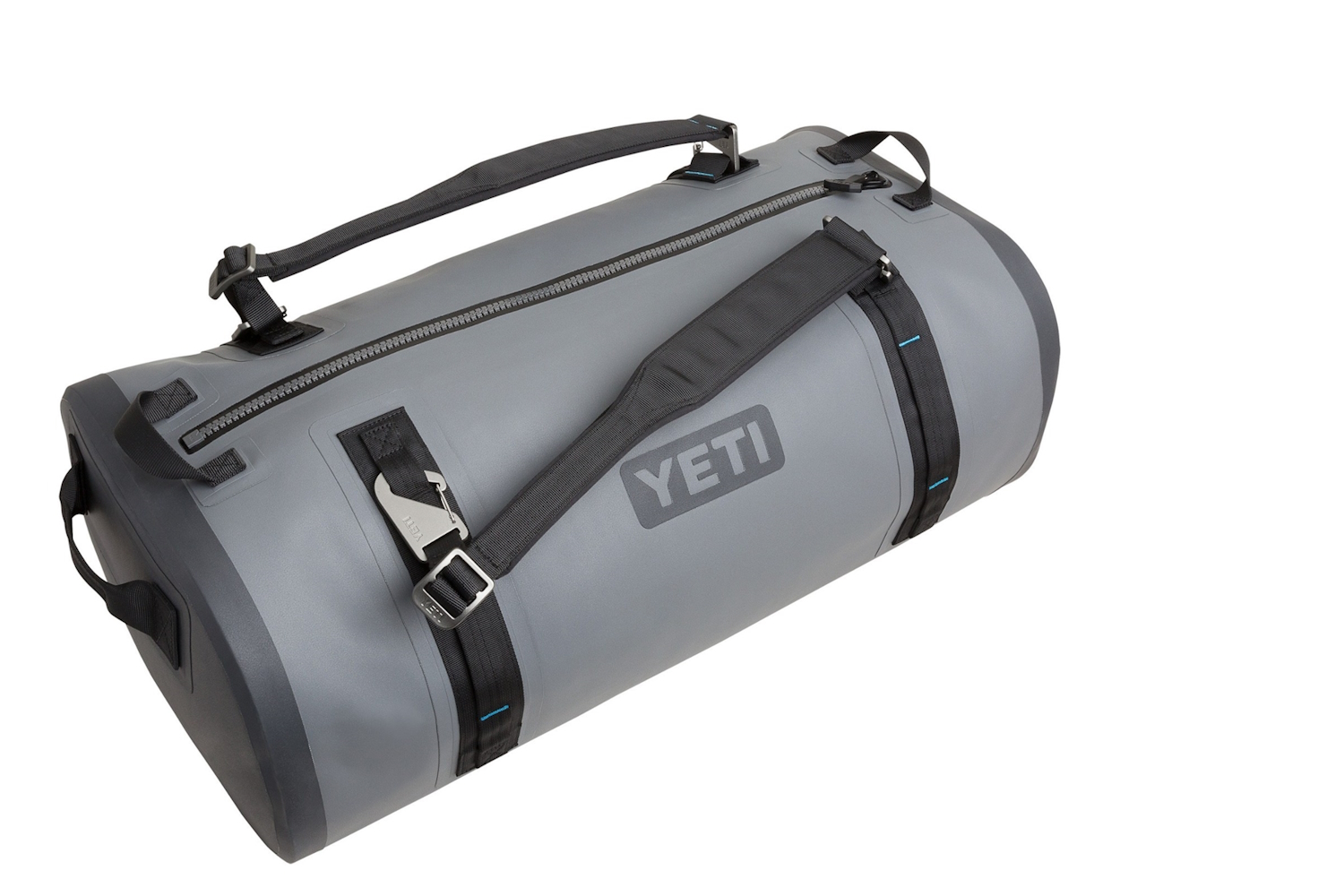
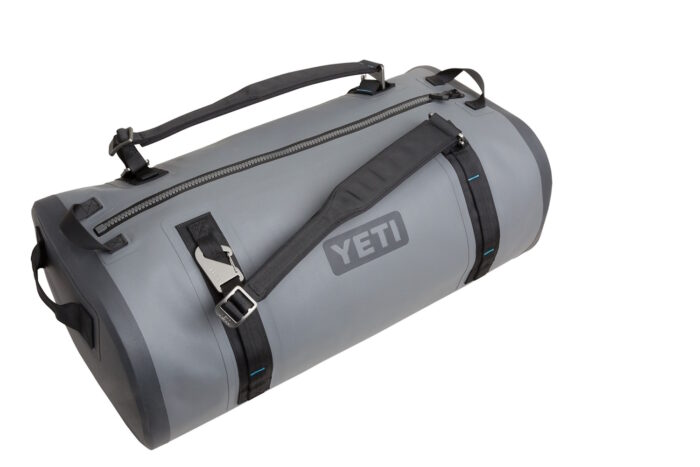
Holding strong, the YETI Panga ($350) stands out among waterproof duffel designs. It’s been a few years since this YETI bag was released, and we remain extremely impressed. It’s super durable, holds a ton of gear (the 75L is 11 x 12 x 15.5 inches), and is incredibly adaptable in the ways it can be strapped to a boat. The Panga also comes in 50L and 100L versions.
One of our favorite qualities of this duffel is the variety of tie-down points, which makes rigging up the gear super easy and helps keep everything tight.
Six lash points on the exterior of the bag are uniquely arranged in a line, like a daisy chain. And there are four handles — two on the top and two on the bottom — plus four points where the comfortable backpack-style dry-haul straps attach.
Keeping our stuff tightly closed off, the burly and waterproof HydroLok zipper performed super well, is comfortable to pull, and has lasted season after season. We’d never before used a dry bag with a zipper closure, but not a drop of moisture got into our bag on the entirety of our trips. We appreciate the ease of how the bag opens like a duffel, so we don’t need to dump all of the contents (like with a top-loading dry bag) out to find what we need.
The EVA-molded bottom is waterproof and rugged, and the laminated, high-density nylon shell is thick enough that even the long nails of an excited 60-pound husky didn’t puncture the walls.
We’ve checked the Panga countless times while flying, stuffed it to the gills, and submersed it regularly. Through it all, our gear has come back dry, safe, and protected. Yes, it’s an investment, but it’s one that will last. For a wide range of uses, we’re confident it’s the best dry bag you’ll find, as long as you need the room.
BOTE Highwater Slingpack
Specifications
Pros & Cons
Pros
- Plenty of zippered pockets
- Padded shoulder strap
- Buckled hip belt for stabilization
Cons
- Hard to see inside bag with black interior and narrow entry
- Pricier investment
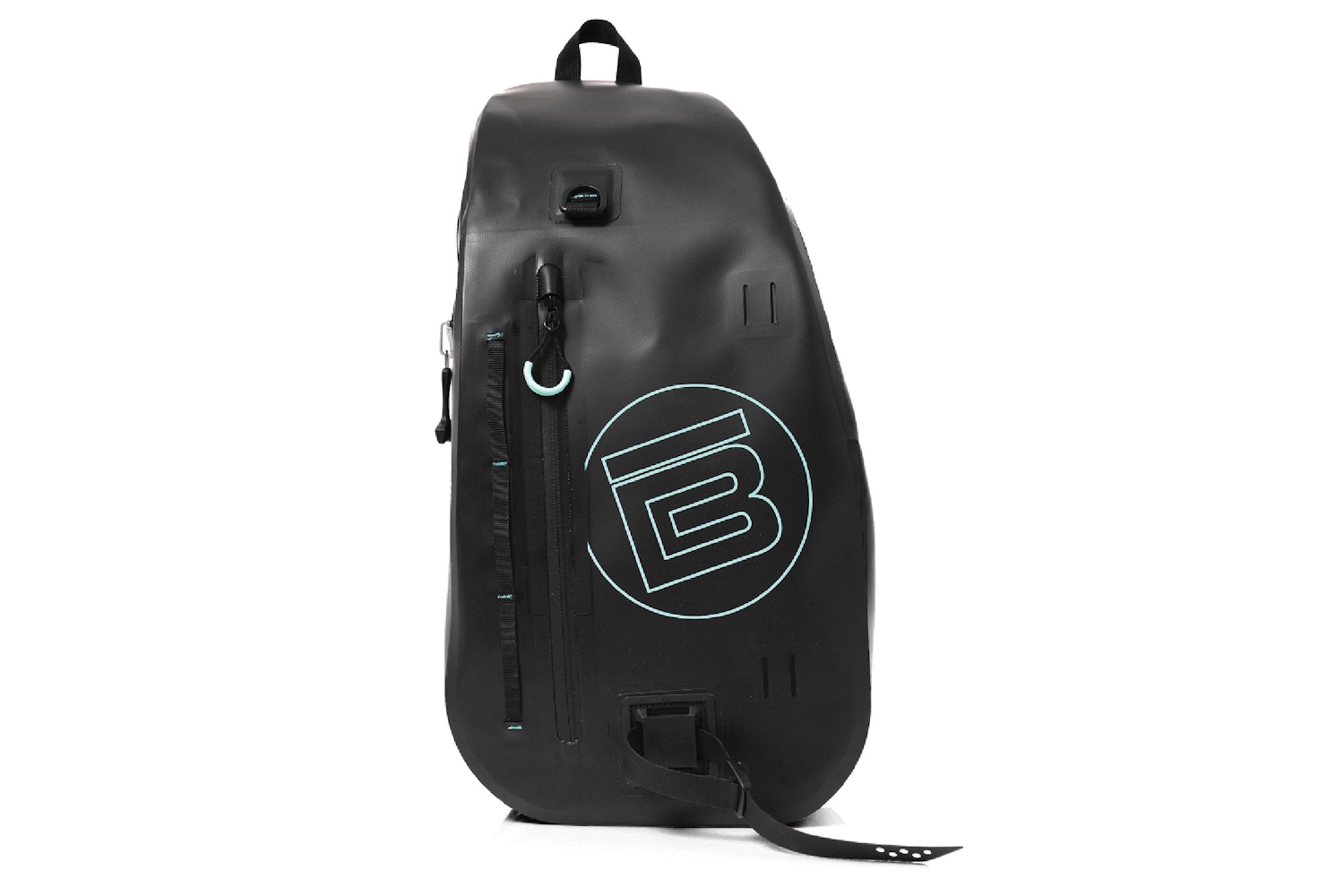
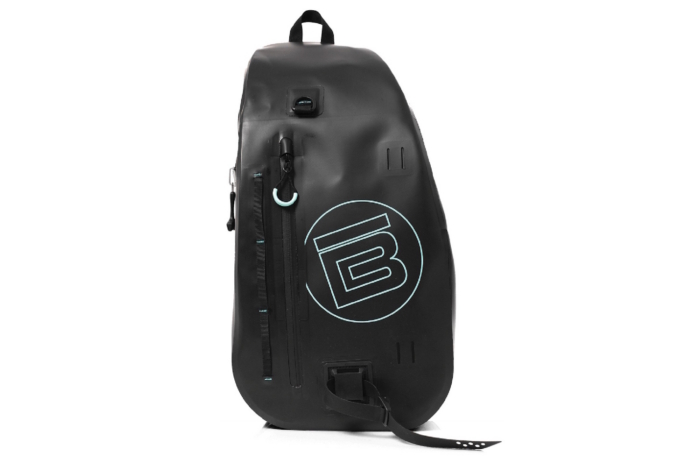
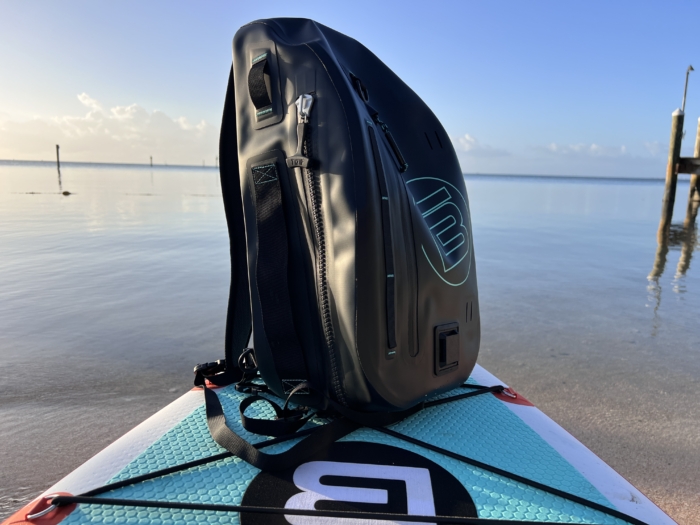
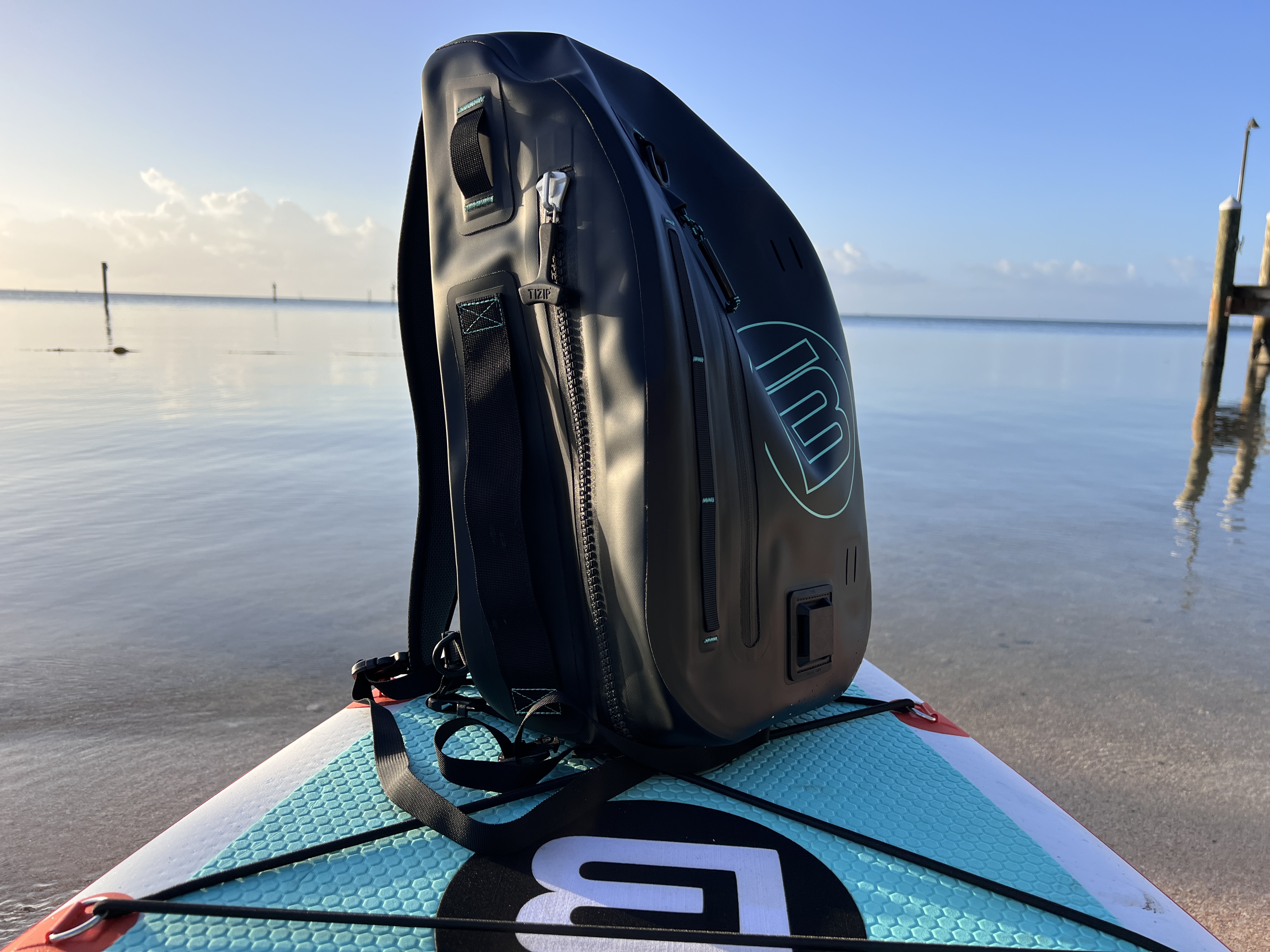
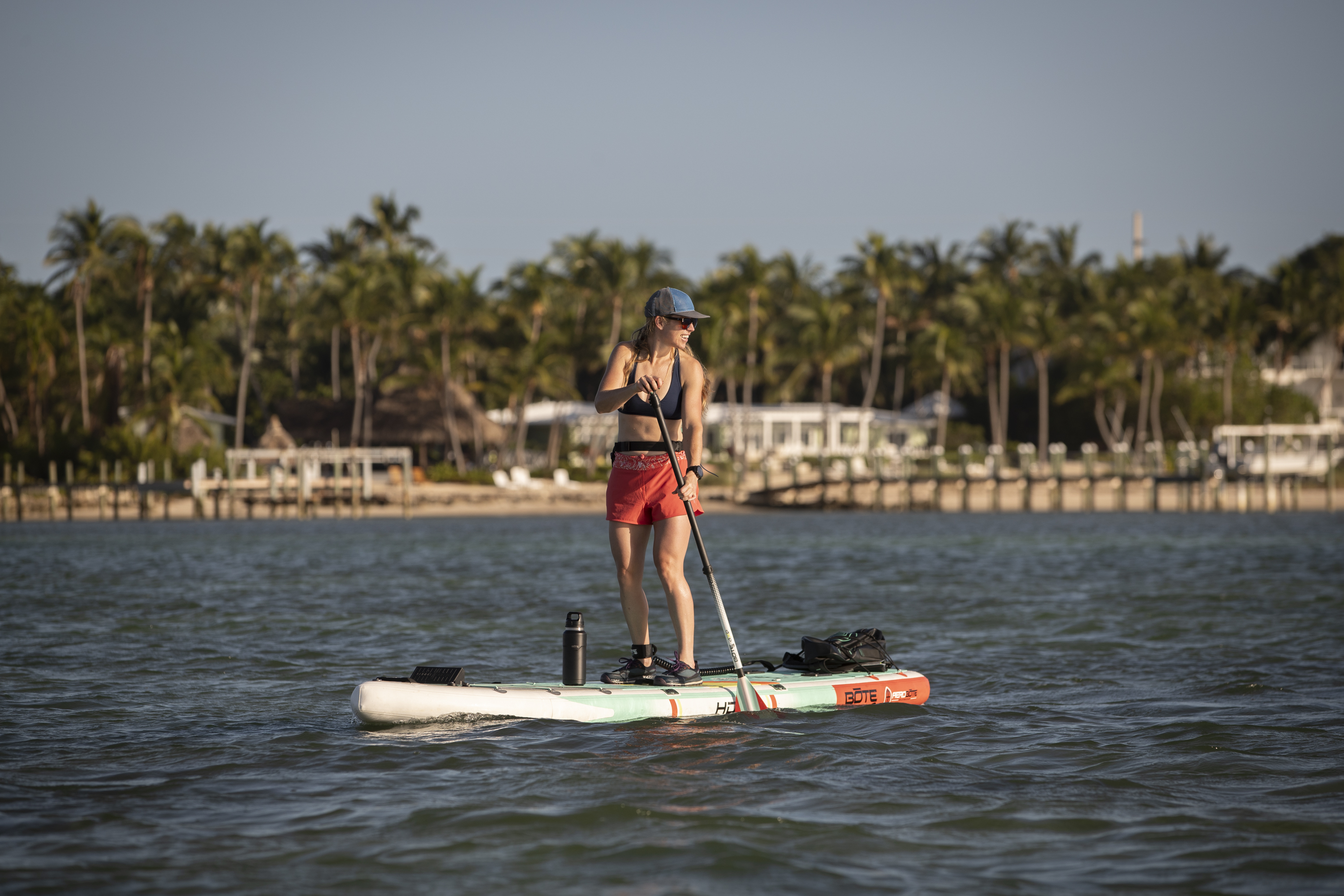
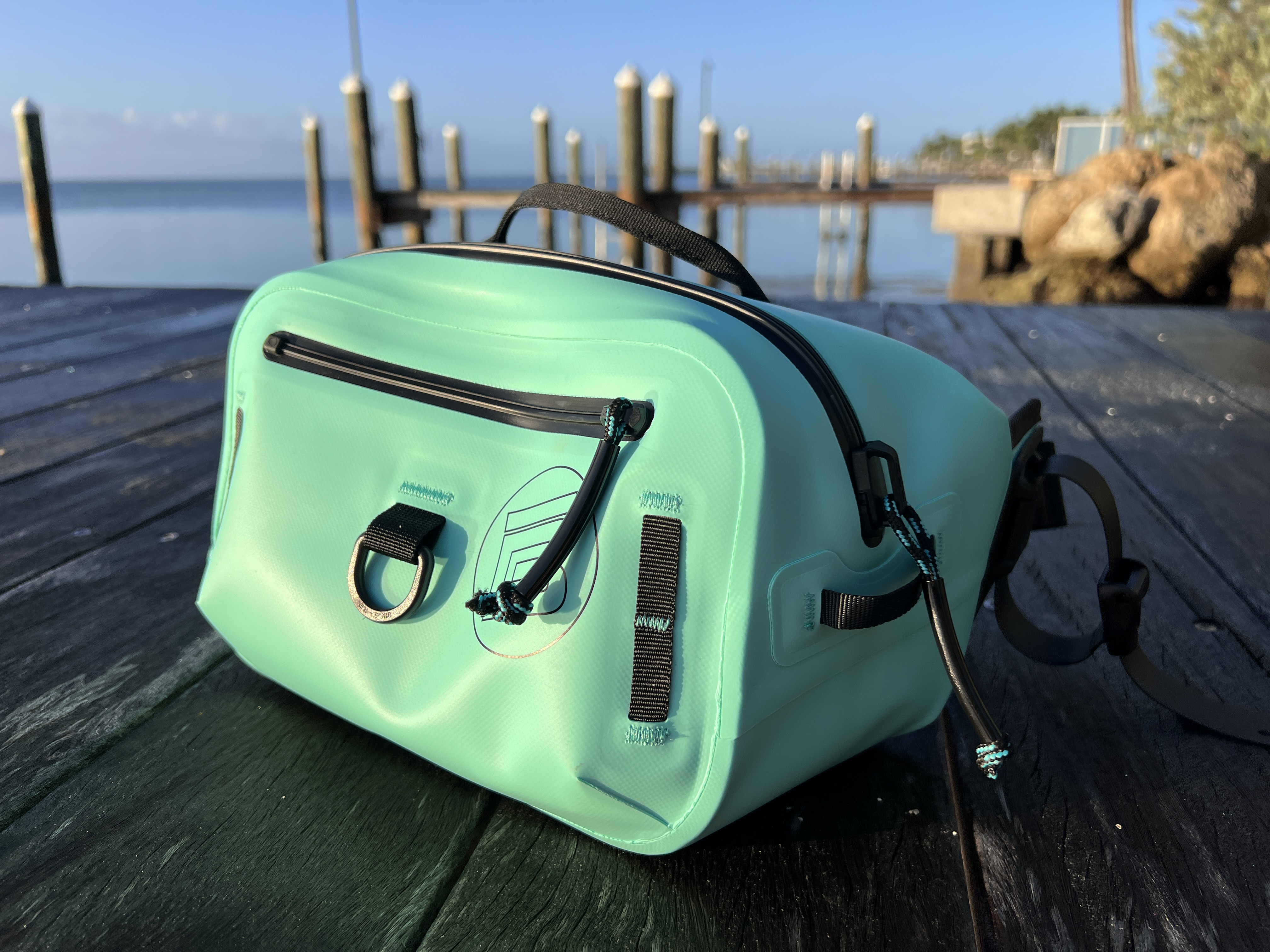
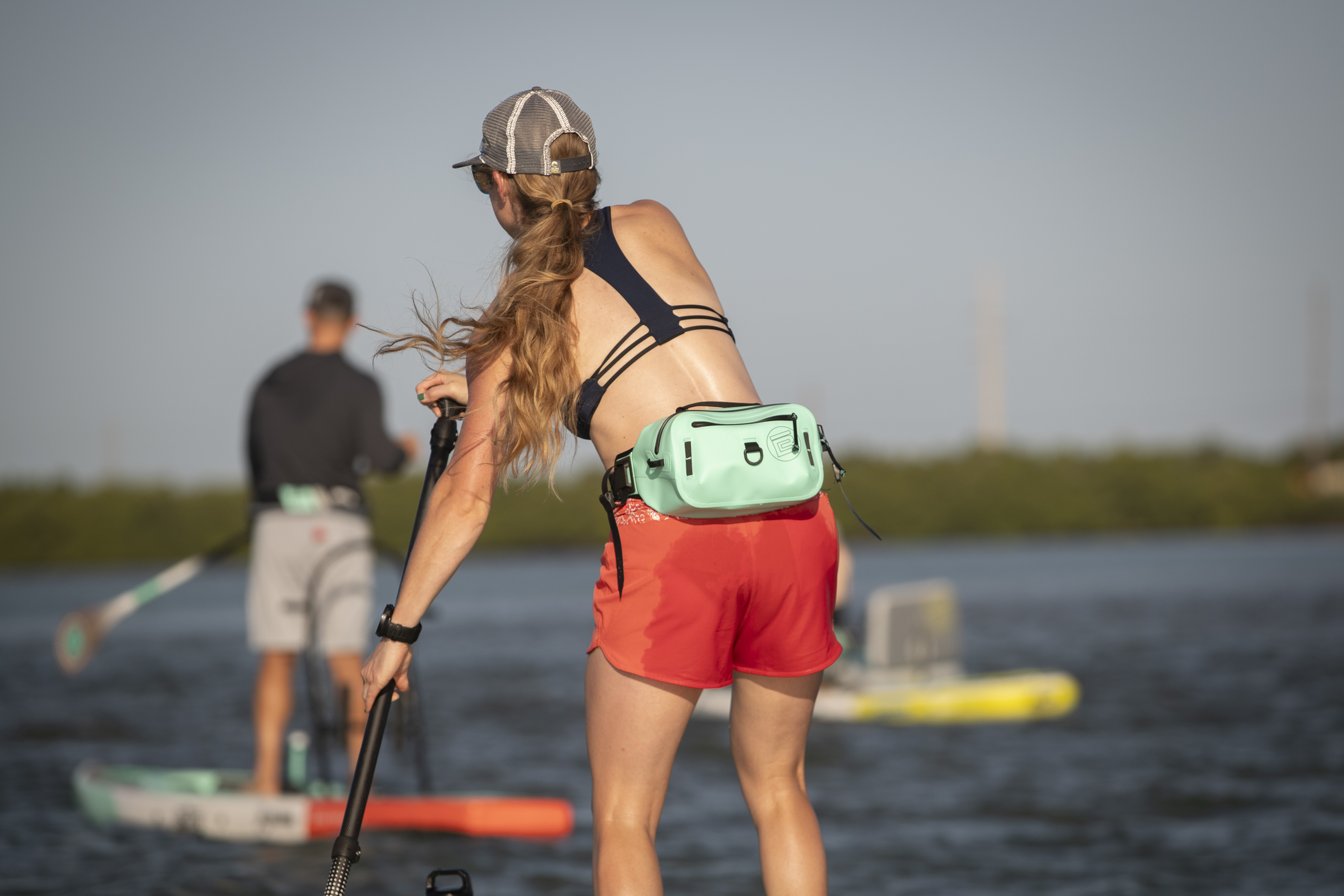
It’s clear BOTE built this cross-body bag with serious amphibious use in mind. Swinging versatility, the BOTE Highwater Slingpack ($199) is a fully waterproof, submersible dry bag that you can sling across your body. We appreciated the option of strapping this day pack to our SUP, or simply wearing it back and forth from dirt to water without needing to rig a system. With a moderate volume, this turned into a great bag option for multi-sport and full-day essentials.
With its 100% nylon and seam-welded construction, double-sided TPU coating, and a fully waterproof TIZIP zipper, this 20-liter sling sheds rain, splashes, and full dunks alike. The streamlined silhouette and single shoulder strap offer excellent freedom of movement, whether we are paddling, hiking, or scrambling around wet, rugged terrain. Despite its minimalist profile, the Highwater provides more than enough room for necessities: lunch, a water bottle, extra layers, camera, phone, and a bottle of sunscreen — no problem.
We most appreciated the variety of pockets to help us stay organized. A huge zippered pocket — 10 in x 9 in — is located on the pack’s face, so we didn’t need to open the main compartment to grab our phone or sunnies. Inside the primary chamber, three smaller zippered pockets helped us keep smaller items — like our keys, chapstick, and wallet — in a spot that’s quick to grab.
For extra security, the exterior attachment points made it easy to lash on extra gear. A daisy chain is on the face, and a second one is on the shoulder strap. Two plastic D-rings are located on the face and shoulder strap. On one side, two integrated lashing straps are placed for carrying a paddle. On the other side is a thick lash loop, and a lengthy, wide strap that’s 9 inches long and easy to grab: one of our favorite features of the sling.
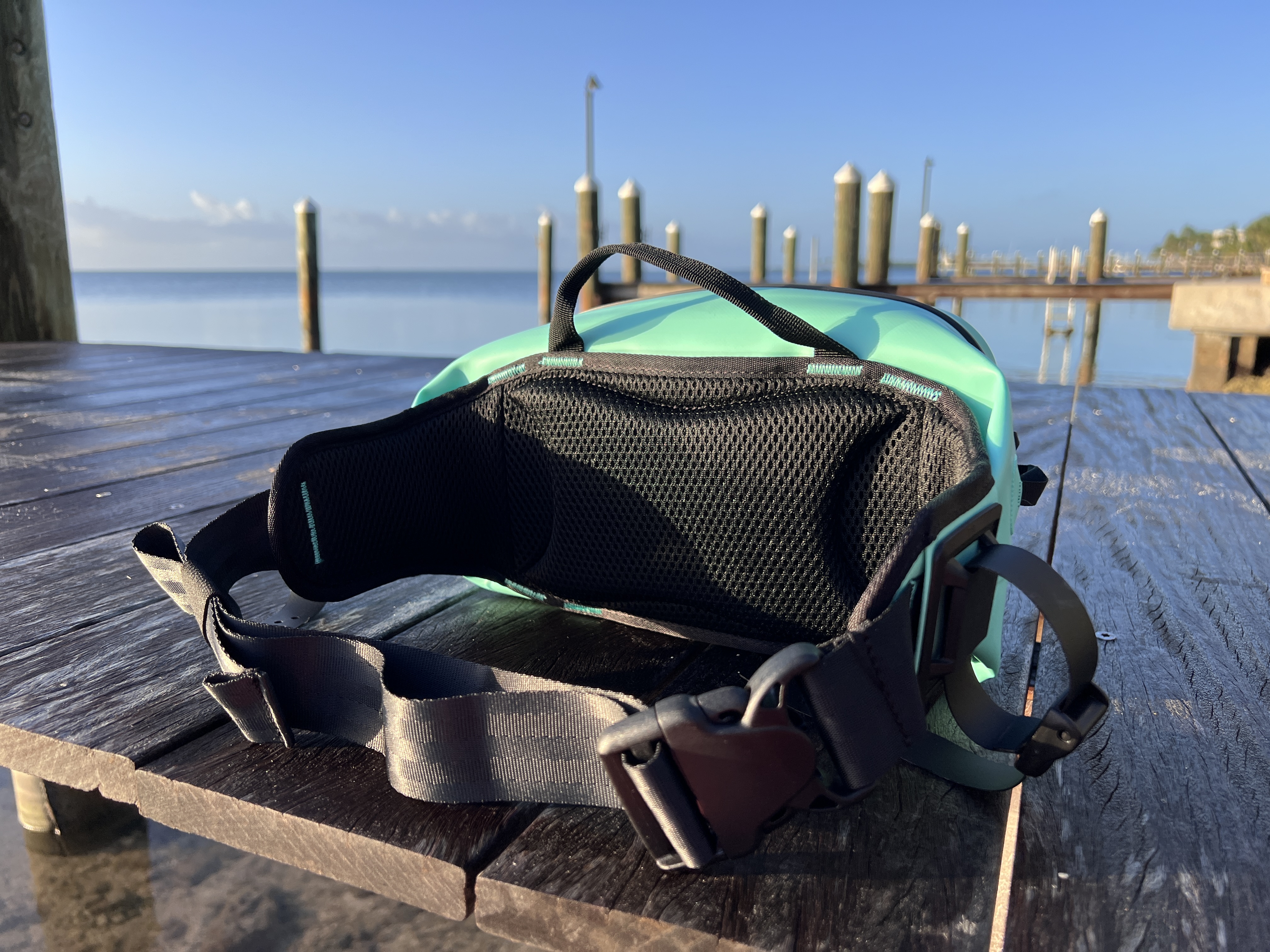
At just under 2 pounds, it’s surprisingly lightweight for such a rugged, structured pack. The molded back panel adds some comfort and stability without bulk, helping it sit comfortably. The underside of the shoulder strap reveals a texturized, grippy nylon, and the lean strap is lightly padded for comfort (we wouldn’t call it plush). For stability, a lean waist strap attaches to the shoulder strap and buckles in the front. Whether you’re chasing fish in the flats or navigating rainy trails on an out-and-back paddle trip, the Highwater Slingpack earns its spot on your back. No fuss, no leaks — just a smart design that protects your gear and makes it easier to take with you when you hop off the boat.
Sea to Summit 13L Evac Compression Dry Bag
Specifications
Pros & Cons
Pros
- Helps to pack down space-consuming apparel and gear
- Four pull straps make the compression process easy
- Very lightweight
Cons
- Exterior material is not the most robust we tested
- Not a bag we’d trust for full submersion
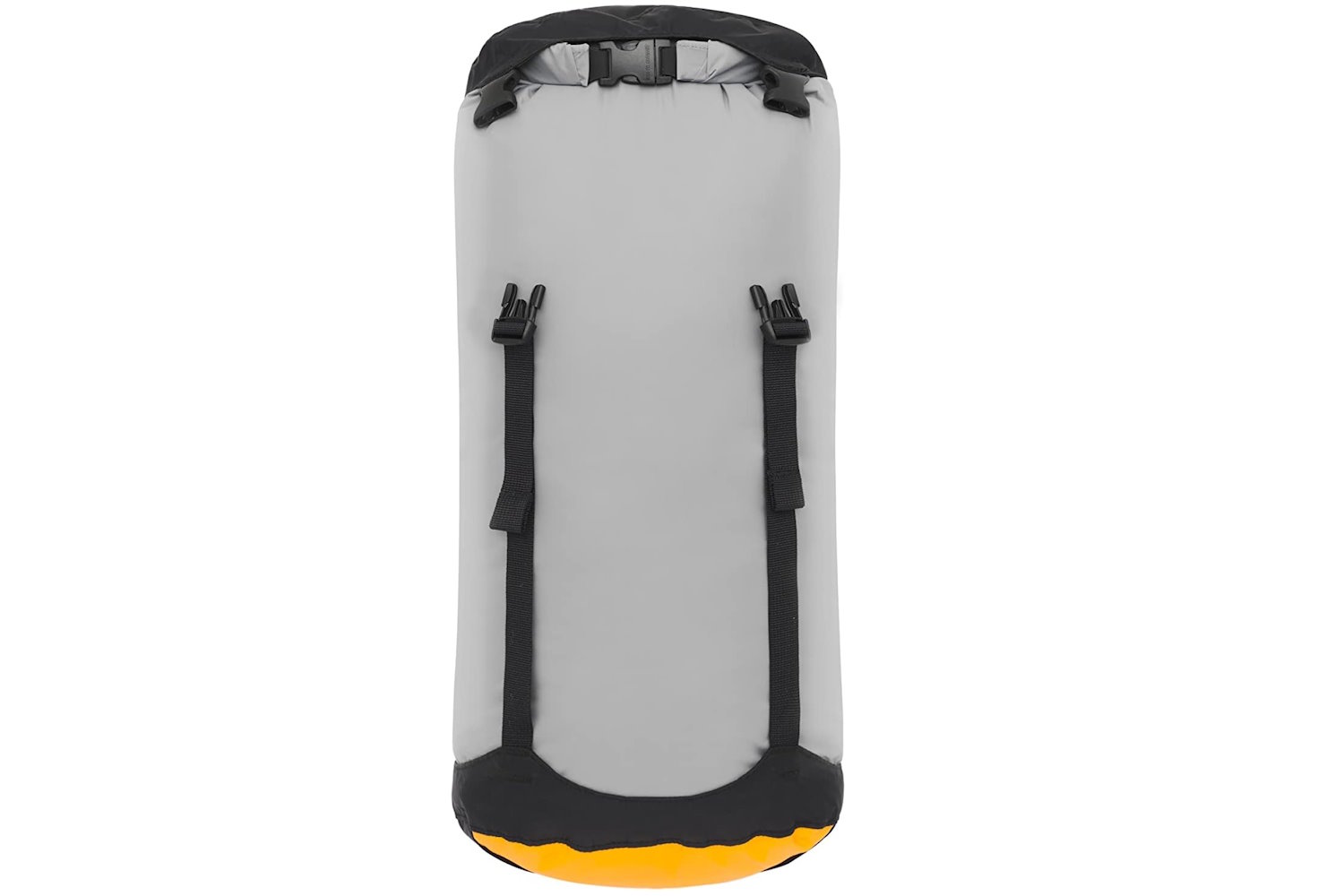
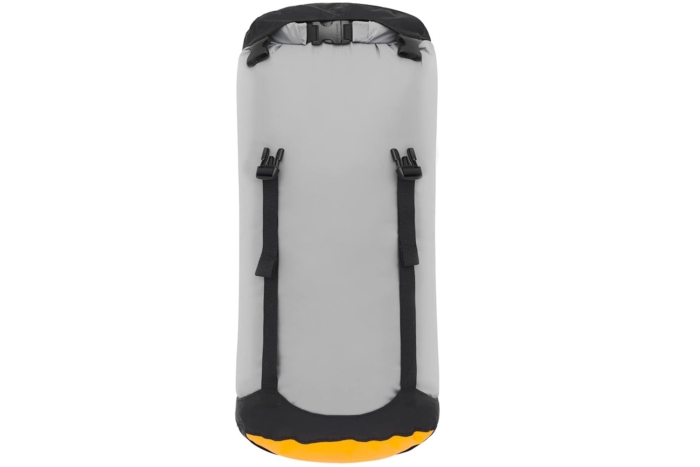
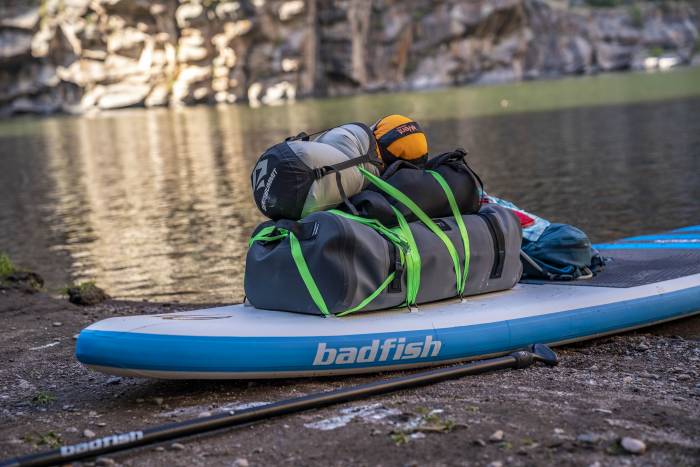
Trying to cram as much gear into your bag as possible? It’s time you met the Sea to Summit 13L Evac Compression Dry Bag ($50). With a simple yet innovative design, condensing gear has never been so easy.
Despite the pliable feel and breathability, the design’s 70-denier nylon waterproof fabric completely keeps water out. That material is recycled, Bluesign-approved, and coated with a PFC-free DWR finish. Plus, the blend is more durable than before. The eVent waterproof-yet-air-permeable base allows air to expel when the straps are tugged to tighten the load. Double-stitched waterproof seams are sealed with tape to shield moisture.
These silhouettes are particularly useful for maximizing space with big, compressible items like down blankets or jackets. From clothing to pillows, you can just cram it all in and evenly cinch it down with the four straps. We even used the 13L option for a large sleeping bag. The sack packed down the bulky bag with little energy and no hassle. Plus, the size run spans from a 5L sack ($40) to the 35L bag ($60).
We’ve jammed goods into the 13L Evac Compression Dry Bag for more than a few years. Even after tons of use, it shows little signs of wear. If you’re intent on saving space while keeping essential gear dry, this might be the best dry bag for you.
Watershed Chattooga 22L
Specifications
Pros & Cons
Pros
- Super-high-quality materials
- Long-lasting construction
- Very tough closure seal that keeps out water
Cons
- The closure can be difficult to get open
- Higher price for the capacity
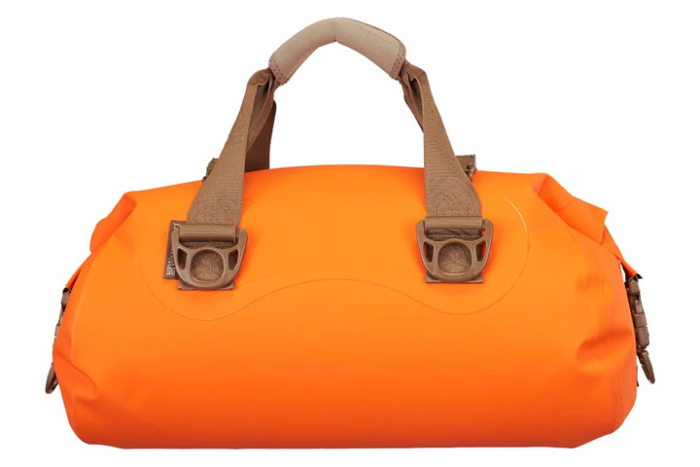
Boasting quality and durability, the Watershed Chattooga 22L ($198) sets a high bar among dry bag standards. At 10 x 19.25 x 9.5 inches, this duffel is an ideal day bag for anytime access to important gear. Especially if you need an alligator clamp to bar the moisture, like when you’re rolling a kayak — this zipper is among the strongest that exists. We also liked using this knapsack to carry goods for ourselves and crew on standup paddleboard jaunts.
Four hard lash points create durable tie-downs, and two compression straps squeeze the load together. We like that the convenient carry handle is lightly padded for comfort.
As mentioned, the ZipDry closure on this bag is bombproof. We could hardly get it open once it was closed, which is reassuring but can also be slightly annoying. It’s basically a heavy-duty ziplock bag closure that ensures no water, animal, or dust particle is getting inside that bag.
The ZipDry closure tab of the Chattooga 22L is made from a new, super-strong material, Armathane, which makes for an even longer lifespan. In 2020, the brand added a clear reinforcement panel on the top of the sides for additional durability. More recently, Watershed upgraded the already stalwart fabric to an even sturdier construction: 840-denier Kryptothane Plus, which is polyurethane-coated and claims to provide quintuple the abrasion resistance of the PVC used in other dry bags.
Other Bags Keeping Our Gear Dry
Specifications
Pros & Cons
Pros
- Padded shoulder straps
- Lower price point
Cons
- Not as robust as other higher-priced dry bags
- Top-loading means you’ll need to dig to the bottom to find items
- Some users noted the StormStrip closure seal was not very durable
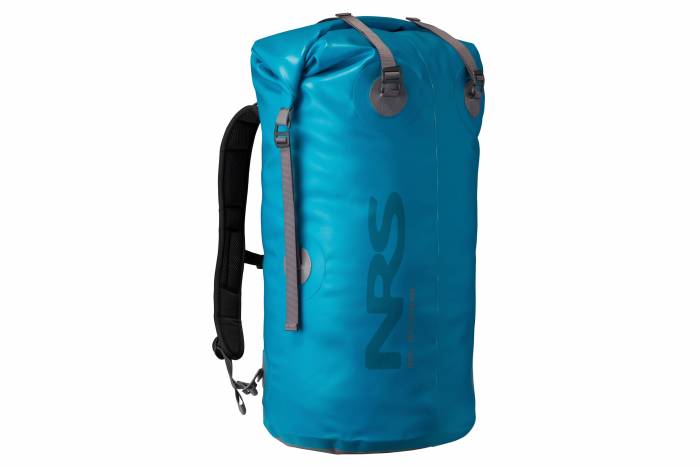
Simple, classic, and reliable, the NRS Bill’s Bag Dry Bag 65L ($220) is also one-third the price of comparable bags. We like that the bag is durable, can hold all our apparel for overnight trips, and is also malleable enough that it can pack down and fit as a day bag on the front of a standup paddleboard.
Plus, the fold-down closure system is soft and easy to use, which we liked for hiking with the dry bag and also for using the bag on a mountain lake to paddle.
When you’re dialing in the pack, the adjustable backpack harness with padded shoulder straps is convenient but removable, which is key for reducing potential snags. The four compression straps of the Bill’s Bag Dry Bag 65L help condense and cement gear into place, and the aluminum fasteners on the straps are dependable.
One drawback: fold-down or roll-tops are easy to use, but there’s room for user error. Make sure your roll is tight, and practice before you go. Once you’ve confidently sealed the roll-top system, you’ll have one of the best options for the price.
-
-
Contributor Morgan Tilton uses small and medium dry bags to help organize items inside large dry bags on river trips. (Photo/Eric Phillips.)

Specifications
Pros & Cons
Pros
- Super lightweight
- Transparency helps find items before pouring out contents
- The PurgeAir valve helps close up the bag without extra air
Cons
- Not puncture-resistant, so be careful around rocks, cacti, or other pointy vegetation!
- Don’t dunk — not submersible
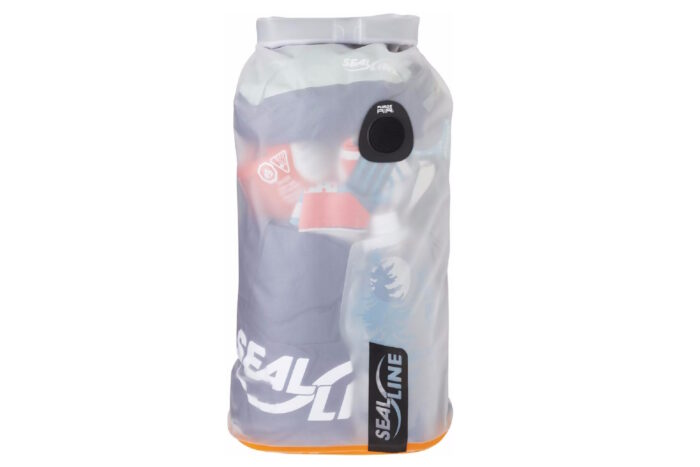
If you’ve never used a dry bag with a valve, it’s time you tried it. Until we tried this design, we’d never been able to get this much air out of our dry bag with so much ease. The PurgeAir valve is ingenious. We used the 10L SealLine Discovery View Dry Bag ($40) on a multiday trip over rapids, wakes, and long stretches of glassy water. The valve makes the sack easy to pack and unpack frequently, given it doesn’t get loaded with air.
That’s on top of the Discovery Dry Bag’s other awesome feature: visibility (not just a plastic window) via the translucent fabric. Given the bag is uniquely see-through, it’s easy to spot gear without unnecessarily unraveling the roll-top.
One caveat: the fully welded seams are durable and reinforce waterproofness, but the exterior PVC-free material is not very durable. We carabiner-clipped another half-filled Discovery View to another dry-bag backpack for a steep 0.2-mile approach hike to the water’s edge. After setting down the gear for a quick water break in the heat, a bush poked tiny holes in the Discovery.
We also love the soft feeling of the material and the clear window, but we recommend you keep it inside another, more rugged dry bag. Between the convenient translucence and quick-purge valve, this is the bag to choose for stashing your phone, hat, puffy, or any other accessories you may want throughout the day. The Discovery View is a great choice to add to the dry bag quiver.
Specifications
Pros & Cons
Pros
- Lightweight
- Pliable
- Easy to transport
Cons
- Roll-top requires some excellent organization (unless you want to dump out the contents often!)
- Not the most robust exterior we’ve tested
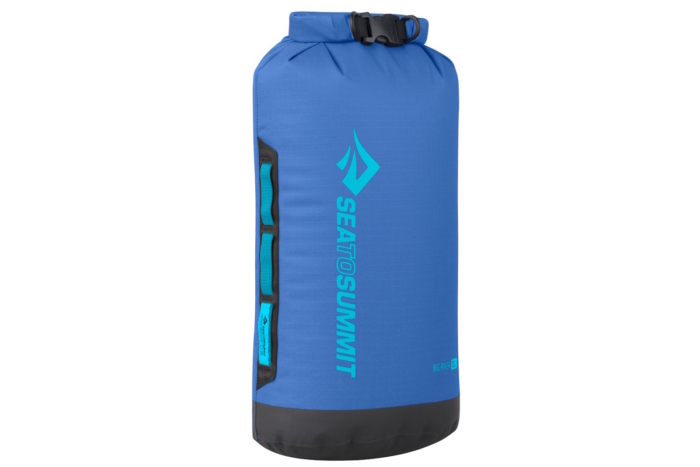
A staple for watergoers, the Sea to Summit Big River Dry Bag 13L ($50) and fleet remain a great option for adventurers whether they’re paddling or trekking through a downpour. The bags come in a huge variety of sizes, and are made with durable material, and our staff’s bags have lasted for years. We love a whole lot about these models: their durability, features like lash points, and price, to name a few.
The Big River Dry Bag includes a big size run: 5L, 8L, 13L, 20L, 35L, and 65L ($40-80). They are made with TPU-laminated 420-denier nylon, Hypalon attachment points and lash points along the sides, fully taped reinforced seams, and an oval-shaped base to resist rolling around.
This assortment of bags weighs from 4.8 to 15.3 ounces. They are waterproof, a good balance between lightweight and durable, and just plain great for protecting your gear.
If you are organizing a group whitewater or river trip or even a friends and family float trip, the Big River Dry Bag 13L (and any of the other sizes) are probably the best sacks for easy organization and packing. With choices of four different colors across various sizes, it’s easy to color-coordinate bags with contents. These are also a solid choice for motorcycle tours and bikepacking trips.
Bonus: You can opt for a padded, comfortable Dry Bag Sling ($10) to create an across-the-body carry with your dry bag.
-
-
(Photo/Sean Jansen)
-
(Photo/Sean Jansen)
-
(Photo/Sean Jansen)
Specifications
Pros & Cons
Pros
- Super versatile
- Various grab handles
- Submersible
Cons
- Backpack straps are not very comfortable
- Don't be misled: it's a 40-liter dry pack with a 20-liter exterior storage
Read Review: Mustang Survival ‘Highwater 60L Waterproof Gear Hauler’ Review: The Durable, Well-Designed Future of Dry Bags
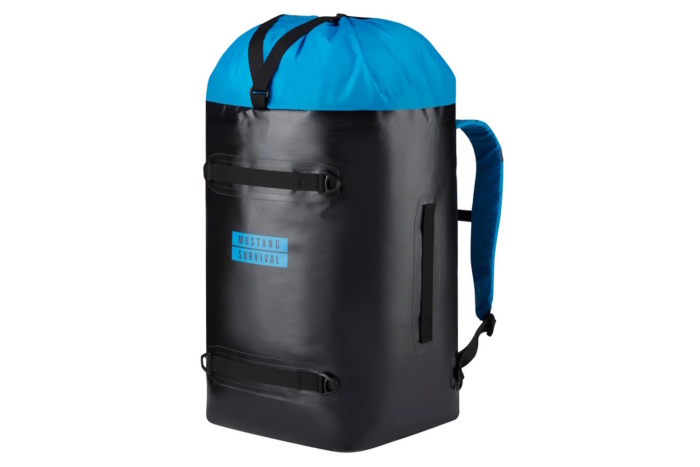
The Mustang Survival Highwater 60L Waterproof Gear Hauler ($165) is the multitool of dry bags. There isn’t another bag in our gear closet that has more lash points and grab handles. Along with carrier hooks, it’s constructed out of a heavy-duty 420-denier double-coated PVC-free nylon that shields any moisture.
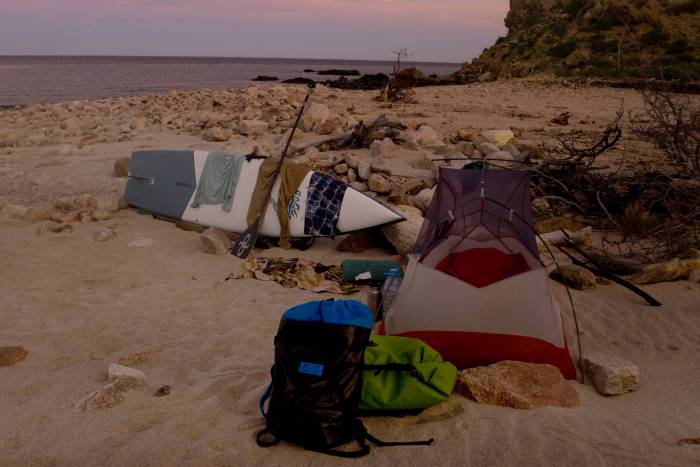
When one of our lead testers needed to quickly unload gear on his paddle expedition along the Sea of Cortez, he never worried about items staying dry in this pack, regardless of how rough the weather or waves became.
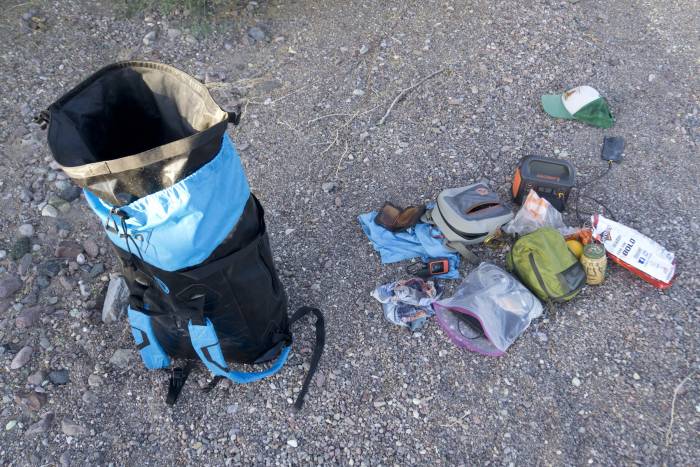
At the 60L capacity, the design can fit plenty and it has a unique hybrid layout. There’s a blue apron-style closure at the crown above the dry seal, allowing items that don’t need to be carried in the waterproof compartment to be accessible, too. Our testers used that convenient zone for a jacket, towel, and snacks.
This Survival Highwater 60L Waterproof Gear Hauler shines for versatility and function. And with a price that won’t break the bank while giving you ample loading space, this has quickly become one of our top choices.
Specifications
Pros & Cons
Pros
- Universal first aid kit symbol and bright red color for quick identification
- Clear TPU window to see inside bag
- Very lightweight
Cons
- The TPU window could be larger
- D-ring could be a bit larger
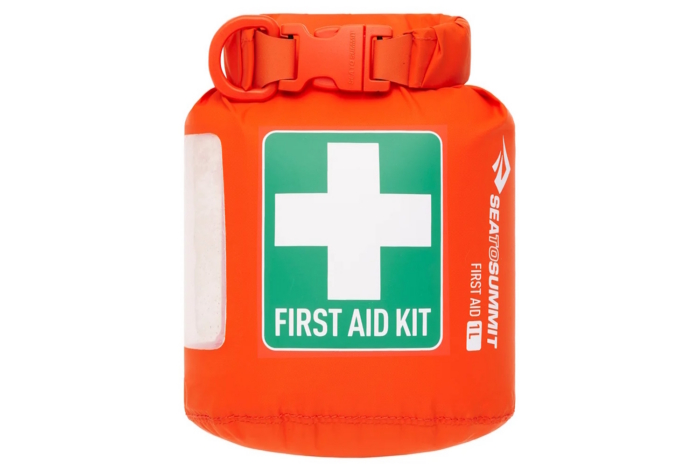
If you’re ever in an emergency scenario, the last thing you want to need to remember is what box, bin, or bag carries the emergency supplies. To help make high-adrenaline moments more manageable, Sea to Summit designed a Sea to Summit Lightweight Dry Bag First Aid ($16) with the universal first aid symbol, label, and bright red color.
Two quaint size options will fit your medical necessities, including a 1L or 3L choice. Of course, depending on the time of year, season, environment, group size, and risks to manage, the comprehensive volume of your kit will range. Each bag has a roll-top closure, 70-denier nylon that’s been updated with a recycled, Bluesign-approved textile, plus a PFC-free DWR finish.
Our favorite part? The clear thermoplastic urethane (TPU) window, so that you can get a glance at the contained items.
Overall, the design of the Lightweight Dry Bag First Aid is simple and straightforward. With three full rolls down, the waterproof bag should keep your supplies free from moisture.
Dry Bags Comparison Chart
Scroll right to view all of the columns: Price, Closure, Capacity, Dimensions, and Weight.
| Dry Bag | Price | Closure | Capacity (L) | Dimensions | Weight |
| YETI Panga 75 Dry Duffel | $350 | HydroLok zipper | 50, 75, 100 | 28″ x 15.5″ x 11″ | 6 lbs., 10 oz. |
| YETI Panga 28L Waterproof Backpack Dry Bag | $325 | HydroLok waterproof zipper with U-Dock for a completely airtight and submersible seal | 28 | 20″ × 12.5″ × 7″ | 1,800 g |
| Exped Drybag Versa | $90 | Roll-top closure with quick-release buckle | 3, 5, 8, 13 | 9.8″ × 6.9″ × 3.9″ (3L), 12.2″ × 6.7″ × 4.7″ (5L), 13.8″ × 7.5″ × 5.5″ (8L), 17.3″ × 9.1″ × 6.3″ (13L) | 31 g (3L), 43 g (5L), 48 g (8L), 65 g (13L) |
| BOTE Highwater Slingpack | $199 | TIZIP zipper | 20 | 10.5″ × 19″ × 7″ | 30.4 oz. |
| NRS Bill’s Bag 65L | $220 | Waterproof roll-top closure with magnetic StormStrip seal | 65, 110 | 14″ x 24″ | 4 lbs., 3 oz. |
| Sea to Summit 13L Evac Compression | $50 | Roll-top with wrap-around compression straps | 5, 8, 13, 20, 35 | 8.7″ x 17.6″ (13L) | 4.8 oz. |
| Sea to Summit Lightweight First Aid | $16 | Roll-top with 5/8-inch buckle | 1, 3 | 6.7″ x 5.2″ x 8.4″ (3L) | 1.7 oz. |
| SealLine Pro Dry Pack 120L | $360 | Roll-top with four buckles | 70, 120 | 18.5” x 12.5” x 32” (120L) | 88 oz. |
| Watershed Chattooga 22L | $198 | ZipDry push-closure that rolls down and includes two buckled straps | 22 | 10″ x 19.25″ x 9.5″ | 1 lb., 10 oz. |
| Sea to Summit Big River | $50 | Roll-top plus a buckle closure | 5, 8, 13, 20, 65 | 15″ x 10″ x 33″ (65L) | 10.3 oz. |
| Mustang Survival Highwater 60L Waterproof Gear Hauler | $165 | Roll-top buckled closure plus a drawstring | 60 | 18” x 4.5” x 23” | 40 oz. |
| SealLine Discovery View | $40 | Roll-top with a buckle | 10, 20, 30 | 14.5″ x 8.5″ x 5″ (10L) | 6.5 oz. |
How We Tested Dry Bags
On top of extensive research, we enjoyed putting these dry bags to the test. Our GearJunkie field testers ranged from a professional outdoor photographer to search-and-rescue personnel, expert and recreational standup paddleboarders, and expeditionists setting records.
Our Expert Testers
Senior Editor Morgan Tilton has a self-supported first descent down the 100-mile wild whitewater of Escalante River in Utah on a SUP with four friends. A backcountry skier and bikepacker, Tilton uses dry bags on hut-to-hut trips and endurance rides in a range of climates, from the high alpine to the desert. Tilton’s global adventures and reporting (dry bags in tow) recently led to her accolade as the 2025 North American Travel Journalist of the Year. She was also named a 2025 global media delegate by The Adventure Travel Trade Association and explored Japan’s Tōhoku Region during September, a rainy month along the coast.
Among other contributors, gear tester Sean Jansen tested dry bags while paddling a SUP 1,000 miles along the Baja Peninsula on two expeditions. Former Managing Editor Mary Murphy is an avid single-day and overnight paddleboarder, as well.

Our Testing Grounds
These dry bags protected our overnight apparel, camp gear, and electronics on back-to-back water-travel days throughout the West from Utah to Colorado’s central mountains, Washington to Montana, and even down to Baja California, Mexico. Senior Editor Morgan Tilton also tested dry bags while trekking and sea kayaking throughout Japan’s Tōhoku Region.
Our Testing Process
We took these dry bags on morning and afternoon outings, as well as multiday and month-long river trips. They were companions in whitewater and on flat water through canyons and ravines, across wide-open lakes, or down coastlines.
Our metrics included waterproofness, ergonomics, ease of use, and flexibility. We examined accessories such as pockets and padded straps, simplicity of closure, and durability across a range of sizes and price tags. To find the best-made goods for testing, we also considered the highest-rated, most popular, and top-selling dry bags on the market.
How We Rate Dry Bags
Our extended ratings for dry bags tag each product on a scale of 1 to 10: A 7-8 represents a high-quality, recommended piece of equipment. Scores above 9.0 are reserved for best-in-class gear that sets a new industry standard.
1. Waterproof Integrity & Submersibility
This rating measures the bag’s primary job: keeping water out. Beyond the manufacturer’s IPX rating, we test how the closure system holds up under pressure from classic roll-tops to high-tech waterproof zippers.
High scores mean the bag can survive a legitimate dunking or a sustained downpour without a drop reaching your gear. Lower scores typically indicate splash-proof gear intended for light rain rather than river submersion.
2. Abrasion Resistance & Durability
We don’t baby our gear. Here, we evaluate the fabric’s density and the quality of the laminate or coating to see how well it stands up to sharp rocks, sand, and the general friction of being strapped to a raft or tossed in a truck bed.
A top-tier score signifies a bombproof build that can withstand years of heavy abuse or scraping from surrounding vegetation. Lower scores are typically assigned to ultralight materials that sacrifice ruggedness for weight savings.
3. Attachment Utility & Rigging
A dry bag is only useful if it stays where you put it. This metric looks at the external hardware: D-rings, daisy chains, grab handles, and lash points. We reward dry bags that are easy to secure to a standup paddleboard, motorcycle, bike, or whitewater raft.
Products earn higher marks if they’re more versatile and have reinforced rigging points. Minimalist bags that are difficult to tether receive lower marks.
4. Packability & Ergonomics
We evaluate how each dry bag handles volume and human interface. For traditional dry sacks, we assess how easily they purge air. We consider how easily they compress and fit into a suitcase. For backpack-style dry packs, we focus on the comfort of the shoulder straps and hip harness, plus the breathability of the back panel, and how the weight is distributed.
A higher score means the bag is either exceptionally easy to compress or remains comfortable during miles of hiking.

Buyer’s Guide: How to Choose a Dry Bag
Dry bags might seem simple, but they’re incredibly diverse. Each design complements specific water activities, outdoor needs, and personal preferences.
Size & Fit
A few primary factors to consider when choosing a dry bag are the shape, capacity, and straps. Will the bag fit where it needs to be stowed, and how far will it need to be carried? When the bag is loaded, is the carry system ergonomic for the bag user?
Some larger dry bags have backpack straps for easier transport that are also removable. Removing straps can decrease the chance of a snag.
For storage, it’s essential to consider how easily the bag can be packed down, rolled, or flattened. That’s especially important for folks without a garage or much storage space.
Our favorite dry bags check the boxes for a vast range of size options (in liters):
- SealLine Pro Pack: 70, 120
- NRS Bill’s Bag: 65, 110
- YETI Panga Duffel: 50, 75, 100
- Sea to Summit Big River: 5, 8, 13, 20, 65
- Mustang Survival Highwater: 60
- Sea to Summit Evac Compression: 8, 13, 20, 35
- SealLine Discovery View: 5, 10, 20, 30
- Watershed Chattooga: 22
- Sea to Summit Lightweight First Aid: 1, 3, 5
From the simplicity of protecting your phone to the complexity of a major expedition, a dry pack exists for most applications. And there are sizes ranging from 1L to 120L.

Closures
The closure design of a dry pack is as important as the dry bag itself. Closures vary in design and you might prefer certain types over others depending on the application.
Roll-Top
The most classic closure system is the roll-top. This simple, effective design is reliable and easy to use. With buckles on either end, it’s a straightforward method to keep your contents dry. Typically this type of closure is cost-effective because a waterproof zipper doesn’t need to be installed.
Drawbacks of the roll-top, however, can be catastrophic if the system is not correctly closed. Take it from us: Should the dry pack not be securely closed, your contents will get wet. Luckily, he was in the desert sun and could dry out his clothes. To aid, the SealLine Pro Dry Pack has instructions on the interior seam to help ensure your pack is appropriately closed.
Waterproof Zippers
Waterproof zippers have come a long way, and they’re super reliable. Similar to roll-tops, there can be user error, such as if you don’t completely close the zipper, but otherwise, these beefy closures can certainly keep out water. Typically, sacks with waterproof zippers have a steeper price tag.
The Yeti Panga Dry Duffel and the Watershed Chattooga have burly zippers, which allow you to quickly open the bag to grab items and eliminate the process of unrolling and rolling the top.
Typically, dry packs with waterproof zippers are submersible, but most are only rated to one meter below the surface. So, don’t plan on dragging your gear behind your vessel.

Drawstring, Compression Straps
Mustang Survival Highwater 60L Waterproof Gear Hauler took the roll-top to the next level with a brain for extra storage. Closed via drawstring, the non-waterproof compartment is on top of the dry bag, which is a great spot for quick access and extra apparel. The Sea to Summit Evac Compression roll-top closure is enhanced with compression straps, which allow users to compress their soft goods.
Straps & Handles
The straps and handles of your dry bag could be a major factor for your trip. You’ll want to consider the gear volume and how far you’ll need to trek with your bags in hand. Ergonomic preferences as well as the attachment points that are needed for water travel should be considered, too.
Roll-top closures can double as a handle when they’re secured closed. Zippered closures typically have a separate, removable shoulder or hand strap for carry. Otherwise, handles are located along the side.
For expeditions, the Mustang Survival Highwater 60L Waterproof Gear Hauler has six nylon grab handles strategically placed around the pack, making this heavy hauler maneuverable. A bag is easier to grab when there are handles on the sides and base, like when the bag needs to be packed upside down on a raft.
Shoulder Straps & Hip Belts
Some dry bags have shoulder straps and hip belts for carrying heavier loads. The SealLine Pro Dry Pack offers up padded shoulder and sternum straps that are not only comfortable but also adjustable.
The NRS Bill’s Bag Dry Bag and Mustang Survival Highwater 60L Waterproof Gear Hauler both have integrated shoulder straps. In most designs, the shoulder straps or hip belt are removable.
When hiking with a dry bag, such as from your docking station to a campsite, a hip belt can be a saving grace. A waist belt is especially useful for heavier cargo or if you need to bushwhack. It’s also supportive if you need to be hands-free to carry a SUP paddle or navigation device.
We also appreciate padded straps for comfort and adjustable buckle systems. Both help the pack snug up against the body and more evenly distribute the weight load. They also help to eliminate bounce during transport.

Waterproofness
What’s the point of buying a dry bag if it can’t keep your gear dry? Waterproofness is the common denominator across dry bags. However, some designs are waterproof, and others are water-resistant, submersible, or non-submersible.
From a manufacturing standpoint, the material of the product as well as the seams and closure design are the largest factors that determine whether a dry bag is fully waterproof and totally submersible. Generally, the more waterproof, the greater the cost.
At a minimum, dry bags are water-resistant. Nylon, polyester, polyurethane, or any combination of those textiles is usually what comprises a dry bag.
Levels of Water Protection
If a dry bag is labeled as splashproof, waterproof, or submersible, that means the seams and closure are built to withstand that level of moisture. Here’s a rundown of that progressive protection:
- Splashproof: Water can splash onto the exterior, rain, and snow can fall onto the surface, cannot be submerged in water
- Waterproof: Water can splash onto the exterior, rain and snow can fall onto the surface, often can be fully submerged in water (however, some waterproof products cannot be submerged, so be sure to read the manufacturer’s claims)
- Submersible: Water can splash onto the exterior, rain and snow can fall onto the surface, can be fully submerged beneath water (though, this isn’t an excuse to take it scuba diving. Many packs are rated to a depth of 1 m)
Waterproof dry packs need stitched and welded seams to seal out moisture. Many dry bags have double-welded seams, which means that the reinforcements are doubled.
Presently, zippered dry packs will not be submersible. Zippers have come a long way, but they still can’t quite hold it together when the pressure of the water takes over. The Yeti Panga Waterproof Duffel and the Watershed Chattooga 22L are exceptions. Roll-top closures are typically submersible.
Sustainability
Sustainable manufacturing in the outdoor industry has risen over the years, and many companies have taken this to heart. In this arena, there’s been an increased demand and use of recycled materials. We’ve also seen an uptick of durability, so the bags last longer and prevent end-of-life waste.
Dry packs made with recycled fabric typically derive the material from recycled plastics. Upcycled waste material from other dry packs or discarded marine waste could also be used to make dry bags.
Many dry bags now carry a PVC-free or PFC-free label. PVC (polyvinyl chloride) is a synthetic polymer of plastic. It’s toxic, and therefore something consumers and product developers are steering away from.
SeaLine, for example, has rid itself of vinyl to reduce its environmental impact. Sea to Summit has steered away from PFCs (perfluorinated chemicals). PFCs are what many outdoor brands traditionally applied to products to establish waterproofness.
Price & Value
For some dry bags, you could pay a relatively small sum for maximum storage capacity. You’ll find that other bags with a high cost have minimal room. The quality of the material and technology plays a huge role in the price in addition to the size.
In the $100-200 range, are the Watershed Chattooga, NRS Bill’s Bag Dry Bag, and the Mustang Survival Highwater. These products range in size from 22L to 65L. The Chattooga is the smallest and priciest choice, due to the high-end, burly material and tenacious closure system. The Highwater is a unique 40-liter waterproof pack with a 20L additional drawstring wet storage compartment on top.
Budget
The Sea to Summit Lightweight First Aid ($16), for instance, is small with an identifiable bright color and global first-aid symbol, roll-top closure, and a clear TPU (thermoplastic polyurethane) window. To pay slightly more in the budget tier for the Sea to Summit Big River Dry Bags ($40-80) give you a versatile size range, roll-top closure, waterproof, 420-denier nylon, lash points for tie-downs, and a tear- and puncture-resistant material.
Mid-Tier
Closer to $200, you’ll find a variety of smaller dry bags for specific applications. A range of specializations exist from see-through polyurethane to a first-aid kit dry bag. In this rung, SealLine has a patented dry seal roll-top closure design. Sea to Summit offers versatility and a huge collection of different volumes.
The Watershed Chattooga 22L ($190) has a huge opening for easy access and is submersible. It has heavy-duty lashing hooks, convenient straps for easy grabbing, and UV-resistant and heavy-duty polyurethane nylon. The NRS Bill’s Bag Dry Bag 65L ($180) offers a versatile size, padded shoulder straps with a removable backpack harness, roll-top closure, and heavy-duty TobaTex material.
The Mustang Survival Highwater Waterproof Gear Hauler ($165) dishes out a roll-top closure, padded backpack straps, six grab handles, 420-denier nylon coating, and an easy-to-access 20L external brain compartment with drawstring closure.
Premium
In the $200-350 range, you’ll find the YETI Panga and SealLine Pro Dry Pack. YETI has a 3-year warranty along with high-quality construction for rugged trips. SealLine offers a high volume with the Pro Dry Pack, as well as padded, removable shoulder straps and a waist belt.
To point, the YETI Panga 75L Waterproof Duffel ($350) is fully submersible up to 1 m with a 3-year warranty, heavy-duty zipper closure, burly grab handles and straps, plus backpack straps. The SealLine Pro Dry Pack ($360) has a DrySeal roll-top closure, is submersible, and boasts a huge amount of storage, padded and removable shoulder and sternum straps, plus a reinforced bottom.

Frequently Asked Questions
If you need a dry bag for the essentials — phone, keys, GPS device — a 3L to 10L bag works great. We like the Sea to Summit 13L Evac Compression Dry Bag. The same goes for beginner paddlers. If this is your first dry bag purchase, start with one on the smaller side.
For running longer day trips, we find an additional 10L to 20L bag to be helpful. This can hold anything from your extra layers to a camp chair to a packed lunch and more. We found that the Watershed Chattooga 22L shined in this department.
Ultimately, the size of the dry bag you need depends on a lot of different factors. That includes the length of your trip, the time of year, and the amount and weight of your gear. You’ll also want to consider how often you’ll hit the water.
You’ll also want to consider factors like durability and price. Are you going to be using that 5L dry bag on a weekly basis? Maybe upgrade to a slightly larger option. Or, invest in one made of a more durable material to give yourself (and your gear) some wiggle room.
This also all depends on the frequency and types of trips you usually take. If you only take a river trip once or twice a year, you probably only need a few dry bags.
If you paddle year-round, you’ll probably want a collection of bags. That could include a 5-10L, a 30-40L, and maybe a 60L. You might also want a few heftier ones (100 L or larger) for the big adventures.
If you aren’t sure which dry bag will work best, consider getting two types:
- Duffel or backpack dry bag
- Roll-top bag
And if you know you need a specific size, you might purchase a couple from the start. Like if you need a small enough bag to fit in a rented raft, canoe, or kayak. To cover higher mileage and rivers, you’ll want at least three bags of various sizes. For short- to medium-length trips — whether it’s whitewater or flatwater — we recommend:
- One bag for your shelter, sleep system, and clothes
- One bag for your food and stove
- One bag for day access: snacks, maps, and emergency items.
If you need a dry bag for daily use, you might gravitate toward a bag that’s easy to open and close.
On our end, these bags tend to be three different sizes. And if you plan ahead, you can even color-code them to help with organization. One of our testers took three dry bags on a Baja paddle trip, which included different sizes and colors.
This is a great question and one every brand approaches it differently in terms of design. Once you buy a dry bag, there should be a tag on the top inner portion of the roll-top bag. You might also find printed instructions.
The magic number is usually three to make sure there’s an airtight and watertight seal. But the amount of times you’ll roll a bag also depends on the amount of gear inside.
Always be careful not to overstuff a dry bag — there should be room to roll it to fold that seal. If you only have a few items stored in a larger bag, make sure you roll out the extra airspace. Alternatively, you can roll the bag a few extra times.
With any of the dry bags on this list, you can’t go wrong. For backcountry-based trips with high-volume gear, we are partial to carrying only as many bags as we need. That’s around one to three for overnight and maybe three to five for a weeklong trip. And as many lightweight bags as possible. So we usually have a few different types of bags with us.
If you are traveling in a smaller vessel with limited space (like a sea kayak, standup paddleboards, or packraft), we’d recommend the NRS Bill’s Bag Dry Bag (the most economical large hauler). Or the Sea to Summit Big River Dry Bags, which offer the most versatile sizes on our list.