Cold hands can ruin a ski day faster than anything. That’s why I’m so picky about what goes on my digits. Get this wrong, and it doesn’t matter how good the snow is. You’ll spend the day thinking about numb fingers instead of powdery turns.
Luckily, The North Face Montana ski gloves are built for skiing. They’re not trying to be ultralight, minimalist, or touring-focused. Instead, they prioritize warmth, weather protection, and everyday comfort. And, they do it at an accessible price point.
With updated Heatseeker Eco insulation, a DryVent waterproof insert, and details aimed at lift-served skiing, these ski gloves are designed to keep hands warm and dry through typical winter resort days.
In short: The North Face Montana Ski Gloves ($65) offer reliable warmth and weather protection for resort skiing at a very reasonable price. Concessions come with affordability; you’ll trade breathability and dexterity for insulation and comfort. Still, these winter gloves are well-suited for skiers who want warm hands on cold days without blowing their bank account on hand coverings.
If you’re curious to see how the Montana Ski Gloves stack up against their competitors, check out our buyer’s guide to the Best Ski Gloves.
Specifications
Pros & Cons
Pros
- Solid warmth in cold-weather conditions
- Practical features make them easy to use
- Reasonably affordable
- 100% waterproof
Cons
- Limited dexterity
- Minimal breathability for warm skiing days

The North Face Montana Ski Gloves Review
Heading into this review, it was important to establish expectations. At such a value-driven price, the Montana ski gloves clearly aren’t meant to compete with high-end leather gloves or ultralight, minimalist mittens built for touring.
They have one job: warmth and weather protection. And they do it reasonably well, and at half the price of many of their competitors. Does that come with tradeoffs? Sure. But for the everyday skier who wants something to keep their hands from turning into icy popsicles, the Montana winter gloves are a solid choice.
Warmth for Cold Chairlift Rides
Warmth is where the Montana ski gloves shine the brightest, and it’s the insulation that is doing the heavy lifting. Instead of down, the gloves use thick synthetic insulation made from recycled materials. On paper, this insulation holds heat even when conditions are damp, and it dries faster than down.
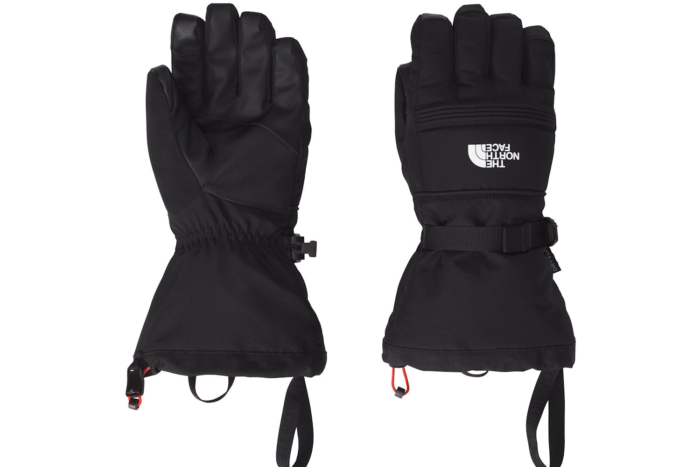
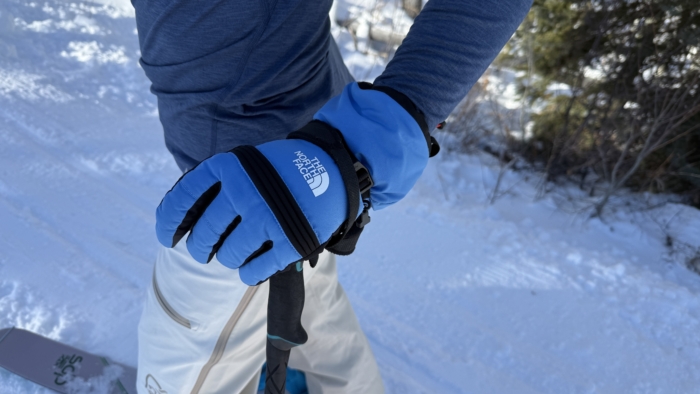
The North Face also packed the insulation into the back of the hand: You can see the added puffiness in the gloves. Since that is where you lose the most heat, it helps with warmth retention while also preserving (a semblance of) dexterity.
In real-life terms, that also means these ski gloves feel warm the moment you pull them on. Inside, a soft fleece lining helped the gloves feel cozy against my skin.
During testing at Aspen Snowmass, this setup worked reasonably well for me. At around 25 degrees Fahrenheit with minimal wind and light snow, my hands stayed warm while skiing and standing around between runs. It may not sound like much, but it’s a lot for me, given that I have terrible circulation and usually prefer winter mittens.
That warmth comes with limits. When I took the gloves off to help with my daughter’s ski boots, my hands got cold quickly. But, they were also slow to warm back up afterward. That’s typical for me and not unique to these gloves, but it does make me think that 25 degrees Fahrenheit is about as cold as I’d want to go in them. On the flip side, on a 41-degree Fahrenheit bluebird day, my hands were absolutely sweltering.

Staying Dry, Even When Things Get Damp
The Montana ski gloves are designed to keep the weather out. And during my weekend of testing, they did their job well. Inside the glove is a thin waterproof membrane (The North Face’s DryVent insert) that acts like a barrier between your hand and the outside world.
Its job is simple: block snow, wind, and moisture from getting in while still allowing internal moisture to move outward. Paired with an outer fabric treated to shed light precipitation, it mainly worked as intended during testing (more on that below). In light snowfall, windy chairlift rides, and a few minor falls, my hands stayed dry.
Breathability is a different story. That same waterproof membrane that does such a good job sealing out weather also limits how much heat and sweat can escape.
On the warm 41-degree-Fahrenheit day, my hands got sweaty quickly. That wasn’t a surprise; It was hot outside. But I could feel moisture building up inside the gloves. Personally, I don’t find “waterproof breathable” gloves all that breathable in real life, but these landed squarely in the middle of the pack.
In colder conditions, this tradeoff matters much less. Honestly, the middling breathability probably boosted the warmth for me. When temperatures dropped, the insulation and lining managed moisture well enough that dampness wasn’t an issue. But these aren’t gloves I’d reach for on warm spring days or during high-output skiing. They’re clearly built with cold, steady ski resort days in mind.

Dexterity, Grip, and Neutral Hand Shape
The Montana Ski Gloves are shaped to feel comfortable while skiing, thanks in part to the natural curve built into the fingers. Instead of lying flat, the gloves rest in a slightly curled position that mirrors how your hand naturally grips a ski pole.
The North Face claims this design makes pole grips feel less fatiguing over the course of a day, but I’m not sure I noticed a difference while actually skiing. Still, the gloves were cozy and comfortable, so it definitely doesn’t hurt.
That said, dexterity isn’t a strong point here. The gloves feel relatively stiff, and fine motor tasks are tough to manage. I regularly took them off to adjust ski boots and certainly zippers, which is something to expect if you’re coming from lighter or more flexible gloves. It’s not a dealbreaker for resort skiing, but it’s a clear tradeoff for the added warmth.
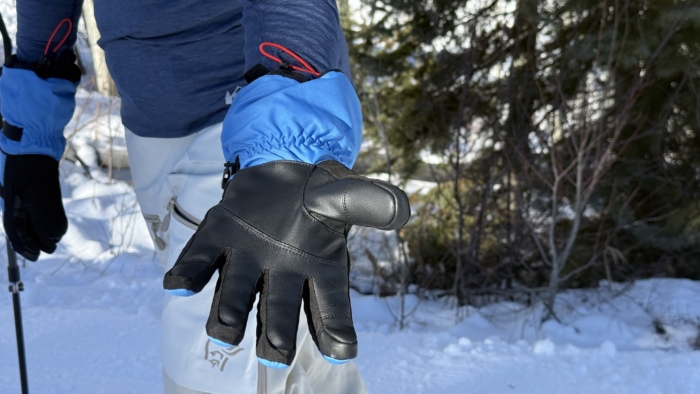
The palm uses a synthetic leather material that provides decent grip. It held up fine during my weekend of resort skiing. However, I expect it to wear faster than real leather over time. At this price point, it’s a fair compromise. But it’s worth keeping in mind if you’re hard on gloves.
Room for Improvement
Some ski gloves are well over $200 these days, so it’s reasonable to expect trade-offs at this price point. The Montana Gloves’ biggest drawbacks are all tied to comfort. As I’ve mentioned, dexterity is definitely limited. And, breathability is also nothing to write home about, particularly on warm days.
While this is not a major issue, I found the wrist leash oddly short. I’ve tested other budget gloves recently that don’t have one, so I’m thrilled it exists. But, the leash is short enough that it was almost a hassle to use. Once the leash was looped around my wrist, it didn’t give me enough slack to easily pull the glove back on, which made it more annoying than helpful.

Final Thoughts
The North Face Montana Ski Gloves are a straightforward ski resort pair that prioritizes warmth and makes a lot of sense for the right skier. If your foremost thought is keeping your hands warm on cold chairlifts and steady laps, these ski gloves deliver solid performance at an amazing price.
They’re not the most breathable, and they’re not ideal for warm spring days or constant gear fiddling. But the value is hard to ignore.
For skiers who want reliable warmth, weather protection, and a comfortable fit without spending a lot, the Montana Ski Gloves are a practical option that does exactly what they promise.