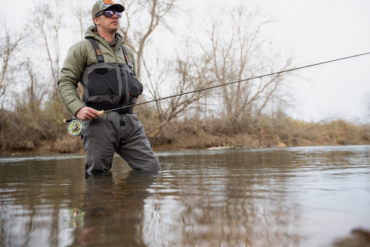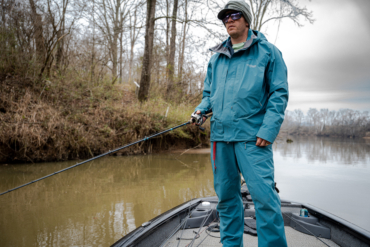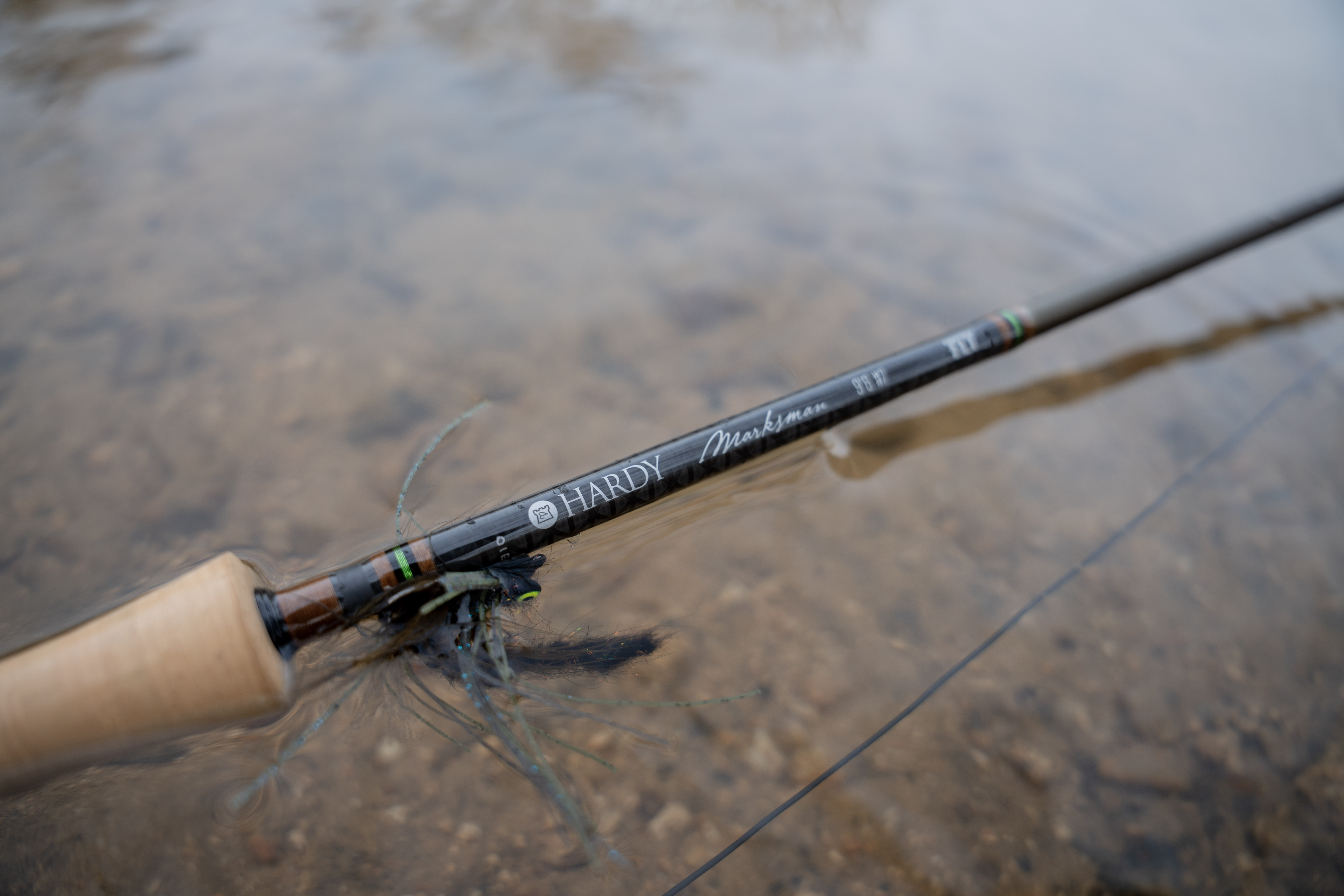
I was filled with anticipation as I pushed the bow of my buddy’s drift boat off the concrete ramp. Spring bass fishing had been heating up, and this was one of those classic “guide’s day off” trips. Just a crew of grimy fish bums, heading off to explore on a scouting mission.
The float we were embarking on is one of those spots that changes with the seasons. If the fish had moved up from the larger river below, it was sure to be an epic day. If they hadn’t, it was going to suck. Late February can go either way, but we were there to find out, and if all went well, we’d be guiding that stretch for the coming weeks. I also had another job to do: test out the Hardy Marksman fly rod I received a few days prior.
As I stood on the bow, prepping to make my first cast of the day at a submerged log, I was surprised when my buddy Drew pulled a second seven-weight Hardy Marksman out of the rod tube. It looked like both of us would be using the Marksman. It couldn’t be better testing conditions.
In short: The consensus among all three guides on the boat that day is that the Hardy Marksman seven-weight ($950) is one of the best bass and streamer fly rods on the market. While Hardy markets it as a medium-fast rod, the seven-weight leans more toward fast in the perfect way. It packs tons of punch for heavy rigs and making long casts, yet it still casts accurately with plenty of feel for close shots. It’s the best seven-weight I’ve thrown.
Hardy Marksman Fly Rod Review
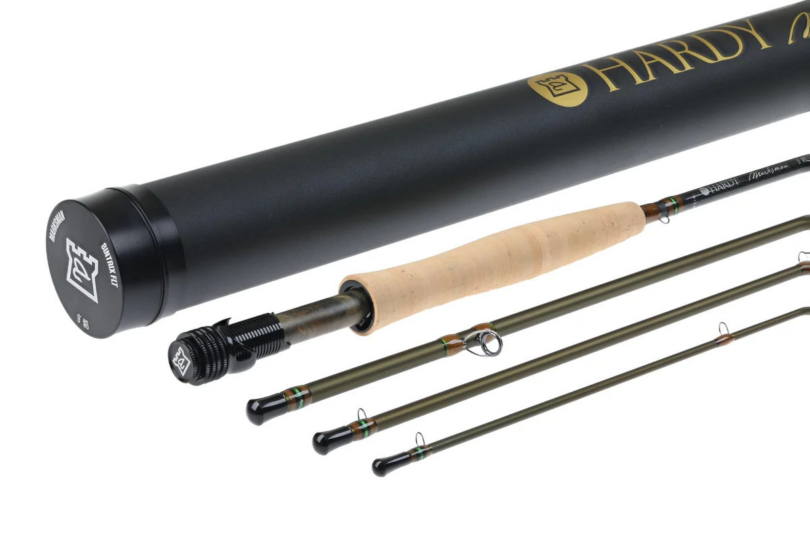
- Sizes: 3-8 wt. (7 weight tested)
- Action: Moderat Fast to Fast
- Warranty: Lifetime ($75 Repair Fee)
- Sections: 4
Pros
- Very light in hand
- Excellent blend of power and feel
- Performs well at all distances
- Top-notch aesthetics
- Solid reel seat
Cons
- Manufactured overseas — and not in England.
- Don't love single foot guides
Takeaways From the ‘Guide’s Day Off’
Input From James and Drew
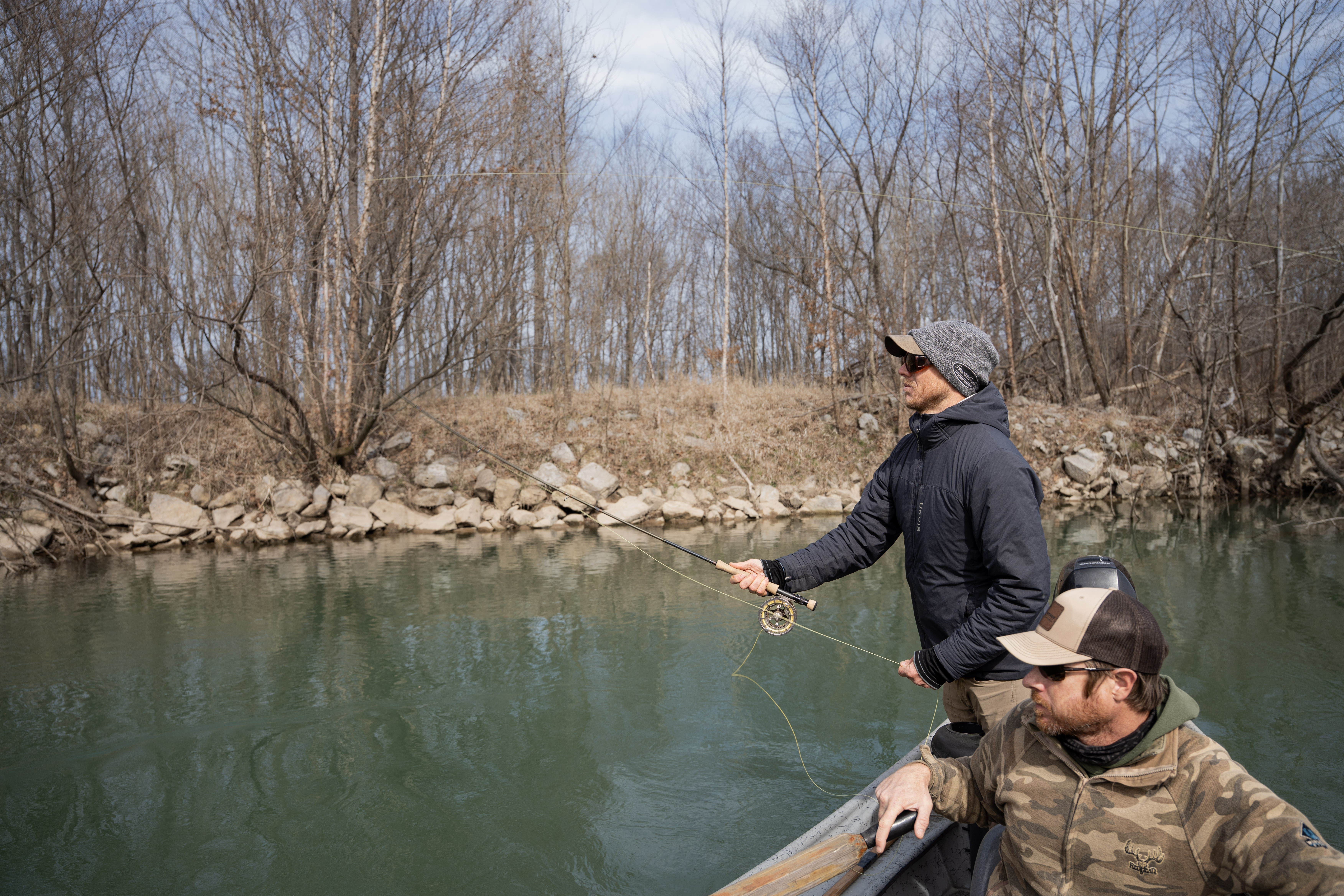
As we began fishing, I learned that Drew had never fished the Hardy Marksman as well. The rod belonged to the other guide in the boat, James, who said he really enjoyed the rod and found it threw all of his bass rigs with ease, whether it’s streamers, a float and fly, or poppers. It’s on his boat for every guide trip. Sounds like a pretty good endorsement to me.
After about an hour of fishing, Drew piped up about the rod. “This is a sweet seven. Most seven weights I’ve used honestly feel like an eight. This doesn’t feel like that, but it definitely has more power than the sixes I throw. It plays that sweet spot perfectly.”
My Thoughts on the Water
The Happy Medium
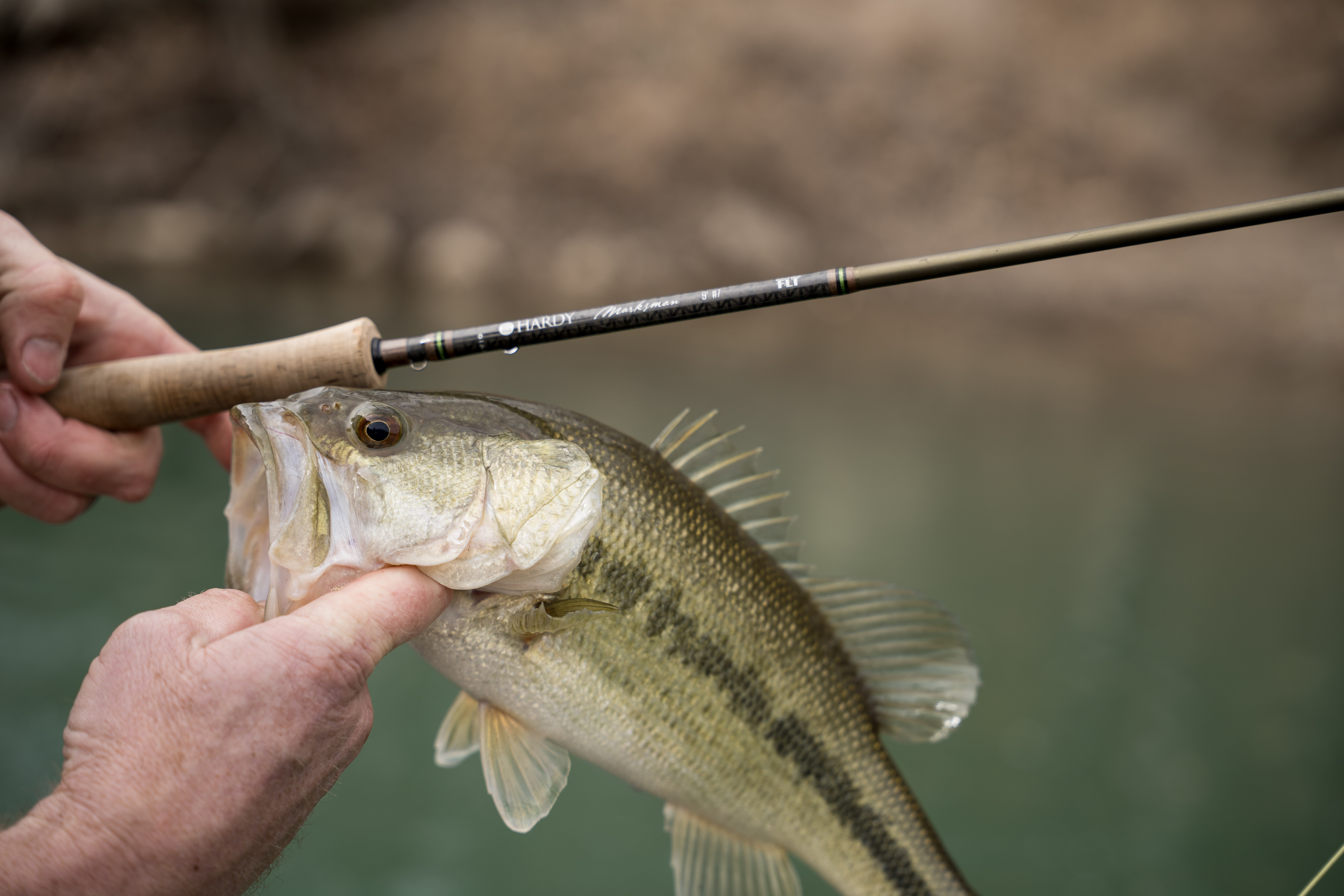
After throwing my own Hardy Marksman seven-weight that day, I wholeheartedly agree with Drew’s assessment. I typically avoid sevens for the exact same reason he described. It’s a weird, in-between rod size that’s tough to do well.
So, I typically fish with six weights because I despise fishing with an eight-weight for bass. It’s just too much rod. Sure, a good eight will sling heavy rigs better than anything, but when it comes to fighting fish, it takes all the fun out of it. And when it comes to fishing, one of the funnest things you can experience is a bruiser smallmouth darting away at Mach 10. I don’t get that with an eight-weight.
But on the flip side of the same coin, sixes are often under-gunned for some of my bass rigs. There isn’t enough umph.
The Hardy Marksman finally delivers a seven-weight that does both perfectly. In hand, the rods’ perfect balance and shocking light swing weight are apparent. It doesn’t feel like a big gun, but it is.
If you’re a fly rod bass angler, the Marksman seven is the ultimate stick. It has almost as much power as my eights, but it’s not so overpowered that it makes fighting freshwater fish feel like you’re dragging in a wet towel. It’s still a fight when you get a fish on full of piss and vinegar.
Action Allows for Excellence at All Distances
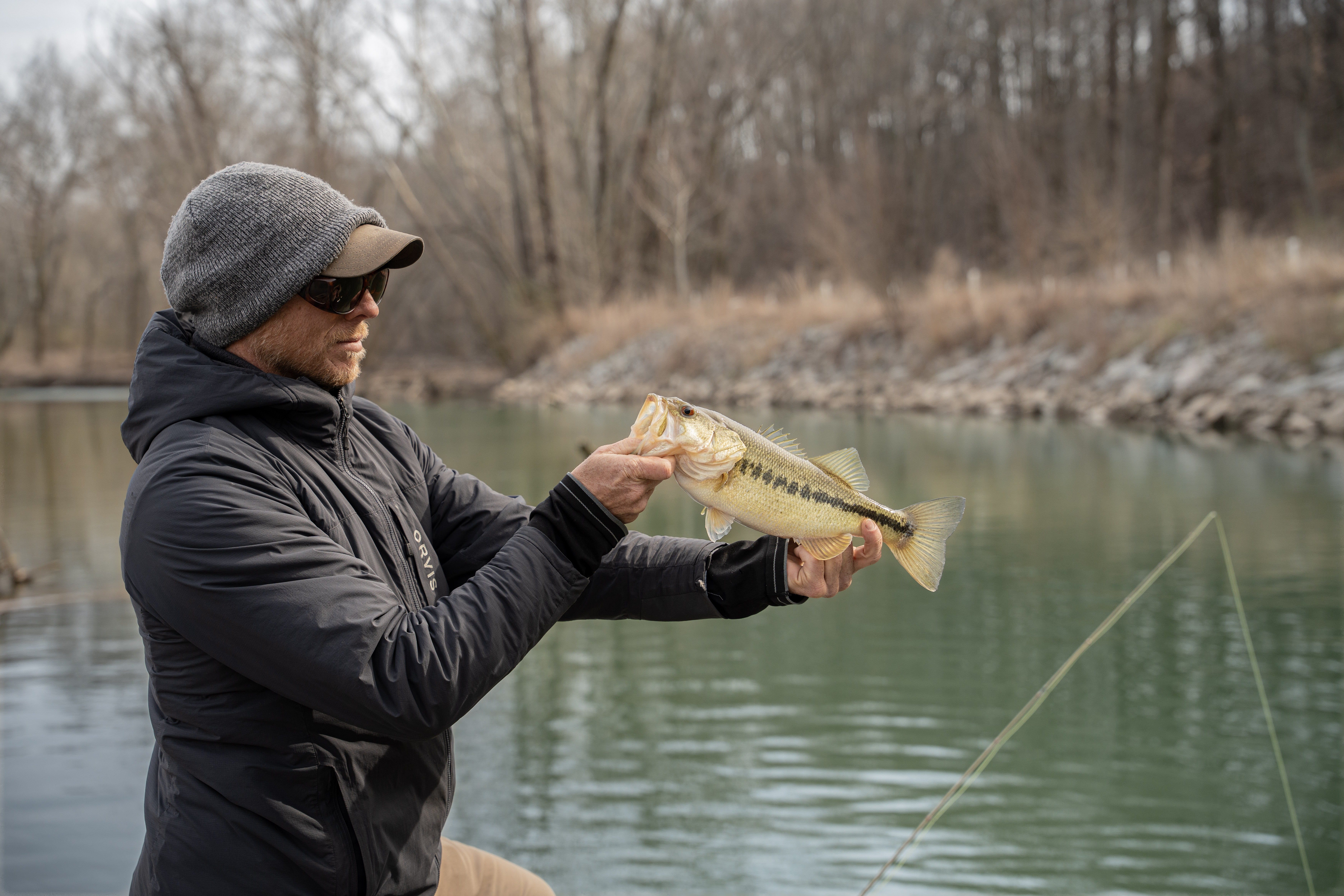
On that particular float trip, bass were crushing float and fly rigs. If you’ve ever thrown an indicator rig with a streamer, you know that long casts with heavy flies can be tough. It can feel like you have to punch really hard to hit far-flung targets.
The Marksman Seven isn’t like that at all. When paired with a RIO Redfish line (yes, I throw a saltwater line for bass), the Marksman absolutely slingshots big rigs. Every time I cast at a distant target, it shocks me how little effort I have to put into the cast.
But it’s not a broomstick, like so many rods that excel at distance casting. Often on the small rivers of Tennessee, I’m tasked with hitting small targets next to brush within 35 feet of the boat. Most fast-action rods aren’t great at that.
The Marksman is. The rod loads exceptionally well considering its size. The action lets me feel the cast and naturally place the fly exactly where I want, up close, without thinking about it. It’s absolutely money for up close bassin’.
For my particular natural casting stroke, the Hardy Marksman’s action is flawless. Hardy labels the lineup as “medium fast,” which may be true of the smaller trout sizes, but I disagree with that label on the seven-weight. It’s definitely a fast-action rod, but it’s not overly fast, something that’s become common in the arms race of fly rods. It’s more of the “fast-action” of rods 15 to 20 years ago.
It is the perfect amount of fast, allowing for extremely easy long-distance casting while maintaining accurate, feel-filled close shots.
Sinking Lines and Dumbbell Flies
After that day, I took the Hardy Marksman out to some big water on my bass boat. Since I didn’t have a chance to throw sinking lines on the prior trip, the plan was to throw the RIO Predator sinking line and the RIO Outbound Short intermediate line with the rod.
I fell in love with the rod even more. In the freshwater, I usually cast sinking lines with streamers on a six-weight for the reasons outlined above. The Marksman handled the task so much better. Just like indicator rigs, the rod bombed giant casts with dumbbell flies, allowing me to easily execute 65+ foot casts on deep channel swings in the lake.
Even the heaviest sinking line didn’t feel like too much for the rod blank to handle. It remained responsive and recovered well, while still maintaining the “fun to fish” factor of a lighter rod.
Other Things I Dig About the Hardy Marksman
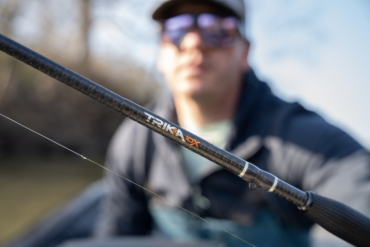
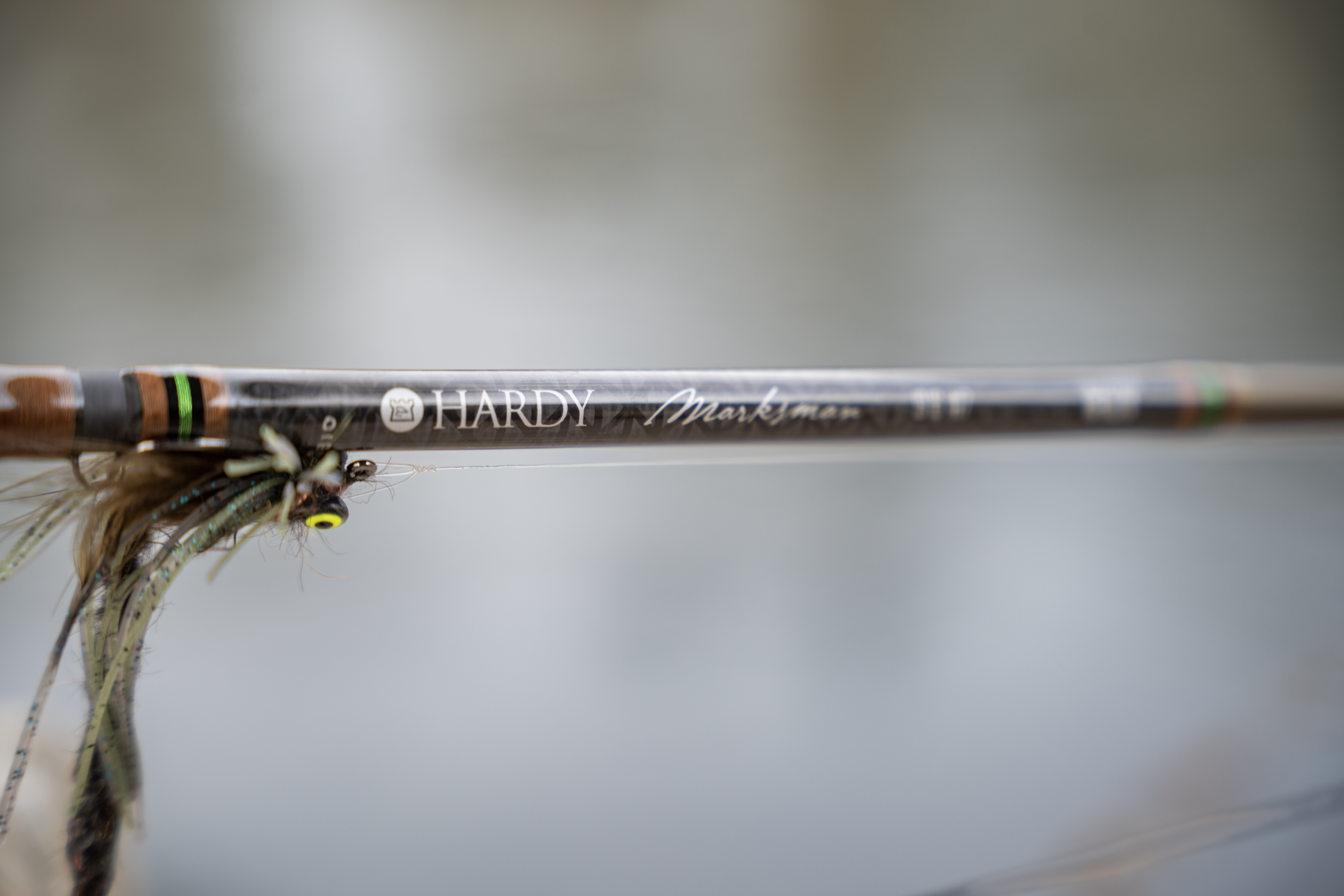
The aesthetics of the Hardy Marksman are on point. Most of the rod blank is a gorgeous chocolate-brown color, with green wrap accents. The rod label section on the but is a reflective black color, giving it pop like the Orvis Helios rod, but it’s subtle and classy, unlike the Helios.
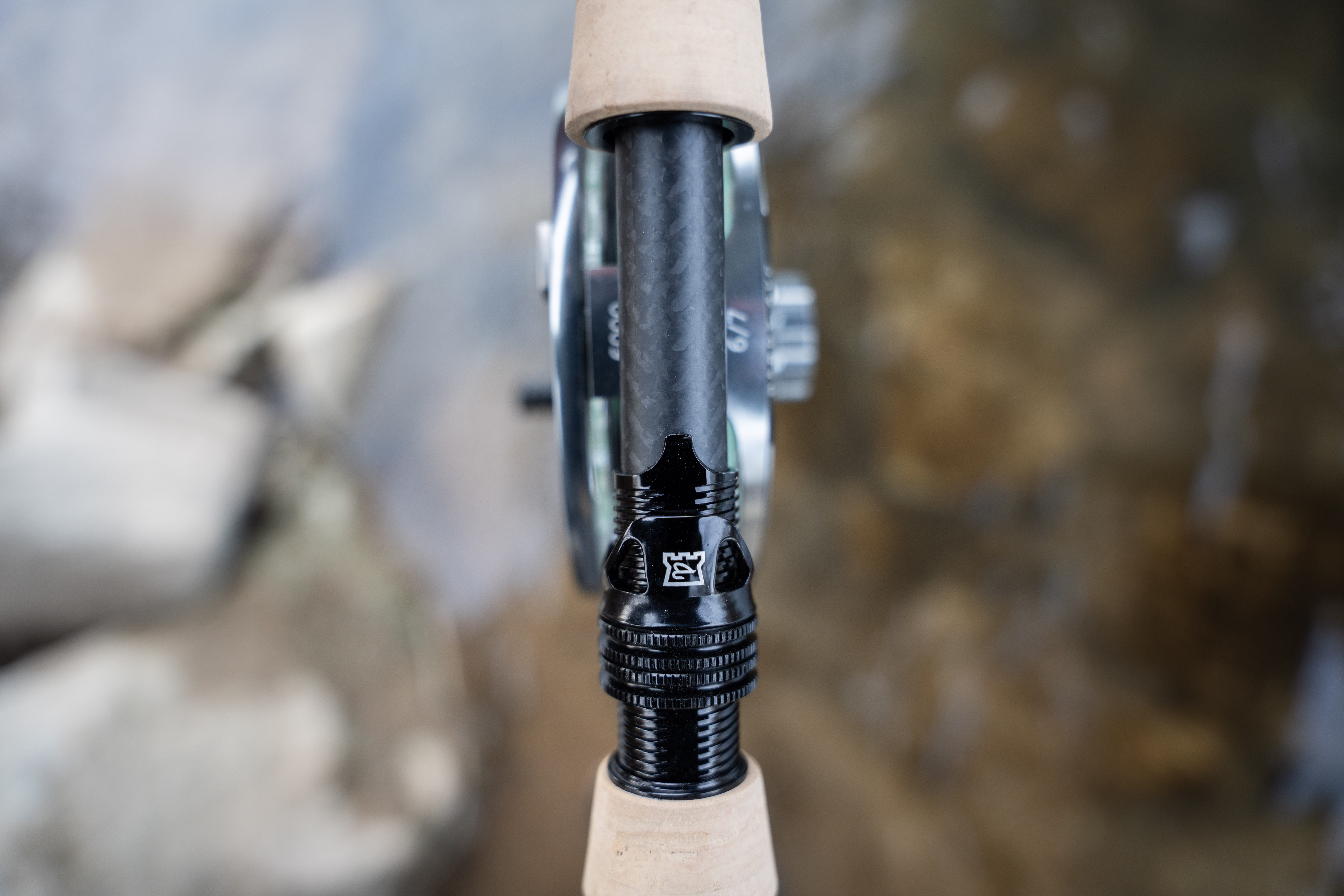
On the seven-weight, the reel seat is made of carbon fiber, which helps keep overall weight down. I dig the look more than anodized aluminum. There are two screw rings and an interesting design on the locking ring, with an upturned tab on the top and bottom. That little tab makes it a bit tougher to get your reel on the rod, but it provides extra bite that holds your reel securely in place through a day of fishing.
I also really like the price of the rod, considering it’s a flagship rod. Top-tier rods are hitting insane prices, and the sub-$1,000 tag on the Marksman makes it one of the cheapest flagship rods available in ’26.
Negatives of the Hardy Marksman Fly Rod
There really isn’t much to dislike about the Hardy Marksman seven-weight fly rod. In my eyes, it’s a clear winner if you’re in the market for a seven-weight. That isn’t going to stop me from complaining, though.
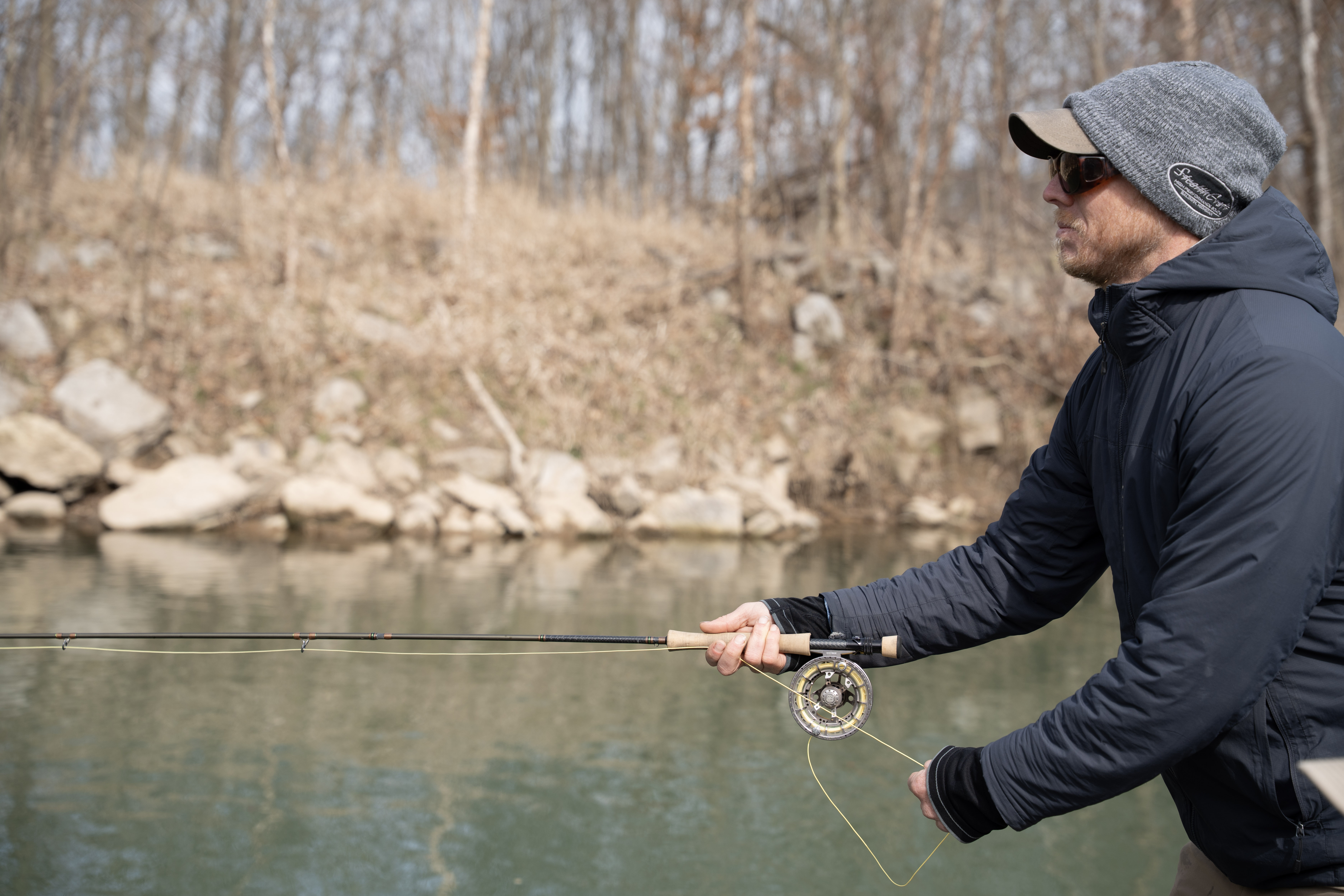
The rod guides above the two stripping guides are single-foot guides. I don’t like that on a fly rod, and I really don’t like it on a rod that could be considered a “big game” rod. I’ve found line-to-leader connections get stuck more easily in that style of guide, which can be catastrophic when a big fish decides to take a run.
On the other hand, single-foot guides are lighter, which probably contributes to the lighter swing weight of the Marksman, so it may be for the best.
This rod is also manufactured overseas. Now, you may think that, since Hardy is an English company, “overseas” means England. It doesn’t. All the brand claims is “Asia.”
So, if having a U.S.-made rod is a big deal to you, this clearly isn’t the rod for you. However, I can say it performs just as well as my homegrown fly rods, so if it’s a performance thing you’re worried about, you shouldn’t be. It looks like some of those overseas factories are really upping their game.
Final Thoughts: Who Should Pick Up a Hardy Marksman Seven-Weight
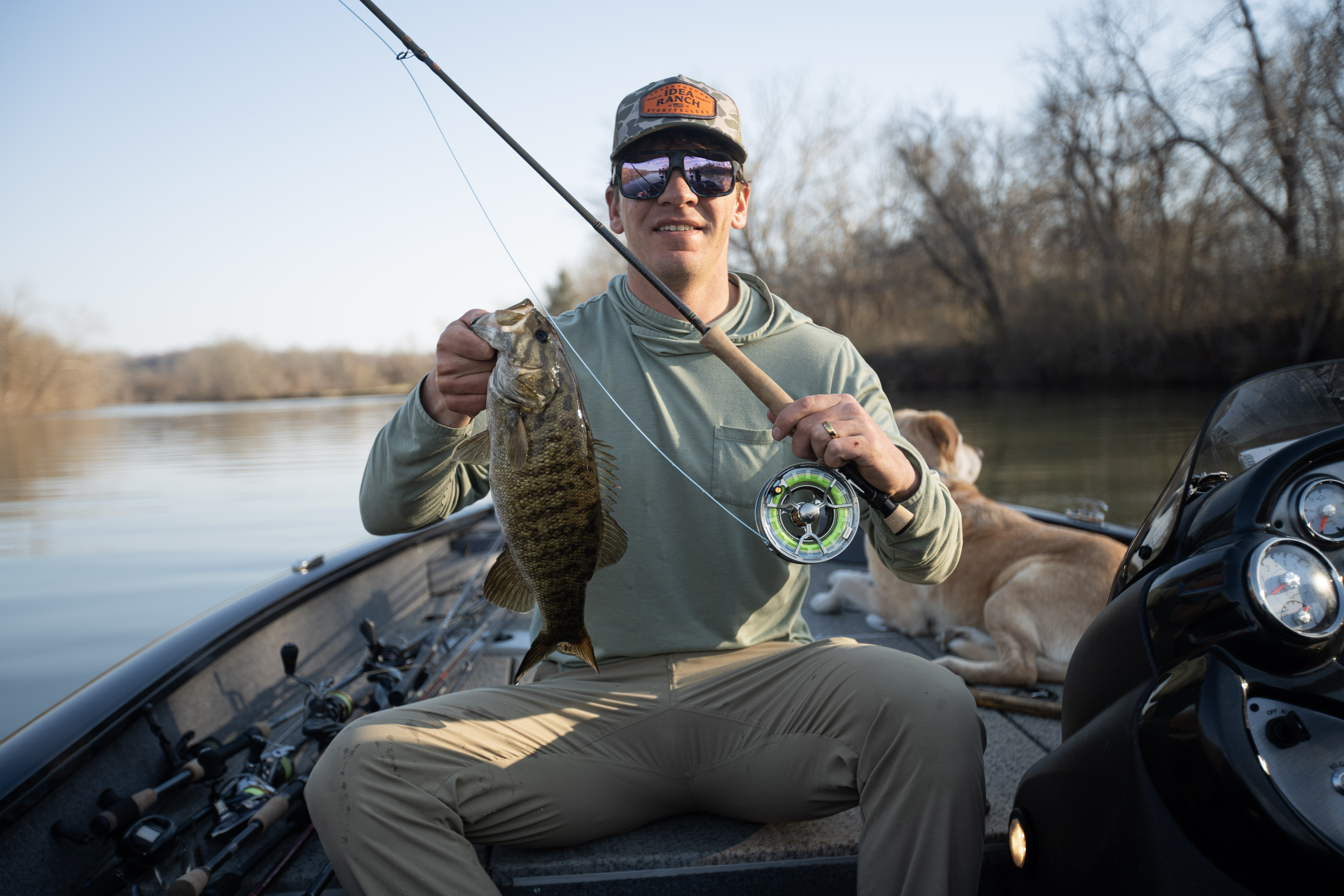
I think there are a ton of anglers who should add the Hardy Marksman seven-weight rod to their arsenal. Despite the odd size, it’s quite a versatile fly rod.
Warmwater Anglers
It has easily earned its place as my favorite bass fishing fly rod. When I brought the rod up at the local fly shop, my buddy behind the counter perked up and said he’s also in love with the Marksman seven-weight and that it’s one of the best bass rods out there. Yet another glowing review from an industry pro.
It’s simply the perfect bass stick. On the warmwater note, it would make a pretty killer pike rod as well.
Trophy Trout Chasers
Trout guys who throw sinking lines should also take a serious look. If I’m throwing smaller bugger flies on sinking lines, I’ll still be sticking to my trusty six-weights, but when articulated flies are on the docket, I’ll be using the Marksman. It’s simply a more pleasurable rod to use while chucking big meat for big fish.
Saltwater
And, you better believe I’ll be packing this rod on saltwater trips. Now, many may think the Hardy Marksman Z, designed for saltwater, would be a better option. If you’re spending most of your time in the salt, that may be the case.
But if you’re like me, you fish saltwater only on the occasional destination trip. I’d rather have the slightly less stiff Marksman that excels in the freshwater and deal with it in the salt. And let’s be real, even a stiffer seven is still limited in the salt. It’s best for bonefish and redfish on calm days. In those situations, the standard Marksman will perform fine.
I know I’m looking forward to taking it to the salt for some light tackle shenanigans and a fish-filled guide season with it on board my boat.