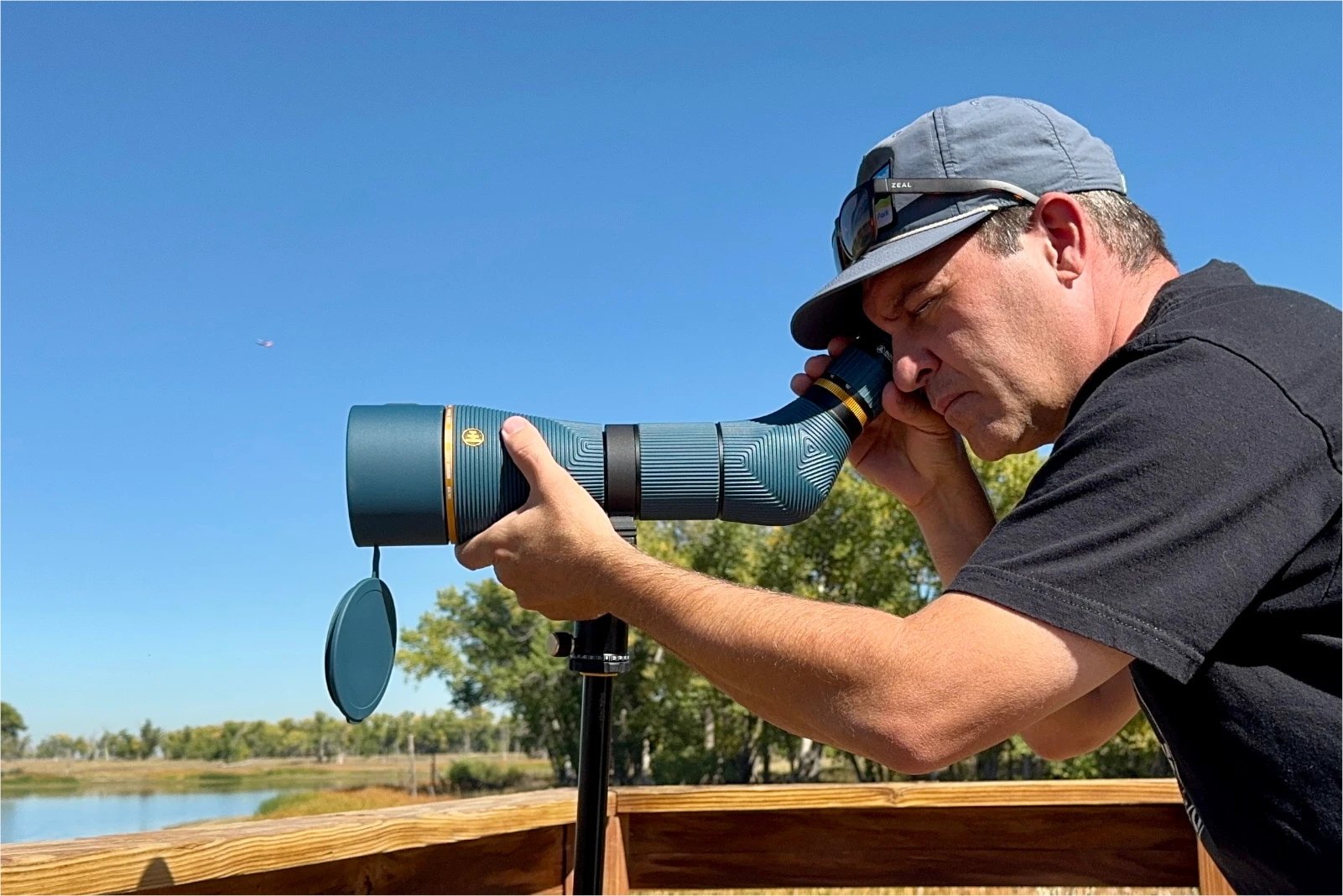
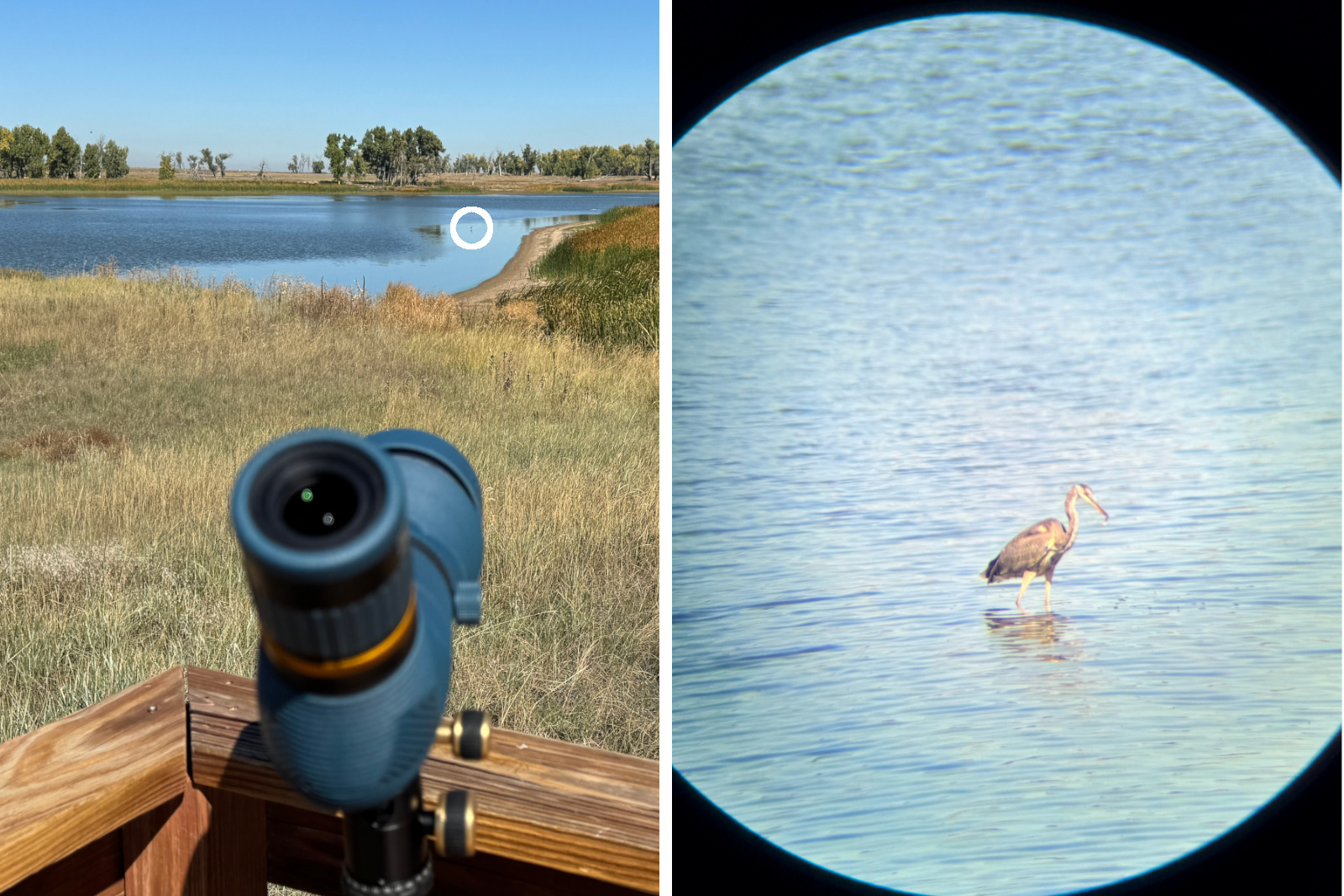
There’s a childlike joy in seeing something up close, at a distance. I felt that way when I saw a great blue heron stalking in the shallows of a lake and dialed a spotting scope into focus just in time to see it spear a fish.
Spotting scopes are great for long-distance observations of waterfowl that hang out in the middle of lakes, skittish shorebirds, and eagles nesting in distant treetops. Those are all species I watched through the rich 85mm optics of the Nocs Provisions Long View Spotting Scope.
In short: The Long View Spotting Scope ($600) offers great bang for your buck, with a bright, wide field of view and good low-light performance. This is a great first scope that enables beginner or intermediate birders to expand into long-distance observations without feeling underpowered or breaking the bank. Experienced birdwatchers who use a scope as much, or more than binoculars, may want to splurge on a more advanced optic.
Check out GearJunkie’s guide to the Best Binoculars if you want to see more optics.


-
Value
9.0
-
Durability
8.5
-
Style
8.0
-
Performance
8.3
- Magnification: 20-60x
- Objective lens: 85mm
- Field of view at 1,000 yards: 108 ft. ~ 60 ft.
- Optics: Roof-style XDR prisms with phase coating enhance
- Eye relief: Adjustable 15.5–20.5mm
- Weather protection: Waterproof main body (IPX7); fogproof lenses
- Weight: 3.86 lbs.
- Mounting: Built-in Arca-Swiss–compatible tripod mount
- Warranty: Nocs lifetime warranty
Pros
- Low-light performance
- Bright and clear colors
- Smooth focus
- Protective, grippy housing
- Carry case included
Cons
- Slight edge distortion
- Focus suffers at upper magnification
- Eyecap not attached
- Barrel focus can feel stiff
Nocs Provisions Long View 85mm Spotting Scope Review
I tested the Long View spotting scope over the fall and winter months. I wanted to get a feel for its performance in different weather conditions and birding environments. Mainly, I tested the scope at familiar viewing locations, from urban rivers to wildlife refuges, and set it up on open decks, covered blinds, and random roadside walks.
This is when you can set up a scope on a tripod (ideally) and really watch shorebirds, waterfowl, and larger animals from afar — when your presence doesn’t scare them away. For instance, this helps you differentiate those hard-to-identify sandpipers, affectionately called “peeps.”
I primarily reviewed this scope in the context of birdwatching. However, you’ll probably want to bring it out for wildlife glassing, observing celestial events, and general nature-watching, too.
Field Notes
I first tested this on an overcast day along a large lake known for wintering waterfowl and a few bald eagles. Right out the gate, the optics brightness and color impressed me, especially in the low light. That’s in part due to the Long View’s fully multicoated, 10-piece (six-group) optical system and the large 85mm objective lens, which let in more light for a bright, clear view.
At the other end of the angled scope is the eyepiece. It has a twist-up eyecap, which has a more standard 20x–60x magnification. (Angled scopes are great for looking across or upward, where birds tend to be.)
Range & Adjustability
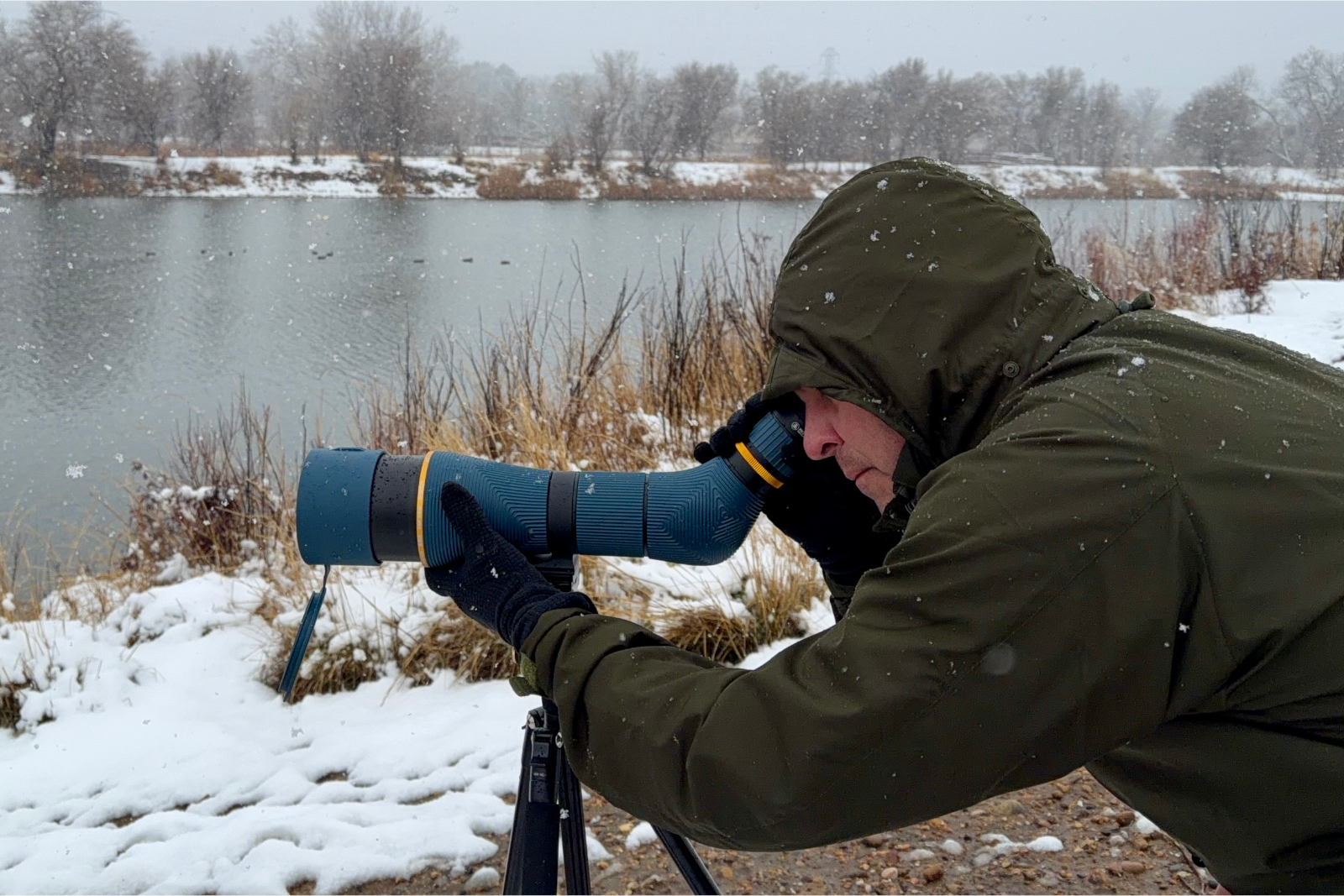
Once I adjusted to just how powerful this optic was, I could see gulls at 100 yards in great detail. I then pivoted to the far range to scan a variety of ducks across a large lake (roughly 400 yards).
Such far-off observations require a stable tripod (not included) and practice dialing the scope. Luckily, I quickly found a rhythm. I’d zoom out on the eyepiece to its 20x magnification, refocus with the center wheel, and zoom back in with the eyepiece and body focus in tandem.
The center-barrel focus took me off guard at first. It’s felt a bit stiff. Working with it and the eyepiece focus together was a bit of an adjustment. However, I came to prefer this focus method over time. I could stay hunkered over the scope while moving it and adjusting the focus. The expandable sunhood’s aiming groove also helped with repositioning to different birds.
Grip & Mold
If the Nocs design motif of thermoplastic looks like a kiddie version of an optic, you may find you quickly appreciate the grip and protection it provides. The Long View scope’s body, or main tube, is waterproof (IPX7). The optics are also fogproof. However, I can’t tell what that means for the removable eyepiece. (The brand clearly left room to add on other eyepieces or adapters in the future.)
Carrying Case
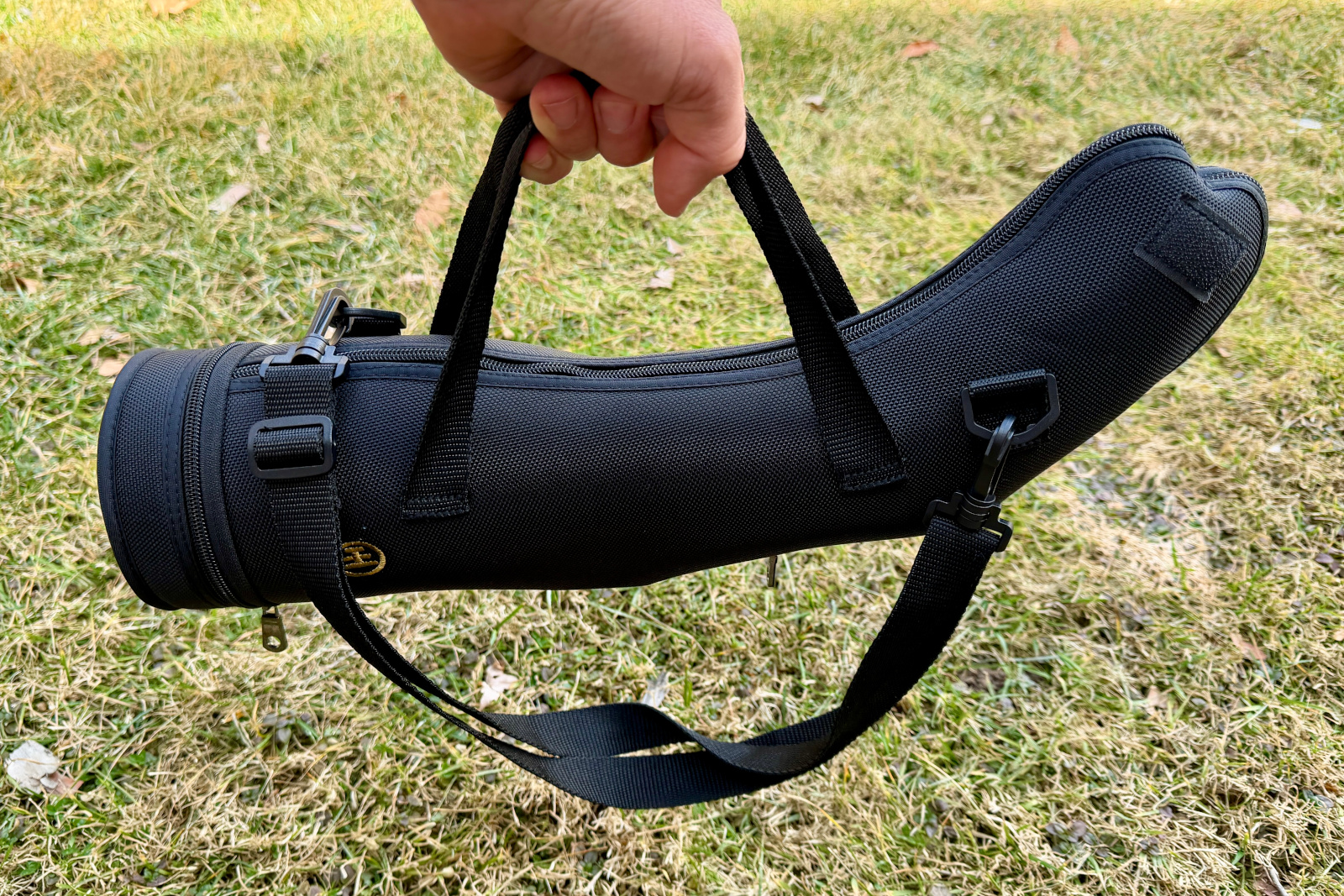
The carrying case fits snugly and has hand carry straps and a removable, adjustable shoulder strap. A zipper at the bottom makes room for the tripod mount to stay attached (though tightly) and mount to a tripod with the case on. You can use some scopes with a case on, but since the Long View has a center-barrel focus and a waterproof (IPX7) body, I only did that once.
Context of Spotting Scopes
Even the nicest binoculars can’t help you see farther than the power of their lenses. That’s where spotting scopes come in. I lean into scoping during the winter and summer, outside of the busier migration seasons. That means my scoping experience is usually very bright, or in the low light of winter gloom.
Some major birdwatching sites don’t even review Nocs Provisions, yet this brand has built a reputation for value-minded optics. You’ll find Nocs on several Best Of lists, including ours, like Best Budget Binoculars.
Scoping birds tends to happen in groups, and I’ve had the pleasure of looking through some of the finest Swarovski scopes. The brightness and clarity are exceptional. Those also cost roughly $3,000, so I don’t even touch the focus wheel unless offered.
At $600, the Nocs Long View spotting scope is a great value. If that sounds expensive, welcome to the costly world of optics, where under $1,000 is often the cutoff for the budget category.
The Tripod
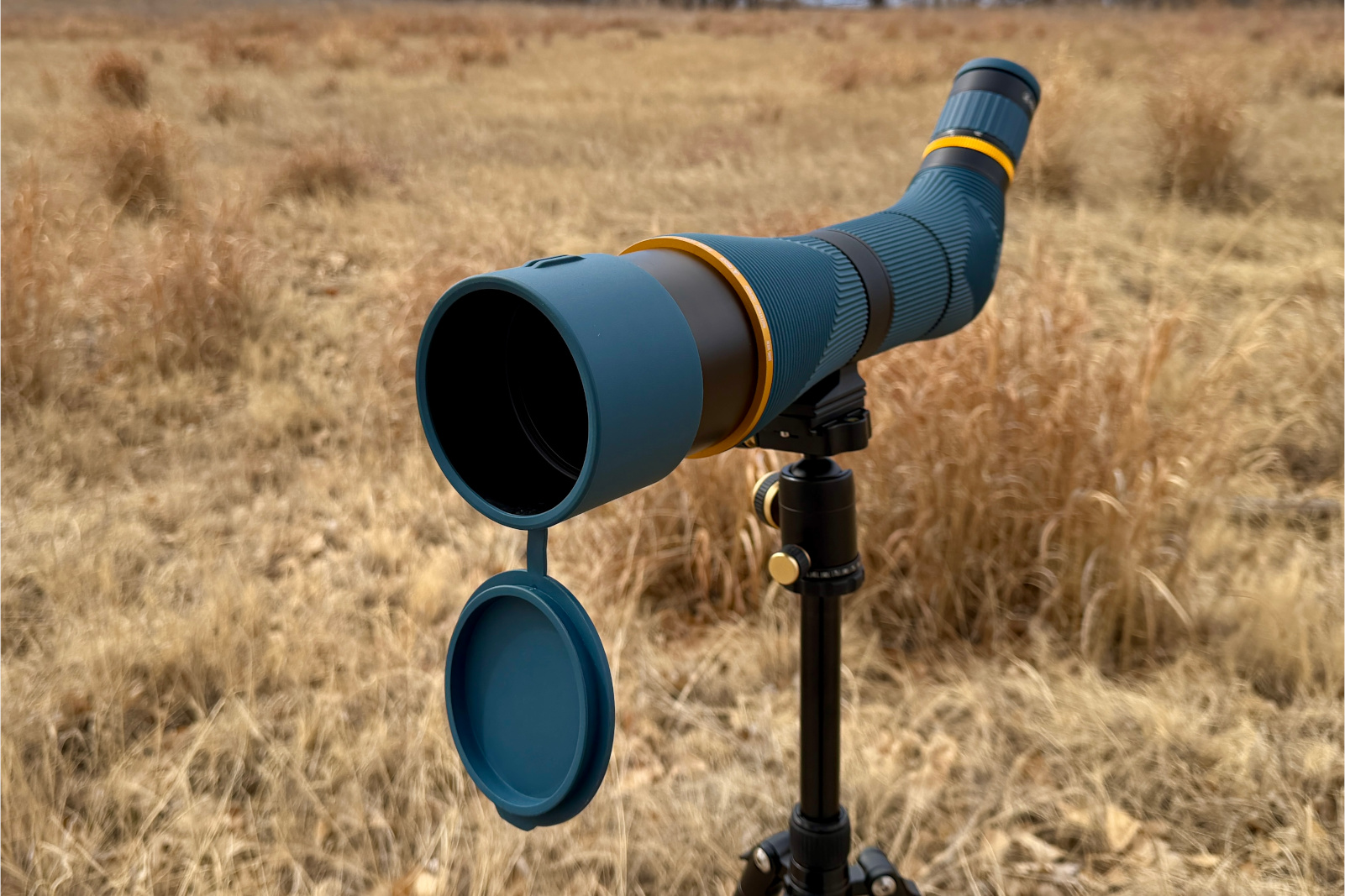
Any long spotting scope works best with a tripod, and the Long View scope is Arca-Swiss–compatible with most major mounts. For this review, I used the scope atop the Nocs Provisions Tripod.
For anyone just getting into scopes, the Nocs Provisions Tripod is a quality add-on. It uses aluminum tube legs that adjust from 13.9 inches to 58.6 inches in height. It has a standard threading to fit most major cameras, scopes, and monoculars.
The tripod has smooth adjustment knobs and even a center column hook for adding ballast. The tripod mount locks to an adjustable band around the Long View and spins in 45-degree increments.
Durability
Having used other Nocs products, I have faith in the construction. If you drop any spotting scope, you’re asking for trouble, more likely displacement of lenses than scratches on the body of the scope. The Nocs Provisions “No-Matter-What” warranty covers repairs and replacement for manufacturing flaws.
Per usual, Nocs uses its thermoplastic coating on this scope, which can absorb and displace some shocks. That’s good for its durability, but I like it more for the grip. That build also keeps the weight to a very manageable 3.86 pounds.
Nocs Long View Scope: Who It’s For
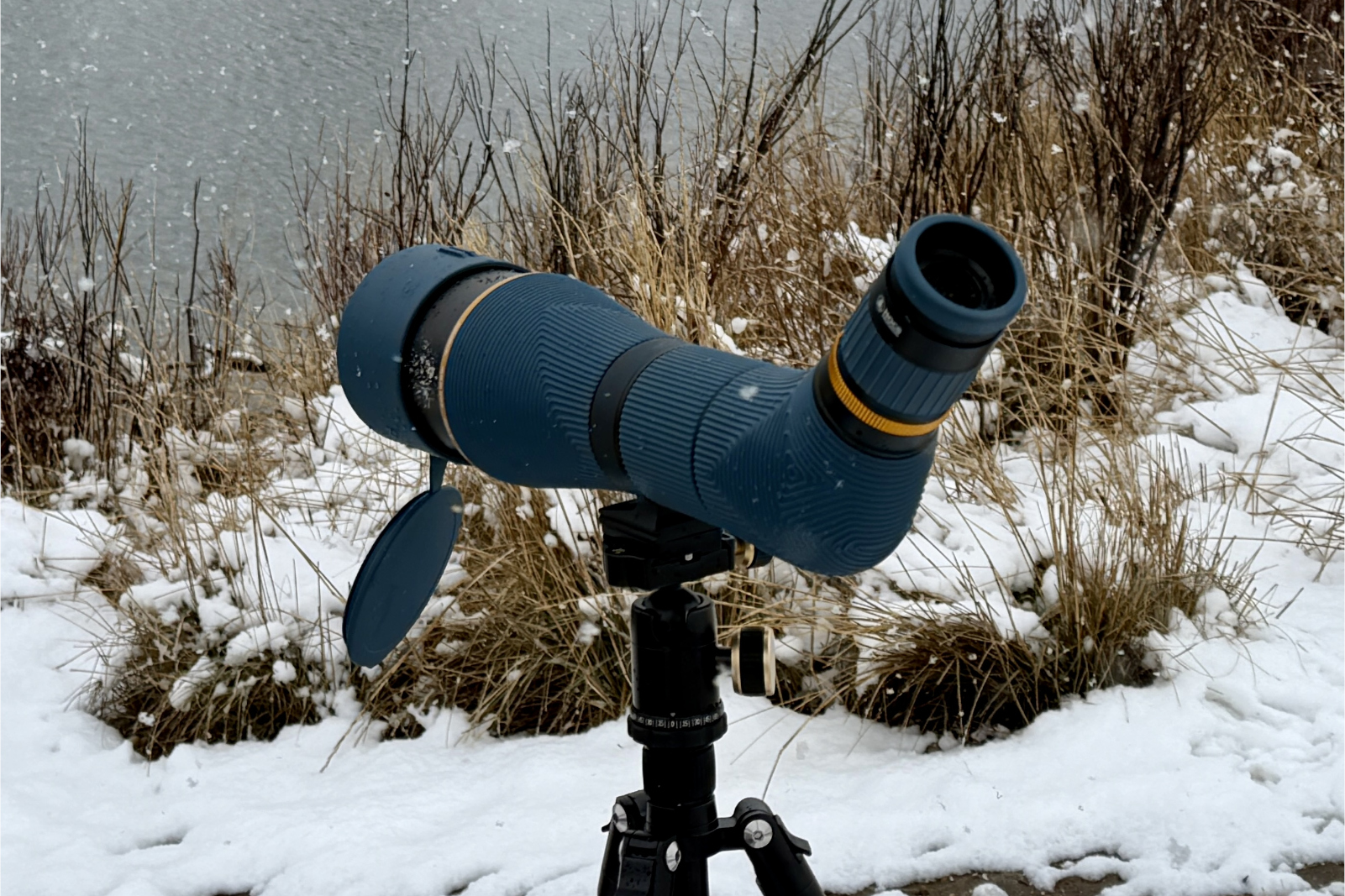
To me, you should prioritize binoculars first, then look into scopes, when it comes to birding optics. I highly recommend this spotting scope to anyone who already goes birdwatching (or wildlife glassing) and wants to expand their list to include more elusive species. It works for moderate stargazing or moon watching, too.
Nocs has built its own following with its modern design and more social-media–aware advertising. Fans of the brand and those who got into birdwatching with its rise will likely enjoy taking the next step with this powerful spotting scope.
As noted above, the $600 price tag places these optics above entry-level and into the lower mid-range, competing with the likes of the Vortex Diamondback. I say entry-level from a budget perspective. Birders who spend the majority of their birdwatching along shores of any kind can justify spending more.
I consider this scope a great buy with enough performance to identify and observe birds from afar, even in low-light conditions.