Camping and food go hand in hand, especially when car camping affords the luxury of a two-burner stove. That’s why lead tester Nick Belcaster has tested camping stoves across several seasons, recently completing another summer evaluating six new models over 40+ meals. Ranging from tacos in the ski parking lot to steak and eggs at the trailhead, we’ve whipped up plenty on these cookers.
Our top pick, the Primus Alika Camp Stove, brings plenty of firepower to keep dishes rolling off the line. But you don’t need to spend big, either: the budget Coleman Cascade 18 runs just $100.
With 50+ years of combined camp cooking experience, we’ve tested stoves for this guide since 2021. We evaluated each option for design, ease of use, BTUs, wind performance, simmer control, weight, cost, and boil time to highlight the unique features that stand out for specific uses.
Editor’s Note: We updated our Camping Stoves buyer’s guide on November 12, 2026 to completely revise our stove recommendations and make them easier than ever to find the right one for our next night outside. We also ensured stoves were still commonly available and that prices were accurate.
The Best Camping Stoves of 2026


Primus Alika Camp Stove
-

-
(Photo/Karuna Eberl)
-
(Photo/Karuna Eberl)
-
(Photo/Karuna Eberl)
-
(Photo/Karuna Eberl)


Specifications
Pros & Cons
Pros
- Compact
- Fine simmer control
- Flexible fuel hose
- Removable lid
- Sleek looks
- Easy to clean
Cons
- Could use better windscreen latches
- Igniters are finicky
- Pricey
Bottom Line: A high-end, design-forward camp stove that merges Scandinavian aesthetics with versatile 360-degree cooking performance. It commands a steep price tag and requires a bit of patience with the ignition system, but it elevates group camp kitchens in both style and function.
The Primus Alika ($350) stands out as one of the most visually striking and thoughtfully engineered two-burner stoves on the market. Blending powder-coated steel with natural oak laths and brass accents, it is crafted to serve as an inviting social hub around the campsite picnic table rather than just a utilitarian cooktop.
The Tech: The stove houses two distinct burner sizes rated at 10,200 BTUs and 13,300 BTUs, but the standout structural element is the fully removable lid, which allows access ro all sides and transforms the stove into a social gathering space. The lid’s exterior oak wood strips double as a hot plate when detached from the base. Additional hardware includes a long, flexible fuel hose with a spring-action storage mount underneath, a removable stainless steel drip tray for easy cleanup, a secure webbing carry handle, and an included butane adapter kit.
What We Like: Tester Karuna Eberl praised the stove’s exceptional flame control, noting that both burners deliver smooth, reliable adjustments for rapid boiling and delicate simmering alike. The wide-open cooking deck provides enough clearance for large pans, while Eberl also appreciated the secure exterior latches and tidy hose storage, which prevent rattling and gear clutter during transit to the campsite.
What We Don’t: Long-term use revealed a few friction points, most notably the integrated piezo igniter, which we found inconsistent and prone to misfiring in the field. Additionally, while the side windscreens help block drafts, they rely on flimsy metal hooks and leave small gaps at the base that can let wind sneak in and snuff out your flame.
Should You Buy It? Campers and design enthusiasts looking to invest in a premium, heirloom-quality camp stove that doubles as a centerpiece for entertaining will find lasting value here. It combines sophisticated European craftsmanship with high-end culinary performance for those who view camp cooking as an art form.
Coleman Cascade 3-in-1 Stove: A More All-Around Option (For The Same Price)
The Cascade 3-in-1 trades the luxe looks of the Alika for versatility, and for the same spend you get a stove with more cooking options. The additional cast iron griddle and grill accessories that can be used on the Cascade 3-in-1 make it a plug-and-play option for camp cooking, and there’s a bit more cooking space to use compared the the Alika. The fit and finish of the Coleman feels more utilitarian, but does a bit more character in the moss green color up against the all-black Alika. The stoves are the same price right now, so consider if you’d get more utility out of the Coleman before snagging the Alika.
Snow Peak Double Burner Stove: Even More Luxury, But Not As Stable
The Double Burner Stove from Snow Peak targets the same camp entertainers who have a vibe to match, and is constructed from aluminum and stainless steel. The burner top is designed to drop into Snow Peak’s camp kitchen table set ups, and because of that, sits on two metal legs when used solo. This is stable enough, but the elevated cooking surface can be a little awkward for some camps. Both burners run from a seperate isobutane cansiter as well, which we feel is overly complicated. The $180 saved by sticking with the Alika is smart math.
Coleman Cascade 18
-
-
(Photo/Ian Graber-Stiehl)
-
(Photo/Ian Graber-Stiehl)
-
(Photo/Ian Graber-Stiehl)


Specifications
Pros & Cons
Pros
- Simple design
- Good fuel economy
- Compact for a full-sized camp stove
- Cools quickly
Cons
- No windscreen
- Relatively mediocre BTUs
- Propane attachment can easily shake loose in storage mode
- Relatively high price
Bottom Line: An affordable single-burner stove tailored for minimalist outdoor cooking and tight storage setups. It delivers dependable performance on a budget, though open-air environments will require a separate windscreen to shelter the flame.
The Coleman Cascade 18 ($110) shrinks traditional camp kitchen utility into a compact, entry-level package. With a minimal footprint, it caters to road-trippers and solo adventurers who need a reliable heat source without dedicating precious trunk space to a full-sized rig.
The Tech: Everything is enclosed in a snug 13″ x 13″ square of corrosion-resistant steel and weighs 5 pounds, 8 ounces total. The single 8,000 BTU output utilizes a broad 4-inch burner head, designed to distribute heat uniformly across 10-inch skillets. Operating on standard 16-ounce propane canisters, the efficient fuel draw provides roughly two and a half hours of run time. To maintain its ultra-slim profile, Coleman built the stove with an open deck, foregoing side walls altogether.
What We Like: Gear tester Ian Graber-Stiehl put the stove through relentless real-world abuse during a 3,000-mile cross-country trip. Transported loose in the cargo area of his 4Runner, the unit repeatedly handled roadside breakfasts, dirt-road dinners, and tight packing inside a canoe hull where bulkier dual-burner stoves could not fit. The wide burner head prevented hot-spot scorching during cooking, and the solid steel construction sustained heavy daily use without warping or loosening.
What We Don’t: The absence of side shielding poses a clear challenge in breezy conditions. Without built-in walls to block wind, efficiency drops pretty significantly on exposed picnic tables, forcing you to improvise natural barriers or purchase a standalone windscreen.
Should You Buy It? Campers seeking an inexpensive, space-saving propane burner for solo trips, canoe packing, or truck beds will find great value in this stove. Coleman builds it to endure rough travel, and its simple operation makes it an easy addition to any minimalist gear kit.
Coleman Cascade Classic: Double the Burners for $30 More. The Cascade Classic is the full-sized, two-burner sibling to the Cascade 18, doubling your cooktop real estate for campers who routinely cook for a crowd or prefer to simmer sauce while boiling pasta. Both stoves share Coleman’s durable aluminized steel construction and reliable recessed burner design, but the Classic steps up total output to 20,000 BTUs across its twin heads (10,000 BTUs each) compared to the single 8,000 BTU burner on the 18. Size and weight are where the two diverge significantly: at nearly 12 pounds with a 21-by-13-inch footprint, the Classic requires twice as much trunk space, making the 5.5-pound Cascade 18 ($100) the far better pick for solo setups or minimalist packing, whereas the Classic ($130) justifies its modest price bump for standard group car camping.
Gas One GS-3400P: The Dual-Fuel Tabletop Alternative. The GS-3400P is Gas One’s answer to single-burner camp cooking, offering an even lower-cost alternative to the Cascade 18 for casual weekenders and tailgaters. While the Cascade 18 relies exclusively on standard 16.4-ounce green propane cylinders, the GS-3400P offers dual-fuel versatility out of the box, accepting both 8-ounce butane canisters and 1-pound propane tanks. Both stoves share a matching 8,000 BTU max heat output, but the Gas One includes a built-in piezo igniter and a plastic carrying case, whereas the Coleman features manual ignition and an open steel frame. Price remains the deciding factor, with the Gas One coming in at a bargain $40 compared to the $100 Cascade 18.
Camp Chef Everest 2X


Specifications
Pros & Cons
Pros
- Produces strong flames
- Works well in windy conditions
- Burner design evenly spreads out heat
- Windscreen tabs stay secure with exterior locks, which is a nice touch
Cons
- A bit heavier (12 lbs.) and bulkier than we'd like
Bottom Line: A high-output propane stove built for camp gourmands, basecamp chefs, and high-altitude cooking. It carries extra weight due to its overbuilt construction, but the massive power and long-term durability fully justify the bulk.
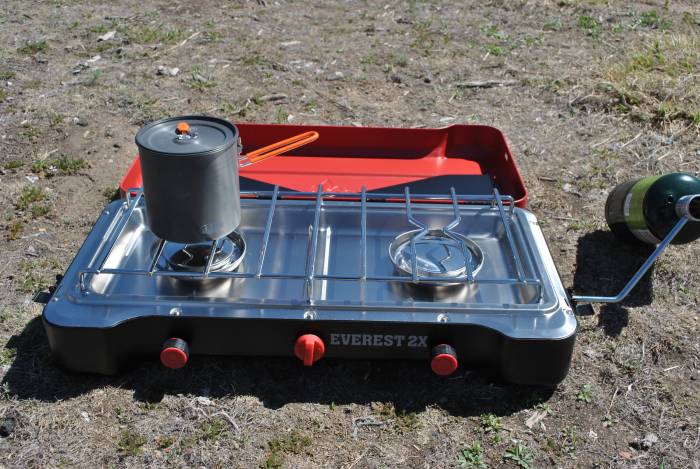
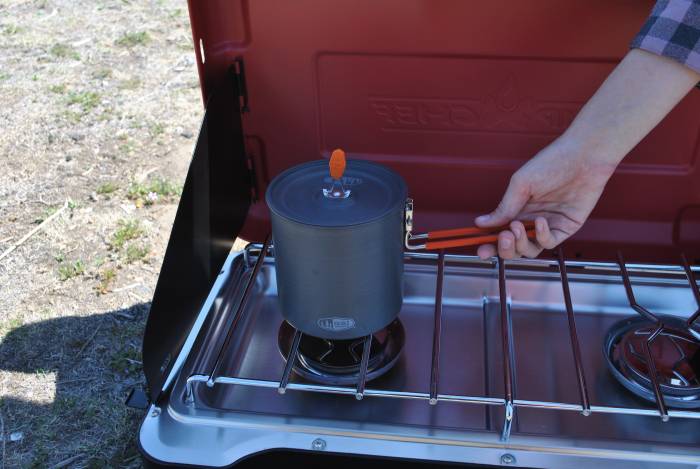
The Camp Chef Everest 2X ($230) is a heavy-duty powerhouse designed for outdoor gourmands who require some cooking muscle. Upgraded from the brand’s earlier Mountain Series, it pairs an expanded cook deck with robust exterior housing that transitions seamlessly from windy alpine sites to extended truck-camping trips.
The Tech: The stove dual-wields independent burners that pump out a staggering 20,000 BTUs each. A built-in piezo auto-igniter removes the need for matches, while precision control valves regulate the flame from a rapid boil down to a delicate simmer. Redesigned exterior walls and a refined burner basin provide extra cubic inches of clearance without expanding the overall footprint, easily accommodating large pots and pans side-by-side.
What We Like: Gear tester Mallory Paige relied on the Everest 2X as her family’s primary off-grid cooking hub for over a year, preparing three meals a day without a hiccup. Meanwhile, Editor-in-Chief Sean McCoy has leaned on the stove as his go-to hunting companion for more than five years, praising its ability to rapidly boil water at high altitudes while remaining delicate enough to even toast pine nuts. Both testers highlighted the reliable performance of the auto-striker and the balance between a roaring output and some nuanced flame control.
What We Don’t: The robust build results in a heavier stove that demands dedicated cargo space, and long-term field use can also introduce minor maintenance hurdles, such as requiring a replacement regulator after years of relentless use.
Should You Buy It? Campers and group leaders who routinely prepare demanding meals, manage high-altitude base camps, or simply want uncompromising burner power will find exceptional long-term value here. The Everest 2X delivers high-level performance and rugged longevity, backed by Camp Chef’s dependable support.
Camp Chef Mountaineer: The All-Aluminum Upgrade
The Mountaineer is the even more rugged sibling of the Everest 2X, and is done up in a welded aluminum shell that makes it a better choice for overlanders, river trips, or long-term abuse. The burner heads on both stoves are equally rocket-powered and protected designs that cup the flame in an integrated dish that made these the two most wind-resistant stoves in our testing. The cooking surface is more generous on the Mountaineer at ~300 square inches to the 215 on the Everest, making large cast irons easier to use. Fuel choice and price are the biggest gaps between these options, with the Everest using more traditional 1-pound propane bottles (and priced at $230), and the Mountaineer equipped for full-size propane tanks (for a spendy $470).
Primus Alika: Similarly Well-Built, Just Fancier
The Alika has a similarly robust and well-thought-out design to the Everest 2X, but it just looks better while doing it. Brass accents and oak laths trim out the stove, and the lid and base are powder-coated steel. The Alika is also a nicer option to use for communal eating, as the lid comes off for 360 degrees of cooking access. The 10K / 13.3K burners won’t match the 20K burners on the Everest in pure output, but we found the regulator on the Alika to be similarly high quality compared to the Everest, and both stoves provide an efficient burn time. You’ll pay for the extra glam of the Alika at $275, but if you want a deluxe stove for entertaining, the jump in price could be worth it.
Primus Kinjia
-
-
-
(Photo/Bergen Tjossem)
-


Specifications
Pros & Cons
Pros
- Compact packed size slides into tight storage spots
- Fine simmer control
- Black, brass, and wood details make for a classy look
Cons
- No windscreens
- Gas bottle stand is easy to misplace
Read Review: Smaller Than the Best, Lighter Than the Rest: Primus Kinjia Camp Stove Review
Bottom Line: A remarkably sleek, low-profile two-burner cooktop designed for space-conscious road trips, van setups, and small outdoor kitchens. It trades integrated wind shielding for an ultra-slim footprint, making it a stylish choice where cargo room comes first.
The Primus Kinjia ($240) brings some slick aesthetics and compact form factor to frontcountry camp kitchens. The slender frame slips easily into packed vehicles, and it caters to outdoor cooks who want reliable dual-burner functionality without surrendering all of your precious storage space.
The Tech: The stove houses twin burners rated at 10,200 BTUs each, and they are housed in a matte black case that sports brass and wood accents. The compact burner heads are reminiscent of backpacking stoves, delivering focused heat while keeping the overall profile remarkably thin. Fuel is routed through a standalone metal stand that angles standard propane canisters, while ultra-fine control valves allow precise flame adjustments down to very low heat levels.
What We Like: Tester Bergen Tjossem took the Kinjia for a spin during extended camping trips, relying on it to prepare delicate meals like creamy polenta that demand slow, steady heat. The burner valves provided some great simmer control, preventing scorch spots and executing low-temperature dishes effortlessly. Beyond its performance, the unit’s elegant design, clean lines, and premium handle brought an elevated aesthetic to the campsite picnic table.
What We Don’t: The complete omission of side windscreens presents a real drawback during windy weather, forcing users to position gear boxes or construct makeshift barriers to protect the burners. Additionally, the separate metal canister stand operates as a loose accessory rather than an integrated component, creating a potential hassle if misplaced in your trail rig.
Should You Buy It? Van-lifers, car campers, and overland enthusiasts seeking a compact, beautifully designed stove that maximizes vehicle storage will find great value in the Kinjia. It brings sophisticated heat control and small-footprint storage to any mobile setup.
Jetboil Genesis Basecamp Stove System: Another Compact 2-Burner
The folding nature of the Genesis Basecamp Stove System accomplishes the same goal as the Kinjia, making it as compact as possible for stuffing away in your camp bins. Both put out functionally the same power (the Kinjia pushes 200 extra BTU) across two burners, and are within a pound of each other, with the Genesis being the heavier of the two. Style points, if that matters to you, certainly go to the sleek black, brass, and oak Kinjia, while the Genesis is a bit more odd-ball and efficiency-driven. If you’ve already got camp cookware you love, stick with the Kinjia, and if you want a comprehensive system, check out the Genesis Basecamp.
Primus Alika: Same Luxe Looks With More Room To Cook
The Alika is the more accommodating older sibling to the Kinjia, and if you need more space between the burners for larger cookware, it’s a good pivot. The 2″ of added room doesn’t sound like much, but that’s the difference between a 10″ and a 12″ pot, and when you remove the lid from the Alika, that space is wide open for use. One of the burners on the bigger stove is also a 13,300 BTU unit, giving you a little extra heat for boiling for groups. The $220 difference between the two should make anyone think twice on if the upgrade is worth it, but if you aim to entertain while you camp, it makes good sense.
Camp Chef Mountaineer
-
-
(Photo/Nick Belcaster)
-
(Photo/Nick Belcaster)
-
(Photo/Nick Belcaster)
-
(Photo/Nick Belcaster)


Specifications
Pros & Cons
Pros
- All-aluminum build
- Broad 302 sq. in. cooking surface
- Add-on leg system makes the stove fully freestanding
- Plenty of heat with twin 20K burners
Cons
- Higher price
- Adapter needed to run 1 lb. propane bottles
Bottom Line: An all-aluminum tank of a camp stove that delivers massive burner power across a spacious cooktop. It commands a premium price tag and relies on larger propane tanks, but its rust-proof durability makes it a lifetime investment for big-group base camps.
The Camp Chef Mountaineer ($470) is a commercial-grade cook station built to feed large crowds and endure heavy usage. While its higher price tag and reliance on bulk propane canisters set it apart from standards like the Camp Chef Everest 2X, the Mountaineer offers unmatched cooking area and corrosion-free longevity for serious wilderness chefs.
The Tech: The Mountaineer is 100% welded and riveted aluminum, making it seriously tough. The expansive 302-square-inch cooking deck easily accommodates two 12-inch cast-iron skillets side-by-side, supported by integrated burner-head windscreens that focus heat up at your cookware. Rather than using standard 1-pound green propane bottles, the unit comes standard with a remote hose assembly designed to connect directly to 5-pound or larger refillable propane tanks.
What We Like: Senior Editor Nick Belcaster has used the Mountaineer during truck-assisted camping trips across Washington state, cooking everything from Dutch oven nachos and kebabs to fresh salmon. He praised the stove’s all-aluminum build, which keeps weight manageable despite its wide frame while eliminating rust concerns. Paired with the optional adjustable leg kit ($44), he found the working height ideal for outdoor meal prep, noting how effortlessly the wide burners brought heavy cookware to temperature.
What We Don’t: Fuel logistics require extra planning, as the stove requires a separate adapter to run on common 1-pound propane bottles instead of big tanks. Additionally, the 20,000 BTU burners generate intense heat that can easily scorch delicate foods if used with thin cookware, making heavy, slow-heating pans like cast iron almost essential.
Should You Buy It? Expedition leaders, river guides, and overland campers looking for an indestructible, rust-proof stove that handles heavy-duty group cooking, this is your stove.
Partner Steel 18″ 2 Burner Partner Stove: The Real Deal
If you’re a sucker for the original, the Partner Steel 18″ 2-Burner certainly has backcountry credibility (and a very similar design to the Mountaineer). The Partner Steel Company only makes all-aluminum cook stoves for rugged use by river guides and the like, and it’s easier to point out where the 18″ 2-Burner is different than the Mountaineer than similar: the burners and the accessories. The burners on the Camp Chef are slightly nicer and protected, but more generic on the Partner. The accessory leg kit for the Mountaineer is $55, and the legs bolt directly to the stove, while the correct stand for the Partner Steel is $180. If supporting the little guy is your thing, grab the Partner Steel version for the same $470 price.
Camp Chef Everest 2X: Slightly Lighter Duty (But A Good Bit Less Expensive)
The Everest 2X is not quite as nice as the Mountaineer, but it is a full 50% of the price, making it an impressive deal for the value. The biggest difference is going to be the shell material choice, with aluminum being a premium choice over the steel construction on the Everest. You do get a more accomodating cooking surface on the Mountaineer (we could fit two stock pots with ease, but would be a little crowded on the Everest). The downside for portability is that the Mountaineer comes rigged to run from 20 pound tanks of propane, but for around $10 it can be adapted easily enough to run on camp store green bottles. If $470 is too rich for your blood, the Everest makes a great choice.
Camp Chef Pro 14
-
(Photo/CampChef)
-
(Photo/Will Brendza)
-
(Photo/Will Brendza)
-
(Photo/Will Brendza)
-
(Photo/Will Brendza)


Specifications
Pros & Cons
Pros
- Lots of cook space
- Powerful burners heat things up quickly
- Portable
- Compatible with host of accessories
Cons
- Heavy
- Takes up car space
- Tricky to clean
- Vulnerable to high winds
Bottom Line: A high-output, three-burner outdoor station engineered to feed large groups and power complex cookouts. It provides an impressive modular platform for pizza ovens and cast-iron griddles, provided you have the vehicle space and lifting capacity to haul a 50-pound rig.
The Camp Chef Pro 14 ($380) — formerly known as the Pro 60X — is a commercial-scale cooking station built for large family gatherings, hunting camps, and group events. Built around a 14-by-32-inch cooktop, this freestanding stove heats heavy stockpots and full-sized skillets with ease. While its heavy 50-pound footprint takes up far more trunk space than compact tabletop options, the Pro 14 delivers unmatched capacity and versatility for feeding big crowds.
The Tech: It’s all about those three oversized burner heads, capable of pumping out 30,000 BTUs each. The expanded steel frame has folding side legs with leveling feet for quick setup on uneven ground, replacing the threaded screw-in legs found on entry-level models like the Camp Chef Explorer 14. Integrated folding side shelves provide stable prep space on either flank, while a wrap-around steel windscreen protects the burner wells. The cooktop accepts the full range of Camp Chef 14-inch modular accessories, allowing users to run flat-top griddles, grill boxes, or pizza ovens directly over the flame.
What We Like: While testing during group cookouts, veteran gear tester Will Brendza highlighted the stove’s impressive heat output and seamless accessory integration. Brendza easily fit two 8-quart stockpots side-by-side to boil crab while simmering sides on the remaining burner, noting that the burners reached scorching temperatures with room to spare. He also pointed to the optional 14-inch Pizza Oven attachment as a standout addition, which heated up rapidly and produced perfectly charred crusts without hot-spot scorching.
What We Don’t: The immense cooking power comes with major trade-offs in portability and storage. Tipping the scales at roughly 50 pounds, lifting the stove into a truck bed requires real physical effort, and its long folded frame devours significant cargo room compared to standard two-burner camp stoves.
Should You Buy It? Group leaders, river outfitters, and outdoor cooks who routinely prepare multi-dish meals for large crowds will find exceptional performance here.
Camp Chef Explorer 3-Burner: A More Lo-Fi Powerhouse
The Explorer 3-Burner isn’t as good looking as the Pro 14, but hosts three of the 30,000 BTU burners compared to the two on the more expensive version. You also get more cooking area on the Explorer with an extra 17″ of length, allowing three large stockpots to be used. The $80 to upgrade to the Pro 14 is largely warranted by the quick-fold legs, and additional table space when unfolded. If you need that third burner, however, the Explorer is a great option. There’s even a perk: the same 14″ cooking modualr accessories that make the Pro 14 special are backwards-compatible with the Explorer.
Camp Chef Pro 30: The Single-Burner Version
If the three burners of the Pro 14 would go unused most of the time, consider the Pro 30, Camp Chef’s single-burner version. This solo stove still retains one of the handy folding shelves of the Pro 14, and hosts the same 30,000 BTU burner, though wind resistance is certainly better on the larger stove. The $230 difference is substantial, so if you can get by on one burner (and improvise wind blocking), the Pro 30 makes sense. If you just want to get into Camp Chef’s line of great 14″ BBQ grills, pizza ovens, and griddles, this is also the lowest cost point of entry into the set up.
Jetboil Genesis Basecamp Stove System
-
-
(Photo/Sean Jansen)
-
(Photo/Sean Jansen)
-
(Photo/Sean Jansen)
-
(Photo/Sean Jansen)


Specifications
Pros & Cons
Pros
- The clamshell folds down small
- Great simmering control
- Includes pot and pan
- Can chain additional burners
Cons
- More expensive than other stoves on the list
- Hi-tech, modern look isn't for everybody
Read Review: Jetboil Genesis Basecamp Stove System Review: The Benchmark of Car Camping Stoves
Bottom Line: An ultra-compact clamshell stove system that delivers whisper-quiet efficiency, exceptional flame control, and modular expandability.
The Jetboil Genesis Basecamp Stove System ($450) reimagines traditional camp stove design through an innovative dual-burner folding architecture. Packing into a self-contained, zippered carrying case alongside its custom pot and pan, it provides a full-featured cooking station with a fraction of the bulk required by rigid units. While the premium cost keeps it in a higher tier than most, the Genesis offers a one-and-done option for those who want guaranteed compatability.
The Tech: Each burner generates 10,000 BTUs and has independent push-button igniters paired with broad control dials that rotate four full turns from low to high. A dedicated plastic windscreen wraps around the base of both burners, while an integrated JetLink port on the right side enables users to daisy-chain additional Jetboil burners off a single propane source. The entire system (including the stove, fuel regulator hose, ceramic-coated pan, and 5-liter FluxRing pot) nests inside a padded travel bag.
What We Like: GearJunkie reviewer Sean Jansen evaluated the Genesis across weeks of living and cooking out of his van, using it daily for morning coffee, boiling pasta, and pan-searing chicken breasts. He praised the micro-adjustability of the control knobs, which allowed effortless transitions from high-output boiling to precise simmers. He also praised the fuel efficiency during extended overnights, noting that a single 16-ounce propane cylinder powered multiple daily meals for over two weeks without running empty.
What We Don’t: The specialized accessory design requires some careful handling in camp, as the plastic-wrapped pan handle can melt if left exposed near an open flame. You also need to consider the long rigid fuel tube and proprietary connector pieces, which take up noticeable assembly space and must be carefully packed into the storage bag to prevent damage.
Should You Buy It? Overlanders, van-dwellers, and space-constrained car campers who want a high-performance, modular cooking setup without surrendering trunk space will find long-term value here. It delivers exceptional heat control and compact storage, backed by Jetboil’s established stove technology.
MSR WindBurner Combo Stove System: A More Backpacker-Friendly System
The WindBurner Combo Stove System is more of a backpacking stove, but if you find yourself more in the backcountry than front, it’s a savvy pivot. Like the Genesis Basecamp system, you also get a skillet and cook pot in the WindBurner combo; they’re just better sized for backpacking at 8″ and 2.5 liters (to the 10″ and 5 liter versions in the JetBoil). There’s only one burner element on the MSR option, but it is an efficient and tough-to-extinguish radiant design that we think is better in stiff winds. You’ll use the same isobutane-propane fuel canisters used in other backpacking stoves for the WindBurner, and propane for the Jetboil. If you backpack more than you camp, we think the MSR is a better choice, but if the ratio is flipped, go with the Genesis system.
Coleman Fold N Go 2-Burner Stove: Far Less Expensive, But Not Really A Stove System
The Fold N Go 2-Burner uses the same clamshell design as the Genesis Basecamp, but is available at a good bit less. You won’t get the matched pot and skillet that comes with the Jetboil system, but if you’ve already got camp cookware you like, a non-system stove might be a better choice for you. The ability to chain stoves together that the Jetboil has is a big step beyond the Coleman, and if you ever plan on expanding the kitchen set up, it’s wise to think ahead. The construction and design on the Fold N Go is pretty basic, but you still get the same 2x 10,000 BTU power output as the Jetboil, making the $175 Coleman a great deal if you don’t need matching cookware.
Other Field-Tested Camp Stoves to Get Cooking On
We’ve been testing and cooking on camp stoves for nigh on decades now, and while the award winners above are our top picks for almost any situation outdoors, there are plenty of others on the market that’ll get it done. Consider the options below as excellent alternatives that we’ve vetted and would stand behind any day.
-
-
(Photo/Eric Phillips)
-
(Photo/Eric Phillips)
-
(Photo/Eric Phillips)
-
(Photo/Mary Murphy)


Specifications
Pros & Cons
Pros
- Hotter than average burners
- Quality fit and finish across the stove
- Very versatile with the cast iron cooking surfaces
- Deep carry handle
Cons
- We wish the windscreens were slightly taller
- Pretty hefty with included cast iron attachments
Read Review: The Classic Camp Stove Gets a Modern Makeover: Coleman 1900 3-in-1 Review
Bottom Line: Versatile cast-iron cooking surfaces, high-heat burners, and a durable modular build make this the premier choice for all-in-one camp cooking.
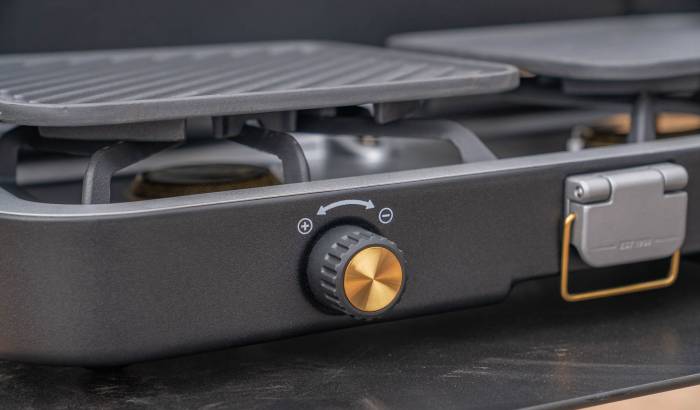
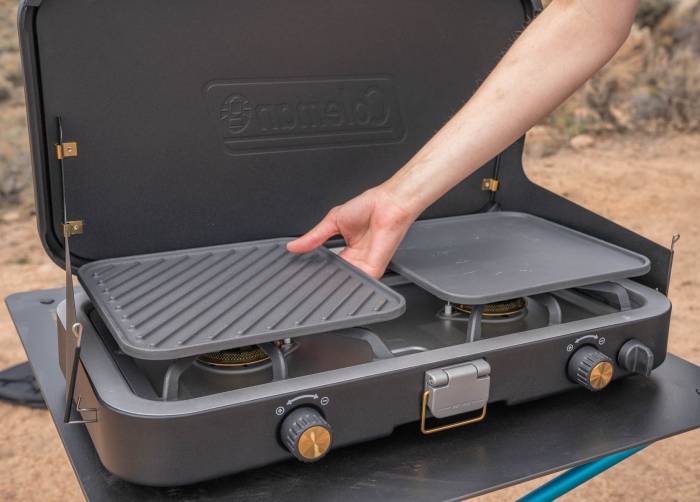
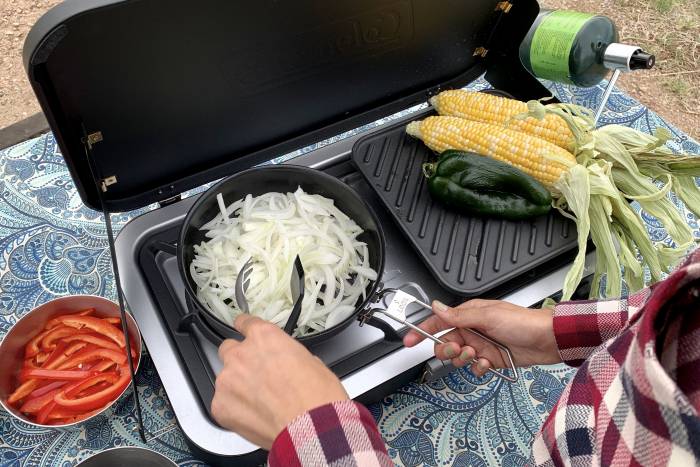
The Coleman Cascade 3-in-1 ($275) is a feature-packed camping stove that blends traditional dual-burner output with modular grill and griddle versatility. Designed with a wide-open cooking deck and removable cast-iron attachments, it transitions smoothly between standard frying pans and dedicated griddle breakfasts without missing a beat.
The Tech: Built around a heavy-duty steel chassis, the stove hosts two independent burners capable of pumping out 12,000 BTUs each. The expanded cooktop easily accommodates two full-sized 12-inch frying pans simultaneously when the accessory plates are removed. It includes two custom cast-iron attachments (a grill grate and a flat-top griddle) that drop directly over the burner recesses. Precision rotary dials offer fine-tuned simmer control alongside maximum heat output, while the modular design allows cooks to run a bare burner on one side and a cast-iron surface on the other.
What We Like: Tested across weeks of car-camping trips and weekend base camps by veteran tester Mary Murphy, the stove proved to be an exceptionally durable and capable outdoor kitchen hub. The 12,000 BTU burners quickly boiled water and offered surprisingly smooth low-flame control to prevent scorching delicate dishes. The cast-iron attachments cooked evenly and felt reassuringly solid under spatulas, easily managing bacon, eggs, and grilled meats. We also appreciated how effortlessly the modular plates swap out, making it easy to configure the cooking deck for multi-course meals.
What We Don’t: The built-in side windscreens are noticeably short, allowing moderate breezes to disrupt flame efficiency and heat retention. Beyond wind displacement, the lower side walls do little to catch grease splatter when searing meats on the griddle top, requiring extra campsite cleanup.
Should You Buy It? Outdoor cooks looking for a durable, high-output stove that replaces the need to pack separate griddles or grills will find steady value here. It offers long-term reliability and versatile meal prep for families and basecamp groups, and Coleman backs the unit with standard replacement parts availability.
Camp Chef Everest 2X: A High-Powered Alternative (For Less Spend)
The Everest 2X has been our top pick in camp stoves for many years, and has only this year been unthroned by the Cascade 3-in-1. Why? Versatility over firepower. The twin 20,000 BTU burners that the Everest hosts are certainly hotter and better in gusty or high altitude conditions, but often we found we didn’t need the full measure, and that the 12,000 BTU burner heads on the Coleman were sufficient for pretty much any dish. The two cast-iron cooking surfaces on the 3-in-1 also make the stove much more plug-and-play with camp cooking, and worth the additional $45 you’ll pay compared to the Everest. In terms of fit and finish, the Coleman is a bit behind the Camp Chef (something seen when looking at small details, such as hinges), so if long-term durability over all else is what you need, go for the Everest; if a more well-rounded system is more your speed, go 3-in-1.
Dometic 2 Cook 3 Pro Deluxe: Same Griddle Options, Just Cheaper
The 2 Cook 3 Pro Deluxe (now offered by Dometic) does a lot of what the Cascade 3-in-1 does when it comes to versatile cooktop options, just at a lower price (and heat output). Our testing has been limited with the stove so far, but a line-by-line comparison of specs tells a lot of the story. Like the 3-in-1, the 2 Cook 3 comes with flattop and griddle attachments, and also a coffee pot holder. The cooking surfaces are also ceramic-coated to make them non-stick. The burners aren’t quite as powerful at 7,500 BTU, however, and somehow, the windscreens on the Dometic stove are even smaller than the 3-in-1, which dings it in our opinion. You won’t pay as much for the 2 Cook 3 Pro Deluxe at $200, so the few compromises make sense. We’ll update our take once we’ve had more field time with the stove, so for now, stick with the Cascade 3-in-1 for the proven choice.
-
-
(Photo/Rebecca Parsons)
-
Its all-metal construction gave the Skullet a noticeably rugged, heavy-duty feel at camp; (photo/Rebecca Parsons)
-
The Skullet’s push-start ignition and control knob made adjusting the heat straightforward; (photo/Rebecca Parsons)
-
The Skullet ran off a standard propane tank, which added weight but ensured plenty of fuel; (photo/Rebecca Parsons)


Specifications
Pros & Cons
Pros
- Heater and stove all in one
- Auto-ignition
- Delivers incredible heat that’s great for warmth and cooking
- Insanely durable
Cons
- Adjustable legs make for a bit of a wobbly setup
- Takes a while to cool down
- Heavy
Bottom Line: A high-output, dual-purpose heating hub and cooking platform engineered to extend shoulder-season and winter camping trips.
The Ignik Skullet ($400 stove only, $500 total cook set) is a wild campsite combo: a high-heat patio heater and an adaptable outdoor range. With folding pot-supports and a high-clearance frame, it delivers some intense radiant heat outward while simultaneously powering your meal prep. This isn’t the stove for everyone, but if you’re in the market for a campfire heater and a camp stove? Check it out.
The Tech: An impressive 48,000 BTUs powers the Skullet, and radiates heat outward across a 360-degree perimeter. That’s controlled by a precise rotary fuel dial, while fold-out top flaps act as heat deflectors or expand to support large stockpots and skillets. The full Cook Set includes an adjustable tripod leg assembly that raises the cooking height from 29 inches up to 39 inches, along with a custom 10.3-pound pre-seasoned cast-iron skillet. Fuel connects via an included 5-foot hose designed for standard 20-pound propane tanks or Ignik’s refillable 5- and 10-pound canisters.
What We Like: GearJunkie reviewer Rebecca Parsons tested the Skullet Cook Set across stormy trips in Big Sur and coastal camping under the California redwoods, where the Ignik was a hit. Notably, the push-start ignition and consistent flame control were impressive, and she praised the adjustable tripod legs for eliminating the need to hunch over low picnic tables. The 360-degree radiant heat also transformed chilly campsite evenings into comfortable social gathering spots when wood fire bans were in effect.
What We Don’t: The complete metal build makes this set up heavy and bulky, with the stove unit weighing 16.5 pounds, the tripod legs ~2 pounds, cast-iron skillet 10 pounds, and a standard propane tank bringing the total close to 60 pounds. Additionally, the high-mass steel housing retains intense thermal energy long after shutoff, requiring us to wait roughly 30 minutes for the unit to cool down before stowing it into a vehicle.
Should You Buy It? Winter car campers, RVers, and off-season adventurers who prioritize staying warm in cold, wet environments without relying on wood fires will find tremendous value in the Skullet.

Specifications
Pros & Cons
Pros
- Three burners for multiple dishes
- Good simmer control
- Can hold larger pans
- Good in wind
Cons
- Bulky packed size
- Rattles during transport
- More expensive than most stoves
Bottom Line: A high-capacity, three-burner propane range designed to feed large groups and handle multiple pots at once.
The Coleman Cascade 328 3-Burner Camping Stove ($260) expands your cook surfaces to allow for multi-dish campsite meal prep. With an extra-deep frame that fits two 12-inch pots or three smaller skillets side-by-side, it’s a notable step up in capacity from standard two-burner models like the Coleman Cascade Classic.
The Tech: Three control knobs dial in the heat across the two circular burner heads and the long heating unit in the center. ofthe stove. Cookware is supported by raised circular grates that elevate cookware for precise simmer control, and an electronic ignition system is powered by an included AA battery. Rubber corner feet elevate the base on uneven picnic tables, while tall side windscreens lock into place around the recessed burner wells. A sturdy integrated handle assists with carrying, and the extra-deep body accepts heavy cast-iron skillets with room to spare.
What We Like: Camper Karuna Eberl tested the stove across a handful of Colorado camping trips, praising how effortlessly the three-burner layout handled complex meals. Eberl noted that the grate design clearly centers cookware over the burners, while the elevated height prevents scorch spots during low-heat simmers. She also appreciated the stout chassis and tall windscreens, which shielded the flames from side drafts without letting heat escape during large-pot boils.
What We Don’t: The expanded three-burner body adds substantial bulk, extending seven inches deeper than standard dual-burner models and weighing 18 pounds. In transit, internal components rattle unless packed with camp towels, and storing the loose regulator incorrectly can allow it to roll into the ignition pins and damage them.
Should You Buy It? If you’re constantly wanting more cooktop space at camp, the Cascade 328 may be the stove for you (and your whole family).
Zempire 2-Burner DLX Grill Stove: A Built-In Broiler
The 2-Burner DLX Grill Stove also has a third heating burner, it’s just pointed downward and turned into a 4,500 BTU broiler. That can be pretty handy in reheating food or getting cheese melted, both of which are tough to do while camping. Because the grill tray rides underneath the stove, the DLX Grill Stove is bulkier than the Cascade 328, but not heavier (actually 5 pounds lighter). Our testing with the Zempire stove is limited for now, so until we’ve got the full picture, we’ll hold off on making the suggestion for the 2-Burner DLX Grill Stove over the 328.
Bass Pro Shops 3-Burner High Output Stove: Much Higher Heat In A Less Expensive Stove
The 3-Burner High Output Stove from Bass Pro Shops puts out a good bit more heat than the Cascade 328, with both main burners doing 25,000 BTU and the center 10,000. Compared to the Coleman that’s double the output, but it will also be a thirstier stove, and chew through 1 pound propane bottles quickly. The overall stove design is a bit dated, and the touch points such as fuel knobs and lid latches are rougher than the Coleman. We’ve also seen reports of the regulator failing prematurely. If raw fire power across three burners is all you need, the Bass Pro option is the one to consider over the Cascade 328.
Camping Stove Comparison Chart
| Compare |
|
|
|
|
|
|
|
|
|
|
|---|---|---|---|---|---|---|---|---|---|---|
| Price |
$350
|
$110
|
$230
|
$240
|
$470
|
$380
|
$450
|
$275
|
$500
|
$260
|
| Number of Burners |
Two
|
One
|
Two
|
Two
|
Two
|
Two
|
Two
|
Two
|
One
|
Three
|
| BTU Output |
10,000 and 13,300
|
8,000 BTUs
|
20,000-BTU per burner
|
10,200 BTUs per burner
|
20,000 BTUs per burner
|
30,000 BTU
|
10,000-BTU per burner
|
12,000 BTUs per burner
|
48,000 BTU
|
28,000 total, all burners combined
|
| Boil Time |
4 min. 30 sec. per L
|
6.0 min. per L
|
3:06 min. per L
|
6:40 min. per L
|
3:25 min. per L
|
2:50 per liter
|
5:45 min. per L
|
4:30 min. per L
|
2:15 min. per L
|
7:00 min. per L
|
| Fuel Type |
Propane
|
Propane
|
Propane
|
Propane
|
Propane
|
Propane
|
Propane
|
Propane
|
Propane
|
Propane
|
| Weight |
10 lbs., 6 oz.
|
5 lbs., 8 oz.
|
12 lbs.
|
8 lbs., 3.2 oz.
|
16 lbs.
|
48.5 lbs.
|
6 lbs., 3 oz.
|
13 lbs., 8 oz. (21 lbs., 8 oz. with cast iron griddles)
|
28 lbs., 12 oz.
|
18 lbs.
|


How We Tested the Best Camping Stoves
It’d certainly put a damper on the evening should your camp stove fizzle out. Luckily, our team of six testers has examined the whole spectrum of camp stoves from compact single burners for brewing coffee to full-blown mobile kitchens that’ll feed 10 people. Dig in.
Our Expert Testers
Senior Editor Nick Belcaster leads the camp stove tests: His time on the hot side has earned him the title of honorary grill master among camping compadres. He’s experienced the entire backcountry culinary spectrum from cold-soaking ramen noodles on months-long thru-hikes to whipping up full-course meals for friends while car camping. Based in Washington state, he tests the latest camp stoves on forays in the mountains and coast — typically in something more casual than chef’s whites.
Guide author Mary Murphy is a multisport athlete, and it wouldn’t be off-base to claim that camp cooking is also one of those sports. From her outpost in Denver, she assembled our initial slate of 12 camp stoves in 2021. She dreamed up our boiling-and-simmering testing regimen to ensure each stove was tested on a level playing field. We also host several contributing testers on our camp stove team, including Ian Graber-Stiehl, who is an expert in all things outdoors, bushcraft, and camp cookery.
Our Testing Process
All told, our team has put close to 25 different stove systems through our ringer and has come up with a pretty good understanding of what makes a great camp stove the center of your outdoor kitchen.
Besides just boiling water, we cooked meals on each of the camp stoves for this review (including mac and cheese, sautéed veggies, meats, rice, and more). We also conducted boil and simmer tests — both with and without a manufactured wind blowing — which are a consistent way of comparing stove performance. We believe this provides a good understanding of each stove’s technical cooking capabilities. And finally, as the green canisters began to pile up, we tallied our fuel consumption to determine the relative efficiency of each stove.
When we test a camp stove, we’re also looking at the big picture, and pay special attention to functional differences in ease of use, packability, weight, and availability of fueling.

Boil and Simmer Tests
We subjected each propane stove to a substantial boil test, and boiled 1 L of water with the same GSI pot and lid on each stove. Before each test, we made sure the pot and water were at the same temperatures as in prior tests. We also checked the water occasionally to note when it began to boil.
Different air temperatures and altitudes will boil water differently, so we tested all of these stoves at the same altitude. Don’t buy one of these stoves and expect it to boil water at these specific times; instead, use this as a rough guide as to which stove heats the most effectively and gets the hottest. Some stoves might have faster boiling times, and others might have better simmer capabilities.
Simmer Test
To test how well a stove could simmer, we tested the knobs and saw how low the flame could go while still remaining active. We also placed a hand above the flame and lowered it to see how close we could get before it got uncomfortable.
The closer the hand could comfortably get (measured in inches), the lower we found a burner could go. Why does this matter? You don’t just want a stove to have hot and very hot settings; sometimes, you need less flame to cook on a low simmer.
We also tested each of the dials to see the range of control they allowed. The higher the degrees of rotation, the more you can turn the dial and change the heat output.
Generally, the higher, the better, as this lets you clearly know if you’re cooking on low, medium, or high. The highest were the Jetboil Genesis and Primus Alika, with 1440 and 1300, respectively, while a few only went 180, including the Camp Chef Pro 14.

| Camping Stove | Time to Boil 1 Liter | Simmer Test |
|---|---|---|
| Ignik Skullet | 2:15 minutes per L | 2 inches, 90 degrees |
| Camp Chef Pro 14 | 2:50 minutes per L | 3 inches, 180 degrees |
| Camp Chef Everest 2X | 3:06 minutes per L | 1 inch, 360+ degrees |
| Camp Chef Mountaineer | 3:25 minutes per L | 1 inch, 360+ degrees |
| Primus Alika | 4:30 minutes per L | 1 inch, 360 degrees |
| Coleman 3-in-1 | 4:30 minutes per L | 2 inches, 360 degrees |
| Jetboil Genesis Basecamp Stove | 5:45 minutes per L | 2 inches, 1,440 degrees |
| Coleman Cascade 18 | 6:00 minutes per L | 2 inches, 360 degrees |
| Primus Kinjia | 6:40 minutes per L | 2 inches, 360 degrees |
| Coleman Cascade 328 | 7:00 minutes per L | 1 inch, 830 degrees |
Buyer’s Guide: How to Choose a Camping Stove
This list is for car camping stoves. Other types of stoves include backpacking stoves or portable grills. If you need other camp kitchen gear, check out our article on Dialing in Your Camp Kitchen.
Stove Builds: Choosing Between Tabletop and Freestanding Systems
Selecting a camp stove begins with a clear assessment of your group size and kitchen footprint. In our team testing, we categorize stoves by their support structure and thermal output (BTUs), as these factors dictate everything from wind resistance to fuel efficiency.
- Tabletop Remote-Fuel Stoves (Best for Small Groups): These are the workhorses of the car-camping world. Unlike ultralight backpacking burners that sit directly on top of a fuel canister, these stoves use a dedicated hose to connect to an outboard fuel source. This low-profile design provides a wider, more stable cooking surface that can handle heavy 10- or 12-inch cast iron skillets without tipping. Averaging around 10 pounds, these stoves offer the best balance of portability and simmering control, making them ideal for standard camp kitchen setups.
- Freestanding High-Output Systems (Best for Large Groups): For base camps, crab boils, or large-scale stews, a freestanding stove is a mechanical necessity. These units, like the Camp Chef Pro 14, feature integrated, adjustable legs that let you cook at a comfortable standing height without a dedicated table. More importantly, they offer massive heat potential and often hit 30,000 BTUs per burner. This high output lets you boil large pots of water in a fraction of the time required by smaller tabletop units.
- Fuel Compatibility and Logistics: While tabletop stoves often rely on the ubiquitous 1-pound green propane canisters, freestanding models are engineered for the high-volume flow of 20-pound bulk tanks.
Tester’s Tip: “To maximize sustainability and save money over a long season, we recommend pairing either stove type with a refillable 5 pound tank, like the Ignik Gas Growler. It provides the portability of a small canister with the high-pressure efficiency and environmental benefits of a bulk tank.” — Nick Belcaster, Lead Gear Tester

Burner Configuration: Optimizing Your Camp Kitchen
Managing the timing of a meal is the hardest part of camp cooking; more burners allow you to finish your entrée and sides simultaneously, rather than playing a game of musical chairs with a single heat source.
- The Two-Burner Standard: For most households, a dual-burner stove is the sweet spot. It provides the flexibility to run a skillet and a pot side-by-side, which is essential for boiling water for pasta while simultaneously sautéing a sauce or catering to specific dietary needs (like a separate vegetarian dish).
- High-Capacity & Modular Systems:
- Triple-Burner Units: For large groups or base camps, a high-output three-burner stove like the Camp Chef Pro 14 offers massive surface area and 30,000 BTUs per burner, allowing you to run a full-sized griddle and a kettle at once.
- Chainable Systems: Modern linkable stoves, such as the Jetboil Genesis Basecamp, are our top choice for versatility. These systems allow you to daisy-chain additional burners to a single fuel source. The primary benefit is scalability: you can pack the full kit for a group trip or bring a single burner for solo weekenders.
- Hybrid Layouts: If your primary stove lacks space, adding a standalone single burner like the Coleman Cascade 18 is a savvy move.

Understanding BTUs: Heat Output vs. Efficiency
In technical terms, a British Thermal Unit (BTU) is the energy required to raise the temperature of one pound of water by 1°F. For camp stoves, this metric serves as a primary indicator of raw power. While a standard residential burner averages 7,000 BTUs, most quality camp stoves start at 10,000 BTUs to compensate for environmental factors like wind and ambient cold.
Our field testing categorizes stove performance into three distinct tiers:
- The 20,000+ BTU High-Performance: Elite stoves like the Camp Chef Everest 2X are engineered for rapid boiling and large-group cooking. However, this power comes with a fuel tax. High-output burners are significantly thirstier, and we recommend packing extra fuel or utilizing a refillable bulk tank to support their higher consumption rates.
- The 10,000 BTU Standard: This is the industry benchmark for general car camping. Models like the Primus Kinjia provide sufficient heat for most meals while maximizing fuel efficiency. In our trials, this output level successfully balanced boil times with the precision needed for delicate simmering.
- The 12,000–15,000 BTU Mid-Range: Stoves such as the Primus Alika offer a noticeable boost in performance, typically bringing a liter of water to a boil in under 4 minutes and 30 seconds. This extra headroom is particularly beneficial in shoulder-season conditions where cold air can sap heat from your cookware.

Time to Boil
Usually, when you go camping, you’re there to enjoy the outdoors. And yes, that also means enjoying hanging around camp and eating good camp food. One of the most essential criteria for a camp stove is its ability to boil water.
Some stoves can boil in 3 minutes, while others take as long as 10 minutes. The stove that boils the fastest marks a great stove, but doesn’t necessarily make it the best. If you are looking for certain features, say a lightweight stove or one with an igniter, you may have to sacrifice some boil time.
In our testing, it was no surprise that the 30,000 BTU powerhouse Camp Chef Pro 14 was hot to trot right out of the gate and boiled a liter of water in less than 3 minutes. Following that were the higher-end BTU stoves, including the Camp Chef Everest 2X, the Camp Chef Mountaineer, and the Coleman 3-in-1.
Interestingly, the glut of stoves with around 10,000-12,000 BTU shook out with a wide variance of times, and can likely be attributed to their burner size and shape. All the stoves we reviewed were able to efficiently light/start, heat, and reach a rolling boil in 8 minutes or less.
Tester’s Tip: “Match your cookware to your camp stove’s burner heads, and aim to only heat the underside of your pots and pans. Anything beyond the edge and licking up the side is wasted heat and fuel.” — Nick Belcaster, Lead Gear Tester

Simmer Control & Heat Distribution
While high-output BTUs are impressive for boiling water, truly capable camp stoves have the ability to hold a low, consistent flame. Thermal precision is what allows you to transition from a rolling boil to a delicate sauté without scorching your cookware or ruining a meal.
- Wide-Array Burners: Stoves like the Camp Chef Everest 2X host broad, oversized burner heads. These distribute heat across a larger surface area, mimicking a residential range and providing fuss-free heat distribution that is far more forgiving for delicate egg dishes or pancakes.
- Concentrated Burners: Smaller, high-pressure heads (found on models like the Primus Kinjia) focus heat into a tight hot spot. These are efficient for boiling but require constant stirring or heavy-bottomed cookware, such as cast iron, to prevent burning in the center of the pan.
- The Simmer Range Test: To evaluate this, we measure the minimum stable flame height of every burner. A high-quality needle valve should allow for micro-adjustments, ensuring the flame doesn’t flicker out when turned down to a whisper for baking or slow-simmering sauces.

Wind Management: Protecting Your Flame
In the backcountry, wind is the primary enemy of fuel efficiency. A moderate gust can strip away heat before it reaches your pan or, worse, snuff out the burner entirely. Through our field testing in high-alpine environments, we’ve identified three mechanical layers of defense that separate fair-weather stoves from true four-season performers.
- Burner Shrouds: The Camp Chef Everest 2X takes protection a step further by utilizing individual metal dishes that surround each burner head. This creates a dedicated shield for the flame, making it nearly impossible to extinguish even in exposed, high-wind sites.
- Integrated Windscreens: Most standard tabletop stoves utilize the lid and two folding side-wings to create a three-sided cooking nook. These vary in effectivness, with some sealing tight, and others letting stout breezes sneak through.
- Recessed Burners: One of the most effective ways to shield a flame is to sink the burner heads below the level of the stove’s frame. Models like the Primus Kinjia utilize this sunken design to create a natural windbreak. Conversely, stoves with elevated burners are significantly more vulnerable to being blown out because the flame is exposed to direct wind.
Tester’s Tip: “Windscreens have limited adjustability. For maximum protection, always point your stove so the back lid is facing directly into the wind.” — Nick Belcaster, Lead Gear Tester

Fuel Choice: Selecting for Temperature, Runtime, and Sustainability
Fuel choice is the engine of your camp kitchen, impacting everything from cold-weather performance to pack weight. While 1-pound propane canisters are the industry standard, our testing reveals significant performance gaps between fuel types and tank configurations depending on the environment.
Propane vs. Butane:
- Propane (All-Weather): The gold standard for three-season camping. It maintains high pressure in cold temperatures, though it can become sluggish near freezing.
- Butane (Fair-Weather): Used by sleek single-burner units, butane is more compact but fails in temperatures below 40°F. We generally advise against butane for shoulder-season or high-altitude trips.
Fuel Efficiency: In our runtime benchmarks, we found that a 1-pound canister typically provides 60 minutes of burn time on high: enough for roughly three to four meals. However, high-output stoves like the Camp Chef Everest 2X are significantly thirstier. To maximize efficiency, we recommend only using full blast for the initial boil, then backing off to a simmer to extend canister life.
The Refillable Revolution: Single-use green canisters are notoriously wasteful and expensive over time. We highly recommend two sustainable alternatives:
- The 5 Pound Growler: Models like the Ignik Gas Growler provide the fuel capacity of five individual canisters in a single, ruggedized tank. It’s the ultimate basecamp solution.
- Refillable 1 Pound Bottles: If space is tight, Flame King refillable bottles offer the convenience of standard canisters without the landfill waste.

Portability vs. Footprint: Optimizing Weight and Packed Dimensions
While weight is a primary differentiator in our testing data, its importance is relative to your camping style. Since these stoves are engineered for vehicle-supported adventures, a few extra pounds rarely break a trip. Instead, we focus on stowability.
- The Weight Trade-off: Lightweight stoves (under 10 pounds) typically utilize aluminum components and minimalist frames. These are ideal for walk-in campsites or overlanding rigs. Conversely, heavier stoves provide a more stable cooking platform for large, high-thermal-mass cookware like cast iron.
- Volume and Dimensions: Packed size is the metric that truly dictates your organization. Compact leaders like the Jetboil Genesis Basecamp (which folds into its own pot) or the Primus Kinjia (a slim, briefcase-style profile) are game-changers for small trunks or organized drawer systems.
- Integrated Storage: To rate a stove highly for portability, we look for a self-contained ecosystem. The best designs host an internal cavity that securely houses the fuel regulator and hose, preventing these from being lost or damaged in a gear bin. We also prioritize stoves with positive-locking latches that ensure the lid stays shut under the vibration of off-road travel, along with internal clearances that allow you to store a small cleaning kit or spatula inside the unit itself.

Ignition: Strikers vs. Matches
Strikers, also known as auto-igniters or piezo igniters, are buttons that generate a spark to ignite a stove. (It’s a process similar to the button that ignites the pilot light on your stove at home.)
Over the years, we’ve had the pleasure of using some high-quality piezo igniters and felt the sadness of realizing that the built-in striker has bit the dust. Know that different qualities of piezo igniters exist, and that generally, you get what you pay for.
Other strikers that provide a spark can be flint or metal. We always opt for a camp stove that has an integrated igniter — as long as the igniter works consistently, this is the best option.
The last option for lighting your camp stove is the good ol’-fashioned match. However, matches can be wasteful and fragile, and not all are waterproof or can stand up to harsh weather. You can always bring flint or some matches as a backup method.

Extra Features: Griddles, Grates, Pots, and More
Think about who you’re cooking for. Is your group size usually one to two people, three to four, or a larger family? Also, consider what you’re cooking.
Do you make a lot of one-pot meals, or do you like sautéing, simmering, slicing, dicing, and baking when outdoors? Do you want to invest in these features down the road? Or do you want a stove with a compatible grill top, or a stove big enough for say, a Dutch oven?
Finally, consider your budget. If you see a stove on sale for less than the others, we recommend jumping on it.
If you need a little more information before making your decision, take a look through our Explainer Series article How to Choose a Camp Stove.

Price & Value
Buy the right one, and a good camping stove can be a bit of a legacy item. But knowing which one is right more often comes down to how often you’ll be using it and what you’re looking to cook on it. From $100 budget burners to $500 specialist units with built-in cast iron, there’s a pretty wide range of options out there.
Budget
If camping is an on-again, off-again endeavor for you (or maybe you just backpack more than you car camp), there are not many reasons to splurge on the nicest stovetop at the campsite. Budget camp stoves will certainly get the job done, and even these options will come with two burners as standard. 10,000 BTUs is common in these frugal units, and you may have to give up the ease of a piezo ignitor. Expect to pay under $100 for these burners.
Mid-Tier
For between $100 and $250, you can get into a camp stove that’ll go the distance and bump up the firepower a bit for dishes that might require shallow frying. Burners of between 15 and 20K BTUs will get you there and are often shielded by better windscreens and set below larger cooking surfaces that can accommodate big frying pans. This is also where some more specialist stoves reside, such as 3-in-1 options with different cooking surfaces.
The Camp Chef Everest 2X ($230) has been our high-output go-to for almost 5 years now, and I’m sticking with it. No other stove has the rugged build quality, 20,000 BTU burners, and reliable piezo ignitor as it does. There are a number of reliable dual-burners that perform just slightly less, however.
Premium
North of $250 are the premium options, which include large camp stoves with integrated legs and dual-burners with novel designs, such as all-aluminum constructions or collapsible configurations. These stoves are certainly investment pieces, but our testing has shown that they’re built to last.
The Camp Chef Pro 14 ($380) is our new stove of choice for feeding large groups, and the two 30,000 BTU burners have more than enough to do it. The Camp Chef Mountaineer ($470) is everything we love about the Everest 2X — just lightweight aluminum — and if you’ve got the extra dough, we highly recommend it.
Frequently Asked Questions
Small can mean compact or, in the case of camp stoves, slimmer and lighter. Each of the stoves on this list is designed with some form of portability and compactness in mind.
If you are tight on space and looking for a truly small stove to stash away in your camp kit or vehicle, we’d recommend the Snow Peak Home & Camp Burner (a one-burner option) or the Primus Kinjia (a slim and more budget-friendly two-burner).
By far, the best stove for families is the one that will fit your family’s needs. That being said, I’d recommend a stove that’s sturdy, versatile (can cook multiple meals), and easy to clean.
You can’t go wrong with any of our top picks, but the Camp Chef Everest 2X stands out for peak cooking performance and durability.
Both butane and propane have their pros and cons. Both are pressurized gasses — gas that is compressed and stored as a liquid. Butane tends to perform less well in colder weather. Propane canisters can come in all types of sizes (a better variety to suit a wider range of needs).
It’s important to take note of what climate you’ll be using your camp stove in most. Also, propane is fairly easy to access — you can find it in a big city, in rural towns, even in general stores near state or national parks.
Does the stove have a fuel line adaptor to accommodate different types of fuel? Only a few stoves on the market can run on multiple fuels (Coleman even makes one that runs on gasoline), but the majority are designed for solely butane or propane.
Backpacking stoves are very small single-burner units that can fit in a backpack (even the palm of your hand). Their weight is measured in ounces. Camping stoves, however, are used at “base camp” when you are car camping, truck camping, visiting National Parks, or traveling between.
Camp stoves are bigger and heavier (average 8-14 pounds), and they’re made to be set on a tabletop, truck bed, picnic, or camp table, converting your camp into a camp kitchen.
If you’re looking at the differences between both and are still stumped as to which to choose for your next outing, read up on How to Choose a Camp Stove in our handy guide.
First, consider how you plan on using your camping stove. Someone who is looking to make a near-fixture of their camp stove in a van build-out is likely to have different requirements over someone who only needs to boil water during weekend camping trips. If you are in the first camp, look into your more substantially built stoves, such as the Camp Chef Everest 2X. For more casual use, consider the Coleman Cascade 18.
Then, think about the types of meals you are looking to brew up. More substantial or complicated meals will require more cooking space, as well as potentially more heat output. Look for a twin burner stove with at least 10,000-BTU output if you’re the camp chef of your friend group. We find the Coleman 3-in-1 to be a versatile stove that is ready for any type of meal.
Finally, consider if you might ever utilize your stove in a hike-in capacity. There are a number of lighter camp stoves on the market, such as the Jetboil Genesis Basecamp Stove, that make packing them into camp a much easier chore.