Camp shoes are all about relief. After you’ve spent a long day in hiking or ski boots, the best pairs give tired feet room to breathe, recover, and stay comfortable while you kick back.
For the most recent update to this guide, lead tester Chris Kassar and contributor Ryan Kempfer tested 10 new pairs over 10 months of hut trips, backpacking excursions, campouts, and post-hike town stops.
The Teva ReEmber Camp Slip-On stands out as our top overall pick for its cozy insulation, easy step-in design, casual styling, and all-around usefulness. For a simple, washable, and budget-friendly option, the Crocs Classic Clog remains a campsite staple.
Since 2021, our team of veteran testers has thoroughly assessed more than 50 camp shoes. Our tests focus on warmth, packability, and traction, to name a few metrics.
Editor’s Note: We updated this guide on November 16, 2026, with deep-dive review formats and a new product comparison chart, as well as current shoe availability and pricing.
The Best Camp Shoes of 2026


Teva ReEmber Camp Slip-On
-

-
(photo/Mary Andino)
-
(Photo/Mary Andino)
-
(Photo/Mary Andino)

Specifications
Pros & Cons
Pros
- Warm
- Collapsible heel
- Easy to clean
- Decent traction
Cons
- Not very compressible
Read Review: Warm, Comfy Camp Convenience: Teva ReEmber Slipper Review
Bottom Line: This slip-on provides a comfy refuge for your feet across a wide variety of scenarios. It’s warm, stable on average ground, and looks fashionable enough to rock at outdoor gatherings and for bopping around town.
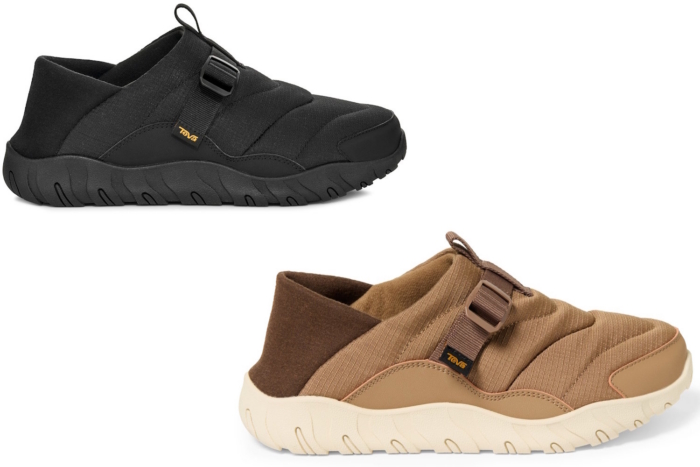
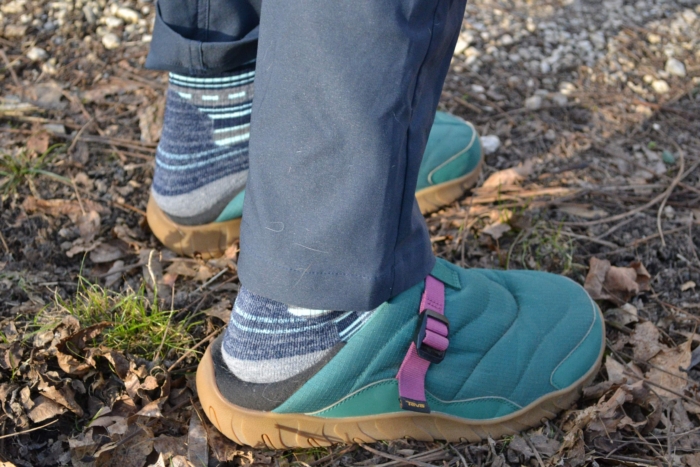
Car camping is all about luxuries, and the Teva ReEmber Camp Slip-On ($90) is the kind of cozy footwear that becomes hard to go without once you’ve tried it. Part slipper, part shoe, and part mini sleeping bag, it’s versatile enough for hanging around the fire, padding through camp, driving home, and running errands in town.
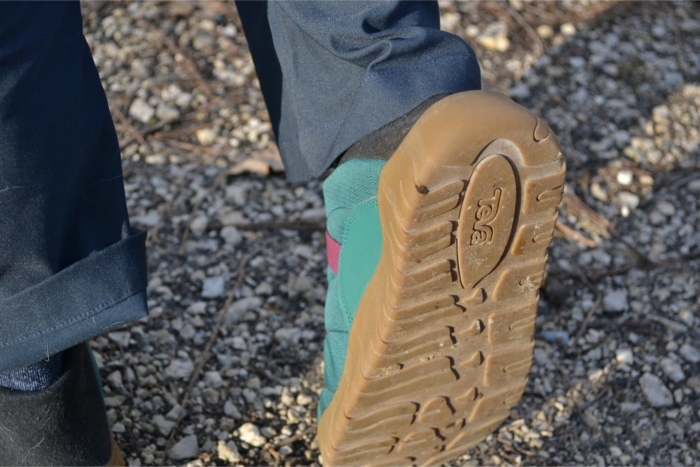
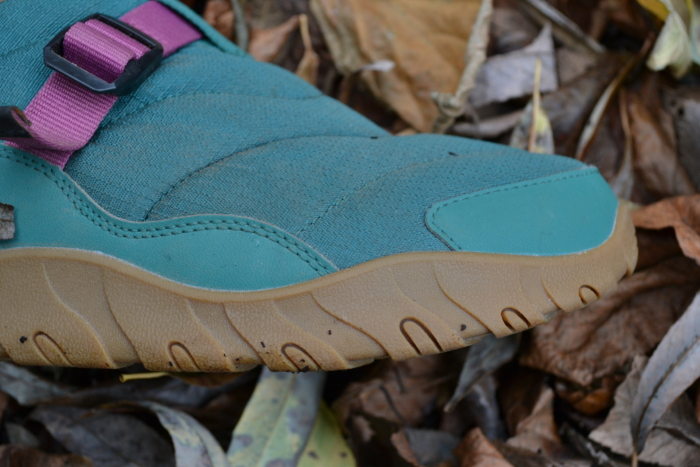
The Tech: Microfiber insulation provides noticeable warmth without ever feeling oppressively hot. As a defense against cold floors in the morning, the ReEmber is more than capable of keeping your toes happy. The rubber outsole is sturdy enough for gravel paths, hard-packed dirt, and dry campground loops, though it isn’t built for sloppy mud or wet grass. Compared to the Stio Colter Mountain Slip, the ReEmber is less protective in snow but lighter, more casual, and easier to wear around town. For rougher campsites, Teva also makes the Teva ReEmber Terrain Slip-On ($100), which adds a grippier outsole and more trail-ready feel while keeping the same cozy, easygoing spirit.
What We Like: Since its release, the ReEmber has quickly become a well-loved standard in campground footwear. Modern van-dwellers are rarely spotted without a pair on their feet, and it’s easy to see why. The quilted upper feels cozy without looking too much like a house slipper, and the simple shape works just as well at a brewery as it does beside a tent. The collapsible heel counter is the key detail: With the heel down, the ReEmber becomes an easy slide for coffee runs, cold cabin floors, or kicking around camp without using your hands; tester Mary Andino was thrilled to quickly throw the ReEmber in between burns while sport climbing in Illinois. When needed, just pull the heel up, and the shoe feels secure enough for a short walk, mellow approach, or quick loop from the campsite. The shoe’s roomy opening works well with midweight wool socks, adding warmth on chilly mornings.
What We Don’t: This isn’t the best camp shoe for backpackers or thru-hikers. It doesn’t compress very well, is a little heavy, and isn’t waterproof. But for car camping, van life, travel, and post-hike lounging, the ReEmber is tough to beat.
Should You Buy It? Treating your feet right is important, but it doesn’t always look this good. If you want your toes swaddled in insulation but still able to actually walk around (and sometimes free your heel), the ReEmber Camp Slip-On is a top choice.
Crocs Classic Clog
-
-
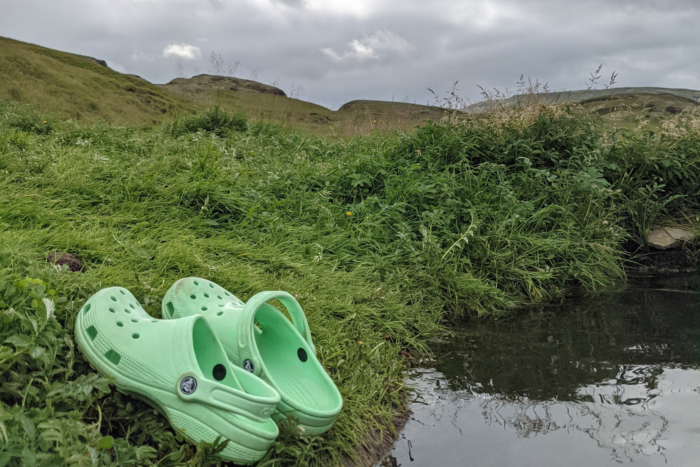
My first pair of Crocs, still going strong, waiting for me next to a hot spring in Iceland; (photo/Rachelle Schrute)
-
(Photo/Rachelle Schrute)
-
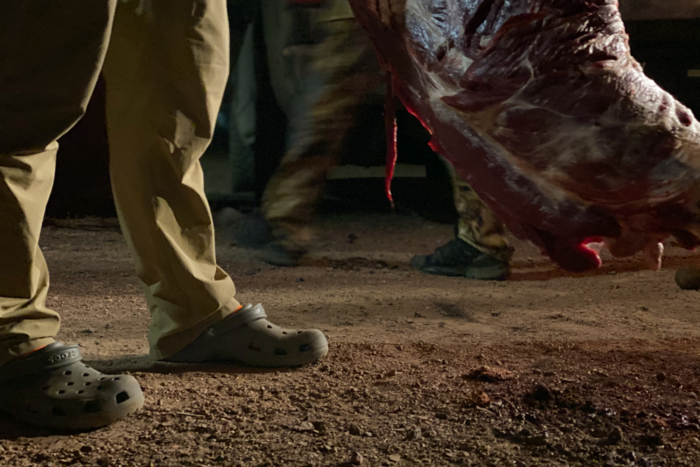
Meat pole Crocin'; (photo/Rachelle Schrute)

Specifications
Pros & Cons
Pros
- Durable
- Easy to put on and take off
- Heel straps add versatility
- Super comfortable with or without socks
- Plenty of color options
Cons
- Not very packable
- May be a bit wide for those with narrow feet
Bottom Line: Don’t knock ’em till you’ve tried ’em. We’re convinced any hiker or backpacker who’s not on board with this comfortable, versatile, and affordable camp shoe just hasn’t had the pleasure of wearing it.
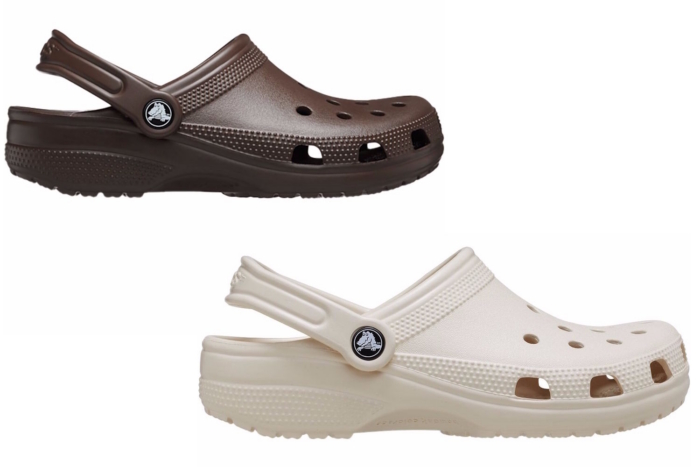
Most people are familiar with Crocs. The brand has been making variations of its injection-molded EVA clogs since 2002, and though its Classic Clog ($50) was originally developed as a boating shoe, it has since amassed a large following with backpackers and other outdoor recreation groups as the ultimate camp shoe.
The Tech: The Classic Clog comes with a heel strap that’s easily tucked out of the way when not in use. With the heel strap engaged (fondly known as “sport mode” in some circles), the shoe can easily handle short hikes without falling off. Without the heel strap in place, the clog becomes a convenient, comfortable source of slide-in foot protection. There’s no insulation, so it won’t be as cozy as something like the Teva ReEmber Camp Slip-On, but you can buy a fleece-lined version ($55).
What We Like: On any thru-hiking trail, a pair of Crocs dangling off the outside of someone’s pack is a common sight. The Classic Clog is lightweight, durable, and fully waterproof. If the shoe gets wet, simply wipe the water off with a rag or towel. Boom — instantly dry. Because of its do-anything nature, GearJunkie Hunt & Fish editor Rachelle Schrute swears by the shoe and uses it for fishing and traveling (she even took it to Iceland). Though Croc-wearers are often the target of fashion-related jokes, we think they look pretty cool — especially when they’re wearing this comfy footwear with pride.
What We Don’t: The Classic Clog is pretty durable overall, but once the sole’s tread starts to wear down, watch out: The shoe’s foam becomes quite slippery on wet surfaces when it’s smooth.
Should You Buy It? Though many brands have developed high-tech camp shoes with all sorts of flashy features, the truth is that a pair of Crocs Classic Clogs remains hard to beat. And at just $50 per pair, they’re an excellent value.
Rab Cirrus Hut Slippers
Specifications
Pros & Cons
Pros
- Warm for the weight
- Extremely packable
- Comfortable footbed
Cons
- Limited traction
- Minimal underfoot insulation
Bottom Line: These slippers feel like a luxurious welcoming committee when you’re done getting after it. They’re wonderfully easy on the feet, but not as multifaceted as other shoes in this guide.
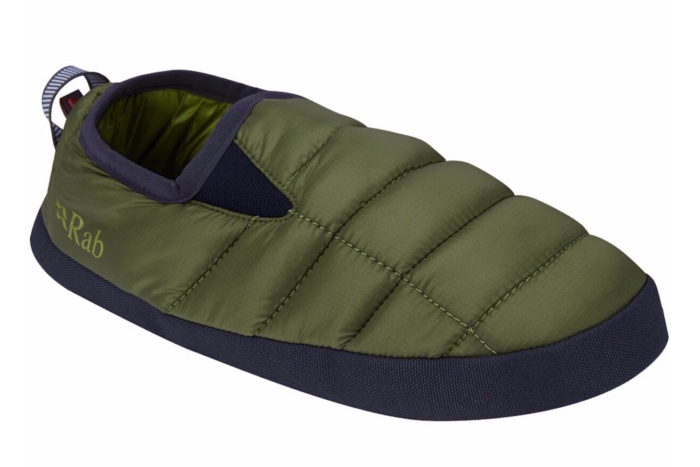
No matter what your feet have been crammed into earlier in the day — whether it was climbing shoes, ski boots, or trail shoes — the Rab Cirrus Hut Slippers ($65) offer instant relief. They’re soft, warm, and purpose-built for giving tired feet a break without adding much weight or bulk to your pack.
The Tech: Rab uses PrimaLoft Silver Insulation Luxe, a 100% recycled synthetic fill that delivers luxurious warmth while remaining decently breathable. Underfoot, the cushioned EVA foam footbed ably cushions your feet for walking on cabin floors, tent platforms, and try camp surfaces. The Cirrus Hut Slippers’ flexible, non-slip sole is fine for padding across those surfaces as well, though we don’t run on slick grass in them. The elastic entry and stretch inserts create a snug slip-on fit, and the rear pull loop helps when your hands are cold, or you’re fumbling around in a dark bunkroom.
What We Like: At just 6.1 ounces per pair, these are among the easiest camp shoes to justify bringing along. They compress well, tuck into the corners of a backpack, and take up far less room than foam clogs or structured slip-ons like the Stio Colter Mountain Slip. For hut trips, ski tours, travel, and backpacking routes where every ounce matters, that packability is the main draw. Sock compatibility is excellent, too. These easily slide over thin or midweight wool socks, and the soft upper has enough give for thicker pairs. Compared to the Xero Shoes Pagosa Fireside, the Cirrus packs smaller and feels more like a true hut slipper, while the Pagosa offers a more secure outdoor sole and step-down heel.
What We Don’t: This camp shoe is built for just that: camp. It’s too soft and delicate to use on sharp rocks or snowy ground. Don’t push it out of its comfort zone.
Should You Buy It? For end-of-day warmth, recovery comfort, and a barely-there packed size, the Cirrus Hut Slippers are a smart luxury for cold nights, mornings spent puttering around a hut, and tired feet.
Feathered Friends Down Booties
Specifications
Pros & Cons
Pros
- Super warm
- Lightweight
- Compressible
- Removable foam insoles
- Hardy enough to walk short distances
Cons
- Expensive
- Will wear out quickly if you walk in them often
Bottom Line: These tall, down-filled booties have one mission — to keep your feet warm. They’re stellar at that, but their use outside winter camping is limited.
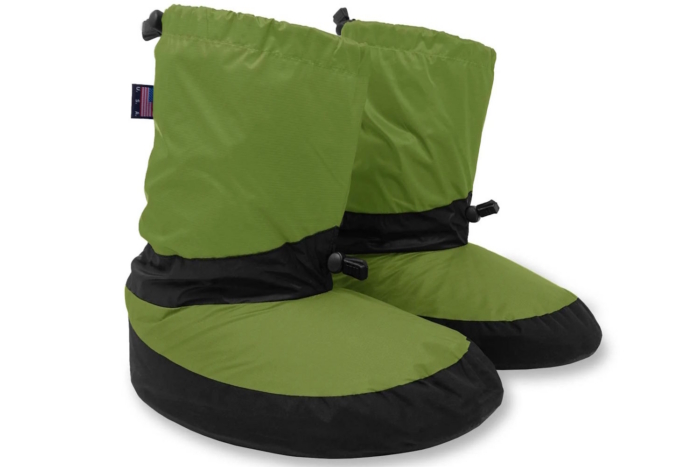
With premium down and a soft inner liner, the Feathered Friends Down Booties ($119) keep feet warm even when temperatures drop well below freezing. Mostly, these booties aren’t designed to be worn while strolling around, but they come with a fairly hardy shell that holds up to short walks through camp.
The Tech: For winter camping, they’re well worth their 9.3-ounce weight. Feathered Friends stuffs them with 2.3 ounces of 800-fill down, which will keep your toes toasty when the mercury plummets. Think of them as sleeping bags for your feet — insulation is their only job.
What We Like: Removable foam insoles provide a little extra support when you want it but also add some extra weight that many backpackers will want to leave behind. The booties are highly compressible and easy to pack away, though they don’t come with a stuff sack. Pro tip: Wear them to bed — especially if you’re tent camping in the snow — and you won’t have to scourge around for them when you inevitably get up to pee.
What We Don’t: Remember, these are basically sleeping bags: They aren’t made to handle repeated abrasion. As Feathered Friends says, “They’re built for warmth, not a marathon.” If you want foot insulation that’s a bit more mobile, look at either the Teva ReEmber or the Rab Cirrus Hut Slippers.
Should You Buy It? The Feathered Friends Down Booties are certainly pricey. But for those willing to pay for warm toes, they’ll keep your feet comfortable through frigid conditions — and that’s probably priceless.
Chaco Z/1 Classic Sandal
-
-
(Photo/Andrew McLemore)
-
(Photo/Andrew McLemore)
-
(Photo/Andrew McLemore)
Specifications
Pros & Cons
Pros
- Secure
- Highly adjustable
- Solid traction and support
- Fun colorways
Cons
- Heavy
- Stiff, chunky outsole
- Learning curve for adjusting straps
Bottom Line: A reliable outdoor sandal deserves a place in everyone’s closet, and this one has been protecting feet in campsites, on river trips, and around town for decades. It’s heavy, but it’s also supportive and comfortable.
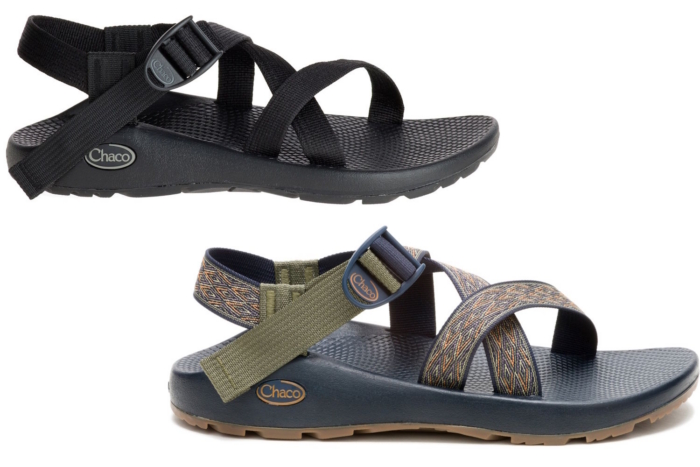
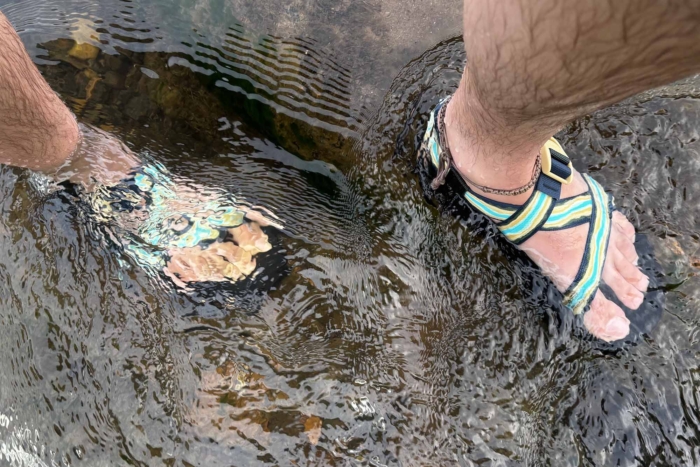
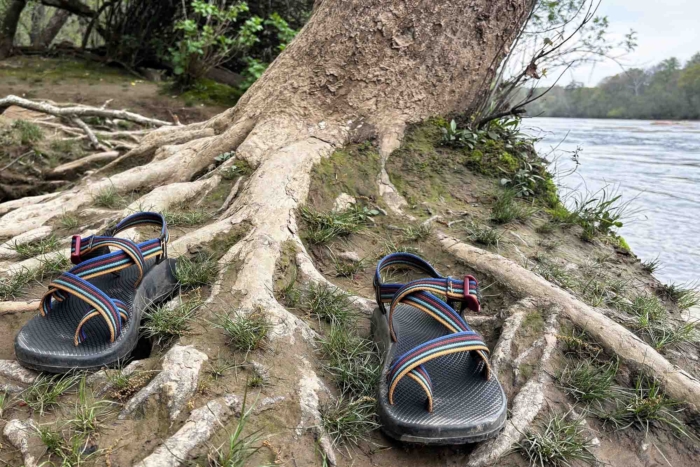
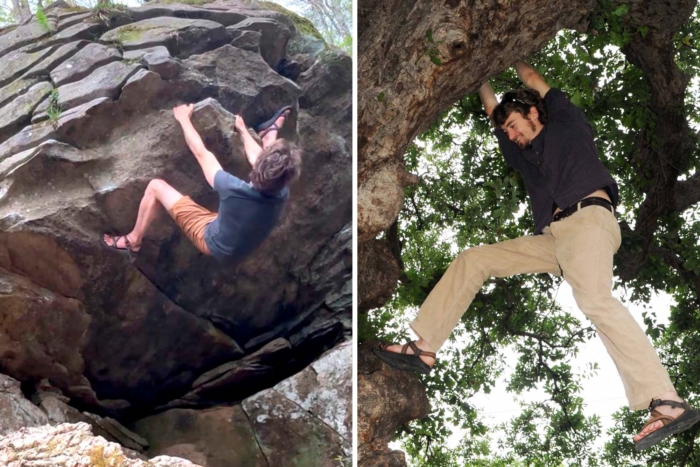
A good camp sandal should be easy to slip on, tough enough to protect you from sharp ground, and useful for more than just shuffling around the lean-to. The Chaco Z/1 Classic ($95) checks all of those boxes, with a proven design that has barely changed since 1989.
The Tech: The ChacoGrip outsole is impressively sticky for a non-Vibram sole and holds up well over multiple years. Compared to sandals like the Luna Sandals Mono or the Xero Shoes H-Trail, the Z/1 feels heavier and less packable, but it offers far more underfoot support, increased durability, and enough protection for rocky campsites or short hikes from camp. The floating strap system takes a little trial and error to dial in, but once adjusted, it holds the foot securely. Underfoot, the LUVSEAT PU footbed feels firmer than the softer Chaco Z/Cloud, but remains supportive and predictable on rough ground.
What We Like: We’ve been kicking around in the Z/1 Classics for decades, and Senior Editor Andrew McLemore has worn some version of this sandal since he was 12, including while traveling around the globe. That long track record is part of the appeal. The Z/1 isn’t the lightest or most compact option here, but it’s one of the most dependable. It works as a camp shoe, river sandal, town sandal, and legitimate hiking sandal when you don’t want to bring separate footwear. The open-toe design also gives the Z/1 a major advantage over the toe-loop Chaco Z/2 for camp use: You can slide these over wool socks on cool evenings, which instantly makes them more useful around a campsite.
What We Don’t: At close to 2 pounds per pair, this is not the sandal we’d bring for ultralight backpacking. But for car camping, river trips, base camps, and hikers who want one sandal that can handle both trails and downtime, the Z/1 Classic is hard to beat.
OOFOS OOahh Slide Sandals
Specifications
Pros & Cons
Pros
- Largest size range of the flip-flops we reviewed
- Easy to slide on
- Good for wide feet
- Machine washable
Cons
- Lighter colors show dirt easily
- Not the best for wearing in the water
Bottom Line: You can argue that every camp shoe is a recovery shoe, but this slide is actually designed to help your feet rejuvenate after a big day. Comfort is top-notch, but versatility less so.
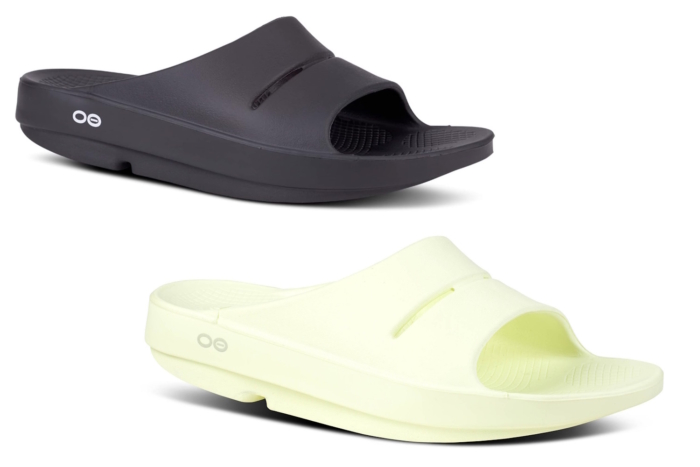
For recovery at camp, the OOFOS OOahh Slide ($60) delivers exactly what tired feet want: soft cushioning, easy entry, and a roomy fit that doesn’t pinch after long miles.
The Tech: Built with OOfoam, a proprietary material designed to absorb 37% more impact than traditional footwear, these slides are all about plush comfort. We didn’t independently verify that impact stat, but we can confidently say the OOahh is incredibly comfortable and cushioned. Unlike standard flip-flops, it has a wide strap instead of a Y-strap, eliminating any irritation between the toes. That design also makes it much better with socks: You can wear these over camp socks without dealing with a toe post. These slides are ideal for wider feet, offering the largest size range of any flip-flop we tested. The strap has a bit of extra room, which makes it slightly loose on narrow feet but perfect for those needing more width.
What We Like: The footbed is soft, supportive, and held up well even after being left in the sun. In fact, these stayed cooler than any other pair in our heat test. That made them especially pleasant around hot campsites, beach days, and post-hike lounging. The textured footbed improves grip, but without a toe post or heel strap, they feel less secure in motion, especially on uneven ground. Compared to the OOFOS Original, which uses the same foam and has a Y-strap for a more locked-in fit, the OOahh Slide is easier to wear with socks and more comfortable for pure recovery.
What We Don’t: While it provides more cushioned, structured recovery comfort than the Birkenstock Arizona Essentials EVA, this slide is far less chic and a poorer choice for traipsing around town.
Should You Buy It? Endorsed by the American Podiatric Medical Association, the OOahh Slide is a top pick for anyone with foot issues or seeking a plush, recovery-focused camp sandal. It’s also one of the more affordable options in this guide.
Birkenstock Arizona Essentials EVA
Specifications
Pros & Cons
Pros
- Relatively inexpensive
- Super lightweight
- Flexible build
- Adjustable, unlike regular slides
- Washable
Cons
- A little noisy when wet
- Not good for trail hiking
Bottom Line: This outdoor-friendly twist on Birkenstock’s well-known slide design brings a dash of sophistication to camp. It’s light, more comfortable than it looks, and plays well around water.
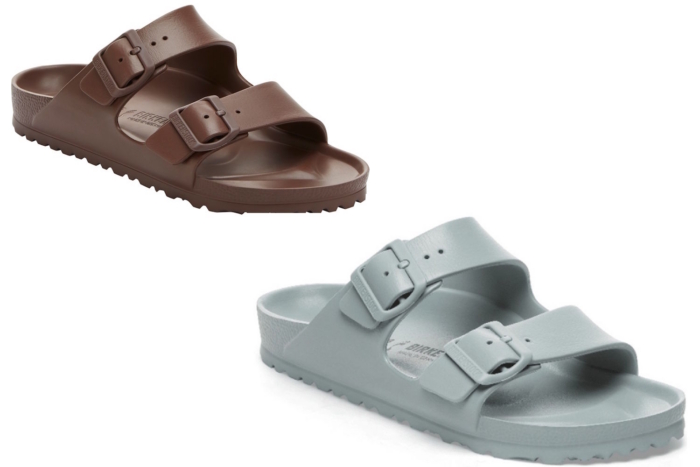
Reinventing a classic can be dangerous, but what’s the harm in a light update? The Birkenstock Arizona Essentials EVA ($50) keeps the familiar two-strap Arizona shape but turns it into a lighter, cheaper, and more water-friendly camp slide.
The Tech: We were skeptical about this new version of Birkenstock’s leather-and-cork sandals. But after slipping into the EVA version, we were pleasantly surprised. A few quick buckle adjustments dialed in the fit, and from then on, they felt more like easy camp slides than structured sandals, just with that unmistakable Birkenstock look. The one-piece EVA build handles wet grass, muddy shower-house floors, beach sand, and spilled coffee better than leather ever could. They rinse clean easily, dry fast, and don’t feel precious when they get tossed by the tent door.
What We Like: Despite the lightweight design, these sandals provide genuine support. The contoured footbed follows the shape of your feet, with a deep heel cup, solid arch support, and a spacious toe box. They’re not flimsy and are much more comfortable than basic slides or flip-flops. They also work well with socks, giving them a cooler evening camp range than toe-post sandals. At about half a pound and less than a third of the weight of the Chaco Z/1 Classic, the Arizona Essentials EVA is also much easier to pack for travel or car camping. The Z/1 Classic might be better for hiking and rough campsites, but the Birkenstock is also a cleaner-looking option.
What We Don’t: The EVA foam squeaks when wet. And yes, it’s occasionally prone to “foot farts” when air gets trapped underfoot. But besides being noisy, there’s not much we have issues with.
Should You Buy It? The Arizona Essentials EVA delivers surprising comfort and value as a lightweight, colorful, easy-on-and-off camp slide that can head to town after a day on the water, at camp, or wherever you want easy access to comfort.
Other Field-Tested Footwear for Hanging Around Camp
The following models didn’t make the top of our list, but they’ve been vetted by our band of happy campers.
-
-
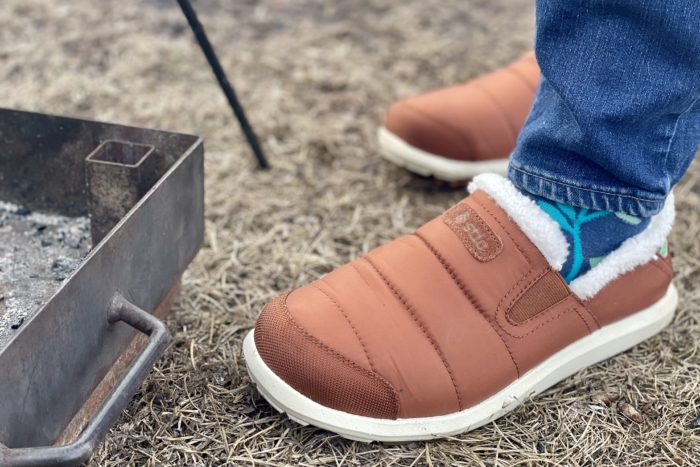
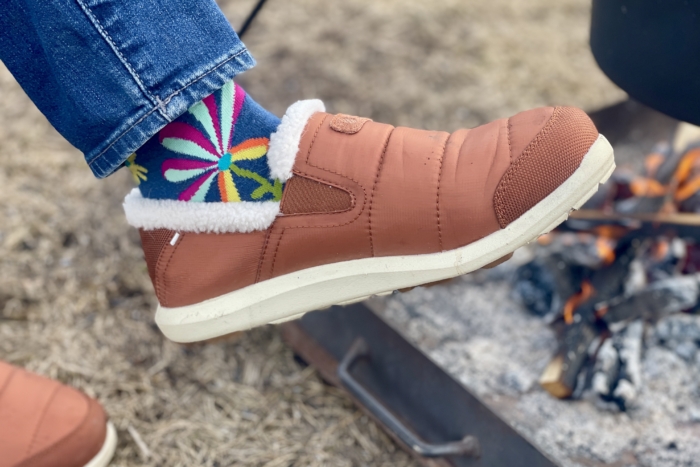
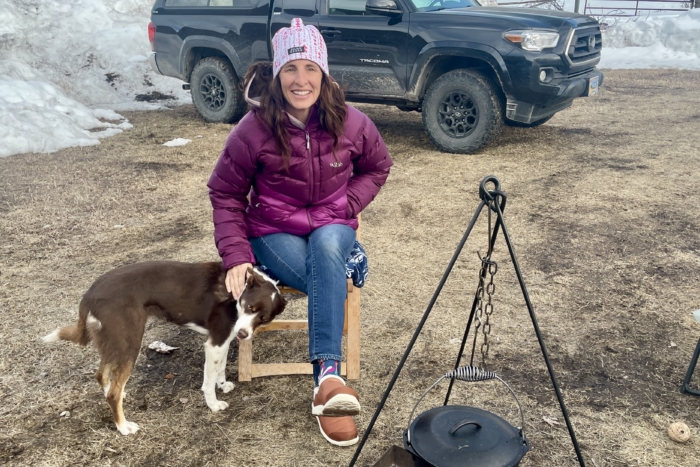
The Stio Colter Mountain Slip isn't ideal for lugging into the backcountry, but it's an excellent car-camping shoe
-
-
Chilling around the campfire in our Stio Colter Slips; (photo/Elk Raven Photography)
Specifications
Pros & Cons
Pros
- Warm and weather-resistant
- Grippy sole with good structure
- Easy slip-on design
- Stylish enough for town wear
Cons
- Less warm than full down booties
- Bulky for backpacking
- Not ideal for extended walks or deep snow
Bottom Line: Made with warmth in mind, these fleece-lined, insulated slip-ons also have enough traction and structure to handle light snow. They’re more frontcountry-oriented than most camp shoes, however.
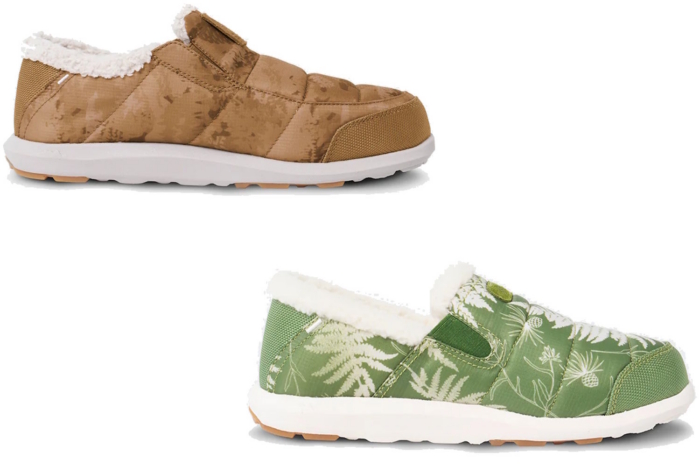
Frosty campsites, snowy decks, and pre-coffee dog walks are exactly where the Stio Colter Mountain Slip ($62) belongs. It combines the cozy feel of an insulated slipper with the tougher build of a cold-weather camp shoe.
The Tech: We wore the Colter Slip after snowy ski days in Jackson, Wyoming, and on cold mornings during summer camping trips in the Tetons. The PrimaLoft insulation and fleece lining kept our feet warm in sub-freezing temperatures, while the DWR-treated ripstop upper shed light snow and slush well. The fit is snug and secure for a slip-on, and the heel holds its shape better than most collapsible camp shoes. That makes the Colter less floppy than a true slipper, though it also means it doesn’t pack as flat as minimalist sandals or softer hut booties. We’d stash these in a car-camping duffel or road-trip bag before trying to squeeze them into an already tight backpack.
What We Like: A high-traction sole and structured midsole set the Colter apart from run-of-the-mill house slippers. We felt confident walking across icy driveways, packed snow, wet campground grass, and hard dirt around camp. It also works well with medium-to-thick wool socks, which give it a big warmth boost on cold mornings. Compared to the Teva ReEmber, the Colter feels more stable underfoot and better suited for cold, snowy conditions. The ReEmber is more casual and travel-friendly.
What We Don’t: This isn’t the smallest or lightest camp shoe, and we wouldn’t choose it for backpacking or extended winter walks.
Should You Buy It? But for anyone looking for a camp-to-town slipper with insulation, dependable grip, and mountain-town style, the Colter Mountain Slip offers a warm, practical package for cold-weather comfort.
Specifications
Pros & Cons
Pros
- Warm for its weight
- Wide toe box
- Convertible slide or shoe wear
- Grippy outsole
Cons
- Minimal underfoot insulation
- Not built for long walks
- Very minimal structure
Bottom Line: For zero-drop acolytes who want to extend the lifestyle to their camp shoes, this slipper is a valid option. It’s warm, light, and packable, but not the grippiest or most supportive.
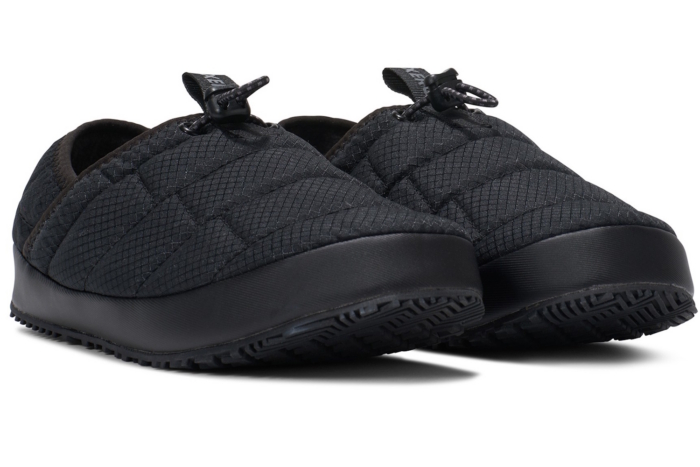
The Xero Shoes Pagosa Fireside ($95) blurs the line between slipper and camp shoe. This is a minimalist, insulated slip-on built for indoor comfort, hut trips, and quick steps outside. With a nylon puffy upper, 200 g insulation, and a full rubber outsole, it delivers reliable warmth in a lightweight package for camp hangouts, après-ski lounging, and low-key cold-weather errands.
The Tech: Built around Xero Shoes’ barefoot design principles, the Pagosa Fireside has a zero-drop platform and a thin, flexible sole. That makes it light, packable, and natural underfoot, but not especially protective on sharp rocks or frozen, uneven ground. The wide, foot-shaped toebox also pairs nicely with thick socks, giving the Pagosa more cold-weather range than its low-profile build suggests. Compared to the Stio Colter Mountain Slip, the Pagosa packs smaller and feels more flexible, while the Colter offers more structure, traction, and confidence outdoors.
What We Like: During testing, these slippers were ideal for moving from tub to tub at local hot springs, short dog walks, and hut trips in the Tetons, where they handled outhouse runs and quick outside chores with ease. A standout design detail is the step-down heel, which lets you wear the Pagosa Fireside two ways: Step on the heel and it works like a slide for easy, half-awake entry when you’re padding between hot springs. Pull the heel up and cinch the drawcord for a more secure fit for dog walks, camp chores, or cold mornings around the tent.
What We Don’t: With less focus on cushion and recovery than other models in this guide, it might not be the pick for quieting your barking dogs after a mega day.
Should You Buy It? At just 4.8 ounces per pair in size 7, the Pagosa Fireside is easy to travel with, and the drawcords let you bundle the pair together in a duffel or hut bag. For minimalist comfort, sock-friendly warmth, and quick camp use, it’s a cozy, highly packable pick.
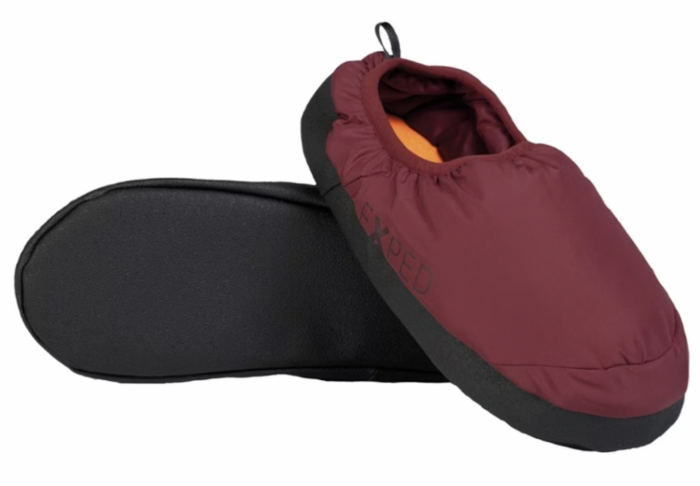
Specifications
Pros & Cons
Pros
- Extremely lightweight
- Durable soles
- Comfortable on skin
- Ankle cuffs keep grime out
Cons
- Only four sizes available
Bottom Line: Worthy backpacking camp shoes need to be light and portable, and these insulated slippers nail the assignment. Otherwise, they’re fairly basic as far as design goes.
If you’re packing light and are low on space but don’t want to wear your boots in camp, the Exped Camp Slipper ($60) is a solid choice. At 4.8 ounces in size medium, you won’t even notice the addition to your load, and the slippers fold up so compactly that you can fit them into a small pocket.
The Tech: The 4 mm abrasion-resistant soles held up exceptionally well on dirt and granite, and provided adequate grip when we scrambled up an outcrop for sunset. The slippers are extremely flexible, providing a barefoot feel, and the insole is comfortable against the skin if you decide to go sockless. Recycled synthetic insulation provides warmth, although for serious mid-winter cold, you’ll want to opt for the down-filled Feathered Friend Down Booties.
What We Like: The cuff around the ankle does a good job of keeping the feet warm, making them a great three-season camp shoe option. It also helps keep rocks, sand, and dirt from getting in. With a quick wipe to clean the soles, you can wear the slippers inside your tent.
What We Don’t: After a long hike, roomy footwear is ideal, and the space inside the Camp Slippers is certainly freeing. However, because they only come in four sizes, the fit can be a bit tricky. The XL fit was comparable to a U.S. men’s 12; we’d recommend trying them on in person if possible or contacting Exped for expert sizing advice.
Should You Buy It? These camp slippers are clutch for hikers and backcountry enthusiasts who like to keep it light and might experience colder evenings. They’re not as warm or supportive as other camp shoes, but they’ll do a fine job.
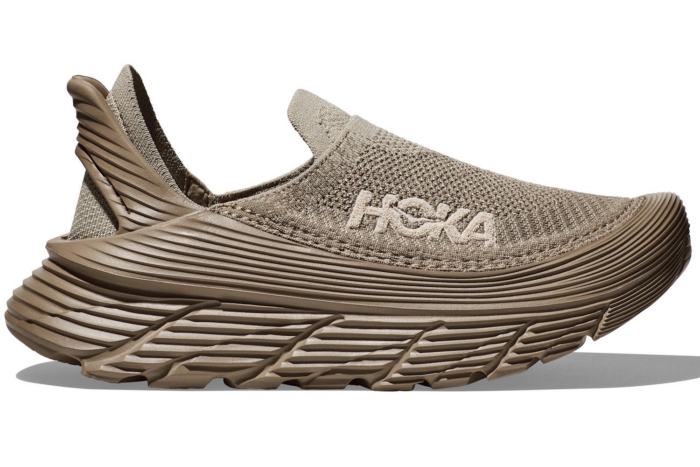
Specifications
Pros & Cons
Pros
- Lightweight for its structure
- Soft and supportive to soothe the feet
- Chunky, rockered outsole
Cons
- Pricey
- Not compressible
Bottom Line: This recovery shoe borrows its silhouette from HOKA’s trail running line, and the results are impressively comfortable. A burly, closed-toe design and a lugged outsole make tramping in them better than with most competitors.
If you find your joints especially tired and achy after long runs or hikes, slipping into these plush beauties from HOKA may offer significant relief. Though they’re bulky and perhaps not ideal for lightweight backpacking, the HOKA Restore TCs ($110) will be worth their weight to those who need a little extra recovery boost.
The Tech: A closed-toe design offers more protection against stubbed toes when you have to leave the tent in the middle of the night. Plus, the knit upper keeps the shoe in place, enabling short jaunts and rocky scrambles. We also appreciate how the design allows your feet to stretch out and breathe — with or without socks.
What We Like: This is one of the most supportive options on this list, which is quite an impressive statement for a pair of shoes with a thin mesh upper. A soft EVA footbed soothes the feet, while stiffer rockered midsoles and outsoles offer structural support. An outsole with actual tread — rare in this category — offers reasonable traction for hanging out at home or wandering around the campsite, and if you choose to venture beyond the latter, the Restore TC is impressively durable for such comfort-forward footwear.
What We Don’t: Paying over $100 for footwear you’re not actually going to be doing much hiking in seems like a lot, especially when there are plenty of functional options available that cost half as much.
Should You Buy It? Besides the Chaco Z/1 Classic, the Restore TC is probably the best bet in this guide for rambling around the woods looking for firewood or heading to a fishing hole. If you crave functionality and comfort in your camp shoes, this is probably the one.
-
-
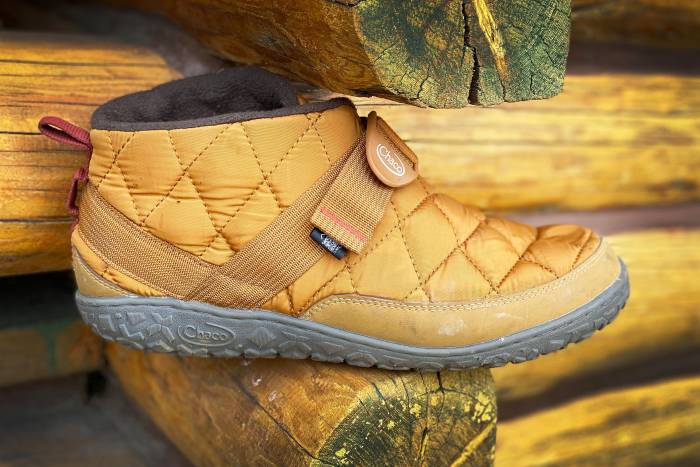
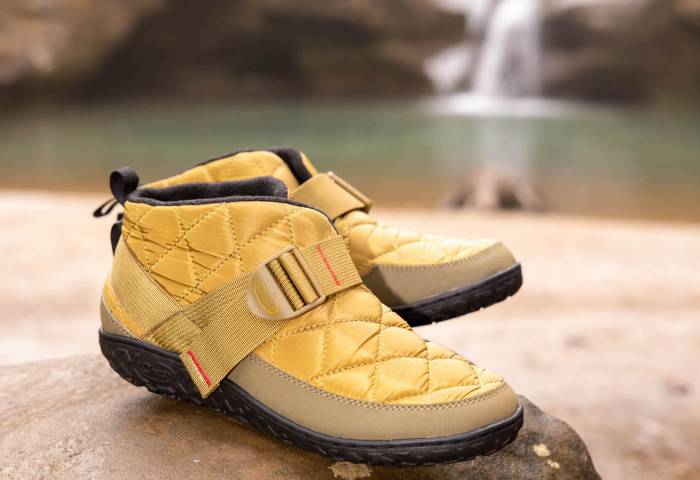
The Chaco Ramble Puff is an undoubtedly premium camp shoe (Photo/Nicole Qualtieri)
-
A good pair of camp shoes can add the bonus of comfort when you're hanging in; (photo/Nicole Qualtieri)
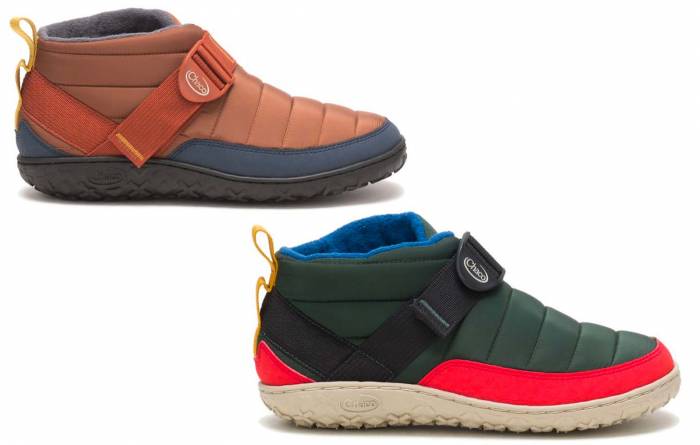
Specifications
Pros & Cons
Pros
- Durable outsole
- Good traction on wet surfaces
- Easy to put on and take off
- Capable of active use
Cons
- Rocks and gravel can get stuck in the upper
- Not as breathable as other options
Read Review: Chaco Ramble Puffs Might Be the Best Outdoor Slippers Ever
Bottom Line: This ankle-height shoe blends the warmth of a puffy jacket with the underfoot support we’ve come to expect from Chaco. It has enough structure to handle champ chores on uneven ground.
The Chaco Ramble Puff ($85) is a great shoe for cold-weather camping in the dry season. We primarily used it while car camping near high-elevation climbing areas in Wyoming, and it offered the ideal combination of insulation and practical wearability.
The Tech: Water-resistant ripstop nylon helps keep moisture out, but these shoes are definitely not fully waterproof. Chaco outfitted it with its signature LUVSEAT contoured footbed, which provides ample arch support. The rubber outsole, while not grippy or supportive enough for sustained hiking, is capable for short walks around camp.
What We Like: The Ramble Puff is available in both men’s and women’s styles. The most eye-catching feature is the quilted and insulated upper. In temps down to around 30 degrees, they kept our toes warm and happy — especially when paired with a thick pair of wool socks. Tester Nicole Qualtieri was especially grateful to have them on a rafting trip down the Gates of Lodore on the Green River, where they warmed her feet in chilly riverside camps. Thanks to the addition of a plush fleece lining, the Ramble Puff is a bona fide warming hut for your foot.
What We Don’t: These high-tops aren’t very packable, so you’ll probably only want to take them car camping, on hut trips, or packed safely away in your boat.
Should You Buy It? The Ramble Puff is an impressive entry in Chaco’s increasingly diverse lineup. For the shoulder-season car camping enthusiast, we highly recommend these warm and practical shoes.
Camp Shoe Comparison Chart
| Compare |
|
|
|
|
|
|
|
|
|
|
|
|
|---|---|---|---|---|---|---|---|---|---|---|---|---|
| Price |
$90
|
$50
|
$65
|
$119
|
$95
|
$60
|
$50
|
$62
|
$95
|
$60
|
$110
|
$85
|
| Weight |
1 lb. 13.4 oz.
|
14 oz.
|
6.1 oz.
|
9.3 oz.
|
1 lb. 13.8 oz.
|
9.9 oz.
|
1 lb. 1 oz.
|
7.2 oz.
|
9.6 oz.
|
4.8 oz.
|
11.3 oz.
|
1 lb. 1.9 oz.
|
| Insulation |
Synthetic
|
None
|
PrimaLoft Silver
|
800-fill down
|
None
|
None
|
None
|
PrimaLoft, fleece
|
Synthetic
|
Synthetic
|
None
|
Synthetic, fleece
|
| Water Resistance |
Moderate
|
High
|
Low
|
Low
|
High
|
Moderate
|
High
|
Moderate
|
Moderate
|
Moderate
|
High
|
Moderate
|
| Packability |
Moderate
|
Low
|
High
|
High
|
Low
|
Low
|
Moderate
|
Low
|
Moderate
|
High
|
Low
|
Low
|


How We Tested the Best Camp Shoes
Our Expert Testers
This current version of this guide was put together by lead tester Chris Kassar and her husband, contributor Ryan Kempfer. Together, they spent 10 months testing 10 new pairs of camp shoes on outings across the Mountain West.
Their work added to years of collective testing by past contributors, including Austin Beck-Doss and Andrew Potter, who evaluated options for everyone from luxury-minded car campers to ounce-counting backpackers. Since 2021, our team of experts has tested more than 50 pairs of camp shoes.

Our Testing Process & Grounds
Each new shoe endured at least five outings before making the cut. Testing spanned campsites in Grand Teton and Yellowstone, Colorado hut trips, and backcountry ski weekends. We wore these shoes across snow-covered decks, muddy campsites, wet grass, slick hut floors, and late-night trips to the loo to see how they handled a variety of surfaces.
We focused heavily on how easily each shoe fit on tired feet, its compatibility with thick camp socks, and how much space it took up in a pack or duffel. We also evaluated returning favorites — including the Crocs Classic Clog, Chaco Z/1 Classic, and Teva ReEmber — to gauge long-term durability. Testing remains ongoing, and we update this guide as new models hit the market.

Our Camp Shoes Rating System
As we test camp shoes, we rate each pair on a 10-point scale across four core categories:
Comfort: Thickness of the cushioning, footbed shape, ease of entry, sock compatibility, and relief after long days in heavy boots.
Warmth: How well the shoe insulates your feet, especially when you’re walking on cold hut floors, snowy surfaces, or strolling on a chilly morning.
Traction: The outsole’s grip on wet grass, mud, gravel, slick wood, and packed snow.
Packability: Weight, volume, compressibility, and whether the shoes need to be clipped outside a pack or can fit in one.
After awarding these scores, we give each camp shoe an Overall Score that reflects its real-world performance in its entirety and is not a simple average. A bulky car-camping slipper, a packable hut shoe, and a water-friendly clog all serve different purposes, so we score each based on how well it performs its intended use.

Buyer’s Guide: How to Choose the Best Camp Shoes
Good camp shoes give you something to look forward to at the end of the day. Once you’ve identified the right pair, they’ll likely become an essential part of your kit. That said, it’s important to understand the differences between the available options before making a purchase.
This buyer’s guide covers the necessary factors to consider when you’re shopping for a pair. And if you really like hanging around in your camp shoes, check out GearJunkie’s guide to the best string lights and the best electric coolers to further upgrade your setup.

Comfort
Comfort is an important consideration for any piece of gear you use regularly, but it’s pretty much the be-all and end-all in this category. Camp shoes are meant to offer your feet a respite after removing sweaty, stiff hiking boots, climbing shoes, ski boots, or any other footwear you’ve worn all day.
While all the shoes on this list are designed to be comfortable, certain models, like the OOFOS OOahh Slide, are made with a super-soft footbed to ease joint stiffness and maximize recovery. Other options, like the Teva ReEmber Camp Slip-On, swaddle your feet in a sleeping-bag-like cocoon of insulation that keeps toes toasty. But even bare-bones slides like the Birkenstock Arizona Essentials EVA will feel better than cramped, technical footwear — which is entirely the point.

Insulation
If you’re mostly wearing your camp shoes on warm summer evenings, keeping your feet toasty probably won’t be a concern. But if you’re looking for footwear to bring winter camping, on a ski hut trip, or to wear on a lightly snowy errand, you’ll want an insulated pair.
Many of the camp shoes in this guide are primed for cold-weather use. They range from the ultralight Rab Cirrus Hut Slippers, which slide easily into a pack and are ideal for the structures for which they’re named, to the Stio Colter Mountain Slip, which adds a fleece liner and more structure for walking outside. Both of those shoes contain synthetic insulation, but if Arctic temperatures are in the forecast, you can opt for the Feathered Friends Down Booties, which are stuffed with 800-fill down.

Weight & Packability: Backpacking vs. Car Camping
Camp shoes are an end-of-day blessing for backpackers, but not every model is light and packable enough to schlep into the backcountry. Generally, you’ll trade support for backpacking-worthy weight: The Rab Cirrus and the Exped Camp Slipper are two of the lightest and most compact models in this guide, but they have far less structure underfoot than heavier models like the Chaco Ramble Puff or the Chaco Z/1 Classic.
When car camping, of course, weight and space aren’t likely to be major concerns. For those comparatively luxe trips, you can opt for bulkier, warmer, and more comfy models like the Teva ReEmber Camp Slip-On and the Stio Colter Slip-On.

Support
Compared to dedicated hiking footwear, camp shoes aren’t the most supportive. They’re designed for recovery and comfort rather than support and performance.
Having said that, we included a few pairs in this guide that you can certainly go for a casual jaunt in (or more, depending on the terrain and how much you want to push their limit). These shoes have relatively robust midsoles and good traction, including the HOKA Restore TC, the Teva ReEmber Camp Slip-On, and the Chaco Z/1 Classic, the last of which has a cult following among users who actually hike in it.
Durability
A camp shoe should last many years, especially because it likely won’t accumulate nearly as many miles as active shoes will. Some camp shoes are more durable than others, though, making longevity an important part of a shoe’s overall value.
On the bright side, some models on this list, like the Teva ReEmber Camp Slip-On, have dense, sticky soles that hold up in the long haul. Others, like the HOKA Restore TC, have very soft footbeds that tend to flatten over time, meaning they’ll lose their utility more quickly.

Price & Value
Camp shoes range from simple $50 clogs and slides to insulated booties and recovery shoes that cost over $100. How much you should spend depends on whether you want a light, simple pair to toss into a pack or a warm, supportive, super-comfy model to wear from camp to town.
Budget
In the $50 to $60 range, you’ll find simple camp shoes that are easy to slip on and useful in a wide range of settings. There’s a lot of value in this range: The Crocs Classic Clog ($50) is our favorite budget pick because it’s waterproof, easy to clean, roomy enough for socks, and reliable on wet grass, in campground showers, and on dirt.
The Birkenstock Arizona Essentials EVA ($50) presents another strong option. It’s lighter and more town-friendly than the Crocs, with a supportive footbed and water-friendly build, though it offers less coverage and traction.

Mid-Tier
From about $60 to $95, camp shoes become more specialized, offering better insulation, packability, and support. The Teva ReEmber Camp Slip-On ($90) sits in this range and remains our favorite all-around pair thanks to its cozy upper, collapsible heel, sock-friendly fit, and versatile style.
For backpackers and hut-trip regulars, the Rab Cirrus Hut Slippers ($65) offer excellent softness and warmth without much bulk. They’re not built for rough outdoor walking, but they’re easy to justify when space and weight matter.
Premium
Above $100, camp shoes tend to become more purpose-built. The Feathered Friends Down Booties ($119) are pricey, but their 800-fill down insulation makes them worth it for winter camping, hut trips, and anyone who struggles with cold feet.
The HOKA Restore TC ($110) also lands in the premium range, with a cushioned, recovery-focused design that’s best for post-hike comfort and moderate exploration near camp. It’s not the most packable option, but the support may be worth it for tired feet and achy joints.
Frequently Asked Questions
That depends. Camp shoes offer major relief at the end of the day when the activewear comes off and the comfortable gear goes on. In conditions where active shoes or boots get wet or sweaty during the day, having a pair of dry camp shoes is a crucial part of good foot care.
We recommend a good pair of camp shoes as an addition to any kit, for backpackers to car campers, and everyone in between. For those with achy joints and tired feet, camp shoes may be non-negotiable and totally essential.
We recommend it. After hiking all day with a heavy pack, you’ll be immensely glad to have camp shoes. Also, feet often become wet or sweaty while backpacking, and camp shoes offer ventilation and a relaxed fit, which will help your feet air out. Camp shoes are an important defense against feet issues like blisters, fungus, rashes, and more.
These two camp shoe options are similar but not exactly the same. Crocs have a slightly hardier outsole and include a heel strap, which helps them stay on during short walks or nontechnical hikes.
OOFOS OOriginal Sandals are designed to soothe aches and pains, but their plush footbed does tend to flatten over time. Also, the OOFOS OOriginals lack a heel strap and fall off more easily when walking around.
It’s good to have waterproof camp shoes. Wet camp shoes aren’t much help when you want to change out of wet active shoes at the end of the day. For this reason, we recommend waterproof camp shoes. Many of the options on this list are made of solid EVA or soft foam.
These materials don’t absorb water, and they can simply be wiped dry if they happen to get any water on them. Dry, comfortable shoes are a luxury that you’ll need and thoroughly deserve after a day of adventuring.