Fishing packs have advanced drastically beyond your grandpa’s old tan vest. There are seemingly endless options for fishing packs, backpacks, tackle boxes, or whatever particular storage-type bag you choose to carry your gear.
Everyone has different preferences when it comes to carrying their equipment on the water, making it difficult to know what will work best for them solely based on the opinions of others. Many people learn what they like through trial and error, buying one pack and replacing it when they realize it isn’t for them. That’s not good for your pocketbook.
Our team tested multiple modern packs to determine the pros and cons of all of the different styles and offerings. We’re fairly confident there’s something on this list for just about everyone.
If you’ve found yourself frozen with indecision, check out our buyer’s guide section, or read on as we highlight different products and what makes the best fishing pack.
Editor’s Note: We updated this buyer’s guide on April 2, 2025, by completely overhauling it. We added updated products, a buyer’s guide, and a price and value section.
The Best Fishing Packs of 2025


Fishpond Wind River Backpack
Specifications
Pros & Cons
Pros
- Waterproof
- Lower price than other waterproof packs
- Roll top allows for pack to be downsized or upsized based on contents
- Rigid back panel
Cons
- Excessive straps are easily snagged
- No internal storage organization
- Time consuming to open and close
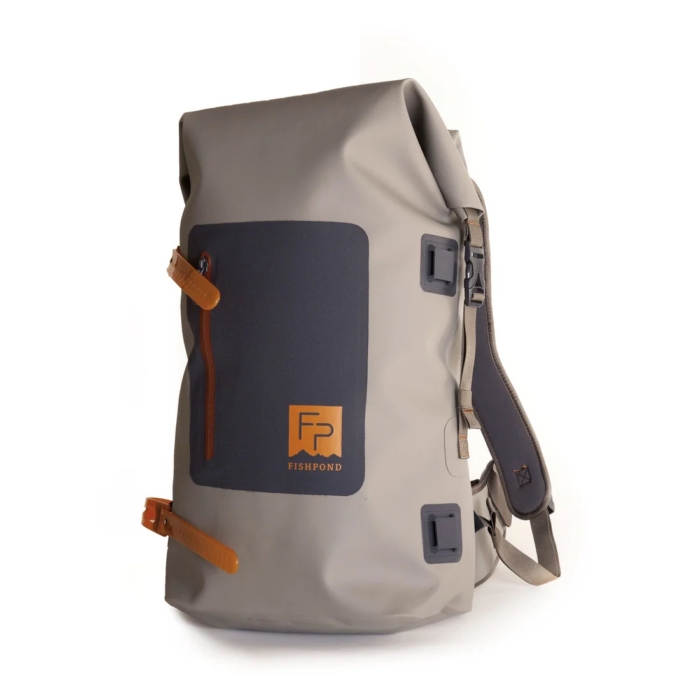
We packed the Fishpond Wind River Backpack all over the world on fishing adventures and it exceeded expectations. The bag is essentially a roll-top dry bag converted to a backpack. With that design, it’s capable of holding massive amounts of gear, and our tester even used it as his single bag on an overnight rafting trip.
That’s about all there is to say about this pack’s simple design. You get a big chunk of waterproof storage. For our tester, it’s been durable, has held up to fresh and saltwater, and been reliable for keeping its contents dry. There has been zero failure of any components, and the backpack straps and waist strap ensure a comfortable fit.
Don’t expect any sort of interior organization when purchasing this pack. It’s simply a big waterproof pouch. The bag sports an excessive number of long straps to give the backpack a wide range of adjustability. But those straps tend to get caught on everything, especially in overhead compartments on planes.
But if you’re looking for a waterproof fishing bag that carries comfortably and can hold more gear than any other option, this is it. Our tester has abused his for years, and it’s a staple in his arsenal.
Orvis Guide Fly Fishing Hip Pack
Specifications
Pros & Cons
Pros
- Excellent organization
- Tippet dock + net slot
- Comfortable, adjustable carry
- Compact but roomy
Cons
- Not fully waterproof
- Can get bulky when full
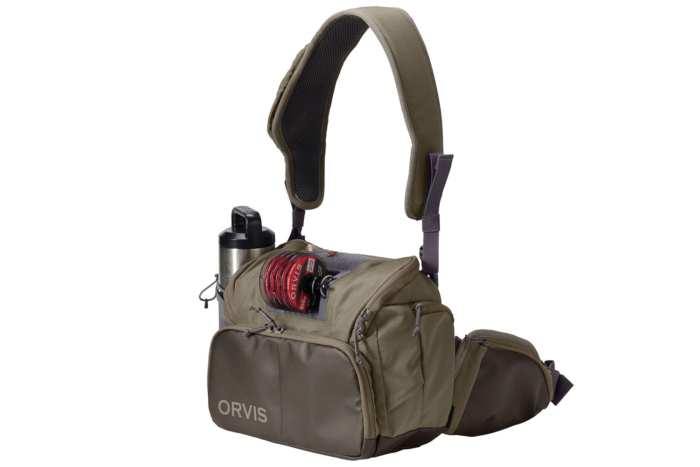
The Orvis Guide Fly Fishing Hip Pack ($149) is a beast. It holds everything you could possibly need, including your river beverage of choice. The tippet docking station on the top keeps fresh line within reach while also preventing the irritation of having your tippet spool swinging about.
It comes with an additional shoulder/neck strap for wearing it as a true hip pack, allowing you to customize the way you want to wear it. The waist pockets have a slot to keep a net secure.
There are more pockets and organization options on this bag than you’ll likely fill. The 9L capacity gives you ample storage while keeping your gear out of the way and yet still in reach.
If you prefer a lumbar or hip pack and are going to spend long days on the water, this pack is a solid choice.
Fishpond Sagebrush Pro Vest
Specifications
Pros & Cons
Pros
- Highly adjustable straps
- Distributes weight evenly
- Mesh fabric keeps you cool
- High quality fly mat included
- Rod holder for hands free knot tying
Cons
- Mesh can easily trap hooks
- No zipper for secure fit
- Limited fly box storage
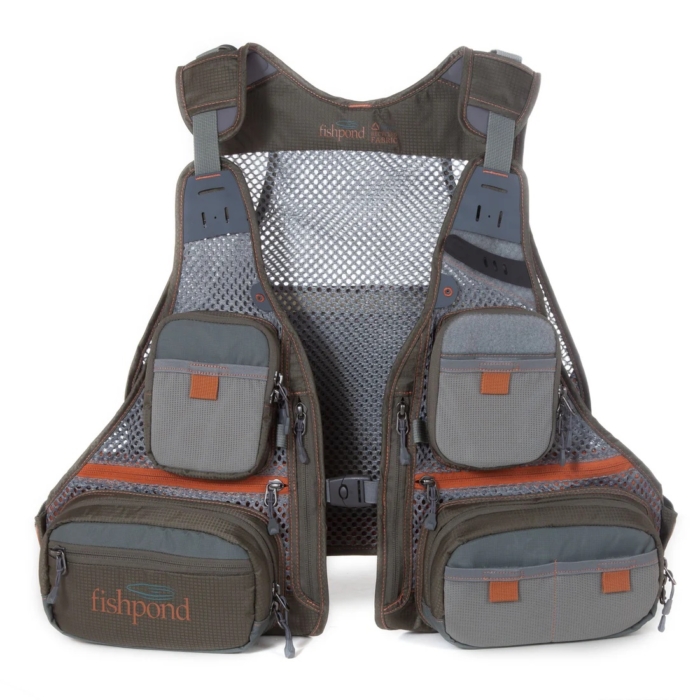
The Fishpond Sagebrush Pro ($159) isn’t your grandpa’s old fishing vest. A huge upgrade on the classic vest design, this vest brings a modern look and features to the OG fishing pack. Anglers needing the ultimate in organization will love everything this pack has to offer.
One of the biggest complaints about vests is how hot they get, and Fishpond solved this by making most of the pack out of breathable mesh. Be sure to keep hooks away from it, though, as the fine mesh traps small flies. You’ll never get them out of it.
The pockets aren’t just little compartments sewn onto a vest. Fishpond seriously upgraded them by giving you a tacky-style drying patch. These patches are located in the zip-up pockets on the chest and are great as a drying rack for used flies. If you’re a minimalist, you could also stick a pile of flies in them and leave your fly boxes at home.
This vest is also highly adjustable, with padded adjustable shoulder straps and an adjustable waist strap. It’ll fit any-sized angler and is much more comfortable than the vests built in the ’70s.
Evolution Outdoor Drift Series 3600 Tackle Backpack
Specifications
Pros & Cons
Pros
- Huge tackle storage
- Easy-access main compartment
- Built-in plier holster & line spool feed
- Rugged, water-resistant build
Cons
- Not fully waterproof
- Can get bulky when fully loaded
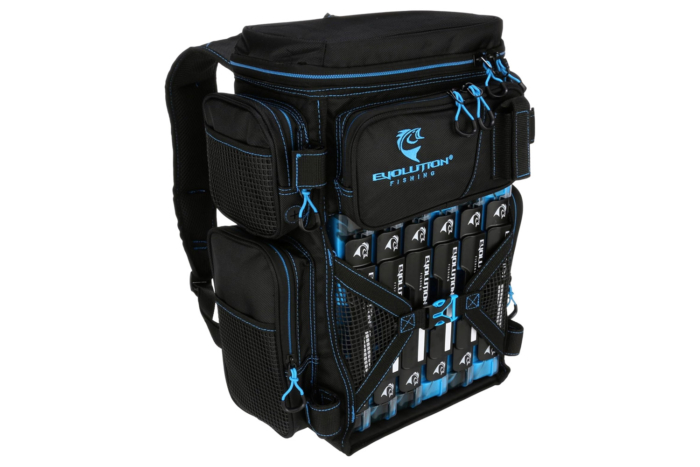
The Evolution Outdoor Drift Series 3600 Tackle Backpack ($130) is a storage machine. This combination tackle box/backpack takes a lot of the struggle of hauling traditional tackle and makes it far more backcountry capable.
With six easily accessible trays in the main compartment and room for an additional three smaller trays in the top compartment, you can haul a lot of hardware in this backpack.
The side pockets are rubberized and include a built-in line spool feed. Pliers are stored securely and easily accessed on the front, saving you from scrambling for them when you need them.
This backpack would make an awesome tackle box for the boat, a solid solution to kayak fishing storage woes, or just a great backpack if you want to hike in deep.
Umpqua Northfork Chest Pack
Specifications
Pros & Cons
Pros
- Price
- High-quality zippers
- Rides high to keep contents dry
- Wide range of adjustments
- Breathable mesh
- Can store a variety of fly boxes
Cons
- Water bottle holders are too small
- Doesn't integrate with a backpack
- Some pockets lack function
- New attachment points are not stowed like past models
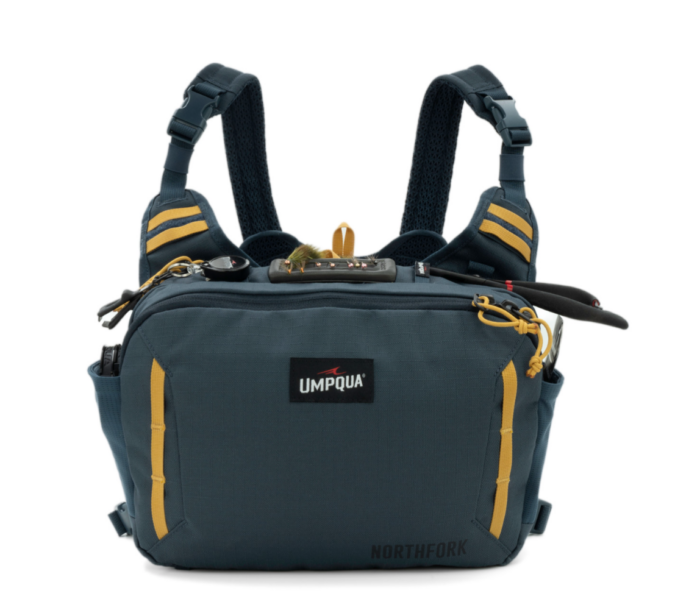
The Umpqua Northfork Chest Pack ($99) gives anglers true value in a fishing pack. If you want to try out a chest pack or are looking for your first pack and want to save some cash, Umpqua offers an option that will stand up to year-over-year abuse. We were shocked at how high-quality the pack is for such a low price.
One of our testers’ favorite things about this pack was its ability to hold large streamer boxes. Many chest packs don’t have a big enough compartment to hold big fly boxes and zip closed. He was able to put an Umpqua Payload box filled with bass streamers in it with room to spare. The Payload is a massive fly box that usually presents storage problems for the angler on foot. That’s not the case if you’re rocking this chest pack.
Due to its lower price, the pack has some minimal drawbacks. Notably, it doesn’t integrate with a backpack, and there isn’t a great place to store a water bottle.
Even with those minimal drawbacks, we love this pack. It will keep your equipment up high out of the water and can store loads of smaller fly boxes for trout anglers. There isn’t a better value out there.
Patagonia Guidewater Sling Pack
Specifications
Pros & Cons
Pros
- Waterproof
- Ambidextrous
- Two zipper pulls
- Interior organization pocket can be strapped externally on pack
- Rod tube holder
Cons
- Expensive
- Limited interior organization
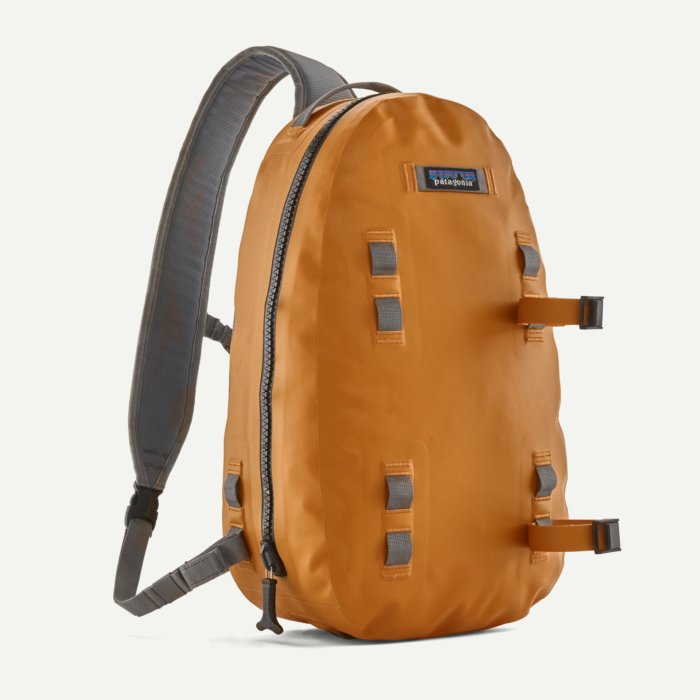
The Patagonia Guidewater Sling ($259) is the best slingback we’ve ever used on the water. There are plenty of waterproof sling packs, but this one stands apart because it is ambidextrous and can be worn on either shoulder. You’re not stuck with carrying the bag on your casting shoulder, and switching shoulders halfway through the day can help eliminate fatigue.
The bag is completely submersible and will guarantee that your gear stays dry throughout the day. Patagonia offers the pack in multiple sizes, so if you need to carry camera gear, rain gear, and your fly boxes, Patagonia has you covered.
Like most waterproof packs, the Guidewater sling is limited in its internal organization pockets. However, it does come with a removable tab that has pockets to hold small items like floatant, leader, and tippet. When removed, you can strap the tab to the exterior of the pack, eliminating the need to unzip the bag to access frequently used items.
If you’re a salty angler or a diehard West Coast steelhead spey fisherman, you’ll be able to keep your gear dry with the Guidewater sling.
FHF Gear Chest Rig
Specifications
Pros & Cons
Pros
- Versatile and customizable with modular kits for various activities
- Compact, minimalist design for high-chest wear
- Multiple internal pockets and MOLLE panels
- Magnetic catch for secure tool storage
Cons
- Standard version lacks full waterproofing
- May be too small for users requiring extensive storage capacity
- Magnets may interfere with medical devices like pacemakers
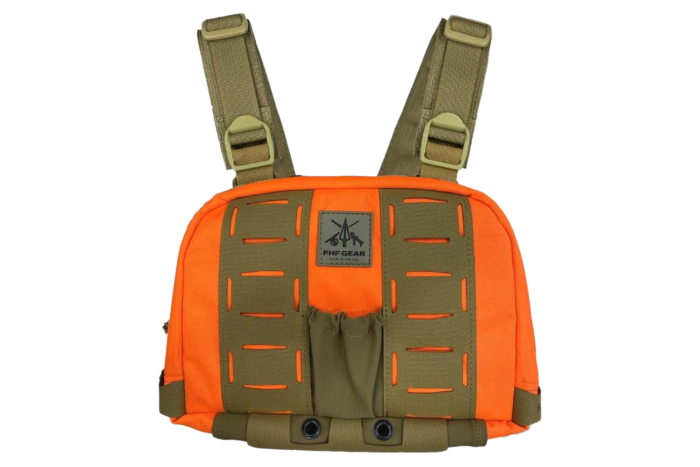
If you prefer to keep your gear pile light, the FHF Gear Chest Rig ($120) with the Fishing Kit ($30) is an epic solution. This chest pack is not exclusively for fishing. The barebones pack is a great binocular harness for hunting season. The cool innovation here is the option of buying premade kits.
The Fishing Kit gives you the ability to customize the chest rig specifically for fishing. When your fishing season wraps up (mine never does), you can purchase other kits to customize the chest rig for waterfowl hunting or turkey hunting.
You also have the option of adding accessories such as a bear spray holster if you find yourself fishing in grizzly bear country. It’s a great option for those who want one pack that does it all.
Umpqua Northfork Waist Pack
Specifications
Pros & Cons
Pros
- Price
- Lightweight
- Breathable mesh lumbar support
- Quality zippers
Cons
- Smaller than other waist packs
- Water bottle holders are small
- No pad on shoulder strap
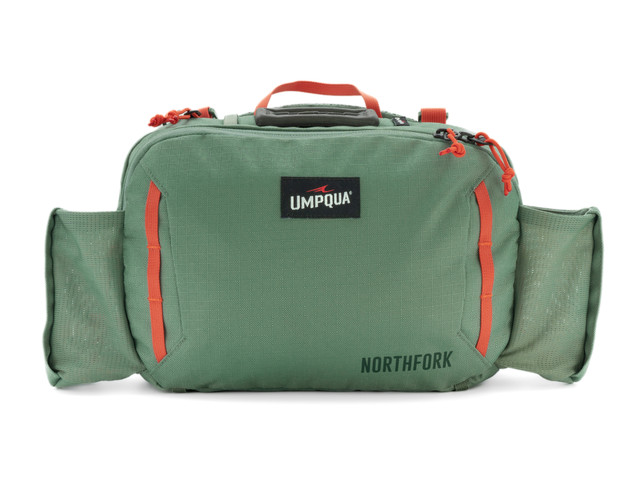
The Umpqua Northfork Waist Pack ($89) is a simple, lightweight lumbar pack. It doesn’t provide many fancy features and may leave some things to be desired, but it does maintain Umpqua’s reputation for quality. Unlike other less expensive packs, Umpqua still provides quality, durable zippers and materials. Instead, it cut costs by reducing features that add to the overall price tag.
We loved this pack for beginner anglers. It doesn’t have as much room as other waist packs on the market, but that’s generally not an issue for beginners, as they may only have one or two fly boxes to carry. It also gives beginners a much-needed low-cost option that will stand up to regular use. Most cheap fishing packs will have busted zippers within a few outings, but after a year of testing, our tester has experienced zero failures with his Northfork Waist Pack.
It’s also a solid option for advanced anglers who want to add a waist pack to their arsenal for hot summer days. It has a very breathable mesh waist strap. When kitted out for a day on the water, it’s easy to forget it’s even there.
Specifications
Pros & Cons
Pros
- Fully waterproof and submersible
- Self-healing zippers
- Comfortable carry
- Net sleeve + MOLLE waist belt
- Safe for electronics
Cons
- Pricey ($300)
- Limited quick-access storage
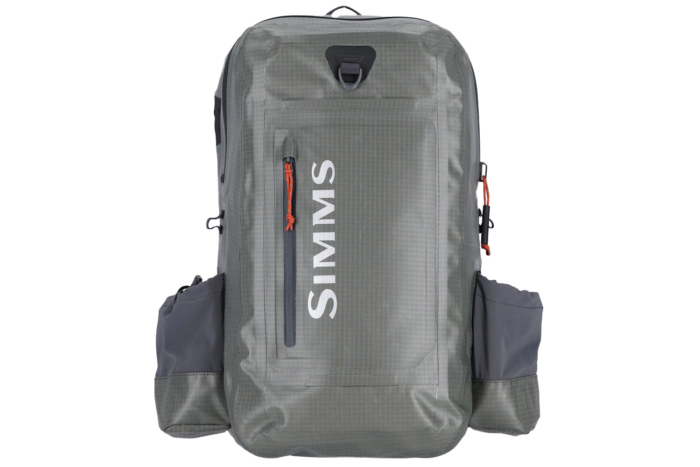
If you have gear that needs to stay dry, the Simms Dry Creek Z Backpack ($300) will get the job done. It is waterproof and fully submersible, with self-healing zippers. It keeps the outside out.
With a large, integrated net sleeve, you won’t have any worries about losing your net to the river. The compression-molded back and padded straps mean you’ll be comfortable wearing it all day.
It features a removable waist belt with MOLLE webbing for attaching all your fishing toys. It also has dual water bottle sleeves to keep you hydrated.
Where this backpack really shines is its water-tightness. As a crew of writers, we often need to carry our laptops out to the river with us. We also tend to pack around camera gear that costs more than our beater trucks. The Dry Creek Z gives us an insurance policy on our electronics.
Comparison Chart
| Fishing Pack | Capacity | Type of Pack | Water Resistance | Material |
|---|---|---|---|---|
| Fishpond Wind River Backpack | 38L | Backpack | 100% Waterproof | 900D TPU Coated NewStream Fabric |
| Orvis Guide Fly Fishing Hip Pack | 9L | Lumbar Pack | Water-Resistant | 600D Cordura Eco Polyester (100% recycled), 200D recycled polyester lining |
| Fishpond Sagebrush Pro Vest | Not Specified | Vest | None | 210D Nylon Recycled Cyclepond Fabric |
| Evolution Outdoor Drift Series 3600 Tackle Backpack | Up to 10 Tackle Trays | Tackle Backpack | Water-resistant | 1680D wear-resistant polyester fabric |
| Umpqua Northfork Chest Pack | 6 Fly boxes | Chest Pack | None | Not Specified |
| Patagonia Guidewater Sling Pack | 15L | Sling Pack | 100% Waterproof | Recycled Nylon, PU Coating, 200D Recycled Polyester |
| FHF Gear Chest Rig | 2.65L | Chest Pack | None | 500D Cordura exterior |
| Umpqua Northfork Waist Pack | 6 Fly Boxes | Lumbar Pack | None | Not Specified |
| Simms Dry Creek Z Backpack | 25L | Backpack | 100% Waterproof | 420D Nylon double ripstop with TPU Coating; Liner: 200D Polyester |

How We Tested Fishing Packs
We’ve spent decades trying to find the best fishing pack. Over the years, we’ve tried dozens of options, switching between lumbar packs, waist packs, and backpacks. It’s a piece of gear that we seem to always be shopping for in the endless search for the perfect solution. We’ve used these packs on trout streams in the Rocky Mountains, bass rivers in the South, and steelhead rivers on the West Coast.
Our Expert Testers
Our tester, Morgan Nowels, has been carrying fishing packs since his early teens. Like most anglers, he started with the budget packs but graduated to the highest-quality packs while working as a professional guide. He pursues all manner of fish, from trout, bass, and steelhead to saltwater species like bonefish and permit.
Those different pursuits demand different features from packs, and Morgan was able to dial in the perfect pack for whatever situation he was in. He learned what makes a pack work and what doesn’t, and he has 9 different packs in his current lineup to ensure he’s getting the performance he needs in his different fishing pursuits.
Morgan worked as a sales rep for a pack manufacturer, where he learned about every manufacturer’s pack and the different options available to anglers. That forced him to become a subject matter expert while presenting the product to buyers and fly shop owners.
Our Testing Grounds
We hoofed these packs all over the continent in our pursuits. Our tester, Morgan, packed them around the mountains of Utah and Wyoming on foot and by boat. He needed to carry enough gear not just for himself but also for his clients. He backpacked into remote rivers in the backcountry of Idaho, fishing crystal clear rivers for cutthroat trout, testing out the durability of these packs.

Some of these fishing packs were carted through airports, where they doubled as carry-on bags when we were limited on space for our destination fishing trips. We then used them on the saltwater flats of Mexico and off-shore trips chasing Marlin and Tuna in Costa Rica. These bags got thrown on sandy beaches while surf fishing in Florida, jammed into water-filled corners of rafts, and used to haul way more gear than they were intended for.
We waded deep into steelhead rivers, tested waterproof zippers, and packed streamer-filled fly boxes into packs while chasing bass and panfish in the Southern U.S. There wasn’t any type of fishing we didn’t do with these.
Our Testing Process
Our team has been regularly testing and using different packs for over a decade. For the latest round of testing, we used the products over a 10-month period in both freshwater and saltwater environments. We got our hands on some of the best packs from not just fishing manufacturers but also hunting manufacturers, whose packs can double as great options for fishing.
We obviously performed real-world testing on the water while also checking out the best fly fishing rods and best fishing waders, but we also performed tests at home that you may not think about.
For waterproof packs, we filled them with air and submerged them in the bathtub, checking to see if the materials were leaking or if the waterproof zippers would fail.
We stuffed these packs to the max, checking to see if they could actually fit as much equipment as was claimed. To be sure different angling needs were met, we filled them with large streamer boxes, small dry fly boxes, and even conventional fishing tackle. The best packs aren’t one-trick ponies; they should be able to be utilized for many different fishing applications.
Buyers Guide: How to Choose a Fishing Pack

Some of our fishing buddies burn through fishing packs faster than a college freshman does Tinder matches. The reason? It can be nearly impossible to find the best pack for every single situation. They often get a pack and realize it’s not a good fit for them and the type of angling they do. Fortunately, we’ve had experience doing all sorts of fishing and know just what to look for in each situation.
Pack Style
Packs come in multiple different styles, and the hardest decision to make is which style you want to go with. There are sling packs, lumbar packs, chest packs, vests, and backpacks. Each offers different pros and cons that need to be considered before making a purchase. There is no perfect solution.
Lumbar/Waist Packs

Lumbar packs are likely the most popular style in modern times. Who would have thought that a fanny pack would be considered cool? Most lumbar packs are built on a waist belt and then have a sling that will go over one of your shoulders, giving you extra security. People love these packs because they tuck out of the way on your lower back when not in use. Since they have a low profile, they’re cooler to wear during hot summer months.
There are some reasons to avoid lumbar packs. First, if you find yourself wading in deep water or are a shorter angler, waist packs can end up getting submerged, soaking everything in your bag. Water ends up in your fly boxes, and your flies can rust out quickly.
One of our guide buddies receives more than his fair share of ribbing for being short, and he moved away from a lumbar pack because every single time he crossed a river, he had to remove his pack and hold it over his head to keep his gear dry. Then the jokes would begin.
Lumbar packs can also be limited in the amount of gear they can store. You won’t have enough room to store rain jackets and lunches, and some minimalist options struggle to hold enough fly boxes for guys who have flies for every single hatch under the sun. That’s not true across the board, though, as our favorite lumbar pack, the Orvis Guide Hip Pack, had loads of room to store equipment.
Sling Packs
Sling packs eliminate virtually every problem you’ll experience with waist packs. They usually have plenty of space to store a jacket and sit up high on your back. If you submerge your sling pack, you probably have bigger immediate problems than wet fly boxes.
They sling across one shoulder and can be spun around to the front while staying on your body, giving you quick access to all of your equipment. Sling packs also move all of the straps and points that catch the line behind you while you fish.
These packs are very popular with saltwater anglers, as they keep highly corrosive salt away from their gear, and with spey fishermen, as they give them plenty of mobility and room to execute complicated spey casts with minimal catching points.
Slings are not without their own problems. They’re generally not ambidextrous, and you’re limited to which shoulder you can put the shoulder strap on, although our favorite, the Patagonia Guidewater Sling is ambidexterous. Some people get annoyed with them if that strap is on their dominant casting shoulder. Anglers will also experience drastic fatigue on the shoulder where the pack sits, as all of the weight is distributed on one side of the body.
Chest Packs

If you’re looking for some of the benefits of a sling pack with better weight distribution, a chest pack may be the fit for you. Chest packs, like the Umpqua Northfork Chest Pack sit high on your chest with backpack-like straps running over your shoulders. This keeps your equipment up high on your body, with an even distribution of weight.
Like waist packs, chest packs may limit the amount of equipment anglers can carry. Many people wear a backpack with their chest packs to alleviate this on long days when they need additional equipment. Multiple straps on your shoulders can be a bit uncomfortable, but if you need a functional fishing pack as well as storage for non-fishing-related items, this is the best solution.
Some anglers struggle to get used to fishing with a bulky pack sitting in front of their body, and because of that, shy away from a chest rig. They can also be hot during summer months, trapping heat near the hottest part of your body.
Vests

The ever-iconic OG fishing pack. Your paw-paw was lighting up fish in one of these bad boys before your parents were even a twinkle in his eye. However, the fact that it’s your grandpa’s fishing pack of choice is exactly why it’s fallen out of favor in recent years.
Fun story. While in Utah, our tester, Morgan, and his guide buddies used the term “vest” as a derogatory term to describe a certain type of fly angler. It was the white-haired guy with a bamboo rod who would stumble on you and ask, “You seen any Drakes hatching?” There were no Drakes hatching. It was 3 weeks before the hatch would begin. But a “vest” would never disgrace a trout with a nymph.
So, you can imagine the crap Morgan got from his buddies when he showed up to the guide shack with a Fishpond Sagebrush Pro Vest. It was open season. He knew that going into it, but there were real reasons he unironically started wearing a vest.
Fishing vests have come a long way. They’re no longer a tan chunk of fabric with too many bulky pockets sewn on. Modern versions, like the Fishpond Sagebrush Pro, have a sleek, modern design and offer amazing functionality.
A vest will keep all of your gear up high, distribute weight evenly, and offer the best organization system. The only drawbacks are that they can be hot and clunky and could draw criticism from your younger fishing buddies.
Backpacks
A fishing backpack is best for those days when you need to haul lots of gear. It’s great for large tackle boxes and fly boxes, raingear, lunches, camera gear, and maybe even a water purifier for backcountry adventures.
If you’re a shorebound conventional angler, this is the best option for you. Backpacks like the Evolution Outdoors Drift Series 3600 Tackle Backpack give you a great way to keep tackle boxes organized and will give you fishing-specific features like plier holders.
Some of our favorite fishing backpacks are waterproof, which will ensure your gear stays dry in the event that it falls overboard or you find yourself in a downpour.
Waterproof or Non-Waterproof Fishing Packs
As a general rule, we prefer waterproof equipment over non-waterproof equipment in all categories. That isn’t the case with fishing packs.
There is a significant give and take when it comes to waterproof fishing packs. Obviously, you get the benefits of having your gear protected from water, which is a big deal when fishing. It is a sport that takes place in, on, and around water. However, with waterproof bags, you will be giving up organization.
Non-waterproof bags feature multiple zippers and interior organization pockets. Waterproof fishing packs, like the Fishpond Wind River Backpack usually have just one giant pocket for all of your equipment. They do not offer interior organization or some of the other handy features you’ll find in their non-waterproof counterparts.
In our opinion, waterproof bags are best for saltwater anglers, camera equipment users, and those who live in rainy places like the Pacific Northwest. If you aren’t in one of those situations, you’ll find the lack of organization frustrating.
Price and Value

Anglers often choose to purchase a cheap pack when starting out on their fishing journey. It’s easy to treat a pack as an afterthought after purchasing all of the other gear needed to get out on the water. However, going with a budget option may not be best for everyone.
Budget Fishing Packs
You can find budget fishing packs for under $100. However, a budget option requires you to give up two characteristics.
Budget fishing packs are almost always smaller than most packs. You’ll get a pack that can only hold a few fly boxes or tackle boxes. This works well for newcomers to the sport as they don’t have as much gear to tote around in the first place.
Fishing packs in this price range are also going to have lower-quality zippers, straps, and buckles. They generally can’t handle the rigors of consistent use and may fall apart in short order. However, our favorite budget fishing pack, the Umpqua Northfork Waist Pack, alleviates this problem by giving you high-quality components at a great price.
Mid-Tier Fishing Packs
Most fishing packs on the market fall into the price range of $110-200. Packs in this price range are going to give you ample storage, like the Orvis Guide Fly Fishing Hip Pack. You’ll also find all sorts of fishing-specific features like places to hold hemostats and other tools.
Products in this price range will have high-quality components. You won’t get frustrated with zippers that fail, and you’ll also find ample organization pockets. A solid pack will give you years of consistent use without breaking down, and by spending a touch more money, you can get that.
Unfortunately, it is very difficult to find a waterproof pack for under $200. If you need a waterproof bag, you probably won’t find one in this price range. If you do, we’d question its alleged waterproofness.
Premium Fishing Packs
Jumping into a premium fishing pack ($200+) will get you into the waterproof market. Waterproof bags are more expensive because all of the components inherently cost more. Zippers have to be the best there is, and fabrics have to be treated to ensure no water gets in. Seams must be sealed, and more labor is required to get the perfect product.
We recommend buying a waterproof fishing pack if you’re fishing in saltwater. Saltwater is highly corrosive and quickly destroys equipment. A waterproof pack will keep your things safely protected from the harsh saltwater elements.
Anglers in rainy areas like the Pacific Northwest may also benefit from a waterproof pack. That’s especially true if you’re like us and bring camera equipment with you on your pursuits of fish. If either of those descriptions fits you, the Simms Dry Creek Z Backpack will be well worth the investment.
However, if you’re looking for maximum organization and don’t foresee consistently soaking your gear, you don’t need to invest in waterproof fishing packs.
Frequently Asked Questions
Anglers can choose between lumbar packs, chest packs, sling packs, and backpacks. Conventional anglers will generally benefit most from a backpack since it provides ample room to store tackle boxes. Fly anglers prefer the other styles as they give them the needed organization for smaller tackle items that fly fishermen use. The perfect pack comes down to personal preference, with the different styles offering different pros and cons
You can use any pack or bag you have lying around for a day on the water. However, fishing-specific packs have fishing-specific features, including convenient places to store tools like hemostats and nippers. They are designed with tackle storage in mind and will keep you more organized than standard packs and bags.
Most anglers do not need a waterproof fishing pack. You’ll usually be doing your best to keep your bag out of the water in the first place, and waterproof bags are limited in organization features. However, if you’re fishing in highly corrosive saltwater or carry electronics like camera gear on the water, a waterproof pack may be worth the investment.