There is nothing like getting drenched in an unexpected storm. Fortunately, the best women’s rain jackets keep us dry, comfortable, and outside! Rebecca Ross, our lead tester, evaluated every jacket in our line-up, testing four new 2026 shells across 75 miles of hiking in Washington state.
For most, a do-it-all shell like the Outdoor Research Aspire 3L fits the bill, keeping you dry whether commuting or backpacking. Others only need to dash to the car, where budget options like the REI Co-op Rainier excel. We’ve pulled together a list for everyone.
Our testing stretches back to 2024, but our expertise runs deeper. Check out our guide to see what makes a rain jacket the one.
Editor’s Note: We updated our Rain Jackets for Women guide on May 19, 2026 to add the new Outdoor Research Helium UL Jacket, as well as adding more information on our testing processes and history.
The Best Rain Jackets for Women of 2026


Outdoor Research Aspire 3L
-

-
(Photo/Rebecca Ross)
-
(Photo/Rebecca Ross)
-
(Photo/Rebecca Ross)
-
(Photo/Rebecca Ross)

Specifications
Pros & Cons
Pros
- Hem-to-bicep side TorsoFlo zippers
- The most eco-friendly OR apparel piece, with no PFCs
- Very lightweight and packable
- Ample coverage
Cons
- Not very breathable under hard work
- Pricier than some like shells
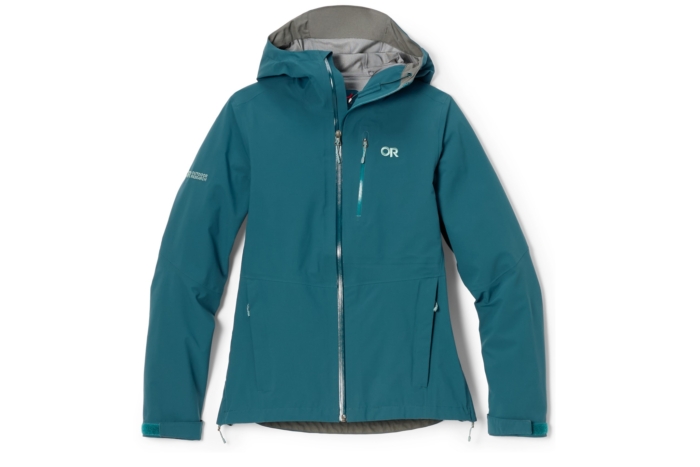
The Quick & Dirty: A versatile, PFC-free standout with TorsoFlo zippers that vent from hem to bicep. It offers a solid 20K waterproof rating and a relaxed fit for easy layering, though it requires mechanical venting during high exertion.
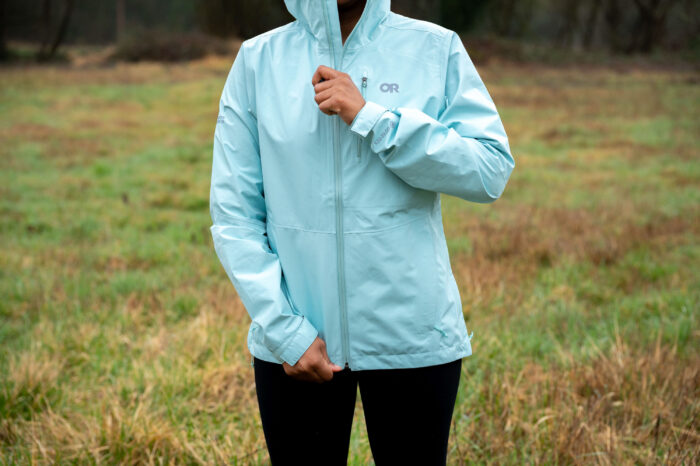
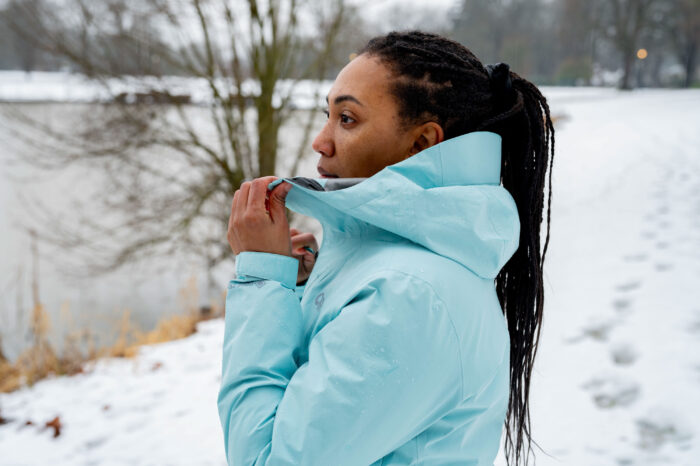
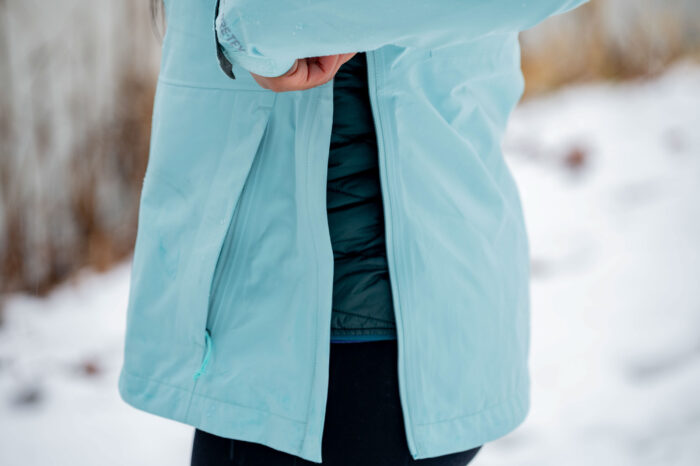
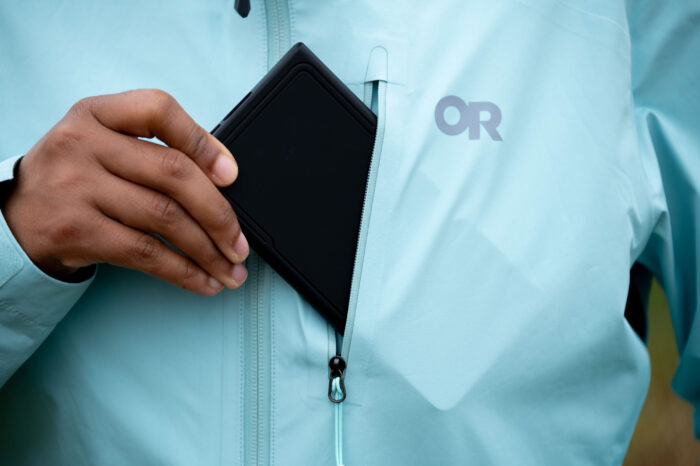
The Outdoor Research Aspire 3L Jacket ($260) secures its position with its innovative design — one that literally has a trick or two up its sleeves. By combining a time-tested membrane, smart feature set, and a cure-all to the breathability question, we’re confident that the Aspire is among the best out there.
Crafted from a new in-house AscentShell Dry 3L, this shell boasts a standard-issue waterproof rating of 20,000 mm, ensuring reliable protection against even the most relentless downpours. Enhanced by its eco-conscious DWR treatment, fully taped seams, a fully adjustable hood, YKK Aquaguard zippers, and secure hook and loop cuff closures, the Aspire 3L provides comprehensive protection from precipitation from all angles, ensuring you stay dry and comfortable throughout your adventures.
In terms of breathability, the Aspire has a rating of 10,000 g/m², which is a bit less than some others on our list. However, its innovative TorsoFlo feature — a two-way zipper extending from hip to bicep — ensures plenty of ventilation when it’s needed the most. When fully deployed, these zips provide a crazy amount of mechanical breathability, bypassing that membrane completely.
What we also liked about this jacket is its ability to balance between layering space and not feeling too overwhelming. Furthermore, the Aspire stands out for its environmental friendliness, featuring a fairly robust 50-denier fabric made from 100% recycled polyester. It’s also treated with a C0 DWR, which is free from forever chemicals, marking it as OR’s most eco-friendly jacket in its current lineup.
While the Aspire 3L may initially come with a premium price tag, its lightweight construction (just 11.7 ounces) and abundance of quality features make it an undeniable value proposition for adventurers whose priority is staying dry. If you’re looking for an all-around rain jacket that just plain works, the Aspire should be on your shortlist.
REI Co-op Rainier Rain Jacket
-
(Photo/REI)
-
-
-
-
-
-
Specifications
Pros & Cons
Pros
- Budget price of $100
- Admirable waterproofing
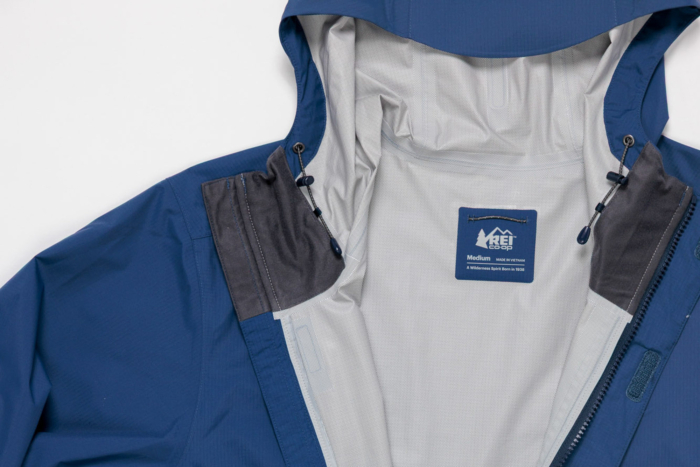
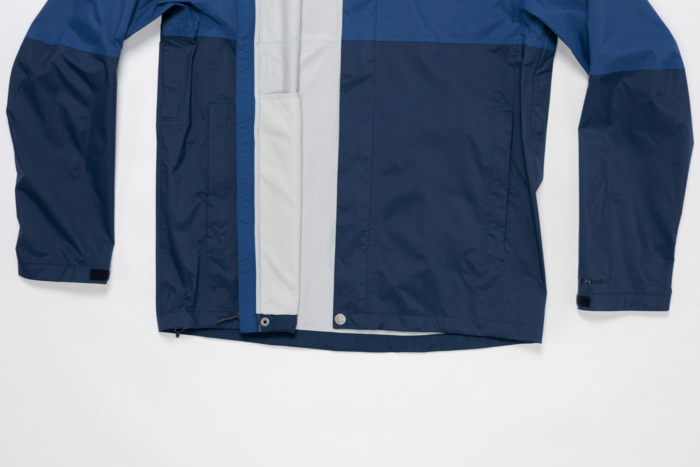
- Smartly designed torso pockets create drop-in pockets on the interior
- Exterior fabric is soft to the touch with slight stretch
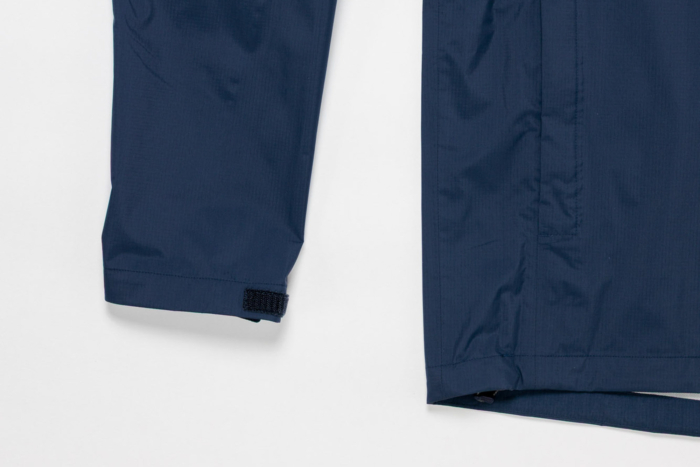
- Storm flap is secured with Velcro tabs for extra security
Cons
- Slick 2.5-layer interior can become clammy with too much exertion
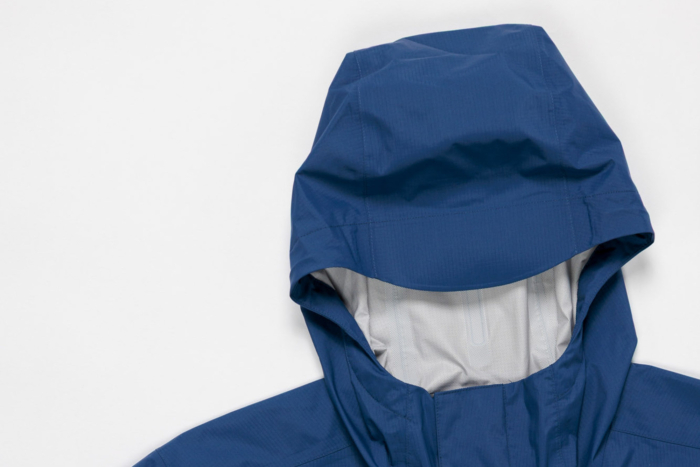
- Hood isn't the most adjustable, with only periphery shock cords
The Quick & Dirty: A budget-friendly 2.5-layer shell built with recycled, PFC-free materials and essential pit zips. It provides reliable waterproofing at a low price point, though the internal membrane feels less breathable than average.
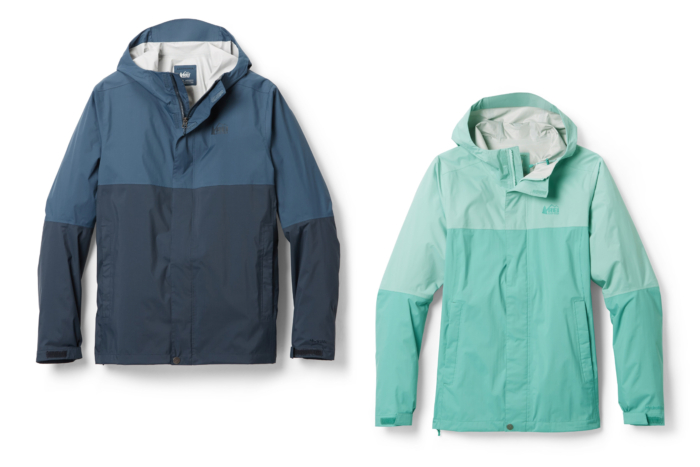
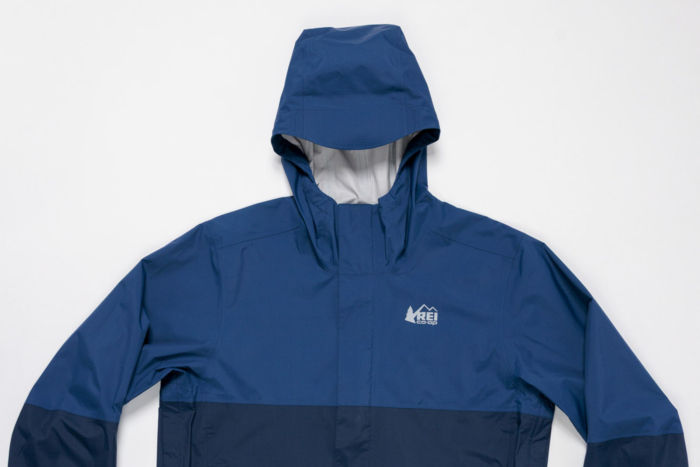
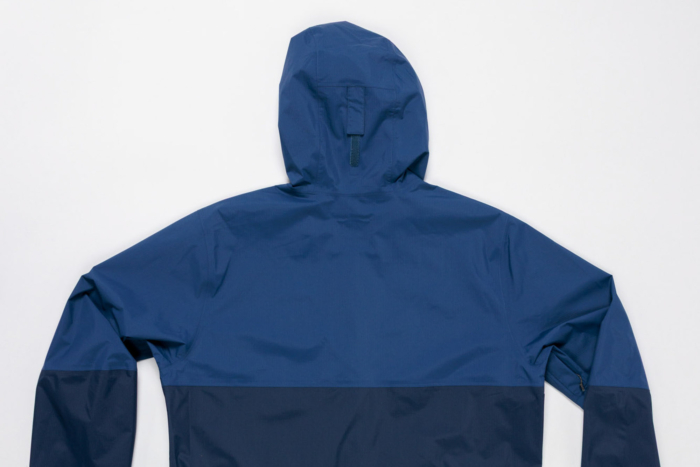
The REI Co-op Rainier ($100) is the rain jacket we most often recommend to friends who want to get outside without dropping half a month’s rent on a single layer. While it doesn’t boast the fancy name-brand membranes of its $400 cousins, this shell is a workhorse that proves you don’t need to spend a fortune to stay dry during a soggy spring.
The Rainier uses REI’s proprietary HydroWall 2.5-layer membrane, which the GearJunkie team has put through the wringer in both the men’s and women’s versions. While 2.5-layer jackets can sometimes feel like wearing a plastic bag, the Rainier surprised us with its relative livability. It isn’t the most breathable shell available, but for moderate hiking and daily commutes, it holds its own against jackets twice the price.
What really wins us over, though, are the features REI managed to pack into a hundred-dollar bill. You get legitimate pit zips for mechanical venting, which are an absolute must-have once your heart rate climbs. A surprise favorite was the pocket design: The mesh-lined hand pockets are sewn to the interior in a way that creates two deep internal drop-in pockets. It’s a clever detail that gives you a safe spot to stash dry gloves and extra ventilation capability.
From a sustainability standpoint, the Rainier is top notch. It’s crafted from 100% recycled nylon, is BlueSign approved, and features a PFC-free DWR finish. In our testing, the face fabric shed water effectively for several hours before showing signs of wetting out in high-friction areas like the shoulders. The fit is what we’d call generously regular: boxy enough to layer a thick fleece underneath without feeling like a stuffed sausage, which adds to its versatility as a three-season shell.
Is it a bombproof alpine fortress? No. If you’re planning a week-long trek in a constant monsoon, you’ll likely want the more robust 3-layer protection of the brand’s XeroCloud 3L Jacket. But for the weekend warrior, the traveler, or the budget-conscious hiker, the Rainier remains the choice for rain jacket value.
Patagonia Granite Crest Jacket
-
-
(Photo/Daniel Deemer)
-
(Photo/Rebecca Ross)
-
(Photo/Daniel Deemer)

Specifications
Pros & Cons
Pros
- Stuffs into its own pocket
- Helmet compatible hood
- Made from eco-conscious recycled material
- Incredible all-day comfort
- Good breathability
Cons
- Limited bright color options
- Sizing runs small
- Chest pocket does not accommodate larger phones
The Quick & Dirty: A technical, 3-layer workhorse made from recycled fishing nets. Hosts harness-compatible pockets and excellent wind-blocking; It’s our top pick for alpine scrambles and rugged backcountry tours.
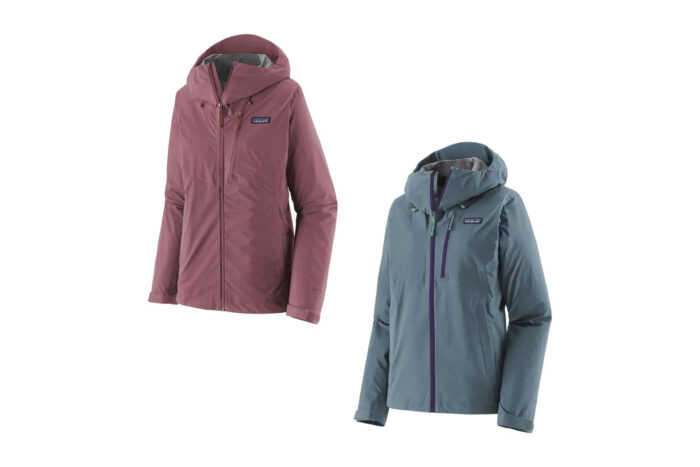
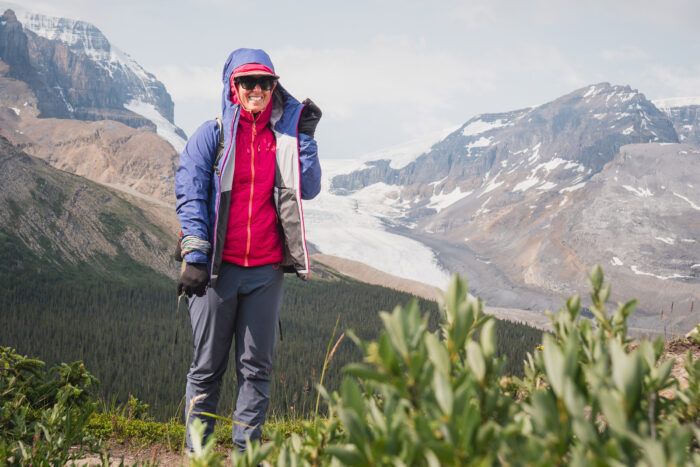
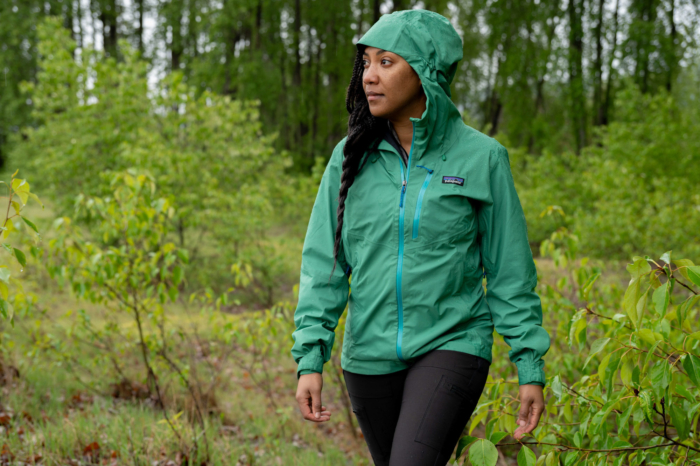
The Patagonia Granite Crest ($289) is our bomber multitool choice in rain jackets, proving we don’t need sport-specific shells for every adventure. After testing it while trail running, cycling, and snowboarding, we’re smitten by its ability to transition between activities. As our tester noted, “The satisfaction of owning one single jacket to use on every outdoor pursuit is liberating.”
What truly sets this jacket apart is its radical commitment to the planet. While some lingering high-end shells rely on forever chemicals, the Granite Crest features a totally PFC-free DWR finish and a 3-layer H2No membrane. Seeing Patagonia’s proprietary membrane bead water effectively while actively reducing toxic runoff is a massive win in our books.
The shell is crafted from NetPlus 100% post-consumer recycled nylon, derived from discarded fishing nets. This pivot to a material that reduces ocean plastic pollution is worthy of praise, especially as the 30-denier face fabric remains windproof and durable through our heavy use.
In the field, the technical details shine. The hood fits comfortably over snowboarding and bike helmets while maintaining full peripheral vision. When our heart rates climb, the massive, dual-direction pit zips, reaching from the waist to the elbow, offer the high-volume mechanical venting we require for steep uphill grinds.
While performance is elite, the sizing runs a bit small. We’d recommend sizing up for layering, though the adjustable Velcro cuffs help manage any extra sleeve length. If you’re an outdoor minimalist who wants one sustainable, PFC-free garment to do it all, the Granite Crest is our definitive choice.
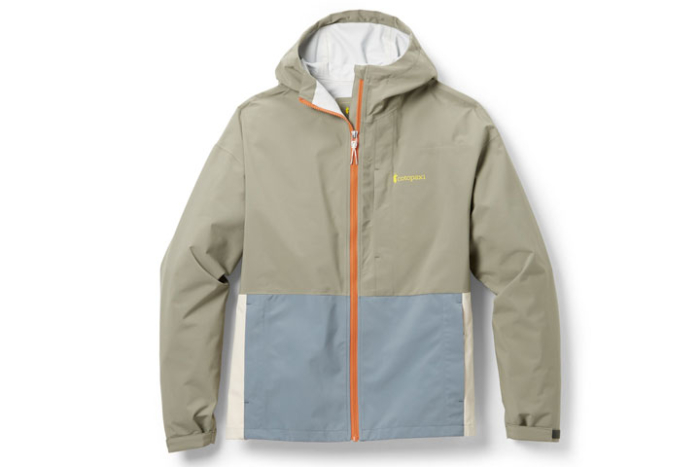
Cotopaxi Cielo Rain Jacket
Specifications
Pros & Cons
Pros
- Budget friendly price
- Stylish retro design with fun color blocking
- Roomy cut for layering
- C0 DWR finish and recycled polyester face fabric
- Broad size range from XXS to 4X
Cons
- No pit zips
- On the heavier side
- Hood is only single adjust
The Quick & Dirty: A stylish, budget-friendly 2.5-layer shell with a boxy fit and fun retro aesthetics. It’s perfect for errands and light trails but lacks the pit zips and high breathability needed for serious mountain use.
Cotopaxi dares to be different with its retro block color palette, proving that rainwear doesn’t have to be mundane or costly. Discover the perfect blend of style, affordability, and comfort with Cotopaxi’s Cielo Rain Jacket ($145) — a city-ready shell for light showers.
This is undoubtedly a comfortable shell with a boxy fit, offering ample room to move around without feeling constricted. On this particular jacket, we didn’t mind this feature as it didn’t result in a baggy appearance and facilitated easy layering underneath, which was particularly beneficial during chilly and drizzly days around the neighborhood or when running errands.
Built with a proprietary 2.5-layer membrane, the Cielo specs out at a waterproof rating of 10,000 g/m² and breathability of 10,000 mm/24-hour — which isn’t the most weather-resistant jacket out there. However, similar to jackets featuring a C0 DWR finish, taped seams, and a 27.5-inch hip-length back, it offers adequate protection for casual use in light wind and rain. Also, those who seek out pit zips may be disappointed, especially given its slightly hefty weight at 16 ounces and with no extra breathability.
However, after outdoor casual hiking tests, the Cielo shell actually offers a good amount of room that prevents a lot of heat buildup.
Compared to many other jackets, the Cielo Jacket won’t break the bank and won’t let you blend in, either. We tend to reach for this shell more often than the equally budget Decathlon Quechua MH500 due to its more accommodating fit and better looks (in our opinion). The MH500 does have it licked in pure performance, however, so weigh your options wisely.
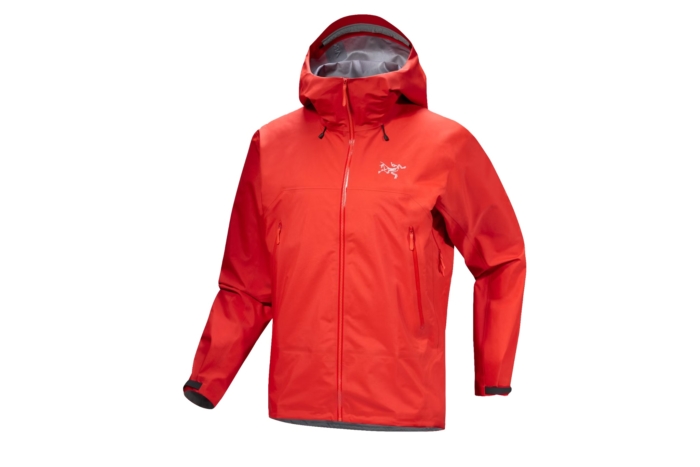
Arc’teryx Beta SL Jacket
-
-
(Photo/Scott Wilson)
-
(Photo/Erika Courtney)
-
(Photo/Erika Courtney)
-
(Photo/Erika Courtney)
Specifications
Pros & Cons
Pros
- Excellent 3-layer GORE-TEX protection in a lightweight and packable jacket
- High-quality and water-resistant zippers
- Lighter and more packable material compared to Beta jacket
- Integrated RECCO reflector
Cons
- Fit might not accommodate many layers, so consider upsizing for bulky insulation
- Waterproofing will need more frequent refreshing compared to previous GORE-TEX versions
- Price
The Quick & Dirty: A premium, lightweight shell utilizing the latest GORE-TEX ePE membrane. It offers the best tailoring and hood design in the lineup, justifying its high price for those needing enhanced long-term protection.
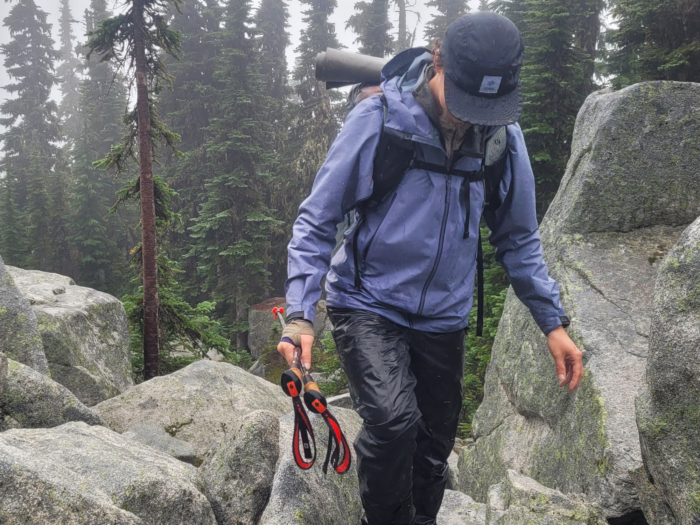
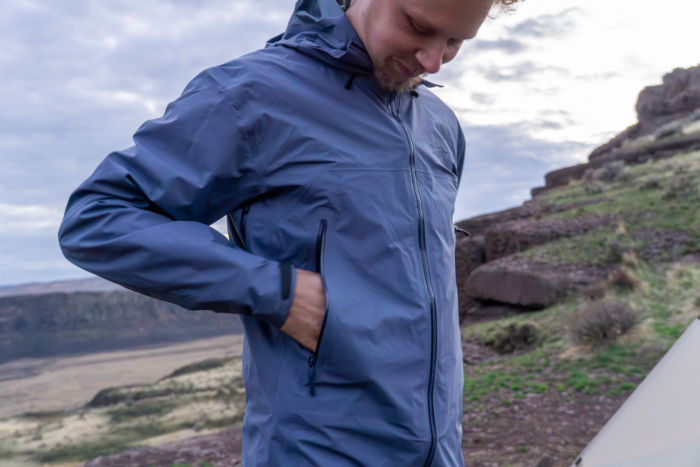
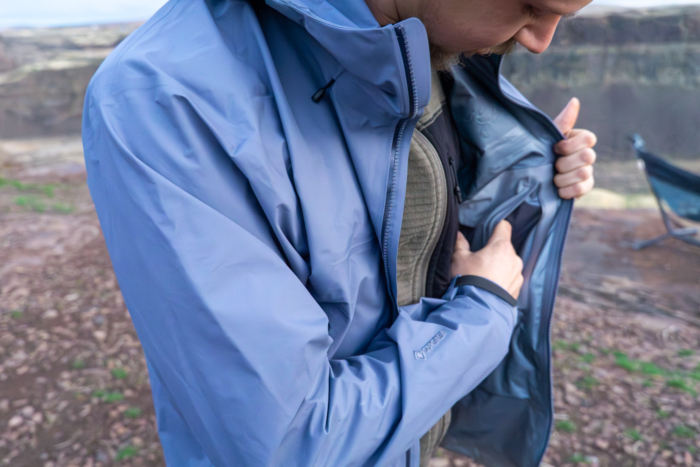
The Arc’teryx Beta SL Jacket ($500) has existed in one form or another for many years now, always taking the place of the brand’s ‘Super-Light’ rainwear offering. Now trimmed out in a three-layer GORE-TEX ePE membrane — made without PFAS chemicals inside and out — this shell strikes a balance between ultimate weather protection and sustainable construction.
While the ePE membrane is slightly different from GORE-TEX’s legacy waterproofing, it’s essentially the same design and achieves the same impressive water resistance statistics (at 28,000 mm/24 hours). The most noticeable tradeoff comes with the cleaning and washing frequency, which we have learned needs to be a bit more frequent than previous jackets. This is a small swap in our books, and after a good wash and dry, the Beta SL is just about the most waterproof shell in this lineup.
The fit and mobility baked into the Beta SL is also near-unmatched, and while the cut is slightly trim, it’s an excellent all-around size for nearly anything we put it up against. The only exception we’d make is when you need to layer thick insulation beneath the shell. In that case, consider sizing up or pivoting to an even more robust hardshell jacket, like the Beta AR, which is sized with layering in mind.
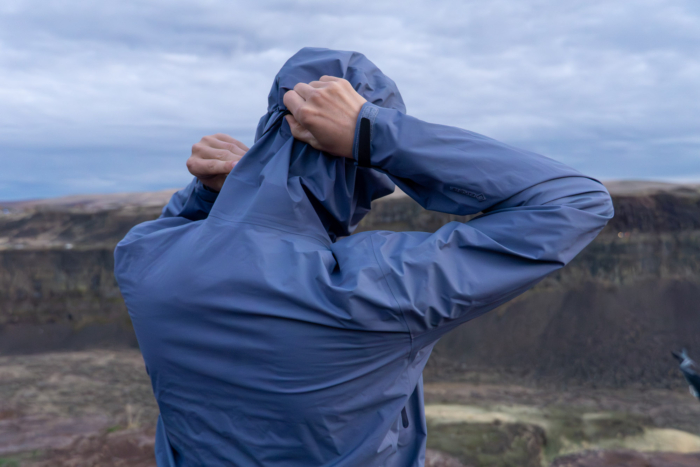
The hood of the Beta SL is equally well-proportioned and sized to be both helmet-compatible and not so large that it can’t be wrangled by the three-cord adjustment system. The SL version of the Beta Jacket differentiates itself from the Beta Jacket with the addition of pit zips, as well as a lighter and more packable shell fabric. You’ll save $100 by going with the Beta, but in our opinion, if you’re spending this type of money, go for the shell with pit zips.
With that in mind, $500 is a healthy amount to fork over for a rain jacket. In our testing, however, the Beta SL proved itself worthy of the spend, and has everything we’re looking for in a jacket that’ll last a decade (with good upkeep). Consider this your investment rain jacket — buy it once, and enjoy it for many years of rainy weekends outdoors.
Patagonia Women’s Storm Racer Jacket
-
-
(Photo/Mike Soltys)
-
(Photo/Courtney Holden)
-
(Photo/Courtney Holder)
-
(Photo/Mike Soltys)
Specifications
Pros & Cons
Pros
- Great just-in-case layer for rain and wind
- Lightweight
- Breathable
- Stuffs down small
- Sustainable design
Cons
- Won’t stand up to intense rain
- Small chest pocket
- Loud color options
The Quick & Dirty: A minimalist shell built specifically for trail runners. It is exceptionally packable and breathable but is intended for just-in-case wind and rain rather than multi-day monsoons.
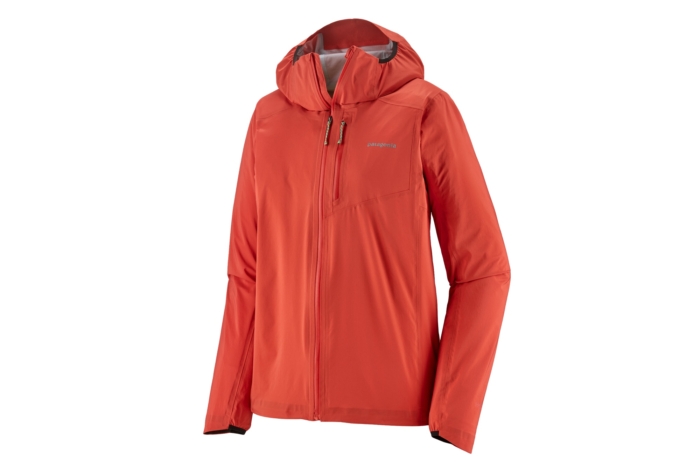
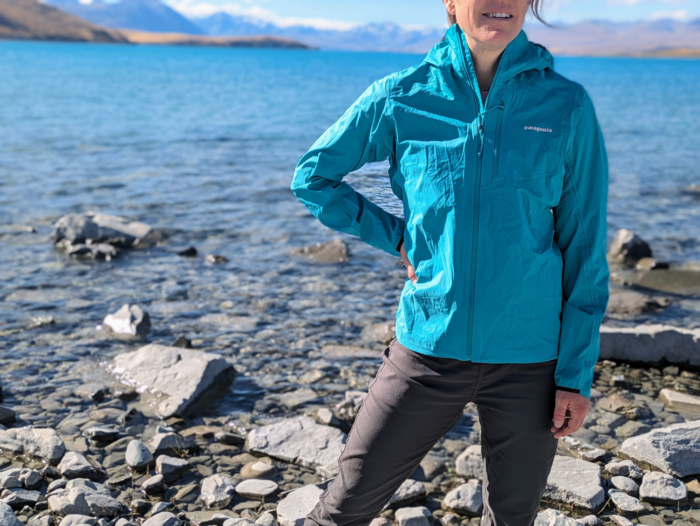
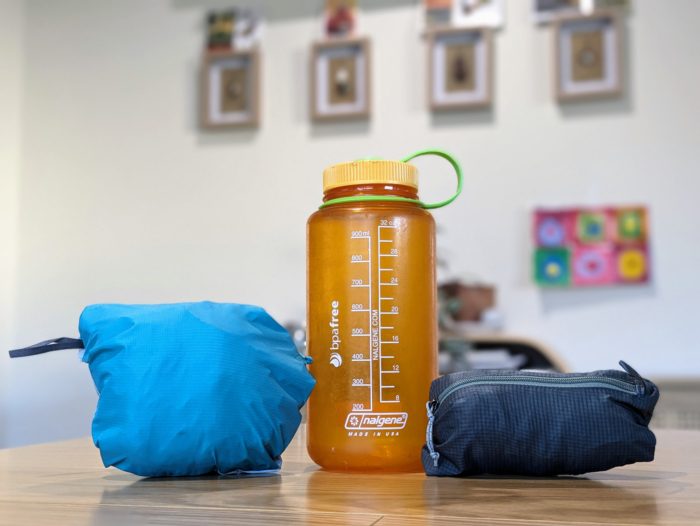
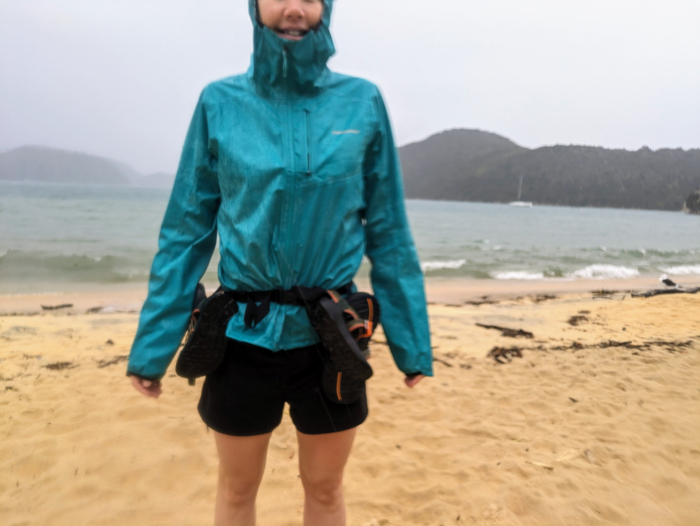
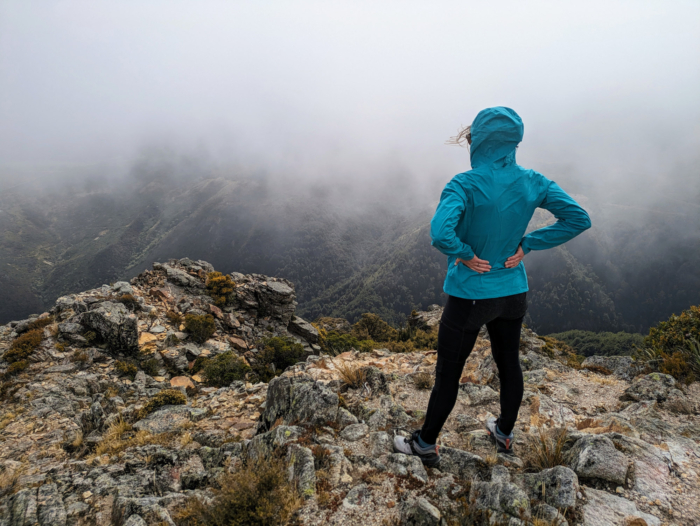
The Patagonia Storm Racer ($315) was a last-minute addition to our baggage when headed to New Zealand recently, and at 6.3 ounces and stuffing down into the palm of our hand, it was well worth the minimal space it took up. This ultralight shell is meant to act as a backup rain shell with enough protection to get you through to the other side.
While the Patagonia Granite Crest is more of a do-it-all layer, the Storm Racer was made to run. It uses the same 3-layer membrane but strips down the fabric to cut weight and hit an impressive ~6 ounces out the door. This thinner build also means that breathability is a bit improved, and while the protection isn’t absolute, this shell accomplishes what every good running rain jacket should: keeping you warm, even if a bit damp.
The most recent iteration of the Storm Racer does away with the funky front dual-zipper design that used to grace the torso, and goes with a standard single zip that makes it more usable for more activities, such as climbing. The integrated stretch in the Black Diamond Fineline makes it a better on-route piece, but our ranks are about split between that shell and the Storm Racer for long multi-pitches when the forecast isn’t as clear-cut.
While we know many ultramarathoners who lean on the Patagonia Houdini as their outer protection layer, we think there’s good reason to take a bit more of a jacket and bump up to the Storm Racer. A real-deal waterproof layer will hold off the worst of the rain you might run through, and while both will have a breathability limit you’re likely to surpass, the Storm Racer will hold warmth better when you need it.
The North Face Women’s Papsura Jacket
-
-
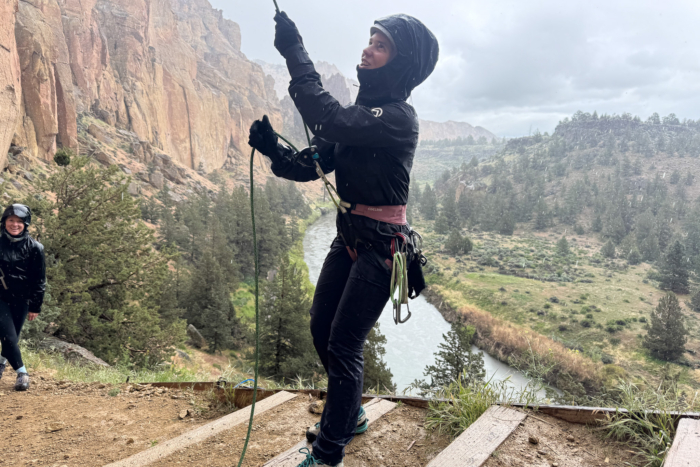
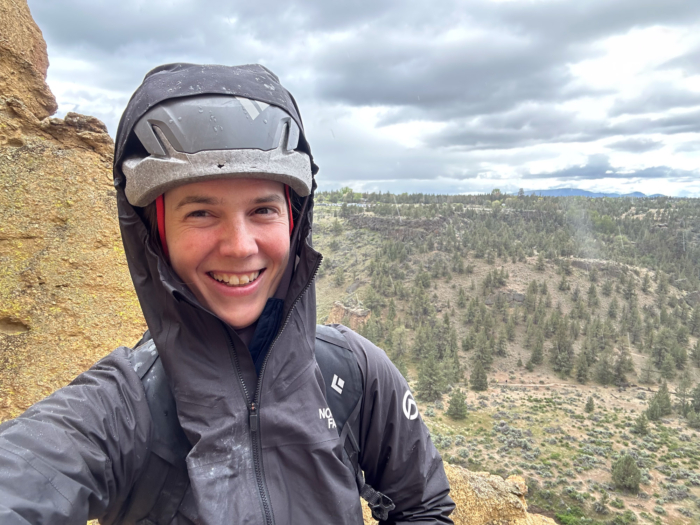
The North Face Papsura was made for climbers, and I put it to the test in all conditions; (photo/Katie Griffith)
-
(Photo/Katie Griffith)
-
(Photo/Katie Griffith)
-
(Photo/Katie Griffith)
Specifications
Pros & Cons
Pros
- Highly breathable air-permeable membrane
- Ultra-lightweight at 7 oz.
- Harness and helmet compatible
- Super sleek fit
Cons
- Not the most waterproof membrane
- Barebones feature set
- Pricey to get into
The Quick & Dirty: A technical piece with a massive 75,000 g/m² breathability rating. It is a fast and light choice for alpine-lovers who sweat heavily but require a harness-compatible, minimalist cut.
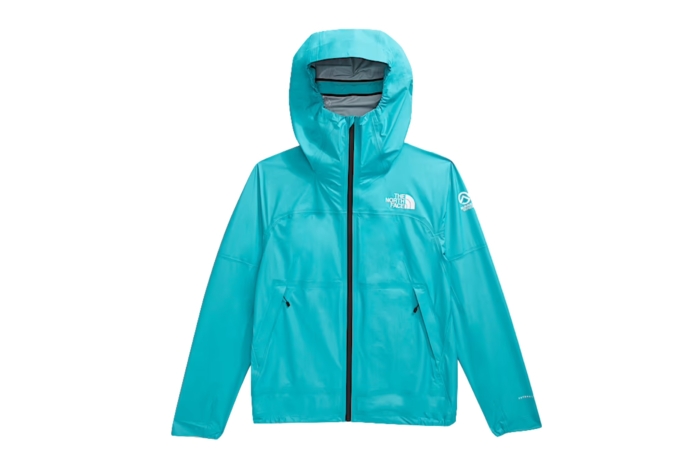
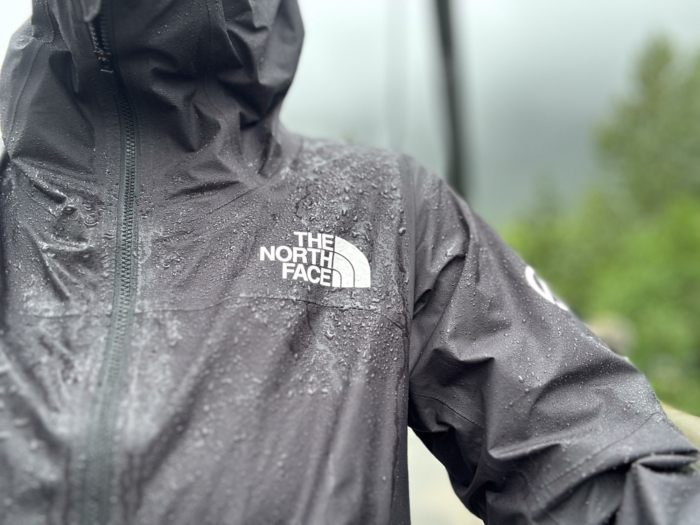
Clocking in at 7 ounces, The North Face Papsura Jacket ($350) is tailored for those who don’t want to be weighed down. Aside from being incredibly lightweight, what also impressed us is its 3-layer air-permeable construction with a slight stretch, made of 100% recycled nylon and a non-PFC DWR finish, which held up admirably in light to slightly moderate rain conditions.
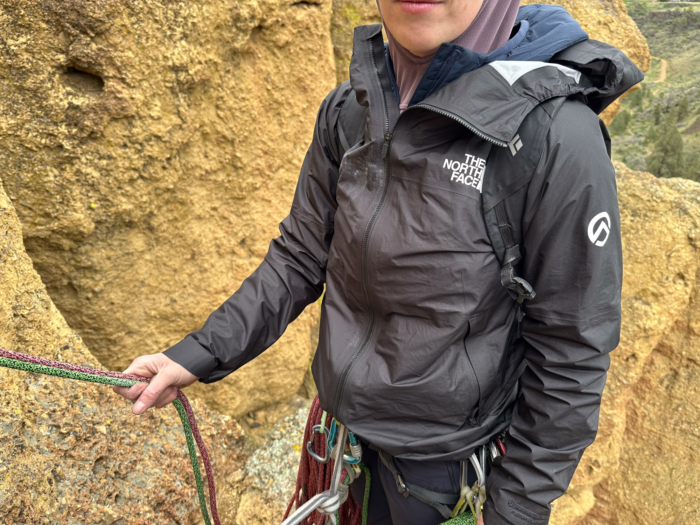
The Papsura rain shell offers a distinct advantage for climbers, thanks to its packability. It easily compresses down into its right-hand pocket, making it convenient to pack away. Moreover, the jacket is harness- and helmet-compatible, and even though the Black Diamond Stormline Stretch and Patagonia Granite Crest are also climber-friendly options, neither can match the weightlessness of the Papsura. Parked on the back of our harnesses, it’s tough even to tell it’s there at all.
The FUTURELIGHT membrane used in the Papsura is one that we’ve been fans of for a long time. This TNF homebrew membrane is an air-permeable design that uses nano-spinning to construct a polyurethane matrix, allowing for air transfer while keeping moisture at bay. The North Face hasn’t published breathability numbers for the Papsura specifically, but if it’s anything like the stuff we’ve used in the past, it’s near a mind-boggling 75,000 g/m². In the field, it felt every bit as breathable.
When it comes to an ultralight jacket, you can expect it to have a bare-bones design. There are no drawcords, extra pockets, pit vents, or fancy closures, as these would only add unnecessary bulk — although there is an internal drop-in pocket and gear loop for keys.
Despite its simplicity, the jacket doesn’t compromise quality and functionality. For instance, we particularly liked the lack of shoulder seams, reducing potential weak points for water penetration. The bonded cuffs and pre-tensioned elasticity were welcomed additional features that aided in enhancing weatherproofing.
Indeed, the Papsura Jacket comes with a hefty price tag of $350, positioning it as not just the lightest but also the most expensive choice on our list. However, if your priority is the fast and light approach, then you’ll be hard-pressed to find a jacket lighter than this one, while still ensuring comfort and dryness during your lightweight excursions.
Other Rain Jackets to Keep You Dry
-
-
(Photo/Erika Courtney)
-
(Photo/Erika Courtney)
-
(Photo/Erika Courtney)
-
(Photo/Erika Courtney)
Specifications
Pros & Cons
Pros
- Ultra-packable and lightweight build
- New Dermizax membrane improves breathability
- YKK Aquaguard front zipper
- Packs into its own pocket
Cons
- Waterproofing and breathability has a ceiling, and high-output activities can overwhelm it
- No pit zips
The Quick & Dirty: An updated UL shell for fast-and-light adventures that trades weight for overall protection. The addition of a new membrane addresses the sticky feel of previous versions, though it remains best for emergent use.
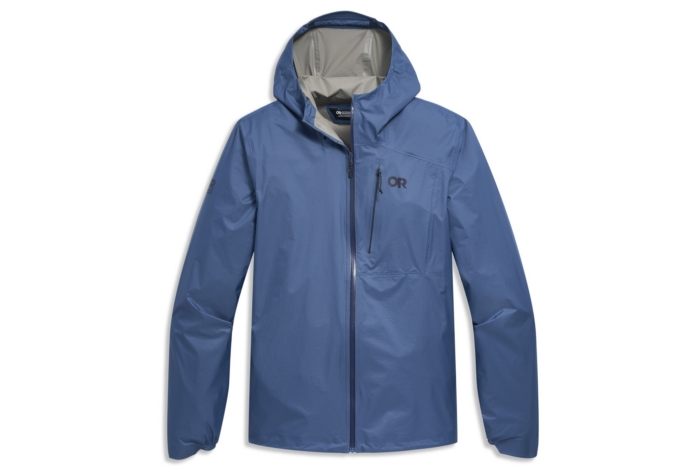
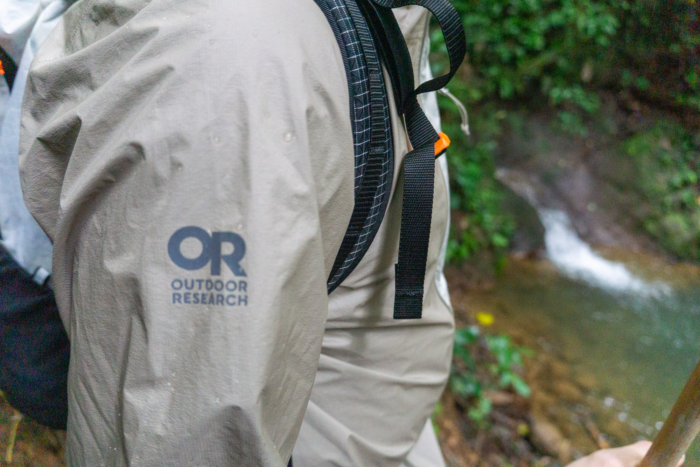
The women’s Outdoor Research Helium UL ($225) continues to serve as a standard for ‘insurance policy’ rainwear. The standout update for 2026 is the Dermizax 2.75-layer membrane. During field testing of high-output scrambles in the North Cascades, this new laminate was significantly better at handling internal vapor than the older versions, which often struggled to keep pace with a steep uphill grind.
The 0.75 layer designation refers to a raised 3D print on the interior. This was a notable upgrade during a humid, 15-mile trek through the Hoh Rainforest, and the texture creates a mechanical gap between the fabric and your skin. This effectively eliminates the suction feeling typical of ultralight shells. For women who prefer hiking in short sleeves or tanks, this means the sleeves won’t stick to your arms even in high-humidity mists.
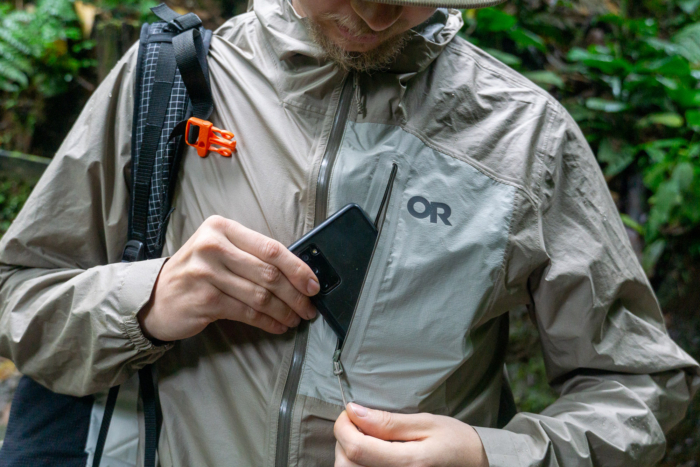
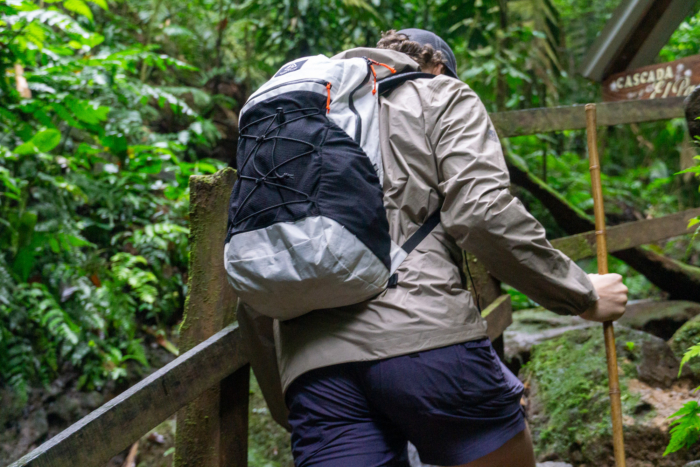
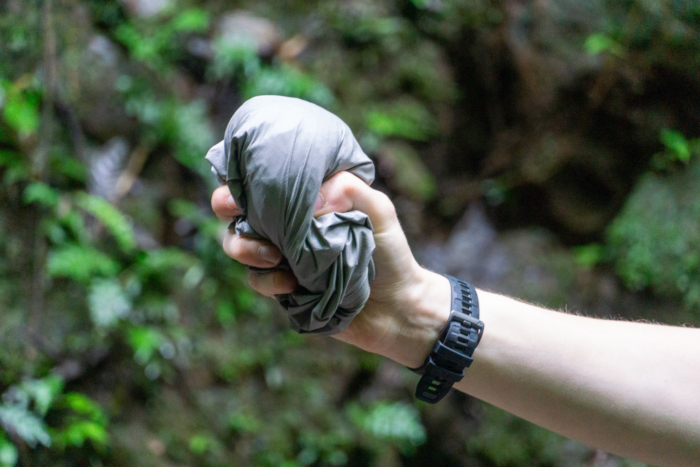
At a scant 5.1 ounces (women’s medium), this jacket is nearly invisible in a pack. It retains the classic ability to stuff into its own chest pocket (the only pocket on the jacket), compressing down to roughly the size of a smartphone. While the 15-denier nylon is surprisingly resilient against the light friction of a daypack, it requires deliberate care. This isn’t the layer for bushwhacking through dense alder or sliding down granite slabs.
It is important to manage expectations. To achieve this weight, Outdoor Research omitted pit zips and hand pockets. This lack of mechanical venting also means your temperature regulation is entirely dependent on the front zipper and the fabric’s breathability. For casual weekenders or those heading into multi-day storms, the lack of features may feel like a compromise. However, for the thru-hiker or trail runner who views every gram as a burden, the Helium UL is a refined, specialized tool that provides just enough protection without the weight penalty.
Specifications
Pros & Cons
Pros
- Five total pockets offers up plenty of storage
- Affordable price
- Pretty lightweight
- Packable 70D fabric
Cons
- Bunches in the front
- Hood doesn’t stay in place
- Not a very breathable jacket
The Quick & Dirty: A reliable 2.5-layer shell with a fully recycled, PFC-free build and massive pit zips for heat management. It’s a mid-range choice for hikers who want a non-plastic feel without the price of a 3-layer jacket.
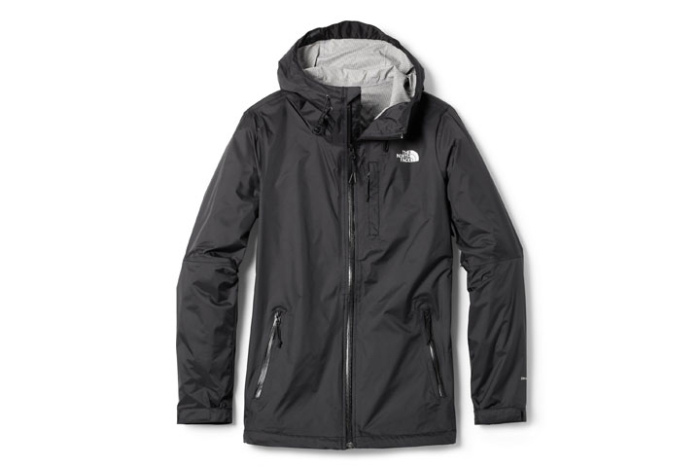
The North Face Women’s Alta Vista Jacket ($160) proves to be a versatile option suitable for travel, day hikes, and everyday urban wear.
Throughout our outdoor tests, the Alta Vista’s 2.5-layer DryVent, coated with non-PFC DWR, demonstrated admirable resilience against sudden downpours and variable weather conditions, from drizzles to mild showers. Despite its sturdy 70-denier fabric, it compresses to a manageable size and endures dense underbrush during hikes. Notably, it excels in storage, featuring three zip pockets and two internal drop-in pockets — ideal for lightweight everyday items.
While the Alta Vista excels in affordability and offers generous roominess for layering, it does lack in the breathability department, resulting in a tacky feel during intense activities, despite the inclusion of pit zips. This isn’t surprising given the limitations we’ve experienced with 2.5-layer polyurethane membranes in the past, and slots this jacket more into the casual section in our gear closets.
Fit-wise, the Alta Vista is flattering without being too trim, and is brought together with a water-resistant zipper that forgoes the typically bulky zipper storm flaps such as used on the REI Co-op Flash Stretch. This does have a bit of a trade-off, we found, however, as we observed some bunching along the front zipper. No day ruiner, but something to consider. The hood is 3-way adjustable, but we noticed that the hood frequently required readjustment throughout the day. However, when fully zipped, the high-neck guard did a good job keeping the rain off our faces.
When deciding on a rain jacket, the Vista Alta is a convenient choice that won’t break the bank, yet still offers all the essential features required for various activities when light rain may be in the forecast. It won’t be your storm bunker to end all storm bunkers, but for day hikes and jetting into town in the rain, it will make the grade.
Specifications
Pros & Cons
Pros
- An upgrade to a 3-layer shell for not much money
- Solid 20,000 g/m² breathability
- Good protection for the cost
- Built-in stretch doesn't limit mobility
Cons
- Not very packable
- Slightly heavier than regular Precip Eco shell
The Quick & Dirty: An affordable jump to 3-layer protection that punches above its price in breathability. It’s a reliable all-arounder with built-in stretch, though it lacks the premium refinement of higher-end technical shells.
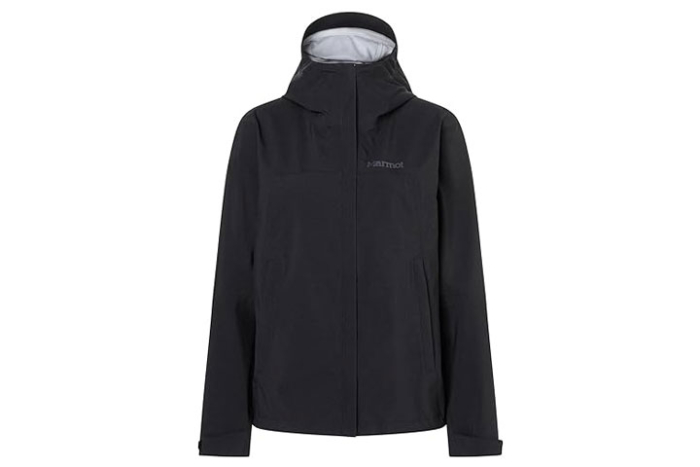
Recently updated, the Marmot Precip Eco Pro Jacket ($160) represents a significant step up from its predecessor. Moving away from the previous 2.5-layer construction, it now has a more breathable and rugged 3-layer design with fully taped seams, all while being PFC-free. Our testing shows that a half layer can actually make a difference, and the Pro version of this jacket reinforces this.
This new construction offers notable breathability and waterproofing, with ratings of 20,000 mm and 20,000 g/m², providing excellent protection during moderate to heavier rainstorms. Adding an internal backer to the membrane of any rain shell does two things: decreases the clammy feeling that can build up as a jacket wets out, and helps to wick and shuttle away moisture from the skin, which is essential with a non-air-permeable membrane.
At 13 ounces, the Precip Eco Pro is slightly heavier than its predecessor, but its increased durability and warmth justify the trade-off. Surprisingly, despite its affordable price, the Precip Eco Pro doesn’t skimp on performance. Its backpack-accessible pockets make retrieving items a breeze, and the addition of pit zips allows for easy temperature regulation. The three-point hood adjustment is also something we always like to see to ensure full protection.
With most other 3-layer rain jackets commanding easily north of $200, the $160 Precip Eco Pro offers excellent value for its breathability, waterproofing, and warmth, making it a top choice that gives you more bang for your buck.
For those in the market for outsized value, the Patagonia Torrentshell 3L should also be considered, as it too is a 3-layer jacket, and the $20 you’ll spend nets you access to a wider range of colors and sizes. The Precip Eco Pro alternatively has better stretch, and we see it on sale more often.
Specifications
Pros & Cons
Pros
- Silent
- Great hood coverage
- Very comfortable
- Higher than the majority of water ratings
- Excellent affordability
Cons
- On the heavy side at near 1 pound
- Not a well represented brand in the U.S.
The Quick & Dirty: The ultimate bang-for-your-buck pick that outperforms jackets twice its price. It is rugged and highly waterproof, but the European fit often requires sizing up for comfortable layering.
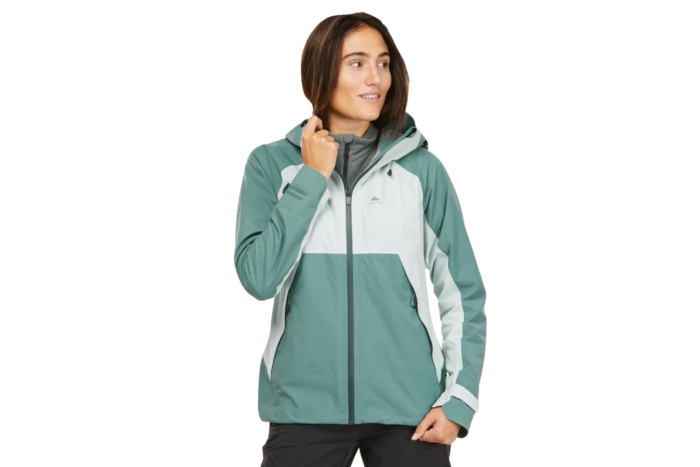
The French company Decathlon certainly piqued our interest with its Quechua Women’s MH500 Jacket ($109). Beyond its attractive price point, this jacket has a multitude of features that truly caught our attention.
To start, its 3-layer construction with fully taped seams provides an impressive waterproof rating of 25,000 mm, which proved itself during several shower and outdoor rain tests. Getting into a 3-layer jacket below $200 is a rough go, and with both the Patagonia Torrentshell 3L and Marmot Precip Eco Pro coming in at higher prices than the MH500, this shell wins the race to the bottom.
Made from 78% polyamide and 22% polyester, the face fabric lends a satin-like texture that glides smoothly and doesn’t crinkle, while its 13% elastane content gives comfort and unrestricted mobility while on the move.
While it may not be the lightest option at 15 ounces, the jacket compensates with other features that secured its spot on our list. The 3-way adjustable hood and high face guard were more effective at shielding us from wind and sideways rain than others.
Other inclusions like pit zips and four pockets (two exterior pockets for hands and two interior drop pockets) made the Quechua jacket not only functional and comfortable, but we also found the fit and design quite flattering. We still think the Cotopaxi Cielo is a better budget pick due to its more accommodating fit and style, but the nod certainly goes to the MH500 for performance.
Regardless, if you’re in the market for a jacket that offers exceptional value along with several features to keep you dry in some pretty nasty weather, then the Women’s MH500 Jacket is certainly a strong contender.
Specifications
Pros & Cons
Pros
- Highly breathable and air-permeable membrane
- Trim feature set keeps the jacket lightweight and packable
- Small reflective hits for road running visibility
- Two way zipper increases venting options
Cons
- Waterproofing isn't the best (we estimate it at around 10,000 mm)
- Trim fit won't play well with everyone
- Price is on the higher end
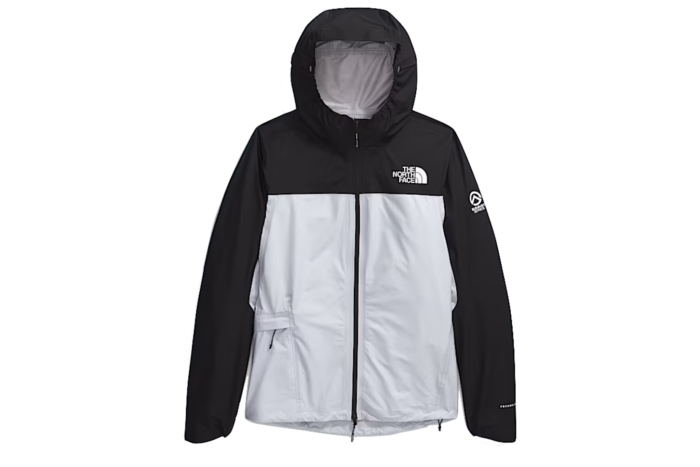
The Quick & Dirty: A minimalist shell designed to pack into its own pocket for high-output trail runs. It offers extreme breathability in a sub-7-ounce package, though it lacks the durability and features needed for general backpacking.
The North Face Superior Jacket ($320) is a fairly similar shell to the brand’s more summit-savvy Papsura jacket, but instead of the vertical realm, the Superior is meant for grinding out miles while running. A few key tweaks have been made to get this rain jacket ready for the starting line, and while price keeps it from nabbing our top recommendation for a running shell, it does a lot for the value.
Like the Papsura, the Superior uses the same featherweight 7D x 15D FUTURELIGHT 3L membrane. This air-permeable waterproof layer prioritizes breathability over waterproofing, and unlike traditional monolithic waterproof barriers, allows free passage of air through the material. This makes high-effort endeavours like trail running fair game, and avoids the breathability pinch point that layers that use non-air-permeable membranes will hit.
In practice, we found it worked well. Mountaineering and backpacking guide Chelsey Cook used the shell through an Alaskan spring, where she ran and mountain biked in it, and found she could wear it through the entire activity, instead of needing to shed a layer. “I’m usually the last person to put my rain jacket on and the first to take it off. But the Superior is so breathable that I found myself pedaling entire mountain bike rides while wearing it, whether or not it was raining.”
The shell is fairly stripped down on features, which aims to keep the weight and packability low. A single pocket on the right hip also acts as a stuff sack for the jacket, and the wrist cuffs and hood are both non-adjustable but bound with elastic instead. It’s a compromise, but it works. The main zipper on the Superior is a two-way design, which helps to keep the hem high when running hard and opens up some more venting.
Overall, waterproofing is where you make the trade for the high breathability with this jacket (there are no published numbers for the FUTURELIGHT membrane, but we estimate it around 10-15K mm), and for some, that won’t fly. But for others who understand the limitation and know that a little damp is better than wet and cold, the Superior can make a great option. The Patagonia Storm Racer is $20 cheaper than this jacket, but won’t be as breathable.
Comparing the Superior and Papsura side by side, the running cut is more trim with less room for layers underneath. The hood is also not as voluminous, since it doesn’t need to accommodate a helmet. Both of these choices keep the Superior from being our do-it-all jacket, but as a running-specific shell, we think it excels.
Specifications
Pros & Cons
Pros
- Exceptional for heavy rains and strong winds
- Excellent sustainability
- Great value
- 2-way waterproof front zipper
Cons
- Quite heavy
- No pit zips
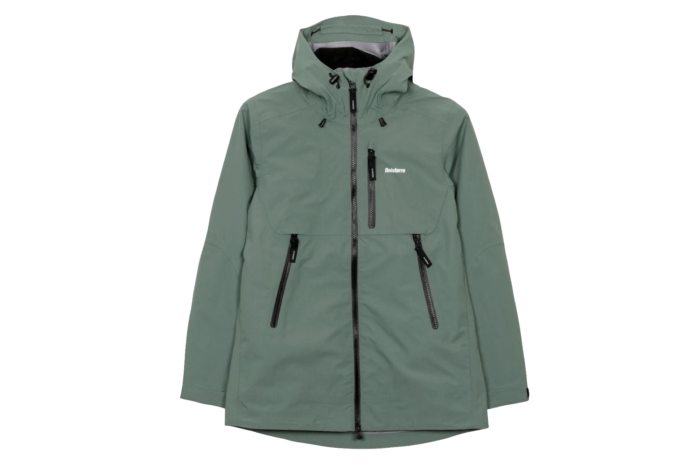
The Quick & Dirty: A rugged, 3-layer shell built with 100% recycled polyester and a PFC-free finish. It offers a generous, layer-friendly fit and superior weather protection, though it is heavier and bulkier than most jackets.
Hailing from the U.K., Finisterre is a brand rooted in surfing and sailing, and its Stormbird Waterproof Jacket ($320) is certainly a product of their experience in those realms. Upon testing this remarkable and sturdy jacket, its standout power became quite apparent, justifying itself as the toughest, sturdiest rain jacket featured on our list.
Its highlight feature is robustness, which weighs a whopping 1 pound, 7 ounces. While it’s not aiming for ultralight status, its strength shines through in providing warmth, layering capability, and waterproofing.
Constructed with a 3-layer polyester fabric with a ripstop outer, it offers 20,000 mm hydrostatic head waterproofing and a 15,000 g/m² 24-hour breathability rating. Designed for the sea, we subjected it to rigorous shower testing when outdoor rain wasn’t enough, and it emerged as certainly capable of handling downpours.
This heavy-duty shell boasts several standout features, including its cozy brushed polyester inner and microfleece rear neck guard for added comfort in chilly conditions. What sets it apart further are its practical elements: a three-panel hood with three-point adjustments, a robust two-way YKK front zipper, ample room for layering, and four deep, sturdy pockets that allow for generous storage.
Finisterre’s commitment to sustainability isn’t just lip service; they actively demonstrate its dedication by minimizing air shipments to reduce carbon emissions, eliminating fluorocarbon chemicals since 2017, and providing repair services to extend the jacket’s lifespan. In these actions, Finisterre goes beyond mere eco-friendly claims, embodying an ethos of environmental responsibility.
So whether you’re braving the high seas or facing extreme weather conditions on land, the Stormbird Jacket is a top recommendation for its blend of robustness, value, and environmental responsibility. It’s always a gamble when you take a chance with a brand that doesn’t enjoy the name-rec that some of the others in our lineup do, but by performance alone, Finisterre deserves every bit as much as they do.
Specifications
Pros & Cons
Pros
- Great amount of stretch
- Near to skin feel
- Lightweight
- Climbing-helmet-compatible hood
Cons
- Can produce a clammy feel when sweating
- Tight around the hips
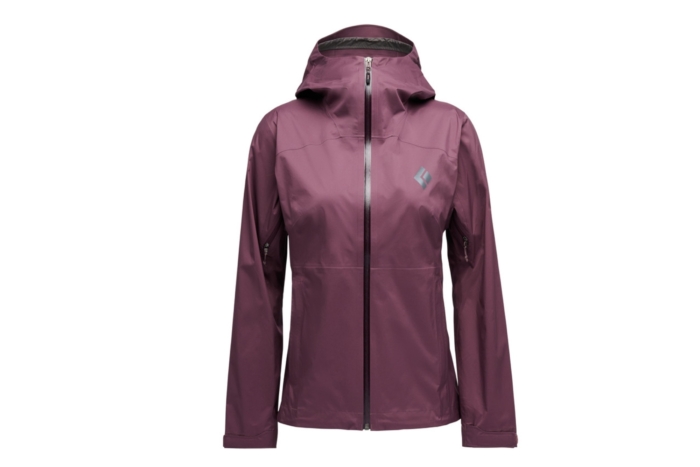
The Quick & Dirty: A minimalist 2.5-layer shell with excellent four-way stretch. It is the best climbing insurance for your pack; the face fabric will wet out faster than rigid 3-layer shells in sustained rain.
True to its name, the Black Diamond Fineline Stretch Rain Shell ($180) delivers a two-way woven stretch — a must-have feature for dynamic activities like rock climbing that demand flexibility. Like its counterparts, it also packs down into its right-hand pocket and comes equipped with a carabiner clip loop that can attach to a harness.
While there are certainly other climbing jackets on the market, we lean toward the Fineline when requiring a decent amount of stretch. At 12% elastane and weighing 9.5 ounces, it kept us from feeling too restricted and weighed down.
In terms of performance, the Fineline Stretch doesn’t have the highest ratings for breathability or waterproofness at 10,000 mm and 10,000 g/m²/24-hour, making this an ideal “low probability/high consequence” shell. However, its Bluesign-approved, non-PFC, and EMPEL water-free DWR finish does add an extra punch when fending off mild precipitation. The inclusion of pit zips certainly helps shed extra heat, which is necessary with a 2.5-layer construction.
The jacket also gets the helmet-compatible hood we’re after when climbing and sports underarm gussets that don’t limit us when reaching overhead. With the Fineline, you get a cost-effective option, commendable stretch, and performance against abrasive rocks and mild weather suitable for rock climbing. Clip it to your harness and go.

Women’s Rain Jacket Comparison Chart
| Women’s Rain Jacket | Price | Waterproof Material (Waterproof / Breathability Ratings) | Measured Weight | Who It’s For |
|---|---|---|---|---|
| OR Aspire 3L | $260 | AscentShell Dry 3L (20K mm, 10K g/m²) | 11.7 oz. | High-output hikers who run hot and need the mechanical venting of hem-to-bicep zippers |
| REI Co-op Rainier Rain | $100 | HydroWall 2.5L (N/A, N/A) | 9.9 oz. | Casual hikers and commuters looking for the most reliable protection available for $100 |
| Patagonia Granite Crest | $289 | Patagonia H2No NetPlus 3L (20K mm, N/A) | 12.6 oz. | Eco-conscious adventurers seeking a technical, 3-layer shell |
| Cotopaxi Cielo Rain | $145 | 100% recycled polyester 2.5L (10K mm, 10K g/m²) | 1 lb. | Style-conscious city dwellers who want fun aesthetics for light rain and errands |
| Arc’teryx Beta SL | $500 | GORE-TEX 3L ePE (28K mm, <13 RET) | 12 oz. | Premium-gear enthusiasts wanting the latest GORE-TEX ePE technology in a tailored cut |
| Patagonia Storm Racer | $315 | H2No Performance 3L (20K mm, N/A) | 6.3 oz. | Trail runners who need cold rain protection while moving at a clip |
| The North Face Papsura | $350 | FUTURELIGHT 3L (N/A, 75K g/m²) | 7.0 oz. | Fast-and-light hikers who sweat heavily and require a minimalist shell |
| Outdoor Research Helium UL | $225 | Dermizax 3D 2.75L (20K mm, 20K g/m²) | 5.7 oz. | Trail runners and thru-hikers who need a storm insurance policy |
| The North Face Alta Vista | $160 | DryVent 2.5L (N/A, N/A) | 11.2 oz. | Hikers and travelers who want a soft-touch shell with pit zips at a mid-range price |
| Marmot Precip Eco Pro | $160 | NanoPro 3L (20K mm, 20K g/m²) | 13 oz. | Budget-aware explorers looking for a jump into 3-layer protection |
| Decathlon Quechua MH500 | $109 | 3-layer proprietary membrane (25K mm, RET 6) | 15 oz. | Savvy shoppers looking for elite-level waterproofing and durability at an unmatched price |
| The North Face Superior | $320 | FUTURELIGHT 3L (N/A, 75K g/m²) | 7 oz. | Trail runners needing a packable emergency shell for high-exertion training |
| Finisterre Stormbird | $320 | Hydrostatic polyester 3L (20K mm, 15K g/m²) | 1 lb., 7.6 oz. | Coastal explorers needing a rugged, 3-layer shield with a generous fit for heavy layering |
| BD Fineline Stretch | $180 | BD.dry 2.5L (10K mm, 10K g/m²) | 9.5 oz. | Climbers seeking a rain jacket insurance policy that moves perfectly during action |
How We Tested the Best Rain Jackets for Women
Our Testing Process
Led by lead tester Rebecca Ross, our team of wet-weather specialists evaluated nearly 25 shells over two solid years of testing. To find the best rain jackets of 2026, we subjected each garment to a three-phase failure-point protocol designed to move beyond anecdotal evidence to measurable data.
1. Real-World Environmental Stress
The core of our testing happens in the volatile microclimates of the Pacific Northwest. We purposefully seek out 24-hour atmospheric river events to monitor membrane saturation. Our testers engage in high-output hill climbs to observe vapor transfer in real-time and navigate dense, off-trail bushwhacks to test the puncture resistance of face fabrics ranging from 15D to 70D nylon.
2. The Controlled Deluge Lab Test
To ensure a level playing field, every jacket undergoes a standardized 10-minute high-pressure shower test. To track failures, we place moisture-sensitive paper towels inside pockets, wrist closures, and main zippers. Furthermore, we wear weighted packs during these tests to simulate how shoulder strap pressure can force water through a membrane, a common real-world failure point known as wetting out.
3. Ergonomic & Weight Validation
We move past manufacturer claims by using precision scales to record the trail weight of every shell. Our Fit and Finish analysis evaluates articulated patterning, specifically checking for hem-lift during overhead reaches and peripheral visibility when the hood is fully cinched. Finally, we measure compressed volume to determine exactly how much space each jacket occupies in a standard 30L daypack.

Our 100-Point Rain Jacket Rating System
We use a weighted scoring system to provide an objective ranking of each jacket’s performance.
- Weather Resistance (30% weighted): This is a combined score of the membrane’s hydrostatic head (waterproof rating) and the garment’s construction. We prioritize shells that maintain internal dryness across a 24-hour saturation period and feature reliable seam-taping and YKK AquaGuard zippers.
- Breathability & Thermal Regulation (30% weighted: We evaluate both the material’s moisture vapor transmission rate (targeting a minimum of 15,000 g/m² or a RET <12) and the effectiveness of mechanical venting, such as pit zips or mesh-lined pockets.
- Comfort & Mobile Fit (20% weighted): Points are awarded for livability. This includes the softness of the chin guard, the ease of operating drawcords with gloves on, and a cut that allows for layering over a mid-weight fleece without restricting movement.
- Weight & Packability (20% weighted): We benchmark all-around shells against a 16-ounce standard. Ultralight shells must weigh 8 ounces or less to earn a perfect score in this category.

Our Expert Testers
Our lead tester, Rebecca Ross, has braved the tempestuous weather of the Pacific Northwest for over 22 years, of which seven were dedicated to scaling and backpacking alpine and sub-alpine terrain in the Cascades, where weather shifts are frequent. With four years of intensive gear-testing experience, she has invaluable expertise. In the last year, Ross tested four new jackets for inclusion in our guide, taking them around the Pacific Northwest in heavy rainstorms and on dense trails.
The team of women’s rain jacket testers also includes regular GearJunkie contributors such as Katie Griffith, a climbing and mountaineering guide who splits time between Washington state and Joshua Tree, California. Testers Courtney Holden, a Colorado-based gear tester who has taken rain jackets globally to test their mettle, and Natasha Buffo, a South Lake Tahoe multisport athlete, also contributed.

Buyer’s Guide: How to Choose a Rain Jacket
Navigating through the multitude of rain jackets available in today’s saturated market can feel overwhelming. While having a plethora of choices is advantageous, it can also complicate the process of finding the perfect fit.
In this comprehensive buyer’s guide, we not only outline the key factors to consider when selecting the ideal rain jacket for your needs but also provide expert insights and tips to help you navigate through the array of options available. GearJunkie has also tested many unisex jackets in our best rain jackets buyer’s guide.
So, whether you’re a casual hiker, a seasoned outdoor enthusiast, or someone simply looking for reliable protection against the elements, this guide aims to empower you with the knowledge necessary to make a confident and well-informed purchase decision.

Fit & Length
Rain jackets, like any outdoor attire, vary significantly in the way they feel, particularly concerning fit and length. A reliable rain jacket should effectively cover your upper half while allowing ample room for movement.
When selecting a rain jacket, consider its fit. Many jackets offer options such as Standard, Average, and Regular fits. However, there are also some out there that provide a more unique fit. For example, the Decathlon Quechua has a more tailored cut, while the Finisterre Women’s Stormbird is fairly roomy, and the Cotopaxi Cielo Rain Jacket has a boxy fit. If you anticipate wearing thicker midlayers underneath, sizing up might be necessary.
Another important factor to contemplate is the jacket’s back length. While most jackets nowadays incorporate a drop hem or a longer hem for enhanced coverage from behind, this feature isn’t universal. On our list, drop hems range from 27 inches, as seen in The North Face Women’s Alta Vista, to more ample coverage as seen on the Finisterre Stormbird. The longer the hem, the more coverage it provides, especially while on the move.

Pockets
It’s uncommon to find a jacket without pockets, even among ultra-lightweight options. You’re likely to have space for both your hands and essentials while on the move. However, there are a few factors to consider.
If you prefer having your phone within easy reach, consider a jacket with a chest pocket, though not all jackets feature them. Additionally, features like key loops can be invaluable for ensuring your keys make it back to the car after a long hike.
Also, keep in mind that if you plan on carrying heavier items, then jackets with thicker construction can prevent them from jostling around. Jackets on our list with a good number of sturdy pockets are the Decathlon Quechua and Finisterre Stormbird Jacket, both featuring four pockets to keep items secure.
But if you prefer staying organized for all your lightweight items, The North Face Women’s Alta Vista Jacket has five pockets, including three zip pockets and two interior drop-in pockets.

Waterproof Membranes
Waterproof membranes are essential components of rain jackets, serving as thin barriers to repel moisture and water. These membranes, available in various types, cater to different outdoor activities and weather conditions.
Starting with the most renowned for its quality, GORE-TEX utilizes expanded polytetrafluoroethylene (ePTFE) to create microscopic pores that allow vapor to escape while blocking water droplets. GORE-TEX offers several options:
- GORE-TEX Pro: Designed for extreme weather and high-intensity activities, GORE-TEX Pro features a unique ePTFE membrane with microscopic pores that ensure exceptional waterproofness and breathability. It’s favored by outdoor enthusiasts and professionals for its durability and performance, and more often seen in rugged hardshell jackets for climbing or skiing.
- GORE-TEX Paclite & Paclite Plus: These membranes are widely used in hiking and backpacking rain jackets for their high waterproofing rating. Paclite jackets omit the textile backer and use a layer of polyurethane and carbon on the interior, making them highly packable. Paclite Plus enhances durability while maintaining exceptional waterproofing performance.
- GORE-TEX ePE: GORE-TEX’s newest membrane, this textile strips out pervasive PFCs from inside and out and uses an expanded polyethylene to hit the high-quality waterproofing ratings, at a slight breathability ding. Many mid-tier rain jackets are pivoting to using this style of GORE-TEX.
Other notable membranes include:
- eVent: Known for high breathability, eVent utilizes ePTFE membrane technology, allowing moisture vapor to escape while preventing water from entering. It maintains breathability even in wet conditions by removing the polyurethane layer that most GORE-TEX layers apply internally.
- Pertex Shield+: Achieving a balance between water resistance and breathability, Pertex Shield+ utilizes a polyurethane film membrane. However, jackets made with these membranes may occasionally experience perspiration buildup.
Moreover, rain jackets with proprietary membranes are commonly less expensive than rain jackets that feature the above name-brand membranes. Examples include Black Diamond’s BD.dry and The North Face’s FUTURELIGHT or DryVent.
Fabric Layers
The fabric layers of rain jackets are intricately designed to offer protection against the elements while ensuring breathability and comfort. Typically, rain jackets consist of two or three layers, each serving a specific function:
- 2-layer: Simplicity reigns. These waterproof fabrics utilize a waterproof membrane and an outer face fabric to shield against scuffs and scrapes. Often, an internal hanging liner will be used to create a stand-off between the skin and the jacket, which both improves airflow and wicks away moisture. The Paclite used in the Outdoor Research Aspire 3L jacket is an excellent example of a jacket that doesn’t use this lining, in order to save on weight and bulk.
- 2.5-layer: A thin protective lining is added to the inside of the waterproof membrane, often laminated, screen printed, or sprayed on. This design, found in jackets like the Black Diamond Fineline Stretch, enhances longevity and breathability by minimizing body oils and dirt that can clog membrane pores. However, they may feel clammy in prolonged rain and lack the moisture-wicking properties of three-layer jackets.
- 3-layer: The pinnacle of rain jacket performance lies in 3-layer constructions, featuring a third wicking textile inside the membrane. While these jackets excel in moisture management, they typically come at a higher price point. We have a handful on our list that offer 3-layer construction, including the Patagonia Granite Crest Rain, Storm Racer, and the FORLOH Airalite Jacket.
In essence, rain jacket fabric layers are engineered to balance waterproofness, breathability, durability, and comfort for comprehensive all-weather protection. When choosing a rain jacket, consider its layer construction and materials to ensure they align with your performance and comfort needs.

Durable Water Repellent Finish (DWR)
A rain jacket’s primary defense lies in its durable water-repellent (DWR) finish, a hydrophobic coating that causes water to bead up and slide off the surface. This coating helps prevent water from saturating the waterproof membrane, thus extending the jacket’s waterproofing capability.
However, DWR finishes degrade over time, especially with washing, leading to reduced water repellency. To restore your rain jacket’s performance, it’s essential to reapply a DWR treatment periodically.
Indications of diminished performance include “wetting out,” where water penetrates the fabric instead of beading off. This signals that the DWR treatment is compromised, impacting the jacket’s effectiveness. Additionally, wetted-out fabric can hinder breathability, as moisture expulsion becomes inhibited.
Factors like abrasion, oils, and environmental debris contribute to DWR degradation. Therefore, maintaining cleanliness and periodically reapplying a DWR treatment is crucial for preserving your rain jacket’s performance.

Waterproofness
Waterproofness is gauged by the amount of water a fabric can withstand before leaking over a 24-hour period. The minimum standard for waterproof designation is 1,000 mm, suitable for light drizzles encountered in everyday activities like walking your dog. However, for more extreme weather conditions during outdoor adventures, opt for jackets with ratings between 5,000 mm and 30,000 mm.
Pressure, such as from backpack straps or heavy snow, can compromise the waterproofness of a rain jacket. Different waterproof ratings offer varying levels of protection:
- 5,000 mm: Begins technical rain outerwear for outdoor adventures.
- 5,000-10,000 mm: Waterproof under light rain or snow without pressure.
- 10,000-15,000 mm: Waterproof under most conditions except pressure.
- 15,000-20,000 mm: Waterproof under heavy rain and snow.
- Over 20,000 mm: Waterproof under heavy rain, snow, and pressure.
There are a handful of rain jackets featured on our list that surpass the 20,000 mm mark, providing options for staying dry even in severe conditions. Options like the Finisterre Stormbird and Marmot Precip Eco Pro Jacket offer excellent protection. However, for the utmost assurance of waterproofing, consider the FORLOH Airalite Jacket with an impressive rating of 35,000 mm.

Breathability
Breathability is essential in rain jackets to ensure comfort during outdoor activities by allowing sweat to escape while repelling water, preventing the wearer from feeling clammy or overheated.
Air-permeable membranes, such as those found in FUTURELIGHT or Airadigm jackets, are revolutionizing the outerwear industry by offering a balance between breathability and waterproofness. These membranes permit air to pass through while still repelling water, though they may sacrifice some waterproofness compared to traditional options.
One of the key metrics used to assess breathability is the moisture vapor transmission rate (MVTR), measured in grams per square meter per 24 hours (g/m²/24h). Higher MVTR ratings indicate better performance. For example, jackets designed for high-output activities typically have a breathability rating of 20,000 g/m² or more, while those intended for casual use may suffice with ratings between 10,000 and 15,000 g/m². The FORLOH Airalite jacket, with a breathability rating of 23,000 g/m²/24h, stands out as one of the most breathable options available.
An additional breathability metric is the RET (Resistance to Evaporative Heat Transfer). A jacket with a RET value below 6 is exceptionally breathable, such as the Decathlon Quechua jacket, which excels at allowing perspiration to escape.
When selecting a rain jacket, it’s crucial to consider the intended activity level to ensure the right balance of breathability and waterproofness for your needs.

Taped Seams & Zippers
Taped seams and YKK zippers are fundamental for preserving the waterproof integrity of a rain jacket. Taped seams, sealed with waterproof tape crafted from materials like polyurethane or GORE-TEX, offer top-tier waterproofing, ensuring the jacket stays dry even in heavy downpours.
Simultaneously, YKK zippers are celebrated for their durability, smooth functionality, and resistance to corrosion. Utilizing YKK zippers ensures dependable and long-lasting closures, perfect for enduring demanding outdoor environments. Keep an eye out for these features when selecting a rain jacket for peak performance and durability in wet conditions.

Weight & Packability
When considering weight and packability for your journey, it’s crucial to factor in the distance you’ll be covering and how much you’re willing to carry — every ounce counts. For minimal weight priorities, consider the Patagonia Storm Racer, weighing just 6.3 ounces, or the The North Face Papsura Jacket at 7 ounces.
However, if weight isn’t your primary concern and you expect your jacket to be worn most of the time, you have numerous options to explore.
For those mindful of space limitations, look for jackets that can be neatly packed into its own pocket, condensing to roughly larger than a softball for optimal packability. Some jackets even feature a loop for easy attachment to a harness or the exterior of your backpack, ensuring convenient access without taking up precious space inside your pack. This feature is especially handy during activities like rock climbing, where space is limited.
For an easier decision-making process, refer to the comparison table provided above. It offers a quick and simple overview of the weight differences among the rain jackets.

Hoods
Some rain jackets come with hoods will serve a dual purpose as a convenient storage sack. But most likely if it’s raining hard enough to necessitate wearing a rain jacket, you’ll likely also have the hood up. A well-crafted hood should offer comprehensive protection. A good example is a hood that completely covers your head and features three-point adjustments to ensure a proper fit without compromising peripheral vision.
It’s essential to ensure that your hood can accommodate any helmet you might wear. If your plans include climbing or alpine activities, consider exploring helmet-compatible options such as the Black Diamond Fineline Stretch and Patagonia Granite Crest.

Sustainability
A sustainable rain jacket encompasses various aspects such as eco-friendly materials, low-impact production, fluorocarbon-free waterproofing, durability, end-of-life solutions, and ethical practices. Key features to look for include Bluesign certification — ensuring fabric meets rigorous environmental and safety standards — and Fair Trade Certification, which ensures sustainable livelihoods for textile workers.
The Finisterre Stormbird Jacket emerges as the most sustainable options we tested, employing practices such as the use of recycled nylon and organic materials, fluorocarbon-free waterproofing since 2017, minimization of its carbon footprint through land and sea transport, utilization of water-soluble packaging, and provision of repair and trade-in services to prolong product life. The brand’s commitment to transparency and close partnerships with manufacturers further reinforces its sustainability efforts.
Furthermore, Outdoor Research is making strides with the Outdoor Research Aspire 3L, touted as the most eco-friendly addition to its spring 2024 product line, thanks to its use of sustainable materials and removal of certain forever chemicals.

Durability & Longevity
Durability and longevity are paramount in rain jackets that can keep up with all your outdoor activities and daily wear. This is achieved through high-quality materials, reinforced construction, efficient waterproofing treatments including DWR (durable water repellent), and durable hardware like YKK zippers.
Following manufacturer guidelines for care and performing periodic maintenance are essential for prolonging the jacket’s lifespan. Moreover, warranties offered by reputable brands provide added assurance of long-term performance.
Price & Value
Budget
When it comes to budget rainwear, there’s good enough, and then there’s a good bargain. We tend to gravitate toward spending a smidge more above the real bottom barrel options to get into jackets that will do what you need them to do: keep you dry. Expect in-house waterproof membranes at the price range, along with minimal feature sets.
We lean on the Cotopaxi Cielo Rain Jacket ($145) as a dependable budget option, and with a 10K/10K rating, it’s primed for jetting around town and for day hikes. The boxy fit allows for ample layering underneath, and while there are no pit zips (less common in budget options), the jacket breathes well enough for some backpacking.
Mid-Tier
Spending a bit more means you’ll be able to use your rain jacket for a broader range of activities, such as backpacking or biking. This is where you’re likely to see more brand-name waterproof membranes such as GORE-TEX, as well as more refined fits and features such as helmet-compatible hoods and pockets tucked up out of the way of pack straps.
The Outdoor Research Aspire 3L ($260) is bar none our favorite rain jacket at the moment, and it uses a dependable GORE-TEX Paclite to ensure no rain gets in, and a novel pit zip system to keep moisture moving out. We also quite like the Patagonia Granite Crest Jacket ($279) as a quality do-it-all layer with a helmet-friendly hood.
Premium
Premium rain jackets won’t be quite as wildly priced as hardshell jackets, but they can still creep up there. The tradeoff is in pure performance, however, and if you really need to stay dry while working hard, they can be worth it. The Arc’teryx Beta SL Jacket ($500) uses a proven GORE-TEX membrane in its design to keep moisture out in a way that other rain jackets can’t match.
Frequently Asked Questions
Rain jackets should fit comfortably, allowing for full movement and layering underneath. When sizing, ensure the hem provides ample coverage, sleeves cover your wrists, and shoulder seams align naturally. Because sizing varies between brands, try the jacket on over your typical mid layers before purchasing. A critical component is the hood, which must move with your head when turning rather than blocking your peripheral vision. A proper hood offers complete coverage without pulling the jacket’s shoulders upward, and for technical backcountry use, it should accommodate a helmet without compressing your neck.
To achieve this fit, look for adjustment features that customize the hood’s volume and opening. Rear cinch cords pull excess fabric away from your face to maintain clear lines of sight, while front cords seal the opening against driving wind and rain. Additionally, a stiffened brim is essential to keep water from dripping into your eyes. Balancing these adjustments with an articulated cut ensures maximum weather protection and comfort during outdoor activities.
Your rain jacket may become damp inside due to factors like condensation, reduced breathability, damage, or improper sizing. To prevent this, ensure your jacket is clean, consider applying a DWR treatment if necessary, wear moisture-wicking layers, and regularly check for damage.
Water-resistant jackets repel water to some extent but are not fully waterproof. They can withstand light rain but may not keep you dry in heavy downpours. Waterproof jackets, on the other hand, are designed to keep you dry even in heavy rain or wet conditions, offering superior protection against moisture.
When layering with a rain jacket, begin with a moisture-wicking base layer to manage sweat and keep your skin dry. This could be a lightweight, breathable top made from materials like merino wool or synthetic fabrics.
Depending on the weather and your activity level, you may add an insulating midlayer for warmth like a fleece, down, or synthetic insulating midlayer. And depending on conditions you may opt for additional accessories like gloves and beanie for added warmth.
No, waterproof jackets do not stay waterproof forever. A jacket’s weatherproofing diminishes over time due to wear, abrasion, and exposure to dirt, body oils, and UV radiation. This breakdown directly impacts the Durable Water Repellent (DWR) finish, which keeps the outer fabric from absorbing moisture.
Crucially, the outdoor industry has almost universally transitioned to environmentally friendly, PFAS-free DWR finishes. Because these newer, non-fluorinated treatments are more sensitive to oil and dirt contamination, they require more frequent maintenance to sustain their performance.
To keep your jacket functioning, clean it regularly with a technical wash to remove contaminants that mask the water-repellent finish. When water begins to saturate or wet out the fabric after washing, reapply a PFAS-free after-market DWR treatment and heat-set it according to the manufacturer’s care instructions.
Wetting out occurs when the outer fabric of a rain jacket becomes saturated with water, compromising the waterproof membrane beneath. This happens when the Durable Water Repellent (DWR) finish degrades, allowing fabric to absorb moisture rather than bead it away. It can also be triggered by external pressure, like backpack straps forcing water into the material, or from using a jacket with an inadequate waterproof rating during prolonged, heavy downpours.
This issue is more common now that environmental regulations have pushed the outdoor industry to PFAS-free DWR finishes. While eco-friendly, these non-fluorinated treatments are more vulnerable to contamination from dirt and body oils, causing jackets to wet out faster than older models.
To mitigate wetting out, select a jacket with a high waterproof rating. Additionally, because PFAS-free finishes demand stricter maintenance, you must regularly wash the garment with a technical cleaner and frequently reapply a PFAS-free after-market DWR treatment.