Every experienced fly angler has a list of their favorite rods ever created. These are specific models, no matter how old and outdated, that, for whatever reason, spoke to you as an angler. For me, the original Orvis Recon easily makes my top-five list.
When the Recon launched in 2015, Orvis touted it as a high-performing rod with a middle-of-the-road price of $425. I thought it performed too well. It was ridiculously light and fast, and reminded me of my old Sage ONE. Honestly, when sitting in my drift boat next to flagships from Winston, Sage, Loomis, and Orvis itself, I was more than happy to pick up the “budget” rod. Because of that, I ended up with seven different Recons.
Then Orvis changed it with a second generation. That rod was a bit of a letdown. I still dug it, but with a change in weight and action, it didn’t speak to me the way the first gen did. It was good, but the magic was gone.
Fortunately, this year, Orvis blessed anglers with a third generation, which I happily agreed to test. Would it perform like my beloved first gens, or was it clunkier and more in line with the second generation? After spending all spring fishing and guiding with it, I’ve come to a verdict.
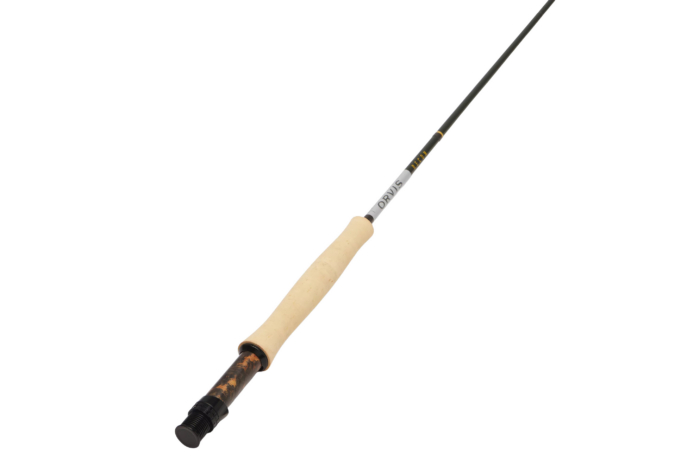
In short: For freshwater anglers, the third-generation Orvis Recon 9′ 5-weight ($698) is a solid choice of fly rod. Action-wise, it’s somewhere between the first and second generations. Unfortunately, the price hike makes it less of a value than it once was, but it seems to solve durability issues that plagued past models. It’s not a top-five rod of all time, but it is one of the best “mid-priced” rods currently available.
Orvis Recon 3 Freshwater Fly Rod Review
Specifications
Pros & Cons
Pros
- Excellent for trout applications
- Loads perfectly at close and mid-range distance
- Top-notch aesthetics
- Warranty can get you back on the water in 5 days
Cons
- Doesn't do well at long-distance casting
- Lacks power for larger streamers
- No hook keeper
- Price
Action of the Orvis Recon Third Generation
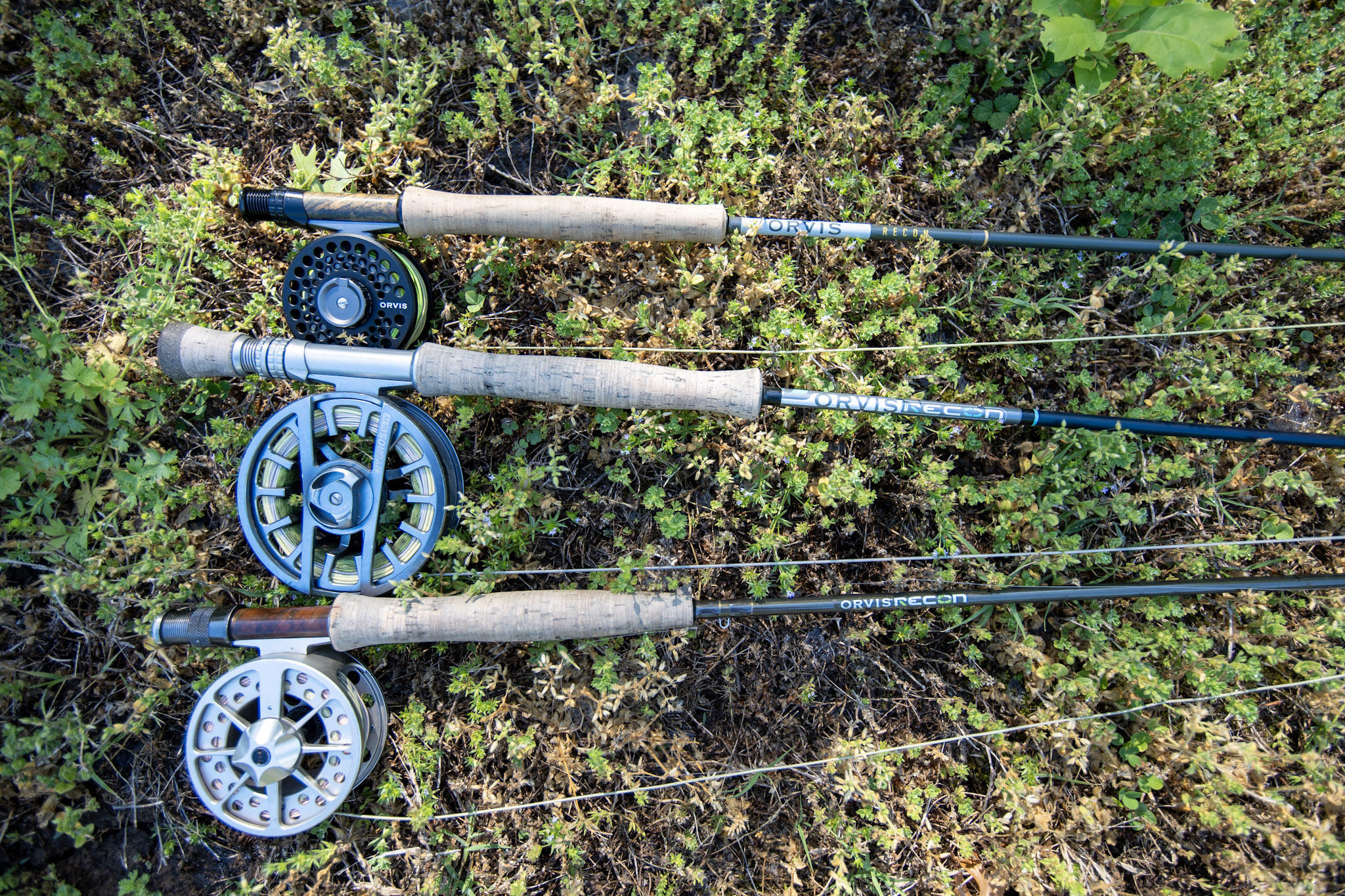
There was only one way to really see if my favorite rod ever was back to its original self after being monkeyed with by the folks at Orvis. I compared the first and second generations to this, the latest one.
Note: While the picture above shows a 9-foot, 8-weight Gen Two, I did compare the rod to a 9-foot, 5-weight Gen Two.
Lawn Comparison of Three Generations of Recon

I tested the rods on the lawn at three different distances. To keep it short, I’m going to outright say that this latest iteration of Recon outscored the second generation in every distance category, so I’ll only provide an in-depth comparison of generation one and this, the latest generation.
25 feet and under
The newest recon offered considerably more feel in close compared to the much faster-actioned first gen. For a “fun” casting experience, it wins out.
However, while stiffer and less enjoyable, I was consistently more accurate with the oldest Recon model. So, I’d say the first gen wins out on accuracy, but the latest rod wins out on feel. It just feels like a trout rod.
35–40 feet
This is the magical sweet spot of the newest Recon. The rod feels snappy and responsive, and its accuracy catches up to the first gen at these distances.
The older generation still feels stiff, and at these distances, I prefer the newest Recon for feel and accuracy. Clearly, Orvis rod designers focused on making this distance the prime performance of the Recon gen three.
60+ feet
I’m going to preface this section by saying that if you’re casting at trout past 60 feet, you’re probably going about fishing wrong. But everyone loves throwing long bombs, so here’s the performance comparison.
The first-generation Recon easily outpaces the newest version at long distances. The stiffer action allows me to throw perfect, tight loops with ease, and I was easily able to get an entire fly line out the end of the rod. The latest iteration of Recon lacked the same punch, and it felt like I was fighting it to get it to shoot past 65 feet.
I consider myself a pretty good caster, and it was pretty much impossible for me to shoot an entire fly line without really changing my casting stroke. If long distance is your thing, the latest iteration of Recon can’t hold a torch to the first generation.

On the Water for Multiple Species

Based on lawn comparisons, I had a feeling the latest Recon would serve as a fine fishing tool, since it seemed optimized for the distances freshwater anglers most often fish. I spent 2 months fishing it myself and putting it in the hands of clients for trout and bass.
The rod excels at throwing dry flies, dry droppers, and nymph rigs. Even with a singular bass popper, it’s great. I have no complaints in that regard.
I’ve found that with a more moderate action, it struggles a bit more with streamers than some of my other 9-foot, 5-weights. It’s not bad, but if streamers are a big part of your game, you may want to look elsewhere. Stiffer rods tend to shoot heavier rigs a bit better than this rod.
I also pushed it to the max and threw poppers with a small streamer as a dropper for bass. I know, a 9-foot, 5-weight isn’t the ideal rod for that. But when I first started fly fishing, I didn’t have the budget for multiple rods and used a 9-foot, 5-weight for everything from panfish to trout and bass. Many people are probably in that same boat. The rod was passable for that. It could get the job done, and if needed, the rod can perform as a do-it-all rod.
But Watching How It Performed for Clients Was Amazing
On any given day, I may have someone in my boat who can bomb casts with the best of them, or someone who hasn’t fished a single day in their life. Because of that, I always have half a dozen rods on board, each with different lines.
You’d be surprised at how often a simple rod/line change can get someone casting more effectively. I’m of the opinion that everyone has a natural casting stroke, and it’s best to optimize a rod that will fit that particular stroke.
I can’t count the number of times I was guiding people with the first-gen Recon, the Winston Air 2, the G-Loomis Asquith, or the Sage R8 and watched them struggle. After coaching and working on casting, I would switch them out to the latest generation of Recon, and magically, they could get the rod to load and start casting further and with more accuracy.
I’m not making that up at all. For most casters, I’ve found this rod just works. If you aren’t an expert caster, I can say that the chances are good to great that the moderate fast action of this rod will improve your casting. The rod seems to fit more casting strokes than any other rod in my arsenal. It’s on my boat every day due to that.
Sure, fast-actioned, super-shooting rods are sexy. But why fight the rod if you don’t have to? The latest Recon makes casting fun, rather than a chore.
Are Old Complaints Solved?
Problems With the First Generation

The one and only complaint I have with the OG Orvis Recon line of rods was durability. As I said, I own seven of them and have guided with them for over a decade now.
They break a lot. More than any other rods in my arsenal.
Now, you may say, “If they’re seeing guide use, wouldn’t it make sense that they break more?” Well, yes. But the problem is that my high-end and mid-range rods from Winston, Sage, and Orvis get equal use on my guide boat. And I can unequivocally say I’ve recognized a pattern over the last 10 years.
The first generation of Recon is a brittle stick. Mine are often in for repair, while my other rods keep trucking, no matter what my clients throw at or into ’em (like a dumbbell-eyed clouser).
So far, after a few months of use, averaging 4-5 days a week, the latest Recon is holding strong. No breakage to report. My first gens rarely hold up to that. Orvis claims in its marketing materials that durability was, in fact, a focus for this iteration. So far, with my somewhat limited sample size, that seems to be the case.
Plus, If You Do Have a Problem…

This rod has a helluva warranty. It’s covered by Orvis for 25 years, including accidental breakage, for a small fee. That’s pretty standard.
But the cool part is that Orvis can get you back on the water in 5 business days after an accident. In the past, and still with some brands, you had to mail your entire broken rod in for repair. That’s because rod ferrule tech hasn’t been precise enough to allow rod brands to slap any old rod tip on your rod, even if it was the same make and model. Thousandths of a centimeter matter in rods. Brands had to (and some still do) custom-build a replacement part for your individual rod.
Orvis is now precise enough that the repair shop can send you a replacement piece without needing to fit it to your rod. I haven’t had to use that service for the Recon, but I have used it for an old Helios 3. I had the replacement tip in 3 days. Beyond impressive. This rod is covered by the same service.
Problems With the Second Generation
As I said in the casting section, I do think this rod is a touch faster than the second generation. For most intermediate to advanced casters, that’s a plus. So, again, Orvis improved the Recon with this update. In its entirety, this rod is faster, more accurate, and feels livelier in hand than the second generation. It’s a step up, for sure.
Orvis Recon Third Gen: The Best Aesthetics Yet

One of my favorite parts of this rod is the aesthetics, which, in my opinion, matter on any fishing pole that costs over $400. If you’re dropping that kind of coin, it should be on a looker.
Orvis has been on a real kick over the last decade of making all of its products look modern, sleek, and “cool.” To me, that’s not what you should be chasing with a fly rod. A fly rod should look classy and artistic, not like something printed out of a machine.
The Recon third generation has somehow flawlessly combined the modern vibe of Orvis rods with the classic look of old. From the gorgeous wood insert to the subtle gold highlights, this rod will do it for you, whether you like the modern style or are looking for the classic fly rod vibe. A++ in my book for the rod itself.
But holy cow, this rod deserves a metal tube, not the plastic Cordura-covered B.S. it comes with. It does take away from the aesthetics of the rod, especially considering the one real downfall of the rod.
Rising Prices Suck

At a retail price of $698, the third generation of Recon is not the same value it once was. Not too long ago, $700 would get you a flagship rod, not a mid-tier rod, so calling the latest Recon “mid-priced” may be a stretch.
Of course, with Loomis raising the bar this year with a $1,600 flagship rod, I guess $700 is mid-priced now. But that doesn’t mean I have to like it. If anything, anglers have less disposable income now, so it’s a big bummer to see such a price hike.
Oh, and So Does the Lack of Hook Keepers
My only other complaint with this rod is the lack of a hook keeper. I’ve said it about every Orvis rod for the last roughly decade, and apparently, the brand doesn’t get it. Frankly, it’s starting to piss me off. We want hook keepers.
I’ve heard podcasts where people say no one uses the hook keeper and that there’s no real reason to have one. The argument is that it catches line as you’re shooting casts at longer distances, and you can just hook the fly to an eyelet.
First of all, learn better line control. Second of all, I’m more annoyed by not having a place to hook my fly than the one in 200 casts, it catches my fly line. People need to stop bandwagoning whatever Orvis says.
Every single day in my boat, it drives me up a wall that there’s this one rod where I have to take extra time to wrap my leader around the reel and reach up to hook the fly to an eyelet. It drives my clients nuts, too. I can’t tell you how many times my clients have said, “It doesn’t have a hook keeper? That’s really dumb.” Yeah, it is. Especially since it’s $700. Quit trying to be different, Orvis.
Final Verdict on the Orvis Recon Third Gen

Overall, I think the latest generation of Recon is an excellent rod that’s an excellent choice for freshwater, specifically trout, anglers. The moderate action is better suited for most distances people actually fish at, so I don’t mind at all that it’s not good at casting long bombs.
Compared to other rods in the $500-700 price range I’ve fished, I think it’s definitely near the top as a trout stick. The aesthetics are top-notch, it’s durable, it’s covered by one of the fastest warranties in the industry, and it casts well for a huge variety of anglers.
Now, is it worth the money? That depends on you. The newest Helios is $1,100. For me, explaining a $700 purchase and a $1,100 purchase to my wife are basically the same thing. I’m in trouble either way, so I might as well go big. If this rod were $550, it’d be a different story.
But I think that’s just the way the industry is going, so I can’t really complain. At the end of the day, it’s a sweet stick, and it’s earned its place on my boat.