Imagine walking back to where you parked your car and finding nothing but an empty space. That gut-punch moment quickly turns into panic: your vehicle is gone, and you have no idea where to start looking. Cars, trucks, trailers, and campers are major investments, and losing one, whether permanently or even temporarily, can disrupt daily life in ways most of us never anticipate.
The good news? Today’s car security options make it easier than ever to protect your vehicle and recover it if the worst happens. Highly visible anti-theft devices that deter criminals before they strike and discreet GPS trackers let you monitor your vehicle’s location in real time; the right setup can provide both prevention and peace of mind.
While no security solution is completely foolproof, effective anti-theft devices can make your car a less appealing target, and GPS trackers add a layer of protection by helping you locate and recover a stolen vehicle quickly. Modern trackers are smaller, more affordable, and easier to install than ever, using everything from cellular and satellite networks to Bluetooth connections.
In this guide, we’ve tested and reviewed the best car anti-theft devices and GPS trackers on the market. We evaluated ease of installation, reliability, network coverage, pricing (including monthly fees), and real-world performance across a range of vehicles. Whether you’re focused on deterring theft, tracking usage, or ensuring fast recovery, these tools can help keep your vehicle exactly where it belongs.
Editor’s note: We combined the guides for best GPS trackers and best anti-theft devices for easier navigation on January 13, 2026.
The Best Car Anti-Theft Devices of 2026


The Club 3000
-

-
(Photo/Derek Mau)
-
(Photo/Derek Mau)
-
(Photo/Derek Mau)
Specifications
Pros & Cons
Pros
- Twin hook design is more challenging to defeat
- Keyless locking
- "Notice me!" bright yellow, plastic-dipped coating
Cons
- Double-hook design feature is not compatible with all steering wheels
- It is more of a theft deterrent than a guarantee of protection
- It will not prevent someone from towing or flat-bedding your car away
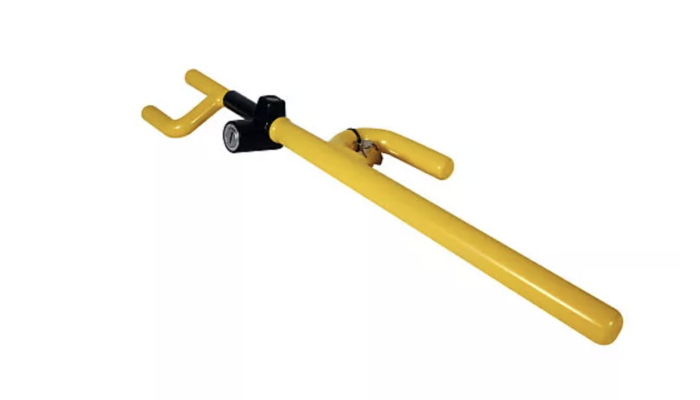
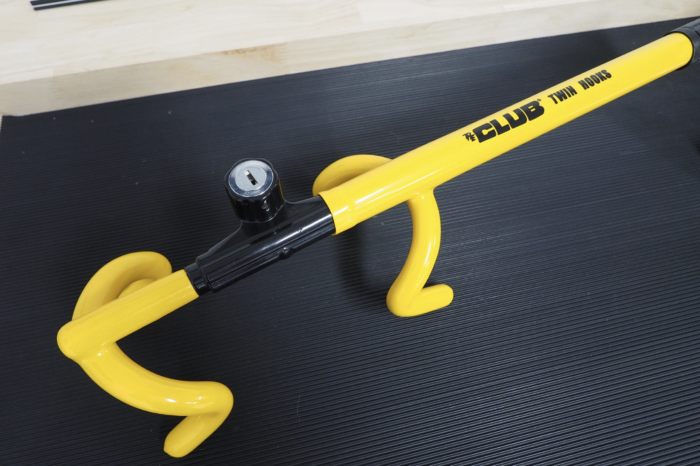
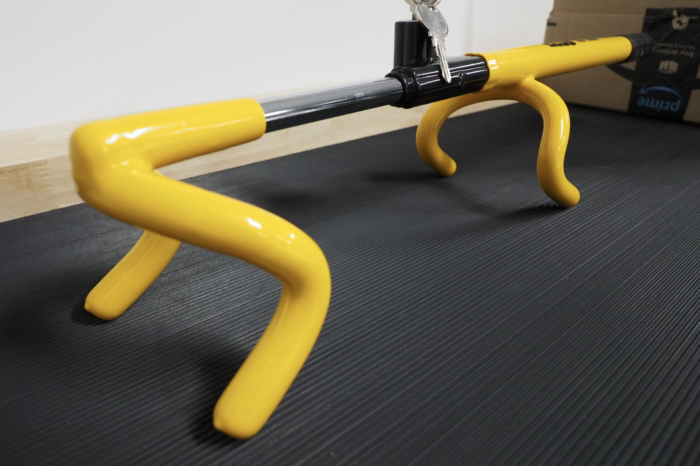
The Club 3000 ($32) steering wheel lock, in short, is durable, dependable, and easy to use. It checks all the boxes for the best anti-theft car device to preclude criminals from stealing your car: Chromoly steel construction, reinforced lock housing, and a bright yellow protective PVC coating that is noticeable from a distance.
Unique to The Club is a patented self-locking feature — with a single pull, you can set and lock the device on your steering wheel without a key.
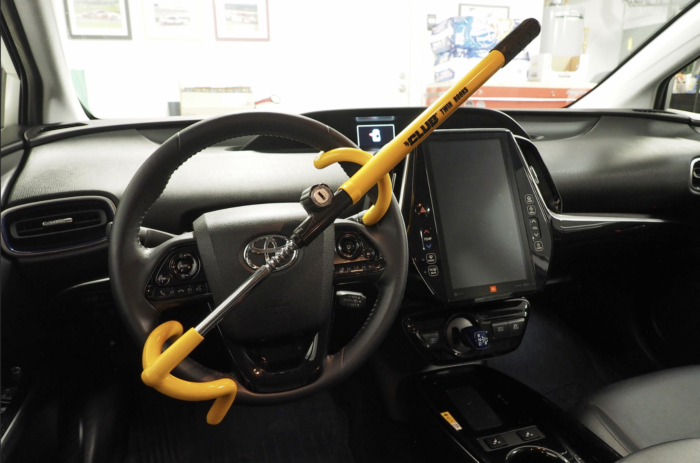
The twin-hook design and reinforced lock housing of The Club 3000 make it harder for thieves to defeat. Unfortunately, the twin hooks will not work with some steering wheels. We discovered that The Club 3000 didn’t fit a Prius steering wheel because of the limited space at the 5 and 7 o’clock positions. A minimum of 5 inches between the steering wheel spokes is necessary for proper fitment.
When it comes time to unlock it, simply use one of the three keys provided. By virtue of the vibrant yellow color, criminals might reconsider before attempting to break into your car.
A steering wheel lock isn’t 100% foolproof, but it is an outstanding visible obstacle. Most thieves are not that smart, which is why they often get caught. Regardless, they want quick and easy. With The Club 3000, it takes time and possibly unnecessary attention to defeat. Using a steering wheel lock will likely make a criminal move on to an easier target.
MAYCC Remote Battery Disconnect
-
-
(Photo/Derek Mau)
-
(Photo/Derek Mau)
Specifications
Pros & Cons
Pros
- Kills the battery power to your car
- Straightforward installation process
- Two remote control fobs
Cons
- Requires connecting to the battery terminal
- Size of the smart switch requires clearance around the negative battery post
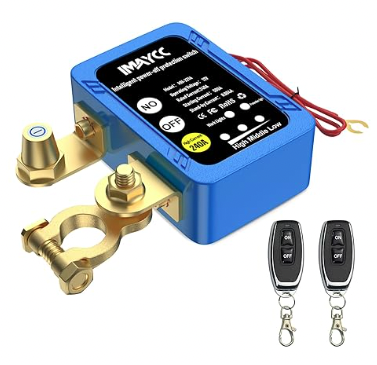
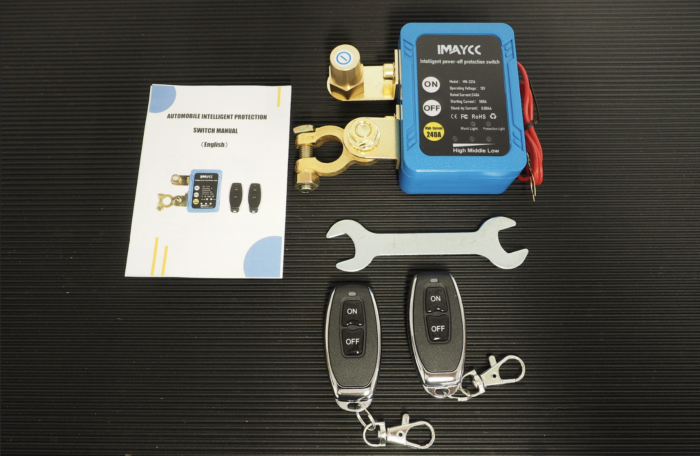
The IMAYCC Remote Battery Disconnect Switch ($56) is an effective tool for disabling your vehicle’s power using a button on the smart switch or a remote control. Its built-in intelligence to monitor the battery’s condition is a unique feature that sets it apart.
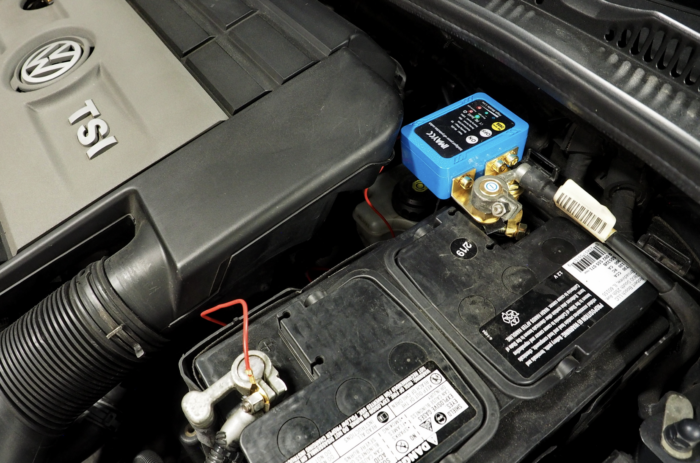
Don’t let the thought of attaching the smart device to the battery intimidate you. The installation steps are straightforward, even though the instructions need better clarity. Someone with beginner-level mechanical skills can tackle the three-step installation process.
The beauty of the battery disconnect switch is that installing it doesn’t require tapping into the vehicle’s factory wiring harness. However, the IMAYCC smart switch box requires a few inches of free space near the negative battery post because that’s the primary attachment point. Not having enough clearance was a problem for the third-gen Prius, initially chosen as a test vehicle. Other space constraints arise if the battery is fitted into a battery box or tight compartment.
The kit includes two remote control fobs, so you don’t have to directly access the battery to turn the intelligent disconnect switch on or off. This convenience is a significant advantage if you own a Mercedes Sprinter or RAM Pro Master van, where the battery resides under a floor panel on the driver’s side.
Using the remote control or manually turning off the IMAYCC Remote Battery Disconnect Switch will help alleviate the fear of someone stealing your car since the switch kills power to the entire vehicle and defeats any attempts at hot wiring. It’s a serious must-have for any classic car or truck if you want a kill switch without splicing into the factory wire harness.
Carlock Tracker and Car Alarm System
-
-
(Photo/Derek Mau)
Specifications
Pros & Cons
Pros
- Track your car’s movement and driver’s actions in near real-time
- Works with all automotive vehicles manufactured since 1996
- Helpful for managing a fleet of vehicles or monitoring a teen’s driving practices
- Track and manage vehicle status using the mobile app or the web page
Cons
- Too easy to bump the device when the vehicle’s OBD port is close to the driver’s knee
- Monthly or annual subscription fee associated with the service
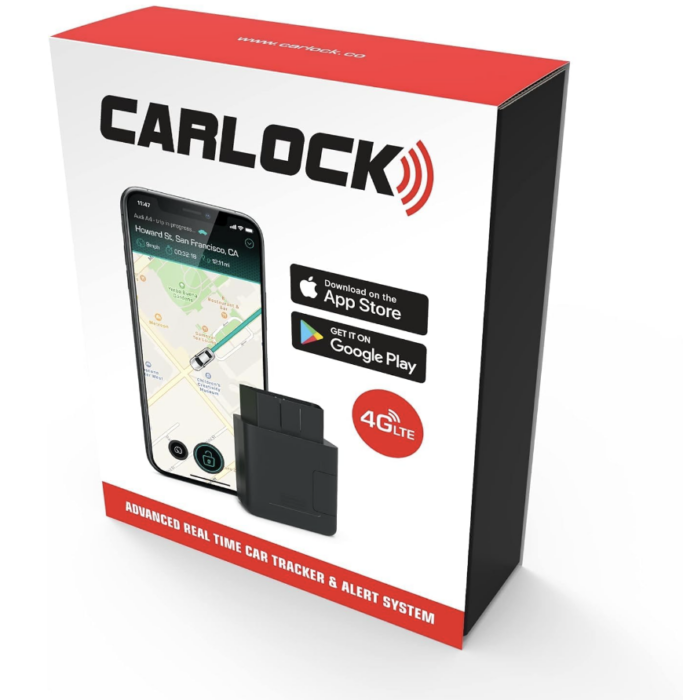
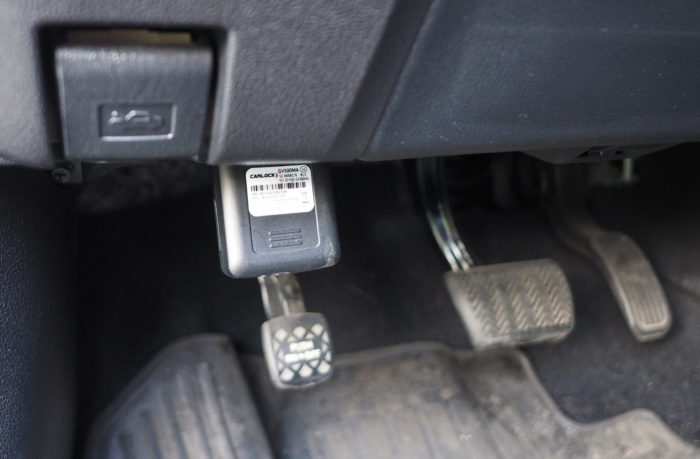
The Carlock car tracking system ($55) uses GPS signals and GSM technology to track the location of your vehicle and will alert you immediately if it thinks something is amiss. Installation is as simple as plugging the device into the OBD (onboard diagnostics) port, configuring the mobile app, and registering the activation code. Since CarLock has GPS and GSM antennas, a backup battery, and a motion sensor, running the phone app in the background won’t draw any more battery power than a typical app.
Once plugged into the OBD port and set up for your vehicle, the GPS tracking device will actively monitor your car 24/7 at 30-second intervals. Suppose it detects an abnormal vibration when parked. An alert immediately gets sent to your cellphone. When CarLock is enabled, and the engine starts or the car moves outside of its geofence, an alarm will sound on your cellphone alerting you — not to some random person near your car who has zero interest in hearing some obnoxious car alarm sounding off.
The CarLock device will also alert you when disconnected from the OBD port. It’s a practical feature but an annoying occurrence each time it was inadvertently knocked loose by my knee getting in and out of the car. Here’s why.
Often, the OBD port is located under the dash panel to the left of the steering wheel column. If the CarLock device is exposed, as with our test car, we suggest purchasing the optional extender or splitter cable to hide it from view and move it away from its prone position. I lost count of the number of times I bumped it loose. Some vehicles have their OBD port in a less accessible place. So, it helps to know where the location of the OBD port before purchasing a CarLock.
One side note: AirTag, or a tracker that uses Bluetooth technology, functions as a low-cost alternative to GPS trackers, but it has limitations. First, AirTag connects only to Apple devices. Second, the range of a Bluetooth device is limited to about 30 feet, or it must rely on crowdsourcing the signal from other iOS devices nearby. AirTag and other Bluetooth tracking devices work well at finding personal items, but they’re not ideal for locating a car.
The CarLock GPS tracking device offers a wealth of features that monitor your car in near real-time. It’s also a good tool if you have a teen driver in the family or need to keep tabs on a fleet of vehicles because it will track aggressive driving, and the app will report back with a driving score based on a multitude of factors such as speed, miles driven, etc.
Standard service costs $9.60 a month or $113 per year after the 30-day trial period. Opting for the Standard+ service contract steps up the refresh rate of location data from 30 seconds to 15 seconds and gets you a 1-year history of reports.
Anti-Theft Device Comparison Chart
| Device | Price | Function | Warranty |
|---|---|---|---|
The Club 3000 | $51 | Cut-resistant | Guaranteed up to $500 against the owner’s comprehensive insurance deductible |
| IMAYCC Remote Battery Disconnect Switch | $56 | Disables power to the 12V battery | One-year worry-free after-sale service |
| Carlock Tracker and Alarm System | $55 + monthly subscription | GPS car tracker and alarm system | Two-year limited warranty |

The Best GPS Trackers of 2026
- Best Overall GPS Tracker: Bouncie
- Best Budget GPS Tracker: Tracki
- Best GPS Tracker With Waterproof Box: Spytec GL300 Mini
- Best GPS Tracker for No Subscription: Apple AirTag
- Best GPS Tracker for Zero Cell Service: LandAirSea 54
Bouncie

Specifications
Pros & Cons
Pros
- Real-time updates of vehicle movements and speed
- Vehicle health and maintenance monitoring
- Expansive app for monitoring and recording data
- Cheap monthly subscription
Cons
- Easy to find and remove if a vehicle is stolen
- Only works when the vehicle is turned on
- Only works on 1996 and newer vehicles
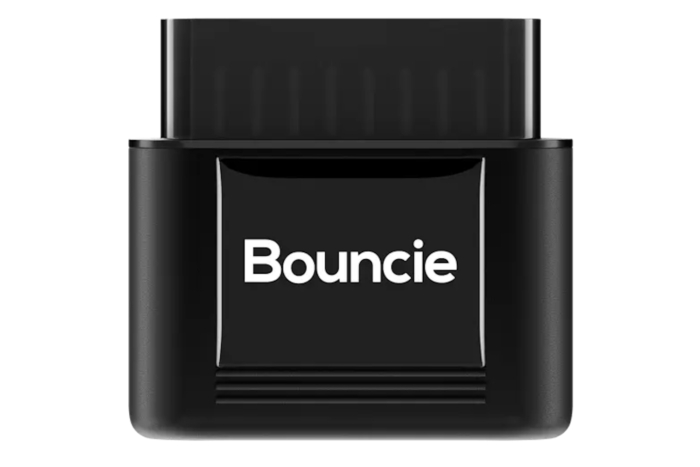
By far, our favorite GPS tracker for tracking a car goes to the Bouncie ($90). The tracker works by plugging into your vehicle’s OBD II port. From there, it not only gets power, so you don’t have to worry about charging or replacing batteries, but it also connects to your vehicle’s computer and can start tracking a plethora of your vehicle’s data. This data includes the health of the vehicle’s engine and battery, fuel levels, hard acceleration/braking, speeding, idle time, trip fuel economy, distance driven, impact detection, and curfews.
Not only did the tracker monitor and alert us via email and SMS, but it also did so on a very easy-to-use app. The app shows your vehicle’s location in real-time and logs every data point above. You can easily see where your vehicle is headed and how fast it’s going at any point while the vehicle is powered on and in cell range.
While the price of the tracker is considerably higher than the other trackers at $90, the monthly subscription at $10 is the lowest available, and there are no monitoring levels, meaning it shows real-time updates all the time.
While we loved the data provided, the app user interface, and the alerts available, there are a few downsides to the Bouncie. First and foremost, you can’t hide the tracker at all. It’s very easy to find and remove from the OBD II port, and any educated vehicle thief or high schooler can easily remove it.
Second, the tracker only works when the vehicle is powered on, so if your vehicle gets towed or the battery is dead, there is no tracking. Lastly, this is only compatible with vehicles made in 1996 or newer, as OBD II ports were not required in vehicles made prior to that date. Overall, if you are looking for a vehicle tracker and your vehicle has an OBD II port, we would choose the Bouncie, time and time again
Tracki GPS
Specifications
Pros & Cons
Pros
- Cheapest priced unit
- SOS and pre-chosen text buttons
- Consistent and reliable email and SMS alerts
- Wide range of accessories for variety of use cases
Cons
- Short battery life
- Tiered subscriptions can limit functions
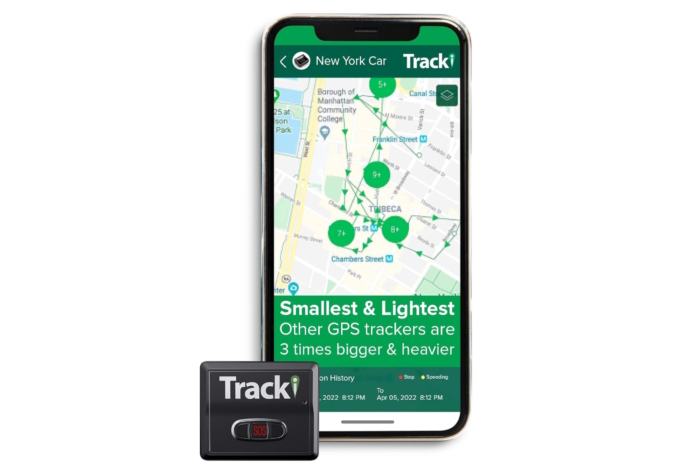
For being small and lightweight, the Tracki ($13) is loaded with features and is 4G LTE connected. While this was the cheapest option we tested, it also came with the most accessories and had a low monthly subscription of $20 or as low as $10 for an annual subscription.
One thing the Tracki has down is notifications: It has the ability to send push notifications, email, and SMS updates, including movement, speed, geofence, low battery, two preset messages, and an SOS alert.
From our testing, we found the device to be very sensitive to movement; the simple act of getting into our truck would trigger the alert compared to the others, which needed the truck to be driven before their movement alerts were triggered physically. The preset messages and SOS alerts were limited to 30 per month combined before incurring additional charges.
The app took a bit of time to figure out, but once we were familiar, we were able to quickly and easily view the map in real-time, check alerts, set notifications, and more. The Tracki comes out of the box with a handful of handy accessories, including a water-resistant case, belt clip, magnetic cover, lanyard, and Velcro stickers. Additionally, online, you can purchase larger batteries, a hardwire kit for a car battery, and an OBD II port to power cable, making the Tracki very versatile for different uses.
Also, the monthly subscriptions do come in multiple tiers and price structures depending on how many devices you have and how many seconds between updates from 60 seconds down to 15 seconds. The battery life was the shortest of the ones we tested in full tracking mode, but it does have a battery saver mode where it will only turn on to track at specific intervals that can help improve battery life.
Overall, the low price of the GPS itself and the monthly subscription without a lack of features or accessories rocketed the Tracki into our best budget choice.
Spytec GL300 Mini
Specifications
Pros & Cons
Pros
- Comes with waterproof, magnetic box
- Easy-to-use phone app
- Reliable notifications
- SOS button
Cons
- Alerts managed in web app only
- Bulky when using waterproof, magnetic box
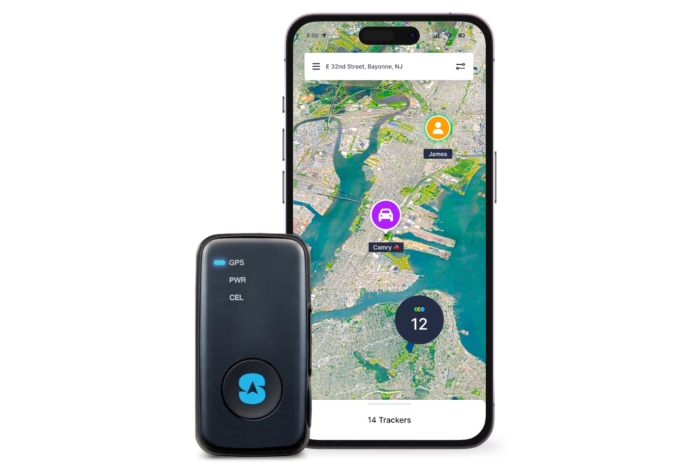
The Spytec GL300 Mini ($18) is another great vehicle tracker. Its rugged, durable, waterproof magnetic box makes it a perfect option for tossing underneath or outside a trailer, truck, car, or camper. The app is easy to use for real-time monitoring and provides a great set of alerts and notifications delivered via mobile, web, email, and SMS.
This tracker has the ability to record and send notifications about trips taken, speeding, geofence entry/exit, movement, distance traveled, and trip duration, as well as a low battery and charging status. A notification can also be signaled if the SOS button is pressed.
While this is an extensive list of alerts, they are only configurable on the desktop app, which, when traveling away from home, can be frustrating. Though the mobile app doesn’t allow alert configurations, it does have a wide range of information about the tracker including real-time map updates, how to use it, live support, and more.
Although we did like the tracker a lot, it was the largest, heaviest, and bulkiest of the trackers we tested. Though rugged and durable, the weatherproof case was even bulkier, making it hard to conceal on any vehicle. Extra accessories include extended battery cases and hardwire kits.
The monthly cost of $23 was on the higher end for subscription tiers as well. Overall, the Spytec was an extremely reliable, accurate, feature-laden tracker. When matched with its weatherproof case, it was the most durable and rugged tracker for mounting on the outside of any vehicle.
Apple AirTag
Specifications
Pros & Cons
Pros
- No monthly subscription
- Easy to hide
- Long battery life
Cons
- Only works if near other Bluetooth Apple products
- Alerts others in your vehicle there is an AirTag nearby, which won’t help in cases of theft.
- Limited features
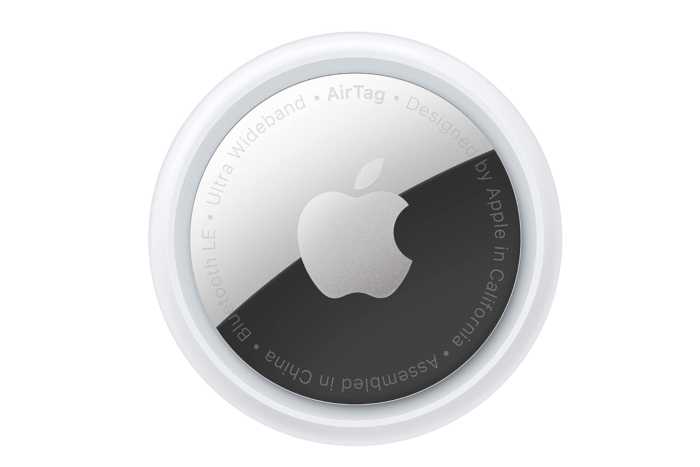
You’re correct: The Apple AirTag ($25) isn’t known as an automotive tracker and it technically doesn’t use GPS. But its affordable price tag with no monthly subscription cost, the fact that it functions as a tracker, and its small size and long battery life make it easy to hide in a vehicle. So we wanted to test and include this option in our guide.
The AirTag does not use cell towers or satellites but instead uses Bluetooth to track its devices. Each time the AirTag comes in proximity with another Apple device running iOS 14 or above, it uses that device to ping out and back to your Apple device. The FindMy app shows users the last pinged location on a map and includes lost and find modes.
Thanks to a replaceable CR2032 battery, the AirTags have a claimed 1-year-plus battery life, and our tester’s four-pack are all on 1 year and 3 months of battery life. Their compact size makes them very easy to stash in a vehicle, backpack, or, really, anything you want to track.
The downside of the AirTags really shows in a few ways. First, there are no alerts like movement, trip start/stop, geofence, and more that we see in all the other trackers. Second, they only work with Bluetooth proximity and won’t track without cell coverage or if there are no iOS 14 devices around.
Lastly, if someone who isn’t the owner starts moving with the AirTag, it will send an alert to their Apple device, letting them know they are being tracked and how to locate the device. Overall, the impressive battery life and $0 monthly fee make the AirTag a great contender for Apple users.
LandAirSea 54
Specifications
Pros & Cons
Pros
- Satellite network works without cell service
- Energy-saver mode offers extended battery life
- Real-time tracking
- Waterproof construction and built-in magnet
Cons
- Phone app can be confusing
- Limited alerts available
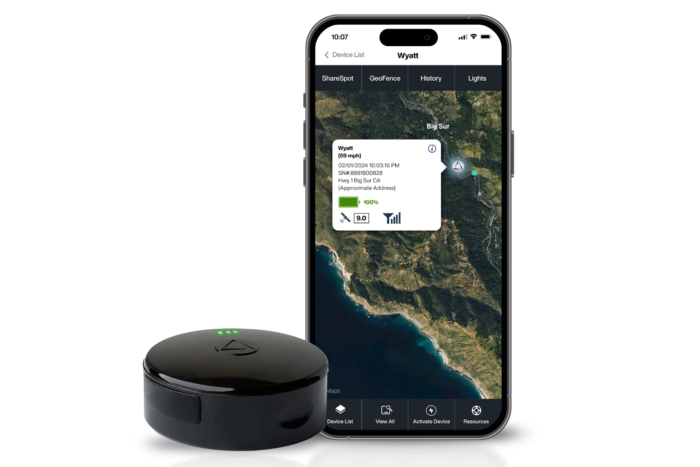
The LandAirSea 54 ($30) was the only tracker that came fully waterproof without an additional case and that used a satellite network instead of cell towers. These two factors alone make it a powerful tool for discreetly and accurately tracking your vehicle or any precious item.
What stands out about this tracker is its enclosure, a small, black circular design not only boasts full waterproof casing, but also has a pinpoint on/off switch and a built-in magnet so you can hide this tracker just about anywhere.
Unfortunately, the waterproof charging cover isn’t attached and is easy to lose when charging; luckily, they provide a second cover with the box. Additionally, the satellite network can track down to inches, anywhere in the world, compared to cell towers or Bluetooth network trackers.
While the Silver Cloud app isn’t the most user-friendly, it does show real-time tracking of your device, satellite connection, and battery life. However, the notifications are limited to geofencing, speed, and battery life.
The app is also limited in terms of what you can do, as there is only a history of the movements and not a history of the alerts triggered. On the phone app, you can also manage the energy-saver battery mode, where you can set the tracker to only update every 24 hours, giving upward of 6 months of battery life.
Overall, this is a great stealth tracker for protecting any valuable asset. As long as you don’t mind the limited alerts and confusing app, the incredibly accurate satellite network that works anywhere in the world is a good enough reason to choose the LandAirSea.
GPS Tracker Comparison Chart
| GPS Tracker | Price | Base Monthly Subscription | Battery Life | GPS Network | Weight | Size |
|---|---|---|---|---|---|---|
| Bouncie | $90 | $10 | Vehicle-powered | 4G LTE | 1.13 oz. | 1.87”x1.75”x1” |
| Tracki GPS | $13 | $20 | 5-50 days | 4G LTE | 1.26 oz. | 1.75”×1.6”×0.6” |
| Spytec GL300 Mini | $18 | $23 | 90-104 days | Yes4G LTE | 3.2 oz. | 3.15″x1.15″x1.64″ |
| Apple AirTag | $25 | $0 | 365 days | iOS device Bluetooth | 0.39 oz. | 0.47”x4.09”x3.27” |
| LandAirSea 54 | $30 | $20 | 10-180 days | Global GNSS Satellite | 4.8 oz. | 2.25”x2.25″x0.8″ |

How We Tested Car Anti-Theft Devices
Our Expert Tester
GearJunkie tester and Buyer’s Guide author Derek Mau headed up the product selection and testing for anti-theft devices in this guide. The typical work day for Mau involves testing almost anything with four tires and a steering wheel. He thoroughly researches the best automotive gadgets and accessories and is always on the hunt for a good deal. Of course, he shares his findings through detailed and informative writing and reviews of all things automotive for GearJunkie.
Lead tester for GPS devices, Eric Phillips, has been an outdoor professional for the last 10 years along with being an extreme automotive enthusiast. At age 18, he built a truck from the ground up alongside his dad and, while living in Chicago, raced cars. Not one to take a vehicle to a mechanic, Phillips picks up a wrench to complete the maintenance and upgrades his own rigs.
Phillips has spent a lot of time using GPS to track himself and his belongings, from working search and rescue, split-boarding from huts, and hunting in the remote high alpine to living full-time at 9,000 feet in Colorado. He loves playing with apps and tracking data across phones, tablets, laptops, and desktops.
Tester and photographer for GPS devices, Chip Jordan, is an all-around outdoorsman and gearhead. He has spent the vast majority of his life wrenching on most anything with an engine and wheels. From a complete frame-off rebuild of a 1973 Jeep CJ5 with his sons to working as a fabricator and mechanic at a motorcycle and hot rod shop, it’s safe to say that Chip has an unquenchable thirst for all things automotive.
While nomadically meandering around New Mexico and Colorado, Jordan has used a wide variety of GPS devices and apps to aid him in navigating through his travels, as well as marking those hidden gem campsites and epic fly fishing spots.

Our Testing Process
Derek is based in Idaho, which isn’t a hotbed for car theft. But he does have a good imagination, an analytical mind, and each device in hand to install on his vehicle and inspect for vulnerabilities. He directly compares the devices that use the same anti-theft mechanisms and discovers the advantages and disadvantages of the different deterrent methods. He installed each of the remote battery kill switches on his vehicle, taking careful notes on the ease of installation and overall user interface.
Eric and Chip tested GPS units side-by-side by placing them all in the same vehicle and setting the same set of alerts, including the trip start/stop, speed, geofencing, and more. Then, we sent off a driver to trigger as many alerts as possible while frantically monitoring each app for notifications, alerts, and data points.
Throughout our field tests and personal experience, we determined the best GPS trackers based on various metrics, including subscription costs, GPS coverage, battery life, ease of use, alerts, tracking data, features, reliability of information, warranty, and tracking intervals.

Buyer’s Guide: How to Choose Car Anti-Theft and GPS Devices
Plenty of applications of GPS trackers and anti-theft devices come to mind, including monitoring an everyday vehicle, trailer, motorcycle, or bike for wear and tear, tax or workplace purposes, or security. Both GPS trackers and anti-theft are helpful for safety, but they have some differences in application and use case. So, which one you invest in, depends on your needs and why you feel the need to invest in one in the first place.

Types of Car Anti-Theft Devices
Steering Wheel Locks
Steering wheel locks are designed to prevent the steering wheel from turning more than a few degrees. Their primary purpose is to act as a visible obstruction, as it hinders a would-be felon from steering the vehicle. Heavy-duty construction of alloy steel and a high-security lock are features to look for in a steering wheel lock.
Additionally, a fundamental consideration when choosing one is how quickly somebody can put it in place. Anything that is a nuisance to lock up will likely discourage someone from using it. The Club 3000 lock checks all the boxes and effectively dissuade bad actors looking for an easy score.
Brake Locks
Another popular anti-theft device is a brake lock. One end hooks the brake pedal, making it unmovable, while the other locks onto the steering wheel. Looking at the specs and measuring the distance between the brake pedal and steering wheel is critical to ensure the device will extend far enough. Since they have a low attachment point, a crook might only see it once they get inside the car.
Wheel Lock Clamps
A wheel lock clamp is a highly conspicuous preventive measure that effectively immobilizes a vehicle and installs in seconds. It’s a low-cost anti-theft device that attaches to most wheel and tire combinations for peace of mind protection applicable to cars, vans, trucks, and motorcycles.
Immobilizers
A vehicle immobilizer is basically a security device that disables the engine, thereby preventing someone from committing grand theft auto. Its objective is to prohibit a car from getting boosted by someone who doesn’t have the ignition key. Most modern vehicles include an integrated immobilizer from the factory, which generally stops car thieves from hot-wiring a vehicle.

An immobilizer turns off one of the systems required to start a car’s engine — typically disabling the gas supply or the ignition. This is done by radio frequency identification between an ignition key transponder and a radio frequency reader in the steering column. When you turn the key in the ignition, the transponder transmits a signal to the reader, which sends it to a receiver in the vehicle’s computer control module.
For older cars that don’t have integrated immobilizers from the factory, the FEITON battery isolation switch prevents someone from hot-wiring your vehicle and driving away.

GPS Battery Life
Battery life is a super important factor when choosing a GPS tracker. A dead battery won’t help if your vehicle gets stolen. If you park your camper in storage all winter and want it tracked, using a tracker that requires charging every 10 days won’t make sense. Thats’s why considering the battery life is important when picking out your GPS tracker.
All of our trackers except the Bouncie run off battery power. The Bouncie uses the vehicle to power the tracker, but that only works if the vehicle is turned on or the car battery is charged. Some tracker models include power or energy-saving modes that preserve battery life by only tracking at certain intervals. Of these, the LandAirSea 54 stands out with its 4- to 6-month battery life in power-saving mode.
The Apple AirTag is unique in that it uses a nonrechargeable battery that offers 1 year of battery life, which is great for hiding in places you don’t need frequent access.
For the LandAirSea 54, Spytec GL300 Mini, Brickhouse Security Spark Nano 7, and Tracki, options are available for extending the battery life. That menu includes extended batteries, which are a great alternative when the vehicle or item you want to track does not provide its own power.
If the item you want to track does have its own battery, like a car or truck, hardware kits are available, which let you wire the tracker to the vehicle battery so it’s always powered. The downside is that wires coming off the battery are easy to find and disconnect in the case of theft.

GPS Monthly Subscription
While you might think that GPS trackers are cheap, the real cost of using a tracker comes in the form of a monthly subscription needed to use the product. These monthly subscriptions are why these physical trackers are priced so low. The subscriptions cover connecting the trackers to satellites and cell towers and unlocking functions within the paired apps.
The standout product in this category is the Apple AirTag, which doesn’t require a monthly subscription to track — just an Apple account. Though its tracking is limited to Bluetooth, and there is no ability to set alerts, the one-time price of the AirTag is very enticing.
Second, in the standout aisle is the Bouncie, as its monthly subscription is the cheapest available at only $10 a month. Also, there is no tiered price structure where you pay more per month to track the device in faster intervals.
On the opposite end of that is the most expensive subscription-based unit, the Brickhouse Security Spark Nano 7, with a base subscription price of $29. This GPS unit does have a tier-based pricing structure, with additional features becoming available as the monthly price increases.
As you compare the prices of each tracker, be sure to note the monthly subscription prices to get a realistic idea of how much each tracker will cost to operate yearly.

GPS Real-Time Tracking
Real-time tracking refers to tracking an item or seeing where your tracker is in real time as it’s moving. This is extremely helpful if you’re looking for a stolen vehicle that’s on the move, or monitoring a family member while they drive.
Being able to see in real-time where the tracker is, what speed it’s going, and where it’s headed are huge pluses. Our testers were most impressed with the Bouncie when comparing real-time tracking, as it gave the most frequent and also information-heavy updates.
While some trackers work in real-time, other trackers only update once every 1 to 3 minutes or in battery-saver modes as spaced out as once every 24 hours. This type of tracking uses less battery and resources but isn’t as helpful if you’re looking for real-time updates.
If you’re tracking a family member on a road trip and want to see their progress, a 24-hour update might not be quick enough compared to real-time updates. Most trackers can be switched from real-time tracking into a battery-saver interval tracking mode.

GPS Alerts
Alerts come in various forms. They can be notifications from a web or phone app, an email message, or an SMS text message. Alerts can be set to one, or multiple people or formats for each alert.
GPS trackers can send alerts when certain parameters are triggered. These can include movement, trip start/stop, fuel levels, hard acceleration/braking, speeding, idle time, geofencing, trip fuel economy, distance driven, impact detection, curfews, SOS, and more. We’ve analyzed the three most important ones below.
Geofencing
Geofencing refers to creating an area on a map in the shape of a square or a circle. The tracker will monitor this area and send alerts whenever the tracker leaves the set boundary or geofence, and again when it enters a geofence.
These can be very helpful when tracking a family member or young driver to ensure they don’t leave the local neighborhood, county, or even state. A good tracker should be able to easily set and create alerts for geofences and then receive the alerts immediately when they are triggered.

Speed
Speed refers to setting a max speed, like a speed limit on the tracker. Whenever the tracker moves faster than the set limit, an alert will be sent. So whenever you toss the keys to your ride over to a friend or family member, you can say keep it below X miles an hour and get a real-time alert if it’s broken.
Trip Start & Stop
Probably the most important feature you would want to know from a tracked vehicle is if it starts or stops moving. If your car starts moving without your permission, an alert from a tracker can quickly alert the owner that a theft may be happening and to call the authorities. An alert like this can really help in cases of theft.
Trip alerts can also be helpful when tracking family members so you know when they have started, and ended vehicle trips. The Tracki has the most sensitive trip start sensor, as climbing into a vehicle where the tracker was in the center console was enough to trigger a trip start alert.

Understanding Why Your Car Is a Potential Target for Thieves
Car thieves have two primary strategies for targeting vehicles: one is based on opportunity, and the other on careful planning. Understanding these tactics can help you protect your car. Crime of opportunity happens when a thief sees a vulnerability, like an unlocked door or valuables in plain sight. Sometimes, these situations often lead to carjackings.
On the other hand, a planned theft involves more thought and is usually far from a spur-of-the-moment decision.
But don’t worry — we’ve got you covered. Here are some easy and practical security tips to help safeguard your chariot and keep your peace of mind intact.
To prevent your car from getting stolen, consider the following tips:
- Remember to always roll the windows up, lock the doors, and take the keys with you
- Purchase and install a smart car alarm
- Install a hidden kill switch
- Use a steering wheel or brake lock
- Engrave the VIN onto the windows
- Improve driveway, garage, or street security with cameras and motion sensor lights
- Prevent key hacking by using a Faraday box or pouch to store keyless ignition fobs when at home
- Always stay aware of your surroundings

Remember to Lock Car Doors at All Times
Most car thieves prey on an exploitable opportunity. The most effortless act is finding an unlocked vehicle. Learning to roll up the windows and lock your car every time you walk away from it is the most basic and critical step to remember. Locking your car doors also applies when driving and when the vehicle is in motion.
Stealing an unattended parked vehicle is one way to lose your precious ride, but don’t exclude carjacking. Carjacking is the theft of an automobile by using violence or intimidation toward the driver. Keeping your car doors locked at all times is the first level of protection against thieves that would target you and your vehicle.
Keyless Car Theft
Key hacking is a high-tech technique that allows thieves to gain access to and take off with your vehicle within minutes. This type of hacking is referred to as keyless car theft or relay theft. Hackers can utilize relay boxes to relay and amplify the signal to trick your car into unlocking — all without having to enter your home.
Thankfully, there’s an easy solution to prevent your car from disappearing from your driveway and prevent key hacker theft. The preferred method is putting your keyless fob away from doors and windows in addition to putting your keys somewhere that can block the signal to your car.
A straightforward and cost-effective solution is to use a Faraday bag or box. The inexpensive bags (or boxes) have a conductive metal mesh that blocks wireless signals emitted by keyless car fobs.

Avoid Parking in Isolated Areas
Whenever possible, seek out parking areas that are well-lit and preferably where there’s always some activity. Parking in highly visible areas reduces the likelihood of a criminal successfully stealing your car. Most hoodlums don’t crave unwanted attention because it exposes them to their nefarious activity. It’s impossible to always keep a watchful eye on your vehicle, but there are several measures that make it easier to monitor your car directly or indirectly.
Constantly Keep an Eye on Your Surroundings
You may have heard, “Keep your head on a swivel at all times.” One of the best ways to practice situational awareness is to continually look around you and understand the immediate effect on your automotive safety. Assessing your surroundings will influence how you treat your car and impact the level of security you choose to leave it with.
The Best Protection Against Car Theft
Visible and audible devices: The Club 3000 and Tevlaphee steering-wheel locks, theft-deterrent decals, flashing LEDs, and window etching create a visual warning and hindrance. Audible devices such as a horn alarm discourage theft by bringing unwanted attention to thieves attempting to steal or enter a vehicle.
Vehicle immobilizers prevent thieves from bypassing a vehicle’s ignition system and hot-wiring the car. Three components are necessary to start a car — the ignition, the starter motor, and the fuel system. Factory-integrated immobilizers will compromise at least two of these components if the correct key isn’t detected. The IMAYCC Kill Switch and FEITON Remote Battery Disconnect Switch allow you to remotely kill the battery power, which effectively disables all three components crucial for starting a vehicle.
Vehicle recovery systems use electronic transmission technology that helps law enforcement reveal the location of stolen vehicles — and possibly catch the thief in possession of a stolen car. GPS trackers, such as CarLock, will alert you in real-time if your vehicle is tampered with or moved, along with the ability to track it.
You may find that the added peace of mind from using these devices is worth the additional step when leaving your car. If you have ever been a victim of auto theft or vandalism, you will likely agree that taking added precautions to reduce the risk of a repeat break-in or stolen vehicle is a worthwhile investment.
As suggested by the National Highway Traffic and Safety Administration (NHTSA), if you believe that someone stole your vehicle, follow these steps:
- Contact the police right away to file a stolen vehicle report. Submit a copy of the police report or the case number to your insurance company. Be ready to submit the following information:
- License plate number
- Year, make, model, color of your vehicle, and any identifying characteristics
- Vehicle Identification Number (VIN)
- Contact your insurance company to file a claim within 24 hours of vehicle theft.
If you recover your vehicle before the authorities, report the recovery to the police and your insurance company immediately.
A vehicle immobilizer is an anti-theft device that offers a high level of protection. It’s difficult to detect, doesn’t transmit radio frequency signals that are easily cloned, and operates silently. Bluetooth tracking devices, such as the Tile or Apple AirTag, are a low-cost alternative but can be detected with the right equipment because they emit a signal if a thief is sophisticated enough.
First, you’ll likely need to call a locksmith to remove the anti-theft device from your vehicle. Sometimes, car anti-theft devices come with two or three sets of keys. You can unlock your device using the spare if that’s the case.
The next option is to contact the manufacturer. More often than not, you’ll need to purchase a new anti-theft device because most do not have spare keys available for security reasons.
According to the list of the 10 most stolen cars in the U.S., the full-size trucks from Ford and Dodge made the list; Hyundai Elantra, Hyundai Sonata, and Kia Optima were the top three most stolen vehicles in 2023 due to their lack of engine immobilizers, which was revealed on social media. Fortunately, the spike in thefts has dropped dramatically since the Korean automakers released an update that improved the car’s anti-theft software.
Looking at the past decade, Japanese and Korean cars have taken a majority of the 15 spots on the list. Ford and Chevy full-size pickups have been the main target of car thieves in 32 states and rank at the top of the list for most stolen vehicles from 2019 through 2023.
There are a few ways you can tell if someone has put a GPS tracker on your car. First, check the OBD II port for wires or objects plugged in. Next, check the battery for any additional wires like a hardwired tracker. Lastly, you can do a visual sweep of the vehicle, especially underneath for any small boxes that look suspicious.
If there is an Apple AirTag on your car, Apple will send a notification that an AirTag is following you around and also instructions on how to find and stop it from transmitting. There is no guaranteed way to know if someone has put a GPS tracker on your car, but if you do suspect someone has, contact the authorities immediately.
In most states, it’s illegal to install a tracker on someone else’s vehicle without their permission. However, that is not the case when it comes to children and parents. But we don’t recommend trying to track someone else’s vehicle or person without their knowledge and permission.