Whether you’re striding down a local trail or tackling a tough backpacking trip, there’s a hiking boot meant just for you. Hiking boot designs range from leather workhorses to ultralight models infused with trail-running DNA.
This guide — with hiking boots for all kinds of terrain, weather, and personal preferences — has evolved over five years, with more than 30 pairs field tested, led by GearJunkie Editor in Chief Sean McCoy.
Our top choice for general hiking is the men’s Salomon Quest 5 GORE-TEX and women’s Quest Echo GORE-TEX. Another Salomon model, the X Ultra 5 Mid GORE-TEX, is our favorite lightweight boot, while the Merrell Moab Mid 3 Waterproof provides solid performance on a budget.
For the latest test rounds, McCoy put two new contenders through their paces over two months, logging nearly 40 miles in the shifting terrain of Sand Dunes National Park, southern Colorado, and while circumnavigating the high alpine passes of the Tour du Mont Blanc.
Editor’s Note: We updated this guide on October 31, 2026, with new formats for all product reviews and a revamped hiking boot comparison chart.
The Best Hiking Boots of 2026


Salomon Quest 5 GORE-TEX
-

(Photo/Salomon)
-
(Photo/Sean McCoy)
-
(Photo/Sean McCoy)
-
(Photo/Sean McCoy)
-
(Photo/Sean McCoy)
-
(Photo/Sean McCoy)


Specifications
Pros & Cons
Pros
- Highly supportive yet relatively light
- Ideal for backpacking with heavy loads
- Durable
- Off-trail capable
Cons
- Heavier than lightweight day hikers
- Hot in warm weather
Bottom Line: This burly, over-the-ankle boot provides plenty of support and protection for tough trails and moderate off-trail hiking. It’s light enough for long miles, but it’s not super breathable and is best suited for cool weather.
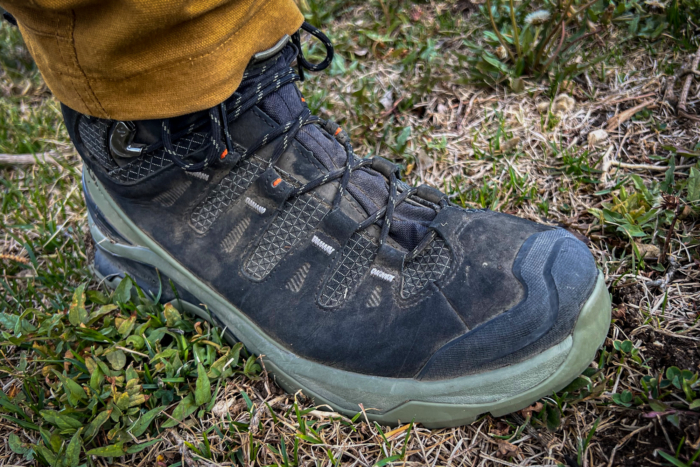
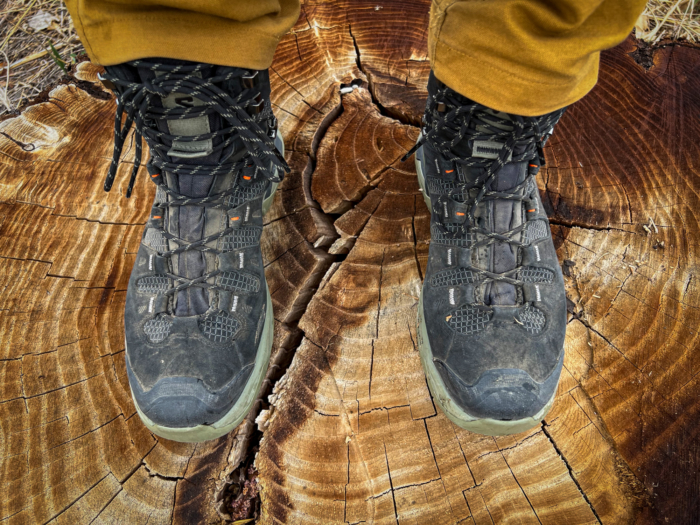
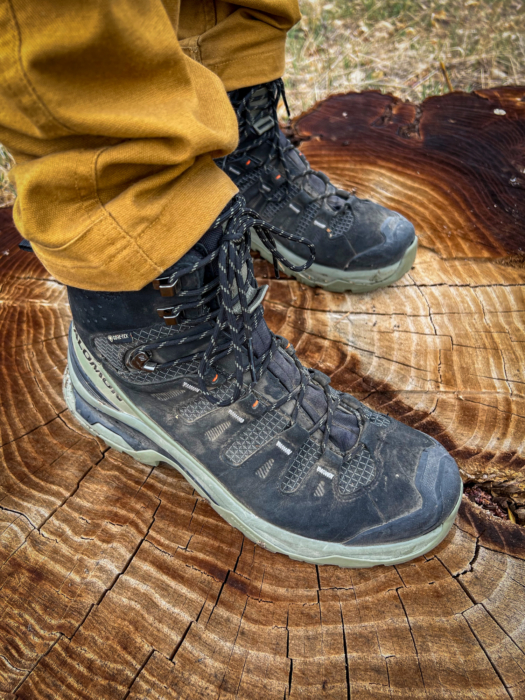
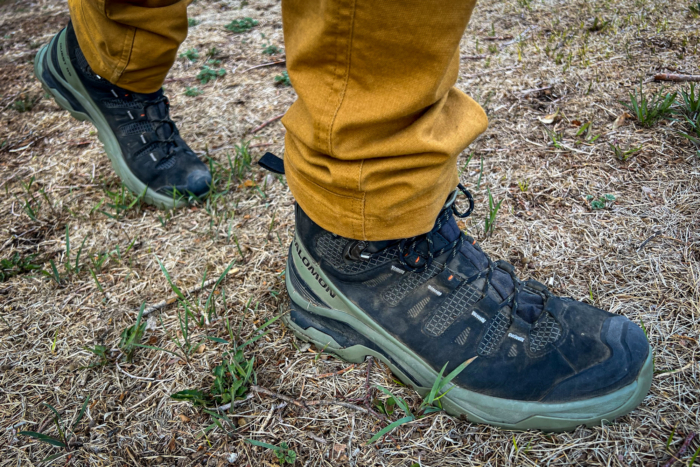
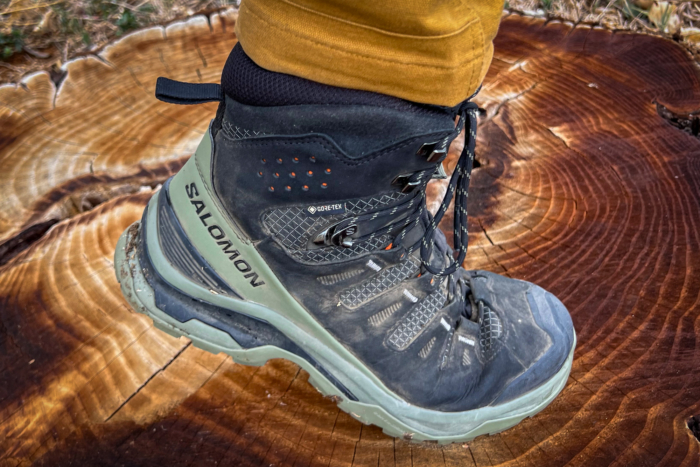
The Salomon Quest 5 GORE-TEX ($240) is a real-deal hiking boot that’s a premier choice for backpackers and hikers who crave stability and protection, but without the burdensome weight of a typical leather workhorse.
The Tech: The fifth iteration of the Quest improves upon its predecessor by shaving off 10% of the weight and introducing a roomier toe box, addressing a common request from long-distance trekkers. Built with a robust Nubuck leather and ripstop upper, this boot utilizes Salomon’s 4D Advanced Chassis to provide exceptional ankle support and promote a natural walking gait, making it ideal for navigating rocky trails or carrying loads of up to around 40 pounds. Note: The Quest 5 women’s model, which is specifically designed to fit women’s feet, is now called the Quest Echo GORE-TEX ($220).
What We Like: The Quest 5 excels in demanding environments. GearJunkie Editor in Chief and AllGear Digital Editorial Director Sean McCoy tested it while off-trail turkey hunting in Colorado, and reported that its GORE-TEX lining provided reliable waterproofing during stream crossings and on muddy terrain. The Contragrip outsole grants confident traction on steep ridges and technical scrambles, and, despite its heavy-duty appearance, the Quest 5 feels nimble underfoot. Its EnergyCell midsole is tuned for responsiveness rather than plush cushioning, allowing hikers to maintain a good feel for the terrain. The lacing system, with locking hooks, ensures a secure, highly adjustable fit that prevents heel slip during long climbs and descents.
What We Don’t: While it’s certainly a top-tier boot, the Quest 5 is best suited to specific climates and use cases. Because of its waterproof construction, it runs hot and lacks breathability in temperatures above 75 degrees. Additionally, users should note that the sizing runs slightly large, often necessitating a half-size step down for the perfect fit.
Should You Buy It? This stalwart boot is a great pick for hikers who often face wet, cold, or rugged conditions, offering a near-perfect balance of protection, comfort, and durability for serious mountain adventures.
Merrell Moab 3 Mid Waterproof
-
-
(Photo/Sean McCoy)
-
(Photo/Sean McCoy)


Specifications
Pros & Cons
Pros
- Affordable for the performance it provides
- High degree of comfort
- Good waterproofing
- Outsole has solid traction
Cons
- Wide fit doesn’t work for narrow feet
- Too bulky for more technical terrain
Read Review: Affordable Awesomeness: Merrell Moab 3 Mid Waterproof Review
Bottom Line: The Moab’s price may have risen a bit recently, but it still offers plenty of bang for the buck. Comfort, traction, breathability, and a reasonable weight for a mid-cut leather boot are all highlights of its widely appealing design.
If you want an amply cushioned, mid-height leather hiking boot but don’t want to spend more than $200, look no further. The Merrell Moab 3 ($175) provides solid stiffness and support, and presents excellent value thanks to its all-around performance.
The Tech: The updated Moab 3 is a capable boot for day hikes and modest backpacking trips alike, thanks to its molded nylon arch shank, reinforced heel, and EVA footbed. Its new insole has more backbone than the previous iteration, and it now boasts a more cushioned midsole and a revamped Vibram TC5+ outsole for improved traction and confidence. Merrell also crafted the new Moab with sustainable materials, making this the most environmentally friendly version yet.
What We Like: This boot’s largely mesh upper is reinforced with a suede pig leather overlay for increased durability. And despite the mesh, which improves breathability, the Moab proved completely waterproof during our tester’s eight (count ’em!) river crossings on outings around Bishop, California. Miya Tsudome wore the boot while ascending gullies, tramping through meadows, and working her way up to tree line — both with a heavy backpack and without — and she praised the Moab 3’s midfoot support, which makes it a smart choice for hikers with high arches, as well as its overall comfort.
What We Don’t: The Moab 3 isn’t super heavy, but it is relatively wide and bulky, which holds it back in technical terrain that requires precise steps. (For scrambly missions, we’d go with a more nimble boot, such as the Salomon X Ultra 5 Mid GORE-TEX.) Its proprietary waterproofing is not as bomber as GORE-TEX, though Merrell sells a GORE-TEX version for $20 more.
Should You Buy It? The Moab 3 will work well for anyone on a budget seeking a traditional, durable leather hiking boot. Its slightly dated look might not win any fashion awards, but this is a functional, comfy boot that deserves its status as a perennial hiker favorite.
Salomon X Ultra 5 Mid GORE-TEX
-
(Photo/Salomon)
-
The Salomon X Ultra 5 Mid GTX hiking boot; (photo/Sean McCoy)
-
The Salomon X Ultra 5 Mid GTX hiking boot; (photo/Sean McCoy)
-
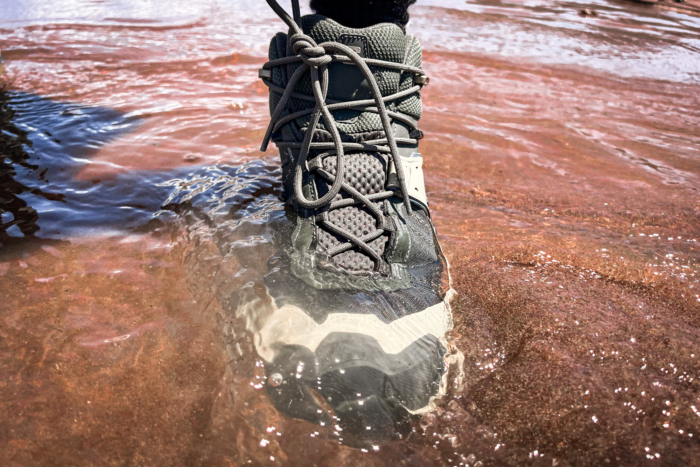
The Salomon X Ultra 5 Mid GTX hiking boot splashing through Medano Creek; (photo/Sean McCoy)
-
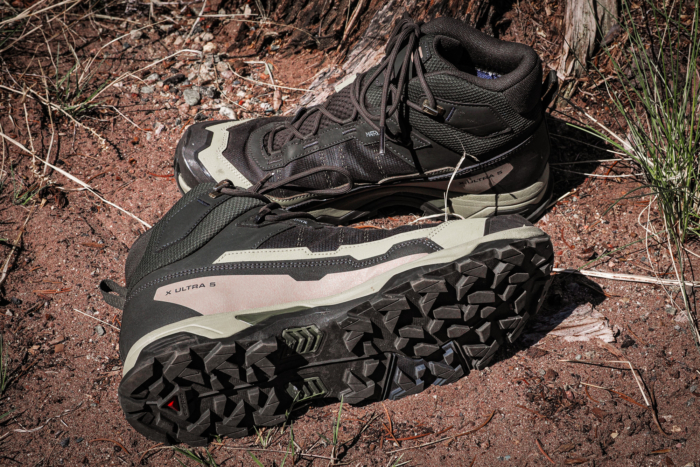
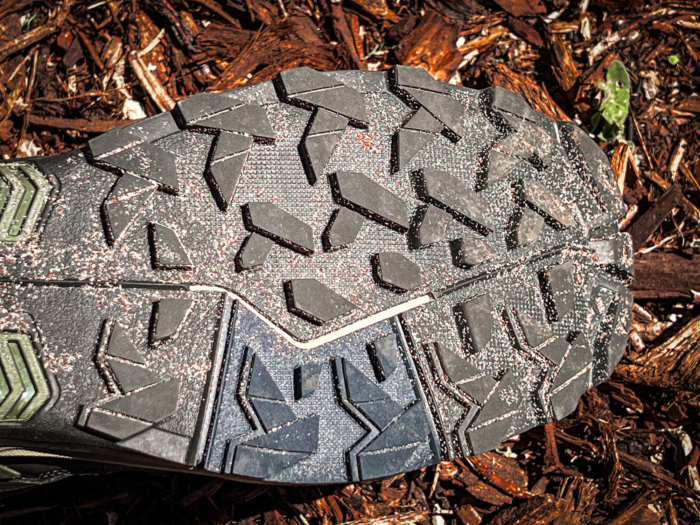
Thye Contragrip sole on the Salomon X Ultra 5 Mid GTX; (photo/Sean McCoy)
Specifications
Pros & Cons
Pros
- Light for the level of stability and protection it provides
- Good traction from the Contagrip outsole
- Short break-in period
- New version is more supportive and durable than before
Cons
- Too pliable for steep side-hilling or step-kicking
- A tad heavier than the previous iteration
Bottom Line: This boot punches above its weight class. It provides protection and grip that are usually found in heavier competitors, while its responsive midsole will put a spring in any hiker’s step without compromising stability too much.
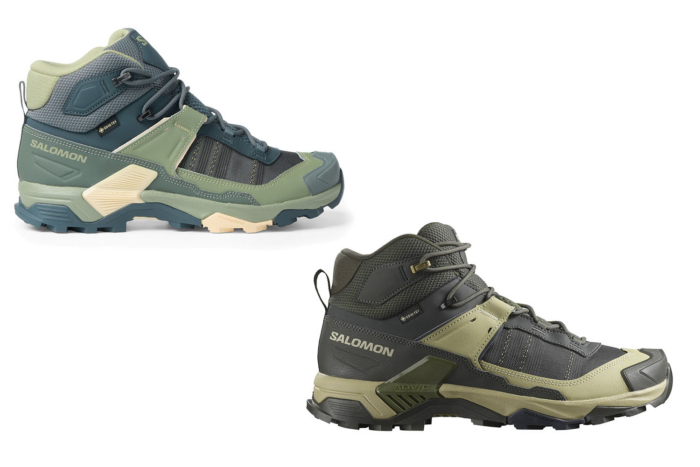
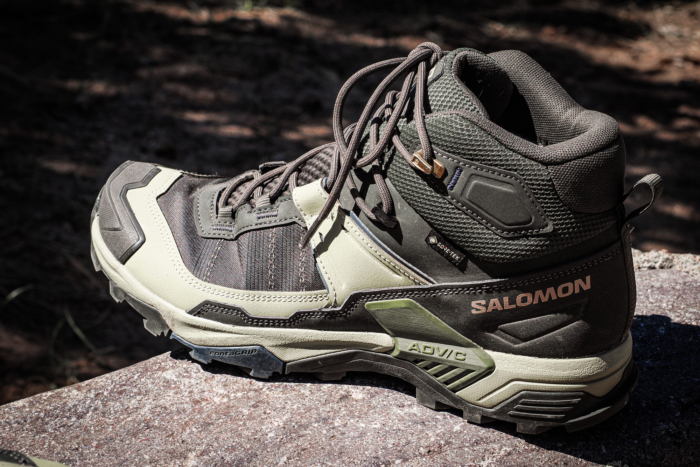
The Salomon X Ultra 5 Mid GORE-TEX ($190) is an impressively comfortable, fairly light, waterproof boot that meets the needs of both backpackers and day hikers. It nails an appealing balance between the support of a hiking boot and the agility of a trail running shoe, and many will enjoy its accommodating feel right out of the box.
The Tech: The X Ultra line has churned out top hiking boots for several years. With the latest iteration, released in spring 2025, this boot got a little more durable thanks to an upgraded MATRYX synthetic upper. Salomon didn’t mess too much with what was already working, though: The X Ultra 5 Mid GORE-TEX maintains its burly Contagrip outsole for superb traction across a wide range of surfaces, as well as the “Advanced Chassis” (ADV/C) introduced in the X Ultra 4, which provides lateral support. A premium GORE-TEX liner prevents moisture from sneaking in.
What We Like: We’ve lauded previous versions of the X Ultra Mid as crowd favorites, and the fifth edition builds on that reputation. The molded Advanced Chassis insert in the outsole provides solid lateral support while keeping the forefoot flexible enough for unrestricted movement; a comparative lack of support was a slight complaint with older models, and Salomon addressed it well. The prior X Ultra’s laces were also prone to slipping, but more aggressive hook eyelets on the 5 prevent that. A GORE-TEX liner remains as effective as ever: GearJunkie Editor in Chief and AllGear Digital Editorial Director Sean McCoy tested the boot at Great Sand Dunes National Park during spring runoff, and his feet stayed bone dry even though he stood in shallow, fast-flowing Medano Creek for more than half an hour.
What We Don’t: While the X Ultra 5 is undoubtedly supportive for its sub-two-pound weight, it’s still not a workhorse like the heavier Salomon Quest 5 GORE-TEX. Hikers who are carrying heavy pack loads or who face steep side-hilling may want a boot with more structure. This version also comes in a bit heavier than the previous model.
Should You Buy It? This is a perfect boot for day hikers and backpackers willing to trade a little support for less weight. For many, it will be a Goldilocks boot, as it fits most feet well, is light and responsive, and offers enough of a foundation for most outings. Whether it’s on a quick trip or an overnight excursion, the X Ultra 5 Mid will keep the wearer on their feet and in control.
The video below dives into details about the previous iteration of the X Ultra Mid, which has a similar design.
KEEN Revel IV Mid & High Polar Hiking Boots
-
(Photo/Keen)
-
(photo/Elk Raven Photography)
-
(photo/Elk Raven Photography)
-
(photo/Elk Raven Photography)
-
(photo/Elk Raven Photography)
-
(Photo/KEEN)


Specifications
Pros & Cons
Pros
- Extreme warmth: Mid rated to -25°F, High to -40°F
- Choice of mid or high shaft for mobility vs. deep snow protection
- Excellent grip on snow and ice
- Fully waterproof
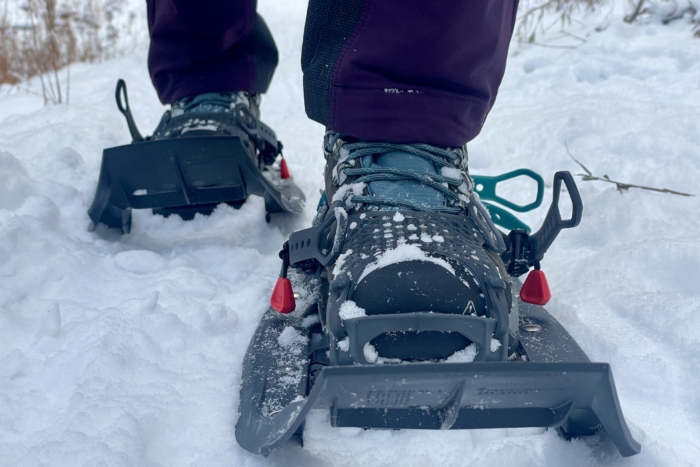
- Pairs well with snowshoes and traction devices
Cons
- Heavier and stiffer than lighter winter hiking boots
- Rigid sole feels clunky for casual wear
Bottom Line: A top-tier winter boot for hiking, snowshoeing, and other cold-weather adventures. It’s warm, waterproof, and provides a safe, reliable grip on snow and ice.
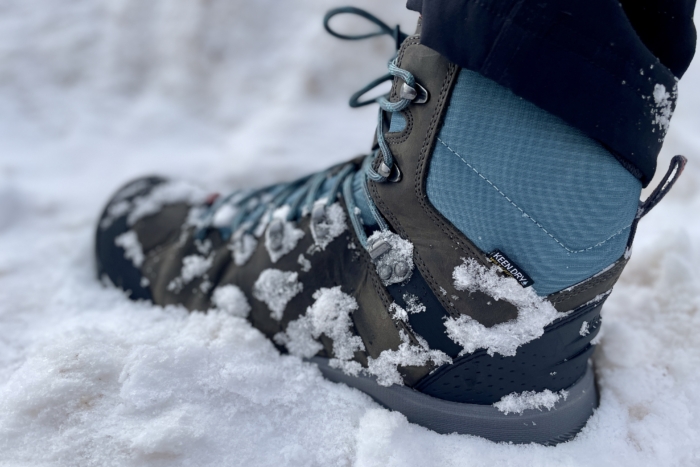
The KEEN Revel IV Polar Boot ($200 for the mid-cut version, $220 for the high) is a standout winter hiking boot that delivers a rare balance of insulation, weather protection, comfort, and traction, making it ideal for serious cold-weather hiking, snowshoeing, or winter peakbagging. It deserves consideration from anyone who refuses to let a little snow stop them from hitting the trail.
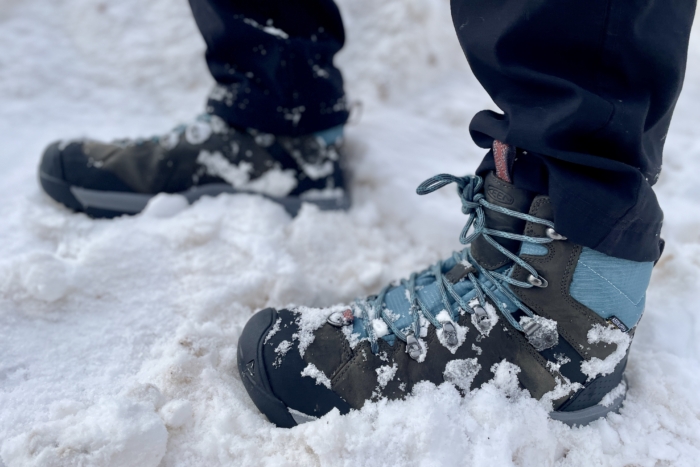
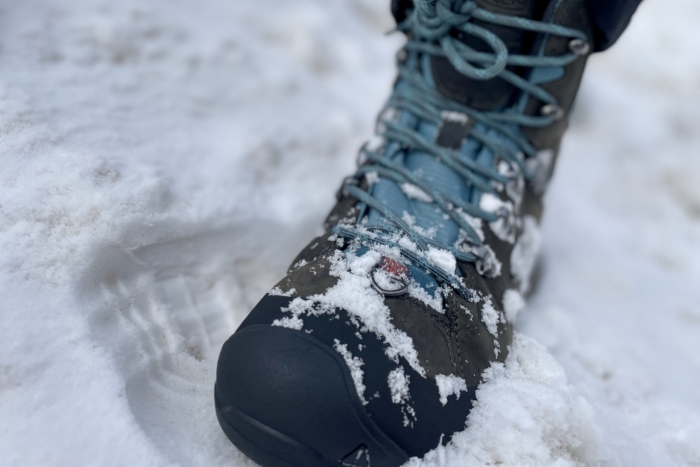
The Tech: This boot is packed with winter-ready features. Both the mid and high versions contain recycled KEEN.Warm insulation and a heat-trapping insole, which combined to keep tester Chris Kassar’s feet warm on frigid hikes in the Tetons and Colorado, including a February ascent of 14,200-foot Mount Yale. (The mid is rated to 25 below zero, and the high to -40.) The Revel IV employs a KEEN.Dry waterproof membrane beneath a leather-and-mesh upper that shrugged off snow, slush, and other wet conditions during testing. A KEEN.Polar Traction rubber outsole delivered consistent grip on packed snow and ice — enough to inspire confidence on steep, frozen slopes and rocky approaches.
What We Like: The higher-cuff version adds extra coverage for deep snow and unrelentingly wet conditions, while the mid offers a more natural, agile stride for long hikes or mixed terrain. Comfort and fit round out the Revel IV’s appeal: It offers a secure heel and midfoot hold, a roomy toe box that accommodates thick socks, and a padded collar and tongue that reduce pressure points even under load. While the high sacrifices a bit of ankle mobility for maximum warmth and coverage, the mid strikes a balance between protection and agility.
What We Don’t: The Revel IV Polar holds its own when the mercury drops, but this is not a very versatile boot. It’s far too warm to wear outside of winter, and you’ll have more fun walking in lighter, more pliable boots on outings that don’t involve snow travel. Even for casual use around town, the rigid sole might feel like a bit too much.
Should You Buy It? The answer is a resounding “yes” for hikers who thrive on winter trails and need a warm, protective boot that can keep up — and keep them upright.
HOKA Speedgoat 6 Mid GTX
-
-
(Photo/Matt Bento)
-
-
(photo/Matt Bento)


Specifications
Pros & Cons
Pros
- Fits like a running shoe
- Elastic ankle cuff keeps out dirt and debris
- Stable hiking platform
- Plenty of cushion
Cons
- Not much ankle support
- Not as breathable as a trail shoe
Bottom Line: A hybrid boot that has the speed and weight of a hiking shoe, but with more protection from debris and water. With a dialed fit and high levels of comfort and traction, it’s a compelling option for hikers who want fleet feet but prefer a mid-cut design.
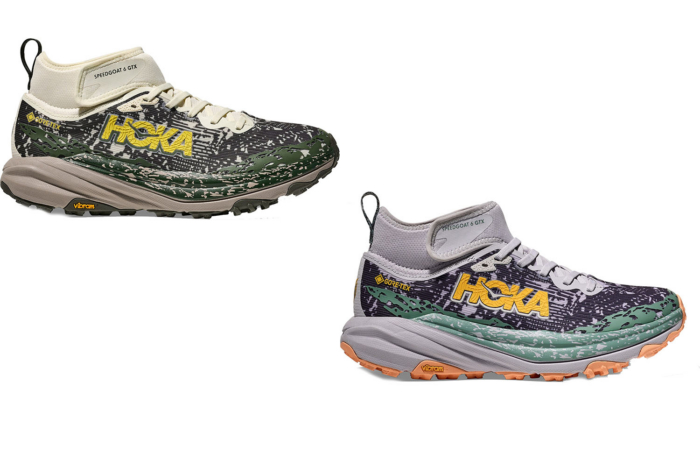
Carrying on the Speedgoat tradition, the HOKA Speedgoat 6 Mid GTX ($180) continues to walk the narrow line between hiking boots and hiking shoes. HOKA makes a wildly popular low-top version, but the Mid is unique enough that we have no qualms about including it in this guide alongside traditional hiking boots. In fact, this is our favorite ultra-lightweight boot, and it includes notable improvements over the Speedgoat 5 Mid.
It’s worth noting that we’re approaching hiking shoe territory with this crossover. If those are more your jam, check out GearJunkie’s guide to the best hiking shoes.
The Tech: If you’re used to hiking in a high-top leather boot, the Speedgoat 6 Mid may look a little underpowered with its all-synthetic upper, cushy midsole, and elastic ankle cuff. It won’t last a generation like your father’s Danners, and this is not the boot to pair with a heavy pack, but it’s wearable and comfortable right out of the box. That’s one of the biggest advantages of choosing a more shoe-like boot: The Speedgoat cups the heel snugly, allows for some toe splay up front, and fits very true to size. A Vibram rubber outsole provides plenty of grip on smooth rock surfaces and ball-bearing gravel, on both uphill slogs and downhill charges. What really stands out about hiking in the Speedgoat is that, step for step, it just acts more like a running shoe than a hiking shoe, with a locked-in feel and increased agility.
What We Like: The ankle cuff on the 6 is quite a departure from the Speedgoat 5, erring on the side of breathability with an elastic and Velcro closure system instead of the latter’s much higher design. The new closure functions like a gaiter: It cinches snugly around the ankle and keeps out pebbles and sand as well as — or better than — most high-top boots. The midsole and insole have enough arch to prevent your foot from sliding to the front of the boot on downhills, and the Speedgoat 6 fit our lead tester well. Actually, that might be an understatement: He experienced a sublime balance of security and roominess on hikes around the desert region of eastern California.
What We Don’t: The mid version of the Speedgoat has a GORE-TEX liner, which is the source of our major gripe. GORE-TEX is breathable, but having no liner at all is even more breathable, which we’d prefer on a boot made for going fast. Our tester definitely noticed his feet sweating on hot days. Plus, due to the elastic ankle cuff, the waterproof portion of the shoe isn’t actually that high up the ankle, so it doesn’t take much of a puddle for water to get in over the top and into the shoe. The Speedgoat 6 Mid also doesn’t have as much ankle support as the 5; if ankle stability is an issue for you, consider the HOKA Anacapa Mid (if you’re still keen on the HOKA fit) or the Salomon X Ultra 5 Mid.
Should You Buy It? If you’re a hiking boot-wearer who’s trail-shoe curious or just want to see what all the HOKA fuss is about, the Speedgoat 6 Mid GTX is a good entry point to the comfort and nimbleness you get from a lightweight hiker. For those in the know, it’s also a great winter alternative to your favorite HOKA trail running shoes.
Meindl MFS-Vakuum Hiker
-
-
(Photo/Will Brendza)
-
(Photo/Will Brendza)
-
(Photo/Will Brendza)


Specifications
Pros & Cons
Pros
- Extremely comfortable, with a fast and painless break-in period
- Heel lock lacing system holds your foot firmly in place
- Great grip and tread
- Excellent durability
Cons
- Lacing is somewhat time-consuming
- Lace hooks susceptible to bending
- Heavy
Bottom Line: The full-leather exterior of this brawny boot hides a secret: A memory foam liner that makes it surprisingly comfortable straight out of the box, with a reduced break-in time. You also get rugged durability and exceptional support.
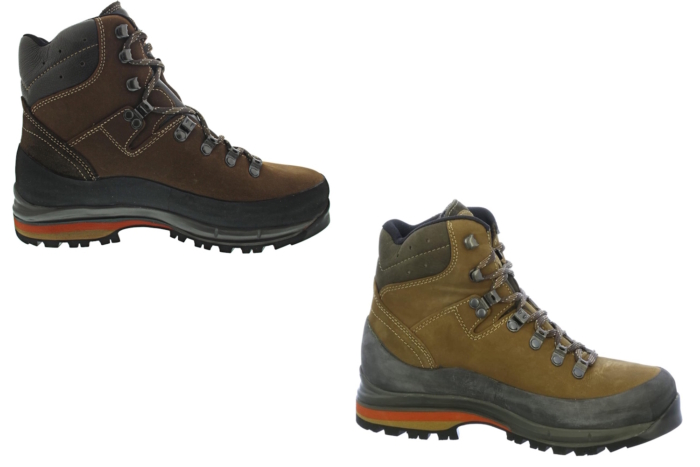
More often than not, choosing the protection and support of a leather hiker comes with the pain of breaking in a stiff, rigid boot that may not fit perfectly by the end of the day. German bootmaker Meindl largely remedies that tradeoff with a unique memory foam liner in the MFS-Vakuum Hiker ($380), which makes this otherwise traditional boot more comfortable than you’d expect on the first wear.
The Tech: Memory foam lines the upper, the back of the heel, and the sides of the boot, and it’s also present in the footbed. Tester Will Brendza said that the MFS-Vakuum Hiker enveloped his feet in a memory foam hug and were some of the most comfortable leather hiking boots he’d ever encountered; that means a lot, coming from a guy who prefers all-leather mid-height hiking boots and is no stranger to breaking them in. (Meindl recommends sizing half a size down from your regular size, which worked well for Brendza.) The boot’s GORE-TEX liner ensures it stays completely waterproof, and a tough Vibram outsole means the tread will remain grippy for hundreds of miles.
What We Like: Brendza tested the MFS-Vakuum Hiker on dusty trails in Colorado, splashing across creeks in Oregon, and traversing summer snow-covered passes high in the Rockies. He also wore it around town — impressive for a boot this burly — and found that its blend of plushness and support stood out no matter what was underfoot. A six-eyelet, 11-hook lacing system effectively locks the heel in place and maintains ankle stability, with plenty of adjustment points to dial in the fit. In most other ways, the Vakuum Hiker can go toe-to-toe with the other heavy-duty leather boots.
What We Don’t: The lacing system is also the source of our major gripe, as the lace hooks will bend if you crank down too hard. They can be worked back into place, but this will weaken them over time. Like most all-leather high-top boots, the Vakuum Hiker does not breathe well. If you’re worried about your feet cooking, the Salomon Quest 5, with its more breathable synthetic upper, would be a better choice that still offers significant support. If you prefer a stiff-soled boot that can really handle gnarly and off-trail terrain, check out GearJunkie’s guide to the best hunting boots for more options.
Should You Buy It? Meindl isn’t well known but makes excellent boots, and the MFS-Vakuum Hiker is a top-shelf model. It’s a great choice for those who carry heavy packs and want significant support and foot protection, but also crave a custom-feeling cushion that’s rare in this category.
SCARPA Rush 2 Pro Mid GTX
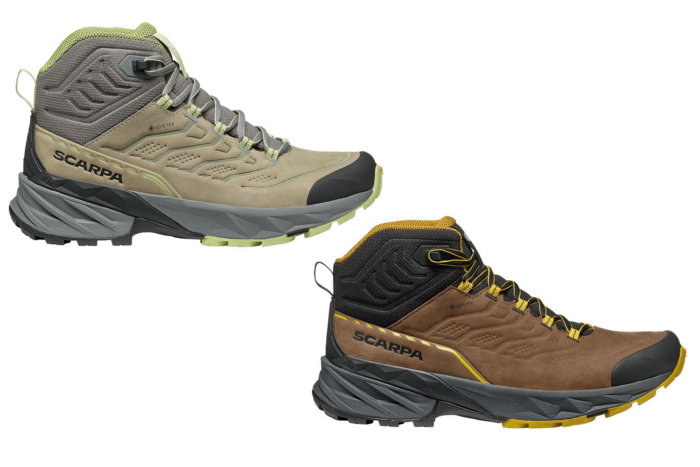
(Photo/Scarpa)
Specifications
Pros & Cons
Pros
- Lightweight and nimble
- Comfortable
- Supportive for a sneaker-like boot
- Offers great protection in rocky terrain
Cons
- Pricey
- Less arch support than traditional hikers
Bottom Line: Hikers with narrow feet are in for a treat with this light, agile boot. Ankle padding and a flexible build result in a slipper-like feel, but it also has enough oomph for rough terrain and backpacking trips.
Blending the agility of a trail runner with the support of a more traditional hiking boot, the SCARPA Rush 2 Pro Mid GTX ($199) is a welcome update to the original Rush 2. It’s full-featured and versatile, with a healthy dose of maneuverability and plenty of traction in a mid-cut, waterproof design.
The Tech: The Rush 2 Pro Mid GTX has a slightly taller ankle cuff than the previous version, which, paired with the GORE-TEX liner, allowed Pam LeBlanc, our Texas-based tester, to slosh through shallow creeks rather than rock-hop. This boot weighs 2 pounds, making it one of the lighter entries in this guide, but a TPU frame in the heel area supplies welcome lateral stability. The Rush 2 Pro doesn’t have a Vibram outsole, but LeBlanc never had any issue maintaining grip with the PRESA HIK-01 outsole, even on wet rocks — a major advantage for her, as she had ACL surgery a few years ago.
What We Like: LeBlanc thrashed this boot while hiking in the dry, cactus-strewn Texas Hill Country and Big Bend National Park, and it proved to be great protection against spiky plants, as well as much more breathable than all-leather hikers. It also feels sprier and more wearable than most of those overbuilt tanks, which has made the Rush 2 Pro Mid her go-to footwear for everything from paved trails to rock-strewn routes. Her favorite part, though, is the boot’s lightweight cushioning, which swaddles the foot without much of a weight penalty.
What We Don’t: Because the Rush 2 Pro is a bit pared down compared to traditional mid-cut hiking boots, it offers a bit less arch support. If that’s a dealbreaker, take a look at the Merrell Moab 3 Mid Waterproof, which has a molded nylon shank at the midfoot. Hikers who want to shave off even more ounces — that Rush occupies somewhat of a middle ground, for a lightweight boot — should also consider the HOKA Speedgoat 6 Mid GTX.
Should You Buy It? Finding a boot with a sufficiently narrow last can be a chore for some hikers. If that describes you, the Rush 2 Pro Mid GTX might be the answer. It’s an attractive option for anyone (narrow-footed or not) who wants a supportive, breathable, warm-weather boot. We recommend sizing up a half size, especially if you have a wide foot.
Other Notable Boots We Tested
While they didn’t make the top of our list, the following boots have been field-tested by GearJunkie editors and are very much worthy of your consideration.
-
(Photo/Scarpa)
-
(Photo/Will Brendza)
-
(Photo/Rachel Laux)
-
(Photo/Will Brendza)
-
(Photo/Rachel Laux)


Specifications
Pros & Cons
Pros
- Stable and supportive
- Grippy traction for scrambling
- Built-in RECCO reflector can be helpful for search and rescue
Cons
- Not particularly lightweight if you want to move fast
- Midsole EVA foam gouges somewhat easily
Bottom Line: The headliner of this boot is its RECCO reflector, but it’s also a solid, dependable light hiker that’s stable in varied terrain and waterproof enough to handle creek crossings and adverse weather.
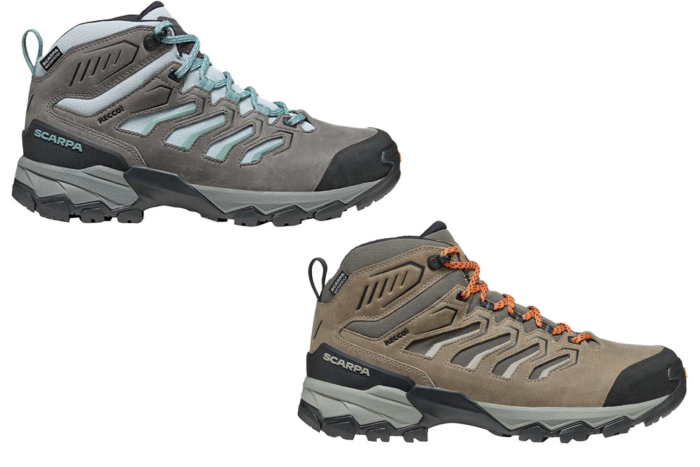
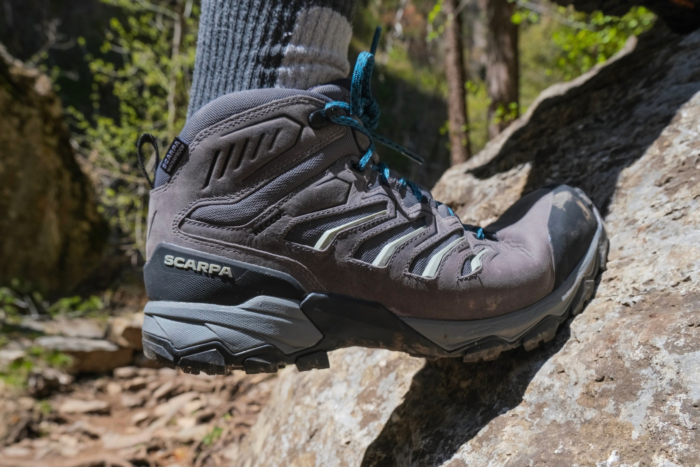
The SCARPA Moraine Mid WP ($189) is the first lightweight hiking boot to incorporate RECCO rescue technology, a reflective system that helps search-and-rescue teams locate lost or injured hikers. Previous RECCO-equipped footwear had been limited to heavy-duty winter, mountaineering, and ski boots. The rest of the boot is much more than merely an afterthought, though, and it performed well during testing.
The Tech: We need to address the main reason you may have heard about the Moraine: This boot contains a RECCO reflector, which can help search-and-rescue teams pinpoint your location. While it’s no substitute for backcountry experience and safety, RECCO is a peace-of-mind feature that might save your life if things take a turn. In terms of components that you’ll actually notice when you’re hiking, SCARPA’s proprietary PRESA outsole and 4mm lugs kept our tester in control on scree, rocky riverbeds, and even wet rocks beneath a waterfall.
What We Like: The Moraine is a solid — if not standout — everyday hiking boot. Tester Will Brendza praised its out-of-the-box comfort and didn’t experience any pinching or other discomfort during his testing on day hikes, a camping trip, and town outings around Colorado. The Nubuck leather and fabric upper sheds water well, and Brendza’s socks never got wet when he was kicking around in a creek thanks to the proprietary waterproof membrane.
What We Don’t: Though relatively light for a mid-cut boot, the Moraine isn’t suited for trail running; however, it offers ample stability and support for day hiking. As far as light hikers go, we prefer the Salomon X Ultra 5 Mid GORE-TEX, which breathes better and weighs less, but the Moraine is a fine trail boot. Compared to the Merrell Moab 3 Mid, another all-rounder, the Moraine has a narrower, more technical fit that might not work for those with wide feet.
Should You Buy It? If backcountry safety is top of mind and you’re looking for a supportive, comfortable boot with a fairly traditional leather upper, the Moraine should fit your needs. It probably won’t blow you away, but it’s hard to put a price on peace of mind.
Specifications
Pros & Cons
Pros
- Underfoot breathability courtesy of GORE-TEX Surround
- Lug design offers superb braking ability
- Lightweight for a high-cut boot
- Available in a "wide" version, a relative rarity for La Sportiva
Cons
- On the expensive side
- Not as modern-looking as other options
Bottom Line: This is a traditional leather backpacking boot that’s lighter and more breathable than it looks. It’s also the rare La Sportiva model to receive a “wide” version, making it wearable for a larger range of hikers.
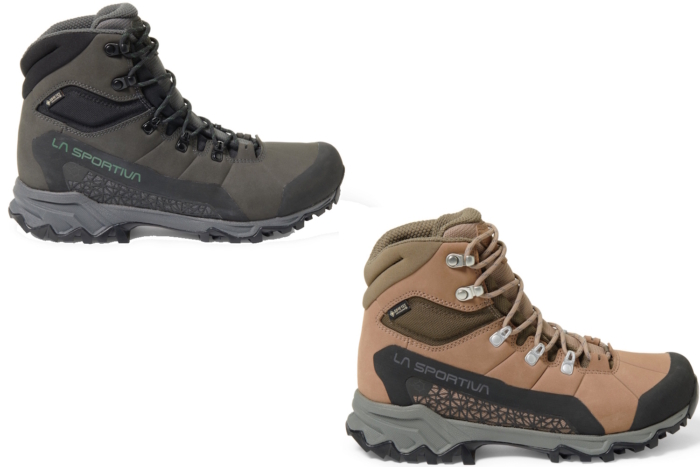
When it was first released, the high-cut Nucleo High II GTX ($259) was big news for La Sportiva: Along with the Ultra Raptor Mid II GTX, it was the brand’s first hiking boot designed for wider feet. That’s relative — the “wide” version is more akin to a normal fit — but we’re fans of anything that makes this protective, sturdy boot more accessible.
The Tech: The Nucleo High II effectively seals out moisture, courtesy of a GORE-TEX liner. Despite the extensive waterproofing, the boot’s breathability is enhanced by mesh-covered micro-vents that run from the arch of the foot to the ankle along the sole. This design — known as GORE’s Surround system — makes the Nucleo High II more breathable than we would have expected. A Vibram rubber rand and toe cap deflect scuffs and rocks, hinting at long-term durability to match the hardy Nubuck leather upper.
What We Like: During testing, we found that the Vibram Nano XS-Trek outsole provided steady grip as we climbed and braking traction on descents. The boot’s slightly rockered shape also made it easy to smoothly heel into a step and toe out of it. For a traditional-looking, high-cut boot, the Nucleo High II has a modern feel akin to models from HOKA and Altra. Well-padded fabric at the Achilles provides plenty of pressure-free range of motion at the ankle on steep descents. On rocky trails, a polypropylene stiffener in the midsole protects feet from bruising, an essential feature considering the natural footfall this boot promotes.
What We Don’t: If you have truly wide feet, it’s likely that even the “wide” version of the Nucleo High II GTX will be too narrow. While this boot is roomy for La Sportiva — and it welcomes more hikers than ever to wear the company’s classic European hiking boots — it’s more of a wide-medium cut, limiting toe splay for those with a wide forefoot. (If you’re lamenting the change of last because you have narrow feet and have always loved how La Sportiva fits, don’t stress. The brand offers the Nucleo in a “normal fit,” too.)
Should You Buy It? Hikers who’ve been curious about La Sportiva’s boots but have never managed to wriggle their feet into them might finally find success with the Nucleo High II GTX’s wide version. If the boot fits, you’ll be able to take advantage of its leather-clad durability, stability, and waterproofing that won’t make your feet overheat.
-
(Photo/KEEN)
-
-
The KEEN Targhee IV holds its own during a sandstone scramble; (photo/Sam Morse)
-


Specifications
Pros & Cons
Pros
- Comfortable out of the box
- Good value
- Supportive and stable without feeling clunky
- Roomy forefoot
Cons
- Not suitable for narrow feet
- KEEN’s waterproofing is not as effective as other options
- Not ideal for rugged off-trail use
Read Review: KEEN Targhee IV Test: PFC-Free, Comfortable, Durability Guaranteed
Bottom Line: The latest incarnation of a modern trail footwear icon. It continues to offer steadfast traction and midweight support for hikers who ask a lot of their boot, but who don’t necessarily want to pay top dollar.
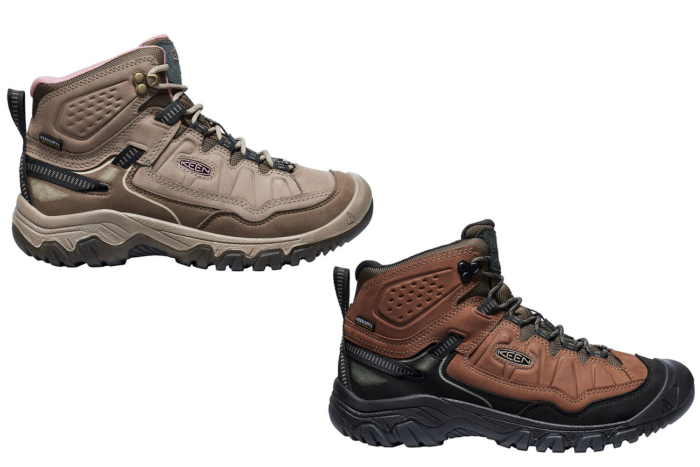
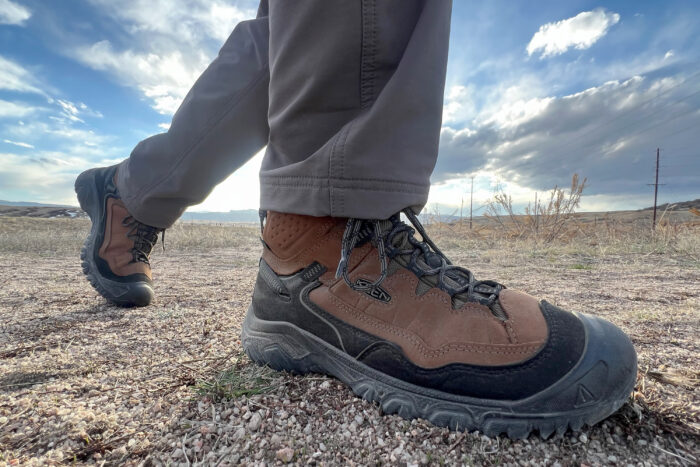
The KEEN Targhee IV ($190) is a lot of hiking boot for a very reasonable price. It packs in a durable leather upper, a long-lasting “fused” midsole, and a reliable waterproof membrane into a roomy design that’s great for those with higher-volume feet.
The Tech: The 2024 version of the Targhee was introduced with a technology that KEEN claims makes it much more durable. The boot’s midsole is fused to the upper using a process that eschews glue; the brand guarantees that it will never delaminate, and the Targhee also comes with a lifetime warranty against that defect. KEEN kitted the Targhee IV out with its proprietary midsole, which is quite grippy and effective — surprisingly so, for a non-brand-name design. (While we tend to prefer Vibram, this outsole works well and keeps the price reasonable.)
What We Like: The Targhee is an iconic boot in the KEEN lineup. It’s earned a lot of love from both our testers and hikers all over the country for its rugged build and versatile features. GearJunkie Editor in Chief and AllGear Digital Editorial Director Sean McCoy tested it through mud, snow, and rocky trails, where it proved that it remains a capable boot ideal for cooler conditions and rough ground. While it’s not a top choice for off-trail hiking or scrambling, it’s a great option for those who put down a lot of miles and want significant support.
What We Don’t: Unlike the non-branded outsole, we’re a bit wary of the Targhee’s KEEN.Dry waterproofing. Straying from the GORE-TEX path may help with pricing, but it could mean less protection in the long run. Additionally, hikers should be aware that the Targhee IV runs significantly large. McCoy sized down a half size, and some may even want to go down one full size from their normal street shoes.
Should You Buy It? If you want to keep your boot budget below $200 but want a tried-and-true leather model, the KEEN Targhee IV is one of the best bets on the market. As long as your foot meshes well with its wide fit, this is a stable, hard-wearing boot that fits a variety of hiking styles.
Specifications
Pros & Cons
Pros
- Super-durable, full-leather construction
- Laces rarely need to be replaced
- Superb support and stability, with a PU midsole
- Can be resoled, extending its usable life even more
Cons
- Slow break-in process
- Too heavy for casual hiking
Bottom Line: Perhaps the Platonic ideal of a stout leather hiking boot. It’s not made for going fast and light, but it rewards hikers with the patience to break it in with uncompromising support, protection, and durability.
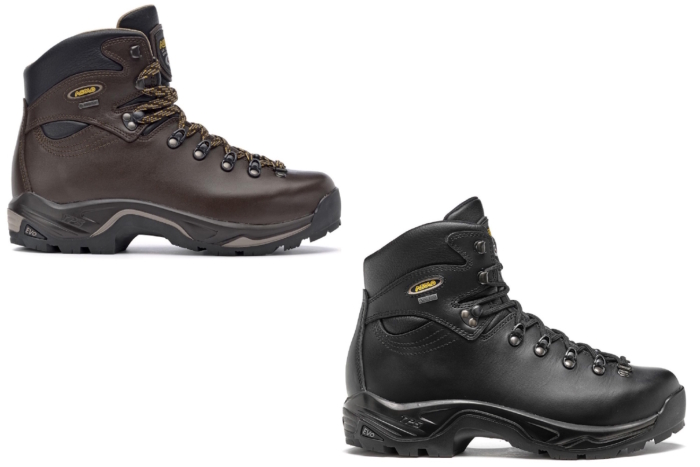
The Asolo TPS 520 GV EVO ($400) is the reigning heavyweight of this guide, coming in at over 4 pounds. But its beefy construction and full-leather upper are tailor-made for shouldering a heavy pack over variable terrain, and it provides essential comfort and confidence on the toughest trips.
The Tech: Asolo builds the TPS 520 with a full-grain leather upper, which, along with a GORE-TEX waterproof membrane, allows it to ward off water if the weather on your expedition turns nasty. The deeply channeled Vibram outsole provides excellent traction and reduces debris buildup, and the padded ankle collar is comfortable and useful for keeping rocks out. A PU (rather than EVA) midsole is designed for carrying weight rather than plush rebound, which aligns with the boot’s intended use.
What We Like: This is a seriously durable boot. The TPS 520 GV EVO has lasted one of our testers for nearly 10 years. She’s taken them on numerous backpacking trips throughout the West, including the Tetons, Wind River Range, Glacier National Park, and the Sawtooths. It’s proven itself comfortable, durable, and supportive throughout. As you might expect, the TPS 520 is stiff and requires a break-in period. But once broken in, it feels like an extension of your body, ready for whatever conditions might lie ahead.
What We Don’t: You won’t be setting any speed records in the TPS 520, which is the heaviest boot we’ve reviewed in this guide. It’s probably a bit overbuilt for casual day hikes. Breathability is on the low end due to the leather upper, and we’ve read some complaints about the sole coming off. We’ve never experienced that ourselves, though, and in doing some research, it seems most complaints of sole failure are from boots that are 10-plus years old. (It’s worth noting that this boot can be resoled. This generally costs around $100, but it makes the TPS 520 a boot for life, as happened with our tester.)
Should You Buy It? Hikers who want to go all in on stability and protection in a boot that might outlast their trail legs should consider grabbing the TPS 520 GV EVO. It’s burly enough for the biggest multi-day missions, and its construction quality is top-notch — we’d even go so far as to say it’s worth the eye-watering price if you take its longevity into account.
Specifications
Pros & Cons
Pros
- Sticky Vibram Megagrip outsole with self-cleaning lug pattern
- Comfortable, dynamic Achilles cushion
- Lots of cushion and a well-designed rocker silhouette
- Sustainably made
Cons
- Runs a bit large
- Swallowtail heel can snag on roots and rocks
Bottom Line: It’s hard to take your eyes off this boot, but its on-trail performance makes up for its futuristic aesthetic. Failsafe traction, responsive midsole construction, and a luxurious amount of cushion have won it lots of fans (and made it some enemies).
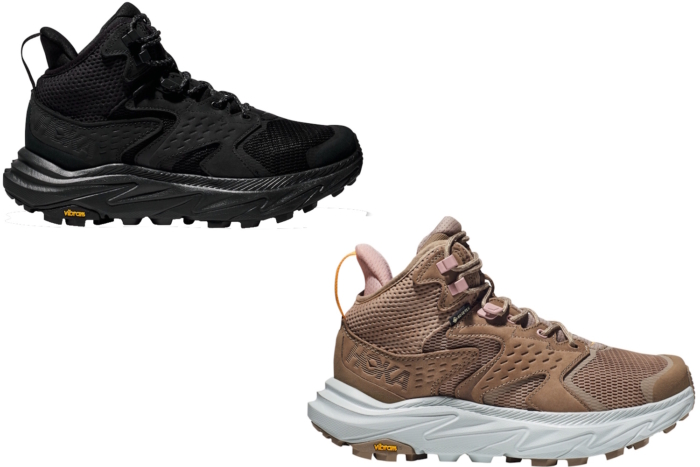
HOKA has always been about innovation — and can consequently be quite polarizing. Since the brand’s inception, it’s churned out futuristic designs with bleeding-edge tech, in wild color schemes that pop off the shelf. The Anacapa 2 Mid GTX ($195) brings unique flair to the traditional hiking boot last, seemingly forcing people to either end of the spectrum. You either love it or you hate it, but one thing’s for sure — there are few hiking boots quite like it.
The Tech: The Anacapa 2 Mid benefits from HOKA’s Meta-Rocker technology, which is a curved silhouette that has denser foam placed at strategic points in the midsole, giving each stride a degree of smooth propulsion. With this boot, designers placed the rocker point closer to the toe for added stability during slower strides, perfect for those who want stable confidence over variable terrain. The Anacapa 2 Mid also boasts a “self-cleaning” lug pattern that channels mud away from the lugs as you step, forcing it to slide off the sole and allowing the deep, sticky tread to work its magic. This, paired with a GORE-TEX liner, makes this boot a power player in wet, sloppy conditions.
What We Like: Tester Chris Carter spent several days testing the Anacapa 2 in Zion National Park, putting the boot through the wringer in red-rock desert terrain. While he doesn’t usually pick boots as his steed of choice for long treks, it made quite an impression on him. One standout feature is the flexible cushioned insert that molds around your Achilles heel. It makes for one of the coziest heel cups we’ve experienced, and Carter had zero blister issues. Vibram Megagrip — one of our favorite outsole compounds — decorates the bottom of the shoe. Its performance on rocky terrain or muddy, uneven trails is second to none.
What We Don’t: The protruding SwallowTail heel is perhaps the first feature you notice on the Anacapa 2 Mid — and it isn’t for everyone. It undeniably provides better traction and stability while you’re bombing down uneven hills, but can sometimes snag on roots and rocks (or even the other boot) as you clunk down the trail. (For less boot, check out the HOKA Speedgoat 6 GTX.) We also find that this boot runs a bit large, so make an effort to try it on in a store before snagging a pair. Finally, it’s on the heavier (and pricier) end of the spectrum, but the comfort and cushion it affords make up for those sins.
Should You Buy It? For a healthy balance of plush comfort and broad stability over rough, wet terrain, it’s hard to beat the Anacapa 2 Mid GTX. The supremely tacky Vibram outsole, thoughtfully placed rocker, and unique Achilles tendon cushion should make the Anacapa a shoo-in for any serious hiker’s shortlist.
Hiking Boot Comparison Chart
| Compare |
|
|
|
|
|
|
|
|
|
|
|
|
|---|---|---|---|---|---|---|---|---|---|---|---|---|
| Price |
$240
|
$175
|
$190
|
$200 – $220
|
$180
|
$380
|
$199
|
$189
|
$259
|
$190
|
$400
|
$195
|
| Weight |
2 lbs. 10 oz.
|
2 lbs. 2.9 oz.
|
1 lb. 15 oz.
|
3 lbs. 0.5 oz. (Mid); 3 lbs. 2.7 oz. (High)
|
1 lb. 6.8 oz.
|
3 lbs. 10.4 oz.
|
2 lbs.
|
2 lbs. 9.2 oz.
|
2 lbs. 1.6 oz.
|
2 lbs. 8.2 oz.
|
4 lbs. 2 oz.
|
2 lbs. 4 oz.
|
| Waterproofing |
Yes
|
Yes
|
Yes
|
Yes
|
Yes
|
Yes
|
Yes
|
Yes
|
Yes
|
Yes
|
Yes
|
Yes
|
| Upper material |
Nubuck leather/ripstop fabric
|
Pigskin leather/mesh
|
MATRYX synthetic
|
Leather/synthetic mesh
|
Synthetic
|
Full-grain Nubuck leather
|
Nubuck leather/fabric
|
Nubuck leather/fabric
|
Nubuck leather
|
Nubuck leather
|
Full-grain leather
|
Nubuck leather
|
| Width |
Standard
|
Standard or wide options
|
Standard
|
Standard
|
Standard
|
Standard
|
Narrow
|
Standard to narrow
|
Narrow to standard
|
Standard, with roomy toebox
|
Standard (break-in period makes it feel a bit narrow at first)
|
Standard
|


How We Tested Hiking Boots

In our quest to bring you the best possible hiking boot guide, our team has tested hundreds of pairs of boots. We’ve hiked along mellow city park paths and backpacked through rugged alpine terrain in our search for the best hiking footwear on the market. The recommended models on this list are the result of our thorough and never-ending field testing.
Our Expert Testers
GearJunkie Editor in Chief and AllGear Digital Editorial Director Sean McCoy broke trail with this guide back in July 2020, crafting our initial selection of eight worthy hiking boots. Whether packing out a kill from deep in the backcountry or clocking miles on cruiser singletrack, he remained intimately aware of the importance of proper footwear for streamlined adventures, and tested 12 more pairs of hiking boots after reacquiring the guide in late 2024.
Former Senior Editor Chris Carter took over this guide from August 2022 to 2024. He combed through his stinky shoe rack, scrubbed through online hiking forums, and endlessly bugged his dirtbag backpacking buds to help narrow down a succinct list.
Carter thru-hiked the Triple Crown of long trails in the United States: the Pacific Crest Trail, the Continental Divide Trail, and the Appalachian Trail. He knew the importance of properly fitting, comfortable boots for long backpacking trips and was extremely particular about the footwear he depended on in the wild.
Carter moved on to other work in 2025, and McCoy took back the reins, working with GearJunkie’s talented team of editors and testers to put together the lineup you see here. Fellow footwear experts Will Brendza, Pam LeBlanc, Miya Tsudome, and Chris Kassar also made essential contributions through their knowledge and trail anecdotes.
Our Testing Process & Grounds

McCoy lives on the Front Range in Colorado and puts in loads of miles across the state each year, all in the service of sussing out the best hiking footwear (in addition to lots of other gear testing).
But the testing in this guide wasn’t just limited to the Centennial State: GearJunkie editors and testers put these boots through their paces across the American West, from California’s high desert to the granite basins of Wyoming’s Wind River Range to the cacti-strewn shrubland of Big Bend National Park. Utilizing a wide variety of environments and testers ensured that we were able to dive deep into this gear category.
Durability Testing
When the GearJunkie team assesses a boot’s durability, we wear it regularly and closely monitor its long-term performance. Models that can stand up to the rigors of the hiking that we tend to undertake — through varied terrain, across a range of environments and climates, never shying away from scree or unstable talus — earn our respect, as well as high scores in that category.
The boots in this guide have proven their worth over at least five days of hard use. We realize that is a very minimal number, but it’s enough to see initial wear with a practiced eye. This is the wear period during which scuffing on outsoles, wear points on the upper, and initial delamination points begin to appear.
Most of the boots in this guide have been tested far more extensively. For example: McCoy hiked the Tour du Mont Blanc in 2024, testing boots with his wife. He also hikes at least two days a week in Colorado, and spends many hours off-trail exploring with his German Shorthaired Pointer.
Support, Stability, & Traction Testing
When we test a boot for support and stability, we trudge through rough terrain and pay extra attention to ground feel and ankle-roll resistance. The ability to keep the wearer comfortable and secure under a heavy pack is a major plus.
We also take pride in wearing the hiking boots we’re testing into seriously sloppy, mucky terrain, with the goal of separating the traction standouts from the has-beens. No mud puddle is too deep, no rock is too slippery. We delight in a boot that can hold fast on a wide variety of terrain — models with Vibram outsoles tend to do well there — but excellent grip isn’t always guaranteed.
How We Test Waterproofing

Our waterproofing testing involves exposure to puddles, precipitation, and other elements that you’re likely to encounter on the trail. All the boots in this guide were exposed to direct water for half an hour during early testing. All products with GORE-TEX membranes have also been through GORE’s rigorous water-resistance lab testing.
Our recommendations are not fixed in time. As new hiking boots hit the market, we’ll be waiting to put them to the test. If they’re exceptional, we’ll be sure to add them to this list of the best boots on the market.
About Our Scoring
After testing, we rank hiking boots on a 1 to 10 scale based on four detailed factors: comfort, durability, support & stability, and traction. With these rankings, we hope to help you make a more informed choice based on what’s important to you in terms of a boot’s traits.
We then assign each boot an overall product score that considers the detailed ratings, as well as weight, price, style, and our testers’ personal impressions. The overall rating is not an average of the detailed ratings, but instead a summary of all our testing to encapsulate how well the boot will perform for most users.
Hiking Boots vs. Hiking Shoes
This is a hotly debated topic, both on trails and around the GearJunkie office. In 2026, many hikers prefer hiking shoes, or even trail running shoes, for both backpacking and day hiking.
The authors and editors of this guide find true hiking boots to be the best choice for serious hiking (no real surprise there). And by “serious hiking,” we mean carrying a pack with your food, shelter, and equipment for long, multi-day hikes. That usually means long hours on your feet, and it often means rough trails, water crossings, snow bridges, scree, mud, and more. On that kind of hike, we want burly footwear that keeps feet dry, protected, and ready to go. That means a hiking boot.
Others may disagree. And boots can often be overkill for short hikes, hot temps, or lightweight backpacking. As an ultramarathon runner, Sean McCoy certainly sees a place for hiking in lighter shoes.
For some lighter-weight options, take a look at our guide to the best hiking shoes, and for a women’s-specific view on boots, check out the best hiking boots for women.
Buyer’s Guide: How to Choose a Pair of Hiking Boots
Choosing the optimal hiking boot is an ever-complicated and personal endeavor. We all have unique foot shapes and needs on the trail, so research and testing are often critical in finding boots with that perfect blend of fit and function.
Boots built for durability and stability tend to be less forgiving than most other trail footwear. And because you’re often wearing them for hours on end, they require a more precise fit. Here are a few things that can help you find the best boot for your foot.
Hiking Boot Components: Uppers, Midsoles, & Outsoles

Hiking boots — and hiking shoes — are composed of three main components: the upper, midsole, and outsole. The design of each element helps determine how durable, breathable, and water-resistant the boot will be.
Uppers
A hiking boot’s upper is the outer material on the top and sides of the boot. There are a handful of materials commonly used in hiking boot uppers, but generally, uppers are either leather or synthetic.
Leather uppers are more traditional-looking and highly durable and abrasion-resistant. They’re also naturally stiff and can provide lots of stability — be sure to break them in first — as well as tons of comfort, as proven by the cushy Meindl MFS-Vakuum Hiker. However, they sometimes require long-term care to prevent cracking and unsightly aging.
Synthetic uppers tend to be lighter than leather, as well as more breathable. They also tend to dry faster and generally cost less. A standout boot from our testing that has a synthetic upper is the Salomon X Ultra 5 Mid GORE-TEX.
Typically, synthetic uppers are not as durable as leather, but modern advances are closing the gap. For those who prefer not to use animal products, synthetic uppers are obviously the way to go.
Midsoles

A midsole provides underfoot cushioning and adds structural stability to the entire boot. Stiff boots likely have a thick and stiff midsole and often require a break-in period.
Stiffer midsoles provide the most durability, but because they have less give, they can also be harder on the feet. Stiff midsoles are ideal for providing traction on highly technical terrain where unintended foot movement isn’t ideal, such as mountaineering and movement over variable ground like talus fields.
Soft and flexible hiking boots are built with thinner, more pliable midsoles. Stiff boots can prevent your feet from becoming tired and sore, but flexible boots may be more comfortable and nimble for fast and light hiking, and they tend to prevent blisters.
Modern hikers engaging in long-distance pursuits are finding that softer midsoles strike the balance between technical performance and comfort for extended use, so they’re turning to boots like the HOKA Speedgoat 6 Mid GTX for marathon missions.
Midsoles are generally made from EVA or polyurethane. EVA is lightweight and soft, while polyurethane is firmer and more durable. If you plan to hike long distances with a heavy pack, either is a viable option, but it really depends on your personal needs. The former will put a bit more spring in your step, while the latter can usually prevent your feet from feeling fatigued as the miles pile up.
If you have weaker arches and require support, stiffer midsoles can prevent unnecessary soreness over long distances. If you’re already used to more minimal, flexible footwear, softer midsoles allow the muscles in your feet to function more as nature intended. Long trail thru-hikers, for example, are trending toward softer midsoles that help prevent blisters and strengthen the feet over time.
Outsoles

The outsoles of hiking boots are made of rubber with varying grades of stiffness and grip. Harder outsoles on stiff boots sometimes include additives such as carbon to reduce weight. While extra-stiff outsoles are durable and good for carrying heavy loads, they can feel slick when you’re hiking off-trail.
Stiff outsoles are also ideal for scrambling on steep rock or other situations where traction is integral to safety. Softer outsoles are preferred by many for packed, heavily trafficked trails where technical terrain is less frequent. A boot that bridges this gap quite well is the La Sportiva Nucleo High II GTX.
All outsoles include a lug pattern designed to increase traction and grip. Widely spaced lugs are less likely to accumulate mud, while shallow lugs are better for hiking over rocky surfaces.
Lug patterns may be symmetrical, while others have a degree of asymmetry that’s primarily intended to reflect the natural contours of the feet through your footfall. Both have varying degrees of stiffness, so choosing the right lug pattern tends to be a personal preference.
Some outsoles include a heel brake, which can reduce your chances of sliding while descending steep slopes. Most modern hiking boots integrate a heel brake to some degree, as do most running/hiking hybrid shoes. Take the size and shape of a given boot’s heel brake into consideration if your backcountry travels frequently take you up and over high-altitude passes or on trails that are particularly steep.
Weight

A pair of hiking boots can weigh anywhere from about 1.5 pounds to well over 4 pounds. The weight of your boots depends on their structure and materials, as well as their intended use and the terrain they’re best suited for.
Generally, more robust boots with leather uppers and stiff soles (such as the Meindl MFS-Vakuum Hiker, which weighs 3 pounds, 10.4 ounces) will be heavier, while hybrid synthetic models will be lighter (like the SCARPA Rush 2 Pro Mid GTX, which comes in at 2 pounds).
There is always a give-and-take with weight. Heavier boots often prove to have higher degrees of waterproofness and long-term durability, though they may not be the most comfortable options.

Synthetic boots with flexible soles will be lighter and perform more like running shoes. Carrying heavy boots on your feet on long hikes can cause fatigue, but heavy boots also tend to offer more support.
If we had to lay down a general rule (which also has many caveats), it’s that lighter hiking boots are usually better for speed and easy comfort, while heavier ones excel in durability and stability. But as we’ve already stated, it’s important to know your personal needs and shop accordingly.
Support & Stability

If you’re hiking with a heavy load, you’ll most often want a stable and supportive hiking boot. The stiff outsole and midsole in a boot like the Asolo TPS 520 GV EVO add support underfoot. And a nice firm ankle collar braces the ankle joint when missteps over loose ground are a possibility.
Heavier boots tend to have rigid ankle support, whereas lighter hybrid options tend to have a more sock-like fit around the ankle. Our ankles are intended to have a certain degree of flex, and some folks have more stable ankles than others. This is another important factor to consider when choosing the best boot for your feet.
Arch support is another key component to consider, and it also depends on your personal preference and foot shape. Some people have higher, active arches and can wear boots like the SCARPA Rush 2 Pro —which doesn’t offer much arch support — over long distances without issue.
Most manufacturers limit the amount of arch support they include in the footbed to accommodate a variety of foot shapes out of the box. If you know you need arch support but don’t necessarily need orthotics, more traditional, rigid boots tend to offer more built-in support underfoot.
Traction

Different lug patterns are designed for different kinds of terrain. Although some boot companies make their own outsoles, Vibram soles are still the standard for high-quality rubber compounds and maximum traction. Vibram makes a wide variety of soles, from extremely stiff options for mountaineering and scrambling to more flexible ones for running and hiking on packed-dirt trails.
Some boots include a smooth section of rubber under the toes for smearing on rock slabs. Other boots have deep lugs designed to dig into soft or muddy ground. Most lug patterns work for a variety of terrain, but if you will be hiking in extreme conditions, look for something aggressive with larger or pointier lugs.
As we mentioned earlier, a heel brake is a handy feature for preventing slipping on steep, loose terrain.
Waterproofing

If you’ll be wearing your boots when it’s rainy, snowy, or cold, get a pair with a waterproof/breathable membrane. They’ll keep moisture out, which will keep your feet comfortable even if the rest of you gets wet.
The trade-off between impermeability and breathability is evident in heavier boots, so consider something lighter weight if your feet are in danger of getting wet, but not soaked. Generally, the more waterproof a boot is, the heavier and less breathable it will be.
There are a few exceptions, however, and modern advances in venting seem to be improving this age-old dilemma, hence our rave review of the SCARPA Rush 2 Pro Mid GTX‘s airy GORE-TEX Surround waterproofing.
If you’re hiking primarily in hot, dry conditions, don’t get a waterproof boot. A membrane-free boot will keep your feet cool and dry, and moisture release can help prevent blisters. If you live in the high desert surrounded by mountains, though, you might need a waterproof shoulder-season boot for when moisture adds more variability to the trails.
Breathability

As mentioned above, breathability and waterproofing are tied together, for better or worse. The more waterproof a boot is, the less breathable it will be, and vice versa. If you’re hiking in hot, humid environments where you don’t expect to encounter water, a lightweight, ultra-breathable boot is ideal (the non-waterproof version of the Merrell Moab 3 Mid, for instance).
When your feet don’t air out, you increase the risk of blisters and more serious injuries like trench foot (which is way more common in older, less advanced boots). Breathability means air can move in and out of the shoe, and that water vapor can escape. Dry feet stay warmer in colder temperatures as well.
All modern manufacturers take this into account when designing hiking boots, so some element of breathability will be built in no matter how waterproof a boot may seem. Still, it’s an important consideration for your unique feet (frequently sweaty vs. dry, per se), as swampy or cold feet can truly make or break an outing.
Insoles
An insole is the removable, foot-shaped piece of foam that rests on the bottom of a boot’s interior, above the midsole. It’s your foot’s first point of contact with the boot itself. Not all hiking boot insoles will be a good fit for every foot, though. Depending on the shape of your foot, you may need to purchase aftermarket insoles separately (Superfeet are a popular choice). If you have a high arch, look for insoles that specifically cater to this trait.
Some insoles promote a flatter, more natural footfall, while others can increase the amount of heel-to-toe drop. If your insoles are wearing out faster in a specific spot, it’s a good sign that you should explore a different option.
Toe Box Room

For hikers with naturally wide feet, boots with narrow toe boxes can be uncomfortable over long distances. As the miles stack up on a long journey, your feet will also swell, exacerbating the issue. This can lead to blisters, plantar fasciitis, or other foot problems.
If your toes feel like sardines in a can with every hiking boot you try, it may be time to give wide-width boots a shot, or models that have enlarged toe boxes. Altra is the king of ultra-wide toe box shoes, and though they may look silly, they afforded us some of the most natural-feeling strides of any boot we tested.
Boots with zero-drop designs — in which the combined height of the midsole and the outsole is the same at the back of the boot as it is at the front — are also well-known for offering lots of room in the forefoot. Many Altras also possess that trait.
Crampon Compatibility
If you plan to do some major winter hiking or mountaineering, you’ll need boots that work well with crampons. These traction devices are critical for staying safe on technical terrain in freezing conditions, and they provide traction when crossing steep snow or ice. In general, heavier, stiffer boots are more compatible with crampons.
Some boots have a heel welt (a shelf for a semi-automatic or universal crampon to lock onto) and are lighter-weight, which are good qualities for a crampon-compatible boot. Micro-spikes are becoming increasingly popular for thru-hikers who prefer to carry less weight while ultralight backpacking, and they tend to work well over more flexible, lighter mid-cut boots like the Salomon X Ultra 5 Mid GORE-TEX.
Price & Value

The hiking boots in this guide range in price from $175 to $400. You might be asking: If money isn’t an issue, should I just go ahead and buy a $400 pair of boots? Not so fast — just because one boot is more expensive than another doesn’t mean it’s better for your foot shape or hiking style. Reading our reviews and trying on boots is the best way to decide which one is right for you, and whether it fits into your budget.
Fortunately, all of the boots in this guide are high quality, and our Top Pick is actually on the cheaper end of the spectrum. This price and value breakdown can help you understand what you need in a boot, what you don’t need, and what exactly you’re paying for when you shell out the big bucks.
Budget
“Budget” is often correlated with lower quality, but among the boots we tested, the correlation between price and performance is not that linear — there are plenty of boots that cost far less than $200 and are still wonderful to wear.
One way manufacturers can keep prices lower is by using a proprietary waterproof liner rather than jumping on the GORE-TEX wagon, a process that involves licensing, testing, and meeting design requirements to meet the standards of the GORE-TEX brand. Proprietary liners vary from brand to brand in their degrees of breathability, and GORE-TEX has loads of data (and marketing) that suggests their liner is the most breathable. However, all the proprietary liners are quite effective at keeping water out.
The less expensive models in our guide also typically have synthetic or partially synthetic uppers. Synthetic uppers are less expensive to produce and generally breathe much better than boots with all-leather uppers, while a fully leather upper is much more durable than synthetics.
With all of that in mind, our Best Budget pick is the Merrell Moab 3 Mid Waterproof ($175), which employs a combination of pigskin leather and synthetic material to balance durability and cost savings. It’s a wide-fitting, largely comfortable boot, but it is not the most supportive and not the best choice for long distances or backcountry routes.
Mid-Tier

Most of the boots in this guide inhabit the middle tier of boot prices, including our best overall choice, the Salomon X Ultra 5 Mid GORE-TEX ($190), which sits at the range’s appealing low end. Mid-range boots often get a GORE-TEX liner and may have a full leather upper. They’re heavier, more durable, and offer more protection than lighter, less expensive (albeit sometimes more comfortable out of the box) boots.
If you’re going backpacking or hunting, or in a situation where you’ll be carrying a lot of weight in the backcountry, these boots are worth shelling out a little more for. The upper end of the middle tier includes boots like the La Sportiva Nucleo High II GTX ($259), a high-top, full-leather, waterproof boot that can even handle some light-duty mountaineering.
Premium
The most expensive boots on our list are heavy-duty leather workhorses like the ones your dad wore. Ranging from $300 to $400 and above, these are tanks for your feet that often meet the protective standards for wildland firefighting or trail building. They take a significant amount of time to break in, and we recommend wearing them around the house and dialing in your sock game before committing to big miles. They’re the most supportive boots on the market, but once you’ve paid the entry fee and achieved a good fit, they’ll last you the rest of your life.
Hunters, trail workers, arborists, and anyone who needs to trudge through mud and snow while off-trail and carrying a heavy load should consider a premium boot. The Asolo TPS 520 GV EVO ($400) is a bomber boot that will easily handle snow and ice while you hike with chainsaws or pulaskis, or haul a kill out of the wilderness.
Frequently Asked Questions
As we’ll tell anybody who will listen (and you should), the most comfortable hiking boots are the ones that feel good when you put them on before your hike — and that still feel good when you take them off at the end of the day. Finding the model that best fits your foot shape and your hiking style — whether that’s fast and fleet or slow and steady — is paramount when choosing a new boot. Even the highest-rated hiking boots in this guide won’t do you much good if your feet don’t work with them or you size them incorrectly.
That being said, the Merrell Moab 3 Mid Waterproof is impressively comfortable for costing less than $180, and, on the premium end of the spectrum, the Meindl MFS-Vakuum Hiker uses memory foam to provide a luxurious feel even on long, rugged routes.
If it fits your foot well, the Salomon X Ultra 5 Mid GORE-TEX is our favorite lightweight hiking boot available today. We love it for its excellent weight-to-support ratio, all-around comfort, and excellent outsole traction. There are many other good options on the market, but the X Ultra has been a top choice for several years.
Whether you hike in shoes or boots is a personal preference. Hiking boots give more ankle support, so if you’re carrying a heavy load while backpacking, they’re a great choice. However, many thru-hikers wear low-cut hiking shoes for big adventures, such as the Appalachian Trail. Hiking shoes usually make the wearer nimbler and don’t carry as much of a weight penalty.
Additionally, the structure underfoot matters as much as the footwear’s height. Choose a boot or shoe that feels good to wear and that gives you confidence when you’re hiking, and you’ll be hard-pressed to go wrong.
If you plan to hike regularly in wet or cold environments, it may be wise to get waterproof hiking boots. You may not plan on getting soaked, but it’s always a possibility in the outdoors. Waterproof boots make sure you’re prepared for anything. Depending on the weather and season, you may also want a pair of winter hiking boots.
That said, waterproof boots tend to be hotter and less breathable than ones without membranes. So, if you plan to mostly hike in warm and dry conditions such as the desert, you can opt for non-waterproof — and usually less expensive — footwear.