From dawn patrol corduroy to hidden powder stashes, the best women’s all-mountain skis are made for skiers who want to do it all. These quiver-of-one workhorses thrive on everything the mountain throws at you — smooth groomers, wind-buffed ridges, or surprise tree runs with friends.
We tested the top contenders in everything from knee-deep powder to East Coast ice, skiing hard at Stowe in Vermont, Jackson Hole in Wyoming, Utah’s Powder Mountain, and more than half a dozen Idaho resorts. What follows is our A-List, the cream of the crop for women’s all-mountain skis.
Whether you’re chasing the all-around excellence of the Atomic Maven 103 CTI or the value-packed performance of the Elan Ripstick 100 W, our picks have you covered from first chair to last lap. And if you’d like to see more options, check out the Best All-Mountain Skis and if you’re new to the sport, Skis for Beginners.
The Best Women’s All-Mountain Skis of 2026


Editor’s Note: On January 19, 2026, we added the Fischer Ranger 96, a versatile all-mountain ski that balances stability and playfulness, rewrote all reviews for improved clarity and usefulness, and updated the comparison chart to help you more easily find the best ski for your needs.
Atomic Maven 103 CTI
-

-
(Photo/Mike Donohue)
-
Specifications
Pros & Cons
Pros
- Fun everywhere on the mountain
- Excels at both high and low speeds
- Comes in 178 cm for taller/more aggressive skiers
Cons
- Doesn’t have the grip of a pure frontside ski
- Not as agile as some others
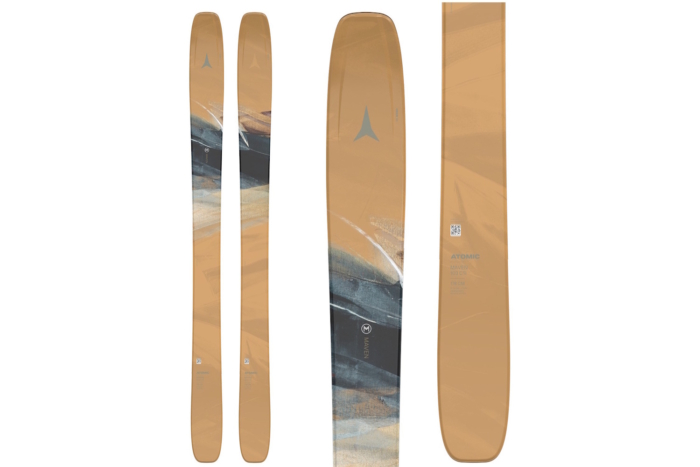
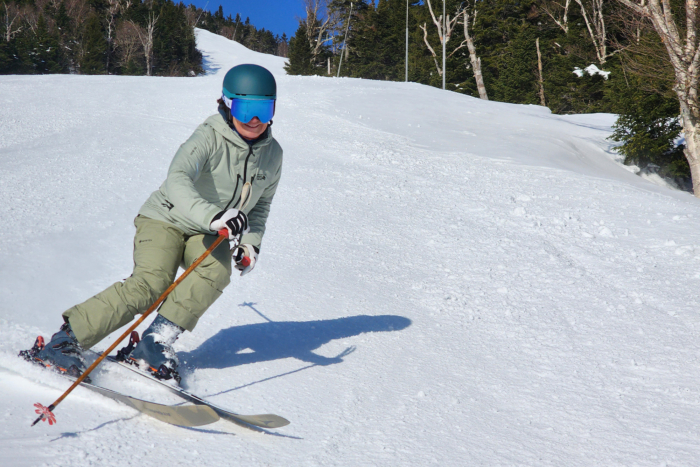
If a one-ski quiver had a name, this would be it. We skied the Atomic Maven 103 CTI ($800) everywhere we could, from bone-chilling mornings on Vermont’s Front Four to storm-cycle laps and soft snow at Utah’s Powder Mountain, and it consistently felt like the ski we wanted underfoot. Redesigned in 2024 by downhill legend Daron Rahlves, the Maven strikes a rare balance between stability, precision, and approachability, feeling calm at speed while remaining intuitive for a wide range of skiers.
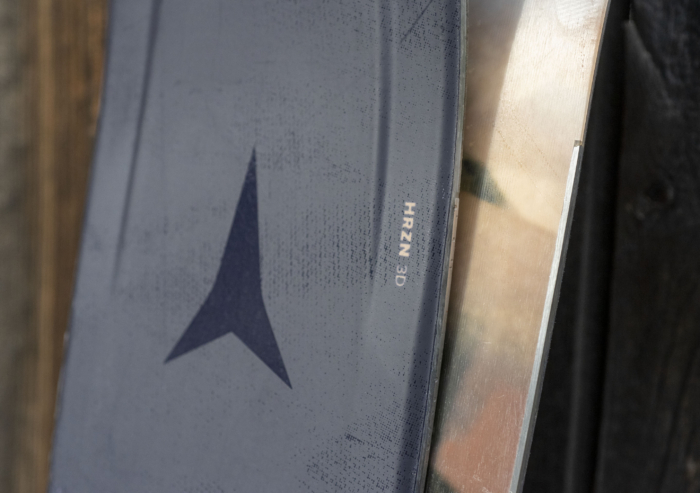
The Tech: Atomic pairs an ash and poplar wood core with its CTI construction, blending carbon and Titanal (hence CTI) to reduce weight and vibration without sacrificing power. Compared to previous versions, the Maven uses less metal, fiberglass, and resin, resulting in a smoother, more refined ride. The HRZN 3D tip increases surface area for better float in soft snow and helps deflect icy chunks and uneven terrain without interrupting your line.
What We Like: The Maven 103 CTI performs well across a huge range of speeds and conditions. It carves confidently on groomers, feels springy and predictable in bumps and trees, and becomes a blast in soft snow, where the wider platform delivers a smooth, downhill-swooping feel. We also appreciate that Atomic offers this ski in a 178 cm length, giving taller and more aggressive skiers a rare longer option in a women’s all-mountain ski.
What We Don’t: At 103 mm underfoot, this is not a pure frontside carving ski. It lacks the razor-sharp edge grip of narrower, groomer-focused models and requires more effort to pivot quickly in very tight, technical terrain.
Should You Buy It? If you’re an intermediate skier ready to explore steeper terrain or an advanced skier looking for one dependable daily driver that handles everything from icy mornings to powder days, the Maven 103 CTI is a top-tier choice.
Elan Ripstick 100 W
-
-
(Photo/Jason Hummel)
-
photo/Jeb Wallace-Brodeur
-
photo/Jeb Wallace-Brodeur
Specifications
Pros & Cons
Pros
- Super versatile
- Carbon not metal gives big bite, but is light
- Also available in a range of widths
Cons
- Dedicated left & right skis
- Don't have the grip of a frontside ski
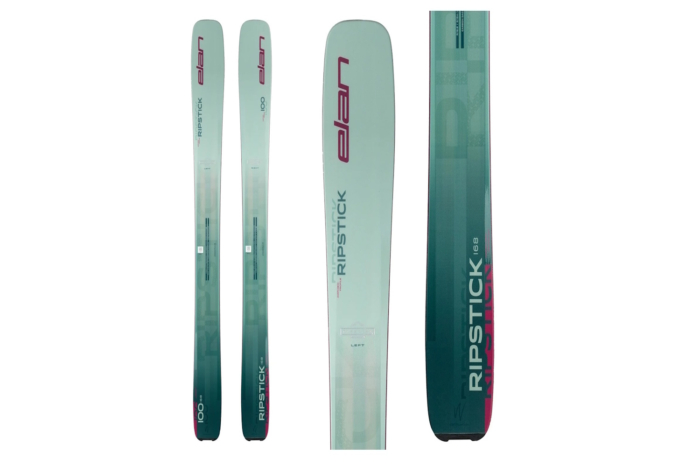
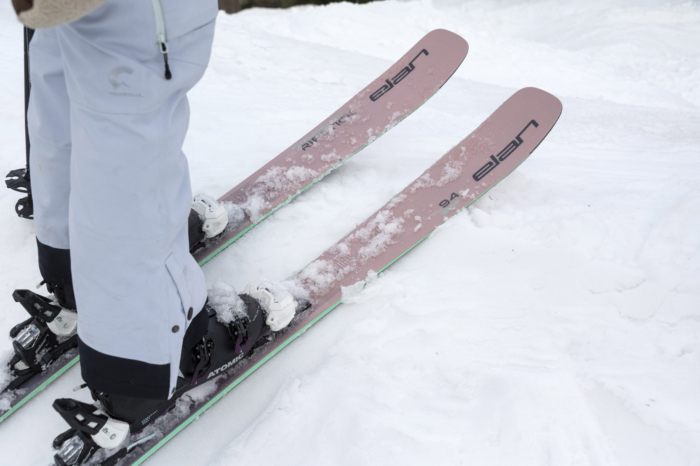
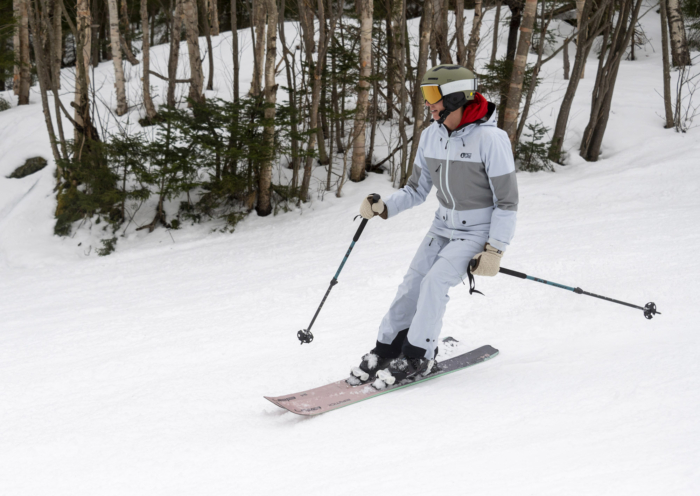
Not every great all-mountain ski has to be expensive or overly complicated. The 2025/2026 Elan Ripstick 100 W ($800) earned its place in this guide by delivering consistent, confidence-inspiring performance across a wide range of conditions without relying on heavy metal or a demanding feel. It’s the kind of ski that makes sense for skiers who want one reliable setup they can reach for most days of the season.
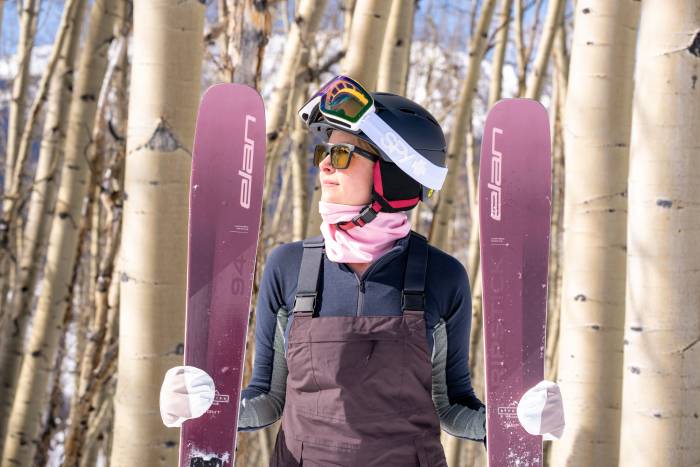
We skied the Ripstick 100 W on a flat, windy February day at Utah’s Snowbird Resort, with hard-packed to icy snow on the open slopes and soft pockets lingering in steep trees. On a day that demanded versatility, the Ripstick never felt out of place, moving easily from firm groomers to tight trees and variable snow.
The Tech: Elan builds the Ripstick 100 W around a lightweight laminated wood core reinforced with Carbon Deck Technology, using carbon rods and bands instead of metal to add bite without adding weight. Flax fiber in the tips helps absorb vibration and chatter, keeping the ski calm and composed on firmer snow. Two lightweight carbon tubes follow the arc of the sidecut to boost side-to-side stability while preserving a lively, energetic feel. The asymmetrical left- and right-specific design adds grip on the inside edge and float and control on the outside.
What We Like: The Ripstick 100 W is easy to ski and forgiving when you want to dial things back, but it still responds well when pushed harder. It grips confidently on firm snow, pivots intuitively in trees and over bumps, and offers solid float for a 100mm waist, all while staying light and playful enough for all-day laps.
What We Don’t: This is not a dedicated frontside carving ski, and it lacks the locked-in edge hold of a metal-heavy charger. The left- and right-specific design can also take a moment to get used to.
Should You Buy It? If you want a budget-friendly all-mountain ski that feels adaptable, playful, and reliable when conditions are unpredictable, the Ripstick 100 W is one of the best values you can put on your feet.
Blizzard Black Pearl 88
-
-
(Photo/Jason Hummel)
-
Quality materials gave the ski a smooth, controlled feel even in variable snow; (photo/Jeb Wallace-Brodeur)

Specifications
Pros & Cons
Pros
- One of the top-selling skis in the world in any category
- Designed from the snow up specifically for women
- Comes in short lengths
Cons
- Not a quick handler in the trees
- Not the favorite of more advanced skiers
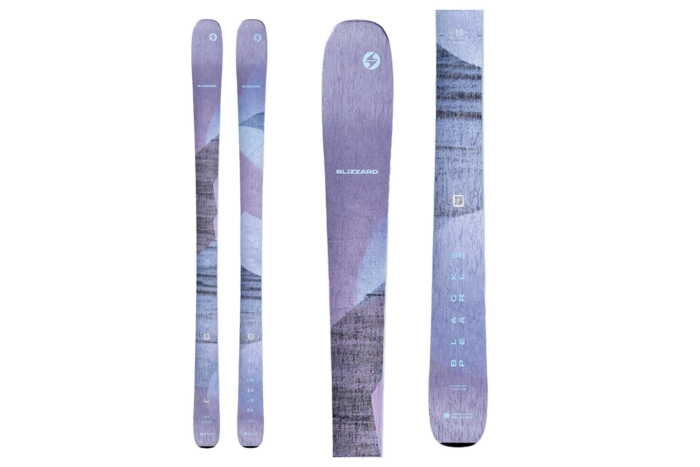
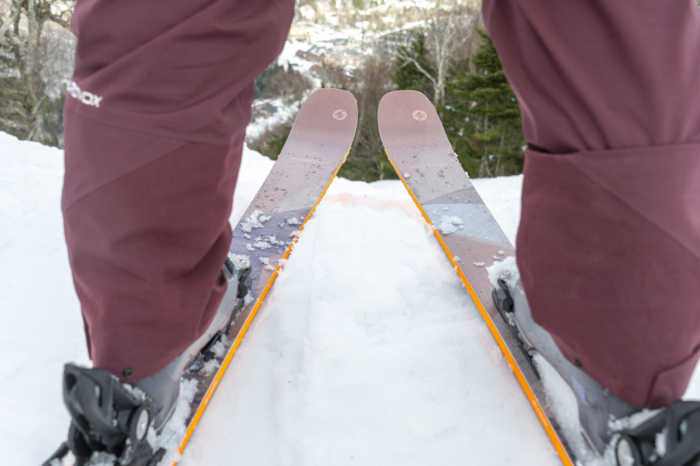
For skiers building confidence one turn at a time, the Blizzard Black Pearl 88 makes the process feel natural. We skied the Blizzard Black Pearl 88 ($750) in a variety of firm, variable resort conditions, and it consistently felt like a ski that wanted to help rather than punish. First introduced in 2011 and refined year after year, the Black Pearl 88 remains one of the most approachable women’s all-mountain skis available, particularly for beginners or progressing intermediates who spend most of their time on groomed runs.
The Tech: Blizzard’s women’s-specific construction utilizes thinner, segmented sheets of Titanal, compared to the men’s equivalent ski, laid out in two layers to create a smooth, damp ride while reducing torsional rigidity. This makes turn initiation and exit feel easy and intuitive. Inside the core, dense beech stringers provide stability and edge hold, then taper toward softer poplar in the tip and tail for a balanced, forgiving flex. Each ski length is individually tuned, with shorter sizes slightly softer for lighter skiers and longer lengths offering more support as speed and confidence increase.
What We Like: The Black Pearl 88 feels calm, predictable, and forgiving at slower speeds, which is exactly what beginners need. It encourages clean turns without punishing mistakes and remains composed as skill level improves. On groomers and firm snow, it carves cleanly, holds an edge reliably, and absorbs chopped-up snow without feeling harsh. Added camber keeps the ski lively, while tip and tail rocker make linking turns smooth and confidence-building.
What We Don’t: With an 88 mm waist, this ski isn’t designed for deep powder or tight sidecountry terrain. It felt narrow and less agile when pushed into deeper snow, and advanced skiers looking to charge harder or explore a broader range of conditions and terrain will likely want something wider and more powerful.
Should You Buy It? If you’re a beginner or progressing skier looking for a forgiving, stable ski that builds confidence and excels on piste, the Black Pearl 88 is one of the best places to start.
Black Diamond Impulse Ti 104 W
-
-
-
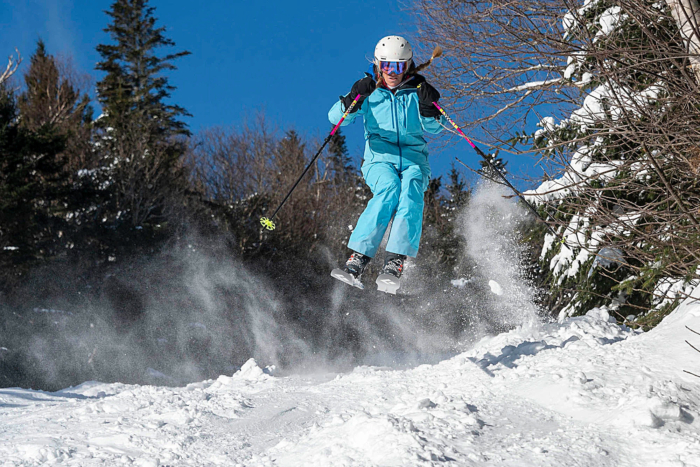
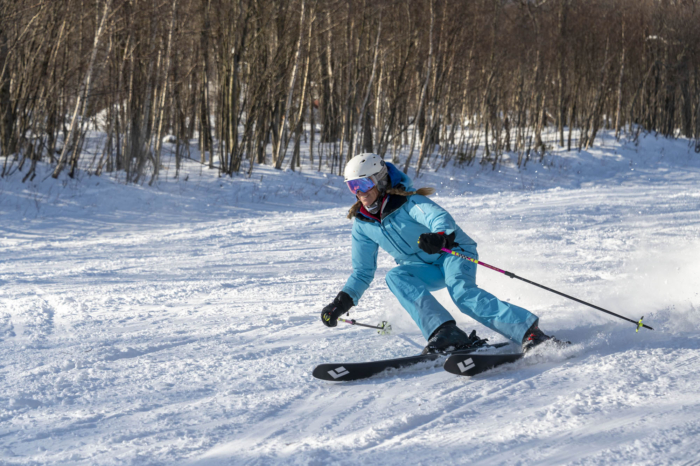
Skier Darian Boyle rails the Black Diamond Impulse Ti, which was just as fun in East Coast chalk as Rocky Mountains powder; (photo/Jeb Wallace-Brodeur)
Specifications
Pros & Cons
Pros
- A powder ski that grips in challenging and low snow conditions
- Same weight as the non-metal version
- Impressive performance all over the mountain
Cons
- Longest women’s ski is 170
- Only two waist widths available
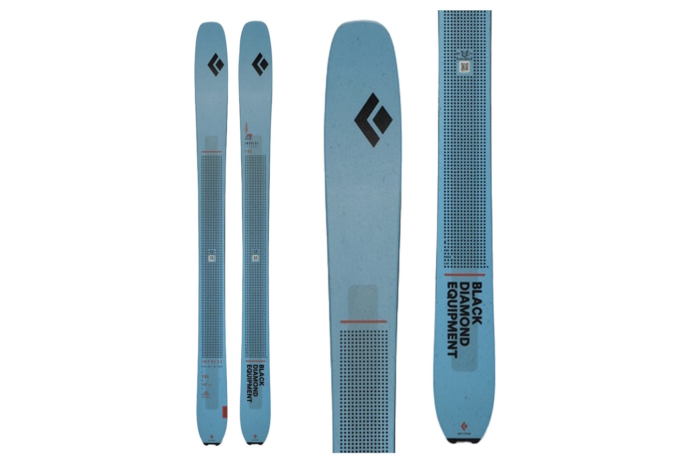
Built for storm days and soft snow, but versatile enough to stay fun when conditions shift, the Black Diamond Impulse Ti 104 W ($850) is one of the most capable powder-leaning women’s all-mountain skis Black Diamond has made in years. With a 104 mm waist, the Impulse Ti 104 W blends easy float and playful energy in soft snow with the stability needed when the mountain firms up.
The Tech: The Impulse Ti 104 W uses a flat, solid-core construction reinforced with a single sheet of Titanal and full ABS sidewalls, adding torsional stiffness, dampness, and strong power transmission. For 2024/25, Black Diamond added metal without increasing weight by reducing fiberglass, retaining the poplar wood core, and updating the topsheet to a lighter, more durable material. A rockered tip and tail, paired with traditional camber underfoot, give the ski a familiar, confidence-inspiring feel across changing conditions.
What We Like: The Impulse Ti 104 W really comes alive when the snow stacks up. It feels light and nimble in trees, planes easily on open faces, and delivers reliable float without feeling surfy or sluggish. Unlike some powder skis that only want to smear turns, this one still likes to carve, bounce, and play. We skied it in the East at Sugarbush and Stowe, where it transitioned smoothly from morning crust and hardpack into wet corn, soft bumps, and chalky tree snow later in the day. Even on scraped-off groomers, it stayed composed and predictable.
What We Don’t: Women’s-specific lengths top out at 170 cm, which limits options for skiers who prefer a longer platform. While a 98 mm version exists, truly deep days may leave some skiers wanting something wider.
Should You Buy It? If you want a powder-leaning women’s all-mountain ski that shines on storm days but stays trustworthy when conditions turn firm or mixed, the Impulse Ti 104 W is a strong choice for skiers who like to ski fast and keep things playful.
K2 Mindbender 99 Ti W
Specifications
Pros & Cons
Pros
- Performs well in a wide range of conditions
- Comes in five sizes
- An insert keeps the middle ski lively in shorter sizes
Cons
- Too much ski for a beginner skier
- Heavier than most
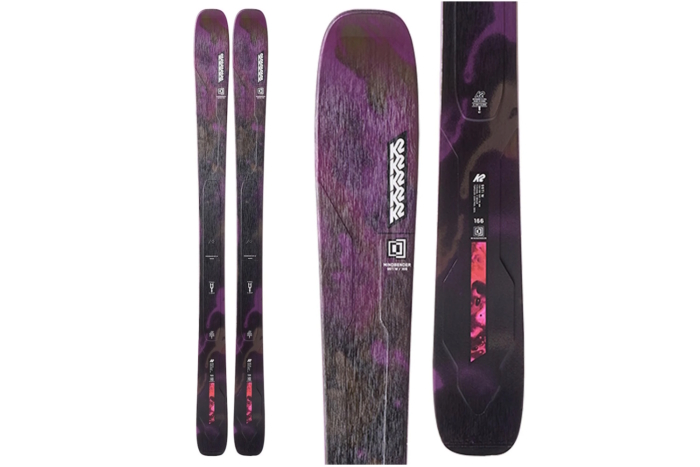
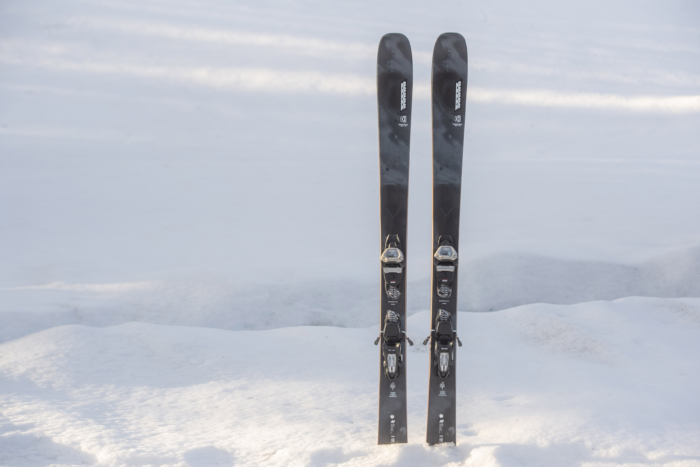
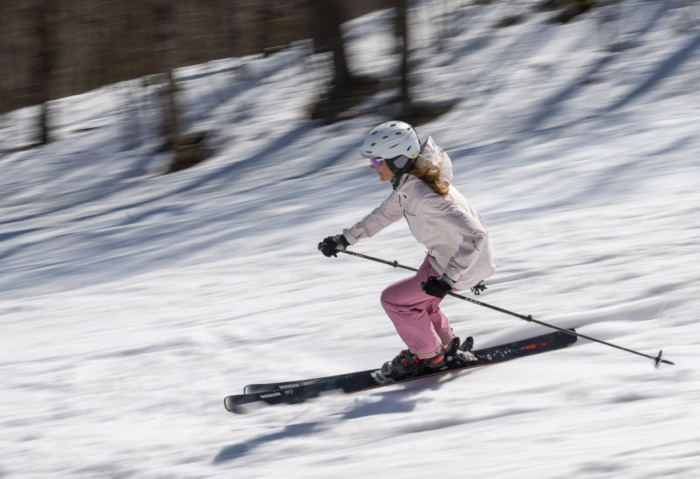
If you want one ski that truly does everything well, the K2 Mindbender 99 Ti W ($800) is it. We skied the Mindbender 99 across a wide range of conditions, and it consistently stood out as one of the most versatile all-mountain skis we tested. It grips confidently on ice, smooths out refrozen crud, and stays playful in trees, bumps, and fresh snow, without ever feeling harsh or unpredictable.
The Tech: The Mindbender 99 Ti W is built around K2’s Titanal Y-Beam construction, using metal only where it’s needed. A wishbone-shaped Titanal insert adds damping and stability underfoot, while the prongs extend toward the shovel edges to boost precision in tight, variable terrain. An aspen wood core and gradual tip rise keep the ski lively and help it float naturally in softer and day-old snow without feeling sluggish.
What We Like: We tested the Mindbender 99 Ti W extensively at Stowe, where it handled everything from icy groomers to chopped-up snow and tight trees with ease. Edge hold was rock solid on firm pitches, and the ski stayed composed at speed without bucking in the bumps. It felt poppy and energetic in moguls, floated confidently in two-day-old snow tucked into the trees, and carved smoothly through uneven, refrozen conditions. Plenty of skis claim to be all-mountain; this one truly earns it.
What We Don’t: This is a substantial ski. For true beginners, it can feel like too much tool, and it is heavier than many skis in this class.
Should You Buy It? If you’re a confident intermediate or advanced skier looking for one ski to handle groomers, bumps, trees, and variable snow with equal confidence, the Mindbender 99 Ti W is one of the most versatile all-mountain skis you can put on your feet.
Armada ARW 100
-
-
(Photo/Justin Park)
-
(Photo/Justin Park)
Specifications
Pros & Cons
Pros
- Light and energetic
- Park-friendly design that is fun everywhere on the mountain
- Built to be durable
Cons
- Doesn’t excel in chop
- Can get pushed around by heavy or wet snow
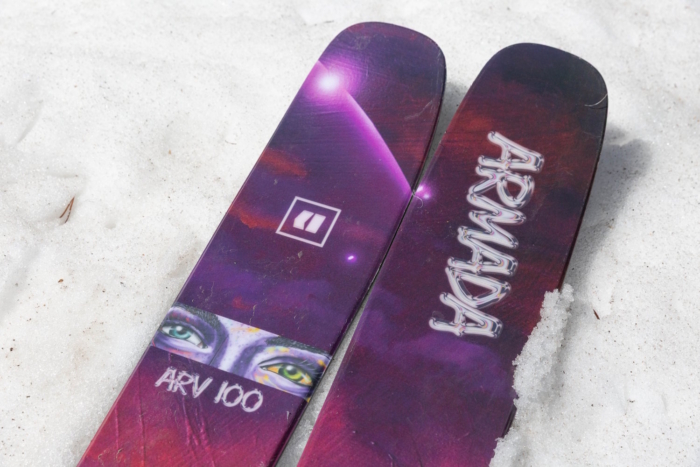
Read Review: Park-Ready All-Rounder: Armada ARV 100 All-Mountain Skis Review
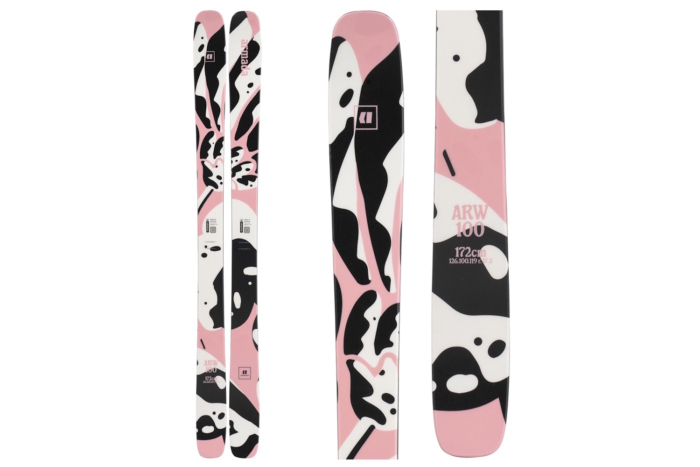
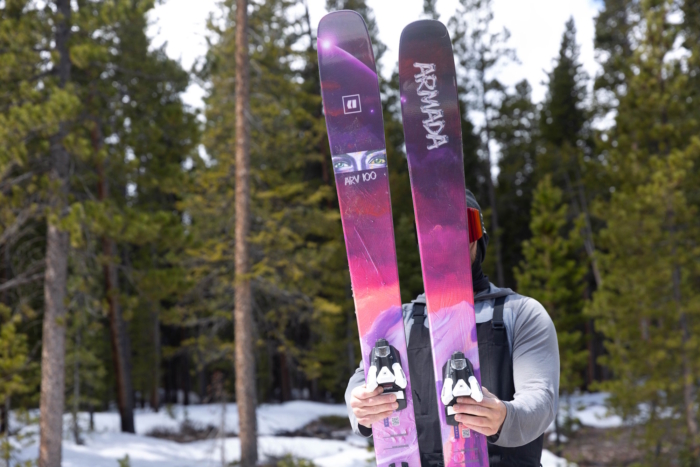
If your ideal ski day blends park laps with playful runs all over the mountain, the Armada ARW 100 ($700) makes a lot of sense. We skied the ARW 100 in a range of conditions, and it stood out as a light, energetic all-mountain ski that feels especially at home when creativity and airtime are part of the plan. It stays playful long after you leave the park, carrying that same energy onto groomers, side hits, and natural features.
The Tech: The ARW 100 mirrors the construction of Armada’s men’s ARV 100, built around a poplar wood core that keeps the ski light, poppy, and predictable. Tip and tail rocker paired with camber underfoot delivers easy maneuverability with reliable edge hold on firm, but not icy, snow. An ash binding insert underfoot creates a strong, durable mounting platform, while oversized, heat-treated edges and molded sidewalls help the ski stand up to park abuse and hidden obstacles. A sintered base keeps things fast and durable over a long season.
What We Like: The ARW 100 feels lively and fun everywhere we skied it. In Park City, it stayed agile in chalky conditions and held an edge on skied-off groomers late in the day. Back in Vermont, it delivered floaty, playful turns in woods runs and chutes, and it was especially fun boosting side hits and skiing switch. Its light weight and quick response encourage creativity and make the whole mountain feel like a playground.
What We Don’t: That light, playful feel comes with limits. The ARW 100 doesn’t plow through chop and can get pushed around in heavy or wet snow, requiring an active, engaged skier.
Should You Buy It? If you’re an intermediate to advanced skier who loves the park but wants one ski to explore the rest of the mountain, the ARW 100 is a fun, durable, and playful choice, especially in softer conditions.
Salomon Stance Pro 82 W
Specifications
Pros & Cons
Pros
- Powerful
- Stable
- Fast
Cons
- Doesn’t excel in powder
- Prefers piste
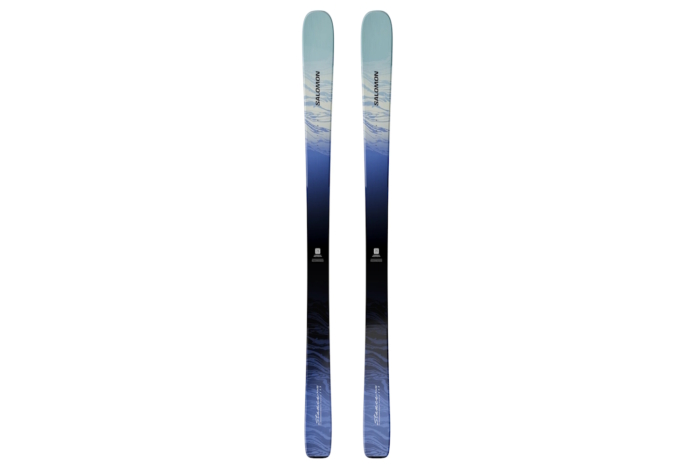
Even though the Stance name has been in Salomon’s lineup for years, the Salomon Stance Pro 82 W ($650) breaks new ground. It’s the narrowest, most carving-focused Stance to date, built for skiers who prioritize speed, precision, and firm snow, while still offering just enough versatility to step beyond the groomers when needed.
The Tech: The Stance Pro 82 W uses a full poplar wood core paired with a Titanal laminate and full sandwich sidewalls. That construction delivers a strong balance of liveliness, damping, and best-in-class edge grip without feeling overly punishing. A 14 m turn radius (177 cm) gives the ski a preferred arc, while 15% tip rocker and 12% tail rocker help keep it maneuverable when conditions get variable.
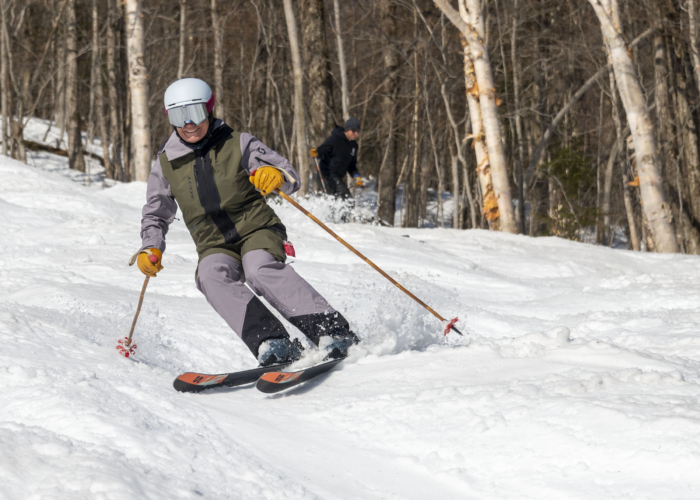
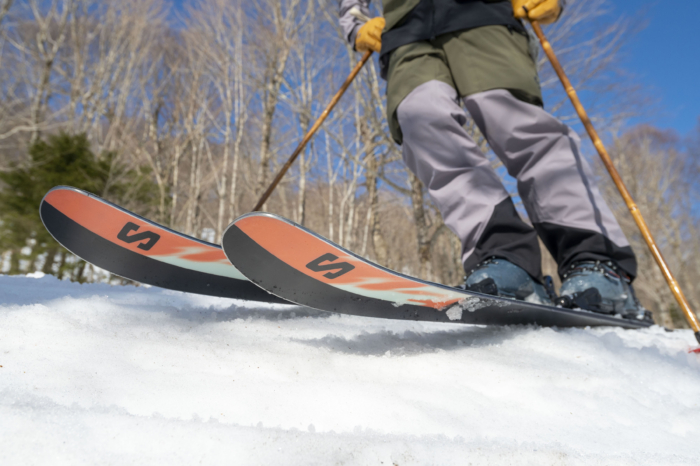
What We Like: We skied the Stance Pro 82 W on firm snow at Stowe Mountain Resort, and it immediately impressed us with how calm and confident it felt at speed. On fresh corduroy, it locked into an edge like a detuned race ski, stable and precise, yet willing to vary its turn shape if pushed. Edge-to-edge transitions felt quick and composed, and the ski stayed lively without feeling nervous. While it’s happiest on groomers, we took it into bumps and found it capable enough to have fun before heading right back to where it shines.
What We Don’t: At 82 mm underfoot, this is not a powder ski. In trees and unconsolidated snow, it feels narrow and too precise to slarve, and it doesn’t excel in soft or chopped-up conditions.
Should You Buy It? If you’re an intermediate to advanced skier who loves carving fast on firm snow, values precision, and wants a frontside ski that can handle changing daily conditions, the Stance Pro 82 W is a standout addition to the quiver.
Other Women’s All-Mountain Skis We Love to Shred
-
-
(Photo/Jeb Wallace-Brodeur)
-
(Photo/Jeb Wallace-Brodeur)
-
(Photo/Jeb Wallace-Brodeur)
Specifications
Pros & Cons
Pros
- Excellent balance of stability and forgiveness
- Easy turn initiation with reliable edge grip
- Versatile mid-90s width for mixed conditions
- Playful feel without sacrificing confidence
Cons
- Less stable at high speeds than other skis in choppy snow
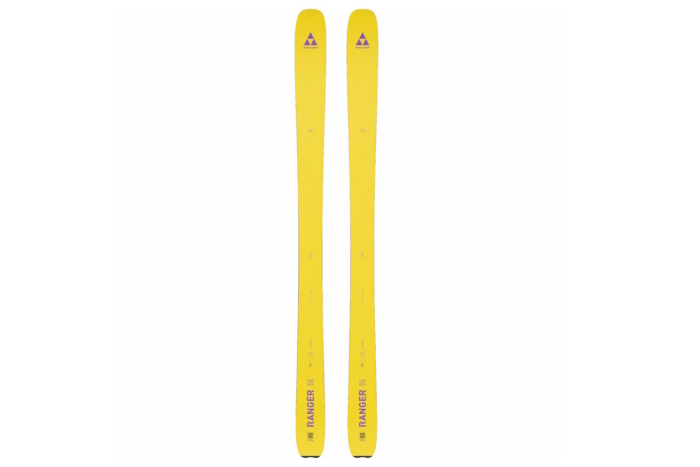
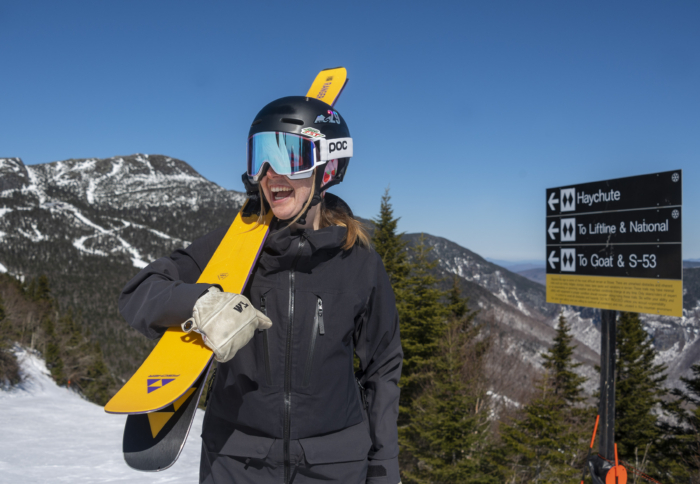
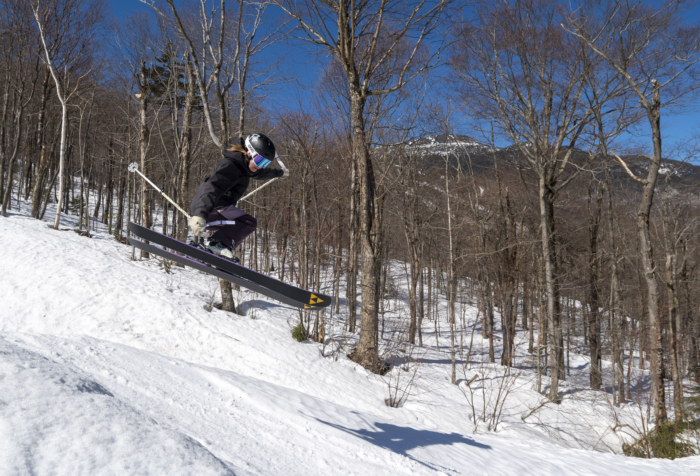
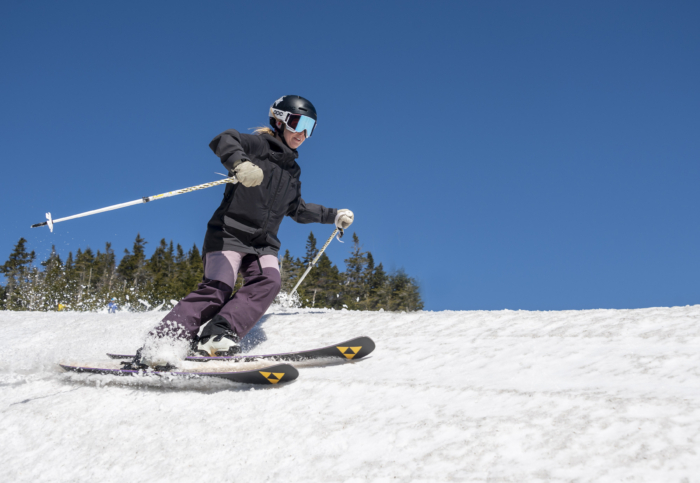
One of the most well-rounded all-mountain skis we tested, the Fischer Ranger 96 ($800) felt intuitive, fun, and consistently reliable across a wide range of terrain and conditions. The mid-90s waist hit a sweet spot from Colorado to Chamonix, offering easy turn initiation, predictable exits, and a confident feel whether carving groomers or venturing into sidecountry terrain.
The Tech: The Ranger 96 pairs an energetic poplar and beech wood core with a 0.5 mm sheet of Titanal that’s carefully tuned by ski length and width. Wider skis get shorter Titanal sections, while narrower skis have flatter tails, and in the 96-mm width, both land in a balanced middle ground. A flex-cut notch in the Titanal keeps the ski from feeling harsh, while Titanal extensions into the tip and tail add edge grip and stability. A rockered profile and tapered shape round out a construction that’s supportive without being demanding.
What We Like: We skied the Ranger 96 in everything from firm, icy groomers to heavy spring snow and mixed conditions. It railed blue and black groomers at Stowe, stayed composed while dipping into sidecountry terrain, and handled nine inches of heavy spring snow in Chamonix one day, followed by skied-off, icy conditions the next. It felt quick and floaty, forgiving but still powerful and playful, making it one of the most versatile skis we tested.
What We Don’t: It’s less stable at very high speeds in chopped-up snow than heavier, more metal-forward skis. It’s also not women’s-specific, which for this guide is more a matter of fit and sizing preference than on-snow performance.
Should You Buy It? If you’re an intermediate or advanced skier looking for a do-it-all ski that prioritizes feel, adaptability, and all-day fun, the Ranger 96 is a strong, confidence-inspiring option.
-
-
(photo/Jeb Wallace-Brodeur)
-
(photo/Jeb Wallace-Brodeur)
Specifications
Pros & Cons
Pros
- Excellent edge grip and stability on firm snow
- Powerful yet smooth through chopped terrain
- Surprisingly strong float and easy turn initiation
- Confidence-inspiring at speed
Cons
- Requires a skilled, active skier
- Not as playful or forgiving as softer all-mountain skis
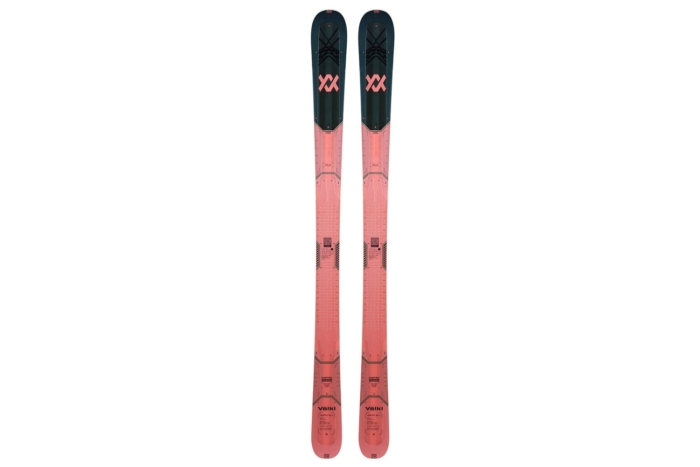
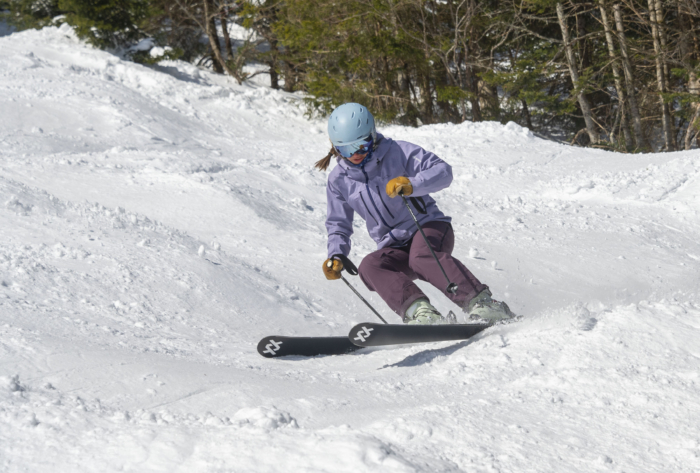
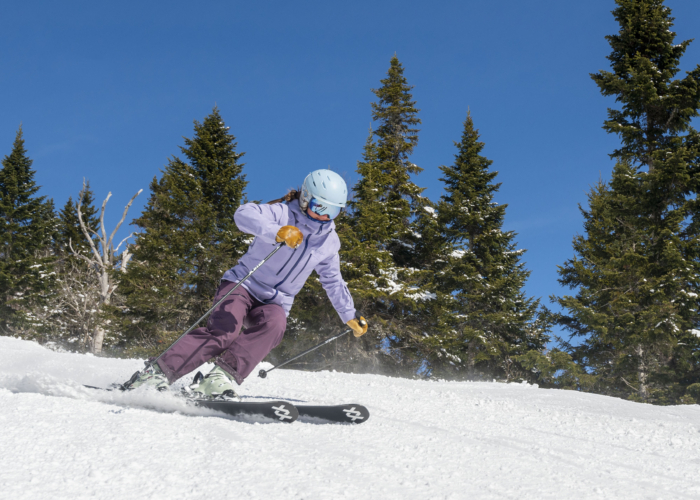
Stiff, strong, and more versatile than its width suggests, the Volkl Mantra 88 W ($850) brings together the best of Volkl’s women’s lineup into one confident, hard-charging all-mountain ski. Replacing both the Kenja and the Secret, it’s designed for skiers who prioritize precision, speed, and control, while still being capable in mixed conditions.
The Tech: The Mantra 88 W uses a wood core that combines lighter, more flexible wood in the center with denser material along the edges, providing strong power transmission and edge hold. Volkl’s tailored Titanal frame, tuned by ski length, delivers the classic Mantra dampness and stability, while woven carbon tips reduce deflection in rough snow. The brand’s signature 3D Radius sidecut combines multiple turn shapes into one ski, allowing both quick, tight turns and long GS arcs without feeling locked into a single radius.
What We Like: We skied the Mantra 88 W on an unexpected powder day at Eldora, and despite its narrow waist, it surprised us with how well it floated in six inches of fresh snow thanks to the wide, rockered tip and tail. As conditions turned heavy and choppy, the ski bulldozed through the crud without getting knocked around. On skied-off terrain, edge grip was exceptional, carving powerfully into the icy underlayer. The harder we pushed this ski, the more composed and precise it felt.
What We Don’t: It’s not especially playful, and the stiff flex can feel like too much ski for lighter or less assertive skiers.
Should You Buy It? If you’re an advanced skier or strong intermediate who wants a fast, precise ski that thrives in firm and mixed conditions and rewards an engaged, aggressive driving style, the Mantra 88 W is a standout choice.
-
-
(photo/Jeb Wallace-Brodeur)
-
(photo/Jeb Wallace-Brodeur)
-
(photo/Jeb Wallace-Brodeur)
-
(photo/Jeb Wallace-Brodeur)
-
(photo/Jeb Wallace-Brodeur)
-
(photo/Jeb Wallace-Brodeur)
Specifications
Pros & Cons
Pros
- Smooth, stable, and confidence-inspiring ride
- Excellent edge hold and damping on firm or variable snow
- Powerful yet surprisingly playful for a metal ski
- Handles a wide range of terrain with ease
Cons
- Heavier than some all-mountain options
- Requires an engaged skier to unlock its full potential
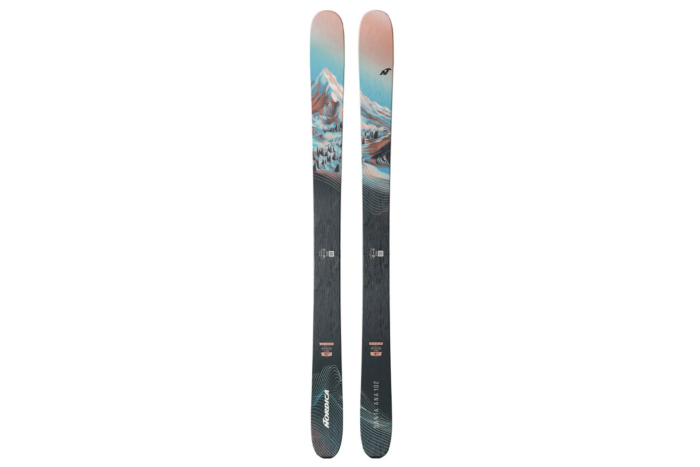
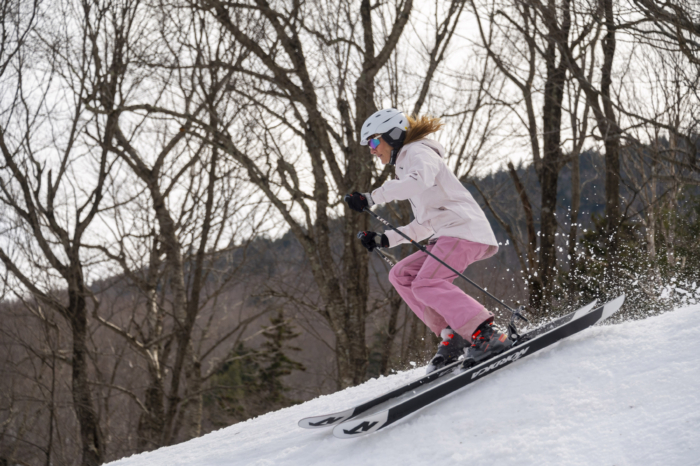
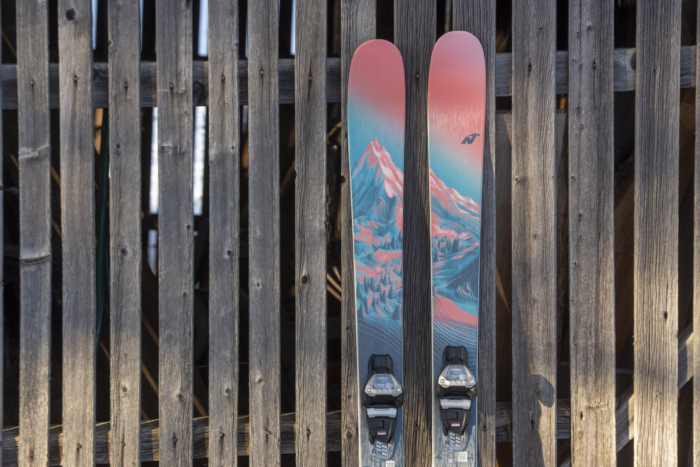
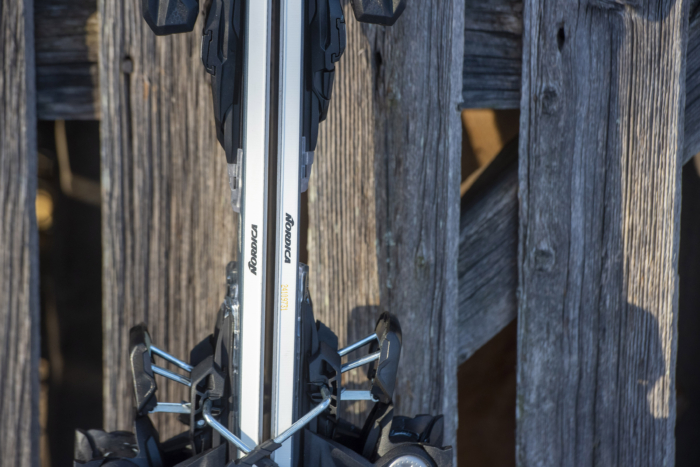
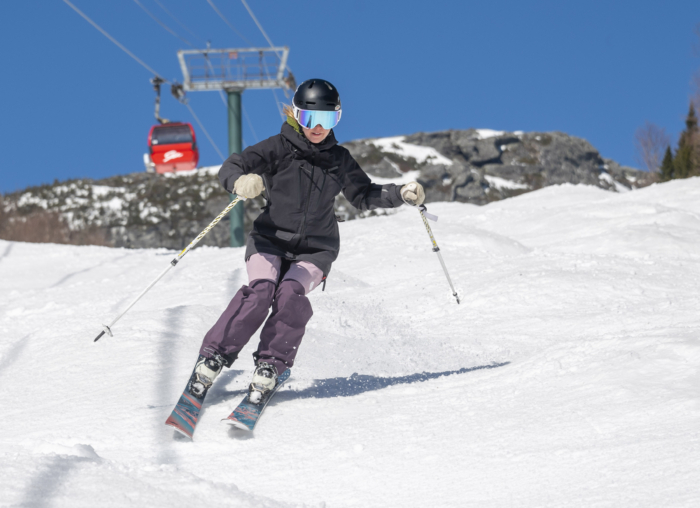
The Nordica Santa Ana 102 ($900) has long been a staple in the women’s all-mountain category, and the latest version feels more refined, more powerful, and more balanced than ever. It blends the damp, planted feel Nordica is known for with a smoother, more playful ride that works across a wide range of terrain and conditions.
The Tech: Built around a beech and poplar wood core, the Santa Ana 102 now includes a rubberized polymer layer underfoot that reduces vibration and quiets the ski in rough snow. A full-length metal laminate provides strength and stability, with metal-free zones through the mid-body and tail to preserve flex and forgiveness. The result is a ski that feels strong and composed without becoming overly rigid or punishing.
What We Like: We first skied the Santa Ana 102 at Vermont’s Mad River Glen, dropping straight into Paradise off the single chair. From ungroomed powder and steep, bumpy groomers to tight tree lines, the ski stayed calm and predictable. It rewards an engaged skier with excellent edge hold and damping on firm snow, yet remains surprisingly nimble for a metal-heavy ski. Though it feels heavy in hand, that weight disappears once on snow, where the ski feels smooth, stable, and confidence-boosting in variable conditions.
What We Don’t: It’s heavier than many modern all-mountain skis, and it performs best when driven with intention rather than skied passively.
Should You Buy It? If you want a smooth, powerful women’s all-mountain ski that thrives in firm, variable, and mixed conditions and rewards a strong, engaged skiing style, the Santa Ana 102 remains one of the most dependable options available.
-
-
-
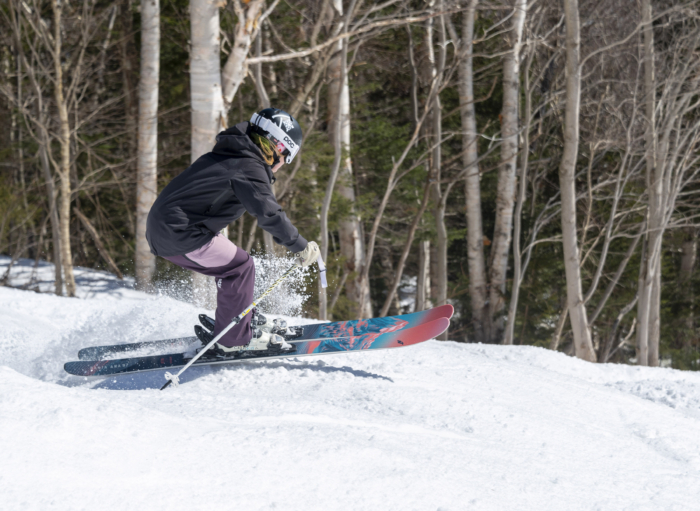
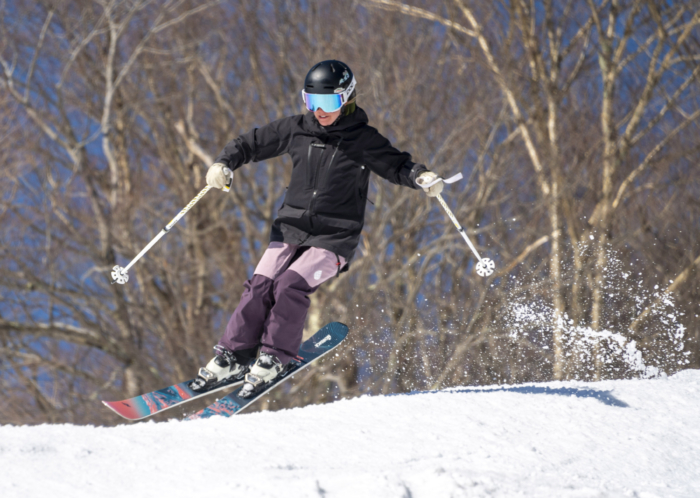
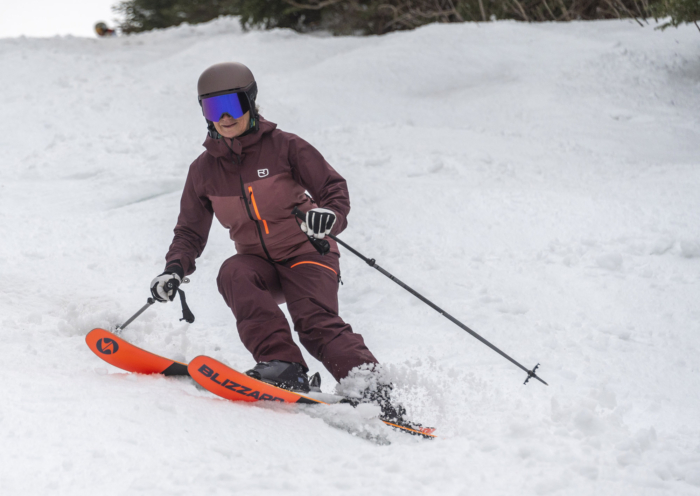
Blizzard's Sheeva 10 is a high performance ski, one that skiers can grow into, and one that performs everywhere on the mountain; (photo/Jeb Wallace-Brodeur)
Specifications
Pros & Cons
Pros
- A great choice for aggressive skiers, and beginners who want to grow into their skis
- Solid edge hold and a smooth ride
- Available in a wide range of sizes
Cons
- Not available in narrow widths
- Don’t perform well if ice and hardpack are the most common surfaces you ski
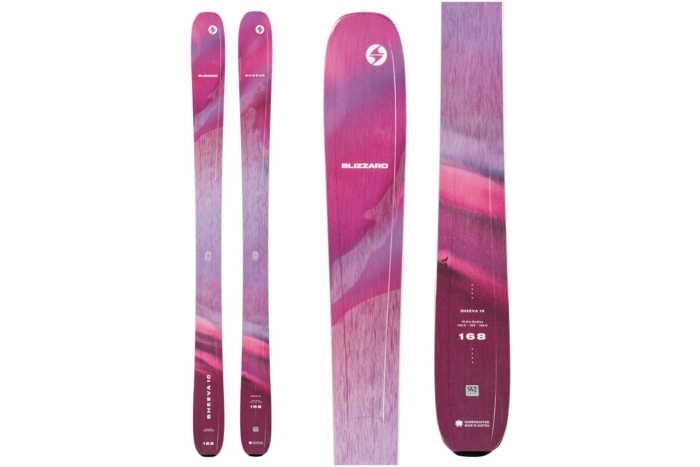
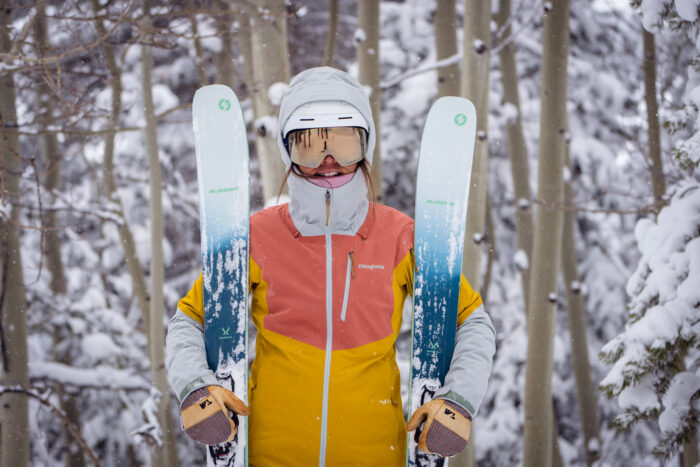
Blizzard’s Sheeva 10 ($850) has earned its reputation as one of the most adaptable women’s all-mountain skis on the market, blending approachability with enough backbone for aggressive skiing. It’s a ski that works just as well for strong skiers who like to push the pace as it does for motivated beginners looking for something they can grow into over time.
The Tech: The Sheeva 10 is built around a carefully tuned wood core that blends poplar, beech, and paulownia for a balanced mix of strength, stability, and weight savings. Blizzard engineers a stiffer flex underfoot for enhanced edge hold and power, a medium flex in front of and behind the binding for improvedcontrol, and softer tips and tails for smooth turn initiation and easy release. A measured amount of metal adds grip and damping without making the ski feel overly heavy or demanding.
What We Like: We skied the Sheeva 10 across firm groomers, steep powder runs, and soft bumps, and it consistently felt composed and intuitive. It handles long, GS-style turns with ease, holds confidently in technical terrain, and stays quick and maneuverable in trees and moguls. The ski feels aggressive underfoot but forgiving at the extremities, making it easy to pivot quickly and stay in control.
Blizzard also offers the Sheeva line in multiple waist widths. The Sheeva 9 (96 mm) excels in firmer snow and offers quicker edge-to-edge response, while the Sheeva 11 (112 mm) is better suited for freeriders and powder-focused days. For most skiers, the Sheeva 10 hits the sweet spot for everyday resort conditions.
What We Don’t: It’s not offered in narrower waist widths, and it’s not ideal if icy hardpack makes up the majority of your ski days.
Should You Buy It? If you want a versatile women’s all-mountain ski that supports progression and feels comfortable across a wide range of terrain, snag the Sheeva 10.
Specifications
Pros & Cons
Pros
- Incredibly playful and lightweight
- Easy to maneuver and nimble, yet reliable
- Very reasonable price point
- Predictable and energetic
Cons
- Not the best on icy groomers
- No longer women-specific
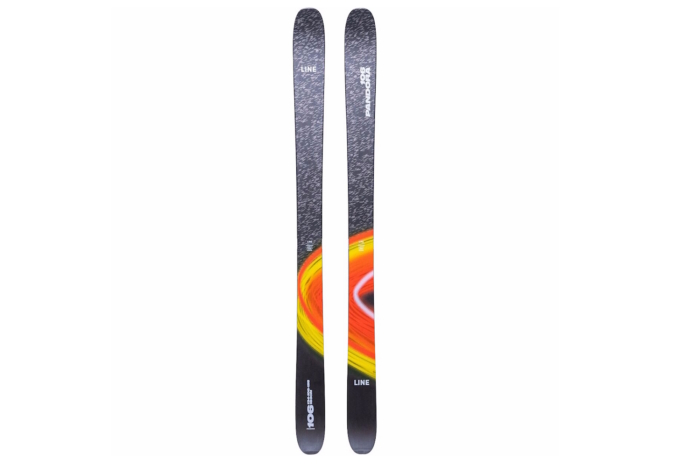
Light, energetic, and built for skiers who prefer trees and soft snow over groomer laps, the Line Pandora 106 ($700) is an all-mountain ski that makes playful skiing feel effortless. At just over 1,650 g per ski, it feels quick and nimble underfoot while still providing enough damping to remain composed when speeds increase.
The Tech: The Pandora 106 is built around LINE’s Aspenlite wood core, which balances pop, responsiveness, and reliability without unnecessary weight. Integrated Carbon Magic Fingers reinforce the ski with carbon strands that add stiffness and energy while keeping weight low. For 2024–25, the Pandora line is now fully unisex, with gender-inclusive sizing, an FSC-certified wood core, and LINE’s new Bio-Resin for improved durability and sustainability.
What We Like: We skied the Pandora 106 at Pico Mountain in southern Vermont, lapping bumps off the Outpost Double Chair and ducking into the woods between trails where soft snow lingered. The ski felt lively and intuitive in trees, easy to pivot in tight spaces, and floaty when conditions softened. The carbon reinforcement gives it a springy feel that encourages side hits and quick transitions without feeling nervous or flighty. Paired with a hybrid binding, it’s also a strong candidate for sidecountry laps or light backcountry use.
What We Don’t: Edge hold on icy groomers is its weak point, and it’s not the ski we’d choose for firm, hardpack-focused days.
Should You Buy It? If you prioritize soft snow, trees, and a playful feel over locked-in carving performance, the Pandora 106 is a fun, lightweight option that shines in forgiving conditions.
Specifications
Pros & Cons
Pros
- Balance of float and edge-to-edge transfer
- Easy to drive
- Clever component design to reduce chatter
Cons
- Can get a bit squirrelly on hardpack
- Not the most aggressive ski
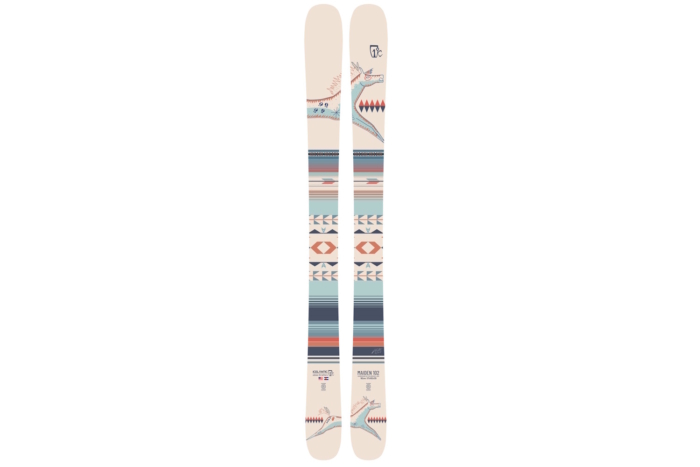
Handmade in Denver, Colorado, and fully redesigned for 2024–25, the Icelantic Maiden 102 ($850) leans hard into fun, pop, and freeride energy. It’s a ski that feels lively and playful underfoot, encouraging slashes, side hits, and creative lines while still offering enough structure to stay composed when conditions get variable.
The Tech: Icelantic overhauled the Maiden 102 to make it more predictable and freeride-ready. Four vertical carbon strips above and below the sustainably sourced poplar core add snap and rebound, while unilateral fiberglass improves consistency. Underfoot camber was doubled from 2 mm to 4 mm, boosting responsiveness and edge-to-edge energy. Rubber foil damping keeps chatter in check, and the new FLY-cap construction in the tip and tail reduces swing weight by extending the poplar core and carbon farther toward the ends. A dual-layer fiberglass mounting plate underfoot provides a solid, reliable binding interface.
What We Like: We found the Maiden 102 easy to drive and eager to play, with a smooth balance of float and quick edge-to-edge transfer. The lighter swing weight makes it less fatiguing over long days and especially fun in trees, bumps, and soft snow. It has a natural, intuitive feel that makes mixed conditions enjoyable rather than work, and the freeride-inspired shape and progressive mount encourage a more playful approach to the mountain.
What We Don’t: On firm, icy hardpack it can feel a bit squirrelly, and it doesn’t offer the locked-in power aggressive chargers might want at high speeds.
Should You Buy It? If you want a playful, poppy women’s all-mountain ski that prioritizes creativity, rebound, and soft-snow fun over brute force, the Maiden 102 delivers a lively ride with plenty of personality.
Specifications
Pros & Cons
Pros
- The weight enhances stability and damping
- Fairly forgiving
Cons
- Not the strongest performer in icy conditions
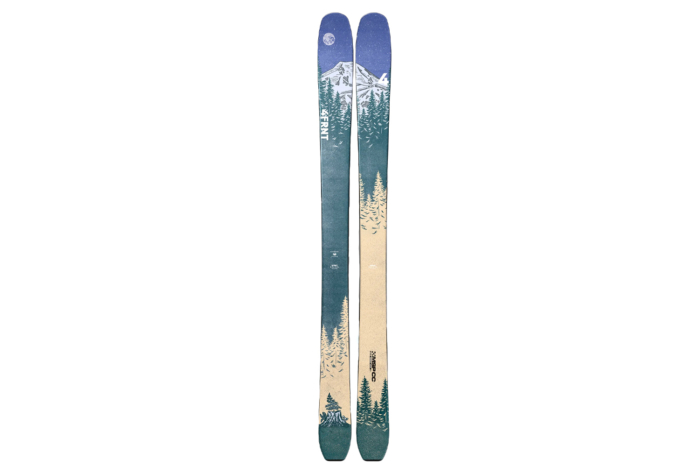
Built for skiers who like to drive their skis from the front, the updated 4FRNT MSP CC ($789) is a charge-oriented all-mountain ski that thrives at speed and stays composed in variable conditions. It rewards an engaged stance with smooth power through the turn and a solid, planted feel that inspires confidence when terrain gets rough.
The Tech: The MSP CC uses a durable maple and aspen wood core sandwiched between sheets of Titanal, delivering strong edge hold, responsiveness, and damping. The updated construction adds a bit of weight compared to earlier versions, but we found it made the ski more stable and predictable. Neoprene inserts in the tips help reduce chatter, while a sintered base with a carbon component boosts glide and maintains speed. Traditional camber underfoot paired with subtle tip and tail rise keeps the ski energetic without feeling overly loose.
What We Like: We appreciated how the MSP CC carries energy cleanly through the end of each carve. The 16-meter turn radius strikes a sweet spot for medium-radius arcs on the frontside, and the ski feels intuitive in moguls and variable snow. During a dry spell in the Tetons, it plowed confidently through crud, and when storms finally arrived, the wider 132-mm shovel helped it stay afloat in softer snow. The added weight enhances stability and damping, giving the ski a reassuring feel in challenging conditions.
What We Don’t: It’s not the strongest performer on icy hardpack, and lighter or more playful skiers may find it less forgiving than softer, more freestyle-leaning options.
Should You Buy It? If you’re an advanced skier looking for a directional, speed-friendly all-mountain ski that rewards strong technique and handles most conditions with authority, the MSP CC is a compelling choice.
Women’s All-Mountain Skis Comparison Chart
| All-Mountain Skis for Women | Price | Overall Rating | Waist (mm) | Ideal Ability Level | Best Use |
|---|---|---|---|---|---|
| Atomic Maven 103 CTI | $800 | 9.5 | 103 | Adv – Expert | One-ski quiver for aggressive carvers |
| Elan Ripstick 100 W | $800 | 8.2 | 100 | Adv – Expert | Lightweight, energetic versatility |
| Blizzard Black Pearl 88 | $750 | 7.0 | 88 | Beginner-Int | Confidence-building on hardpack |
| Black Diamond Impulse Ti 104 W | $850 | 8.4 | 104 | Int – Advanced | Surprise powder days & Western terrain |
| K2 Mindbender 99 Ti W | $800 | 8.3 | 99 | Int – Advanced | Hard-charging skiers, reliable edge grip & stability |
| Armada ARW 100 | $700 | 7.0 | 100 | Int – Advanced | Playful twin-tip freestyle/park play |
| Salomon Stance Pro 82 W | $750 | 8.0 | 82 | Int – Advanced | Frontside carving & groomed trails |
| Fischer Ranger 96 | $800 | 7.8 | 96 | Int – Advanced | Intuitive, well-rounded versatility |
| Volkl Mantra 88 W | $850 | 7.0 | 88 | Int- Advanced | Precision turning & high-speed stability |
| Nordica Santa Ana 102 | $900 | 8.0 | 102 | Adv – Expert | Smooth, powerful charging anywhere |
| Blizzard Sheeva 10 | $850 | 7.8 | 102 | Beginner – Advanced | Playful freeriding & off-piste confidence |
| Line Pandora 106 | $700 | 7.7 | 106 | Adv – Expert | Freeride float & effortless turns |
| Icelantic Maiden 102 | $850 | 7.3 | 102 | Int – Advanced | Creative, responsive freeriding |
| 4FRNT MSP CC | $789 | 7.0 | 99 | Int – Expert | Intuitive, Western daily driver |

How We Tested the Best All-Mountain Skis
Our Expert Testers
The GearJunkie ski team consists of veteran alpine and backcountry skiers who test gear worldwide. Lead tester Berne Broudy, based at Stowe Mountain Resort, tests everywhere from the icy East Coast to the deep powder of Japan and Greenland. Senior Editor Morgan Tilton brings decades of experience from her home base in the Colorado Rockies, offering a high-altitude perspective on technical terrain.
Our Testing Process We tested these skis on hundreds of runs across North America, enduring conditions ranging from sub-zero blizzards and thigh-deep powder to rain-soaked ice. We evaluated not just the newest women-specific models, but also top unisex contenders. Our testing criteria included:
- Performance: Turn initiation, edge hold, energy, and damping.
- Physical traits: Stiffness, weight, shape, and mount points.
- Versatility: How the ski handles shifting from groomers to crud.
Our Rating System Our Overall Rating is not a simple average; it is a weighted score reflecting how well a ski fulfills its intended purpose. We break performance down into four specific metrics:
- Stability at Speed: Composure on firm snow and resistance to chatter when pushed hard.
- Playfulness: Ease of pivoting, forgiveness in bumps, and energy in the trees.
- Powder Performance: Floatation and tip engagement in soft or deep snow.
- Performance in Poor Conditions: Ability to handle refrozen crud, ice, and chopped-up resort snow.

Our Testing Grounds and Process
For over a decade, we’ve been testing women’s all-mountain skis. We tested these skis on hundreds of runs across North America, enduring conditions ranging from sub-zero blizzards and thigh-deep powder to rain-soaked ice. We evaluated not just the newest women-specific models, but also top unisex contenders. If you’re looking specifically for men’s skis, check out our guide to the best all-mountain skis. Our testing criteria for this guide included:
Versatility: How the ski handles shifting from groomers to crud.
Performance: Turn initiation, edge hold, energy, and damping.
Physical traits: Stiffness, weight, shape, and mount points.
In addition to our team’s experience, we considered the most innovative, award-winning, and best-selling skis on the market, as well as a wide range of price points, features, and applications. If you want to round out your kit, check out our guides to the best ski goggles, best ski bibs, best face coverings for skiing, and the best ski jackets.

Our Best All-Mountain Skis Rating System
To evaluate women’s all-mountain skis, we use a weighted ratings system that reflects how these skis actually perform across the widest range of terrain and conditions. The overall rating is not a simple average; it is a weighted score that reflects how well a ski fulfills its intended purpose. We break performance down into four specific metrics:
Performance in Poor Conditions: Ability to handle refrozen crud, ice, and chopped-up resort snow.
Stability at Speed: Composure on firm snow and resistance to chatter when pushed hard.
Playfulness: Ease of pivoting, forgiveness in bumps, and energy in the trees.
Powder Performance: Floatation and tip engagement in soft or deep snow.
Performance in Poor Conditions: Ability to handle refrozen crud, ice, and chopped-up resort snow.
While field testing provides a subjective feel, we cross-reference our impressions with objective data, such as turn radius, waist width, and construction details, to ensure our scores for maneuverability, stability, and float are grounded in the ski’s technical design as well as real-world performance.

Buyer’s Guide: How to Choose the Best All-Mountain Skis
What Is An All-Mountain Ski?
“All-mountain” describes a ski designed to perform well everywhere—from icy groomers to deep powder. Most all-mountain skis have a mid-wide waist between 85 and 105 mm. Additionally, most skis in this category have a traditional shape and profile. With camber underfoot and rocker at the tip and the tail, all-mountain skis are versatile masters of the mountain. However, no single ski is perfect at everything. Most all-mountain skis fall somewhere on a spectrum, usually determined by their waist width (the width under your boot):
- Groomer-Leaning (85–95 mm): Best for the East Coast, Midwest, or anyone who prioritizes edge hold and carving on firm snow. They are quicker edge-to-edge but have less float in deep snow. The Blizzard Black Pearl and the Salomon Stance Pro 82 W are great for groomers.
- Powder-Leaning (95–110 mm): Best for the West Coast or skiers who hunt for soft snow and trees. They offer more surface area for floatation but can feel slower on hardpack. Examples include the Black Diamond’s Impulse Ti W and Blizzard Sheeva.
- Backcountry-Leaning: These feature lighter cores (often using carbon instead of metal) and are designed to be paired with hybrid bindings for a 50/50 mix of resort and backcountry touring. The Atomic Maven is a great choice if you’re going back and forth between the resort and the backcountry.

Waist Width
For most skiers, an all-mountain ski in the 85–105 mm range underfoot is the safest bet. Go narrower for firm snow and ice, wider for soft snow and trees.
Where you ski should guide your choice. If you spend most of your time on the East Coast or on hardpack, staying under 95 mm will make carving easier and edge grip more precise. Skis like the Black Pearl 88 shine in these conditions.
If you ski primarily in the West, favor trees, or chase powder, look above 98 mm. Wider skis offer more stability in variable snow and better float in soft conditions. Modern designs have narrowed the gap on firm snow, too. As DPS Product Line Manager Preston Case notes, brands now consider total surface area, not just waist width, when designing skis, which is why wider skis can still feel maneuverable.
Many skis come in multiple waist widths, so once you find a model you like, choosing the right width can matter more than switching skis altogether. Staying within the 85–105 mm range and adjusting based on where you ski keeps things simple and effective.

Ski Length
Start with a ski that reaches somewhere between your chin and forehead, then size up or down based on how and where you ski.That chin-to-forehead range is a solid baseline for most all-mountain skiers. From there, a few simple adjustments can help you dial it in.
Size up if you ski aggressively, weigh more than average for your height, like to ski fast in open terrain, or are choosing a ski with a lot of rocker. Rockered skis, like the Black Diamond Impulse Ti 104 W, have less effective edge contact and tend to ski shorter than their stated length, so many skiers are happier sizing up.
Size down if you’re a cautious intermediate, prefer tight bumps and trees, or are returning to skiing after a long break. A slightly shorter ski will feel easier to maneuver and less demanding while you rebuild confidence and technique.
Terrain matters, too. Even expert skiers may prefer shorter skis for tight East Coast trees, while wide-open bowls and powder days often reward a longer length. Always check the manufacturer’s size chart for each ski, as flex and construction can change by length. When in doubt, your local ski shop can help fine-tune the choice based on your weight, ability, and goals. Volkl’s Secret and Elan’s Ripstick both have exceptional size ranges.

Ski Profile: Camber, Rocker, Early Rise
A ski’s profile determines how it reacts to different snow conditions. Understanding the difference is key to finding the right feel.
Camber: This is the arch under your foot. When you weigh the ski, the camber flattens to engage the entire edge. It provides grip, power, and “pop” on hard snow. This is what springs you from one turn to the next, which makes skis like the Black Pearl 88 so fun to ski.
Rocker: This is the subtle lift at the tip and tail. It allows the ski to float over powder rather than diving under it. It also makes turn initiation easier, helping you pivot quickly in trees or bumps. Rocker is the float you feel when snow conditions are variable, chunky, deep. A ski with too much rocker for the conditions will be chattery. A ski without rocker won’t be as compliant in the front of the ski and may feel like it wants to dive.
Early Rise: When a ski has an early rise tip, the front of the ski lifts visibly off the snow, like in the Black Diamond Impulse Ti 104. It’s easiest to see on hardpacked snow and most useful to have when you’re skiing powder. However, there are times when early rise can help a skier plow through chunky or heavy snow. Early rise gives a ski float in a turn, and it keeps edge initiation through the full arc of turn regardless of snow conditions.
The Sweet Spot: Almost all modern all-mountain skis use a Rocker-Camber-Rocker profile. This gives you the best of both worlds: camber underfoot for grip on ice, and rocker in the tips for float in the soft stuff. To learn more about ski profiles and the complex differences between them, check out this handy video from snowsports retailer Evo.

Flex and Stiffness
Ski stiffness directly affects how a ski feels on snow, and it’s a trade-off between stability and forgiveness. Softer skis are easier to maneuver, feel more playful, and are generally better suited to beginner and intermediate skiers. They’re also popular with park and pipe skiers who want a forgiving flex for rails and jumps. The downside is that softer skis can feel chattery at higher speeds and don’t always provide strong edge hold on firm or icy snow.
Stiffer skis are typically preferred by advanced and expert skiers who like to ski fast and carve aggressively. These skis often use metal in their construction, which adds damping and keeps the ski calm and composed at speed. A stiffer ski demands more input and better technique, but rewards that effort with stability, precision, and reliable grip, especially in hard-packed or variable conditions.
Most all-mountain skis land somewhere between these two extremes. Groomer-leaning skis tend to be stiffer to support speed and edge hold, while powder-leaning skis are usually more flexible for surfability and playfulness. For the widest range of conditions, a midrange flex is ideal. Many of the best all-mountain skis strike this balance by staying stiff underfoot for power and grip, while using softer tips and tails to keep the ski forgiving and easy to control.

Turn Radius and Sidecut
The sidecut of a ski refers to the shape of the curve along either side of its length. To some degree, all skis have an hourglass shape, but the radius of these curves has a crucial effect on steering, speed, and stability. The sidecut of a ski determines its natural turning circle or turning radius.
- Short Radius (<16m): These skis feel “turny,” playful, and quick. They are excellent for moguls and tight trees where you need to pivot fast. (e.g., Elan Ripstick 100 W)
- Medium Radius (16–20m): This is the standard for the all-mountain category, offering a versatile balance between stability and agility (e.g., Black Diamond Impulse)
- Long Radius (>20m): These skis prefer wide, sweeping turns. They are more stable at high speeds but require more effort to maneuver in tight spots.

Women’s, Men’s, or Unisex Skis: What Actually Matters
For many brands, the difference between women’s and men’s skis is minimal. In some cases, it’s simply shorter lengths and a different topsheet. This “shrink it and pink it” approach is actually a good thing, as it means women get access to the same high-performance construction as the men’s version. Skis like Volkl’s Mantra, Elan’s Ripstick 100 W, and Black Diamond’s Impulse Ti W and Impulse Ti are essentially identical beyond graphics and size ranges.
That said, some skis are truly designed for women, using unique molds and flex patterns. Models like Blizzard’s Black Pearl and Sheeva are built specifically around women’s biomechanics, often featuring slightly softer flex profiles and a more forward mounting point to better match a lower center of gravity. For many skiers, especially beginners and intermediates, these design tweaks can make a ski feel more intuitive and easier to control.
There’s also a growing unisex trend, and it’s one we fully support. Many women, particularly taller, stronger, or more aggressive skiers, shouldn’t hesitate to shop the men’s or unisex aisle if that’s where the right length or flex lives. A ski doesn’t know or care who’s standing on it.
The bottom line: prioritize performance and fit over labels. If a ski feels right, skis well, and suits your style, that matters far more than whether it’s marketed as women’s, men’s, or unisex. And if you rip, don’t limit yourself to the women’s wall.

Sustainability
While building skis hasn’t traditionally been eco-conscious and environmentally friendly, many brands, including Atomic, Elan, and Blizzard, are recognizing the impact of global warming on their sport and striving to be more sustainable. Atomic operates in a factory that uses 100% renewable energy. Brands are using plant-based resins instead of petroleum-based resins. At GearJunkie, we’re always keeping an eye out for sustainable innovations in ski gear. Check out our article on how to makeover your ski gear to be more eco-friendly.

Price & Value
Ski price doesn’t always correlate directly with performance. You’ll often pay more for skis made in the U.S. or those using premium materials like carbon, but some pricing is driven by brand positioning as much as construction. The upside is that there are excellent skis at nearly every price point.
All the skis in this guide can deliver a fun day on snow. The difference is how versatile they are and how well they perform as speeds increase and conditions get more demanding.
Budget ($700 and under)
Budget skis are often narrower and skip metal or carbon to keep costs down. That makes them easier to ski at moderate speeds but less stable on ice or in rough snow. They’re a good fit for beginners or skiers logging fewer days each season, though they may feel limiting as skills progress. System skis, which include bindings, are the cheapest option and can cost $500 or less. The LINE Pandora 106 ($700) is a notable exception, offering higher-end construction at a lower price
The Line Pandora 106 ($700) and Blizzard Black Pearls are anomalies in this category. As for construction and materials, it should fall within the mid-tier range, but Line has kept the price low on this ski, which is worth considering if it offers the characteristics you want.
Mid-Tier ($701-899)
This is the sweet spot for most skiers. Mid-tier skis strike a balance between performance, durability, and versatility, often blending wood cores with metal or carbon. They handle a wide range of conditions and skier abilities, offering the best value overall. Most skis in this guide fall into this category. Our most versatile skis, the Elan Ripstick 100 W ($800), are a solid example.

Premium ($900 and above)
Premium skis like Atomic’s Maven 103 CTI ($975) use the most advanced materials and construction to minimize weight and maximize performance, including high-end carbon layups and race-quality bases. In the premium price category, you get the latest technology and the highest-cost combination of materials that minimize weight while maximizing performance. Custom skis like the Wagner Custom skis also live here, built to exact specs for skiers who know precisely what they want.
Frequently Asked Questions
The best all-mountain skis are the ones that suit your skill level, skiing style, and budget. On this list, we’ve included many top-quality options across a broad range of design characteristics.
Our current top choice for the best overall women’s all-mountain ski is the Atomic Maven CTI 103.
Some all-mountain skis are excellent for beginner skiers. As a beginner, your priorities are progression and comfort. With these needs in mind, we recommend you choose a ski that is reasonably flexible and narrow. Flexible skis are easier to maneuver, and they won’t fight you for control.
Skis in the narrower range (about 85-95 mm in waist width) will be easier to shift from edge to edge. They tend to do better on the groomers where you’ll likely spend most of your time as a new skier. The is one of the best on this list for beginners.
With touring-capable boots and bindings, you can use any ski for backcountry skiing. But a lighter ski will be less tiring to ski on uphill. Check out our guide to the best backcountry skis for more touring-specific recommendations.