As the pandemic backcountry boom fades to a distant memory, ski brands have been focused on making all-mountain skis that attempt to fill the “one-ski quiver” fallacy. This shift from specialization to versatility has driven the rollout of dozens of skis that can allegedly handle it all — groomers, variable conditions, park sessions, and off-piste terrain. If this sounds too good to be true, you’ve come to the right place.
The latest 4FRNT Renegade bucks the trend, focusing on just one thing: maximizing powder turns.
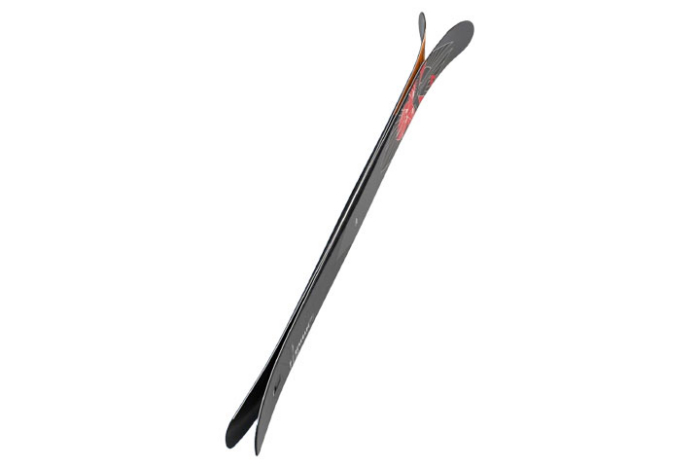
Let’s start with the obvious: Renegades are reverse camber (sometimes called full rocker), which, in layman’s speak, is a big banana shape. This creates more float in powder and allows turns, even in heavy snow, to feel almost effortless.
There are a handful of reverse-camber skis out there — the Blackcrows Nocta and Moment Meridian, for example — but none nail the shape, construction, and design like the 4FRNT Renegade, making it the most fun ski I’ve ever been on.
The 25/26 version was redesigned by the GOAT Eric “Hoji” Hjorleifson in small yet important ways. The new tip-and-tail rocker improves its handling of heavy, coastal snow, while a thicker core profile gives the ski more stiffness from tip to tail. Together, these changes build confidence at high speeds without detracting from how fun it is to slash and surf in powder.
And, like previous versions, the new Renegade retains the patented Hoji Lock system, which reduces the weight and size of your skins.
In short: The 4FRNT Renegade ($899) doesn’t try to do everything for everyone. It’s not for carving groomers or hitting the park or huge days in the backcountry. It’s made to excel in powder, whether that’s a fresh 6 inches at the resort or after a storm cycle leaves 3 feet in the backcountry. The new version is more intuitive than its predecessor, but it still requires a pilot willing to learn the unique skiing style of a reverse-camber ski.
Check out GearJunkie’s guide to the Best All-Mountain Skis.
Specifications
Pros & Cons
Pros
- Unsinkable float
- Effortless to smear and shut down speed
- Bomber build quality with maple and aspen core
- Uses 4-Lock system
Cons
- Mediocre on hard pack, sucks on ice
- Requires a centered stance
- Proprietary skins
4FRNT Renegade Review
The Renegade has never tried to be a “quiver killer” ski. It has always been a powder ski. It’s wide, almost flat underfoot, and has enough rocker to float a small SUV. It’s not my daily driver or most used ski, but it is my favorite, especially when storm skiing, searching for pow stashes at the resort, or on top of a big backcountry line.
I spent the last month trying to find the limit of the latest model, from tight trees in the PNW to charging wide-open alpine faces. Here’s what I learned along the way.
The Powder Tool of the 1%

The first thing I noticed about the new Renegade (for context, I’ve tested and loved two older versions) wasn’t the weight, though at just over 2,000g for the 184cm, it’s impressively light for its size. It was the tip design.
Hoji re-engineered both the tip and tail profiles to be more gradual, helping the new version slice through heavy, variable snow rather than feeling like you are plowing it. If you’re just looking at the shape of the two skis, it appears subtle, but on snow, it makes a huge difference.

Maneuverability
In deep, low-density cold smoke, the Renegade is the same as it ever was: pure euphoria. Because there’s zero camber, the ski doesn’t fight you at all. The slightest movement of your legs will initiate a turn, with the catch that this turning motion differs from that of most other skis. You don’t carve turns by driving; you simply pivot.
This surfy style comes with a learning curve, but also has a major upside. You can dump speed in a heartbeat, which is vital in tight trees, around rocks, and near drops.

Core & Weight
The weight of the new version is also worth mentioning. Since its launch over a decade ago, 4FRNT has re-engineered the Renegade’s construction. It’s made the ski more touring-friendly without sacrificing its big-mountain performance.
The 25/26 version is a big step forward. It uses an aspen and maple core reinforced with carbon stringers, providing stiffness without added weight. It is still my ski for resort pow days. However, the new Renegade truly excels outside the gates in the big mountains.
On a recent backcountry test day near Broken Top in Oregon, I found myself in a narrow, wind-loaded couloir. Thanks to the unusually slow start to winter, it exited into a field of rocks.
Usually, a 122mm waist would be a liability in a tight and steep situation like this. But the shape and weight of the Renegade think otherwise. It handled the tight turns while offering enough dampness for a fast exit. While it probably wasn’t the best ski for that situation, I didn’t feel fully compromised, either.

The icing on the cake is the 4-Lock skin system. For anyone who has spent a long day struggling with broken tail clips or wetted-out skins, this makes life easy. The system uses a proprietary hole in the tail where the skin securely locks in. It reduces the size and weight of your skins.
However, more importantly, it makes the skin-to-ski connection feel intuitive and easy every time. This clever, simple engineering hack will make you wonder why we’ve been fighting with metal clips all these years.
Don’t Take Them to the Ice Rink

Real talk: The Renegade is not a carving ski. If you try to rail a turn on a frozen Tuesday morning at your local hill, you’re probably going to have a bad time. With a 30m turn radius and no camber, it feels a bit like trying to drive a trophy truck on a go-kart track.
The same goes for icy days in the backcountry, or before the snow flips to corn. Due to the rocker profile, very little of the ski is touching the ground. That makes it hard to grip an icy slope, even with skins. Therefore, I rarely use the Renegades in the spring.
Last but not least, the Renegade demands a centered stance and patience to learn. If you’re a traditional, directional skier, the Renegade will punish you by washing out. The tips and tails are not wide. That allows the ski to turn faster in powder.
However, the lack of sidecut means the ski isn’t going to turn itself on a groomer. You have to stand over it and trust the sidecut (or lack thereof). Let the ski do its thing: long, arced turns.
4FRNT Renegade: Who It’s For

The 4FRNT Renegade is for the skier who already has a dedicated daily driver and is looking for a specialized tool for the deepest days of the year. It’s for backcountry enthusiasts who value the downhill experience with the efficiency of a world-class touring system. And it’s for anyone looking to have more fun in powder, tight trees, sidecountry off the resort, and big mountain lines.
I think the Renegade is best for advanced skiers who can ski the entire mountain but aren’t always driving their skis with force, rather than expert skiers and ex-racers who must learn to back off and let the ski just surf in fresh snow.
The Renegade doesn’t pretend to be versatile. Instead, it promises that when the snow is up to your boots, you’ll be having more fun than anyone on the mountain. In my book, that’s worth every penny.