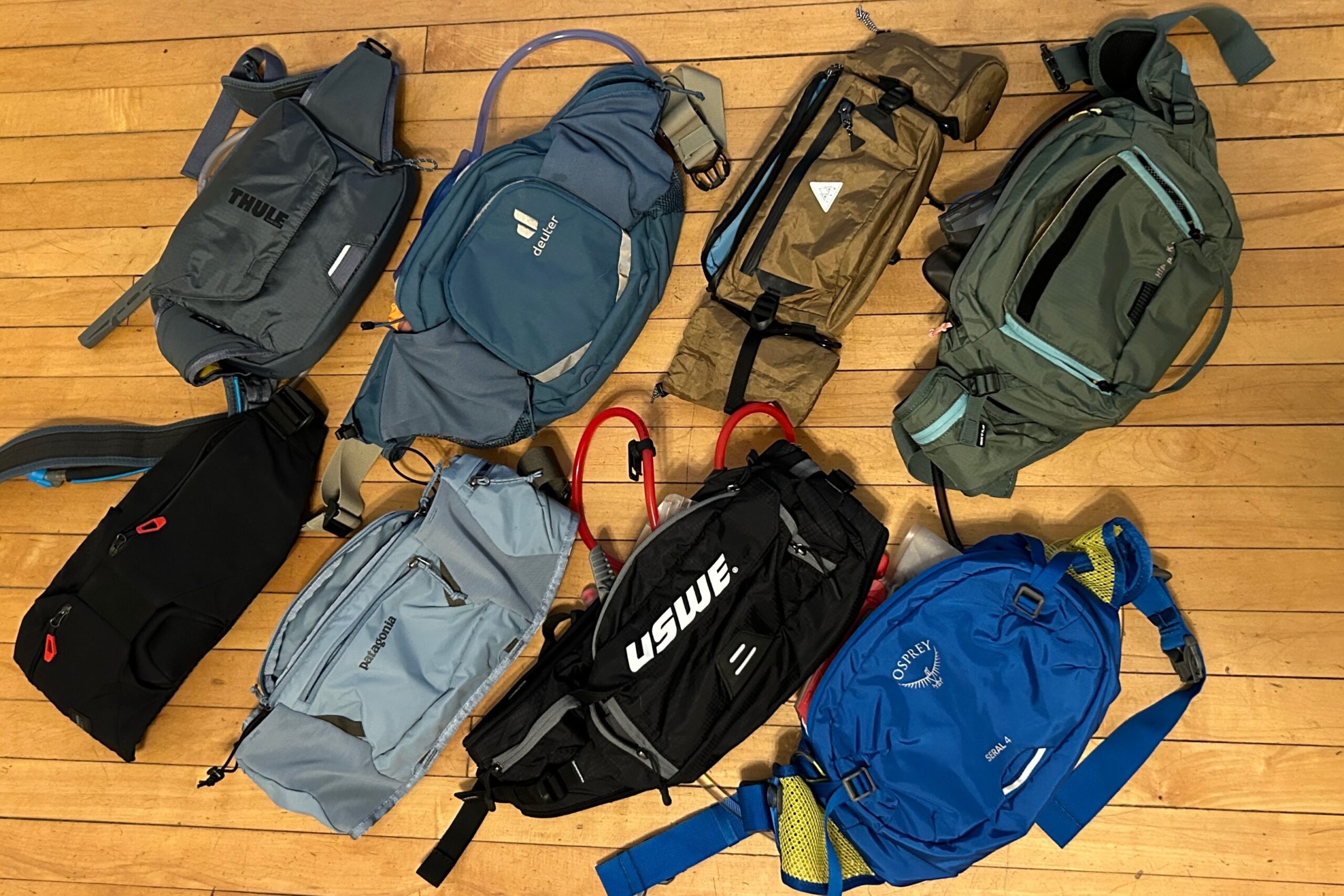
We’ve got plenty of options for carrying ride essentials, but mountain bike hip packs remain one of the most practical. Tools, tubes, water, food, layers, first aid, keys, and even your phone all need a place to live on the trail. A hip pack keeps everything organized and within reach without the bulk of a full backpack.
Modern hip packs have evolved into purpose-built gear for mountain bikers, from the top-rated Evoc Hip Pack Pro 3 to the budget-friendly Dirt Roamer Bike Waist Pack 3L with options for hydration bladders or bottles, minimalist tool carry, or hauling extra layers and supplies for bigger rides.
Editor’s Note: We updated this guide for bike season on March 12, 2026, with extended ratings and new awards to help you pick the best waist pack.
The Best Mountain Bike Hip Packs of 2026
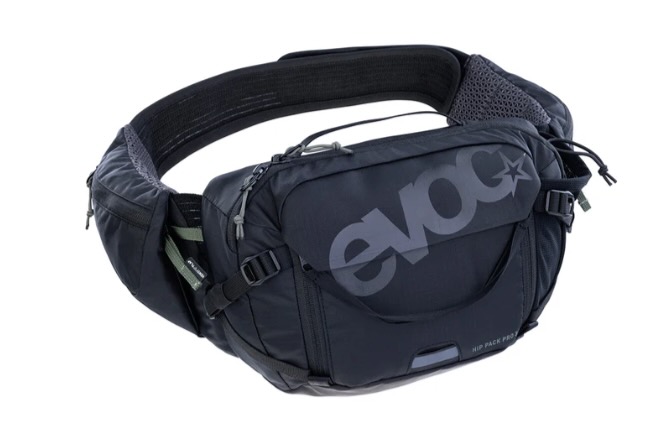
Evoc Hip Pack Pro 3 + 1.5L Bladder
-
Stability & Fit
9.4
-
Hydration Integration
9.3
-
Organization
9.0
-
Breathability
9.4
- Weight: 431 g (w/o bladder) 562 g (w/ bladder)
- Storage capacity: 3 liters
- Water bladder: Yes, 1.5 L
- Water bottles: Yes, up to 2
- Waist sizes: 31" to 43"
Pros
- Excellent stability
- Stretch waist belt is comfortable
- Well ventilated back panel
- Great organization
- Medium volume is great for most rides
- Options to carry water in bladder or bottle (or both)
Cons
- Expensive
- 3 liter storage capacity may be too small for longer rides or people who like to carry lots of gear
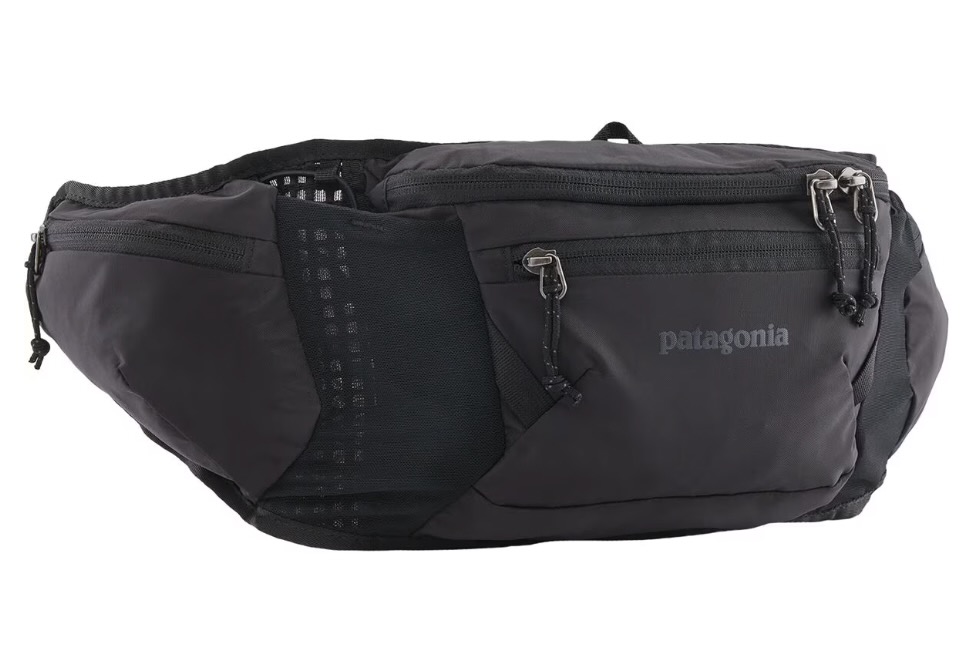
Patagonia Dirt Roamer Bike Waist Pack 3L
-
Stability & Fit
8.0
-
Hydration Integration
7.5
-
Organization
8.5
-
Breathability
9.0
- Weight: 245 g
- Storage capacity: 3 liters
- Water bladder: No
- Water bottles: Yes, 2
- Waist sizes: 27" to 46"
Pros
- Lightweight
- Secure and stable with or without bottles
- Comfortable
- External straps allow easy mounting of bulkier items
- Surprisingly large capacity from smart layout
Cons
- No water bladder (could be a pro depending on preference)
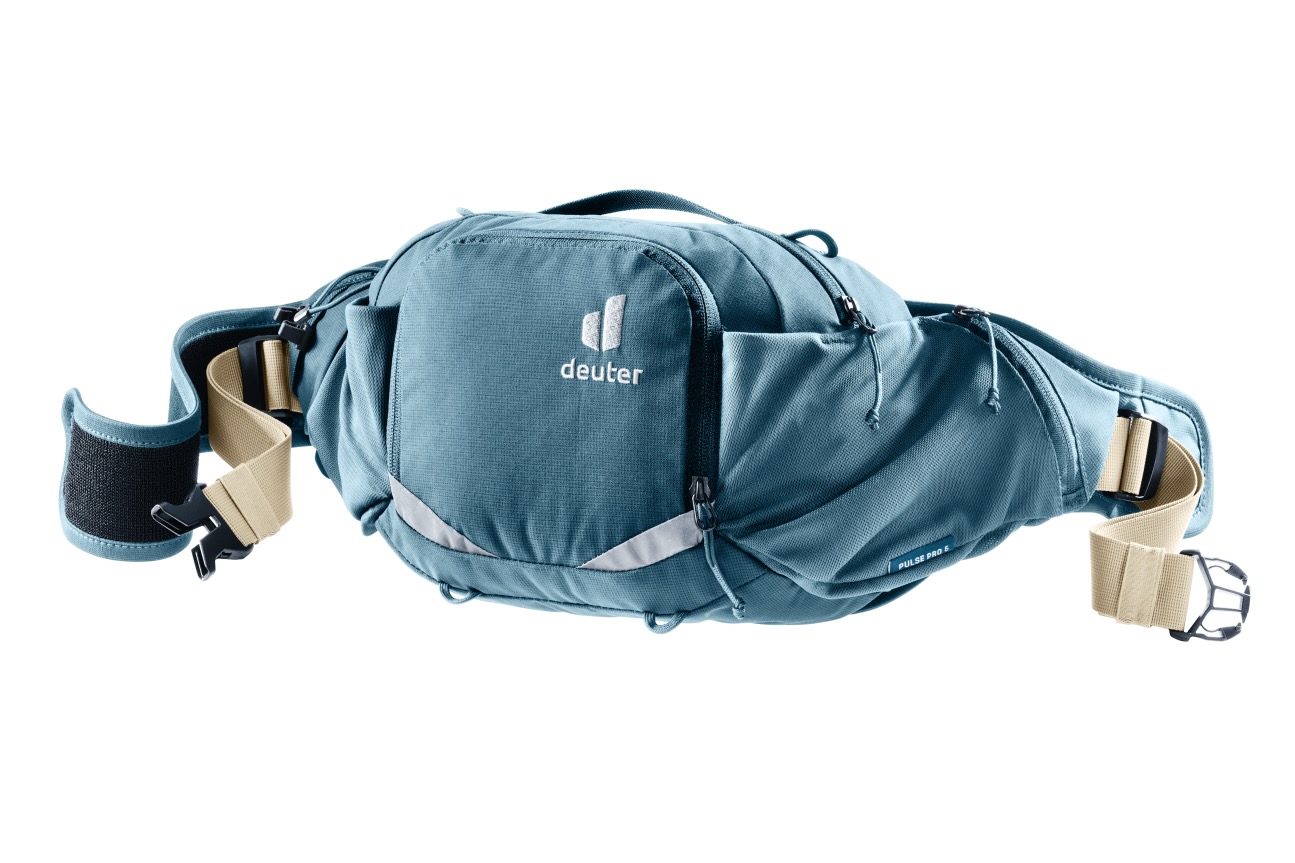
Deuter Pulse Pro 5
-
Stability & Fit
8.5
-
Hydration Integration
9.0
-
Organization
9.3
-
Breathability
9.0
- Weight: 710 g (w/ bladder)
- Storage capacity: 5 liters
- Water bladder: Yes, 1.5L
- Water bottles: Yes, 1
- Waist sizes: 25” to 42”
Pros
- High usable volume
- Stowable strap included for attaching items externally
- Comfortable back contact and wide hip band
- Quick connect hose makes filling/cleaning bladder easy
- Rotational nozzle lock works very well
Cons
- Not the most stable hip pack for aggressive riding or rough terrain
- Not the easiest pack to put on/take off quickly with the mesh/velcro belt
- Heavier weight
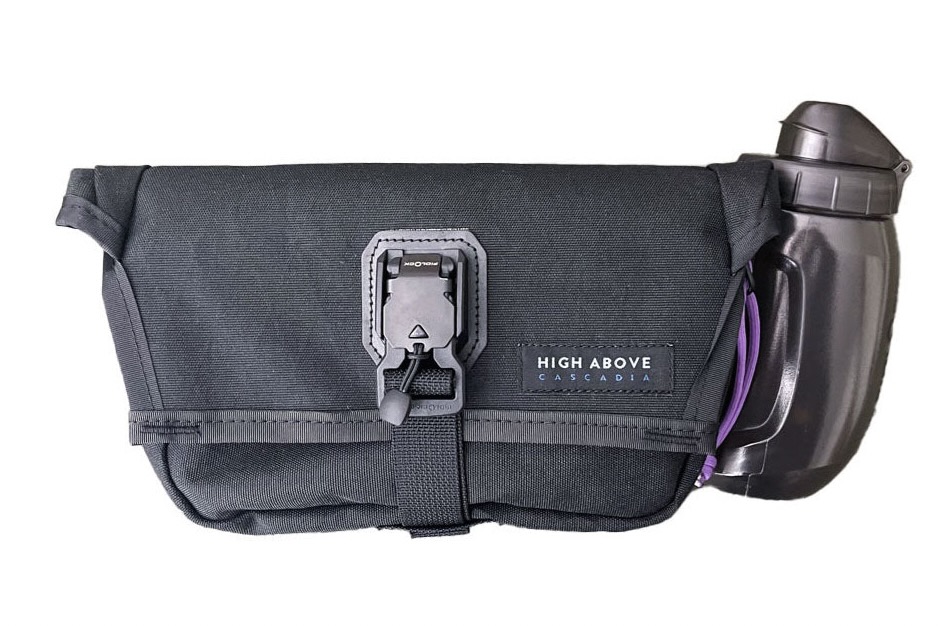
High Above Venture
-
Stability & Fit
8.0
-
Hydration Integration
7.5
-
Organization
8.0
-
Breathability
7.5
- Weight: Pack: 303 g, Fidlock bottle: 103 g
- Storage capacity: 2.2 liters
- Water bladder: No
- Water bottles: Yes, 1 (up to 2)
- Waist sizes: Not specified, but there is a wide range of adjustment
Pros
- Magnetic buckles are quick and easy to use
- Clean, minimalist aesthetic
- Made in the USA
- Tough materials
- Easy access to contents
- Good organization
Cons
- No pockets on hip wings
- Moderately expensive
- Fairly small storage capacity
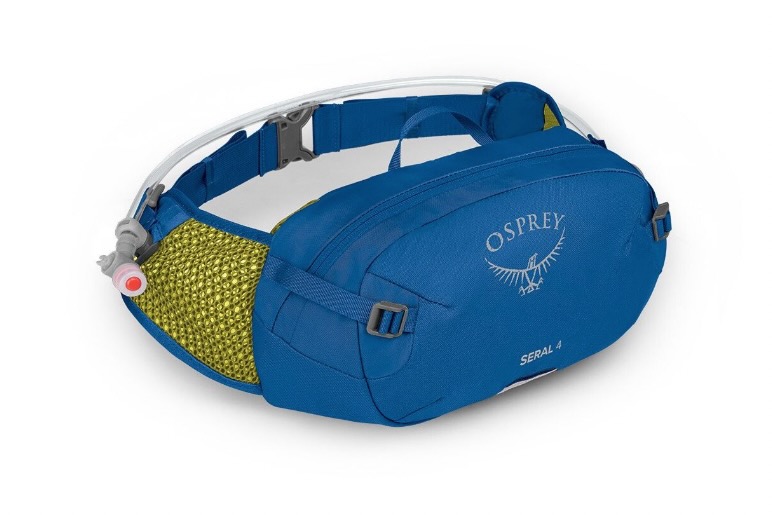
Osprey Seral 4
-
Stability & Fit
8.5
-
Hydration Integration
9.0
-
Organization
8.0
-
Breathability
8.5
- Weight: 442 g (w/ bladder)
- Stoage capacity: 4 liters
- Water bladder: Yes, 1.5L
- Water bottles: No
- Waist sizes: 27” to 42”
Pros
- Great airflow through mesh hips and “Airscape” back panel
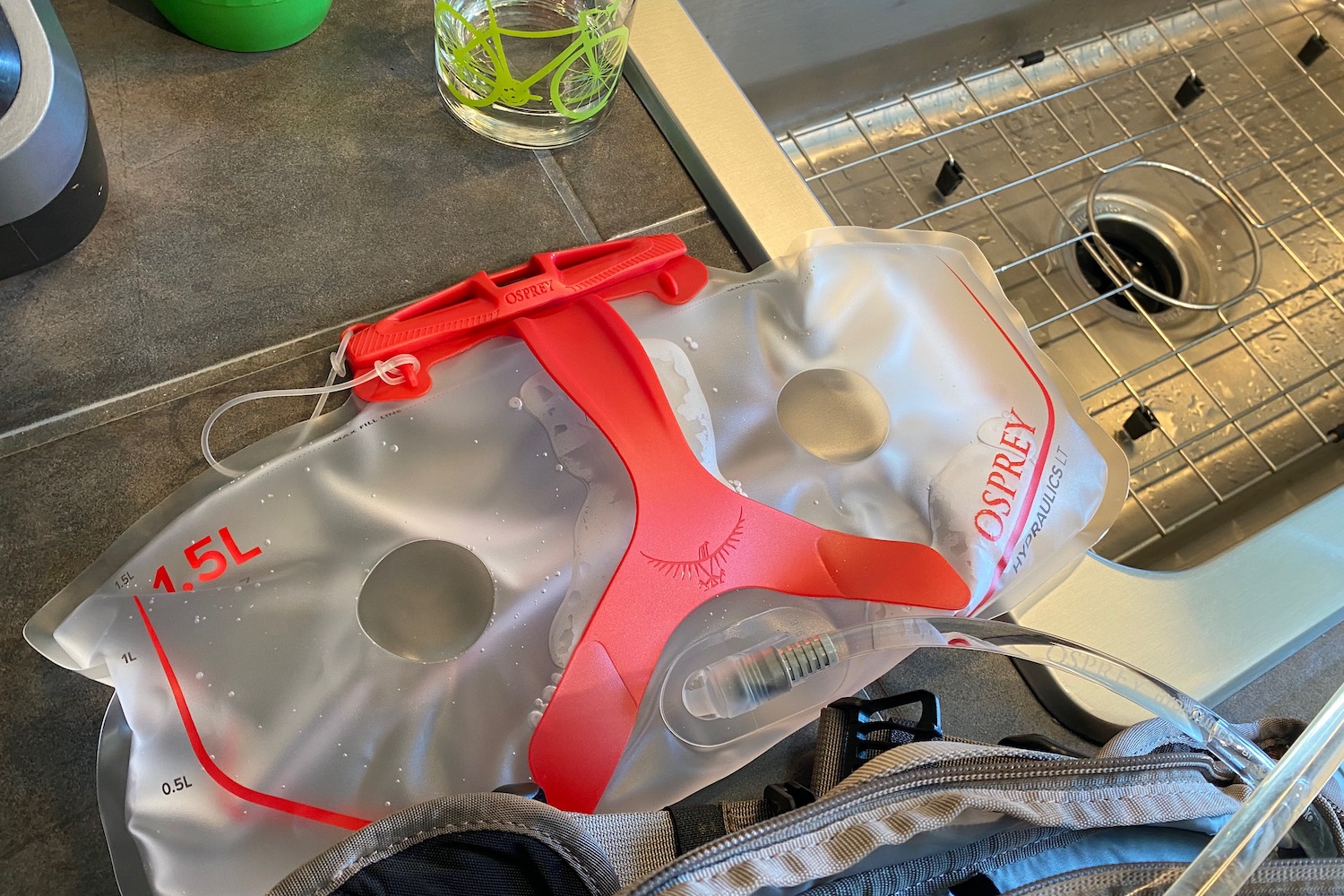
- Simple bladder and routing makes refills quick
- Adjustable nozzle speed
- Bladder “handle” is a nice touch, makes filling and installing the bladder very easy.
- Easy to find old colors on sale at a discount
Cons
- Simple layout – there is really only one main section with a zippered internal pocket
- No hip pockets
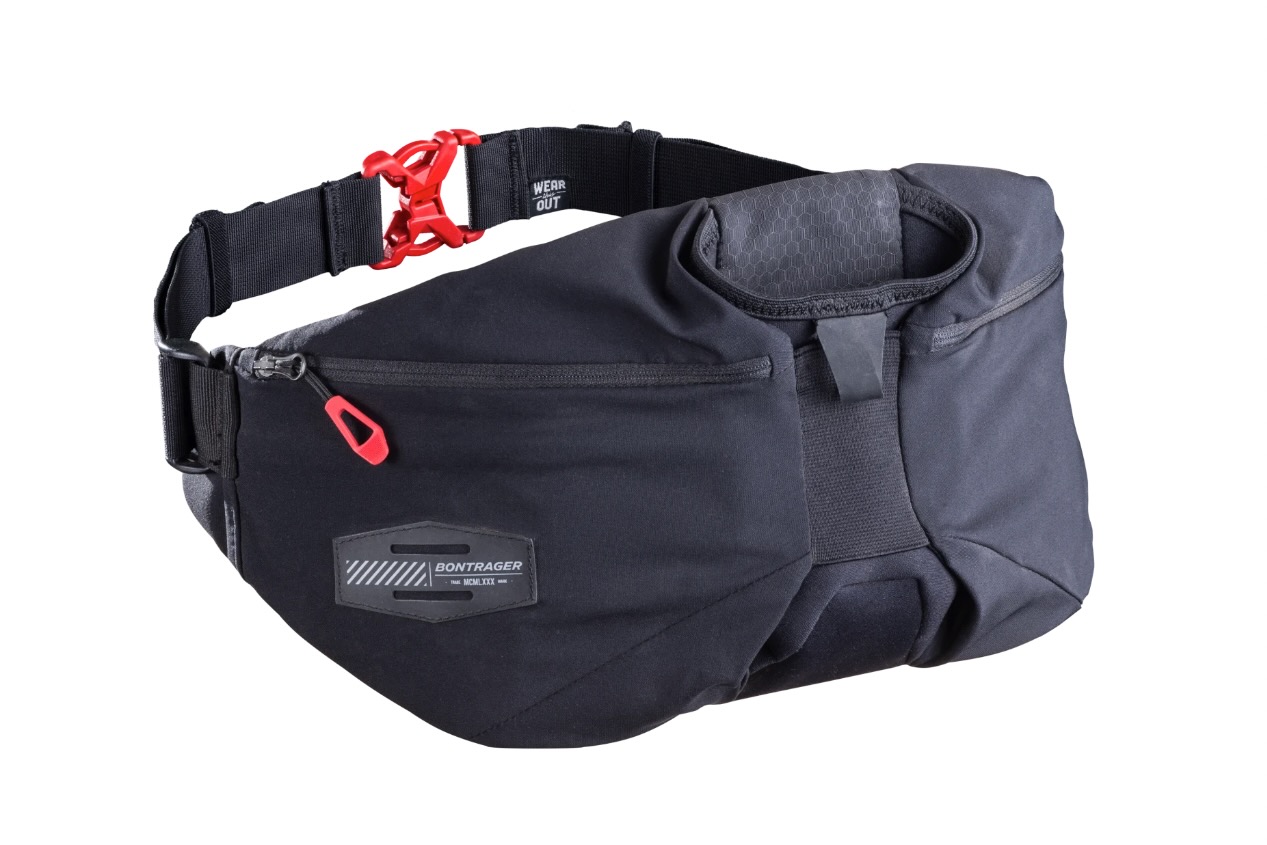
Bontrager Rapid Pack
-
Stability & Fit
9.0
-
Hydration Integration
7.0
-
Organization
6.5
-
Breathability
9.0
- Weight: 216 g
- Storage capacity: 1.64 liters
- Water bladder: No (bladder version available)
- Water bottles: Yes, 1
- Waist sizes: 24" to 42"
Pros
- Effective minimalist approach, enough room for the essentials
- Tightening strap by pulling forward makes extra waist webbing management easy
- Incredibly stable and comfortable – you hardly notice you’re wearing it
- Lightweight
Cons
- Not great for carrying larger, bulkier, or longer items
- Lower overall capacity – not the best for longer rides or large items
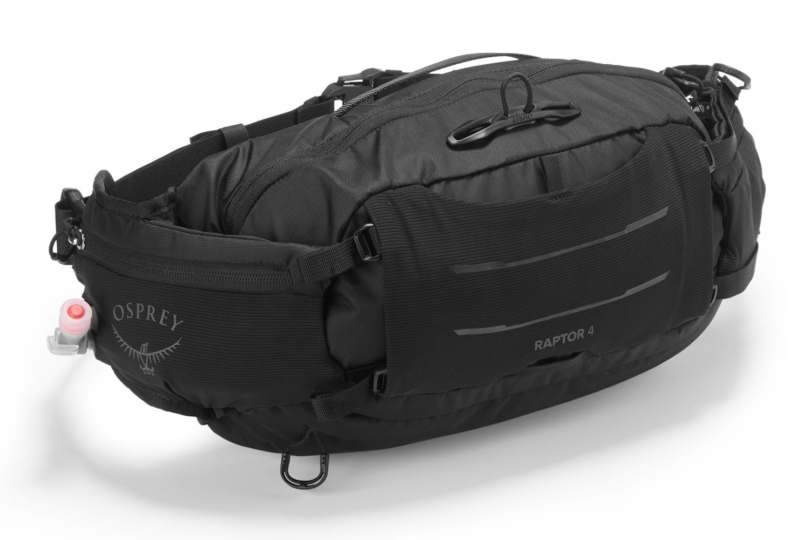
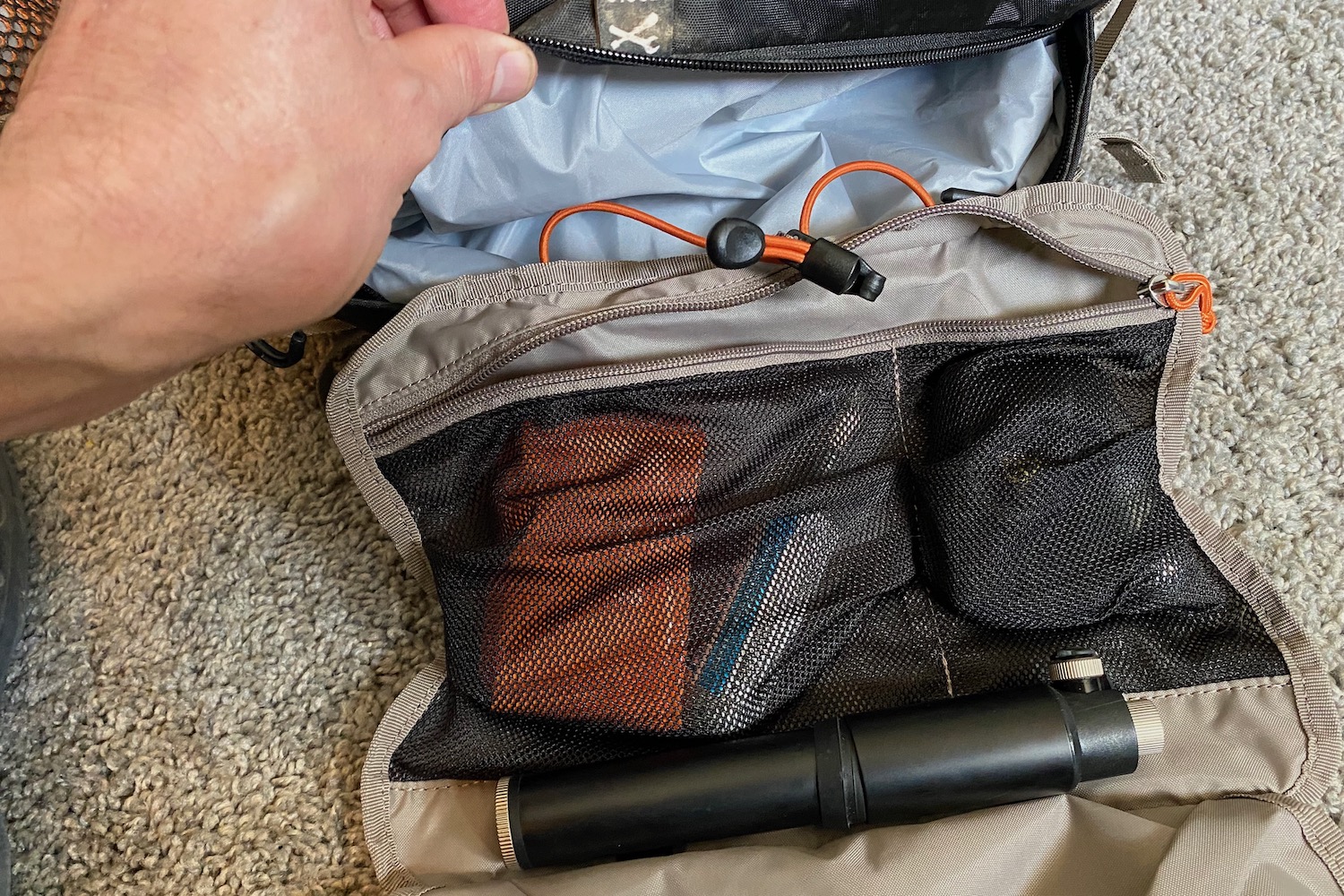
Osprey Raptor 4
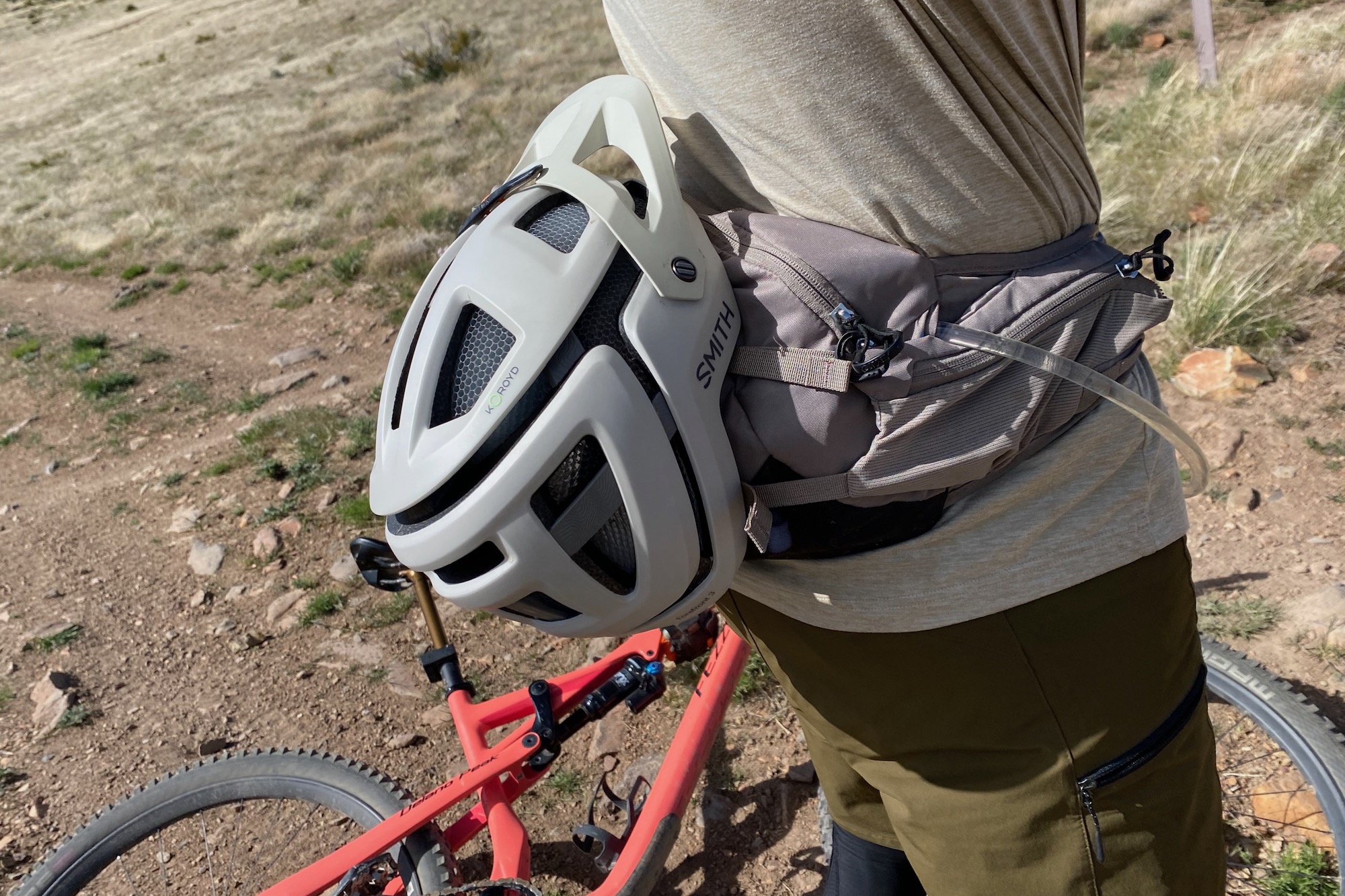
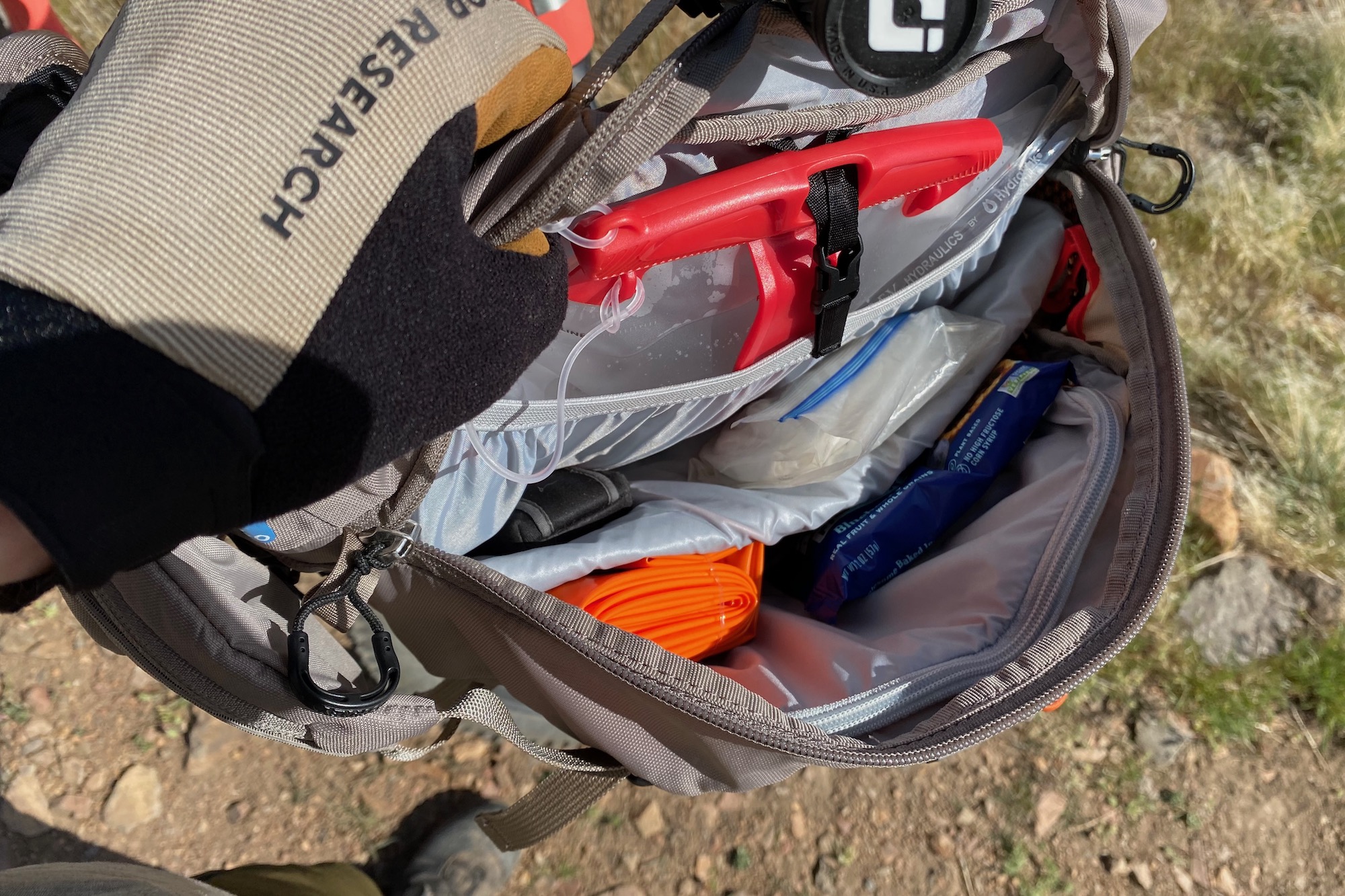
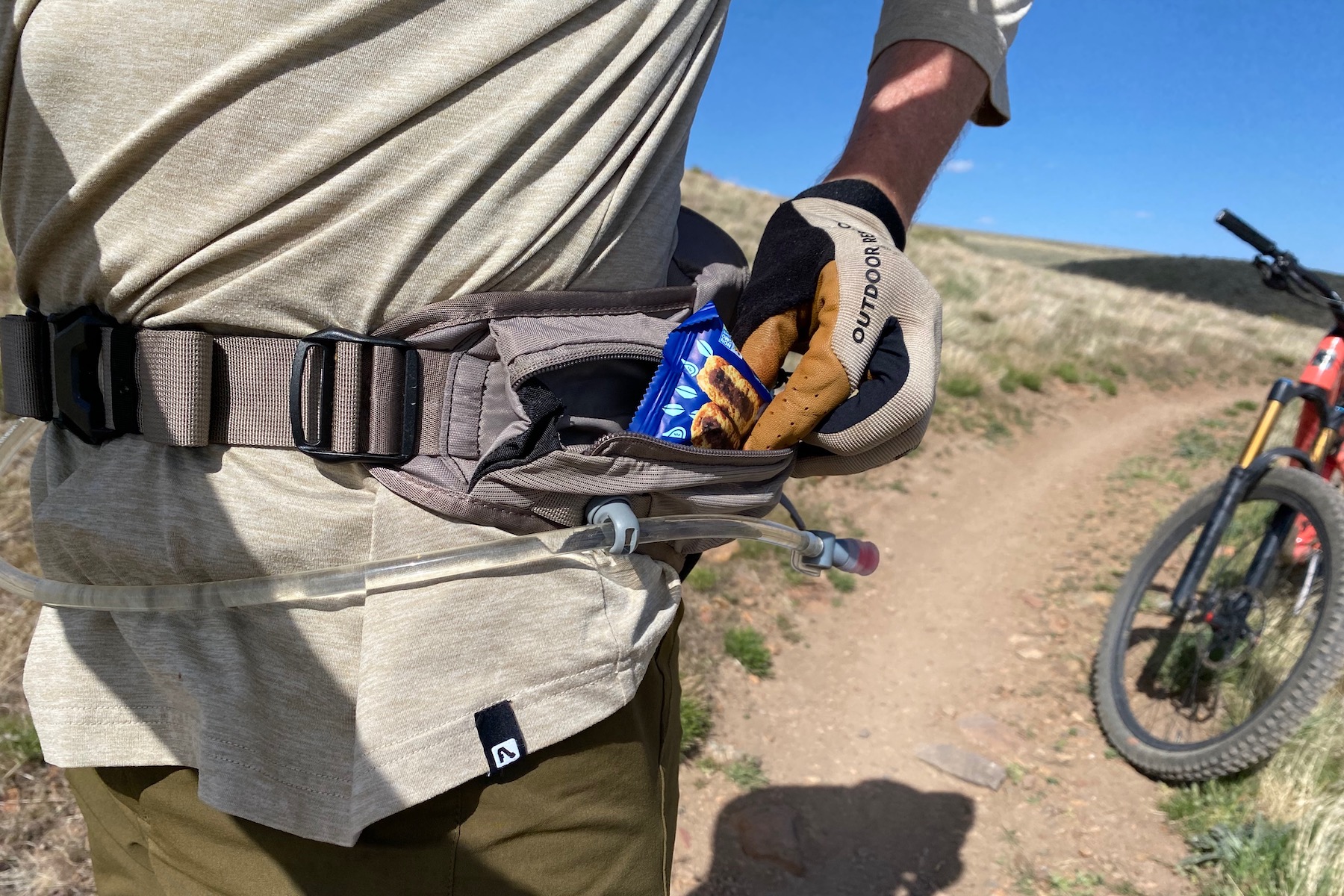
-
Stability & Fit
9.0
-
Hydration Integration
9.0
-
Organization
8.5
-
Breathability
8.0
- Weight: 642 g (w/ bladder)
- Storage capacity: 4 liters
- Water bladder: Yes, 1.5 L
- Water bottles: No
- Waist sizes: 25" to 50"
Pros
- Very stable
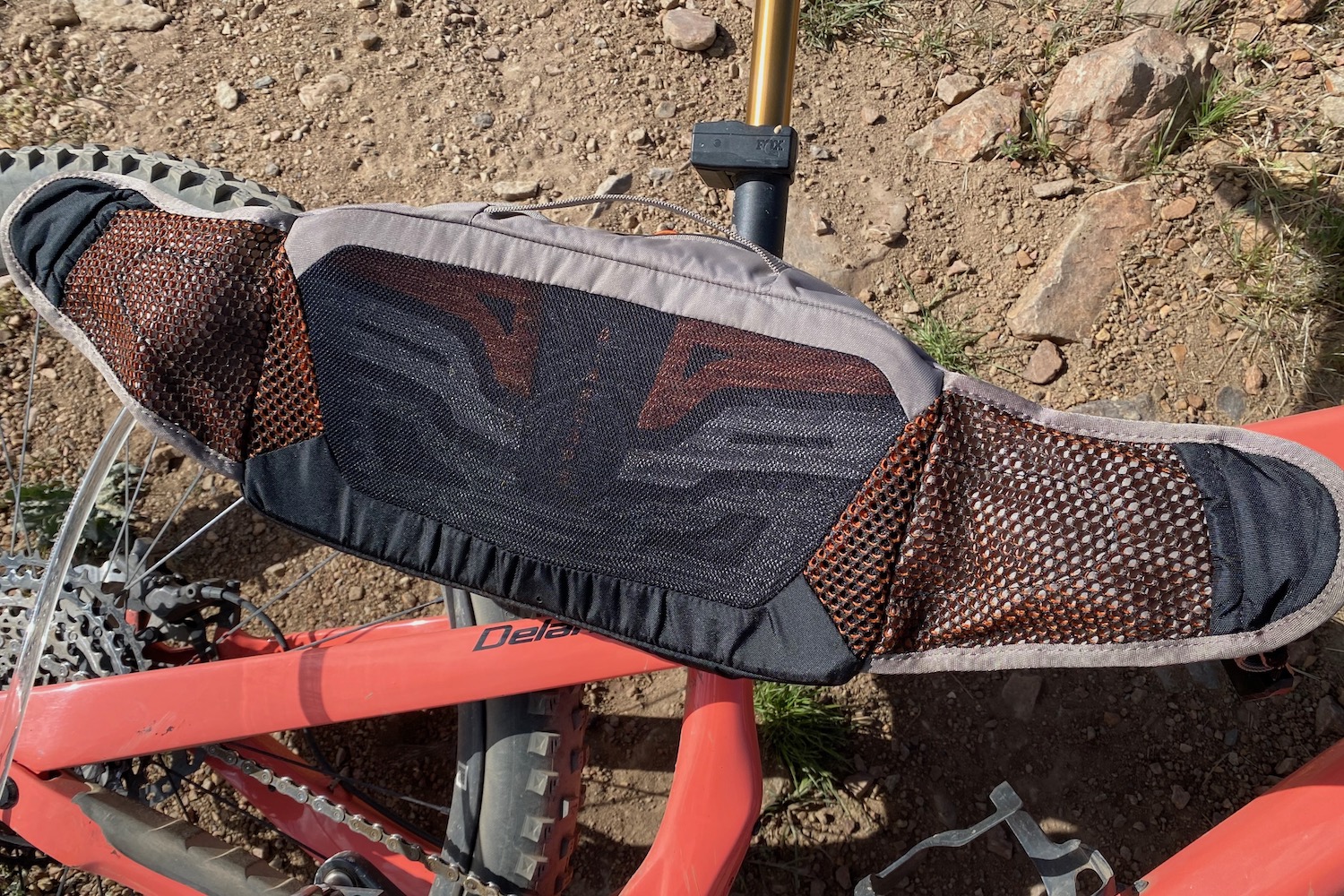
- Well ventilated back panel
- Relatively well-organized storage
- Ample external storage for bulkier items
- Great middle-of-the-road size
Cons
- Tool storage compartment is annoying to access
- Expensive
- Heavier weight
More Mountain Bike Hip Packs to Carry Your Gear
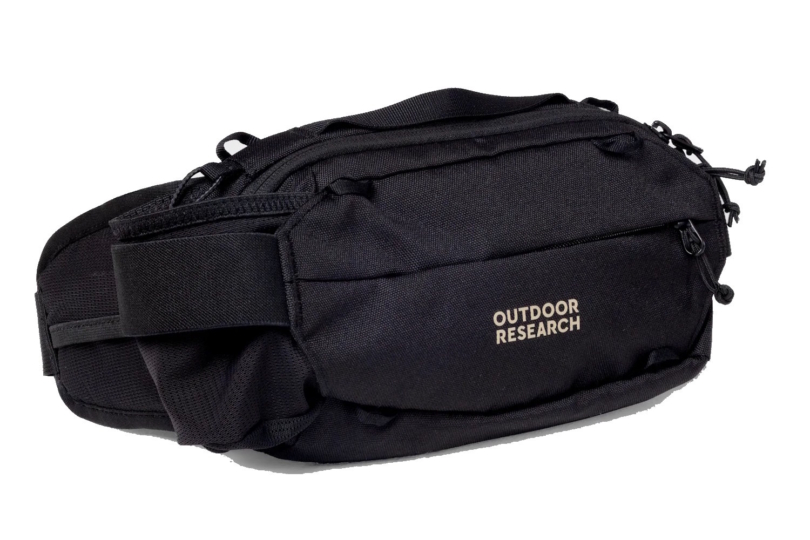
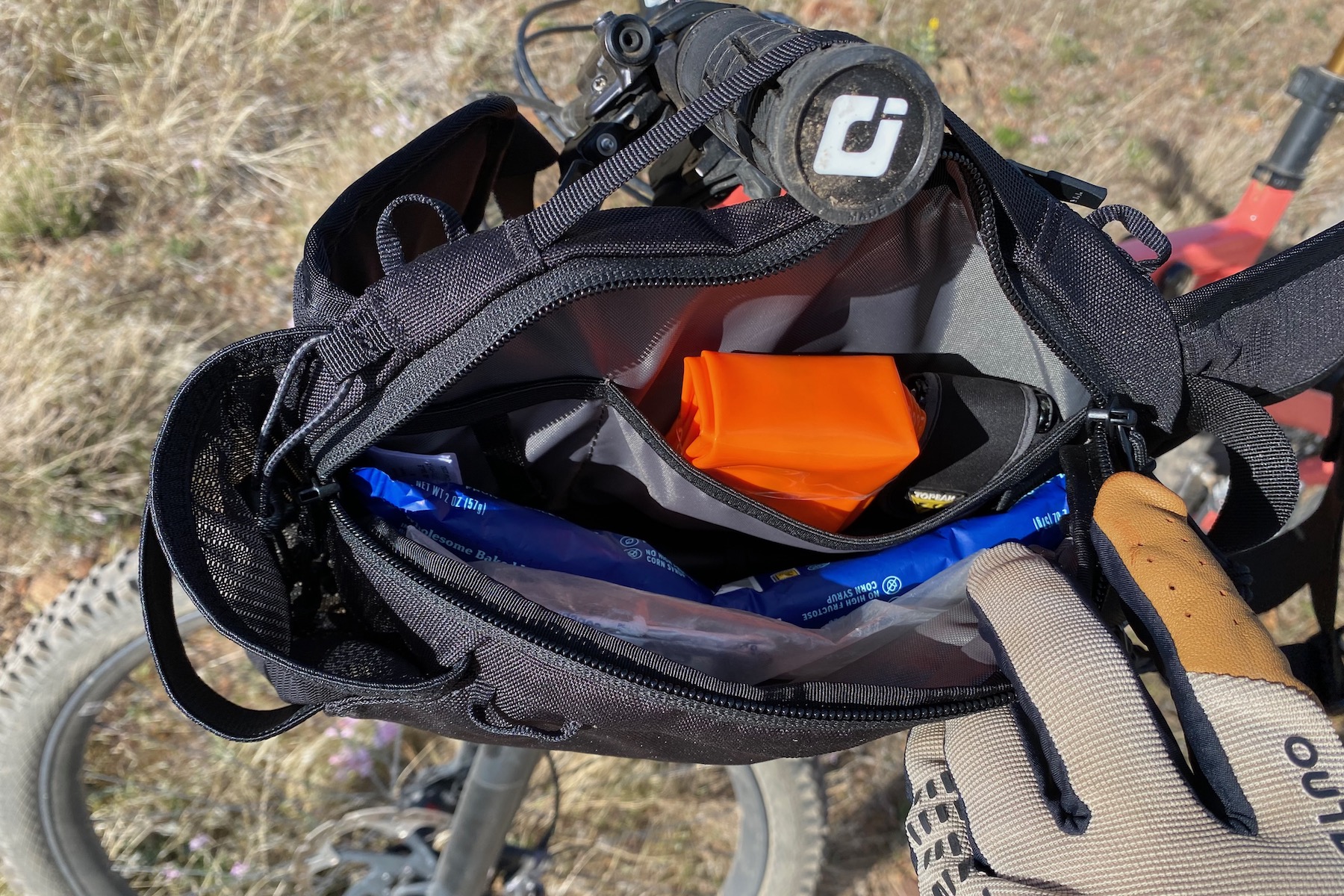
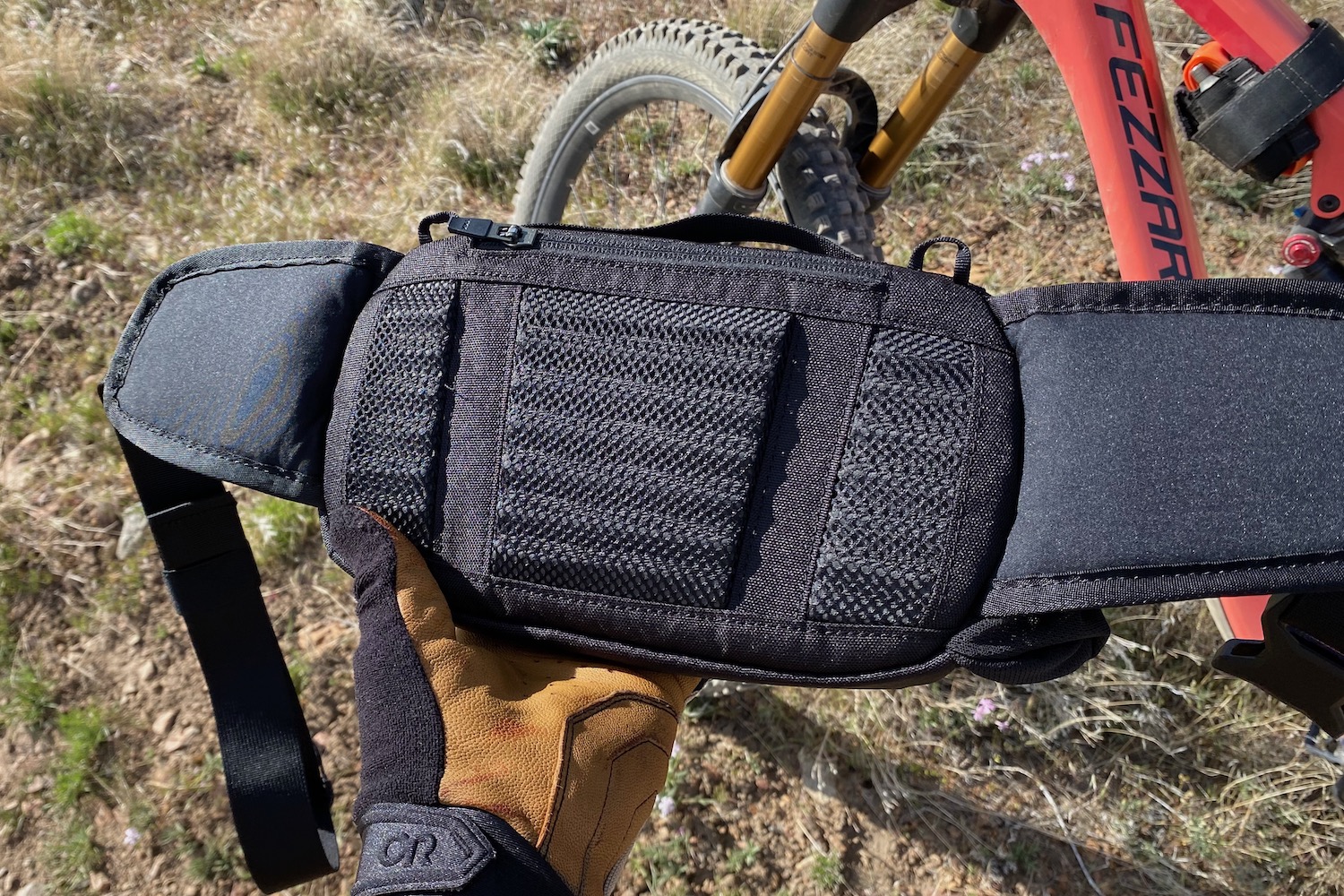
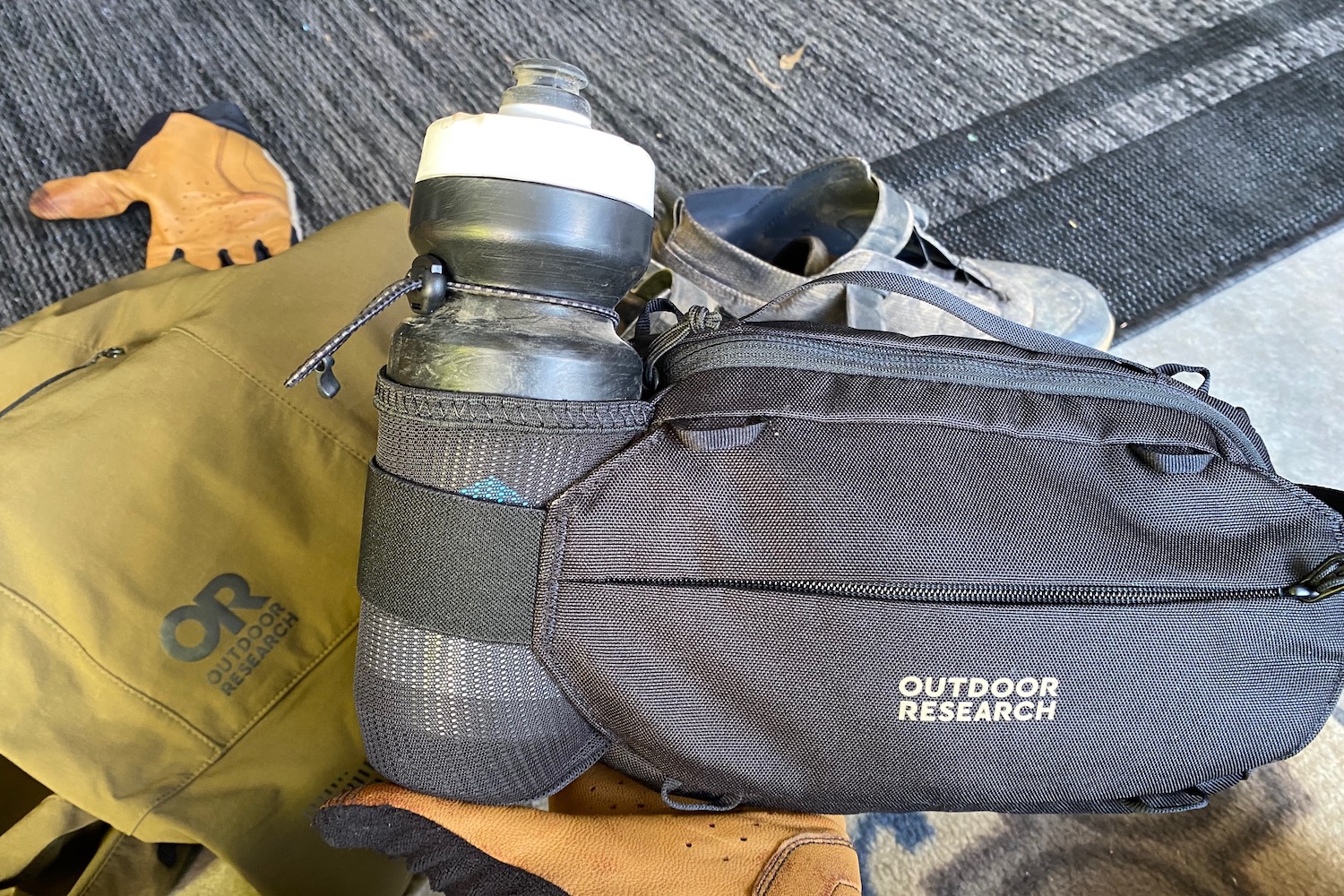
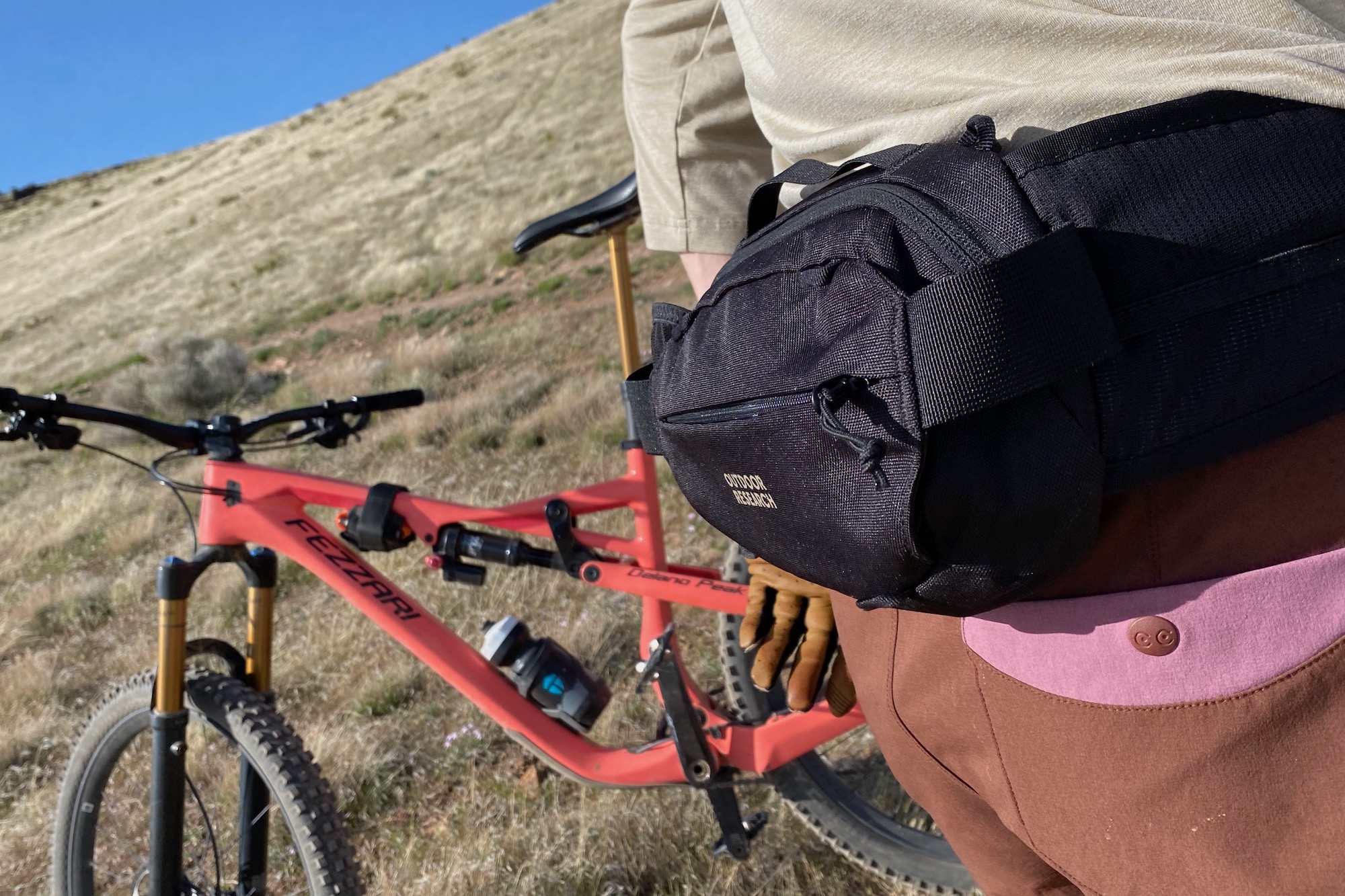
-
Stability & Fit
8.5
-
Hydration Integration
7.0
-
Organization
8.0
-
Breathability
8.5
- Weight: 238 g
- Storage capacity: 2.5 L
- Water bladder: No
- Water bottles: Yes, 1
- Waist sizes: Not specified (but has a huge range)
Pros
- Very lightweight
- Well organized storage
- Comfortable
- Carries just the essentials
- Reasonable price
Cons
- Less stable with a full water bottle
- Hip wing pockets are tiny and a bit fiddly to access
- Small storage capacity limits how much you can carry
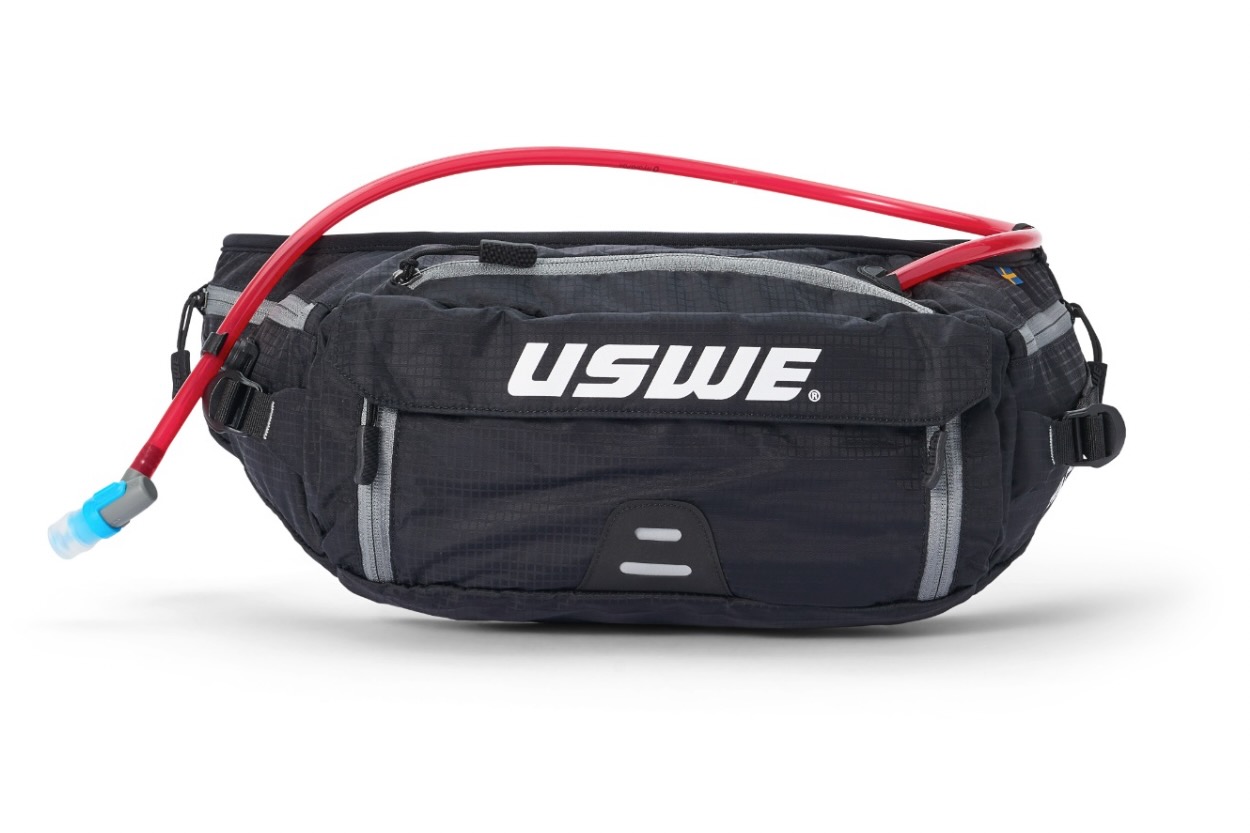
-
Stability & Fit
9.0
-
Hydration Integration
8.5
-
Organization
9.3
-
Breathability
7.5
- Weight: 510 g (w/ bladder)
- Storage capacity: 6 liters
- Water bladder: Yes, 1.5L
- Water bottles: No
- Waist sizes: 31” to 40”
Pros
- Full length padded belt
- Zip pockets on waist belt for easy access while riding
- Comfortable
- Excellent stability while riding
Cons
- More expensive
- Bladder is a tight fit to get into pack when full
- Heavy branding
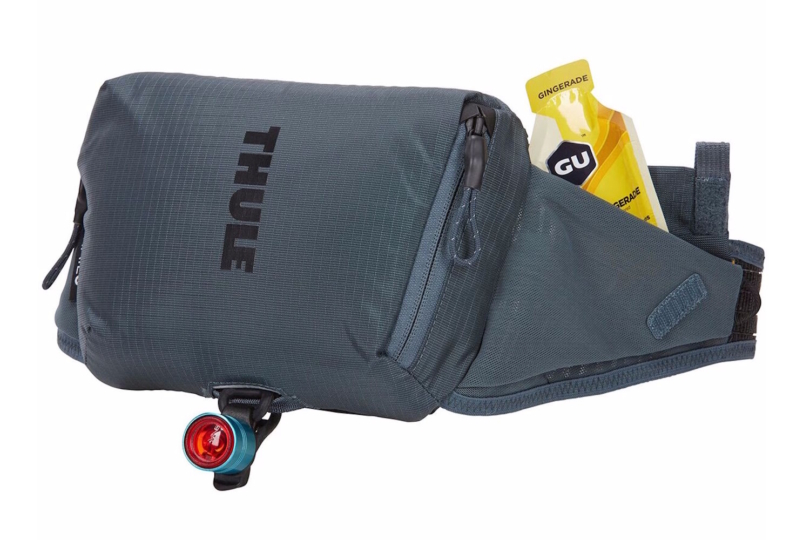
-
Stability & Fit
8.5
-
Hydration Integration
9.5
-
Organization
8.5
-
Breathability
8.0
- Weight: 532g (w/ bladder)
- Storage capacity: 4 liters
- Water bladder: Yes, 1.5L
- Water bottles: No, not securely
- Waist sizes: 31” to 40”
Pros
- Thick, comfortable waistband
- Long magnetic strip catches hydration hose and nozzle well
- Good organizational strategy, if you use it as intended
- Very streamlined and tidy look
Cons
- Layout and low profile design makes capacity feel smaller than it is, very structured and not very flexible
- Friction fitting on hose/bladder connection – challenging to remove bladder from pack
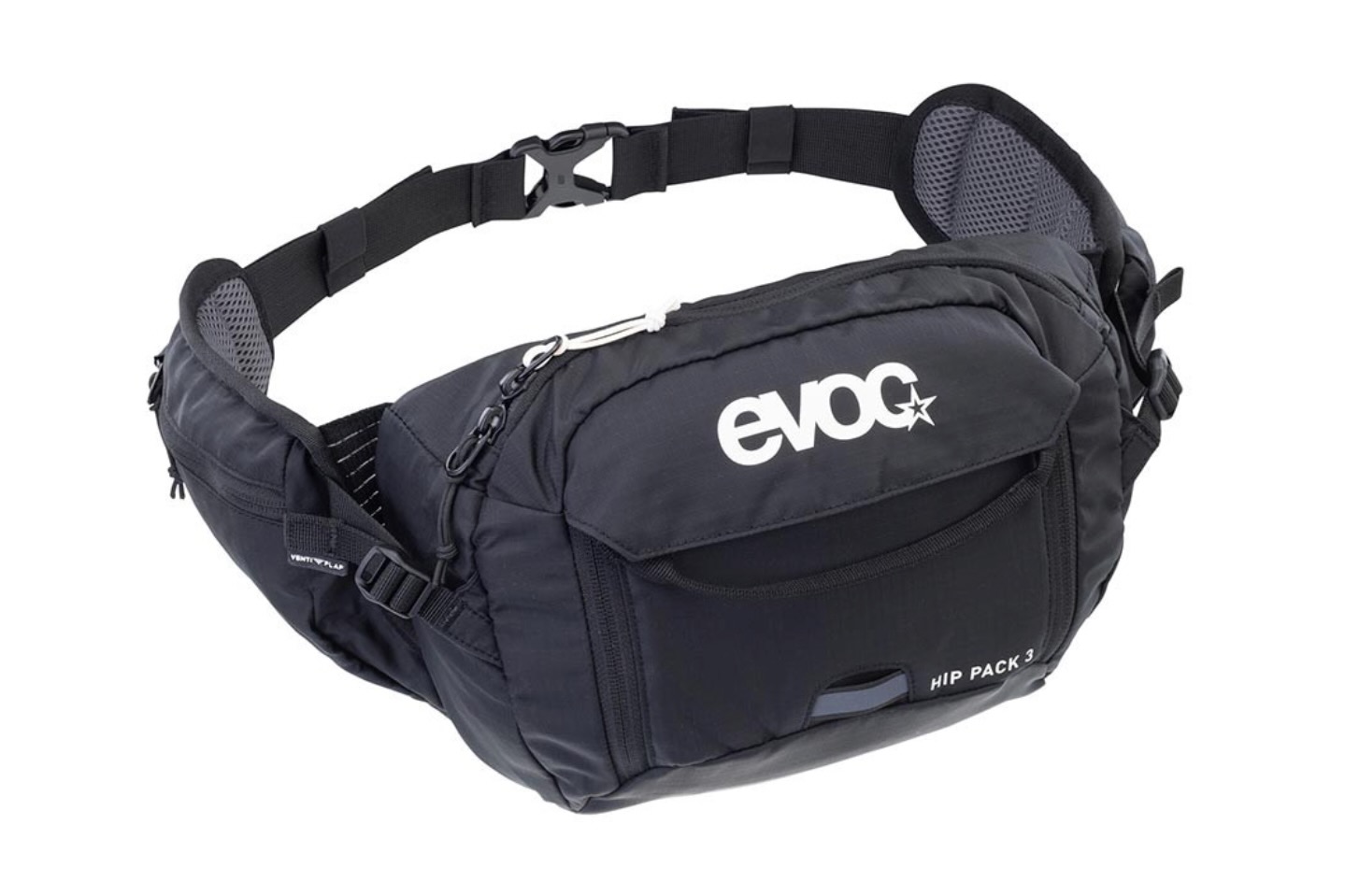
-
Stability & Fit
8.5
-
Hydration Integration
8.0
-
Organization
8.9
-
Breathability
8.5
- Weight: 495 g (w/ bladder)
- Storage capacity: 3 liters
- Water bladder: Yes, 1.5L
- Water bottles: No
- Waist sizes: 30” to 48”
Pros
- Well ventilated back panel
- Stable
- Great bladder management and quick release bladder/hose connection
- Well organized
Cons
- Small hip pockets
- No water bottle carry option
- Difficult to tighten straps when the pack is on
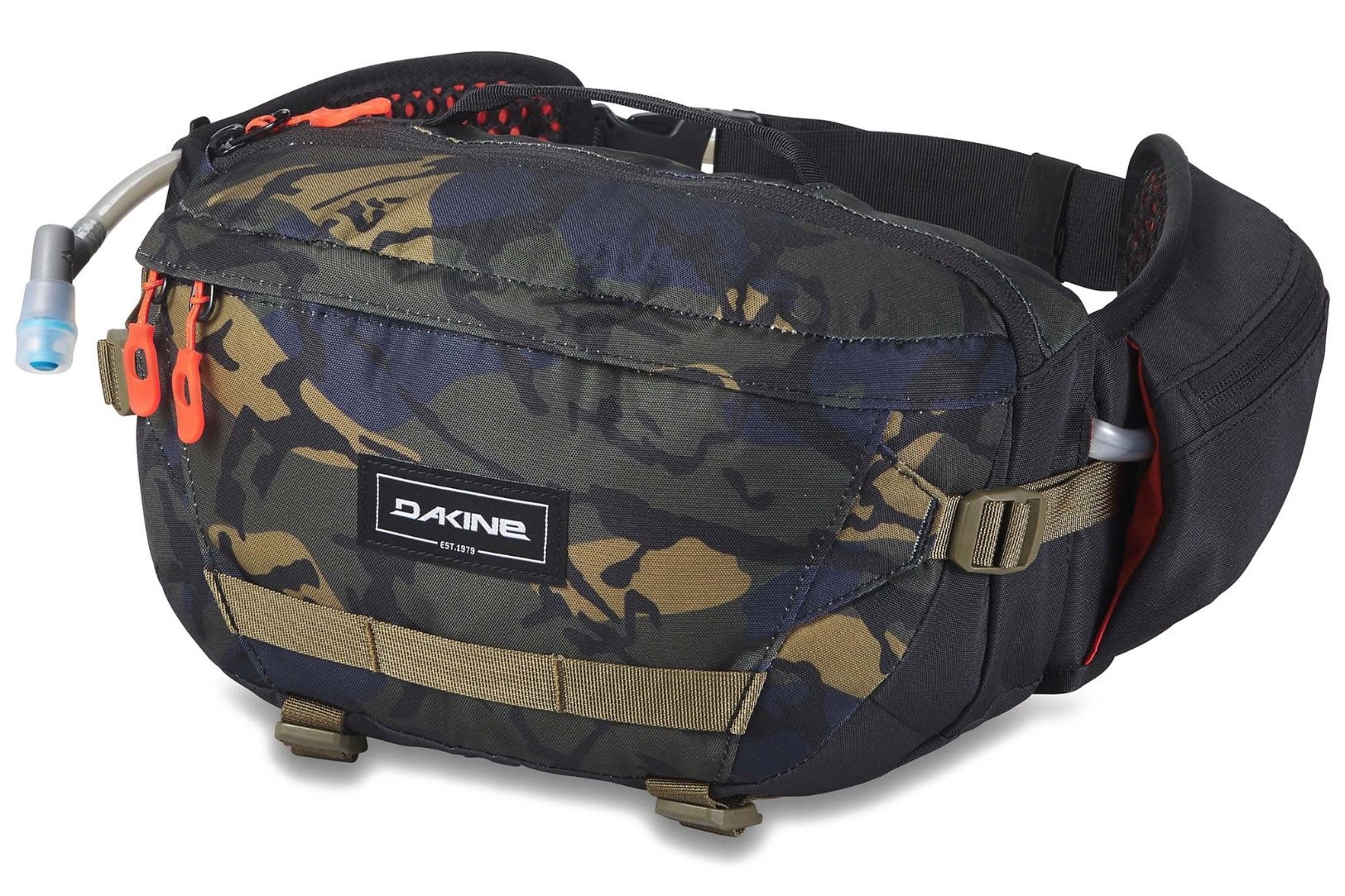
-
Stability & Fit
7.5
-
Hydration Integration
8.5
-
Organization
8.7
-
Breathability
7.0
- Weight: 460 g (w/ bladder)
- Storage capacity: 5 liters
- Water bladder: Yes, 2L
- Water bottles: No
- Waist sizes: Not specified
Pros
- 2 liters of water storage
- External straps for knee pads or extra layer
- Lots of color options
- Fleece lined pocket on belt fits phone
- Less expensive than many other models that come with bladders
Cons
- Doesn't hold shape well when fully packed
- Full water bladder takes up quite a bit of the storage space
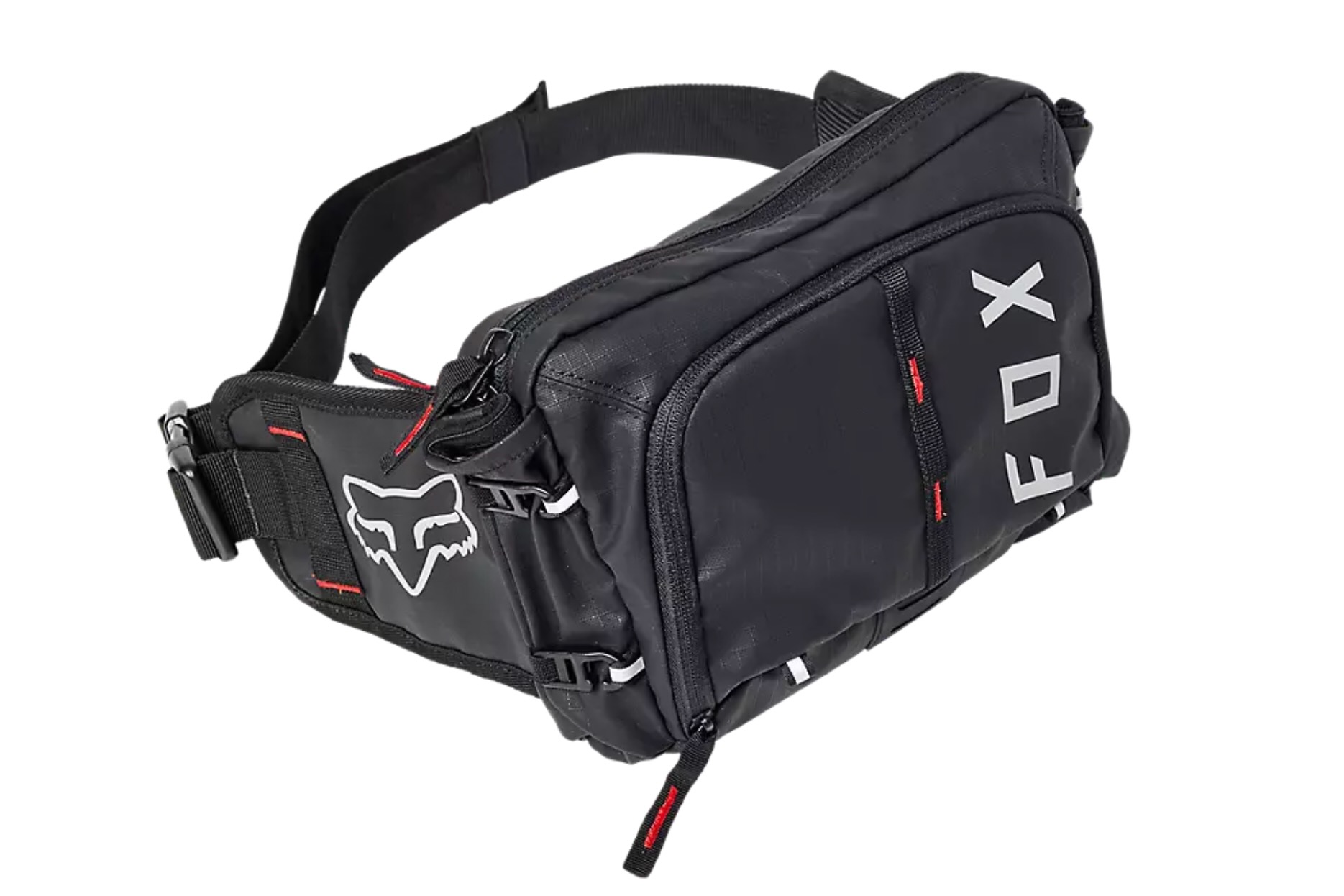
-
Stability & Fit
7.5
-
Hydration Integration
7.0
-
Organization
7.0
-
Breathability
6.5
- Weight: 370 g
- Storage capacity: 2 liters
- Water bladder: No
- Water bottles: Yes, up to 2
- Waist sizes: Not specified
Pros
- Minimal design for carrying just the essentials
- Good waist strap management
- Bottle sleeves compress when not in use for streamlined look
- Stable – even with 2 full bottles
Cons
- No pockets on waist band
- Small capacity – best for shorter rides and warmer temps
- Only comes in black
Best Mountain Bike Hip Packs Comparison Chart
| Hip Pack Model | MSRP | Weight | Storage Capacity | Bladder | Bottles | Waist Size Range |
|---|---|---|---|---|---|---|
| Evoc Hip Pack Pro 3 + 1.5L Bladder | $150 | 562 g (w/ bladder) | 3 liters | Yes, 1.5L (also sold without) | 2 | 31″ to 43″ |
| High Above Venture | $140 (+$30 for Quickdraw) | 303 g (Fidlock bottle: 103 g) | 2.2 liters | No | 1 (up to 2) | Not specified |
| Patagonia Dirt Roamer Waist Pack 3L | $69 | 245 g | 3 liters | No | 2 | 27″ to 46″ |
| Osprey Seral 4 | $90 | 442 g (w/ bladder) | 4 liters | Yes, 1.5L | No | 27″ to 42″ |
| Bontrager Rapid Pack | $68 | 216 g | 1.64 liters | No (bladder version offered) | 1 | 24″ to 42″ |
| Osprey Raptor 4 | $125 | 642 g (w/ bladder) | 4 liters | Yes, 1.5L | No | 25″ to 50″ |
| Outdoor Research Freewheel 2.5L | $65 | 238 g | 2.5 liters | No | 1 | Not specified |
| USWE Zulo 6 | $145 | 510 g (w/ bladder) | 6 liters | Yes, 1.5L | No | 31″ to 40″ |
| Thule Rail 4 | $100 | 532 g (w/ bladder) | 4 liters | Yes, 1.5L | No | 31″ to 40″ |
| Deuter Pulse Pro 5 | $125 | 710 g (w/ bladder) | 5 liters | Yes, 1.5L | 1 | 25″ to 42″ |
| Evoc Hip Pack 3L + 1.5L Bladder | $130 | 495 g (w/ bladder) | 3 liters | Yes, 1.5L | No | 30″ to 48″ |
| Dakine Hot Laps 5L | $100 | 460 g (w/ bladder) | 5 liters | Yes, 2L | No | Not specified |
| Fox Standard Hip Pack | $70 | 370 g | 2 liters | No | 2 | Not specified |
How We Tested Mountain Bike Hip Packs
We love riding bikes, and one of the key elements of enjoyable bike rides is being prepared. Carrying the necessary tools to handle mid-ride mechanicals, enough water for the duration of the ride, adequate food to keep the energy up, and the appropriate layers for the weather are all important things that can make or break the experience.
Hip packs are one of our favorite ways to carry all the necessities, and we’ve been riding in them for years. While there are now more ways than ever to stash gear on our bikes, in cargo bibs or backpacks, we still gravitate towards hip packs for their comfort, stability, convenience, and ease of use.
Our Expert Testers
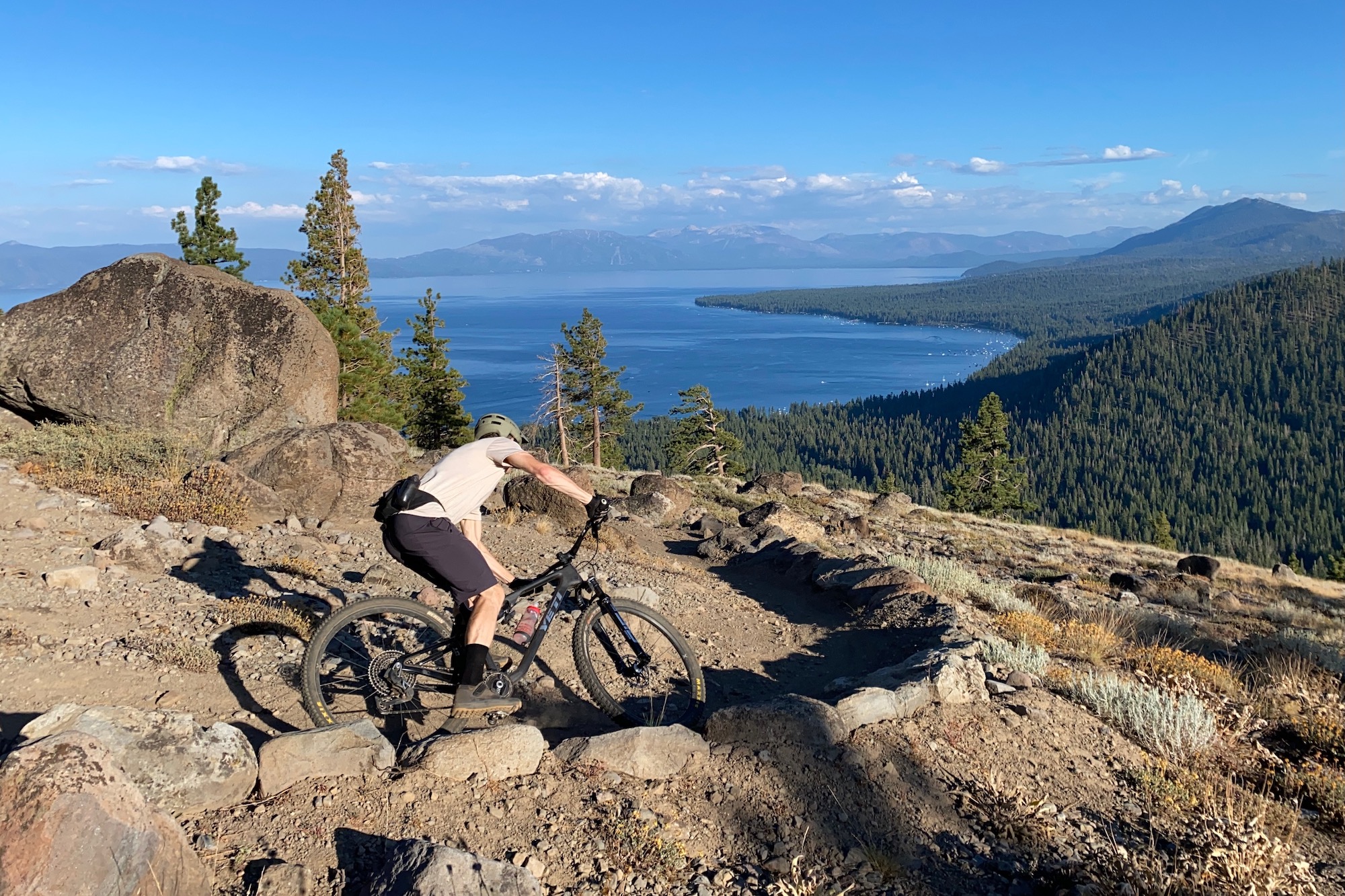
For this buyer’s guide, Jeremy Benson has been professionally testing and reviewing mountain bikes, components, apparel, and accessories for nearly a decade. He is an obsessive rider who spends an inordinate amount of time on mountain and gravel bikes. He’s personally owned five different hip packs and tested over 20 different models.
Author Paul Clauss is an avid trail rider, mountain bike coach, and trail builder who lives in northern Vermont. A mechanical engineer by trade, Clauss is particularly critical of design and construction, and he brings a very measured and logical approach to product testing.
Our Testing Process
After evaluating the top mountain bike hip packs, we put each through a rigorous testing gauntlet to see which actually earned a spot on our waist. We started by weighing every model and dissecting its construction to judge build quality and storage efficiency.
Then, we hit the dirt. We pushed these packs through everything from quick lunch loops to all-day “suffer-fests,” riding terrain that ranged from flowy singletrack to rowdy, technical descents.
We tested them fully loaded with tools, water, and food to monitor stability, ventilation, and comfort under pressure. After months of filling bladders, routing hoses, and “using and abusing” the gear in real-world conditions, we compared notes to identify the winners that outperformed the rest.

How We Rate Mountain Bike Hip Packs
The overall score is based on editorial judgment and side-by-side comparisons of these packs. We also score each hip pack on a 1–10 scale across four essential categories:
- Stability & Fit: This is the most critical metric for a waist pack. We test for “bounce” and “sag” on technical descents and drops. We look for wide waist belts (like Evoc’s Airo Flex) and compression straps that keep the load centered against the lower back.
- Hydration Integration: We evaluate how the pack handles water. This includes the ease of use for 1.5L reservoirs (hose routing, magnetic clips) or the accessibility and security of water bottle holsters during high-speed riding.
- Organization & Storage: We analyze the “usable” volume. We look for dedicated tool compartments, fleece-lined phone pockets, and external bungee systems for stashing a rain shell. A high score means every essential has a logical, secure home.
- Breathability & Comfort: We test how the pack manages heat. This includes the effectiveness of back-panel channels (such as Osprey’s AirScape) and whether the belt material causes “hot spots” or chafing during high-exertion climbs.
Buying Advice: How to Choose the Best Mountain Bike Hip Pack
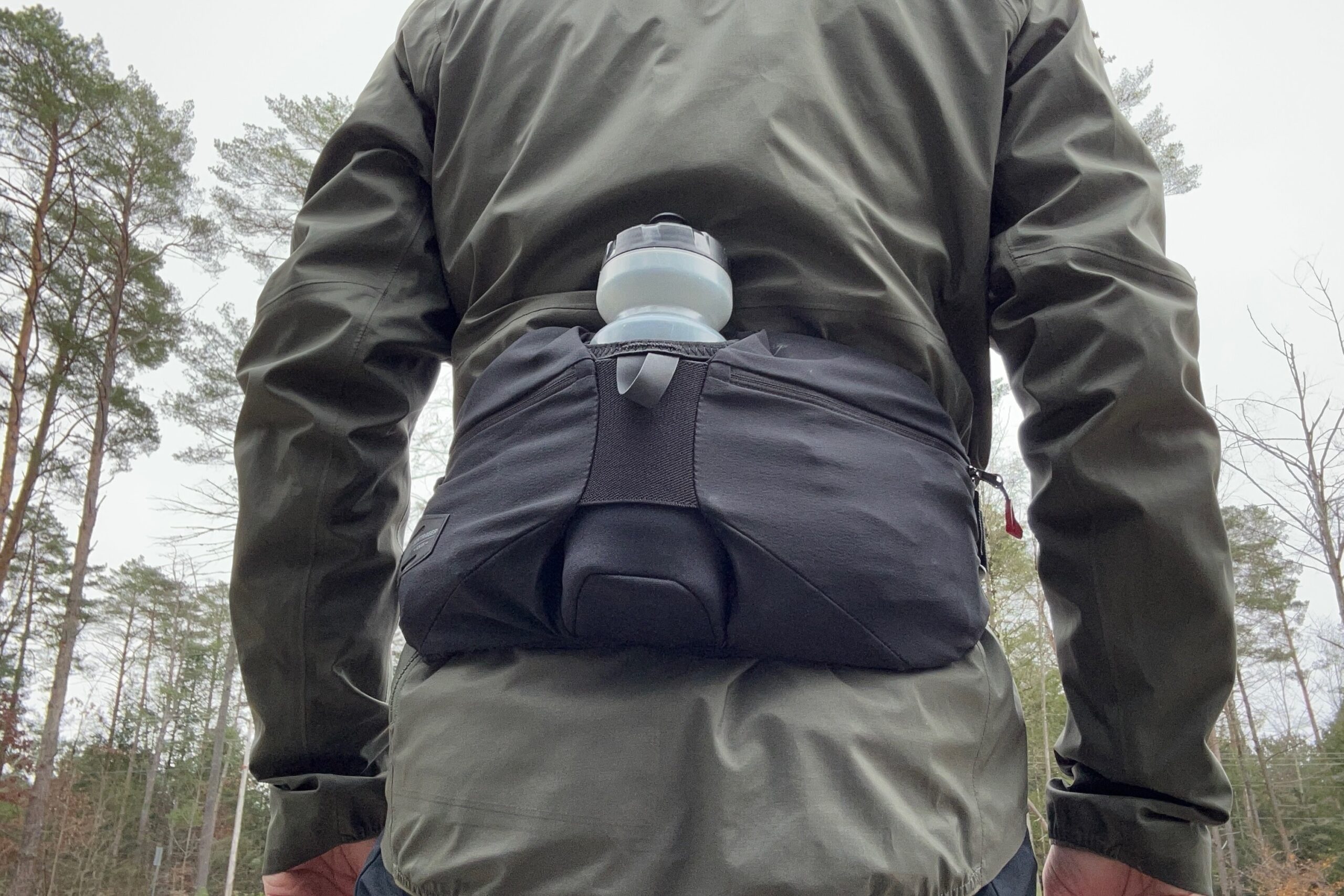
Hip packs have evolved from non-technical accessories to specialized mountain bike gear. Over the past decade, they’ve claimed the Goldilocks spot between minimalist on-bike storage and bulky, heat-trapping backpacks.
By shifting weight from the shoulders to the waist, hip packs lower a rider’s center of gravity and eliminate the sweaty back that comes with traditional packs. Hip packs offer a stable, unobtrusive way to carry tools, food, and around 1.5L of water — providing more capacity than frame bags without the discomfort of a bouncing backpack on technical terrain.
Cargo Capacity
Mountain bike hip packs vary pretty dramatically in their cargo-carrying capacity, with models made to suit just about every need or preference. The capacity is typically measured in liters with super slim, minimalist, race-belt style packs starting around 1 liter and high-volume models topping out around 7 liters plus a 1.5 or 2-liter water bladder.
We tested hip packs ranging from 1.6 to 6-liter capacity, with the Bontrager Rapid Pack as the smallest and the USWE Zulo 6L as the largest. The right capacity for you depends on what you plan to carry.
Small Capacity
If you just need the essentials — your keys, phone, wallet, a tube, multi-tool, water (in a bottle or bladder), and some CO2 — any of these packs will work with space to spare. The Bontrager Rapid Pack being the most streamlined option at 1.64-liter capacity, followed closely by the 2.2 High Above Venture.
Medium Capacity
If you’d like more flexibility to carry additional food or bulkier items like a mini-pump or a super-packable layer, models in the 3 to 4-liter range may suit you better. This includes models like the Evoc Hip Pack Pro 3, Osprey Seral 4, Thule Rail 4, or Patagonia Dirt Roamer.
Large Capacity
And, if you’re a heavy packer, going for a long ride, or heading out in variable weather, packs with 5+ liters of capacity will be easier to stuff with packable jackets and larger food items. The largest packs we tested are the Deuter Pulse Pro 5, the USWE Zulo 6, and the Dakine Hot Laps 5L.
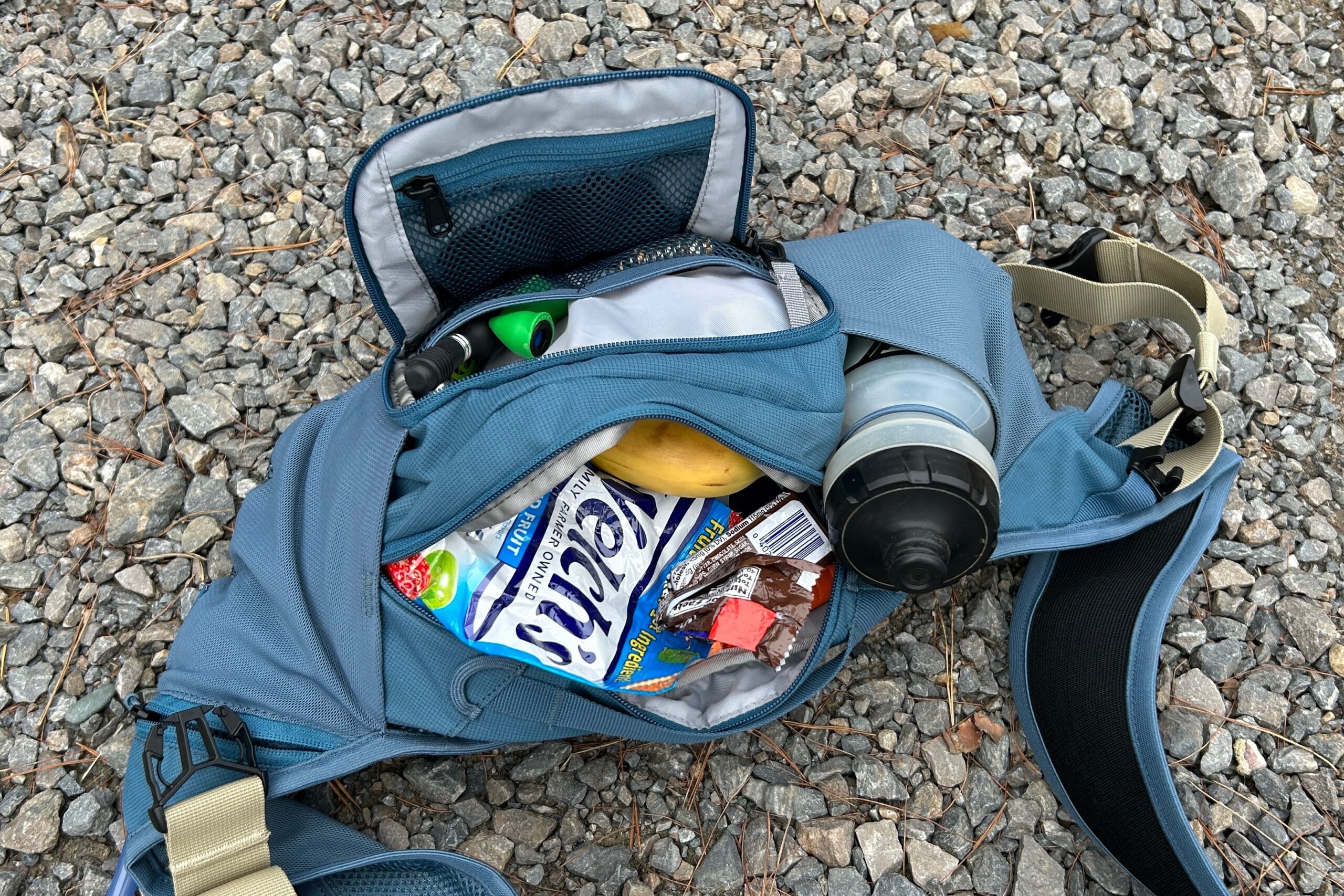
It’s also important to note that most of the packs we tested feature highly usable compression straps, allowing the pack to be compressed when not fully loaded or to keep the load compact to prevent the contents from bouncing around inside. Compression straps can effectively decrease the volume of a larger pack, making it usable for rides when you need a lot of gear and those when you don’t.
And, despite our high praise of hip packs, sometimes even the largest models aren’t quite big enough for some people’s needs. Perhaps you’re going out for a huge adventure into the alpine, where you need to bring a jacket, layers, and extra food, or maybe an overnight bikepacking trip? Situations like these may require significantly more cargo capacity, and backpacks might simply be a better option.
Bike-specific backpacks come in a huge range of sizes and designs to meet various needs, far more even than hip packs. Deuter, for example, makes 12 different models of bike backpacks ranging in cargo capacity from 8 up to 30 liters.
Storage Layout
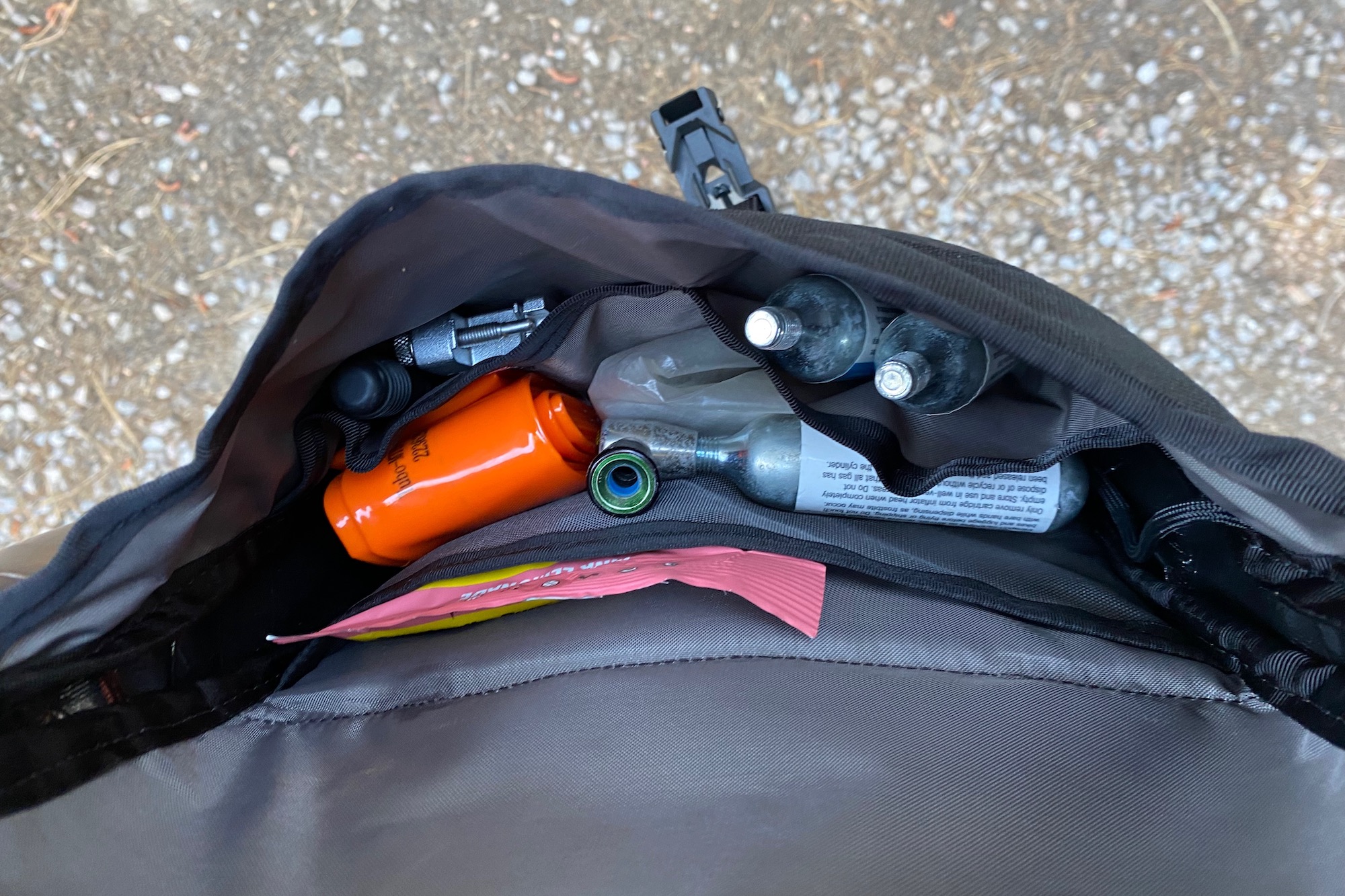
Nearly as important as the capacity, the storage layout of a pack dictates the organization of your gear and how you can use the space. Some packs, like the Osprey Seral 4, take a very simple approach, with a single large compartment with a zippered pocket within. Others, like the Deuter Pulse Pro 5 and Thule Rail 4, are highly compartmentalized, with separate zippered and open organization pockets and larger open sections.
The split design of the Bontrager Rapid Pack and its small capacity make it difficult to carry larger items, while the more open designs of packs like the Patagonia Dirt Roamer or Osprey Raptor 4 make it easier to stuff bulkier items into them.
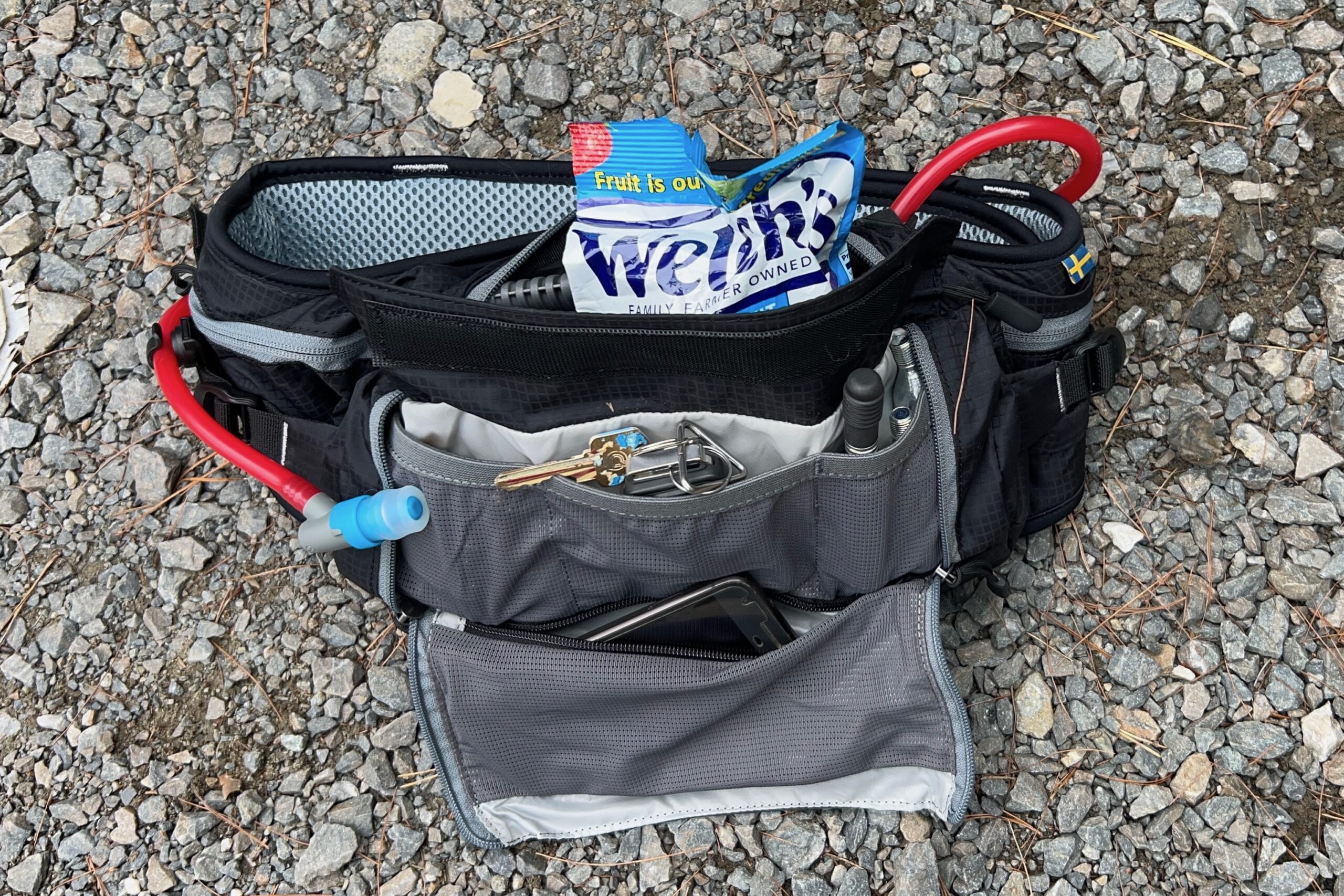
If you want to separate your food from your tools or keep your phone screen safe from scratches while riding, a more compartmentalized design might work for you. Some of the more organization-heavy designs rely on the user storing tools and other items in their separate pockets to get the most out of the space.
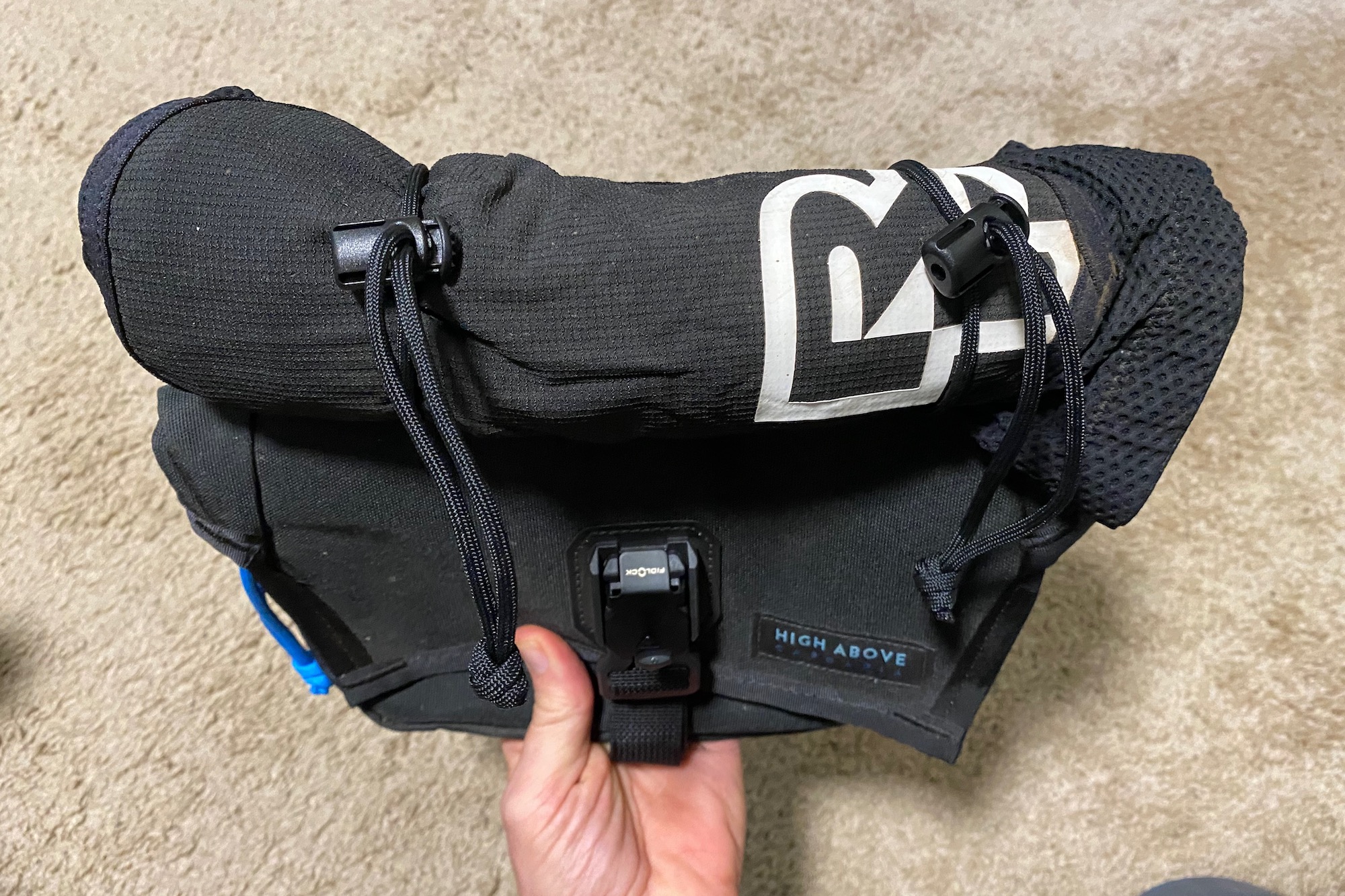
It may take some getting used to, but once you’ve got your system, everything can have its place and be quick and easy to find when you need it. If you want a bag to toss the essentials into, zip up, and forget it, a simpler layout like that of the High Above Venture may suit you just fine. Like capacity, a hip pack’s layout depends on what you need to carry and how you prefer to organize it.
Pockets on the hip wings of the waist belt are another factor to consider. Many packs have them, and they can be very handy to keep smaller items that you want to access on the fly without having to spin the bag around to the front. These vary in size, but most are good for smaller items like keys, gels, chapstick, or credit card/ID, while a few are capable of fitting a smartphone.
Additionally, a few models, like the Dakine Hot Laps 5L, Deuter Pulse Pro 5, High Above Venture, and the Patagonia Dirt Roamer, have external strap systems that can be used to attach bulkier items like knee pads or a jacket to the outside of the pack for extra carrying capacity.
Hydration Style
Most mountain bike hip packs provide the ability to carry extra water in additional water bottles, water bladders, and sometimes both. Like the overall capacity of the pack, the right water capacity depends on how much you drink and the duration of your ride. Having more water than you need is always better than not having enough.
Of the packs we tested, four of them carry water in bottles only, seven of them carry water in water bladders, and two of the models with bladders can carry an additional bottle or two. What works best for you is typically a matter of personal preference.
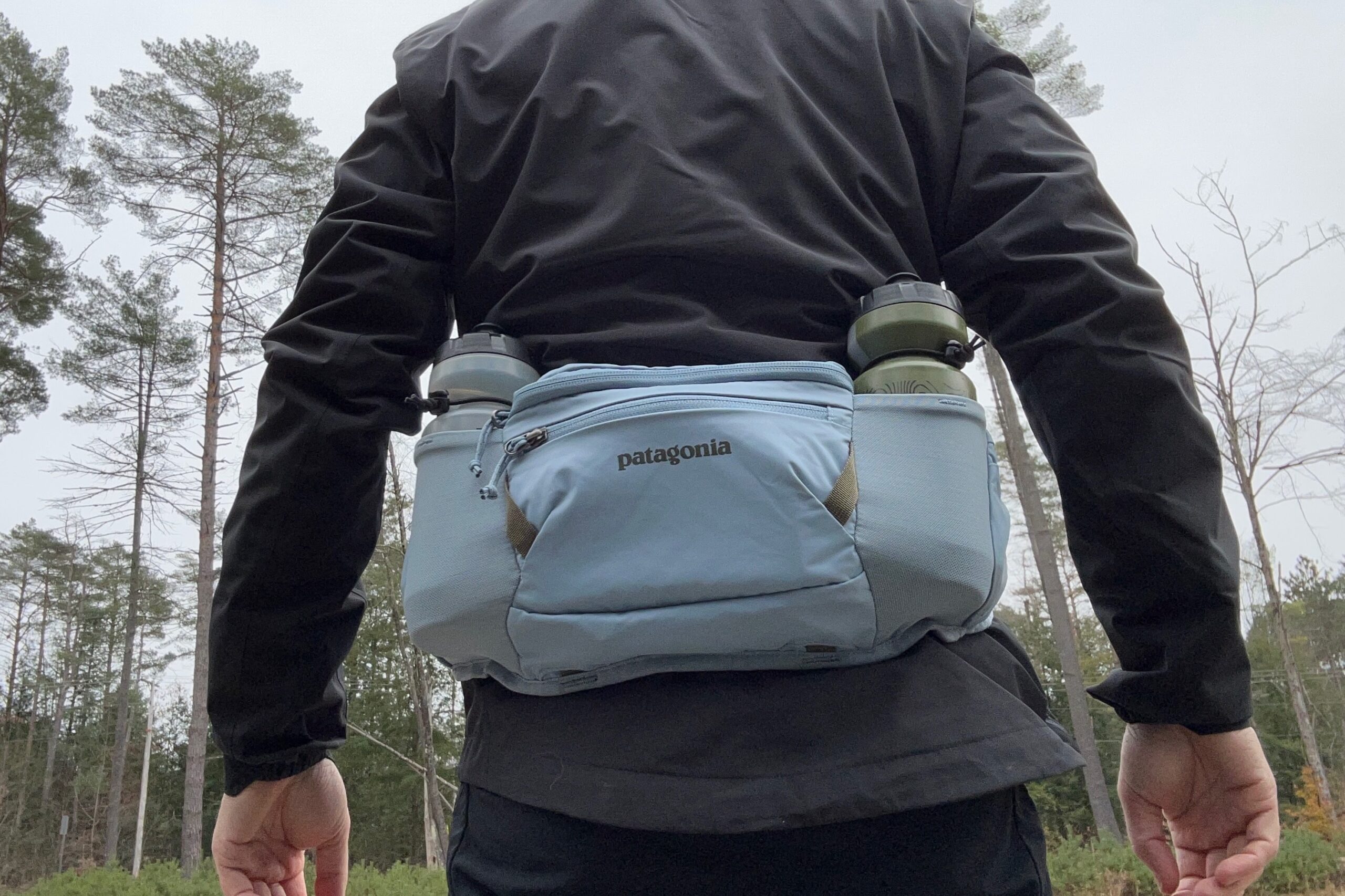
Bottles
The bottle-carry models can usually handle one or two 20- to 25-ounce bottles, which may be more than enough for your needs, especially if you’ve already got a bottle on the bike. Both the Fox Standard Hip Pack and the Patagonia Dirt Roamer can carry two bottles in sleeves on either side of the storage compartment.
The Outdoor Research Freewheel 2.5L is designed to fit a single bottle if you like. Similarly, the High Above Venture can be purchased with a Fidlock magnetic bottle or a bottle sleeve. The Bontrager Rapid Pack can also only carry one bottle, but it does so very securely in the center of the pack between the storage pockets.
Compared to hydration bladders, bottles are super easy to fill and clean. For those packs that can carry two bottles, you can almost get the same amount of water capacity as a pack with a 1.5-liter bladder. For most of these packs, it’s also pretty easy to reach back and pull the bottles out of the pack for drinking, but not quite as easy as reaching a hose up to your mouth while riding. And, while most bottle holders are quite secure, there is the chance they could bounce out over super rough terrain or in a crash.
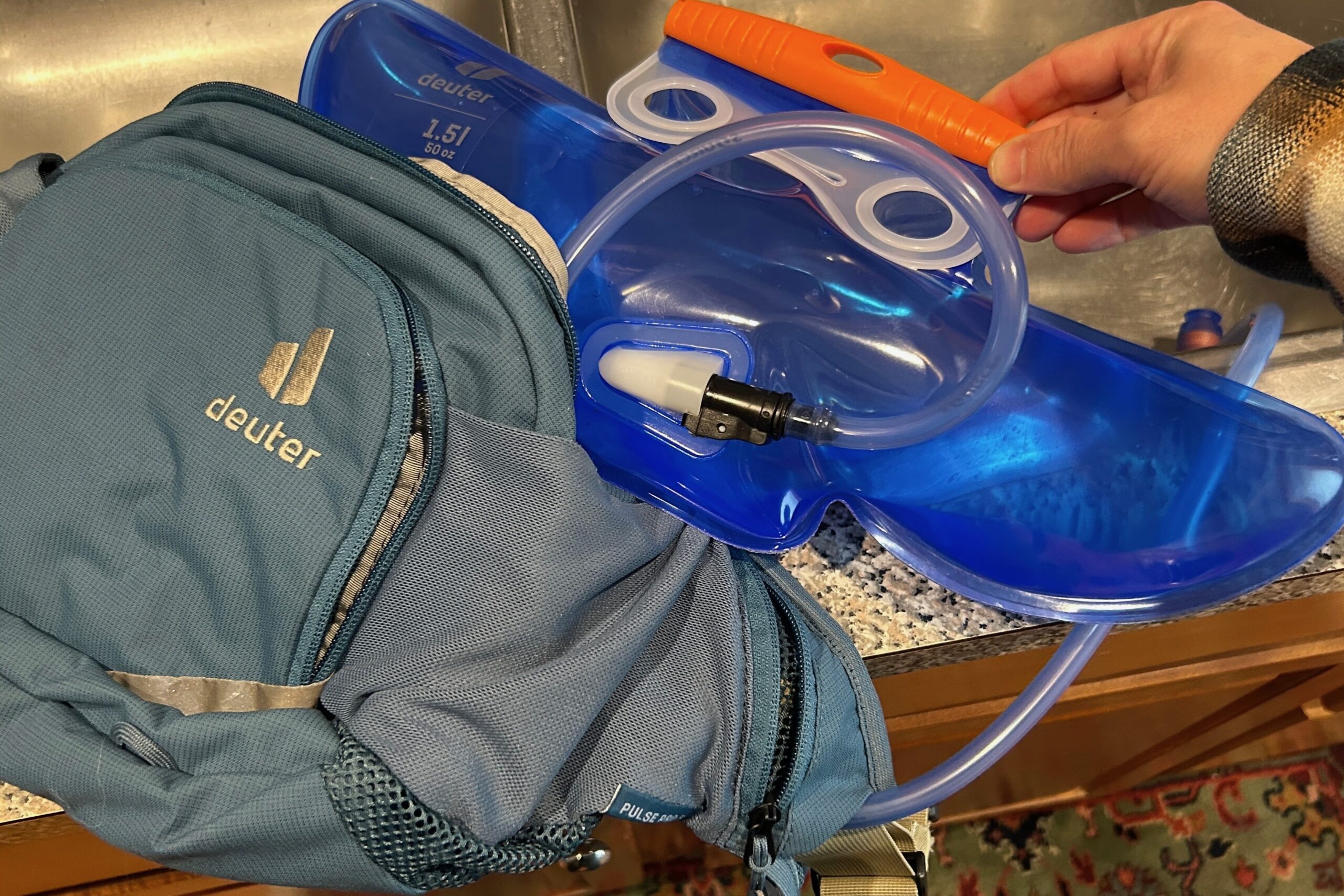
Bladder
Of the bladder-equipped packs we tested, six of them, the USWE Zulo 6, both Evoc models, the Deuter Pulse Pro 5, Thule Rail 4, and the Osprey Seral 4 and Raptor 4, come with a 1.5-liter bladder (50.7 ounces). The Dakine Hot Laps 5L comes with a 2-liter (70-ounce) bladder. Additionally, the Evoc Hip Pack Pro 3 can carry two bottles, and the Deuter Pulse Pro 5 can carry one. Any of these packs should carry enough water for 2 to 3-hour-long rides, or longer, depending on the temperature and your personal rate of consumption.
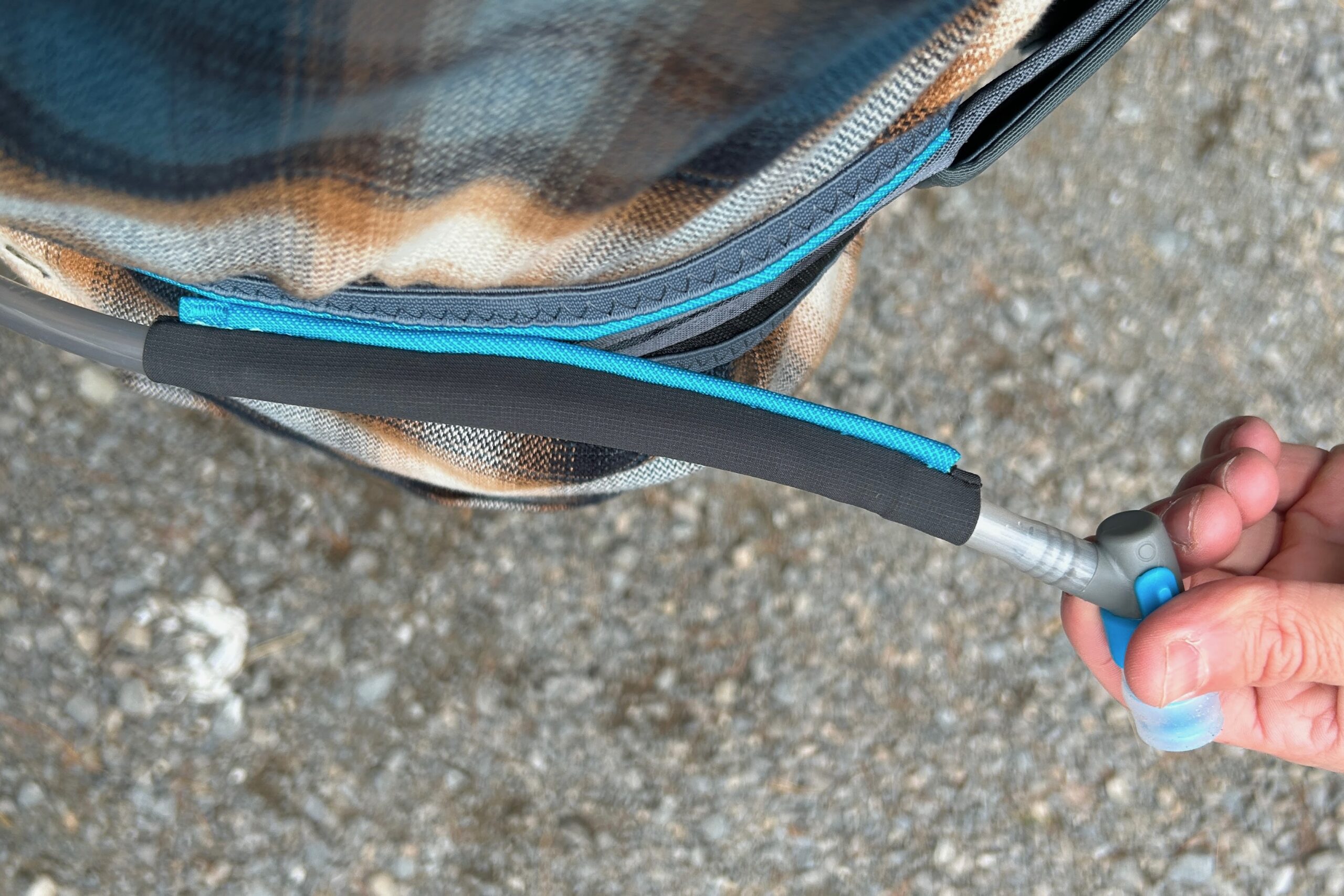
There are some advantages to bladder-style hip packs. Drinking from them is super easy and convenient. The hoses and nozzles are located on the waist belt, and reaching down and grabbing it to drink is quick and easy and can usually be done while riding on smooth sections of trail.
The bladders are also soft and squishy, so they conform to the shape of your back and other contents in your pack and can distribute water weight more evenly, which can enhance pack stability. Bladders are carried internally, so they should never fall out on a rough trail, and you’re unlikely to set it down and forget it on the side of the trail like you could with a bottle.
The disadvantages of bladders are that they are slightly more cumbersome to fill and clean, and bacteria and mold can grow in the bladder/hose/nozzle if neglected. Some people just don’t like drinking from a hose, and the hoses can occasionally pop loose while riding, which can be annoying and potentially dangerous.
Waist Belts
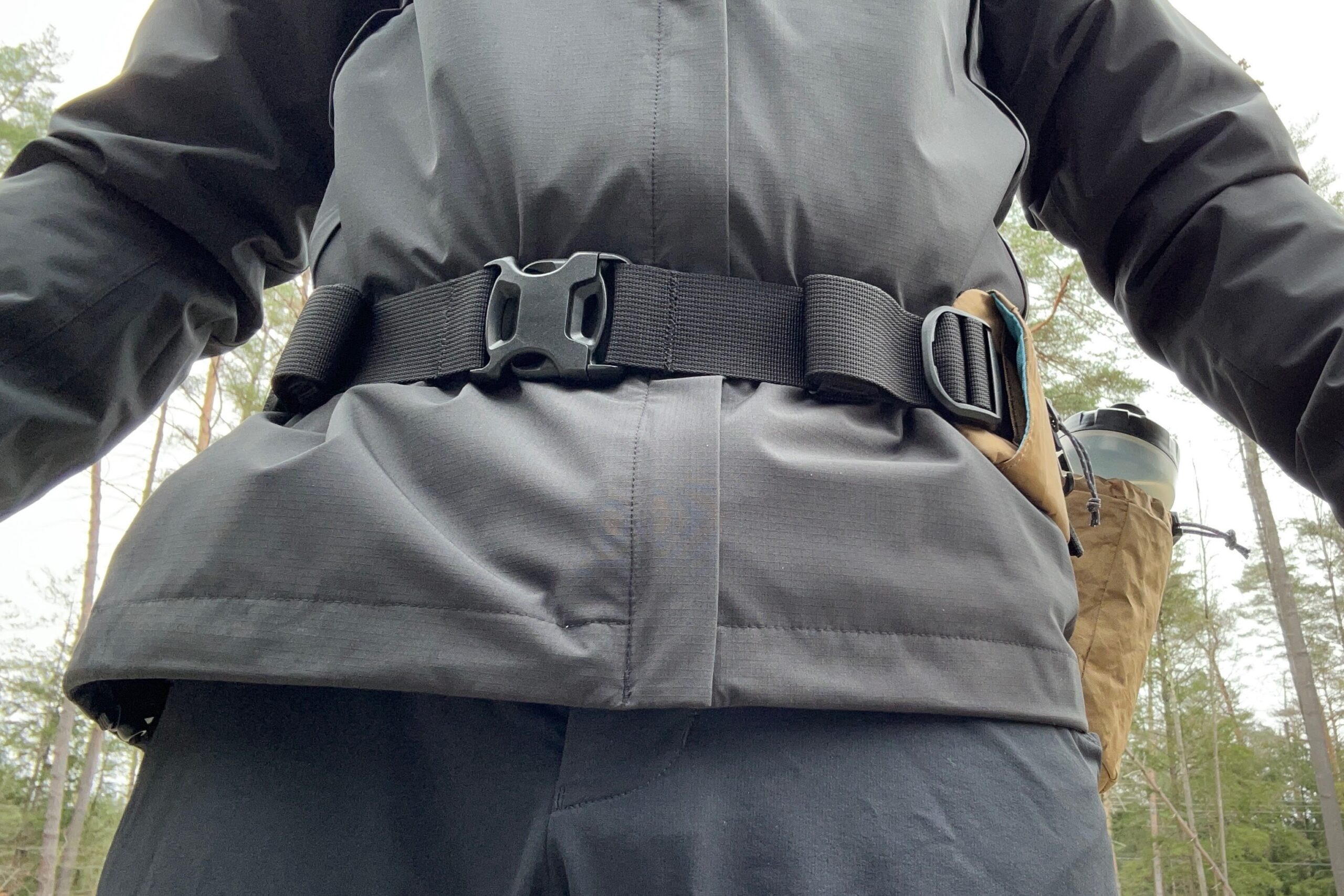
While they all perform the task of securing a hip pack around the waist, there are two main styles of waist belts on the packs we tested. Most packs come with a more basic, adjustable, static webbing belt with a plastic clasp to secure it. The Patagonia Dirt Roamer, Fox Standard, Bontrager Rapid Pack, Evoc Hip Pack 3, and Dakine Hot Laps 5L, all use this style of waist belt.
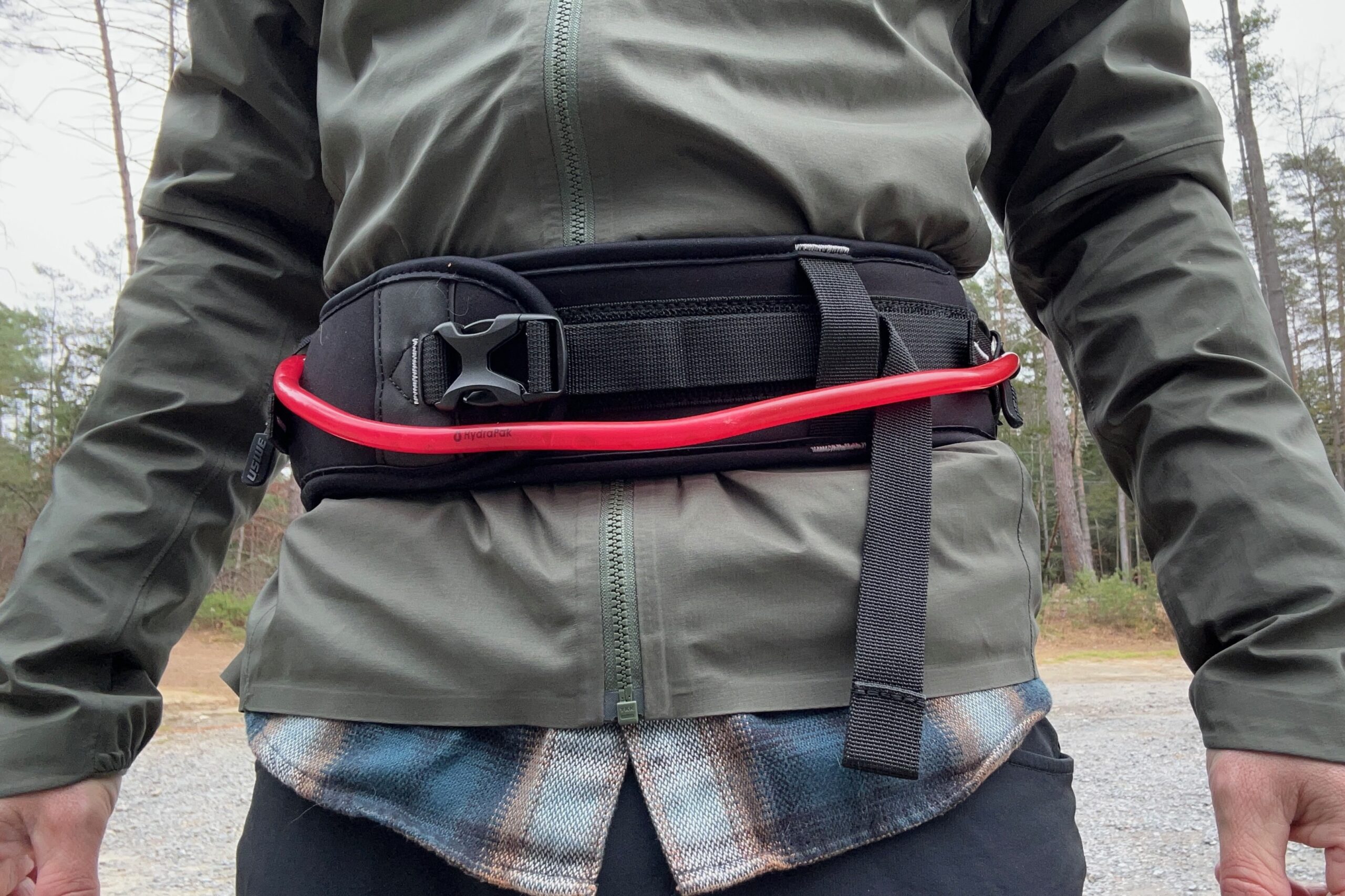
Other packs, typically the more expensive ones, have wide, overlapping Velcro belts that also have a webbing strap and clasp over the top to secure it. This style of waist belt is found on packs like the Deuter Pulse Pro 5, Evoc Hip Pack Pro 3, Thule Rail 4, and USWE Zulo 6.
Realistically, both styles work quite well and give little to complain about, but the softer, wider, overlapping models tend to be a little more comfortable and stable, and they distribute the weight of a loaded pack a little more evenly around the waist.
The flip side is that they are a bit more finicky to put on, as you have to line up the overlapping straps before securing the buckle on top. Regardless, it isn’t that much of a hassle, and the added comfort and stability are generally worth the few extra seconds it takes to put them on.
Both styles of belts are adjustable to fit a range of waist sizes and keep them snug when in use. The designs vary somewhat, of course, but most are reasonably easy to adjust and stay secure while riding. The recommended waist size ranges also vary among the models we tested, with some models like the Thule Rail 4 and USWE Zulo 6 fitting waists between 31 and 40 inches compared to the Osprey Raptor 4, which is claimed to work for waists between 25 and 50 inches.
Ventilation
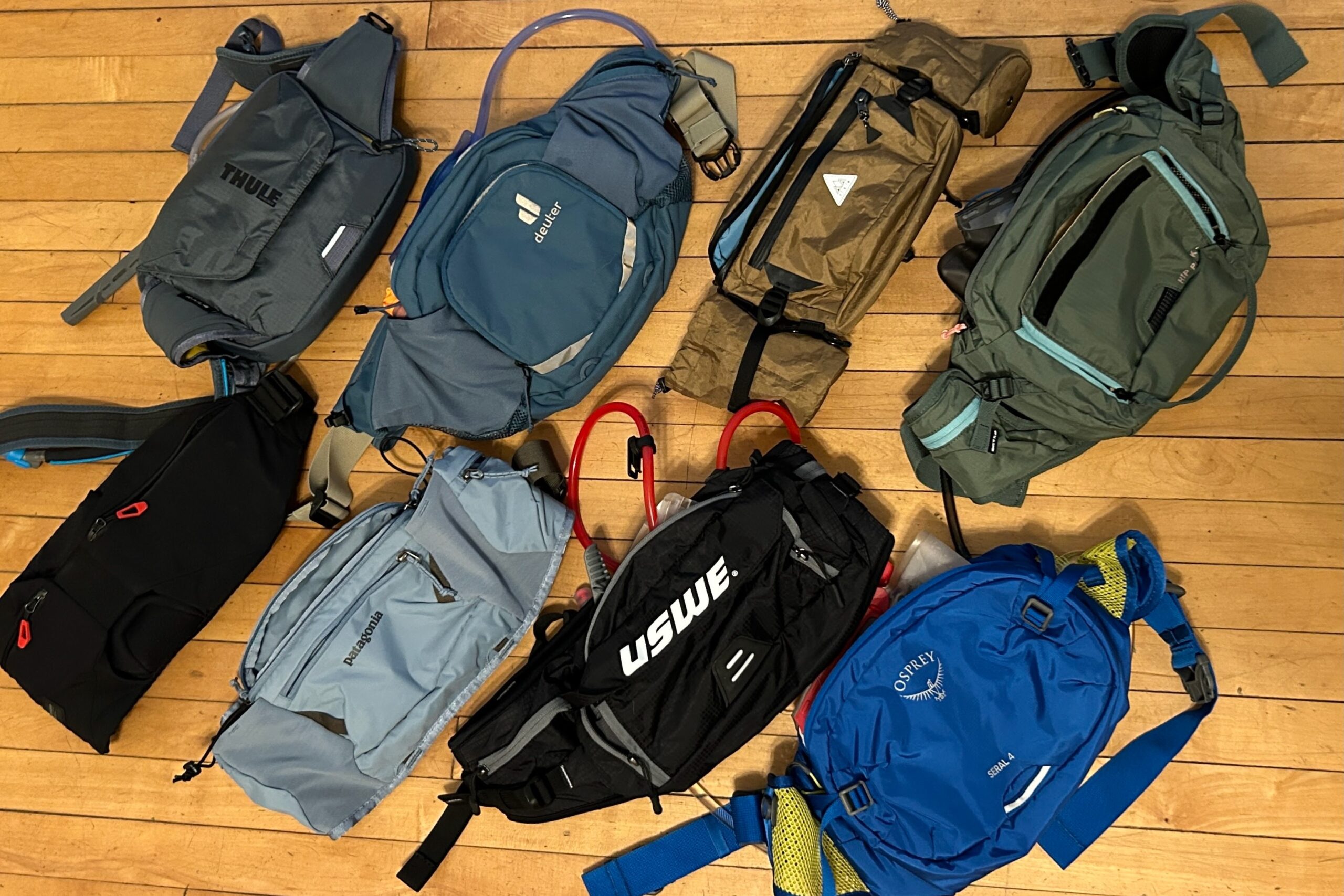
Compared to hydration backpacks, hip packs cover only a small portion of your back and are inherently better for staying cool and managing sweat. That said, they still make contact with your lower back, which can become quite hot and sweaty. Almost every hip pack makes some attempt at managing moisture where the pack makes contact with your body through the use of breathable mesh materials or more advanced ventilation systems, but they are not created equal.
The two Evoc packs, the Hip Pack Pro 3 and the Hip Pack 3L have some of the best ventilation among the models we tested with their Air Flow Contact System. The back panels feature raised, channeled foam blocks that are covered in an open mesh material that allows for superior breathability. The Airscape back panel on the Osprey Raptor 4 ventilates on a similar level.
Additionally, Evoc’s Venti-Flap system allows the user to quickly loosen the upper part of the pack and create a gap between your back during climbs or other times you want to increase airflow, then quickly cinch it back down for the descents. The rest of the models we tested do a commendable job of promoting breathability and are generally much cooler and less sweaty than wearing a full-on backpack.
Price & Value
Like anything else in mountain biking, hip packs vary pretty widely in terms of price. The more basic designs and those that carry bottles tend to cost a bit less. When you add a water bladder or fancier waist belt, the price goes up a bit. Still, they are among the more affordable accessories you can buy, and most will last for many years.
Budget
At the lower end of the price range, hip packs tend to be a bit simpler in design, and most carry water bottles, if they carry water at all. The Patagonia Dirt Roamer ($69) is a great example. Not only is it affordable, but it’s well-made and it happens to be our favorite bottle-carry pack, too. Other models at the low end of our price range are the Bontrager Rapid Pack ($68), the Fox Standard Hip Pack ($70), and the Outdoor Research Freewheel 2.5L, all of which have relatively small capacities and carry water in simple bottle sleeves.
Mid-Tier
Around the $100 mark, hip packs begin to include water bladders. While these packs are still quite simple, bladders and hoses alone can cost in the neighborhood of $25-ish, so having them included drives the price up a bit from the budget models.
Models like the Dakine Hot Laps 5 ($100) and the Osprey Seral 4 ($90) are both simple and effective designs that include water bladders for easy hydration on the fly. They lack the bells and whistles of the premium models, but they are perfectly functional and great options for plenty of riders.
Premium
With only a slight jump in price, we get into premium hip pack territory around $125. In this price range, most hip packs come with bladders, and many boast larger carrying capacity or features that aim to enhance comfort. Evoc’s Hip Pack Pro 3 ($150) neatly organizes up to 3 liters of gear, carries 1.5 liters of water in a bladder, and has a super comfortable overlapping stretch waistband and one of the best back ventilation systems we’ve seen.
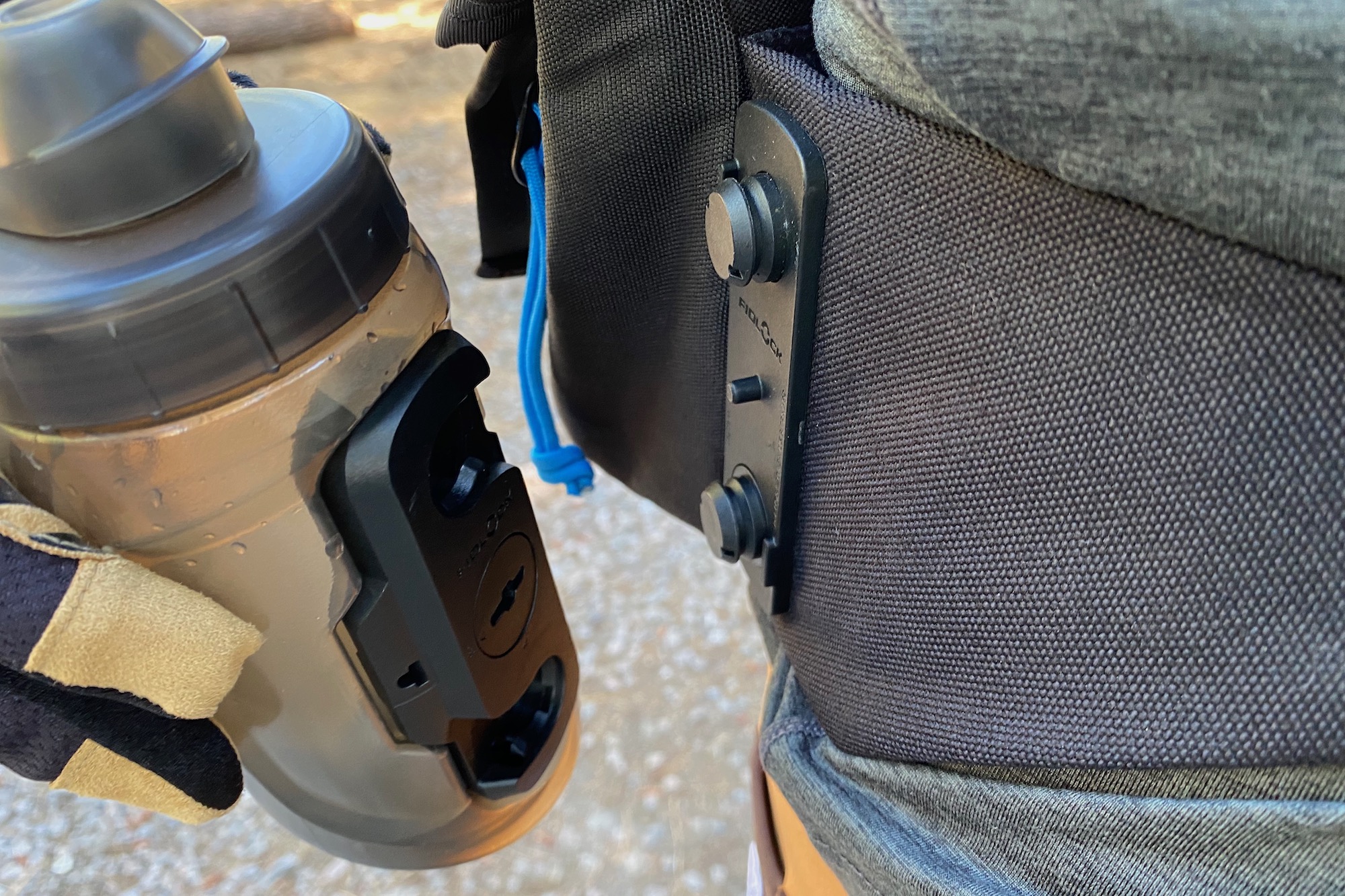
On the simpler side, High Above’s Venture Pack ($135) is made in the USA from super durable materials. Domestic manufacturing simply costs more than doing it overseas, and adding cool features like Fidlock buckles — and the option to add a Fidlock bottle — contributes to the higher price. Thankfully, a lifetime guarantee also ensures that you’ll get your money’s worth and then some.
Frequently Asked Questions
Hip packs are one of several ways to bring your hydration and gear with you while you ride, and arguably one of the best. They allow you to bring more water, tools, and other gear than you can typically carry on your bike and in your pockets, so you can be well prepared for whatever you’ve got planned and most mechanicals that may happen along the way.
They also keep everything within arm’s reach for convenient access, and most feature organizational pockets, so your tools and other items are quick and easy to find when you need them.
Depending on what you need to carry while you ride, you can choose from hip packs with varying storage and water-carrying capacities to suit your specific needs. Many hip packs are also fairly adaptable and can carry lighter or heavier loads depending on the length of ride. Some of them can even fit about as much as many hydration backpacks.
Compared to backpacks, however, hydration packs sit just above the waist on your lower back for a lower center of gravity, better weight distribution, and stability. They also cover significantly less of your back, allowing for better breathability and sweat management.
It really depends on what you want to bring with you on a ride. Taking stock of all the things you need to carry – water, tools (multi-tool, bike pump/CO2, tube, tire levers, tubeless plugs, etc), food, phone, wallet (or money/card and ID), extra layers, gloves, pads, etc., should give you a rough idea of the size pack you’ll need to fit it all into. And, it’s also important to consider that what you carry on rides may vary based on the length of ride or the season.
Those who carry a water bottle on the bike and bring the bare minimum with them on rides may prefer a low-volume and low-profile option like the Bontrager Rapid Pack or High Above Venture. Most people will likely find the sweet spot in the medium-volume packs in the 3 to 4-liter capacity range, like the Evoc Hip Pack Pro 3L or the Patagonia Dirt Roamer.
Others who like to bring more on their rides, or who just like the option to do so, will be well served by looking at some of the larger capacity packs like the USWE Zulo 6L or the Deuter Pulse Pro 5. Again, it really just depends on the length of your rides and what you want to have with you out on the trail.
With the variety of hip packs on the market today, you can choose between models that carry water in a bladder, bottles, or both, or some that don’t carry any water at all. What works best for you really comes down to personal preference or your water-carrying needs, as both systems work quite well.
Water bladders carry up to 1.5 or 2 liters of water, have a clean look inside of the pack, conform to shape easily for comfort against the back or cramming things in a pack around them, and allow for easy drinking (even while riding) from a hose. That said, water bladders are a little more annoying to clean.
Bottles are also quite easy to drink from and far easier to clean than bladders. Their storage location varies on the hip packs we tested with some being super stable while riding and others moving around a bit on the back, but you’ve almost always got to reach around to grab them which is less convenient than the bladder systems. Either way, you can’t really go wrong, but considering your drinking preference and water-carrying capacity needs will likely steer you in one direction or the other.
Hip packs tend to get dirty from sweat or when riding in dusty or wet conditions. Their location on the lower back means they are placed right in line of fire from tire spray and they can get caked with mud. In general, they don’t need to be cleaned very often, and you can typically wipe off dirt or mud and let them dry out between rides.
Eventually, though, you’ll need to wash them, and it is quite easy to spray them down with a hose or hand wash them in the kitchen sink and let them air dry. Some packs can also be washed in a washing machine, but you definitely want to look up and follow any manufacturer’s recommendations when washing your hip pack.
Even more important is cleaning the hydration system. Bacteria and mold can and do grow in the moist environment inside the bladder, hose, and nozzle, so keeping it clean is important for your health and the taste of your water.
You can use dish soap, brushes, and/or cleaning tablets to get through the hose and inside the bladder. You can also use baking soda, lemon juice, bleach, or even denture cleaning tablets to kill bacteria. And, be sure to let everything dry before using it again.
There are lots of helpful tips that can be found online if you are unsure how to go about cleaning your hydration system. Whatever technique you use, be sure to clean your water bladder, hose, and nozzle regularly. Most bladders are not dishwasher safe — again, check with the manufacturer before using the dishwasher.
Yes! Pretty much any hydration hose can be shortened to your desired length. You can do this by pulling out the nozzle piece, cutting the hose to length with a sharp pair of scissors or a knife, and pressing the nozzle piece back in.
Related Content
The Best Hitch Bike Racks of 2026
We tested the best hitch bike racks including E-bike certified and RV-friendly racks from Thule, Yakima, Küat, RockyMounts and more.