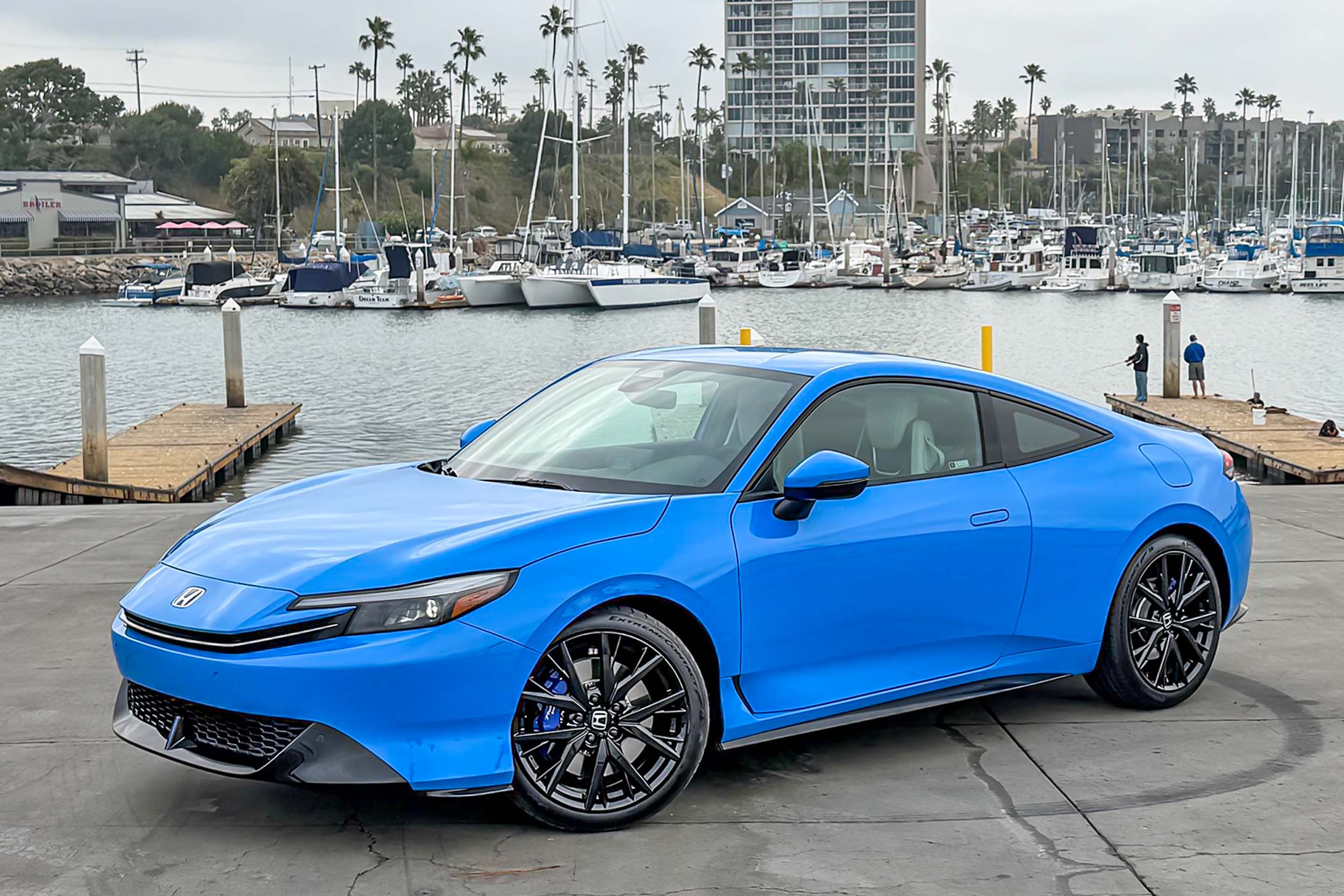
Twenty-five years is a long time to wait, but that’s how long it’s taken for Honda to finally bring back the once-iconic Prelude. Though it may boast a newer, more curvaceous design than the last coupe to make it into U.S. showrooms, the 2026 Honda Prelude doesn’t stray far from its roots as a grand tourer. But there are some key differences, starting with the automaker’s decision to go with a hybrid drivetrain this time.
Only one well-equipped version of the new Prelude will be offered, and potential buyers shouldn’t worry. While the gas-electric drivetrain does deliver some impressive fuel economy, the emphasis is on performance. That’s backed up by driver-adjustable adaptive dampers, as well as the new S+ Shift system which is designed to replicate a classic Prelude manual transmission.
In short: The 2026 Honda Prelude brings back a once iconic nameplate. And the sixth-generation coupe is likely to generate plenty of fans who’ll fall for its distinctive styling and sporty manners. There are those who find the new S+ Shift system little more than a gimmick and lament the lack of a real manual transmission, but the reality is that fewer and fewer folks today know how to row their own gearbox. The bigger shortfall is the rear seat, little more than a cargo shelf. Still, the 2026 Prelude should find a small but enthusiastic audience.
2026 Honda Prelude
- Drivetrain: 2.0L inline-4 paired with 2-motor hybrid system
- Horsepower: 200
- Torque: 232 lb.-ft.
- Fuel Economy: 46 mpg City/41 Highway/44 Combined
- Transmission: Front-wheel-drive, Direct drive with S+ Shift system. Mimics an 8-speed automatic, including rev-matching and simulated soundtrack
- Cargo space: 15.1 cubic feet
- MSRP: $43,776
Pros
- Sporty performance
- Exceptional fuel economy
- Reasonable price
Cons
- No manual gearbox (You’ll either love or hate the S+ Shift)
- Absolutely useless back seat
- Love-it-or-hate-it design
2026 Honda Prelude Review
First launched in 1978, Prelude was once among the core products in the American Honda lineup. It was also one of the first to fall out of favor as Americans began the slow shift away from sedans, coupes, and wagons to SUVs, CUVs, and pickups.
For those who have long lamented the demise of the Prelude coupe, the long wait is over. A full quarter-century after it last rolled down an assembly line, the little coupe is back, and based on our initial time behind the wheel, it should find a new and enthusiastic audience. Though the lack of a classic manual gearbox may disappoint some traditionalists.
Skeptics may also question the decision to go with a single trim and a single powertrain — a hybrid, no less. But the good news is that even while turning in some impressive mileage numbers, the package also delivers the sort of sporty power and dynamics that long-time fans would expect of something badged “Prelude.”
What’s New
The new Prelude was meant to “demonstrate our commitment to exciting, fun-to-drive vehicles,” according to Jessika Laudermilk, assistant vice president of Honda National Auto Sales. How the automaker chose to get there is by lifting a few things from the sportiest member of its Civic lineup while adding some intriguing new tech features, notably the new S+ Shift system.
The hybrid drivetrain and a number of suspension components are lifted almost directly from the Civic Type R. But while Prelude also boasts the same, wide track as that performance model — 64.0 inches front, 63.5 inches in the rear — it’s a bit shorter, with a 102.6-inch wheelbase and a total length of 178.4 inches.
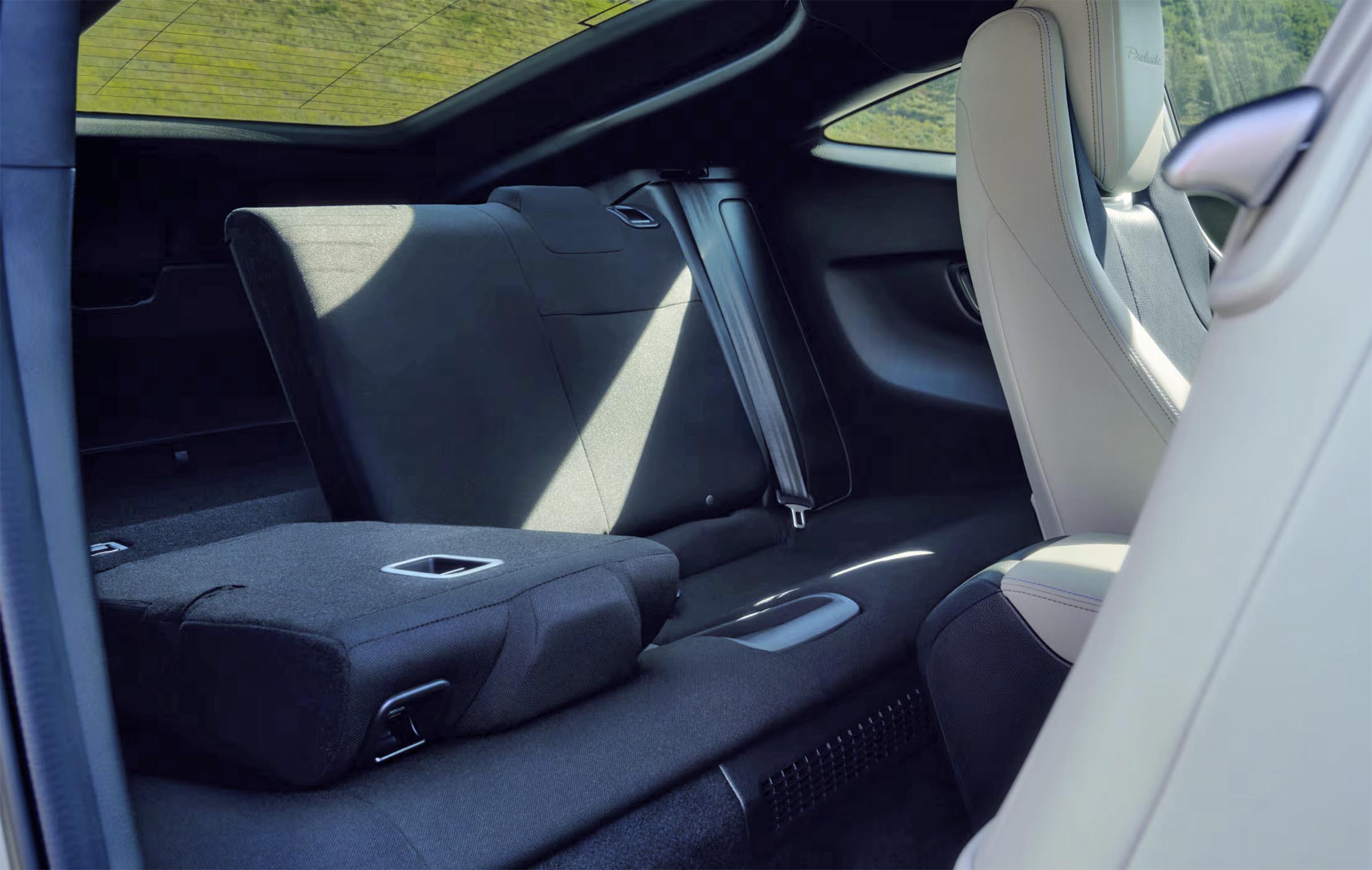
Ostensibly a four-seater, buyers should know up front that they’ll not make — or keep — any friends they might ask to climb into the back. And “climb” is the accurate description since the front seats don’t really move out of the way.
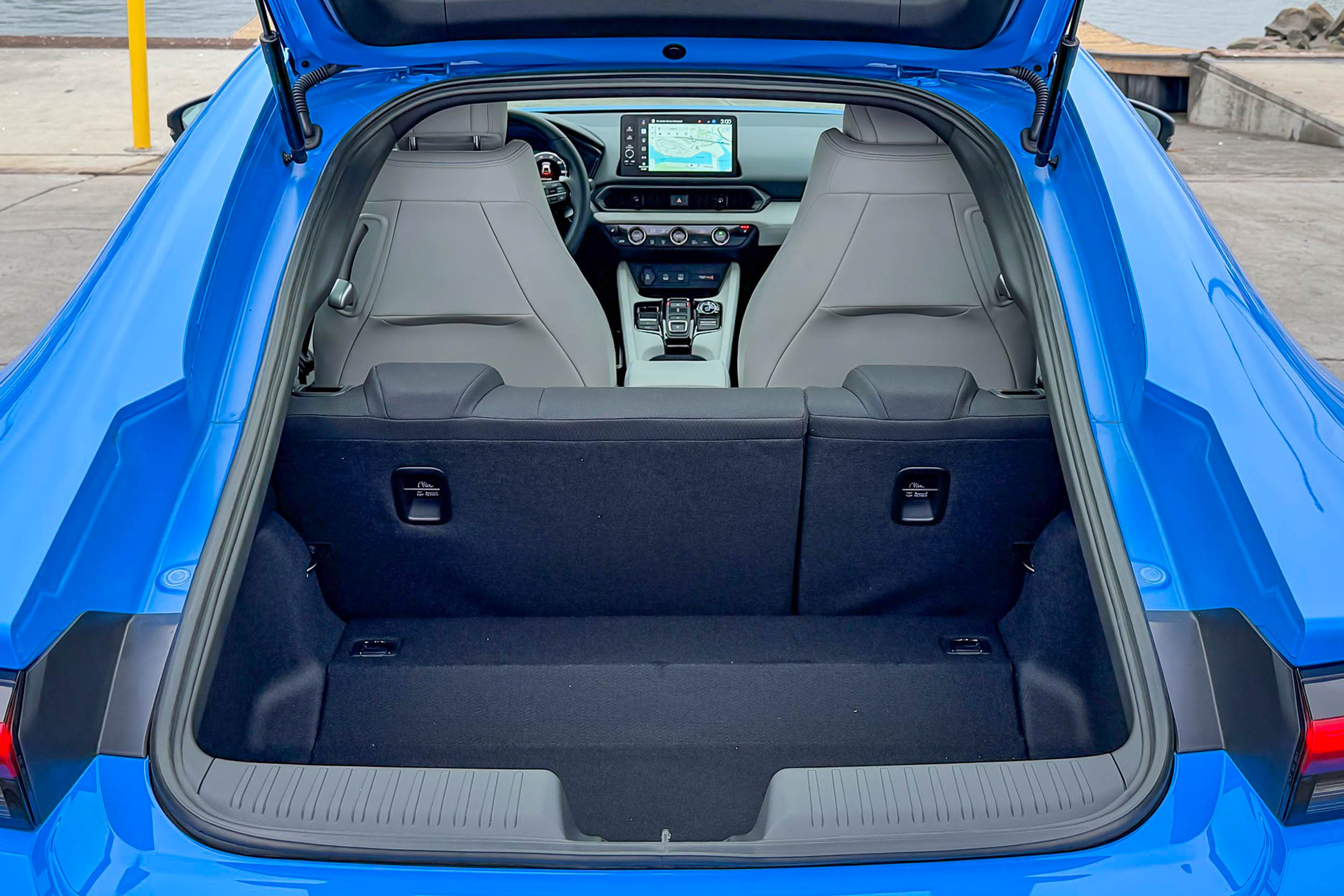
Why even bother? Americans just don’t like two-seaters, even if they rarely use the back row. At least you can use it to store groceries. On the plus side, the rear hatch opens to a reasonably sized 15.1-cubic-foot cargo compartment.
Powertrain
Honda was the first automaker to introduce a hybrid to the U.S. market, the largely forgotten first-generation Insight, which arrived a few months ahead of the original Toyota Prius. The automaker has had a mixed commitment to hybrids since then, though it’s beginning to catch up to its bigger Japanese rival lately by offering gas-electric powertrain options on more and more vehicles.
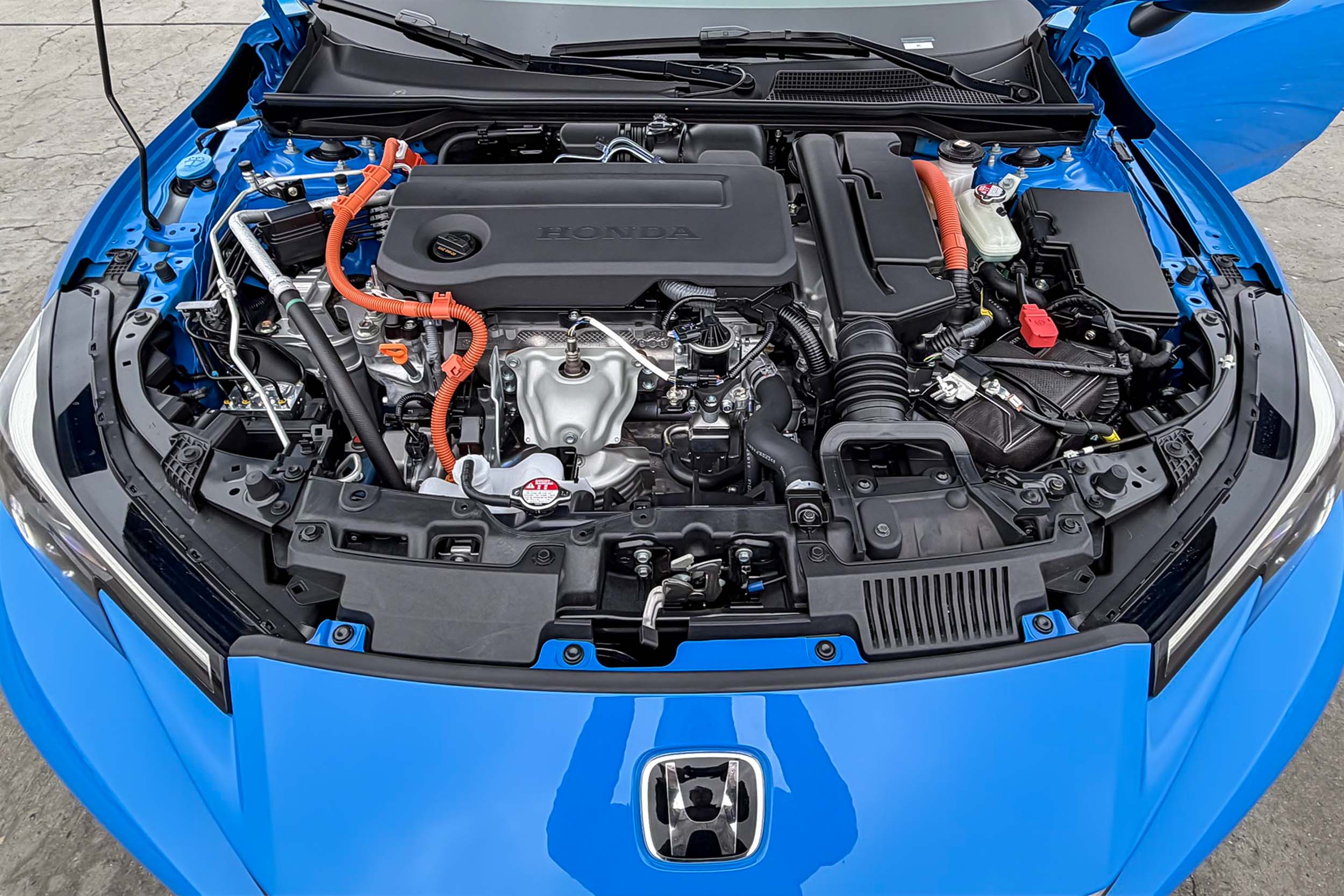
In the case of the 2026 Prelude, there’s just one choice, and it’s a two-motor hybrid paired with a 2.0L internal combustion engine to produce a combined 200 horsepower and 232 pound-feet of torque.
The downside, at least for some potential buyers, will be the lack of a classic manual transmission. Much as that might be celebrated on the Type-R, with the Prelude, power is directed to the front wheels via a direct-drive system. To Honda’s credit, it doesn’t suffer from the rubber-banding effect drivers experience with many hybrids and internal combustion packages using CVT gearboxes.
The 2026 coupe introduces Honda’s new S+ Shift system. Prelude doesn’t have a conventional transmission. The S+ system can replicate downshift blips, rev-matching, and gear holding, and it offers a manual mode for those Prelude fans who still long for the coupe’s long-gone stick.
The most gimmicky element of the system is the simulated soundtrack when in S+ mode. That said, even BMW these days uses simulated audio to “enhance” the driving experience.
’26 Prelude Driving Experience
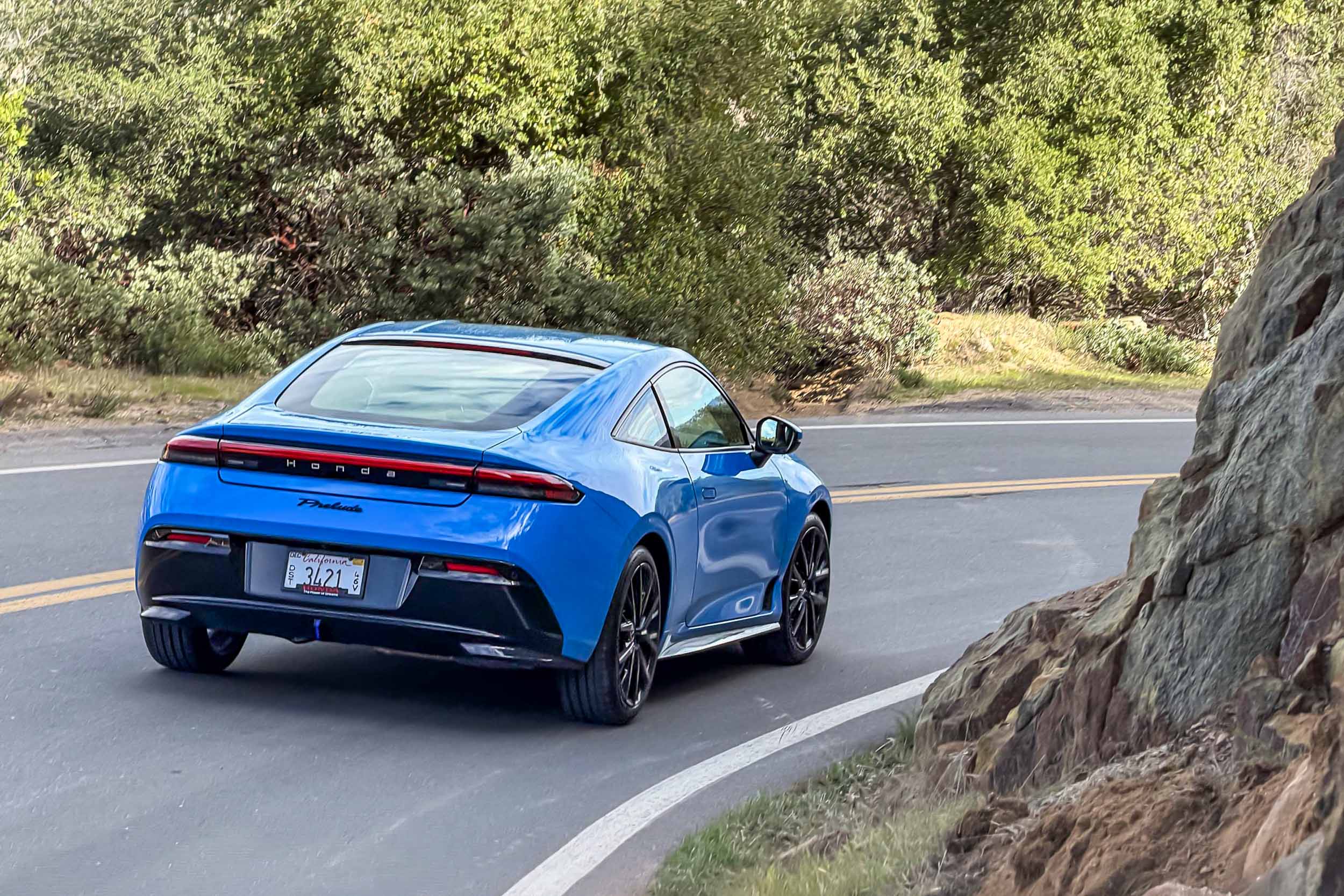
With its curb weight of 3,261 pounds, the new Prelude isn’t a rocket, but power comes on smoothly across the RPM range, thanks to the low-end torque the motor drive delivers, complementing the output of the internal combustion engine.
I spent the better part of an unexpectedly gray day starting out from the San Diego waterfront, wending my way up a circuitous route to the old mining town of Julian, Calif. — making my requisite stop at the Julian Pie Company. The route I took gave me a chance to experience the 2026 Prelude in pretty much every possible driving situation, from classic California freeway traffic to the twisty back roads leading up into the Cuyamaca Mountains.
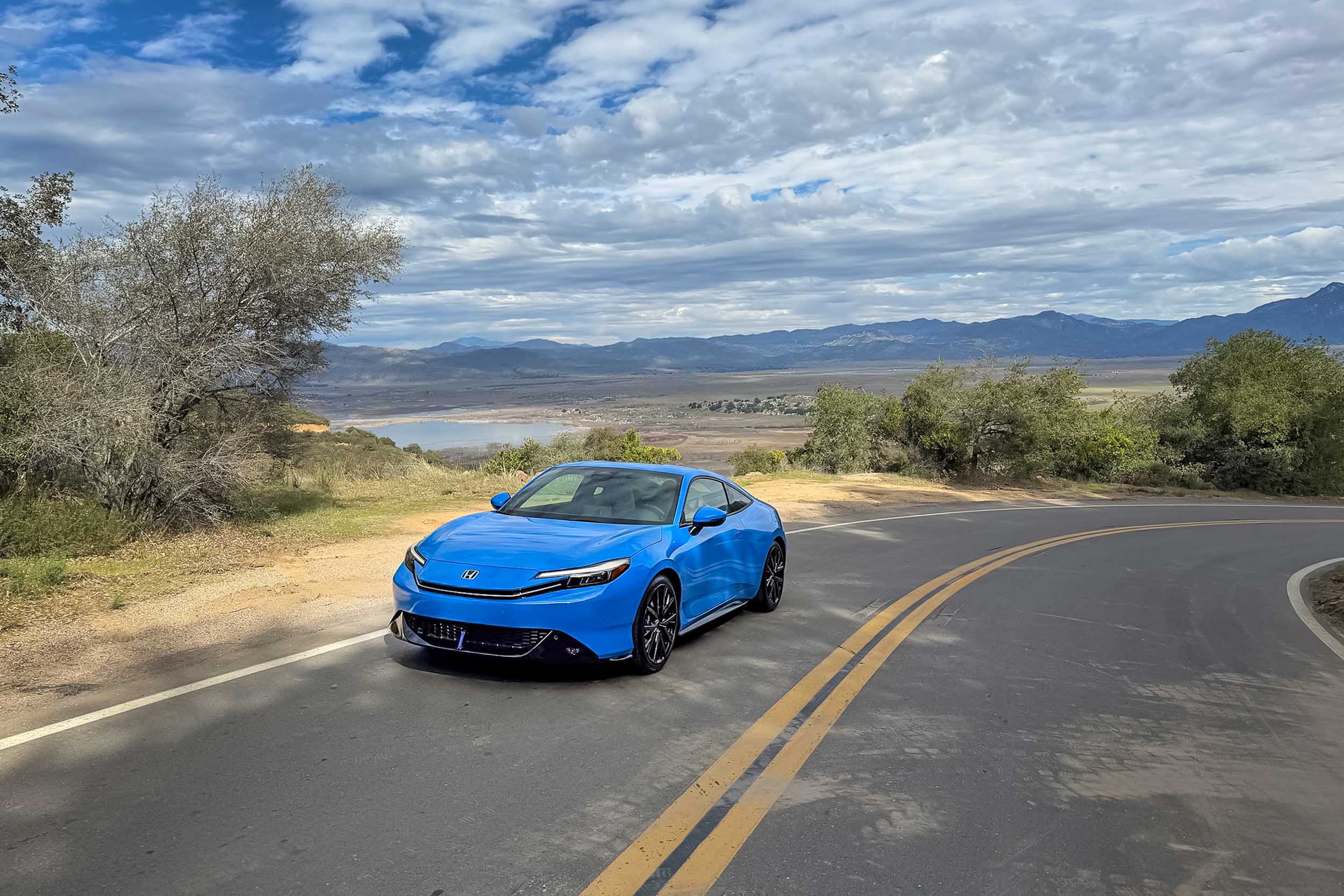
The coupe’s wide track and low center of gravity clearly paid off on those mountain roads. It handily zipped around even the most off-camber corners with barely a complaint. The experience was enhanced by the direct drive transmission, to the point that I came away no longer lamenting the lack of a manual gearbox.
Balancing it all out, the new Prelude has Brembo brakes with four-piston aluminum front calipers. They proved perfectly adapt at scrubbing off speed with no sense of fade.
Driver Modes
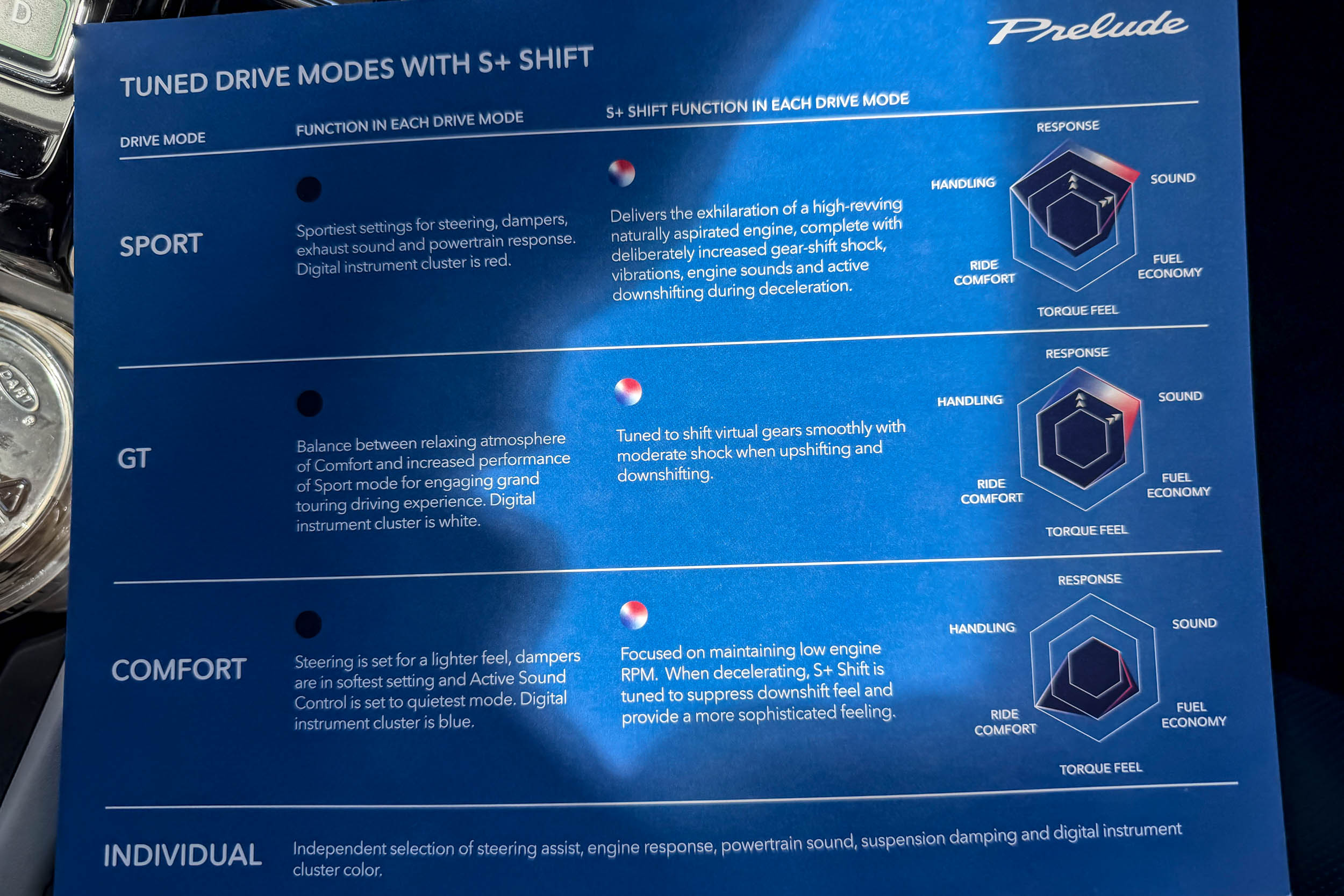
All told, Prelude owners can easily switch between driving modes. As its name suggests, the Comfort setting softens up the adaptive dampers, and steering is set for the lightest feel. That helped minimize the feeling of road hop that plagues so many California highways, especially in a vehicle with a relatively short wheelbase.
As you move “up” the scale, to GT, to the Sport, and finally, the emphasis is on “Response,” Honda explains, the system tightening up both steering and dampers. Go into Sport — clearly apparent as the gauge cluster turns red — and activate the S+ function with a big button above the shifter to get the feeling of a high-revving, naturally aspirated engine, complete with what passes for gearshift shock. That’s backed up with simulated engine sounds.
Modern Prelude Design
Honda kindly rolled out pristine examples of all five previous Prelude generations. It was intriguing to revisit the way the nameplate evolved over the decades and see how the 2026 model fit into that pattern.
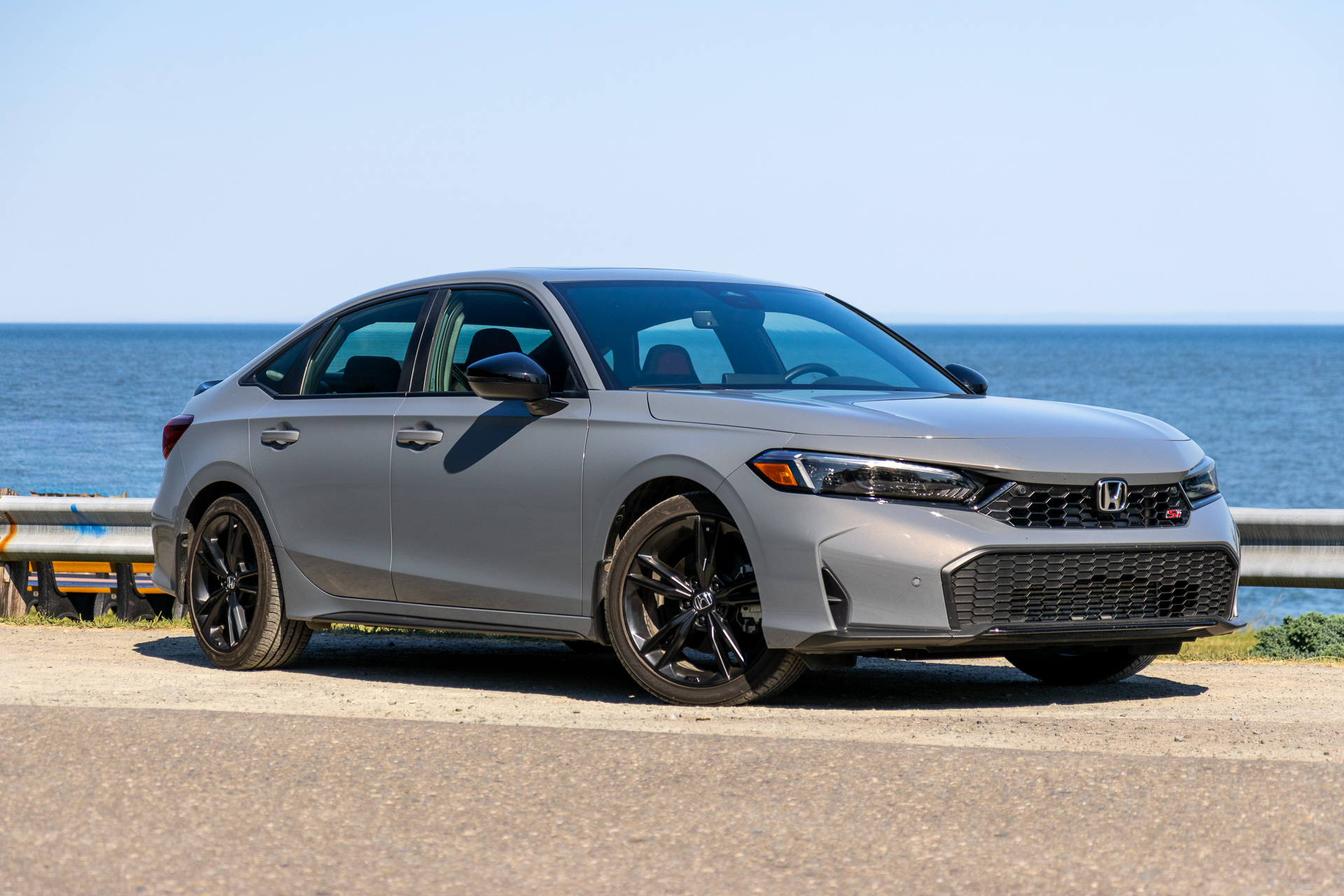
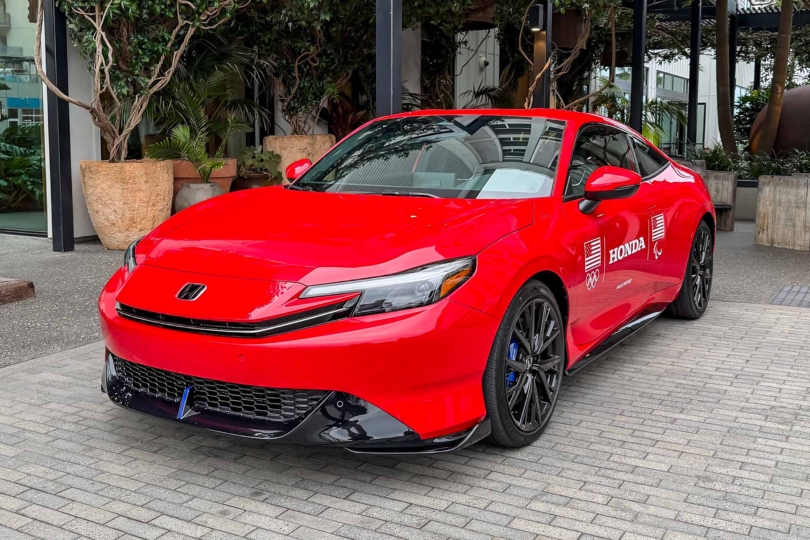
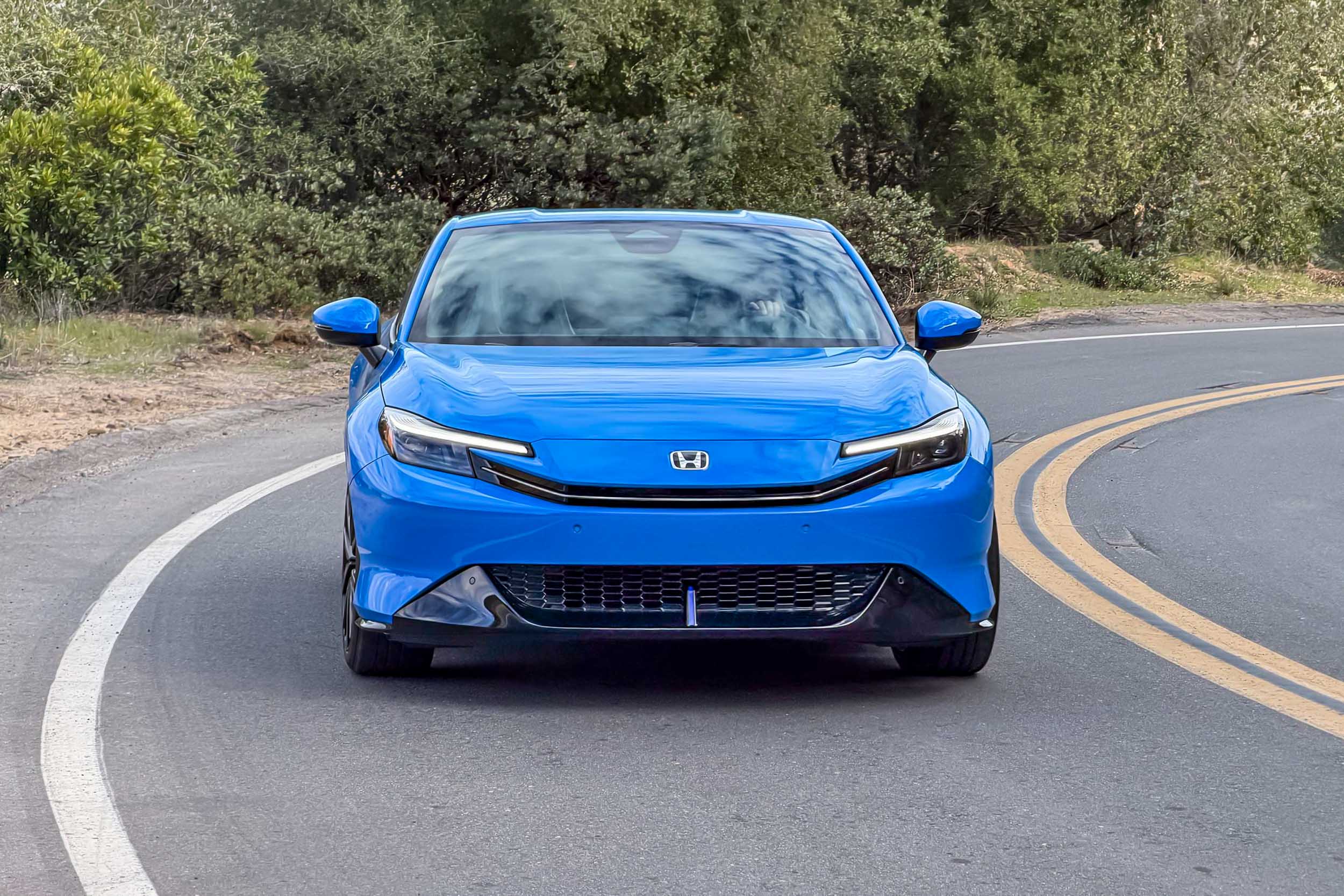
The new model is decidedly more aerodynamic — helping achieve those impressive fuel-economy numbers. It’s arguably a bit more generic than earlier generations, with its knife-sharp nose and subtle, double-bubble fastback roof.
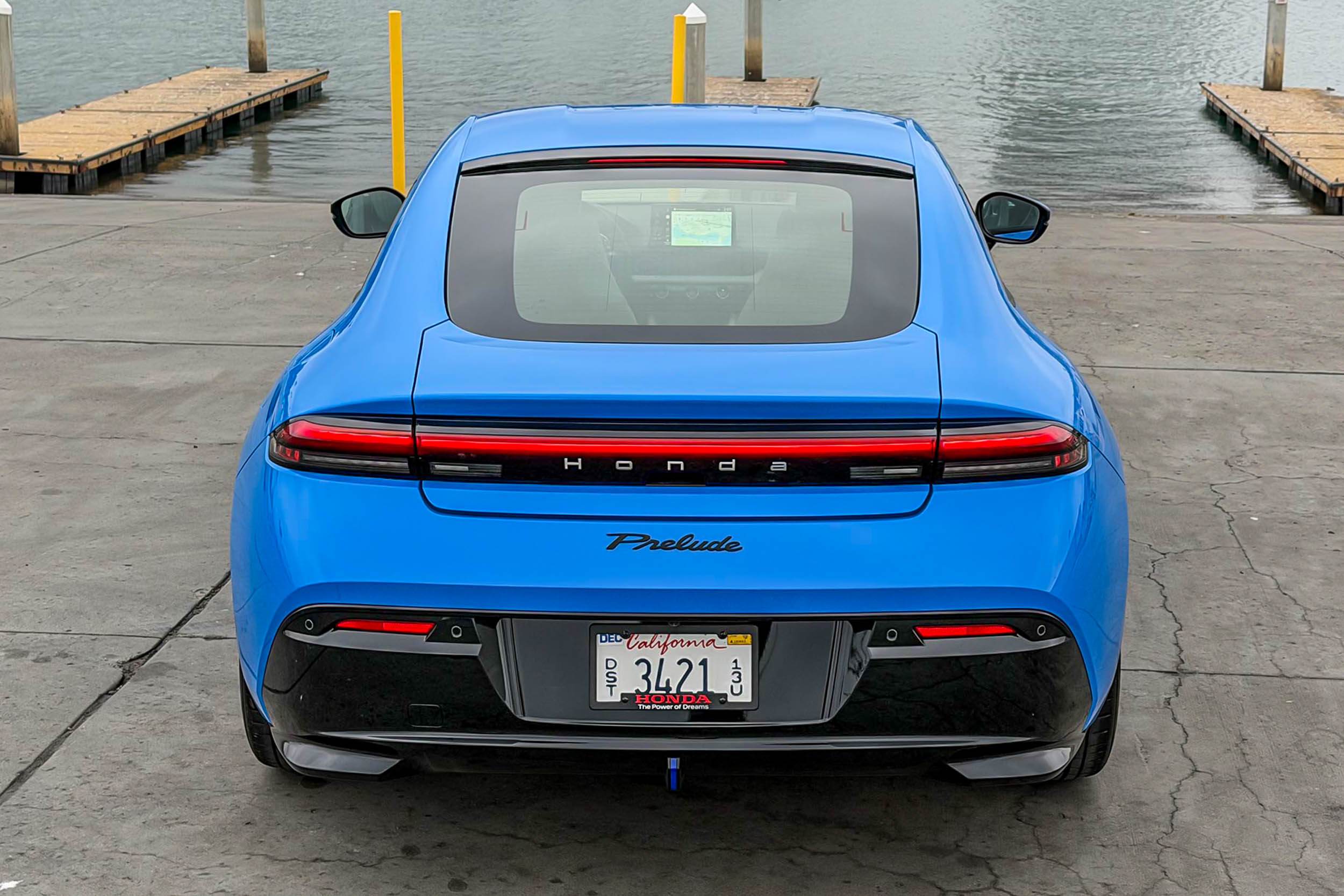
The nose has a thin upper grille and cats-eye lamps, with a larger low grille and splitter. While nowhere like the rear wing on the Type R, a modest rear spoiler helps improve airflow and manage downforce on the gen-6 Prelude. The coupe rides on 19-inch machine-finished Berlina Black wheels that come stock with 235/40R19 all-season tires, but performance fans can opt for summer rubber if they prefer.
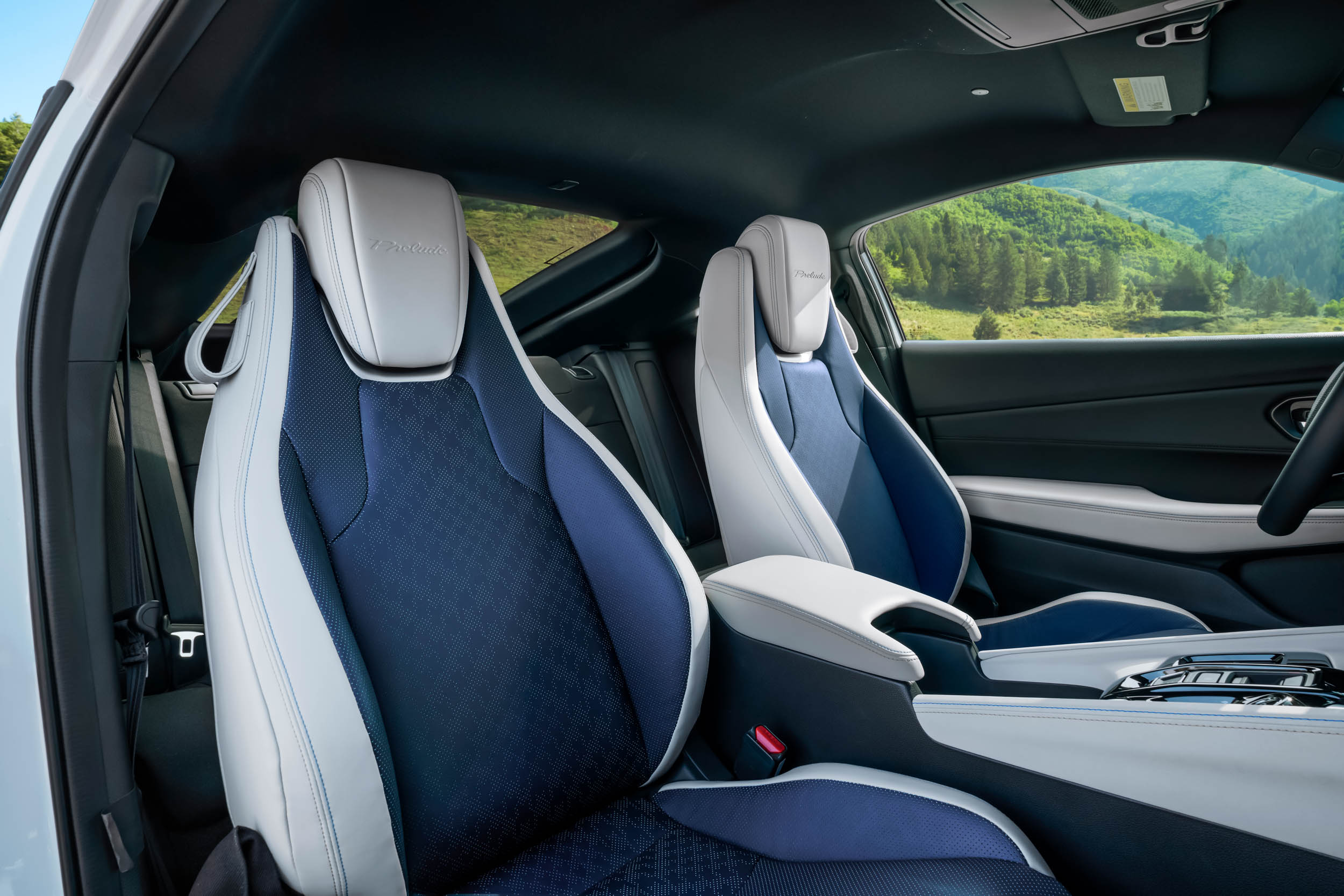
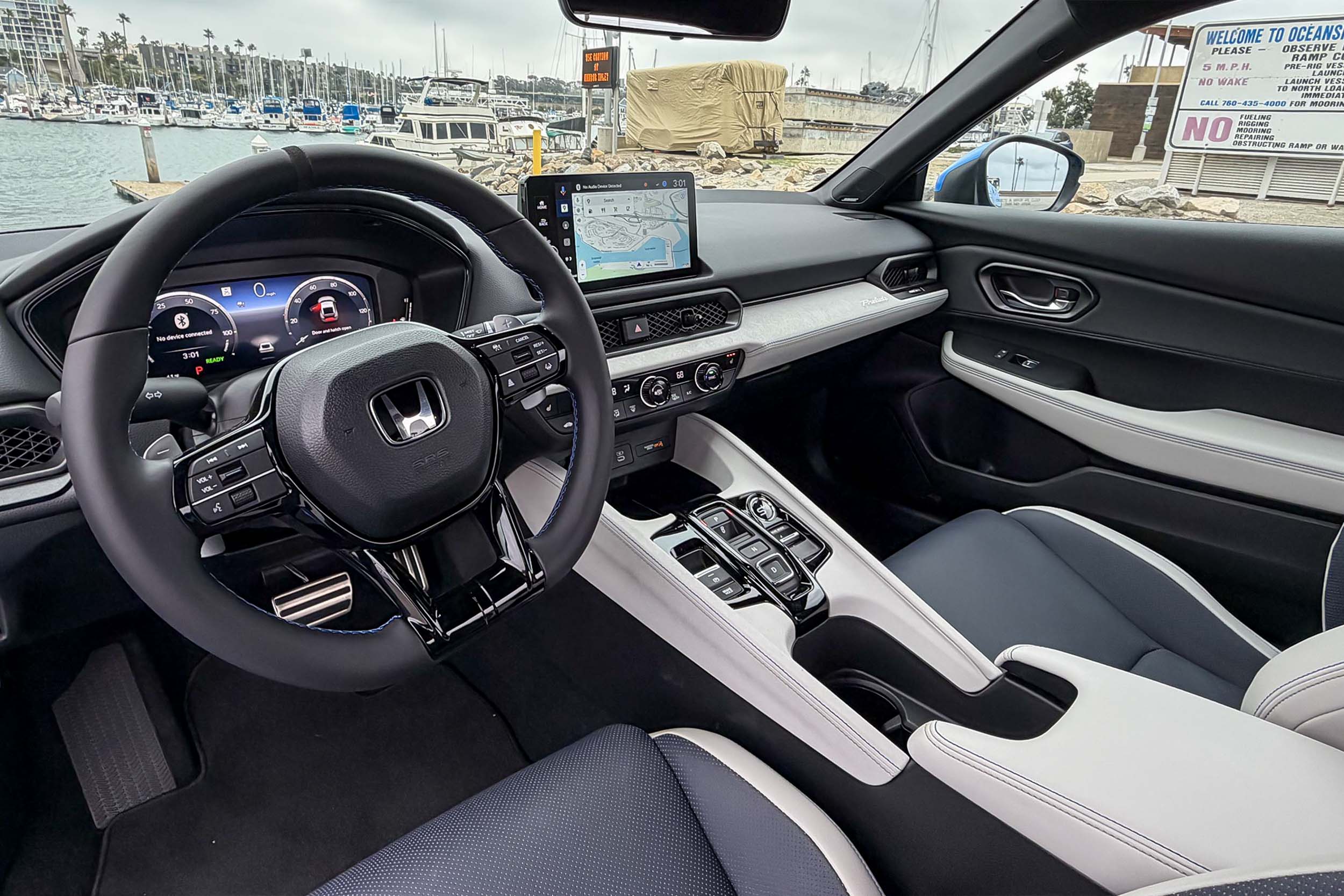
While the back row is clearly a penalty box, there’s a surprising amount of room up front, something I appreciated considering my 6’2” height.
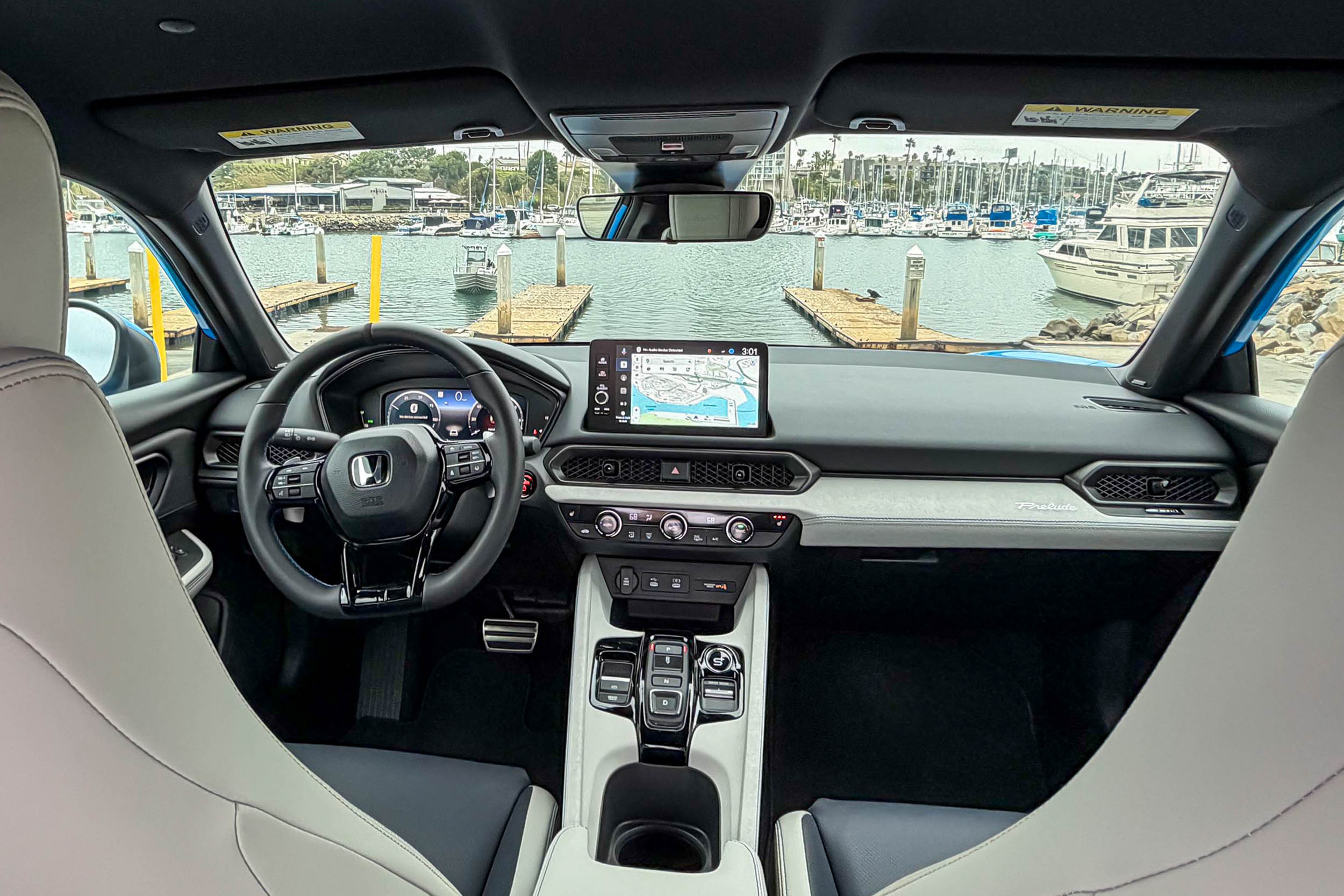
The instrument panel layout is clearly driver-centric. Other driver-focused features include a leather-wrapped flat-bottom steering wheel, alloy paddle-shifters, sport pedals, and leather-trimmed front sports seats with integrated head restraints. The IP is dominated by a 10.2-inch digital gauge cluster as well as a 9-inch touchscreen.
That latter display has unique pages to track the performance of the hybrid powertrain. To Honda’s credit, there’s both a volume control knob and standalone climate controls midway up the center stack.
Technology
That infotainment system is powered by Google built-in, which includes apps like Google Assistant, Google Maps, and more on Google Play. The sixth-generation Prelude adds wireless Apple CarPlay and Android Auto.
There’s a wireless phone charger and a Wi-Fi hotspot is among the options. An eight-speaker Bose Centerpoint premium sound system is standard and includes a large subwoofer in the cargo compartment.
The 2026 Prelude also comes standard with the Honda Sensing suite of advanced driver assistance systems, including Collision Mitigation Braking System with Pedestrian Detection, Forward Collision Warning, Road Departure Mitigation, and other welcome functions, including Adaptive Cruise Control and Lane Keeping Assist.
2026 Honda Prelude Review: Final Word
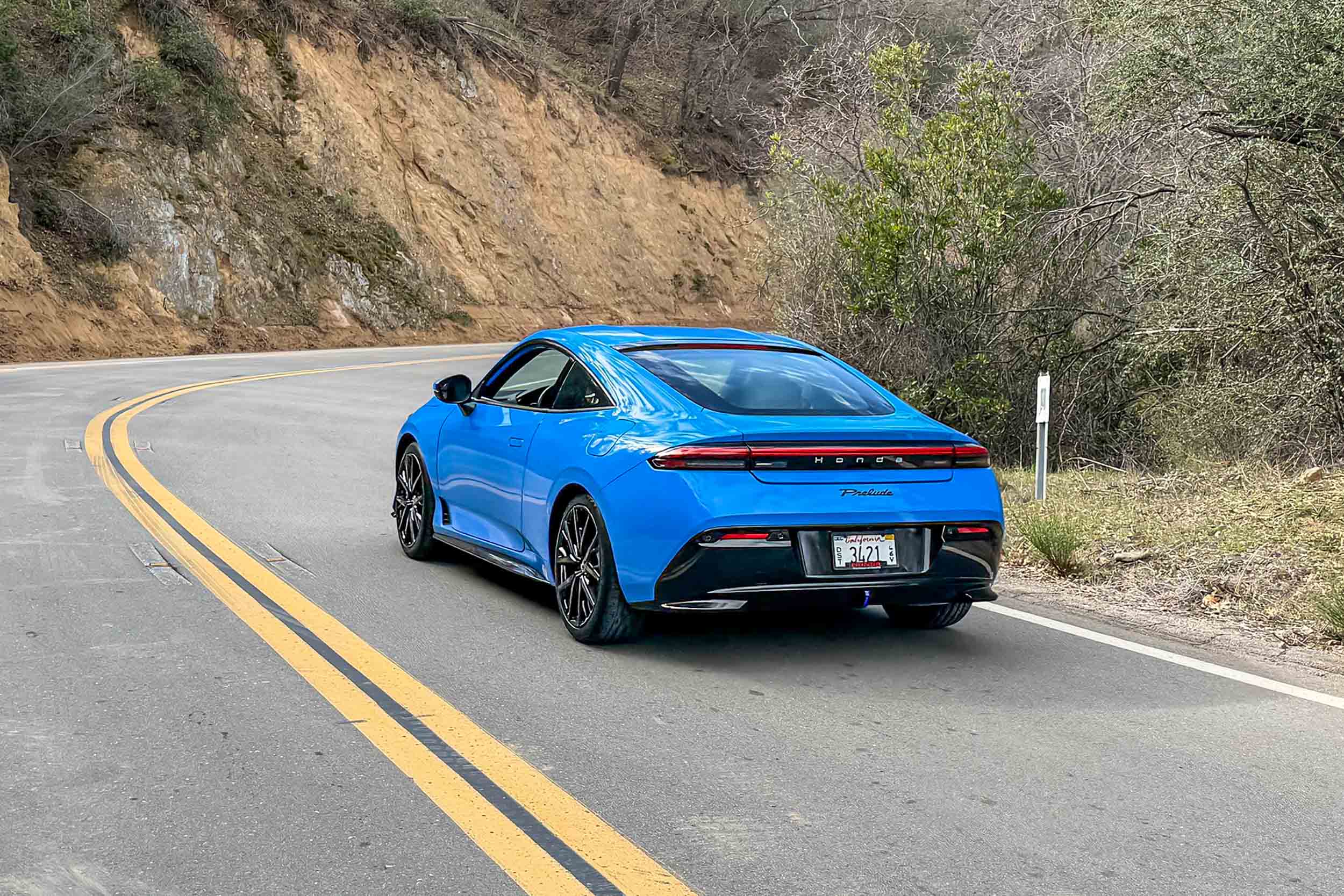
The 2026 Honda Prelude is offered in a single trim and with only a modest selection of options, such as those summer tires.
I’d be remiss to leave out Prelude’s impressive fuel economy numbers: 46 mpg city/41 highway/44 combined. I seldom expect to match EPA numbers, considering my hard driving manner, but I still managed to end my test day drive at just under 40 mpg.
The coupe carries an MSRP $42,000 plus $1,195 in delivery fees. It’s about $6,000 less than the admittedly sportier Civic Type R, though well above the Civic Sport Touring, which starts at $33,590. Honda officials took pains to point out that the sixth-generation Prelude comes in about $2,000 less than the old gen-5 model when adjusted for inflation. Perhaps. It’s still a bit of a bite.
That may explain why those same Honda officials also took pains to downplay sales aspirations. They expect the new Prelude to be a modest-demand niche vehicle. But based on my time in the coupe, I anticipate those who do sign up for the revived coupe are going to enjoy every minute behind the wheel — as long as they don’t try to squeeze anyone in the back.