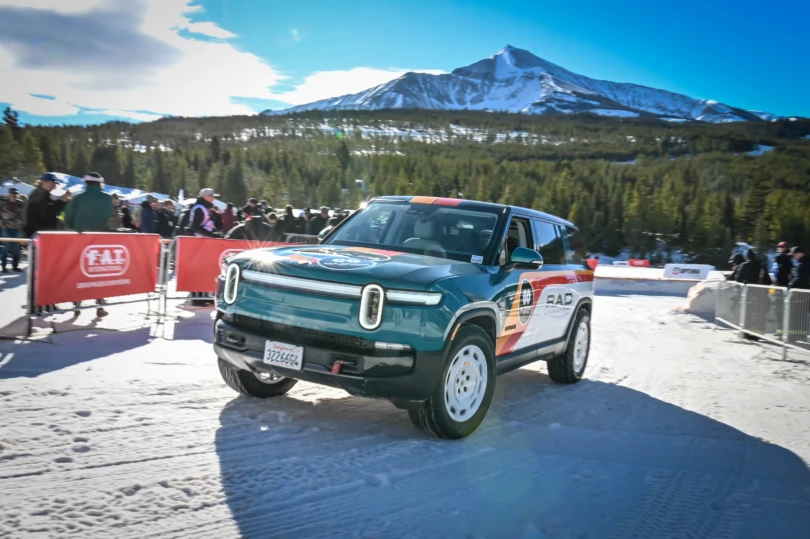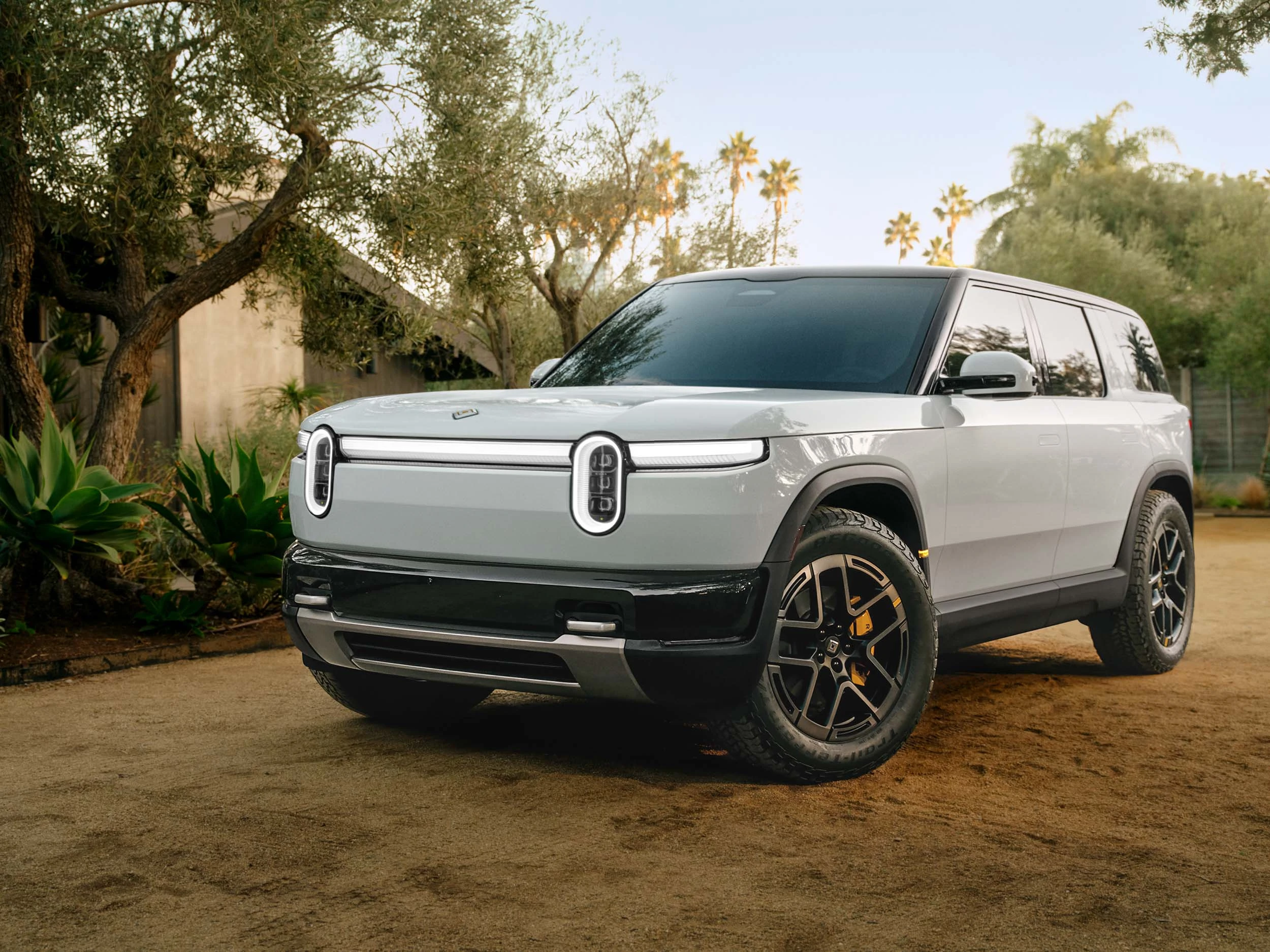
Rivian’s first mid-sized EV is the R2, and it’s finally hitting the market this year. Yes, it’s one of the most uncreative car names of all time. But, it will likely be a very compelling vehicle to a lot of people.
The first Rivian R2 will be the 2027 Performance model with Launch Package, delivered to customers this spring. Pricing for this top-spec version starts at $57,990 (+ $1,495 destination fee). Late in 2026, we’ll see the 2027 R2 Premium hit the market, and 2028 model-year Standard models of the R2 won’t be delivered until 2027.
Let’s dive into what the R2 has to offer in its four trim levels, and at what price points.
A Smaller Rivian
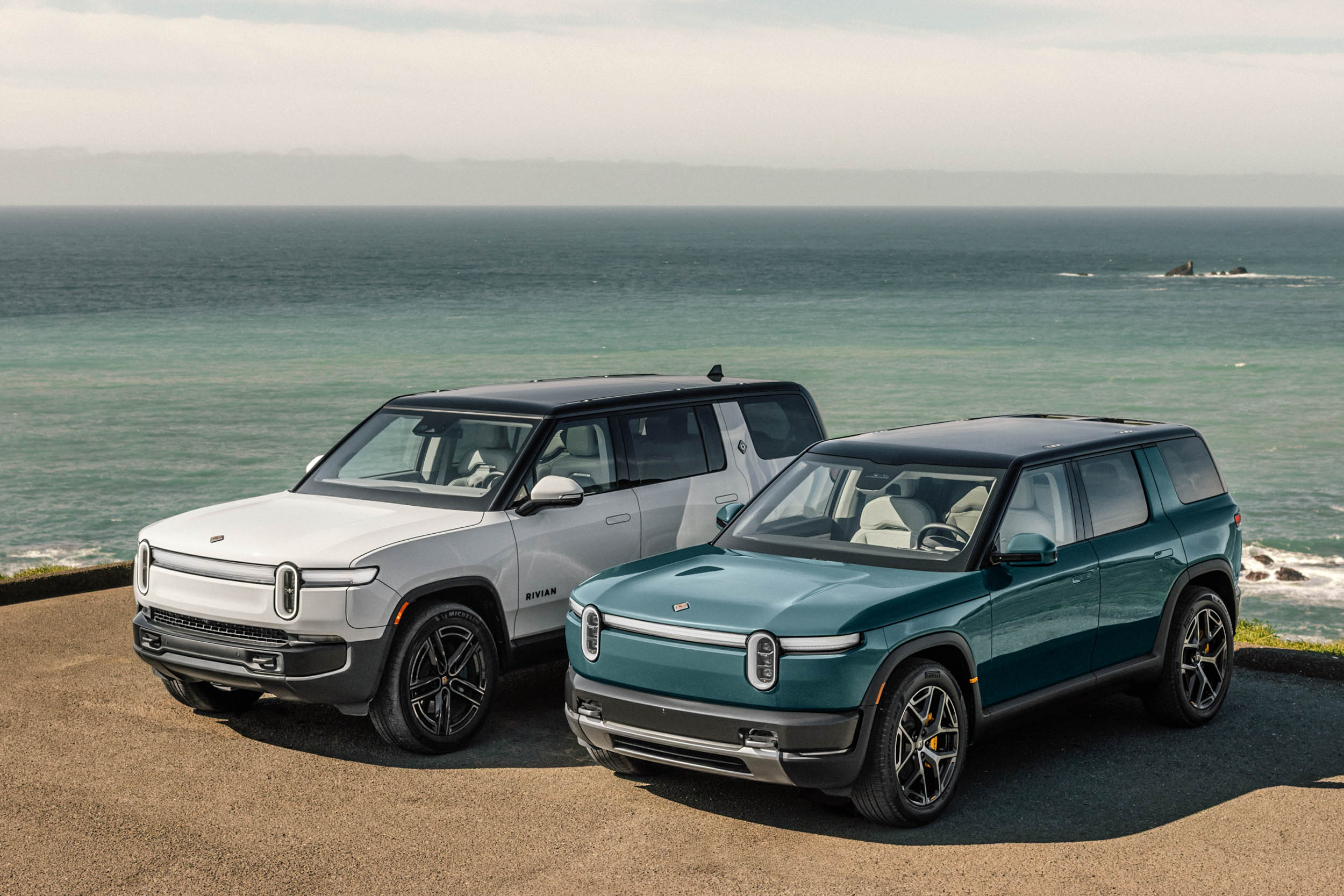
The R2 is the second Rivian chassis available, coming after the R1T and R1S, and is, of course, smaller. Besides being smaller overall and having a shorter wheelbase, both of which will make it easier to maneuver around city streets and tight trails alike, it’s also nearly a ton less weight.
This new, smaller Rivian offers impressive ground clearance (9.6″) and entry (25 degrees) and departure (26 degrees) angles. All combined, these features should help it conquer many off-road and urban jungle obstacles with ease.
Rivian R2
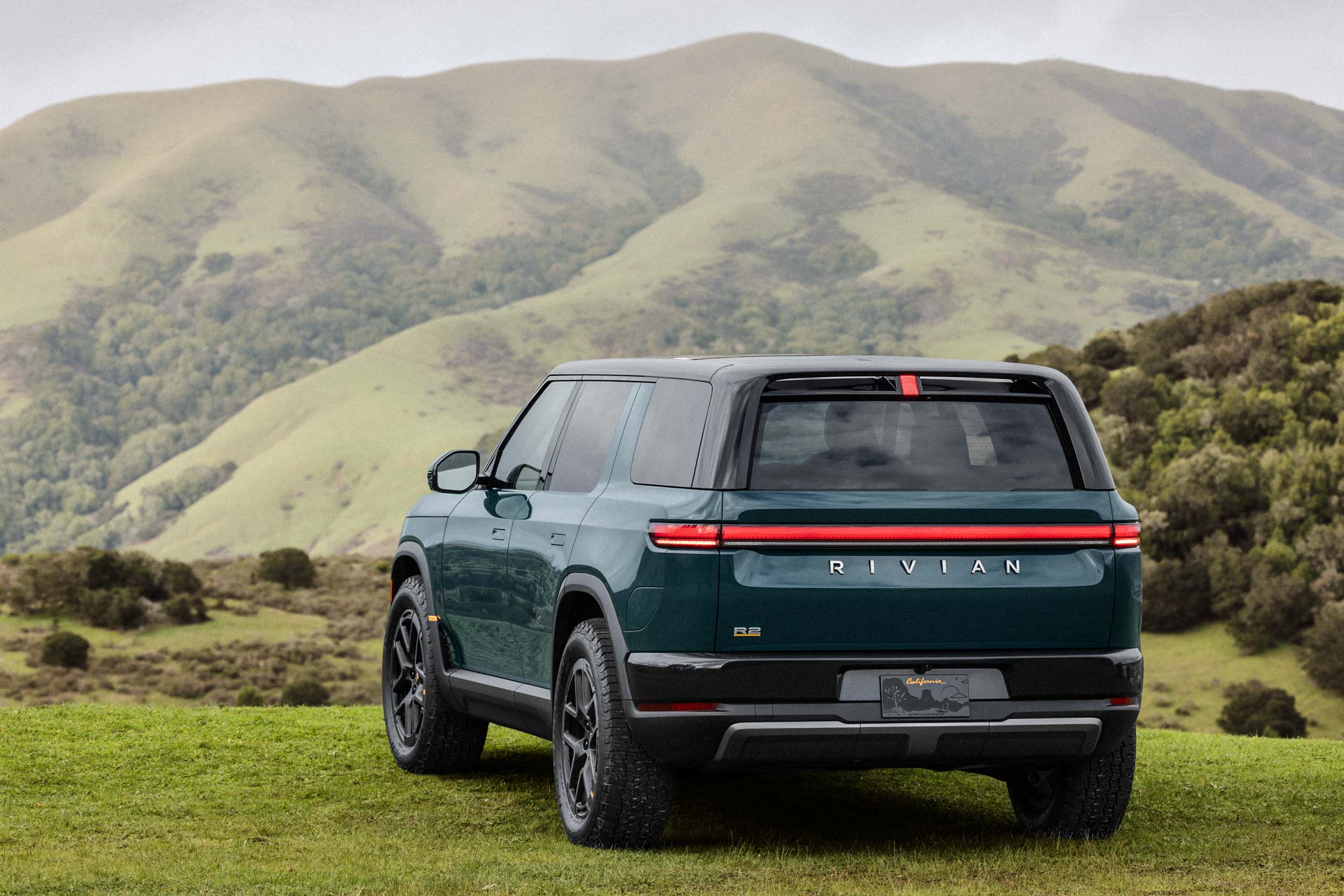
2027 Rivian R2 Specs
- Performance: Up to 656 horsepower, 0–60 mph in as quick as 3.6 seconds
- Dimensions: 185.9″ L x 84.7″ W x 66.9″ H, 115.6″ wheelbase
- Ground clearance: 9.6″
- Angles: 25-degree approach, 20.6-degree breakover, 26-degree departure
- Cargo (cu.-ft.): 28.7, 79.4 w/seats folded
- Towing capacity: Up to 4,400 pounds.
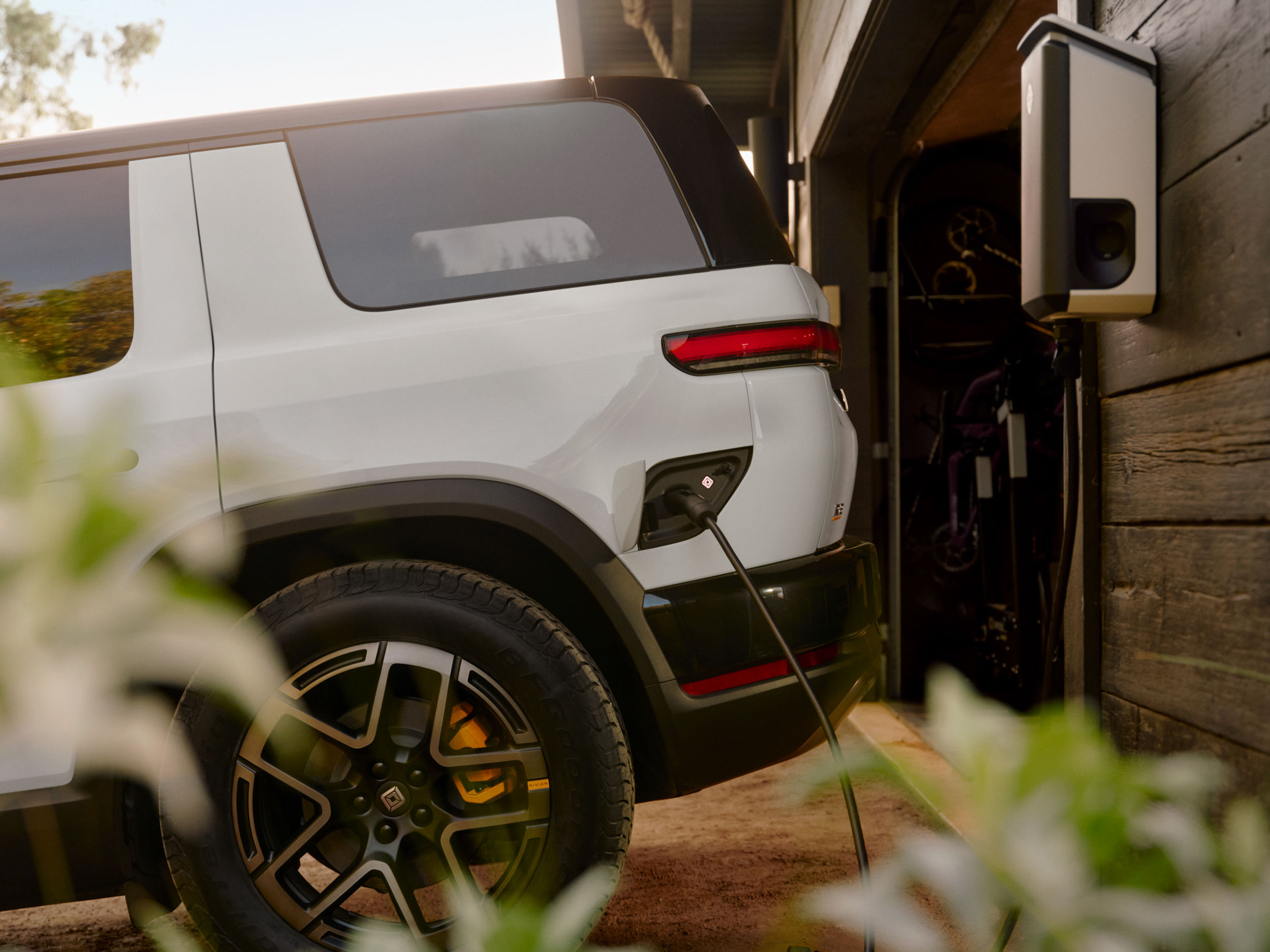
All R2 have NACS charge ports, with access to the Supercharger network, and can use other chargers (CCS) with an adaptor. Charging from 10% to 80% is said to take 29 minutes on a fast charger.
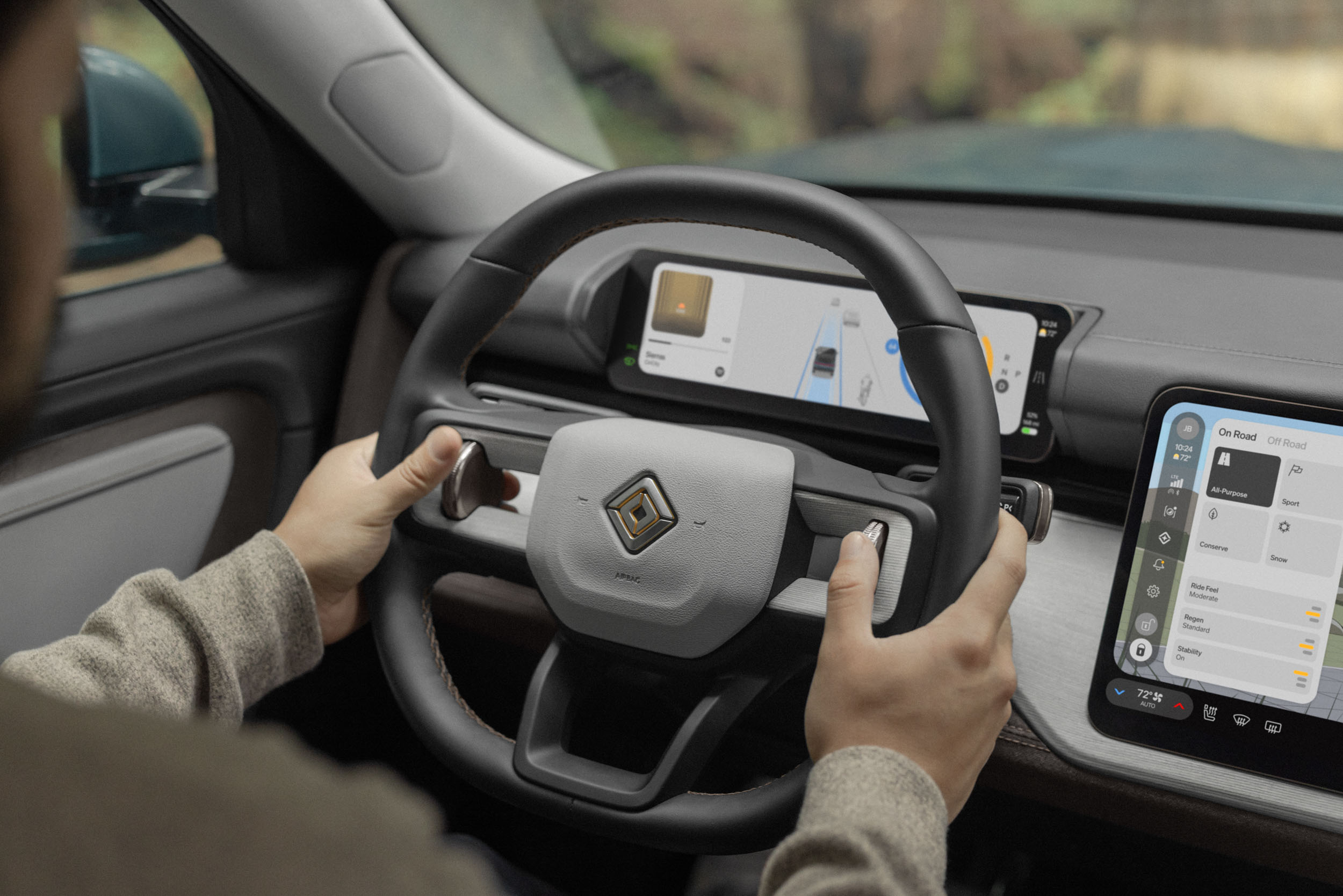
The latest Rivian steering wheel, debuting on the R2, has Haptic Halo Wheels. These are context-aware controls that are capable of scrolling, pushing, pulling, and tilting. Rivian says they were designed in-house to keep the driver’s focus on the road.
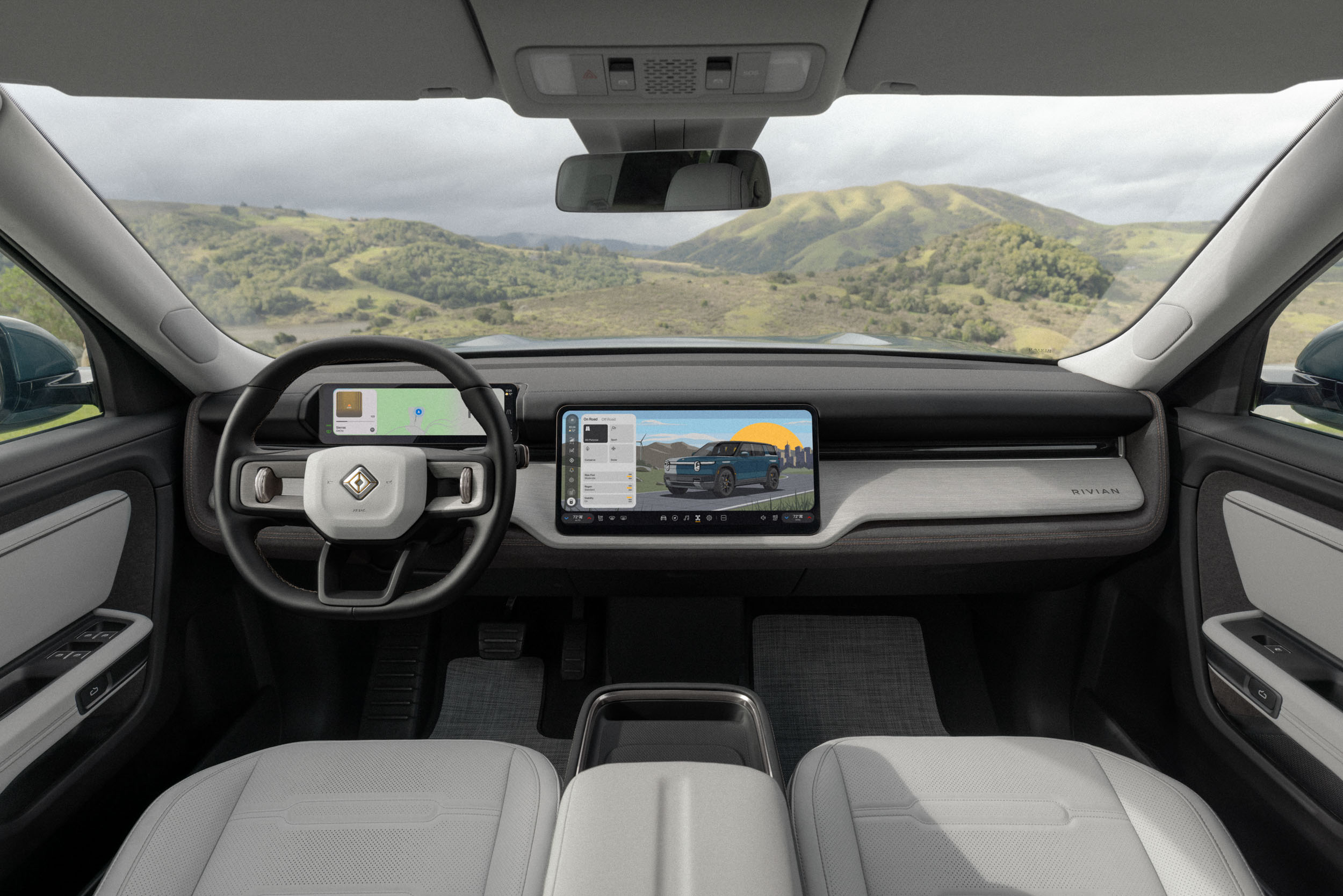
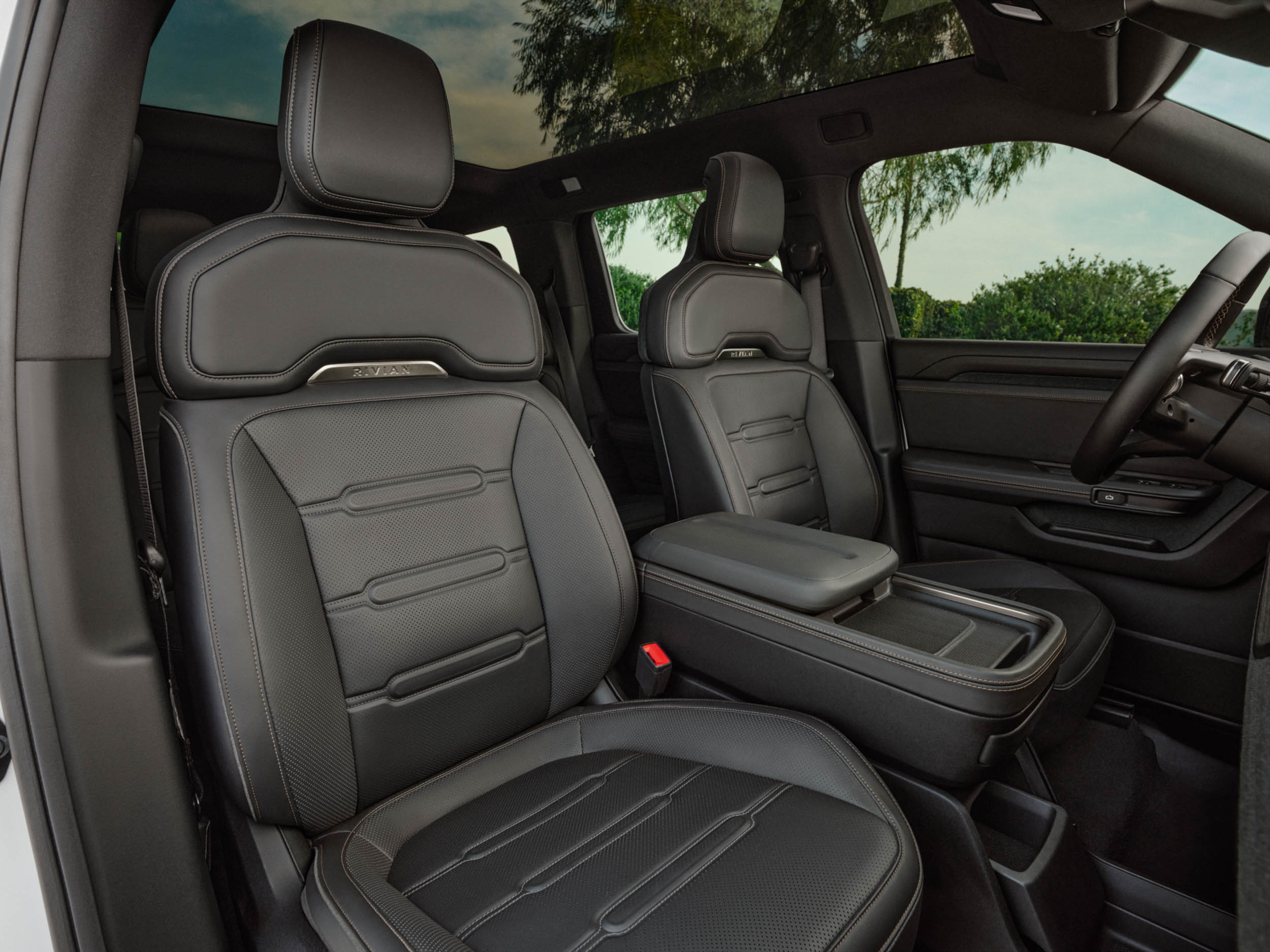
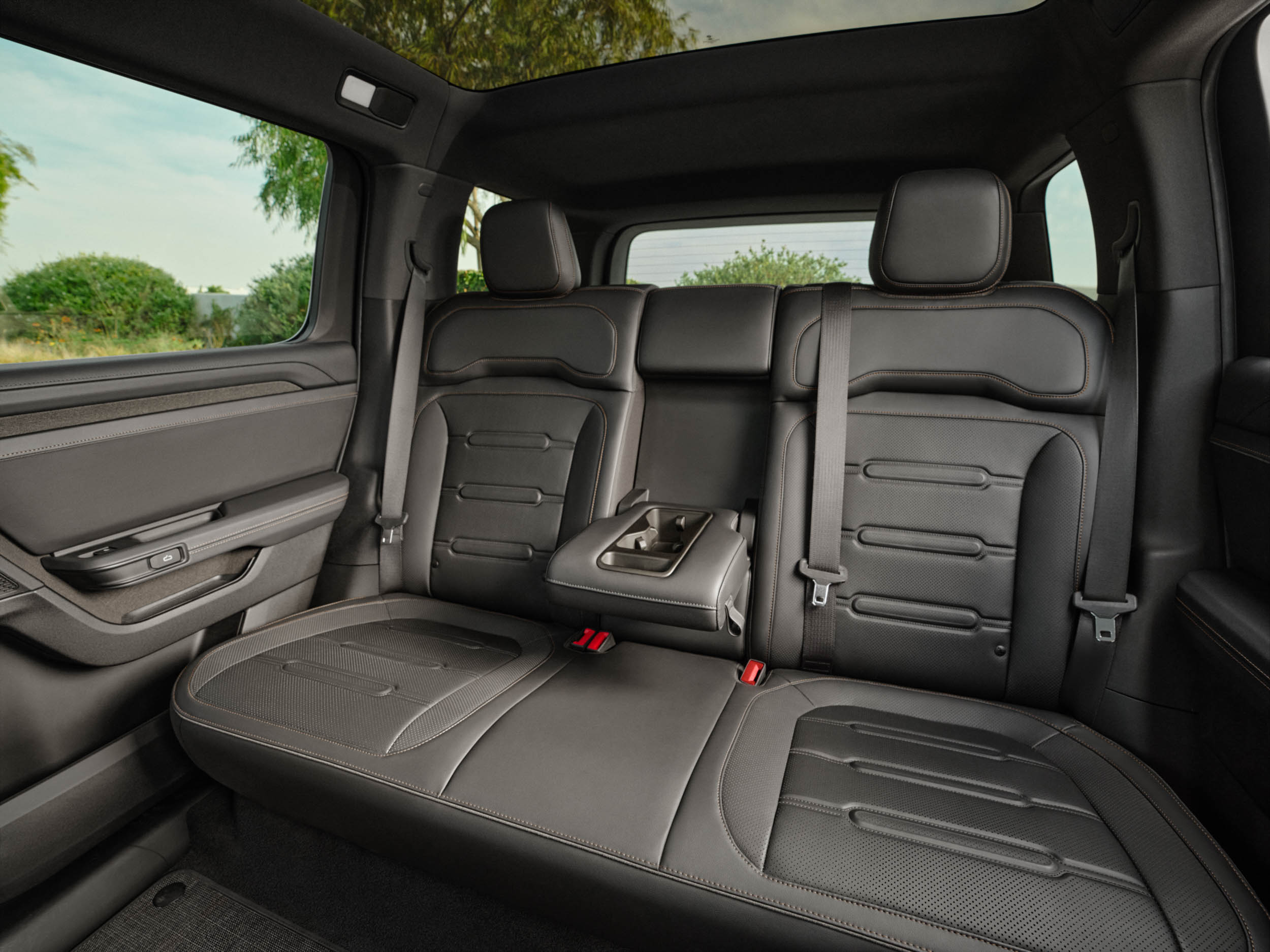
The interior is the standard clean look and feel Rivian is known for. It has upcycled birch wood and a headliner made from recycled ocean plastics. Seat coverings are a second-generation Adventex material, designed to be easily cleaned after any adventure.
What really sets any Rivian apart from other vehicles is the software systems that run it. The latest in the R2 offers 5G connectivity with AI-ready architecture (AI assistant coming soon). And the hardware updates, like the 11 HDR cameras with a combined 65MP and five-radar system, will help the new Rivian do all kinds of new things and offer impressive driver-assistance and safety features.
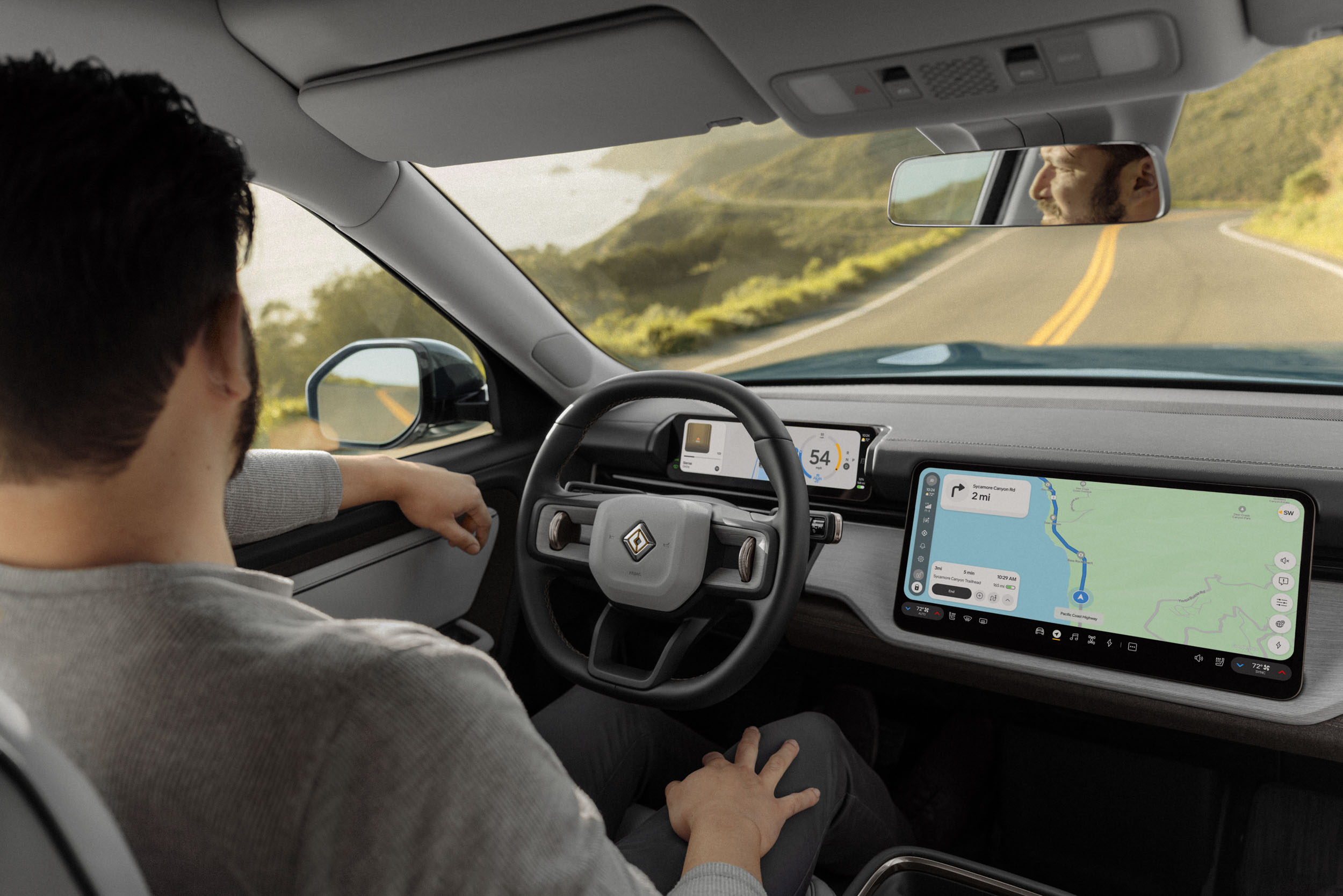
Built into every R2 is L2+ hands-free driving hardware, the Rivian Autonomy+7 system. It does require a monthly subscription of $49.99 or a one-time $2,500 fee to enable, however. Each R2 does come with a free 60-day trial, and the 2027 R2 Performance with Launch Package comes standard with lifetime activation.
Big Cargo Capacity
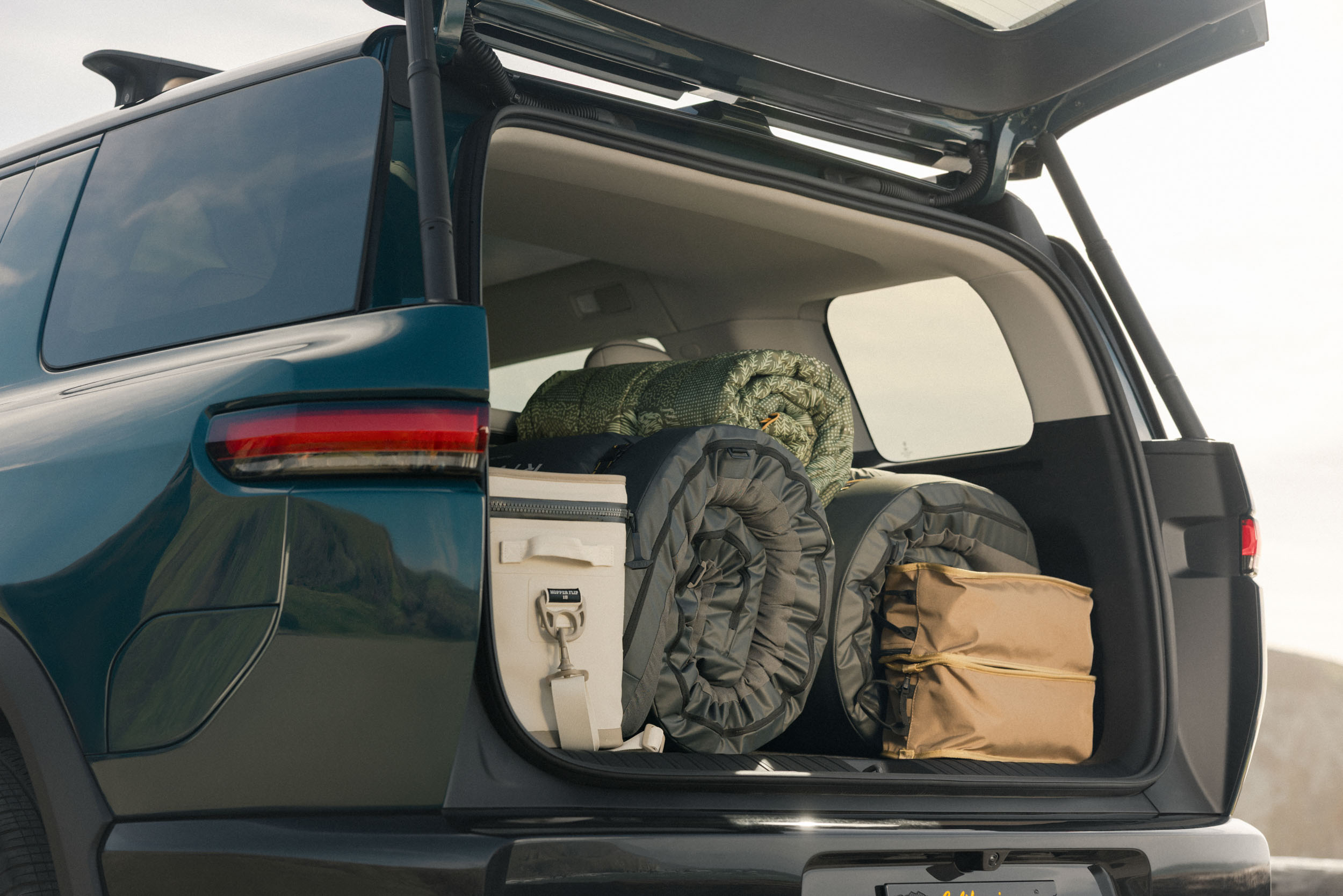
Inside the R2, you get lots of room to carry people and gear, even though it’s smaller than its R1S sibling. You get 28.7 cubic feet of cargo room behind the rear seats, and 79.4 with the seats folded.
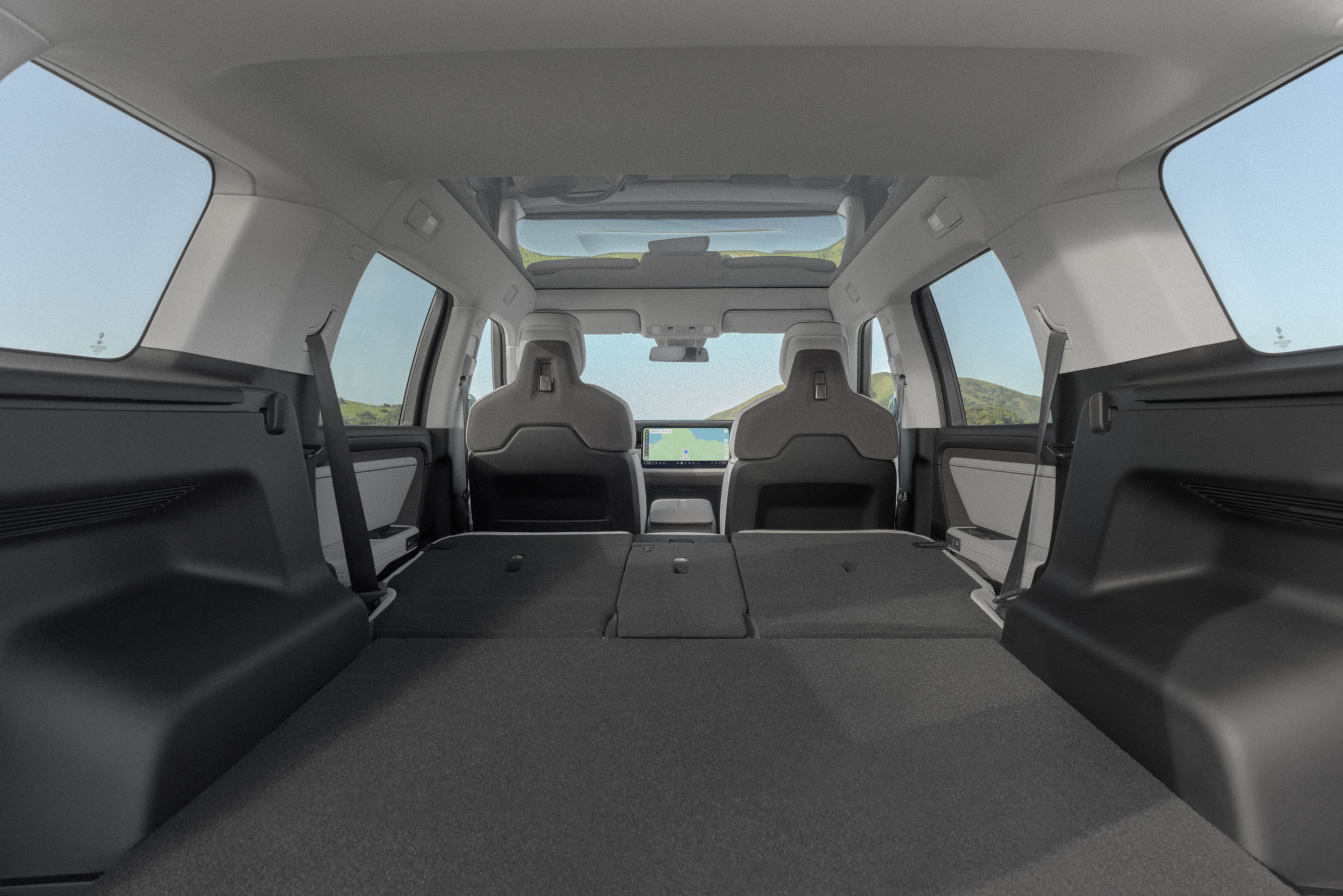
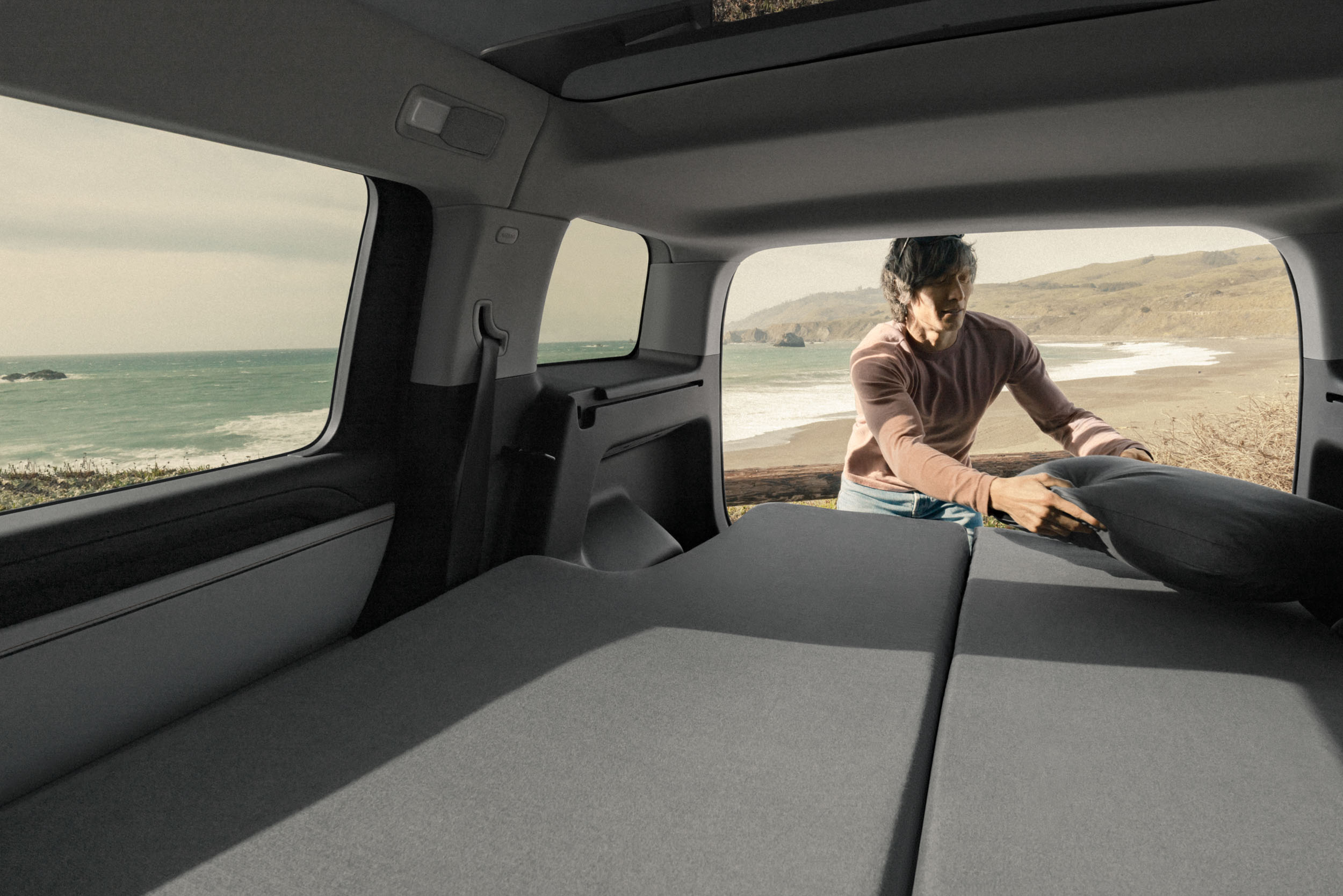
The cargo floor in the back of the R2 is also super-flat, even with seats folded. This allows you to comfortably camp in your vehicle, and optimizes space for carrying bulky items. Smaller items will even fit in the under-cargo floor storage area, which is big enough to swallow two XL checked suitcases, according to Rivian.
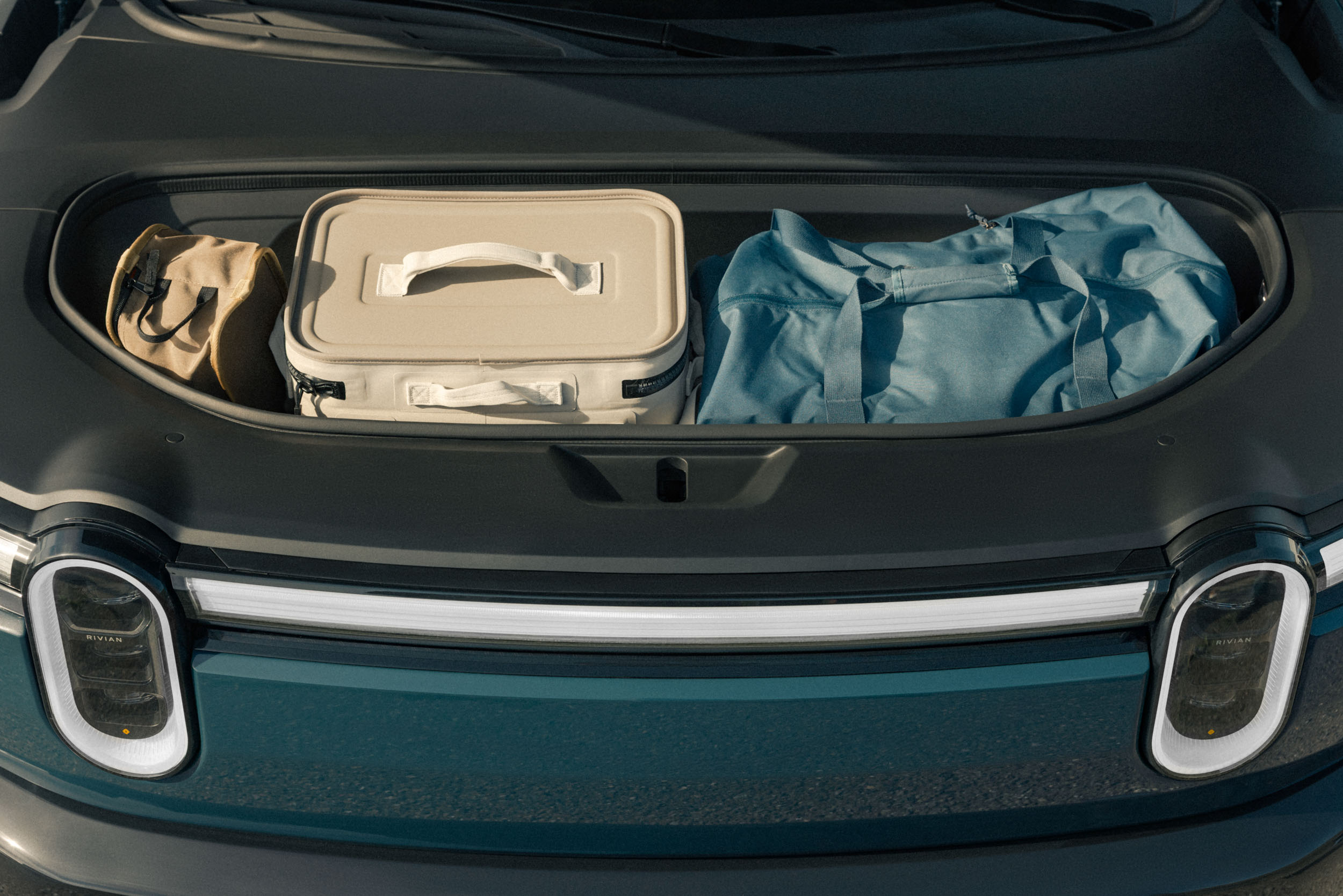
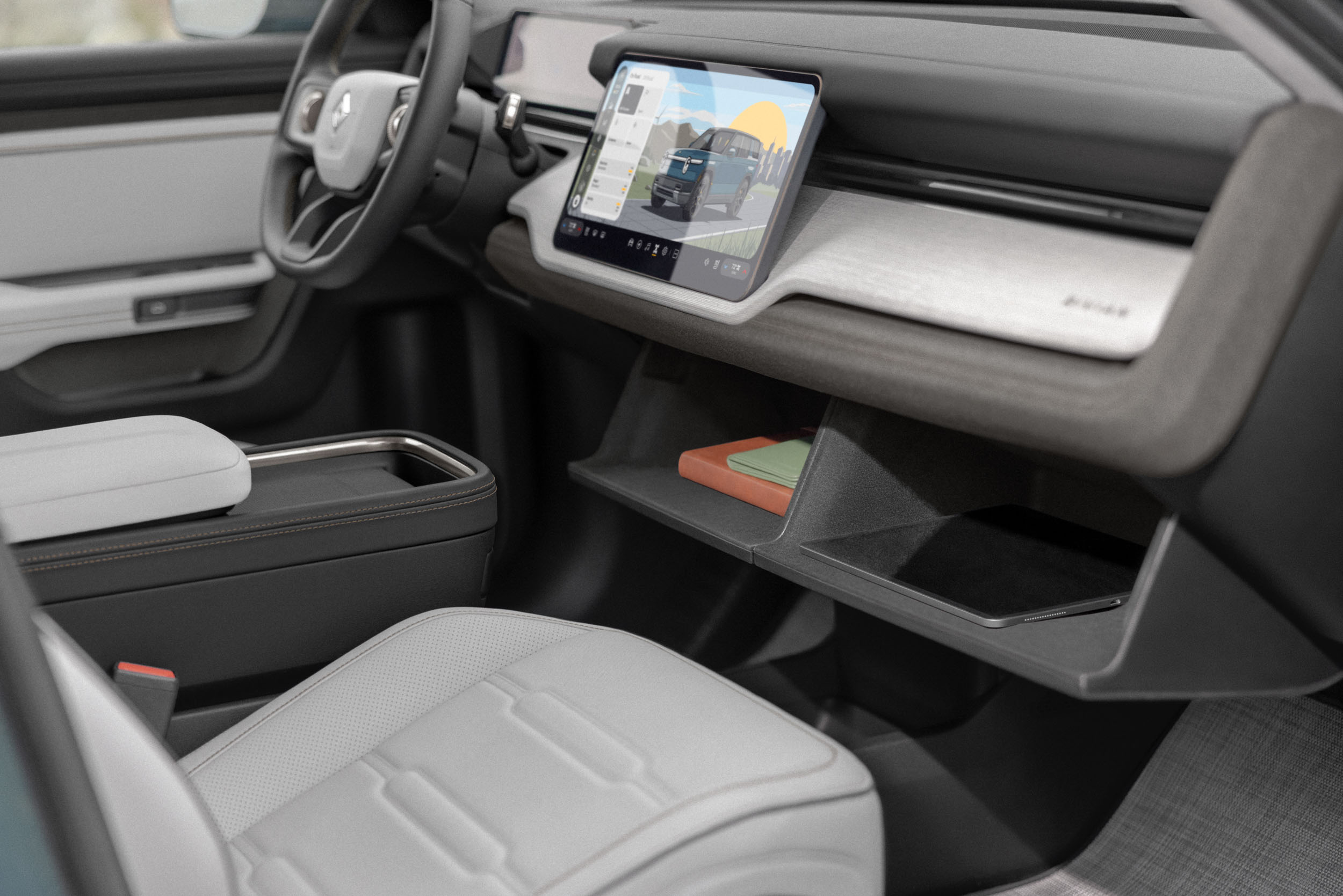
Up front, you get a sizable frunk and dual gloveboxes, which provide a bunch of out-of-sight, secure storage.
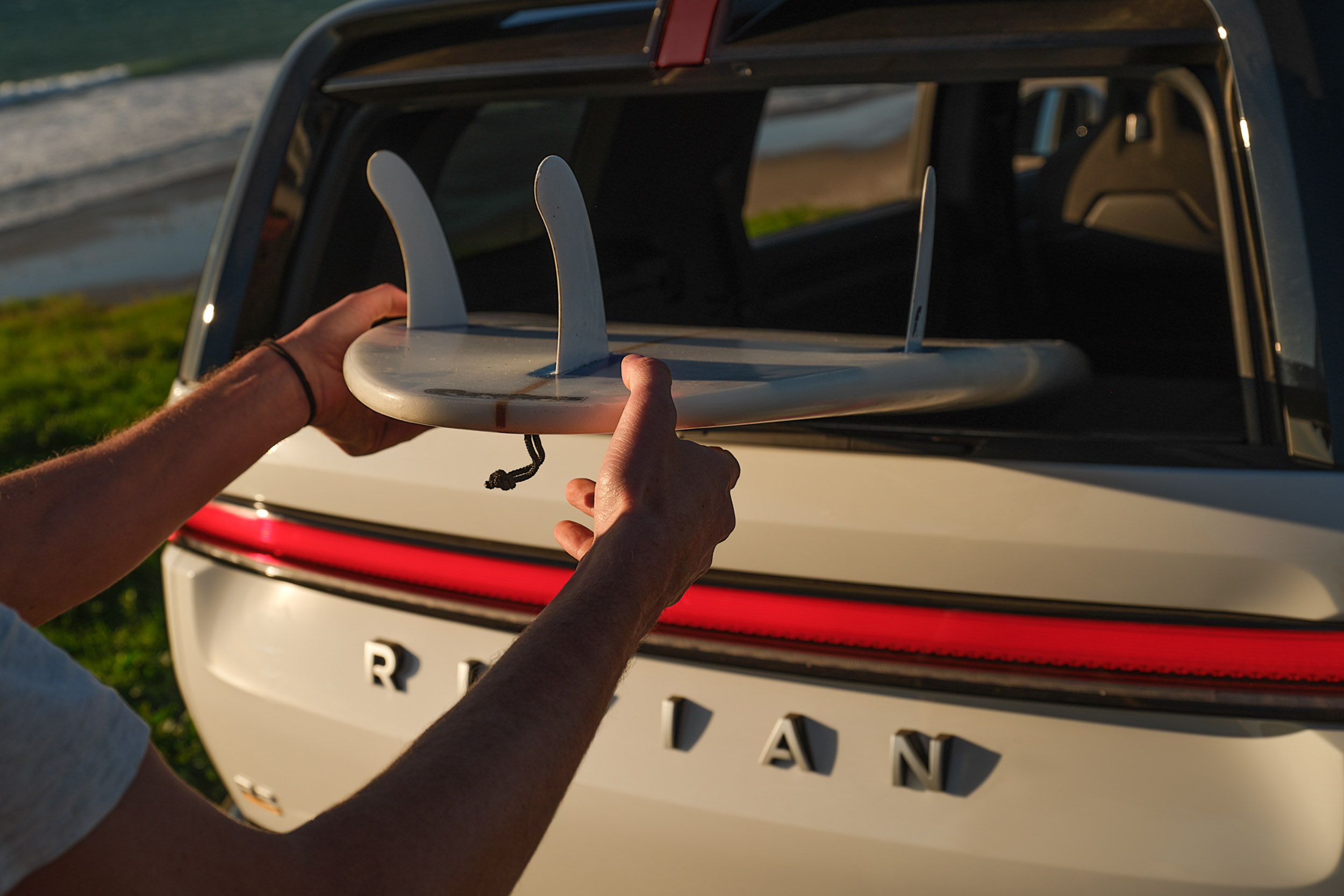
A very cool feature on the R2 is the power-down rear liftgate window. This makes it easier to carry long things, like surfboards, when you don’t have a roof rack. It also helps with an open-air driving experience you won’t find in most SUVs.
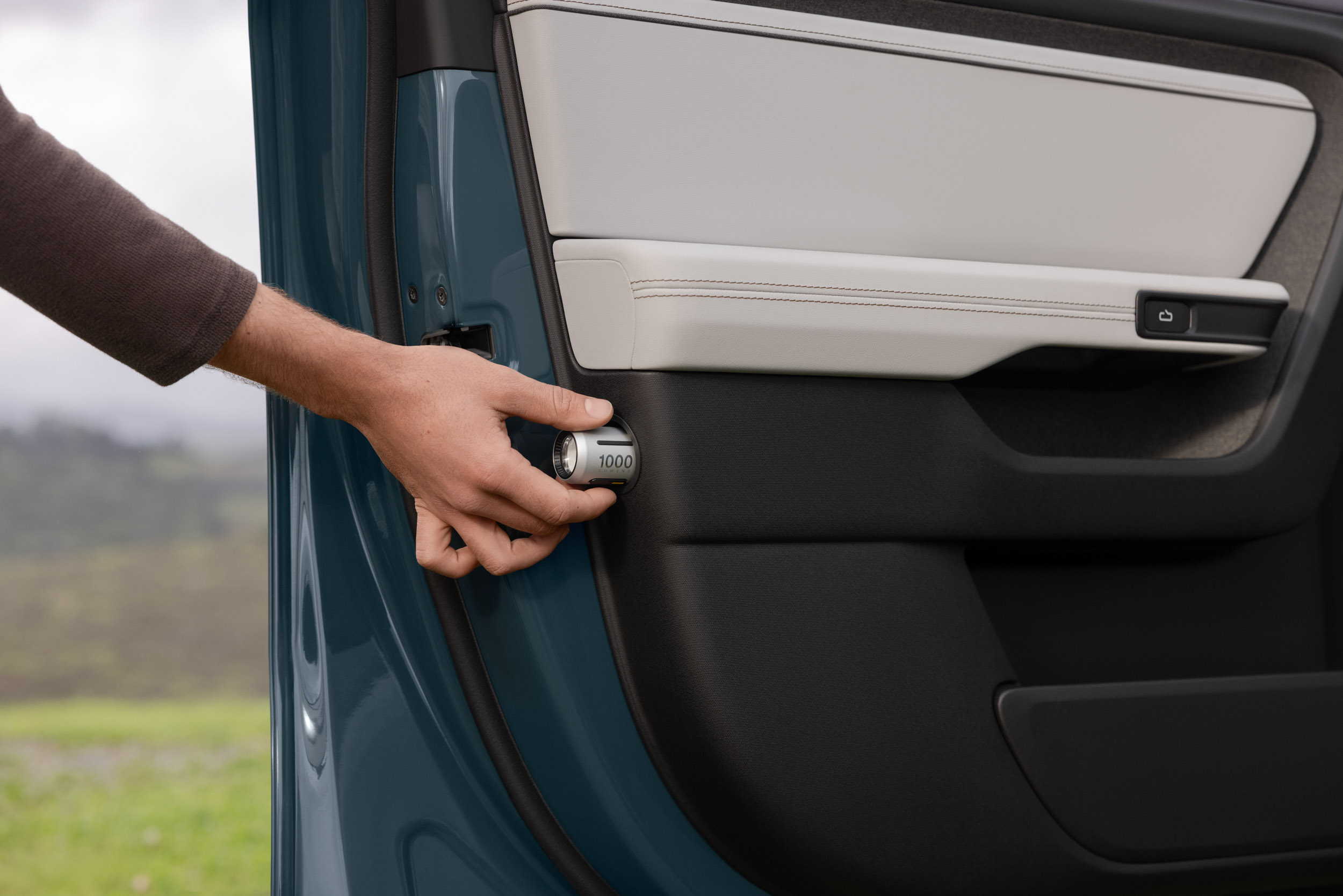
You also get a fun door-mounted rechargeable flashlight and a removable USB-C power bank/hand warmer with your R2. While it’s not as cool as a Rolls-Royce umbrella, it’s arguably even more useful.
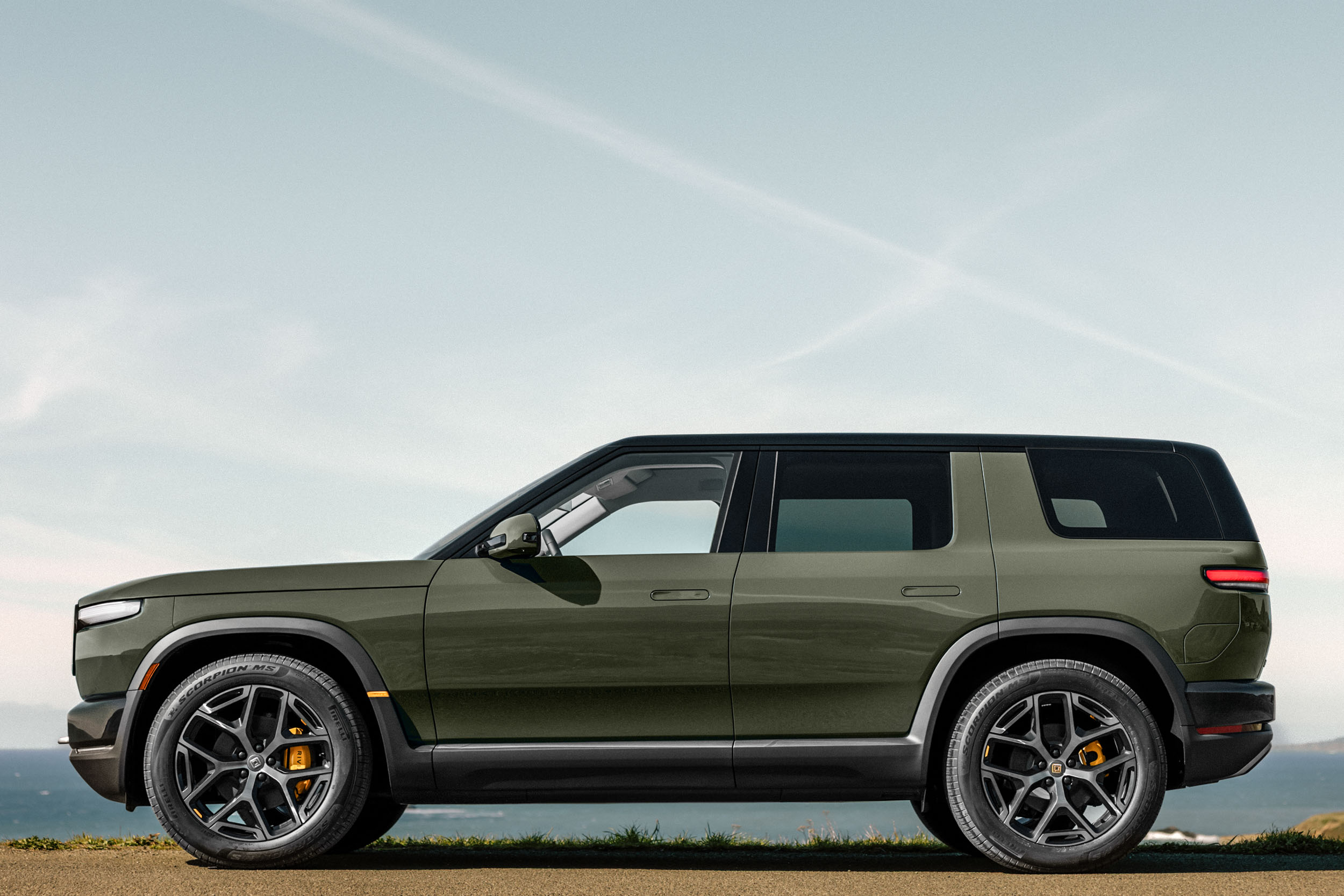
Rivian R2 Models
As usual with a new vehicle launch, the most highly featured will hit the market first. This is, of course, because it makes the automaker the most money and gets early adopters to truly love all the awesomeness the vehicle provides.
Up first, in just a few months, will be the R2 Performance with Launch Package. Then, late this year, we’ll see the R2 Premium. The more budget-oriented Base models won’t come to market until 2027, as 2028 model-year vehicles.
Here’s what each R2 model has to offer.
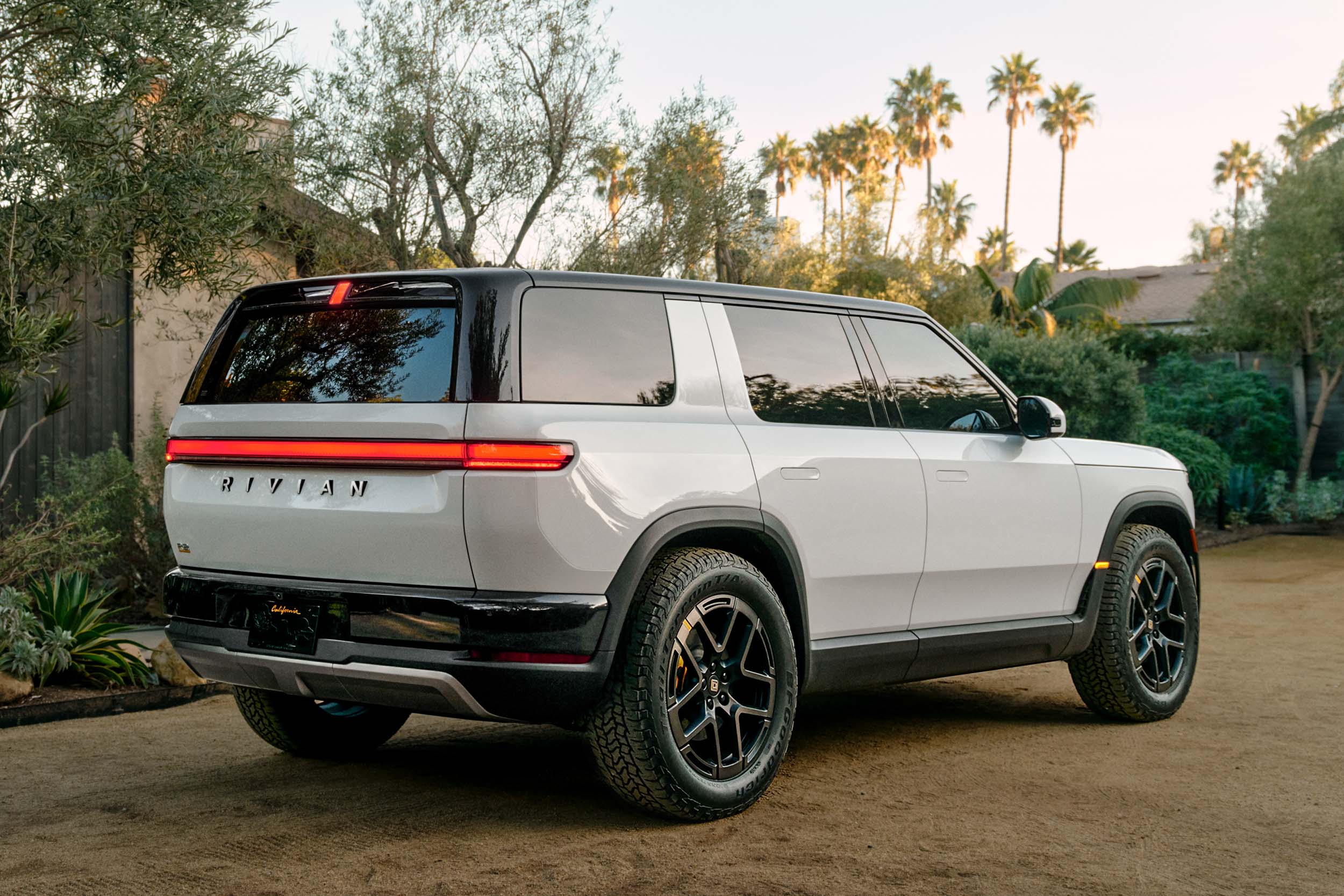
2027 R2 Performance
The top-spec Performance model will be available very soon and start at under $60K. It will first come with the limited-edition Launch Package, which adds even more premium and unique features.
The big standouts on the R2 Performance over other models in the range are the big power numbers, semi-active suspension, yellow brake calipers and badging, and extra drive modes (Rally, Soft Sand, Sport, and Launch Mode).
- Available: Spring 2026
- Pricing: $57,990 (+ $1,495 destination fee)
- Drivetrain: Dual-motor AWD w/87.9 kWh battery
- Power: 656 horsepower, 609 lb.-ft. of torque
- Performance: 3.6 sec. 0-60 mph
- Range: 330 miles
- Included equipment: Semi-active suspension, Esker Silver exterior, Compass Yellow brake calipers and exterior badging, 21” Liquid Tungsten All-Season wheels, interior with Birch wood accents in Black Crater Signature, heated and ventilated front seats, heated rear outboard seats, heated steering wheel, 12-way power driver and passenger seats with lumbar adjustment, Rivian Premium Audio (9 speakers, 2 midwoofers in force-balanced configuration, 2 subwoofers in force-balanced configuration, 975W), rear drop glass, Dynamic Adventure Lighting with Adaptive High Beams, Matrix LED headlights, Rivian Torch flashlight in the driver door, integrated tow hooks, Drive modes (All-Purpose, Conserve, Snow, All-Terrain, Rally, Soft Sand, Sport, and Launch Mode)
- Optional equipment: Autonomy+ one-time fee or monthly subscription, 20” Black Sand All-Terrain wheels, exterior colors (Borealis, Catalina Cove, Forest Green, Glacier White, Half Moon Grey, and Midnight), Coastal Cloud Signature interior, Tow package with 4,400 pounds of towing capacity
- Limited Edition Launch Package: Autonomy+ included for the lifetime of the vehicle, Special Rivian Green anodized key fob, Exclusive option of Launch Green exterior color (paid upgrade), Tow package with 4,400 pounds of towing capacity
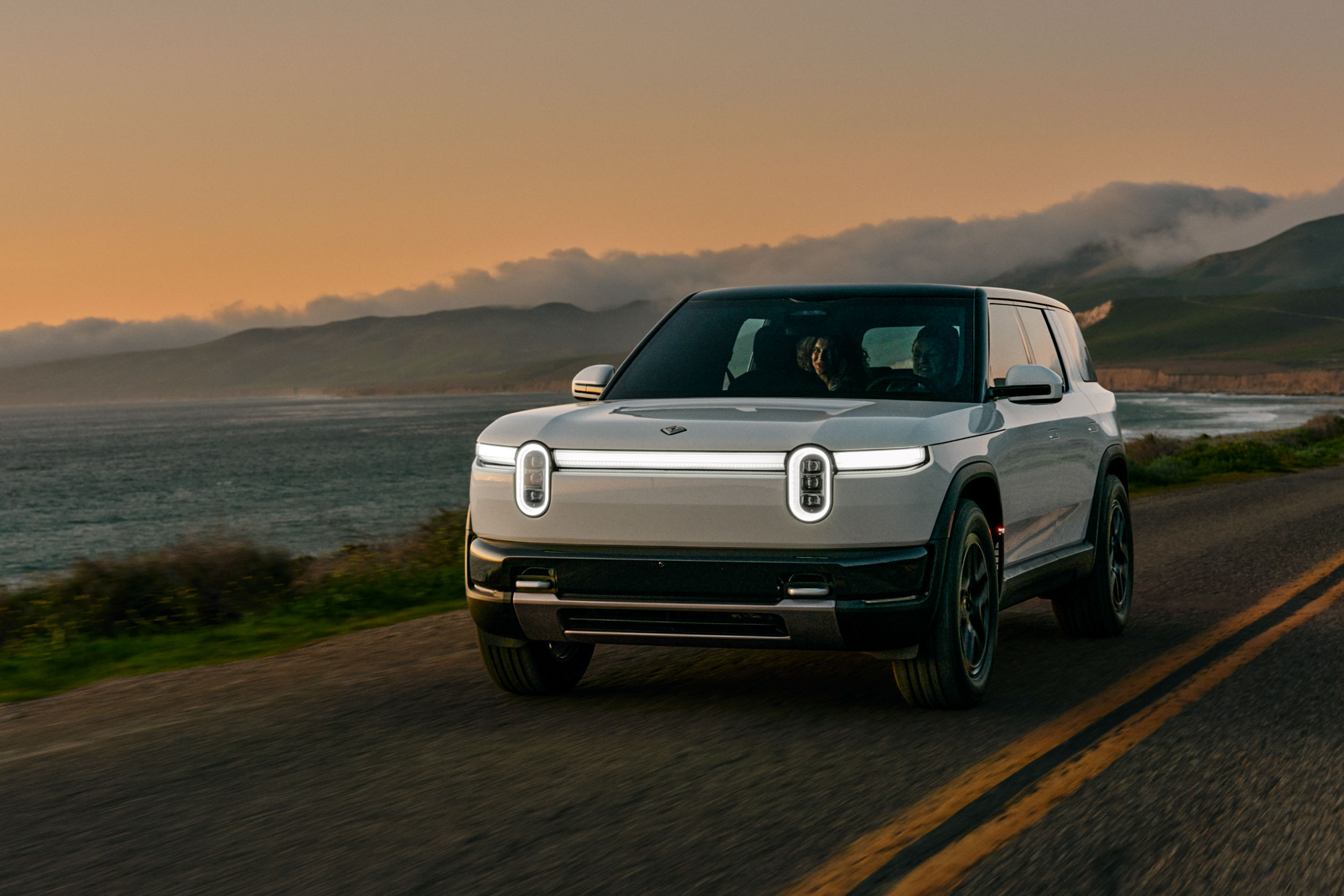
2027 R2 Premium
The 2027 R2 Premium offers much of what the Performance does, but with slightly less performance and no fancy suspension. It also comes with a few fewer premium features standard, but most are available as options.
- Available: Late 2026
- Pricing: $53,990 (+ $1,495 destination fee)
- Drivetrain: Dual-motor AWD w/87.9 kWh battery
- Power: 450 horsepower, 537 lb.-ft. of torque
- Performance: 4.6 sec. 0-60 mph
- Range: 330 miles
- Included equipment: Esker Silver exterior, Birch wood accents in Black Crater Signature interior, heated and ventilated front seats, heated rear outboard seats, heated steering wheel, 12-way power driver and passenger seats with lumbar adjustment, Rivian Premium Audio (9 speakers, 2 midwoofers in force-balanced configuration, 2 subwoofers in force-balanced configuration, 975W, rear drop glass, Dynamic Adventure Lighting with Adaptive High Beams, Matrix LED headlights, Rivian Torch flashlight in the driver door, Integrated tow hooks, Drive modes (All-Purpose, Conserve, Snow, All-Terrain and Sport), 20” Bicolor Carbon All-Season wheels
- Optional Equipment: Autonomy+ one-time fee or monthly subscription, 21” Liquid Tungsten All-Season wheels, exterior colors (Catalina Cove, Forest Green, Glacier White, Half Moon Grey, and Midnight), Coastal Cloud Signature interior, Tow package with 4,400 pounds of towing capacity
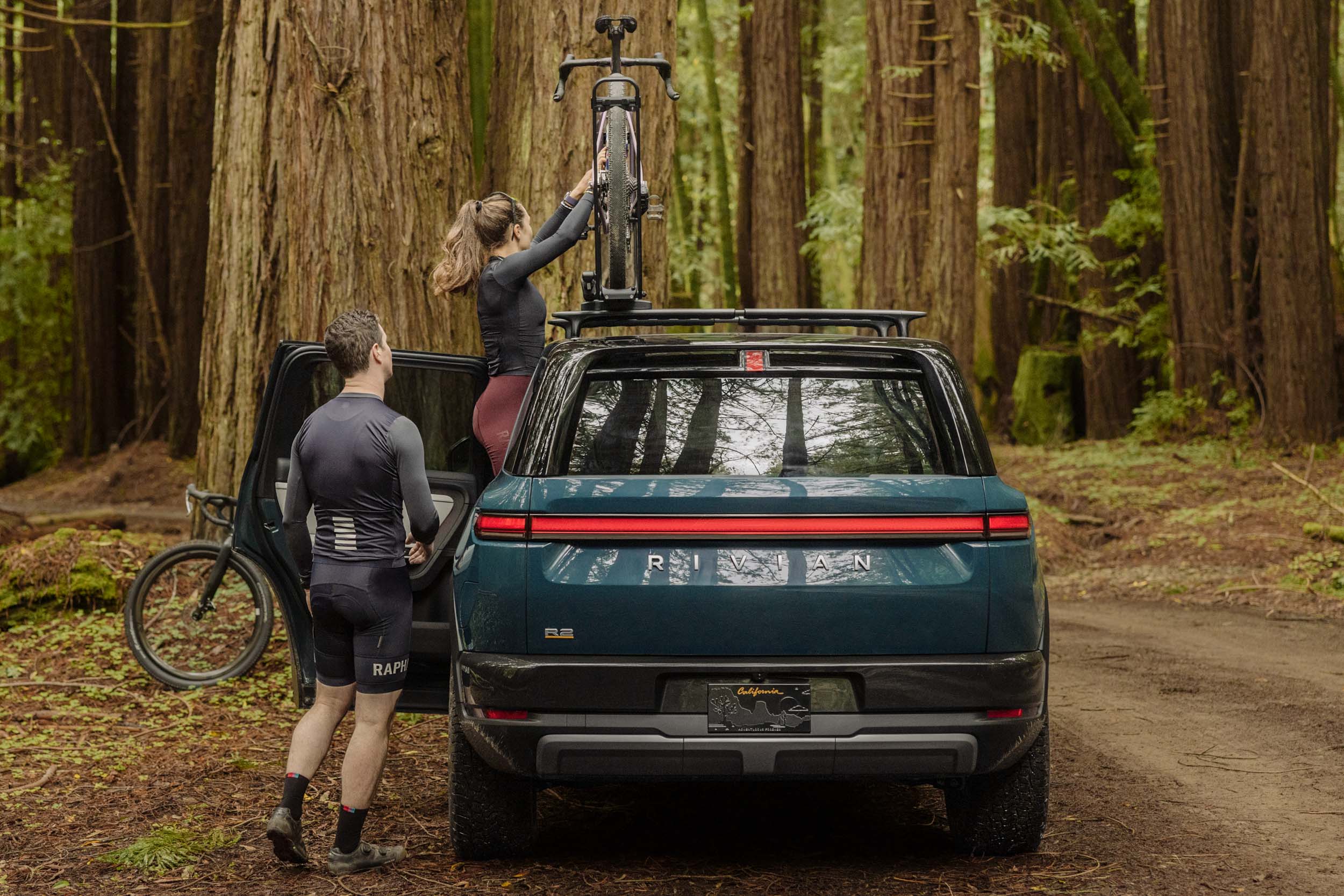
2028 R2 Standard RWD Long Range
The 2028 R2 Standard RWD Long Range won’t be here until 2027, and is RWD — although AWD is still an option. This version is going to be for those who want range and a Rivian but want to spend less than $50K.
- Available: First half of 2027
- Pricing: $48,490 (+ $1,495 destination fee)
- Drivetrain: Single-motor RWD, long-range battery (87.9 kWh)
- Power: 350 horsepower, 355 lb.-ft. of torque
- Performance: 5.9 sec. 0-60 mph
- Range: 345 miles
- Included equipment: Esker Silver exterior, Black Crater interior, Heated front seats and heated steering wheel, 12-way power driver seat with lumbar adjustment, 8-way power passenger seat, Standard audio (5 speakers, 2 midwoofers in force-balanced configuration, 525W), drive modes (All-Purpose, Conserve, Snow, and Sport), 19” Machined Graphite All-Season wheels
- Optional: Autonomy+ one-time fee or monthly subscription, Dual-motor AWD (with 450 horsepower, 537 lb.-ft. of torque), exterior colors (Forest Green, Glacier White, Half Moon Grey, and Midnight), 20” Bicolor Carbon All-Season wheels, Tow package with 4,400 pounds of towing capacity
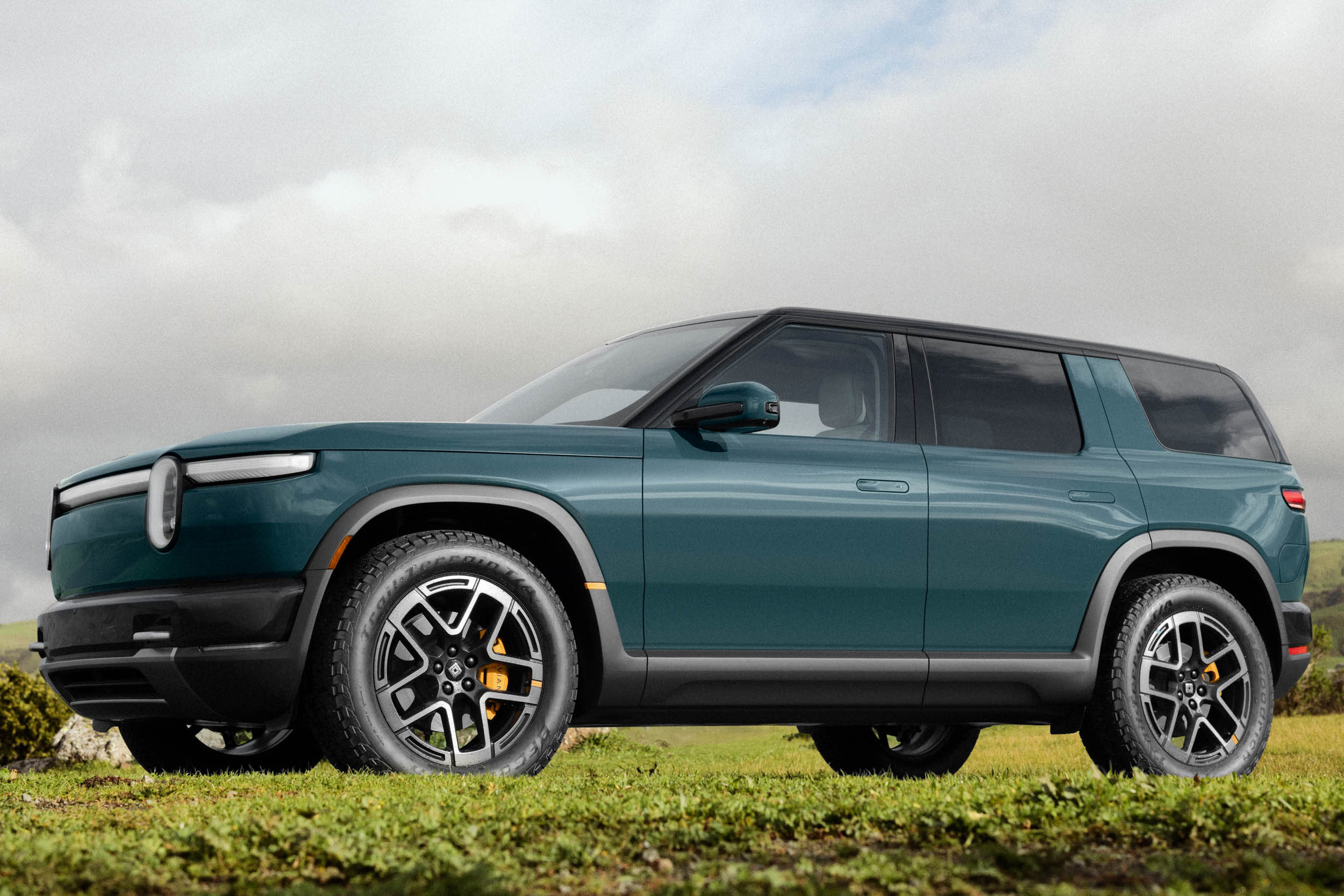
2028 R2 Standard RWD
We don’t know much, yet, about the true base model of the R2. We do know it’s not going to be available for at least another year-plus, and it will come with a smaller battery than the rest of the range.
- Available: Late 2027
- Pricing: Around $45,000 (+ $1,495 destination fee)
- Range: 275+ miles
Wheel & Tire Configurations
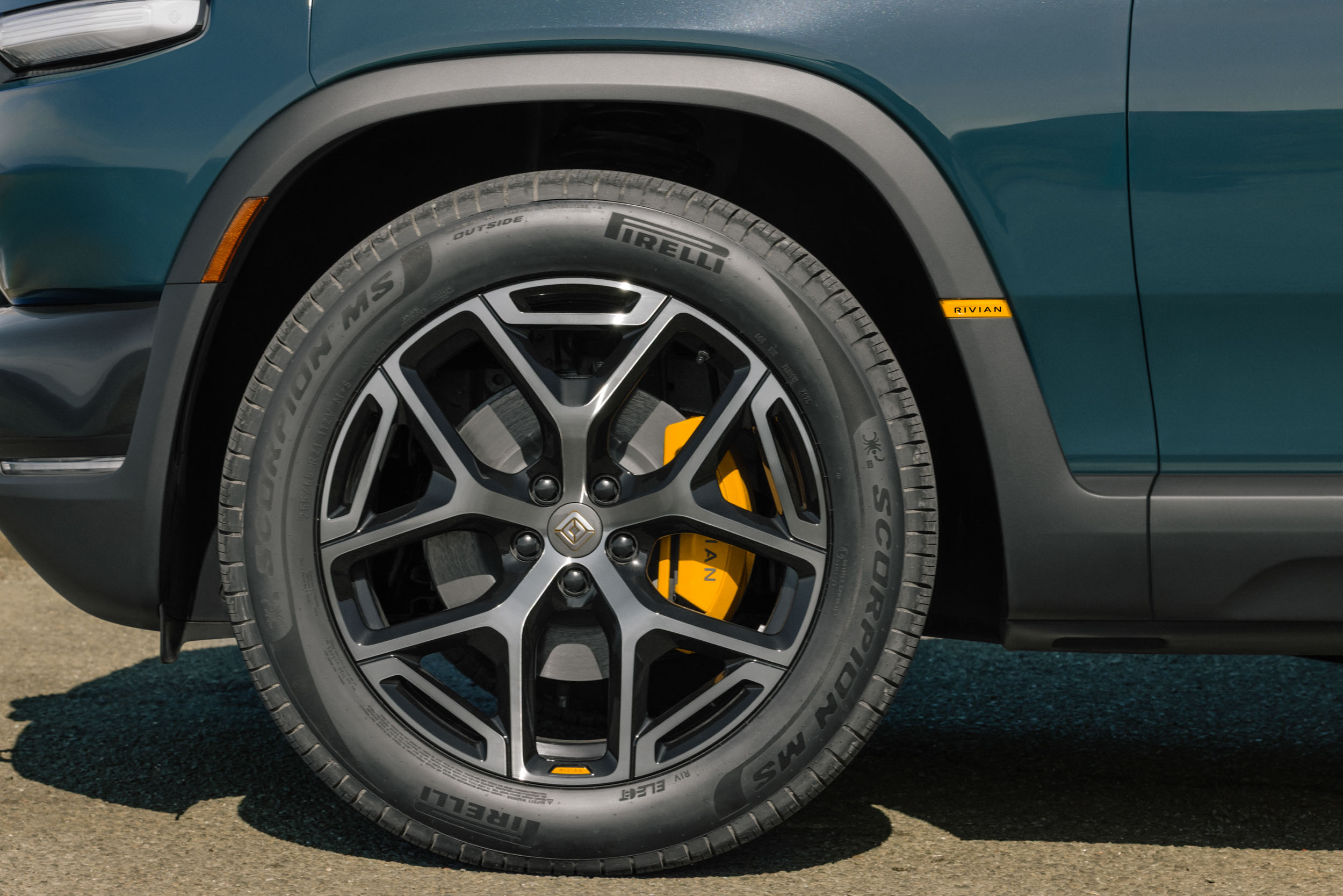
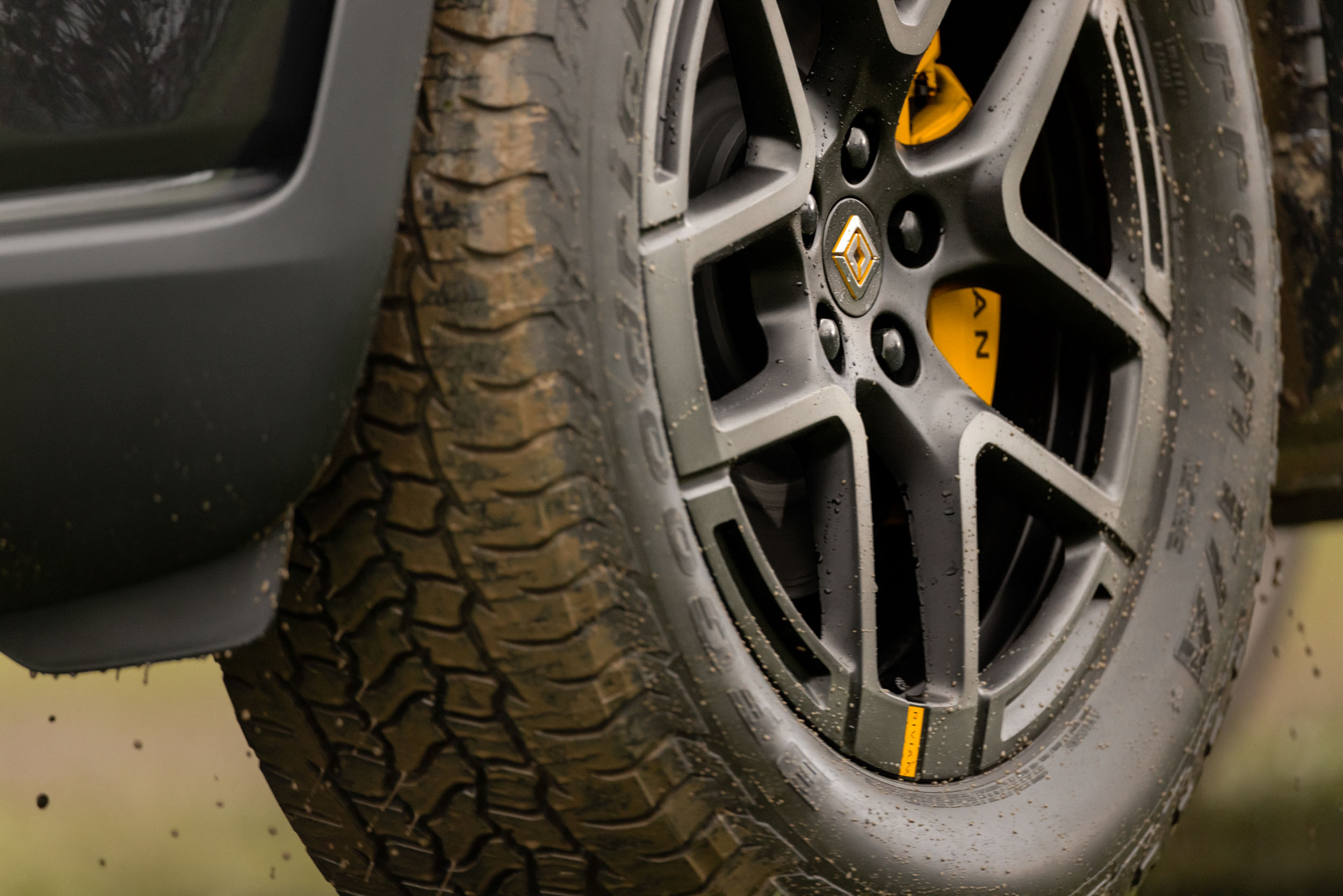
All Rivian R2s will come with 32-inch tires, but can be optioned with a variety of wheel and tire sizes. This will help you personalize your R2 for your aesthetic and performance needs.
Wheel/Tire Options
● 19” Machined Graphite All-Season: Aluminum wheels with a bright machined finish and graphite metallic pockets, with Pirelli all-season tires
● 20” Bicolor Carbon All-Season: Aluminum wheels with satin machined details and satin carbon pockets, with Pirelli all-season tires
● 20” Black Sand All-Terrain: Forged aluminum machined face wheels with dark satin tint and black pockets, with BFG all-terrain tires
● 21” Liquid Tungsten All-Season: Forged aluminum machined face wheels finished with liquid tungsten tint and dark pockets, with Pirelli all-season tires