Adventure motorcycle helmets are a Swiss Army knife for riders who split their mileage between pavement and off-road dirt. Wearing a reliable full-face helmet is essential for keeping you safe across changing terrain, while also ensuring you stay compliant with helmet laws.
There’s no single helmet that’s perfect for all conditions. While the Bell Moto-10 Spherical trades street-centric quietness for off-road airflow and impact safety, it delivers elite protection on dirt. Other helmets, like the full-face street Bell Race Star DLX Flex, are pricier but quieter and include a photochromic visor.
Our most recent annual field tests were led by adventure motorcyclist Sean Galaway and track-and-trail rider Morgan Tilton. The duo tested three lids across tens of thousands of miles throughout California, Oregon, Colorado, Baja, Eastern Europe, Turkey, and British Columbia.
From rain pelts to baking sun, we tested each motorcycle helmet in a range of weather conditions and speeds.
Editor’s Note: We updated our Motorcycle Helmets buyer’s guide on August 14, 2026, with Bottom Line summaries and signposts to help you find the best lid.
The Best Motorcycle Helmets of 2026


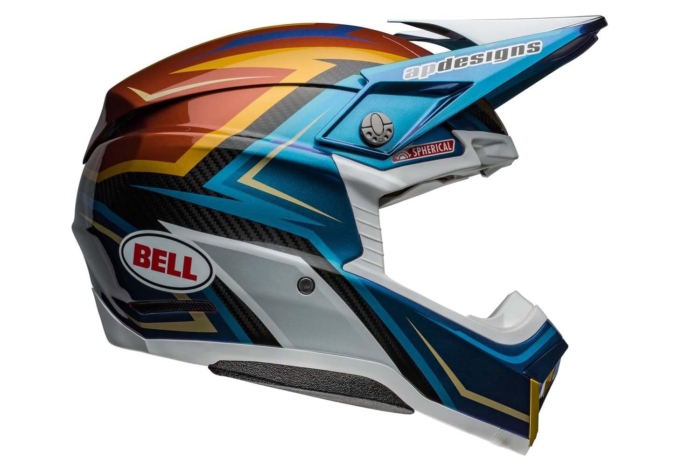
Bell Moto-10 Spherical Helmet

Specifications
Pros & Cons
Pros
- Incredible construction
- Industry leading protection
- Beautiful aesthetic
- Padded, lined helmet bag included
Cons
- Heavier than other carbon helmets
- Wind noise
Bottom Line: An elite, ultra-premium helmet that pairs unmatched ventilation with top-degree impact protection. The Moto-10 Spherical is the definitive choice for serious riders who demand maximum safety and refined comfort, even if it carries a steep price tag.
The Bell Moto-10 Spherical ($900) comes in just below a grand, setting sky-high expectations right out of the box. Thankfully, Bell delivers on every front. From its plush, velvet-lined carrying bag to the stunning carbon finish and subtle graphics, the overall presentation feels thoroughly premium before you even put it on.
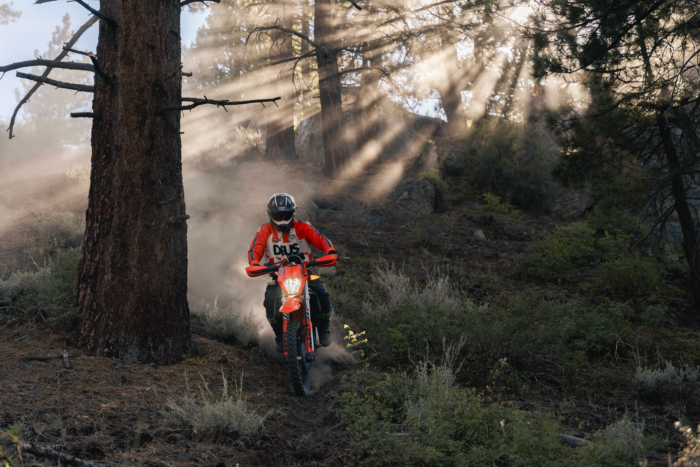
The Tech: Safety engineering is where this flagbearer shines, utilizing a 3K carbon shell and Spherical Technology powered by MIPS to manage rotational impact forces. Moto expert Sean Galaway put this helmet through extensive field testing on rugged off-road tracks to evaluate its balance and thermal regulation under extreme exertion. It earns top safety certifications across DOT, SNELL 2020, and ECE 22.06 standards.
What We Like: The fit is classic Bell — consistent with the rest of the Moto line — but refined. A redesigned liner distributes pressure evenly across the top of the head, eliminating hot spots during long rides. Magnetically connected jaw pads and a magnetic chin-strap keeper make secure placement second nature. Best of all, it offers the most impressive airflow of any off-road helmet we have tested, keeping your head remarkably cool. While heavier on paper than some competing carbon models, it feels surprisingly light on the trail and superior in fit and finish to Bell’s older Moto-9S Flex.
What We Don’t: Weight remains its primary drawback. At roughly 3.5 pounds in a size medium, it is noticeable if you are sensitive to overall head weight — especially when compared to lighter competitors like the Fox Racing V3 RS ($600), which sheds more than half a pound. The steep initial investment will also price out casual weekend trail riders.
Should You Buy It? For off-road racers and dedicated riders who refuse to compromise on head protection and ventilation, this choice is a benchmark. Bell invented the full-face motocross helmet, and the Moto-10 Spherical proves why their legacy remains unmatched at the high end of the market.
KLIM Krios Pro
-

-
(Photo/Michael Frank)
-
(Photo/Michael Frank)
-
(Photo/Michael Frank)
Specifications
Pros & Cons
Pros
- Pinlock visor compatible (and included)
- Very light for an ADV lid
- Excellent venting at speed
- Quick-release visor, plus included photochromic transition visor
Cons
- Only two shell sizes
- Stuffy at a slower pace
Bottom Line: An ultralight carbon-fiber lid that combines advanced impact protection with exceptional ventilation and tool-free adaptability. The Krios Pro is ideal for adventure riders who want to minimize neck fatigue on long, varied dual-sport trips.
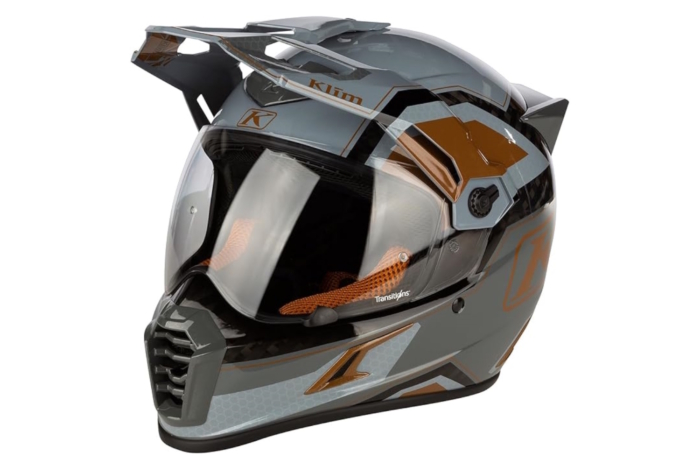
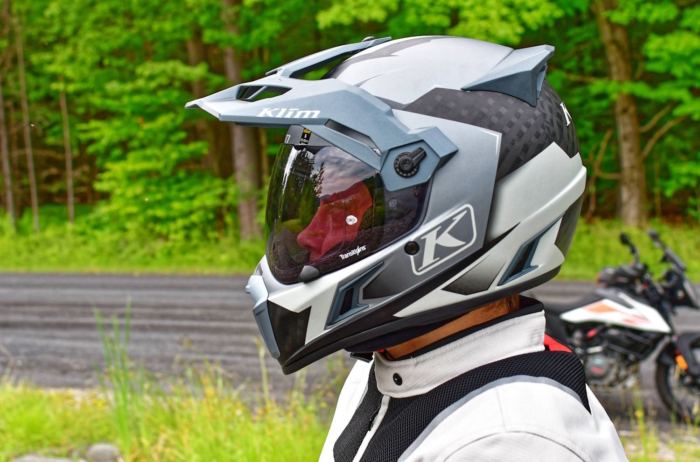
The KLIM Krios Pro ($750) breaks the traditional dual-sport mold by delivering a fully featured, peak-equipped design in a lightweight package. During extensive field testing, GearJunkie motorcycle contributor Michael Frank put the Krios Pro through its paces across demanding multi-day tracks to evaluate its long-distance comfort and airflow. The design solves the two most common drawbacks of adventure headwear: excessive neck strain from weight and cumbersome shield swaps. If you want a premium, versatile helmet that transitions between technical singletrack and high-speed asphalt, the Krios Pro is worth considering.
The Tech: Performance-wise, the structural secret is its full carbon-fiber shell paired with a Koroyd liner — an engineered energy absorber composed of thousands of co-polymer tubes. Functioning like a car’s crumple zone, the material uniformly equalizes force during an impact by spreading energy through structured collapse. Because Koroyd is mostly air, it allows exceptional airflow over the dome at speed, outperforming traditional EPS foam setups like the one found in the Arai XD4.
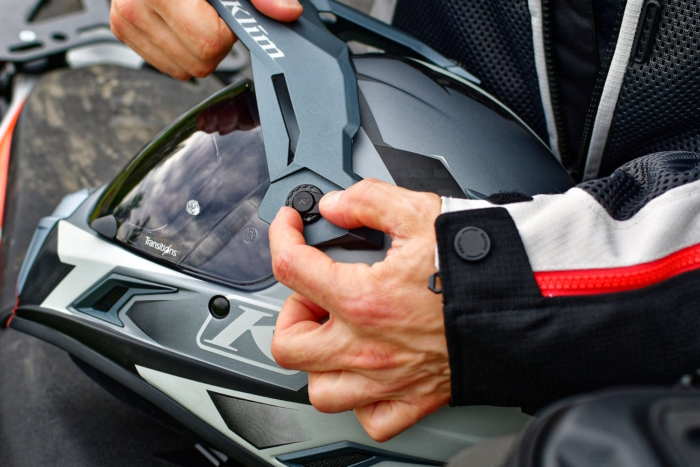
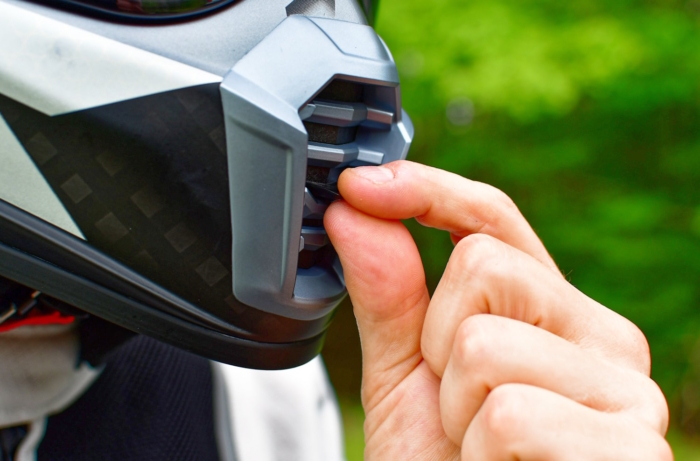
What We Like: The real winner here is the tool-free conversion design. By simply twisting the dual temple locks and unthreading the top screw, you can adjust or strip the peak entirely, pull the visor off to run goggles, or swap in the included transition lens that automatically adjusts to ambient light. Brilliant. The magnetic Fidlock chin clasp snaps together effortlessly with heavy gloves, oversized mouth vents prevent shield fogging, and the shell comes pre-sculpted for Sena Bluetooth integration.
What We Don’t: It is not perfect, as the minimal forehead intake slit allows heat to build up during low-speed, technical first-gear lugging. Peaked helmets are also inherently noisier than smooth street models at highway speeds. Finding the sweet spot for the dual-position peak — shading your eyes without catching lift from high-speed air pressure — takes trial and error.
Should You Buy It? Adventure motorcyclists who refuse to compromise between off-road agility and on-road comfort will find that the Krios Pro is top-tier. Its ultralight construction reduces neck fatigue during full days of wrestling rocks or logging Interstate miles. If you need an adaptable, feature-packed helmet for multi-day dual-sport routes, the Krios Pro delivers outstanding performance.
Fox Racing V3 RS Carbon Solid Helmet
Specifications
Pros & Cons
Pros
- Premium Mips Integra Split impact protection system
- Lightweight carbon fiber shell
- Style points
Cons
- Expensive
- Lacks magnetic closure system
- Speaker recess pads are a bit finicky
- Price label is extremely sticky on underside of visor
Bottom Line: A high-end race lid that packs maximum rotational safety and incredible ventilation into a super-light build. The V3 RS Carbon is a crown for dedicated track riders seeking a highly customizable fit without causing heavy neck fatigue.
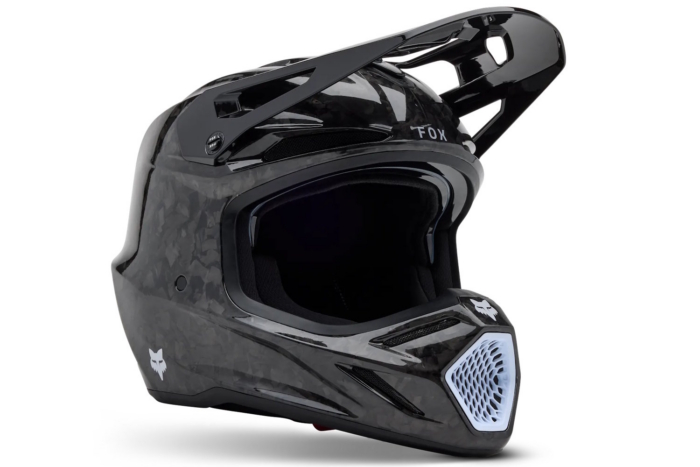
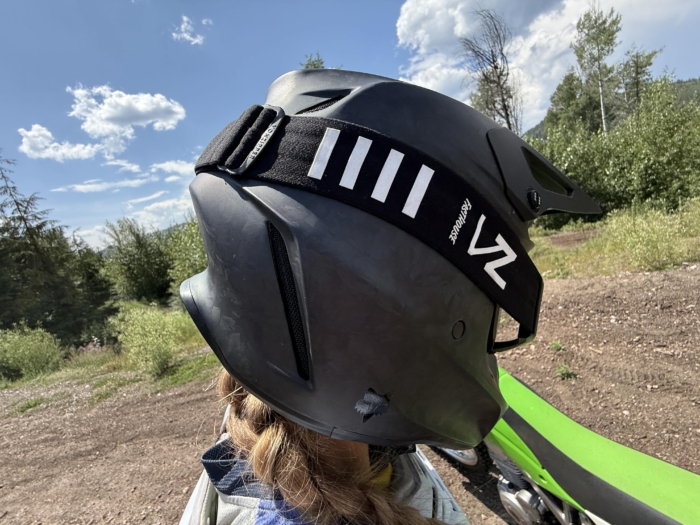
Leveling up protection, the Fox Racing V3 RS Carbon Solid Helmet ($700) earns a top-tier spot as one of the best motocross helmets on the market. Stacked with a dual-layer EPS liner, the interior layer moves independently from the outer shell as the first off-road helmet equipped with the MIPS Integra Split system. Stamped with DOT and ECE 22.06 certifications, this premium shield is a solid choice for your dome during cardio-pumping training rounds and comps.
The Tech: Made for pushing boundaries, the safety setup has a high-grade 4K carbon fiber weave shell surrounding two EPS foam layers separated by a smooth, low-friction barrier. This includes MDEPS foam, which absorbs and dissipates impact forces across a greater surface area. Specialized connection discs — called woofers — link the foam layers, allowing them to move independently upon impact to handle rotational energy.
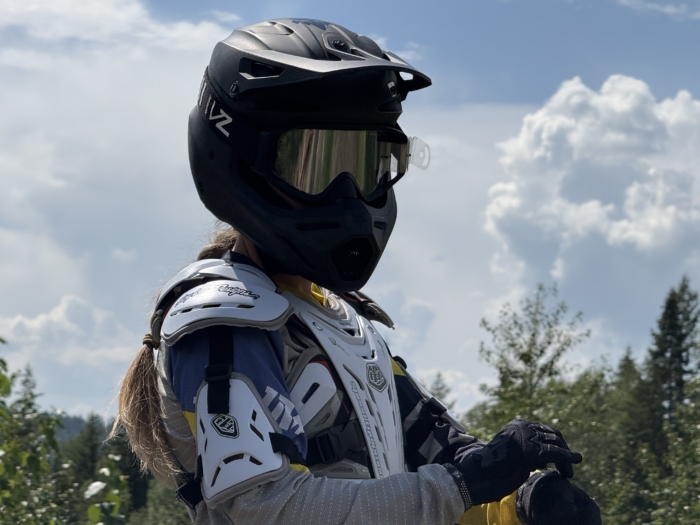
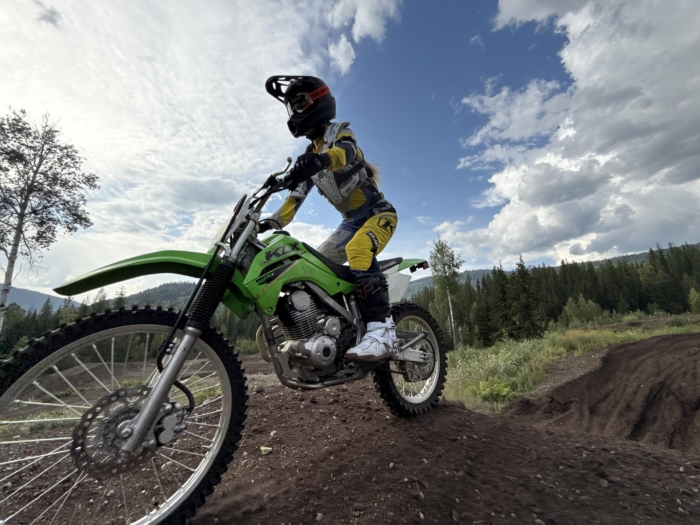
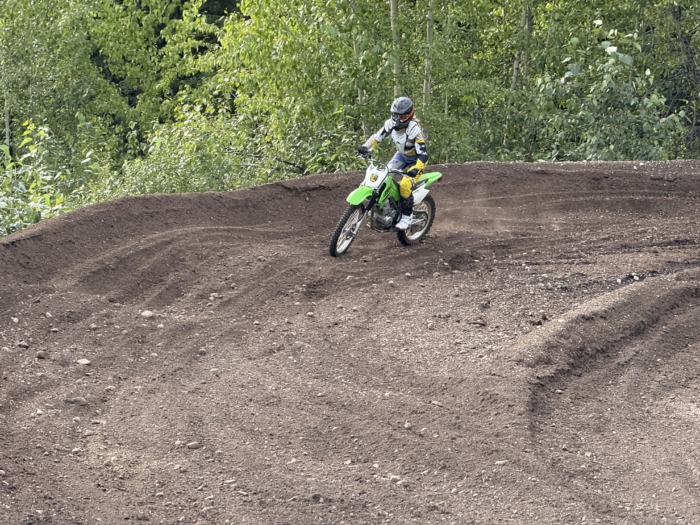
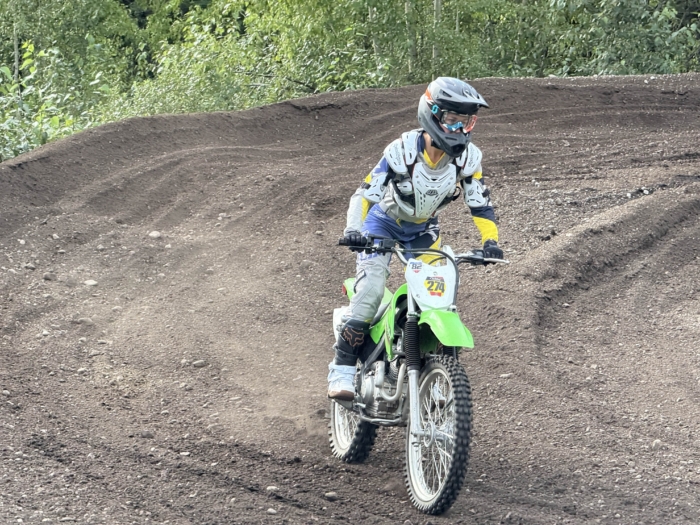
What We Like: The carbon fiber build felt noticeably lighter for Senior Editor Morgan Tilton during hot track laps in the mountains compared to heavier options like the Bell Moto-10 Spherical ($900). On humid 90-degree days, the cheek pads helped keep her cool thanks to an infusion of crushed jade that wicks moisture, alongside an antimicrobial washable liner. Airflow is dialed, using two oblong brow intake vents, four mouthpiece vents, and eight rear exhaust vents. Packed in a padded travel case, it includes great extras: a spare long visor, clip-on visor extension, mud visor, mud foam, hydration mouthpiece, and spare cheek pads. The extended visor sets at three positions, which Tilton found great when the sun sat close to the horizon. For emergencies, the cheek pads host quick-release pull tabs across three available densities (25, 28, and 31mm).
What We Don’t: While the helmet runs true to size, it has a tight, race-ready fit — Tilton downsized to the 25mm pads to avoid feeling squeezed during conversation while breaking it in. Though the carbon fiber D-ring fastener is strong, upgrading to a magnetic closure would be a nice touch. Also, despite claims on the website, our kit did not include spare visor hardware.
Should You Buy It? The chopped carbon fiber construction looks sleek, and the matte finish resembles dark camo — it looks good. If you’re training and racing hard, this lid is a stellar investment for riders who want pro-level safety and airflow without forgetting style.
Bell Race Star DLX Flex
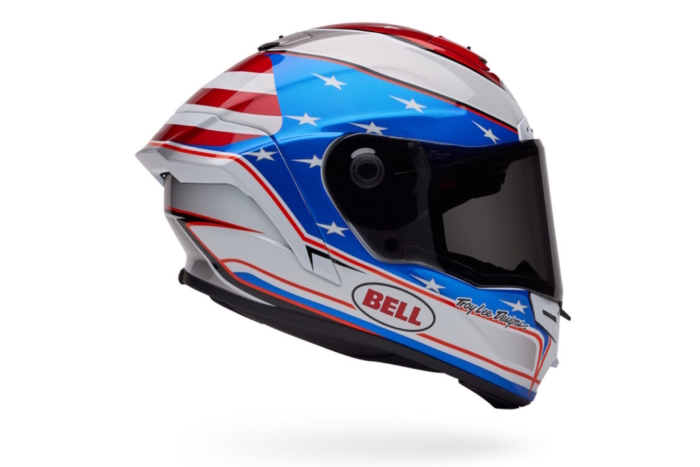
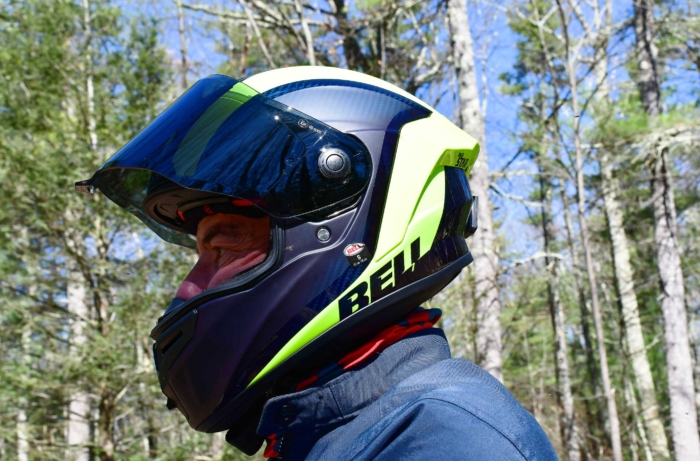
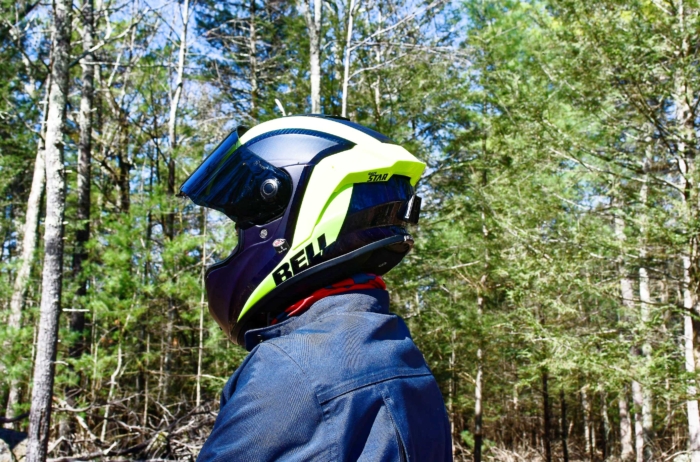
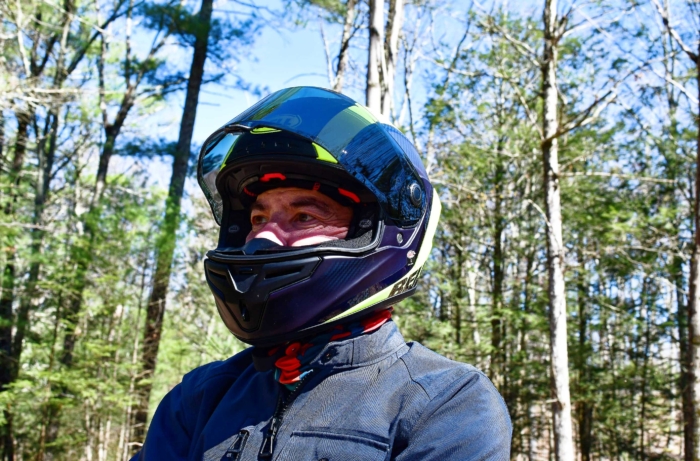
Specifications
Pros & Cons
Pros
- Very quiet
- Photochromic visor
- Five shell sizes
Cons
- No specific communication system
- Visor isn’t Pinlock compatible
Bottom Line: An exceptionally quiet, day-long cruiser lid that balances plush magnetic maintenance with dynamic light adaptation. The Race Star DLX Flex is a standout choice for tourers and light ADV riders who want all-day comfort without high-speed turbulence.
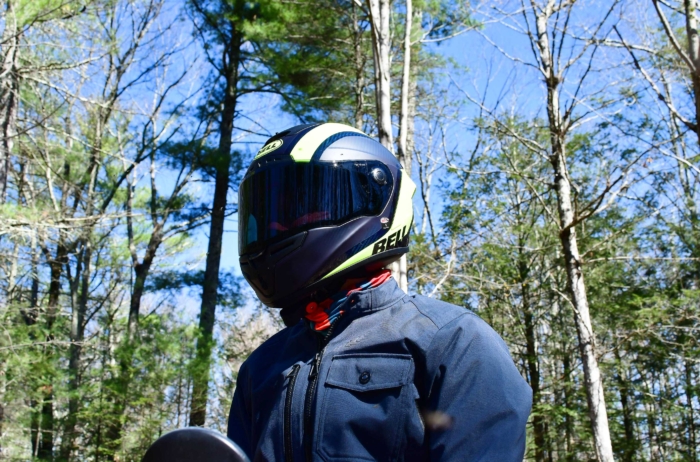
For more than a year, we tested the Bell Race Star DLX Flex ($820), which continues to be our happy-place helmet for overall comfort and big days in the saddle. Motorcycle field tester Michael Frank put this lid through its paces across dozens of hours of long-distance road trips, pavement miles, and non-technical dirt sections to evaluate its long-term wearability. Designed for a more upright riding posture, it delivers a smooth, low-turbulence feel that excels on back roads and highways alike.
The Tech: Engineering for long-distance versatility centers around the Panovision ProTint photochromic visor, which automatically darkens in direct sunlight and clears under cloudy or rainy skies so you never have to pull over to swap eyewear. Inside, a three-layer Flex impact liner manages low-, mid-, and high-speed energy scenarios, while magnetic cheek pads eliminate the hassle of traditional snap-in setups when stripping the interior for washing.
What We Like: Magnetic pads make maintenance far easier than standard snaps, which feels incredible after sweating into the helmet for hours on end. Aeration works superbly through small, easily actuated brow, chin, and jaw vents that keep air moving when the pavement is roasting. The dual-density padding provides a snug fit without ever feeling pinchy, creating the quietest riding experience we have evaluated. While not quite as ultra-light as the slim AGV K6 S, it avoids feeling heavy, which counts when logging long miles.
What We Don’t: The biggest demerit is that the proprietary ProTint shield is not Pinlock compatible, meaning you miss out on that specific anti-fogging system during cold or damp morning starts. Its upright orientation and shell shape also make it less ideal for aggressive, tucked-in track positioning.
Should You Buy It? The Race Star DLX Flex offers superior acoustics, dynamic lens tinting, and effortless washability for multi-day trips. It’s a high-end investment for touring riders and dual-sport adventurers.
Alpinestars Supertech M10 Helmet
Specifications
Pros & Cons
Pros
- Top-tier graphics
- Extremely light
- Semi-custom fit
Cons
- High price
Bottom Line: A featherlight, carbon-composite race lid that blends supreme collarbone safety with micro-adjustable fitment. The Supertech M10 is an ideal choice for dedicated off-roaders who want a fatigue-reducing build that can be tuned to their exact head shape.
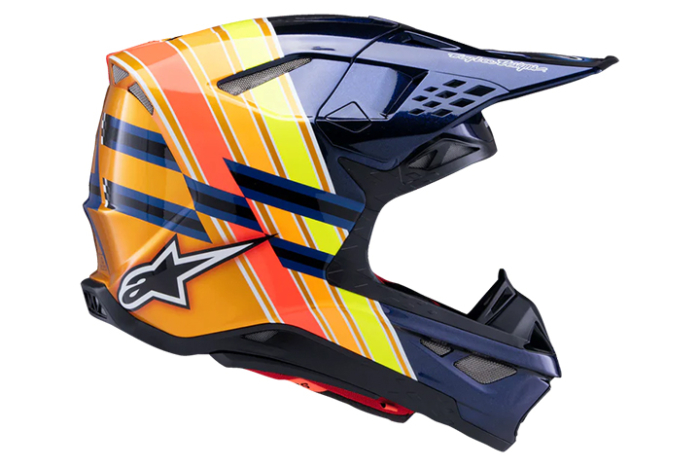
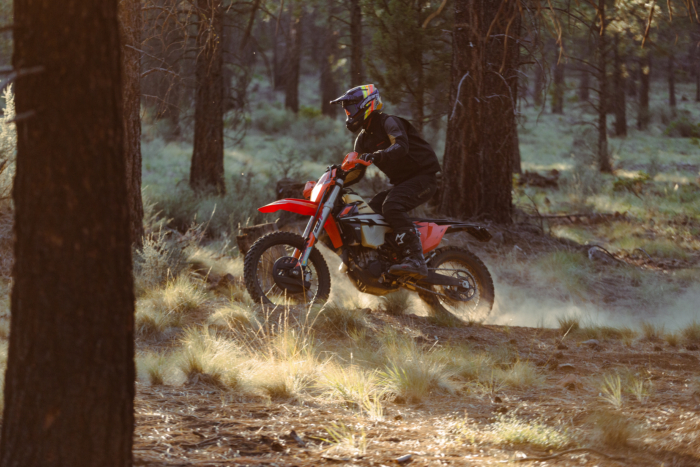
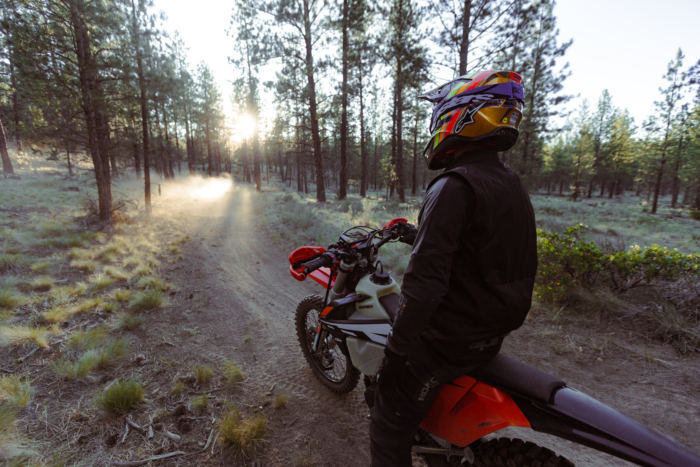
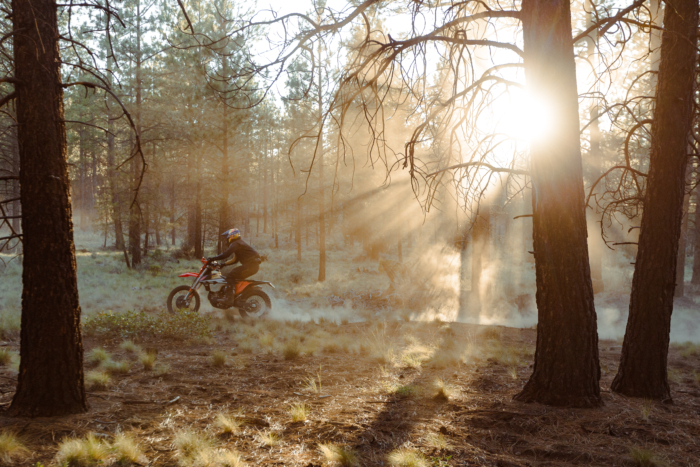
The Alpinestars Supertech M10 Helmet ($920) sits at the top of the brand’s off-road lineup and lives up to its position. Recently, Alpinestars refined the design with a smoother, less sharp chin bar to reduce the risk of catching during a crash, alongside an attachable visor extension for roost and glare. Global motorcyclist Sean Galaway put this flagship lid through rigorous field testing on demanding off-road tracks and trails, evaluating its fatigue reduction and overall balance during long sessions in the saddle.
The Tech: Safety engineering centers on a multi-layer composite shell using epoxy resin to bond outer carbon fiber layers with aramid fiber, pairing high impact strength with energy dissipation. Inside, a multi-density EPS liner absorbs impact forces, while an integrated MIPS system manages rotational acceleration. Similar to the Bell Moto-10 Spherical ($900), it extends the EPS foam below the lower shell rim to form a soft energy-absorbing relief area that reduces collarbone injury risks.
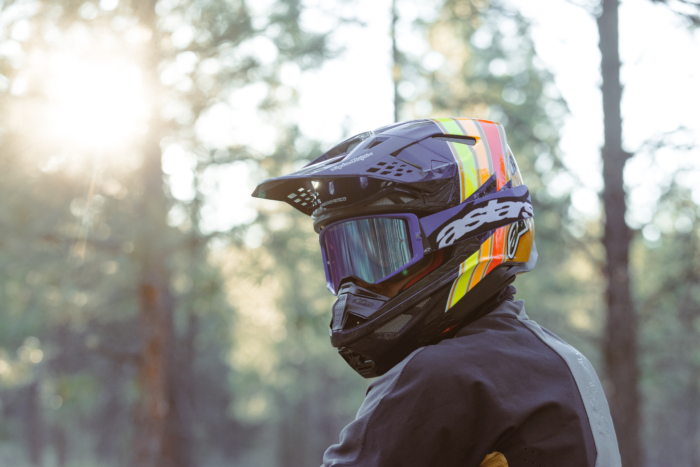
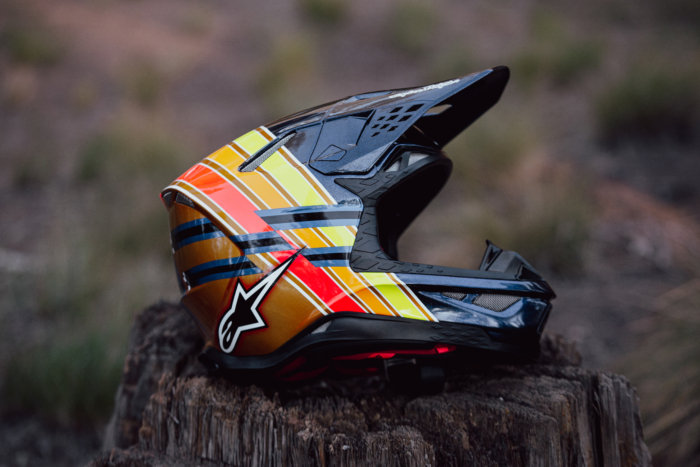
What We Like: Weighing under 3 pounds, this lid is among the lightest high-end options on the market, making a huge difference in neck fatigue. The stand-out feature is Alpinestars’ patented A-Head fitment system, which uses a micro-adjustable pad linked to the interior shell so you can alter the height and angle of how the helmet sits. This attention to detail helped get the fit dialed even when it felt slightly off right out of the box. Airflow is top-notch, and across four dedicated shell sizes spanning XS to 2XL, finding an exact match is effortless. The Troy Lee Designs graphic scheme on our test unit is simply one of the finest non-custom finishes available.
What We Don’t: At over $900, the entry price is a significant investment that targets serious racers and committed trail riders rather than casual weekenders. The ultra-light build and race-focused shell geometry also sacrifice some ambient sound damping compared to quiet touring models on highway pavement.
Should You Buy It? We recommend this helmet if you’re looking for a high-end off-road lid. The ventilation is top-notch, the weight is class-leading, and the graphics are phenomenal.
Bell MX-9 Adventure DLX MIPS


Specifications
Pros & Cons
Pros
- Effective transitions shield
- Versatility
- Great ventilation
Cons
- Very loud
- Only one color option
Bottom Line: A budget-friendly dual-sport moto helmet that pairs a swift photochromic shield with high-flow trail ventilation. This solid pick is for off-road-heavy riders who want active sun protection without paying carbon fiber prices.
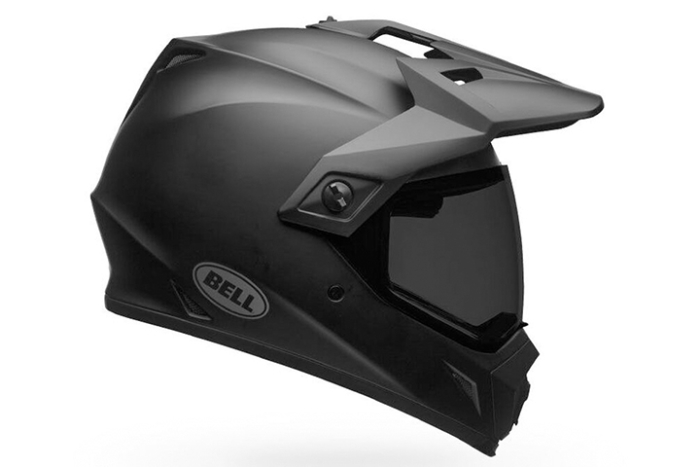
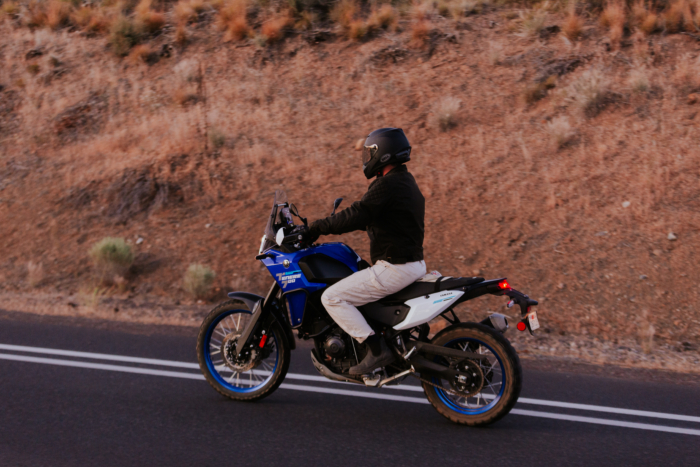
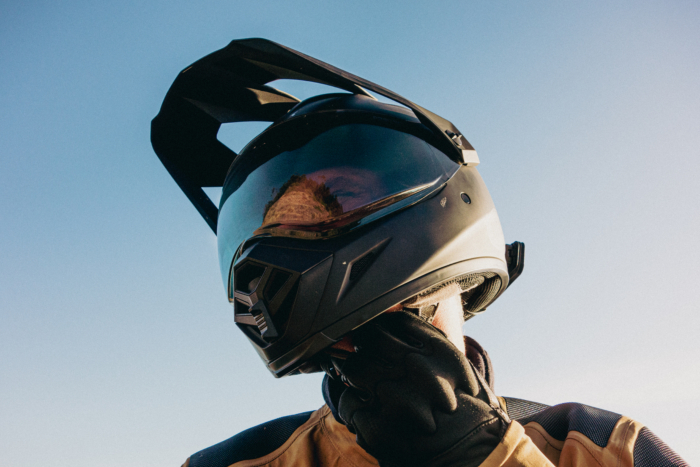
The Bell MX-9 Adventure DLX MIPS ($390) is an upgraded iteration of Bell’s tried-and-true MX-9 platform, adding a stock ProTint photochromic shield to the mix. International motorcyclist Sean Galaway put this line through its paces over a month-long, 100-hour adventure tour across Europe, evaluating how its optical versatility and high-airflow design hold up across changing weather and long days in the saddle.
The Tech: Core safety features include a lightweight polycarbonate shell paired with MIPS (Multi-directional Impact Protection System) to manage rotational impact forces. Its standout feature is the photochromic shield, which rapidly darkens or clears based on ambient light and comes treated with anti-fog, anti-scratch, and UV-blocking coatings that hold up to real-world wear.
What We Like: On long tours where daylight fades into night, the adaptive shield eliminates the hassle of pulling over to swap for clear goggles. Airflow is generous throughout the shell, working together with the Ionic+ antimicrobial liner to keep your head cool during hot, high-exertion trail sections. For riders spending most of their time in the dirt, it delivers tremendous utility for a modest cost compared to flagship crossover models like the KLIM Krios Pro ($750).
What We Don’t: At highway speeds, the adjustable peak visor catches wind like a sail, catching air enough that we opted to remove it completely to prevent neck strain. Wind noise is also severe at high speeds — even when wearing earplugs. If your dual-sport routes involve more than 25% pavement cruising, this model may prove too loud and turbulent for comfort. Additionally, Bell uses varying shell dimensions across its lineup, so sizing can differ from your usual fit.
Should You Buy It? The Bell MX-9 Adventure DLX MIPS is a comfortable and reasonably priced adventure helmet for primarily riding off-road.
Shoei GT-Air II
Specifications
Pros & Cons
Pros
- Pinlock visor compatible (and included)
- Integrated solar shield
- Seamless compatibility with SENA SRL2 intercom
- Easily operated vents
Cons
- Not as easily compatible with other intercom systems
- A bit beefy
- Somewhat noisy
Bottom Line: This plush, stable full-face touring helmet combines effortless gloved vent control with an integrated sun visor. The GT-Air II is a leading choice for long-distance riders who want Shoei’s iconic comfort without a modular build.
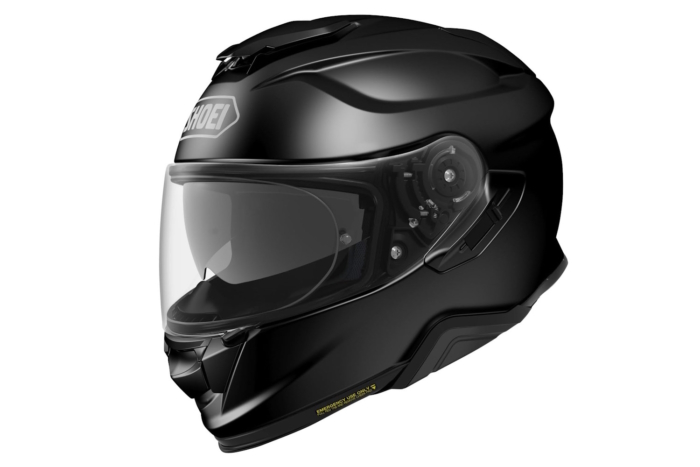
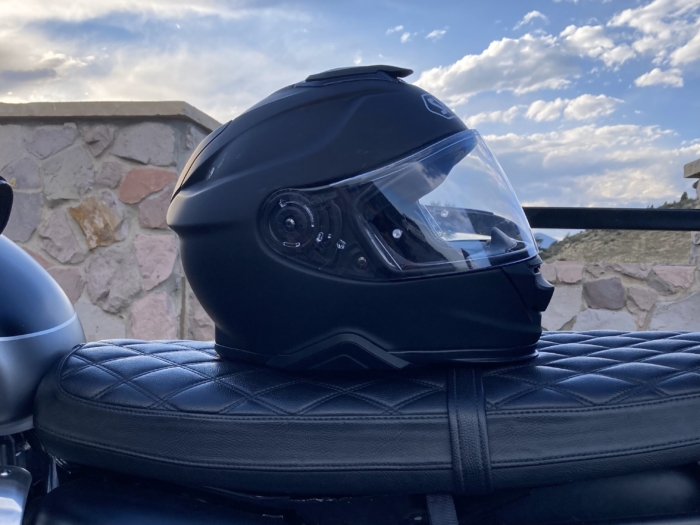
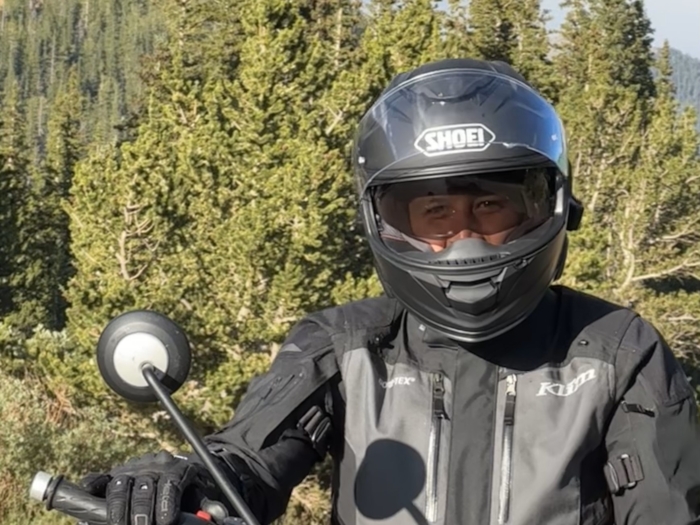
A close relative to the premium Shoei Neotec 3, this Shoei GT-Air II ($700) is a great alternative for those not interested in a modular design or for those wanting something a bit more wallet-friendly without compromising quality. While Shoei does not ECE-certify its helmets in the USA, the DOT rating and its history of superior safety ensure a premium level of protection. Avid motorcycle tourer Hilary Arthur put this helmet through its paces across hundreds of miles of Colorado mountain backroads and highways, evaluating its stability at speed, changing high-alpine weather performance, and overall long-haul wearability.
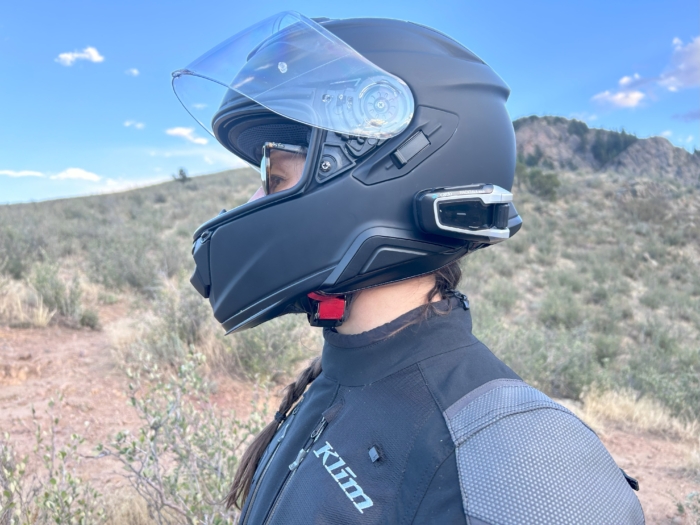
The Tech: Engineering focuses on aerodynamic stability, utilizing an Advanced Integrated Matrix (AIM) shell paired with a multi-density EPS liner. It comes pre-molded for seamless integration with the Sena SRL2 communication system, featuring side mounting cutouts, internal wire channeling, a neck-roll battery pocket, and dedicated speaker recesses. Upfront, an integrated drop-down QSV-2 sun visor provides instant glare protection.
What We Like: The vents on the GT-Air II are impressively easy to operate while riding, even with heavy gloves — a feature we appreciated during high-alpine rides where the weather quickly shifted. The integrated solar shield came in handy both on sunrise and sunset rides or on long-mileage days when wearing sunglasses can result in pain points on the temples and ears. The visor also includes an extra cracked position detent for additional airflow. With six helmet sizes and the option to swap internal pads, Shoei consistently delivers incredible comfort, and sizing runs true to their chart for stress-free online ordering.
What We Don’t: The shell itself is larger and a bit heavier than other top choices, and wind noise was a smidge louder than expected — though riding with ear protection renders the acoustic issue unnoticeable. Additionally, while the integrated comms housing is ideal for the SRL2 device, those molded cutouts prove to be a slight hindrance when attempting to mount a different brand of intercom system.
Should You Buy It? Overall, we highly recommend the GT-Air II for its smooth wear, versatility, and quality of materials.
More Motorcycle Helmets Protecting Our Domes
Specifications
Pros & Cons
Pros
- Lightweight
- Comfortable liner
- Great ventilation
Cons
- Tight cheek pads compared to other manufacturers
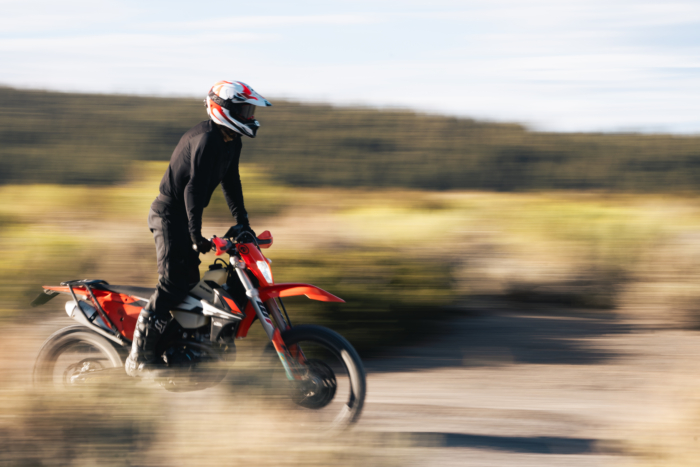
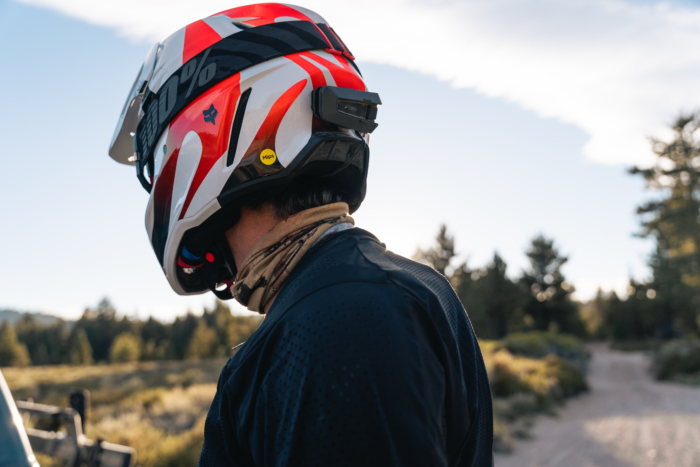
Bottom Line: A high-performing mid-range helmet that excels in extreme heat and offers superior high-speed aerodynamics. The V3 is a stellar choice for dirt-focused riders who want premium protection and gravel-roosting airflow without top-tier pricing.
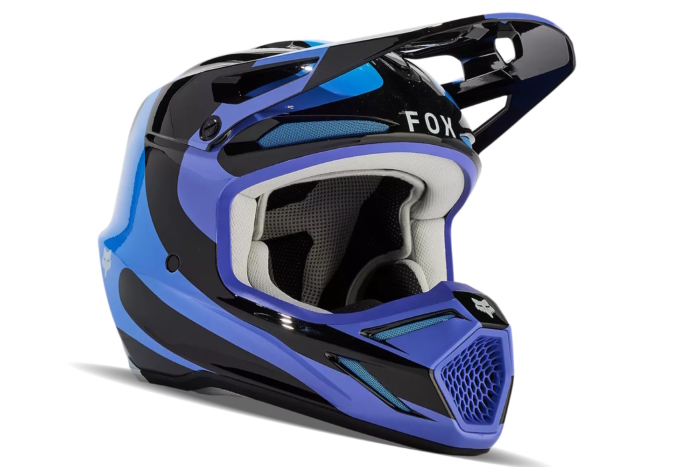
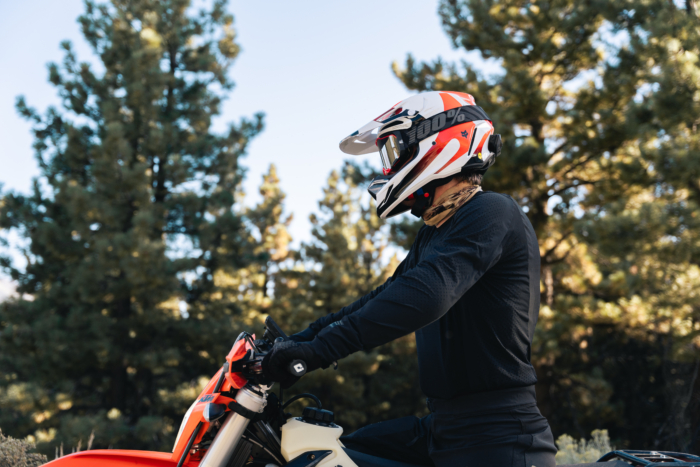
The Fox Racing V3 Helmet ($444) delivers high-end performance for a mid-range price, bridging the gap between race-ready protection and everyday trail usability. During a full summer of field testing in the eastern Sierra, moto expert Sean Galaway put the V3 through its paces across fast double track, sandy whoops, technical singletrack, and high-speed pavement connectors. It solves two common issues with traditional motocross lids: overwhelming heat buildup and neck-snapping drag at speed. If you want a dedicated off-road lid that stays stable on high-speed transfer sections, the V3 is worth considering.
The Tech: Performance-wise, safety and stability take center stage. The helmet has MIPS technology to mitigate rotational impact forces alongside an ECE 22.06 safety rating. To streamline high-speed riding, Fox designed a tapered, tri-position adjustable visor. Unlike wider peaks like the one found on the KLIM Krios Pro, this sculpted peak cuts cleanly through headwind, preventing sudden neck jerks when transitioning to asphalt link-ups.
What We Like: The star here is heat management and thoughtfully integrated convenience. Channeling substantial airflow across your face, the shell keeps you cool while working hard on technical terrain. Fox also included speaker pockets ready for a Cardo Bluetooth system, a hydration routing port for continuous drinking on demanding tracks, and a custom fleece-lined helmet bag.
What We Don’t: It is not perfect, as dirt-style helmets inherently allow more ambient dust and wind noise into your face than fully sealed dual-sport shields. While the tapered visor eliminates drag on the highway, its smaller surface area provides slightly narrower shade coverage when riding directly into a low-hanging sun.
Should You Buy It? If you spend the vast majority of your time on dirt and demand high-velocity ventilation, this helmet is a workhorse. The combination of safety certifications, helmet-to-goggle airflow, and rock-steady stability makes it a versatile choice for technical trails. Protective and feature-loaded, the V3 helmet is a great solution for hot-weather backcountry rides.
Specifications
Pros & Cons
Pros
- Pinlock visor compatible (and included)
- Super quiet thanks to the chin and neckroll spoiler
- Built-in communication system with boost antenna and speakers
- Internal sun shield
Cons
- Visor detents could be better
- Only two shell sizes
- Bit stuffy in hot weather
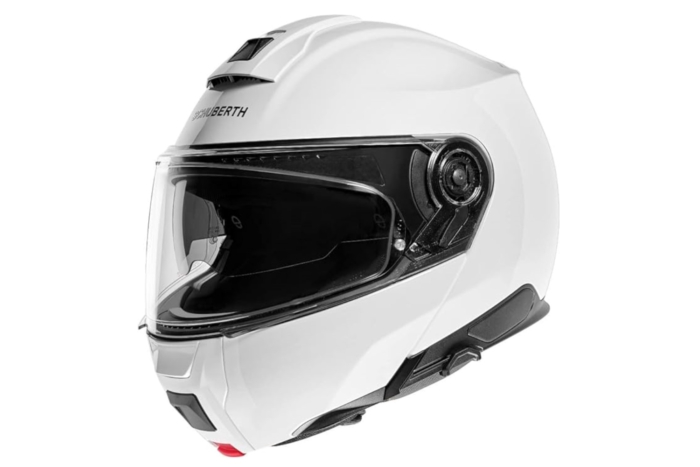
Bottom Line: An exceptionally quiet modular helmet that pairs seamless flip-up convenience with wind-blocking aerodynamics. The C5 is a standout choice for long-distance tourers who want a whisper-quiet ride without giving up face-bar versatility.
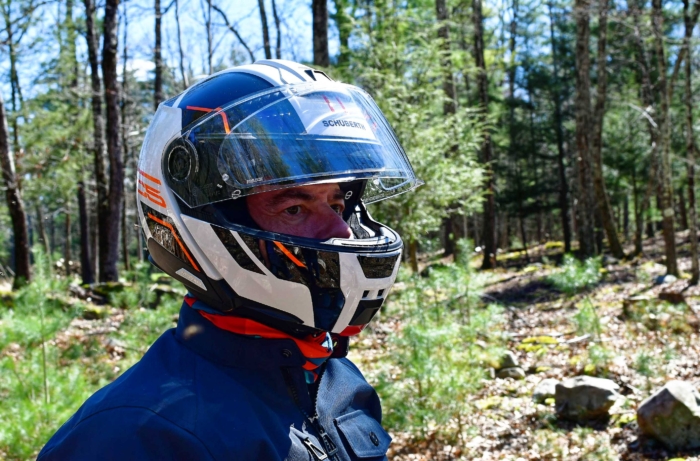
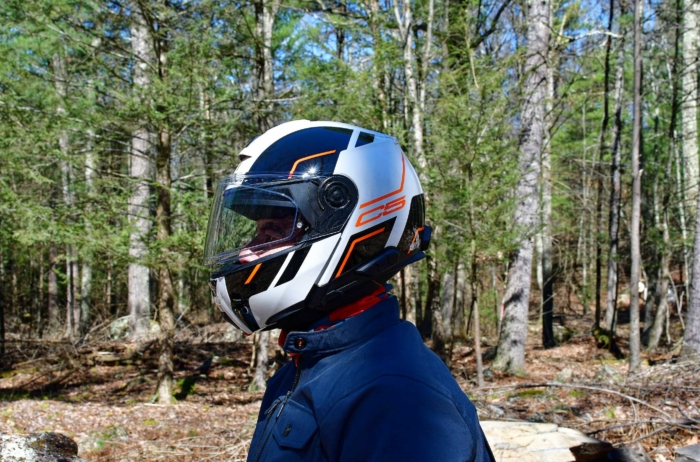
Like the bulk of Schuberth offerings, the Schuberth C5 ($799) is beautifully quiet. We credit the aerodynamic shape, as the chin bar leaves nearly no gaps against the shell to prevent wind invasion. Beneath the jaw, a tucked-in spoiler seals out air that typically funnels in from below to cause turbulence. Gear tester Michael Frank put this lid through its paces across high-speed pavement and bumpy off-road sections to evaluate its aeroacoustics, visor clarity, and multi-season airflow.
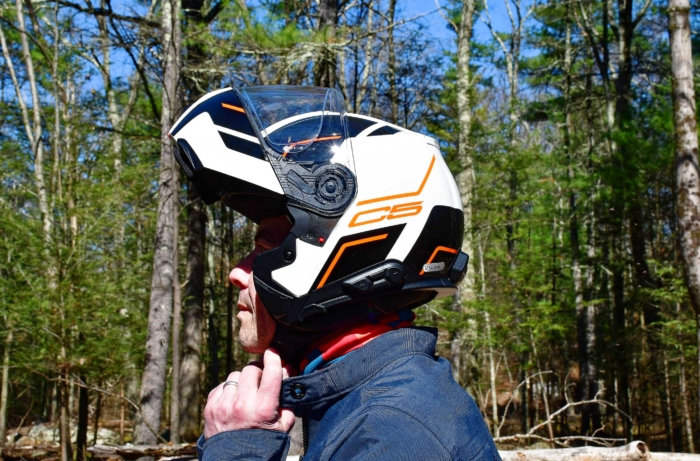
The Tech: Engineering for long-haul versatility centers around a fiberglass shell reinforced with carbon fiber and an integrated SC2 communication infrastructure. Pre-wired with HD speakers and a boosting antenna, it integrates Sena Mesh technology to connect with nearby riders without manual pairing. Flip-up operation relies on a low-mounted chin lever that is easy to index with gloved hands, separate from any vent controls.
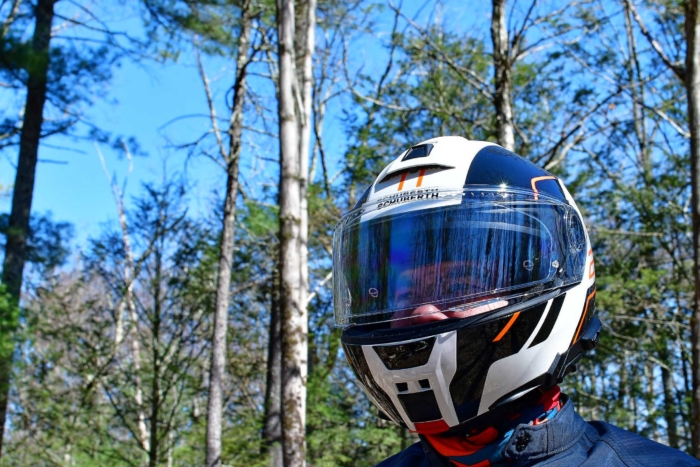
What We Like: During test laps, flipping up the chin bar made drinking water and catching fresh air effortless during stops. On rock-strewn trails, the extra-wide, tall visor offered excellent peripheral vision to quickly spot terrain hazards. Unlike most modular designs that drag in wind noise, this model defies that flaw, matching the low acoustic levels of full-face touring options like the Bell Race Star DLX Flex ($820). On midsummer days, opening the dual-position chin, mouth, and top ports alongside the rear exit exhaust provides solid temperature management at speed. The shield also comes stock with an anti-fog Pinlock insert that locks down firmly.
What We Don’t: At slower speeds, internal channeling is insufficient to maintain strong airflow without cracking the visor. If you ride with the shield slightly open, it exhibits noticeable vibration, whereas competitors like the Shoei Neotec 3 ($900) use firmer detents to hold intermediate positions steady.
Should You Buy It? Still, this cap is more of a touring helmet, and the kicker is how quiet it is. When you’re stopped or cruising slow, modular designs easily open in front, which is convenient. Typically, modulars are also noisy. This Schuberth defies that flaw. No other modular we’ve tested is quieter, and it’s nearly as silent as the Bell Race Star DLX Flex.
Specifications
Pros & Cons
Pros
- Pinlock visor compatible (and included)
- Internal sun shield
- Insanely comfortable, cushy interior
- Nearly as quiet as the Schuberth
- Excellent, easily removable cheek pads
Cons
- Not ECE 22.06 certified
- Somewhat porky
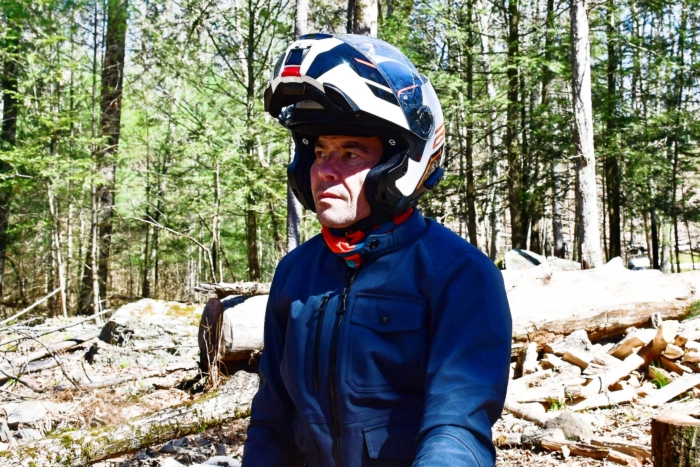
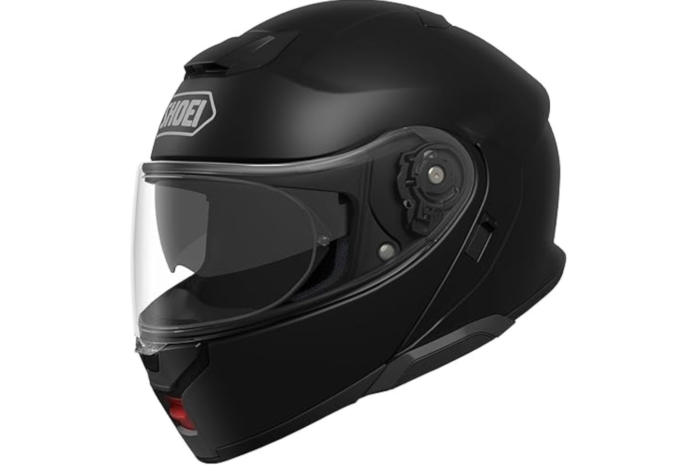
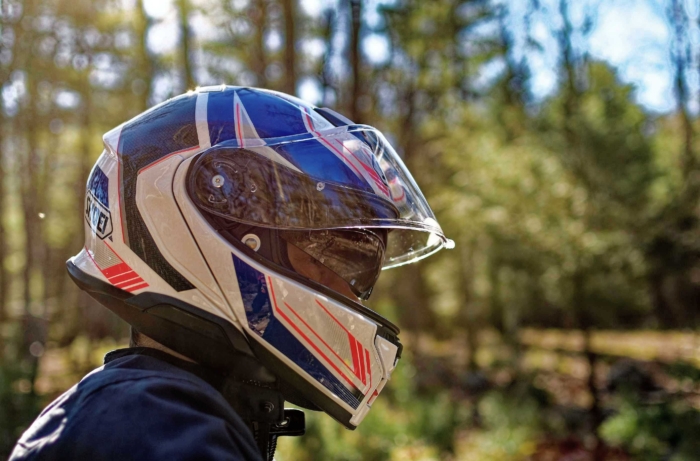
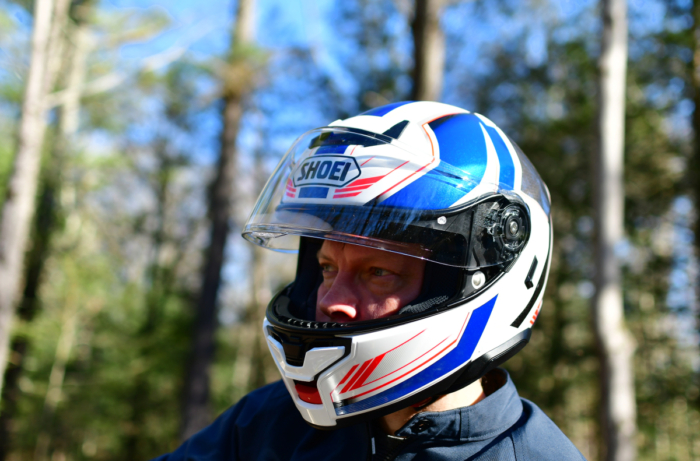
Bottom Line: A plush, highly refined modular lid that pairs maximum long-distance comfort with dependable cold-weather controls. The Neotec 3 is an excellent option for tourers and commuters who want a quiet ride with effortless, gloved operation.
While the Shoei Neotec 3 ($900) does not carry an ECE 22.06 rating, it remains an exceptionally safe option. The UK’s SHARP rating agency — an independent safety body — awards this shell construction a perfect five out of five stars. Moto gear tester Michael Frank logged extensive highway miles and cold-weather runs to evaluate its long-term comfort, noise insulation, and gloved control actuation.
The Tech: Built around Shoei’s Advanced Integrated Matrix (AIM) shell, this modular system integrates internal cable and speaker routing tailored for the optional Sena-powered SRL3 comms setup. This allows seamless communication with other riders using Sena protocols without pairing devices manually. Upfront, the chin bar release features a positive locking mechanism, while the micro-ratchet chin strap provides secure, easily adjustable fastening.
What We Like: Very comfortable mile after mile, the plush internal padding — particularly around the cheek pads — delivers a cushy fit that feels noticeably softer than the Schuberth C5 ($769). Shoei deserves props for the tactile controls: the center detent to lift the visor, the chin bar release, and the sliding vent switches are easy to locate and operate while wearing thick winter mitts on cold highway rides. Excellent venting prevents visor fogging even at slow speeds without whistling at 60 mph, and aerodynamic tuning prevents the annoying highway howls typical of modular designs. It also comes across three distinct shell sizes for a better proportional fit.
What We Don’t: Weighing in slightly heavier than the C5, the added bulk can become noticeable on exceptionally long touring days. The proprietary SRL3 system also requires a separate purchase, and the visor detents require a firm tug to adjust on the fly.
Should You Buy It? While stacking miles, we found ourselves marveling at the cushy fit and the aerodynamics that quelled the wind. For daily shreds, you’d be pretty hard-pressed to find a better choice.
Specifications
Pros & Cons
Pros
- Pinlock visor compatible
- Extra lightweight
- Super wide, 190-degree field-of-view for better visibility
- Four shell sizes
Cons
- Not the best breather
- No integrated sun-shield
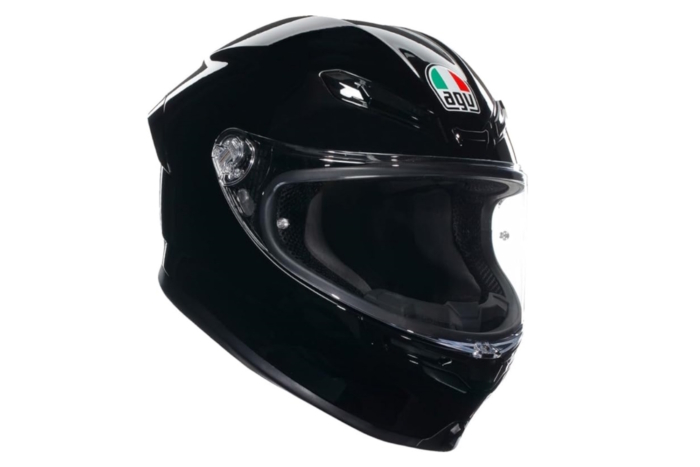
Bottom Line: An ultralight street helmet that pairs stout European safety certifications with excellent aerodynamics. The K6 S is a smart choice for daily commuters and highway riders who prioritize neck fatigue reduction over maximum airflow.
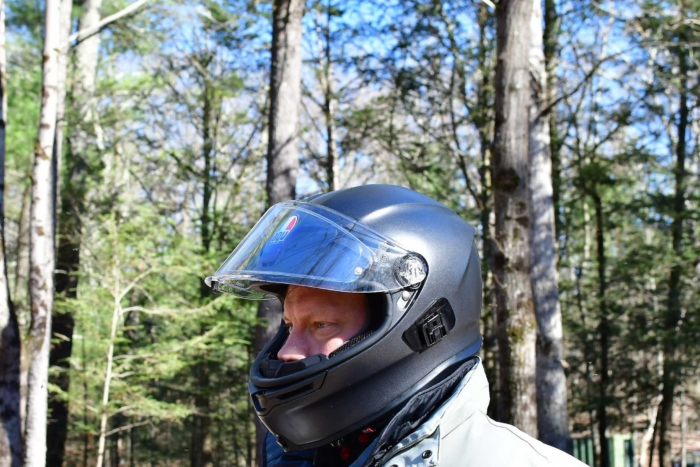
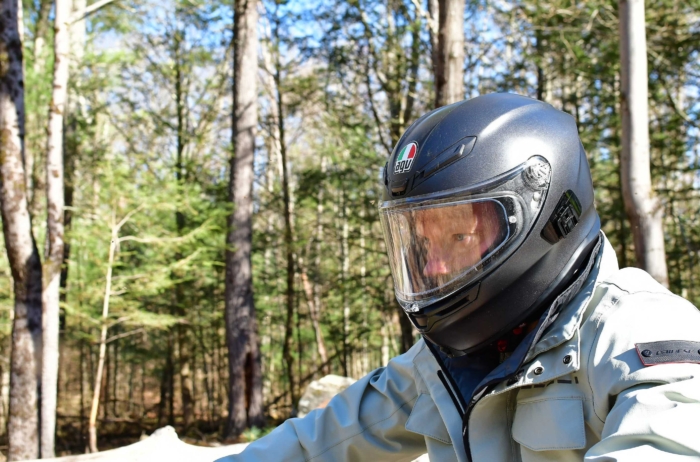
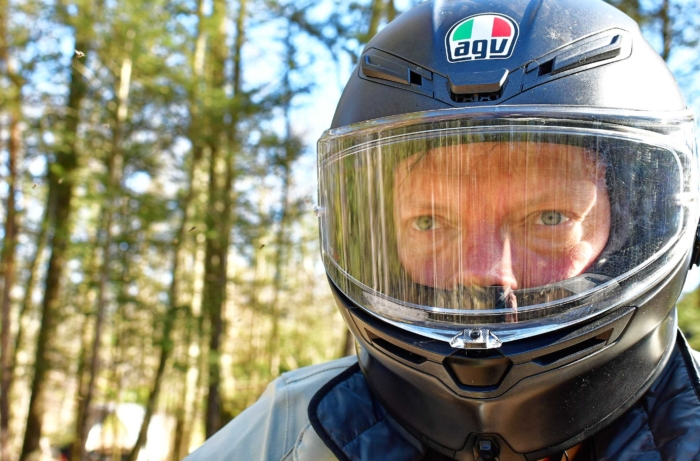
Launched as an upgrade to the proven K6 platform, the AGV K6 S ($639) is a stellar evolution of one of the most protective options available at an accessible price point. The updated design incorporates an integrated rear spoiler to improve high-speed stability and provide additional occipital protection. Gear tester Michael Frank put the helmet through over a year of long-term testing, evaluating its fatigue-reducing weight, aerodynamic tracking, and visor mechanism across daily street commutes and Interstate miles.
The Tech: Safety engineering centers around a carbon-aramid fiber shell constructed in four shell sizes to optimize protective proportion. The design meets the rigorous European ECE 22.06 standard, building on the legacy of its predecessor, which earned a five-star rating from the UK’s SHARP agency across 32 distinct impact tests. For noise reduction, an integrated chin curtain blocks wind turbulence underneath the jaw, while multi-density interior padding dampens ambient sound.
What We Like: Weight savings are class-leading, making a massive difference in preventing neck and shoulder fatigue during full days in the saddle. The subtle metal visor anchors create precise detents, allowing the shield to sit securely at intermediate angles with zero high-speed vibration. On the highway, its smooth aerodynamic profile cuts through turbulent air so effectively that only the Bell Race Star DLX Flex ($820) rivals it as a preferred Interstate cruiser. The interior pads feel ultra-smooth against the skin, and finding a tailored fit is straightforward across the four shell dimensions.
What We Don’t: Ventilation is somewhat limited, as the brow and chin intake slits do not push high volumes of air at slower speeds. Riders in hot climates may find themselves cracking the visor open frequently when idling in city traffic.
Should You Buy It? Only the Bell Race Star DLX Flex rivals the K6 S as our favorite Interstate cruiser choice. You’ll also be happy that the AGV K6 S comes in four shell sizes so you can find the best fit.

Motorcycle Helmets Comparison Chart
| Motorcycle Helmets | Price | Type | Materials | Weight | Safety Rating |
|---|---|---|---|---|---|
| Bell Race Star DLX Flex | $820 | Upright conventional | Carbon fiber shell, multi-density impact liner | 3.57 lbs. | ECE 22.06 certified/DOT certified |
| AGV K6 S | $639 | Upright conventional | Carbon fiber shell, heat-resistant and strong synthetic fibers, multi-density EPS foam | 3.02 lbs. | ECE 22.06 certified/DOT certified |
| Fox Racing V3 | $444 | Motocross / Off Road | Fiberglass, EPS foam, moisture wicking liner, MIPS equipped, composite fiberglass shell, hydration routing system, communication system compatibility | 2.8 lbs. | ECE 22.06 certified/DOT certified |
| Fox Racing V3 RS Carbon Solid | $700 | Motocross / Racing | MIPS Integra Split impact protection system, dual-density EPS foam, Ionic+ moisture-wicking liner, 4K carbon fiber shell | 2.8 lbs. | DOT/ECE 22.06 certified |
| Schuberth C5 | $799 | Modular with a hinge chin bar, upright conventional | Fiberglass shell, carbon fiber reinforcements, EPS foam interior | 3.8 lbs. | ECE 22.06 certified/DOT certified |
| Shoei Neotec 3 | $900 | Modular with a hinge chin bar, upright conventional | Multi-ply matrix of fiberglass, organic and glass fibers, and synthetic resin plus an EPS liner | 4.15 lbs. | DOT certified |
| KLIM Krios Pro | $750 | Upright conventional, ADV-specific | Koroyd and carbon construction | 3.4 lbs. | ECE 22.06 certified/DOT certified |
| Shoei GT-Air II | $700 | Full-face, upright conventional | AIM Shell (Advanced Integrated Matrix), dual-layer EPS liner | 3.64 lbs. | DOT certified |
| Alpinestars Supertech M10 | $920 | Motocross / Off Road | Multi-composite construction of 3K Carbon, unidirectional carbon, and aramid fiber layer (bonded with epoxy), 4 density EPS foam, MIPs technology | 2.99 lbs. | ECE 22.06 certified, DOT certified |
| Bell Moto-10 Spherical | $900 | Premium off‑road/motocross | Segmented 3K Carbon Shell | N/A | DOT, SNELL 2020, ECE |
| Bell MX-9 Adventure DLX MIPS | $390 | ADV / Off Road | Composite shell, Transitions adaptive shield, ionic+ moisture wicking liner, MIPS technology | 3.74 lbs. (Medium) | ECE 22.06 certified, DOT certified |
How We Tested Motorcycle Helmets
Our Expert Testers
GearJunkie contributor Sean Galaway took the lead on testing helmets on the dirt end of the spectrum. With decades of experience across four continents, Galaway evaluates helmets in some of the toughest conditions imaginable. For this test, he was focused on helmet performance riding fast double track, slow speed technical single track, and wide-open desert riding.
GearJunkie Senior Editor Morgan Tilton owns and rides a dual sport Honda CRF 230F and a Kawasaki KLX140R dirt bike for the motocross track. One of her favorite, longest adventure was covering the Alpine Loop in her home mountain range.

Contributor Hilary Arthur joined the GearJunkie team to offer extra insight into the gear fitment and features from the female rider’s perspective. Many women have to settle for unisex options or among a very small selection of women-specific models. Arthur has thousands of miles in the saddle on both her backyard canyon roads in Colorado, as well as touring around the Western United States and New Zealand.
Another GearJunkie tester for motorcycle helmets, writer Michael Frank, has ridden motos for decades. These days, Frank prefers slow, windy backroads and double-track over Interstate rides. For this guide, he and a crew of friends tested a range of full-face motorcycle helmets on pavement, off-road, and some trail.
Our Testing Grounds
In field tests with the motocross, ADV, and modular lids, we rode at a variety of speeds to measure comfort, especially when riding slowly and working hard in off-road terrain.
For street-focused helmets, we maneuvered through in-town traffic and at fast highway speeds to see how the lids performed while we were broiling at a stoplight and in freezing temps while bombing a night run for a pint of ice cream.

Our Motorcycle Helmets Rating System
We score each motorcycle helmet on a 1–10 scale for Protection & Safety Certification, Comfort & Ergonomics, Environmental Control, and Versatility & Features.
- Protection & Safety Certification: This is the baseline for every review. We evaluate the helmet’s impact-absorption and energy-management technologies, specifically looking for certifications such as DOT, SNELL M2025, and the rigorous ECE 22.06. We prioritize helmets that go beyond the minimum by including rotational protection systems like MIPS, Spherical Technology, or Koroyd cores.
- Comfort & Ergonomics: This category examines the all-day rideability of the helmet. We test the quality and feel of the interior liners — including moisture-wicking and anti-microbial properties — the overall weight (which impacts neck fatigue), and the ease of the retention system (e.g., Double-D rings vs. magnetic Fidlock clasps). Beyond sizing, we also consider how the internal shape accommodates different head profiles (Round, Intermediate, or Long Oval).
- Environmental Control (Ventilation & Noise): We analyze how effectively the design manages airflow and sound at various speeds. We test the efficiency of intake and exhaust ports in releasing heat during slow-speed technical riding and evaluate how quiet the helmet remains during high-speed highway pulses. For adventure and dirt helmets, we specifically look for aerodynamically tuned” peaks that prevent wind buffeting.
- Versatility & Features: This looks at the Swiss army knife utility of the helmet. We examine the clarity and field of vision of the shield. Other considerations include the integration of sun visors and photochromic lenses, and how easily the helmet integrates with Bluetooth communication systems or accommodates off-road goggles.
The Overall Rating is based on contextual and editorial judgment, and on the complex user experience across various riding scenarios — from the daily commute and long-distance touring to technical off-road trails and track days.

Our Testing Process
Testing Protocol & Duration: The bulk of these helmets were tested for more than a year across multiple seasons and riding conditions. We evaluated each option for comfort, noise, usability (such as visors and vents), breathability at both low and high speeds, and versatility (including adding or ditching peak visors).
Safety & Weight Balance: We prioritized protective options that earned top safety ratings, such as the United Kingdom SHARP five-star standard or ECE 22.06 certification. We dug hard to find relatively lightweight designs, as heavier helmets significantly increase neck fatigue during long rides.
Aerodynamics & Acoustic Engineering: We specifically sought models that underwent aerodynamic testing, which directly translates to better high-speed stability and a quieter overall ride.
Comms Integration: We looked for helmets with dedicated built-in communication system cutouts or pre-molded ear pockets. While we did not test every specific comms unit, we ensured that sufficient speaker room exists for seamlessly adding an aftermarket Bluetooth system.
Maintenance & Hygiene: Our selections feature easily removable pads, which simplify comms wiring and routine care. Our top choices include washable liners equipped with odor-fighting treatments to prevent bacterial growth caused by sweat.

Buyer’s Guide: How to Choose a Motorcycle Helmet
There are a lot of motorcycle helmet styles. For our guide, we focused on ADV (adventure), motocross, and street. Here’s a breakdown of all the choices to make sure you’re in the right place.
Types of Helmets
There are half shells that the chopper crowd loves — but we don’t think they are protective enough. You can find DOT-certified half shells, but none exist (that we know of) that are dually approved by the ECE or SHARP.

Here’s what we prioritized while testing:
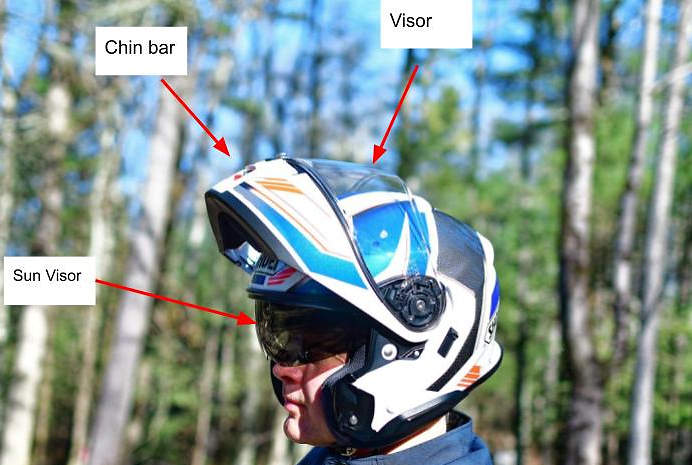
- Modular (Street): These helmets offer a chin piece that hinges and can be pushed completely up off your face. This is convenient to quickly allow air in when you’re stopped.
- Upright Conventional (Street, Touring, Commuter): These helmets are full-face helmets with shields, but they typically have little to no visor, making them ideal for street riding.
- ADV: The jack of all trades, these helmets are the middle ground between a street helmet and an off-road/motocross helmet. They typically have a full-faced shield and a larger visor than their street cousins.
- Motocross / Off-Road: If you’re riding most of your time on dirt, this is the helmet you want. Oversized visors and no face shields here — these are made for riding on dirt, and the Fox Racing V3 is one of our favorites.
Modular Motorcycle Helmet
Modular motorcycle helmets include a hinge chin bar, like on the Schuberth C5 and Shoei Neotec 3. That means you can swing that chin piece up and out of the way. The design is handy for taking a swig of water while you’re gassing up or chatting with a buddy about the next section of road.
Riding a modular helmet with the chin bar up is possible but not advisable. First, the weight of that component in the open position will tax your neck and shoulders: It feels like you’re balancing a small pan on top of your head. Second, exposing the front of your face is not good safety protocol.
Modulars are particularly handy for ADV riders because you can quickly open the front to assess technical sections of trail.
Upright Conventional Motorcycle Helmet
Upright conventional motorcycle helmets are meant for riders who are on street bikes, baggers, or ADV machines. This shape overlaps with the modular helmets, and all of the Moto helmets we tested fit in this category.
The Schuberth C5, AGV K6 S, Bell Race Star DLX Flex, Shoei Neotec 3, Shoei GT-Air II, and KLIM Krios Pro are all aero-tested for riding while sitting upright.

Adventure (ADV) Motorcycle Helmet
ADV-specific full-face motorcycle helmets, like the KLIM Krios Pro, are more versatile because you can remove the peak and visor. You’re basically getting several designs in a single package. Sans peak, the helmet is less turbulent on the highway. Ditching the visor/face shield lets you wear goggles, which are nice for technical off-road rides.
Typically, ADV-specific designs have a wider opening, so riders have increased visibility for obstacles when they’re standing on the footpegs. That way, you can carefully scope out rocks and undulations before picking your line.

Shell Sizes & Fit
Shell sizes matter. Manufacturers often tailor the same shell to different head circumferences. Often, that means the smaller size is internally stuffed with more padding or insulation to make up for the difference. That can be a slightly uncomfortable ratio for a smaller person because the wider circumference results in a larger draft.
All helmets are unisex sizing, so this can come into play more often for female riders who generally fit within the smaller size range.
Ideally, a full-face motorcycle helmet offers a close fit. There should be zero wiggle when you pull one on and just a slight smoosh in your cheeks. You want to avoid uncomfortable pressure in other areas, as this can amplify into pain points on longer rides. When you slide on the helmet, the interior should have a little bit of give. You also shouldn’t feel the firm backer or hard shell.
Noise, Comfort & Insulation
These three attributes go hand in hand. Also, if you care about noise, comfort, and insulation, look for a helmet design that’s been wind tunnel tested.
The Schuberth C5, AGV AGV K6 S, Bell Race Star DLX Flex, Shoei Neotec 3, Shoei GT-Air II, and KLIM Krios Pro all have chin spoilers: A curtain of foam beneath your chin. A chin spoiler cuts off airflow at the front of the lid, so you don’t experience turbulence inside the helmet.
A well-designed insulation system should be paired with clever vents. Internally, channels groove along the interior and especially on top of the helmet. When you pull back the padding, you can actually see the channels. You can also fire a flashlight beam through the exterior vents at the brow, which will light up the subtle grooves that let air pass over the top of your scalp.

Padding
The padding on the inside of the helmet is the part that comes in contact with your skin: the cheek pads and headliner. We prefer pads made of multi-density foam that is smooth to the touch for comfort yet firm against your cheeks to ensure a proper fit. This should be especially true when the helmet is brand new, as the pads will pack out after heavy use. Insulation dampens noise in helmets, too.
We prefer helmets with liners and cheek pads that can be easily pulled out and washed: all of the helmets in this guide check that box. When you return the liner and cheek pads to the helmet, that process shouldn’t be an arm-wrestling match. Good designs make that step a relatively easy process. When you’re shopping, go ahead and yank out the padding to see if it’s easy to replace.
All of the helmets in this test also have some type of antimicrobial treatment on the padding including the Fox Racing V3 that’s equipped with an Ionic+ moisture-wicking liner. This has been a welcomed feature for us during long, multi-week ADV rides.

Cooling & Ventilation
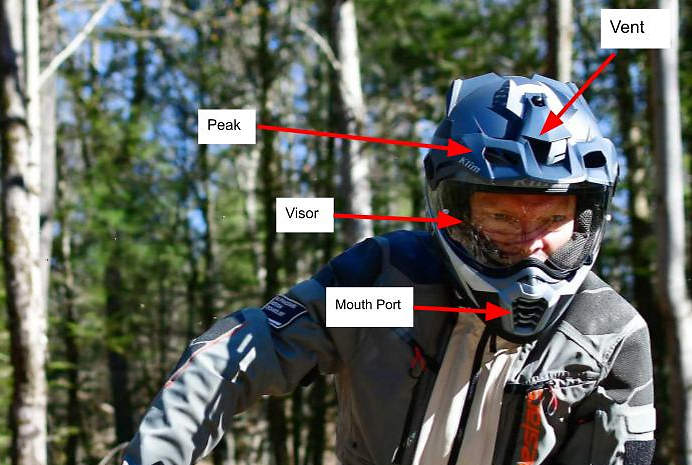
Inside a helmet, you can often see grooves across the interior, which channel air over top of your cranium. We quickly spotted channels inside the KLIM Krios Pro, plus the Koroyd material, which looks like the circular ends of side-by-side straws. A well-designed helmet can vent with minimal turbulence.
Massive ports are not necessarily needed for cooling. The type of riding you do will influence the size and quantity of vents.
On the KLIM Krios Pro, for instance, there’s an oversized mouth port. If you’re riding the Backcountry Discovery Route (BDR), moving slowly and off-road, you will need larger openings to breathe while working hard.
If the bulk of your riding is on open road and you’re going fast, you will want smaller vents. The Bell Race Star DLX Flex has smaller ports at the mouth, brow, and top of the helmet. At a higher speed, this helmet isn’t screaming with airflow that would deafen you. But thanks to the number of vents, the helmet is plenty cool for highway rides.
As far as breathability and aeration go, there’s no single helmet that’s perfect for all kinds of riding. MX riders typically ride with a helmet that has a peak and broad face opening for goggles, which also allows maximum cooling. But that type of helmet on the highway would roar with wind.
A touring rider might choose the Schuberth C5 because they want the advantage of a modular design without the noise, but that lid is not cool enough for slow-duty ADV routes.
Get the full-face motorcycle helmet that’s built to cool you off for 80% of the riding you do, and you’ll be happy.

Vision
The size of the visor or lens is proportional to the helmet’s intended use.
You’ll want a larger visor (from top to bottom) for off-road riding because you need to see obstacles directly in front of you while you’re standing on the footpegs.
Ideally, the lid you pick for the street has a wider field of view. That way, you can spot a car in your blind spot or see approaching cross-traffic without needing to swivel your head too far.
Across various helmets, the benchmark for keeping a visor defogged is a technical insert called Pinlock. The Schuberth C5, AGV K6 S, Shoei GT-Air II, Shoei Neotec 3, and KLIM Krios Pro (but not the Bell Race Star DLX Flex) use this attachment, which you place inside of the visor to prevent fogging.
Pinlock is pretty unique because the insert creates an airtight space between the inside of the visor and your eyes. This means fogging is prevented via a thermal barrier, the same way a dual-layer ski goggle works.
Pinlock inserts are treated to absorb moisture if it’s humid inside the helmet, like when you’re riding in the rain, and then release it back into the atmosphere when the humidity level drops. For instance, when you duck out of that storm, pop the visor, and stroll into an air-conditioned mini-mart for coffee.
The tradeoff? Pinlock inserts are delicate, so only rinse the surface with soap and water and let them air dry.

Safety & ECE 22.06 Standards
The new 2024 European Union (EU) safety standards for motorcycle helmets are a mega upgrade and arrived after 20 years with the prior regulations. Look for a full-face motorcycle helmet that passes the fresh, more stringent rules. You’ll see the tag: 2024 ECE 22.06. ECE stands for Economic Commission for Europe.
Now, the EU tests every single helmet model in each size. The impact tests include the visor, chin bar, and other components. For modular lids, like the Schuberth C5, the EU makes sure that the chin bar stays shut during multiple crash and deformation tests. That way, we know that the helmet remains protective in a hazardous event.
Helmets are put in a device where 630 Newtons (141 pounds) of pressure is applied from either side and front to back. The helmet cannot move more than 1.5 inches (40mm).
The EU also tests ventilation and audio. A helmet that blocks out too much sound won’t pass because you need to be able to hear your surroundings to be safe on a motorcycle. The protocols include testing peripheral vision.
Visors need to have a photochromic option, like the KLIM Krios Pro and the Bell Race Star DLX Flex. Those photochromic lenses need to be able to pass through enough light so that riders can safely see turn signals, brake lights, and stoplights, for instance.
For those visor tests? Examiners fire a steel ball at the shield at 180mph, in order to emulate a rock being kicked up from a tire. We wouldn’t want debris to pierce the face protection layer.
You can also look for a motorcycle helmet with the U.S. DOT (Department of Transportation) seal on the back, meaning that those designs comply with the federal standards for motorcycle helmets. We looked for moto helmets with approvals from the DOT and the EU.

Price & Value
Budget: $400-$650
Our lowest-priced helmet is the Fox Racing V3 ($444), which is our top off-road helmet. With this design, you’ll find excellent compatibility with goggles and a hydration-compatible system.
This is a niche build, though, and if you don’t primarily ride dirt, it’s not your first choice. That’s where builds like the AGV K6 S ($639) come in: an upgrade of the K6, one of the most well-rounded, protective, and functional options that comes in at a slightly lower price point.
Mid-Tier: $660-$790
Reaching the $700 tier, designs mix in details like Pinlock compatibility and bonus photochromic visor — like with the KLIM Krios Pro ($750). But you might see dings like limited sizing and less breathability, which might be a deal breaker if you tend to need to push your bike around tough terrain.
Premium: $800+
In the $800-1,000 zone, helmets start to check all the boxes — like the Bell Race Star DLX Flex ($820), which has extremely easy-to-remove pads that are integrated with magnets. Plus, the pads are dual-density and ultra-comfortable, while the shell’s breathability is excellent. The visor is photochromic, so the shading adjusts with the environment. It also happens to be impressively quiet. All of this combines to create our top-rated motorcycle helmet.

Frequently Asked Questions
A full face motorcycle helmet needs to be snug. The lining and padding of motorcycle helmets compresses over time. Ideally, the helmet won’t move much even without the chin strap buckled. You shouldn’t be able to slide your fingers in and around the padding at the forehead.
Measure your head with a soft tape measure around your forehead, just above the ears and around the back of your head. That measurement should correspond with the correct lid on the manufacturer’s size chart.
Brands make helmets with varying densities of pads. If you’re on the cusp of medium and large, for instance, you can use a thinner pad to fit that medium or use a thicker pad to fit in the large.

Typically, the shells of motorcycle helmets are made out of a glass composite, carbon, Kevlar, or a combination of these materials. The biggest distinction regarding material is going to be weight.
Carbon fiber helmets are usually lighter. As a result they can be pricier. But the carbon fiber AGV K6S we tested is more affordable compared to our other top picks.
Full face motorcycle helmets in the $200-300 range tend to be made of heavier materials. That doesn’t default to lower degree of protection or safety. Though, there is a linear relationship between safety and cost, and that’s typically true for weight and cost, too.

Without question, a full-face motorcycle helmet is safer than a half-shell. Full-face motorcycle helmets are also safer than helmets with open ports for goggles. Goggle lenses aren’t as hard or impenetrable as a visor shield, because they need to deform to fit snugly against your face.
Modular helmets should be no less safe than a full-face motorcycle helmet that is fixed and non-modular. Though, usually having a hinge mechanism adds some bulk to the design, so modular options are going to be heavier than a straight full-face model.

The motorcycle industry suggests replacing your helmet every 5 years or immediately after a notable crash or impact. So far, every helmet in this guide has a 5-year manufacturer’s warranty, which should cover your product from defects during the practical life of the helmet. The 5-year recommendation is a result of the internal materials naturally deteriorating or compressing, rendering it less safe over time and use.
It’s not hard to understand why you should retire your helmet right away if you take a tumble in it. You might be tempted to continue riding with a helmet that doesn’t seem heavily damaged, but don’t forget that invisible damage to internal materials could compromise the level of protection that the helmet can provide in a subsequent crash.
Try to avoid setting or storing your helmet in precarious places like on your seat or hanging off your handlebars — bad or repetitive drops can have the same effects. Treat your helmet like the investment it is, and replace it per manufacturer recommendations.