For the last few years, the Benchmade Bugout has been the top-selling EDC (everyday carry) folding knife. Yet I have a love-hate relationship with the Bugout. The standard version does fine for light to medium duty, but doesn’t hold up to the demands that most of us put on our knives.
But its continued success can’t be ignored. Other brands have released visually and functionally similar knives with their own spin on it. CRKT’s Counterpart is the latest, and it comes from esteemed knifemaker Ken Onion. And because it costs under $100, my interest was distinctly piqued.
What sacrifices did CRKT make to hit that price? Will the average user even notice? This knife proved a lot of fun to test out and, in the process, raised my respect for the Bugout as well.
In short: The CRKT Counterpart is a well-balanced, lightweight EDC folding knife with a lot of character. It offers something for the person looking for an all-around task knife. I probably wouldn’t recommend it to someone looking to abuse it on a construction site, but it will feel right at home in a workshop or on the trail. For $75, the Counterpart provides a similar experience to knives more than twice its cost.
- OAL: 7.75"
- Blade length: 3.38"
- Blade steel: 12C27
- Blade shape: Drop point
- Grind: Flat
- Hardness: 57-59
- Lock type: Crossbar lock
- Opening type: Crossbar lock
- Carry: Left or right hand, tip-up
- Weight: 2.10 oz.
- Price: $75
Pros
- Crossbar lock only opening method
- Size-to-weight ratio
- Hand feel
- 12C27 punches above its weight
Cons
- Handle flex
CRKT Counterpart Knife Review
Design & Features
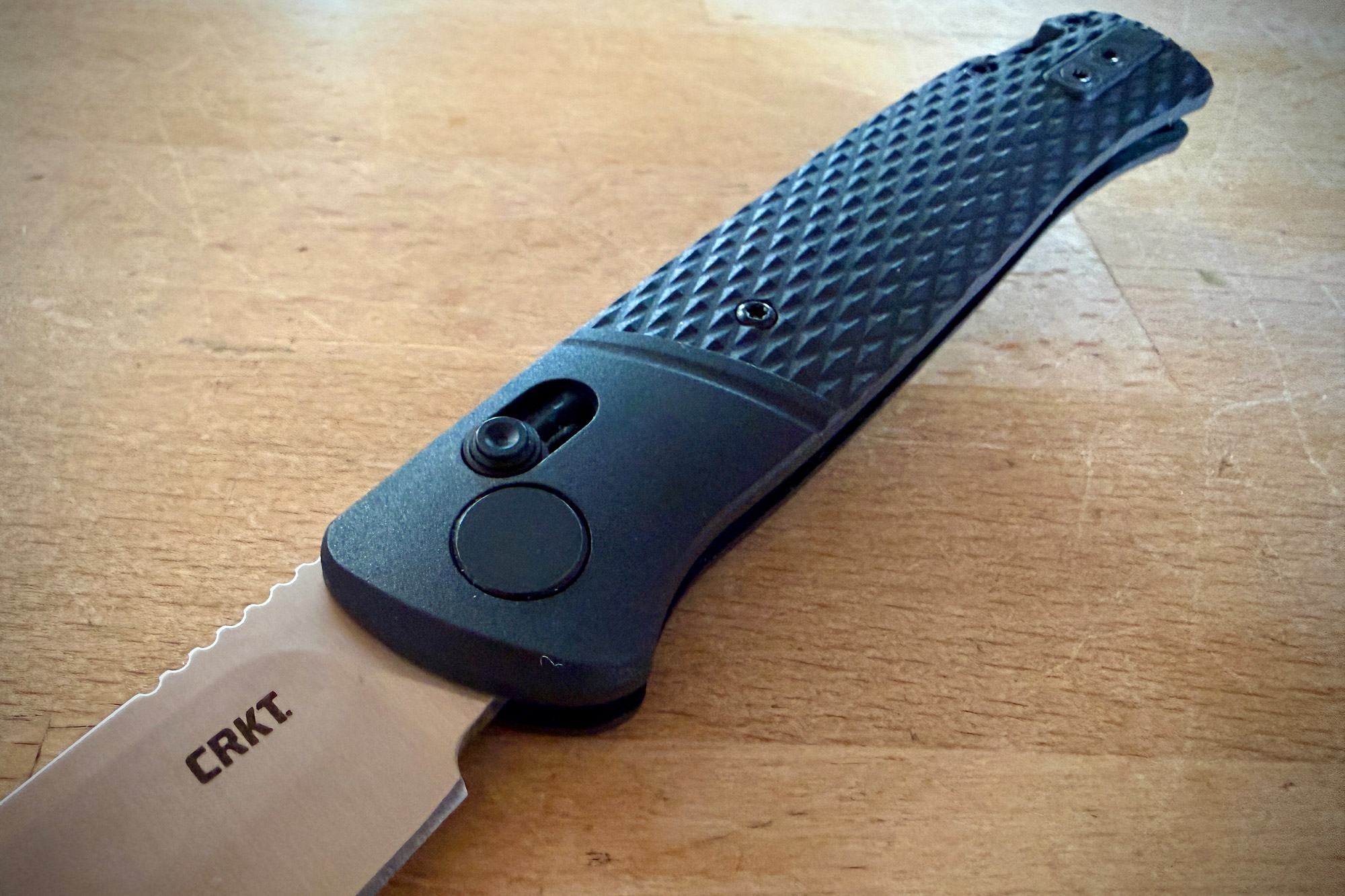
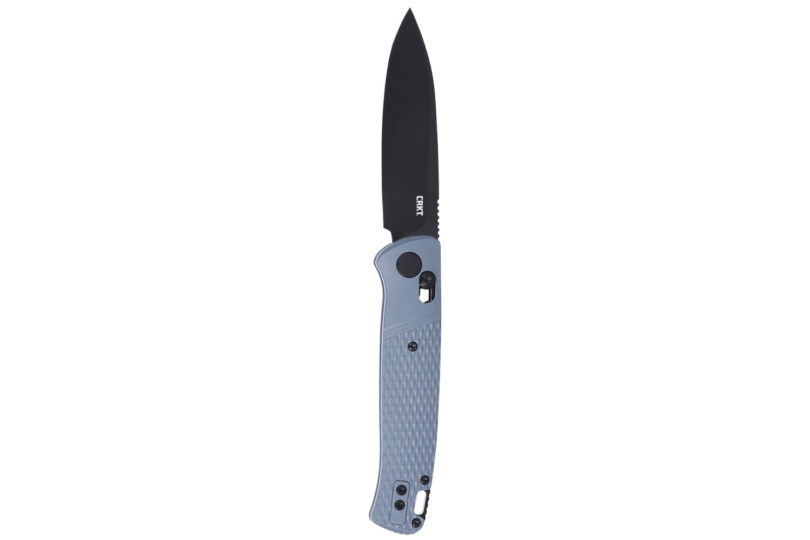
The CRKT Counterpart is a lightweight utility knife designed for everyday carry and use. It has extra-grippy, glass-reinforced nylon handles with steel liners around the ball-bearing pivot to counteract stress and strain. However, in order to keep it lightweight, CRKT chose not to go with full steel liners, so expect some flexibility in the handle itself.
The blade uses 12C27, an affordable Swedish stainless steel that’s been field-tested and held in high regard. Commonly found in Morakniv knives, it’s known for being tough and corrosion-resistant. The trade-off is that it doesn’t hold an edge as well as a steel like S30V, but it is easy to sharpen.
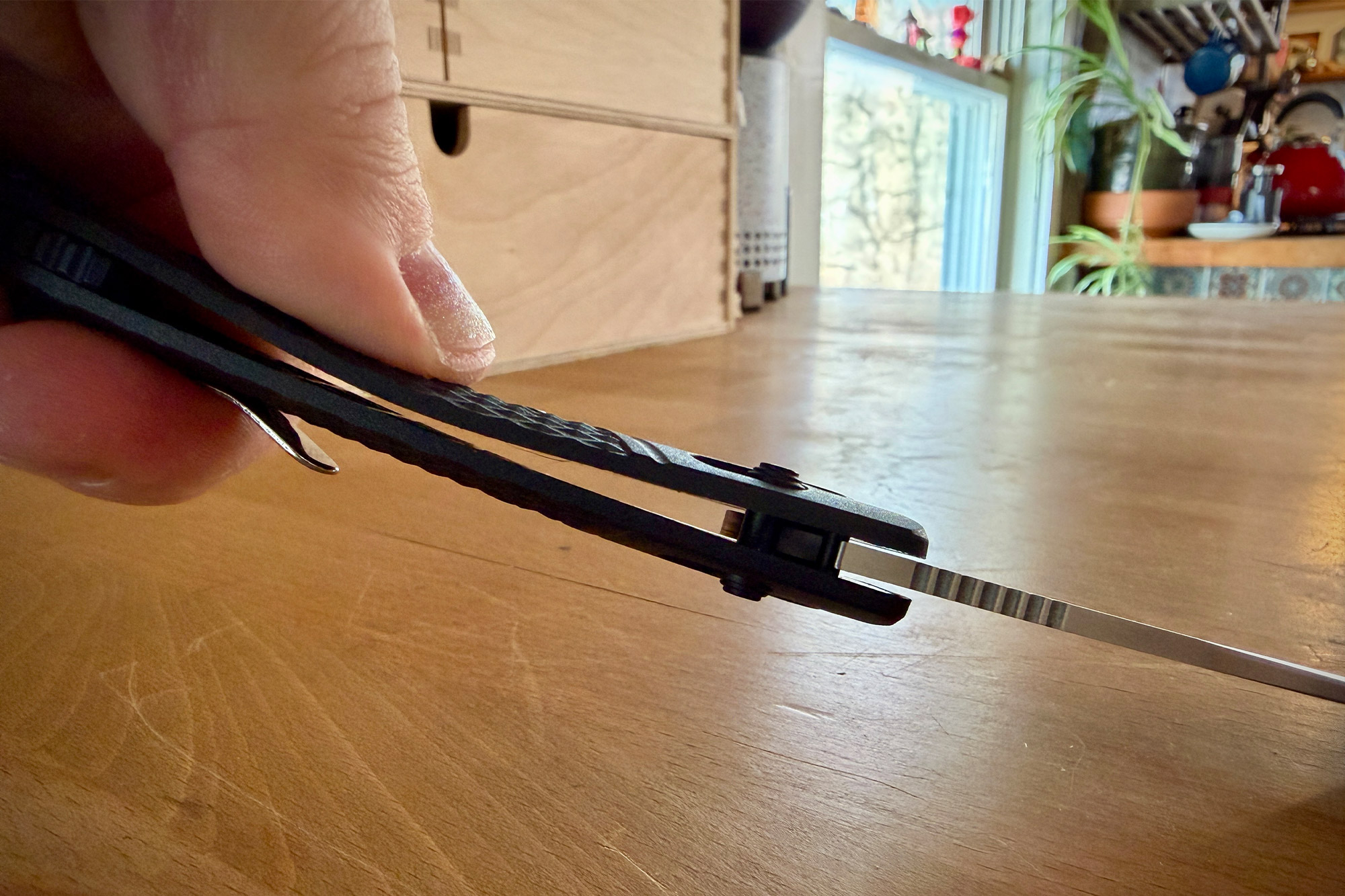
An interesting feature about the Counterpart is that there’s no thumb stud, thumb hole, nail nick, or flipper for opening. That means that you’ll need to use the crossbar lock to flip out the blade, and I am here for it! I commonly use the crossbar lock to flip open my knives. By not including a thumb stud, which would be the obvious choice for an opening mechanism here, the Counterpart is streamlined and efficient.
With an overall length of 7.75 inches and weighing in at 2.1 ounces, the Counterpart is a balanced knife that will fit right in with folks looking for an EDC, backpacking, or all-around utility blade.
First Impression
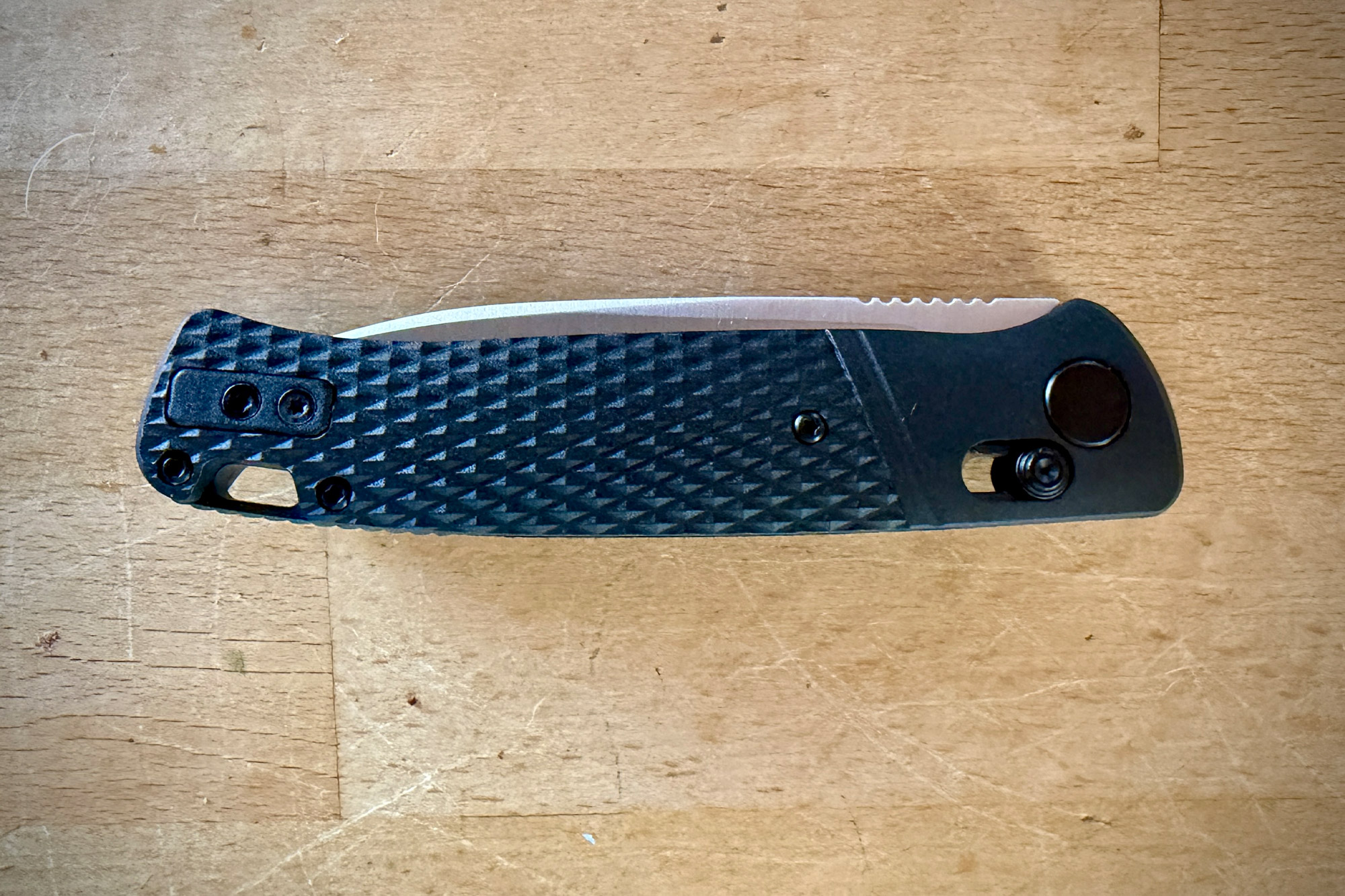
It’s hard to ignore how similar the Counterpart is to a Bugout. They’re nearly the same size and shape, and the textured nylon handles are a visual cue that’s hard to ignore. Where 12C27 is an admirable stainless steel, the S30V found on common models of the Bugout is a powdered steel, which means it has fewer impurities and will perform better overall.
But will the average user be able to tell the difference in day-to-day use? I’m not so sure. These affordable steels have gained market share, and I’m not hearing any complaints about them. In fact, if anything, people, myself included, are impressed with how steels like 12C27 and 14C28N perform, especially given their price.
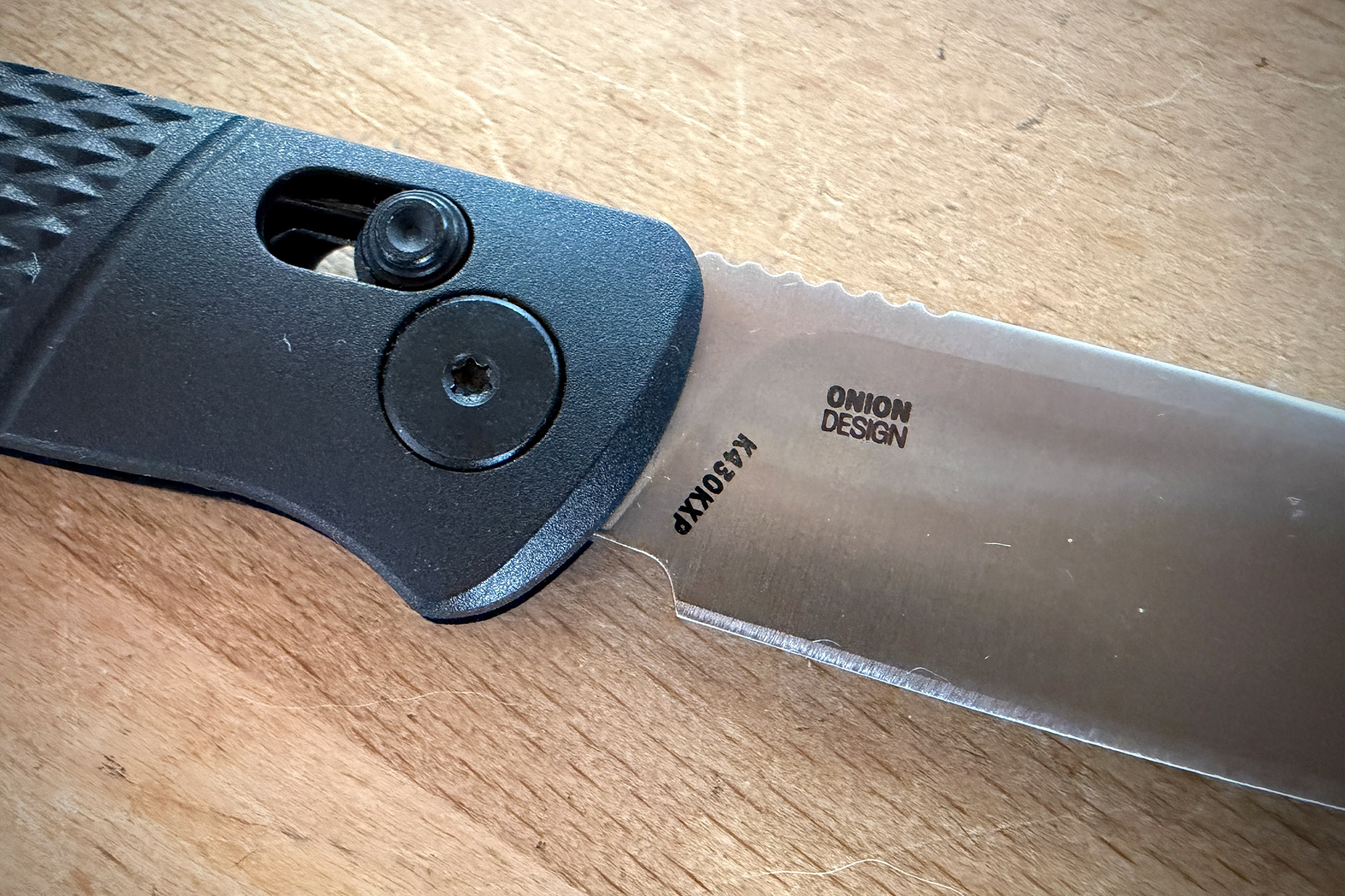
That said, I really enjoy the Counterpart from a look-and-feel perspective. I do not like the flexibility in the handle, but knowing it’s there sets the tone for this knife’s capabilities. I can tell you that the blade is sharp as hell, and the 90-degree spine will make it great for both food and fire prep.
Additionally, I am absolutely smitten with the fact that there’s no thumb stud or hole. It makes the Counterpart sleek and fast. The action out of the box on this knife is smooth. This is no doubt amplified by the ball bearing pivot. With fidget factors baked into knives these days, those who enjoy a good fidget will enjoy the heck out of this knife.
The Bailout Variant
Benchmade’s other buzzworthy knife is the Bailout. It’s a more tactical and robust version of the Bugout that has a Tanto-style blade.
Well, the Counterpart has a version that chases that tail as well. It’s the fourth variant, which comes with a D2, tanto blade. This version also has a thumb stud. If my theory about the Counterpart looking like the Bugout didn’t convince you, this should.
I’m not complaining or pointing fingers. There are a handful of knives out there that have a strikingly similar look — even the shockingly priced $10 Ozark Trail folder that swept up the knife community in 2024.
In the Field
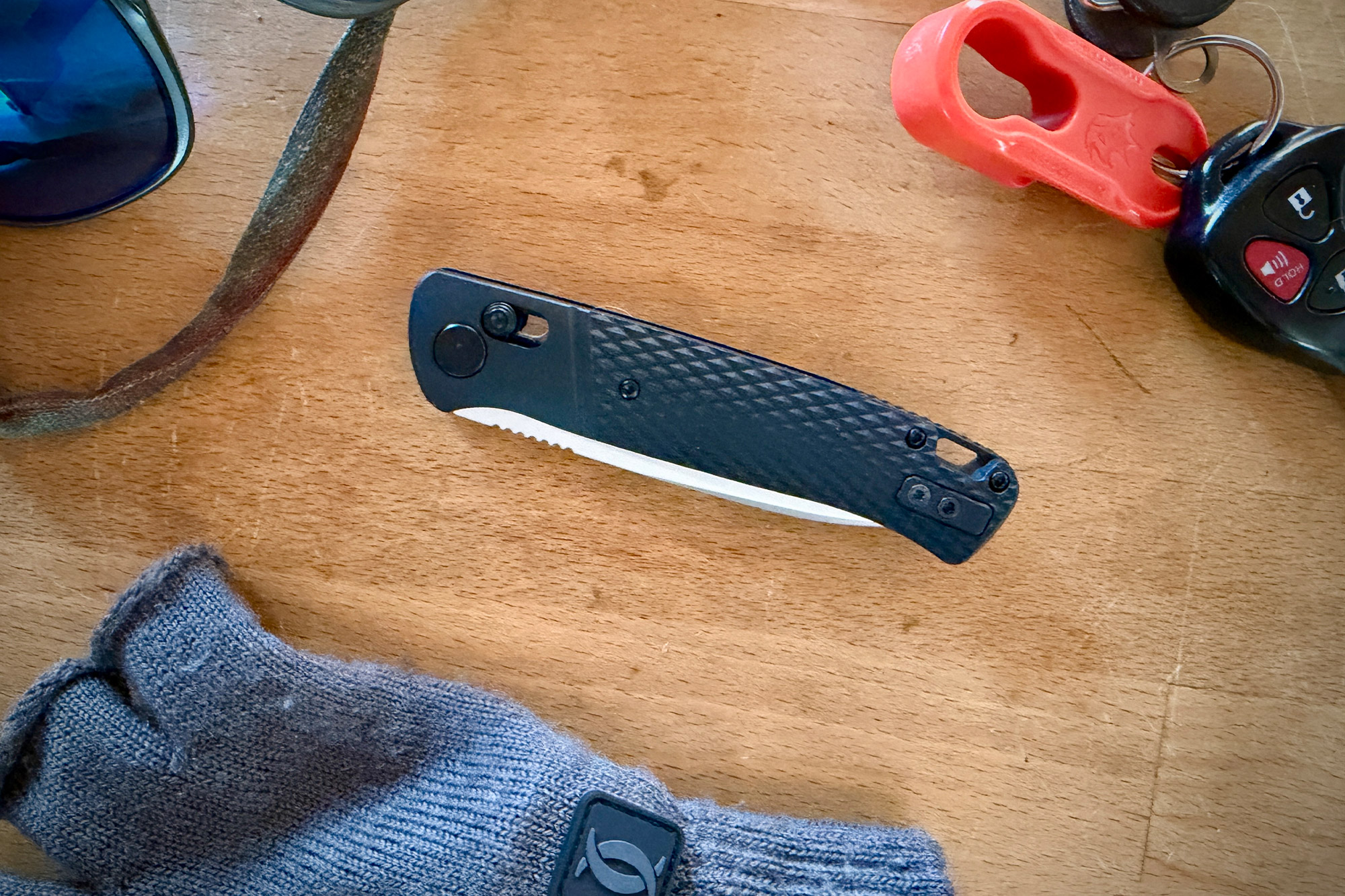
Two things stand out from my time using the Counterpart — first, its sharpness. This is a common trait of 12C27; however, as someone who has tested all the popular knife steels out there, this is uncanny. And it didn’t dull quickly or lose that factory edge.
Secondly, it is how clean and easy it is to pull back the crossbar lock. If there is one negative that’s been a constant in crossbar lock knives, it’s that they either stick or the spring is too strong. This makes it a challenge to open and close those knives. Out of the box, and throughout testing, I haven’t had any issues with the crossbar lock on this knife.
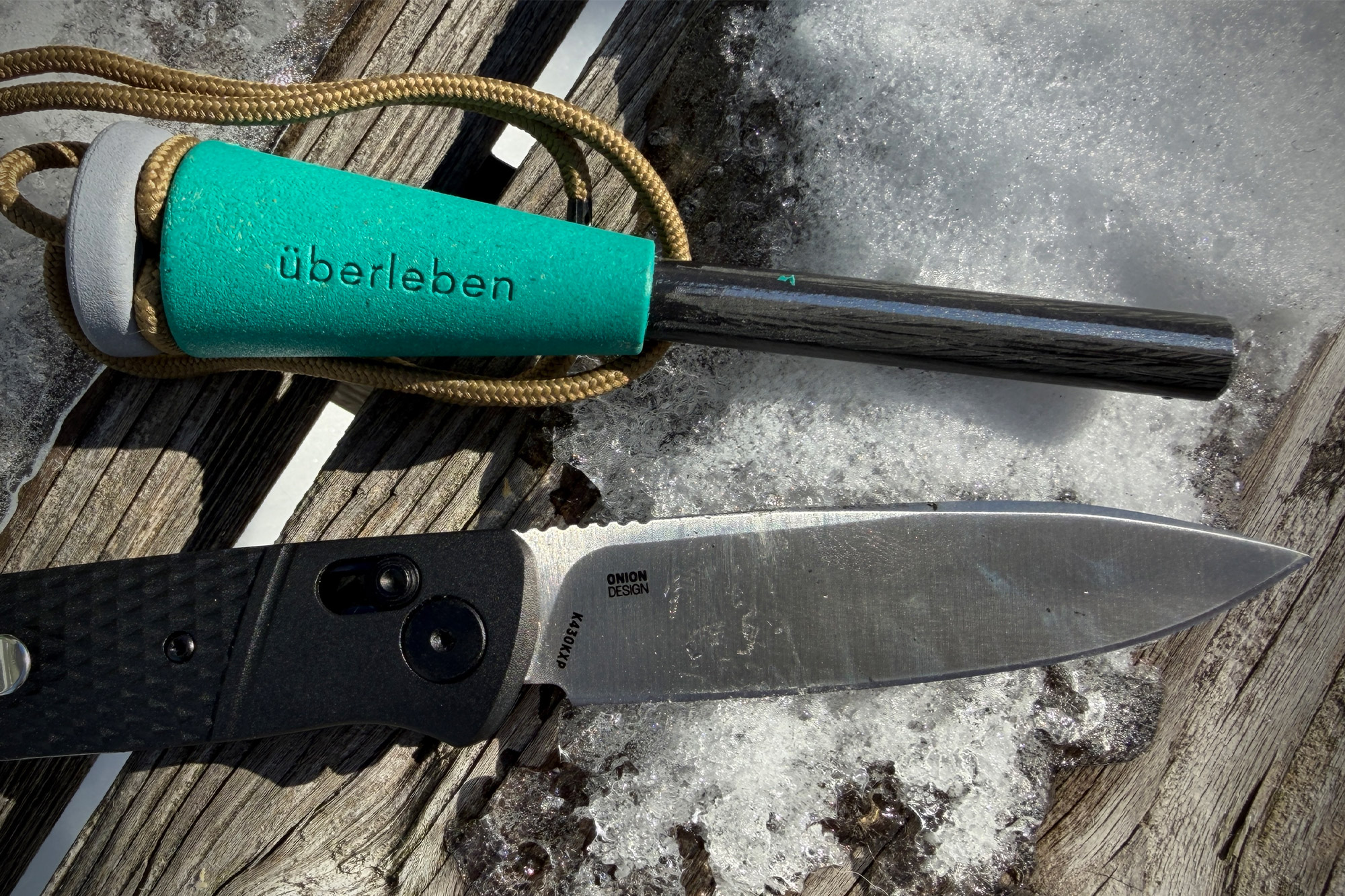
Overall, the Counterpart is an everyday taskmaster. It’s light and slim and rides around in your pocket, hardly noticed. When it’s time to go to work, it deploys with ease and doesn’t struggle in shaving down tinder, making a spark with a ferro rod, slicing up meats and veggies, or breaking down boxes.
Enjoying a slight knife like this in the dead of winter, when big and bulky knives tend to be a better fit, was a nice surprise.
Conclusion: Who’s It For?
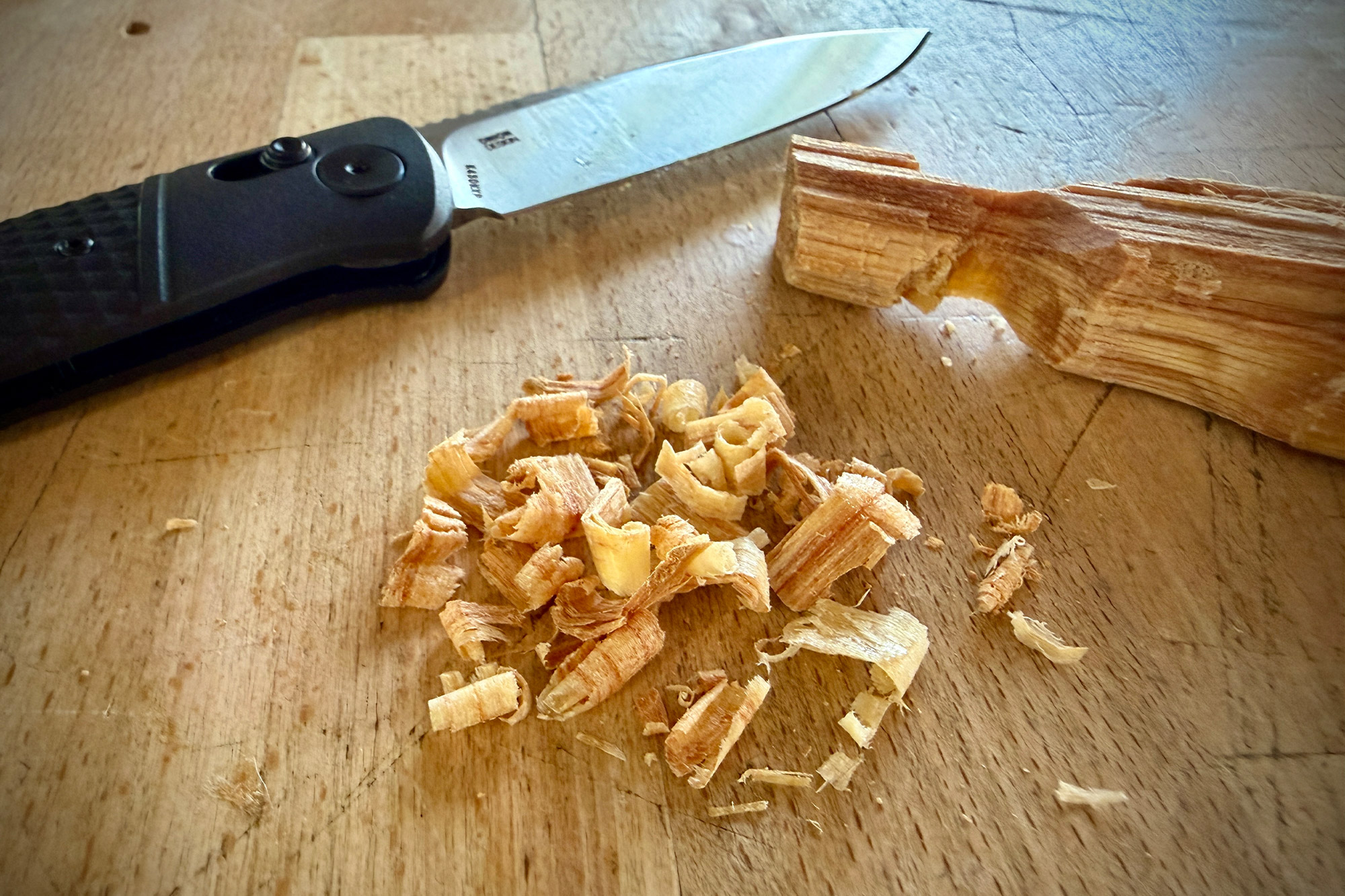
Overall, the Counterpart is a great knife at a great price. For under $100, it’s capable of resisting corrosion and maintaining its edge for standard, day-to-day tasks. It’s also lightweight and sized right, and has an incredible opening and closing action. In short, it’s high-functioning from every direction.
The Counterpart is ideal for the DIY enthusiast who finds themselves juggling a multitude of tasks. It would also fit in nicely for hiking, backpacking, and wandering around in the outdoors. But keep in mind, this isn’t a hard-use knife. Once you start putting lateral pressure on it, the handle will flex. This is common in modern folding knives that come in under 3 ounces.
So don’t go out and drill holes with it. Use it to mark cut lines in pine for that bird feeder you wanted to make, or to open packages of dehydrated camp meals.