Florida nurse Dwight Pfeiffer is very familiar with the dangers of hurricanes. A U.S. Army combat veteran who lives on an island near Sarasota, Pfeiffer has long served on disaster response teams, helping evacuate thousands of elderly patients amid the “pure chaos” caused by powerful storms. These hurricanes often knock out power for days or weeks at a time.
“My plans for dealing with a major emergency all assume that there won’t be power, cell service, or internet access,” he told GearJunkie.
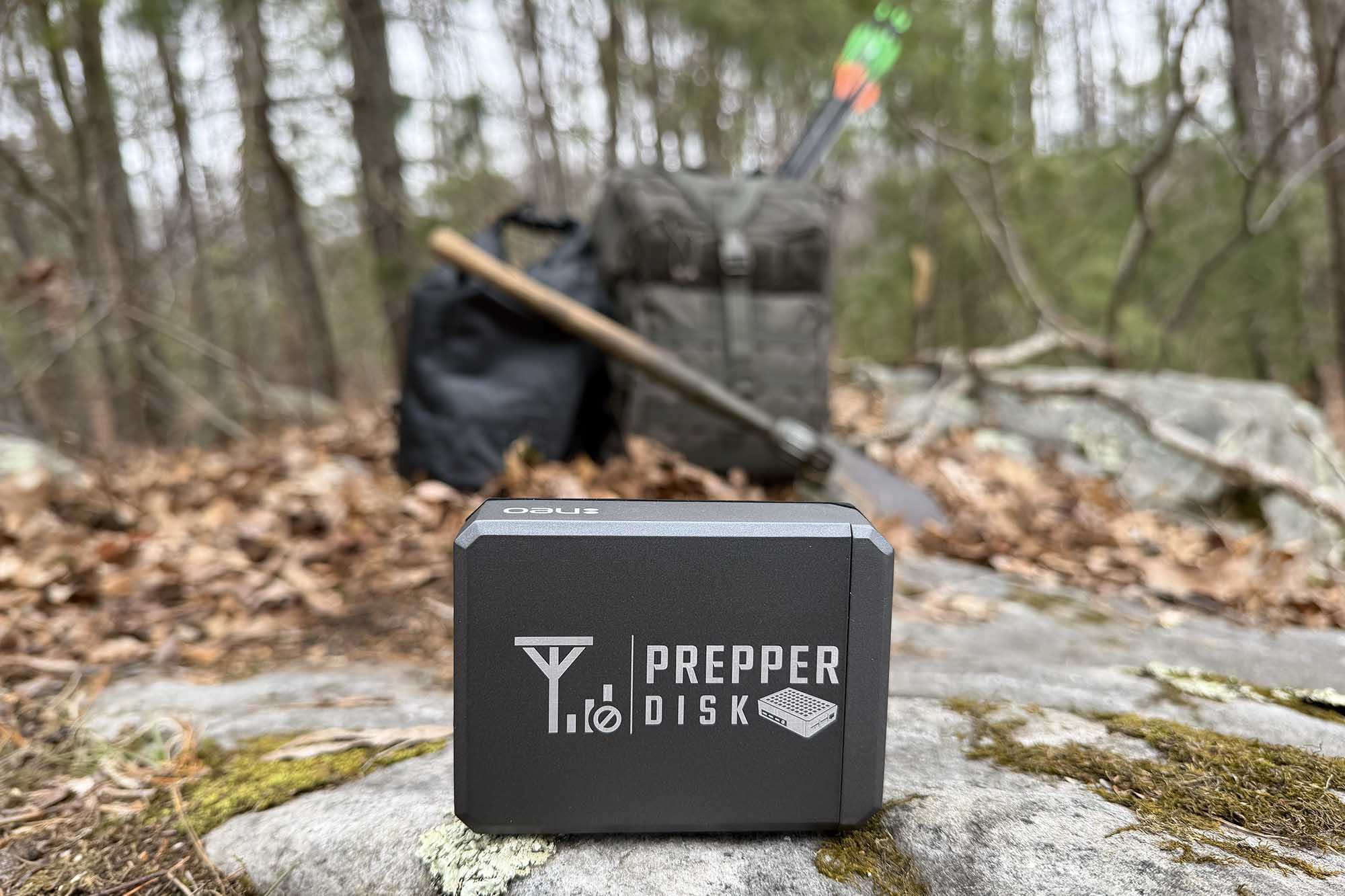
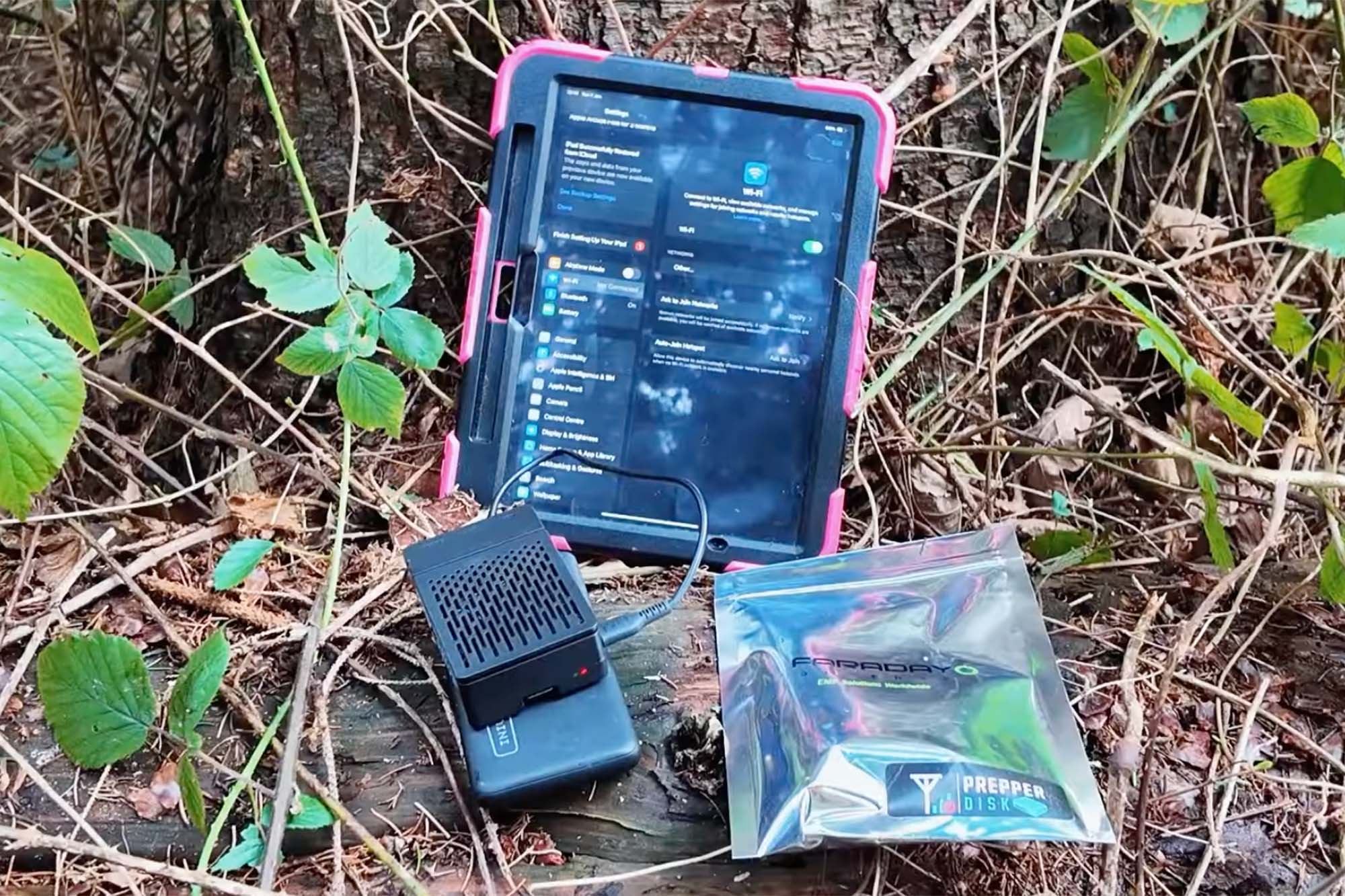
That’s why Pfeiffer bought a Prepper Disk. This handy little device is about the size of a power bank, but can store massive amounts of information that it sends to any device via Wi-Fi — no internet service required.
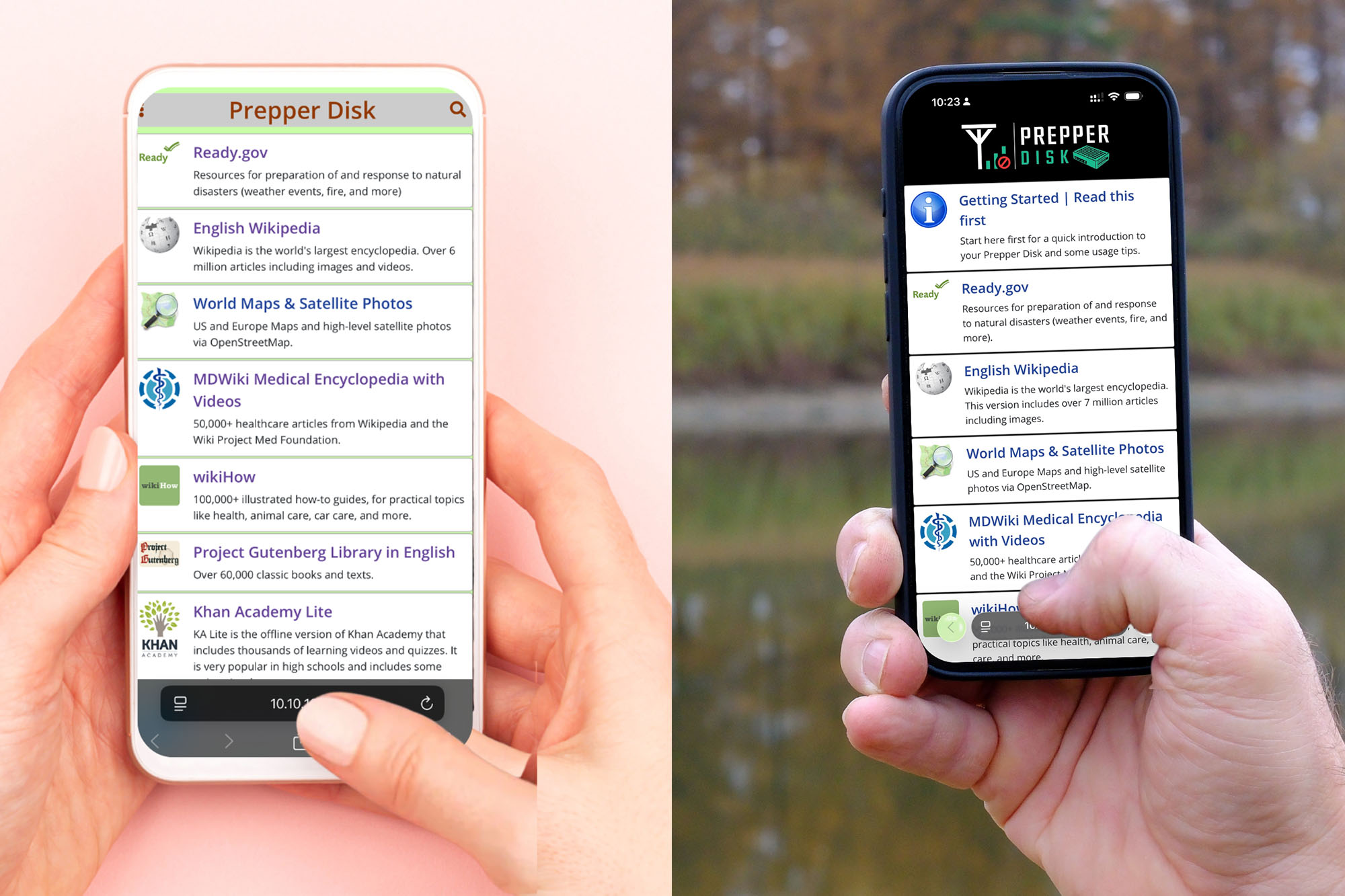
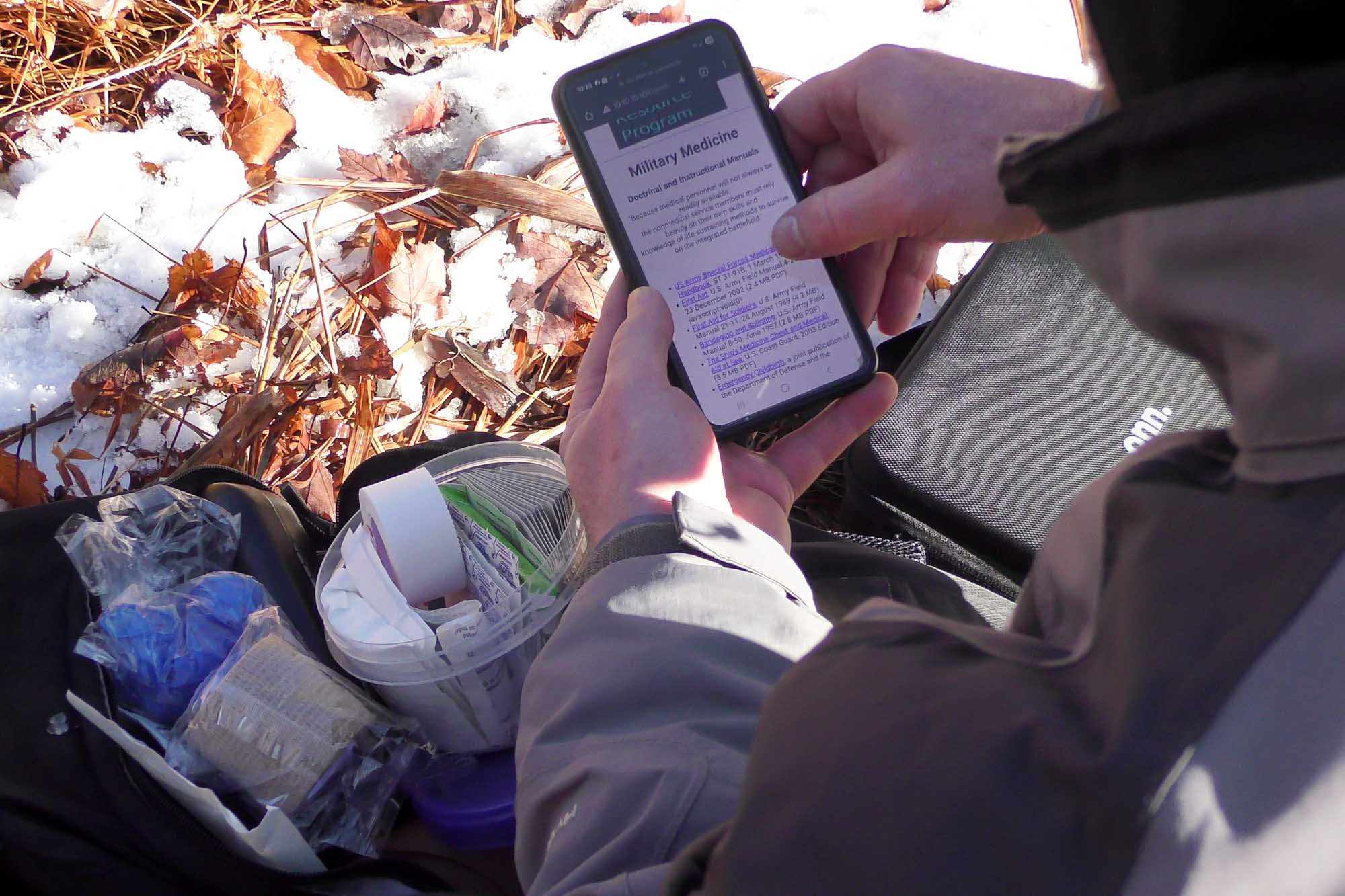
Though customizable, Prepper Disks come with detailed world maps, medical guides, the entirety of Wikipedia, and tons more. And it’s all searchable on multiple devices at a time. So it feels like surfing the web, rather than poring through endless folders on a traditional hard drive.
Though Prepper Disk was founded in 2024 by a retired technologist in Massachusetts, the tech has decades of history. After 20 years of bringing educational materials to remote communities in developing nations, it’s now increasingly popular in developed countries as well. From emergency use to privacy concerns to avoiding censorship and misinformation, more people are finding reasons to own an “internet in a box.”

Birth of the Prepper Disk
Adam Chace had already retired from a long career in education technology when he realized he was “bored and looking for something.” And he found what he was looking for while serving on the board of a nonprofit called The Water Project.
While visiting rural areas in Kenya, Chace saw classrooms that lacked even the most basic resources for teaching children about modern technology: “Many of these schools don’t even have electricity. They’re trying to teach computing on a blackboard without a computer,” Chace told GearJunkie. “That was where the spark hit for me on ‘internet in a box.'”
That led Chace to connect with Kiwix and Internet in a Box — the two organizations that invented this techy concept 20 years ago, with a focus on helping educators in countries without much infrastructure. The leaders of both of these organizations were happy to help Chace as he developed his own version that might appeal to American consumers.
Chace then spent more than 500 hours developing the Prepper Disk to make it as easy to use as possible. You simply plug it in, connect to its localized Wi-Fi, and you’re ready to surf its many offerings. While Chace acknowledged that some tech-savvy individuals could certainly build their own version of a Prepper Disk, it’s likely a “couple days’ work” to do so.
“There’s a lot of open-source software in our product. For a lot of people, it’s incredibly intimidating to configure and install all that,” Chace said. “It’s kind of an ease-of-use thing.”
More Use Cases Than Expected
Since starting the company in 2024, Chace has sold about 5,000 units, and he even recruited his wife and kids to help with a business growing faster than he ever expected.
“There’s definitely the ‘end of the world, doomsday prepper, SkyNet contingent’ out there, but we’re not trying to trade on fear,” Chace said.
In fact, the Prepper Disk has appeal for many kinds of people. That’s largely because the world has changed rapidly since Chace began developing it. He has sold many Prepper Disks to people in Ukraine, where the war with Russia has destroyed much of the country’s infrastructure. But most of his units sell in the U.S., Australia, and the U.K.
In these developed countries, Chace’s customers are giving it to their kids for secure internet while traveling. It’s also become popular among the “camping and outdoor survivalist crowd,” as well as the people who just want more privacy, which Chace calls the “Duck Duck Go crowd.”
It became even more popular in the U.S. during 2025, as more Americans became concerned with misinformation and censorship. “I wasn’t initially thinking about an unreliable internet, or that longstanding resources would change. Never did I think we were helping to protect against those censorships,” Chace added.
Decades of Doing Good
It’s only recently that more Americans have become interested in this technology. For 2 decades, it has largely been proliferated around the world by two nonprofits: Internet in a Box, based in the U.S., and Kiwix, based in Switzerland.
Leaders of both organizations have long worked together to bring free education to remote places that lack infrastructure or internet access. Kiwix developed “genius” software, allowing huge amounts of information to be compressed into what it named “Zim files.” Internet in a Box, meanwhile, created a flourishing open-source community that brought this technology concept to a broader audience.
While these “internet boxes” have various names, it’s actually a simple concept. Like Chace’s Prepper Disk, they combine Raspberry Pi, a cheap, credit-card-sized computer developed in the U.K., with Kiwix’s highly compressed Zim files. This makes for a small, portable computer with gigabytes or terabytes of information that’s easily viewable on multiple connected devices.
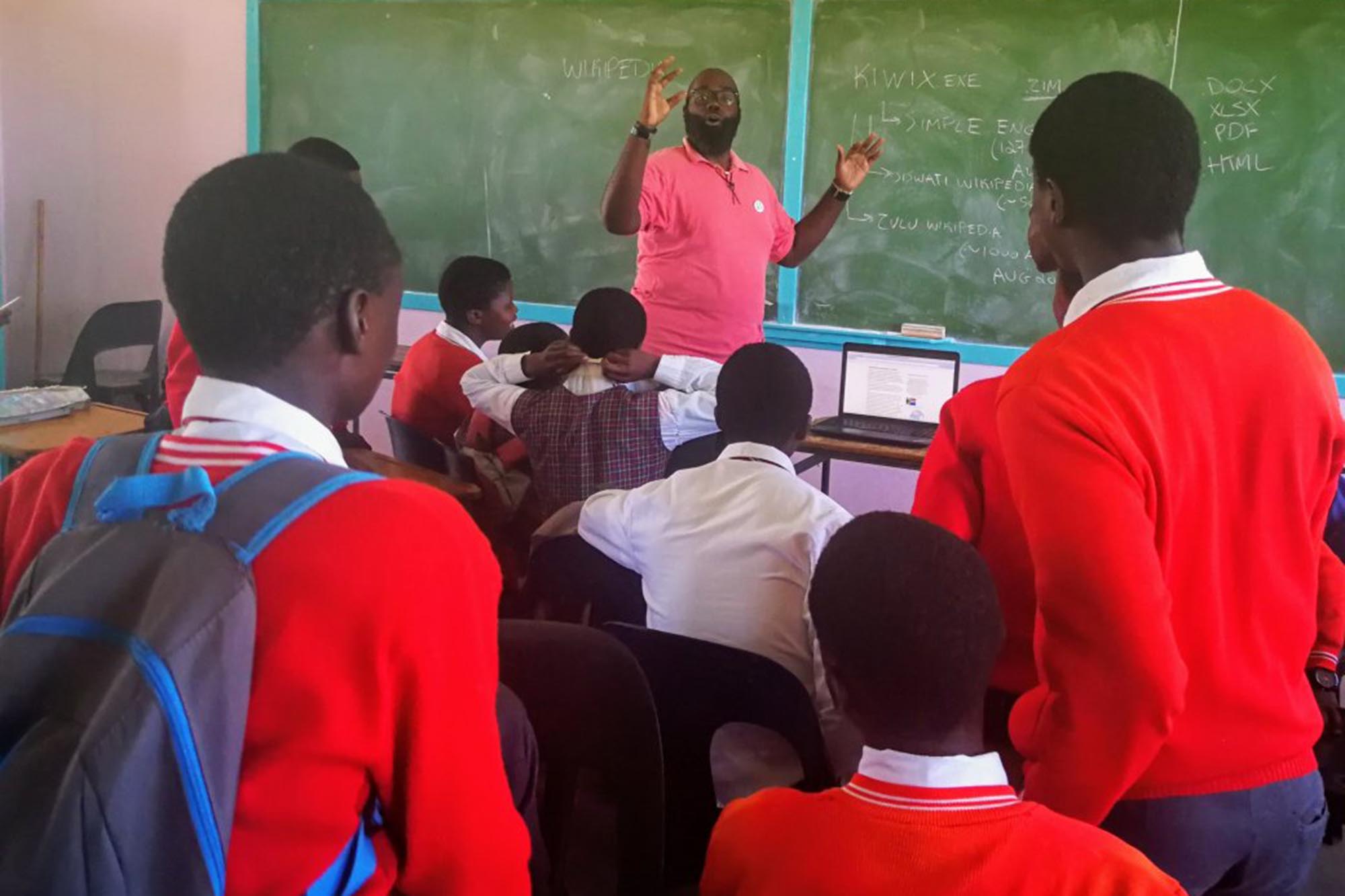
In the early years, the technology brought valuable educational materials to various countries in Latin America and Africa. Then it became more prevalent in places like China, Russia, and Iran, where government censorship prevents access to much of the internet.
These days, many people choose to download one of Kiwix’s Zim files directly to their cellphone, allowing them to read the entirety of Wikipedia (in their native language), without paying a dime.
“Nobody has to buy this. It’s completely free,” said Adam Holt, one of the primary developers of Internet in a Box. “Most of this was created by people who couldn’t believe that this hadn’t been done already.”
An International Community
In the West, most people use the “internet in a box” concept to create private, curated versions of the internet. In much of the rest of the world, it’s a lifeline to information they could never obtain otherwise.
Thomas Knox, who owns a home in the Philippines and spends much of his time there, had already been archiving Kiwix’s Zim files for years. That’s because internet access in the country is “spotty, massively expensive, non-existent, or a combination of the three,” he told GearJunkie. He finds Prepper Disk “incredibly useful,” especially because of its accompanying battery pack.
“When we would go to remote areas to visit friends or family, often they had no network access,” Knox said. “By bringing the Prepper Disk, we were able to look up information, watch informative videos, and even read some books. I was also able to show some tutoring videos and do some quizzes for the kids that were having a little trouble with school.”
For 20 years, Kiwix’s Zim files have had an enormous impact, allowing people around the world to simply download Wikipedia and other sites they can’t directly access because of government censorship. The site has 12 to 15 million users “that we know of,” said Kiwix CEO Stephane Coillet-Matillon. That includes some who use Kiwix’s software to create their own Zim files of the parts of the internet they deem important.
Roughly 20% of the site’s downloads are from China. Many others occur in Russia and Iran. When the war started in Russia and Ukraine, “our downloads from Russia exploded,” Coillet-Matillon said.
And as more Americans became concerned about censorship and misinformation on government websites, they started asking Kiwix for archived versions of sites like Health.gov — prior to January 2025. Those political elements are a far cry from what Coillet-Matillon expected from Western users. “I was really expecting a lot more people to go for PornHub,” Coillet-Matillon said. “But it’s not that many.”
Private Internet for an Uncertain World
Interested in a Prepper Disk? You’ll have to get in line. The small company’s “classic model,” a 256GB unit which sells for $200, is currently sold out. And its premium version ($280), which has double the content, is currently on back order.
Once they’ve owned one, the brand’s customers tend to recommend it to others. Pfeiffer, for example, isn’t the only healthcare worker in his family. He plans to buy one for his sister, who’s a pediatric nurse practitioner. He also convinced two aunts and a cousin, who are all doctors, to buy them, as well as two friends.
It’s a small price to pay, he said, for access to information.
“If there is ever a major disaster and the power grid goes down, and there is no internet, I have a massive amount of information that covers almost every issue that may arise,” Pfeiffer said. “I have a large battery pack and a solar panel set-up so I can keep my phone and laptop working for many weeks, if not indefinitely. It is real peace of mind knowing that I have that at my fingertips.”