The darkness had regrettably fallen by 5 p.m. as whipping wind and mangled snowflakes swirled around me. My headlamp beam was limited to just a few feet in front of me as I struggled forward through the storm. I was cold. I was unhappy. But at least I was trail running.
It’s the annual reality that dedicated runners face when winter settles in. On my feet were what felt like the only thing making this awful, icy jog tolerable — the Arc’teryx Norvan 4 Nivalis GTX shoes ($250).
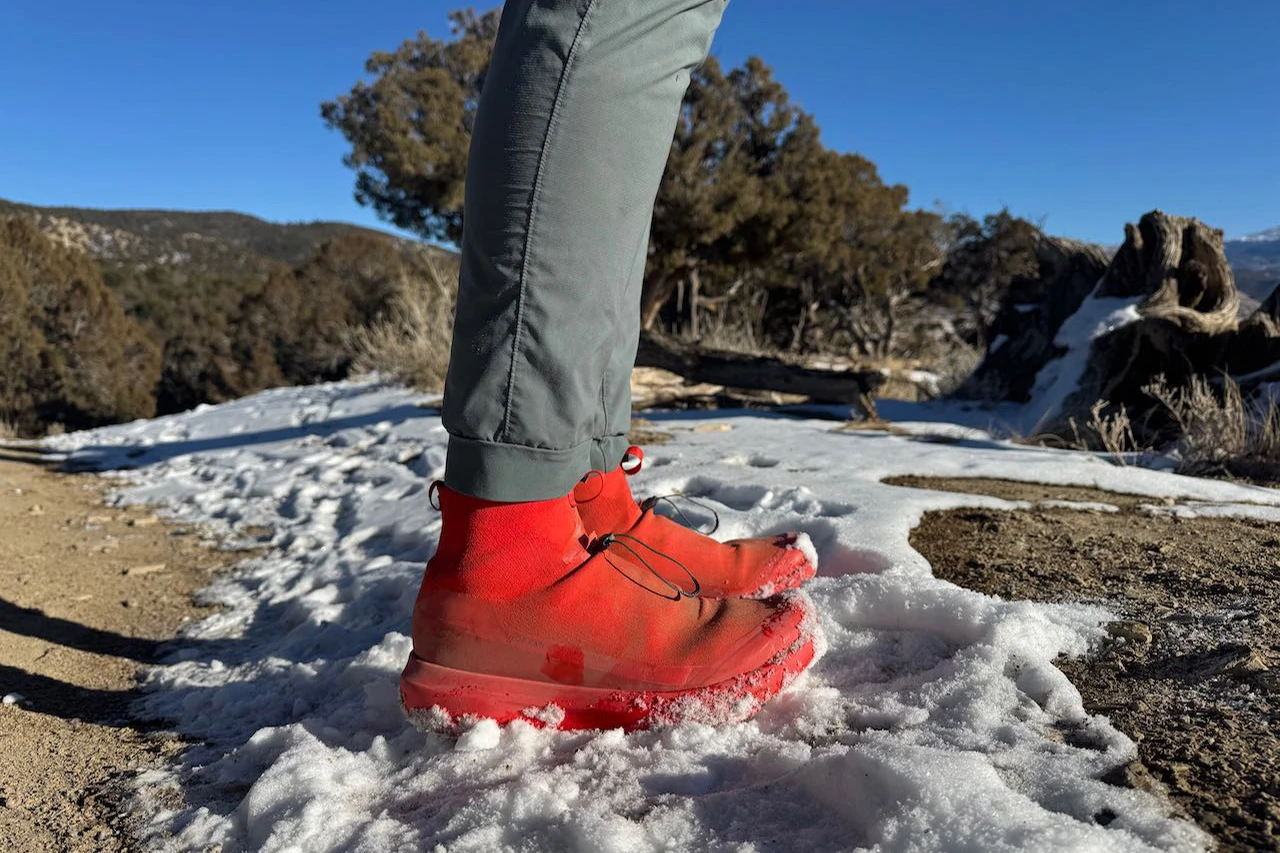
The Norvan 4 Nivalis shoes are designed for this exact situation with their mega-lugs, GORE-TEX waterproofing, and tall gaiters to keep the snow out. I was able to push deeper into the darkness with steady traction and dry feet, for better or worse.
The Norvan 4 Nivalis GTX shoes are the newest entry into a growing crop of winter running shoes that have helped stubborn runners like me keep the momentum going all year long. But beyond that, there are a few interesting features that make the new Arc’teryx shoes stand out from other winter runners on the market.
I put them through their paces over 100 miles of trail, snow, and pavement in all the terrible weather I could possibly hope for, along with a few glorious sunny days. I had two driving questions — will the Norvan 4 Nivalis GTX protect runners’ feet on the nastiest trails in the depths of winter? And will that make them overkill everywhere else?
I dug deep to find out.
In short: The Arc’teryx Norvan 4 Nivalis GTX shoes are tuned for winter trail running. It utilizes Vibram’s Megagrip with 6mm lugs, a moderately firm dual-density EVA midsole, and a lightweight waterproof upper with a stretchy gaiter. I ran many muddy, mucky miles in these shoes. They proved to be excellent distance runners on mild to moderately technical terrain, even if they wouldn’t be my first choice for ultra-techy (or snowy) trails.
Check out GearJunkie’s guide to the Best Running Shoes.
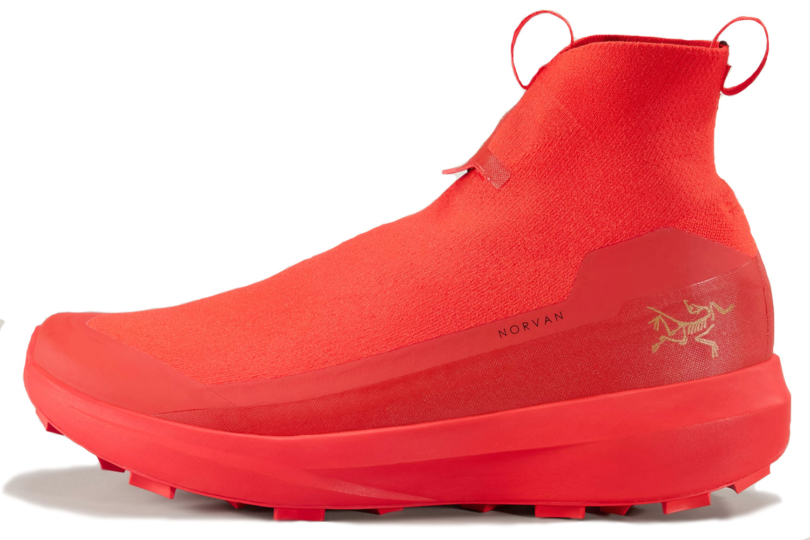
- Lugs: 6 mm
- Drop: 6 mm (25 mm heel/ 19 mm forefoot)
- Weight: 11 oz. (305 g)
- Sizes: US Men’s 7-13, US Women’s 5-10
Pros
- Excellent traction on snow, dirt, mud, and rock
- Supportive dual density midsole protects feet and adds precision
- Integrated gaiter protects feet from trail debris and snow
- Comfortable fit for long runs
Cons
- No tension adjustment in the forefoot
- Snow can sneak through small gaps at the gaiter cuffs
Arc’teryx Norvan 4 Nivalis GTX Shoes Review
It’s been a weird fall and winter so far. Snowing in blasts here and there, melting out, and then refreezing in solid sheets. We’ve swung between extended dry spells, snow, and rain. That’s made it a phenomenal season for testing winter-oriented running shoes.
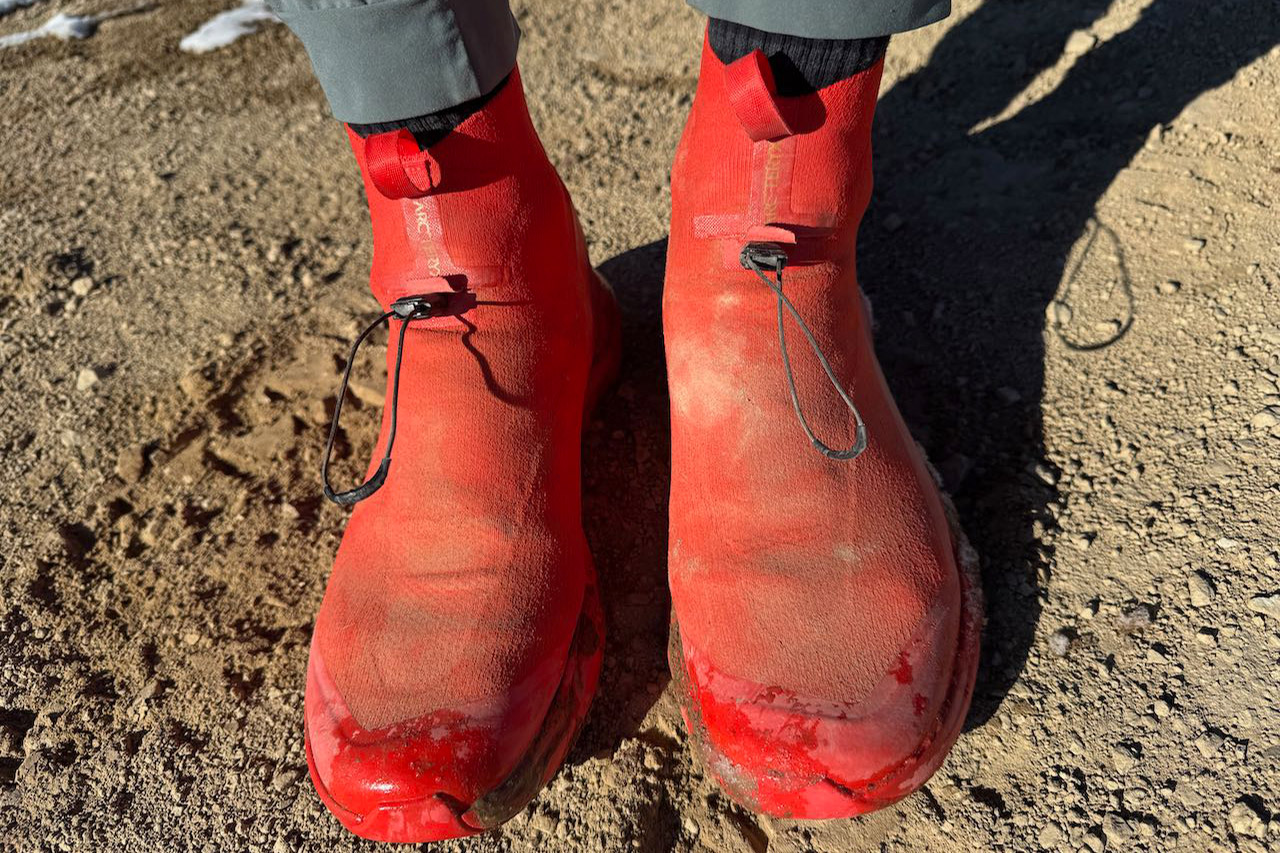
The Arc’teryx Norvan 4 Nivalis GTX shoes are a winterized version of its popular Norvan trail running shoe line. The winterizing includes snow- and ice-oriented tread, an integrated gaiter, and a simplified lacing system. It’s an interesting entry into a growing breed of blizzard-ready running shoes like La Sportiva’s Cyklon Cross and Scarpa’s Ribelle Kalibra G.
However, the Norvan 4 Nivalis GTX offers a few distinct features and one or two quirks that not everyone will love.
Build
The Norvan 4 Nivalis are, let’s be honest, very cool looking. That is, if the almost sci-fi aesthetic speaks to you the way it speaks to me. I’m also a sucker for an integrated gaiter.
Underneath the slick facade is a modern-day running shoe with the same general outsole, midsole, and insole architecture as those on GearJunkie’s guide to the Best Running Shoes.
Outsole
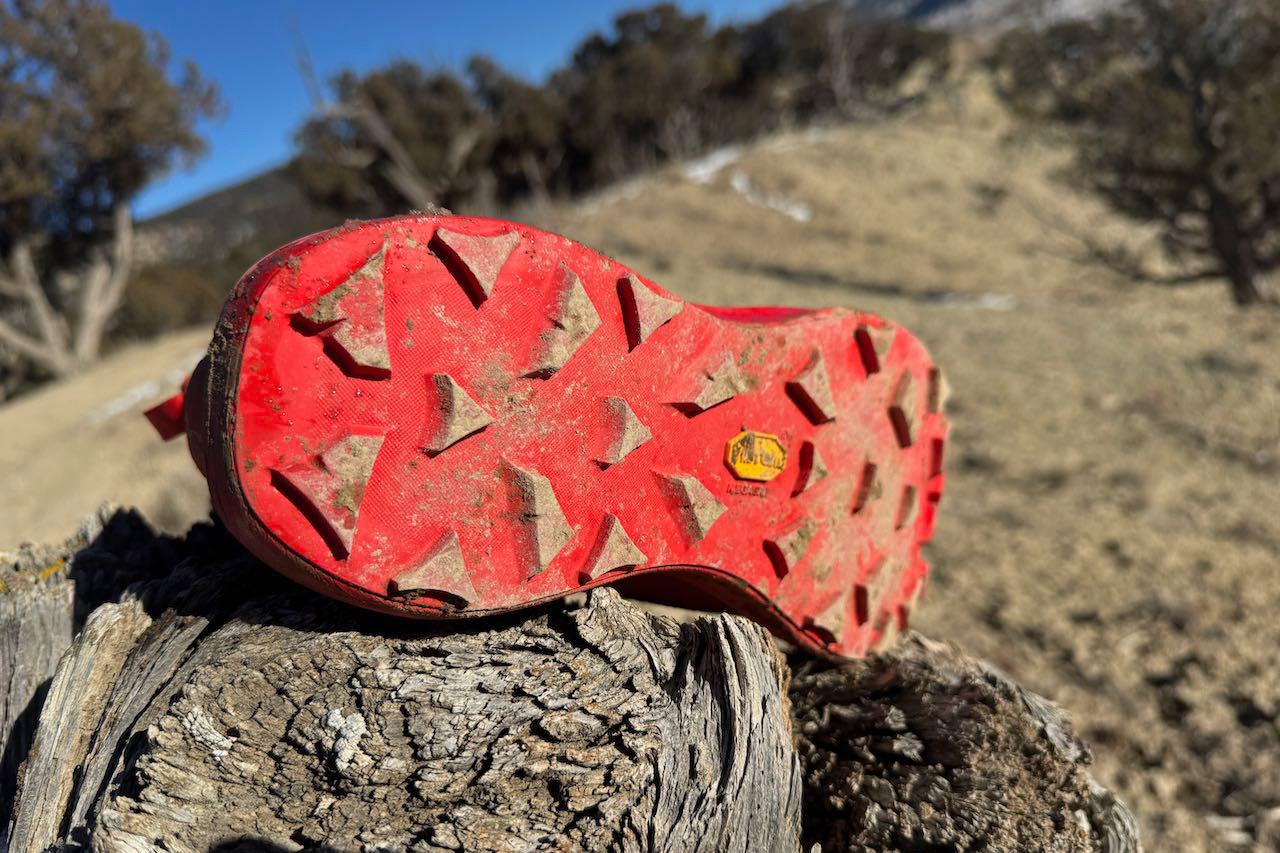
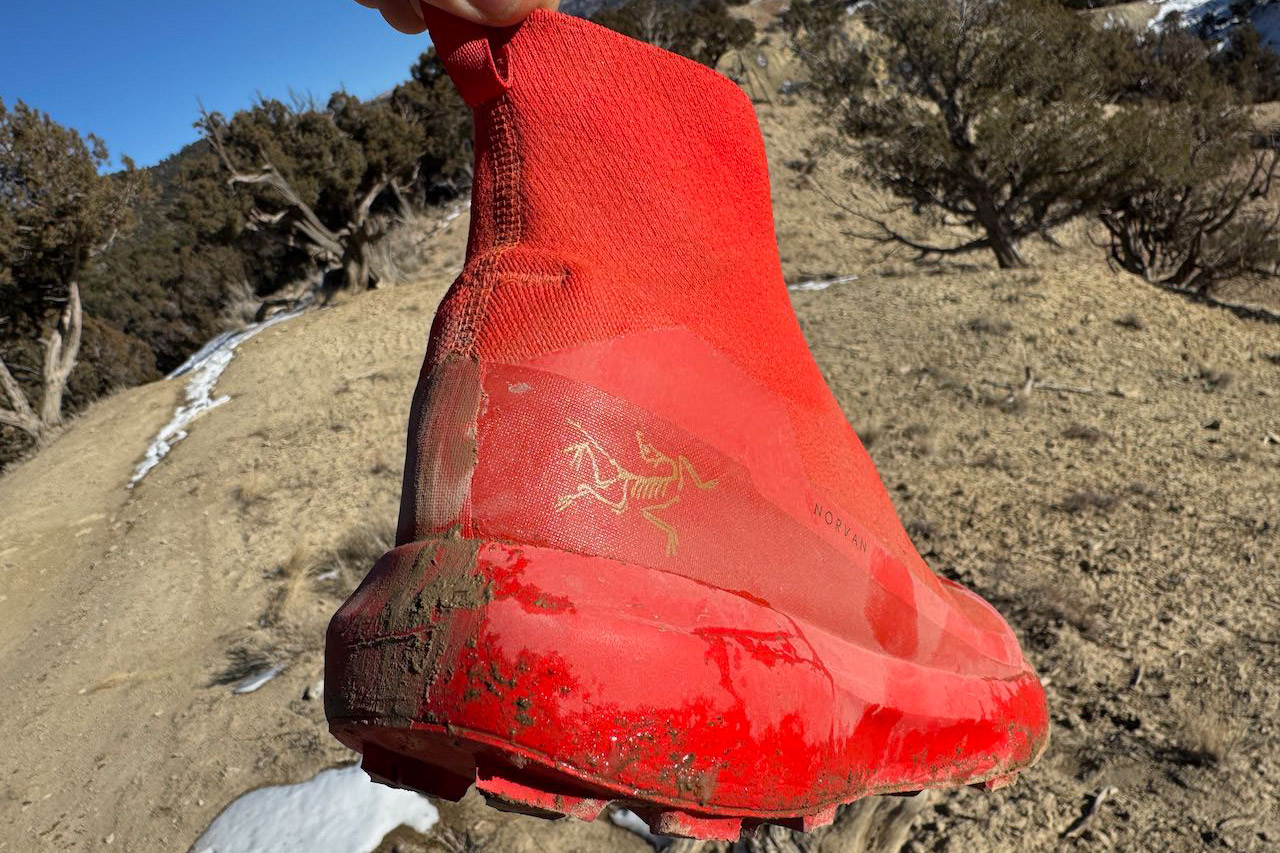
The outsole is decidedly burly, evidenced by 6mm lugs. They’re clearly designed for aggressive traction on slippery surfaces.
Arc’teryx employs Vibram’s Megagrip Outsole with Litebase technology. That’s a lot of marketing lingo, but basically, Vibram’s Megagrip is designed to balance the often-opposing goals of grip and durability.
Softer rubber tends to offer better grip, but hard rubber lasts way longer. Megagrip is therefore moderately soft but nothing like ultra-grippy rubber you’d find on approach shoes. Litebase helps reduce unnecessary rubber from the outsole where thickness isn’t needed for durability or structure.
Midsole & Insoles
Moving upward, the Norvan 4 Nivalis GTX shoes sandwich an EVA midsole that’s tuned for long winter runs, where foot precision and stability are equally important as cushioning. Arc’teryx strikes a balance with a moderately firm EVA foam. It’s dense to begin with compared with many lightweight running shoes. Then the brand added 55C compressed EVA in the big toe region for additional stability.
The stock insoles are unimpressive, as is the case with virtually all trail running shoes. I quickly replaced them with Superfeet and never looked back.
Upper
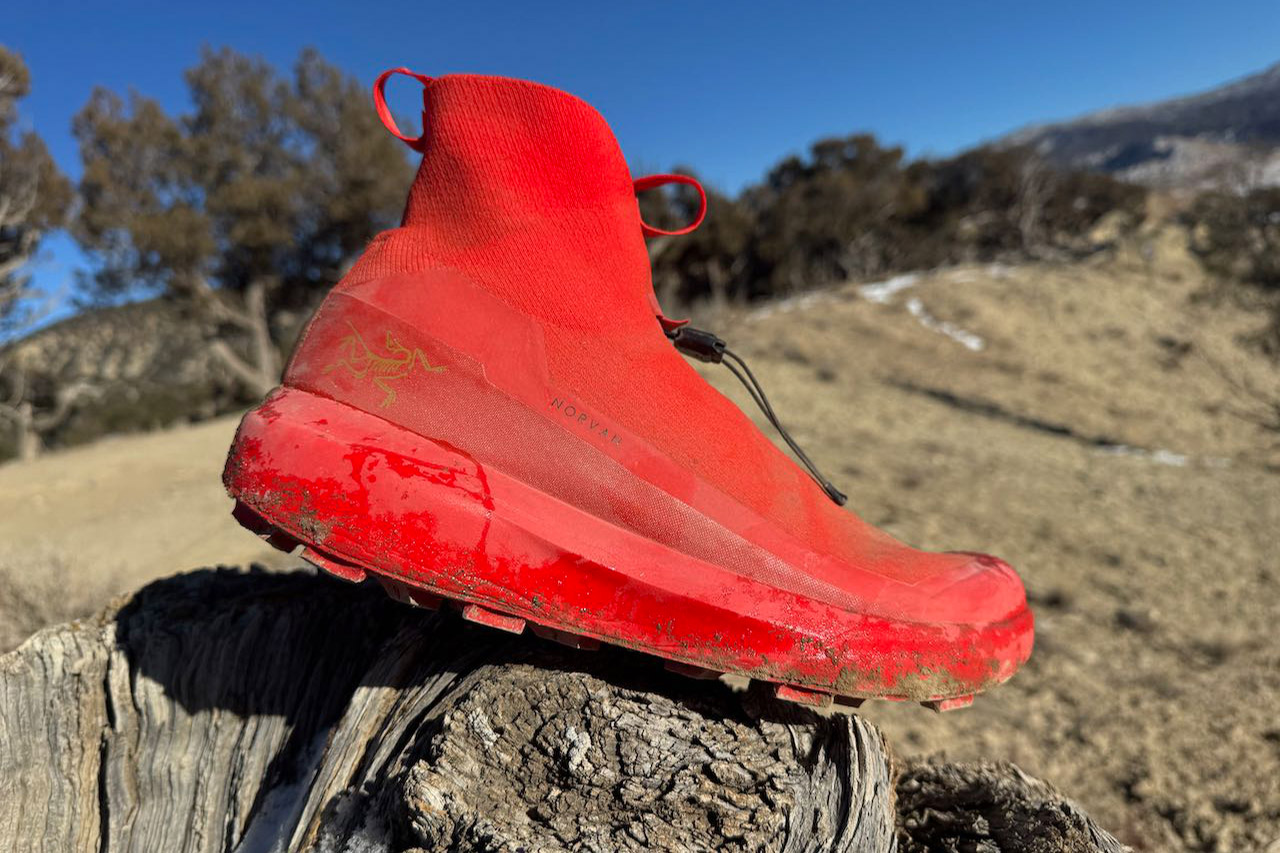
Underneath the gaiter is a very minimalist upper. There’s a stable heel cup and a light, flexible toe box, both lined with a GORE-TEX Invisible Fit waterproof membrane.
The integrated gaiter closely covers the shoe’s upper. The stretchy, knit fabric extends up and over my ankle bones, interrupted only by the adjustable portion of the lacing system that’s integrated into the shoe’s upper.
Fit
The U.S. Men’s 10 Norvan 4 Nivalis GTX fit my average-width feet comfortably with a nice, wide toe box. Though my sample size is 1, I’d say they run slightly large.
Being uninsulated, I managed to get away with either heavy wool socks or ultralight running socks without discomfort, depending on the conditions at hand (or on my feet). These shoes land in a nice middle ground between technical and comfortable in terms of fit.
Running in the Arc’teryx Norvan 4 Nivalis GTX
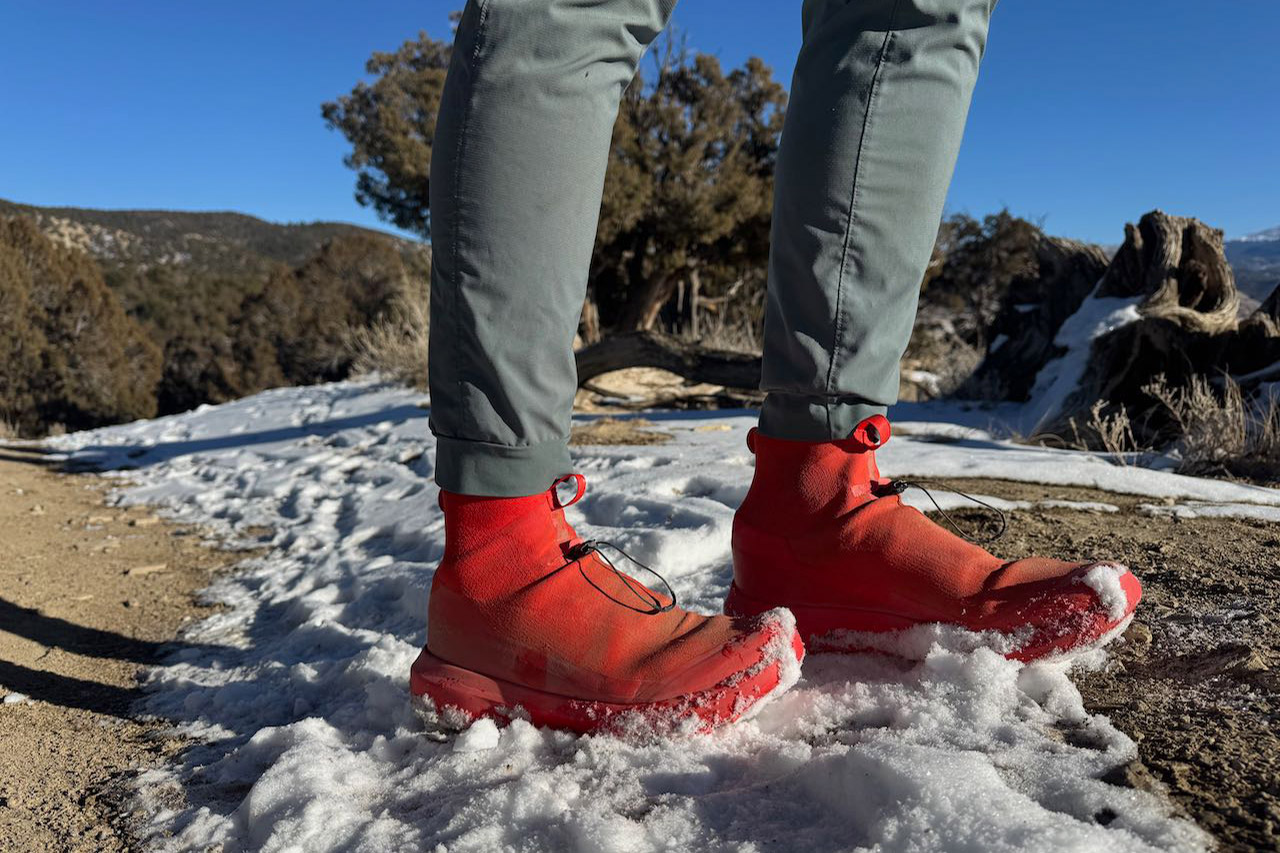
It was another consistent day of chilly weather and rain on an existing snowpack — again, weird conditions. But like any dedicated runner, I layered up and pulled on my running shoes. The integrated gaiters aren’t particularly easy to slip on over ultra-high arches like mine. And while I could have used that as an excuse to stay inside, I got them on and cinched down the lace-tightening toggle.
The Norvan 4 Nivalis GTX diverges from two of Arc’teryx’s biggest competitors in gaiter and tightening style. Both the La Sportiva Cyklon Cross and the Scarpa’s Ribelle Run Kalibra G utilize zippered gaiters and BOA adjustment systems. That makes them, at baseline, much easier to get into.
As I ran on the pavement toward my local snow-packed trail loop, I adjusted the tension as the shoes warmed up. The snowy portion of the trail is where the 6mm lugs really showed up. They bit nicely into the different snow densities I encountered. No, they weren’t like crampons. Each foot landed on the snow and slid just slightly rather than stopping dead. That helped me sustain a good flow.
Uphill, they felt planted enough to keep me moving upward. The grip felt maybe a hair less locked than the Cyklon Cross. However, it was still thoroughly reasonable considering how much dirt I’m running on even during the winter months.
Grip on Different Surfaces
Dirt is actually where I found their grip most impressive. The moderately soft Megagrip grabbed into sand and dirt like it meant business. Uphill, downhill, whatever. And the same goes for slabby rock. They felt grippy and confidence-inspiring.
On ice? Well, the lugs are still rubber. So I wasn’t exactly sprinting over really icy sections of trail or packed ice on the road. But they felt solid on hard, packed snow.
For folks who need additional traction on legitimate ice, Arc’teryx claims the lugs can accommodate carbide spikes. That will make sense in some environments. However, it didn’t make sense for the western slope of Colorado, where I’m jumping between snow, pavement, dirt, and ice on any given run.
That brings me to pavement. There’s always a risk that burly outsoles like these will run like a set of soccer cleats on pavement. That can be a joint and foot killer for runners who need to cover hard surfaces to reach their favorite trails. To my surprise and relief, my knees and feet didn’t explode on extended pavement runs in the Norvan 4 Nivalis GTX shoes, despite the relatively firm midsoles and pointy outsoles.
They actually rolled naturally. The supportive midsole even protected my feet from feeling like I was standing on a bunch of Legos.
Running in Technical Terrain
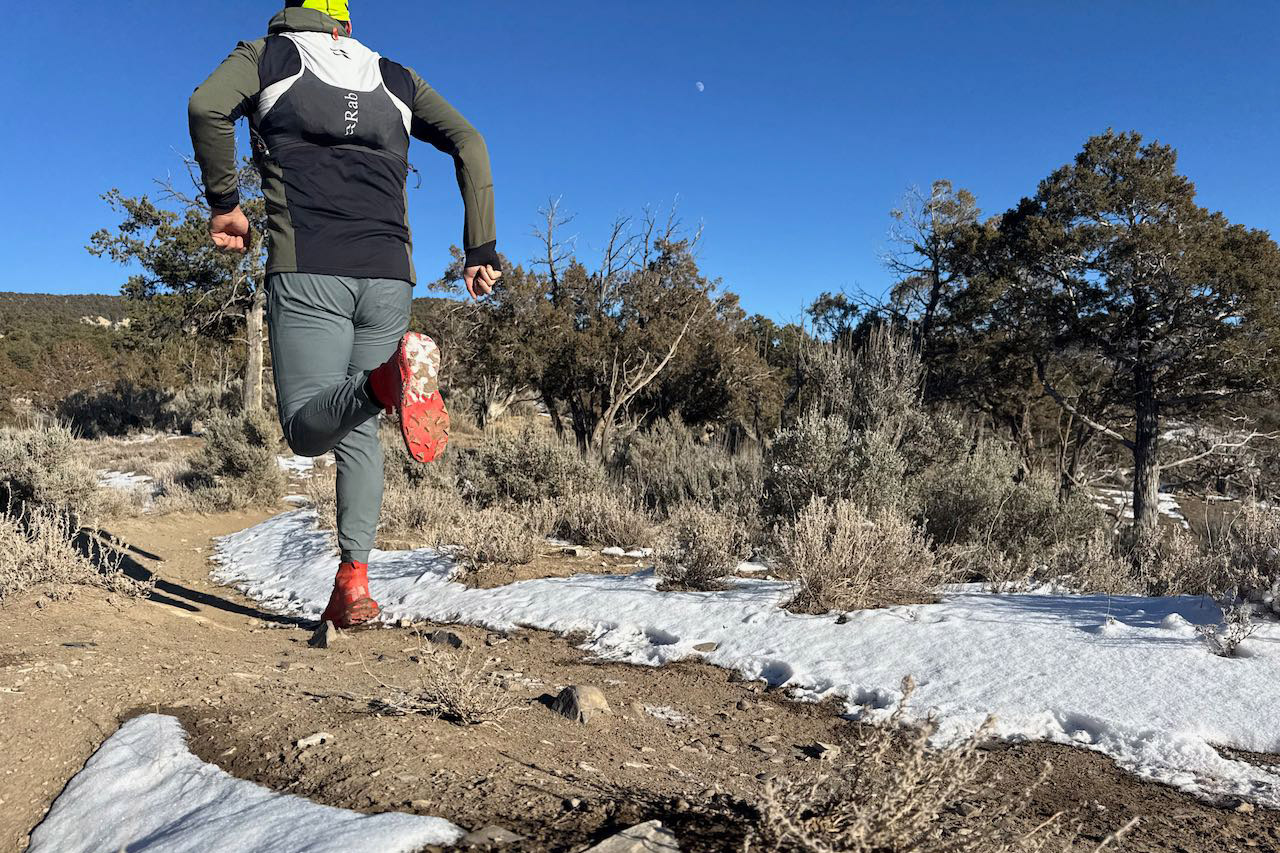
While jumping, striding, and pushing through technical terrain and rutted trails, my footing felt solid. But despite their burly appearance, these shoes weren’t overly stout side-to-side. They felt like lightweight trail running shoes rather than beefy foot bunkers, which will be a welcome design choice for distance runners.
The integrated lace tightening system locked my instep and heel into the shoes. The downside there was support and adjustability in the forefoot. The gaiter prevents you from dialing in the tension lower down the foot, so you’ve really only got one zone of tension at the instep.
Because the shoes fit me well, it wasn’t a huge problem on 80% of my runs. But I would have welcomed a little more forefoot adjustability when things got technical.
The Cyklon Cross and Ribelle Run Kalibra G overcome the same issue — tension adjustment through a gaiter — with a BOA tightening system.
I’m no superfan of BOA dials, but the system provides more even pressure throughout the foot than the Norvan 4 Nivalis GTX’s speed lace system. So while the Norvan 4 Nivalis GTX were solid distance shoes, especially on moderate terrain, they’re not as well-suited to technical terrain where precision is what keeps you from landing on your face.
Protection From Snow
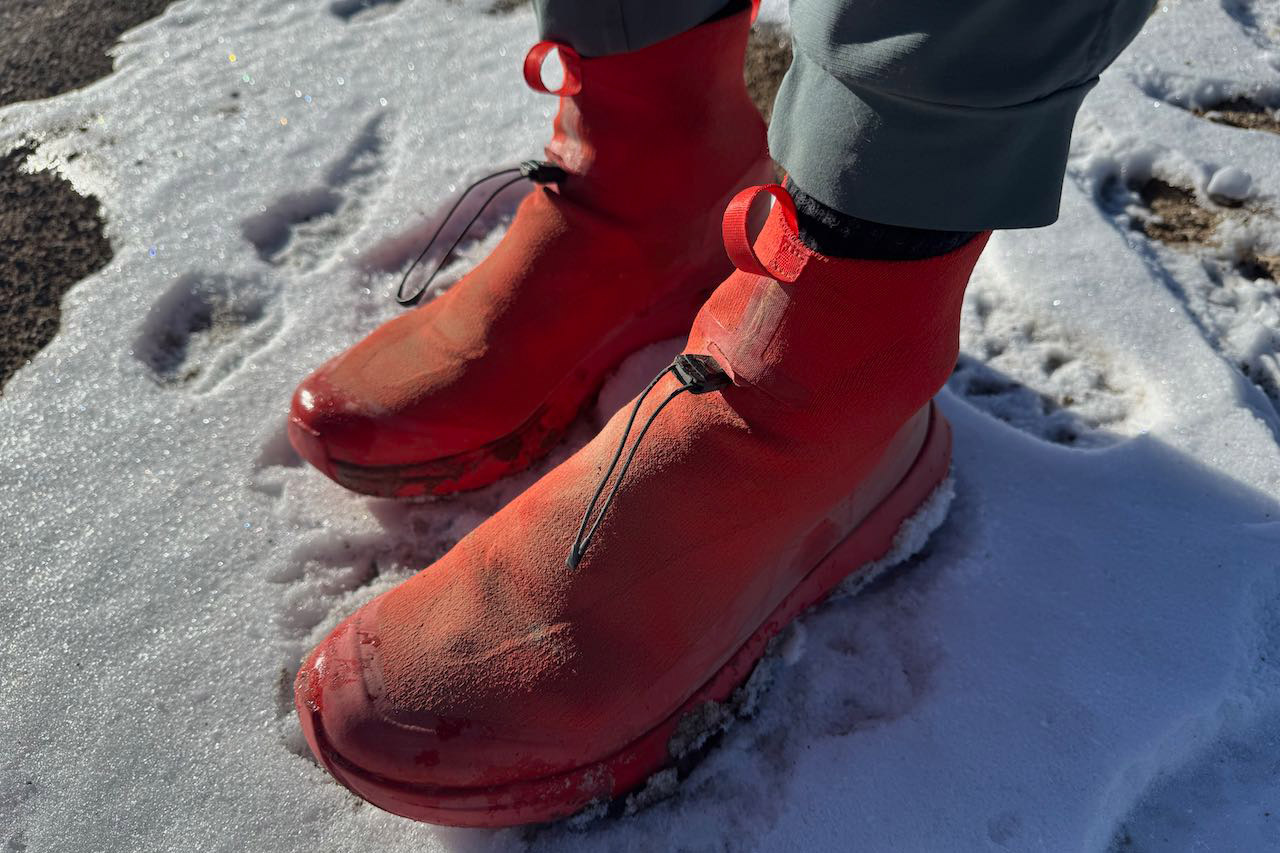
Given the price and fancy materials, runners eyeing these winter running shoes are going to be looking for solid winter protection. In that arena, they were impressive.
The shoes’ uppers are wrapped in a GORE-TEX membrane that, from what I can tell, extends just below the ankle. They felt thoroughly waterproof when I stepped in water. The stretchy gaiter isn’t technically waterproof (fabrics this stretchy rarely are), so it instead acted as more of a shield from the snow. And again, it did a great job, especially on mixed surfaces and with a few inches of snow.
After many, many miles in the Norvan 4 Nivalis GTX, the upper rim of the gaiter began to stretch out. Now, there is a small gap between it and my sock. In deep powder, a little bit of snow could creep in since there isn’t any kind of cinch up top (see the Ribelle Kalibra G for that feature).
They were still plenty protective for day-to-day winter trail running, but for that reason, they wouldn’t be my first pick for deep powder or deep backcountry hiking.
Running shoes with a waterproof lining typically lose some breathability, and the Norvan 4 Nivalis GTX are no exception. On really warm days, I could feel my feet sweating. That never proved to be a big problem during the late fall and winter. But it signals that they’ll be overkill in the warmer months (no surprises there).
Arc’teryx Norvan 4 Nivalis GTX: Who They Are For
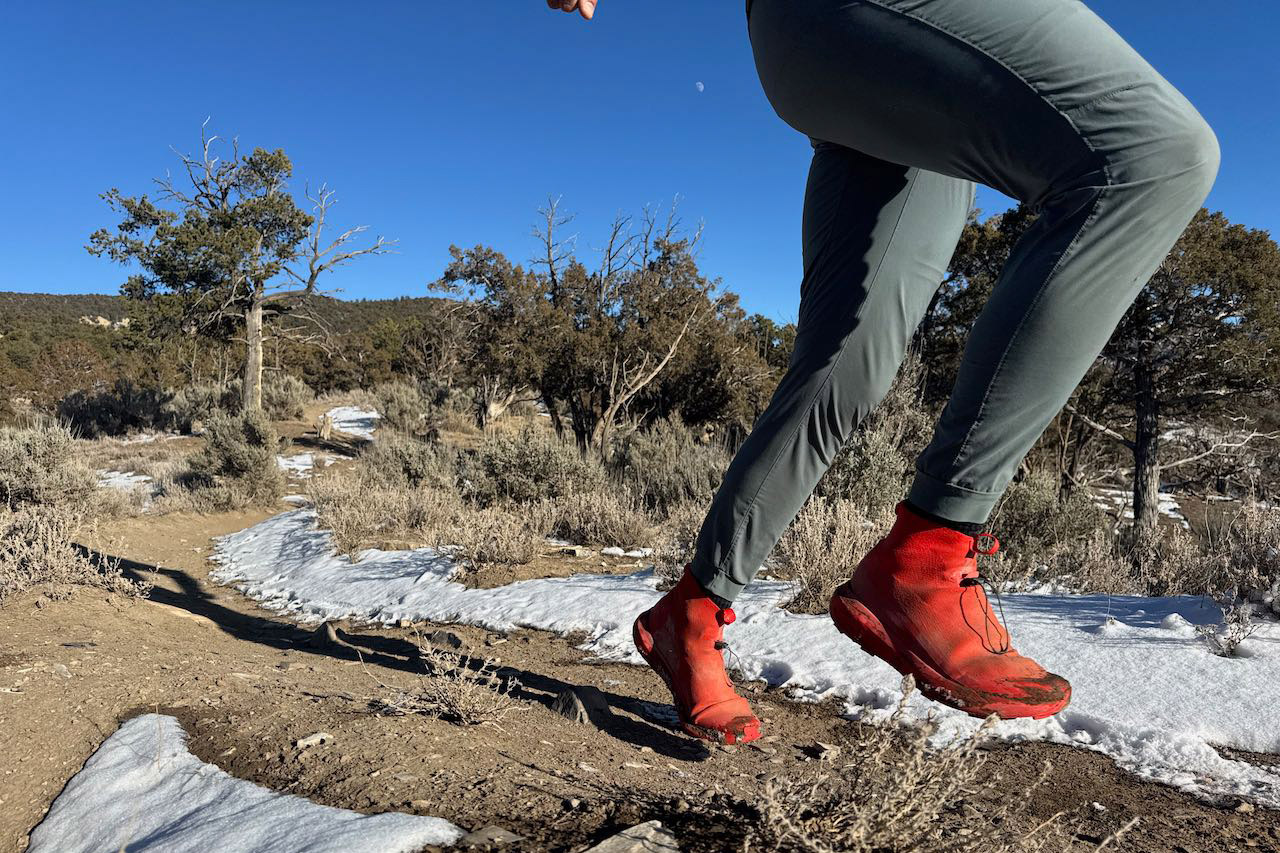
Testing the Norvan 4 Nivalis GTX shoes for 100 miles was hardly a chore. They’re comfortable, lightweight, and protective from whatever madness the sky could muster. And more importantly, I genuinely enjoyed the run. They’re just soft enough for my tastes, roll naturally, and have bomber traction. And they didn’t feel like bricks on the pavement I needed to cover to get to the goods.
Unlike some beefier winter shoes, the Norvan 4 Nivalis GTX lacks a really stout upper, and the tightening system is thus somewhat limited to the instep. That didn’t faze me in the slightest on the mellower trails and snow-packed roads.
But without really firm fore- and mid-foot support, they felt too relaxed for really rocky, rooty terrain. When that was all covered with snow, though, it was no problem. Precision matters a lot less on snow.
The Arc’teryx Norvan 4 Nivalis GTX are solid winter specialists that will probably get stuffed in a closet in the spring, only to reemerge when winter rears its ugly head once again. They’re a great daily driver trail shoe when there’s snow on the ground, and good traction is a must. The gaiter and waterproof lining keep the snow and debris at bay. And most importantly, they made winter running tolerable.