The air was perfectly still as I ascended Ski Cooper under a bluebird sky. I could feel beads of sweat rolling down my temples, absorbing into my cap. Even without a breeze, though, I didn’t feel like I was soaking through my base layers. My body felt drier than usual. Normally, by this point in the tour, I’m drenched.
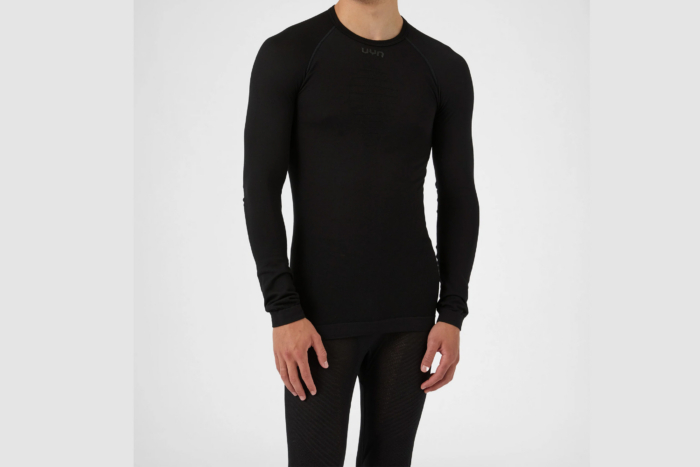
I was wearing the Energyon Biotech Thermal Jersey. It’s a base layer made by the Italian company UYN (pronounced “Win“). This company has been around for over 75 years, but it’s recently come out of the gate with some surprising base layers that I was getting to know rather well. At the beginning of the season, the brand had sent me three different base layers. The Energyon Biotech, the Elevatyon Biomorph, and the Natyon 3.0.
If you pay attention when you’re walking around ski villages, you’ll notice UYN in stores. I’ve now seen their products in Vail and Aspen, and it’s spreading throughout European ski resorts like St. Moritz and Campiglio. But you may also have seen them in use during the Olympics and not have known it. Athletes from France, Austria, Spain, Slovenia, Slovakia, and the Republic of Chechnya were all sporting UYN base layers.
With that knowledge, I was more than eager to put these Italian base layers to the test. If they were good enough for Olympic athletes, how would they fare for a recreational backcountry and resort skier like me?
In short: The UYN Energyon Biotech ($135), Elevatyon Biomorph ($209), and Natyon 3.0 ($200) base layers are made with primarily bio-based materials. The base layers are almost completely seamless, hug the body perfectly, and are both warm and very breathable. Used by Olympic athletes and World Cup ski racers alike, these thoughtfully designed base layers insulate, ventilate, and fit exceptionally well.
Check out GearJunkie’s guide to the Best Base Layers for Women and the Best Base Layers for Men.
(Photo/UYN)
Specifications
Pros & Cons
Pros
- Very comfortable, seamless design
- Fits exceptionally well
- Very fast wicking
- Light insulation for high-output activities
Cons
- Thin material wears/tears easily
(Photo/UYN)
Specifications
Pros & Cons
Pros
- Fits exceptionally well
- Warm and comfortable
- Wicks moisture well, dries fast
Cons
- Top rides up sometimes during active use
(Photo/UYN)
Specifications
Pros & Cons
Pros
- Compression base layers help improve blood flow
- Warm base layers for colder activities
- Engineered ventilation panels help wick moisture
Cons
- Somewhat heavy for base layer
- Compression base layers might not be for everyone
UYN Base Layer Review: Energyon Biotech, Elevatyon Biomorph, and Natyon 3.0 USA
The three models of base layer UYN sent — Energyon Biotech, Elevatyon Biomorph, and Natyon 3.0 USA — all differ slightly. I’ll dedicate a section to each, but let’s start with what they have in common. I spoke with Elia Redini, the general manager for the U.S. market. He walked me through some of the design and thought processes UYN uses to create all of its apparel products, not just base layers.
One of the most notable design features of these products is the fact that they are “seamless.” Each section (arms, torso, legs) is independently woven as a tube and then stitched together using patented technology.

The design helps increase freedom of movement and improves breathability, as the fabric is held against the skin more evenly. Redini called this the “most technical part of the apparel.”
UYN also makes all of its base layers using 100% bio-based materials. They use different blends between models, but the entire collection leverages polyester, polyamide, cashmere, castor bean, corn, eucalyptus, and cellulose-based materials. UYN even has its own proprietary fiber, called Kapok, derived from the fruit of Ceiba Pentandra. It is a hollow fiber structure that’s great for thermal insulation and is hypoallergenic.
Energyon Biotech Thermal Jersey

My favorite of the three base layers was the Energyon Biotech. This is the lightest of the three base layers I tried, and is so well ventilated that you can actually see through panels on the pant legs and chest.
I realized the first morning I wore it, that this isn’t a base layer you can wear into a coffee shop without catching some side eyes. It’s not quite as transparent as, say, fishnet base layers. But it’s not far off.
That lends itself very well to ventilation. It’s why these base layers have become my primary touring pick. Usually, I just wear a base layer while I climb (if it’s really cold, I’ll throw a fleece over it).
When I’m skinning uphill in the Energyon Biotech, it wicks moisture incredibly well, keeping me mostly dry on all my skins. I’ve been genuinely impressed with these base layers’ breathability every time I’ve used them.

They’re also surprisingly warm for as light as they are. The 3D knitting technique that UYN uses allows them to weave a different pattern on the inside of the base layers than on the outside. The weave patterns help trap heat while allowing water to evaporate through.
The fit of the Energyon Biotech is unique compared to the other two UYN base layers I tried. The neck is a crew cut, and the legs are full-length. But my favorite aspect of the fit is the length of the top. It extends much further than a standard shirt, down below the butt. That way, it doesn’t ride up like many base layers do while you’re skiing or riding. The hem almost hooks under your rump, holding itself in place.

The one downside to the Energyon Biotech base layer is also part of what makes it great. Because the fabric is so light and thin, it is not very durable. I know I’m eventually going to rip a hole in it.
Elevatyon Biomorph Thermal Jersey

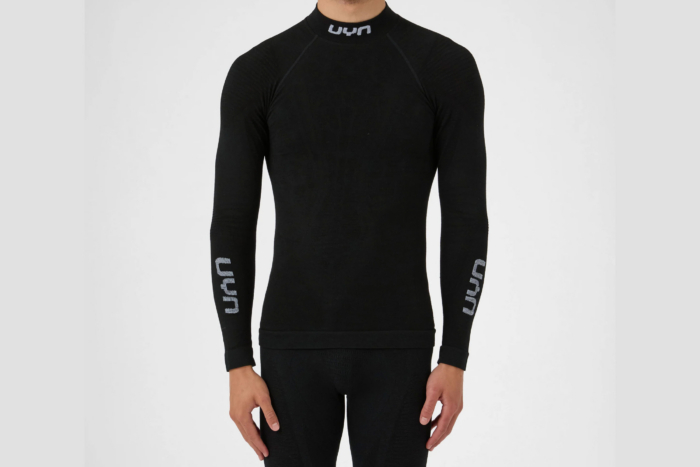
For colder days and resort skiing, I used the Elevatyon Biomorph, which is made with a heavier fabric composed of a different blend of bio materials. It’s a turtleneck-and-knickers combo that was notably warmer than the Energyon Biotech.
This base layer still wicked moisture efficiently, but not nearly as well as its lighter counterpart. I wore this base layer combo on several tours, and every time I was pretty damp by the time I reached the top. They dry out quickly, which speaks to their breathability. But they’re pretty easy to soak through with medium- to high-output activity.

For resort days, these were great base layers. I prefer knickers as base layer bottoms for skiing, as they work better with alpine boots. The turtleneck was a nice touch, too, as it added a little extra coverage on colder days.
My freedom of movement in these felt just as good as in the lighter Energyon Biotech layers. The fit is really dialed, and hugs closely to your body. Unlike some base layers that feel loose under your clothes, these are more like a supersuit.

The Elevatyon Biomorph layers are definitely more durable than the Energyon Biotech. However, the top doesn’t feature the same extended hem. I found that this base layer top did ride up throughout the day on the slopes. I ended up tucking it into the knickers to avoid this.
Natyon 3.0 USA Compression Base Layer
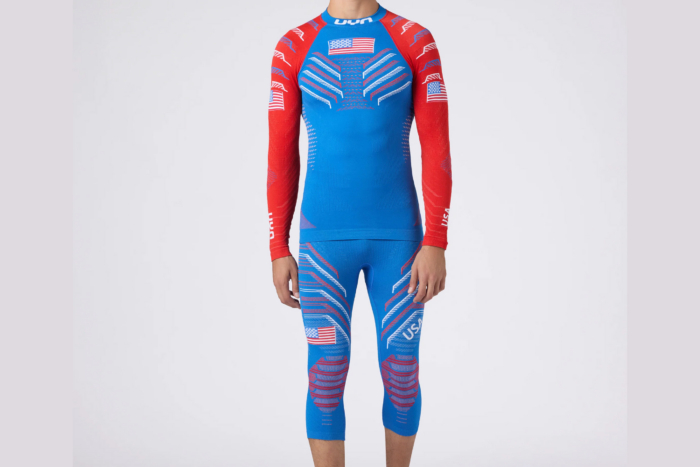
With the Milano–Cortina Olympics this year, I had to try out the Natyon 3.0 USA base layer as well. It’s not the official base layer of U.S. athletes (their base layers are made by Nike and Ralph Lauren). But since UYN sponsors a handful of other elite winter Olympic national teams, as well as 10 World Cup teams, it seemed appropriate for my testing.
This base layer has a notably more substantial handfeel. It is by far the thickest of the three base layers I tried from UYN. I refrained from touring in this base layer because I knew it would be too warm. So I almost exclusively tested this one during days at the resort when I was lapping lifts.

Like the Elevatyon Biomorph, the Natyon 3.0 pants are knickers. However, the top is somewhere between a crewneck and a turtleneck.
This was the least breathable of the three base layers, but it was still more breathable than a lot of base layers I’ve used. It uses what UYN calls Gradual Coolvent to provide ventilation through strategically placed panels on the underarms, behind the knees, and elsewhere.
Additionally, there are reinforced areas (called Meta-Ribs and Pressure Branches) along the arms, legs, and torso that provide extra support and protection during high-intensity skiing. These base layers also provide targeted compression in the arms and legs to help improve blood flow, theoretically increasing a skier’s performance and stamina.
I can’t verify that these base layers made me a better skier as a result. However, I could definitely notice the compression and extra support throughout the day.
UYN Base Layers: Who They Are For

UYN has a base layer for just about every type of skier. Whether you’re a backcountry touring fanatic, a resort skier, or a ski racer, they’ve likely got a base layer that suits your needs. I didn’t realize just how many different base layers they offer until I wrote this review. The three I tried are just the tip of the iceberg.
The price point is high enough to give anyone pause. Most base layers cost between $50 and $100 for each piece. UYN’s base layers range from $100 to $200+ per top and bottom. If you ski a lot and value performance apparel that lets you ski longer, stay drier, and move more easily, these are an investment worth making. For more casual skiers, it might be more cost-effective to check out our guides to the Best Base Layers.
I have used these base layers all season, and do not want to switch. The quality of UYN’s products stands noticeably above other base layers in their category. No doubt, that’s why Olympic and World Cup teams have adopted them. This Italian company is making some of the most premium and highly functional base layers I’ve ever tried.