It was 6:00 am in Yosemite Valley. The sun was peeking over the horizon, and I was about to walk an easy half-mile to see Bridalveil Fall, one of the park’s most impressive features. I grabbed a water bottle, went to the bathroom, and took my first steps onto the path when I heard it: music.
Not just any music; frenetic, electronic dance music — the kind you’d hear in a European discotheque — bumping at maximum volume. A group of 20-something men ran past me, hooping and hollering, carrying the piece of outdoor gear I hate above all others, the Bluetooth speaker.

This was just one of many instances during my week in Yosemite — and countless others in the last year of hiking, camping, and climbing — when I’ve had the distinct displeasure of hearing people’s favorite playlists blaring from these tiny devices as I try to enjoy the great outdoors.
Many people, including me, would argue that the great joys of both music and nature are their ability to bring people together, but bringing these two worlds together on trails is creating clashes. The issue of Bluetooth speakers has become worryingly widespread, and it speaks to the larger question of our relationship with ourselves.
Why Is It Annoying?
Usually, I don’t pay much mind to how people act in the outdoors. As long as you practice Leave No Trace ethics, I couldn’t care less who you are, how you dress, or how far you hike. Nature belongs to everyone.
I provide this preface so it’s fully clear just how much the Bluetooth speaker epidemic enrages me. I hate it for a multitude of reasons. First and foremost, it can be a safety issue. Many climbers blast music at crags, which can be dangerous if the volume interferes with their ability to communicate with their belayers.

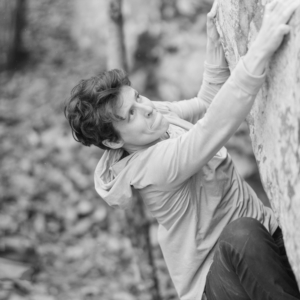
Music at the crag also robs us of the mind-body connection that is the heart of climbing. When I’m climbing at my limit, every sense is lit up. I feel the grit of the sandstone on my fingers, and hear the snap of the carabiner as I clip my rope into the draw.
My eyes are trained to look for the pocket I need to grab and the tiny foot chip that’s crucial to sending the route. Before the crux on my project, I engage in box breathing to calm my nerves. I scream as I attempt to hold tension on a credit card–sized crimp.
As I climb, my mind and my body are in lockstep, conducting a symphony that only I know the rhythm of. This feeling is one of my absolute favorite parts of climbing, and having that robbed from me by the distraction of a Bluetooth speaker is its own kind of loss. Climbing is one of those rare times when I feel like my body, mind, and soul are in full and total synergy, and I want to protect those precious moments.
Then there’s the noise pollution. One of the best parts of going on a backpacking or camping trip alone is the time it gives me to think. My time in nature is when I feel the most creatively inspired. I’ve brainstormed some of my best articles for GearJunkie while out on the trail.
On a backpacking trip in California, I slept in a pit toilet one night due to a ferocious storm, and then the next day, I spent several hours on trail plotting out the outline of the article I would write. What would my intro be? What is the larger point I want to make?
With miles and miles of uninterrupted trail, I was able to flesh out an article that would go to blow up on GJ’s site. House music playing at a deafening volume easily disrupts that inner monologue and creative process.
Why Is It Happening?
On a camping trip in Illinois, a (now former) friend started playing rock music from his phone at 7 a.m. as we made coffee. Sleep-deprived, I immediately snapped at him to turn it off. He looked astounded and asked why it was even a problem. It had never even crossed his mind that not everyone at nearby campsites, who could very well still be sleeping, would want to be treated to his musical tastes. The lack of consideration astounded me.

I think for many people who use Bluetooth speakers outside, the idea that it could be rude or annoying never pops into their heads. I find it somewhat analogous to people who don’t put their dogs on a leash. You might like the music, just as your dog might be super-friendly. But you’re removing the choice of my reactive dog to avoid yours, and removing my choice of whether or not I want to listen to your music.
In both cases, an unwillingness to think beyond oneself and consider the consequences of a choice makes these bad behaviors all too common.
The fact that Bluetooth speakers are so accessible and portable has also made it worse. These devices are available in compact packages smaller than an iPhone, and you can get a basic model for under $30. People can bring this piece of tech anywhere now, but they haven’t stopped to ask if they should.

Unsurprisingly, most people I see on the trail using speakers fall cleanly into the millennial/Gen Z demographics. I’m 31, and I remember kids using them on field trips in elementary school. For these generations, Bluetooth devices are ubiquitous. It’s only natural that we think to bring them along with us to the outdoors, since we bring them everywhere else.
I don’t think their rise in the outdoors is attributable to a simplistic “the kids are always on their damn phones” kind of argument. Rather, the use of Bluetooth speakers centers on our inability to sit with ourselves. We are almost never truly alone, with social media and our friends and family almost constantly accessible in our hands, but time in nature is one of the few instances where they’re not.
And when you’re out in the wilderness with no cellphone service, your mind wanders, and it may go places you’d prefer not to visit. It can be profoundly uncomfortable to sit with your own thoughts. On many a backpacking trip, some trauma of my life has resurfaced from the depths of my mind and made me cry out of nowhere.

Even if you’re an expert at repression and bottling up emotions, time in nature has a sneaky way of letting them out. A podcast or a playlist at a loud volume can save you from having those hard conversations with yourself or with your friends. Bluetooth speakers serve as a distraction from introspection and critical analysis of the self.
Backpacking on that recent trip in Yosemite made me think of an ex-boyfriend, who had done part of the Pacific Crest Trail in this area. I would’ve loved to skip over ruminating on how this man, who very well may be the romantic partner I’ve loved the most, dumped me out of nowhere, and then how my beloved grandfather died the next day. It would’ve been all too easy to turn on an NPR podcast or a Maggie Rogers album to avoid it all.
And yet, sitting with those emotions is part of the healing process. While I hiked through the High Sierras, my mind replayed our relationship, and I reflected on how I’ve grown and changed since then. The silence and majesty of nature are one of our best opportunities to do the intrapersonal work that leads to self-growth. It’s a shame to have that chance be ruined by a song you kind of remember from college.