To give you a jump start on the season, we’ve kicked the rubber on a lot of soles to find the best winter boots for men. Because winter varies so much around the country — from slush and mud to deep powder — we included a variety of boots from puddle-stomping to hell freezing over.
Our recommendations aren’t given unearned, either. We’ve saddled up in nearly 25 different pairs of winter boots over the seasons, and have worn them everywhere from elk hunts in the high alpine of Colorado to digging out our rigs from Sierra snowmageddons.
Throughout it all, we kept tabs on our feet and compared boots based on their warmth, durability, waterproofing, comfort, and style. If you’re looking for a quick recommendation that’ll cover most conditions, look to our top pick, the North Face Chilkat V 400s. Or, if winter passes quickly for you and you just need something that works, the budget Kamik Nation Plus Boots get the job done.
Editor’s Note: We updated our Winter Boot guide on November 12, 2025, to shake up our award winners. We’re particularly excited about the Bogs Bozeman Tall Boots — a stellar winter chore boot — as well as the Helly Hansen Arctic Patrol Boots, which are quite the lookers. We also added detailed product ratings to each boot.
The Best Winter Boots for Men in 2026


The North Face Chilkat V 400
-

-
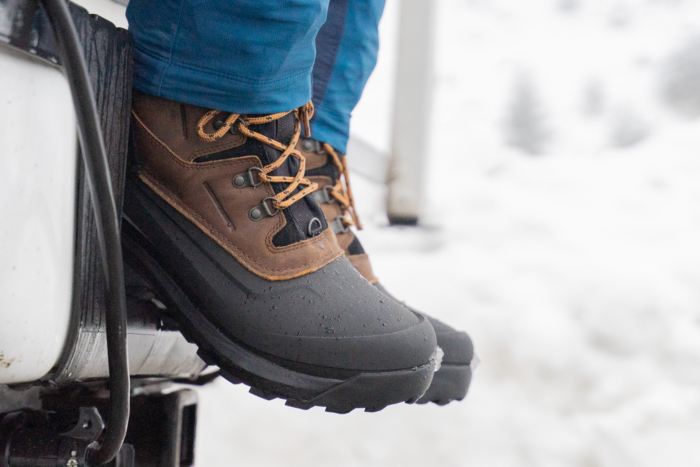
These boots are exceptionally warm thanks to 400g of insulation; (Photo/Matt Bento)
-
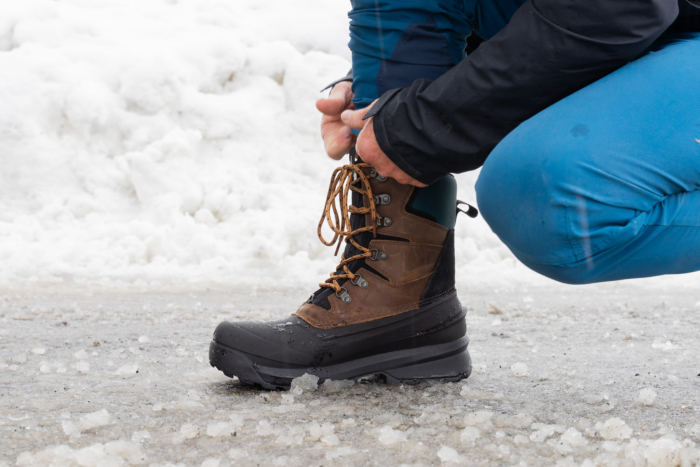
Quick laces make these boots easy to get on and off; (photo/Matt Bento)
-
-
(photo/Matt Bento)
-

Specifications
Pros & Cons
Pros
- Warm and waterproof for most winter conditions
- Comfortable, hiking-boot-like fit with soft lining
- Reliable traction on snow and ice
- Excellent overall performance at an affordable price
Cons
- Some taller boots offer slightly more warmth & protection
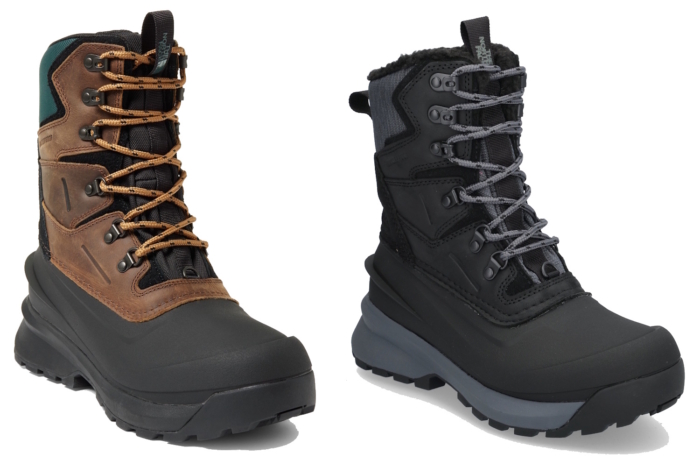
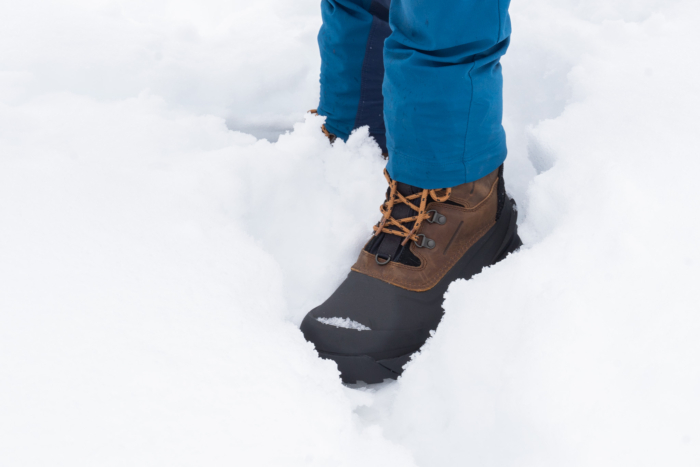
The comfortable, utilitarian North Face Chilkat V 400 Boots ($159) aren’t the warmest options we tested or the best hikers, but like so many of our top picks, they do everything pretty well and hit the sweet spot for most folks. They’re insulated, solidly waterproof, have great traction, and they’re easy to get in and out of.
The Chilkats are a do-it-all winter boot. They’re equally suited for shoveling snow and doing chores around your property as they are strolling around a mountain town for some après ski fun. The rust-proof metal quick laces, pull tabs, and a ridge on the heel makes getting them on and off a quick task.
This is not the case with many of the calf-high lace-up boots we’ve tested. The Chilkats are great protection against the slush, but putting them on doesn’t feel like you’re suiting up for battle just to walk to the end of the driveway.
If your adventures do take you beyond the driveway, the Chilkats are totally up for it. We trudged through creeks up to 6 inches and stayed dry, and they resisted water in our dunk test almost to the top of the cuff. The 400 g of insulation kept feet plenty warm — a little too warm for some testers. The Chilkats have gator attachment points and are also designed to accommodate snowshoes.
While the Chilkats have a duck boot vibe, they proved to be much better hikers than the other duck boot styles we tested. Under the hood, they fit much more like a hiking boot, with solid arch support. They’re a touch wide to accommodate thick ski socks, but they have a much tighter fit than a rainboot. The KEEN Revel IVs are a better choice if you’re looking to rack up the miles, as they’re quite a bit lighter, with tighter-fitting heels.
Unless hiking long distances in the snow is a must (consider the Merrell Thermal Chill, the KEEN Revel IV, or even better — skis!), the TNF Chilkats will have you covered for just about any slushy winter activity.
Kamik Nation Plus
Specifications
Pros & Cons
Pros
- Reliable traction on ice and snow
- Warm and cozy removable liner
- Affordable
Cons
- Heavy and clunky
- Not the most casual boot for city use
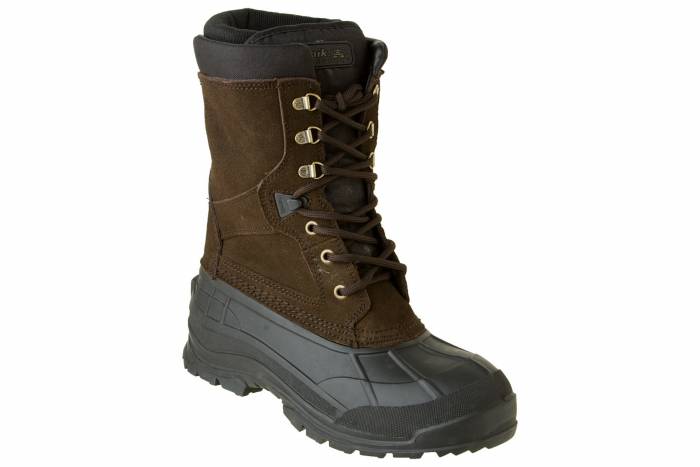
Kamik just can’t be beaten when it comes to budget boots, and the Nation Plus Boots ($100) are a fan favorite. They’re waterproof, warm, and impressively durable for the price.
This is a fully waterproof lace-style leather boot bonded to a rubber sole. The removable liner traps heat using 200 g 3M 200B Thinsulate and gives them a whopping rating of 40 below. We found the rating to be plenty warm when hanging around town doing errands or stationary activities, such as watching a winter carnival parade.
The Nation Plus soles have a lot of traction for a snow boot — much more than many other pac boot designs, such as the L.L.Bean Leather Snow Boots we tested at the same time, or Sorels. Paired with its flex and snug lacing system, we found the boot helps you navigate ice and deep snow more easily than Sorels, too.
These are big, burly snow boots. What you gain in warmth and height, you sacrifice in mobility and weight. For more active adventures, we recommend a winter hiking boot. If you are looking for a sturdy, cold-weather boot for occasional use, this one is a no-brainer.
L.L.Bean Leather Snow Boots
Specifications
Pros & Cons
Pros
- Removable liner is easy to dry out
- Durable leather is pre-softened for out-of-the-box fit
- Rubber lowers are supremely waterproof
Cons
- Softer upper doesn't provide much support
- Not much traction on ice
- Not waterproof above the rubber lowers
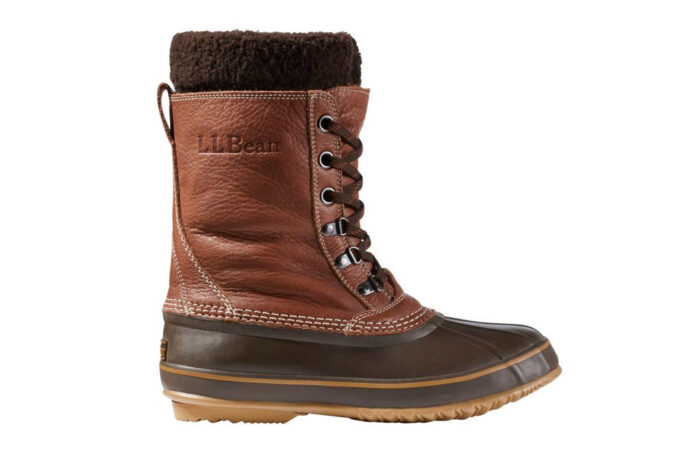
Made for tromping out to the wood pile at the cabin, the L.L.Bean Leather Snow Boots ($180) are the classic pac boot done best — done up in a fine leather and rubber build that is sure to last multiple winters.
Our Senior Editor, Nick Belcaster, used these boots last winter when unusually strong snowstorms paralyzed the town and made chores an all-walking affair. “It doesn’t get wickedly cold in the Washington lowlands, but these boots had warmth to spare when making the jog into town.” And, even when the melt-out finally came, these boots slogged through slush without getting soaked.
These snow boots are laid up with a tumbled (that is, textured) leather upper that is triple-stitched to the rubber lowers, which form a sturdy base to mount to. The rubber shell is seam-sealed to keep out leaks, and passed every waterproofing test we could put it through.
Inside that, the interior felt liner is a good ¼” thick, and topped with a fleece fringe around the top that acts as an additional snow guard. We did build up some moisture in this liner over a full day, but a night over the wood stove had our liners ready for another day.
You can also slide into these Snow Boots with a nylon upper, but for long-term durability, it’s hard for us not to suggest springing for the leather version — especially since it’s only an added $10 difference. Once you’ve treated them with a good waterproofing wax, these boots are liable to last you decades.
Like any pac boot, these kicks aren’t lacking in the warmth or comfort departments, but won’t be the best option for longer excursions such as winter hikes, due to their more accommodating fit and softer uppers. We found the L.L.Bean Leather Snow Boots shined instead as the best pac boots to kick on after a day on the ski hill, or beating in a new path to the mailbox after another night of sideways snow.
KEEN Revel IV Mid & High Polar Boots
-
-
(photo/Elk Raven Photography)
-
(photo/Elk Raven Photography)
-
(photo/Elk Raven Photography)
-
(photo/Elk Raven Photography)
-
-
(Photo/KEEN)
Specifications
Pros & Cons
Pros
- Extreme warmth: Mid rated to -25°F, High to -40°F
- Choice of mid or high shaft for mobility vs. deep snow protection
- Excellent grip on snow and ice
- Fully waterproof
- Pairs well with snowshoes and traction devices
Cons
- Heavier and stiffer than lighter winter hiking boots
- Rigid sole feels clunky for casual wear
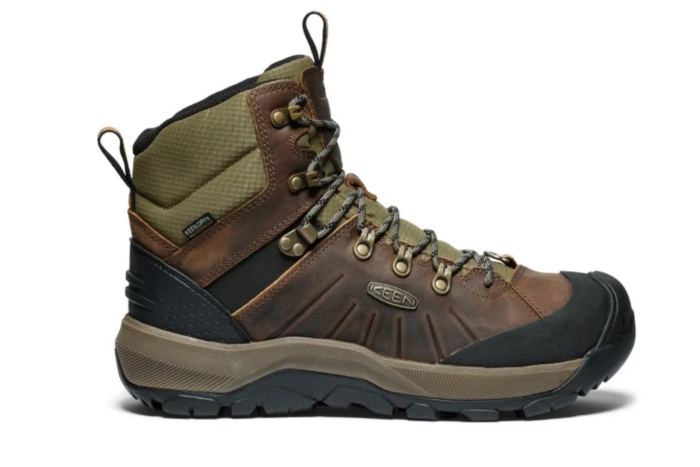
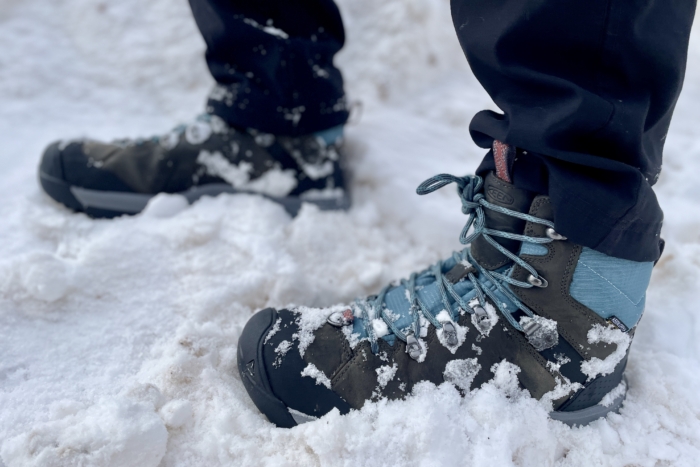
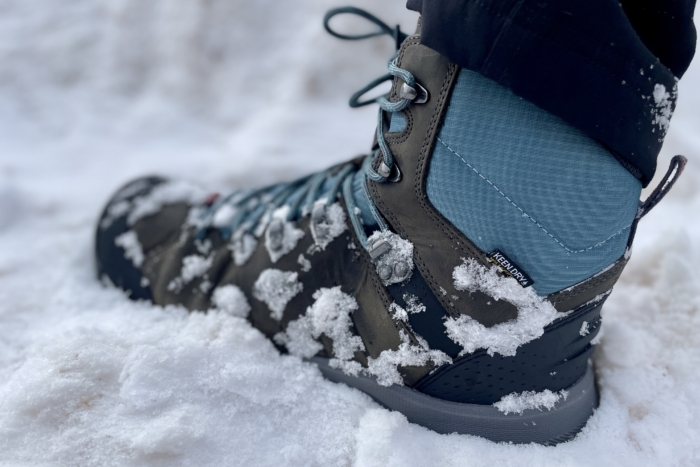
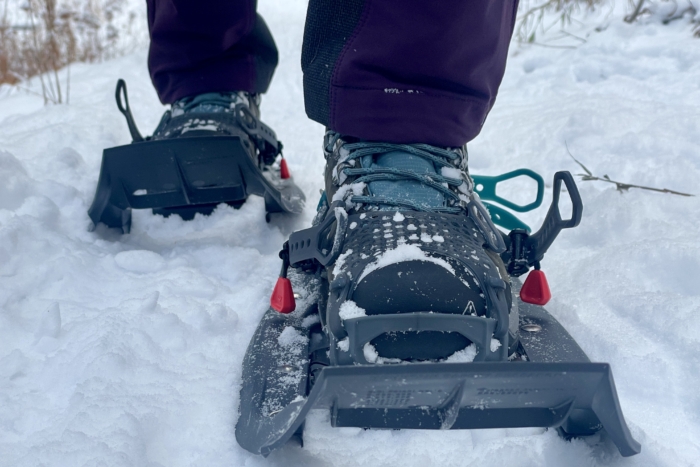
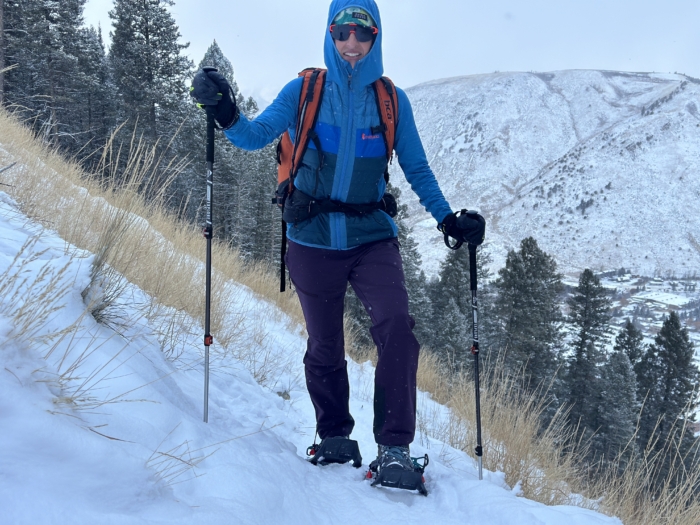
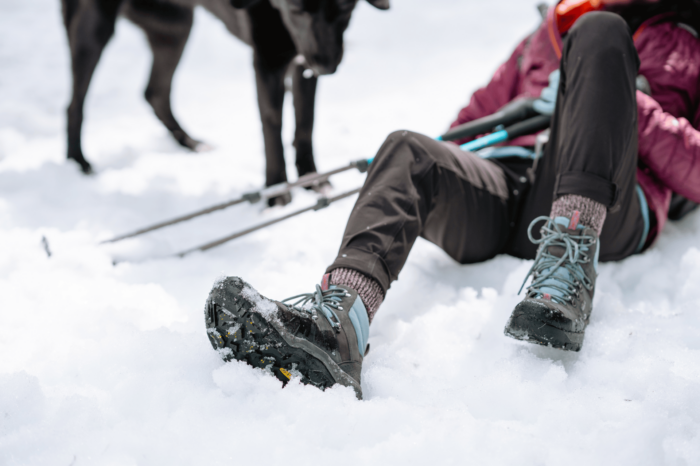
Immediately out of the box, the KEEN Revel IV Polar Boot Mids ($190, also available in a high-cut version, $210) feel amazing. The padding is generous, and the volume is ample. The boots have extra volume over the top of the foot and in the toebox, which is critical for keeping the toes warm. This also makes it a good fit for a variety of foot widths.
Beefed up with waterproof, salt-resistant leather and rubber rands, the Revels resist wear and tear and ice-melting chemicals that can be hard on boots. The 200 g of insulation makes these a lighter-insulated boot than our top pick, but when you’re really working while winter hiking, we find that we don’t need as much insulation as boots designed for more leisurely activities.
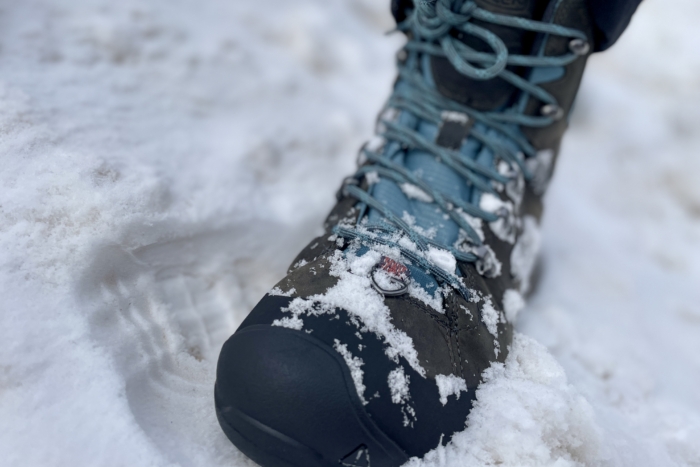
The boot rides over sharp-edged 5 mm lugs that really bite into the crust. And like Vibram’s Arctic Grip (used in Danner’s Arctic 600), KEEN has its own slip-reducing rubber pads. They give you noticeably better traction on slick, wet ice.
With so many good attributes, it was tough not to award the Revel IV as our favorite boot this winter. It’s warm, comfortable, and secure around the foot. Our only criticism is that we wish the mid-cut Revels were a little stiffer, and hence more predictable and stable when hiking across pockmarked snow trails. The high-cut versions help out significantly in this regard.
The Revel IV is a very capable winter boot, whether we were hiking on compact winter trails or snowshoeing in them. You’ll pay more for them compared to a solid all-arounder like the North Face Chilkats, but with more winter-specific hiking performance, we think it’s a solid trade.
Helly Hansen Arctic Patrol Insulated Winter Boots
Specifications
Pros & Cons
Pros
- Great looking boots with good enough performance
- Outsole traction in compact snow is great
- Upper collar cinch keeps blown snow out
- Aluminum insole layer is nicer than most pac boots
Cons
- Not waterproof above the outsole/upper interface
- Fit and control is a bit washy; we wished the laces extended up the collar a bit more
- No half sizes available
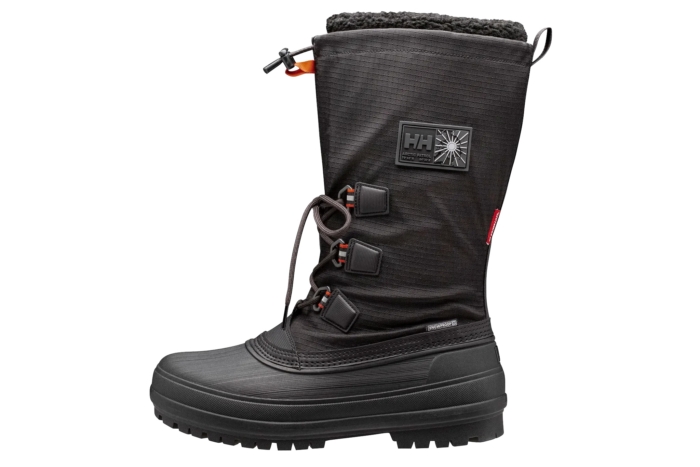
With as much style as performance, the Helly Hansen Arctic Patrol Insulated Winter Boots ($170) look like they belong on a cruise to the Antarctic. While boots tend to be function-forward, these are some of the more attractive options when it comes to a boot that can withstand actual cold.
The fat-lugged rubber outsoles aren’t just for show, though, and kicking around on iced sidewalks proved steady-footed. Mated to those are 10″ tall textile collars that cinch at the top, meaning you’ve got some extra protection from topping your boots in very deep snow. Then, the smaller details: the coordinates in the rubber logo translate to the chill of Svalbard, Norway.
When it comes to warmth, the 400 g of Primaloft insulation does an admirable job, and we’d place these boots solidly on par with other pac boots like the L.L.Bean Leather Snow Boots, but not as warm as boots with thicker foam liners. There is an aluminum shield on these below the foot, and we felt insulated from the cold underfoot.
Like most other pac boots, support on the Arctic Patrols is a bit washy, with only the single boot lace on the front securing things down. In practice, this didn’t feel as locked in as we had hoped, and a second set of laces on the inner boot would likely fix this. Better to stay on deck rather than hit the trails in these.
In terms of comparable options, the L.L.Bean Leather Snow Boots are an immediate parallel and likely get our vote over these when you’ve got some work to do (but don’t need a full-on work boot). In our head-to-head waterproofing tests, the L.L.Bean Boots were waterproof almost to the top of the shank, while the Helly Hansen boots leaked from above the rubber shell.
So, it’s best to call these just snow-proof, which the boots even call out on a tag, so no love lost there. Sometimes that’s all you’re up against, however, and for a boot that looks good doing it, the Arctic Patrols get a passing grade from us.
Bogs Bozeman Tall
Specifications
Pros & Cons
Pros
- Truly waterproof
- Lightweight and flexible upper shaft
- Comfortable for all-day wear
- Large pull-on handles
Cons
- Not ideal for folks with very wide feet
- Clunky for city-walking
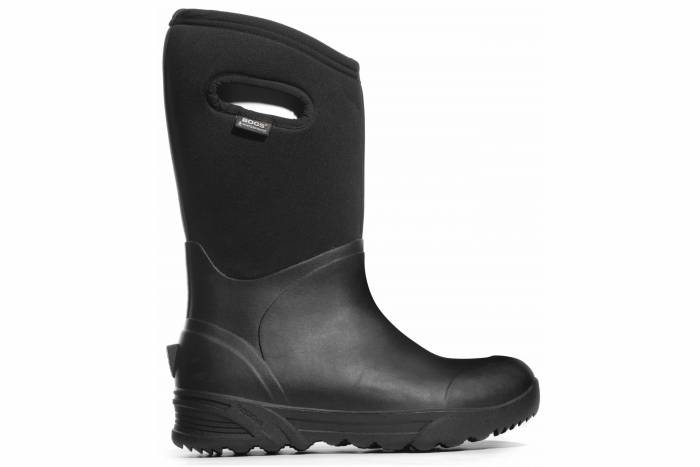
When the mercury drops but winter chores pile up, it’s time for a full-on work boot. Whether chopping wood or walking the dog, the neoprene Bogs Bozeman Tall Boots ($185) are rated to -72 degrees F and will keep your feet warm and dry through the sloppiest of conditions. The cushioned sole provides excellent rebound and ensures a comfortable all-day wear.
And one of the standout features is the weight, or lack thereof. Each boot weighs just over 2.5 pounds, and its seamless construction reduces the need for extra materials, making these boots 30% lighter than comparable models. They look burly and are built to last, but we were pleasantly surprised that they don’t feel cumbersome.
We used these boots last winter for everything from splitting firewood to outdoor carpentry, where they were just nimble enough to keep from getting caught up as we moved from task to task, but still warm against below-freezing temperatures (with some solid wool socks). When challenged in our submersion tests, these boots ranked second in overall waterproofing depth (only led by the Fubuki Nisekos).
In use, our only issue was that individuals with fairly wide feet struggled to find these boots comfortable. Hopefully, Bogs makes a wider last version in the future for our bigfoot friends.
Don’t need this much coverage? The Bozemans are also available in a mid version ($180) for more casual chores.
Blundstone Thermal All-Terrain Boots
Specifications
Pros & Cons
Pros
- Stylish and classic
- Durable leather outers
- Vibram outsole
- Steel shank
Cons
- Requires a short break-in period
- Not ideal for technical hiking or winter chores
Read Review: Durable Outdoor Winter Slip-On: Blundstone Thermal Boots Review
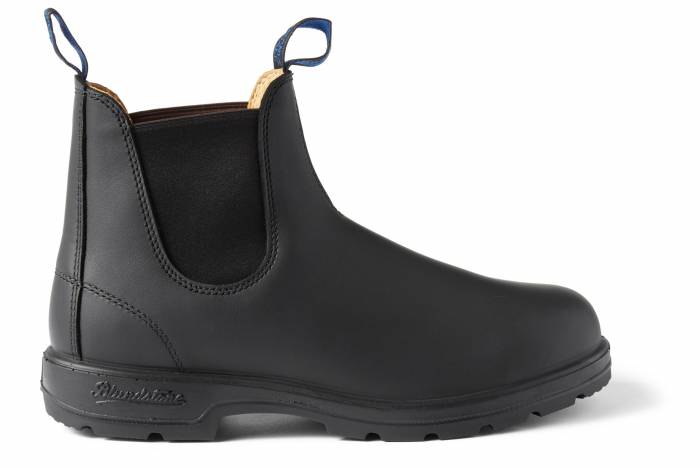
Blundstone’s sleek silhouette has earned the Aussie Chelsea iconoclast status. The brand’s All Terrain Thermal Boots ($275) have a touch of Thinsulate under the leather vamp that stretches their utility beyond the Australian outback.
These boots are deceivingly slim — so slim, in fact, that when we unboxed them, we weren’t sure we received the right model. But don’t let its svelte lines keep you inside.
The Thinsulate liner punches above its weight, is fully waterproof, and is warm enough to wear to work on frigid days. What seals the deal, though, is the fat shearling footbed that feels like you’re walking on plush carpeting. Two generous pull tabs and elastic stretch panels make it easy to pull the boot on and off.
The boot feels a little stiff, and the low cut won’t keep deep snow from funneling in. But for hikers looking to kick the classic styling well into the cooler months, the All Terrain Thermals are a solid bet. If you’re after a bit more of a kick-around boot (that isn’t afraid of a little work, either), the XTRATUF 6″ Deck Boots are a very similar profile, but are a full neoprene design that’ll hold off water for longer.
Other Great Winter Boots We Tested
The selection of award winners above is our current favorites for winter trekking, commuting, or work, but they aren’t the only worthy cold-weather footwear out there. We’ve compiled a few alternative options that we’ve also used and enjoyed, which might be just what you’re looking for.
-
-
-
The Columbia Bugaboot III offers stellar traction in a warm and affordable package; (photo/Matt Bento)
-
(photo/Matt Bento)
Specifications
Pros & Cons
Pros
- Super warm
- Stellar traction
- Bomber weather protection & waterproofing
- Budget-friendly
- Capable hiker
Cons
- Heavy and bulky
- Stiff fitting/lack of mobility
- Cumbersome to pull on and off
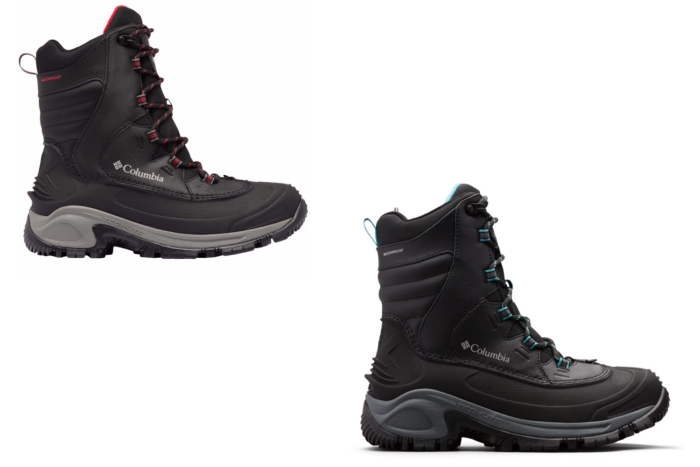
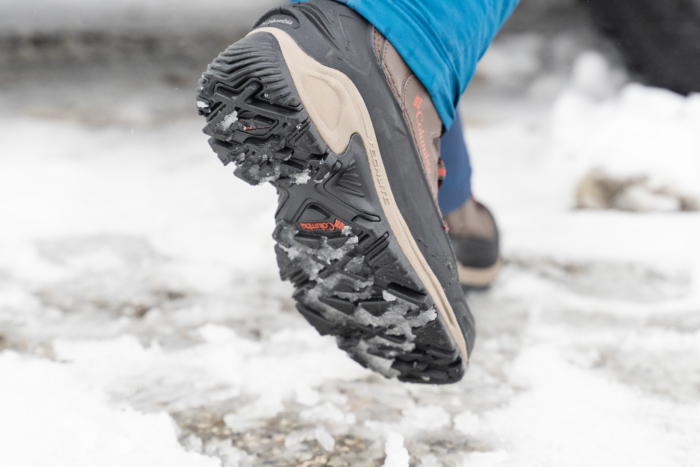
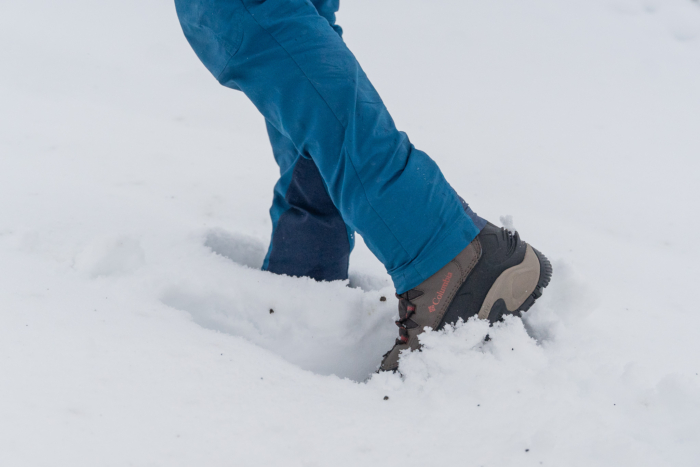
Durable and affordable, the Columbia Bugaboot III ($120) is a solid waterproof option. Thanks to its secure-fitting heel and effective omni-grip tread, this boot feels more like a hiking boot than many of its contemporaries, but lacing it up can be a bit tedious if you’re just going down to the mailbox.
This boot is one of our favorites for longer winter hikes where you could encounter slush puddles or need to break trail in up to a foot of snow. While boots like the TNF Chilkat and Boggs are easy to slip in and out of, they can be a bit too roomy if you’re looking to rack up miles. The Bugaboot is a little bit narrower than these boots, so your feet don’t have as much room to slide around and form hot spots over longer distances. The tread also performs well, and we had no complaints in the slip department, even when the trail was more mud than snow.
The Bugaboot III isn’t too shabby in terms of warmth, with 200 g of insulation, but it isn’t as warm as our top pick, the North Face Chilkat, which has 400g of insulation.
Getting these boots on and off can be a little tedious. We wish they had a few open metal quick lace clips like the ones on the TNF Chilkats. The Bugaboots have nylon eyelets with one set of closed metal eyelets at the top of the cuff. They allow for a lot of adjustability. We could cinch them tight over the midfoot while leaving the ankle a little looser or vice versa. This makes them excellent for longer hikes but not as utilitarian for around-the-house winter chores when you may only need to wear them for brief amounts of time.
Finally, we think $120 is a screamin’ deal for such a solid pair of boots. The seams are exposed, but as of yet, there are no signs of wear, and they’ve retained their waterproof properties. The uppers aren’t fancy suede like on the Danner Arctic 600, but they’re just as effective, and they cost half the price. The Merrell Thermo Chill Mids are lighter and better for hiking, but don’t work as well in deeper snow. If you’re on a tight budget this year or outfitting a growing teenager, the Bugaboots are a great way to go.
Specifications
Pros & Cons
Pros
- Affordable pricing for a winter hiker
- In-house technologies help keep price down and still perform well
- 200 g insulation keeps feet warm in 30°F+ temps
- Nylon arch shank gives the boot good support, and works well with snowshoes
Cons
- Merrell-branded outsole isn’t very grippy on icy sidewalks; will wear faster
- Not quite enough insulation for sub-freezing temps unless you’re moving quick
- Laces are quite long
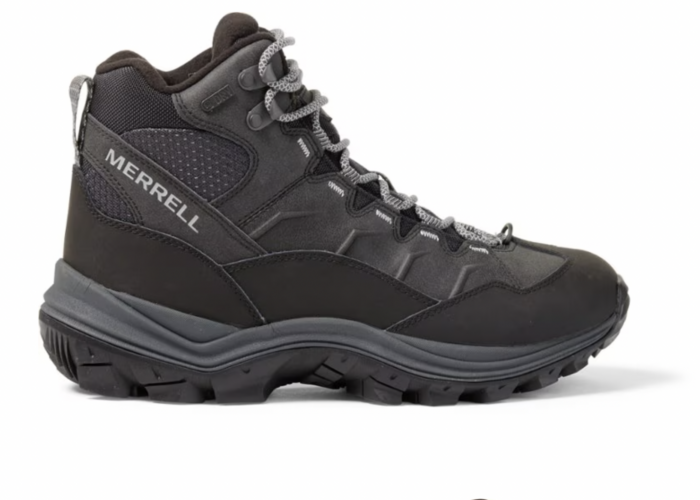
While we prefer the do-it-all nature of the Kamik Nation Plus boots for a budget winter boot, the Merrell Thermo Chill 2 Mid Boots ($150) are the other side of the equation and are a wallet-friendly hiker that uses in-house textiles and tech to keep the price tag low.
Performance, however, isn’t lacking, and we really got around in these boots last winter: taking them on a handful of snowy hikes on the hills outside of town. We found sizing to be the same as we wear in regular boots, and the fit has plenty of instep room to accommodate larger socks.
The Merrell waterproof membrane certainly works. It kept our feet dry through wet creek crossings and our dunk test, where it kept water out to a few inches below the cuff. The 200 g insulation is snug, as well, and the interior is lined with a fleece that kept our feet happy even after an 8-mile trudge through overnight snow.
These boots’ icy sidewalk traction is a bit less than options that incorporate some kind of anti-slip lugging or friction patches, but the tread is deeper than even our top pick, and post-holing snow traction was better for it. As a lightly insulated hiker, you’ll need to keep moving to stay toasty in these boots, but we had no problem doing that.
Truthfully, the only real long-term ding we can level at the Thermo Chill Mids is that the Merrell outsole is likely to wear out quicker than most (we’re still testing to monitor). The rubber used in winter boots is soft from the get-go, and non-Vibram outsoles wear faster compared to the licensed stuff (in our experience).
Specifications
Pros & Cons
Pros
- Impressively warm wool/polyester lining
- Rugged EVA outsole and shaft can take a beating
- Incorporates an ABS toecap to protect against dropped skis
- 10 different fun color schemes
Cons
- Forget about driving in these boots
- Fit is a bit large
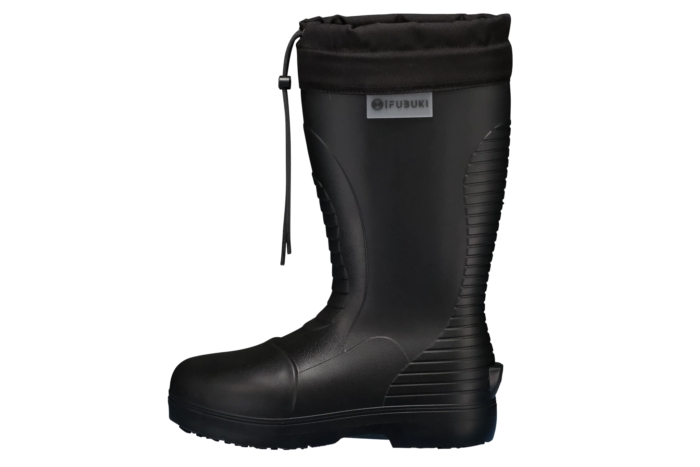
We’ve saddled up in a spread of après boots over the years, and can confidently say that the Fubuki Niseko 3.0 ($159) lands at the top of the ski hill with all the parameters we’re looking for: Easy to jump into, toasty warm, and just dang fun to boot around in.
Inspired by the footwear of Japanese industry workers in snowbound Hokkaido, the Niseko 3.0 could be thought of as the spiritual brethren of the Japanese Showa 282-02 fishing gloves that draw cult-like fanaticism in ice-climbing circles. It’s co-opted workwear gone all-around functional, and there’s a certain utilitarian allure under all those colors.
Swaddled in a thick EVA outer, these boots go no-nonsense with their polyester/wool insulation, and pile in a lot of it. Protecting that lining is a 100% wind- and waterproof shell that passes our waterproofing test with flying colors. And because of the undeniable tenacity of EVA (pray to your patron saint of petrochemicals), these boots can take a licking and keep on kicking. Not the most sustainable, though the company is mindful of its impact and is working toward reaching net zero emissions by 2025.
Because Fubuki is a Swedish brand, it can take a hot minute for your new kicks to hit your stoop, which also complicates returns (make sure you triple-check your sizing!), but the company is hopefully opening a North American warehouse soon to keep up with the high demand. Also, know that driving is pretty much out of the question with such a tall and somewhat inflexible boot shaft. Ask us how we figured that out.
For those looking for a drivable pair of après footwear, the XTRATUF Deck Ankle Boots are easy to slip into and work the pedals, just not as warm as the Nisekos. For post-ski hill kickbacks and even expedition basecamp footwear, however, the Fubuki Niseko 3.0 well makes the grade in our books.
Specifications
Pros & Cons
Pros
- Reliable waterproofing
- Good value
- Ideal for errands and wearing around the house
Cons
- Not the warmest or tallest shaft for deep snow
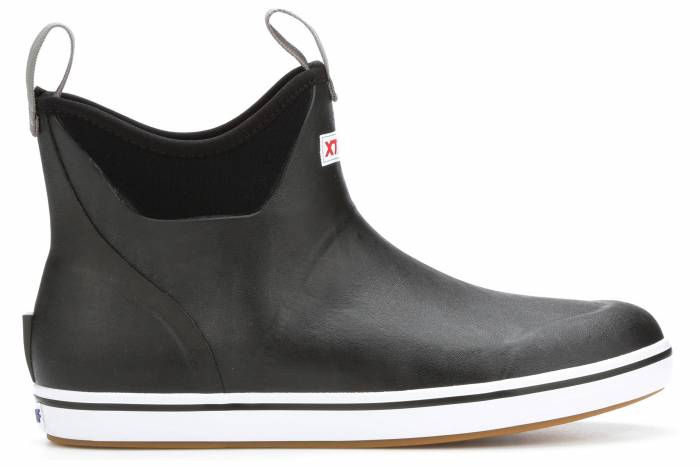
We’ve worn our XTRATUF 6-Inch Deck Ankle Boots ($125) nearly year-round. They’re easy to slip into, and they have a little tab in the back that helps get them off the heels.
They don’t have a lot of support, so don’t expect to do heavy work in them. And the neoprene starts to lose its insulation value at around 40 degrees F. But we always keep our pair by the back door. They’re great for quick errands and running trash outback, and they’re just about perfect for gardening.
The highest accolades we could probably give them don’t actually come from us. It comes from my sprinkler guy. All he wears are low-cut rubber boots; he saw our boots and asked where we got them. He now lives in his 6-inch XTRATUF Deck Boots.
At the risk of likening these to Crocs, these boots are quickly becoming the hottest shoe for winter, and XTRATUF seems to be aware of it. You can choose from 10 colors to match your mood.
-
-
-
The Danner Arctic Side Zip has laces and a zipper; (photo/Elk Raven Photography)
Specifications
Pros & Cons
Pros
- Slick side-zip makes for easy access while wearing thick layers
- Well-insulated with 200G PrimaLoft for winter hikes
- Vibram Arctic Grip outsole provides traction on ice
- Lightweight and low profile
Cons
- More expensive than some winter hikers
- Not the most supportive or tall boot shaft
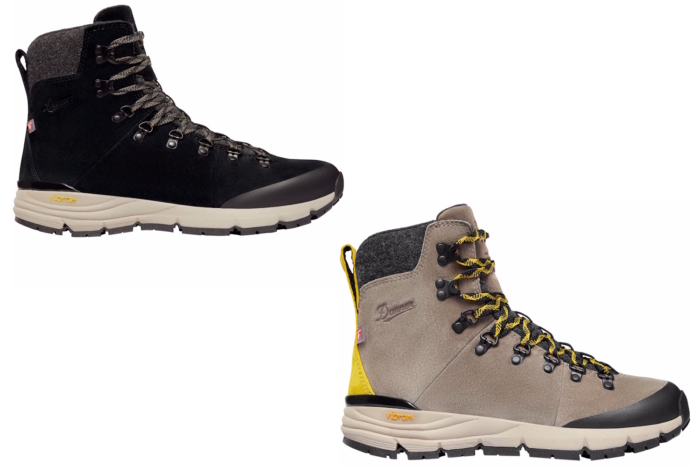
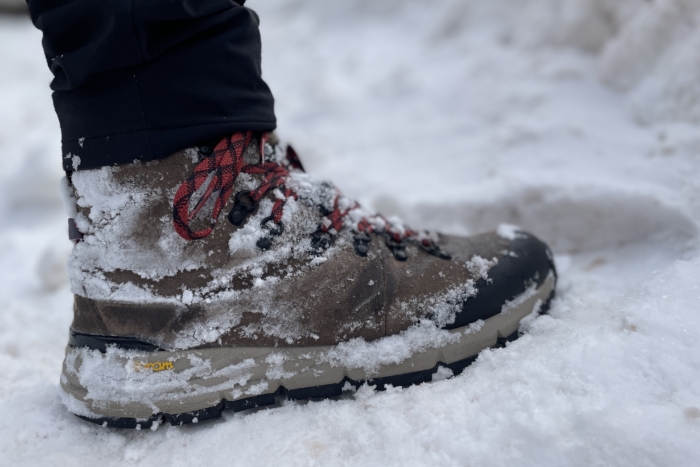
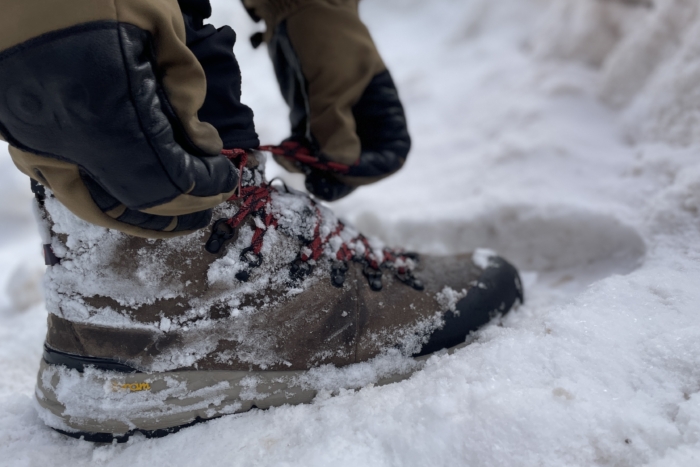
With handsome looks built from a rugged history, Danner has been making quality boots out of Portland, Ore., for nearly 90 years now. We’ve been wearing the brand’s boots for about 30 of those years, and in that time, it’s become obvious that the Danner Arctic 600 Side-Zip ($250) is one of the better winter hiking boot we’ve had the pleasure of braving winter with.
Offered up as a classic winter hiker, the Arctic 600 doesn’t just look the part (though it does that very well), but is built with all the time-tested building blocks we’ve come to expect in a hardy winter boot. From the ground up, a Vibram Arctic Grip outsole keeps the rubber side planted and provides added traction on icy trails and sidewalks. Mated to that is a suede leather upper bonded with a Danner Dry waterproof membrane, and while it isn’t the name-brand stuff, it accomplishes the job with ease.
The boot itself proved to be waterproof up to within an inch and a half of the collar in our dunk testing (a gusset of the waterproof barrier sits behind the zipper to protect it), and the suede exterior of the Arctic 600 does a bang-up job of holding moisture at bay. The 200 g of PrimaLoft insulation in these boots is just about right on the money for winter hiking in our opinion, as well.
The boot shaft is 8 inches on the Arctic 600, and while that’s plenty for winter trail tromping, those looking to wade into unpacked snow and slush ought to seek out something with a taller profile, such as the North Face Chilkats or L.L.Bean Leather Snow Boots. $250 is also a high-dollar compared to the rest of the market, but given the longevity we’ve experienced, we’ve got no problem recommending the Danner Arctic 600 Side-Zip to anyone looking for a solid winter boot.
Specifications
Pros & Cons
Pros
- Ideal for very cold weather and deep snow
- Good grip on ice
- Durable
Cons
- Pricey
- A bit bulky
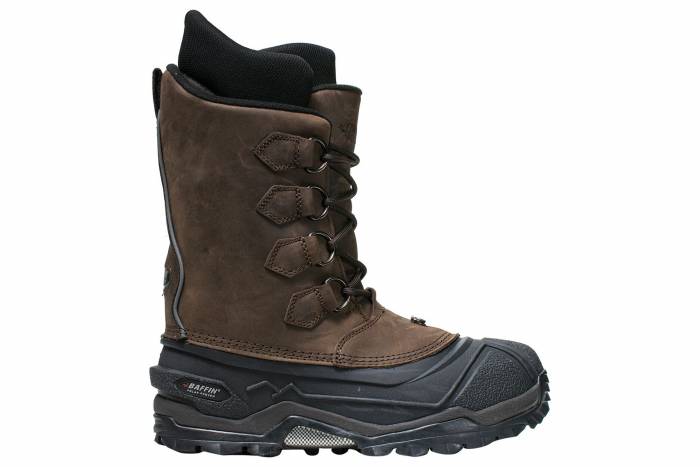
If your winter starts in October and ends sometime before the summer solstice, then you’re looking for a workhorse that can lift the soles and spirits.
Baffin’s Control Max ($336) has a whopping bottom end, dipping all the way to -94 degrees F. We’re going to throw our hands up in mercy at that spec. We haven’t tested them to that level and, hopefully, you won’t have to either. But we have worn these for a few winters and have really come to appreciate the warmth-to-weight ratio of this deep winter boot.
The boot is methodically constructed around thermoregulation. Outside, a waterproof leather exterior is triple-stitched to the rubber rand. Inside, a series of heat-reflecting aluminum membranes, foams, and moisture reservoirs move moisture away from the foot and trap the heat.
Underfoot, a waffle-comb footbed traps additional heat in honeycomb-like air pockets. And the entire boot rides over an aggressively lugged “arctic rubber” that’s tacky on ice.
The boot laces shut with four pairs of giant D-rings. The fit can be a touch sloppy, so they’re not our first choice for hiking, where we want a precise fit. But the rings and laces are easy to manipulate with heavy gloves. All in all, the double boot construction does a wonderful job of trapping heat and insulating you from the cold ground.
If your activity level is high, you’ll want something more nimble. If you live in a milder climate, these will be overkill. Our coldest days in these boots were in the low double digits and they didn’t feel overly hot, but we reached for the Baffins on days in the 20s.
The profile is massive underfoot, but the 3.5-pound boot doesn’t collect crud and feels lighter than it looks. If you’re looking for the ultimate cold-winter snow boot, or a boot that works during long periods of inactivity in the cold, the Baffin Control Max will keep you warm and cozy through it all.
Specifications
Pros & Cons
Pros
- Sleek, dressy appearance
- Warm
- Grippy outsole
Cons
- Faux fur lining takes a long time to dry
- Fairly soft mid and outsole
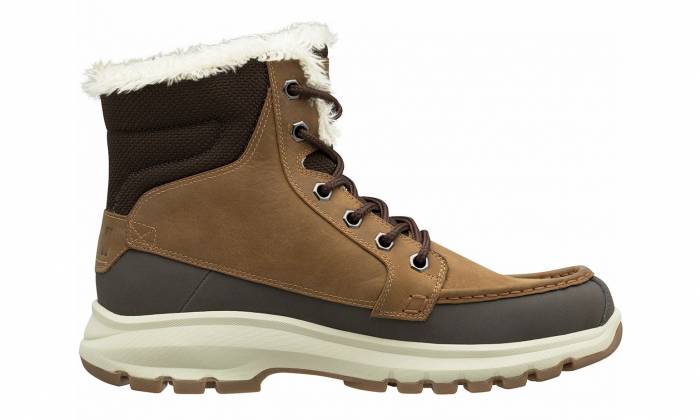
This handsome boot combines elegant styling and rock-solid materials. Due to their faux fur lining and dressy appearance, most people will prefer to use these boots for urban use. Still, the outsole is fully capable on mild to moderate trails, and the Primaloft insulation is very warm. The Garibaldi V3 Boots ($170) can be worn hard, even if they look like formal footwear.
We tested these boots in various mountain towns from the Canadian Rockies to southern Colorado. On icy city streets and muddy urban trails, our feet remained warm and dry. Plus never slipped and fell onto our butts – the tread pattern is confidence-inspiring on various surfaces.
A pair of men’s size 10s weighs 3 pounds even, which is reasonably light for an insulated ankle-high winter boot. The ankle support is great, but the mid- and outsoles are quite soft and flexible.
We recommend the Garibaldi V3 for everyday urban use, post-ski comfort, and casual hikes on low-angle trails.
Men’s Winter Boot Comparison Chart
| Men’s Winter Boot | Price | Weight (per pair) | Waterproof | Upper Material |
|---|---|---|---|---|
| The North Face Chilkat V 400 | $159 | 3 lbs. 2 oz. | Yes | Full-grain leather and suede |
| Kamik Nation Plus | $100 | 3 lbs., 10 oz. | Yes | Suede with sealed seams |
| L.L.Bean Leather Snow Boots | $180 | 4 lbs., 5.2 oz. | Yes | Tumbled leather |
| KEEN Revel IV Mid & High Polar Boots | $190 | 3 lbs. | Yes | Leather and mesh |
| Helly Hansen Arctic Patrol Insulated Winter Boots | $170 | 1 lb., 4 oz. | Yes | Recycled polyester |
| Bogs Bozeman Tall | $185 | 2 lbs., 9 oz. | Yes | Rubberized synthetic material |
| Blundstone All Terrain Thermal Boots | $275 | 2 lbs., 2 oz. | Yes | Leather |
| Columbia Bugaboot III | $120 | 3 lbs., 1 oz | Yes | Waterproof leather |
| Merrell Thermo Chill 2 Mid | $150 | 1 lb., 4 oz. | Yes | Waterproof-coated leather |
| Fubuki Niseko 3.0 | $149 | 3 lbs. | Yes | EVA |
| XTRATUF 6″ Deck Ankle Boot | $125 | 2 lbs., 11 oz. | Yes | Rubberized neoprene |
| Danner Arctic 600 Side-Zip | $250 | 2 lbs., 13 oz. | Yes | Suede |
| Baffin Control Max Heavy-Duty | $336 | 3 lbs., 7 oz. | Yes | Leather upper with sealed seams |
| Helly Hansen Garibaldi V3 | $170 | 3 lbs. | Yes | Leather |

How We Tested the Best Men’s Winter Boots
Our winter boot testing at GearJunkie aims to strike a balance between real-world challenges and tailored bench testing to gain a comprehensive understanding of what these boots are capable of. Here’s how we rate these boots before recommending them:
- Field testing: Our primary testing is all the real deal, and we’re putting in the miles, both outdoors and in the city, during the winter months to test these boots. We aim to challenge them on the most important aspects, which include warmth, traction, and fit.
- Waterproof submersion testing: Every pair of winter boots we test undergoes our submersion test, where we challenge the waterproofing by immersing it in a tank of water until it leaks. We do the same test with a bank of snow and look for wetting out seams.
- Our winter boot rating system:
- Warmth: 25% weighted. Performance below 32 degrees F is the benchmark for a high rating here, with the highest rated boots staying warm at close to 0 degrees.
- Weather Protection: 25% weighted. Boots should be waterproof in a variety of conditions and throughout an entire day to rank highly.
- Comfort & Fit: 25% weighted. We look for ample padding and boots that aren’t too washy in the fit for when traction matters. We also consider the height of the shaft, as well as the extent to which the lacing system covers it.
- Traction: 25% weighted. Tested on frozen mud, snow, and ice.
Our Testing Locations
We test these winter boots in a variety of climates and conditions, ranging from the deep snow of the North Cascades to the biting cold of the Rockies. Last winter, we snowshoed into remote fire lookout towers, made the soggy commute to work, and shoveled a decent amount of snow. We aim to be specific in our testing by going the distance and using these boots as they were designed.
Our Expert Testers
GearJunkie’s Editorial Director Sean McCoy is no stranger to a snow-bound romp in the highlands, and regularly pursues big game in the alpine of Colorado where cold feet are simply not an option. McCoy spearheaded the testing of winter hunting boots for this guide and aimed to balance a test of grizzled durability with the need for undying off-trail traction when testing winter boots.
Contributor Austin Beck-Doss has a front-row seat to the brutality of a Wyoming winter from his station in Lander, where his transition from climbing season to snowboarding can be as short as a 48-hour storm cycle. Beck-Doss has been putting boots on the ground for this guide since 2022, and maintains a broad view over the category from slush-city cruisers to insulated après ski lot slippers.
Finally, Senior Editor Nick Belcaster may have a problem understanding the concept of a “shoulder season” and regularly sets out into the mountains of the North Cascades as the first snows of the season are blowing in. An accomplished backpacker, mountaineer, and splitboarder, Belcaster has also advised and outfitted thousands of mountaineering clients in appropriate cold-weather footwear in his time, and knows that cold toes won’t do when the summit is calling.

Buyer’s Guide: How to Choose the Best Winter Boots for Men
Winter boots come in all sorts of shapes and styles. As our list of recommendations demonstrates, the winter boot market contains everything from extreme weather work boots to stylish formal footwear. With so many options, it can feel daunting to sift through the pile and select the perfect pair.
When choosing the best boots for you, it’s important to understand some of the key factors that differentiate one pair from the next. In this comprehensive buyer’s guide, we thoroughly explain each of these factors to help you make a confident and informed choice.
For more winter footwear recommendations, check out our guides to the best women’s winter boots, the best winter hiking boots, and the best snowshoes.

Temperature Ratings
Any winter footwear worth its weight will offer plentiful warmth. Many winter boots come with a specific temperature rating. While these ratings can be helpful guidelines, the actual feel of a pair of boots will always be a better indicator of warmth than a manufacturer’s rating.
Often, boots claim to have very impressive temperature ratings well below zero. Because there is no standardized test for boot temperature ratings, always take these numbers with a grain of salt. The warmth of a boot comes from various factors, including sock thickness, activity level, personal cold tolerance, and much more.
A winter boot rated to -10 degrees F will likely feel warmer than a boot rated at zero made by the same manufacturer. Using temperature ratings to compare boots from different manufacturers is a less reliable practice. We certainly recommend trying boots on to get a real impression of their warmth and comfort.

Insulation Type
Winter boots utilize a variety of different insulation types to achieve the desired combination of warmth and comfort. The most common types of insulation are synthetic, felt, and sheepskin.
Synthetic
Most modern winter boots are equipped with synthetic insulation. Between the outer shell and the inner lining of the boot, synthetic materials provide lightweight and durable warmth. Perhaps the most important benefit of synthetic material is that it can insulate even when wet.
Popular name-brand synthetic insulation options include Thinsulate and PrimaLoft, though many other quality options are available. No matter the name brand, the total weight of synthetic insulation will always be a better indicator of warmth than the name brand.
Many manufacturers include the insulation weight in their boot specifications. Lightweight to midweight boots will usually have a fill rating of 200-400 g. If you are seeking heavy-duty boots for extreme cold, look for a fill rating of at least 300 g.
Felt and Sheepskin
Felt and sheepskin are materials that have long been used to insulate winter footwear. While synthetic insulation is by far the current norm, some manufacturers opt for classic and traditional materials.
The downside of felt and sheepskin insulation is they tend to be heavy and bulky. Still, these materials can be warm and comfortable. Usually, felt and sheepskin is utilized in a boot’s lining where they can be in direct contact with the foot. While these materials provide warmth even when wet, they may become extra heavy when saturated and require lots of time to dry.
Weight
As you might expect, heavier boots are usually built for the worst conditions, while lightweight winter boots are better for moderate temperatures and less demanding uses. As the thickness of the outsoles and the fill rating of insulation increases, the overall weight goes up. Lightweight winter boots are great for active use, but they often sacrifice some stability, grip, and warmth.

Boot Height
Almost all winter boots are ankle-high or higher. Boot height is a major factor that determines the intended function of the boot.
On the low end of the boot height spectrum are lightweight hiking-style boots such as the Danner Arctic 600 Side-Zip. Lower-cut boots typically measure around 7 inches from the footbed to the top of the boot. Lower-cut boots are ideal for hiking, as they tend to be relatively light and flexible.
The downside of lower-cut boots is they allow snow to seep in, especially when post-holing through a deep snowpack. If you find yourself in bottomless snow with a pair of ankle-high boots, a pair of gaiters may offer a simple solution.
If you plan to use your boots in regions with lots of snow accumulation, you’ll probably want to pick boots at least 8 inches tall. Work boots and boots for extreme weather are designed to sit higher on the leg, keeping the elements out and the warmth in. On this list, the Baffin Control Max is a high-cut and extremely warm boot ideal for the coldest, snowiest conditions.
Waterproofing
Nothing beats a reliable pair of boots that keep your feet warm and dry no matter how bad the weather gets. Waterproofing is the difference between blissful comfort and soggy misery.
Waterproofing is ultimately a product of the materials incorporated into a boot’s design. Features such as rubber outer layers and an exterior water-resistant treatment are standards of the most waterproof boots.
All of the boots we’ve selected are designed to keep water out as much as possible. Some of the more robust included models feature a two-piece system that includes an outer waterproof barrier and an inner removable liner. On this list, the Kamik Nation Plus is a great and affordable two-piece boot that successfully keeps moisture out.
One-piece boots typically feature a waterproof membrane sandwiched in between the outer material and the lining. While one-piece boots usually don’t have the failproof waterproofing of many two-piece styles, they tend to be lighter and more flexible.
On this list, the Fubuki Niseko 2.0 is a burly all-EVA boot with a full-foot-tall shaft that refuses to let water in.

Breathability
The downside of built-in insulation and waterproof membranes is decreased breathability. While boots that trap heat are certainly desirable, overheating can be a real concern, even in extremely cold weather. For this reason, a reasonable degree of breathability is an asset in winter boots.
Generally, lightweight hiking-style winter boots are more breathable than gravy-duty work boots or two-piece models that thrive in extreme cold. While hiking or performing other strenuous activities, breathability can help to prevent sweating and blisters.
Ultimately, breathability is a trade-off. Winter boots simply cannot be completely waterproof and extreme weather-ready and fully breathable at the same time.
If you’re simply looking for top-notch warmth or waterproofing, breathability doesn’t need to be a major consideration when selecting boots. If you plan to wear your boots for active use in a wide range of conditions, be sure to select a breathable pair.
Outer Material
A winter boot’s exterior material will significantly affect its waterproofing, breathability, and weight. Rubber and leather are the most common outer materials.
Rubber
The waterproof qualities of rubber boots are unbeatable. For decades, brands such as Muck Boot and XTRATUF have been well-regarded for their nearly impenetrable rubber boots. In constantly wet and rainy regions such as the Pacific Northwest, rubber boots are a rightfully popular choice.
The downside of rubber as an outer material is its lack of breathability. In the same way that rubber boots successfully keep moisture out, they also keep moisture in. For long hikes and active use, rubber is not the ideal outer material.
Leather
Leather boots have been a popular winter footwear choice for hundreds of years. While leather does not provide the impenetrable qualities of rubber, it is a supple, durable, and relatively water-resistant material.
Compared to rubber boots, leather models tend to breathe slightly better. If you plan to wear your boots in a wide range of weather conditions, leather boots are an excellent and versatile choice.
Outsoles and Grip

The outsole is the part of a boot that makes direct contact with the ground underneath. Good grip is essential to a winter boot’s value and performance.
True winter boots come with outsoles designed to provide a reliable grip in cold and snowy conditions. To account for subfreezing temps, many winter boot outsoles feature soft rubber compounds that don’t overly harden in the cold. Additionally, thoughtfully designed tread patterns can prevent snow and mud from building up.
Outsole compounds and tread patterns vary wildly across the winter boot market. Generally, models geared toward hiking will have a deep tread and superior grip. Work boots typically come with heavy, bulky outsoles that prioritize durability above grip.
In severe conditions, you may want more winter traction than your boots can offer on their own. No matter how deep and sticky your tread is, chances are it won’t help on solid sheets of ice.
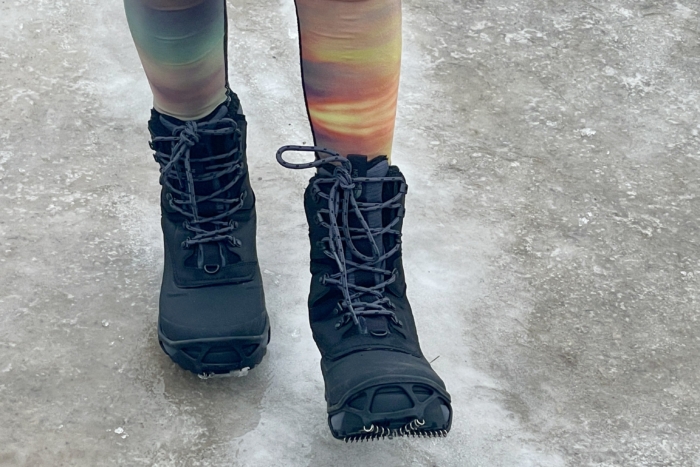
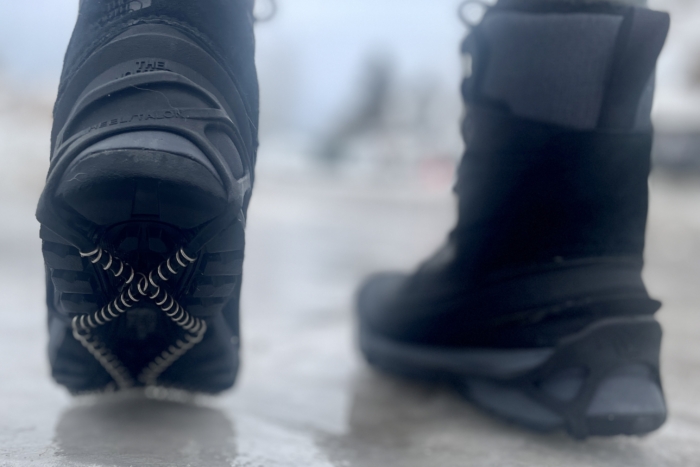
Traction devices such as Yaktrax and MICROspikes can be fixed onto the bottom of winter boots for improved grip on ice and hardpack. These devices have metal components designed to dig into ice and improve traction — just like tire chains on a car.
Fit and Sizing
Properly sizing winter boots can be a tricky process. Unlike with most footwear, you’ll likely wear extra thick socks with your winter boots, and it’s important to consider this when picking a size.
Ideally, your winter boots will be comfortable and free of major air pockets and hot spots. Of course, the best fit for you depends on the type of activity you’re using the boots for.
If you’ll be hiking or working on your feet, we recommend a snug fit for maximum performance. If you plan to use your boots for hanging out casually or simply wearing them about town, a looser, comfort-first fit is the way to go.
As always, there’s no substitute for trying on shoes, and we highly recommend you do so if possible.
Price & Value
Budget
Winter boots typically start out at a bottom dollar of $100, and for the budget price, there’ll be some concessions made to hit the price point. This is the realm of casual winter boots, which typically are less insulated, and likely to use suede leather or synthetics in their uppers.
The outsoles are also often molded together with the boot lowers, which is a cheaper manufacturing process but not as durable. For the money, the Kamik Nation Plus ($100) will keep you warm and dry in deep snow, but it isn’t our favorite hiker. If you’re looking to cover more ground, the Columbia Bugaboot III ($120) is lighter and has a much better profile for snow hiking.
Mid-Tier
Mid-range boots typically range from $150 to $250, and this is where most winter hiking and snow boots fall. These boots will often spring for a more top or full-grained leather and may incorporate a proprietary waterproof lining into the build. Vibram soles also make an appearance here, which can greatly enhance the traction on hard-packed snow or ice.
Our favorite boots (The North Face Chilkat V) are pretty affordable at $159. They’re insulated, decent hikers that are waterproof almost up to mid-calf. They also have gator attachment points and pair well with snowshoes.
Premium
Anything north of $250 and you’ll get a pair of boots geared toward maximum warmth and durability, with temperature ratings that may be overkill for a lot of us in the lower 48. The Danner Arctic 600 Side-Zip ($250) and Danner Recurve 400G ($260) are two premium boots that give a lot for a moderate amount of money.
The Blundstone All Terrain Thermal Boots ($275) are some of the more expensive boots we tested, and while they’re warm and very comfortable, you pay top dollar for those sheepskin liners and the name.
Frequently Asked Questions
What makes a boot winter-worthy is weather protection. Insulation and waterproofness keep the feet warm and dry. So consider waterproofness a requirement, not a nice-to-have.
Ask yourself if you’ll frequently be in rainy, or wet conditions or if slushy snow is a common occurrence. If so, prioritize waterproofness. Just be aware that it often comes at the cost of breathability and excessive heat retention.
These days, shoe sole technology is a science all its own and can truly make or break the shoe. If you find yourself walking and hiking in icy conditions, pay special attention to the tread grip and look for one designed for ice.
Vibram makes an arctic-grip lug that has a tackiness on slick, icy surfaces. It’s not as grippy as microspikes, but it adds extra confidence when walking on ice.
Many boots have replaced the liner with insulation directly in the boot. The benefit of the liner is you can remove it and set it out to dry between uses. The downside is that liners can sometimes cause extra movement and friction, which can lead to blisters and discomfort.
The main considerations with height are ankle articulation, keeping snow out, and comfort. If you regularly get out in deep snow and want a lot of support, choose a taller boot.
Be aware that taller boots can have different diameters. If you have larger calf muscles, you may need to try a few pairs on to see if they fit your legs.