
Whether you’re chasing faster lap times or just logging a few casual laps, the best swimming goggles make all the difference. They need to stay put, stay clear, and stay comfortable. No leaks, no fog, no distractions.
Lead tester Pam LeBlanc brings more than 40 years of swimming experience to this guide. She wore dozens of pairs during U.S. Masters swim practices at the Western Hills Athletic Club in Austin, Texas, tested them in open water, and gathered feedback from teammates to get a well-rounded perspective.
We know shopping for goggles online can be tricky since every face is different. But after extensive testing, we’ve identified the best-performing models across comfort, fit, clarity, and durability.
From high-performance picks like the Speedo Mirrored Vanquisher 3.0 to solid, affordable standbys like the Aegend Swim Goggles, these are the best swim goggles of the year.
Editor’s Note: We updated this guide on August 15, 2025, by adding the TYR Mirrored Blackhawk Racing for its low-profile race fit, the TYR Vesi for its unparalleled clarity, and the Zoggs Predator Flex for its open-water comfort and wide field of view.
The Best Swimming Goggles of 2026


Speedo Mirrored Vanquisher 3.0
-

-
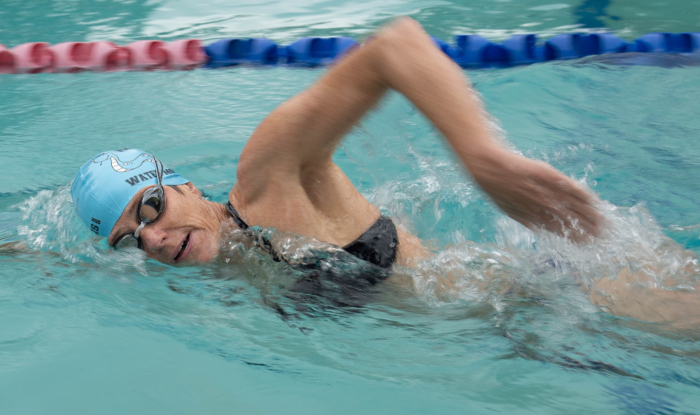
The Speedo Vanquisher 2.0 ranked as our favorite after hours and hours in the pool; (photo/Chris LeBlanc)
-
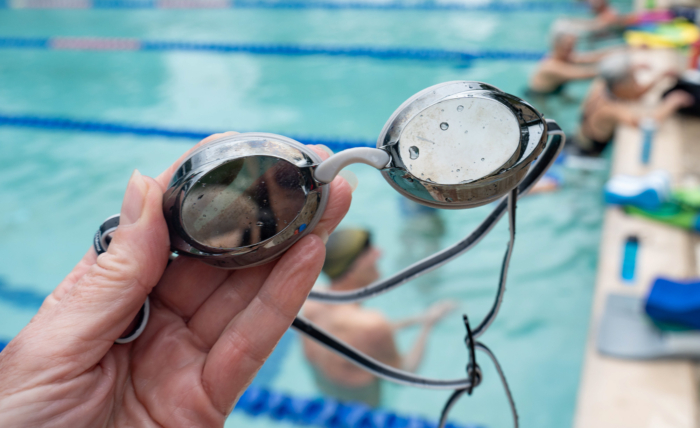
(Photo/Pam LeBlanc)
-
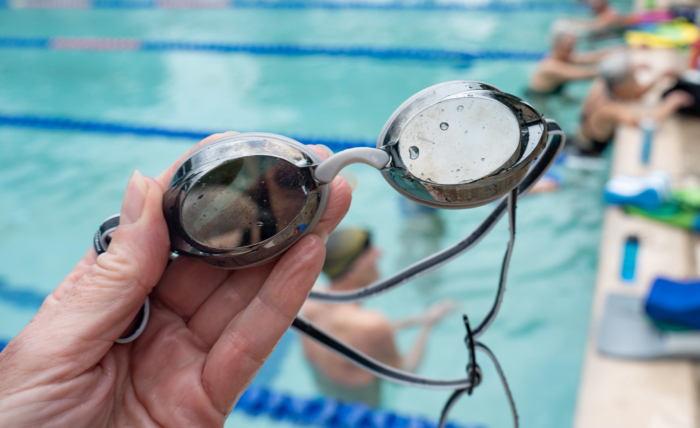
(photo/Pam LeBlanc)

Specifications
Pros & Cons
Pros
- Low profile
- Wide panoramic lenses
- Reasonably priced
- Interchangeable nose pieces
- Available in variety of colors and lens
- Mirrored lenses reduce glare
Cons
- Anti-fog effectiveness tends to wear off with multiple uses
- Must remove them to adjust the head strap
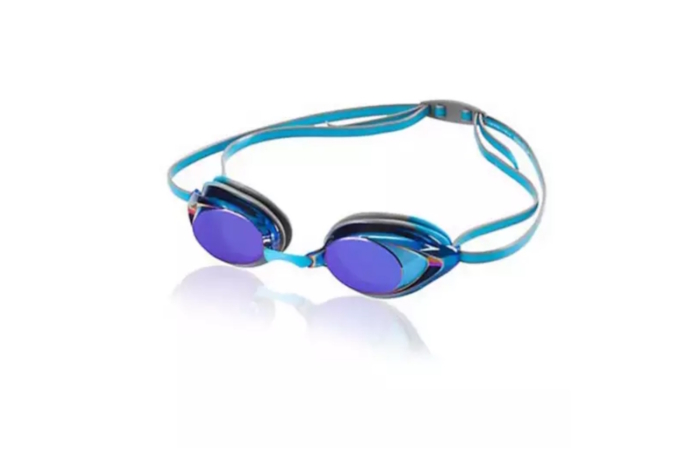
The Speedo Mirrored Vanquisher 3.0 ($30) consistently tops the charts for the best swim goggles. And, they get our vote (again) as the best overall pair. They’re reasonably priced, performance-oriented, stay in place even when you dive off the race blocks, and are low profile. You’ll probably forget about them once you start swimming, which means they’re doing their job.
For open-water swimmers, mirrored goggles are a great way to avoid blinding yourself as you try to see a buoy on a sunny day. Indoors, they might darken your vision too much. (On an overcast day, consider swapping mirrored goggles for a polarized set instead, as U.S. Masters Swimming recommends.)
You can get these goggles with non-mirrored lenses for a slightly cheaper price ($23). But even if your indoor swimming pool has windows that beam in daylight, mirrored lenses will be helpful. The soft silicone eye seals prevent leaking well. Although they’re made for serious training and racing, they’re also great for beginners.
The Vanquishers are easy to adjust by loosening or tightening the double headband and they stay in place on any head shape. The goggles are designed to be low-profile and fit snugly around your eye sockets with soft plastic gaskets. They come with four interchangeable nose pieces for a perfect fit. They’re also available in over three dozen colors, from basic black to rainbow.
The Speedo Mirrored Vanquisher 2.0 is affordable and well-suited for serious and recreational swimmers who need a long-lasting, reliable pair of goggles.
Aegend Swim Goggles
-
-
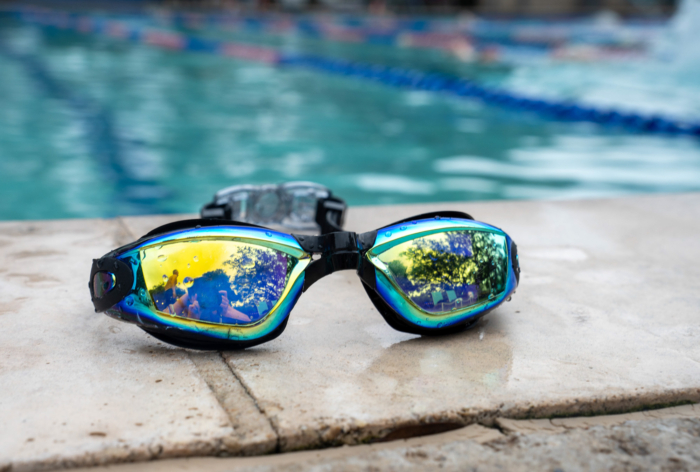
Aegend on deck; (photo/Pam LeBlanc)
-
Photo Credit: <strong><a href="https://www.aegend.com/a/Swim/Swim_Goggles/Adult_goggles/20200508/85.html">Aegend</a></strong>

Specifications
Pros & Cons
Pros
- Inexpensive
- Detachable clasp allows swimmer to put them on without pulling hair
Cons
- Slight visual distortion under the water
- Mirrored surface scratches easily
- Tends to leak on swimmers with closer-set eyes
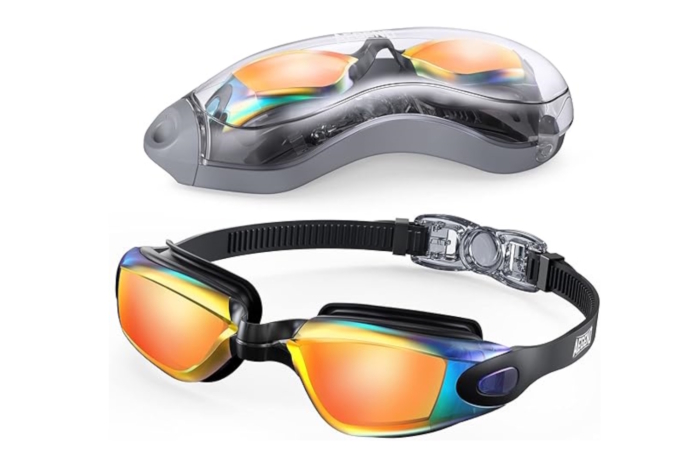
The Aegend Swim Goggles ($20) are easily the best budget swim goggles on the market. They’re the perfect family goggles because they’re simple to adjust and can be worn by most adults and children. They’re available in 19 different lens and color configurations so that you can get a different set for every family member.
The goggles have a more rectangular lens shape than Speedos and aren’t designed for serious racers but work well for casual swimming. Our biggest beef with them? Looking through them above the water, vision is crisp and clear. But when we tested them (and handed them off to other swimmers to try) in the pool, the view underwater got slightly distorted. Even the line on the bottom of the pool looked wavy.
The head strap is as wide as a finger. Unlike most goggles that you just pull over your head, these have a large plastic bracket that snaps together in the back. That can help you avoid yanking your hair, which makes them good for children. On the downside, it’s one more plastic part that can potentially break. (Don’t force the clasp.)
Unlike many other goggles, the nose piece on the Aegend goggles can’t be swapped out for a different size, so you’re out of luck if they don’t fit your face. They also feel somewhat large and heavy compared to other higher-end goggles.
We noticed that the mirrored coating on the surface of the lenses scratches easily. After just one use, our pair looked like a housecat had clawed it. We recommend keeping them in the plastic case they come in, so they don’t get banged around in your gear bag.
The Aegend Swim Goggles are affordable and work best for non-competitive swimmers with wide-set eyes.
TYR Blackhawk Racing Mirrored
-
-
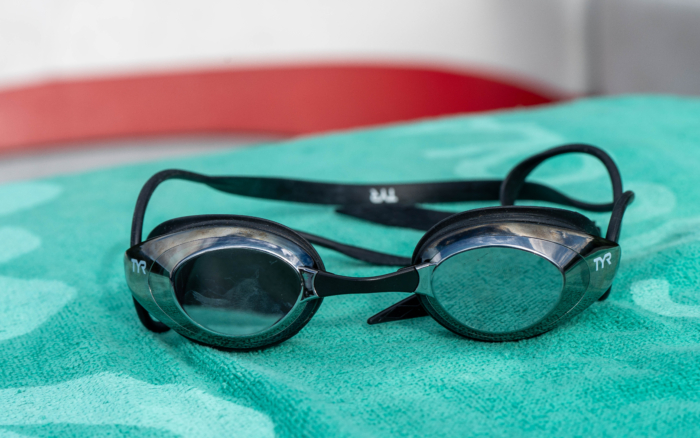
The TYR Blackhawk goggles are made for racing; (photo/Chris LeBlanc)
-
Specifications
Pros & Cons
Pros
- Low-profile design
- Wide peripheral view
- Sleek, close fit
Cons
- May leak on smaller faces
- Nose pieces are difficult to change
- Slight feeling of pressure around eyes
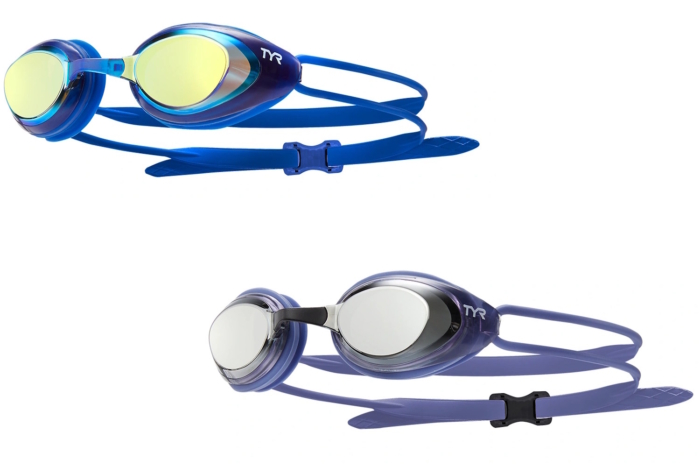
You can tell immediately that the TYR Blackhawk Racing Goggles ($28) mean business. These goggles are sleek and low-profile, and the version with mirrored lenses that we tested just screams, “I’m fast.”
They’ve got comfortable silicone eye gaskets that conform to most — but not all — face shapes. And the mirrored coating on the lenses makes it easier to see even in bright, sunny conditions. They also provide good peripheral vision so that you can watch the challenger in the next lane.
If they leak the first time you jump in the pool with them, try swapping out the nose piece for a perfect fit. Each pair comes with five options. Just be forewarned: It takes some tugging to pop out the existing nose piece, and we had to yank hard. Snapping in the new one is easier than taking out the original.
Still, the swap-a-roo is worth the hassle. When swimmer Pam LeBlanc first tried the goggles, the left eye gasket leaked even though the right one held tight. After exchanging the nose piece and tightened the head strap, the goggles worked well. But 30 minutes into swim practice, she started to notice a feeling of pressure around my eye sockets. Notably, TYR makes a women’s version of the Blackhawk Racing Goggle, specifically designed for smaller faces.
The head strap, which is rounded like a spaghetti noodle around the sides but flattens into a fettuccine shape in the back, is easy to adjust. The goggles stay firmly in place, even during shallow race dives.
The Blackhawk Racing mirrored goggles are a good choice for competitive swimmers looking for an aerodynamic goggle that’ll stay off the starting blocks.
Arena Cobra Ultra Mirror Swipe Goggle
-
-
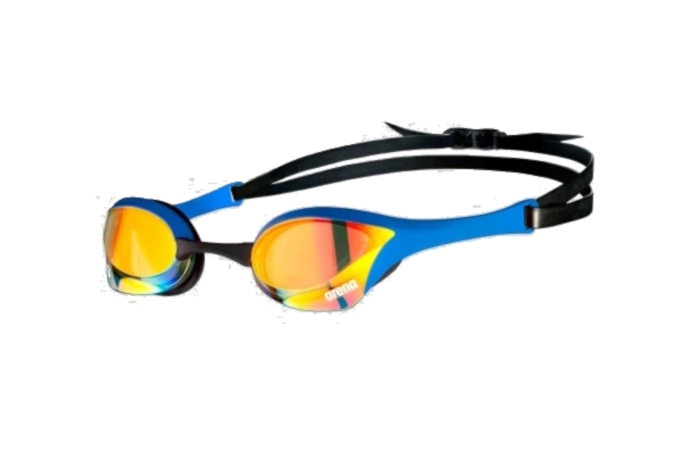
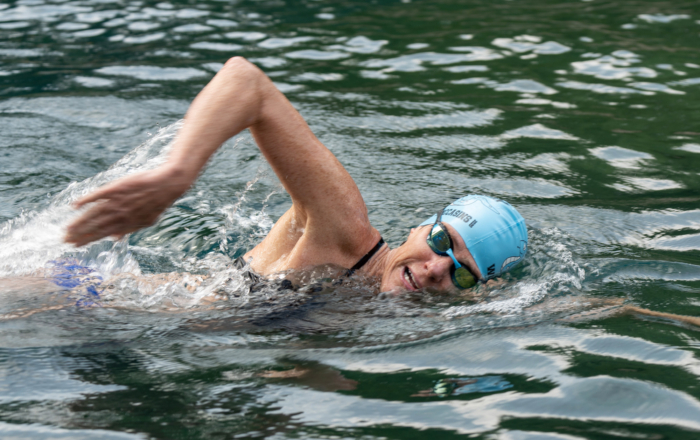
Arena Cobra Ultra Mirror Swipe freestyle (photo/Chris LeBlanc)
-
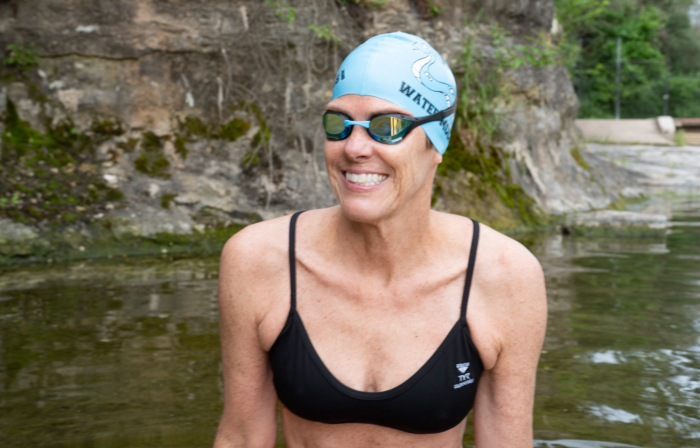
Arena Cobra Ultra Mirror Swipe; (photo/Pam LeBlanc)
Specifications
Pros & Cons
Pros
- Anti-fog “recharges” with swipe of a finger
- Hydrodynamic design
- Five nose pieces for a custom fit
- Rigid temple keeps goggles in place.
- Variety of colors and lens
Cons
- Expensive
- Extremely shallow eye cups can annoy some swimmers
The Arena Cobra Ultra Mirror Swipe Goggles ($80) don’t come cheap, but if you’re a competitive swimmer looking for a streamlined goggle that doesn’t fog as quickly as other makes, put it on the shortlist. They’re made with what Arena calls “swipe anti-fog technology.” When you dunk them in water and swipe the lens surface with your fingertips, it reactivates the anti-fog coating on the lens. (At least until that coating wears off, which seems to take longer than other brands.)
The curved lenses offer good visibility and stay in place better than most goggles, even while diving off the blocks. That’s because of an unusual “rigid temple” design — the headband starts farther back from the eyecups, and the stretchy part of the double headband is shorter than most other goggles. They also come with five nose bridges, so you can snap in the one that fits your face. The rubbery gaskets around the eye cups are comfortable.
That hydrodynamic design, though, has one downside. The eye cups are so shallow that they might not work well for swimmers with deep-set eyes. If that’s you, they could brush against your eyelashes.
The goggles are available in mirrored or non-mirrored lenses and more than a dozen color combinations. The Arena Cobra Ultra Swipe Mirror Goggle is best for competitive swimmers looking for a sleek, low-profile goggle with an anti-fog coating that lasts longer.
Magic5 Custom Goggle
-
-
Magic5; (photo/Chris LeBlanc)
Specifications
Pros & Cons
Pros
- Custom-fit to individual
- Low profile
- Interchangeable nose pieces
- Mirrored lenses reduce glare
Cons
- Expensive
- Sharp tabs on nose bridge
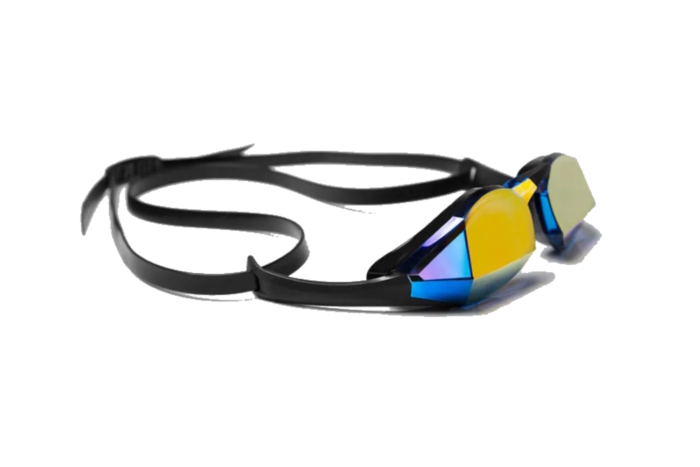
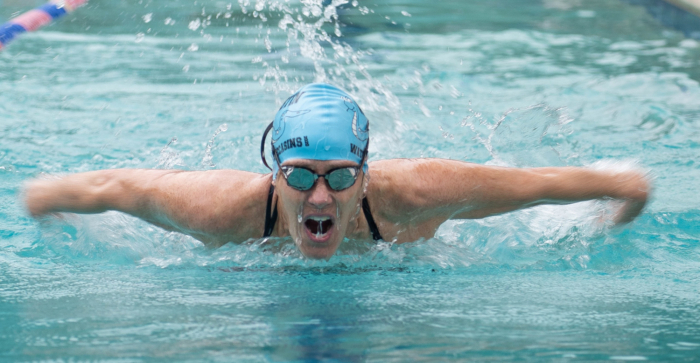
If you’ve struggled to find goggles that don’t leak, custom-fit goggles like the Magic5 Custom Goggle ($70) could solve your problem. When we showed up at swim practice wearing a pair, another swimmer said, “You look like someone from the future.” That may be true, but if goggles from the future never leak, we’ll take them.
As the manufacturer says, “One size shall fit only one.” To order the goggles, you must first download a special app that can be used to scan your face. It took us three tries to get the scan to work. But, when the goggles arrived about two weeks later, they fit perfectly. That’s because the company uses the scans to shape the goggles to match the exact curvature of your eye socket.
With such an exact fit, you don’t have to crank down the head straps as tightly as you might other goggles. They sort of settle into place like a puzzle piece. And if you have leakage or fit issues, the company promises to refund your money.
Each lens of the Magic5 goggles has four relatively flat planes, which makes them look like a cubist artist designed them. (That gives them the futuristic look our teammates noticed.) The Black Magic version we tested has the darkest lenses, best for outdoor swimming under sunny skies.
But here’s the rub. They’re not cheap. Also, the hard plastic tabs that hold the interchangeable nose pieces in place are hard and a bit sharp. So, if the goggles aren’t seated right, it can be bothersome. The goggles have an unusually large case to protect them when you’re not using them. We had to search to find the four interchangeable nose pieces, which arrived tucked into notches on the backside of the foam liner of that case.
The Magic5 Custom Goggle is best for serious adult swimmers who have trouble finding a good fit and are willing to spend a little more on gear.
FORM Smart Swim 2
-
-
(Photo/FORM)
-
(Photo/Form)
Specifications
Pros & Cons
Pros
- Leak-free fit
- Provides detailed data about swim
- Low-profile design
Cons
- Expensive
- Distracting to some swimmers, especially in pool setting
- Takes time to learn how to use
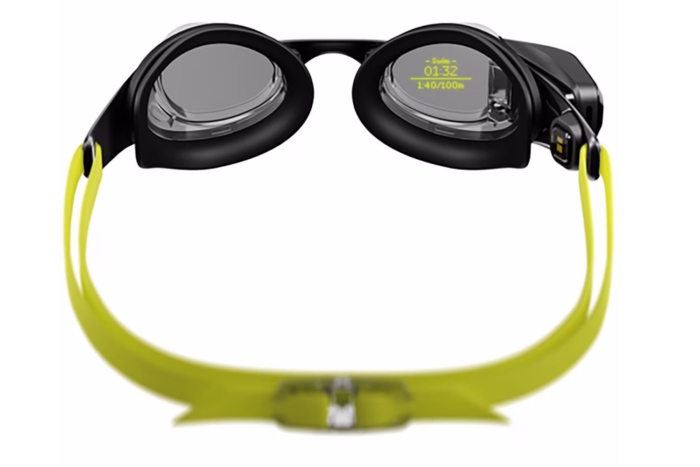
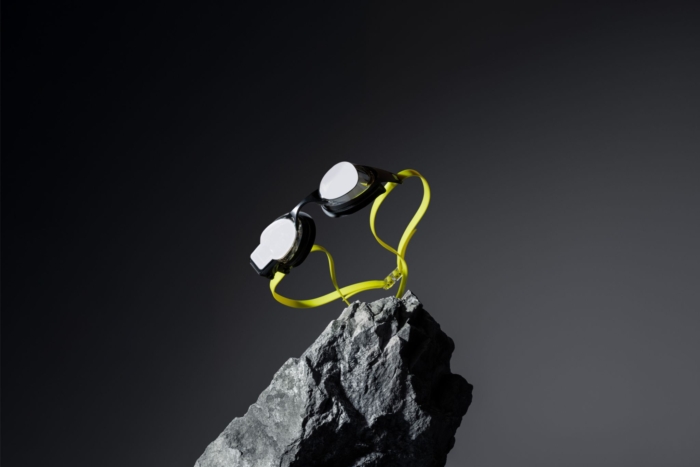
Gadget geeks, rejoice! The FORM Smart Swim 2 Goggles ($249) are so techno-savvy that they’ll tell you everything from speed and distance per stroke to heart rate, stroke rate, head position, and more. But non-geeks, beware. You might sink in the flood of information these high-dollar goggles throw at you.
First, the basics. The goggles look normal, except for the wine-cork-sized module at one temple. That’s the brains of the thing, and it includes an on-off button. They fit well and didn’t leak for most who tried them.
A heart-rate sensor is located at one temple and must make contact with your head to work. If you wear a swim cap, put it over the goggles.
You’ll also want to download the accompanying phone app. Once you’ve set this up, the goggles sync data automatically. You can check graphs, numbers and efficiency ratings to your heart’s content.
If you want added features — like in-goggle coaching, a compass feature for open water, and more than 1,500 workouts — you’ll need a subscription that costs $8.25 a month (the first 2 months are free).
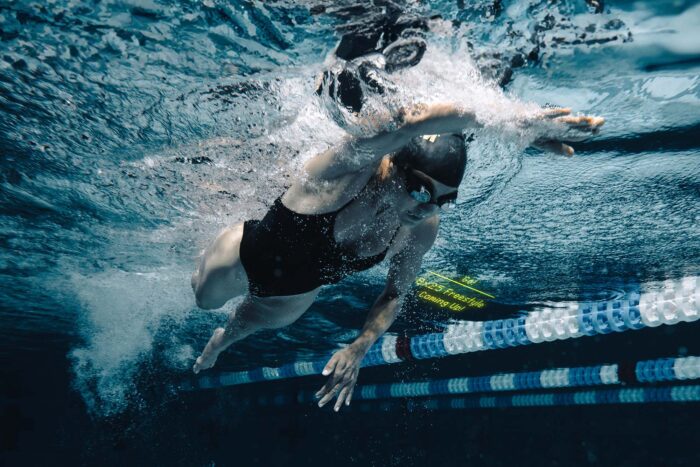
We brought a pair of these cyborg-esque goggles to swim practice and let our teammates try them. They track laps, speed, and splits as you go, but one teammate handed them back immediately, saying, “It’s like trying to watch a movie and drive a car at the same time.” Others said they’d like them for a solo swim session when there’s no coach on deck
After testing the goggles in a pool, we headed to a nearby lake and switched to open-water mode. First, we had to calibrate the goggles by tipping our heads forward and to both sides and turning in a circle. Then, we started swimming.
The SwimStraight compass feature is designed to help you swim in a straight line, but when we used it, the compass points seemed to waver slightly, and we veered off course. We did, however, love knowing how far and how fast we were moving.
The goggles come with a charging cable (a charge lasts about 14 hours) and a two-year warranty. (Do goggles ever last that long?).
The general consensus that the FORM Smart Swim 2s work best during solo workouts or in open water. If you’re into feedback and want to analyze the details of your swim, these may be the goggles for you. Just pack a fat wallet.
TYR Vesi
-
-
-
We appreciate the clarify of vision offered by the TYR Vesi; (photo/Chris LeBlanc)
Specifications
Pros & Cons
Pros
- Superb front lens clarity
- Secure head strap
- Easy to adjust
Cons
- May leak on smaller faces
- May take some finagling to properly seat
- Non-adjustable nose piece
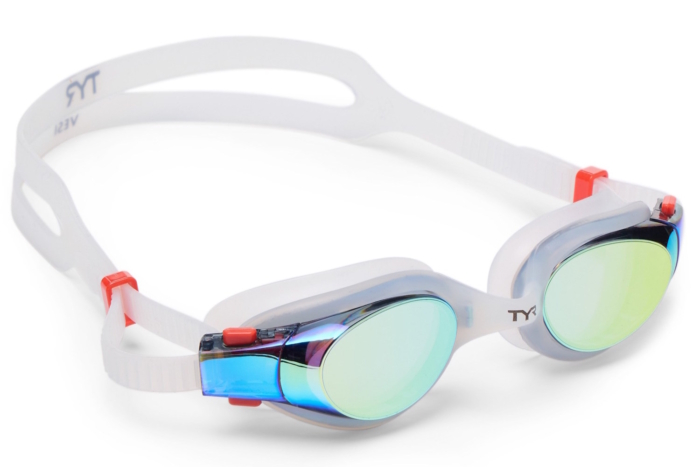
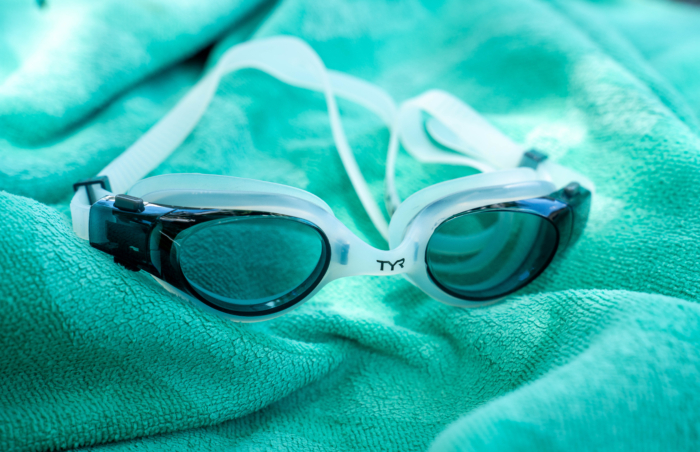
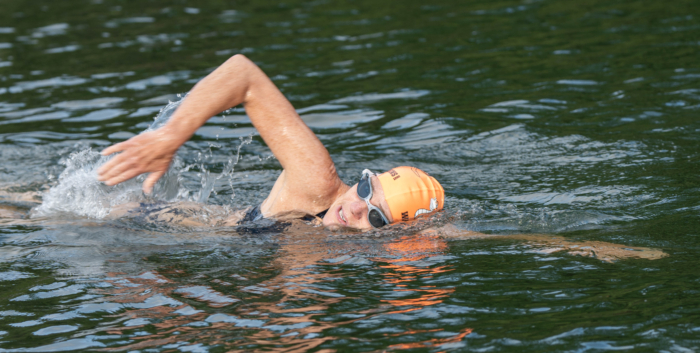
The TYR Vesi Goggles ($23) provided the clearest pool views of any goggles we’ve tested, at least when looking directly forward. The lenses are flat in front and curved on the sides. Looking straight ahead, you won’t find a more transparent lens. However, the transition area between the flat and curved surfaces creates a slight “shadow” effect in that spot.
The Vesi goggles have a unibody design, meaning they lack a separate nose piece. The silicone gaskets are cushy, but the fit depends on face shape. They leaked a bit for me, but not for my testing partner, who noted that getting the goggles properly seated takes some finagling, so no water seeps in.
The test pair had blue/smoke-colored lenses, but tinted and mirrored options are available. The head strap is slightly wider than most and splits at the back to hold the goggles firmly. It didn’t move during practice, even during sprint sets. To tighten it, tug on the end of the strap. To loosen it, squeeze the buttons on a mechanism at the edge of the eyecup.
The TYR Vesi goggles are streamlined and sleek, though not as low-profile as traditional racing goggles. If you’re looking for goggles that’ll work well for training, check them out.
Other Swimming Goggles We Recommend
-
-
The Snake & Pig ; (photo/Chris LeBlanc)
Specifications
Pros & Cons
Pros
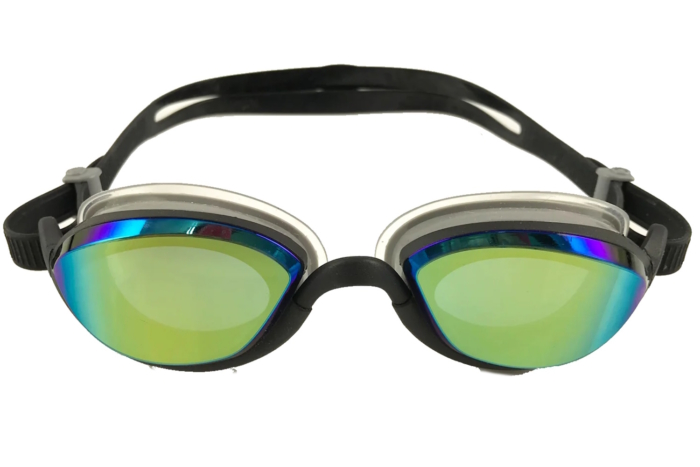
- Wide peripheral range
- Super comfortable eye gaskets
- Stay secure on face
- Rolling buckle on head strap easy to adjust
Cons
- Higher profile shape than most competitive goggles
- Better for training than racing
- Non- Non-adjustable nose bridge that rotates, causing straps to twist
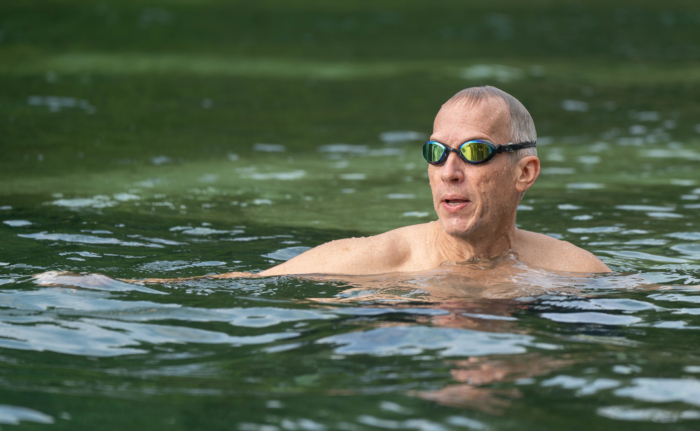
The Snake & Pig Basilisk ($35) have double-walled air-cushioned gaskets around the eyecups. These make them extra comfy and prevent what swimmers know as “panda” or “raccoon” eyes. But they’re larger on the face than other goggles, like the Speedo Vanquisher.
The feeling is a little like wearing Buddy Holly’s thick plastic-frame glasses when you’re used to lighter John Lennon-style wire rims. Still, we love the comfort aspect of these goggles so much that we recommend them for anyone out to log super long swims.
The mirrored version is especially good in open water, where they block out harsh glare, and the slightly larger profile shape allows good peripheral vision for spotting.
The smooth-edged, curved design of the nosepiece doesn’t cut into the nose, but because the entire piece swivels, it sometimes gets inadvertently rotated, causing the head strap to get twisted. (It’s easily fixable.) The goggles come with three interchangeable nose pieces, for perfect sizing. The head straps have a “fishtail” rolling buckle that you can pull back to tighten or pull forward to loosen without removing them from your head.
Like many goggles, the anti-fog wears off with multiple uses. The goggles come with a small bottle with a sponge applicator tip and instructions on making your own anti-fog coating using a couple of drops of baby shampoo and water.
If you’re an open-water swimmer with plans to log long distances, try the Snake & Pig Basilisk.
Specifications
Pros & Cons
Pros
- Soft, flexible eye gaskets
- Comfortable
- Clear version lets in plenty of ambient light for indoor swimming
Cons
- Tends to come unseated during sprints or dives
- Non-adjustable nose piece
- Larger profile styling
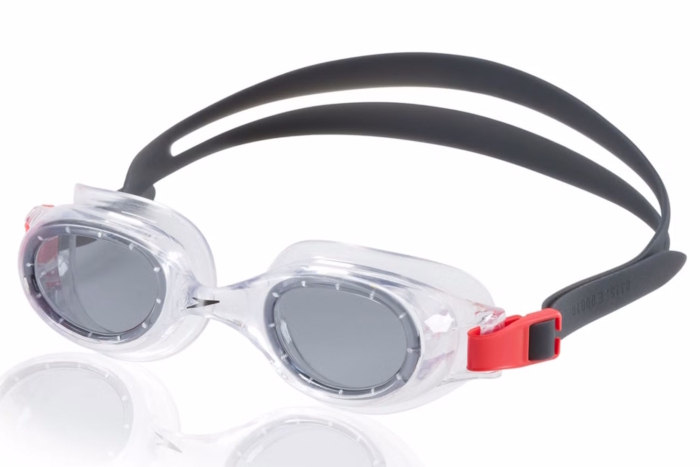
The Speedo Futura Hydrospex Classic Goggles ($20) are ideal for recreational swimmers, thanks to their comfortable straps and soft cushioning. They have wide, adjustable silicone head straps that split in the middle to accommodate ponytails and extra-wide, squishy eye gaskets that minimize leaking on most face shapes.
During our test, the goggles stayed securely in place during warmup and steady-paced main sets at a typical U.S. Masters Swimming practice but slipped out of place a few times during speed work. More than once, the force of hitting the water during a racing dive knocked them completely off kilter.
The goggles seem to comfortably fit a wide array of face shapes, even though their unibody construction means you can’t swap out nose pieces. The eyecups, surrounded by flexible eye gaskets, really do prevent leaking for most users — at least at slower speeds. The edges of the gaskets curl up slightly (like the edge of a stingray in motion, if you need a visual), which might contribute to their tendency to lift up during sprints and dives.
They’ve got a larger profile than the competition goggles we tested, but they’re not as bulky as more mask-like options like the Aquasphere Kayenne goggles.
We tested the clear version of the Hydrospex and used them for dawn workouts in an outdoor pool. If you’re planning to swim indoors, stick with the clear. But if you need something for open-water swimming or plan to swim when it’s bright and sunny, opt for the smoke, teal, or blue-tinted lenses.
The Speedo Hydrospex Classic goggles are a solid and affordable choice for lap swimmers who aren’t focused on sprinting.
-
-
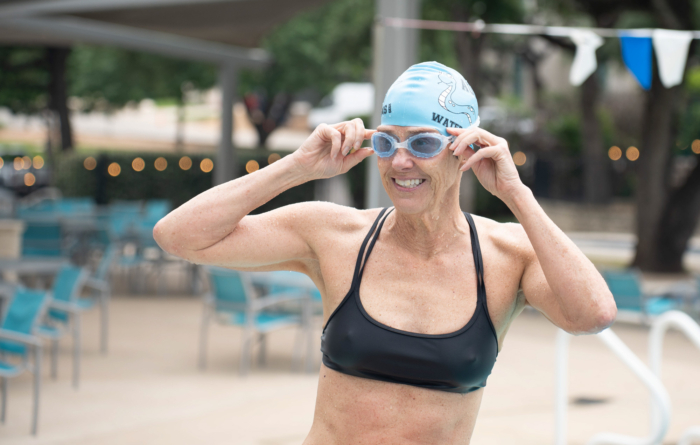
TYR Nest Pro on deck (photo/Chris LeBlanc)
Specifications
Pros & Cons
Pros
- Wide peripheral range
- Comfortable eye gaskets
- Stay secure on face
Cons
- Heavier feeling than most training goggles
- Better for training than racing
- Non-adjustable nose piece
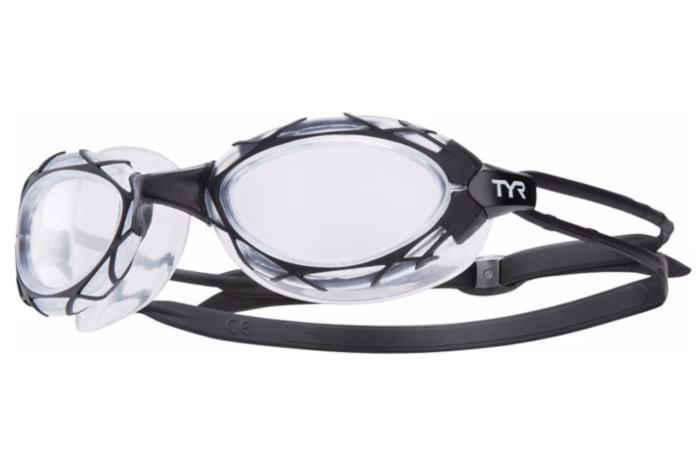
The TYR Nest Pro Goggles ($28) have a slightly larger profile than most competition goggles. Their unique design — a crosshatch pattern around the eyes — was inspired by Beijing National Stadium, also known as The Bird’s Nest, where swimming events occurred during the 2008 Olympic Games.
Instead of interchangeable nose bridge pieces, the goggles feature a unibody construction. Still, with big, soft gaskets around the eyecups, they’re flexible enough to fit a variety of facial structures. They’re comfortable and easy to adjust. They mold comfortably to the face but they may feel oversized if you’re used to a true racing goggle.
The TYR Nest Pro Goggles come with embedded anti-fog treatment. But, like most goggles we’ve used over the years, it becomes less effective with multiple uses. The head straps are cylindrical on the sides, like strands of spaghetti, but flatten out in the back, which helps keep them secure and in position on your head.
These goggles are available with clear, smoke, or blue-tinted lenses. We tested the light blue lenses, which work well for swimming outdoors at early morning practice. The lenses curve slightly, with a slight wrap-around effect. You can keep tabs on swimmers the next lane over — or stay aware of support kayakers when you’re swimming in open water.
The TYR Nest Pro Goggles are a good option at a reasonable price point for daily pool workouts and open-water swimming.
-
-
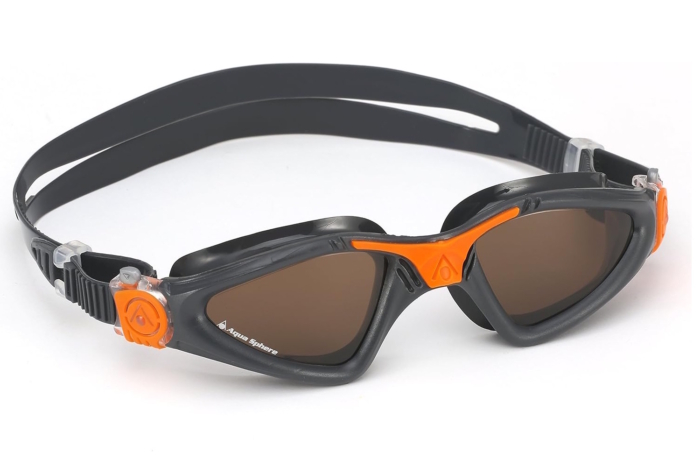
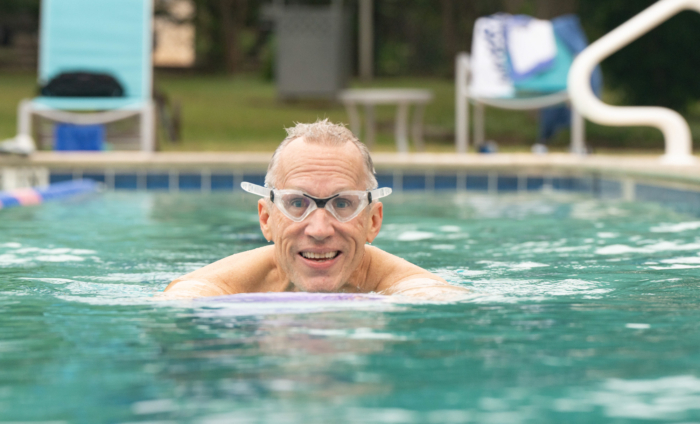
Aquasphere Kayenne ; (photo/Pam LeBlanc)
Specifications
Pros & Cons
Pros
- Wide peripheral range
- Super comfortable eye gaskets
- Stay secure on face
Cons
- Higher profile than most competitive goggles
- Nose band isn’t adjustable
- Heavy feel
The oversized, wedge-shaped lenses of the Aquasphere Kayenne Swim Goggles ($35) stand out in a sea of oval eye cups. The curved lenses provide fantastic peripheral vision, but swimmers used to lower-profile racing goggles might not like the feeling of such a bulky, almost mask-like covering on their faces. They’re available in clear, smoke, mirrored, or polychromatic lenses.
We tested the clear lenses, which work fine indoors and out of bright, direct sunlight. Thanks to the extra soft gaskets around the eye sockets, they get high points for comfort.
One downside? The nose piece is fixed in place. That means it doesn’t move around much when you’re swimming, but it also seems to work better on athletes who have wider set eyes and not so well on folks with narrower faces. Also, one of our teammates wears these and always apologizes for their bug-eyed, “nerdy” look, although we think she’s being a tad overly sensitive.
The head strap is as wide as a pinky finger and splits in the back to accommodate a ponytail or bun. You can adjust the tightness by squeezing a tab on the buckle on the sides of the eye cups and pulling the strap, all while they’re still on your head. (That tab can get a little stubborn, too.) But don’t try a race dive wearing these — we hopped into the deep end of the training pool, and the force of impact pushed them up above our eyes.
The Aquasphere Kayenne Swim Goggles are a good choice for recreational swimmers who want a larger, almost mask-like pair of goggles and don’t plan to use them for competition.
-
-
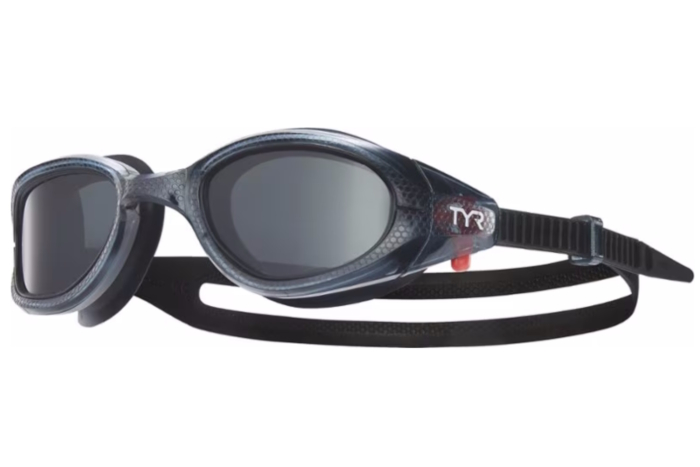
TYR Special Ops 3.0; (photo/Chris LeBlanc)
Specifications
Pros & Cons
Pros
- Wide peripheral view
- Low profile fit
- Polarized lenses filter out glare
Cons
- Plastic feature that adjusts straps tends to slip
- More expensive than most
- Fixed nose piece
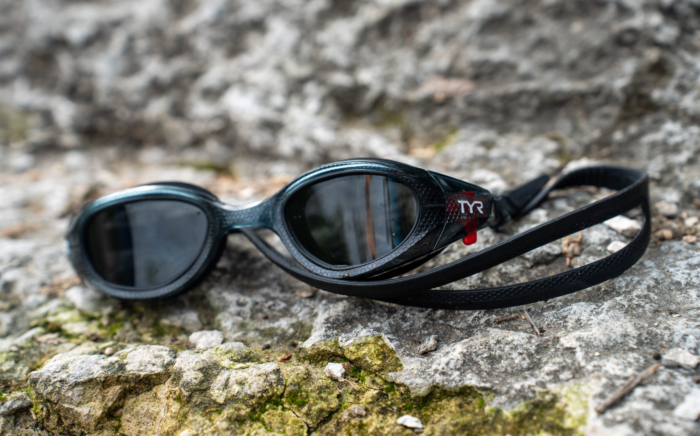
The TYR Special Ops 3.0 Goggles ($50) are designed for triathletes and open-water swimmers. The polarized lenses reduce surface glare, a useful feature for athletes who log miles under sunny skies.
The gaskets around the eyes are soft and flexible, but the eyepieces are big, making them better for open-water swimming than competitive sprinting.
To adjust them, press the small tab on the outside of the eye cup and tug on the strap. You might have to do this more than once — the plastic fixture designed to lock down your adjustment tended to slip during testing.
They must also be seated on your face just right to avoid leaking.
We passed them around the swim lane during practice one morning, and while they leaked for one swimmer, another loved them — but noted that he had to tighten down the straps to ensure a good fit. That can feel uncomfortable.
The Special Ops 3.0 comes in a regular or women’s fit, which has slightly smaller dimensions for swimmers with smaller faces. We tested the smoke-colored lenses, which work best on bright days but are also available in a light blue or amber tint.
These are beefier goggles, but they provide great peripheral vision. This makes them a good choice for triathletes or others who spend much time swimming in rivers and lakes. The tinted lenses are great when popping your head out of the water to spot your location or find your support kayaker.
The TYR Special Ops 3.0 Goggles are best for open-water swimmers who need to stay aware of their surroundings. They provide good protection from glare.
-
-
Zoggs Predator Flex Goggles; (photo/Pam LeBlanc)
-
Zoggs Predator flex goggles; (photo/Pam LeBlanc)
Specifications
Pros & Cons
Pros
- Soft, comfortable eye gaskets
- Easy-to-tighten head strap
- Good peripheral vision
Cons
- Expensive
- Bulky ratchet mechanism that adjusts head strap
- Hard-to-loosen head strap
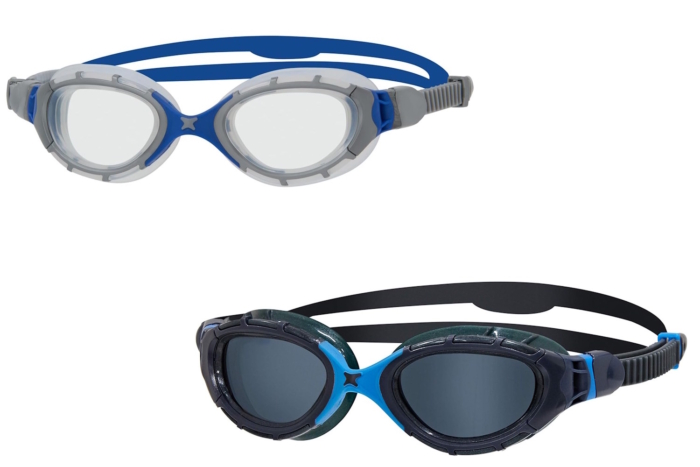
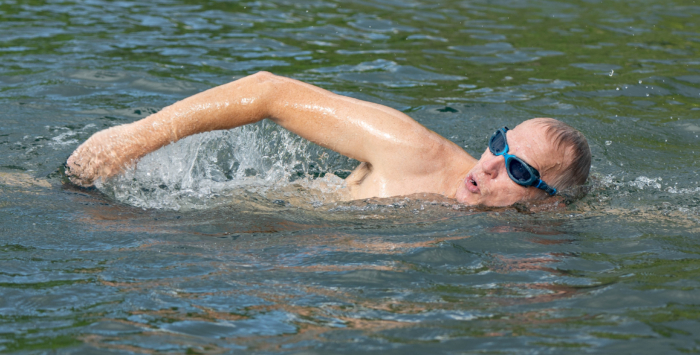
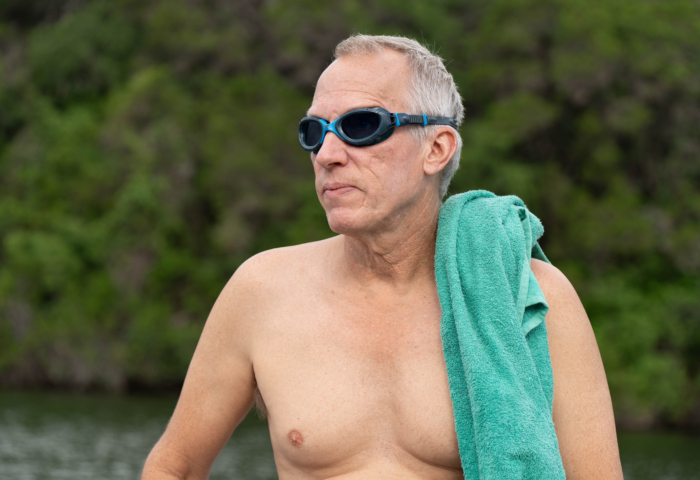
Zoggs Predator Flex goggles ($51) are a compromise between the sleek, low-profile goggles that racers prefer and the oversized, sometimes goofy-looking ones that beginners gravitate toward.
Thanks to super cushy eye gaskets that reduce pressure around the eye socket, they’re among the most comfortable goggles we tested. These goggles are best suited for lap swimmers out to get in their daily workout, not speedsters training for their next race.
The goggles have a unibody construction. They’re so flexible that you can twist the nose bridge 180 degrees, and it bounces right back into place. The lenses are curved, offering broad peripheral vision.
There is no separate nose piece, which usually helps if you’re trying to fine-tune the fit. But these come in two sizes — the regular profile (which we tested) and a smaller profile. If you’re not sure which one you should get, an online fitting tool lets you use a smartphone or computer camera to scan your face and determine the best option.
The strap is easy to adjust, thanks to the ratchet mechanisms on the side of the eye cups. It’s easy to tighten them down while they’re on your face, but it’s trickier to loosen them up if you went too far.
Fashionistas might appreciate the wide array of color schemes, which include a patriotic-looking black-and-white frame with red straps and a funky black-and-lime green number.
The Predator Flex goggles get our thumbs up for lap swimmers who don’t plan to race and are looking for a comfortable pair of goggles with good peripheral vision.
-
-
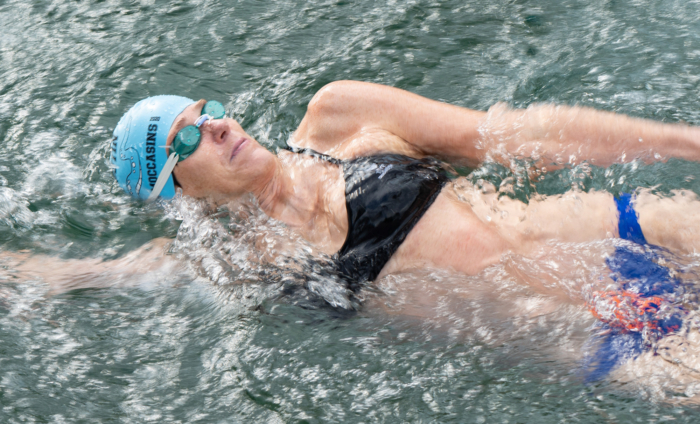
Backstroke with Socket Rockets ; (photo/Chris LeBlanc)
Specifications
Pros & Cons
Pros
- Wide peripheral view
- Low profile fit
- Long-lasting
- Inexpensive
Cons
- No rubber gaskets around the eye pieces
- Head strap and nose piece are not adjustable
- Assembly required
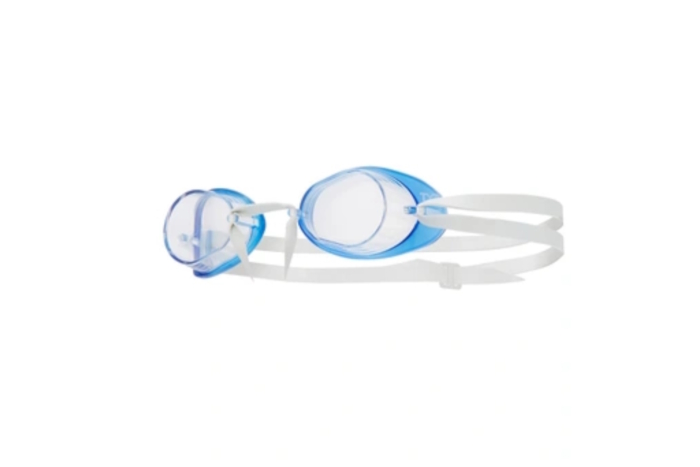
TYR markets these as Socket Rockets, but they arrive in a small bag labeled “Swedish Original Monterbara Goggles” ($10). Swedish goggles were introduced in the 1970s, and they’re definitely an acquired taste. Unlike most modern swim goggles, which have soft rubbery gaskets around the eyecups, these have none, and those rigid plastic eye cups tend to dig into your skin.
But many swimmers who grew up wearing them won’t wear anything else. One member of our swim team wears his proudly because they’re inexpensive and long-lasting. He claims he’s worn the exact same pair for more than 10 years, although he has replaced the headstrap. He also says they fog up. Still, he loves them and refuses to give them up.
They’re simple and low profile and require some assembly when you get them. The straps aren’t adjustable; you tie them off to fit your head size. Same for the nose bridge — essentially a silicone tube that you slide over a length of white string. Just tie them off to whatever size fits your face. Give yourself time to adjust to the way they feel to determine if they work for you. Swimmers seem to either love them or hate them.
One benefit of Socket Rockets is the wide peripheral view they offer. It’s like looking through a bubble. There’s no rubber gasket to block the vision. Another plus? Sometimes the rubber gaskets on goggles stiffen as they get older (just like humans!). As they age, they don’t conform to the face as well and may start to leak. That can’t happen with Socket Rockets, since they have no gaskets, but the string on the nose bridge can weaken with exposure to pool chemicals.
But the main problem with Socket Rockets is just getting used to the way they feel. If you’re used to goggles with flexible gaskets around the eye sockets, you might never get used to these. TYR’s Socket Rockets are for old schoolers who grew up using them and still want a low-profile goggle when they go fast.
Specifications
Pros & Cons
Pros
- Sleek, low-profile design
- Curved lens for good visibility
- Stays securely in place at all speeds
Cons
- Tight fit that sits deep in eye sockets
- Leaves “raccoon eyes” after wearing
- More expensive
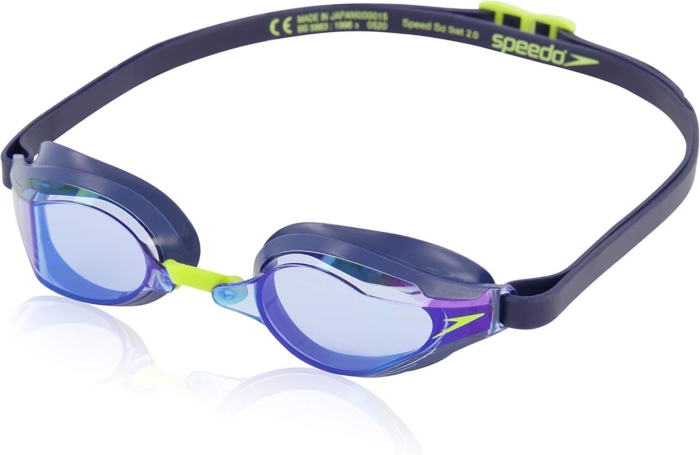
Swimmers working to break their own speed records and who prefer a low-profile goggle that doesn’t budge even during race dives should consider the Speedo Speed Socket 2.0 Mirrored ($45).
These aren’t those old-school “socket rockets,” hard plastic eye cups without a scrap of cushioning around the edges, but they’re the next closest thing. The Speed Sockets have small eye gaskets that aren’t as soft and malleable as some recreational goggles we tested. They’re stiffer than the competition — like a speedster with race suspension instead of road suspension. If having goggles that fit close to the eye bugs you, keep scrolling.
It may take some time to get the proper fit. What seemed snug and secure for the first 100 yards suddenly became annoyingly tight and uncomfortable after 200 yards during our product test. We stopped, loosened the head straps, and tried again — and a third time — before we got them just right. Even when the straps seemed loose between sets, the goggles kept a tight suction around our eyes. (As a result, we developed a case of “raccoon eyes,” those tell-tale red rings that sometimes appear where the goggle meets the face after an hour-long pool session.)
For speedsters accustomed to an eyelash-tickling fit, these goggles get the job done in a sleek, leak-free style. The lens’s curvature provides a wide panoramic view, and the mirrored finish blocks sun rays, making it good for outdoor pools or open-water swimming. Plus, its sleek design and mirrored lenses just look cool.
We give the Speedo Socket 2.0 Mirrored goggles a big thumbs up for serious swimmers, but casual swimmers may want to search for something more comfortable.
Specifications
Pros & Cons
Pros
- Extremely comfortable
- Great visibility
- Easy-to-adjust head strap
Cons
- Leaks on some face shapes
- Bulky frame
- Non-adjustable nose piece
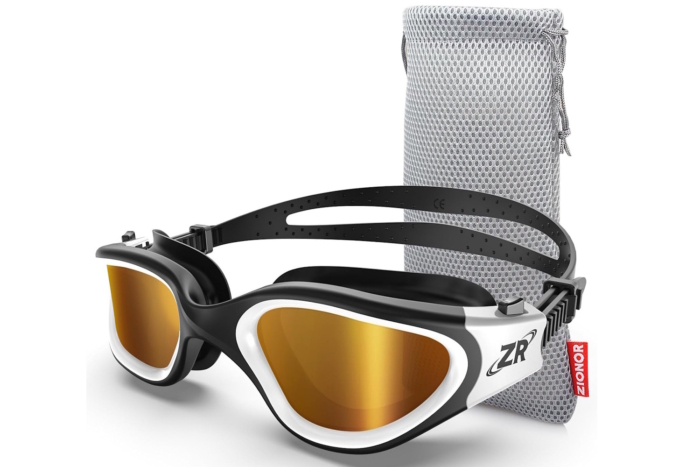
When we took the Zionor G1 Polarized swim goggles ($30) out of the box and tried them on at home, we had high hopes. Comfort? Check. Soft gaskets that adhere well to the face? Check. Big, curved lenses that deliver excellent peripheral vision? Check.
But a few lengths into our first workout, leakage problems dampened our enthusiasm. It could be that this particular brand of goggles isn’t a fit for our particular face shape, and that’s the trouble with goggle reviews. Everybody is shaped differently, and goggles that work well for some swimmers don’t work for others.
That said, the Zionors had a lot of features we liked. They’re super comfortable. The gaskets around the eye cups are wide and flexible and never grip too hard, creating that “ouch, I feel like my eyeball might get sucked out of my face” effect. The wrap-around lenses are large, almost like streamlined cycling sunglasses. Visibility is clear, and colors are true to life when you look through them. The mirrored lenses come in handy if you’re swimming in bright sunlight. The head strap stayed firmly in place. A button at the temple allows you to tighten the goggles while wearing them.
Because of the higher-profile design, the Zionor G1 goggles might not work for all competitive swimmers. But if you’re a recreational swimmer looking for something to wear at the lake or for easy lap swimming, they’re worth considering. Just make sure your face shape is a proper fit.
Swimming Goggles Comparison Chart
| Swimming Goggle | Price | Lens | Anti-fog | Nose Pieces | Head Strap |
|---|---|---|---|---|---|
| Speedo Mirrored Vanquisher 3.0 | $30 | Mirrored (clear available) | Yes | Interchangeable | Adjustable double |
| Aegend Swim Goggles | $20 | Mirrored (clear available) | Yes | Non-adjustable | Adjustable/single |
| TYR Blackhawk Racing Goggles | $28 | Mirrored (clear and tinted available) | Yes | Five interchangeable nose pieces | Adjustable |
| Arena Cobra Ultra Mirror Swipe Goggle | $80 | Mirrored (clear available) | Yes | Interchangeable | Adjustable/double |
| Magic5 Custom Goggle | $70 | Mirrored | Yes | Interchangeable | Adjustable/double |
| FORM Smart Swim 2 Goggles | $249 | Mirrored | Yes | Adjustable, comes with five interchangeable nose bridges | Adjustable double band |
| TYR Vesi Goggles | $23 | clear, mirrored and tinted available | Yes | Non-adjustable | adjustable split |
| Snake & Pig Basilisk | $35 | Mirrored (clear available) | Yes | Three interchangeable pieces | Adjustable/double |
| Speedo Futural Hydrospex | $22 | Clear (tinted available) | Yes | Non-adjustable | Adjustable/double |
| TYR Nest Pro Goggles | $25 | Blue tint (clear available) | Yes | Non-adjustable | Adjustable/double |
| Aquasphere Kayenne Swim Goggles | $35 | Clear | Yes | Non-adjustable | Adjustable/split |
| TYR Special Ops 3.0 Goggles | $50 | Polarized | Yes | Non-adjustable | Adjustable/split |
| Zoggs Predator Flex Goggles | $51 | Tinted | Yes | Non-adjustable | Adjustable/split |
| TYR Socket Rockets | $10 | Clear | Yes | Tie to fit nose bridge | Double |
| Speedo Speed Socket 2.0 Mirrored | $45 | Mirrored | Yes | Adjustable | Adjustable double band |
| Zionor G1 Polarized | $30 | Mirrored | Yes | Non-adjustable | Adjustable/split head strap |

How We Tested Swim Goggles
Our Expert Testers
Pam LeBlanc, a lifelong swimmer who hits the pool four to five days a week with the U.S. Masters Swimming program at Western Hills Athletic Club in Austin, Texas, compiled this list of recommendations.
Although she has spent hours logging miles in a chlorinated lap pool, she loves wild swimming in rivers, oceans, and ponds. She and a partner finished the 28.5-mile Manhattan Island Marathon Swim as a two-person relay in 2012. She also completed the Trans Tahoe Relay and other long-distance swim races, including the Highland Lakes Challenge outside of Austin, Texas.
She has competed in sprint and Olympic distance triathlons. In more than 40 years of swimming with organized groups, she’s worked her way through hundreds of pairs of swim goggles.
Our Testing Grounds & Process
Her main quest has always been to find goggles that she doesn’t notice. Most importantly, goggles should provide clear vision and never leak or fog. Comfort is important. But it’s also nice to wear swim goggles that don’t leave noticeable red rings, known among swimmers as raccoon or panda eyes, hours after the last drop of water has dried.
Testing swim goggles is tricky. No two people have the exact same facial structure, so what works on one swimmer might not work on the next. Besides testing goggles during her morning swim practice, she checked with other swimmers on her team — from former Olympians to recreational lap loggers — to see what goggles they preferred.

Buyer’s Guide: How to Choose the Best Swimming Goggles
Most goggle options are one-size-fits-most. And, it can take some trial and error before you find the best pair for your needs. Even if the lenses are great, the strap configuration is smart, and the goggles look good, they still might not fit your facial structure.
But goggles have come a long way. Back in the 14th century, a few daring swimmers used “goggles” crafted from polished semi-translucent tortoise shells to protect their eyes. By the early 1900s, others were using motorcycle goggles, sometimes sealed with a bit of soft paraffin wax. But it wasn’t until the 1972 Olympics when Scottish swimmer David Wilkie donned a pair that swim goggles really went mainstream.
Today’s goggles are much higher tech than those early models. They have flexible eye gaskets (goggles with foam pads around the eye cups are generally gone) and lenses designed to provide crystal-clear vision. They also have special coatings to prevent fogging, and adjustable straps to ensure a snug fit. They keep water out of the eyes, help athletes keep track of other swimmers sharing a lane, block sun glare, and improve under-the-surface vision.

Eye Gaskets
The most critical feature of any pair of swim goggles is the eye gasket. Most these days are made of soft, flexible rubber, which helps them mold to an individual face.
It may take some time to find the goggles and eye gaskets that conform best to your unique face shape. The Speedo Hydrospex Classic Goggles have extra-wide, squishy eye gaskets that minimize leaking on most face shapes.
If you can’t find off-the-rack goggles that work for you, consider spending the money to make custom-fit Magic 5 goggles based on scans you take with your smartphone. Snake & Pig Basilisks are especially comfortable, and their double-walled gasket design helps reduce those suction marks around the eyes known as “raccoon eyes.” Others, like the Tyr Socket Rockets, don’t have any rubber at all — they’re just hard plastic cups with smoothed edges that rest directly against your face.

Lenses
There are three main goggle lens styles: clear, mirrored, and polarized. As Speedo explains, clear lenses are optimal for swimming indoors while mirrored lenses are designed to reflect light and are optimal for bright outdoor conditions. Polarized lenses are arguably the best for outdoor swimming though, as they decrease glare but aren’t dim on overcast days.
Our longtime favorite, the Speedo Vanquisher 2.0 can come with clear lenses or lenses with a mirrored finish. This means you can keep one pair for swimming indoors and another for bright sunny days outside.
Other colored lenses are available, and they aren’t just for show. An orange lens, for example, can offer more contrast. Smoke lenses, or darkened clear lenses (think sunglasses) are ideal for bright indoor pools but not dimly lit areas. And some lenses offer more peripheral vision like the big curved ones of the Zionor G1 Polarized.

Anti-Fog
Foggy goggles can slow down any swimmer. If you can’t see where you’re going, you can’t get in a good workout. Some goggles come with a sheer anti-fog coating designed to keep the goggles from fogging up while you’re swimming.
The coating on some goggles wears off after a few uses, but goggles like the Arena Cobra Mirror Ultra Swipe are designed to reactivate that technology with the swipe of a finger. You can even brew your own anti-fog elixir with a little baby shampoo and water. The Snake & Pig Basilisk Goggles come with an applicator bottle and instructions. Or do it the old-fashioned way: rub a little spit on your goggle lenses before you hop in the water.

UV Protection
All the goggles we tested come with UV protection lenses. Avoid cheaper models that don’t have such protection built in — especially if you’re swimming outdoors, under sunny skies.
Lens Size and Shape
Lens shape largely depends on what you plan to do with your goggles. Competitive swimmers tend to prefer smaller, low-profile goggles like the Speedo Vanquisher or Magic5 Custom Fit that fit closely to their faces. Open-water swimmers and triathletes tend to prefer larger, more mask-like lenses for a wider field of vision when they’re popping their heads out of the water to spot their location.
Recreational swimmers looking for a larger lens will love the Aquasphere Kayenne Swim Goggles. Larger lenses are more likely to slide off your face during a dive, too. But, if you’re not using them to race, that shouldn’t matter.
Whatever kind of swimming you’re planning to do, the best lens size for you is the size that feels comfortable and doesn’t leak when you’re doing a flip-turn.

Head Strap
Generally, your focus should be on the comfort of the goggles themselves. But head straps come in different widths and designs, too, with different mechanisms for tightening or loosening.
If you have long hair that you keep in a bun or ponytail under a swim cap, a strap that has a slit in the middle back and is adjusted on the sides is ideal. It can go over and under the bun to stay in place. This matters much less for those with shorter hair — it’s all about comfort.
Some, like the Arena Cobra Ultra Swipe, have a U-shaped bracket at the back of the headband that you adjust by pulling the head strap through. Others, like the TYR Special Ops 3.0, have buttons or tabs on the sides that you press to adjust the goggles. Aegend goggles have a large hard plastic press button device you press to adjust the goggles.
Others, like the no-frills TYR Socket Rockets aren’t adjustable. You tie them to the length you want and go.

Nose Piece
That little piece of plastic that crosses the bridge of your nose can determine whether a pair of goggles fits an individual face. Some goggles, including the Arena Cobra Ultra Mirror Swipe and the Speedo Vanquisher 2.0, come with multiple removable nose pieces so you can snap in the one that best fits your face size.
Others like the TYR Nest Pro have a fixed nose piece that cannot be changed. If the fixed nose piece works for your face shape, that’s fine. But if it doesn’t, you can’t adjust it to make it work.

Color
Some folks like to stand out in the swimming pool. That’s why some makers offer dozens of color schemes. You can go with basic black eye sockets and head straps, or you can opt for hot pink, aqua, or rainbow swirls.

Price & Value
Compared to other recreational eyewear, such as ski goggles and fishing sunglasses, swimming goggles are relatively affordable. On the low end, our best budget pick is the Aegend Swim Goggles, which cost $20. On the high end, the Magic 5 and the Arena Cobra Ultra Mirror Swipe cost more. But they might be the solution for people who can’t find goggles that don’t leak or are frustrated by goggles that fog, respectively. Others in the middle, like the Speedo Speed Socket 2.0 Mirrored ($45), may be ideal for serious swimmers.
For tech lovers willing to pay the price, the FORM Smart Swim 2 Goggles track data, give feedback, and help you analyze the details of your swim. However, their $249 price tag might cause some to balk at buying them.
In general, expect to spend between $20 and $40 for a quality pair of swim goggles with crystal clear lenses and solid durability. Due to their stretchy elastic strap and frequent moisture exposure, swim goggles tend to wear out fairly quickly.
Those who hit the pool multiple times per week should expect to work through three or more pairs of goggles per year.

Frequently Asked Questions
The best swim goggles for racing are the ones that fit and feel the best for your facial structure. What the swimmer in the lane next to you is wearing might not work well for you, and vice versa. That said, most competitive swimmers like smaller, low-profile goggles that aren’t too big.
As you try different goggles, you’re searching for a pair that feels comfortable, and that — when adjusted properly — doesn’t get knocked off just because you’ve picked up speed or made a fast flip turn.
Simply rinse them with clean water after each use. Using harsh soap or detergent may affect the lenses or the anti-fog coating, according to Speedo.
Make sure you leave the goggles out to dry. Keeping them in a damp, warm bag with your towel and suit for a few days can breed bacteria and mold.
Unfortunately, no matter how good anti-fog technology gets, most swimmers will still suffer from fogged-up goggles, often at inopportune times.
You can buy an anti-fog spray for the inside of your goggles, like Jaws Quick Spit Anti-Fog Spray. A few drops of baby shampoo mixed with water, or a dab of non-abrasive toothpaste can also help. Or you can opt for the tried-and-true method that even U.S. Masters Swimming recommends: Get a bit of saliva and rub it on the inside of your goggles. It’s gross, but it creates a barrier that helps keep fog at bay.
It depends. If you’re racing, it’s more aerodynamic to wear goggles under your swim cap, as they’re less likely to get pulled off (important if you’re in a mass start swim). But for adjustability and ease of taking them on and off at swim practice, over the swim cap is just fine.
Yes, you can absolutely get prescription swim goggles, though your options will be more limited. Luckily, the best overall swim goggles on our list — the Speedo Vanquisher 2.0 — have over-the-counter corrective options ranging from -1.5 to -8, and they still cost just $30.
If you have a more specific prescription, like needing bifocals, SportEyes.com has a full array of goggles that can be tailored to your exact needs.
You may simply need to tighten your straps or swap out nose pieces to keep them firmly in place.
The faster or more aggressively you swim (for instance, if you dive off the blocks versus simply pushing off the wall), the more difficult it will be to keep them in place. But if tightening doesn’t solve your problem, those goggles simply may not be the right ones for you.
Researchers have noted the main problem with commercial swim goggles is that they don’t take into account everyone’s unique bone structure and facial features. That means even when a pair is touted as “the best,” as we’ve done here, it still may not be the best for you.
If you’ve tried an array of over-the-counter goggles and they’re still leaking, consider custom goggles like Magic 5.
There are no specific “swim goggles of Olympians,” unfortunately. Each swimmer has to find the goggles that work best for them. Some choose more custom options while others use off-the-rack options.
Michael Phelps reportedly wore Speedo Speed Sockets for the 2004 and 2008 Olympics and raced in his namesake MP XCEED swimming goggles from his sponsor Aqua Sphere in 2016. He managed to rack up gold medals in all three Olympics, so clearly, goggles weren’t an issue for him.


