Our experts have tested more than 50 of the best fitness watches over the past decade. Whether you’re a marathoner tracking every BPM or just casually interested in your weekly workouts, there’s something here for you. In our most recent testing slate, we used seven new watches across 150 miles of hiking, ski, treadmill workouts, and run adventures.
If you’re new to fitness tracking and want something to tally up your active minutes, options like the COROS Pace 4 are impressive for the price. Alternatively, we’ve been blown away by the feature density in top-tier watches like the Garmin fenix 8 Solar Sapphire, and the sport-specific functions of the run-ready Garmin Forerunner 570.
Whatever your specific needs, read on for the best fitness watches, GPS watches, and fitness trackers — and know that our ratings are backed by five years of field testing and research.
Editor’s Note: We updated our Fitness Watches guide on September 2, 2026, to add the Garmin CIRQA Smart Band (a smart screenless wearable with access to Garmin’s excellent app), plus a new Comparison Chart with added functionality.
The Best Fitness Watches of 2026


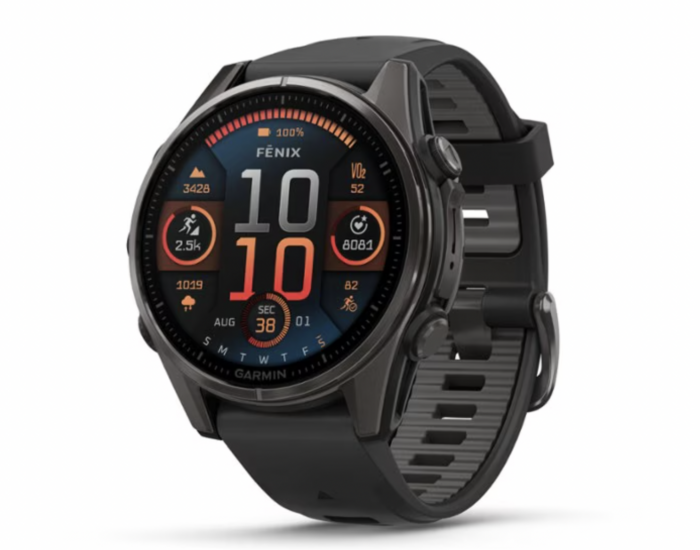
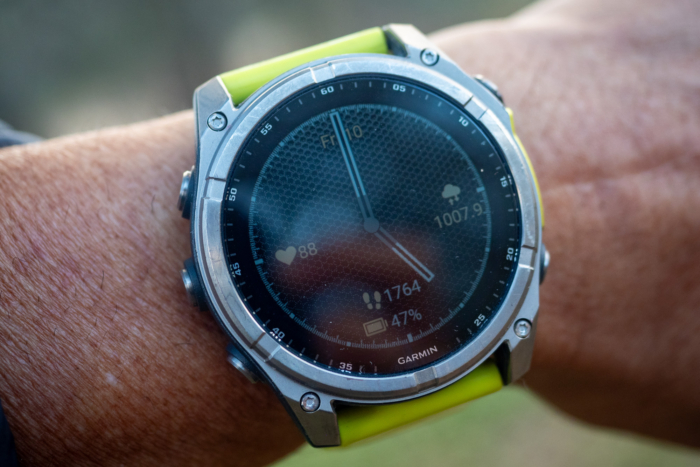
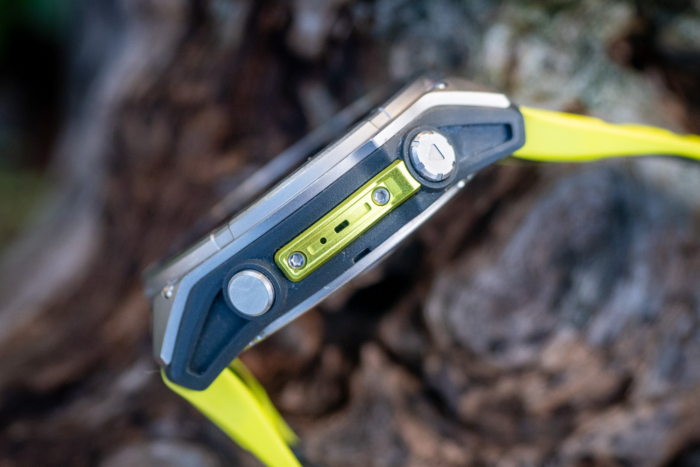
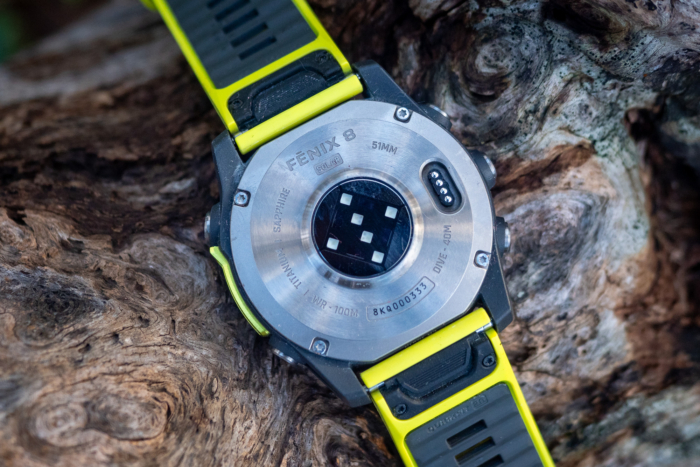
Garmin fenix 8 Solar Sapphire
-

-
(Photo/Seiji Ishii)
-
(Photo/Seiji Ishii)
-
(Photo/Seiji Ishii)

Specifications
Pros & Cons
Pros
- Incredible number of functions
- Excellent data reporting through Garmin Connect
- Super-long battery life
- Functions as a dive computer
Cons
- Have to choose between AMOLED and solar
- Bulky for an everyday watch
- Expensive
Bottom Line: A multi-sport powerhouse with solar charging and a built-in dive computer. It’s the ultimate elite data tool, though expensive and bulky for casual use.
If you’re looking to track every activity, stretch the limits of wrist-bound battery life, and integrate your fitness watch into your daily routine, the Garmin fenix 8 ($1,100-1,200) is the device to do it with. We’ve worn iterations of the line since we first reviewed the fenix 3, and they’ve only gotten better with every update.
So what’s new on the fenix 8? Plenty. For one, a depth sensor that operates down to 40 m and performs as an EN13319-certified dive computer. There’s also a new speaker and microphone, leaning into the realm of smartwatches and providing access to voice assistants. Finally, the updated solar screen increases battery life by ~25% in the different power profiles.
Besides the new, the 8 brings forward all the activity-tracking profiles we loved about the fenix 7, along with a selection of new ones, bringing the total to an impressive 112. These range from standards like hiking, biking, and skiing to niche pursuits like XC skate skiing, wakeboarding, and table tennis (really). All of these profiles are tweakable, meaning you can change your data screens to suit how you use the information.
The general user interface is also spruced up a bit, and the watch is available in three different bezel sizes: 43, 47, and 51 mm. We put the fenix 8 into the hands of editor Seiji Ishii, a self-proclaimed data dork and exercise physiology graduate who shook it down for 4 months while cycling, rucking, and climbing. “It can do everything, and I mean absolutely everything, with precision, and it has proven durable in doing so,” he reported.
The big question is whether to go with the vibrant AMOLED screen or the solar-charging MIP option. We’re wearing the solar screen for several reasons. For one, the trade-off in recharging is too great to ignore for extended trips outside. Second, the MIP screen will be a more efficient option, even without the added solar cells. It is tough to ignore how good the AMOLED screen looks, however, so if your usage is more day-to-day, give it a look.
Breaking the $1,000 ceiling on fitness watches is a high bar, but we think if any watch is worthy, it’s the fenix 8. If you’re more of a single-activity person, a watch like the Garmin Forerunner 570 may be a wiser choice. But if your weekends take you from the mountains to the shoreline on marathon adventures, a do-it-all option like this is the way to go.
COROS Pace 4
-
-
(Photo/Andrew McLemore)
-
(Photo/Andrew McLemore)
-
(Photo/Andrew McLemore)
-
(Photo/Andrew McLemore)
Specifications
Pros & Cons
Pros
- Improved display
- Competitive price
- Lightweight
- Reliable health tracking
- Quick navigation help
Cons
- No offline maps
- Less durable nylon polymer case and mineral glass
- Flashlight has limited usefulness
- AMOLED lowers 'always on' battery life
Bottom Line: A value-driven watch with an AMOLED screen and dual-frequency GPS for $250. It’s the best data-per-dollar road running watch, lacking only offline maps.
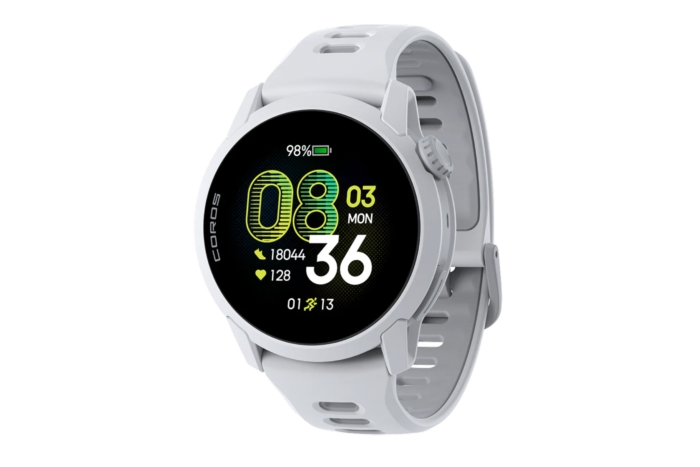
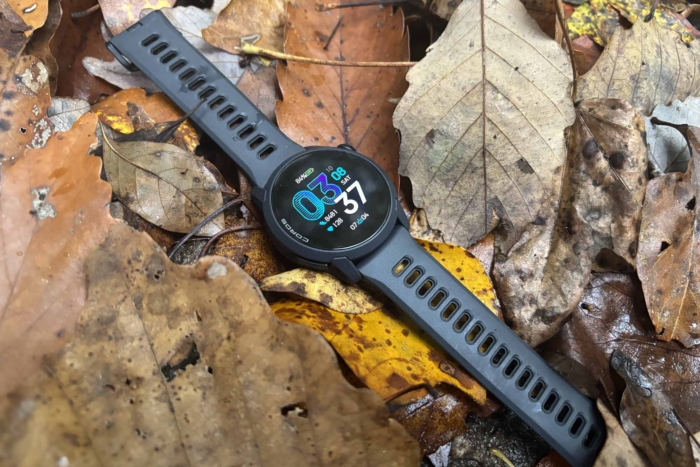
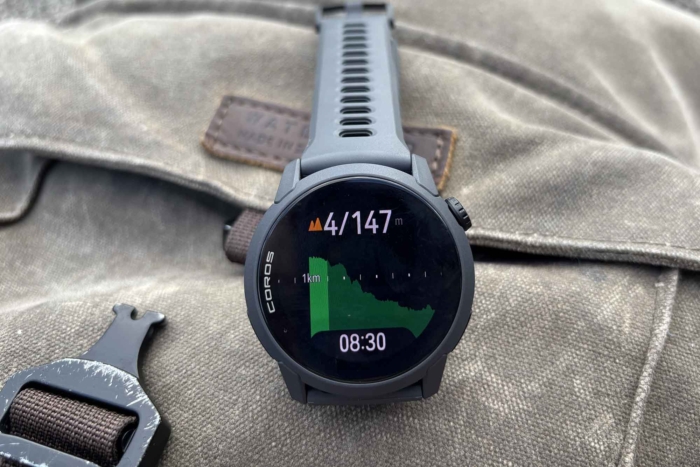
The newly-released COROS Pace 4 ($249) builds on its budget-friendly predecessor and locks down our recommendation for a spend-wise fitness watch yet again. This new version adds a beautiful AMOLED screen, doesn’t lose any battery life, and only costs an additional $50.
Editor Andrew McLemore put the Pace through its uh, paces, and found the updated AMOLED screen to be a worthwhile upgrade. “AMOLED displays just look awesome. They make it easier to quickly read and comprehend the complex data that’s now available on all these devices. Getting a better display on the Pace 4 while only raising the price by $20 from the previous generation? That’s a pretty good deal,” he said.
The Pace 4 also adds a flashlight function, though it isn’t exactly the same as the Garmin fenix’s built-in LEDs; instead, it’s a full-screen white mode that provides a decent amount of light, just not as much. The 4 also adds a microphone and the ability to add voice memos to things like tracked activities.
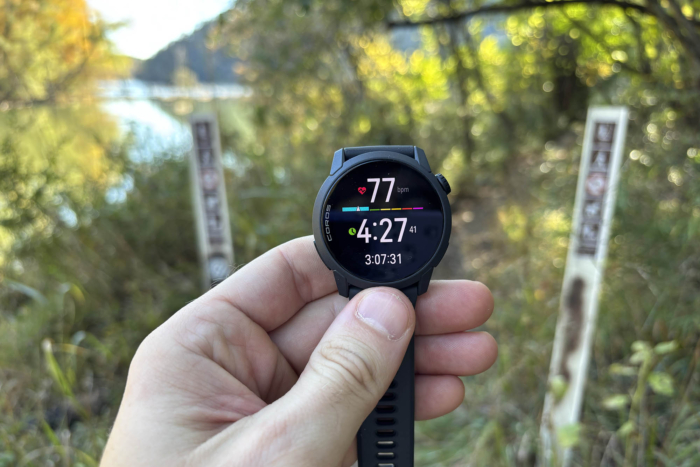
Activity tracking is widely varied, with 27 different profiles to choose from, along with daily health stats, HRV monitoring, and REM sleep tracking. You won’t get quite as wide a variety as the brand’s higher-end Apex and Nomad lines, but it’s generally enough for most people to track their health and activity effectively.
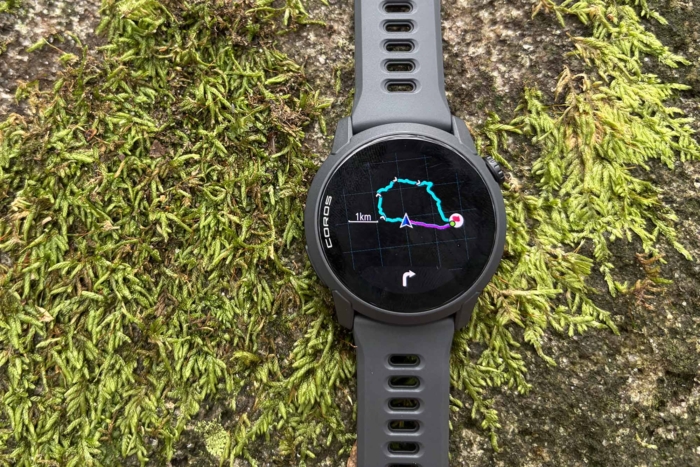
The breadcrumb navigation mapping is an obvious budget pinch point, but for many folks who don’t need a map to run around the park, it’s not an issue. If mapping is something you’re after, you’ll need to upgrade to the Pace Pro ($349) or something like the Suunto Vertical ($499). For the money, though, the Pace 4 is everything we need it to be for a budget fitness watch. The older Pace 3 is still available for you true budget hounds, and will save you $50 on a watch that’s mostly the same.
COROS Apex 4
-
-
(Photo/Andrew McLemore)
-
(Photo/Andrew McLemore)
-
-
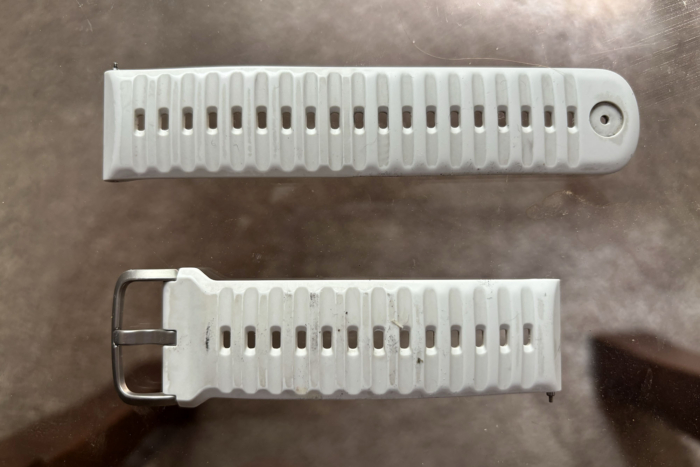
The metal pin for the watch band (usually located on the upper right of the top band) got knocked out and lost after a few months of use; (photo/Andrew McLemore)
-
(Photo/Andrew McLemore)
Specifications
Pros & Cons
Pros
- Intuitive user experience
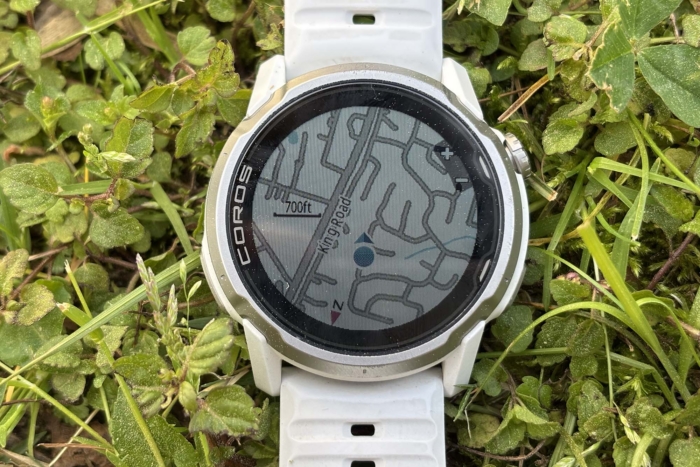
- Excellent mapping
- Strong battery life
Cons
- Silicone band is problematic
- MIP screen can be dim
Bottom Line: A function-first mountain watch that trades flashy AMOLED visuals for rugged durability and a massive two-week battery life.
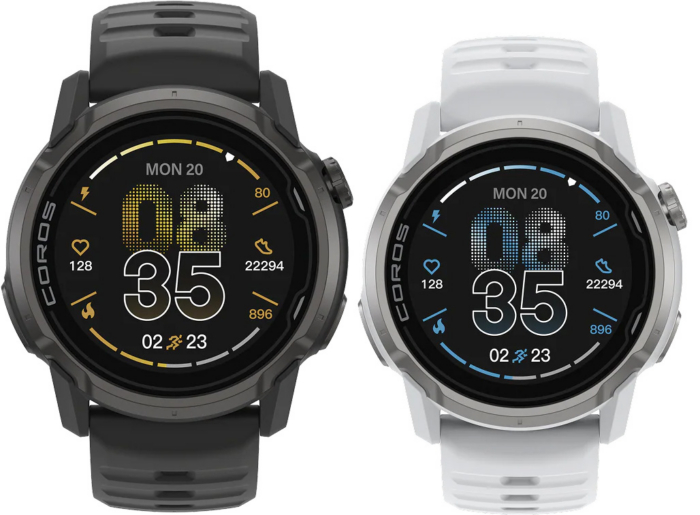
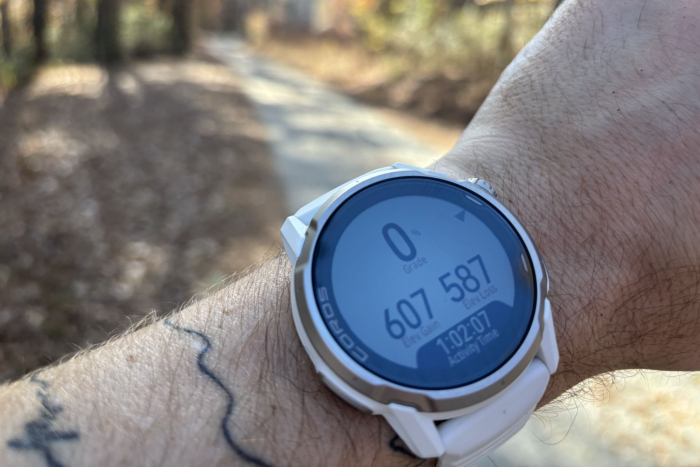
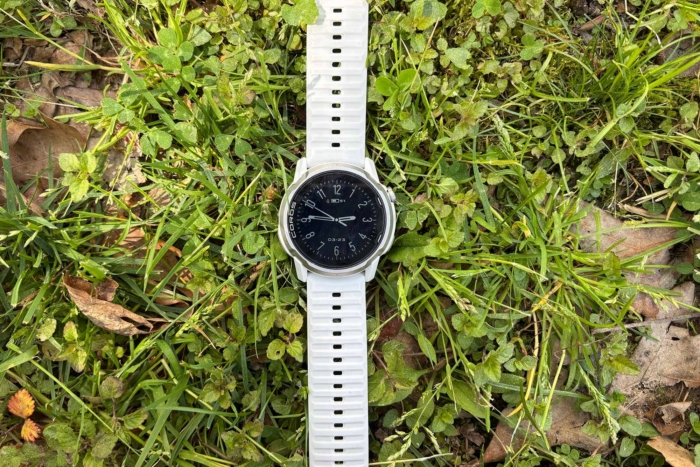
The COROS APEX 4 ($430) is a purpose-built watch for the mountain athlete who values a bombproof build and robust battery life over the visuals of an AMOLED smartwatch. While the Apple Watch Ultra dominates the “smart” category and the Garmin Forerunner 570 targets road-running specialists, the APEX 4 carves out its niche with a lightweight titanium case and sapphire glass. For those who don’t need a best-of-everything device, the Apex 4 delivers.
During testing by GearJunkie’s Andrew McLemore, battery life was consistently impressive. By utilizing a Memory-in-Pixel (MIP) screen, the APEX 4 manages nearly two weeks of power with frequent activity tracking. McLemore found this reliability essential for multi-day backcountry missions where managing power banks is a liability.
The hardware features the signature digital dial, making menu navigation easy when hands are sweaty or dirty. In field testing, the dial proved far more intuitive than button-heavy interfaces or finicky touchscreens. Whether zooming into 3D topographical maps or scrolling data screens, tactile feedback allowed precise control. McLemore was particularly impressed by the seamless navigation and ability to send routes from the phone app.
Despite its rugged look, the APEX 4 offers a surprising amount of versatility. McLemore even wore the all-white silicone version for a wedding gig. This is backed by serious durability; after months of rock climbing and bushwhacking, the sapphire glass sustained only a single minor scratch.
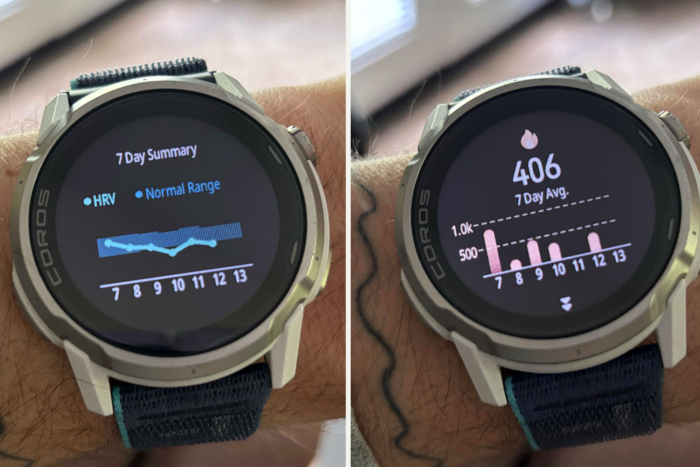
Our only significant critique involves the silicone band’s security. While comfortable, the small metal pin keeping the strap tail flush was easily knocked out. During a session of moving gear, the pin was lost entirely, forcing a switch to a nylon strap. However, this is a minor quibble for a watch that offers elite metrics like HRV and sleep tracking, alongside specialized features like voice notes to record trail observations on the fly.
Garmin Forerunner 570
-
-
(Photo/Nick Belcaster)
Specifications
Pros & Cons
Pros
- Dazzling and brighter AMOLED touchscreen display
- Smart Garmin health stats and reports
- Speaker and microphone for voice commands and assistants
- Multi-band GNSS reception with SatIQ tech
- USB-C charging
Cons
- Battery life is lesser than previous Forerunner 265
- Price is tough to justify for some
- No ECG support
- Basic breadcrumb mapping
Bottom Line: A running-focused watch prioritizing elite coaching and recovery metrics. It’s the gold standard for marathoners who don’t need outdoor luxury.
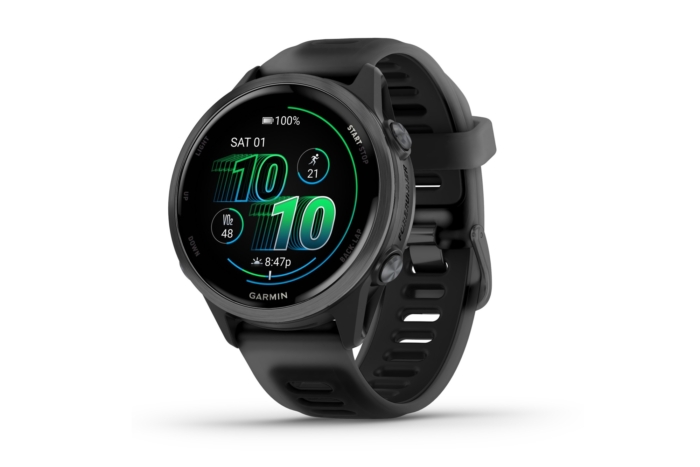
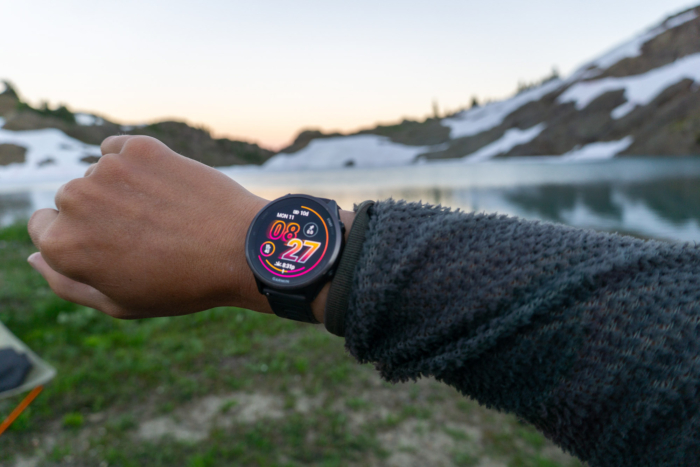
In an update to the brand’s uber-popular running watches, the Garmin Forerunner 570 ($550) adds a brighter AMOLED screen, speaker and microphone combo, and additional triathlon training that make this one of the best running watches out there.
Building on the Forerunner 265 (a watch that we’ve previously hailed as the running watch), the 570 got more than a name change and is now a better daily driver for runners. Comparing the 265 to the 570 side by side, the new screen is noticeably brighter (as well as slightly larger across the two offered sizes), but still minimal enough as not to weigh us down on runs.
The new speaker on the 570 is loud and will prompt you with things like lap reminders, while the microphone lets you use Voice Commands and ask the watch to set timers or start activities. In a surprising (but appreciated) function, the 570 will have you turn the watch upside down after a water activity and pulse sound to clear the speaker.
New multi-sport modes have been added to the watch, making it a better triathlon watch and narrowing the gap between the 570 and the top-tier 970. Building workouts with multiple components is now possible, and we had good success constructing multi-sport days that combined swimming, cycling, and running.
Due to the brighter screen, battery life on the 570 does take a hit compared to the older 265 (a tested 9 days with a daily run, compared to 11 days with the previous model). This is certainly a watch for those who run and train for fitness (and are home every night to plug in), instead of endurance athletes. For those folks, bumping up to the Forerunner 970 or Enduro 3 makes much more sense. Those watches also add on ECG support and better mapping abilities (the 570 supports basic breadcrumb navigation).
To be sure, we still think that the Forerunner 265 is an excellent watch — and as long as it’s available, we recommend snagging it if the upgrades to the 570 don’t woo you. The price jump from the 265 to the 570 was large. The added $100 might be tough to swallow for the relatively minimal feature additions. That said, if the latest and greatest in running watches is what you’re after, the Forerunner 570 is it.
Apple Watch Ultra
-
-
(Photo/Josh Wussow)
-
(Photo/Josh Wussow)
-
(Photo/Josh Wussow)
-
(Photo/Josh Wussow)


Specifications
Pros & Cons
Pros
- Depth of smartwatch features and downloadable apps
- Ease of answering calls and texts without a phone connection
- Advanced health monitoring
- Large, clear display
Cons
- Not incredible battery life
- Heavier device
Read Review: Apple Watch Ultra Review: Silicon Valley’s Best Smartwatch Dropped, Drowned, and Frozen
Bottom Line: The ultimate iPhone-integrated smartwatch with a brilliant 3,000-nit screen and rugged alpine features. It’s the best daily driver, provided you can handle 3-day battery life.
Apple is the bestselling smartwatch worldwide, and it’s clear why — it’s undeniably the best smartwatch (not GPS watch; we’ll get to that later) on the market. Everyone we spoke with who had one gave glowing reviews.
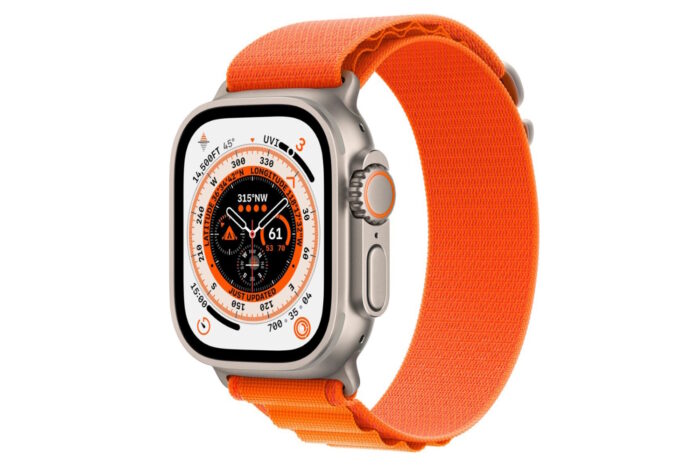
Now tuned for the outdoors and fitness market, the new Apple Watch Ultra ($799) is upgraded to take on the rough and tumble in your day-to-day, and boasts a larger 49 mm titanium case, brighter 2,000 nits screen, increased water resistance (up to 100 m), and an extended 36-hour battery life. You’re obviously going to pay for all those upgrades, but we’re convinced that it’s well worth it.
As with all the watches tested, the Apple Watch Ultra can track sleep, steps, and calories, and puts it in an easy-to-understand format. Further sports integration offers structured workouts in nearly every discipline, from running and swimming to strength training and kickboxing.
These modes can be customized (choose your warm-up and recovery periods, etc.), and it logs most all of the metrics we’ve come to expect in a fitness watch, such as heart rate, pace, distance, elevation, and more. For runs after work or for a weekend strength-training session, the Ultra has everything we need.
Having coached many runners who wear an Apple Watch, our resident trainer can say two things with certainty: the GPS isn’t great, and the battery life just isn’t there to compete with flagship watches. But now that the Ultra version brings on board a multi-GNSS chipset with multi-band technology, the location reception is tack sharp and on par with the rest of the field high-end watches, such as the Garmin fenix 8 and COROS Apex 2 Pro.
The battery life issue, however, continues to be a ding, and with Apple’s large 49mm always-on AMOLED screen, it’s tough to squeeze much more out of it without severely compromising functionality. While the Apple Watch Ultra’s battery life is 35 hours in normal smartwatch mode, it drops to about 12 hours in GPS tracking mode.
Still, if daily convenience and smartwatch features take precedence over detailed fitness activity, the Apple Watch Ultra is for you. One big caveat — it only works with iPhones. If you don’t have an iPhone, we suggest the Garmin Venu 2 or Samsung Galaxy Watch 5. Both are similarly focused on fitness tracking while offering a wide array of apps and smartwatch features. But for the MacBook crowd, the Apple Watch Ultra is an easy go-to.
Fitbit Charge 6
Specifications
Pros & Cons
Pros
- GPS tracking without phone connection
- Health-tracking metrics
- Google apps built in
- Affordable
Cons
- Very basic sports tracking
- Small screen
- No non Google app controls
Bottom Line: A slim step tracker that excels at baseline health metrics and Google-integrated features like Maps and Wallet. It’s the best option for casual gym-goers, but lacks the depth of a dedicated sports watch.
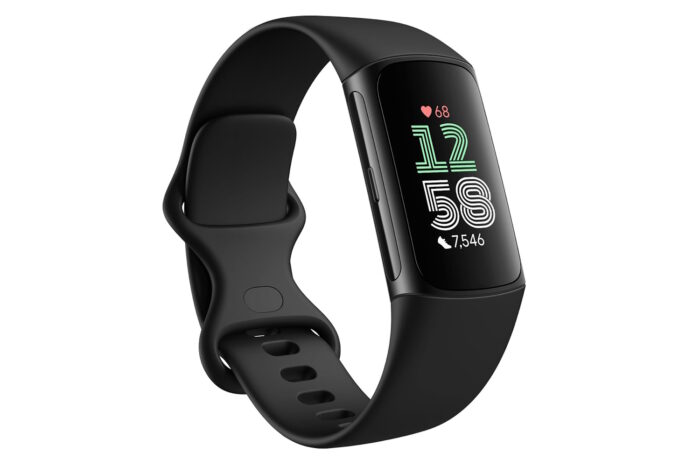
Adorning the wrists of workout enthusiasts everywhere, the Fitbit Charge 6 ($160) takes the crown for the best fitness tracker. The sixth iteration is less expensive than the fifth when it was introduced and features a few useful upgrades.
The Charge 6 reintroduces the haptic side button to the Charge line of trackers, which brings you back to the main screen when pressed. It also has a slightly curved AMOLED touchscreen, and the battery life lasts up to 7 days — the perfect tracker to wear all week.
An optical heart-rate monitor for 24/7 monitoring is standard and provides accurate calorie-burn calculations, sleep and stress data, and heart-rate zones for working out. It tracks daily steps, calories burned, and active minutes to help you make informed health decisions based on hard data.
The Charge 6 has 40+ different sports modes for tracking, including running, walking, biking, swimming, HIIT, yoga, skiing, surfing, indoor climbing, and golf. If you’re looking for finer details such as cadence, power, or rep-counting for weight training, you’re out of luck — one of our most notable issues with the Fitbit. A built-in GPS tracker allows you to go without your smartphone during an outdoor workout.
The Charge 6 also now connects with third-party platforms such as Peloton, NordicTrack, and Tonal to integrate heart rate data with your workouts.
A few bonus features not usually seen on trackers are the ability to get notifications (call, text, email, and calendar), control YouTube Music (since Fitbit was purchased by Google, Spotify is no longer controllable on Fitbit devices) use Google Maps and Google Pay. If you don’t need these features and you’re OK carrying your phone during activities that require GPS (such as walking, running, and cycling), we suggest the cheaper Fitbit Luxe.
Whoop Band 5.0
-
-
(Photo/Seiji Ishii)
-
(Photo/Seiji Ishii)
-
(Photo/Ash Duban)
-
(Photo/Seiji Ishii)
Specifications
Pros & Cons
Pros
- Super low profile on wrist
- Provides recovery data
- Excellent sleep monitoring
- Easy to use phone app
Cons
- Monthly or annual subscription is required
- Not a full-fledged fitness watch
Bottom Line: A screenless wearable dedicated entirely to cardiovascular recovery and sleep. It’s the premier choice for tracking strain, though it requires an ongoing subscription.
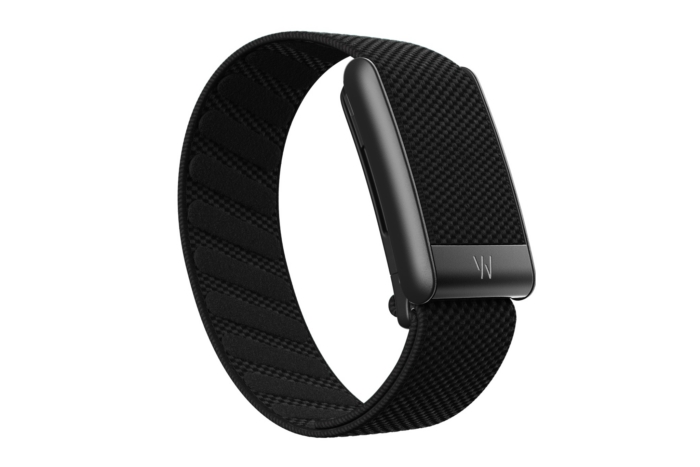
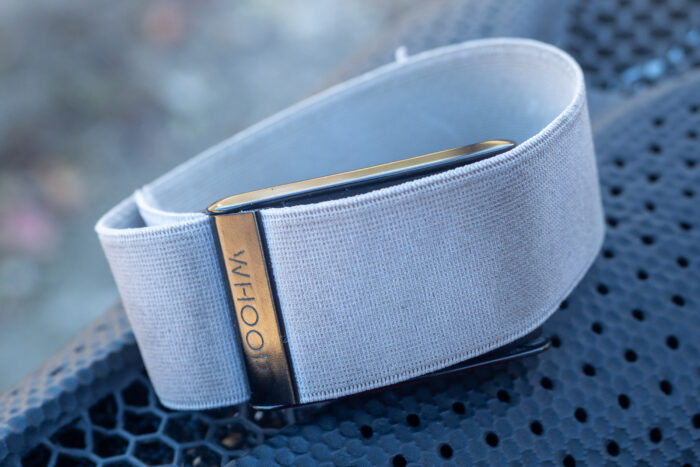
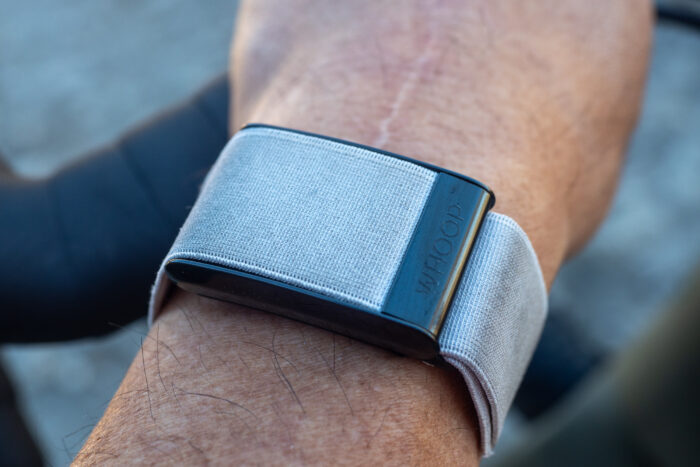
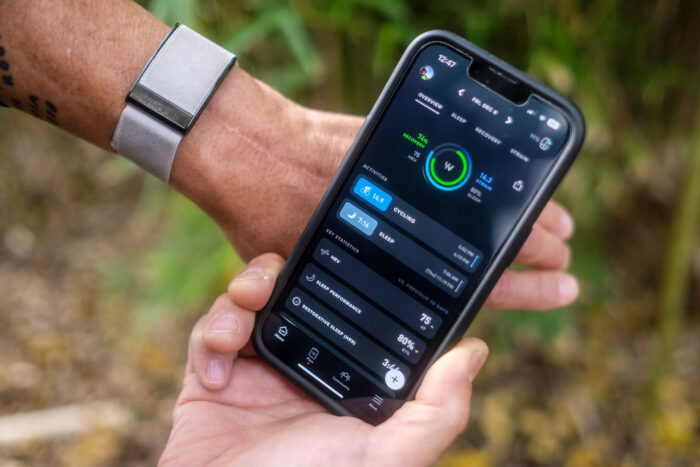
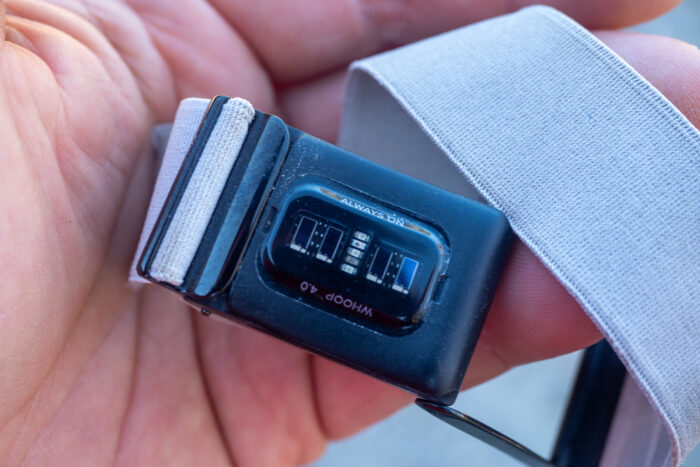
The Whoop Band 5.0 ($199–359/year) is a screenless recovery wearable that serves as a 24/7 monitor, siphoning health and activity data directly into its app. The updated 5.0 version ditches the previous daily charge anxiety, and in our testing, we consistently squeezed 15 to 16 days of juice from a single charge. It feels like a true passive observer rather than a watch demanding a spot on the nightstand every few nights.
During a month of testing in the wild, the new strain algorithm proved to have finally closed the gap. Historically, Whoop’s logic missed the mechanical strain of heavy lifting or technical bouldering because it relied primarily on heart rate. Now, the onboard accelerometer recognizes sets and assigns a muscular load, leading to much more honest recovery recommendations.
Hardware-wise, the 5.0 is a refined, 7% smaller wrist wearable that disappears under a cuff. We swapped the standard knit band for the new LeatherLuxe versions, which are infinitely more shower-friendly than damp-prone options that stay soggy for hours.
For the longevity-obsessed, the Healthspan suite provided keen insights. After a string of late nights, the app informed a 31-year-old tester that their “Whoop Age” had spiked to 33. The AI Coach correlated that to inconsistent sleep, providing data-backed nudges that eventually dragged their physiological age back into the green.
The 5.0 isn’t a perfect fitness watch, and is best for those who want to focus on the workout rather than the data. The mandatory subscription is likely the biggest hurdle to picking one up, and you’ll spend between $199 for the basic ‘One’ annual membership to $359 for a ‘Life’ package (which includes heart ECG data). It’s a good chunk of change, but the device is provided ‘for free’. If you’re deep in the fitness data rabbit hole, the Whoop Band 5.0 makes good sense.
Other Fitness Watches to Keep Track With
The seven awarded watches above are highly capable fitness trackers, and we think they’re the best in class in their respective niches. However, we’ve tested the entire range of fitness watches today and identified some additional options to consider.
-
-
(Photo/Erika Courtney)
-
(Photo/Erika Courtney)
-
(Photo/Sean Galaway)
-
(Photo/Sean Galaway)
-
(Photo/Sean Galaway)
Specifications
Pros & Cons
Pros
- Incredible battery life (when the sun is shining)
- SatIQ tech makes smart satellite choices to limit battery consumption
- Operating system is smooth and bug free
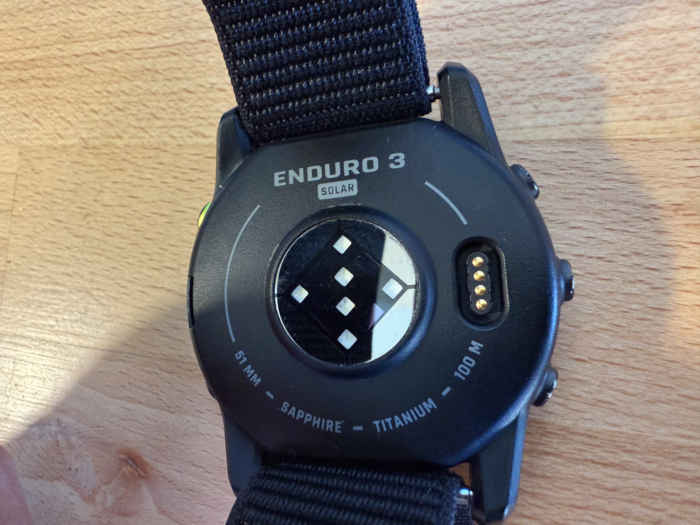
- 6-LED heart rate monitor with HRV capability
Cons
- Watch is a bit tall on the wrist
- Textile watch band won't be everyone's favorite
Bottom Line: The king of ultra-endurance, offering 300+ hours of GPS life thanks to solar harvesting. It’s the ultimate tool for 100-milers and expeditions, provided you don’t mind the oversized frame.
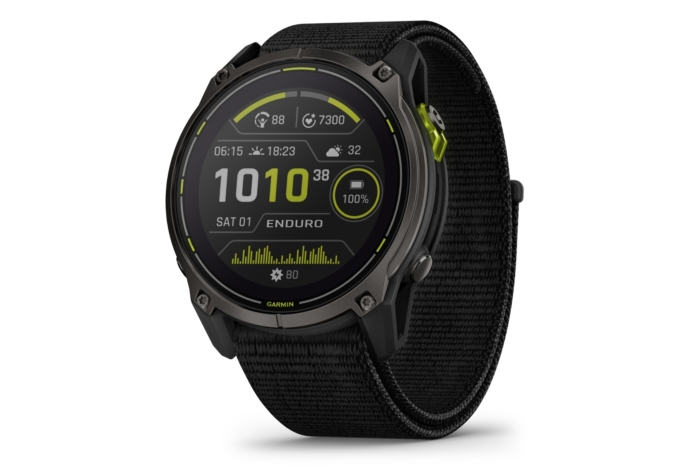
320 is a lot of hours. That’s how long Garmin specs its Enduro 3 ($900) watch to run with GPS running — and the sun shining. This big-battery watch is made to go the distance, and if you’re after the longest-running fitness watch out there, we think this is the one to snag.
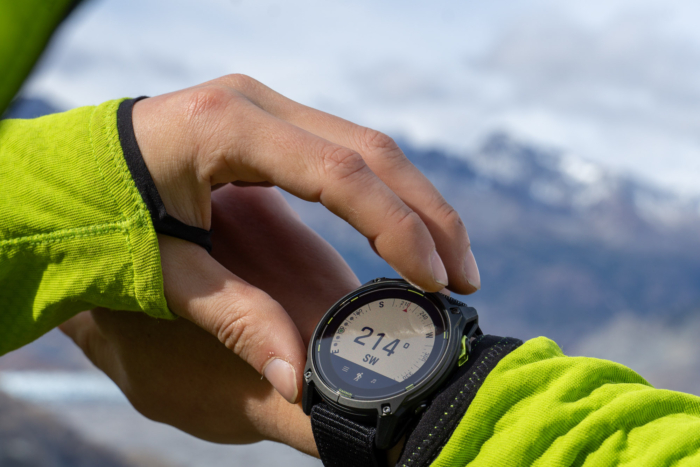
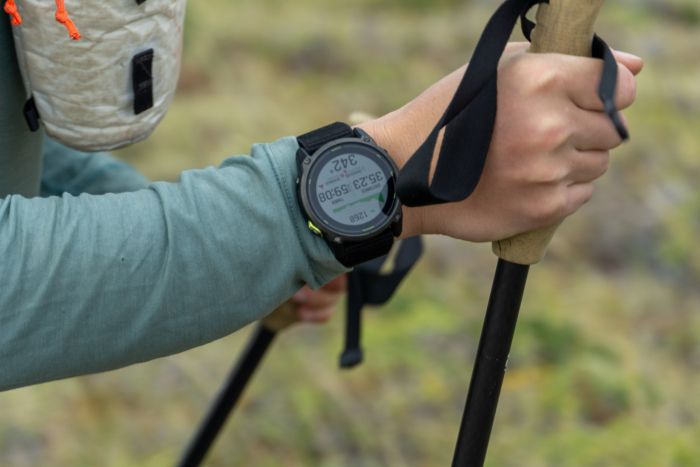
We took this watch to Patagonia to test those claims, and while the sun was often in short supply, the watch did last the entire 2-week trip off the cord, and tracked more than a few multiday treks in between. The UI is the same version used in our top pick watch, and Garmin delivers in the personal tracking metrics as always.
In fact, the only real UI differences between this watch and the fenix 8 are the lack of a microphone/speaker and no dive functionality. Otherwise, it’s the same watch (just in a different case).
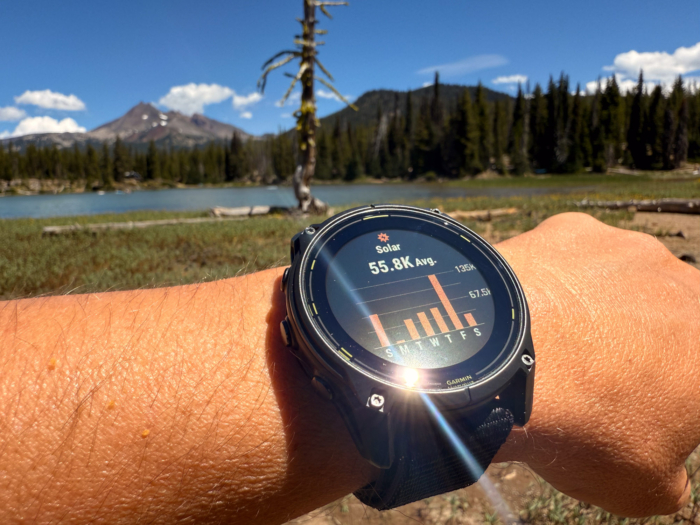
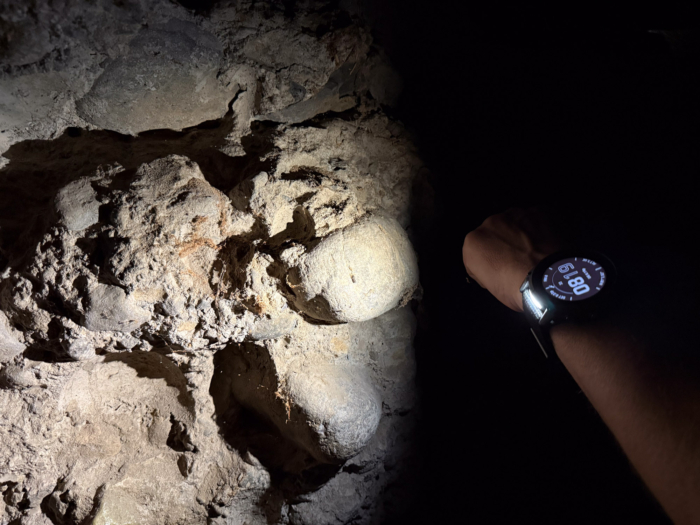
On a day that the sun was shining, we got the watch to charge at a rate of around 1% per 15 minutes — if you set the watch in a prime position. This seems to be the hack needed to really leverage your solar watch, and considering the watch only uses 1% per day when run in the battery saver mode, it’s easy to understand how this watch could run indefinitely, given perfect conditions.
The Enduro is more than a big battery, too: it has Garmin’s latest six-LED optical heart rate monitor, tracks almost 100 activity profiles, and puts it all behind a Power Sapphire glass and titanium bezel. We tracked an entire four-day trek along the Patagonian Icefield, and the watch easily led us over remote passes and through glacial labyrinths.
Satellite reception is top-notch and dialed in with both Multi-Band tech, which improves reception in deep recesses like canyons or cities, and Garmin’s SatIQ, a smart functionality that toggles between satellite modes to keep battery usage as low as possible. On-device mapping is the leading edge of the current generation and almost lag-free when scrolling quickly.
That battery does take up some wrist real estate, and the watch itself is a little over 1.5” thick, though we found it easy to get used to. The $900 price tag is also on the high end, though not as high as you’ll pay for the current generation Fenix 8. The Enduro 3 is instead for folks who simply need a watch to last and can sacrifice the latest and greatest features to get it.
-
-
(Photo/Nick Belcaster)
-
(Photo/Nick Belcaster)
-
(Photo/Nick Belcaster)
-
(Photo/Nick Belcaster)
Specifications
Pros & Cons
Pros
- No subscription required for base functionality
- Access to the Garmin Connect ecosystem
- Accurate heart rate measurement
- Comfortable band
Cons
- Auto activity detection isn't foolproof
- Battery life doesn't quite live up to expectations
- No on-board GPS
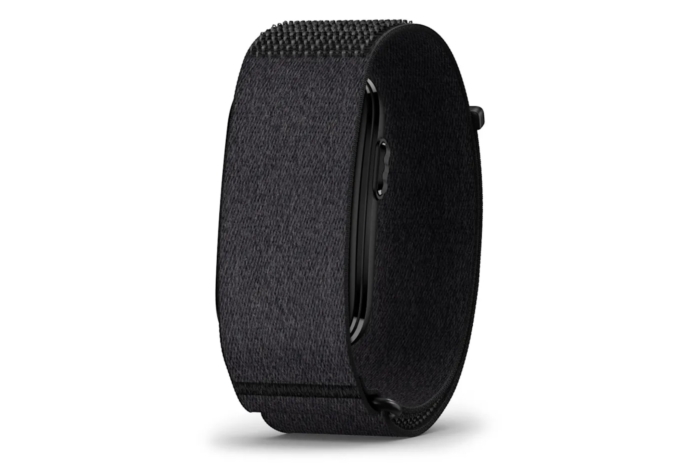
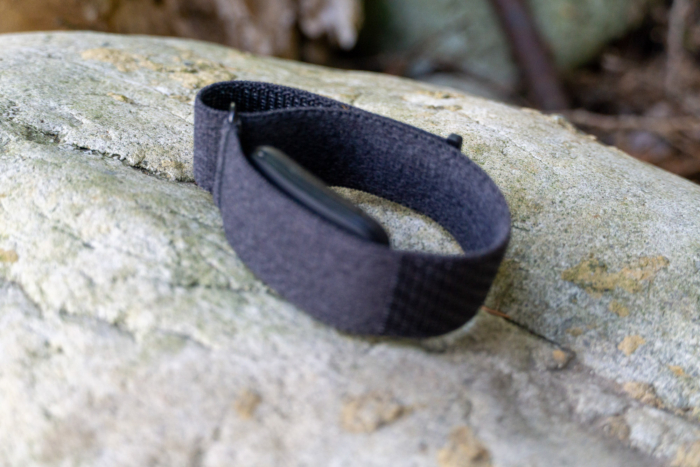
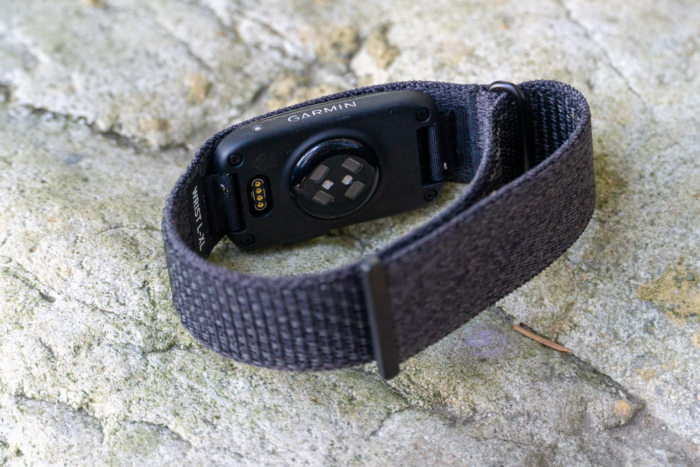
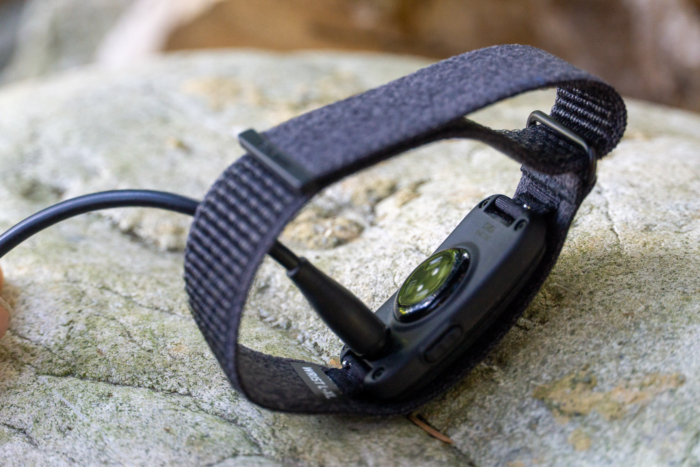
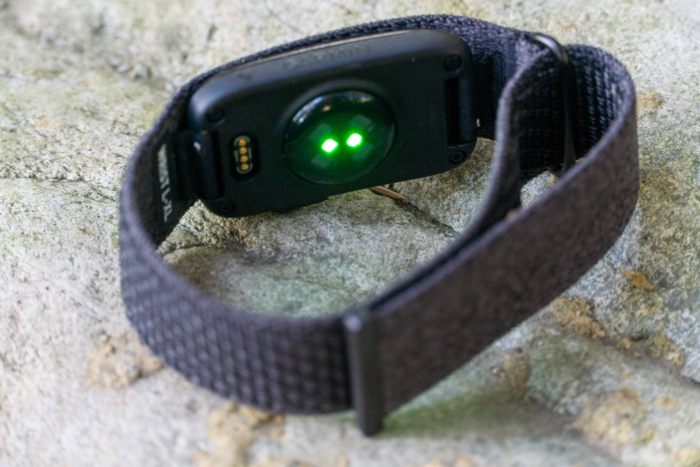
The Garmin CIRQA ($200) packs Garmin’s signature health tracking into a low-profile, screen-minimalist wristband built for athletes who want unobtrusive biometric logging without a bulky smartwatch casing.
For baseline heart rate monitoring, daily steps, and sleep tracking, the sleek band virtually disappears on the wrist under wet rain jacket cuffs and glove gauntlets. Senior Editor Nick Belcaster strapped the CIRQA on for a month of Pacific Northwest field trials, putting it through trail runs in the Chuckanut Mountains and ascents in the North Cascades. Through it all, it stayed low-profile and out of mind.
During high-output efforts near Mt. Baker, the optical sensor kept pace remarkably well with heart rate spikes, delivering consistent data across steep climbs. However, the CIRQA’s automatic activity tracking proved a bit hit-and-miss in the field. While it reliably picked up straightforward road running, it struggled with mixed-terrain efforts and failed to auto-start tracking during several start-and-stop activities. If you want clean activity logs, manually initiating workouts is an absolute necessity.
The software experience also presents a trade-off for long-time Garmin users. While the baseline Garmin Connect app handles daily health metrics and basic syncs reliably, Garmin limits several higher-tier athletic analytics behind its Garmin Connect+ subscription. Deep-dive insights like long-term Training Readiness trends, advanced HRV status analysis, and daily workout recommendations require the paid tier. Without that monthly subscription, the standard app feels stripped back compared to what is traditionally expected from Garmin devices.
For runners who want built-in GPS, on-screen mapping, and full metric access without subscription paywalls, the COROS Pace 4 ($229) remains a more complete budget choice. If your priority is a sleek fitness tracker with more seamless auto-detection, the Fitbit Charge 6 handles auto-recognized workouts with better accuracy, while stepping up to the Garmin Forerunner 165 ($249) unlocks Garmin’s full training ecosystem in a lightweight watch body.
But for trail runners and hikers seeking an ultra-lightweight, weather-resistant band that won’t clutter their wrist for everyday fitness tracking, the CIRQA is a sleek, comfortable contender.
-
-
(Photo/Sean Galaway)
-
(Photo/Sean Galaway)
-
(Photo/Sean Galaway)
-
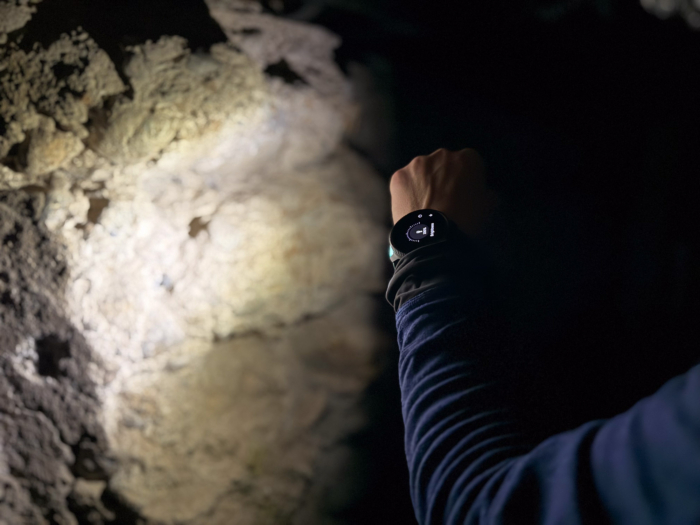
The dedicated LED flashlight is bright enough for camp chores and gear searches; (photo/Sean Galaway)
Specifications
Pros & Cons
Pros
- Stunning 1.5-inch AMOLED display (2,000 nits)
- Dedicated forward-facing LED flashlight with red-light memory
- Exceptional build quality with zero plastic shortcuts
Cons
- No heart rate broadcasting for bike computers or trainers
- No solar charging (dropped to accommodate the larger AMOLED screen)
- Heavy at 87 g
Bottom Line: An improved version of the Vertical with an AMOLED display and a dedicated LED flashlight. It offers elite mapping and refined charging, but lacks solar power and heart rate broadcasting.
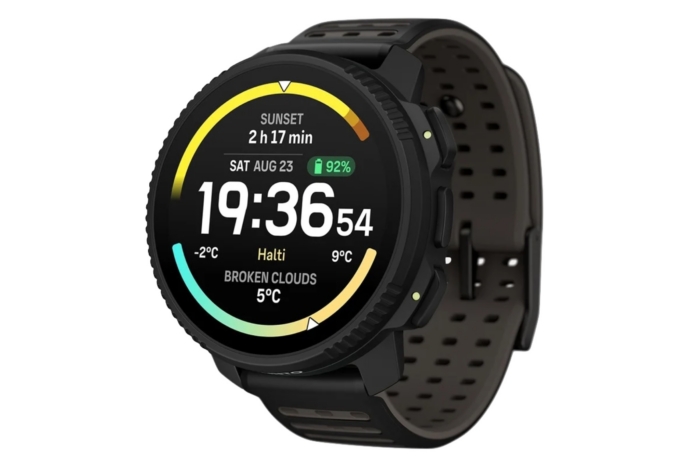
The Suunto Vertical 2 ($599) is updated for 2026, and the big news is a 2,000-nit AMOLED display that makes topographic maps more readable than ever. While Suunto dropped solar charging to accommodate this higher-resolution screen, the tradeoff in a cleaner aesthetic and a more vibrant daily experience is worth it.
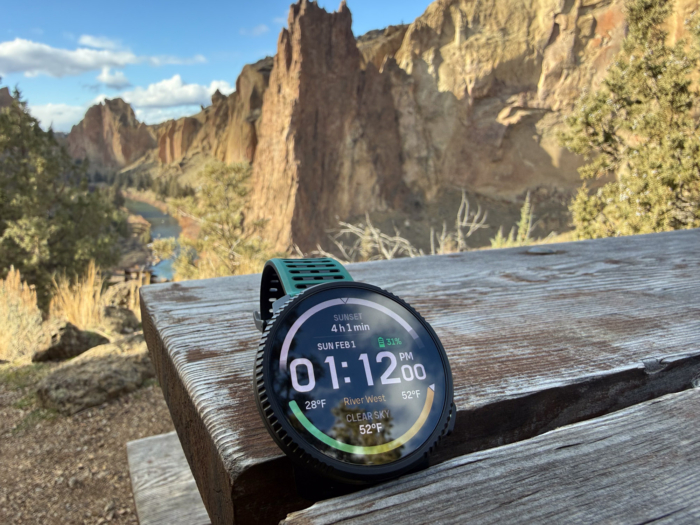
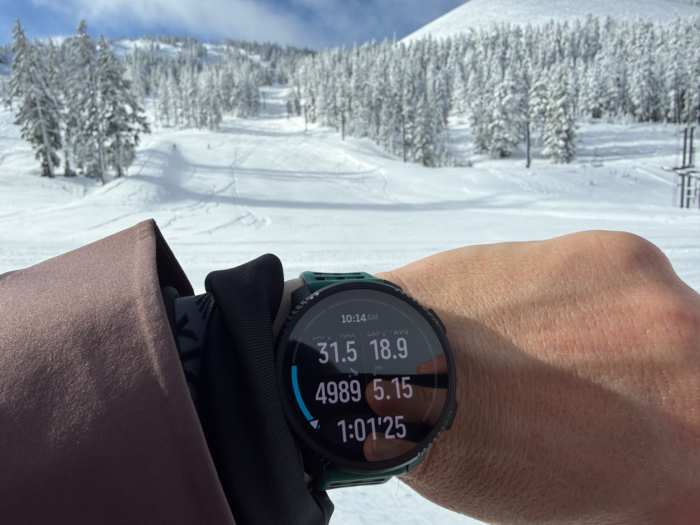
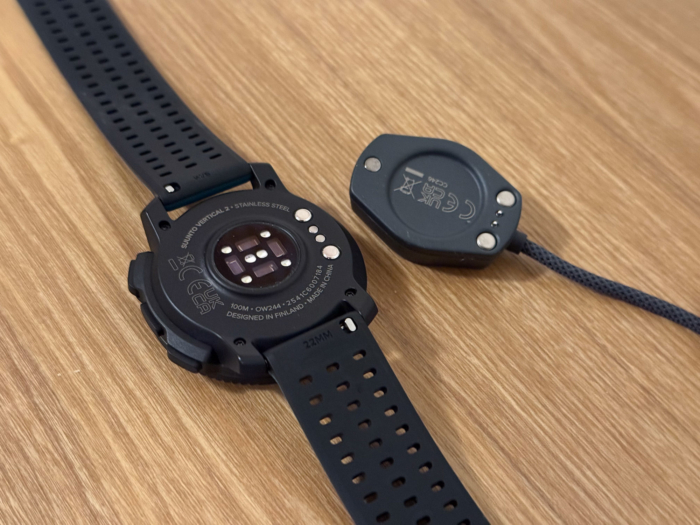
During splitboarding at Mt. Bachelor and hiking around Smith Rock, tester Sean Galaway noticed the refinements immediately. A redesigned optical heart rate sensor sits flush against the skin, providing improved stability during high-movement activities like snowboarding. Galaway was also impressed by the transition to a premium USB-C charging puck with a strong magnetic connection, solving a common friction point in previous Suunto designs.
One of the most practical additions is the dedicated, forward-facing LED flashlight. Positioned at the top of the case, it provides multiple brightness levels and a red-light memory mode to preserve night vision. This isn’t just a screen-glow shortcut; it’s a high-utility tool we used daily for camp chores and early-morning gear searches, and it quickly became a cherished feature.
Technically, the Vertical 2 introduces ZoneSense technology to coach your pacing via real-time HRV. However, this feature requires a chest strap for real-time accuracy, as wrist-based sensors aren’t precise enough to drive the metric. Additionally, the watch leans heavily on its touchscreen for navigation, which may present a learning curve for users accustomed to the button-first logic of the Garmin ecosystem.
While the 65-hour multi-band GPS claim is impressive, our field tests showed a roughly 45-hour runtime in full-sun, out-of-the-box settings. For most weekend warriors and mountain athletes, this remains ample longevity. Despite minor software quirks like the lack of heart rate broadcasting, the Vertical 2 stands out as a refined, professional-grade tool for those who want world-class mapping.
-
-
(Photo/Nick LeFort)
-
(Photo/Nick LeFort)
-
(Photo/Nick LeFort)
Specifications
Pros & Cons
Pros
- Brilliant AMOLED screen
- Lightweight yet rugged
- MIL-STD-810 mil-spec thermal and shock resistant
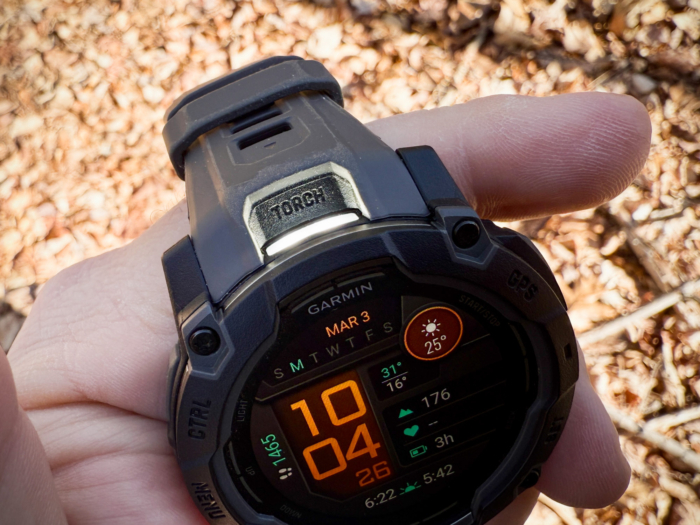
- LED flashlight
- Onboard monitoring features
Cons
- Simple breadcrumb navigation
- Battery life isn't the best out there
- There is no AMOLED and solar version
Bottom Line: A tactical-style watch that marries G-Shock durability with a high-contrast AMOLED screen. It’s the perfect daily driver for outdoor work and play, though it lacks the premium finish of some top-tier watches.
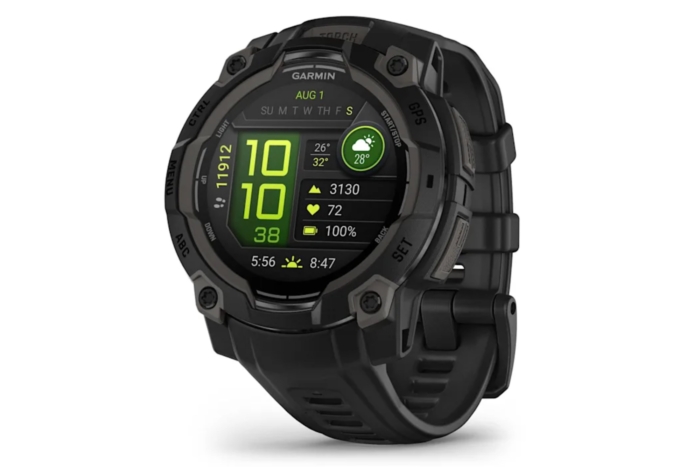
The Garmin Instinct 3 AMOLED ($500) is an update on a previous favorite of our team, and it’s only better now. Newly optioned in a beautiful AMOLED screen, the Instinct 3 is still just as get-er-done as the previous version — it just looks even better now.
The Instinct line keeps things accessible by holding back on a few metrics but leaning into the rugged durability and styling that appeal to many. Notably, the satellite reception is limited to three systems, and the battery life isn’t as dazzling as the upper-tier watches, but there’s considerable tech trickle-down from other Garmin watches that make this updated version a worthy one.
The big deal here is the AMOLED display, which is just as brilliant as the ones we’ve used on the Forerunner series. The touch sensitivity also appears to be better on this version of the watch, and the screen scrolls beautifully. There’s still a solar-charging MIP version ($400) of the Instinct 3 for loyalists, but we’ve been enjoying the deeper colors and better contrast.
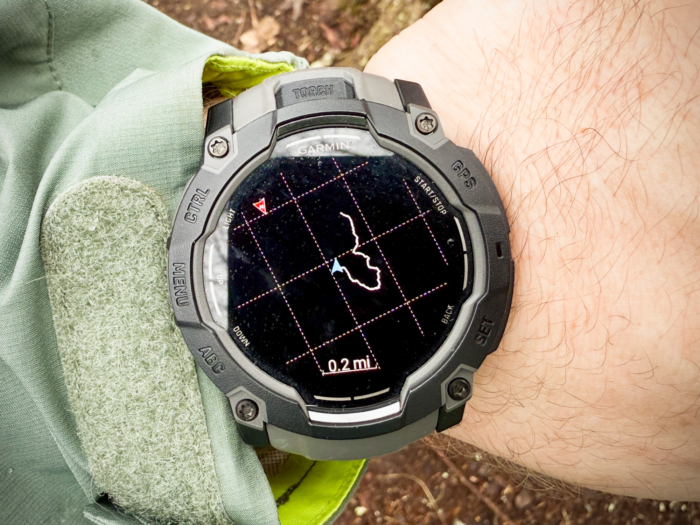
On-watch mapping won’t blow you away (you get the standard breadcrumb-tracking style screens), but the watch does use Garmin’s SatIQ technology, which decides which GPS mode is ideal for the terrain you find yourself in. This means that the watch will toggle into Multiband mode when you’re in a city or tight canyons, which is a boon for battery life.
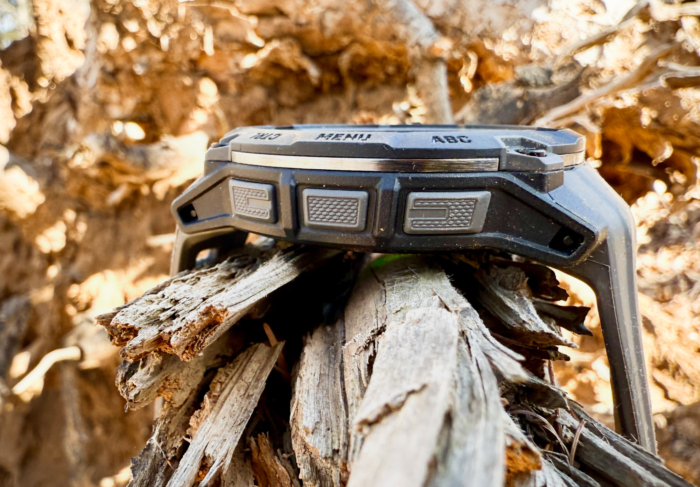
The new Instinct is also tougher, with a new metal band set into the bezel as reinforcement. The watch still meets MIL-STD-810 mil-spec standards and is rated to 10 atmospheres of water immersion. We found that the fiber-reinforced polymer bezel tended to glance off things we hit instead of scratching, and while the screen is only chemically strengthened glass, the raised bezel protects it well.
There’s impressive value in Instinct 3, too. For the same price as the COROS Apex 2 Pro, you get an AMOLED screen that pops in all conditions, whereas the COROS could, at times, be a little harder to see. That said, the battery life on the COROS when running single-band GPS is 75 hours, and while the 32 hours the Garmin can manage is decent, it’s the reason we think the Apex 2 Pro is a slightly better mid-tier watch.
If your workouts keep you closer to home (and you tend to get dirty doing them), we don’t see any reason not to stick with the rugged Instinct 3 AMOLED.
-
-
(Photo/Ian Atkinson)
-
(Photo/Ian Atkinson)
-
(Photo/Ian Atkinson)
-
(Photo/Ian Atkinson)

Specifications
Pros & Cons
Pros
- Fully featured
- Excellent battery life
- Durable
- Responsive touchscreen
Cons
- Bulky fit for smaller wrists
- GPS tracking trouble in canyons
- The Zepp app feels overbuilt with many ‘premium’ features requiring payment
Bottom Line: A budget-disruptor that packs a titanium bezel and crisp AMOLED screen for hundreds less than the competition. The companion app and sat reception consistency is where the budget aspect is apparent, however.
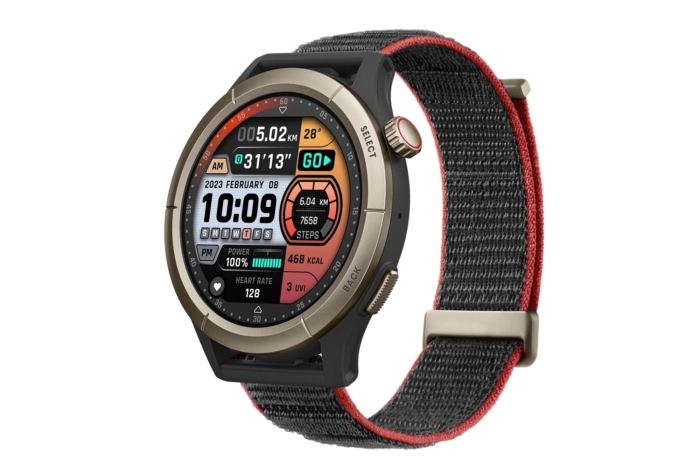
While your Garmin, COROS, and Suunto options dominate the fitness watch space, there’s always room for some friendly competition, and the Amazfit Cheetah Pro ($300) angles directly at the big dogs with a suite of features more often seen in watches hundreds of dollars its senior.
With dual-band multi-GNSS reception, a 1.45” AMOLED screen, and navigation capabilities, the Cheetah Pro checks all of the boxes we’re looking for in a fitness watch that we can use for everything from days in the gym to long events outdoors. The watch also tracks 156 (!) different activities, and shuttles that info over to its app for post-workout breakdowns and training suggestions.
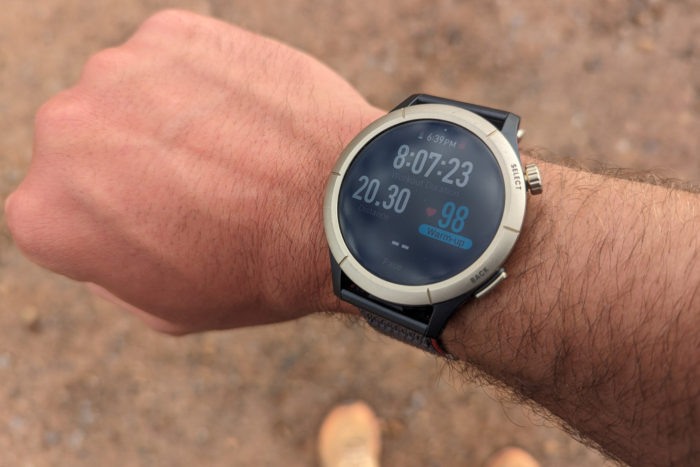
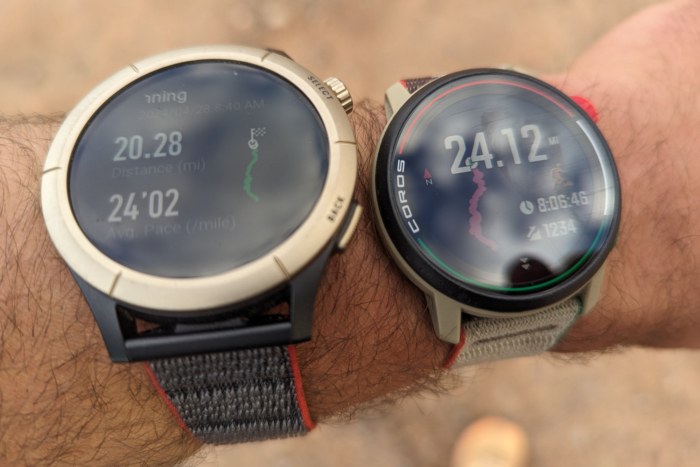
In practice, our testers found that while the feature set of the Cheetah Pro is exhaustive, the polish and execution left a little to be desired. For example, when tester Ian Atkinson ran a 24-mile route in the Canyonlands Needles District recently while comparing the Amazfit to the proven COROS Pace 3, the Cheetah lost satellite connection a number of times, while the COROS held strong.
While it’s no death knell, connection quality is certainly something we look for, and with watches getting just so good these days, we’re eager to see some improvement from Amazfit in this space. Further, while the Zepp app — used to provide training insights and plans — is a detailed offering, the AI training provided is a bit lacking, and advanced functionality is limited to paid subscriptions.
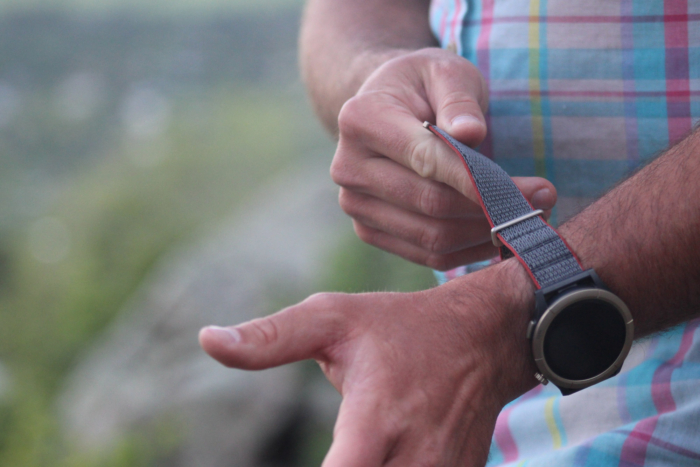
So, can the Cheetah Pro hack it? “I would say yes,” says Atkinson. “I was not gentle in my testing, and the Cheetah Pro withstood both ample amounts of sand and gritty rock. It just depends on what your standards are for a fitness watch.” For hundreds less than the competition, there’s much to enjoy on the Cheetah Pro, and if you’re willing to forgive some rough edges, it’ll track everything you get up to.
-
-
(Photo/Ilana Newman)
Specifications
Pros & Cons
Pros
- Outstanding battery life
- Heart rate monitoring
- Strava Live Segments
Cons
- Expensive
- Weak and delayed button action
- Dull and simple app
- Unintuitive interface
Bottom Line: A sophisticated tool for data-driven athletes, and packing one of the best heart rate monitoring sensors. The interface can feel sluggish compared to COROS or Garmin, however, which is a tough sell for the price.
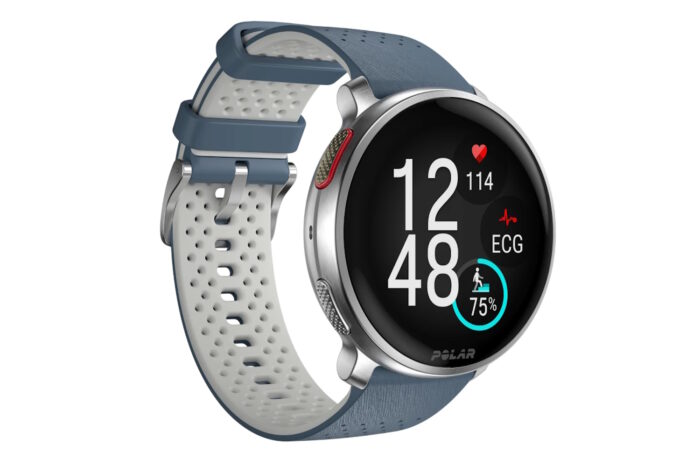
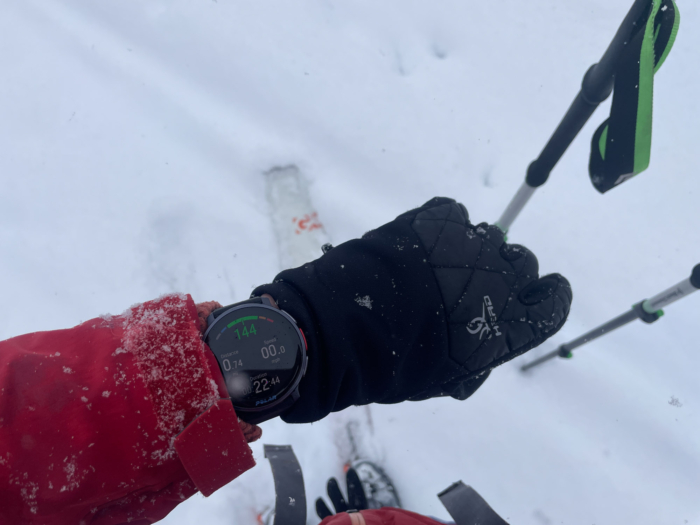
The Polar Vantage V3 ($700) is once again one of our preferred picks for running, even in a field dominated by Garmin. It’s not as jam-packed with features as most Garmins, but what it does offer, it does very well — especially heart-rate monitoring.
The biggest new feature since the last model is the addition of offline topographic maps, bringing this watch closer in features to a Garmin adventure-focused watch. It also has over 150 customizable sports profiles.
In addition, the battery life has been extended to 61 hours in continuous GPS mode with the option of 140 hours in battery-saver mode. The screen has been updated to an AMOLED display. Sensors for SpO2, ECG, OHR, and skin temperature have been added to the Vantage V3.
Like all watches, you get training and recovery insights based on your unique physiological data to help you make more informed decisions about when to push and recover. It comes with built-in, step-by-step running and cycling performance tests to establish training zones via heart rate, speed, and power (meter required for cycling), as well as test recovery.
If you’re a Strava Segment-hunter, the watch will notify you as you approach your starred Segments and give real-time performance data so you can crush your Segment PRs.
Polar Precision Prime sensor fusion technology “combines optical heart-rate measurement with other sensor technologies to rule out involuntary movement that might disturb the heart-rate signal and produce unreliable readings.”
We weren’t, however, as impressed with the Polar Flow app that is used to sync your activities online — which is a bit simple and often has issues syncing data between the watch and your phone. Additionally, the buttons and interface were not as intuitive as other watches we tested. But these issues aside, the Vantage V3 is rightly up there with the Garmin Forerunners for our suggestion of the best running watches.
-
-
(Photo/Craig Randall)
-
Suunto Race digital dial; (Photo/Craig Randall
-
Suunto Race Watch rear view; (Photo/Craig Randall)
Specifications
Pros & Cons
Pros
- Beautifully crisp and clear AMOLED display
- Digital dial for quick scrolling in and around maps
- Worldwide offline GPS maps
- Massive screen is easy to read
- Beautiful build quality, materials, and aesthetic
Cons
- No offline music via third-party streaming services like Spotify
- Unlabeled and unmarked maps
Bottom Line: A high-performance racing wearable that pairs a large AMOLED display with a tactile digital crown for easy navigation. It offers pro-level functions and durability at a surprisingly mid-tier price.
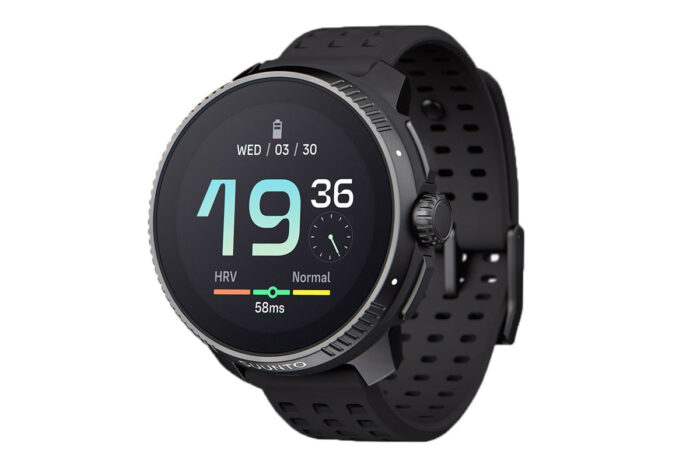
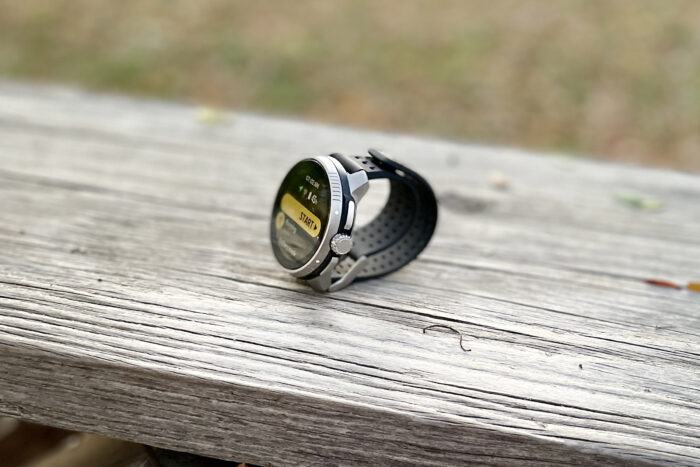
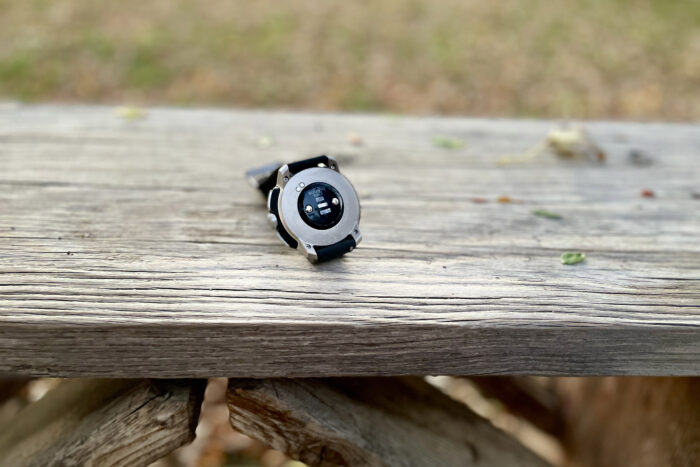
Hot on the heels of the already-impressive Vertical, the Suunto Race ($399) slides in hundreds less and better suited for the runners out there — all while boasting Suunto’s first AMOLED screen. This beautiful display is a showstopper and it’s not difficult to call this the best watch Suunto has ever made.
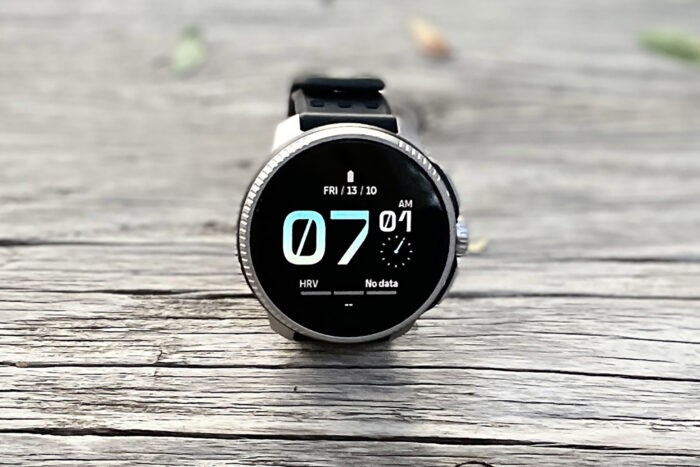
Like the split between MIP and AMOLED screens on otherwise similar watches, the Vertical and Race also share a lot of like features, but there’s also a good bit new on the Race. For example, the new digital crown bezel makes navigating through maps a breeze and moves away from the three-button layout for the Vertical.
HRV tracking has also been expanded to nightly surveying, and integrates with the newly added Suunto Coach functionality — synthesizing your workouts and providing feedback and suggestions.
The AMOLED screen can’t be ignored, however, and is a 466 x 466-pixel resolution unit that blows MIP screens out of the water when the light starts to wane. We especially noted this during map navigation, which is sharp when viewing turn-by-turn directions or zooming in or out of maps.
The processor on the Race is also top-notch, with none of the lagging that we’ve unfortunately dealt with on previous Suunto watches. Map and compass rotations are smooth, menu switching is clean, and post-workout screens flip through easily.
Like the Vertical, the Race has onboard map storage in either 16 GB or 32 GB capacities, depending on the variation you choose. These are non-routable maps, meaning your turn-by-turn route won’t update should you miss a fork in the trail, but the definition is still top-notch. The Suunto app allows for quick shuttling of maps over to the watch over Wi-Fi, and uses a smart map area picker that only downloads the sections you’ll need.
Stacked up next to the Garmin Forerunner 570 and Polar Vantage V3, the Race makes a compelling case for itself, with a much longer comparative battery life than the 265, and a more user-friendly button interface and app than the Vantage.
That beautiful screen will ding the battery life on the Race compared to the Vertical, however, with a 20-hour difference between both in the Endurance mode. Still, a full 40 hours in the highest-demand GPS mode is nothing to shake a stick at, and most runners will find this more than enough for weekend ultras.
For those engaged in endurance events, the Vertical’s longer battery life and available solar watch face may prove more tempting, but for casual and spirited runners alike, the Suunto Race has everything we’ve been wanting from a Suunto watch and more. It’s easy to say that this watch is well competitive with top-tier Garmin and COROS options, and we’re excited to see it.

Fitness Watch Comparison Chart
| Compare |
|
|
|
|
|
|
|
|
|
|
|
|
|
|
|---|---|---|---|---|---|---|---|---|---|---|---|---|---|---|
| Price |
$1,100
|
$249
|
$430
|
$550
|
$799
|
$160
|
$199–359/year
|
$900
|
$200
|
$599
|
$500
|
$300
|
$700
|
$399
|
| Battery Life |
Up to 48 days with Solar
|
6 days (always on), 19 days (gesture only)
|
65 hours of continuous use for 46mm
|
18 hours
|
12 hours
|
5 hours in GPS mode
|
Up to 14 days
|
320 hours
|
Up to 10 days
|
Up to 65 hours
|
32 hours
|
26 hours
|
61 hours
|
50 hours
|
| Weight |
95g
|
32g
|
44g
|
50g
|
62g
|
37g
|
26.5g
|
63g
|
28g
|
87g
|
59g
|
43g
|
57g
|
70g
|
| Case Size |
43mm
|
43.4mm
|
46mm or 42mm
|
47mm
|
49 x 44mm
|
38 x 18.5mm
|
36 x 25mm
|
51mm
|
47 x 27mm
|
49mm
|
50mm
|
47mm
|
47mm
|
49mm
|
| Water Resistance Rating |
10 ATM (100 me)
|
5 ATM
|
5 ATM
|
5 ATM
|
10 ATM
|
5 ATM
|
IP68
|
10 ATM
|
5 ATM
|
10 ATM
|
10 ATM
|
5 ATM
|
5 ATM
|
10 ATM
|
| Global Satellite Networks |
Multi-band GPS, GLONASS, QZSS, BeiDou, and Galileo reception
|
GPS, GLONASS, Galileo, BeiDou, and QZSS reception
|
GPS, GLONASS, Galileo, BeiDou, and QZSS reception
|
Multi-band GPS, GLONASS, QZSS, BeiDou, and Galileo reception
|
Multi-band GPS, GLONASS, Galileo, and BeiDou reception
|
GPS + GLONASS reception
|
None
|
Multi-band GPS, GLONASS, Galileo, BeiDou, and QZSS reception
|
Uses phone GPS
|
GPS, GLONASS, Galileo, Beidou, and QZSS
|
Multiband GPS, GLONASS, and Galileo reception
|
6 satellite positioning systems with L1 & L5 reception
|
GPS, GLONASS, Galileo, BeiDou, and QZSS reception
|
GPS, GLONASS, Galileo, QZSS, BeiDou
|
| Navigation capable |
Yes
|
Breadcrumb
|
Yes
|
Breadcrumb
|
Yes
|
No
|
No
|
Yes
|
No
|
Yes
|
Yes
|
Yes
|
Yes
|
Yes
|


How We Tested the Best Fitness Watches
Fitness watches are no longer just glorified pedometers: They are sophisticated biometric computers. At GearJunkie, our testing team, led by Guide Manager Nick Belcaster, puts these wearables through a gauntlet that spans from the dense tree canopies of the Pacific Northwest to international transit hubs in South America.
Our testing is designed to separate marketing hype from real-world utility. We focus on the intersection of GPS precision, biometric reliability, and long-term durability. While we evaluate these as everyday tools, if you are looking for a more high-brow tool, we recommend checking out our dedicated guide to the Best Field Watches.
Our Testing Process
- Field-Verified Accuracy: To test GPS reliability, we don’t just run on open tracks. We take watches into difficult satellite reception scenarios (deep urban canyons and steep, wooded switchbacks) to see how dual-frequency chipsets handle signal bounce and tree-cover interference. We compare the results against industry benchmarks to ensure your splits are accurate.
- Battery Torture Tests: Manufacturer battery claims are often based on ideal conditions. We test real-world longevity by engaging All Systems On GPS tracking, enabling smart notifications, and monitoring 24/7 heart rate and sleep. We look for watches that can survive a 50k ultra or a week-long fastpacking trip without needing a power bank.
- Ergonomics & UX Audit: A fitness watch is useless if it’s too frustrating to use mid-workout. We evaluate the tactile response of buttons and digital dials while wearing gloves and in pouring rain. We also assess the companion apps (Garmin Connect, COROS Training Hub, Apple Health) for how intuitively they present complex data like HRV (Heart Rate Variability) and Training Readiness.

Our Fitness Watch Rating System
We use a weighted 100-point scale to provide objective rankings across four critical categories:
- Training Data & Planning (20% weighted): We evaluate the depth of the training metrics. Does the watch provide actionable recovery advice, or is it just a list of numbers? We favor platforms that integrate sleep, stress, and workload into a cohesive daily score.
- Sensor Accuracy (30% weighted): We cross-reference optical heart rate sensors against chest straps and GPS tracks against known mapped distances.
- Battery Performance (30% weighted): We score based on the charging-to-activity ratio. Watches that utilize MIP (Memory-in-Pixel) screens for extreme longevity are weighted differently than AMOLED luxury watches that prioritize visual pop.
- Build & Durability (20% weighted): We look for premium materials like Titanium and Sapphire glass. Our testers wear these while rock climbing and gear-hauling to check for bezel scuffing and screen resilience.

Our Expert Testers
GearJunkie knows fitness, and our testers know their watches. The team includes Cory Smith, an online running coach and freelance journalist with over 25 years of running and rock climbing experience. He’s an expert, from treadmills to shoes.
Senior Editor Nick Belcaster has been managing this guide since 2021, and most recently tested three new watches for 2026 across 25 days of multisport testing in the Pacific Northwest.
Our most recent fitness watch update saw contributor Ilana Newman saddled with more watches than she has wrists to put them on, putting them through the paces in southwest Colorado while trail running, backcountry skiing, and working through daily fitness regimens. The San Juan mountains provided the perfect testing ground for this new generation of watches, and Newman is obsessed with training data and staying up to date on the newest outdoor gear.
Beyond their personal expertise, GearJunkie has solicited the opinions of fellow runners, hikers, and climbers. When the dust settled and the final grades came in, the list above represented the best fitness watches we could drum up. But know that fitness tech is constantly improving, and new functionalities are being added daily to some of these watches. As they improve, so does our coverage, and we’ll continue to test them.

Buyer’s Guide: How to Choose the Perfect Fitness Watch
The fitness watch market can be overwhelming. There are so many options — all of which might seem similar — that it can feel as though you need a college degree to tell them apart.
While finding the best fitness watch for you does require some thought and research, this handy how-to-choose guide has all the essential information compiled so you can make the best decision for your fitness watch needs.
We go into everything from GPS reception to how training data is used to provide health and performance predictions. Each brand of watch uses slightly different data and provides different features, each of which is more or less important to consumers. We’ll spell it all out for you so you can make an informed decision that works for your specific fitness, health, and performance goals.

Smartwatches, GPS Watches, and Fitness Trackers
There are three very distinct categories of watches, each with strengths and weaknesses. Smartwatches are basically small smartphones for your wrist where you can add apps and take calls without your phone.
The most popular smartwatches are Apple and Samsung Galaxy watches. Functionally, they’re geared toward convenience and health tracking, but they tend to fall short on battery life, GPS accuracy, and workout functionality.
GPS watches such as Garmin, COROS, Suunto, and Polar are designed primarily for workouts that require GPS functionality (running, cycling, hiking, swimming, etc.). They tend to have over triple the battery life of smartwatches and are very strong with workout features, metrics, and tracking.
While most will allow text and email messages, and many provide storage for music or access to streaming apps like Spotify, they’re limited in the scope of apps you can add and will not replace your smartphone.
Fitness trackers have the least functionality and only track health and fitness metrics such as resting and variable heart rate, sleep patterns, and steps. Most will need to stay connected to a phone for features like GPS tracking.

Activity Tracking
Today’s fitness watches can track just about any activity imaginable, ranging from running to indoor rock climbing and even surfing. We’ve found that watches labeled as “outdoor” or “multisport” not only tend to be able to track the more obscure activities but also do so with more detail and granularity. As a result, this increased level of functionality tends to come with a higher price tag.
Some more entry-level watches do allow you to create new activity profiles for sports that are not built-in, but most of the time these only allow you to track the basics like heart rate, time, etc.
For example, while you could track rock climbing with the Garmin vívoactive 5, it does not have a specific profile for it, so you would only get basic data logged for that workout by using a different activity profile, such as cardio. The Garmin fenix 8, however, has specific rock climbing (indoor climbing, climbing, and bouldering) activity profiles that allow you to track each route, the grade of the route, and the length of each climb.
Backcountry skiing is another specific activity that testers found lacking on some of the lower-end watches, as a session includes both uphill and downhill travel, logging it without a backcountry skiing-specific activity profile creates an inaccurate representation. Even using cross-country skiing as a substitute on the Fitbit Charge 6 did not provide the same overall picture as using a backcountry skiing profile on a watch like the Polar Vantage V3.

Depending on the brand and the activity being tracked, you will be able to see different data both during the activity and in the activity summary after completion. If the watch supports navigation, and you’re tracking an activity that involves moving, one screen will feature a map with your location.
High-end Garmin watches like the fenix 8 series feature over 80 activity profiles with the ability to add more. The Polar Vantage V3 can hold up to 14 profiles on the watch and requires the Polar Flow app to edit or add more. COROS watches have about 30 activity profiles, but veer more toward technical outdoor activities instead of gym activities like Fitbit fitness trackers do.
All the watches we tested tracked common activities such as walking, running (outdoor, trail, treadmill), outdoor and indoor cycling, yoga, elliptical, general strength, and cardio sessions. If there’s a less-common sport you’d like to track, we suggest checking the watch’s spec sheet to see if it’s covered.

Training & Coaching
As fitness watches have gotten better at tracking health and fitness data, companies have been able to use that data to give guidance on training. As a full-time running coach, our tester Cory Smith finds this particularly interesting.
He sees most runners struggle because they overtrain or undertrain. Garmin and Polar seem to have the best training and coaching insights, with COROS right behind them.
Garmin, as the leader in the field for training data and even coaching through the watch interface, has a few statistics that seem to be included across its newest watches, no matter how high-end it is. Even these baseline stats can provide a good overview of training readiness and recovery.
Recovery time, for example, is included on both the vívoactive 5 and the fenix 8. Garmin’s recovery time uses data from your past workouts, including your recent and long-term training load and VO2 max. Other data, like sleep and stress tracking, can also impact recovery time.
Another now-standard piece of training data for Garmin is Heart Rate Variability Status (HRV), which tracks the time in between heartbeats to determine the level of stress your body is currently under, due to training load, life, lack of sleep, and more.

Garmin also uses all of the data it constantly gathers during the day and activity tracking to provide workout suggestions. High-end watches, like the fenix 8 or Enduro 3, provide a specific workout each day in the Morning Report, with specific goals like “base building” based on past activities and current training status.
There’s also the option to set up Garmin Coach on any Garmin Watch, which uses the Garmin Connect app to choose a training goal — such as training for a half-marathon — and Garmin Coach will provide a training plan over an allotted time.
Polar uses similar data to provide data like Cardio Load Status, which looks at short-term training load (strain) versus long-term training load (tolerance) to determine the effect of your training (detraining, maintaining, productive, or overreaching).

Health Tracking
Health tracking is standard across fitness watches, from the most basic fitness tracker to the highest-end GPS watch.
Technology for health tracking has advanced a lot over the past few years, and certain features that used to be considered high-end are now available on just about every fitness watch, like SpO2 (blood oxygen saturation — measured through red and infrared light) and Heart Rate Variability.
Every fitness watch measures heart rate and sleep, while some, like the Whoop Band 4.0, focus intensely on it. Additional health data, such as calories and hydration, are available on most watches we tested, but must be tracked manually.
The Apple Watch provides heart health alerts for low or high heart rates and also allows for medication reminders. All fitness watches provide menstrual cycle tracking, and many have integrated mindfulness into their interfaces, like the Garmin vívoactive 5.
Garmin watches now also track naps, along with overnight sleep. Each brand has its own way of summarizing a night of sleep, but most use a scale of 1-100 to rate the night of sleep while also tracking time asleep and sleep cycles.
Health tracking features are generally standard across brands, but each brand has features that synthesize data in unique ways, like Garmin’s Body Battery and Fitbit’s Daily Readiness.
Garmin’s Body Battery, for example, uses data from sleep, stress, rest, and physical activity to provide a score from 1 to 100 for physical energy. Your Body Battery will be highest upon waking and ebbs throughout the day, depending on activity and stress (measured through heart rate variability).
Some Garmin watches additionally provide insights such as “Easy Day: Your day has been easy so far and you have plenty of energy left for exercise or activity.” Other brands have similar features with different interfaces.

Navigation & Mapping
If navigation and mapping are important to you, you’ll have to shell out some cash. You can get some basic navigation features like waypoint markers and tracking integrated into your phone without needing to go for top-of-the-line watches. But if you’re going to be using your watch off-grid and want to upload your own .gpx tracks, you’ll need to go for a higher-end Garmin, COROS, or Polar watch.
Entry-level Garmin watches like the vívoactive 5 that include GPS but lack navigation often feature a back-to-start mode that allows you to use an on-screen compass to return to where you started recording without an on-screen map.
Watches with full GPS navigational capability and onscreen maps, like the fenix 8, Polar Vantage 3, or COROS Apex 2 Pro all allow you to download maps and .gpx tracks for navigation. They all come with basic maps installed, and the ability to add maps is available through each brand’s app or website.
Garmin’s high-end watches like the fenix 8 have a navigational feature called ClimbPro that shows the remaining distance for a section of uphill travel. Garmin watches also include pre-downloaded ski resort maps for 2000 ski resorts worldwide.
Garmin, as well as COROS, includes off-track alerts as well as turn-by-turn directions to a predetermined location.

Smartwatch Features
If you want the most smartwatch features, an Apple Watch or similar will be the way to go. But most fitness trackers and GPS watches also include an assortment of smartwatch features.
After Apple and Fitbit, Garmin has the best smartwatch features. Other brands, like Polar and COROS, forgo features like contactless payment for better heart rate tracking and outdoor-focused features.
Pretty much all fitness watches sync with your phone and provide notifications for texts and other alerts — if you want. You can also turn this off if you’re in the camp that seeks fewer distractions.
Many Garmin and COROS watches also feature offline music storage, while lower-end watches have compatibility with music streaming apps like Spotify and have music controls. All Garmin watches now feature Garmin Pay and have the ability to download many third-party apps for various additional features through the Garmin ConnectIQ store. Some watches, like the vívoactive 5, even allow you to respond to Android phone texts through the watch’s onscreen keyboard.

Accuracy & Sensors
Global Navigation Satellite Systems
Most GPS devices are accurate within 1-3%. In our testing, all GPS-focused brands (Garmin, COROS, Polar, and Suunto) performed equally in GPS connection and accuracy. Connection time varied from 10 seconds to a couple of minutes, while distance was within the 1-3% margin.
It’s important to remember that location has a lot to do with GPS connection and accuracy. Accuracy depends on multiple satellites communicating with each other freely and reporting back to the watch.
Distractions such as buildings, trees, cliffs, and clouds can affect the satellites’ ability to pinpoint the watch sensor. We suggest asking fellow athletes in the area where you’ll be working out to find out how their watch’s GPS performs.

GPS isn’t the only game in town when it comes to satellite navigation systems, and many new fitness watches are integrating other global systems to increase fidelity in their location technologies.
GLONASS is a Russian satellite navigation system that provides global positioning data in the same way that the GPS system does, and can provide more definition in high latitudes. Galileo is operated by the European Union and also offers full global coverage.
The BeiDou Satellite Navigation System is operated by China, and while originally only providing coverage to eastern Asia, it went global in 2020. And finally, QZSS, a Japanese system, provides coverage over the Asia-Oceania regions.
Because different satellite systems have undergone multiple generations of satellites, each operates on a different frequency than the last. These older satellites are still functional and provide more data that leads to a much higher fidelity signal when combined with one another. This is multi-band GNSS (Global Navigation Satellite System) technology, and more and more fitness watches today are incorporating it into their builds.

Barometric Altimeter & Compass
Most outdoor-focused fitness watches now come with barometric altimeters and compasses that support their navigational capabilities. This is where the older term ‘ABC’ watch comes from.
Barometric altimeters measure elevation through air pressure. They can also predict incoming storms and weather patterns.
Polar and Garmin both have options to set their watches to one of three settings: Automatic, Barometer, and Altimeter. ‘Barometer’ locks the watch in a mode where all changes in pressure are attributed to weather and ambient pressure, while ‘Altimeter’ considers all changes in pressure to be due to elevation changes. Automatic determines the best mode for your current activity.
Pretty much all fitness watches that include GPS, even without full navigational capabilities, include a compass. This allows for back-to-start navigation and basic orientation without service.

Heart Rate Monitors & Pulse Oximeters
Monitoring heart rate is one of the most basic features of any fitness watch or tracker, and pulse oximeters have become standard over the past few years. These two sensors allow users to monitor training strain and overall health.
Each brand of watch uses a slightly different technology to analyze and interpret heart rate data, but they all use similar ways of measuring optical heart rate, known as photoplethysmography (PPG). A green light shines from the back of the watch, through your skin, and reflects off of red blood cells in your veins, measuring blood flow.
Pulse oximeters measure blood oxygen content, which is most useful at high elevations to determine adjustment to altitude and performance ability. Fitness watches use red and infrared light to estimate the percentage of oxygen in your blood. While useful, especially for altitude training, watch pulse oximeters are not as reliable as fingertip pulse oximeters.

Battery Life
This is the most notable difference between smartwatches and GPS watches. On average, smartwatches need to be recharged every 24 to 48 hours, whereas GPS watches can last 5 to 20 days between charges.
These times are ever-increasing, thanks to the integration of solar charging on some of the more premium models. Solar charging, like with the Garmin fenix 8 or Enduro 3 uses a Power Sapphire lens to convert sunlight into power, extending the charge of your watch, depending on sun exposure.
Many factors influence how long your watch’s battery will last, including what you’re using it for. If you’re using GPS tracking (and single GPS versus multi-GNSS mode matters), your battery will die faster. Most watches advertise battery life with and without GPS.
For example, the COROS Apex 2 Pro advertises 75 hours in GPS mode (GPS + QZSS) and 45 hours with five satellite systems (GPS, GLONASS, Galileo, Beidou, QZSS), and 30 days for daily use without GPS tracking.
Charging time is relatively quick, with most offering a full charge in around 2 hours. If you’re like us and hate having to constantly charge yet another device, we recommend a GPS watch with a longer battery life.

Design
Outdoor and multisport watches are often larger and heavier because of the sheer number of features (and extended battery life), so much so that they can look too big and awkward on small wrists. If you prefer a smaller size, most brands (including Garmin, COROS, and Polar) offer smaller versions of flagship models.
Buttons & Dials
The physical design of watches varies across brands, with some using a two-, four-, or five-button layout, others using a dial and buttons, and others using no buttons at all.
Garmin tends to have two-, four-, or five- buttons on its watches. Its lower-end watches tend to have fewer plastic buttons, and premium watches feature more metal buttons. Each button can be programmed as hotkeys (press and hold) to access various screens such as music controls, settings, timer, alarm, and more. In our testing, we found that the Garmin buttons feel intuitive, but the left-side buttons can be hard to reach.

Polar uses a similar layout of buttons to Garmin, but we found the material used for its buttons to feel less satisfying and reliable when in use.
COROS and Apple use a combination of buttons and dials. The dial is useful for looking through lists at a glance, while buttons help make choices and find more in-depth information.
Most watches have ways to lock the button use, which can be convenient when you don’t want your watch to change screens. Fitbit, however, has mostly eliminated buttons and uses haptic sensors on one side of the Fitbit Charge 6. Testing found this to be much less reliable compared to buttons on other watches, but it does provide a simple design.

Displays & Touchscreens
Nowadays, most fitness watches feature touch screens, although some are still button-only. The type of screen depends on the watch and the brand.
There are two types of displays found on fitness watches — AMOLED (Active Matrix Organic Light Emitting Diodes) and MIP (Memory in Pixel). AMOLED displays are brighter and perform better in low light, but are not always great under direct sunlight. These are your smartwatch screens that look more like a smartphone. They also use up battery quickly when always on, so they usually are ‘lift’ or ‘tap’ to wake.
MIP screens look duller at first glance, with colors showing up differently than on your phone. They use reflective LCD technology that depends on ambient light for visibility. This allows them to be always on and show up brighter in bright sunlight. They use less power than an AMOLED display.
Outdoor-focused watches typically feature an MIP screen since this is the battery-friendly option and allows for better visibility outside, while smartwatches tend to have AMOLED displays. Some watches are even offered in both styles, such as the Garmin fenix 8.
The actual material used for a screen also matters, especially if you’re going to be using it for high-impact activities, or just tend to beat up your belongings. Sapphire glass is one material used by Garmin, Apple, and other watch brands that is incredibly crack and scratch-resistant. Another common material for fitness watch screens is mineral glass, which is cheaper but scratches more easily.

Watch Bands
Most fitness watches come with silicone watch bands that are easy to swap out. Depending on the type of watch, alternative watch bands can be found through the manufacturer or, depending on the type of watch, through third-party sites. You can choose between various textile, rubber, or even leather watch bands.
Silicone is the best for active use, although some designs do need to be cleaned and dried often to avoid the build-up of sweat and grime. Textiles or leather can look nicer.

User Experience, Ecosystem, and Apps
Perhaps as important as the fitness watch itself is the depth and strength of its ecosystem. An ecosystem is composed of the watch’s application, web portal, and supported third-party apps such as Strava and Spotify. To view your data, you’ll need to download an app on your phone.
As Garmin is the largest fitness watch company, it has the broadest and strongest sport-specific ecosystem. Garmin’s app and web portal, called Garmin Connect, displays just about all the performance and health metrics you need. Polar’s Flow app and web portal follow close behind Garmin, with COROS and Suunto following Polar. Amazfit’s Zepp app is a bit of an outlier, though it shows function and promise.
Price & Value
Price can give you a good measuring stick of the features of a watch, and there’s a pretty wide range when it comes to fitness watches, especially among different styles. Fitness trackers tend to be the cheapest, with smartwatches asking a bit more and GPS watches commanding the most.
Budget
The universe of fitness watches is a big place, but that doesn’t mean you have to drop a grand to get some solid fitness tracking ability. This is the realm of fitness trackers and light-duty smartwatches, as well as some budget-minded GPS watches that trim some of the extra functionality to hit a more approachable price. Expect these devices to track everyday metrics such as heart rate, calorie burn estimates, sleep data, and a number of different activities.
Entry-level fitness watches tend to cost between $150 and $300 and will typically track in GPS mode for between 20 to 40 hours. The COROS Pace 3 ($229) is at the top of the heap and leverages an energy-sipping MIP screen to do it. The Garmin vívoactive 5 ($300) won’t track for as long, but the sharp AMOLED screen is far better for folks using the watch indoors as much as outdoors.

Mid-Tier
If you’re an active person interested in more detailed fitness metrics such as your VO2 max and activity intensities, a mid-tier watch is likely the way to go. These watches tend to cost between $400 and $600 and will open up a great deal of training ability, as they often incorporate adaptive training programs that synthesize your tracking data and use it to inform your progress.
Spending a bit more opens up more software power and greater hardware. Heart rate sensors will have multiple LEDs to obtain a more accurate reading, and satellite chips will tap into a greater number of global satellite networks and sometimes additional satellite bands as well.
The COROS Apex 2 Pro ($449) is our favorite mid-tier watch at the moment, as it piles on the functionality with a built-in barometer, altimeter and compass, on-watch navigation, and some mapping features.
Premium
If you’re an ultra-racer who needs extended battery life for into-the-night endeavors or a multi-sport athlete who needs extended specialized functionalities like depth alarms for diving or heart rate variability, then spending the dough to get a one-and-done watch can make a lot of sense. These watches often have larger bezels to accommodate bigger batteries, and with them, GPS-tracking times between 60 and 90 hours. Solar screens are also available, helping to keep your watch topped off.
The Garmin fenix 8 ($1,100) is near the top of the price range, but for good reason — it’s got nearly anything you could want. Flagship watches like this sport the most activities tracked (80+), receive dual-band GNSS data, and have user-programmable buttons and touchscreens. The Apple Watch Ultra ($799) is certainly premium when it comes to smartwatches, and the Garmin Enduro 3 ($899) boasts huge battery life numbers.

Frequently Asked Questions
A fitness tracker’s primary purpose is tracking health data such as heart rate, sleep, steps, and calories. It uses sensors in the band or watch to monitor. Most fitness trackers need to be connected to your smartphone to access the data.
If you have an iPhone, we would recommend the Apple Watch Ultra. It’s the bestselling smartwatch, and everyone we spoke with absolutely loves it. If you don’t have an iPhone, the Apple Watch will not work.
Fitbit is a great choice, but with Google’s recent acquisition in limbo, the future of Fitbit as we know it today is in question.
This is a tough question to answer. It depends on what features you’re talking about. In general, we found Apple watches to have the best health tracking, Garmin to have the best GPS tracking, and Polar to have the most accurate heart-rate monitor.