Field watches are popular among outdoor enthusiasts. They trace back to military necessity, which led to watches that are understated and luxurious, refined and utilitarian.
I love field watches, which often accompany my most treasured adventures. They’re affordable, functional, and durable. I’ve tested about 25 field watches over the last five years and have consistently used four top choices over the last six months.
The majority below are under $1,000 because field watches are meant to be used, scratched, and covered in dirt, water, blood, and all. I also include a few more expensive offerings for horological enthusiasts, as there’s room for beauty, too.
The best budget field watch is the Timex Expedition Scout. It’s reliable and affordable. If you don’t mind spending more on a gorgeous, nearly perfect field watch, the Hamilton Khaki Field Expedition is a clear winner.
Check out more below. They’ve survived rough use, from climbing to traveling to hunting. Every watch on this list is meant to take a beating, and some will look very good doing it.
Editor’s note: I updated this article on Sept. 11, 2026, adding a new comparison chart, updated prices, and Bottom Line summaries for skimmability.
The Best Field Watches


Hamilton Khaki Field Expedition Auto

Specifications
Pros & Cons
Pros
- Iconic design
- 80-hour power reserve
- Deep historic roots
Cons
- On the expensive end of utilitarian field watches
Bottom Line: The Hamilton Khaki Field is a top-choice automatic field watch. Durable, reliable, easy to read, and handsome, the watch sets the bar.
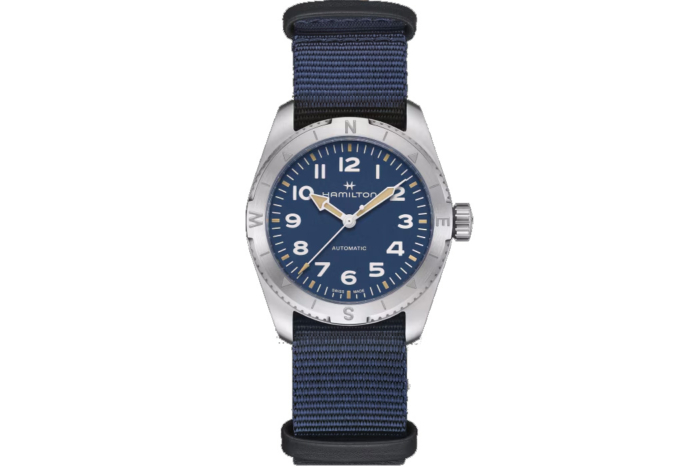
The Hamilton Khaki Field Watch ($1,200) is, to many aficionados, the field watch. Hamilton began in 1892 in Lancaster, Pennsylvania, making timepieces for railroad workers. In 1914, it became an official supplier to the U.S. armed forces. In 1942, it ceased civilian production to focus on military service during World War II. Between 1942 and 1945, Hamilton produced over 1 million timepieces, including wristwatches and marine chronometers for the military effort. If any single watch defines the “field watch” category, it’s the Hamilton Khaki.
Hamilton offers a wide array of Khaki field watches. There are day/date models, and the King model has the date and day spelled out completely. There are titanium models and mechanical versions that the user must wind. These are the truest renditions of historical field watches and are worthy of consideration for collectors and casual wearers alike.
But if there’s a best Hamilton field watch, it’s the Khaki Field Expedition Auto. This watch, which offers good value at $1,125, is, in many ways, the perfect field watch. It has a simple, easy-to-read face, excellent low-light visibility with Super-LumiNova hands and markers, and a screw-down crown with 100 m of water resistance.
The heart of the Khaki Field Expedition Auto is Hamilton’s accurate and reliable H-10 movement. This three-hand movement packs a phenomenal 80-hour power reserve. Slim and sleek, this watch is a perfect companion for outdoor adventures or daily trips to the office.
Timex Expedition Scout 40mm
Specifications
Pros & Cons
Pros
- Affordable
- Easy to read in low light
- Thin
Cons
- Will require battery replacement
- Entry-level appearance
Bottom Line: The Timex Expedition Scout comes in various looks, but each one is a great value that offers reliable timekeeping at a hard-to-beat price.
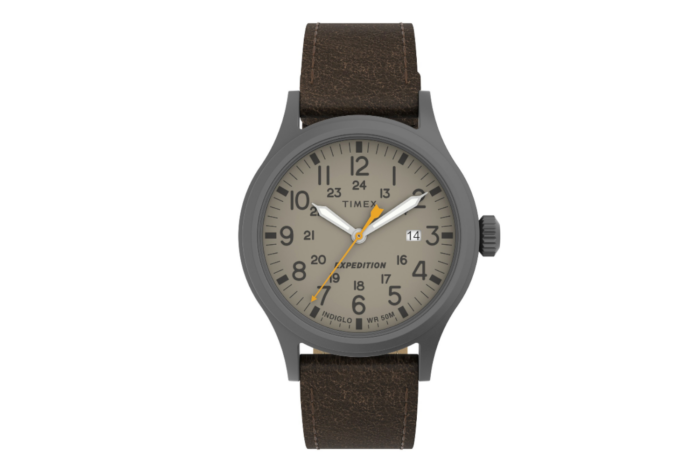
Timex coined the phrase “takes a licking and keeps on ticking” as an advertising slogan in the 1960s. And nowhere is it more apt than when applied to the Expedition series of Timex field watches. The Timex Expedition (about $75) was the first watch that I bought myself, right after high school. I took it while studying in Central America in the mid-90s, and wore it every day.
These simple, quartz-powered watches fit the field-watch definition perfectly. They are simple, reliable, affordable, and durable. They tell accurate time and, thanks to the common Indiglo lighting, are easily legible day and night.
The Timex Expedition Scout is the best field watch under $100. For the price (some Expedition models begin in the $30 range), you can’t beat these ubiquitous little watches. The Expedition Scout model pictured here costs about $60 and has a few nice strap options. Grab one for whatever craziness you may get into. You’ll know the time, and you won’t worry about your watch, even though it’ll be right there ticking along with the correct time.
Bertucci A-2T Super Classic
Specifications
Pros & Cons
Pros
- Very tough
- Excellent lume for low-light use
- Small and light
Cons
- Face may be small for larger wrists
- Thick under sleeve cuffs
Bottom Line: The Bertucci A-2T Super Classic is a super rugged, easy-to-read field watch. It’s very affordable and can handle evertything that a decade of testing has thrown at it.
Read Review: The Best Field Watch $200 Can Buy: Bertucci A-2T Review
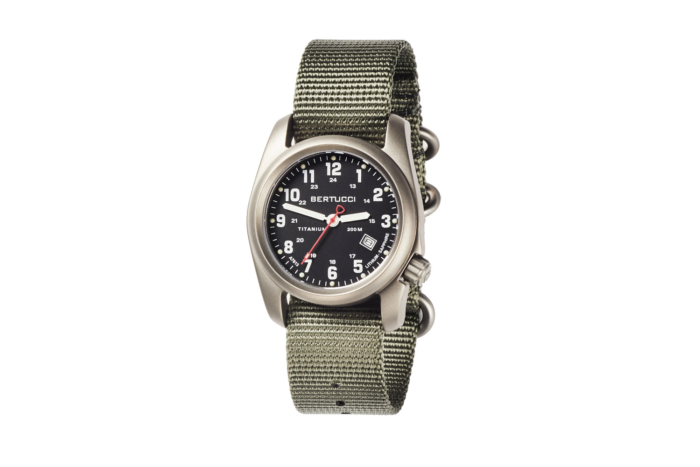
The Bertucci A-2T Super Classic ($185) titanium field watch is genuinely a wonder of affordable watches. I have never used a watch as hard as this one. But after several years of genuine abuse, it shows no sign of slowing down, and has very few scratches. The strap has developed a great patina of dirt, blood, and muck. This thing is a tank of a watch and, for those who actually plan to use a field watch as a tool, about as good as they get.
The A-2T follows the tried and true formula for a great field watch. It’s light and small with a 40mm case that wears smaller than its size. But the high-contrast face is easily readable at a glance. And even after more than five years of use, the lume is still easily readable in the blackness of night.
In one case, I woke up camping at 4 a.m. and could easily discern the hands and hour markers.
It’s also water resistant to 100 meters, and the nylon strap is burly but sits flat and comfortably. The only negative is some users feel the face is too small. That’s a matter of taste, but remember that historically, field watches were quite small and light. This follows the lineage, and I like it.
Worth noting is that this is a very comfortable watch for me. That’s in part due to the screw-down crown location at the 4 o’clock point. This keeps it from interfering with wrist movement and I find it particularly nice during activity.
Looking for a different style from this brand? Check out our Bertucci DX3 review here.
Vaer C4 Tactical Field Solar DLC Watch
Specifications
Pros & Cons
Pros
- Durable
- Very legible
- Bright lume
- Unidirectional bezel adds utility
Cons
- Slightly larger than traditional field watches
Bottom Line: The Vaer C4 Tactical has exceptional lume and visibility in all conditions. It’s very rugged, yet looks really good on the wrist. If you can spend a bit more than a budget model, it’s a fantastic choice.
Vaer is a new brand in the world of watches, but it’s already making an impact. Launched in 2016, it aims to build watches with five pillars: extreme water resistance, 2x interchangeable straps, extensive USA sourcing, refined aesthetics, and a responsible business model. But do those pillars add up to a good field wristwatch?
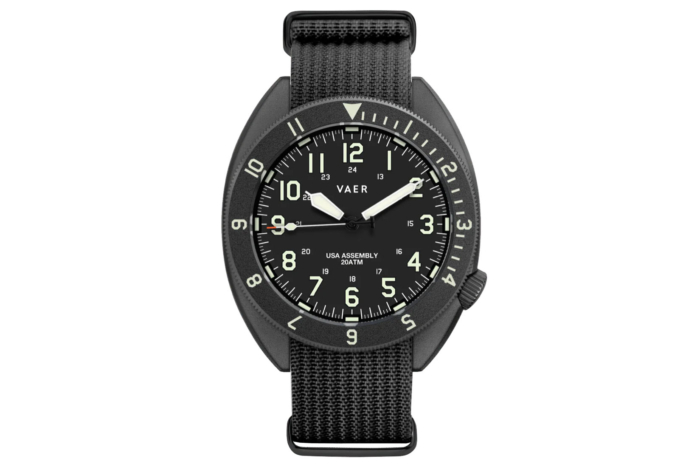
After testing multiple watches from the brand, I’d say a hearty “yes!”. The best reflection of these attributes is the C4 Tactical Field Solar DLC watch ($540). This burly field watch is easy to read, even in low light. It has a clean, simple display. The midsize (41.5mm) watch wears easily while offering excellent utility with its rotating bezel, which allows it its be used as a compass and to track multiple time zones. Impressively, the solar-powered, Japan-made Epson VS-42 movement (the same as used in the popular, smaller C5 Tactical) maintains accuracy within 20 seconds per month and will run for 6 months on just 6 hours of light.
In testing, I used the C4 Tactical Field Solar while elk hunting, hiking, and camping. I also wore it during several workdays at the office. The durable case, sapphire crystal, and strap showed no wear at the end of my test. I enjoyed the comfortable fit.
While larger than some field watches, I appreciated the additional visibility and functionality the rotating bezel offered. At $500, it’s a rock-solid American-assembled watch with very good specs.
I am also impressed with the value the Vaer brings to the table. It ships with two wonderful straps, something uncommon among quality watches. And in the case of my testing, the quick-release Tropic strap is among my favorite watch straps, even among much more expensive models.
Citizen Garrison
Specifications
Pros & Cons
Pros
- Eco-drive provides unlimited runtime
- Affordable
- Durable
Cons
- Rugged strap takes time to break in
Bottom Line: The Citizen Garrison will run forever with just a little sunlight. It’s easy to read and functions beautifully as a field piece.
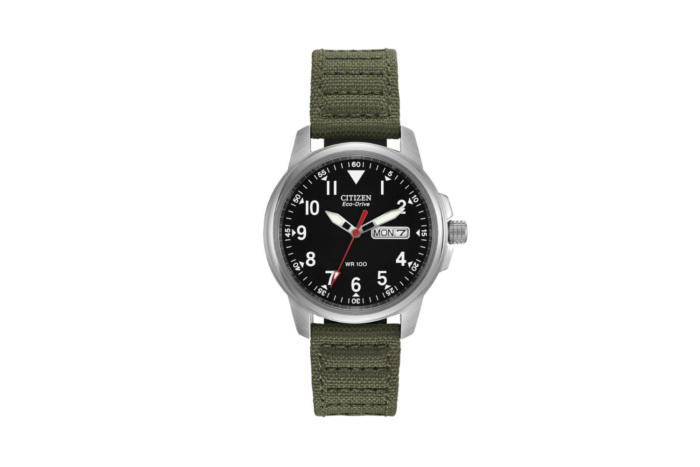
The Citizen Garrison ($325) stands out thanks to its Eco-Drive technology. Powered by the sun or other light sources, the Eco-Drive provides infinite runtime, a major plus in the outdoors. Additionally, it has luminous hands, 100m water resistance, a stainless steel case, and a mineral crystal.
The Garrison is a rather small watch, measuring in with a 37mm screw-back case. This is a big plus for those with smaller wrists. The black face with distinct white numerals provides a very legible format. The red second hand brings a nice splash of color to the otherwise neutral timepiece.
The day/date format is a bit of a departure from the classic field watch design. But thanks to the otherwise spartan layout, it brings nice functionality to this watch. It has 100 m of water resistance, so it should stand up to any precipitation or swims the user will encounter.
The strap on the Garrison is burly. And while the rugged nature is great, some wearers complain that it’s a little too stiff. It should break in nicely, as do most nylon straps. But it’s worth being aware that this one will come out of the box rather stiff on the wrist.
TUUL Filthy 13 Field Watch
(Photo/TUUL)
Specifications
Pros & Cons
Pros
- Iconic design
- Durable, functional field watch
- Slim, small case fits great under gear
- Very secure strap
Cons
- Long strap must be tucked or cut
- Low-light legibility is only OK
Bottom Line: The TUUL Filthy 13 steps up the style game while offering the same durability and legibility that field watches demand. It costs more than quartz models but dresses up nicely.
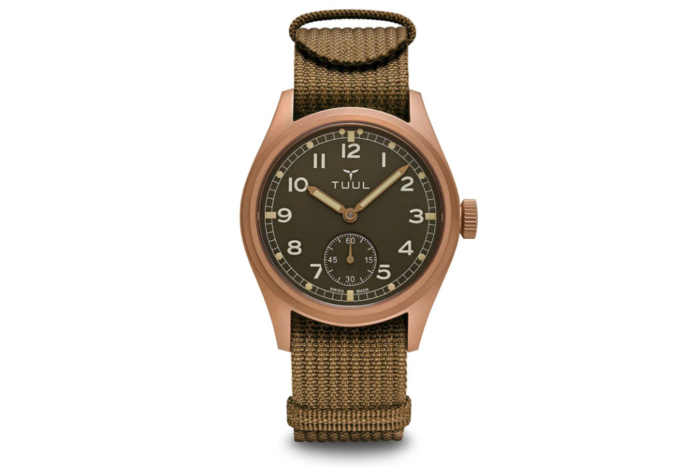
The TUUL Filthy 13 ($900) is a modern reinterpretation of the classic Dirty Dozen military watches, designed for durability and functionality. Crafted by the Brooklyn-based father-and-son team of Ron and Barry Abraham, the watch has a 38mm case, a reliable Sellita SW261-1 automatic movement with a 41-hour power reserve, and 100 meters of water resistance. Its design emphasizes legibility and ruggedness, making it suitable for field use.
I put it through the paces in practical testing, and the Filthy 13 demonstrated exceptional performance, maintaining accuracy within 30 seconds over three weeks of wear during activities like sandboarding. Its comfortable size allows it to fit well under gear, and the secure nylon strap ensures it stays in place during rigorous use. However, I found that the luminous markers could be brighter for better low-light legibility, and the strap length might require adjustment for a cleaner fit.
Priced between $900 and $1,100, the Filthy 13 enters a competitive market segment alongside established models like the Hamilton Khaki Field. Its appeal lies in its authentic military-inspired design, robust construction, and the brand’s commitment to quality. For enthusiasts seeking a dependable field watch with historical roots and modern reliability, the TUUL Filthy 13 presents a compelling option.
Seiko Prospex Alpinist SPB507
(Photo/Seiko)
Specifications
Pros & Cons
Pros
- Rotating inner bezel functions as a rudimentary compass
- Long power reserve automatic watch
- Dresses up or down
Cons
- Leather strap is overly dressy for a field watch
- Somewhat busy face
Bottom Line: The Seio Alpinist is widely regarded as a top choice for entry into the luxury space. It’s a gorgeous watch that can handle the rigors of the outdoors.
Watch enthusiasts love the Seiko brand for its exceptional value. Few, if any other brands, offer such fine timepieces at such a reasonable price. And while the Seiko Alpinist is by no means a budget watch, at $900, it’s an attainable watch for many people.
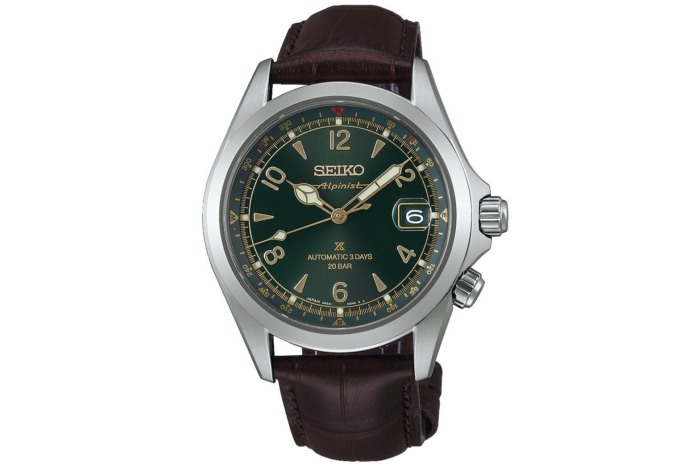
But yes, that’s a significant chunk of cash for a watch you’ll wear traipsing through the woods. And with a 2026 update, Seiko bumped the price of the Alpinist (now the SPB507) up by $175. Compared with the old SPB121 version, it has an improved movement that adds 2 hours of runtime (now 72 hours). It also has improved case finishing and clear branding with the “Alpinist” logo added to the dial.
These are modest changes for the real-world field-watch user, so the price bump does sting a little. However, for the horological world, these changes are significant. The new-for-2026 SPB507 is a much closer rendition of the wildly popular, discontinued SARB017. And in terms of style, it’s a modest improvement over the SPB121.
The new Alpinist runs on a Caliber 6R55 automatic movement. This 24-jewel movement has a long 72-hour power reserve, meaning you can take it off on a Friday and the time will still be correct on Monday morning. That’s a big deal in the world of automatic watches, especially at the under-$1,000 price range.
Next come fit and finish details. The Alpinist is water-resistant to 200 m, has very bright LumiBrite hands and markers for easy low-light visibility, and has an inner rotating compass bezel. All this packs utility into a watch that also looks fantastic poking out under a sport coat in dressier situations. The brushed stainless steel case and polished accents really pop. And the green bezel is classic and classy.
The Seiko Prospex Alpinist SPB507 may be at the very bottom of the luxury watch price range, but it is a star among wristwatch fanatics. It says a lot about the wearer, primarily that they value a rugged, functional watch that goes beyond simple timekeeping. For those dabbling in watch collecting but who want a genuine field watch that can still withstand the rigors of outdoor use, the Seiko Alpinist is certainly worth a test run.
Luminox Atacama Field Watch
Specifications
Pros & Cons
Pros
- Lume shines brightly all night
- Durable bezel, case, screw down crown
- Heavy duty strap
- Appropriate for use in harsh conditions
Cons
- Too big for smaller wrists
- Heavy
- Too thick for dress shirts
Bottom Line: Big, bold, and bright at night, the Luminox Atacama Field Watch works well in rugged situations — so long as you have a large wrist.
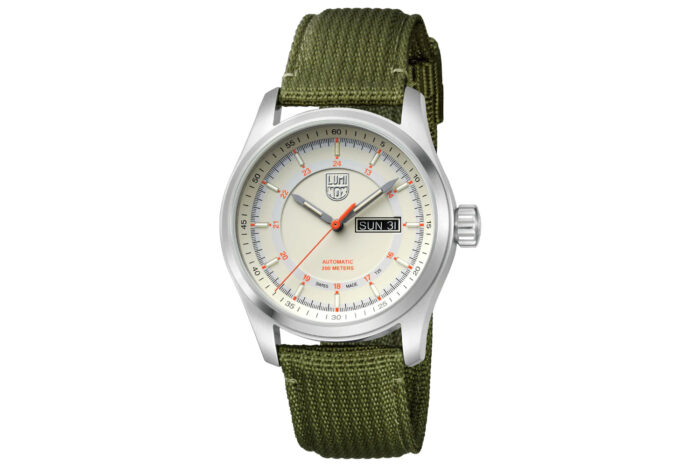
The Atacama Field Automatic ($1,375) is a big, rugged, somewhat flashy field watch that edges toward the luxury market while maintaining all the functionality of a true outdoors watch. Powered by a Sellita SW220-1 automatic movement, this Swiss watch is significantly larger than most field watches at 44 mm.
But while it does buck the trend of smaller field watches, the Atacama Field Auto has exceptional 200-meter water resistance and remarkable lume. We put it through some rigorous testing and found this watch to be an amazing timepiece for outdoor use, with one caveat. It will be too big for those with smaller wrists. And even for bigger individuals, you’ll notice it when sliding it under shirt sleeves.
But outside those downsides, the Atacama Field Automatic is a gorgeous, tough-as-nails watch that dresses up or down and can handle the roughest of conditions with ease.
NORQAIN Neverest Glacier 40mm
Specifications
Pros & Cons
Pros
- Accurate
- Comfortable
- Unique
- 70-hour power reserve
Cons
- Understated
- Little-known brand
- Expensive
Bottom Line: Built by and for adventurers, the Neverest Glacier is a striking, luxury-level field watch with a unique, legitimate back-story supported by big names in adventure.
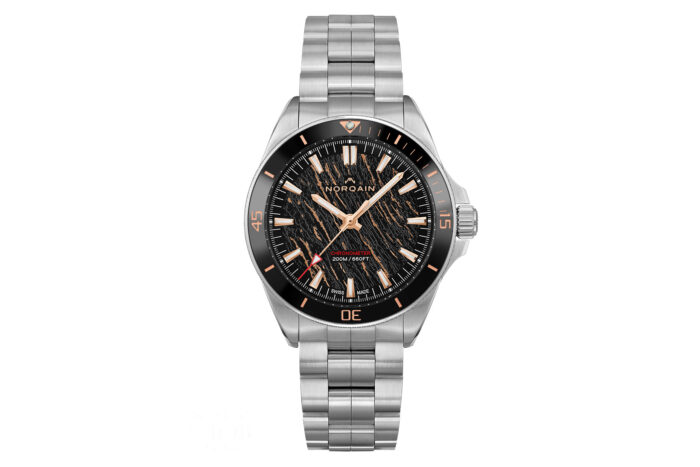
The NORQUAIN Neverest Glacier ($4,300) is a true luxury watch built on a field watch chassis. I had the chance to spend a couple of weeks with this functional yet classy watch and absolutely loved it.
Why? Well, while quite new to the world of watchmaking, NORQUAIN packs both big-name talent and ambassadors from the worlds of watchmaking and adventure. Its faces to the world are none other than speed skiers, downhill racers, mountaineers, and big-wave surfers.
In my testing, the Neverest Glacier was extremely comfortable to wear and easy to read. I do wish it had numerals instead of simply hour markers, as it takes a little more time to process the hand position without numerals. But really, this watch is a stunner. It’s certainly capable of fieldwork, but more likely will be a consistent desk jockey thanks to its high price.
Rolex Explorer
Specifications
Pros & Cons
Pros
- Resale value
- Rolex name
- Iconic design
- Legendary durability
Cons
- Price
- Stigma
Bottom Line: One of Rolex’s least expensive watches, the Explorer and Explorer II still ring up in the $10,000 neighborhood. They’re legendary, but cost more than most are willing to strap on for real-world rugged adventure.
I don’t really want to include a Rolex on this list, but without the Explorer, it feels incomplete. And that’s because it’s the single field watch that more people aspire to own than any other.
I’ll be straight up, I haven’t worn the Rolex Explorer. But this happens to be among the most “entry-level” Rolex watches. And it happens to be the storied brand’s only true field watch.
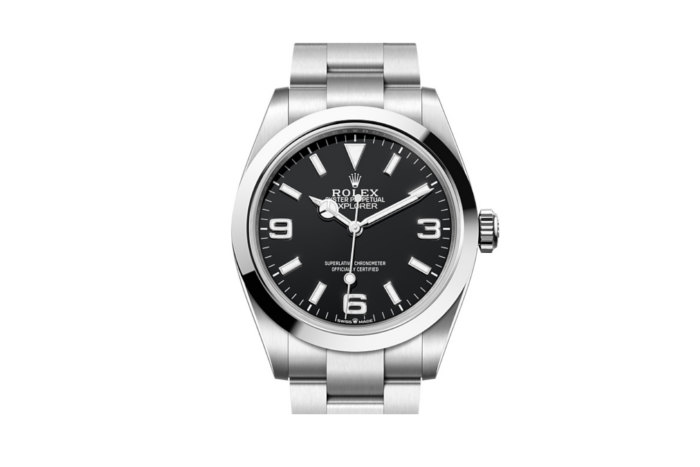
A Rolex Explorer 40mm clocks in at $8,350 retail. And it’s a fine specimen of a field watch, one absolutely tested in harsh climates in polar and mountaineering expeditions. It’s a fantastic design that (reportedly) is legible in all conditions. One of Rolex’s first tool watches, it was inspired by (and launched shortly after) the first summit of Mount Everest by Sir Edmund Hillary and Tenzing Norgay in 1953.
It has outstanding legibility, with a black dial and 3, 6, and 9 numerals popping out in crisp, white lettering and backlit with a Chromalite luminous material. It’s chronometer certified to ±2 seconds per day. Rolex guarantees the Oyster case waterproof to 100 m.
So yes, it has all the chops of the most serious field watches. But would I wear a Rolex as a true field watch, one that gets hand-jammed into rock cracks while scrambling through a scree field? Heck no. Would I wear it while wading into a partially frozen river to place duck decoys in the dark? Absolutely not. Let’s not be ridiculous. Like some of the other pricy models here, it would be cringe-inducing to put such an expensive piece of jewelry through such a beating.
But would I love to look down on my wrist and see one there? Well, I am human, and the Rolex Explorer is a thing of beauty and maybe a bit more attainable than other Rolex models.
Christopher Ward C65 Sandhurst Field Watch
Screenshot
Specifications
Pros & Cons
Pros
- Thin, light case fits under clothing easily
- Very legible face
- COSC-certified accuracy
- Unique bronze appearance
Cons
- Bronze will oxidize and patina
- 38-hour power reserve
Bottom Line: The Christopher Ward C65 Sandhurst is beautiful and, while expensive, a great value in the world of entry-level luxury watches. And it can handle the rigors of the outdoors with ease.
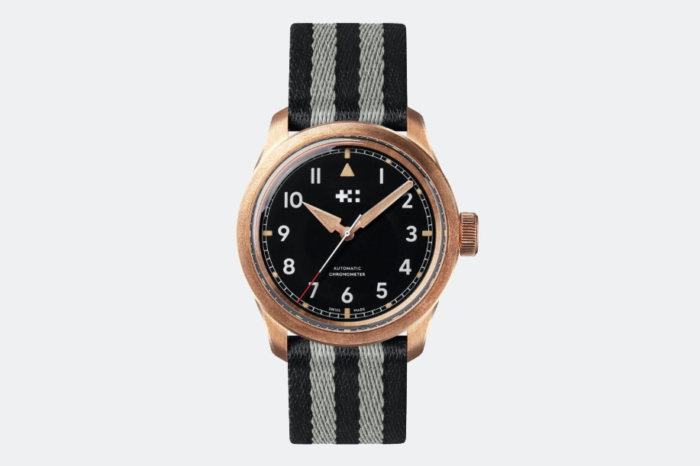
Bronze watches are a little uncommon, but with a rugged beauty and ever-changing patina, they should definitely be on your radar. And my personal favorite is the Christopher Ward C65 Sandhurst ($1,275).
The C65 Sandhurst has a very simple, easy-to-read face and good lume. It runs on a COSC-certified Sellita SW200-1 automatic movement, meaning that it’ll maintain exceptional accuracy and keep running as long as you wear it. It’s relatively light and has a versatile 38mm case size. In testing, I found it fits very easily under cuffs and has no problem facing the tasks of real outdoor use.
At over $1,000, the C65 Sandhurst starts to push into luxury watch pricing. But with 150 meters of water resistance and a durable sapphire crown, it can definitely handle adventurous outings. And the handsome yet understated bronze appearance makes it a shoo-in as a dress watch for the office or more formal settings.
Field Watch Comparison Chart
| Compare |
|
|
|
|
|
|
|
|
|
|
|
|---|---|---|---|---|---|---|---|---|---|---|---|
| Price |
$1,200
|
$75
|
$185
|
$540
|
$250
|
$900
|
$900
|
$1,027
|
$4,790
|
$7,900
|
$1,615
|
| Reference number |
H70315540
|
TW4B01700
|
12723
|
N/A
|
BM8180-03E
|
F13-BRNZ-GRN
|
SPB507
|
N/A
|
NN1001SC1CA/BG103
|
224270
|
C65-38A3H3-B00K0-TKG
|
| Case size |
41mm
|
40mm
|
40mm
|
41.5mm
|
37mm
|
38mm
|
39.5mm
|
44mm
|
40mm
|
40mm
|
38mm
|
| Lug size |
18mm
|
20mm
|
22mm
|
20mm
|
18mm
|
20mm
|
20mm
|
24mm
|
20mm
|
21mm
|
20mm
|
| Movement |
H10 Automatic
|
Quartz
|
Quartz
|
Solar quartz
|
Solar Eco-Drive
|
Automatic Sellita SW261-1
|
6R55 (72-hour power reserve)
|
SELLITA SW 220-1
|
NORQAIN Manufacture Calibre (NN20/1)
|
Rolex 3230
|
Sellita SW200-1 COSC
|
| Case Material |
Stainless steel
|
Brass
|
Titanium
|
DLC 316L stainless steel
|
Stainless steel
|
Brass
|
Stainless steel
|
Stainless steel
|
316L stainless steel
|
Stainless steel
|
Bronze
|
| Strap color |
Various, leather and metal
|
Brown or Black
|
Green
|
Black (comes with two straps)
|
Green
|
Black, khaki, army green
|
Brown leather
|
Green
|
Stainless steel
|
904L Stainless steel
|
Black, black & gray, or bronze
|
| Water resistance |
100 m
|
50 meters
|
200 m
|
200 m
|
100 meters
|
100 m
|
200 meters
|
200 meters
|
200 m
|
100 meters
|
150 m
|
My Perspective on Field Watches
There are a lot of watch experts, and there are a lot of outdoor writers, but there aren’t a lot of outdoor experts who also know much about wristwatches. I happen to fit both these categories. So when it comes to watches meant to be used and abused in the wilderness, I am one watch aficionado who also puts the watches through some real-world use.
I love field watches and use them for their real intended purposes. I wear them hunting, fishing, hiking, mountaineering, skiing, and more. My watches have been worn inside wild game animals during meat processing. They’ve been dunked in freezing rivers while I place duck decoys. And they’ve been whacked against granite while I scramble up scree fields on Colorado’s 14ers.
But I also care about the horology and details involved in wristwatches. I appreciate the beauty and precision of a fine watch, and consider factors such as fit, finish, and complications when looking at field watches.
Finally, I’ve been doing this a long time. As the former editor-in-chief of GearJunkie and one of its first employees, I’ve written about outdoor gear for more than a decade. My goal is to give you the best advice I can and help you make smart decisions with your hard-earned money. I hope this article helps you choose the best field watch for your needs.
If you don’t see what you’re looking for here, check out some of GearJunkie’s other watch guides, including guides to the best dive watches, the best GPS watches, the best smartwatches, and the best fitness watches.
Watch Ratings Explained
I have tested all the watches in this roundup (except the Rolex Explorer). I’ve worn them while hiking, camping, hunting, working around my home, and much more. I also subjected them to water submersion tests and froze them in my freezer to ensure they would function in extreme conditions.
After all this testing, I boil the watches down to some easy-to-digest rankings.
- Legibility: How easy is the watch to see, especially in low-light or wet, dirty conditions?
- Durability: How well does the watch hold up to dust, shocks, abrasion, and abuse?
- Water resistance: Will it survive continued submersion, rain, and even deep diving?
- Style: Is it a cool watch? Does it look great on the wrist, and can you wear it with various outfits?
Once I’ve considered those factors and assigned a score to each, I assign an overall score. This is NOT an average of the detailed ratings; instead, it captures the watch’s performance and value relative to the rest of the market.
Learn more about GearJunkie’s rating system here.

How I Test Field Watches
I’m Sean McCoy, GearJunkie’s editor-in-chief and editorial director. I tested most of the watches for this guide as demo loans. That means I have the watch for about two weeks to evaluate and photograph them. A few of these I have purchased or obtained on long-term loans for deeper testing. Specifically, I have tested the Hamilton Khaki and Bertucci A2-T Super Classic for multiple years each.
Over my testing window, I run every watch through specific tests. First, I unbox it and get initial impressions. I then weigh it on a postal scale to verify the claimed weights.
Next, I unscrew the crown, wind the watch, and set it. This process is important because it gives me a good impression of how the watch movement feels. I consider if it moves smoothly and evenly, and consider how much resistance it offers.
Once set and wound, I wear the watch regularly. I take watches on difficult outdoor pursuits, such as hiking, camping, and hunting. Throughout testing, I consider how well it keeps time and withstands the elements. In the middle of the night, I make sure to check it to ensure the lume lasts long enough for night viewing.
During testing, I wear the watch for several days, then take it off and leave it on a nightstand for a weekend. This is to verify whether it can make it through the weekend on power reserve, especially for mechanical watches.
Finally, before returning the watch, I submerge it in water for an hour and also freeze it to make sure it can handle the rigors of outdoor adventure.
The History of Field Watches
Field watches have a rich history rooted in military use. The origins of field watches can be traced back to World War I, when soldiers needed reliable timepieces for coordinating maneuvers on the battlefield. Here are key points in the history of field watches:
During the First World War, pocket watches were the norm. But these watches, buried inside clothing, were impractical for soldiers. Thus, wristwatches became more popular for their convenience. This transition marked a significant development in the history of timekeeping.

During World War II (1939-1945), field watches boomed in popularity thanks to their design to be rugged, legible, and practical for soldiers in the field. Brands like Hamilton, Waltham, and Elgin emerged as leaders in the space with features such as luminous dials for low-light visibility, durable cases, and reliable movements.
At this time, military organizations began to standardize the specifications for field watches to ensure consistency and reliability. These standards included size, dial design, water resistance, and shock resistance.
After World War II, soldiers brought the habit of wearing a wristwatch home. Civilians picked up the practical useful tool and applied it to the largely agrarian society of the time. The simple, easy-to-read dials and robust construction made field watches a logical choice for anyone who worked outdoors or with their hands.
Today, field watches continue to be among the most popular styles of wristwatches. Many brands offer modern interpretations, with updated elements like solar charging, quartz movements, and backlit faces. But they all harken back to watchmaking history that goes back nearly a century, rooted in the practical needs of soldiers in combat.
How Much Should I Spend on a Field Watch?
Field watches, much like any other category of wristwatch, span a vast price range that is both puzzling and sometimes counterintuitive. But I’m going to do my best to break it down.
First, just because a watch costs more does not mean that it will do a better job as a time-telling tool. This is because affordable watches, such as the Timex Expedition line, run on quartz movements that are, by nature, much more accurate than automatic watches. With a timing base of 32,768 Hz — vastly faster than any mechanical watch — quartz watches are often accurate to within a dozen or so seconds per month.
On the other hand, mechanical watches beat on a heart of a tightly-wound balance wheel. These mechanical devices store energy from the movement of the wearer’s wrist. Thus, the watch can run nonstop, as long as the wearer moves it enough every day. While mechanical watches are almost always less accurate than quartz watches, they carry a higher price tag because the mechanical movements require more complex machining. Some in-house movements take many hours of labor to create.
So why do people still buy mechanical movements? For one, mechanical watches do not require a battery and can operate for years on simple motion alone. But this question goes beyond pure function. Mechanical watches rely on skill and artistry in their manufacture and showcase the passage of time in a very appealing fashion for many watch lovers. The complex inner machinery is highly appealing to many wearers, and some watches even have a clear case-back so the owner can watch the movement in action.
So the automatic watch movement brings some higher cost than quartz watches, but that isn’t the only differentiator.
More expensive watches will have more water resistance, durable sapphire crystals, and high-quality stainless, bronze, or other case material. As costs rise, you’ll see better lume, which illuminates important elements for low-light viewing. And high-end watches will have beautiful, refined machining and polishing.
To get to brass tacks, you can get an entirely functional, good tool watch for around $100 or even less. Timex makes great watches in this price range that will serve any adventurer well.
Budget
In the $200–500 range, expect higher-quality quartz watches with better crystals and straps. The lume should be pretty good in this price range. Watches like the Vaer C5 Tactical Field Solar give excellent utility and nice looks for under $350, and even have solar quartz, which runs on sunlight and never needs a battery change! Bumping up just a little in price, the Vaer C4 Tactical costs right at the $500 mark and offers 200 meters of water resistance and a unidirectional rotating bezel. The extra cost brings real, functional value.

Mid-Tier
From $500 to $1,000, you’re getting into the realm of mechanical watches. Yes, you can get mechanical watches for less. But if you want a functional automatic field watch, you should expect to pay in this range to ensure durability and legibility. The Seiko Prospex Alpinist is a great example of a watch in this price range. Some Hamilton Khaki models also fall below $1,000, although they’re starting to creep above that price point.
Premium

Beyond $1,000, you should see very nice finishing, reliable, COSC-certified movements, and even some name recognition. Because while we are talking about a tool here, we’re also talking about a timepiece that carries similar connotations as jewelry, at least at the higher ends of the market. Beyond $1,500, you shouldn’t see much difference in performance when it comes to field watches. But what you pay for at $2,000 and beyond are things like in-house movements, fine detailing, and let’s be honest, brand names.
So expect to pay a solid $9,000 for that Rolex Explorer. Yes, it’s a fantastic watch. But it will, in fact, not tell time any better than that $100 Timex. Realistically, that quartz Timex will probably be more accurate.
Frequently Asked Questions
A field watch is a durable, simple, easy-to-read, usually analog wristwatch based on the military designs of World War II.
Yes, you can wear a field watch every day. Thanks to their simplicity and timeless design, field watches make excellent everyday wear watches that can go from the forest to the office with no problem.
Field watches are among the most iconic watch designs. They provide accurate time in any situation and can be worn with nearly any clothing.
While a field watch is not technically a dress watch, many field watches can be worn in formal situations. Thanks to their slim design, they usually fit easily under shirt cuffs. And their simple, timeless design makes them a safe choice to pair with nearly any outfit.
Looking for more in the world of outdoor style? Check out our recent story on bomber jackets: