Ask the GearJunkie staff what their favorite season is, and it would undeniably be flannel season — doing fall chores, warming up by the fire, and simply working from home. As hot days give way to cool mornings, we’re all looking forward to jumping into the best flannels out there.
Far from its proletariat roots, the everyman shirt is everywhere. With so many options in 2026, flannel expert Steve Graepel combed through stores, scoured the internet, and spoke with brands to find the best. To test the flannels, we wore them at work, hammered through weekend chores, brought them camping, and occasionally shouldered them as we turned our skis down the mountain.
What makes the perfect flannel? We looked at materials, cut, and construction, excusing color and patterns. From the do-it-all Devium Boca Flannel to the ‘buy-three’ Duluth’s Free Swingin’ Flannel, we’ve got something to recommend to most everyone.
Editor’s Note: We updated our Best Men’s Flannels guide on August 20, 2026, to add the Beringia Farallon Wool Shirt — a cozy overcoat flannel— along with a host of other cooler-weather options to consider as we look toward the end of the year.
The Best Men’s Flannels of 2026


Devium Boca Flannel Shirt

Specifications
Pros & Cons
Pros
- Entirely made in the USA
- Durable weave
- Horn buttons made in Pennsylvania and notched to protect against abrasion
- Twin chest pockets
- Pattern-matched front and back panels at the side
Cons
- Would like to see a locker loop on this workhorse of a shirt
- Cuffs could use a 45-degree notch to reduce catching
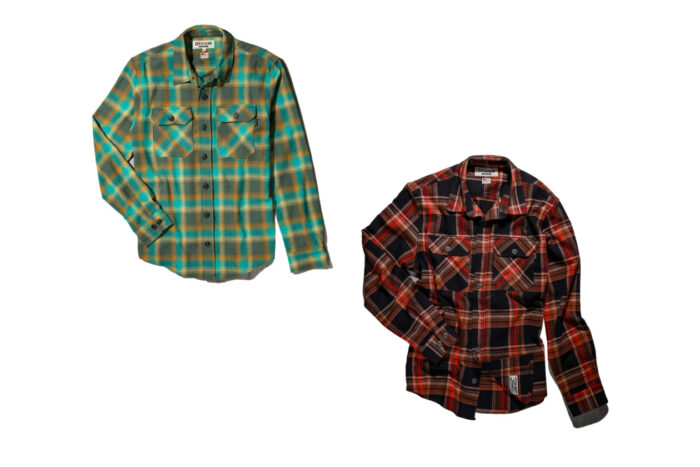
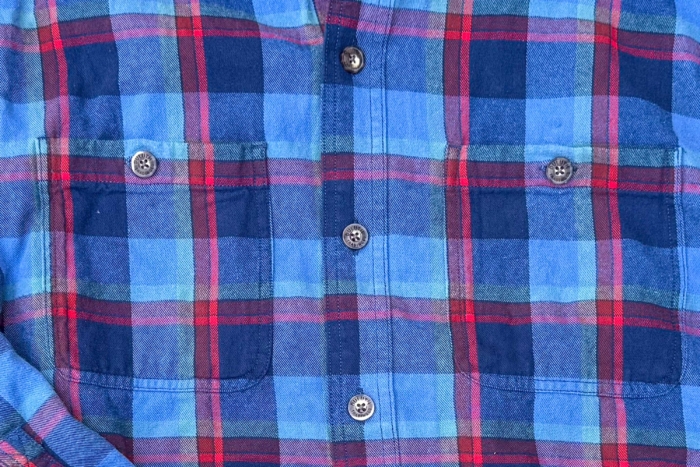
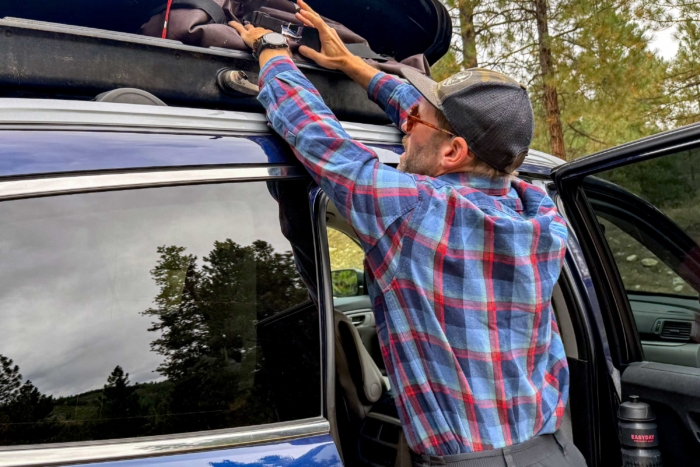
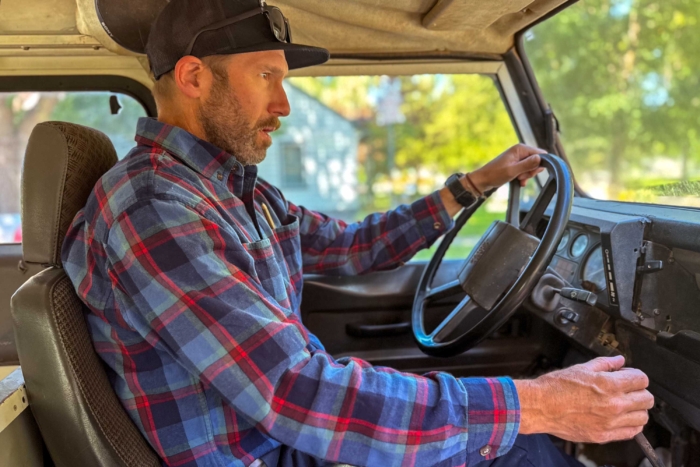
No-fuss, no bull, Devium lightly brushes its 220 g/m² cotton twill into a low suede-like nap, giving the Boca Flannel Shirt ($168) a tougher, more durable finish that is impeccably sewn together — from stitch to button — right here in America. Which, given the rise in tariffs, says a lot about Devium.
Softer than Duluth’s Free Swingin’ and better fitting than Filson’s Alaskan Guide, the Boca is a low-nap but capable flannel that fills the gap between form, function, and comfort. They don’t put money into marketing. The brand puts it into materials and construction. The Boca isn’t as lofty as the MuskOx Field Grand Flannel, nor as soft and plush as Pladra’s Workhorse Wool, but we feel the 220 g/m² cotton is a better year-rounder shirt that will find more shoulder time in throughout the year.
Since we were first introduced to the brand, Devium has continued to tool away quietly, making an already great shirt even better. The fusing (the material inside the collar and cuffs) is the heaviest they can get away with without adding bulk. The customer never sees this, but it’s what continues to give your shirt that crisp off-the-rack, wrinkle-free look even after years of washing. The front placket incorporates a French seam, tucking the raw flannel edge under the outside of the shirt placket.
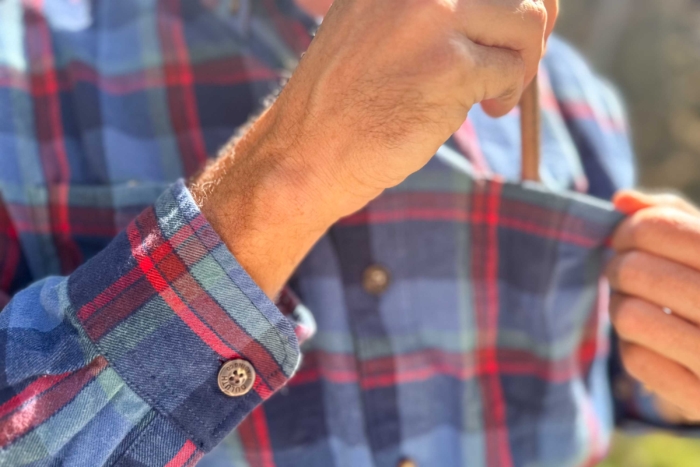
The front and back are sewn at the sides, preserving the continuous pattern, and close down the middle with seven dime-size horn buttons. Even the number of stitches thrown through each button hole is fastidiously monitored to make the shirt stronger and more durable.
Most notably, and why it caught our attention as the best flannel for 2026, Devium holds itself to nearly a Berry-Compliant standard, which is a requirement to sell to the DoD. To be clear, Devium isn’t truly Berry-Certified (and the SeaBees aren’t swinging iron in Boca flannels). That certification would be on file with the suppliers and require a DoD contract.
Yet, Devium takes to heart what it means to sew that American flag onto every shirt. The 220 g/m² cotton is sourced and milled in Missouri and sent to SoCal for finishing. The horn buttons are custom-made at a factory in Pennsylvania.
Resisting the urge to take a shortcut and to do things to a high standard, from cut to finish, down to the last stitch of nylon thread, the entire Boca Flannel Shirt is made in the USA. Politics aside, that resonates loudly in 2026 and is an admirable mission statement.
Duluth Trading Co. Free Swingin’ Flannel Relaxed Fit Shirt

Specifications
Pros & Cons
Pros
- More durable than more brushed flannels
- Fantastic mobility
- Great price
Cons
- Material is rough and thin, a diversion from most flannels
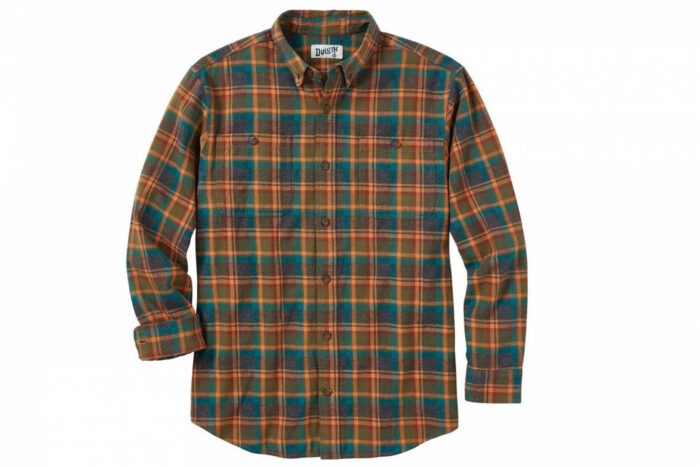
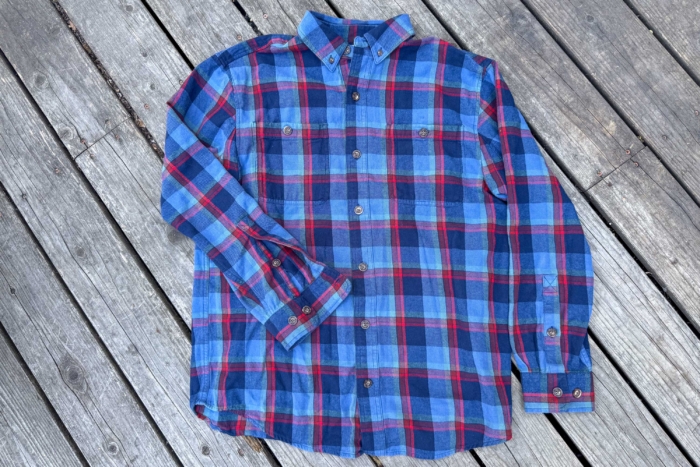
Easy on the wallet, Duluth’s Free Swingin’ Flannel ($55) is one of the best-fitting flannels on the list. Together, the underarm gussets and rear shoulder pleats deliver exceptional mobility, eliminating binding whether you’re reaching overhead, lifting lumber, raking leaves–or yes, swingin’ tools, making it one of the least restrictive flannels we tested.
The 100% cotton shirt comes pre-washed and has a slight texture to it. It’s brushed for comfort but intentionally avoids the lofty finish found on softer lifestyle flannels. That rugged feel is unapologetically Duluth.
Duluth doesn’t skimp on construction, either. A true work shirt, the overlocked seams are sewn down with double stitching. While not as refined as Patagonia’s execution, it’s plenty durable for a shirt at this price.
Retailing for around $55, and often considerably less during Duluth’s frequent sales, the Free Swingin’ remains one of the bargains in workwear. It doesn’t try to impress with premium fabrics or luxury finishes. It earns its place through honest construction, excellent mobility, and a price that invites hard use.
Atlantic Rancher Bayman’s Flannel Shirt
Specifications
Pros & Cons
Pros
- Exceptional Portuguese fabric and construction
- Thoughtful, understated design
- Outstanding attention to detail
Cons
- Sleeves fit slightly trimmer than most flannels
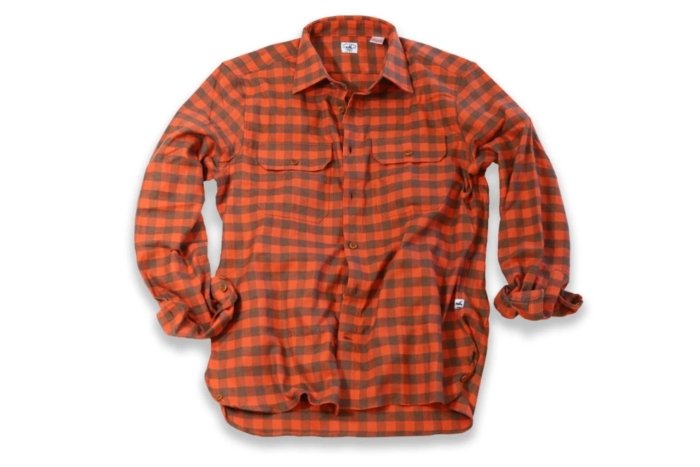
Looking at the options from Atlantic Rancher, it was immediately clear that the Bayman’s Flannel Shirt ($140) understands the fundamentals of a great flannel: exceptional fabric, thoughtful construction, remarkable restraint.
What elevates this shirt isn’t what Atlantic Rancher added, but what it intentionally refrains from doing. Rather than chasing oversized pockets, exaggerated styling, or unnecessary features, the company sets an exceptionally high bar with its fabric and quietly executes everything with equal care.
Everything begins with the fabric. Atlantic Rancher sources long-staple cotton from Turkey and Egypt and works with Portugal’s renowned Somelos mill to produce a custom brushed twill. Before spinning, the cotton is combed to remove short fibers and impurities, leaving longer, more uniform fibers that create a softer, stronger yarn.
All seams (long and armscye) are fully flat-felled. Pockets, flaps, yoke and arms; the gingham patterns are entirely pattern matched. Stress points are reinforced with simple bartacked stitches. Something we have never seen: the shirt’s rounded hemline has a unique button closing the gap. It’s subtle but full class.
If there was one shirt that surprised us this year, it was Atlantic Rancher’s Bayman’s Flannel Shirt. The Bayman’s narrowly missed being awarded our best overall flannel, but still deserves high praise. Compared to the roomier Devium Boca, the Bayman carries a slightly more tailored silhouette that layers beautifully beneath a sweater or jacket while remaining comfortable on its own. We will be watching it closely as we continue long-term testing.
MuskOx Field Grand Flannel
-

-
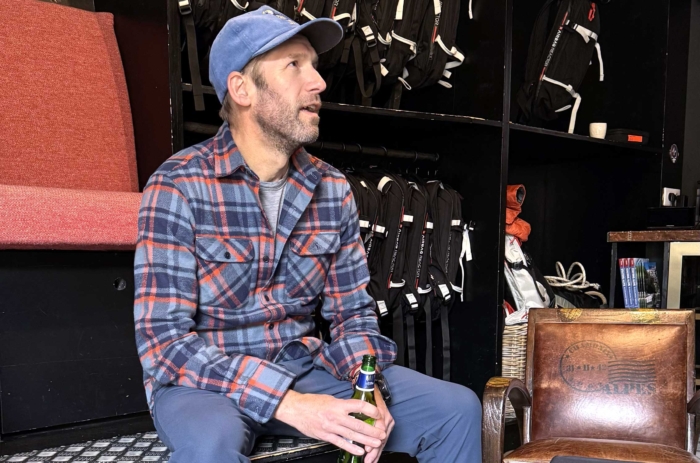
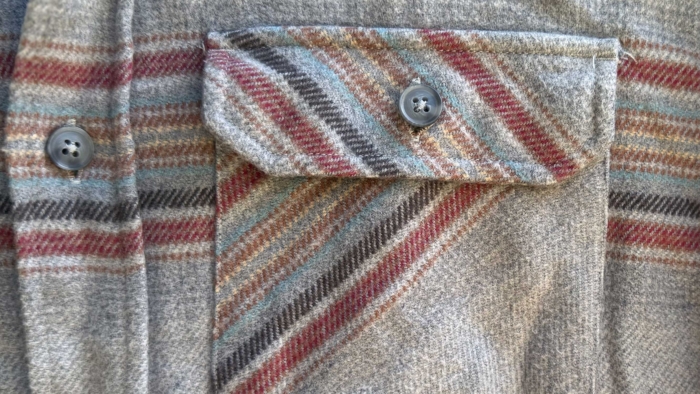
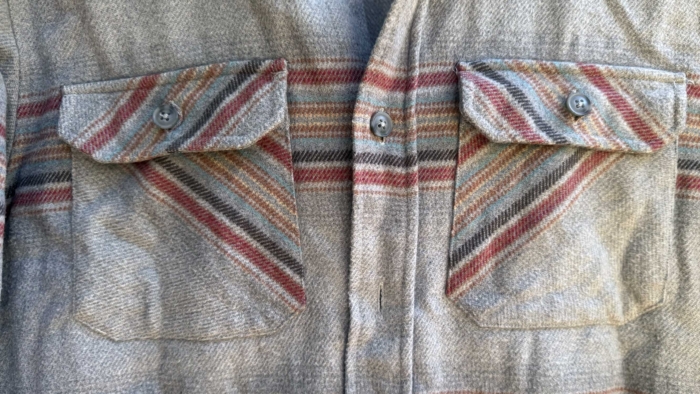
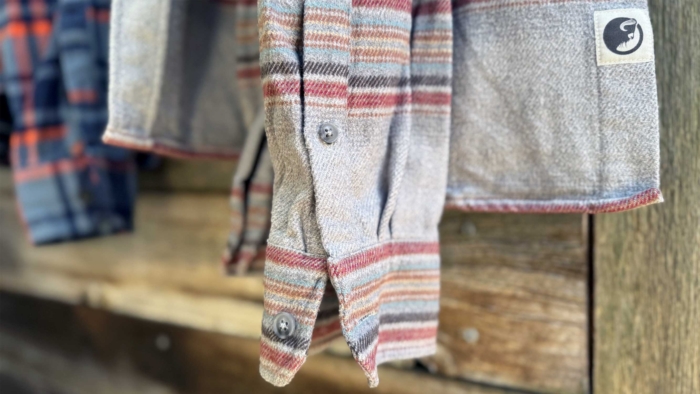
The MuskOx Field Grand Flannel hits all of the high points in what I'm after in a solid flannel shirt; (photo/Steve Graepel)
-
-
-
-
Specifications
Pros & Cons
Pros
- High-quality Egyptian and U.S.-sourced BCI cotton
- Milled and sewn in Portugal
- Built like a tank
- Fat loop to hang the shirt in the nape of the neck
- 13 solid and plaid patterns to choose from
Cons
- Not many. If it's not warm enough for you, check out the Grand Flannel, which punches in at 300 g/m²
There is something magical about the purity of simple design with a hyper-focus on building one thing to the best of your ability.
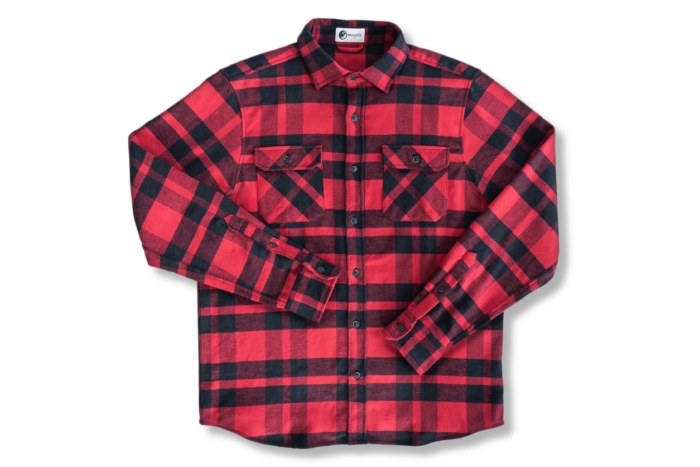
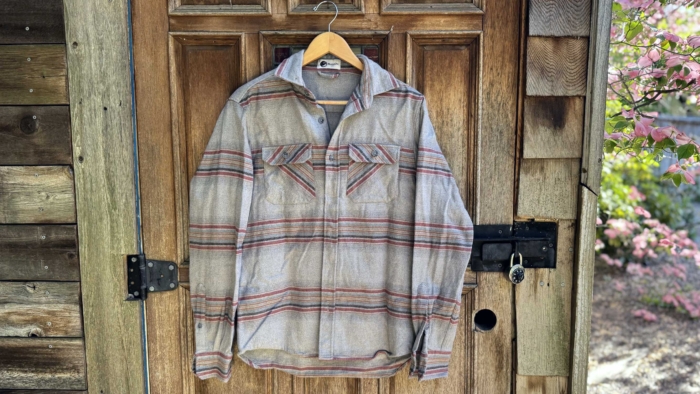
While a new kid in the flannel space, MuskOx is dedicated to brushed twill. It’s all they do, and they approach it with timeless design, striking the fragile balance between good value and impeccable craftsmanship. The brand’s Field Grand Flannel ($154) embodies the best of what we seek in a flannel and has been a top choice of ours in the past.
For the last two years, we’ve listed MuskOx’s Grand Flannel as our top or near-top flannel pick. The cotton weave is looser and punches up at nearly 9 ounces per square yard. It’s undeniably a heavyweight flannel.
The Field Grand uses a slightly lighter fabric (8.2-ounce cotton). It is woven with a denser weave, giving the flannel a little more rigidity and durability, unlocking a little more wearability into the side seasons.
Just because it is more durable doesn’t mean it sacrifices softness. On the contrary, the double-brushed cotton flannel is one of the softest flannels we’ve ever reviewed. Maintaining that softness is fairly low fuss: Wash on cold, dry flat.
Hand-cut and sewn in Portugal, every lot of fabric is custom-made for MuskOx. That means you won’t see color patterns used by another brand. This brings a bit of a cult following to the MuskOx herd. Buyers become collectors and, in a way, investors in the brand.
At $154, it creeps into your wardrobe budget. Fortunately, the timeless design, durability, and overall quality of the Field Grand ensure you are buying a flannel that will last you for years.
Vermont Flannel Co. Classic Flannel Shirt
Specifications
Pros & Cons
Pros
- Long length fits tall sizes untucked and stays tucked in
- Great pedigree farm to factory
- Buttery soft double brushed cotton
- 100% GOTS-Certified organic cotton
- Hand cut and sewn in U.S.A.
- Great fit without binding
Cons
- Overstitched seams are exposed on the inside (not so much a ding as it is a fact)
- Occasional loose threads require pulling out the scissors to trim
- If you prefer to wear your flannel untucked, their shirts run long
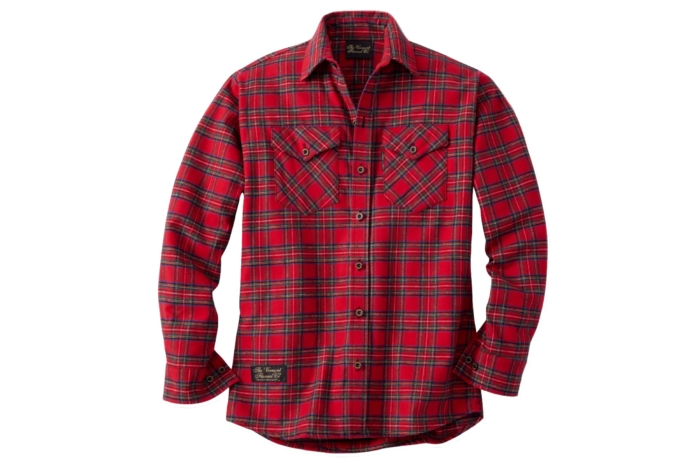
Classic. The word gets thrown around a lot, along the way, shedding some of its oomph. But it’s entirely warranted for The Vermont Flannel Co. Classic Flannel Shirt ($88), the brand’s flagship brushed twill.
This is a mid-to-heavy-weight flannel shirt constructed from high-quality cotton sourced from Portugal. The custom-made cotton fabric is then shipped to the States, where it is hand-cut and sewn together in the U.S. The result is a creamy, soft flannel that shoulders easily after hours from fall through winter.
A pair of pockets with rounded corners is sewn to the chest and closed with a button. The cuffs have gauntlet-style buttons, and a pair of buttons at the cuff allow you to loosen them around the wrist. This gives you just enough room to slide a fat sports watch underneath.
Both the cuff and pocket are cut on the square. In our experience, right-angled edges can catch on surfaces and tend to show wear and rope a little earlier than mitered or rounded cuffs. The shirt closes in front with fat buttons that pull through snug holes. It’s not fiddly, and it stays secure.
While by no means universal, fully flat-felled seams are becoming the norm in many flannel shirts. We often see it used by big companies with access to large factories that have the tools to do it right. While it’s easy to jump to the conclusion that a shirt without fully flat-felled seams is of lesser quality, that’s simply not the case here.
A good flannel is the execution of three simple principles. Quality fabric (check), a good cut (check), and the stitching that holds the shirt together.
Good stitching is dependent on the material it connects and the factories that complete the seams. The Vermont Flannel Co. uses long-staple, yard-dyed 100% GOTS-certified Portuguese cotton. All seams are sewn in the U.S. using overstitched and left exposed on the inside. While the flannel skips some of the details found in our top 5, they are able to keep prices down without affecting the quality.
VFC has been stitching its slightly oversized Classic Flannel for over 20 years now. Offered in 10 classic plaids (and a solid gray), the Classic Flannel is an easy shirt to throw on in winter. Plus, at under $90 a shirt, it’s a stellar value.
Other Flannels to Fill Your Closet
The five flannels above are our bar-none favorites when it comes to dressing for the weather (or the occasion). But that doesn’t mean there aren’t other excellent flannels out there. Since we’ve tested 100+ in our time, a handful of excellent alternates have risen to the top. Consider the 10 flannels below from both small and big brands to bulk out your closet this fall.
-
-
The Beringia Farallon Wool Shirt is an overshirt for all seasons; (photo/Steve Graepel)
-
-
-
-
-
-
-
-
-
-
Specifications
Pros & Cons
Pros
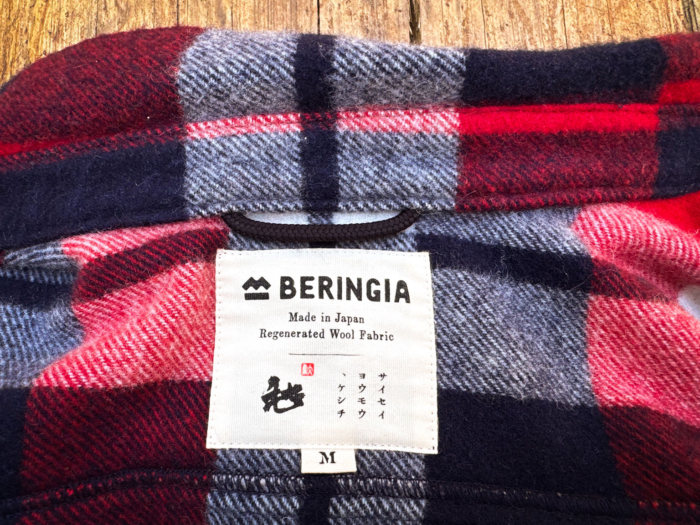
- Meticulously crafted from fiber to stitch in Bishu, Japan
- Warm and breathable
- Giant zippered mesh chest pocket secures goods
- Meshed gussets behind the shoulders unlock the arms and vent heat when breaking a sweat
Cons
- Could use two snaps around the wrist to better prevent warm air from funneling out
- Top button is small and hard to manipulate through the fat-in-the-hand fabric
- Single hand pocket on the left is limiting, but we appreciate the “Easy-Rider” backstory
- Limited brick and mortar shops to try before you buy
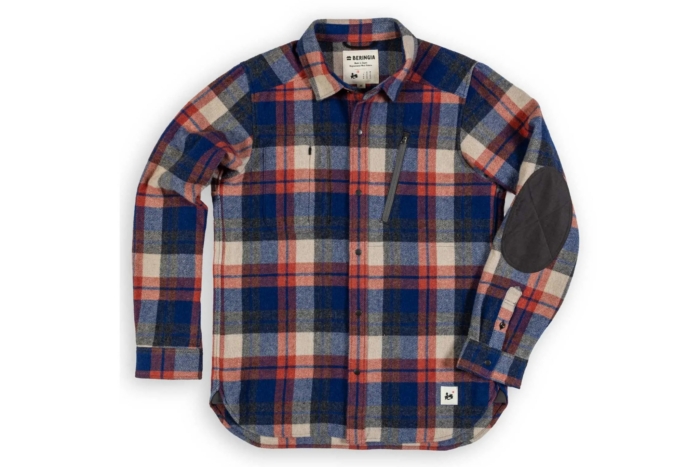
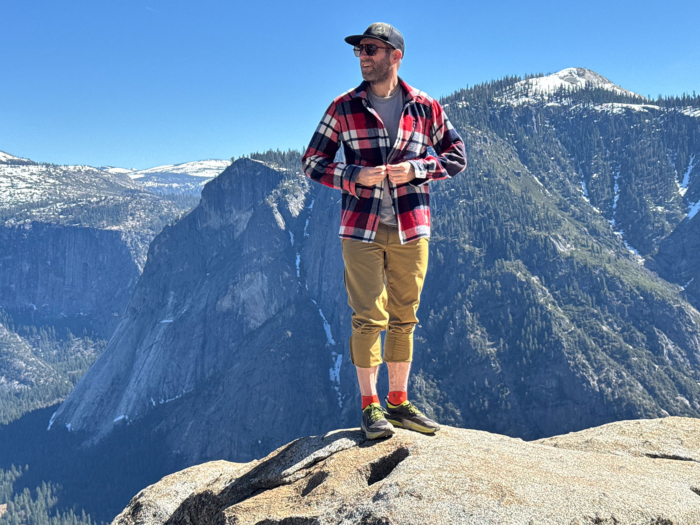
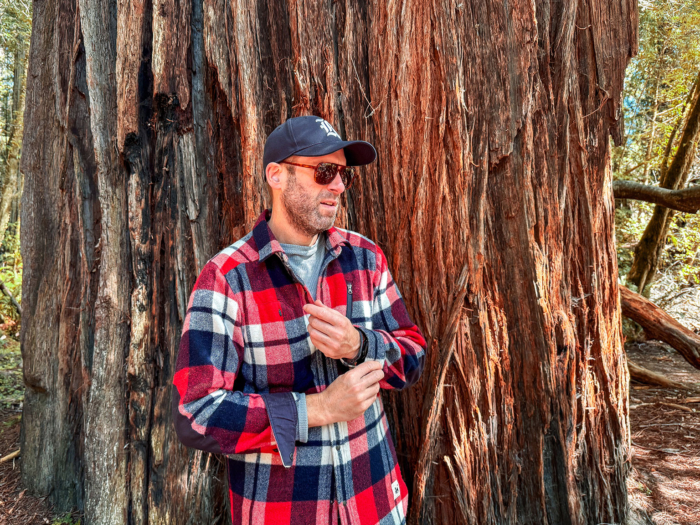
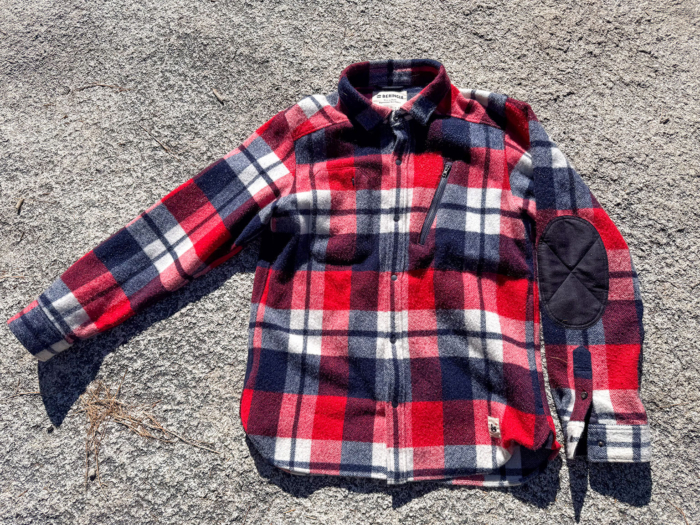
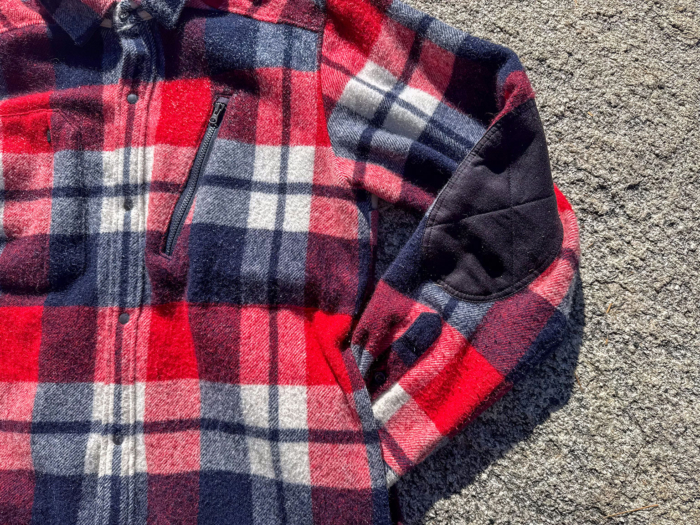
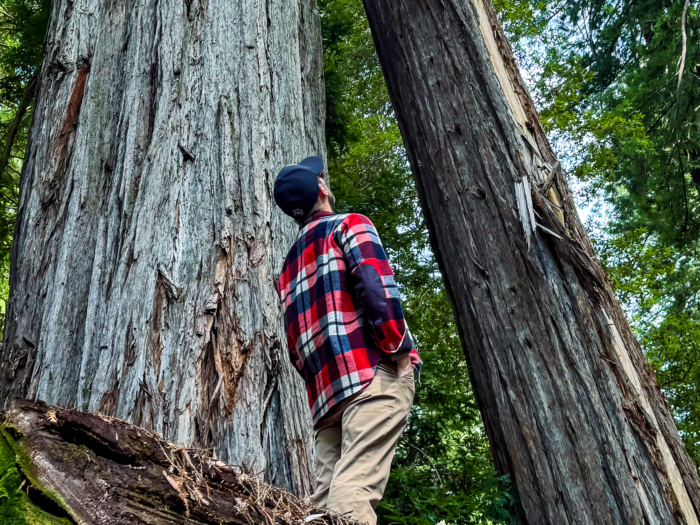
A tailored overshirt with an athletic fit, the Farallon Wool Shirt ($300) wears slightly roomy with just enough room to layer underneath. The 21-ounce recycled wool is plush and soft, and it’s one of the coziest wool shirts we’ve snuggled into. But that doesn’t imply it’s not durable. Woven with polyester, acrylic, and nylon, the blend is equally tough.
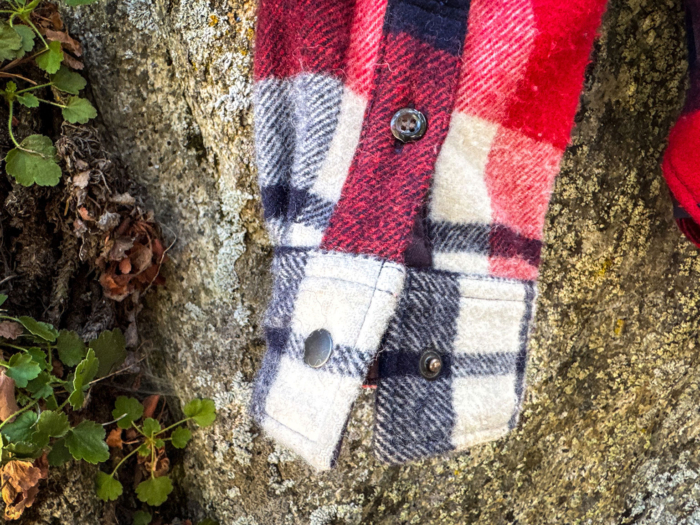
The front placket closes with five button snaps and a single button at the collar. Cuffs close with a single snap and a button. We love the snaps, but feel the button (especially the collar button) is disproportionately small. It’s tough to push it through the heavy fabric.
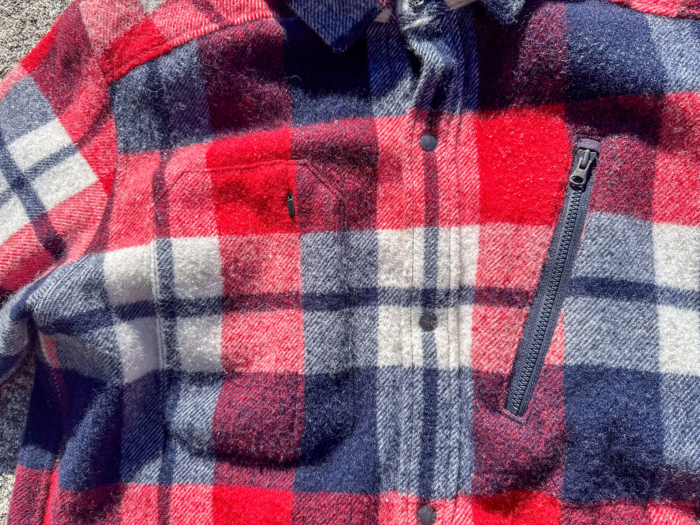
Three pockets adorn the shirt. A stealth wallet pocket, a larger diagonal zipper pocket, and a single hand pocket sit on the left side. You read that right: One hand pocket. The story goes the Japanese designers were inspired by Jack Nicholson in Easy Rider. Not entirely practical, it became part of the back story of the Farallon, and we don’t expect it to change.
Attention to detail elevates the Farallon over the rest. The side seam ends with a gusset to reinforce the seam. All buttons are wrapped around the shank to prevent them from unstitching. The arms are full flat felled to the armholes. And our favorite addition is the mesh pleats behind the shoulders. It elevates the shirt from everyday wear to a performance garment that dumps heat when hiking or cycling.
Wool is a tricky fiber, and not everyone can mill it well. It requires regulated temperature and humidity, and while Japan may not be first to market, they can take an idea and make it better. Bishu, Japan, has been doing this for over a century and has the small-batch wool process dialed in, and that’s where Beringia’s wool is sourced and manufactured into the lofty Farallon shirt.
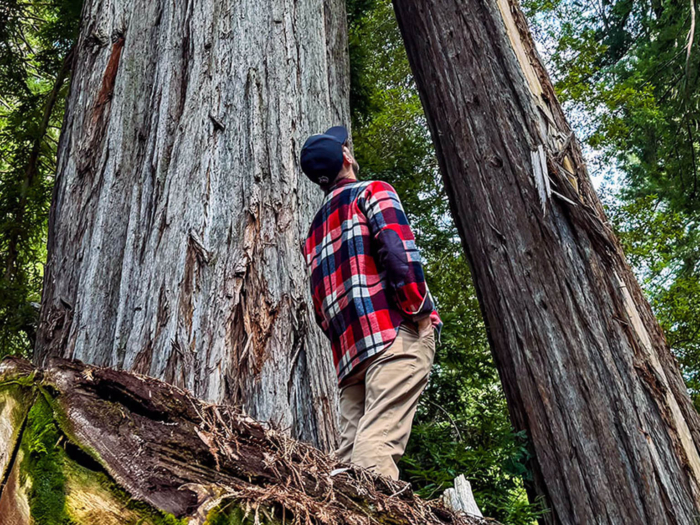
The fastidious attention to detail is reflected in the price. The Farallon lists for $300, and the shirts are quick to sell out. It took us over a year to get our hands on one. But, like all good things, it’s worth the wait (and the cash). The shirt wears casually with swagger, but can step up to the task of cycling, skiing, or even be worn as a mid-layer under a shell while mountaineering. Finally, you can style up and replace that old midlayer jacket.
Specifications
Pros & Cons
Pros
- Impeccable craftsmanship
- Organic cotton
- Patagonia’s ‘Iron Clad’ guarantee
Cons
- Somewhat of a boxy fit
- Cotton is not as technical as synthetic fibers
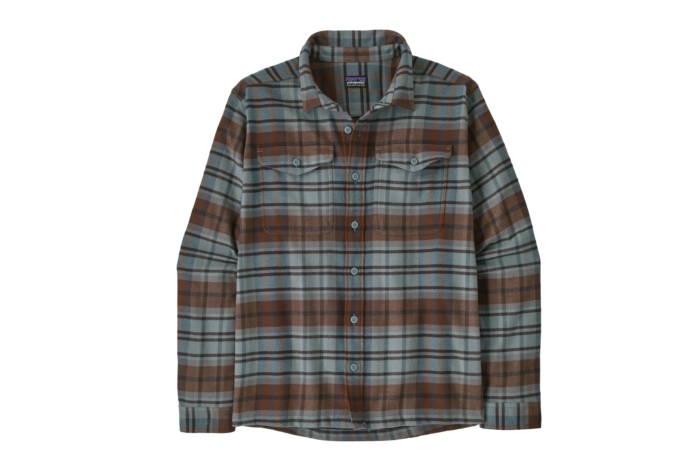
Patagonia doesn’t pull any punches. Like the venerable Baggies shorts, the Fjord Flannel ($129) has earned near hall-of-fame status, in my book. It’s become Patagonia’s benchmark flannel, and for good reason.
But the true accolades of Fjord go to the understated and subtle details of the shirt. All seams are double stitched and finished flat-felled for durability and comfort. The plaid is carefully pattern matched across the chest pockets, with the pocket corners cut and double-sewn at angles to reduce snagging and folding. Dropping to the hips, the hemline is sewn straight, wearing casually untucked.
The Fjord is every day in every way. It’s not the softest flannel on our list (that nod goes to Faherety). Using 240 g/m² organic cotton as a foundation, the material is double brushed while retaining enough body for everyday wear. It falls squarely in the mid-weight range. This makes it a more approachable daily flannel that straddles the seasons. And that’s why we think it makes a great everyday flannel option for most folks.
Wear it alone to cut a brisk summer morning, or layer over it as fall settles in. It works for casual Fridays, Saturday chores, or simply walking the dog. It’s the perfect shoulder season flannel that will log years of use.
Although the Fjord has steadily climbed in price over the years, Patagonia frequently discounts it enough that patient buyers can usually find it well below retail, where it becomes one of the best values on the market.
-
-
(Photo/Josh Laskin)
-
(Photo/Steve Graepel)
-
(Photo/Steve Graepel)
-
(Photo/Steve Graepel)
-
(Photo/Steve Graepel)


Specifications
Pros & Cons
Pros
- Fantastic fit
- Soft and plush
- Fat, easy-to-use buttons
- Beautiful ombre pattern
- 400 g/m² fabric is deceptively light
Cons
- Some subtle scratchiness, but the softest, most wearable wool we’ve shouldered in this weight
How do you make one of the best flannels available even better? Release it in wool, of course. We are big fans of Pladra and have ranked them at the top or near the top for five seasons now. This year, the brand took one of our previous top picks and finally took the plunge into wool.
The Workhorse Wool Flannel ($199) is a fantastic shirt by nearly every standard. Like all Pladra shirts, the seams are flat-felled, the button thread stems are wrapped at the shank for durability, the entire shirt is pattern-matched across the pockets and panels, and you get a splash of fun woodland print scenes inside the yoke and cuffs.
What elevates this shirt in quality (and price) is the wool fabric. Spun from a mix of 70% wool, 20% polyester, and 10% viscose (for softness), it feels soft, wears warm, and boasts all the great qualities of wool. It repels water and stench, has supreme temperature regulation, and is more durable than cotton. The Workhorse in wool is a timeless, heirloom-quality shirt.
Admittedly, $200 is a significant chunk of coin to drop on a shirt and is ultimately what keeps this shirt from being our top choice. If the wool Workhorse is out of budget, you can get the same style and details in Pladra’s traditional cotton Workhorse, available for $120.
But if you are looking to elevate your flannel wardrobe, the Workhorse Wool is a keeper.
Specifications
Pros & Cons
Pros
- Softest flannel on the list
- Easy to care for
- 27 color patterns to choose from
- Incredibly comfortable
Cons
- Expensive! But often on sale
- Online mostly — though we’ve seen a few Faherty stores open nationwide
- Your partner may steal this shirt from you so you may need to buy two shirts
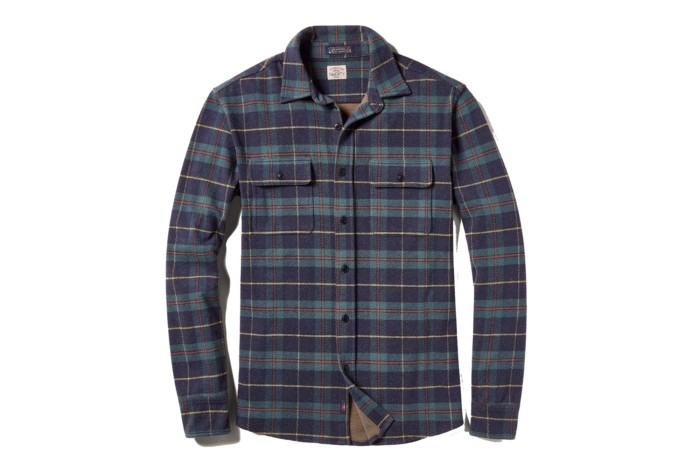
The Faherty Legendary Sweater Shirt ($178) is for the guy who swore he’d never wear a flannel. A Turkish blend of three yarns is pushed through the loom and woven into a smooth-faced inside with a plush, brushed outer fabric. The shirt snugs against the skin, like a loose base layer that feels oh-so-soft to the touch.
Fitting more like a cardigan sweater, the shirt drapes with a tailored fit that moves with the body. Wear it alone in fall and spring, or layer it under a jacket in cooler temperatures; the Legend is a solid three-season choice. And given that it is synthetic, it’s up for some aerobic activities.
The Legend isn’t cheap. At $180, it can be a challenging woven shirt to buy into. But it’s an easy shirt to grab on your way out the door. The look and softness will draw compliments and invite strangers to walk up and pet your shirt.
Like 501s to Levi’s, the Legend is a staple at Faherty. With 27 color patterns to choose from, there’s something for everyone. If you want something similar in plushness but are looking for a more traditional flannel, we recommend the Classic Flannel from The Vermont Flannel Co.
Specifications
Pros & Cons
Pros
- The very top shelf of flannel
- 11 oz cotton from Japan
- Attention to details
- Preshrunk
- Pattern-matched panels
- Made in California
Cons
- Expensive
- Not as plush as other flannels
- Lacks a locker loop
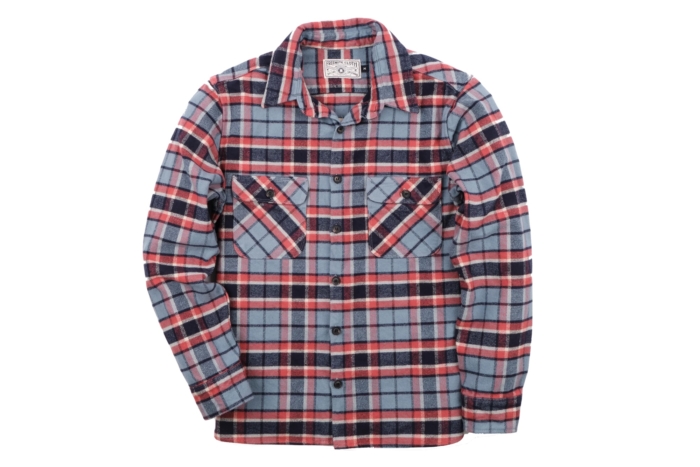
You climb long enough, and you eventually get to the top. So here we are with what is for many the high-water mark of flannel, the Freenote Cloth Benson Overshirt ($325).
The Benson is great for many reasons. To start, it’s made from a very heavy, 11-ounce brushed flannel manufactured in Japan. The shirt closes with real horn buttons imported from Italy. The components are shipped to the States, where the materials are hand-cut and sewn in California, and hemmed with double-needle stitching that yields a pair of perfectly stitched seams. Technically speaking, it’s made from the good stuff.
The horn buttons close the shirt with a simple French-style placket. The front material folds under for durability, but reveals a clean, no-seam (sans placket) front. All major seams are fully flat-felled, which is sort of a feat in a shirt of this weight. The cuffs and pocket flaps are rounded for durability and longevity.
The flannel feels fat in the hand. It has some heft and is more rigid than soft. Cut slightly oversized, it wears well as an overshirt, but you can still throw it over a T-shirt. You will finally be the most popular kid at high school, even though you are only there to pick up your child. Died-in-the-cotton flannel heads will take note, and pull their hand out of their selvedge denim to salute you with approval.
Yes, it is that good, and yes, we love this flannel. However, it is also about two times the price of most flannels on our list. So the real question becomes, is the Benson worth it?
Value is a hard metric to pin down, and it has several factors that weigh in the calculus. Primarily, can you afford it? Components are meticulously curated by hand from around the world and put together here in America. If you appreciate art, if you appreciate quality, if you appreciate the meaning of brand and story, design and craftsmanship… then this is the flannel for you. If you want a pretty great flannel at half the cost, we have several practical options for you above.
Specifications
Pros & Cons
Pros
- Durable cotton and construction
- Classic styling
- Pleated chest pockets
- Several color options available
Cons
- Expensive; there are better options in this price range
- Would like to see the armholes flat-felled
- Sizing is one size too big
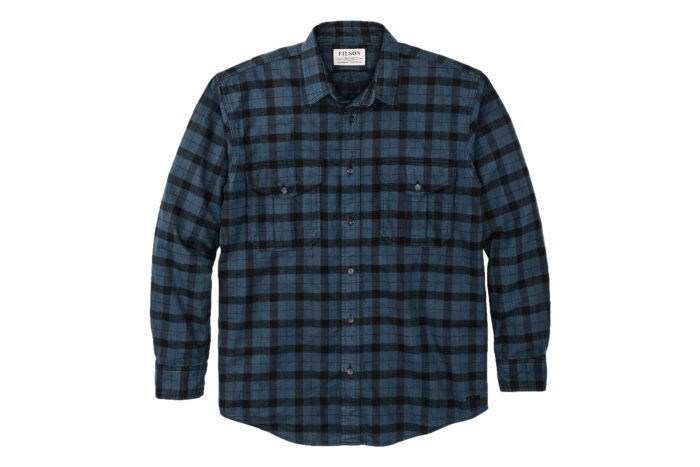
Lightly brushed 100% cotton, the Filson Alaskan Guide Shirt ($149) is a frequent flier on our top flannel guide. It shines as a reliable work shirt for the shop or worn around town, and is a great choice for a weekend chore shirt.
The 8-ounce cotton is densely woven, helping deflect wind and sharps. A locker hook is tacked at the nape of the neck just over the single center pleat. The pleat gives you a little extra room in the shoulders to swing an axe or reach those holiday boxes tucked away on the top shelf.
We appreciate that the cuffs and pocket flaps are rounded to reduce catching on edges. Both chest pockets have center pleats, allowing you to store a little extra. While the cuffs have two buttons to provide extra room (or batten down), we would like to see a little more room given to the outside button. The cuffs snug tightly around the wrist and don’t leave a lot of room for a watch.
The shirt is sewn together through flat-felled seams in the arms and body and overstitched seams in the armholes. This stitch combination is usually reserved for sewing heavyweight fabrics together and is more often seen in lower-priced shirts. The 8-ounce fabric is densely woven and lightly brushed, and it could probably get away with fully felling the sleeves to the torso. At nearly $150, this ends up feeling more like a shortcut in the Alaskan Guide than a functional decision.
Similarly work-oriented, the MuskOx Grand Flannel is more often our recommendation for a heavyweight flannel for work. The Egyptian cotton is of higher quality compared to the Filson, and the flat-felled seams are more durable and of higher quality.
Filson shirts are known to be oversized by one full size. We always order down one size smaller, and the fit feels spot on. The fit is still loose enough to layer over a midweight base layer without feeling constrictive. Because of this size disconnect, we recommend trying the Alaskan Guide Shirt on before you buy it.
Specifications
Pros & Cons
Pros
- Machine washable100% virgin wool is
- Timeless western stying
- Excellent seam execution
Cons
- Wool still has itch factor
- Cuffs have minimal adjustment
- Premium price
- Requires hang-drying
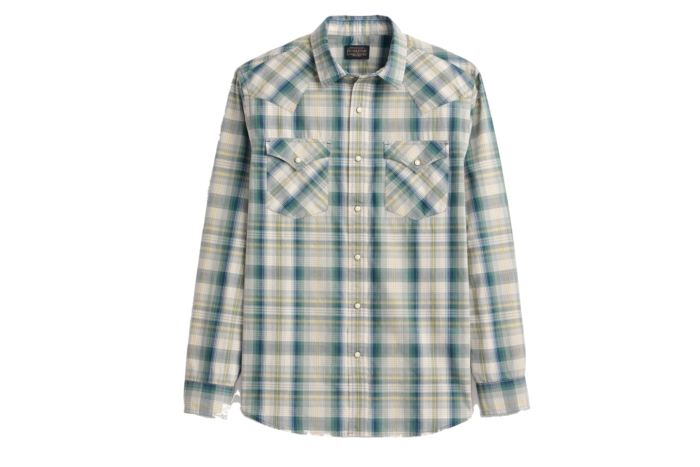
Blending Pendleton’s century-old wool heritage with a contemporary western silhouette, the Canyon Shirt ($189-210) combines Umatilla wool and traditional western styling into a modern shirt. I found the result to be a classic, timeless, and purpose-built flannel.
Leaning deep into western styling, deep-point pocket flaps mirror the pointed western yoke in back. The shirt closes with six pearl snaps and closes at the collar with a single button. A nylon-lined yoke and collar add structure to the 100% virgin wool and protect the high-stress points. Two pearl snaps close the seven-inch western snap cuff.
At 210 gsm, many shirts begin to show bulk or early ‘roping’ where sleeves join the body. Pendleton avoids both. The armscye (armhole to arm seam) is cleanly overlocked with a consistent trimmed seam allowance. It’s remarkably smooth from sleeve to body and one of the most consistent overlocked/surge executions we’ve seen on a flannel. The sides and sleeves are fully flat-felled.
Perhaps the most notable point about the flannel is that the 100% virgin wool is machine washable. This saves a dry-cleaning bill, but you’ll need to hang-dry your shirt.
Like most of Pendleton’s shirts, the Canyon feels like it transcends time and fashion trends. It nails the essentials. Quality fabric, heirloom laurels, with well-executed seams. If you are looking to add some western flair, this is your shirt.
Specifications
Pros & Cons
Pros
- Technical field shirt features
- Napoleon zip pocket
- Excellent mobility
- Reinforced high-wear panels
- Clean Scandinavian styling
Cons
- Premium price
- Low-loft fabric lacks the plush feel of traditional cotton flannel
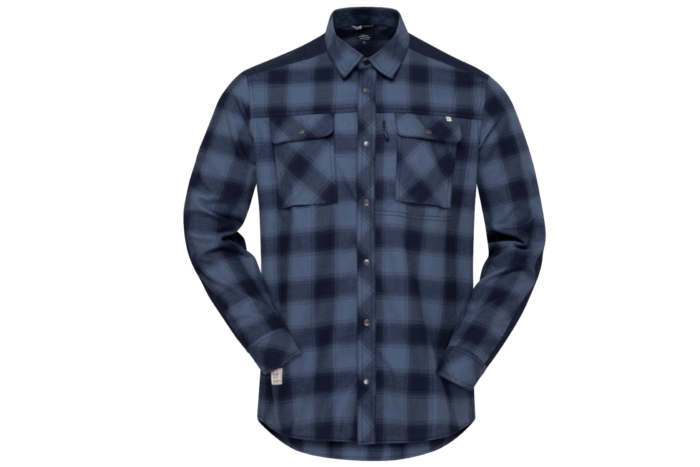
Built by one of Norway’s premier mountain brands, the Femund Flannel ($200) is Norrøna’s interpretation of a technical field shirt, designed for people who spend long days outdoors.
It’s tough to look past the buy-in price. While Norrøna kits generally command a premium, much of the cost is invested in the unique fabric. The 155 g/m² blend of 69% organic cotton with 31% wool combines the structure and durability of cotton with wool’s natural thermoregulation, moisture management, and odor resistance. Rather than chasing buttery-soft loft, the Femund is engineered for performance in changing mountain conditions.
Reinforced shoulder and elbow panels use nearly identical 152 g/m² fabric, adding abrasion resistance in high-wear areas without making the shirt feel overbuilt. The choice balances the shirt rather than adding bulk.
A zippered Napoleon chest pocket securely stashes a phone, map, or wallet while remaining accessible under a backpack hip belt or harness. The two chest pocket flaps snap to secure contents.
I’ve worn an earlier iteration of Norrøna’s tech flannel, and the current version is a noticeable shift. It retains the mountain-first design philosophy but replaces the scratchy all-wool material with a considerably more comfortable-against-the-skin cotton-wool blend.
At around $200, the Femund sits firmly in the premium category. But for hikers, hunters, backpackers, and anyone who values technical performance with a touch of nostalgia, it’s one of the most compelling flannels in this guide.
Men’s Flannels Comparison Chart
| Compare |
|
|
|
|
|
|
|
|
|
|
|
|
|
|---|---|---|---|---|---|---|---|---|---|---|---|---|---|
| Price |
$168
|
$55
|
$140
|
$154
|
$88
|
$300
|
$129
|
$19
|
$178
|
$325
|
$149
|
$210
|
$200
|
| Materials |
100% U.S. cotton
|
100% cotton
|
100% Portuguese cotton
|
100% BCI-approved cotton
|
100% GOTS-Certified organic cotton
|
70% wool, 15% polyester, 10% acrylic, 5% nylon
|
100% organic cotton
|
70% wool, 20% polyester, 10% viscose heavyweight brushed flannel
|
65% REPREVE recycled polyester, 30% Viscose, 5% elastane
|
100% cotton
|
100% cotton
|
100% virgin wool
|
69% organic cotton, 31% wool
|
| Fabric Weight |
220 g/m²
|
158 g/m²
|
180 g/m²
|
278 g/m²
|
240 g/m²
|
N/A
|
240 g/m²
|
400 g/m²
|
~300 g/m²
|
373 g/m²
|
275 g/m²
|
210 g/m²
|
155 g/m²
|
| Garment Weight |
14.5 oz.
|
14 oz.
|
10.5 oz.
|
1 lb., 1 oz.
|
1 lb., 1 oz.
|
1 lb., 3 oz.
|
14 oz.
|
1 lb., 2 oz.
|
1 lb., 3 oz.
|
1 lb., 12 oz.
|
1 lb., 4 oz.
|
16.5 oz.
|
12 oz.
|
| Fit |
Fits normally
|
Roomy (size down one size for trimmer fit)
|
Lightly tailored
|
Appropriately roomy
|
Fitted with room
|
Loose and oversized. Size down if you want a closer fit
|
Roomy
|
Appropriately roomy
|
Fitted, but very stretchy
|
Overshirt
|
Fits normal if you size down
|
Roomy
|
Athletic. Size up for more looser fit
|
| Best For |
The Boca is tough-wearing flannel that’s American enough to make a bald eagle shed a tear of Miller Lite
|
Hard labor work shirt for warmer fall days
|
Fram to dinner table, we found ourselves reaching for this flannel more than any other in 2026
|
Wear it for chores or to the bar. If you just want one flannel to punch up your wardrobe, the MuskOx Field Grand will land it with a TKO.
|
Great multipurpose flannel for work or date night
|
Cool-weather work shirt and winter sports
|
Not too heavy, not too light, Patagonia’s Fjord Flannel is an iconic flannel for everyday use.
|
Classing up your wardrobe with wool, and durable enough to handle light chores
|
The ultimate weekender
|
Quality oversized flannel to layer in fall or by itself in winter
|
The provenance of western American workwear, it is up for any task and wears casually around town
|
Casual and daily wear
|
Technical field shirt
|


How We Tested the Best Men’s Flannels
At GearJunkie, flannels are an extension of our everyday lifestyle. A shirt, a sweatshirt, a jacket — flannels are the most flexible garment we own. Unlike a tent, a camp stove, or a pair of boots, we shoulder flannels daily, allowing us to put the brushed twill through the paces. We tested flannels at the office, and through the weekend, grinding through chores like cleaning the garage, raking leaves, or simply walking the dog on cool summer mornings.
Cozy in coach and a fashionable way to layer up, we always pack at least one flannel for travel. They’ve had our backs on flights to Germany, Italy, France, Slovenia, and Japan, as well as transcontinental flights across the States. In warmer climates, we’ve flanneled up on cool nights on the Dariense Isabelia ridge in Nicaragua and high up on the Colombian Coffee Triangle.

Our Testing Process
- Material and construction inspection: To test flannels, we always start with how the material feels in the hand. We rate it for plushness, softness, and durability. We look at the fiber material, weave, and brushed finish. The material choice and finish are indicators of how the manufacturer envisions the flannel should be worn and used, and it points us in the direction of how they should be sewn and, in the end, how we should test the shirt. We want to see if the two align and how they stack up to the marketing story manufacturers share online.
- Field testing: During real-world consideration, we aim to wear flannels for what they were made to do. For example, hard work-oriented flannels are worn doing tasks that are hard on a shirt. Specifically, we want to know how it accommodates range of motion and if it holds up. We want to know if we can swing a hammer or reach boards from the top shelf without exposing our torso or restricting motion in the arms. We also test it for snagging and durability. Does the flannel catch on wood, metal edges, or granite shards? Does it collect a lot of dust and grime?
- Fit and finish grading: Finally, we shoulder the flannels and evaluate them for fit. The best material and construction can’t fake a good fit. We test it for mobility and proper length. Does the shirt bind under the arms? Are the pleats and gussets appropriate? Does a straight-cut work without pleats? Are the arms or hem cut at a proper length, or do they ride up when reaching? How does the shirt taper in the torso and arms?
- Our flannel rating system:
- Material Quality: 30% weighted. We take into account material type, sourcing locations, and textile weaving styles when rating for material quality.
- Construction: 30% weighted. Rating for construction considers the overall fit and stitching techniques used to put together these flannels, as well as smaller details such as buttons, hems, and even pocket pattern orientation (it matters).
- Style: 20% weighted. Style is subjective, but it’s undeniable that some flannels can be dressed up, and others are meant for the shed.
- Durability: 20% weighted. Finally, after a hard season of use, we take stock of the wear that these flannels have accumulated and rate them on how they’ve fared.

Our Expert Testers and Testing Grounds
Steve Graepel has been leading the men’s flannel buyer guide since 2015. Over the span of 10 years, Graepel has seen over 230 flannel shirts, rigorously testing 125 flannels. Graepel has worked at GearJunkie as a contributing editor since 2009, testing everything from packrafts, to bike bags, sleeping bags, winter boots, and trail runners. His latest beat is travel pants and flannels. Before his time as a fashion blogger, he wrote for Travel Idaho, National Geographic Adventure, Patagonia’s Tin Shed, Trail Runner, and Gear Patrol.
Graepel has researched and tested flannels extensively — traveling, working, and camping in the high alpine desert of Idaho, Montana, and Utah and traveling abroad in a variety of environments, including Europe, South America, and Asia. He continues to long-term test flannels year-round and searches for anyone who will listen to his yarns testing the brushed twill.
For the 2026 update, we considered 30 new flannels and added just seven to the guide. While every year introduces new fabrics, construction techniques, and brands, only a handful of shirts have the quality and staying power to earn a permanent place in our lineup.
Each year introduces new styles and materials, and we try to reflect the best on the market of that year. Some stalwart flannels remain on the list, year after year. They are either so good, or so good of a deal, that they are tough to topple.
Flannels aren’t hard, but their simplicity makes it important to understand the details of a standout shirt. To keep a finger on the pulse, we read reviews from top sites and contact manufacturers directly. Steve Graepel has the owners of several companies on speed dial, and has had conversations with manufacturers and mills from around the world. It’s not uncommon for manufacturers to reach out to GearJunkie before they release a flannel to get a sense of the new lineup.
These relationships allow us to stay up to date on what makes flannels better every year, and keep an eye on sleeper flannels that just don’t have the marketing budget to get mass attention.

Buyer’s Guide: How to Choose a Flannel Shirt
Materials
In short: Flannels are most often made from wool, cotton, or synthetic materials such as nylon, polyester, or elastane. Natural textiles are typically more expensive, and synthetics are highly durable (and often cheaper).
Wool: Thermo-regulating, warm when wet, and often commands a higher price.
Cotton: Soft touch, with organic sources being better for the environment (and a bit more expensive).
Synthetics: Great breathability, easy laundering, and lower prices.
Wool used to own the flannel scene, and it has a lot of merits. It retains warmth when exposed to moisture, resists odors and UV light, and can block the wind. We love what we saw in Pendleton’s Canyon Shirt, which delivers all of these qualities with its midweight wool and traditional, western styling.
While the Canyon Shirt is a little scratchy, a wool blended with synthetic can take the edge off. Pladra’s Workhorse Wool weaves in polyester with Viscose and feels very wearable against the skin and pumps up the durability. But there are other materials worth considering.
Cotton can be buttery soft and an obvious choice to wear next to skin. Atlantic Rancher and Vermont Flannel Co. use high-end cotton that’s soft as mink. But not all cotton flannels are brushed to this extent. Devium and Freenote Cloth’s Benson are lightly brushed and feel rougher and rigid. This makes it better for hardwearing activities in the yard or at the shop.
Some cottons are sourced from organic or Better Cotton Initiative (BCI) approved cotton fields. No synthetic pesticides or chemical fertilizers can be used in the cotton to achieve the rank of “organic cotton.” The Vermont Flannel Co. Classic Flannel Shirt and Patagonia’s Fjord Flannel both use organic cotton. Our top choice heavyweight flannel from Devium sources organic cotton from Missouri.
BCI-approved cotton meets sustainable standards that minimize pesticides, boost water conservation, and support better working conditions for farmers. Either way, meeting either of these standards costs more money to achieve, and the cost is passed onto the buyer. Expect to pay a little more for shirts that list either of these certifications.
If you break a sweat in flannel — say, mountain biking, skiing, or running — we recommend a synthetic flannel. They are easy to care for and can be thrown in the washer and tumbled in the dryer. Faherty’s Legend is incredibly plush, but likely too nice to want to get out in it. Poncho Outdoors flannel is a modern spin on the field shirt and works great for high-output activities.
One of the most unique fabric blends we’ve ever tested, Norrøna’s Femund flannels weave cotton and wool to bring softness, breathability, and odor resistance to a technical shirt.
For cold weather outdoor activities, we’d recommend Beringia’s Farallon. Constructed from a wool and synthetic blend, it’s ideal for those who play hard outside. The mesh vents behind the arms can dump a lot of heat, a welcoming detail when you are on the move.

Fit
In short: We’ve provided fit feedback on every flannel we recommend, and use the following continuum to describe how our testers would describe the fit (click to expand).
Fitted: Snug through the torso, with sleeves that just reach the wrist. May contain material stretch for more mobility.
Regular: Everyday flannel fit, with a drape that is both accommodating and not limiting. Shoulders allow for overhead reach. Sleeves cover a watch.
Relaxed: A roomier cut through the torso that accommodates a t-shirt underneath.
Roomy: Longer sleeves, boxier fit, and longer hem that is more protective for chores. Wide shoulders.
Overshirt: Sized to be worn over midlayers, with an exterior fit that is often 1x size of your regular fit.
Like any shirt, flannels are offered in a variety of fits, from athletic and tailored to grandpa-style. If you prefer a tidy look with a slimmer athletic fit, Faherty’s Legend will be a good choice. But it can be a tradeoff with mobility. Without Lycra woven into the fabric, gussets, or mechanical weave, a tight, form-fitting flannel can bind behind the shoulders. Shirts like Filson’s Alaskan Guide and (notable) Duluth’s Free Swingin’ get around this by adding a pleat between the shoulders. Beringia adds expansion gussets to unlock the shoulders.
On the other end of the spectrum, Freenote Cloth’s Benson is oversized and has no pleating. The roomy cut still allows great mobility to reach and work without feeling too big.
When making a purchase, let your use case guide you to the right flannel fit. And if it’s a work shirt, consider sizing down for everyday wear. As an example, Filson work shirts are typically sized just short of Arnold Schwarzenegger. We always have to buy one size down when looking at Filson. Devium’s medium shirt is more tailored for everyday use and is true to size.
Note that this review covers the best flannel shirts for men. Looking for a women’s flannel? We have another Flannel Buyer’s Guide specifically for Women.

Fabric Weights
In short: G/m² is the weight of one square meter of fabric. Generally, the heavier the weight, the thicker the material will be, and the warmer the flannel will likely be. We generally follow the same ratings as we use in base layers (click to expand).
Lightweight: Under 150-190 g/m²
Midweight: Between 200-250 g/m²
Heavyweight: Weighs over 250 g/m²
For fall, we share a range of flannel options. As we enter the dark days of winter, our flannel guide shifts to mid- and heavyweight flannels. At around 150 g/m², Norrøna’s Femund Flannel Shirt sits as our lightest-weight shirt. We can dress up the Lost Coast with a jacket and wear it to work. On the other end sits the Farallon, which uses a stout 21 oz. wool blend and is supremely warm. That’s over 700 g/m² of the good stuff.
The numbers game isn’t hard and fast. The brushing creates loft, which gives the flannel more warmth. If you have doubts and can’t find evidence in the reviews, it is always best to try a shirt on and get a feel for the material.
A heavier fabric doesn’t imply the material will be softer — which, for example, Freenote’s Benson is not. That soft, velvety feeling comes from brushing the material, giving it that lofty plush nap. A fabric with more nap can also be warmer than a fabric without it. The raised fibers trap air warmed from your body and work best as an insulator when worn under a jacket that can keep that warm air from flushing away.
Our top heavyweight flannel from MuskOx takes a robust flannel and brushes it until it achieves a soft, comfortable nap.

Closure Style
In short: Most flannels close with snaps — two-sided buttons that clasp together — or buttons, which slide through a button-hole in the flannel material (click to expand).
Snaps: Easier to manipulate, with strong hold. Can pull through material, however.
Buttons: Often more fashionable, with bone and horn being luxe options, and plastic making up the rest.
Flannel closure is a contentious debate at GearJunkie, and many editors have a soft spot for snaps. Often seen on western-style shirts, snaps hold well and are quick and easy to get in and out of. Granted, we are an active crew of reviewers who wear our flannels on runs and rides and out on the slopes. The Norrøna Femund, Pendleton Canyon, Dixxon, and the winter-ready Farallon — an active overshirt — all close with metal snaps.
While we love the usability of snaps, they can be problematic. Snaps disrupt the material by punching holes through the placket — that strip of material that runs dead center down the shirt. In rare cases, snaps can pull through, which we’ve experienced with a snap-style shirt. To add durability, most snap-style shirts punch through doubled-over fabric.
“If it ain’t broke, don’t fix it” — the button has been tried and true for some 5,000 years. Most buttons are constructed from hard plastics, though Devium and Freenote use horn. Regardless of materials, we prefer big buttons for heavier materials, which is one more reason to consider Devium’s Boca. Its horn buttons are custom-made in Pennsylvania and are the size of a penny.

Construction
In short: Seams are the joining edges of the textile panels that make up a flannel, with a few different versions being popular. Flat-felled seams are the nicest, and overlock stitching is more common (click to expand).
Flat-felled Seams: A seam that hides all of the cut edges of the material, with double or triple-stitching for durability.
Overlock Seams: Material is butted together with an overlock stitch, and you can identify them by the exposed raw edges inside the flannel.
While quality materials matter, the construction of the shirt is what often defines a quality shirt. The best will have flat-felled seams that roll the opposing material together and tack the seam down with a double stitch. The result hides all the cut edges, leaving a clean-looking, durable shirt inside and out. These shirts will often be double- or triple-stitched in high-stress zones, like the shoulders and sides.
While more durable, flat-felled seams can make a shirt bulkier; not every mill can pull off this level of construction. So flat-felled flannels tend to be more expensive.
Pladra, Patagonia, Devium, Freenote, and even the hefty Outerknown Blanket Shirt use a flat-fell seam and vary the stitch count for extra durability where you need it most.
Many quality shirts use a more common overlock or serge stitch, where the two opposing panels are butted together with an overlock stitch, leaving the seam’s edge raw on the inside. Using an overlock stitch is a much easier construction method, and since most sewing houses can do it, the cost is (usually) reflected in the affordable price. Vermont Flannel Co.’s Classic Flannel sews together high-quality fabric with overlocked seams.

The downside is that some overlock stitches are left unfinished. Exposed, they can rub against the body, snag, and fray, which eventually could pull on the surrounding stitching. All of the flannels with overlocked or serge stitching on our list demonstrated clean seams, with Pendleton raising the bar in their Canyon Shirt’s arms to the armholes. The meticulously sewn armscye (arm to armhole) seam is the cleanest overlocked seam we’ve ever seen.
Seams are both art and science, so don’t read these as hard and fast guidelines. Overlock stitching can also be a valid choice for lighter-weight fabric. The seams allow lightweight fabrics to stretch and move with you, ultimately making it wear cleaner without bunching.
A good compromise is to flat-lock the overstitching. It doesn’t hide the seams inside the shirt, but the overstitching is tacked down out of the way. This makes the seams less bulky than fully felled seams and costs less to sew. More importantly, it can be more comfortable and practical when joining heavyweight fabrics that creep over 300 g/m². Most flannels, like Duluth’s Free Swingin’, overstitch their flat-locked seams in the armpits, and Faherty sews all its overlock stitches flat.
When buying a shirt, look at the construction details. A well-constructed shirt will cost more in the short term but will last for years.

Price & Value
With a range between $50 and an eye-watering $350, there’s a wide spread when it comes to flannels and a good bit of nuance in between those figures. Not only do different materials demand higher price tags, but we’d argue that construction methods augment the price just as much — if not more in some cases. Knowing what you’ll be wearing the flannel for the most will go a long way in choosing the best option for you.
Budget
Like everything these days, the price of flannels has been creeping up over the last few years. But you can still get into a flannel without having to spend a lot of cash. At around $55 (and often on sale), Duluth’s Free Swingin’ is a roomy, low nap flannel that we like for chores and everyday wear. For a few bucks more, Vermont Flannel Co. offers a mid-weight value with their Classic flannel at $88. It’s a great choice for more fitted casual, everyday wear and will remain relevant for years to come.
Mid-Tier
The mid-price of flannels seems to fall in around $90. Just below will get you into most mountain-style flannels from the big stores, but there can be a slew of uninspiring shirts in this range that lean on their brand recognition, bright patterns, and color schemes to take your cash.
Here too, you get what you pay for, and it’s a good place to start looking at materials and construction to ensure you are indeed getting good value. Premium construction methods, like hand-sewn, double or triple stitching, pattern matching front and back panels, and eco-conscious product development, start to tack onto the bottom line. Patagonia’s Fjord ($120) sits squarely in this range, and we find it to be one of the best values on the market. It’s a fantastic flannel that goes toe-to-toe with the best.
Atlantic Rancher’s Bayman’s Flannel is one of the biggest surprises of the season. At just under $140, it pairs beautifully milled Portuguese cotton with exceptional construction, delivering premium craftsmanship at a price that undercuts the competition.
Premium
Better materials and pedigree start to pry the wallet open. Unless there’s a backstory to support that extra cost, shirts priced over $150 leave you wondering if you are paying for someone’s mortgage. Topping out just over $200, we do feel that the materials and attention to detail Pladra brings with its Workhorse Wool are of exceptionally high quality and warrant the expense. A big part of that is the wool. If that’s simply out of budget, consider Pladra’s cotton Workhorse. Same story with Norrøna Femund Flannel Shirt. The wool-cotton blend and field shirt accoutrements are second to none we’ve seen before. If you are looking for a technical flannel, we encourage you to give it a second look.
Freenote Cloth pairs custom-woven Japanese flannel with California craftsmanship and finishes with Italian horn buttons. The result is a meticulously built heritage flannel that commands a premium. Expect to pay $250 and up for similar heritage flannels. Are they better? Not necessarily, but they do use more expensive materials and labor-intensive construction that moves the needle on the price.

Frequently Asked Questions
Traditionally a brushed twill made from wool, the original flannel was woven to keep Welsh sheep herders warm while tending the flock on temperamental winter days. Nowadays, the term flannel has expanded into cotton, synthetic, hemp, and blends with stretchy fibers. What unequivocally defines flannel is the brushed surface that lofts the yarns into a heat-trapping nap that gives it that super soft feel to the touch.
True flannels start from twill — a diagonally woven pattern like you find in jeans. Either the front or back can be brushed, giving it a soft insulating nap. To give a flannel that lofty fluffy feeling, a metal brush works the material’s surface, mechanically teasing the fibers until lofted into that fuzzy surface that traps air.
Flannel starts with the weave of the fabric. A more tightly woven fabric, like we see in MuskOx or Devium, will resist tears and last longer.
But the flannel we know and love is achieved by brushing the fabric to tease fibers out, which act like an insulator. The rub is it can compromise durability. In short, the fibers are broken and become more prone to catching dust and grime, which can continue to break down the fibers. Contrastingly, lightly brushed flannels tend to be more durable. They don’t collect as much grime or catch as easily on wood splinters or metal edges.
Pay attention to what you don’t see. Fusing, the lining in the shirt’s collar, placket, and cuffs, adds rigidity to the shirt. It prevents wrinkling and preserves that crisp new flannel look.
Flannel comes in all forms these days. It’s unfair to box a shirt in or out of the flannel club. It might help to think of the base material sitting on a brush scale. At the far end is a smooth-faced, durable shirt. On the other is a soft and plush shirt.
Our top flannel pick from Devium is lightly brushed mid-weight 220 g/m² organic cotton. The fabric is tightly woven and but not so rigid to prevent shouldering it as a daily throughout most of the year. It’s a great work shirt and a fairs much better during hard tasks than say Flint and Tinder’s Cabin. The loose weave on the Cabin is beautiful but the loose yarns can catch on sharp edges.
The most durable flannel on the list is undoubtably Norrøna Femund Flannel Shirt. The cotton-wool blend is plenty durable, but reinforces both the shoulders and elbow panels, adding abrasion resistance in high-wear areas without making the shirt feel overbuilt.
Flannel is a lofted fabric — regardless of the pattern. That fabric can come in a variety of solids and patterns, including the cross-hatched patterns, originally dating back to the Scottish culture to distinguish families and clans, we call plaid.
Start with how and where you want to use it. If you intend to wear your flannel outside or as a jacket, consider a wool or insulated flannel. We liked Devium’s front pockets and the low nap is very durable, but the cotton flannel is best worn on cool, dry days. Faherty’s Legend is great for around town but lacks durability for hardwearing tasks. Contrary, Norrøna’s Femund is really a lightly brushed field shirt.
We love the Legend for its overall softness, quality, and general easy-wearing approachability. For more active pursuits, we liked how Poncho Outdoors synthetic wicks moisture and has utility pockets that are user friendly. But neither are as durable as Filson’s Alaskan Guide’s nearly bulletproof cotton flannel. The hard-tack surface is also the least plush shirt on our list.
Some work flannels, like those offered by Filson, can be oversized. We found the work-inspired Boca from Devium fit spot-on. In general, you will be happier if you try them on before you buy. If you can’t, pay attention to the reviewer comments on sizing and it maybe worth sizing down oversized shirts for a more tailored fit — especially when buying anything from Filson, which generally runs one size larger.
Like a tool in your toolbox, the best flannel will be the flannel that meets your needs. Take stock of how you want to use it, and then use our guide to find the best option for you.
We update our flannel buyer’s guide for winter with more robust options. The warmest shirt on this season’s list is from Beringia. The wool blend is thick and traps heat like down. The fit is tailored as an athletic overshirt, with mesh vents for more mobility.
For a more work-friendly warm shirt, we like Pladra’s Workhorse Wool. The 400 g/m² is lighter than you think and wears well either tucked in or out and is lofted to trap heat. The cotton 278 g/m² found in MuskOx is plush and comfortable, finding a sweetspot in wearability and warmth.