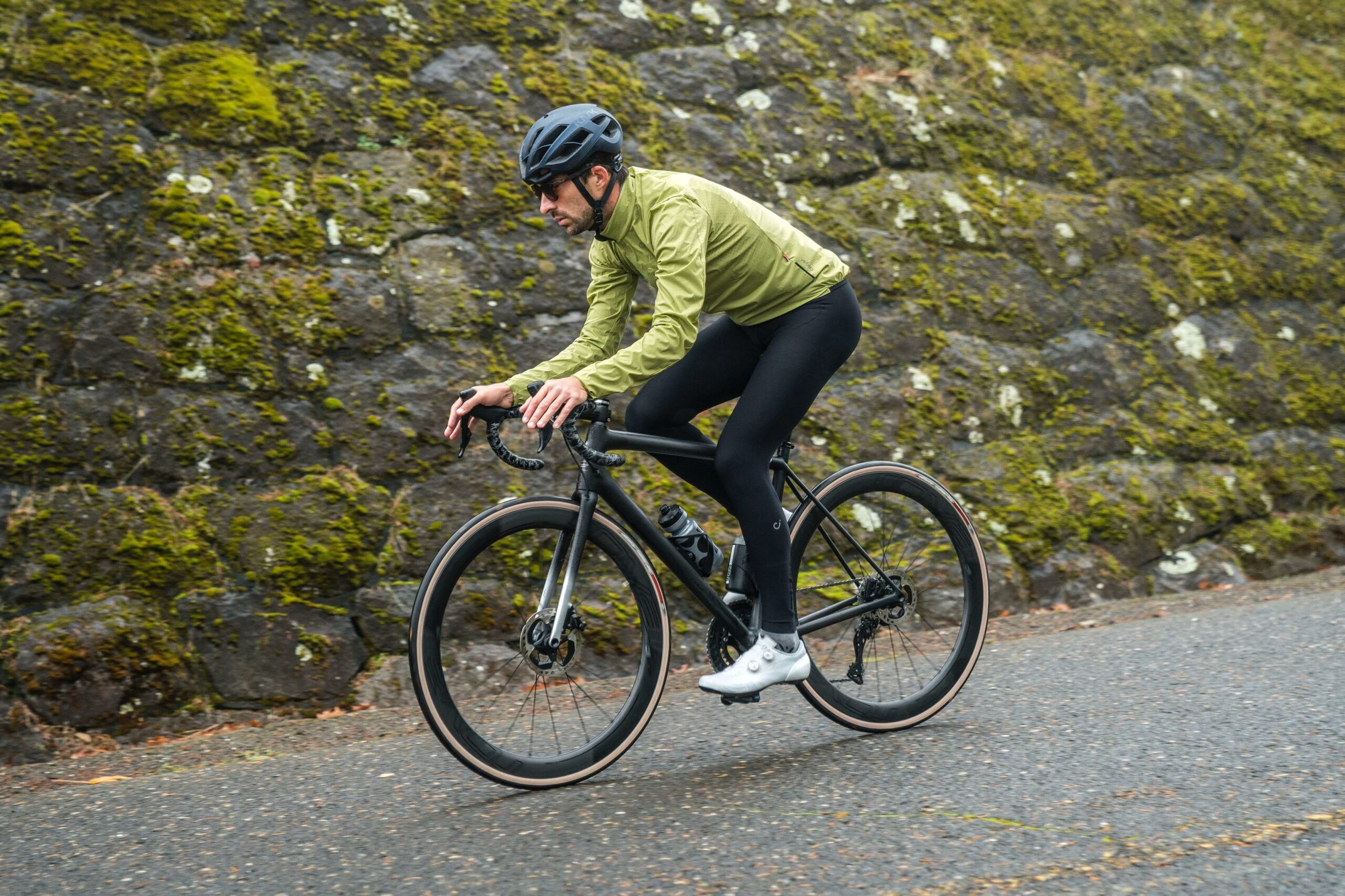
A good road cycling jacket is a critical piece of kit for riding in cold or wet weather. Staying warm and dry while riding in the variable temperatures and weather conditions of the fall, winter, and spring can be tricky, but is essential for your comfort and enjoyment on the bike.
Keeping the upper body comfortable and functioning well in foul weather is a complex problem with many possible solutions. Looking at the diversity of cycling jackets available today, it’s clear that a number of variables must be weighed in order to find the best option for your riding. Rain and road spray, wind, and cold, as well as your own riding style and layering preferences, all factor into how well any jacket will suit your needs.
To help, we gathered a diverse selection of 19 of the best cycling jackets on the market to test and compare. Review author Bennett Shane personally tested each model in the highly variable weather and temperatures of the Pacific Northwest while analyzing their fit, comfort, features, and performance in the real world.
Whether you need a light layer to block the wind, a waterproof jacket for rainy days, or something insulated to fight the cold, we’ve got recommendations to keep you rolling on the road. Our favorite cycling jackets are listed below, followed by the best of the rest, which are also great options that are worthy of consideration.
Editor’s Note: This guide was updated for the winter riding season on November 14, 2024, with the addition of the Pearl Izumi Expedition PRO Alpha Jacket and a new Price & Value section.
The Best Cycling Jackets of 2026

Ornot Magic Shell

Specifications
Pros & Cons
Pros
- Unrestricted freedom of movement
- Lightweight
- Versatile
Cons
- Not for use in steady rain
“You could be a rolling billboard, Ornot,” is an appropriate tagline for the clean aesthetics and minimal branding of Ornot cycling apparel. Based in San Fransisco, the folks at Ornot are quite familiar with highly variable weather conditions, so it’s no surprise that the Magic Shell ($268) is an impressively versatile jacket that is effective in temperatures ranging from sub-freezing (with correct layering) to the mid-50s.
Just picking up the Magic Shell is impressive because it’s remarkably lightweight, at just 255 g in size small, and also exudes an ability to fend off some nasty weather. The seams are now bonded and taped — an update from the original version — and the Polartec NeoShell looks and feels seriously hydrophobic. Overall, it has a sleek aesthetic, minimal branding, elegant seam construction, and a svelte cut.
One thing that stands out about the Magic Shell is its perfectly balanced fit. It deftly avoids being too tight or restrictive without excess material to bunch or flap. The sleeve length is spot-on, just a little bit past the wrists when standing, but perfectly positioned once the arms extend forward to the handlebars, and the collar is substantial but doesn’t rub or irritate the chin or jaw. Torso length is also perfect, protecting the hips and lower back without bunching up around the stomach. Despite the snug fit, there is also no binding around the armpits or upper back.
Storage is a simple zippered pocket on the back that is accessed from the side and is large enough to store typical things like a phone, bars, or gloves. With a two-way front zip, it’s also easy to access jersey pockets by unzipping the lower zipper to reach inside the back of the Magic Shell.
On the road, the Magic Shell blocks wind effectively, and the NeoShell and PFAS-free DWR coating repels water from mist, drizzle, and light showers very well. While generating heat on climbs, we found the temperature to rise evenly inside with easy venting to dump heat thanks to the two-way front zipper. Dropping back downhill, the NeoShell does its job to maintain warmth and a consistent body temperature.
The Ornot Magic Shell is so well-balanced that it can adapt to almost any weather or riding intensity in an instant. While Ornot is quick to point out that the intent of the Magic Shell isn’t to be completely waterproof, our experience is that it does keep nearly all water from making its way inside while simultaneously regulating body heat and moisture in a way that can only be described as, well, magic.
Castelli Squadra Stretch Jacket
Specifications
Pros & Cons
Pros
- Aero fit
- Very affordable
- Lightweight
- Packable
Cons
- Super minimal
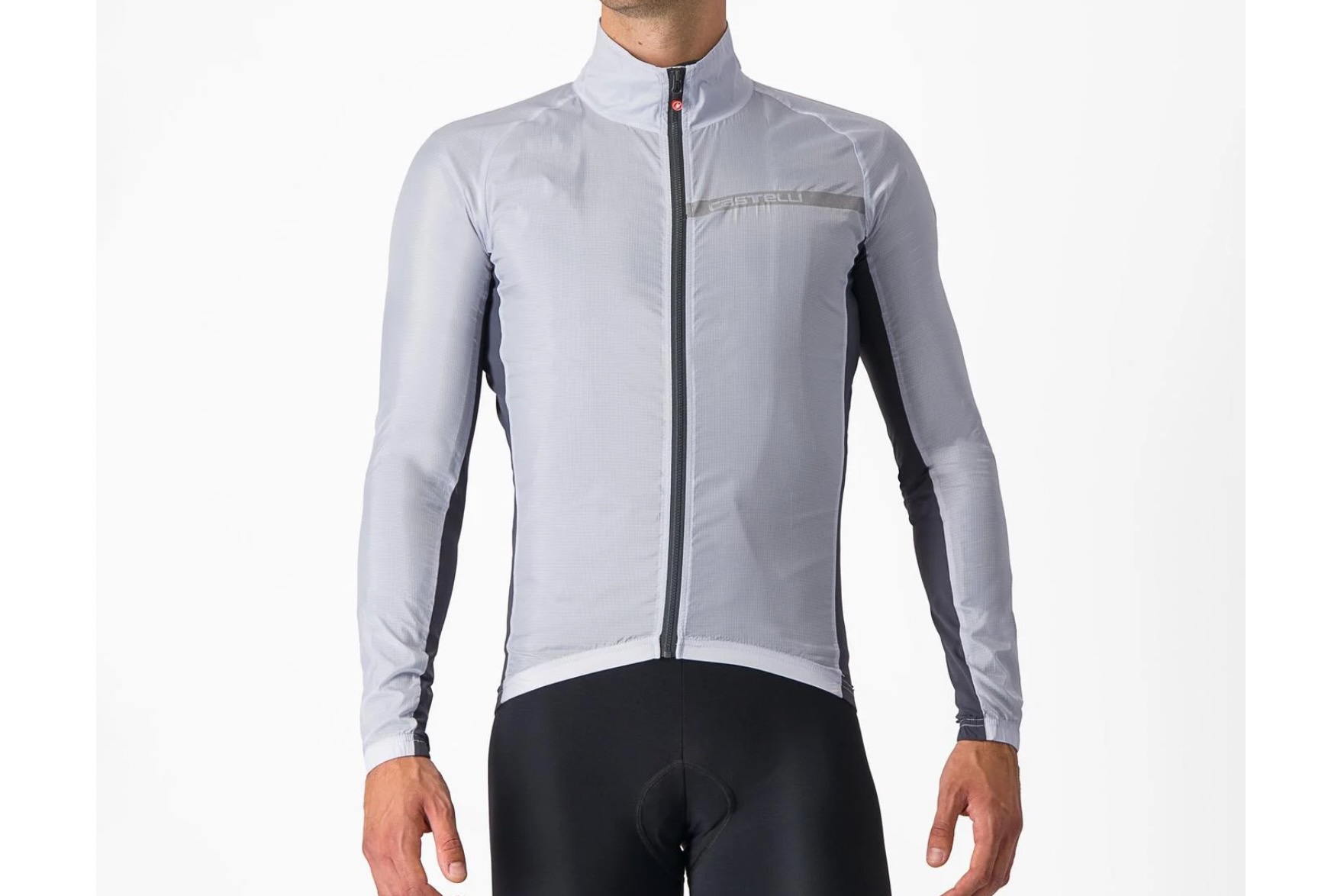
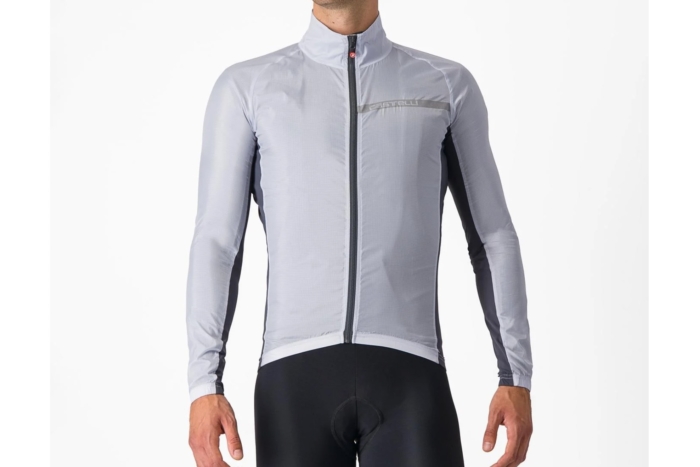
The Castelli Squadra Stretch Jacket ($70) is a lightweight shell jacket made from coated ripstop nylon that keeps the wind off on cool-weather rides or long descents. Tightly knitted stretch panels on the sides and inner arms keep the Squadra Stretch Jacket fitting close to the body to reduce flapping fabric. The Squadra Stretch is also easily packed into a jersey pocket or cargo bibs as conditions change and needs warrant.
The Squadra Stretch is available in a larger selection of colors than most shell jackets, six in total. To help with visibility in low-light conditions, Castelli has applied a reflective strip to the tail and chest of the Squadra Stretch Jacket.
If flapping material is a big concern, we recommend choosing your typical size, as opposed to most Castelli items, for which we often recommend going up one size. The fit of the Squadra is excellent, easily accommodating an aggressive riding position while providing the optimal sleeve, torso, and collar length to keep the chilly wind out. Still, it has enough stretch to fit comfortably over snug baselayers or long-sleeve jerseys.
At $70, the Castelli Squadra Stretch Jacket is a great value because it can ensure that you are prepared for changing conditions, chilly descents on crisp mornings, or high-altitude adventures for much less than most other competitors.
MAAP Training Winter Jacket
Specifications
Pros & Cons
Pros
- Uncompromised warmth
- Looks great
- Versatile enough for fall and spring, too
Cons
- Expensive
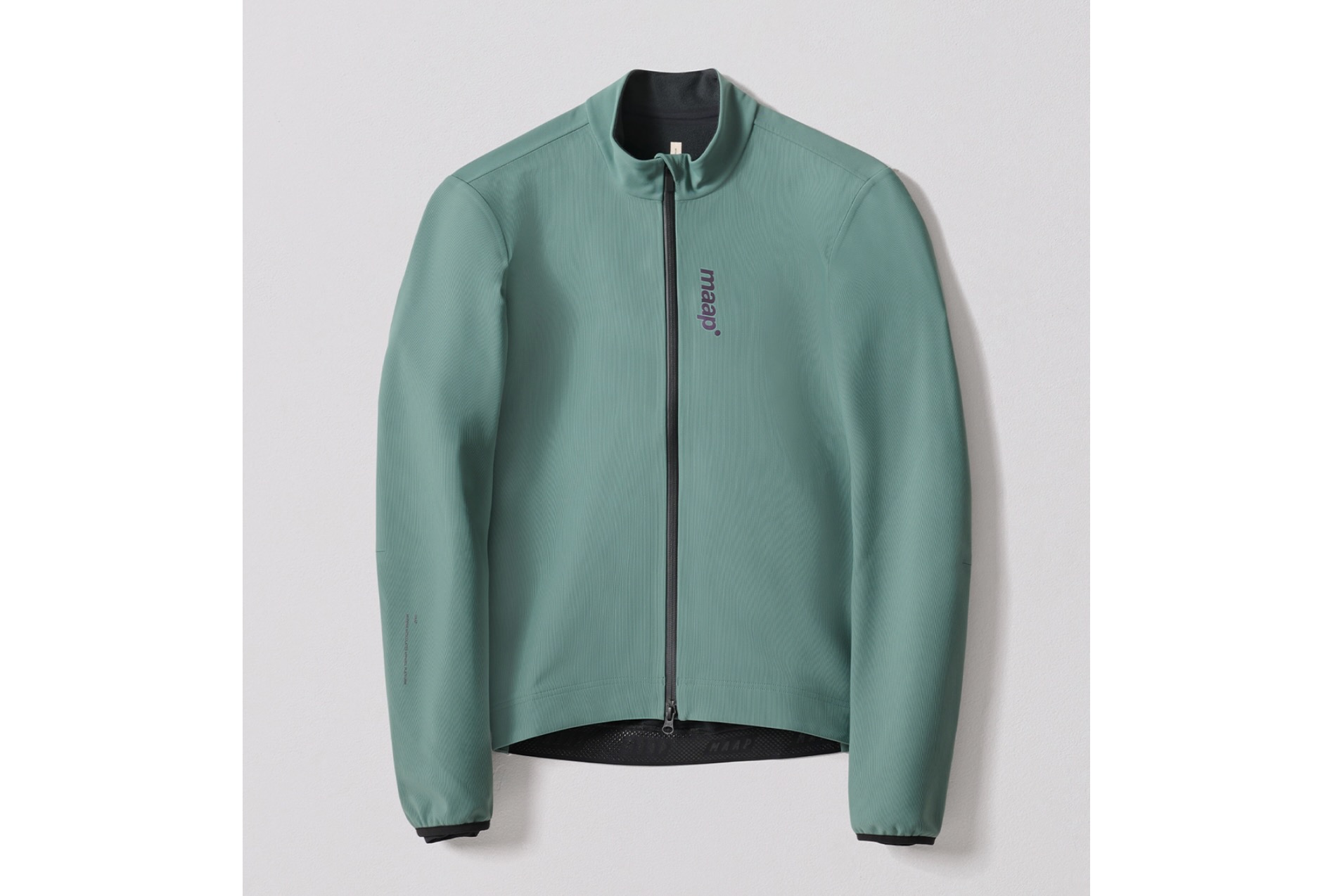
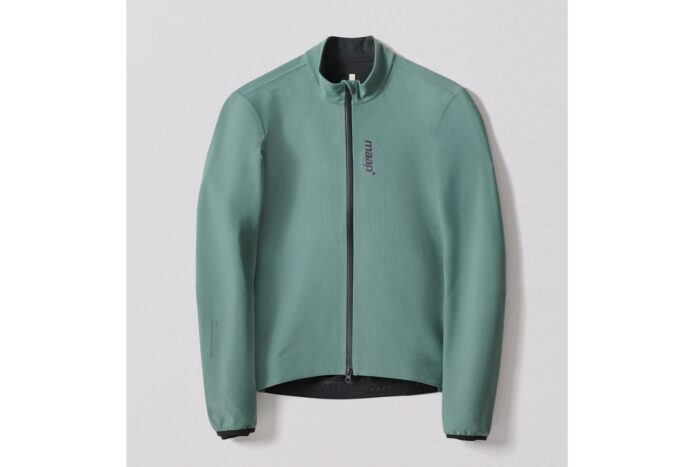
The MAAP (Modern Articulated Apparel Platform) Training Winter Jacket ($345) has a waterproof and windproof Drytex TPU membrane designed to keep the elements at bay without compromising breathability. Steady rain, arctic wind, and freezing cold are no match for this jacket, which exudes a matter-of-fact readiness for the worst of the worst.
The fit of the Training Winter Jacket is slightly more relaxed than expected, coming from MAAP, a brand known for its aero cuts. This semi-spacious fit makes sense — because of its burly construction — and it allows for different layering strategies based on the conditions. This jacket is stout enough that with a substantial base layer and perhaps an optional midlayer, comfort is ensured down to freezing or even below.
Conversely, with only a thin base layer, the Training Winter Jacket breathes enough to work well into the mid-50s. The whole interior is fleece-lined, so we don’t recommend pairing the Winter Training with a sleeveless base layer, as the arms could feel a bit clammy with the fleece lining directly on the skin.
Three deep pockets with drain holes grace the tail of the Training Winter Jacket, along with a zippered valuables pouch on the right-hand edge. The three main pockets provide a nice mix of snug security for contents and easy access, even while wearing thick winter gloves. The two-way front zipper makes it so the jacket can be vented both from the top and bottom. The zipper pulls are meaty and easy to engage with gloves, and the zipper track is reinforced and semi-rigid, making opening and closing the Training Winter Jacket quick and confident.
Perforations behind the upper arms allow excess heat to escape freely and are positioned so as not to take in unwanted elements, while taped seams and a TPU membrane ensure that water stays out. The cuffs are elasticized with a separate stretchy polyester internal cuff to seal out wind and rain with a comfortable grasp around the wrist.
The MAAP Training Winter Jacket is for riders who either relish riding in nasty conditions or don’t have the flexibility to wait for the weather to improve. While versatility isn’t lacking, it is truly a jacket for riding through the depths of winter, much more so than the mild and variable conditions of spring and fall. At $345, think of it as an investment in getting outside on the bike when other jackets simply won’t be up to the task.
Gorewear C5 GORE-TEX Shakedry 1985 Jacket
Specifications
Pros & Cons
Pros
- 100% wind and waterpoof
- Lightweight
- Excellent breathability
- Easy packability
Cons
- Relatively expensive
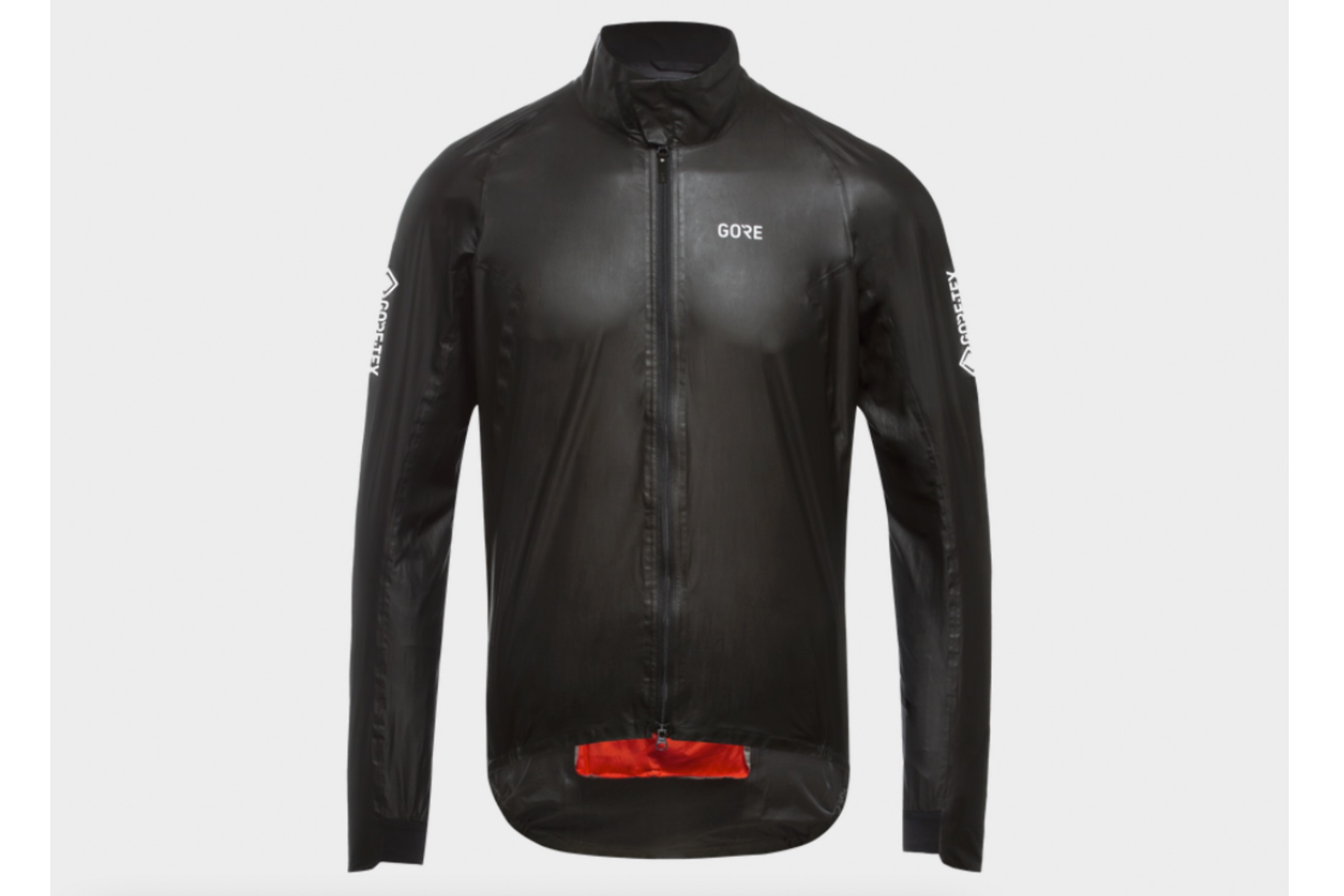
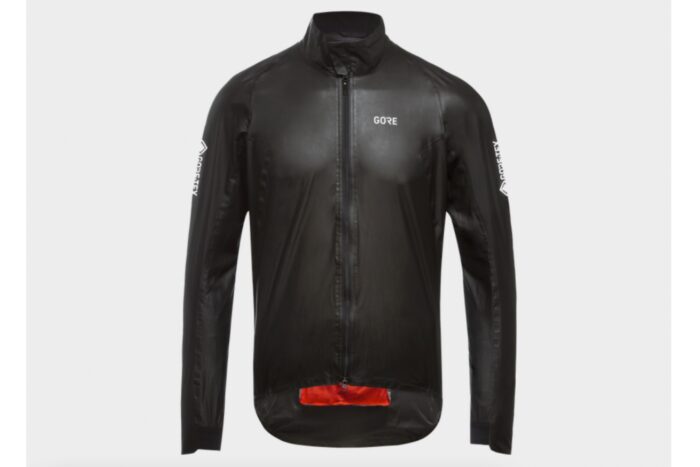
Gorewear’s C5 GORE-TEX Shakedry 1985 Jacket ($300) is a 100% water- and windproof, extremely lightweight, breathable, and packable rain jacket. Shakedry is a remarkable material because it is simply a membrane with the typical face fabric removed. This allows it to be extremely light and avoid the chilling effect that can occur when a face fabric takes on water.
This jacket succeeds because of its simplicity. It’s not insulated, so there’s never a question of whether it might be too warm. If staying warm is a concern, the jacket is windproof but also has a moderately relaxed fit allowing for easy layering of a thermal jersey beneath. Plus, if conditions improve, the Shakedry 1985 is easily stowed away in a jersey pocket. In other words, you have choice and control with this jacket, to a much greater extent than some other winter jackets we tested that attempt to provide an all-in-one solution to wet and cold weather.
As mentioned above, the fit is fairly relaxed, so if excess material flapping at high speed is a concern, you may wish to size down. The lower hem is elasticated on both sides, which keeps the bottom of the jacket from separating from the hips and letting in cold air. The collar is tall in front and on the sides, with a slight taper around the back and two Velcro patches provide choices in how to close the collar for optimal throat comfort. The cuffs feature a lycra panel on the inside edge, which provides ample stretch for easy in/out.
A single zippered pocket with a reflective panel graces the back. The pocket is small but large enough for a phone, very thin gloves, or a couple of ride snacks. The front zipper is a two-way design, allowing the Shakedry 1985 to be vented from both the top and bottom.
The Gorewear C5 Shakedry 1985 Jacket is a great choice because of the freedom it promises. Even if it’s just carried around in a jersey pocket for a few hours, it’s worth having the piece of mind that a sudden change in the weather won’t ruin the ride. And when the time comes, the C5 Shakedry 1985 is up to the task of protecting against the worst of the worst, provided the proper layers and accessories are involved.
Sportful Hot Pack No Rain Jacket
Specifications
Pros & Cons
Pros
- Excellent fit
- No excess material to flap in the wind
- Robust protection for all but the worst conditions
- Easy packability
Cons
- Not the most breathable
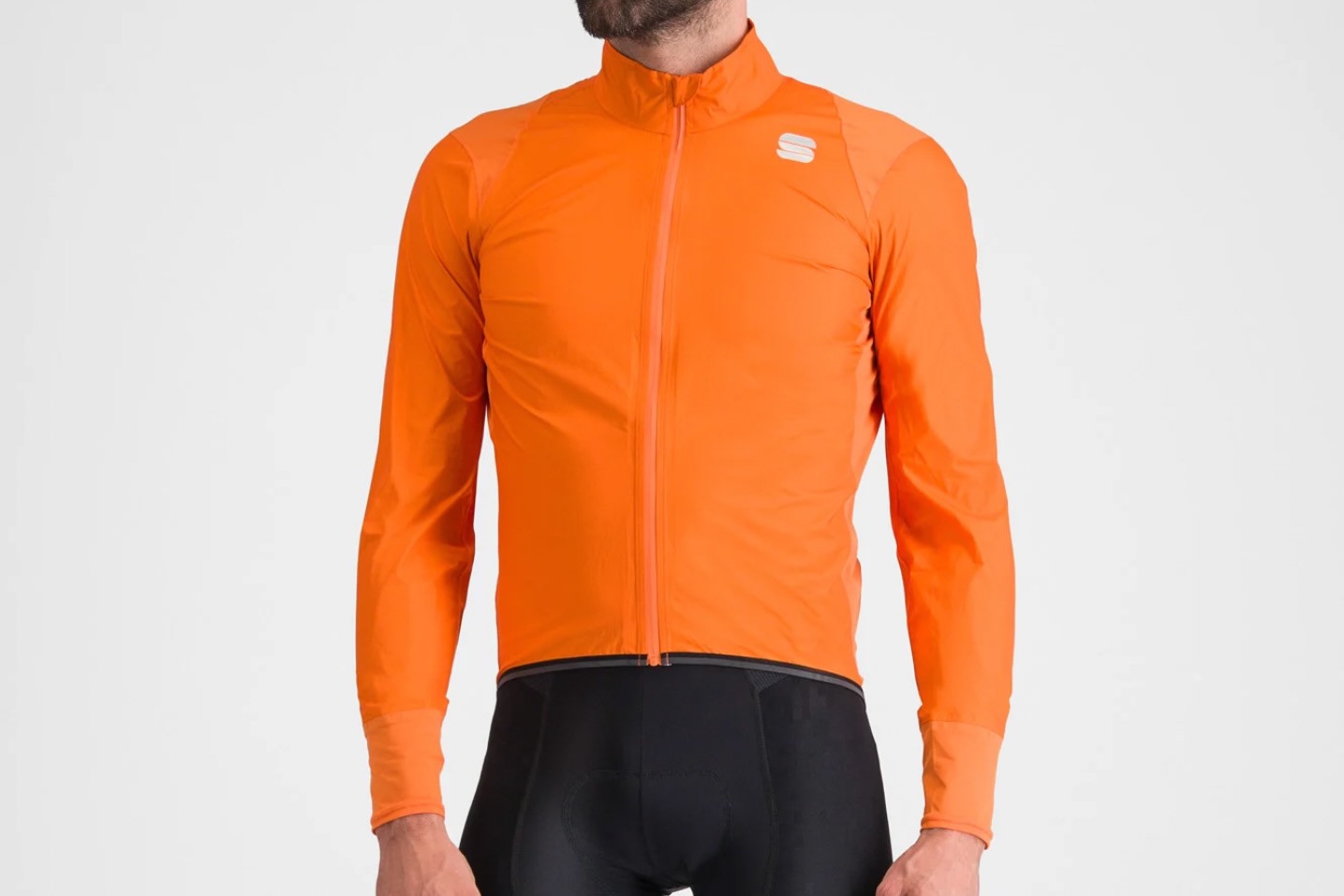
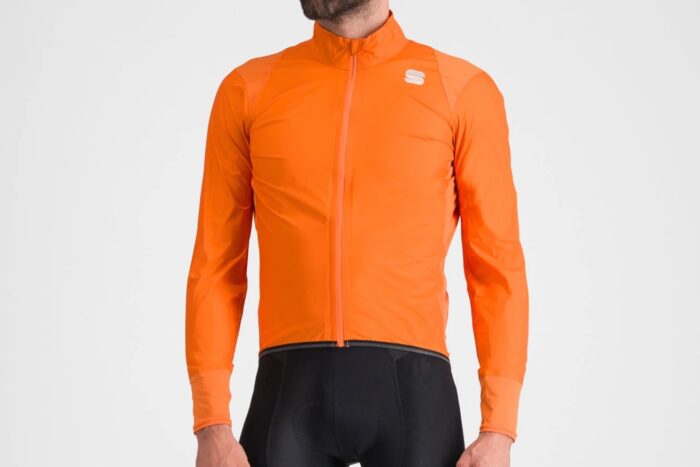
Sportful’s Hot Pack No Rain Jacket ($170) is a robust and lightweight jacket that packs away easily when conditions improve. This jacket blocks wind and rain while also providing an efficiently snug but comfortable fit, making it a great insurance policy to have in your jersey pocket during uncertain weather conditions.
While the Hot Pack No Rain is certainly lightweight, it has just enough rigidity to avoid constant flapping at high speed. For riding in high mountains or unstable weather, the Hot Pack No Rain creates a nice barrier to wind and water, then easily packs up into its rear pocket and disappears into a jersey pocket.
Looking more closely at the panels of the Hot Pack No Rain Jacket, you’ll notice that the heavier, less flappy materials are used in places where this is typically a big problem, such as the upper back, side panels, and inner arms. Not only does the heavier polyester blend used in these zones help reduce flapping, but also keeps the Hot Pack No Rain Jacket quiet during dynamic movements like out-of-saddle climbing and sprinting.
While the Hot Pack No Rain will handle moderate showers with ease, there are better options for riding in steady rains all day. And, the lightweight membrane used in its construction does sacrifice a little in terms of breathability compared to some other options we tested.
Overall, the Sportful Hot Pack No Rain Jacket is a versatile and effective jacket for a variety of conditions. With the correct layers beneath it, the Hot Pack No Rain can serve as a first line of defense during frigid cold and on-and-off rains. On more mild and variable days, it can sit in your jersey pocket until the time comes, then keep you comfortable while you hammer through a passing storm.
7Mesh Freeflow Jacket
Specifications
Pros & Cons
Pros
- Dialed fit
- Luxurious warmth
- Lightweight
- Beautiful
- Packable
Cons
- Not designed for constant or heavy rainfall
- Should have a two-way zipper
- Pocket zipper requires a bit of finesse
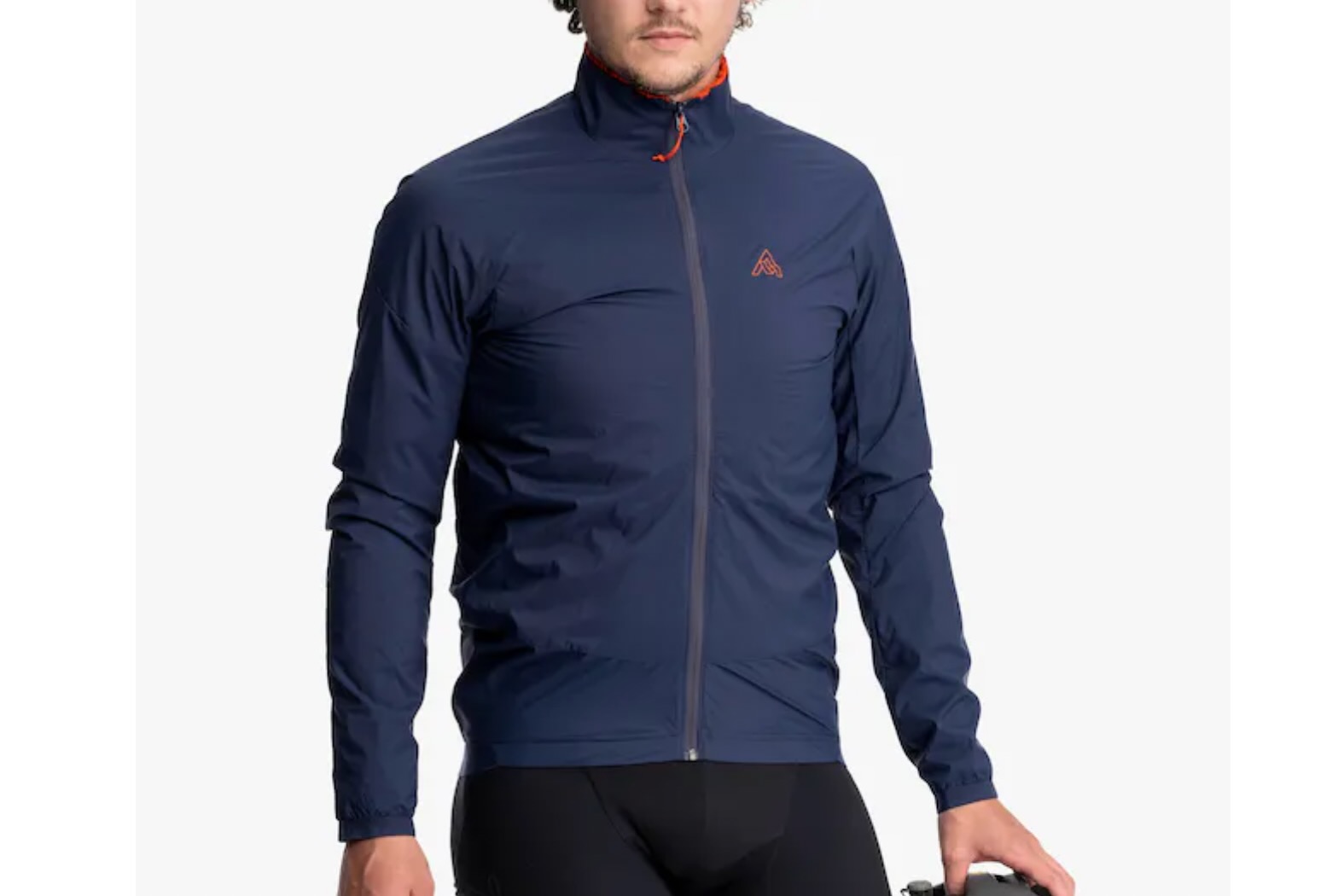
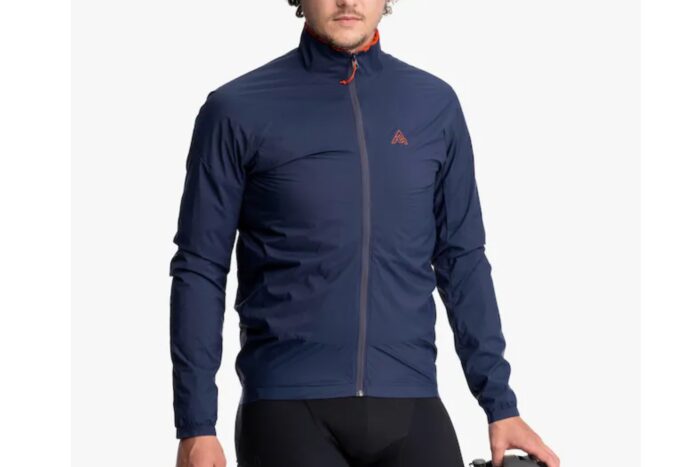
The 7Mesh Freeflow Jacket ($220) is a luxuriously warm and staggeringly lightweight jacket that pairs Polartec Alpha insulation with a ripstop nylon outer that both quickly moves moisture out and restricts the air coming in.
Performance is more important than style, but the Redwood colorway we tested happens to look brilliant and features a contrasting bright orange color for the Polartec Alpha lining that extends just beyond the edges of the collar. Two reflective logos grace the chest and upper back. Overall, the Freeflow is one of, if not the best-looking jacket we tested.
The fit is excellent, with tapered arms that never flap at high speed, a snug but accommodating shoulder and trunk, and just enough length to protect the hips and tailbone area without any bunching around the front zipper. The medium-height collar gives just enough coverage of the neck without interfering with the chin or jaw, and an elasticated hem with silicone grippers keeps it from riding up in the back.
The ideal conditions for the Freeflow jacket are cold and dry. On test rides in the mid-40s with clear skies and steady winds, the Freeflow keeps you warm on descents and at high speed on flat ground but also manages to pull away sweat vapor rapidly so that whenever the speed drops and the effort increases on climbs, there’s little to no need to unzip it.
Packability isn’t normally a strong suit for jackets that are this warm. Here again, the Freeflow jacket exceeds expectations with its Stash System, which allows the Freeflow to pack easily into its rear pocket, and also attach to the bike if needed, thanks to a pair of straps inside the rear pocket. This means that the Freeflow is a great pick for all-day rides with huge fluctuations in temperatures.
The only condition in which the 7Mesh Freeflow Jacket isn’t going to dominate is heavy or constant rainfall. It’s a better jacket for drier days that are or may become bitterly cold due to wind chill. At $220, we still consider it a solid value because it has a great fit, transitions perfectly from blocking wind to pulling away excessive body heat, and looks amazing doing both.
Velocio Ultralight Jacket
Specifications
Pros & Cons
Pros
- Close-fitting
- Breathable
- Great color options
- Durable surface
Cons
- Expensive
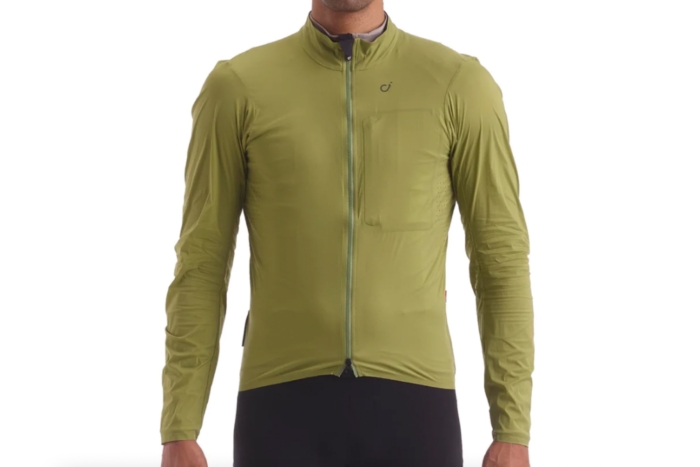
The Ultralight Jacket ($209) is Velocio’s technical three-season outer layer, safeguarding against wind and passing showers. This jacket’s packability and ultra-lightweight construction make it a great companion for adventures into the high mountains, rides that start chilly before warming up, or that could feature a passing afternoon rain shower.
Ventilation is excellent and has been updated in the latest version of the Ultralight Jacket by using laser-cut perforations in place of the original mesh panels. Velocio chose this design not only to help the Ultralight keep riders more comfortable but also to enhance durability.
Holding the Ultralight Jacket, it’s clear that durability was a priority for Velocio in this design. The Polyamide material has a noticeable texture on the outer surface to help defend the Ultralight Jacket from snagging the super thin material on objects in your jersey pockets or in the laundry.
The standout feature of the Ultralight is its highly refined fit. Unlike many lightweight jackets that flap like crazy above 20mph, the Ultralight manages to keep the rippling to a minimum and not waste rider energy by producing aerodynamic drag.
The Ultralight Jacket has a single zippered pocket into which the jacket stashes, making it easy to store in a jersey or cargo bibs. Its feathery 70-g weight also means it won’t weigh you down.
If you’re looking for the best lightweight and packable jacket, the Velocio Ultralight Jacket is worth the extra cost over many similar-looking options. While this category of jackets may not have many obvious differences among the individual offerings, the Velocio Ultralight stands out as a clear favorite.
Other Cycling Jackets To Protect You From The Elements
Specifications
Pros & Cons
Pros
- Incredible warmth to weight ratio
- Moderate price point
- Comfortable
- Breathes well
Cons
- Doesn't pack down that small – tough to fit in a jersey pocket
- Not the most streamlined
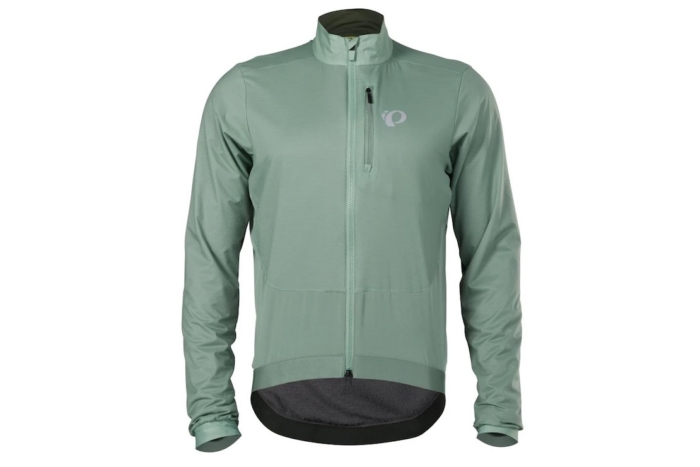
Pearl Izumi lists the Expedition PRO Alpha Jacket ($225) in its gravel apparel lineup, but we feel it’s a solid option for any road surface — gravel or pavement — for riding in cold and dry conditions. This jacket is lightweight, comfortable, breathable, and surprisingly warm. It’s also well-made and competitively priced compared to many insulated cycling jackets.
In this day and age, there are a lot of insulated jackets on the market, and they vary in price from around $200 up to $400. Coming in at the lower end of the range, the Expedition PRO doesn’t skimp on the materials or design details. It uses the same Polartec Alpha Direct insulation that you’ll find on far more expensive options like the Castelli Alpha Doppio RoS but for a lot less cash.
The insulation in the Expedition PRO is laid out strategically to provide warmth where you need it and breathability where you don’t. And, Polartec Alpha Direct is shockingly effective for how thin and light it is. It’s also impressively breathable, and when combined with the Toray woven fabric shell, it does a wonderful job of balancing wind-resistance with temperature and moisture regulation. Pearl Izumi wisely chose to leave the insulation out of the underarms and the front of the jacket where it overlaps with bibs, and put a very thin and stretchy material there to help prevent overheating.
The exterior of the jacket is treated with a PFAS-free DWR, and while it isn’t waterproof, it repels very light showers and road spray with ease. Still, this is not a jacket that you want to be caught in a downpour wearing. This jacket is best suited to cold temperatures and dry conditions when you can be sure the skies aren’t going to open up on you.
The Expedition PRO Alpha jacket has a relatively slim, form fit. The size medium fit our six-foot-tall and 170-pound tester perfectly. There’s plenty of room to wear a jersey or baselayer underneath, but it’s not baggy or loose anywhere. The silicone-infused elastic hem helps keep it in place and it deftly avoids feeling restrictive or bulky.
A zippered chest pocket and zippered rear pocket, both of which are lined with a soft, fleecy material, comprise the storage on the Expedition PRO. A quality 2-way YKK zipper closure ensures you can dump heat and moisture when needed.
Our gripes with the Expedition PRO Alpha jacket are few. Our biggest issue is that it doesn’t pack down as small as some other options, so it can be tough to stuff into a jersey pocket if you overheat. And while the fit is slim, the exterior of the shell isn’t the most streamlined.
Still, this is a great piece for cold training rides on dry days in the fall, winter, or spring. It’s relatively light, plenty warm, and adequately breathable to help maintain a balanced body temperature, and honestly, it looks pretty good, too.
Specifications
Pros & Cons
Pros
- Lightweight
- Warm
- Waterproof
Cons
- Expensive
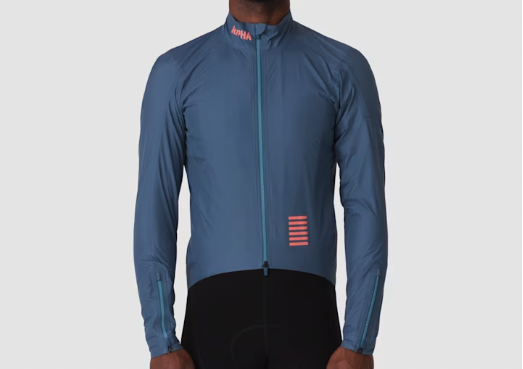
Rapha’s Pro Team line is tailored and styled for those looking for maximum performance from their apparel. The Pro Team Insulated GORE-TEX Rain Jacket ($420) brings an aero fit, low weight, and technically advanced materials to a rain jacket that’s ready for racing and high-tempo riding in nasty weather.
This jacket has the GORE-TEX Paclite Plus membrane, as well as an abrasion-resistant face fabric, which combines to form a shell that meets Gore’s Black Diamond standard for waterproofness. Inside, 65gsm synthetic insulation adds warmth, moisture wicking, and breathability to help prevent overheating.
The insulation is thin and soft, meaning it can be worn with only a lightweight or even sleeveless base layer. Insulation on the arms is even lighter than on the torso and was likely chosen to provide better on-skin comfort and moisture control and is in line with the Pro Team ethos of designing products meant for riding flat out and generating a fair bit of body heat.
Conversely, to layer much of anything beneath this jacket, you may need to size up because the fit is snug, and the shell material is not stretchy. The forearms are especially snug-fitting and thankfully feature zippers to aid in getting arms in and out while adding a ventilation option. The location of the zippers — directly on top of the forearm when riding 0151 is a bit curious. We could feel the zipper pull against the back of our hands most of the time, especially when we flexed our wrists when riding out of the saddle.
The tail hem is elasticized to give the waist a bit of stretch so it can accommodate stuffed pockets, and silicone on the inside helps keep it in place to prevent cold air or moisture from creeping in. The two pockets on the tail of the jacket are easily accessible thanks to their generous width and an internal chest pocket is great for stashing important items like keys and cards. Reflective bars on the back side of the sleeves and a tab stitched between the two rear pockets add visibility for motorists approaching from behind.
Aside from the minor issue with the sleeve zipper location, and assuming you choose the correct size based on your layering preferences, the Rapha Pro Team Insulated GORE-TEX Rain Jacket is a perfect choice for days when constant rain and high-speed are given, and cold temperatures are likely.
Yes, the price is astronomical, but it reflects how well the Pro Team Insulated GORE-TEX Jacket balances protection, breathability, and a race-ready fit. It’s fair to say that this jacket could save you from having to purchase others in the future since it can truly do it all.
Specifications
Pros & Cons
Pros
- Great freedom of movement
- Lightweight
- Versatile
- Fits like a jersey
Cons
- Not designed for moderate to heavy rainfall
- Not intended for super cold temperatures
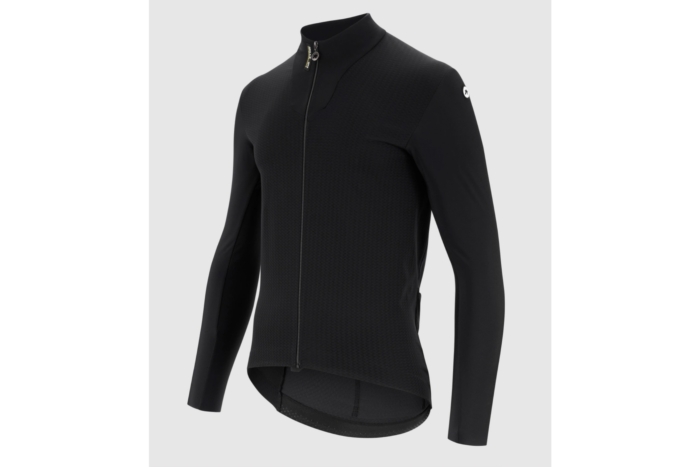
The Assos Mille GTS Spring Fall Jacket C2 ($290) blurs the line between a jacket and a long-sleeve jersey, offering a well-balanced mix of warmth, stretch, and protection from light moisture, wind, and cold. It’s not as hydrophobic as some of the competition, but its comfort is tough to beat.
The fit is streamlined and stretchy, mimicking a jersey, but with just enough space to use a burly base layer for colder temps down into the upper 40s. With a lightweight base layer, the Mille GTS offers sufficient ventilation to work comfortably into the low 60s.
While the proprietary AIRBLOCK.888 membrane shields the chest, sides, and upper back from wind and road spray, the arms are not shielded in this way. Since arms are one of the most vulnerable areas for rainfall, we recommend layering a packable shell jacket over the Mille GTS in properly wet conditions. A good way to think of the Mille GTS is as a dry-weather jacket for a wide range of temps when paired with the correct base layer and other accessories like a neck warmer, vest, and gloves.
On the road, the Mille GTS performed like a jersey, easily accommodating an aggressive riding position without feeling restrictive or bulky. One key to this comfortable fit is the material used in the arms, which Assos calls RX Evo Light. It’s a lightly insulated fabric that Assos claims can fend off a light drizzle and road spray, although we’d still pack a shell for potentially wet rides.
After testing, we feel that the sweet spot for the Mille GTS is dry days with temps in the 50s, paired with a long-sleeved base layer. These are conditions that are common in spring and fall, so this jacket is aptly named.
The struzzoKragen collar is easily one of the most comfortable jacket collars there is. Thermoregulation in the collar and upper chest is exceptional, and even on climbs, we never had the urge to unzip the collar to expose my throat to the cold air in order to get better ventilation.
For riders who like riding in Spring and Fall, in pleasantly cool weather, the Assos Mille GTS Spring Fall Jacket C2 could be a valuable addition to the wardrobe. It’s light enough to feel like a jersey in warmer weather, and with the right layering system, it can also be effective down to the mid-40s. At $290, it’s actually one of the more competitively priced pieces that Assos offers, relative to its competition.
Specifications
Pros & Cons
Pros
- Luxurious freedom of movement
- Lightweight
- Uncompromised warmth
- Versatile
Cons
- Expensive
- Not built for constant rain or road spray
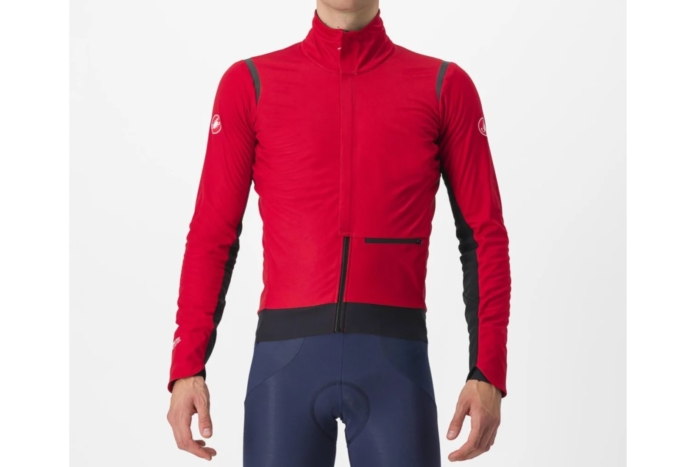
Freedom of movement is an oft-neglected aspect of jacket design and into this void steps the Alpha Doppio RoS ($400) jacket from Castelli. Donning this jacket feels like slipping on a favorite sweater but with all the performance and protection you’d expect from a Castelli jacket bearing the RoS (Rain or Shine) label.
On the road, the Alpha Doppio RoS jacket performed so well that it was almost boring. It adjusts to both the external and internal temperature so quickly and effectively that homeostasis was never disturbed once throughout testing. Ripping a chilly downhill before even having a chance to warm up, it formed a thermal barrier that let in not a whisper of wind. At the other extreme, charging up a climb in the big ring on a damp afternoon, the Alpha Doppio RoS felt weightless and full of air, allowing whatever moisture had built up to act as a natural coolant.
The fit of the Alpha Doppio RoS is absolutely dialed. Not only the cut but also the weight and stretch of the Gore-Tex Infinium Windstoppper deliver the perfect blend of flexibility and flap-free aerodynamics, making fast-paced rides a joy. Unlike many other jackets with excess material or baggier fits, the Alpha Doppio RoS accommodates any position while retaining a snug, aero fit.
Inside the Gore-Tex Infinium shell, Castelli has included a separate Polartec Alpha Direct insulating layer to let you regulate temperature and ventilation. Essentially, this is an integrated insulated vest that provides a choice in how much warmth the Alpha Doppio RoS retains. We were amazed at how warm the Alpha Doppio RoS was with both the Gore-Tex Infinium and Polartec Alpha layers zipped up, especially considering how light this jacket is. With the Gore-Tex layer zipped and the Polartec Alpha layer left open, the breathability is enhanced greatly. This design makes it impressively versatile, which we expect from a jacket that runs $400.
If you’re looking for a luxurious cycling jacket that has a favorable weight-to-warmth ratio, as well as a high degree of versatility and a stellar fit, the Castelli Alpha Doppio RoS should be on your list. It’s a sizeable investment in comfort but will pay a nice dividend as winter grinds on.
Specifications
Pros & Cons
Pros
- Tailored, streamlined fit
- Easy in/out
- Solid zipper
- Built-in stow pocket
Cons
- None really
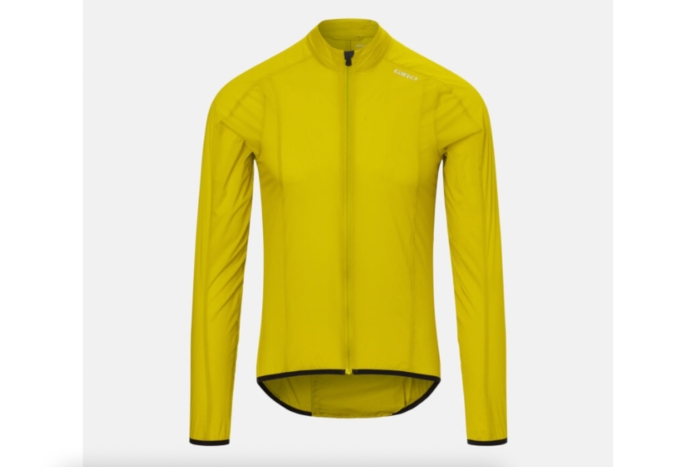
The Giro Chrono Expert Wind Jacket ($120) is one of the best wind jackets we tested this year and stacks up well against — and even equals in some respects — wind jackets at much higher price points.
The typical issue with wind jackets is that they flap like crazy at higher speeds, on mountain descents, as in…the place where they are most useful for staying warm. While some of this flapping can be mitigated by sizing down, that can lead to other problems, like diminished comfort, more difficulty in getting in and out while riding, and a higher risk of tearing the material. So, the first thing we always scrutinize on a wind jacket is how well it fits and how little it flaps.
We are happy to report that the Chrono Expert is tailored to remain quiet and comfortable, thanks to a Goldilocks fit that’s tailored to the riding position and material that stretches just enough to accommodate layering or variances in upper body shaping.
Ventilation is excellent, as almost the entire back of the jacket is perforated to allow excess heat and sweat vapor to escape freely. Trim along the hems and the sleeve and waist deliver plenty of stretch, which helps with quickly getting in and out, as well as accommodating loaded jersey pockets and glove cuffs. Reflective accents at the rear neck and tail of the Chrono Expert, as well as reflective Giro logos on the shoulder, increase visibility for approaching motorists.
Giro has wisely equipped this flyweight jacket with a stout zipper that is easy to operate and locks down to prevent unwanted movement. A stow pocket is sewn into the lower hem, ensuring that you can keep the Chrono Expert Wind Jacket tucked away neatly in your jersey pocket or bar bag while not in use.
Available in five sizes and six tasteful colors and retailing for $120, the Giro Chrono Expert Wind Jacket is a winning pick for rides with long descents, early starts, or late finishes, or whenever the weather is a bit uncertain but mild overall.
Specifications
Pros & Cons
Pros
- Exceptional breathability
- Legitimately waterproof
- Nice fit
- Can be worn off the bike
Cons
- Looser fit
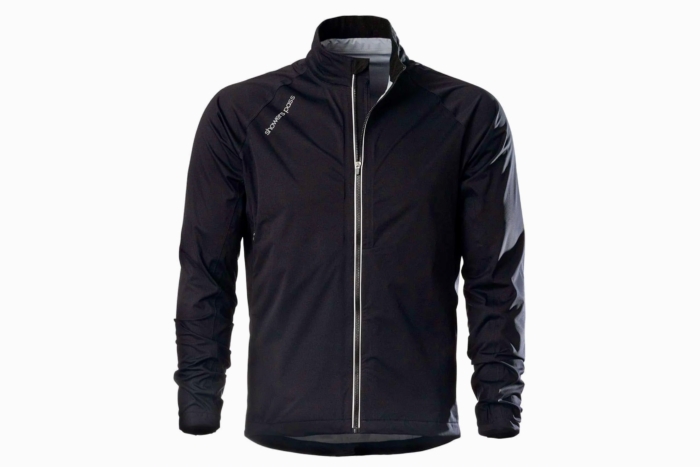
Showers Pass jackets are designed in Portland, OR, a place that gets quite a bit of precipitation, making it no surprise that the Cloudburst Jacket ($219) is brilliant for not only keeping rain out but also allowing excess heat to escape freely. The Cloudburst is also a handsome piece that can work for a number of other activities on a dreary day outdoors.
The Cloubdurst has a 3-layer fabric called eliteAIR that breaths at a very impressive rate of 42,000 g /m2, which is 25% better than any other jacket in this test. So, it’s safe to say that if you need a jacket that can fend off constant rain but also wick away the sweat vapor of intense riding, the Cloudburst should be on your list.
Waterproofing is bolstered by taped seams, but it’s the supple feel of the Cloudburst that really makes an impression. While most jackets offering this level of waterproofing have a rigid and plasticized feel to them, the Cloudburst has a soft, flexible surface feel that translates to how it feels against the body.
Branding is minimal and discreet, which is always a welcome thing in any piece of activewear. The general vibe of the Cloudburst is casual, allowing it to look the part on both an epic century ride, daily commute, or working from a coffee shop. That said, the fit is a bit less streamlined than most of the other jackets we tested.
The rear pocket is large enough for a phone plus other small items, with a robust zipper track that is easy to use. The dimensions and construction of the pocket ensure that everything stays snug and tidy inside. Since the Cloudburst is also marketed by Showers Pass as a running jacket, the tail is not as long as most cycling jackets.
The Showers Pass Cloudburst surprised us by bringing a casual vibe to a segment of the market that is very tech-heavy, but more than held its own against the rest of the test group. A jacket that reflects where it’s designed, the Cloudburst is perfect for a temperate winter climate like the Pacific Northwest of the U.S., or the British Isles, where riding through winter can be super fun with the right balance of protection and breathability.
Specifications
Pros & Cons
Pros
- Race-ready fit
- Breathable
- Ready for nasty conditions
Cons
- Heat-bonded logos will eventually chip and peel
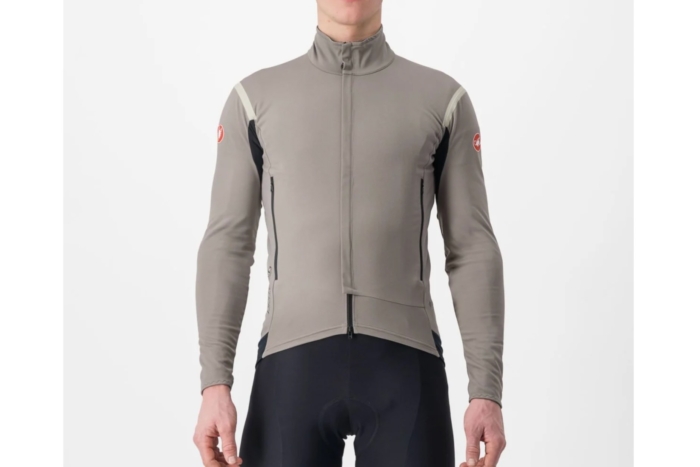
The Castelli Perfetto RoS 2 ($280) is the brand’s most capable jacket for all types of fall, winter, and spring training and is ready for the fastest rides and races. Castelli designers tailored the Perfetto to have the fit and feel of a jersey but never compromised on its ability to protect against seriously harsh weather. The result is an aerodynamically optimized, lightweight, and incredibly versatile jacket.
Gore-Tex Infinium Windstopper fabric is the key to the Perfetto’s performance. Infinium is hydrophobic and it takes sustained heavy rainfall and road spray before it will take in any moisture. If that actually happens, the fabric’s dense weave and lightweight fleece backing will prevent any drop in temperature through wind chill and dry out rapidly once the rain stops. Taped seams around the shoulders prevent moisture ingress, further delaying any moisture from penetrating through the Perfetto in the most horrid conditions.
The sleeves are just long enough to cover the wrists without any bunching or flapping. The collar is tall and lined with a soft, perforated lycra that won’t irritate the neck or jaw areas. Breathable lycra panels are placed under the arms, out of the way of wind and rain, and zippered vents on the sides of the trunk can be opened to bring rapid ventilation to the Perfetto when conditions improve.
Two large pockets grace the rear, and the right-side pocket features a smaller internally sewn pocket for storing valuables. Perforated reflective trim beneath the pockets adds visibility in low-light conditions.
The only small quibble with the Perfetto is the use of several heat-bonded Castelli logos, which will eventually chip and peel. This is something that Castelli has begun to transition away from on some of its high-end bibs, and we hope we see the jerseys and jackets receive the same stitched rubber medallion branding in the future.
If going fast through the worst of winter is in your future, the Castelli Perfetto RoS 2 Jacket should be in your closet.
Specifications
Pros & Cons
Pros
- Race-ready fit
- Breathable
- Ready for nasty conditions
Cons
- No rear pocket
- Fairly expensive
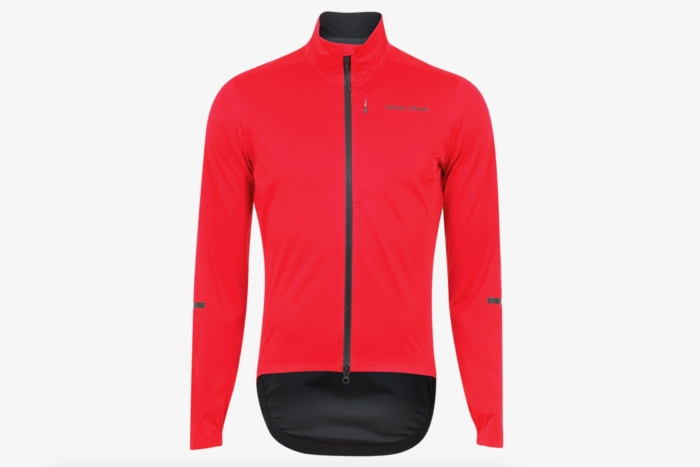
Pearl Izumi has created a jacket that excels not only in wet but also in cold and dry conditions. Thanks to a Polartec NeoShell membrane as well as taped seams and zipper, the Pro Neoshell WxB Jacket ($325) is ready for whatever winter has in store. Even if conditions improve dramatically, the Pro Neoshell WxB Jacket is light, stretchy, and breathable enough to remain comfortable, and should you choose to take it off entirely, it packs up small enough to fit in a jersey pocket.
The fit is snug enough to avoid flappy excess material but also accommodates an aggressive riding position without feeling restrictive. The sleeves are sufficiently long and terminate at a nicely designed cuff that has an angled opening with an elasticized inboard edge.
These features are meant to help the cuff better fit the wrist as it articulates to the position of riding with drop handlebars, and they work very well. The collar is tall enough to protect the throat but short enough to avoid rubbing or irritating the chin or jaw. Silicone grippers applied to the inside edge of the tail help keep the rear hem in place.
The 2-way zipper is burly and easy to vent from both top and bottom. The zipper track is also taped and reinforced, so no wind or moisture gets through. The zipper track isn’t the smoothest, and takes some effort to operate, but also looks like it will last forever.
Reflective elements are featured on each elbow to lend some visibility for motorists approaching from behind. I would like to see a little bit more effort put into visibility on a $325 jacket, but something is better than nothing. The lack of a rear pocket is another small nitpick with the Pro Neoshell WxB Jacket. While this does keep the weight down and helps ensure easier packability, the single chest pocket just doesn’t seem as useful as a standard rear pocket of similar size.
On the road, this jacket performs as expected, providing supreme protection from wind and rain while allowing all excess body heat and sweat vapor to escape before it’s even noticed. At $325, the Pearl Izumi Pro Neoshell WxB is competing in a price point with some tough competition but makes a strong case as a one-piece solution to winter riding.
Specifications
Pros & Cons
Pros
- Luxurious warmth
- Easy packability
Cons
- Fits a bit loose
- Pocket zippers a bit tricky to operate
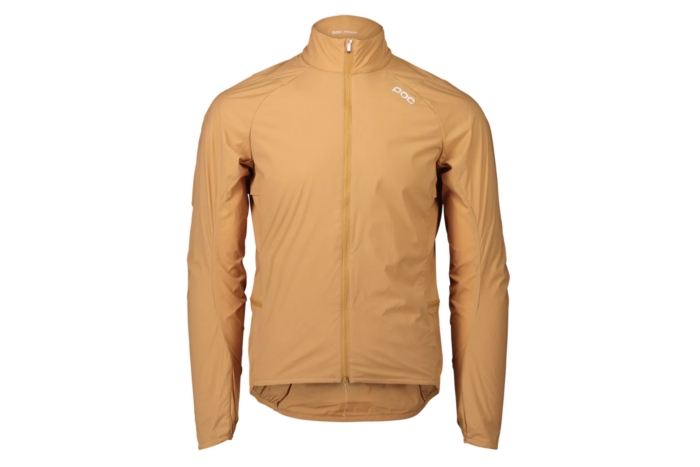
Constructed from a windproof material and featuring panels of an innovative insulating inner liner with octagonal yarn fibers that are more efficient at trapping heat, the POC Pro Thermal Jacket ($200) offers luxurious warmth without overheating.
POC also applies a DWR treatment to the Pro Thermal jacket, which resists water absorption and allows raindrops to bead up and quickly fall off the surface. Factoring in its easy packability, the POC Pro Thermal makes a strong case as a one-piece solution for fall, spring, and mild winter conditions.
The POC Pro Thermal Jacket offers a massive amount of storage, with three large pockets surrounding the back and sides of the jacket’s tail. The central pocket is nice and spacious with a zipper that’s easy to operate. The zippers of the side pockets both run in the same direction, so opening or closing each one requires grabbing the zipper in a different location. The front zipper is a two-way design, which affords the option to vent the POC Pro Thermal Jacket from the bottom.
It is critical that buyers of this jacket size down, as it runs large and can be quite flappy across the shoulders and chest. Even with sizing down, the POC Pro Thermal Jacket won’t have a super snug fit, especially around the stomach. Sizing down will not only reduce aerodynamic drag but will also ensure that the insulation inside the POC Pro Thermal Jacket has a chance to do its job correctly, as it will remain close enough to the skin to actually hold on to body heat.
Assuming you get along with the cut, which is not the most aero available, the POC Pro Thermal Jacket is an excellent choice for riding in winter climates with cold and wind, but only intermittent rain. And, at $200, it’s competitively priced among similar models.
Specifications
Pros & Cons
Pros
- Taped seams
- Lightweight
- Tailored fit
- Packable but hearty
Cons
- No pocket
- 1-way zipper
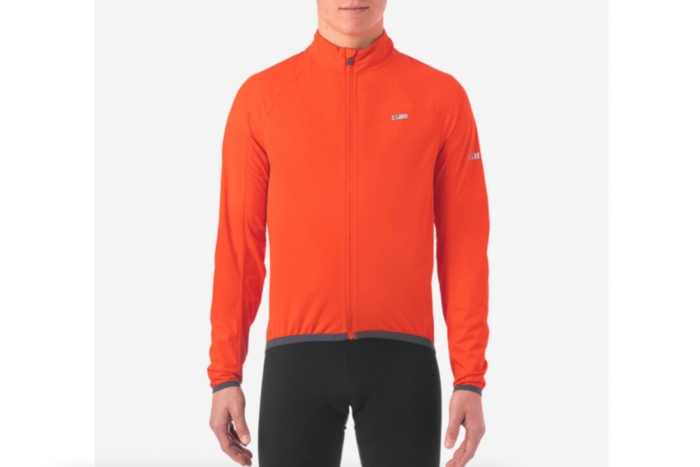
The Giro Chrono Expert Rain Jacket ($165) is designed to keep the speed up when the rain is coming down. With a fit tailored to the road riding position, taped seams, plus a DWR treatment, it’s a no-compromise barrier against moisture and cold that won’t slow you down or break the bank.
The density of the Chrono Expert Rain Jacket material balances foul-weather protection and convenient packability. While it’s on, it feels like a jacket that couldn’t possibly be rolled up and stuffed into a jersey, yet it allows for this easily, and it is lightweight enough that you’ll barely notice it’s stowed. There is no pocket in the rear or anywhere else on this jacket, and while that may be an issue for some, keep in mind that this choice does make the jacket easier to pack and lighter overall.
The collar of the Chrono expert is lined with a soft polyester that grabs water and prevents it from migrating in, while also pampering your neck with a soft feel. The collar height is sufficient to block wind, but not so tall as to rub the jawbone area. The hems at the waist and sleeve are super stretchy, which is a nice choice that not all brands make plus they are silicone-lined to enhance the jacket’s hold around the waist and wrists.
The zipper is a one-direction style, which is perhaps the primary thing we’re disappointed to see on this jacket. Two-way zippers allow the jacket to be vented from the bottom and are easier to operate while hunched forward in an aggressive riding position. Thankfully, the single zipper on the Chrono Expert is sturdy, easy to operate, and locks to prevent unwanted zipper movement. And, while we applaud Giro for tailoring the fit to an aggressive riding position, we did find that this jacket fit differently than other Giro tops, particularly around the chest and armpits where it is quite snug and may require sizing up relative to other Giro jackets and jerseys.
A mesh-lined flap across the back helps the jacket stretch and vent, and further down the back two long reflective strips are sewn into the seams, and a reflective Giro logo is bonded between them. Another large block of reflective material is sewn into the back of the neck, giving a serious boost in visibility for low light conditions.
Overall, Giro has created a great jacket for road riding in the Chrono Expert Rain. While it’s not designed to withstand hours of driving rain and non-stop road spray, it did an impressive job of keeping us comfortable and able to ride efficiently in some foul Pacific Northwest conditions. Again, we recommend sizing up relative to any Giro tops worn in the past, and we are pretty stoked on the Vermillion color option as a bright but pleasing color for dark winter days.
Specifications
Pros & Cons
Pros
- Great freedom of movement
- Lightweight
- Super-warm
- Surprisingly versatile
Cons
- None
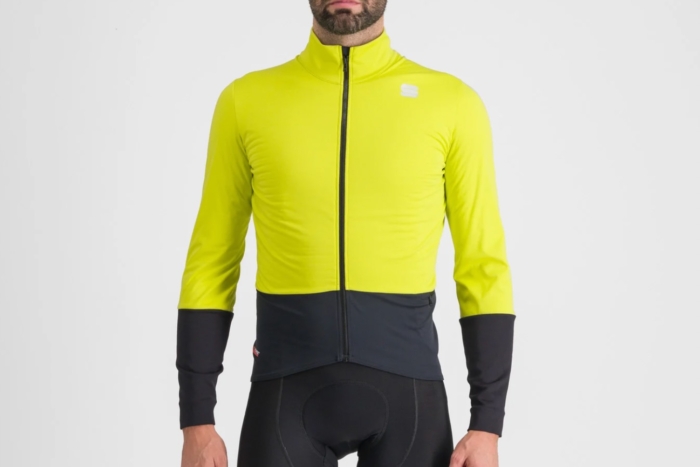
The Sportful Total Comfort Jacket ($300) is ready for anything winter can unleash, from biting arctic wind to ceaseless rainfall and the road spray that comes with it. What impressed us most was the Total Comfort Jacket’s ability to defend against the outside while also providing a sanctuary of lightweight luxury and mobility inside.
Thanks to two Polartec fabrics, NeoShell and Alpha, this jacket has the ability to fend off water and also utilize natural body heat without any excess bulk or restriction. In fact, the Total Comfort looks and feels like a burly jersey, more so than a jacket, and that’s about the best highest praise possible.
The Total Comfort is a masterpiece of minimal style, with a two-tone color scheme with a black midsection contrasted with a colorful chest and upper arms, then transitioning back to black below the elbows. Two small Sportful logos adorn the chest and rear pocket. Inside, the Polartec Alpha insulation is bright orange, which gives the Total Comfort Jacket some verve and accentuates this material that provides supreme insulation.
This is indeed a warm jacket. So warm, in fact, that we had limited opportunities to truly test its limits. Even on chilly autumn mornings, the warmth that quickly stored up inside the jacket led to a limited effort level and sticking to a steady pace on flat terrain.
That’s not to say that wearing the Total Comfort Jacket was akin to a session in the sauna, in fact quite the opposite. The heat stored inside the Polartec Alpha insulation was evenly distributed and felt airy, like riding through the desert, and more often than not, the base layer underneath remained dry.
Thanks to a DWR treatment on the tail and cuffs, the Total Comfort Jacket kept drizzle and road spray out of these vulnerable areas. While Polartec NeoShell is a waterproof material, it allows enough air exchange that even when riding in moderately wet conditions, we stayed warm and comfortable. This is why we like materials like NeoShell, which fend off 99.9% of moisture while remaining breathable enough to handle a wide range of conditions in comfort.
The cut of the Total Comfort is slim but the NeoShell material provides enough stretch that there is no binding or pulling anywhere. Despite the accommodating stretch, the NeoShell material resists flapping at high speed and the arm and torso lengths are spot on, providing enough coverage to the wrists and waist without any bunching. Three rear pockets are easy to access, and further help the Total Comfort Jacket mimic a long sleeve jersey.
While $300 isn’t a bargain, the Sportful Total Comfort Jacket is more affordable than some other jackets that it outperformed. If you want one jacket for all your rides under 55 degrees, rain or shine, the Total Comfort is worthy of consideration.
Specifications
Pros & Cons
Pros
- Light
- Breathable
- Reasonable price
Cons
- Materials flaps a bit in the wind
- Super basic
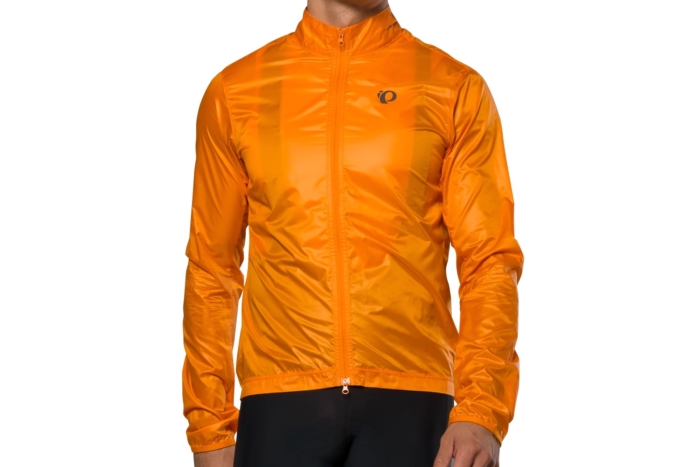
Weighing just 1.5 ounces, or 46 g, the Pearl Izumi Attack Barrier Jacket ($90) is a lightweight insurance policy that stashes easily in a jersey pocket and can save you during unexpected or quick-passing weather conditions.
Made from ultralight Barrier ripstop fabric, the Attack Barrier Jacket is windproof with a DWR treatment that can also fend off light showers, and it features nice details that elevate it above the basic rain capes of yesteryear. Perforations between the shoulders allow excess heat to escape. Further enhancing ventilation is a two-way front zipper that allows air intake to be zoned based on rider preference.
A rear hem silicone grip keeps the fit tidy and reduces flapping. Reflective tabs are sewn into the seams at the side of the torso to lend some visibility for motorists approaching from behind.
The fit is snug without being constrictive or difficult to get on quickly, perhaps even whilst continuing to ride for those with the skills to do that safely. The arms and shoulders will flap a bit at speed, as is typical of shell jackets like the Attack Barrier. If that’s a big concern, sizing down will help mitigate this, as the ripstop fabric is just stretchy enough to comply with the tighter fit.
The Pearl Izumi Attack Barrier Jacket is a simple but effective layer for days when the weather is mild but unstable. Even if it just sits in a jersey pocket, it’s worth having for the peace of mind on a long adventure. Make no mistake, when the time comes, it will be worth a lot more than its low price would suggest.
Cycling Jackets Comparison Chart
| Cycling Jacket Model | MSRP | Materials | Weight | Waterproof? | Insulated? |
|---|---|---|---|---|---|
| Ornot Magic Shell | $268 | Polartec NeoShell | 255 g (S) | Yes (99%) | No |
| Castelli Squadra Stretch Jacket | $70 | Ripstop Nylon | 148 g (M) | No | No |
| MAAP Training Winter Jacket | $345 | Polyester, polyamide, spandex w/ DryTex TPU membrane | 348 g (M) | Yes | Lightly |
| Gorewear C5 GORE-TEX Shakedry 1985 | $300 | 100% Polyamide w/ GORE-TEX Shakedry membrane | 120 g (M) | Yes | No |
| Sportful Hot Pack No Rain Jacket | $170 | 100% Polyamide with lightweight membrane | 110 g (M) | Yes | No |
| 7Mesh Freeflow Jacket | $220 | Nylon ripstop shell, Polartec Alpha insulation | 157 g (M) | No | Yes |
| Velocio Ultralight Jacket | $209 | 100% Polyamide | 70 g (M) | No | No |
| Pearl Izumi Expedition PRO Jacket | $225 | Premium Toray ultra-light woven fabric with 60 g Polartec Alpha Direct insulation | 226 g (M) | No, water-resistant | Yes |
| Rapha Pro Team Insulated GORE-TEX Rain Jacket | $252 | GORE-TEX Paclite shell, 65gsm synthetic insulation | 275 g (M) | Yes | Yes |
| Assos Mille GTS Spring Fall Jacket C2 | $290 | AIRBLOCK.88, RX EVO Light, 85% Polyester, 15% Elastane | 230 g (M) | No | No |
| Castelli Alpha Doppio RoS Jacket | $400 | Gore-Tex Infinium Windstopper, Polartec Alpha Direct | 415 g (M) | No, highly water-resistant | Yes |
| Giro Chrono Expert Wind Jacket | $120 | Main body: 100% Nylon, Back: 100% Polyester | 105 g (M) | No | No |
| Showers Pass Cloudburst Jacket | $219 | 3-layer eliteAIR | 277 g (M) | Yes | No |
| Castelli Perfetto RoS 2 Jacket | $280 | GORE-TEX Infinium Windstopper | 278 g (M) | No, highly water-resistant | No |
| Pearl Izumi Pro Neoshell WxB Jacket | $325 | Polartec NeoShell, 100% Polyester | 278 g (M) | Yes | No |
| POC Pro Thermal Jacket | $200 | Lightweight windbreaking w/ insulating panels | 331 g (M) | No | Yes |
| Giro Chrono Expert Rain Jacket | $165 | 100% Polyester with a DWR treatment | 145 g (M) | Yes | No |
| Sportful Total Comfort Jacket | $300 | Polartec NeoShell, Polartec Alpha | 304 g (M) | Yes | Yes |
| Pearl Izumi Attack Barrier Jacket | $90 | 100% recycled polyester | 46 g (M) | No | No |
How We Tested the Best Cycling Jackets
At GearJunkie, we don’t stop riding because the seasons change or the weather turns. Instead, we gear up and get out there. Whether we’re riding road, gravel, or mountain bikes, we know that having the right tools for the job is essential for our comfort and enjoyment while riding through the fall, winter, and spring. For road riding, in particular, we’ve learned that the right cycling jacket can make the difference between a miserable ride and finishing with a smile on your face. And, a good jacket can keep us off the indoor trainer for longer, which is a huge plus.
Our Expert Tester
For our cycling jackets buyer’s guide, we recruited Bennett Shane to test and compare all of the models in this review. Bennett has been road cycling for over two decades, and although his racing days are behind him, he still spends an inordinate amount of time on the bike for fitness, fun, and, of course, product testing.
In addition to being an obsessive cyclist, Bennett has worked for numerous prominent brands in the cycling industry. This experience has given him unique insight into the design, materials, construction, and even the marketing of all types of road cycling gear. He has an impressive depth of cycling knowledge, and he stays abreast of the latest and greatest products and technology across all aspects of the sport. His knowledge of gear, combined with his cycling and industry experience, makes him particularly adept at analyzing and identifying performance differences in the products he tests. In the past year, Bennett has been testing and reviewing a wide range of road cycling products for in-depth buyer’s guides, including road bike shoes, road bike helmets, cycling bib tights, cycling bib shorts, pedals, road bike saddles, and more.
Our Testing Process
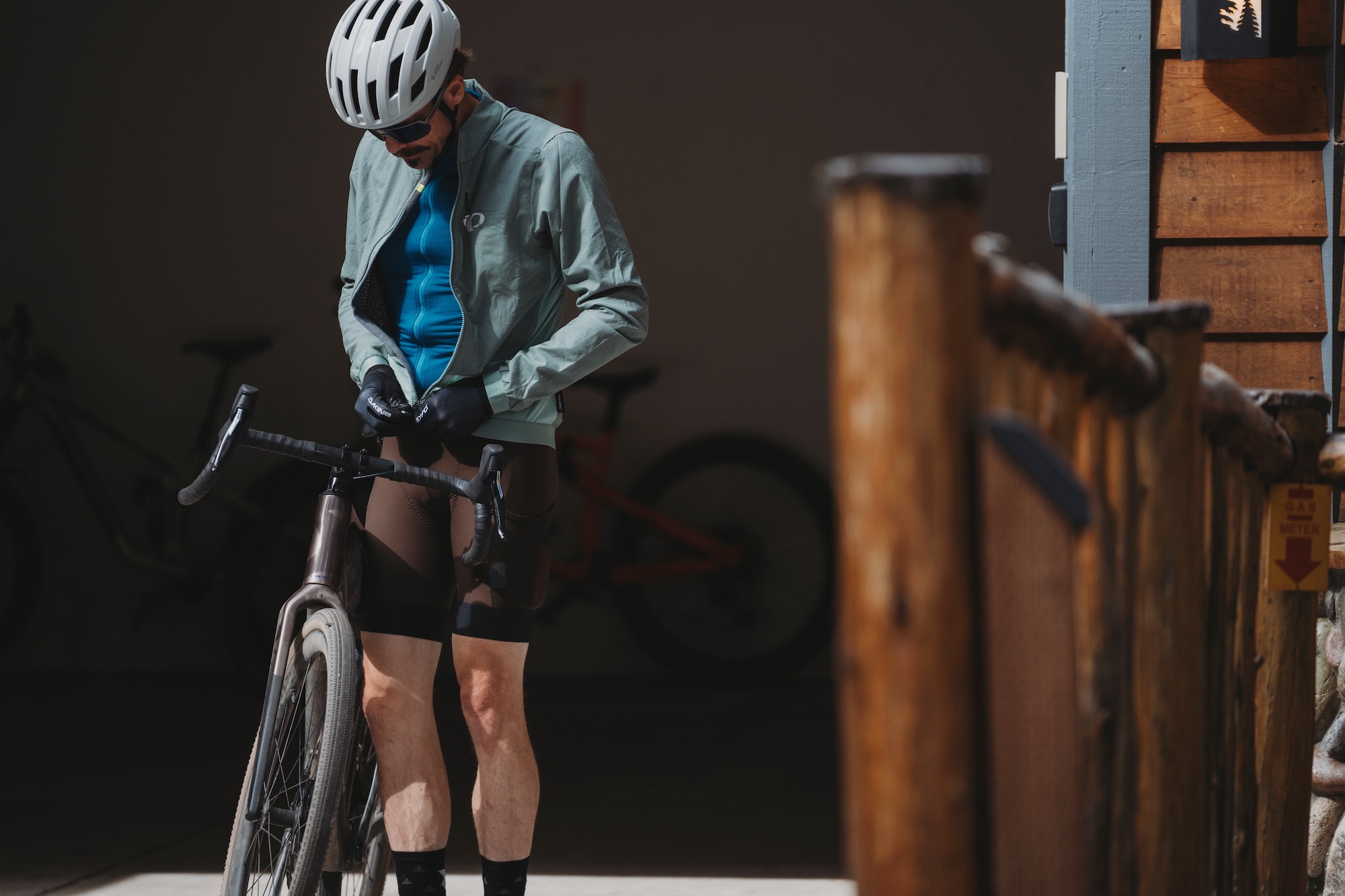
After researching virtually every cycling jacket on the market, we rounded up a diverse selection of 19 models for side-by-side testing and comparison. After weighing each model for consistency and comparison to the manufacturer’s specs, we carefully examined their design, materials, construction, and features before hitting the road. The only way to truly test cycling jackets is by riding in them, so ride we did. Living near Portland, OR, Bennett is accustomed to riding in the full spectrum of weather conditions, and he spent months riding in these jackets on crisp fall mornings, misty and cold mountain rides, and full-on downpours. While riding he assessed the fit and comfort of each model along with how well they performed in varying temperature and weather conditions in the real world.
Buying Advice: How to Choose a Cycling Jacket
With cycling jackets made for riding in different weather conditions and temperatures with a range of different fits and features, finding the right one to suit your needs can be a challenge. Fortunately, with so many models to choose from, you should be able to find a model that has you covered for the vast majority of your off-season rides.
One of the most important considerations is the weather and temperature conditions you expect to encounter, as that will dictate whether you need a wind layer, waterproof jacket, insulation, or a combination of all three. Of course, you’ll also want to get the right fit, and factors like pockets and packability may also play a role.
It is also worth mentioning that other cycling apparel like winter bib tights or accessories like winter cycling gloves and cycling shoe covers are critical components of the cool weather riding kit.
Types of Cycling Jackets
Considering the weather conditions and temperatures that you expect to encounter while riding will help you narrow down your choices when looking for a cycling jacket. Depending on where you live and ride, fall, winter, spring, and even crisp morning or evening rides in the summer present a wide range of temperatures and weather, and there isn’t necessarily a one-jacket-fits-all solution.
This is why there are literally hundreds of cycling jackets on the market ranging from light, packable wind shells to fully waterproof and insulated jackets, and everything in between.
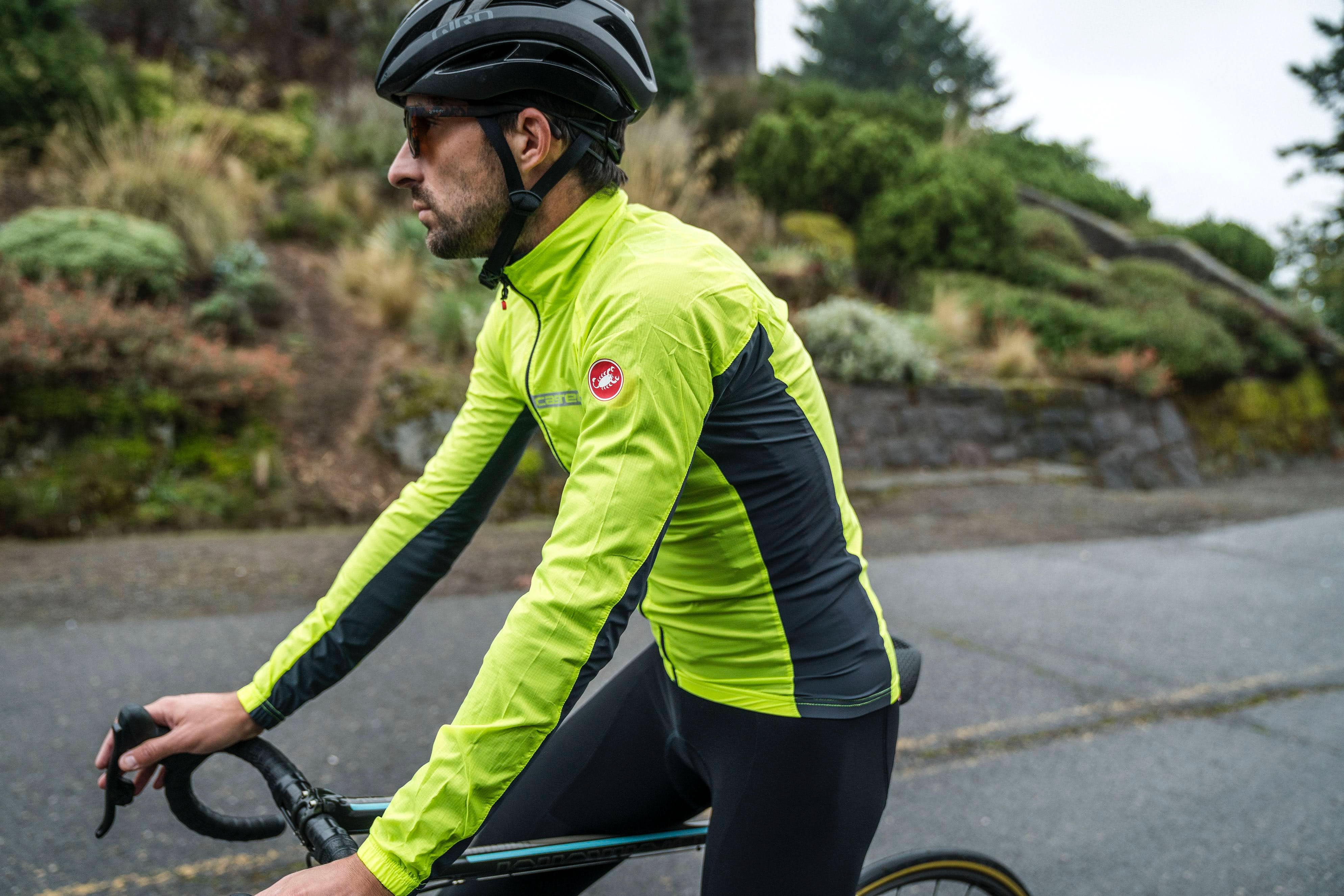
Wind
Wind is one of the main culprits that can cause you to get cold or uncomfortable while riding in cool conditions, no matter the season. Whether it’s a blustery day or from self-generated wind riding downhill, the chill of the wind will almost always make it feel colder than it is. They call it wind chill for a reason, after all.
Virtually all cycling jackets, regardless of type, block the wind as one of their primary functions. For wind specifically, however, the lowly but oh-so-functional wind jacket is a critical piece of gear for most riders to keep you comfortable in dry conditions, whether it’s a chilly ride in the fall, winter, or spring or a mountain descent in the middle of summer.
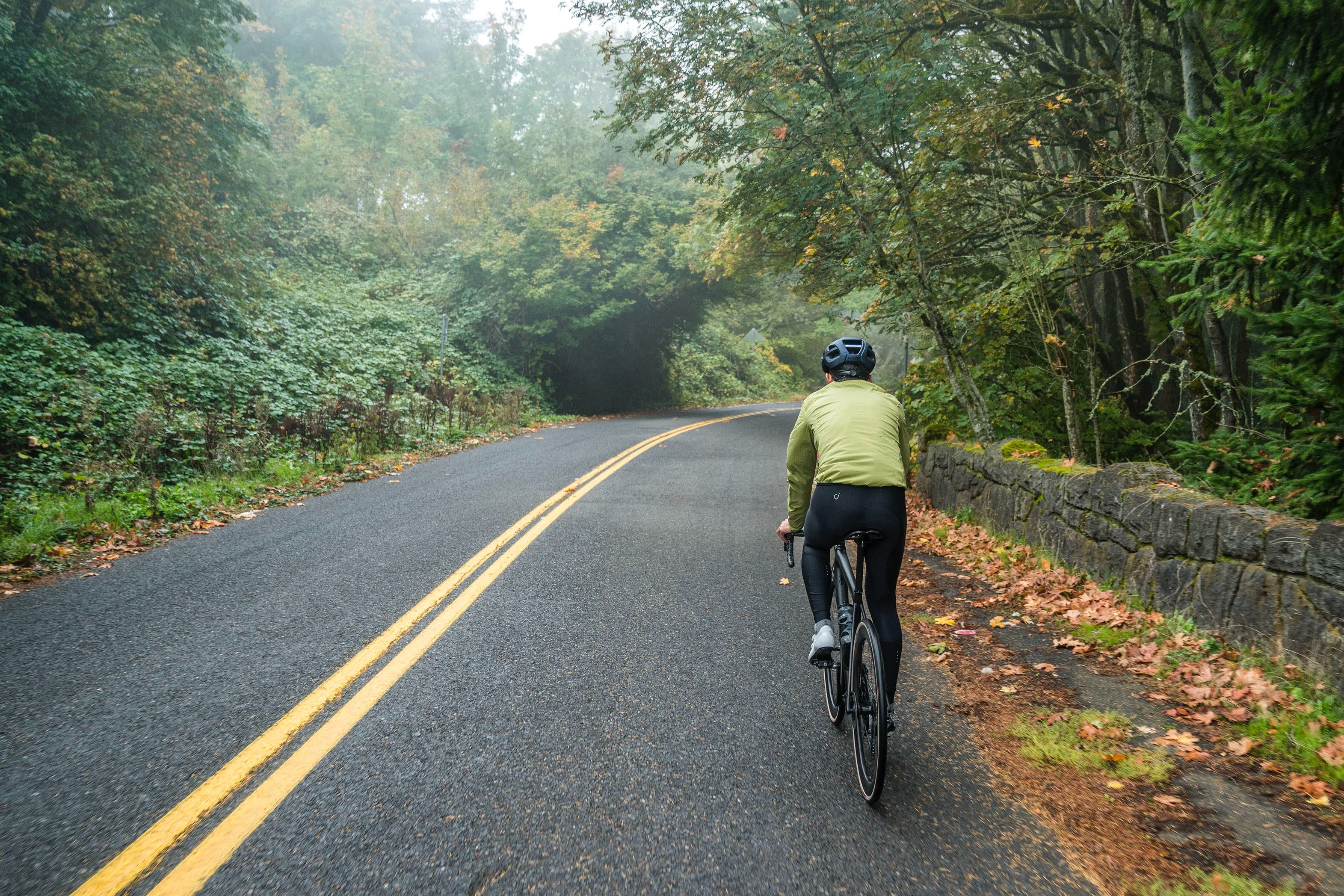
Wind layers are typically relatively basic, consisting of a thin wind-blocking shell that creates a barrier between you and the moving air. Given the thin materials, they are often very lightweight and easily packable, making them easy to stash in a jersey pocket so you can be prepared for changing conditions and adjust your layering as needed throughout your ride.
Wind jackets can also be surprisingly versatile and can keep you warm in temperatures ranging from mild to freezing, depending on how you layer beneath them. Sometimes the materials used in wind jackets are treated with a DWR to repel very light amounts of moisture, and they are also typically very fast-drying should you sweat in them or ride through a light shower. We tested several wind jackets, including the Castelli Squadra Stretch Jacket, the Pearl Izumi Attack Barrier Jacket, the Giro Chrono Expert Wind, and the Velocio Ultralight Jacket.
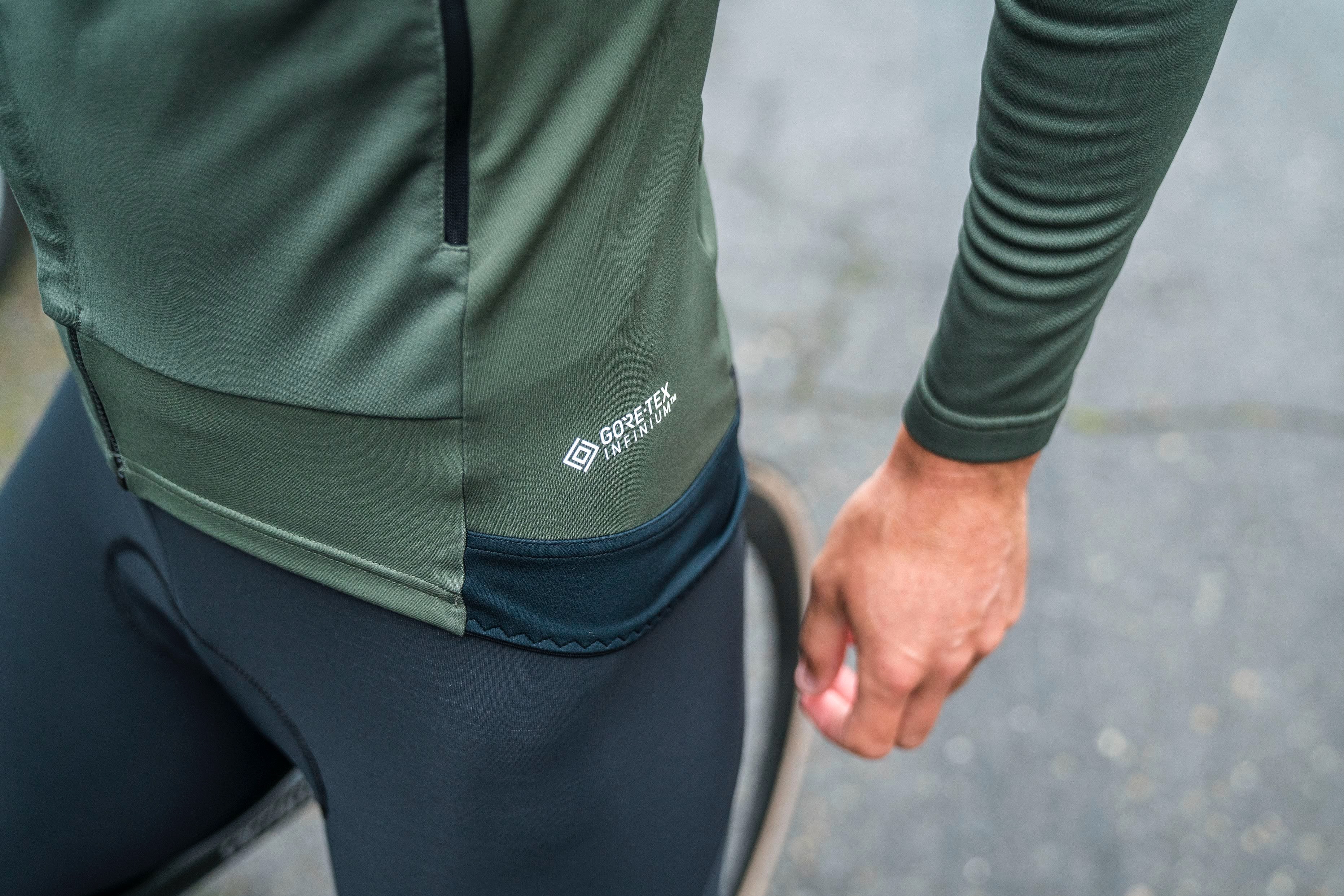
Water-Resistant
Most of us avoid riding in proper rainstorms, and it is much more likely that we’ll be caught in a passing storm, light showers, or mist when the weather is tolerable but unstable. For conditions like these, a water-resistant jacket is often a more comfortable choice than a fully waterproof model because fully waterproof materials often have limited stretch and breathability compared to water-resistant options.
There are a number of materials and membranes on the market that are highly water resistant — though perhaps not fully waterproof — that do a wonderful job of blocking wind and repelling water from light to moderate showers and road spray.
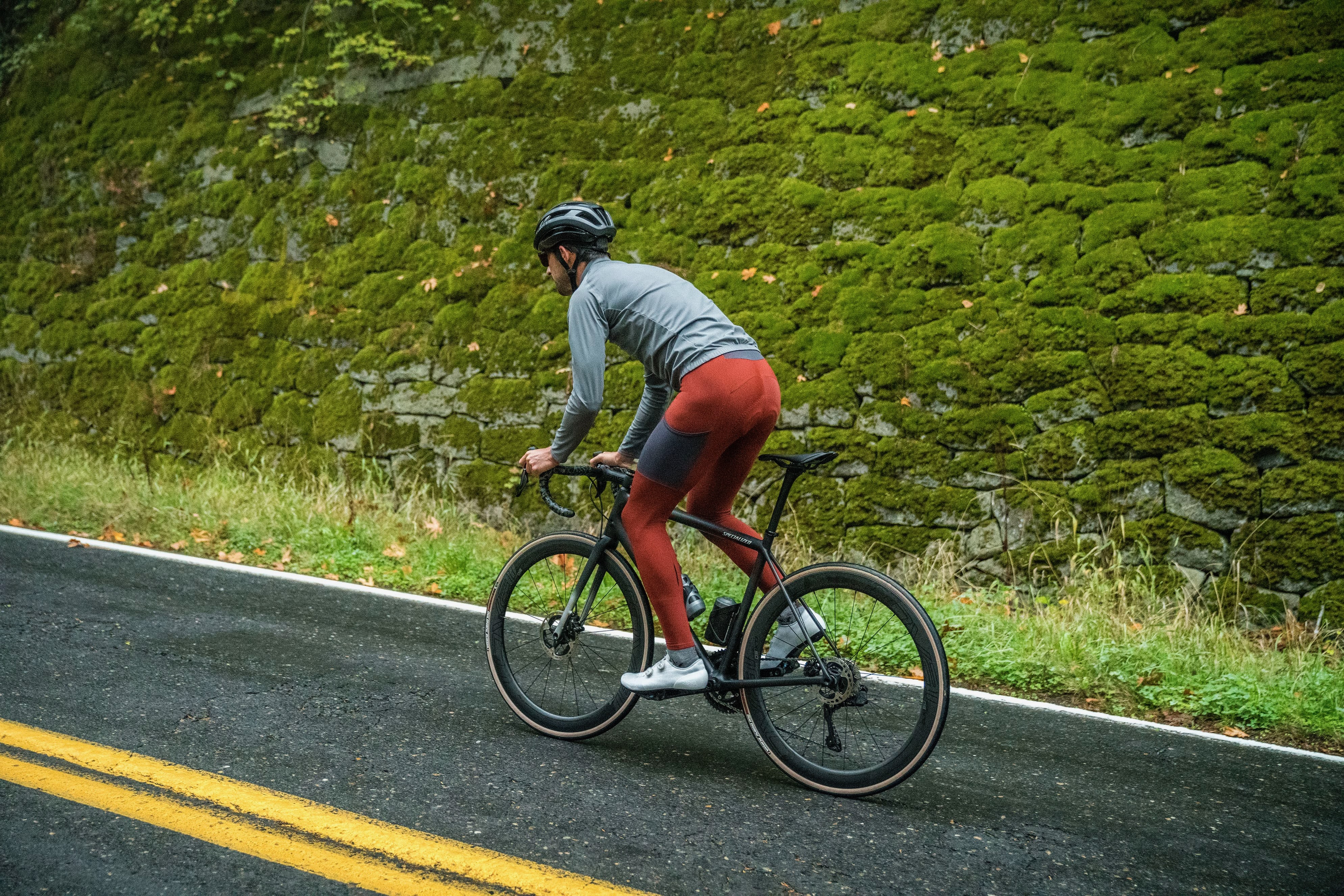
Gore-Tex Infinium used in the Castelli Perfetto RoS 2 and Polartec Neoshell in the Ornot Magic Shell are two such membranes that are often used in cycling jackets that aim to provide a high level of water resistance to keep you dry in all but the most miserable of conditions. Generally speaking, the water repellency of water-resistant materials is aided by a durable water repellant (DWR) treatment to make water bead and shed at the surface.
Waterproof
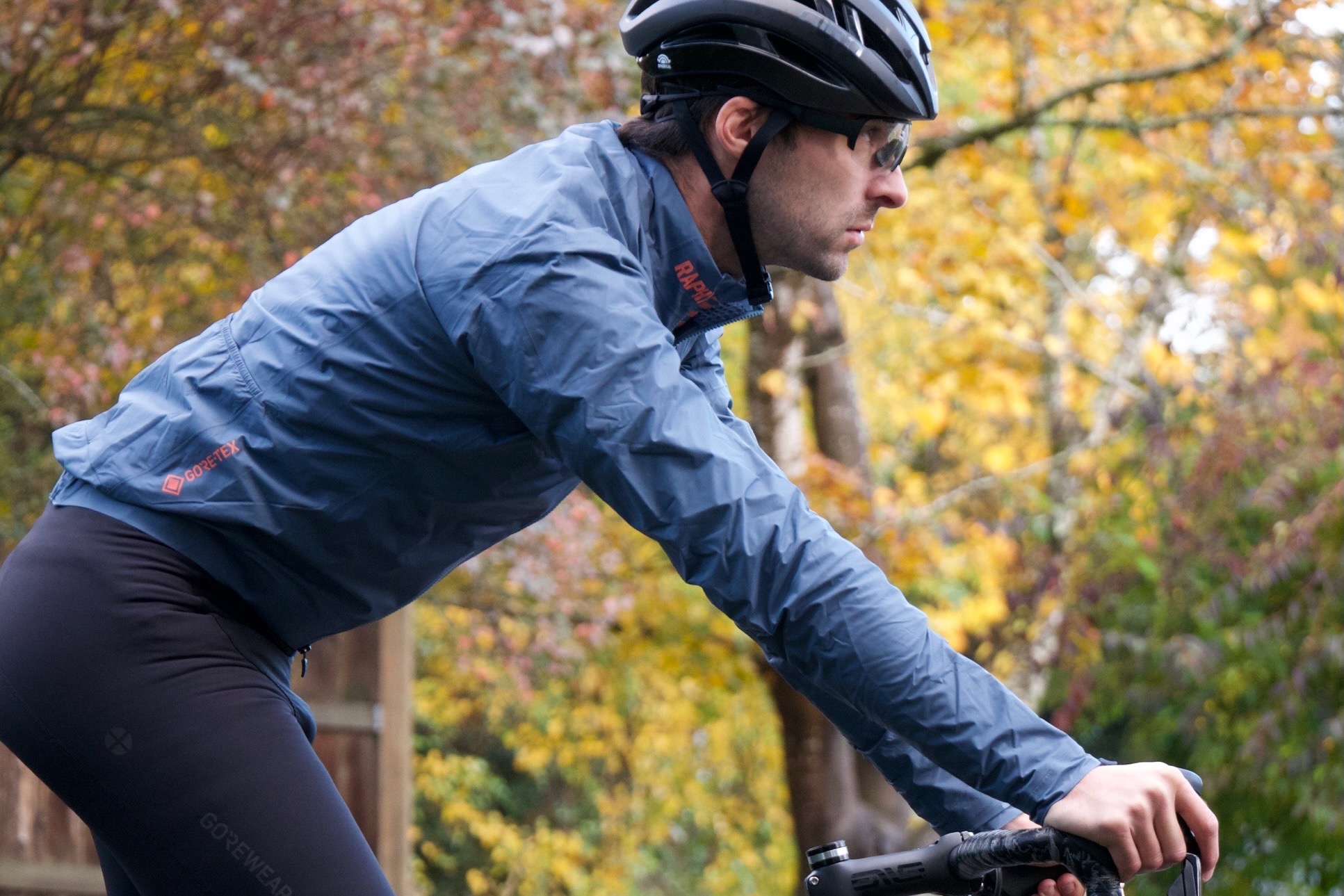
For riding in rainstorms, a fully waterproof jacket is key to keeping you dry and, therefore, warm. When you’re riding in steady rain, water-resistant materials can and will eventually be overwhelmed and water will make its way inside the jacket, so if you’re sure you’ll be encountering miserable conditions, then something completely waterproof is the way to go.
In addition to a waterproof membrane, these types of jackets have taped seams and waterproof zippers to try and keep water from getting in anywhere, as well as a DWR to bead and repel water at the surface. There are a variety of waterproof membranes and materials on the market, like GORE-TEX Shakedry used on the Gorewear C5 GORE-TEX Shakedry 1985, GORE-TEX Paclite Plus for the Rapha Pro Team Insulated GORE-TEX Rain Jacket, and the DryTex TPU membrane incorporated in the MAAP Training Winter Jacket. Despite being different, they aim to block water while still allowing a reasonable level of breathability to help regulate moisture.
Waterproof materials often come with ratings expressed in numbers like 10K/10K which refer to their water repellency and breathability, respectively. For water repellency, the rating refers to water column pressure, or how much water in pressure can be exerted on the fabric before it soaks through.
So, for a 10K rating, this means that it can handle a column pressure of 10,000mm before it soaks through. The higher the number, the more waterproof the material, and vice versa. A 10K waterproof rating is typically the minimum we recommend.
Breathability ratings measure a material’s ability to allow moisture vapor transmission and refer to the amount of moisture in grams that can pass through a square meter of material in a 24-hour period. Again, the higher the number, the better the breathability. For high-intensity activities like cycling, the more breathable the material, the better, as moisture trapped within a jacket can be uncomfortable and cause you to get cold.
Insulated
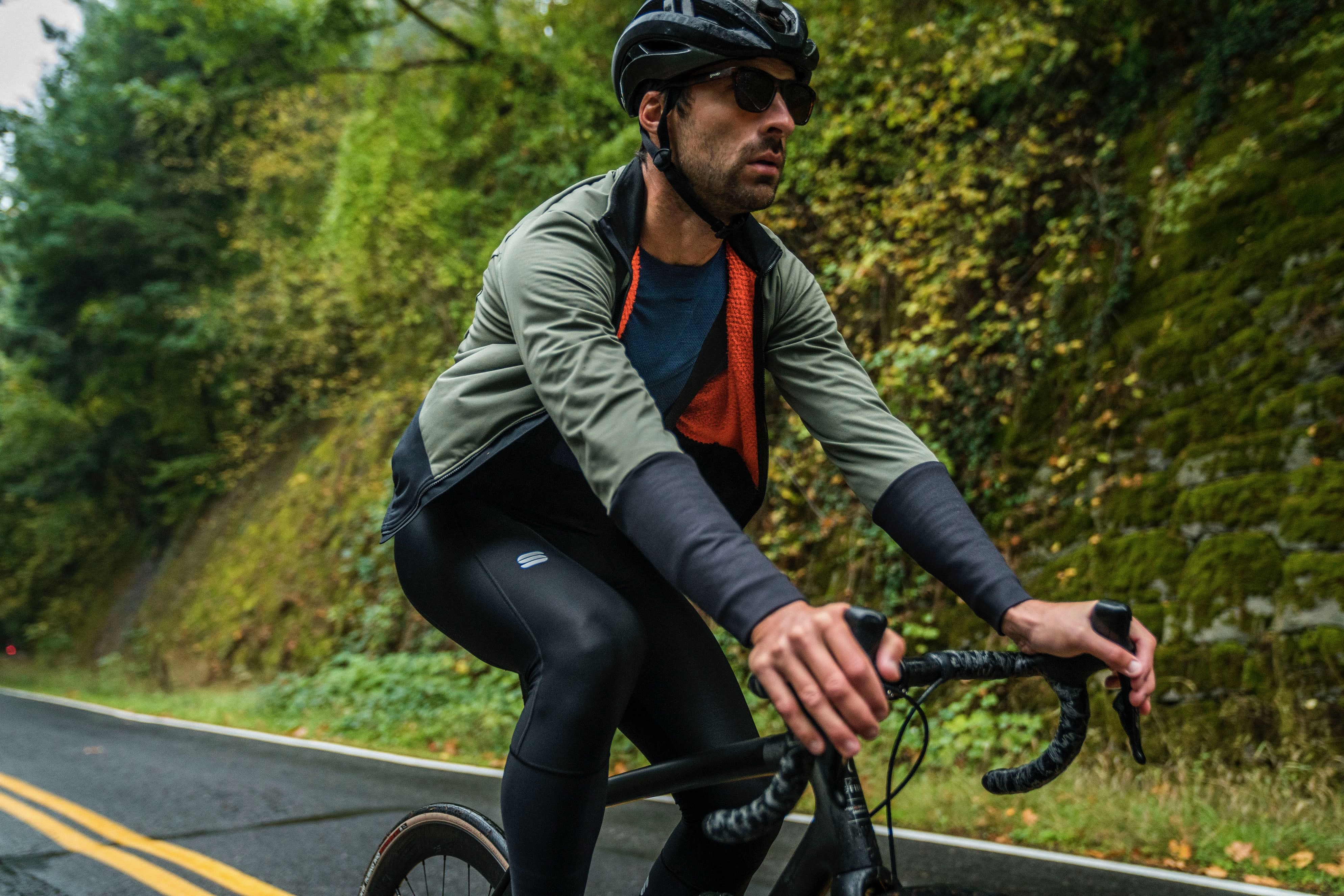
For riding in cold conditions, a jacket with some insulation will help to keep you warm. Insulation works by trapping air between your body and the outer shell and helps to maintain a more consistent temperature in the right conditions. Insulated jackets come in many flavors, with some being waterproof or water-resistant and others not.
Unlike sedentary activities, where you want lots of insulation, cycling jackets typically have thinner insulating layers/materials than a jacket you would wear during ice fishing because you are generating significant body heat while you ride.
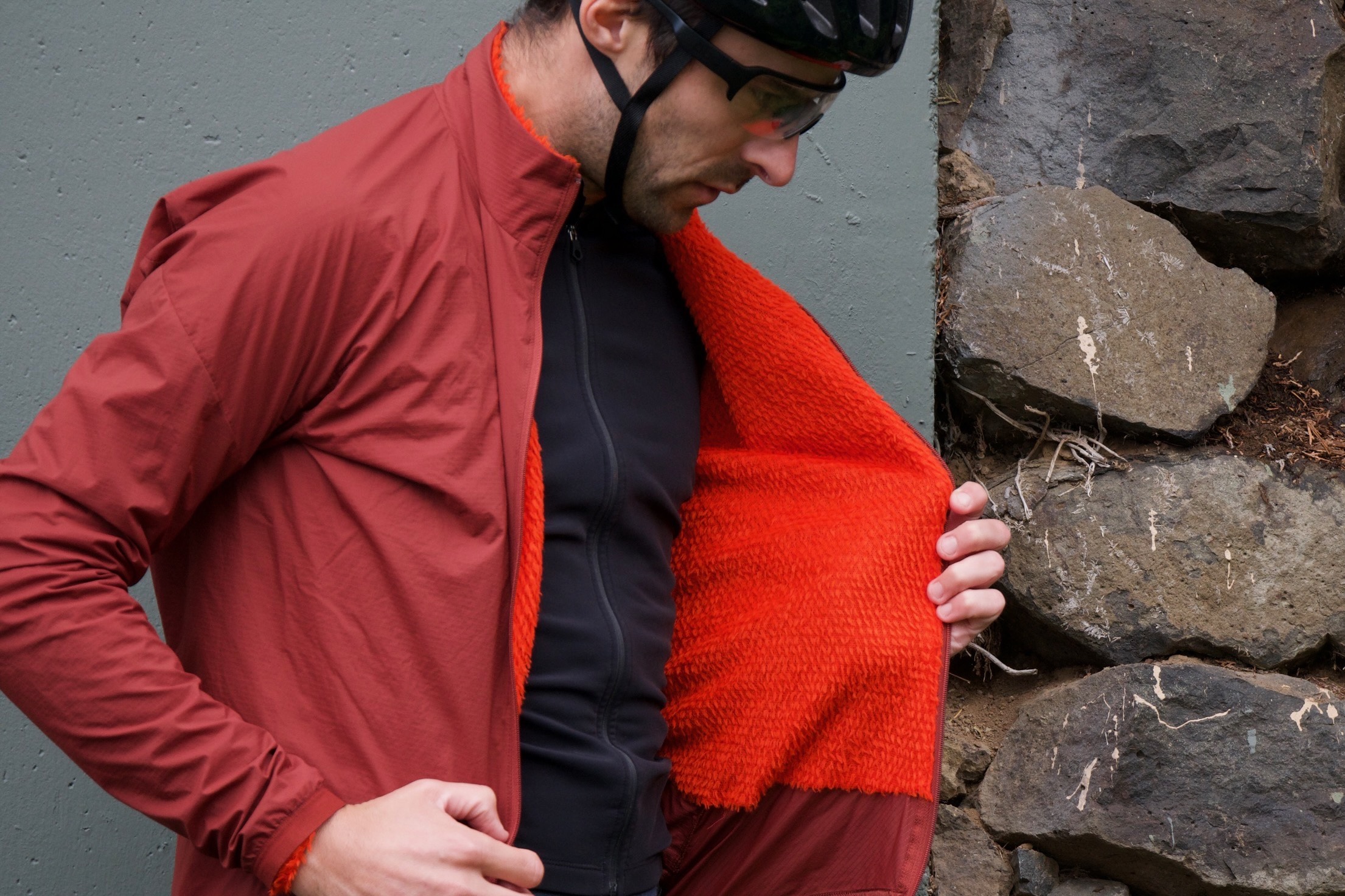
Insulating materials in cycling jackets include fleece, synthetic, down, etc. Polartec Alpha is a newer insulating material that is used in garments for people being active where there may be large variations in temperature, as there is in cycling.
Some of the insulated models we tested include the POC Pro Thermal, Rapha Pro Team Insulated GORE-TEX Rain Jacket, the Pearl Izumi Expedition PRO Alpha, and the 7Mesh Freeflow. While insulated jackets are a great choice for riding in cold conditions, a good layering system under a wind or rain shell can be just as effective as insulation built into a jacket.
Fit
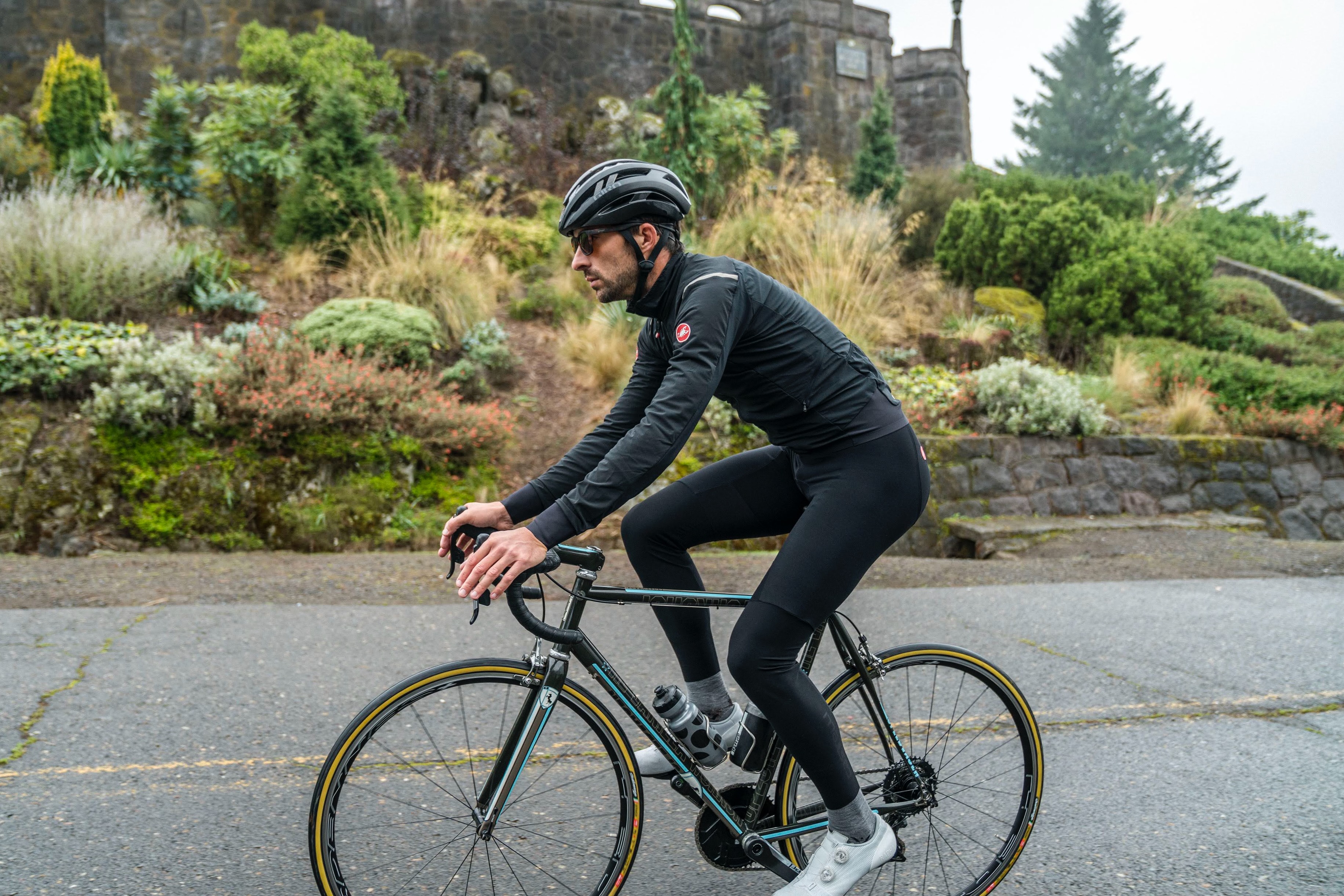
The fit of cycling jackets is one of the main things that sets them apart from other jackets. Cycling is not only a dynamic sport but one that also requires you to be in a forward-leaning position with your arms reaching to the handlebar. Good cycling jackets are designed to accommodate this body position with cuts and paneling that allow for great freedom of movement and prevent bunching or restriction.
Cycling jackets also tend to be slim and form-fitting for aerodynamics and, ideally, to stay close to the body for a tidy fit with little excess material flapping in the wind. Depending on how you like to layer, however, you may want to consider how much room you need inside the jacket to comfortably fit multiple layers underneath.
In general, your typical jersey size will probably be the correct size for a cycling jacket. If in doubt, take some measurements and reference size charts, or better yet, go and try some different jackets on to be sure you get the right fit.
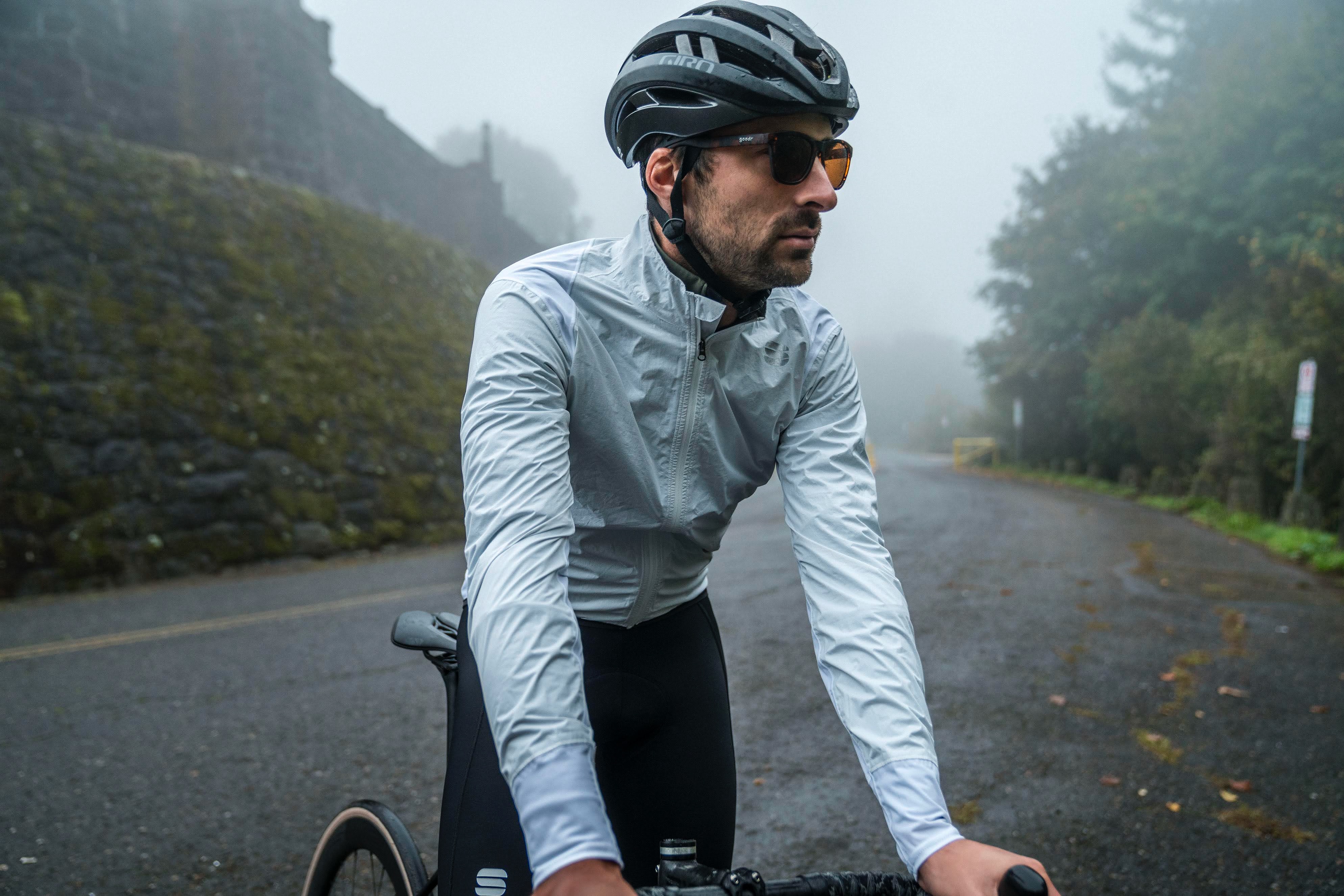
Packability
Packability is important for riders living in areas that see sudden changes in temperature or weather or for rides of varying intensity where you might be heating up and cooling down significantly. If you’re riding in the mountains, it might be much cooler at the top of a long climb than it was at the valley floor, so it’s nice to be able to pull on a jacket that’s stashed in your jersey pocket for the descent.
Similarly, if you start your ride when it’s cool in the morning, you may need to ditch the jacket a short time later when the temperature has warmed up. Or, if the weather is unsettled, a lightweight packable shell can save you when you get caught out in an afternoon shower with many miles left to ride. Whatever the reason, packability is very important for many riders for the peace of mind that comes with knowing you’re prepared for whatever comes your way.
The jackets we tested vary somewhat in terms of packability, but many of them pack down small enough to stuff into a pocket. In general, the light wind layers are the most packable. Some waterproof jackets, like the Gorewear C5 GORE-TEX Shakedry 1985, are also incredibly packable, which is particularly impressive given how waterproof they are.
Generally speaking, when you add insulation to a jacket, it adds bulk, but most of the modern insulating materials used in cycling jackets are lightweight and highly compressible. One insulated jacket that stands out for its packability is the 7Mesh Freeflow Jacket, which not only stuffs into its own pocket but has straps to secure it to the bike when you’re not wearing it.
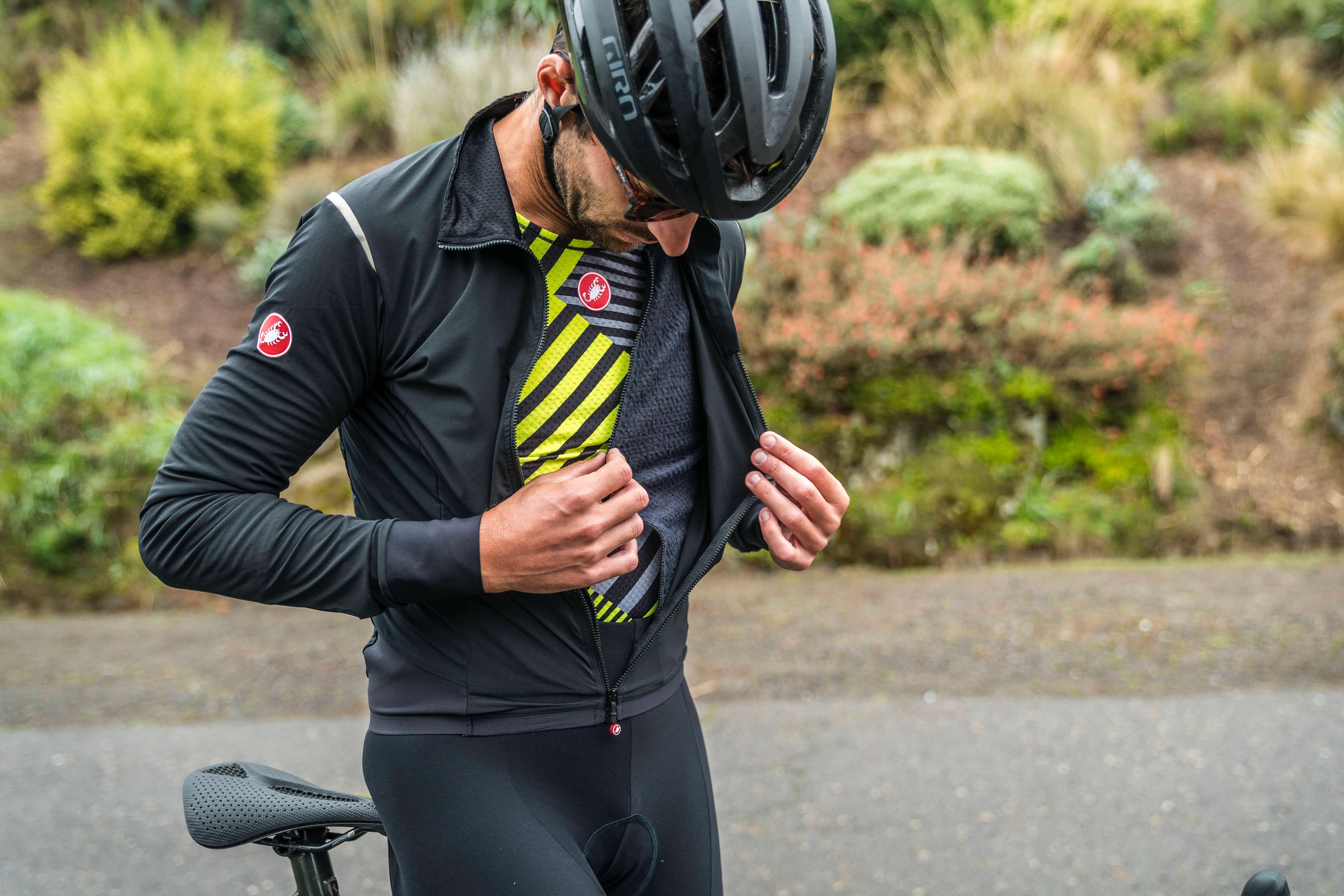
Layering
Layering preferences also influence jacket choice. Some riders like to layer a jersey between their jacket and base layer, while others like to forgo the jersey, instead choosing between a few different base layers to pair with their jacket for a two-piece system based on the intensity of the ride and the weather conditions. Typically, the fewer layers a cyclist prefers to wear, the more robust their jacket will tend to be.
These cyclists may have a mid-weight long-sleeve jersey that they can pair with a thicker base layer for cool and dry riding, reserving their jacket for bitterly cold and possibly wet conditions. Riders who like to layer will often be better served with a lightweight, packable jacket that they can remove and stow in a jersey pocket if conditions improve during their ride.
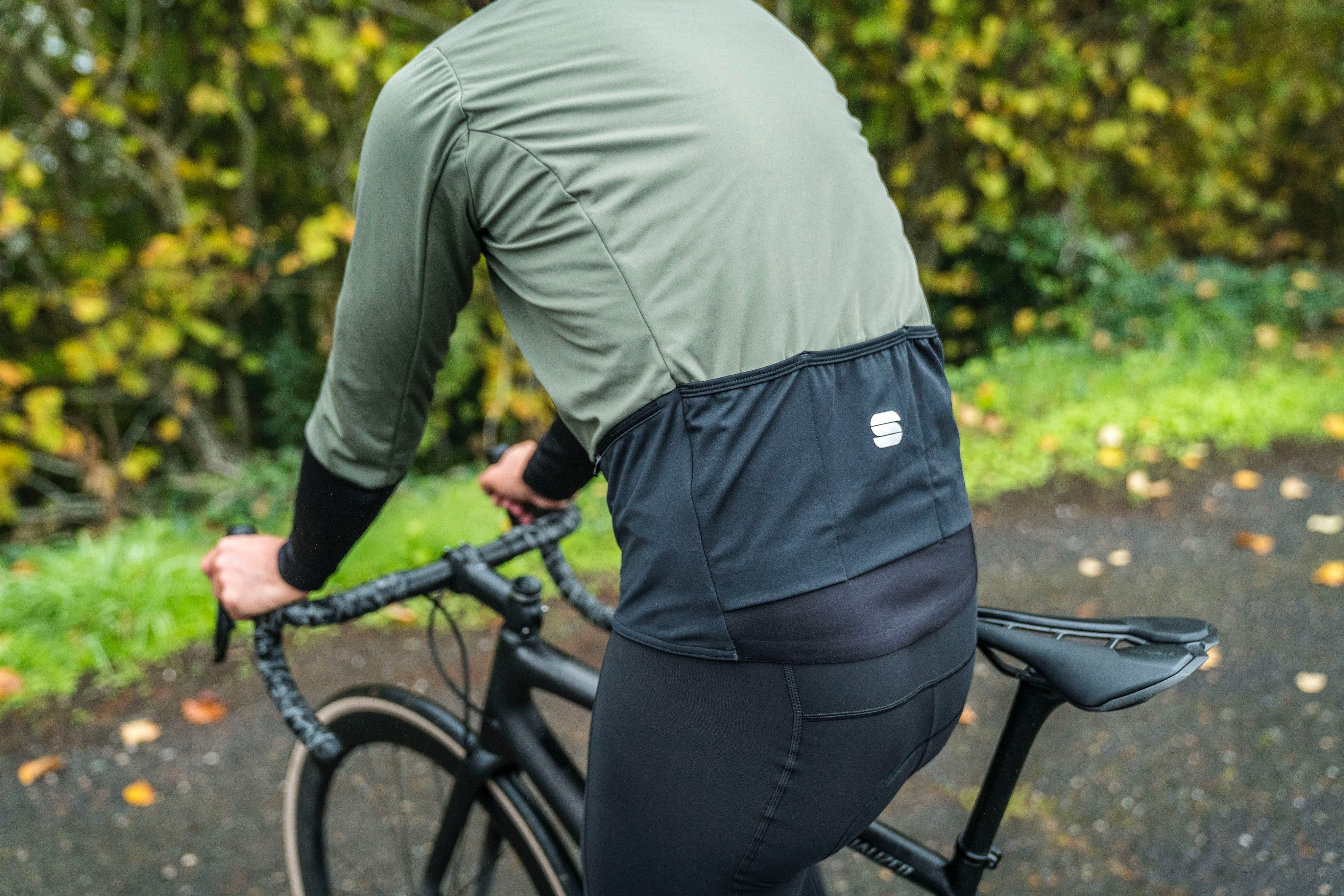
Pockets
With different styles of jackets for different conditions and layering systems, pockets are a feature that some jackets have and others do not. A lightweight and super packable wind shell, for example, will often be worn over a jersey that already has pockets, so it stands to reason that many of them do not have additional pockets that would be redundant.
Other jackets are intended to be worn over baselayers, which typically do not have pockets, so often, these jackets will have some configuration of rear pockets to carry essentials, such as winter cycling gloves, multitools, and snacks, and keep them at arm’s reach. Of course, this varies from model to model and brand to brand, so consider your needs for carrying items in your jacket when choosing the right jacket for you.
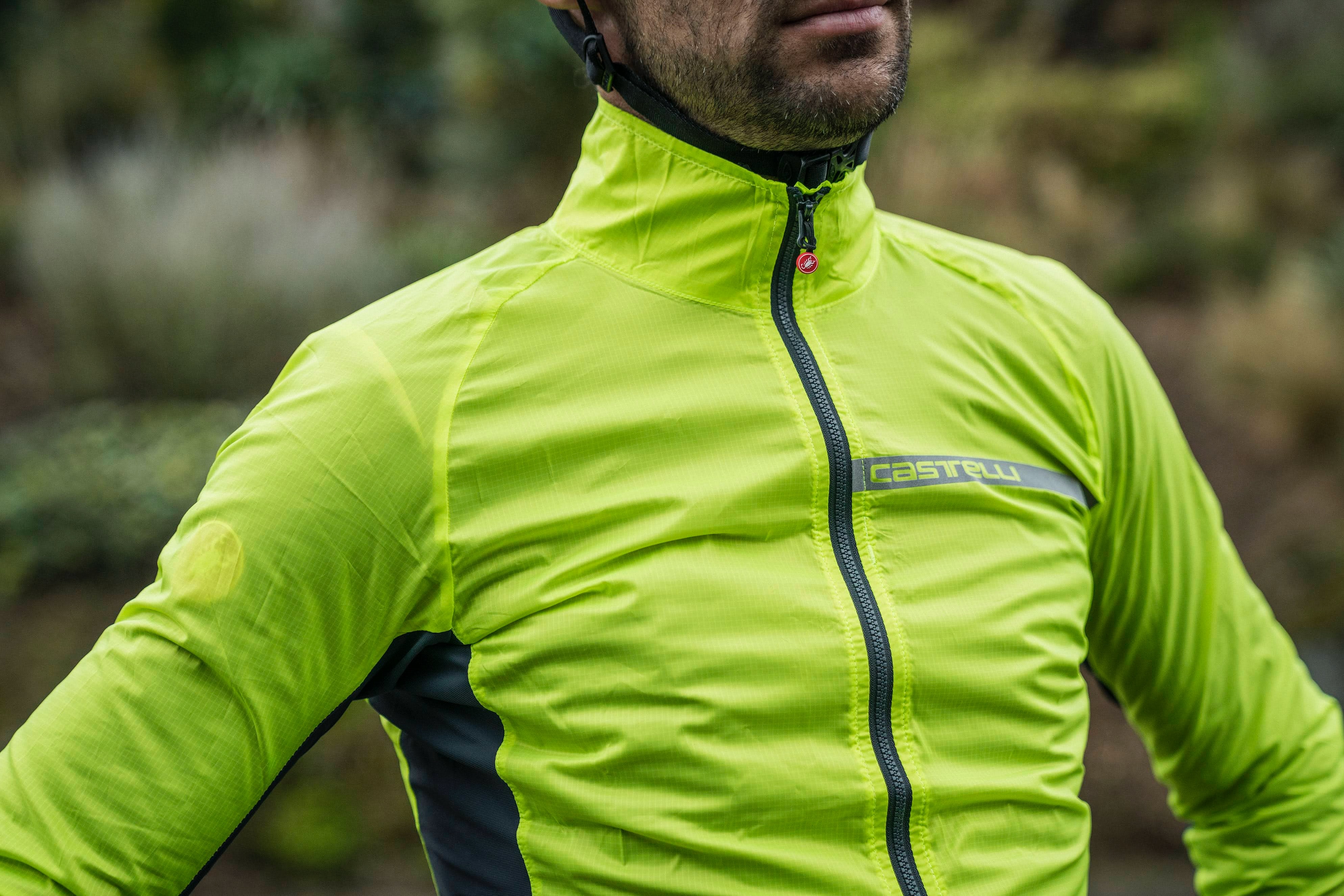
Visibility
When we’re riding in a jacket, it is often early or late in the day or during seasons or weather where visibility can be compromised. Since we want to be seen by motorists for our safety, we always appreciate reflective elements on jackets to give them a little pop and enhance our visibility on the road. These are typically in the form of reflective strips or logos bonded to the jacket fabric or panels or tabs that are sewn in.
In addition to reflectives, many jackets also come in a range of colors, some of which are much brighter than others for increased visibility. Of course, a good set of bike lights is also a great way to add visibility and/or help you see where you’re going in challenging lighting conditions.
Price & Value
Just like anything else in cycling, jackets can be expensive. The models we tested vary quite dramatically in price from $70 for a more basic wind layer up to $400 for a more advanced waterproof insulated jacket. In general, technical materials, advanced constructions, and quality craftsmanship command higher prices.
Of course, there are certain brands that simply cost a bit more too. One thing we can say for sure: Regardless of price, getting the right cycling jacket for your needs is a worthwhile investment that will pay dividends in comfort out on the road.
Budget
At the lower end of the price spectrum we find cycling jackets in the $70-170 range. These are generally made from less advanced materials, but that doesn’t mean they don’t fit or work well. If you simply need a lightweight wind layer, the Castelli Squadra Stretch Jacket ($70) stands out as one of the best values. Not only does it fit well, but it works great and doesn’t cost an arm and a leg.
If you need more protection from inclement weather, you’re going to end up paying a bit more, but the Giro Chrono Expert Rain Jacket ($165) and the Sportful Hot Pack No Rain Jacket ($170) cost significantly less than the high-end waterproof jackets while still protecting well from light to moderate rain showers.
Mid-Tier
Climbing up a price bracket, we start to find more refined fits and advanced materials like Polartec Neoshell and various types of insulation. The Ornot Magic Shell ($268) is a great example. The Polartec Neoshell material provides excellent wind protection, great breathability, and solid weather resistance to make this one of the most versatile cycling jackets available. It’s essentially a one-jacket quiver that has you covered for pretty much any condition that’s reasonable to ride in.
In this price range, you’ll also find fully waterproof jackets like the Showers Pass Cloudburst ($219) and insulated options like the 7Mesh Freeflow ($220), the Pearl Izumi Expedition PRO Alpha ($225), and the POC Pro Thermal ($200). Any of these jackets is sure to be worth its weight in gold when used in the right conditions.
Premium
As we creep to and above the $300 mark, we are getting into the premium cycling jacket territory. High-end jackets tend to be more specialized and are made from even fancier materials. Here, we find jackets like the Gorewear C5 GORE-TEX Shakedry ($300), which is not only 100% waterproof but incredibly packable as well. Other jackets, like the Sportful Total Comfort ($300), combine premium materials like Polartec Neoshell with strategic insulation panels.
At the highest end of the price spectrum, the Castelli Alpha Doppio RoS jacket ($400) combines a stellar fit with a GORE-TEX Infinium shell material and an integrated vest made of Polartec Alpha Direct. Likewise, the Rapha Pro Team Insulated GORE-TEX Rain Jacket ($420) commands a high price for its GORE-TEX Paclite shell that is lined with synthetic insulation. This jacket will make a sizeable dent in your bank account balance, but it will also keep you warm and dry. Does anyone need to spend that much on a cycling jacket? Realistically, no, but we doubt you’ll be disappointed by its performance if you do.
Frequently Asked Questions
A good cycling jacket can dramatically enhance your comfort and enjoyment while riding in cool/cold conditions and unsettled or wet weather. While indoor trainers are great for training when conditions don’t allow you to get outside, it’s fair to say that most of us would rather be riding outdoors if possible, and the right cycling jacket, along with other apparel and accessories like bib tights and winter cycling gloves, can be the key to unlocking a longer outdoor riding season. Of course, you can ride in any old jacket you’d like, but we recommend cycling-specific jackets for several reasons.
Fit is one of the main factors, as cycling jackets are designed to accommodate the riding position with the arms forward without any restriction or binding. The arms and torso of cycling jackets are made to fit properly in the riding position and provide the appropriate level of coverage without bunching or, conversely, riding up. They are also generally slim and fit close to the body to reduce drag and material flapping in the wind at speed.
Many jacket models are incredibly lightweight and pack down impressively small so they can be stashed in a jersey pocket until you need them and some have pockets to carry essentials while you ride. Strategic placement of wind-blocking materials, breathable panels, or insulation in some designs also works to provide protection or warmth where you need it, and not where you don’t.
Unfortunately, there is no one jacket that we’ve found that’s perfect for every temperature or weather condition, though there are some that come pretty close. To figure out what jacket is the best for you, you really need to consider the temperatures and weather that you expect to encounter and choose a jacket that is most appropriate.
For some riders, a versatile option like the Ornot Magic Shell or the Castelli Perfetto RoS will be perfect to handle 99% of the fall, winter, and spring riding they do with the right layering. For others, having multiple jackets may be needed to cover the full spectrum of riding conditions they will experience. By being honest with yourself about the temperatures and conditions you’re actually going to suit up for and go riding in, you should be able to find the right jacket for you.
Over time, your cycling jacket is bound to get dirty from sweat, road spray, etc., so, eventually, it will need to be washed. As with any garment made from technical fabrics, following the manufacturer’s recommendations is the best way to go to ensure a long lifespan. Some jackets can probably just be washed with cold water and a mild detergent, while other, more advanced materials should only be washed with tech wash type detergents.
Also, the DWR coating on many jackets is prone to breaking down over time, and retreating may be needed to bring water-repellency to the surface fabric. Again, it’s important to follow the manufacturer’s recommendation for the best results.
Some cycling jackets have hoods, but the vast majority of models made for road riding do not for one simple reason. When not in use, a hood can act as a wind catch and fill up with air while you are riding which can be both uncomfortable and super annoying. For riding in super-wet conditions, a hood may be a nice feature to have as long as you keep it up, or if it fits under your helmet. Otherwise, we recommend looking into a waterproof cycling cap to keep your head dry.
Materials, construction, design, and, yes, even brand names are the primary reasons that some cycling jackets are so expensive. Making a jacket completely waterproof and insulated while still being incredibly lightweight and comfortable while riding is no easy task. It takes advanced materials, construction methods, and well-thought-out designs to make some of these jackets, and the price adds up.
While the price of many cycling jackets is hard to swallow, when you consider the fact that you can pack a completely waterproof jacket into a jersey pocket, it starts to make a little more sense. Of course, not everyone needs, wants, or is willing to pay $400 for a jacket, but they are available if you’re able to justify the expense.