Probably every household has a yellow and blue can of WD-40. This well-known multiuse product solves so many issues that it is nearly synonymous with the brand. In fact, you might not even know that WD-40 puts out a variety of other lubricants and products that also deserve a place on your garage shelf.
A Little WD-40 History
WD-40 was originally developed by a company helping the aerospace industry create the Atlas rocket. The engineers needed a chemical to prevent rust and corrosion during the rocket manufacturing process. As it turns out, the 40th version of the water displacement formula was perfect — hence the name WD-40.
One day, when management noticed that some employees were taking home small vials of the formula for personal use, they realized they had something that wasn’t just for rocket science.
In 1958, the brand produced an aerosol version in San Diego to sell to the public, and the business took off like, well, a rocket!
WD-40’s Specialist Line

In 1969, the multipurpose product sat alone in the lineup. However, the company put its knowledge and expertise to use and, over the years, developed new products, including the Specialist Line for the trade pros.
In 2020, it repackaged the WD-40 Specialist lineup with the iconic blue and yellow cans with the red cap.
WD-40 Specialist Brand Manager Stepan Harmanlikian noted that the Specialist Line is “an under-appreciated WD-40 brand offering since some professionals are unaware of the product line.”
The Specialist Line has several offerings that the home garage mechanic or automotive hobbyist can certainly appreciate and use.
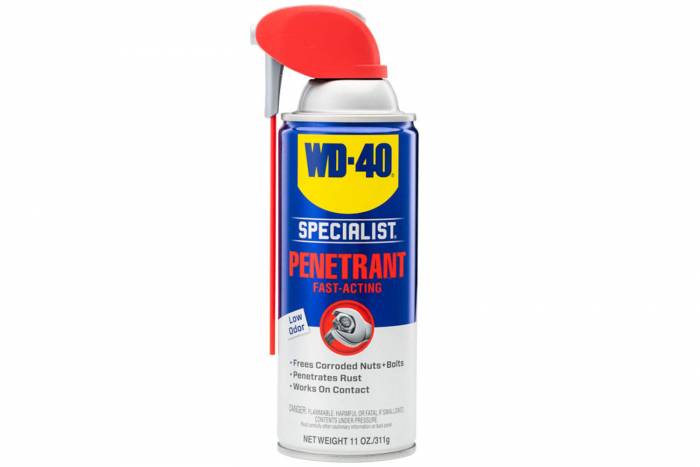
A smart way of breaking loose a rusted or frozen bolt is using a quick-release penetrant. The spray is my go-to product whenever dealing with rusty nuts and bolts, seized threads, locks, chains, and nearly anything that’s stuck and won’t budge.
WD-40’s Penetrant Spray uses capillary action to work its way into tight crevices, threads, and seams to break the bonds that hold stuck parts together. The formula also helps prevent rust and corrosion from reforming and leaves behind a lubricating layer. Because it’s free of petroleum, it’s safe to use on plastics and rubber.
(Photo/WD-40)
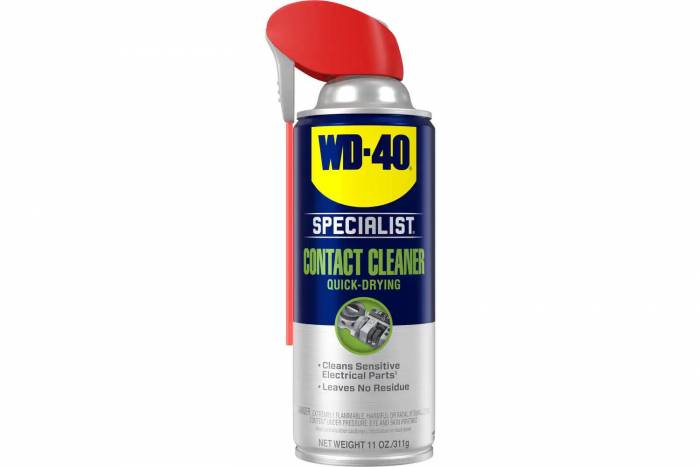
In our connected world, with more specialized electronic gear and gadgetry than ever, electrical contacts are often exposed to condensation or corrosion, especially in cars. The Electrical Contact Cleaner Spray rids sensitive electrical components of corrosion and leaves a protective layer.
“It is safe and ideal for use on printed circuit boards, controls, battery terminals, switches, precision instruments, and electric panels,” Harmanlikian said.
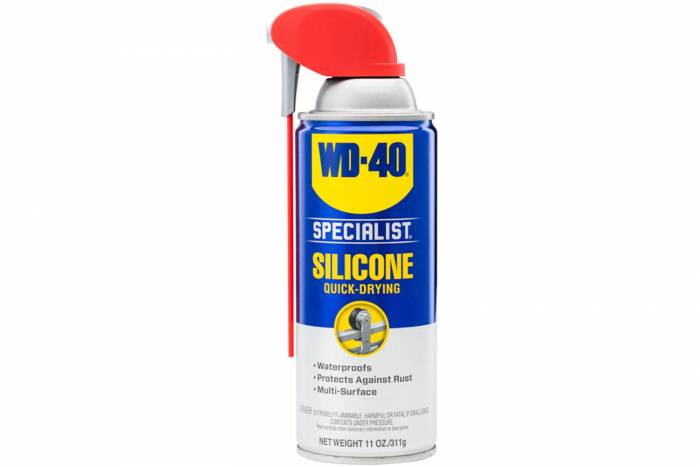
One of my favorite lesser-known Specialist products is the company’s silicone spray. By far, it is an excellent lubricant and protectant for vinyl and rubber. It drys clear and doesn’t seem to attract dirt or leave a residue, so it is great for use on a car’s weather stripping. It also protects against rust and acts as a water barrier.
(Photo/WD-40)
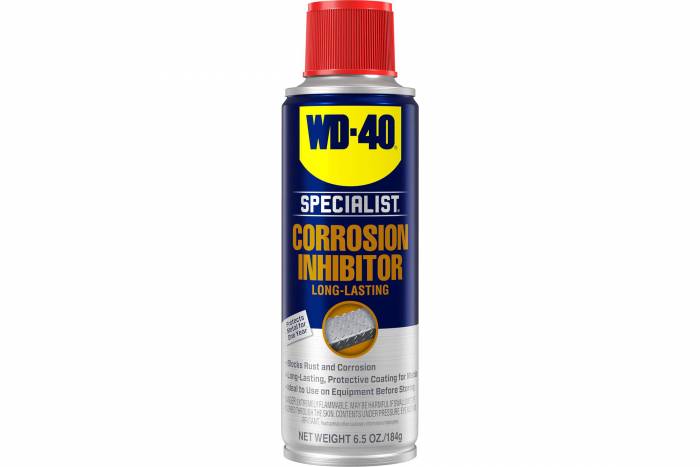
The corrosion inhibitor helps protect metal parts from rust and corrosion for up to 2 years when used indoors or 1 year outdoors. This anti-rust spray stays where you spray it and is ideal for preventive maintenance. If you live in a high-humidity area, this is a must-have product.

Harmanlikian’s personal favorite (and another underappreciated product) is the Gel Lube. It prevents rust for up to 1 year with its long-lasting lubrication. Since it is a gel, it can be used on vertical surfaces, and it won’t fling off moving parts. You’ll love its ability to stay put, giving you added longevity and protection.
Cover Your Bases With These WD-40 Products — And More
The WD-40 lineup includes over 35 items, including different sizes of its products. You can even purchase a massive 55-gallon drum of its cleaner and degreaser.
Interestingly, it has over 2,000 official uses, according to the company. Our guess is WD-40 is not done yet and will have even more new useful products for consumers and professionals alike in the years to come.