For those who love adventures in nature, the gear required to have a good time in various environments adds up pretty fast. A rooftop cargo box helps organize everything well, increasing the comfort and space inside your vehicle while protecting the interior at the same.
It’s nice to be able to stash damp, smelly, or sharp items up top, too. The longer the road trip and the bulkier the gear, the more valuable rooftop storage will be.
A variety of box volumes and styles exist, whether you steer a van, truck, hatchback, or SUV. Here, we highlight a handful of our team’s top choices for the best rooftop cargo boxes available for any size and budget.
Editor’s Note: For our November 21, 2025 update, we added product ratings to help you pick the perfect rooftop box for your needs.
Best Rooftop Cargo Boxes of 2026


Yakima SkyBox Carbonite

Specifications
Pros & Cons
Pros
- Easy to use, stout, comfortable handle
- Sturdy
- Solid value, yet not as costly as other premium choices
- Opens on both sides
Cons
- Not TOTALLY water/weatherproof
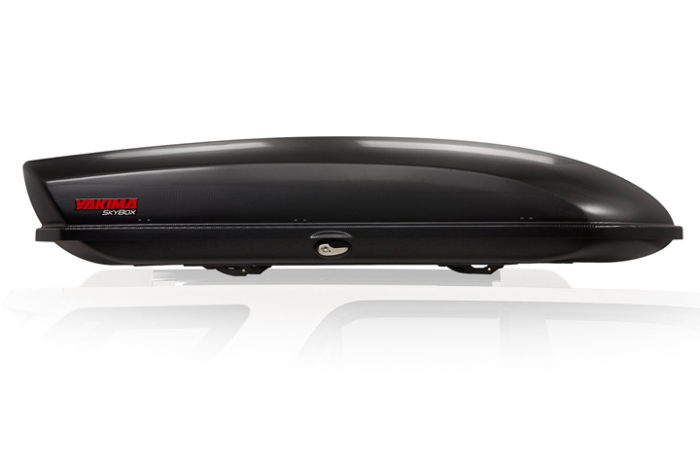
If you’re a bit intimidated by adding a roof accessory to your rig, the user-friendly Yakima Skybox Carbonite ($550-820) is a great option. The design includes five size options. Tried and true, this rooftop cargo box is among the most durable and secure on the market. The silhouette is streamlined, narrow, and long.
We use ours in all seasons and across various outdoor trips to load up skis or kayak paddles for the family. And there’s still space on the roof rack for our bikes, kayaks, or standup paddleboards — that’s pretty hard to beat.
We appreciate the texturized lid, which helps hide scuff marks and grime. Plus, the box is mostly weatherproof (but we recommend that electronics or valuables go inside the cab or a dry bag for good measure).
The listed weight capacity for the Carbonite is 165 pounds, but Yakima says that the capacity may vary depending on the vehicle.
Overall, between the ease of use and installation, the relatively low price, and the ability to access cargo from either side, the Yakima Skybox Carbonite is our go-to.
Yakima RocketBox Pro
Specifications
Pros & Cons
Pros
- Practical build
- Pretty easy to pull RocketBox on and off the roof
- A more economic price compared to priciest options
Cons
- Not the sturdiest construction
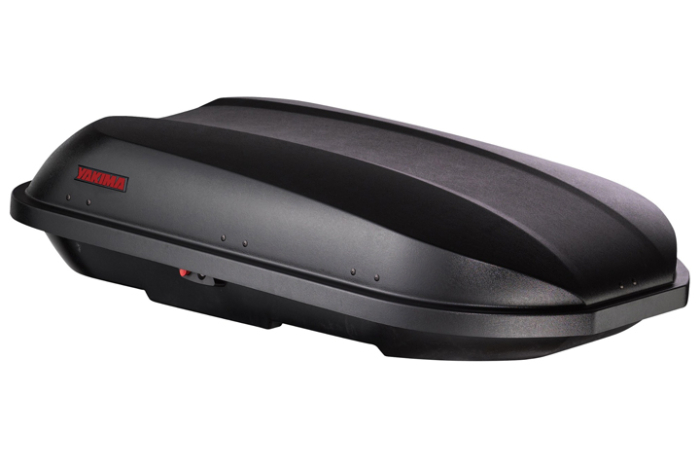
We’re hard-pressed to find a more dependable investment than a RocketBox — some of our family members still have theirs from the ’90s. Today’s Yakima RocketBox Pro ($470-600) comes in several capacities. Plus, the 11- and 12-cubic-foot options are on the lower end of the price scale.
You could pick up a more compact choice like the Inno Ridge Box ($400) for less money with no space to haul skis or snowboards. But the extra bucks could be worth the length and the decades of use you’ll get out of the RocketBox.
While it doesn’t have the sturdy feel that you’d find on higher-end boxes, we never experienced any on-the-road failures. Plus, we like the fact that we can fit our skis and snowboards in the narrow, long Yakima RocketBox Pro while still having half of the roof rack open for other equipment like surfboards or bikes.
Thule Motion 3 XL
Specifications
Pros & Cons
Pros
- Aerodynamic
- Largest size has a huge 21 cu. ft. capacity
- Easy to install and uninstall
- Solid build
Cons
- Expensive
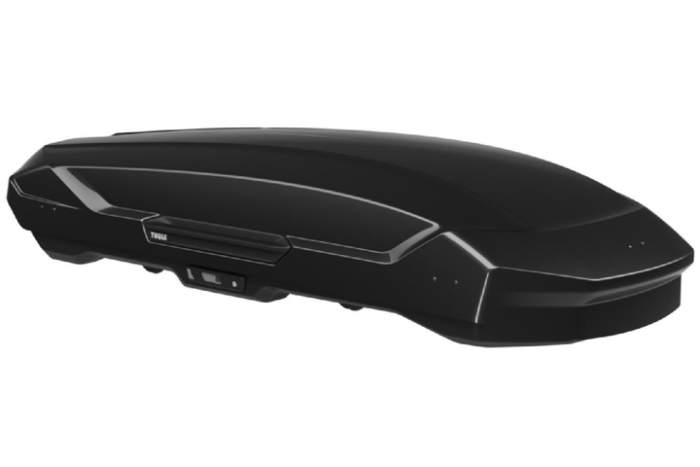
Thule is a clear frontrunner in the rooftop cargo box game, so it should come as no surprise that their latest release is a huge contender for one of the best on the market. The Thule Motion 3 XL ($999) offers a lightweight, easy-to-install, and aerodynamic rooftop box that also sports a clean, sporty look.
The 18 cubic feet of storage space of our test model provides enough room for both ski trips and camping getaways while not being overly tall. The handle provides easy one-handed access for fast loading and unloading, which is easy to reach from the ground, even on taller SUVs. It also comes with a helpful strap to pull the unit shut from the ground. This makes it much easier to avoid having to climb on the seat of larger vehicles, a welcome feature, especially in the wintertime.
But the main feature here that really shines is the speed at which you can install and remove this box. It’s perfect for people who don’t always need or want the box installed and have the space to store it when not in use. At 51 pounds, the Thule Motion 3 XL is not the lightest model we tested, but the weight is balanced enough that we could install it without help from another person.
Thule Vector
Specifications
Pros & Cons
Pros
- Felt-lined interior bottom for gear protection
- Integrated tiedown straps
- White interior lid and integrated LED light help with loading and unloading in the dark
- Stylish aesthetic
Cons
- Expensive
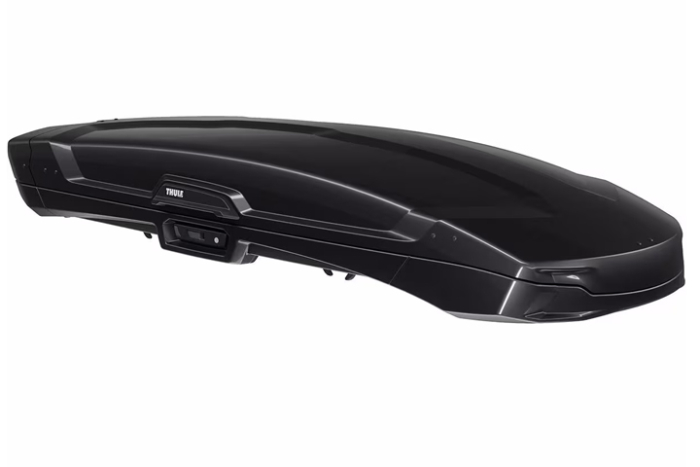
On the premium end, the Thule Vector ($2,400) is one of the sleekest, most stylish, and superbly made options out there. This luxurious rooftop cargo box features two models with the same volume and load capacity but different dimensions and weights. Beyond its classier shape, we found the design extremely functional, easy to install, and simple to operate daily. To boot, this rigid box is reinforced with steel along the base.
As you’ve probably noticed, this is one of the pricier options you’ll find, and there are some very cool features that come along with the price tag. There are integrated tie-down straps, which were useful in preventing our gear from sliding around, and a white interior lid and integrated LED light that illuminated the contents, making it easy to find our gear in the dark. Probably the most bougie feature is the felt-lined floor, which keeps your precious gear from getting scratched up during transit. Plus, the whole box just looks pretty damn cool.
That said, if you’re just looking for a rooftop cargo box to throw your gear in, this ain’t the one. But if you want a sharp-looking, capable box with all the bells and whistles (and you’ve got the dough to pay for it), the Thule Vector is the way to go.
Yakima Skybox NX
Specifications
Pros & Cons
Pros
- Dual-sided access
- Flat floor optimizes storage
- Lots of headroom for taller equipment
- Easy installation
Cons
- Handle can stick when opening
- Material can get caught in latches
- Not as aerodynamic as other models
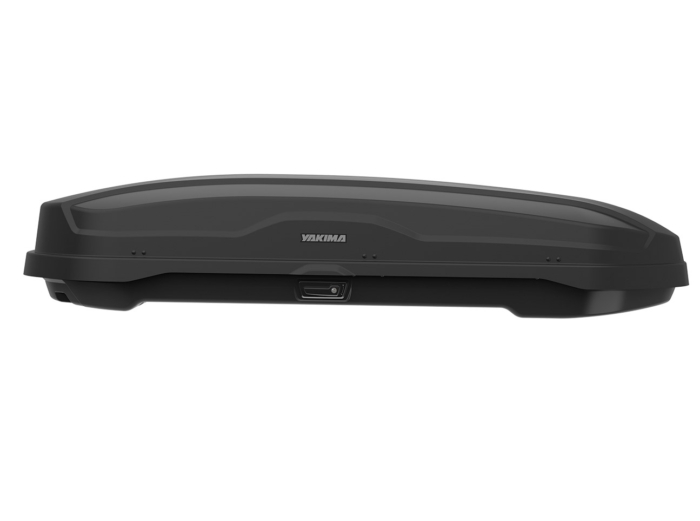
Yakima’s Skybox line just expanded with its Skybox NX ($749-$799) to maximize interior space. The larger nose allows duffel bags and small totes to be stowed up front, where normally you’d be wasting space where those items wouldn’t quite fit.
Of course, the tradeoff is a bit less aerodynamic efficiency. However, we couldn’t notice a big difference at the gas pump. What we did notice, though, was more noise with the sunroof open, so this model might not be the best if you have and use a sunroof.
But the Yakima Skybox NX design is one of the best for maximizing space, especially if you have more than just skis to cart around. We could place several large duffel bags and totes inside, which wouldn’t be possible on other models.
While the latches are secure when clicked, it sometimes takes a few tries (especially with a full load) for the latches to click into place. But when it’s in, it’s in. Just make sure you have a proper latch to save the box flying open when it picks up speed (we’re speaking from experience here).
Specifications
Pros & Cons
Pros
- Dual-sided access
- Voluminous shape provides space for a variety and high quantity of gear
- Easy installation
Cons
- Latch system isn’t the smoothest
- Not as streamlined as other boxes
- Flimsy lock and key
- Not the stiffest material
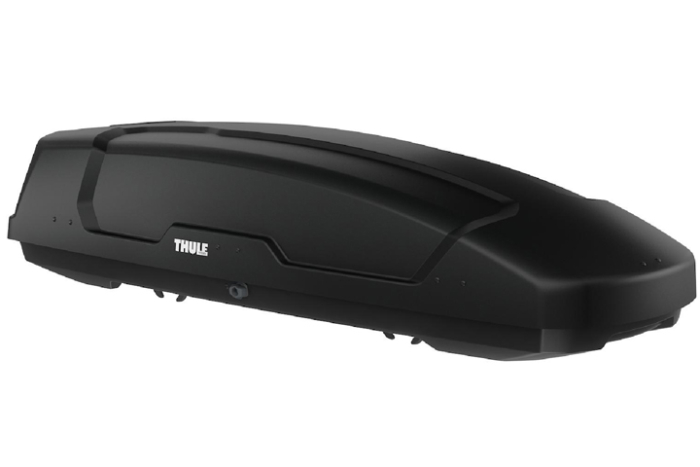
The spacious and functional Thule Force XT ($580-750) comes in four sizes. This build can haul a huge quantity of bulky gear and still handle off-road adventures or winter trips to the local ski mountain. The large curved shape delivers enough room to store scads of gear and is high enough to fit awkwardly shaped objects, and the relatively light weight makes for easy installation and removal.
That shape does come at the cost of streamlining, which means your gas mileage may take a hit. Also, while it does come with a locking system, they feel oddly flimsy, so we’d recommend using them with a light touch.
Ultimately, the silhouette’s generous height and simple installation make the Thule Force XT a solid choice, especially if you’re determined to get a Thule box without paying through the nose. But be sure not to force the locking mechanism and be ready to make a few more pit stops to fill up on gas.
Specifications
Pros & Cons
Pros
- Dustproof and wind-, water-, and weather-resistant
- Burly handles snap down to lie flat
- Easy to mount
- Attractive design
Cons
- Linear design is less adaptive to fit certain cargo compared to oblong shapes
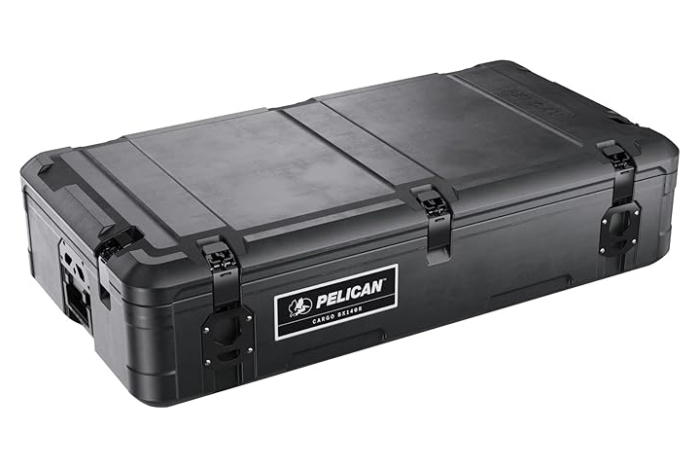
Fashioned in a rectangular shape, the burly Pelican BX140R Cargo Case ($300-450) is among the most secure rooftop boxes on the market. This specific model is the largest — and priciest — choice from the lineup, which has four roof-compatible sizes.
In Pelican fashion, the streamlined build is weatherproof to protect valuable cargo from apparel, gear, and hunting equipment to tools and dry food. The body is made of rotomolded plastic, which is lightweight, shock-absorbent, and blocks ultraviolet light.
With hardy construction, the Pelican BX140R Cargo Case’s steel latches are e-coated with a corrosion-resistant finish. The lid has a rubber gasket, but these are not submergible. These cargo cases are also not on par with the crushproofness and watertightness of the extremely rugged Pelican Protector lineup, but if you’re looking for a Pelican at a decent price, this is a solid option.
Specifications
Pros & Cons
Pros
- Key can only be removed when the box is locked
- Strong construction
- Compact and light design
- Economic price
Cons
- Only has a passenger-side opening versus a dual-sided opening
- Can’t fit skis or snowboards, which is a dealbreaker for some recreationists
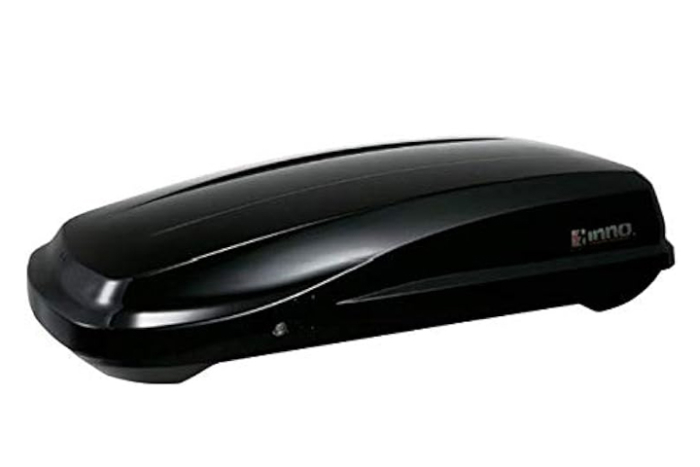
The Inno Ridge 240 Rooftop Cargo Box ($399) is a tidy choice for compact vehicles and stouter equipment. Built with three-layer plastic construction, the materials are hardy, and the construction is dependable. At eight cubic feet of space, it’s smaller than most boxes, but if you’ve got a compact vehicle and you’re looking for a bit of extra storage space, this is a simple solution.
As you’d suspect with a smaller cargo box, the Ridge’s 20-pound weight and ease of installation make putting it on the roof and taking it off a snap. Plus, at under $400, it’s one of the least expensive options on this list. It also has a thoughtful, surprising feature — the key can’t be removed from the lock unless it’s actually locked, which greatly reduces the odds of you leaving the box unlocked before you hit the road.
it would be nice if you could open the box from the passenger side, and you’re definitely not going to fit your skis in there, but for folks who want to avoid mounting a long, narrow, tall, or huge box, the Inno Ridge 240 Rooftop Cargo Box delivers at a price that doesn’t break the bank.
Rooftop Cargo Box Comparison Chart
| Rooftop Cargo Box | Model Options | Volume | Weight Capacity | Weight | Locks Included |
|---|---|---|---|---|---|
| Yakima SkyBox Carbonite | 12, Lo (15 cu. ft.), 16, 18, 21 | 12, 15, 16, 18, 21 cu. ft. | 165 lbs. | 41-62 lbs. | Yes |
| Yakima RocketBox Pro | 11, 12, 14 | 11, 12, 14 cu. ft. | 165 lbs. | 30, 38, 40 lbs. | Yes |
| Thule Motion 3 XL | L, XL, XL Low, XXL, XXL Low | 16, 18, 14, 21, 18 cu. ft. | 165 lbs. | 44, 51, 53, 57, 56 lbs. | Yes |
| Thule Vector | M, Alpine | 13 cu. ft. | 165 lbs. | 59, 66 lbs. | Yes |
| Yakima Skybox NX | NX 16, NX 18 | 16, 18 cu. ft. | 165 lbs. | 47, 53 lbs. | Yes |
| Thule Force XT | Sport, L, XL, XXL | 11, 16, 18, 22 cu. ft. | 165 lbs. | 32, 41, 47, 52 lbs. | Yes |
| Pelican BX140R Cargo Case | BX55S, BX85S, BX90R, BX140R | 4 cu. ft. | 50 lbs. | 35 lbs. | 35 lbs. |
| Inno Ridge 240 | Ridge 240 (there’s also a long Ridge 460 model) | 8 cu. ft. | 110 lbs. | 20 lbs. | Yes |
Why You Should Trust Us
Our Expert Testers
Steve Andrews has been adventuring in vehicles for 25 years. His main chariot has been alive almost as long: a 2003 Toyota 4Runner. As a go-anywhere 4×4, it can handle almost anything underneath it, taking Steve on adventures all around North America. With a growing family and a dog, though, more space was essential. So he set out to find the best rooftop cargo box to pack all the essentials for a family of four (and a dog) to join the journey while still allowing for space inside.

GearJunkie Managing Editor Billy Brown has taken his Subaru Outback across the western United States, living in the back for weeks at a time. He added his insights into what makes a cargo box worth buying and which boxes will serve what kinds of travellers.
Our Testing Process
Steve’s 4Runner is an ideal vehicle to test out rooftop cargo boxes. Being an older V8 vehicle, gas mileage is a large concern for attaching any extra accessories to a vehicle. So Steve set out a baseline for 50 miles on the highway and measured the gas consumption without any boxes compared to the boxes on top. In addition, since the vehicle has a higher roof, putting stuff in and out of the box is a bit more difficult than say, a Honda Civic.
To further add to that, Steve enlisted help from a tech-savvy, gadget-loving friend who has the latest Tesla model Y, where battery consumption can be measured by the minute. Combining this data allowed us to measure the efficiency of these boxes without having to trust the manufacturer’s word for it.
Additionally, we tested how easy or difficult it was to install these boxes. Can it be done single-handedly, or do you need help from a friend (or several friends)? Is the latching system secure? How easy or difficult is it to open the box with a bunch of gear in the other hand? And when it’s time to close it shut, do you need to fidget the handle to make sure it’s closed or is it one simple maneuver?

The Yakima Skybox NX was extremely stable on windy and bumpy roads; (photo/Will Porter)
Then, we paid close attention to how secure the box was on the roof while driving. The last thing you’d want is any vibration or deafening noise to scare others around you. So, after ensuring we installed it correctly, we checked the box at speed with the windows and sunroof open to see how kind it was to those around us.
Our Rooftop Cargo Box Rating System
Each cargo box in this guide was tested and scored in four main categories: Volume, Ease of Use, Security, and Value.
Value considers how well a cargo box performs for its price, factoring in capacity, durability, weight range, and price. A budget-friendly option can score high here if it delivers strong performance for the cost.
Volume is pretty straightforward. We looked at how many cubic feet each box would hold. In addition, we evaluated the shape of the boxes and whether or not they would accommodate large or unusually-shaped objects. If boxes had the same volume but one could fit larger duffels or skis more easily, that box would get a higher rating.
Ease of Use factored in how easy a box was to install and remove, how easy it was to load and unload gear, and how reliable the locking mechanism was. We also considered some comfort features, such as lined interiors, whether a box opened on both sides, and perks like interior lighting.
Security considers whether or not a box will keep your gear safe. If the box had a sturdy shell and a reliable locking mechanism, it received a higher score. If, during testing, a lock was difficult to use or unreliable (or nonexistent), the score took a hit.
Value considers how well a cargo box performs for its price. We consider all the factors above, take in added features, and add a bit of subjective opinion. A budget-friendly option can score low here if it delivers a weak performance for the cost, and an expensive version can have a higher rating if we feel that it’s worth the price.
The overall score is not a simple average of these categories. Instead, it reflects our editorial judgment based on the complete user experience. That means a less secure cargo box with extremely high volume can still score high, while a cargo box that scores high for value might rank lower if it’s difficult to use.
Buyer’s Guide: How to Choose a Rooftop Cargo Box
Roof Length Compatibility
It’s key to make sure the box can seamlessly pair with your vehicle’s roof and rack, especially if you have a top-hinged trunk. First, position the front crossbar as far forward as possible (some are not adjustable). Then, open the hatch and measure from the back hatch to the center of the vehicle’s front crossbar.
That distance needs to exceed the hatch clearance of a cargo box, which is listed on the manufacturer’s website. You’ll also want to be sure the length doesn’t hinder visibility up front or hit any antennas.
Rack Setup
If you’ve never owned a rooftop setup, this is rack 101. The mount is a component that runs lengthwise (front to back) and attaches to the top of your vehicle. Generally, vehicles come with factory mounts like raised rails, tracks, or fixed points.
If you’re working with a bare roof, you can permanently mount a rack or opt for a setup that’s compatible with the door jamb. Two crossbars or load bars sit perpendicular to the roof and are attached to the mount via four compatible towers. Crossbars vary in size and shape.

Each cargo box is compatible with specific crossbars, so make sure those crossbars work with your vehicle and mount or if an adapter is required.
Carrying Purpose and Capacity
Before you start shopping for a rooftop cargo box, take a look at your gear. What do you need and intend to carry on trips? Shorter or packable items like camp chairs or sleeping bags generally fit well in rooftop cargo boxes.
Lengthier items like skis, paddles, golf clubs, and strollers will require a longer box like the Yakima Skybox Carbonite — make sure the box’s internal dimensions fit the length of your equipment.
Read the width and height of each box to help conceptualize the overall volume. Boxes also list the gear capacity in cubic feet (or inches or liters). The more people in your group, the more space you’ll need for each individual’s gear.

Weight
There are two weight factors to take into account: the cargo box weight and the weight capacity of the box. The cargo boxes listed here range from 20 to 66 pounds without any cargo. The majority of these carriers safely hold a weight capacity of up to 165 pounds, but others are lower, around 110 or even 50 pounds.
Don’t sacrifice the cost for a less structural cargo box if you need to transport heavier items. Your heftiest cargo, like a loaded cooler, is easier and safer to store inside the vehicle.
Check with each box manufacturer for a specific box’s weight limits. Likewise, check your vehicle’s owner’s manual for the recommended maximum load. You’ll need to subtract the weight of the box, aftermarket towers, and crossbars, as well as the maximum weight of the cargo stored inside the box.
Materials
Cargo boxes are built with durable plastic, and a handful have additional reinforcements, such as the steel along the base of the Thule Vector. Others are coated with an additional finish for extra durability and weather resistance. For example, the Pelican BX140R Cargo Case has a corrosion-resistant coat.
The hardware, like the latches and lock systems, varies in quality, which is reflected in the price. Overall, the size and materials influence the box’s weight, too.
Water Resistance
Most rooftop cargo box designs are extremely weather-resistant, thanks to a waterproof shell and weather sealing, so they’ll generally do a great job of blocking snow and rain. Some even feature a liner for water resistance, like the integrated rubber gasket of the Pelican BX140R Cargo Case.
However, none of these cargo boxes claim to be completely waterproof. We recommend you store any water-sensitive, precious cargo in a dry bag or inside the rig.
Extra Features
A handful of the top-shelf designs have extra features for comfort, utility, and ease of use. For instance, we appreciate the interior LED lights of the Thule Vector, as well as its long handle strap.
Installation and Ease of Use
Installing a rooftop cargo box can vary from model to model, but there are a few general steps and tips to ensure a smooth setup. First, always start by carefully reading the manufacturer’s installation instructions. Most cargo boxes are designed for easy installation, often requiring no tools, thanks to hand-tightening knobs and pre-installed mounting hardware.
For ease of use, look for boxes with dual-side opening features. This allows you to access your gear from either side of the vehicle, which is particularly handy in crowded parking lots or when parked on busy streets. Additionally, check if the box has a quick-release system which makes it easy to attach and remove without much effort.

Maintenance Tips
Maintaining your rooftop cargo box is crucial to ensure its longevity and performance. Regularly check and tighten the mounting hardware, as vibrations from the road can loosen connections over time. Clean the box with mild soap and water, avoiding abrasive cleaners that can damage the finish or weaken plastic components. If you notice any cracks or damage, address them immediately to prevent further issues.
Security Features
Security is a paramount concern when storing valuable gear atop your vehicle. Opt for cargo boxes with robust locking mechanisms. Many high-quality models come with locks that secure the contents and latch the box to the base rack, making it difficult to remove without a key.
Keyed locks are a convenient feature, allowing you to use the same key for the cargo box and your rack system, reducing the number of keys you need to carry. Some premium models include advanced security features like reinforced locking points and tamper-resistant locks, providing peace of mind when your vehicle is out of sight.
Choosing the right rooftop cargo box involves considering how it complements your vehicle, the type of gear you plan to carry, and the features that enhance usability and security. By focusing on compatibility, capacity, weight, materials, water resistance, and additional features like easy installation and robust security, you can select a model that meets your needs and ensures safe and efficient travel with all your essential equipment.
Price & Value
Let’s face it — cargo boxes are pricey. Depending on the box, you can spend anywhere from $200 to $300 for a no-frills cargo carrier to well over $1,000 for a secure, aerodynamic spaceship-looking roof pod. More affordable options will leave more money in your bank account but may leave you missing some options. On the other hand, the higher-end cargo boxes may have you shelling out money for perks you don’t need. Here are some options in different price ranges to help you decide what features you are (and aren’t) willing to pay for.
Budget
If all you need is some extra storage space, you can get by with something like the Pelican BX140R Cargo Case ($300-450). Even though it’s half the price of some of the other items on our list, the weatherproof boxes come in four sizes and are made with tough rotomolded plastic and corrosion-resistant steel latches. You won’t be able to fit a pair of skis in these, and they don’t offer fancy details like dual-side opening and an interior light, but if you simply want to add a few more square feet of storage, this is a budget-friendly option.
Mid-Tier
For $500-$1,500, you’ll find bigger storage options, more streamlined, aerodynamic exteriors and more convenience than you might from a budget cargo box. For instance, the Thule Motion 3 XL ($999) offers one-handed access for quick loading, an aerodynamic profile, and a cool strap that lets you pull it shut from the ground.
Premium
Going over $1,500 puts you in the luxury category here. The Thule Vector ($2,400) is a great example of what you get at this price range, with interior tie-down straps to keep things in place during transit, a felt-lined floor to prevent your gear from getting scratched, and an LED light integrated into the lid that lets you see the box’s contents at night. Do you need all these features? Probably not. But are they convenient if you’ve got the dough? Absolutely.
Frequently Asked Questions
Rooftop cargo boxes are not all created equal. The designs vary by weight, dimensions, gear capacity, and rigidity. You’ll need to consider what type of gear you need to haul as well as your vehicle length and roof capacity.
The best rooftop cargo box will fit well with adequate hatch clearance. Also, note certain cargo boxes are compatible with specific crossbar or load bar models, shapes, and size ranges. Be sure to get the correct setup for your vehicle.
A larger rooftop cargo box might not be the best choice for your vehicle and purpose. If a box length exceeds the rooftop clearance, it can hinder the hatchback when it swings up, or it can potentially hang over the roof in the front, impeding windshield visibility.
Bigger designs are more challenging to move and store, have a greater impact on fuel efficiency, are costlier, and are noisier while on the road. Be sure not to exceed the maximum length and weight your vehicle’s roof can carry.
Place the heaviest and the majority of the cargo in the center of the box and the lightest items toward the nose and tail. Use tiedown straps, which are included in some designs, to secure loose goods if the box isn’t full.
Though many cargo boxes are weatherproof, most manufacturers suggest putting electronics and valuables in a dry bag for extra protection.
Without additional weight, empty cargo boxes can get slightly jostled around by the wind, which could cause audible drag. If you don’t mind the potential noise, then it’s technically fine to drive with an empty rooftop cargo box. That said, the lifespan of the box will be extended if you store it safely away from the elements between long periods of nonuse.
Also, removing the cargo box could lead to greater fuel economy in the long haul. But for weekend warriors who commute 20 minutes to work several days a week, the repeated mount time might not be worthwhile, especially in a mild climate.
When your rooftop cargo box isn’t mounted on your vehicle, it’s good to store it in a cool, dry indoor space like a garage, attic, or basement. It’s ideal to keep it out of direct sunlight and extremely hot or cold temperatures.
You can set the box flat on the ground — or atop a couple of 2x4s — or rig it to hang on a wall via the base side.