Every hunter knows that notching your tag isn’t the end of the hunt. It’s the part where the hard work begins. In that moment, it pays to have the best hunting knife you can afford.
What to look for? The knife should hold an edge or be easily field sharpened. It should fit well in the hand to protect the user from accidental injury. And a good hunting knife is usually stout enough to crack bone. It doesn’t need to be big or bulky like some sort of weapon. Remember, the animal is already dead when the knife comes into play.
This year, our crew of three testers took to the woods to hunt elk, deer, bear, and small game to test five of the latest and greatest hunting knives. They took notes in the field, compared the knives to past favorites, and updated this buyer’s guide accordingly.
If you’re short on time, the Benchmade Saddle Mountain Skinner is the best knife for the task. For budget-conscious hunters, the Outdoor Edge WildPak 8-Piece Hunting Knife Set gives you everything you need after a successful hunt. If you want a tool that will last for years but don’t have the coin for fancy high-end steels, the Buck 113 Ranger Skinner Knife offers high-value performance at a touch over $100. Read on for a more in-depth analysis.
Editor’s note: On May 20, 2026, we updated this guide to include the Benchmade Saddle Mountain Skinner, Montana Knife Company Blackfoot 2.0, and the Havalon Piranta-Edge. We also included an updated scoring system and an explanation on how we rate the best hunting knives.
The Best Hunting Knives of 2026


Benchmade Saddle Mountain Skinner

(Photo/Benchmade)
Specifications
Pros & Cons
Pros
- Extremely comfortable handle
- Tough, heavy-duty build
- Razor sharp when new
- S90V steel holds an edge exceptionally well (although prone to chipping)
Cons
- Difficult to resharpen (Benchmade offers free sharpening for life)
- Heavier than some options
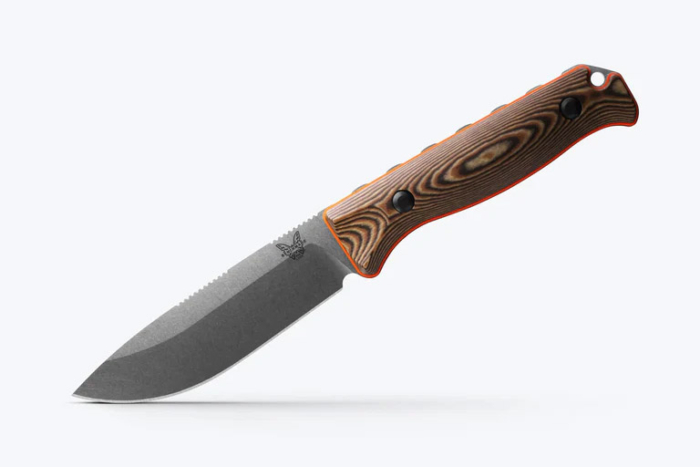
In the fall of 2025, Editorial Director Sean McCoy took to the elk woods with the Benchmade Saddle Mountain Skinner ($250-$300). After nearly four decades of hunting and being fortunate enough to test countless hunting knives, McCoy is tough to impress.
Impress is what the Saddle Mountain Skinner did. McCoy successfully filled his tag on opening day and used this knife almost exclusively to take his bull from a ditch in the Colorado backcountry to burgers, brats, and steaks in his freezer.
A number of things stood out to him, starting with the steel. The S90V version he used (also available in S30V) was still plenty sharp after skinning, quartering, and packing the animal off the mountain. It wasn’t until he had completely processed the elk in his garage over three days that the blade required a touch-up. Despite its tough steel, he found he could bring it back to life on his own with little trouble.
The handle is one of the best a hunter could use. Thanks to the Richlite scales and the exposed full tang, which protrudes along the spine of the handle, the knife is grippy, even when wet and coated in blood. It makes the knife effective and safe.
McCoy’s only complaint is the included sheath, which, in its stock configuration, can’t attach to a belt. However, that can be easily solved with Benchmade solutions. The important part is that processing big game is a big job, and the Saddle Mountain Skinner tackles the task with ease, without needing any TLC. What more could you want?
Outdoor Edge WildPak 8-Piece Hunting Knife Set
Specifications
Pros & Cons
Pros
- Pros
- Low cost
- Has everything you need
- Comes with a carrying case and sharpener
Cons
- Knives need resharpening often, dull quickly
- Too bulky for backcountry hunting
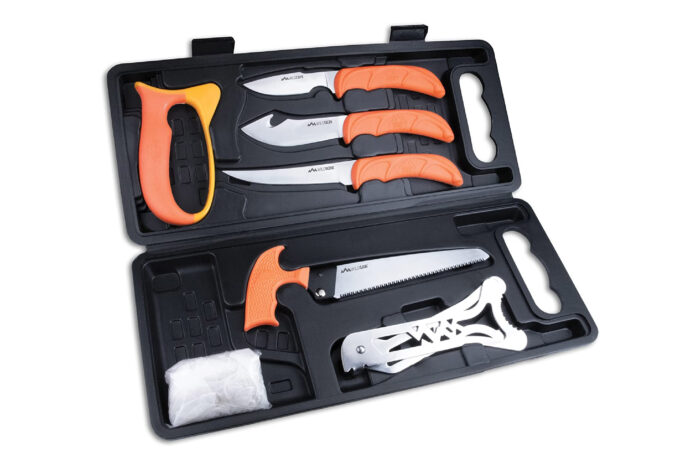
What you’re looking at here is a whole lot of bang for the buck. The OUTDOOR EDGE WildPak 8-Piece Hunting Knife Set ($54) includes everything you need to break down just about any animal in the field.
This kit includes a gut hook, skinning knife, boning and caping knives, bone saw, spreader, and knife sharpener. Everything fits in a slick little case, keeping you organized. This might include more than you’ll ever use if you’re a minimalist, but for those who like options, the set offers a ton of metal at an impressive price.
Editorial Director Sean McCoy has had a set for years and says the quality is impressive. They won’t hold an edge quite as well as more expensive steel, but they certainly perform better than their price tag suggests.
McCoy used his set to field-dress and process deer in the past and still keeps it as a backup under the back seat of my truck. The knives are easy to sharpen with the included sharpener, which is good. You’ll likely need to give them a few touchups throughout your processing to keep that edge fresh. Given the price, though, that’s a-ok. Throw the kit in your pack, and you can handle any big game hunting task.
Buck 113 Ranger Skinner Knife
Specifications
Pros & Cons
Pros
- Great blade shape for big-game processing
- Good handle
- Upgraded steel is excellent
- Reasonable price
Cons
- Better steel available
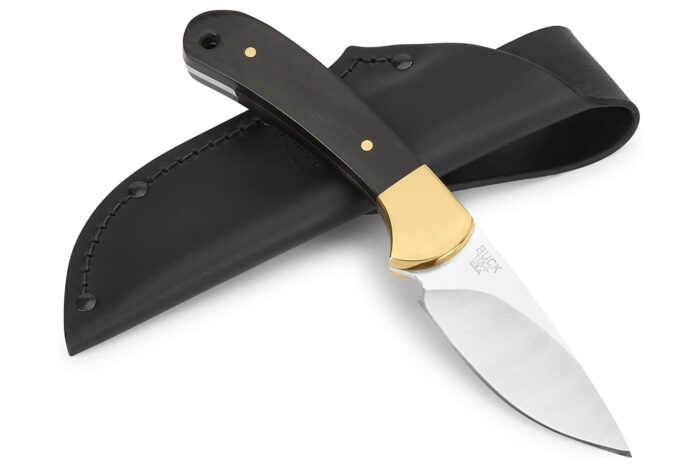
For many years, the Buck 113 Ranger Skinner (starting at $125) held the top award on this list of hunting knives. However, due to modern steels and improved designs, it’s fallen a bit behind. However, it’s still one heck of a knife, especially considering the price.
For years, it was what Editorial Director Sean McCoy relied on. He says it’s the perfect size for his hand. And while the handle material can get slippery, it remains secure thanks to its excellent shape, which prevents the hand from sliding. The 3.125-inch blade is perfectly shaped for processing game and is easy to manage in cold weather. And the rosewood handle? Beautiful.
There are four steel variations available, including a 420HC Satin finish, a 420HC Polish finish, and a MagnaCut option. However, in our opinion, the S35VN steel version, which retails for $155, is the best value.
In that variation, hunters will find a steel that is more than capable of processing big game, offers excellent ergonomics, and can be customized with a handle if desired. And it’s less than $200. That’s a pretty sweet deal.
Argali Carbon Knife
Specifications
Pros & Cons
Pros
- Perfect shape for efficiency
- Light
- Excellent steel
Cons
- Not easy to attach sheath to belt or other external straps
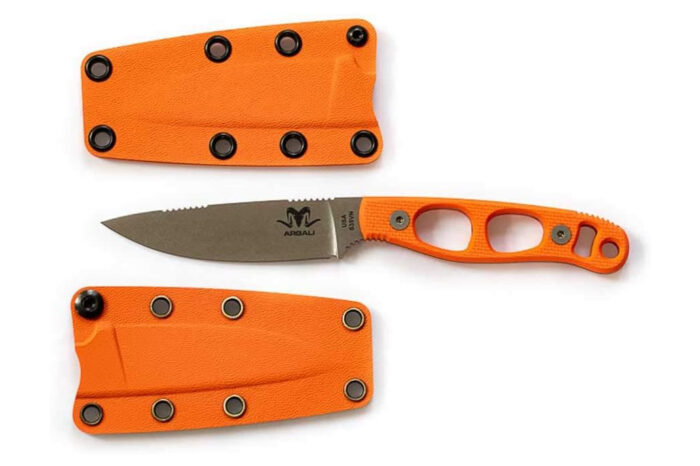
The hunting brand Argali Outdoors specializes in lightweight backcountry hunting gear. And with that, it developed its own run of hunting knives. The Argali Carbon Knife ($229) fits the lightweight theme to a tee.
At just 1.8 ounces, the featherweight is barely noticeable. And yet, it doesn’t compromise prowess. Our field testing has proven it to be an agile and effective knife for big game, despite its light build.
The grippy handle ensures that you don’t lose control even in wet and difficult conditions. Further, strategic jimping adds grip to the handle and knife spine. This one’s a precise tool in the hand.
Our hunting editor, Rachelle Schrute, said this knife is her go-to tool. “It’s much more grippy than a lot of other knives that size,” she noted. “The Argali is flat enough and with a wide enough blade that it lives in my bino harness.” That’s high praise coming from a woman who’s cleaned more animals than most.
Of course, as with anything designed to be ultralight, there are some things you give up. The handle isn’t as comfortable as bulkier options. After a few hours of processing big game, you may be left wishing for something more comfortable. And of course, the blade is smaller than others, though it’s plenty capable.
But the US-made S35VN, coupled with textured G10 removable handles, makes this knife simply great for the backcountry. If you need to shave ounces, this knife is the way to go.
Havalon Piranta Z
Specifications
Pros & Cons
Pros
- Small blade makes precise cuts easy
- Excellent skinning knife
- Replaceable blades mean you'll always have a sharp edge
- Compact
- Inexpensive
Cons
- Blade removal can be tricky
- Not heavy-duty enough for going through bone
- Used blades propose a safety concern
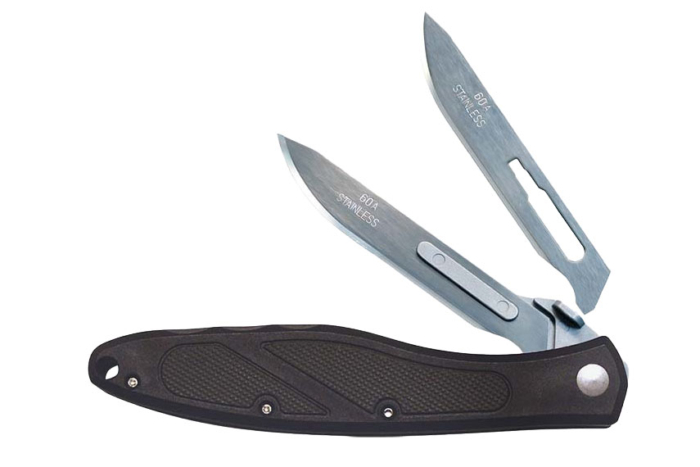
While on a deer hunt in Oklahoma, GearJunkie contributor Morgan Nowels watched a few guides field dress and skin eight whitetail does in mind-boggling record time, all with the Havalon Piranta-Edge ($50). These are dudes who make a living processing game in ridiculous quantities, so their knife selection is telling. Every one of them swore by this knife.
The small profile of the replaceable blade makes it perfect for field dressing and skinning game. The thin design allows for scalpel-like precision, and it’s nearly impossible to nick something you don’t intend to. Cutting away the intestinal tube from the back of the animal was especially easy with this knife, and it makes quick work of a tricky task. Since the blade is easily replaceable, you’ll never have to work with a dull edge as well.
Speaking of replacement blades, the Piranta-Edge’s swappable design also lets you put a gut hook on this knife. Nowels has never been one to use gut hooks, but the guides in Oklahoma skinned the deer with two Havalon knives at once: one with a standard blade and one with a gut hook. They used the standard blade to make initial cuts, then used the gut hook to “zipper” the hide off. It was highly efficient, and if you like gut hooks, this knife allows for it.
However, this isn’t a knife capable of processing an entire big game animal. Since it’s small, it’s not suitable for deboning meat, splitting open a rib cage, or any heavy-duty task, for that matter. It’s best reserved for skinning and removing guts. It may be limited in its use, but it’s darn efficient at its job. Every hunter should have one, especially considering its low cost.
Montana Knife Company Blackfoot 2.0
Specifications
Pros & Cons
Pros
- Versatile; capable of precision cuts and tough tasks like splitting ribs
- Very light for a fully functional hunting knife
- Grippy G10 handle
- PVD finish
- You can actually buy one
Cons
- Corrosion resistance
- Not the best edge retention
- Price
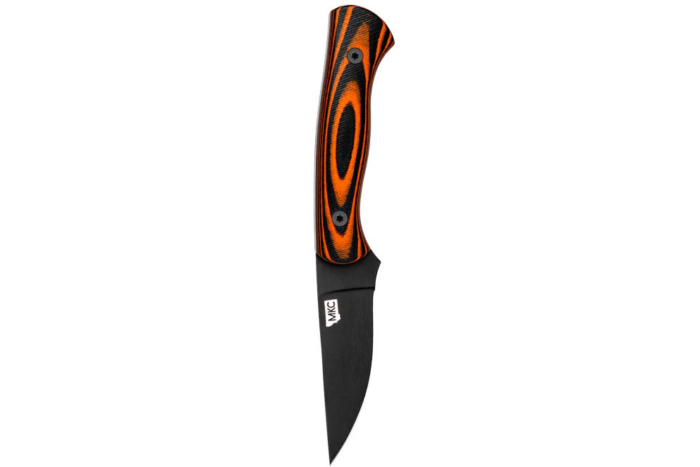
MKC founder and Master Bladesmith Josh Smith says the inspiration for the MKC Blackfoot 2.0 ($300) was his desire to have one knife that could do everything in his home range along the Blackfoot River in Montana. GearJunkie contributor Morgan Nowels put that to the test, carrying only this knife through the entirety of last fall.
Initially, he was concerned with the functionality of the small 3.375″ blade for processing big game. But after using it to entirely process two whitetail deer, those worries went away.
He tested the version made with 52100 Ball Bearing steel, though it’s also available in MagnaCut. The big advantage of the 52100 model is its resistance to chipping. After hammering at the knife to split two rib cages open, the edge was in pristine shape, with zero nicks. Even the highest-priced MagnaCut blades show some chipping after such use.
The downside, however, is that the knife dulls a bit more quickly than MagnaCut options and is also much more prone to corrosion, though this is somewhat mitigated by its black PVD finish.
Despite those downsides, the knife is very versatile. Nowels found it small enough to function well as a knife for cleaning upland birds and gutting trout, without being unwieldy or too large, as many big-game blades are. Couple that with its ability to tackle heavy-duty tasks, and the Blackfoot 2.0 aligns perfectly with Josh Smith’s vision. It may not be the best at anything, but the Blackfoot 2.0 can do everything.
Benchmade Meatcrafter

Benchmade designed the Meatcrafter with renowned hunter Steve Rinella; (Photo/Sean McCoy)
Specifications
Pros & Cons
Pros
- Excellent handle for long hours of work
- Blade shape optimized for meat processing
- Super sharp, slicey, thin blade
- Perfect for butchering game in camp or at home
Cons
- Too large to carry in the field
- Not intended for gutting or quartering game
Benchmade worked with hunter Steven Rinella of MeatEater to build a knife with the express purpose of turning wild game into food. So the Meatcrafter (starting at $200) really comes into play when the hunt is over.
Editorial Director Sean McCoy tested the premium S45VN version and found the 6.7-inch trailing-point blade holds its extremely keen 14-degree edge angle. A gorgeous Grivory handle sits beautifully in the hand. The long blade gives an exceptional cutting surface that can work for hours on end without losing an edge.
While we wouldn’t carry this blade in the field, it would live in camp or at home to complete the large task of butchering an animal into freezer-size steaks, chops, and loins. It, too, comes with a hefty price of $370, though there are now numerous versions available with different steels and handles.
If you need a processing-specific knife, you can get a Santoprene-handled CPM-154 Stainless Steel Meatcrafter for $200. The blade shape is fantastic for the task, and you’ll be glad you have it while processing big game. It makes an arduous process a bit easier.
Read Review: Meatcrafter: Benchmade Blade Is Highly Functional Work of Art
Other Editor Favorite Hunting Knives
Specifications
Pros & Cons
Pros
- Excellent steel holds an edge for a very long time
- Light
- Blaze orange blade (on carbon fiber version) won’t get lost
- Great ergonomics
Cons
- The sheath doesn’t attach to a belt easily
- Carbon fiber version expensive
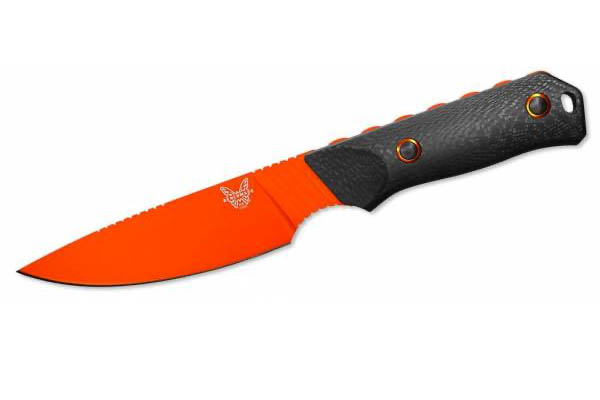
Introduced in 2022, the Benchmade Raghorn ($325- $420) is a next-level hunting knife. Editorial Director Sean McCoy started testing it before its release and used it throughout a full big-game hunting season.
Now available in two versions, the original carbon fiber handle, CruWear premium model, and a more affordable version with S30V steel and G10 handle, this is a wonderful hunting knife. McCoy’s first big test of the Raghorn came on the second-to-last day of the Colorado archery elk season when he took a small cow. With his buddies still trying to fill tags, it fell on him to haul it out and process it, mostly alone.
From field dressing and breaking down the elk all the way to skinning quarters, cutting steaks, and even cleaning up scraps for the grinder, the Raghorn delivered. After one full elk was processed, it was sharp enough that he packed it back into the woods for (an unsuccessful) rifle season.
Sure, it could have used a sharpening. But the fact that it could certainly handle multiple big game animals with maybe a light stropping was impressive.
Most of this performance comes from cutting-edge steel (CPM-CruWear hardened to 63-65 Rockwell hardness). It’s a wonderful steel on a thin blade that’s accurate, slices well, and cuts clean. Couple that with an easy-to-see blaze orange blade, carbon fiber scales, aggressive jimping along the spine, and a finger choil for an excellent grip. The result is a darned near-perfect hunting knife.
Impressively, this rather large knife (4.64″ blade, 8.88″ overall) weighs just 3.5 ounces, or 5 ounces with the sheath. It’s incredibly light in the pack for a knife that performs beautifully in the hand.
(Photo/Montana Knife Company)
Specifications
Pros & Cons
Pros
- Excellent steel
- Versatile, large-bellied blade shape
- Grippy, ergonomic handle
Cons
- Hard to find
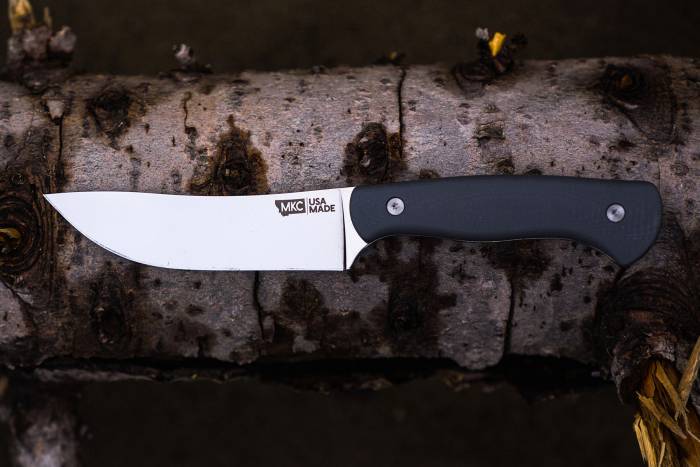
The MKC Stonewall Skinner ($325) is a strong challenger for the best hunting knife on the market. In particular, the premium model with a Magnacut steel blade is a premier knife from a cottage brand making waves in the knife world.
We put the MKC Stonewall Skinner through rigorous testing in 2022. Hunting Editor Rachelle Schrute used it to clean four deer and a mountain lion, and throughout it all, it kept a keen edge, needing only resharpening by the very end of the season.
But the story goes deeper than edge retention and quality steel. Every component of this knife is genuinely fantastic. The blade shape provides an enormous cutting edge and a fine, sharp point. The handle fits beautifully in the hand. And the high polish not only looks beautiful, but it also makes the knife super easy to clean.
So why didn’t it take the top slot? Well, a few things give the Benchmade a minor leg up: weight, pricing, and availability. The Benchmade Saddle Mountain Skinner will save you over an ounce in the pack, with better-priced options. And, while MKC has been doing a better job of keeping things in stock, the brand does have a reputation for playing hard to get.
Specifications
Pros & Cons
Pros
- Great price for a quality knife
- Comfortable handle
Cons
- Won't hold an edge like higher-end knives
- Not full-tang
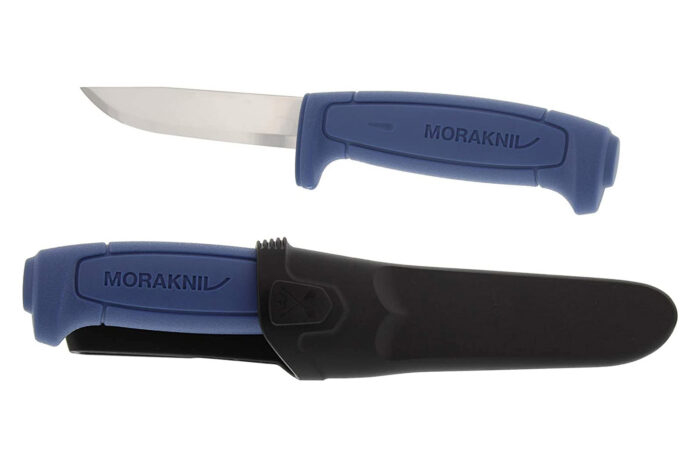
The Morakniv Basic ($13), while not necessarily a hunting knife, is up to the task. It can take a beating, and it’s a true fit for even big-game hunting. One GearJunkie tester said, “My longstanding adventure partner knife has been a Mora — a stainless steel blade with a bright-blue plastic handle, which is easy to find when you set it down.”
He continued, “It’s survived me hammering on it with a log to break a deer’s pelvic bone. I’ve also gutted many fish with it. It’s a do-all blade. It’s light, cheap, easy to replace, and easy to sharpen. Not at all fancy, but it’s all you need.”
Morakniv makes the Basic knife in Sweden. While the steel isn’t as impressive as others on this list, when it comes to value, nothing can stand up to the Morakniv. The plastic handle is grippy and ergonomic, and the fixed blade is durable enough for any camp tasks. If you’re just getting into hunting and looking to save some money while having effective tools on hand, this is a great place to start.
Read Review: MKC Stonewall Skinner Review: Magnacut Hunting Knife Done Right
Specifications
Pros & Cons
Pros
- Excellent blade shape
- Good handle
- Hand made
Cons
- Expensive for D2 steel
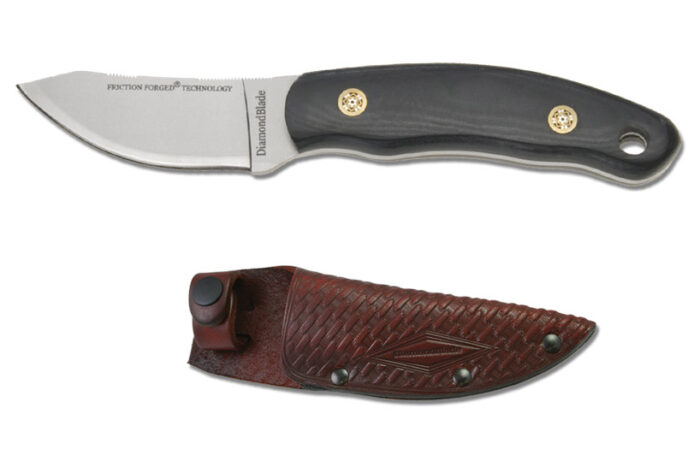
DiamondBlade uses a unique friction-forging process that results in some of the hardest D2 high-carbon steel on the market. While the Pinnacle 1 ($325) comes with a hefty price, it’s definitely one of the best hunting knives on the market. The hold an edge for an incredibly long time
The handle is handmade and contains handset mosaic pins. The 2.55-inch blade has a deep belly for excellent skinning and shallow cuts for field processing.
Crisp jimping on the blade spine helps ensure a stout grip and varied hold methods. Overall, it’s close to the ideal hunting knife if your wallet can handle the high price tag.
Specifications
Pros & Cons
Pros
- Unique design gives two cutting implements
- Tendon tool makes tough cuts
- Primary blade saved for fine work
- Specifically designed for elk hunting
Cons
- 440C steel only OK
- Folding design
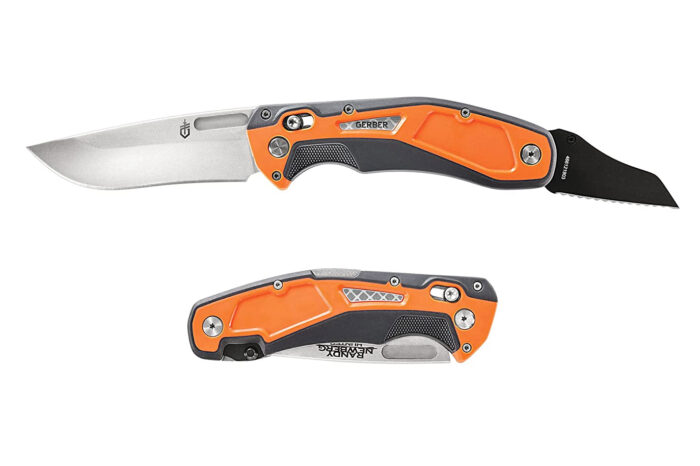
Randy Newberg is a renowned elk hunter. He brought his decades of experience to Gerber to help the brand build the DTS ($68), a task-specific big-game hunting knife with some unique attributes.
First, the DTS has two blades. A primary blade made of mid-grade 440C steel provides a reliable cutting tool. And the DTS’s secondary “tendon tool” is made of extremely tough D2 steel.
This gives hunters a second, tough blade for cutting tendons or other burly flesh, bone, or hair, helping preserve the steel on the primary blade for more delicate cuts.
Our 2020 testing of this knife shows it to be tough and effective for breaking down big game in the field. For a similar price, you’d be hard pressed to find something as capable of big jobs like processing an elk. For 60 bucks, you’ll be in the elk woods and will have no issue getting your meat back home.
Comparison Chart
| Hunting Knife | Price | Steel | Weight | Blade Length | Length Overall |
|---|---|---|---|---|---|
| Benchmade Saddle Mountain Skinner | $250-$300 | S90V or S30V | 4.38 oz. | 4.2″ | 8.7″ |
| Outdoor Edge WildPak 8-Piece Hunting Knife Set | $54 | 420J2 stainless steel | 2.4 lbs. | Various | Various |
| Buck 113 Ranger Skinner Knife | $125 | 420HC, S35VN, MagnaCut | 5.2 oz. | 3.12″ | 7.25″ |
| Argali Carbon Knife | $229 | S35VN | 1.8 oz. | 3.25″ | 7.25″ |
| Havalon Piranta-Edge | $50 | 60A Stainless Steel | 3 oz. | 2.75″ | 7.25″ |
| MKC Blackfoot 2.0 | $300 | 52100 Ball Bearing Steel or MagnaCut | 3.6 oz. | 3.375″ | 7.5″ |
| Benchmade Meatcrafter | $200-$370 | S45VN, CPM 154 | 3.24 oz. | 6.08″ | 11.06″ |
| Benchmade Raghorn | $420 | CPM-CruWear | 3.5 oz. | 4.64″ | 8.88″ |
| Montana Knife Company Stonewall Skinner | $325 | Magnacut | 5.5 oz. | 4.75″ | 9.25″ |
| Morakniv Basic | $13 | Sandvik Stainless | 4.1 oz. | 3.6″ | 8.25″ |
| DiamondBlade Pinnacle 1 | $315 | Friction-forged D2 | 4 oz. | 2.55″ | 7.25″ |
| Gerber Randy Newberg DTS | $60 | 440C primary blade, D2 tendon blade | 6.6 oz. | 3.75″ | 8.9″ |
Scoring System for the Best Hunting Knives of 2026

There are many things hunters need in a solid knife. We did our best to narrow it down to four factors.
Overall Score: Our overall score is not an average of the subscores. It’s a rough estimate of how a knife performs for it’s intended use. Products scoring from 6.5-8.5 are excellent products we recommend. Anything scoring higher than that is a perfect, or near perfect product.
Steel: This score reflects how the steel on the tested knife performed in the field, taking into account edge retention, corrosion resistance, chipping resistance, and ease of sharpening. Many of the knives in this guide are available in multiple steel configurations. If a knife has multiple options available, it receives a slight bump in the score.
Versatility: While a hunting knife has one main task, processing big game, hunters end up using them for all sorts of things. The best hunting knife will be large enough to tackle its main job, without being so unwieldy that it can’t be used for tasks like shaving wood for a fire, opening snack packages, gutting fish, and cutting cord for tent tie downs.
Value: Some knives cost a lot and are nearly perfect, and others cost hardly anything and just barely get the job done. Knives that score well in value strike the perfect balance between cost and performance in the field.
Handle/Sheath: Field dressing big game is messy work, and a good knife handle is worth its weight in gold. It has to be ergonomic, and grippy when wet and caked in blood. Anything less is a recipe for disaster. Sheaths are also important, and a crummy sheath that doesn’t attach to a belt, or provide a secure hold gets docked points.
How We Tested the Best Hunting Knives of 2026

Our team is avid hunters with decades of experience in the field. And we also happen to be total “knife knuts.” We put the knives listed here through rigorous field testing. Some of the knives listed here have gone through more than 10 years of testing.
We currently have three individual testing hunting knives for this buyer’s guide. Sean McCoy, Editorial Director of AllGear Digital, has been hunting for nearly forty years. Based in Colorado, he is the original author of this guide and hunts elk, mule deer, upland birds, and waterfowl every year.
Hunt/Fish Editor Rachelle Schrute also contributes her insight to the guide. She hunts almost year-round, pursuing all manner of hoofed big game as well as cougars, bears, and small game. There are few people in this world who hunt as hard as Montana-based Schrute, and she has lifetimes (not a typo) worth of experience.
Contributor Morgan Nowels spends his entire fall hunting. Originally based out west where he hunted elk and mule deer, Nowels is now in Tennessee. His passion lies in hunting whitetail deer with his bow, though he still makes time to hunt elk and upland birds with his dogs.
Collectively, the team puts an unreal amount of time in the woods every fall. Additionally, we attend trade shows, such as SHOT Show, to meet with manufacturers and stay up to date on the latest offerings.
Best Knives for Hunters: Personal Preference

Whenever you say “best,” someone will get left out. Someone’s going to get their feelings hurt.
But we’re OK with that. Suck it up, buttercup. And feel free to tell us why your knife deserves to be on this list. There are a ton of great blades in the world, and the GearJunkie staff wants to hear about your favorite.

You may have gleaned this from the selections above, but to be completely clear: we’re not entirely sold on huge hunting knives. Our team feels they are more dangerous to the user in the dark, rain, or on slippery surfaces. They’re also heavier. Blades in the 3.5-4-inch length are ideal.
And some of our testers don’t like gut-hooks, while others do. The nay-sayers feel like a well-handled knife does the job of opening the body cavity just fine. Other testers like it. It all depends on what you feel comfortable with.

However, all of our testers prefer fixed-blade knives for hunting in general. That’s because, if they need to shift into survival or bushcraft mode, you have a tool you can baton through firewood with less risk. That said, folding knives can serve you well, and we’ve included some here.
We included retail prices with our selections, but many of the knives above can be had for big discounts during sales. When investing, keep in mind that a good hunting knife can last for a literal lifetime, so it’s not a place to scrimp. Buy one you’ll love, and you’ll love it forever. Buy one you hate, and well, you’ll be stuck hating it forever, or buying another soon. Happy hunting!
Keeping Your Knife Sharp

A dull knife is dangerous and will make your job in the field more difficult than it has to be. When purchasing a hunting knife, consider how you plan to keep your blade sharp.
While knives with premium steels generally have better edge retention, they are more difficult to sharpen. If you’re a beginner knife user, you may find yourself frustrated while trying to sharpen hard steel. With that being said, knives made with Magnacut and S90V should stay sharp enough to process at least one big game animal without needing to be sharpened. That’s why the Benchmade Raghorn is such a great option. You can use it in the field and then send it to Benchmade and have an expert sharpen your blade.
If that sounds like too much of a hassle, a cheaper knife may be a better fit for you. Sure, the blade may dull more quickly, but it’s pretty easy to learn to sharpen softer steels on your own. The downside is that you should pack a sharpener with you in the field. There’s nothing worse than trying to hack your way through a cleaning job with a dull blade on a mountainside in the pitch dark.
Or, you can forego sharpening altogether with a replaceable blade knife. A replaceable blade provides a fast and easy way to ensure you always have a literal razor blade. However, replacement blades cost money, and replacement blade knives can get gummed up in the middle of processing an animal.
Be honest with yourself and your knife-sharpening abilities. Select a knife that you can keep sharp at all times.
Price & Value

With hunting knives, you get what you pay for — to a degree. But just because a knife is affordable doesn’t mean it won’t do the job. Remember that old-school carbon steel and 420HC, which are considered cheap today, were top-shelf not that long ago. And they will still process a deer today just as well as in the 1970s.
My point is that any knife with decent steel and an appropriate design will do the job. So don’t let the lack of a premium blade stop you from getting in the field.
Budget
In the budget knife range, look for knives with 420HC steel. While it’s older and softer than modern super steels, it will absolutely do the job. You should be able to find these knives with wood or rubber handles for around $50.
You may find yourself struggling with a budget knife partway through processing an animal, but with a quick sharpening, you’ll be back at it. Alternatively, you can ditch sharpening altogether with a budget-friendly replaceable-blade knife.
Mid Tier

As you increase the price range, expect higher quality steels like S30V in midrange knives. You’ll find Micarta and G10 handles with good steel for $100-200. These steels won’t need as much sharpening as a budget knife.
Premium
Over $250, you hit premium materials like MagnaCut, CruWear, and S90V steel. Carbon fiber and other premium handle materials are the norm — and the designs should be dialed.
$300 and above are the cream of the crop, with knives like the carbon fiber Benchmade Saddle Mountain Skinner (our top choice) carrying these premium prices.
If you want to learn the ins and outs of the steel of the knife you’re considering, read our Knife Steel Guide: Common Blade Metals Explained
Frequently Asked Questions
In short, you sharpen a hunting knife the same way as you would any other outdoor knife. That means using a sharpening tool and following its instructions. You can use a sharpening stone, a powered sharpener like a WorkSharp Knife and Tool Sharpener, or a guided sharpening tool like the Worksharp Precision Knife Sharpener or Lansky Precision Knife Sharpening Kit. Using those tools is straightforward but requires reading and following instructions beyond the scope of this article.
It’s worth noting that several top brands offer free or cheap knife re-sharpening. For example, Benchmade, Argali, and Montana Knife Company all offer free lifetime sharpening of their knives. For hunters, that’s a great deal and something worth taking advantage of every year.
If I had to pick one “best” hunting knife brand, I would probably say Benchmade. But Buck, Kershaw, Gerber, Spyderco, Havlon, and many other brands make great hunting knives.
A good hunting knife will, first and foremost, be razor sharp. High-quality steel that will hold an edge for a long time helps keep that sharpness during the long process of cleaning a game animal. Next, you want a great handle that won’t slip in your hand. Finally, make sure the knife blade shape is appropriate. I personally prefer a blade around 3.5-4 inches long with a drop-point or clip-point shape.
You sure can, at least while hunting. Many good fixed-blade hunting knives come with a belt sheath designed for this purpose. Just be sure not to run afoul of the law while walking around cities or towns with open or concealed-carry knife restrictions.
To clean a hunting knife, simply wash it with soap and water. But don’t put them in the dishwasher as the powerful heat and detergents could damage the handle. Make sure to dry them well before storing them. If you have high-carbon steel, wipe it down with a light coating of oil before storage to inhibit rust.