Whether you’re going on an overnight or an entire thru-hike, finding the best backpacking backpack is key. To find the perfect pack, I, lead tester Nick Belcaster, have spent years living out of haulers from the high-desert heat of the PCT to the tundras of Alaska. During the most recent testing season, I hiked 100+ miles in Washington to test four of the newest packs in 2026.
Our team’s rigorous testing highlighted the standards of the category, including the top-choice Gregory Paragon/Maven, and the budget-wise REI Co-op Flash 55 for new backpackers. From expedition packs to nimble weekenders, we have vetted the bags that provide genuine comfort and ability.
This guide is built on a decade of outdoor experience and a deep understanding of load-carrying tech. We’ve sifted through the marketing jargon to curate the best backpacking packs available today, ensuring your gear stays organized and your focus stays on the horizon.
Editor’s Note: We updated our Backpacking Backpacks guide on August 31, 2026, to add the updated EXPED Lightning 50, new-for-2026 Mountain Hardwear Kazam 60, and an updated Comparison Chart with the ability to compare like-packs side-by-side.
The Best Backpacking Backpacks of 2026


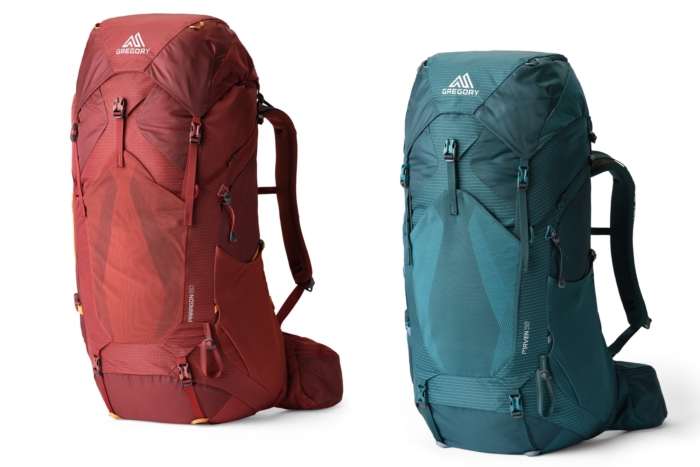
Gregory Paragon 60 & Maven 58
-

-
(Photo/David Young)
-
(Photo/David Young)
-
(Photo/David Young)
-
(Photo/David Young)

Specifications
Pros & Cons
Pros
- Hip belt offered great support
- Can comfortably carry up to 50 lbs.
- Stash spot for your inReach on shoulder strap
- Side-loading zippered pocket
- PFAS-free
Cons
- Not the most mobile pack
- Size range of available frames isn't very wide
- No rain cover included
- Design caused back pain (specific to Maven Women's version)
Bottom Line: The best backpacking pack for most hikers, balancing a lightweight build with a heavy-duty suspension. It handles 50-pound loads with a pivoting hip belt, though the back panel isn’t as breathable as full trampoline mesh.
Gregory makes many backpacking packs (sometimes it’s tough to keep track), but the Gregory Paragon 60 and Maven 58 ($300) are my favorite all-arounders from the brand. They’re not quite as rugged as the Baltoro or Katmai/Kalmia, but more refined than the Zulu or Jade series, and overall, these packs are just about the Goldilocks option for most backpackers.
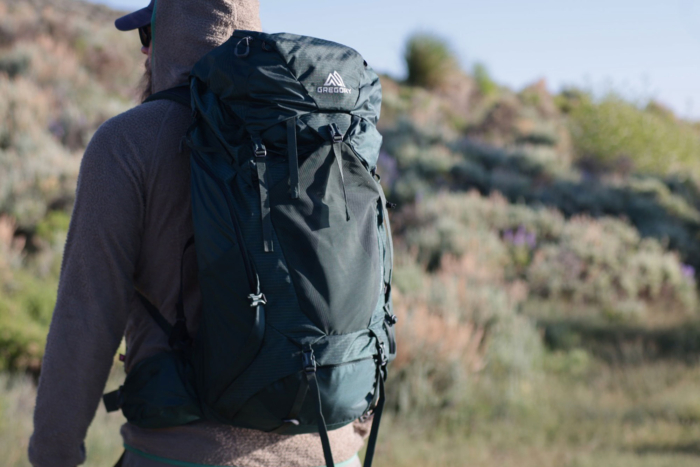
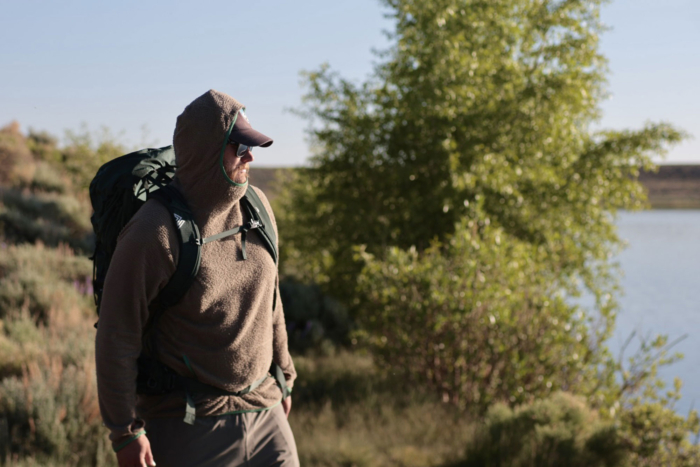
The carry is the big deal on the Paragon, which uses the brand’s nicest tech with an ‘AirCushion’ mesh back panel and dynamic hip belt support that pivots with your hips. The suspension is as plush as you’d expect from a $250+ pack these days, and many on our team got it to fit well, including 5’9” to 6’4” hikers. During my initial hike with the pack into a remote alpine lake in Washington’s North Cascades this summer, it carried my entire overnight kit, as well as a packraft, paddle, and fly fishing setup — all without any awkward rubbing or sore spots.
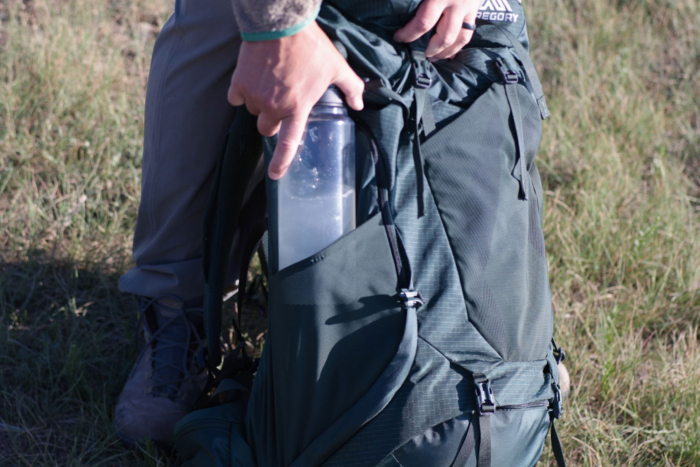
Like the brand’s Katmai packs, the Paragon sports a huge side zipper access that makes rifling around in those 60 liters of space much easier. Notably, this pack still retains a bottle pocket on that side of the bag, whereas the Katmai only has the one opposite the zipper access. The sleeping bag access at the bottom of the bag feels redundant compared to this opening, but it’s still a solid space to stash your sleeping insulation otherwise.
Then, the finer details: The stretch-mesh pocket on the left shoulder strap has a head-smackingly clever intended use of clipping your Garmin inReach devices into it. This keeps the messenger from bouncing around, and it’s an aspect that you’ll actually use, unlike many ‘tack-on’ pack features these days. Like the rest of the pack, I also appreciate how pockets like this lay flat on the pack when not in use, giving the bag a trim profile (for when you’re scrubbing around off-trail).
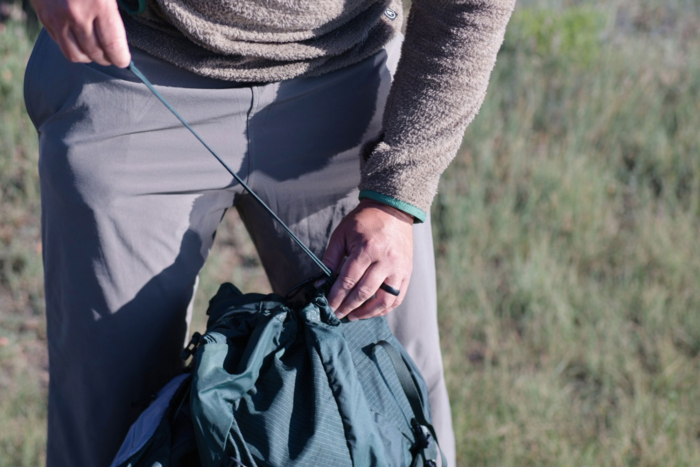
Something I would have loved to see is a rain cover lid that runs when you strip off the floating lid, similar to the one on the Osprey Exos. I’ll also note that the back panel on the Paragon won’t be as breathable as the fully suspended panel of some other packs. That said, this pack will carry heavier loads better, and if you like a few luxury items while camping, I think the Paragon/Maven will suit you well.
REI Co-op Flash 55
-
-
(Photo/Andy Cochrane)
-
(Photo/Andy Cochrane)
-
(Photo/Andy Cochrane)


Specifications
Pros & Cons
Pros
- Lightweight at under 3 pounds
- Molded back panel is comfortable and adjustable
- Relatively inexpensive price
- Easy to customize with add-on storage bags
Cons
- Not quite as durable as other models
- Doesn’t carry heavy loads as well as other models
Read Review: REI Co-op Flash 55 Pack Review: Lightweight for Long Hauls
Bottom Line: A modular, sub-3-pound standout that lets you strip the pack to shed weight. It’s the best entry point for lightweight backpacking, provided you keep the total load under 35 pounds.
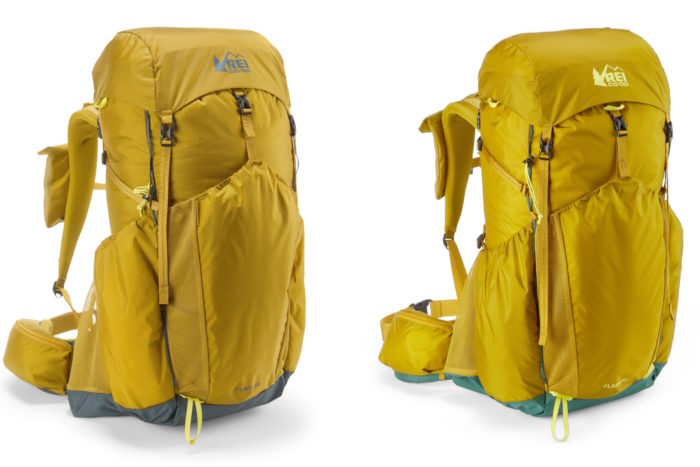
The recently updated REI Co-op Flash 55 ($229) is the co-op’s take on mid-weight packs like the Osprey Exos/Eja line, and I think they nailed it. This is one approachable pack that, after testing, our team agreed is the near-perfect entry point for new hikers looking to jump into backpacking with both feet.
The Flash 55 is a modular pack, and various features can be added or removed to increase storage or shed weight. With all the organizational features included, this pack weighs around 2 pounds, 12 ounces. By removing all of the modular features, the user can reduce the total weight by almost half a pound.
At the top entry point of the main compartment, a roll-top, dry bag-esque closure system helps keep the pack compressed and the contents dry. Thanks to this roll-top, users can also choose to leave the pack’s top lid behind if desired.
Other useful features include a front mesh pocket, hydration bladder compatibility, and an ice axe attachment loop. The newest iteration hosts a beefier daisy chain with multiple attachment loops for more exterior lashing options.
For a backpacking pack, the Flash’s 100-denier ripstop nylon body feels thin and potentially fragile. Although this pack doesn’t seem to wear or tear faster than other packs in its class, users should avoid rubbing the sides of the pack against rocks and rough surfaces. At the bottom of the pack, burly 210-denier nylon offers supreme protection from the ground.
At $229, the Flash 55 is one of the best values on the backpacking market. If you’re looking for a reliable, durable pack that won’t break the bank, this could be the bag for you. Want something similar but a bit lighter to grow into as you backpack? The REI Flash Air 50 cuts almost a full pound from the pack by going with a techy UHMWPE ripstop nylon. You’ll spend an extra $100 to save the weight, but for some, it’s the ideal upgrade.
Osprey Exos & Eja 58
-
-
(Photo/Seiji Ishii)
-
(Photo/Chris Carter)
-
(Photo/Chris Carter)


Specifications
Pros & Cons
Pros
- Extremely comfortable for its low weight
- Efficient suspension system
- Great ventilation on the suspended back panel
- Adjustable fit dials in the comfort for most folks
Cons
- Some extra features seem gimmicky and unneeded
- Compression system is somewhat awkward to use and impacts the usability of the hip belt pockets
Read Review: Osprey Exos 58 Review: Popular Lightweight Backpack Gets Better
Bottom Line: The king of ventilation and hosting a trampoline-style mesh back panel that keeps the pack off your spine. It’s comfortable for high mileage, though the 100D nylon body requires care.
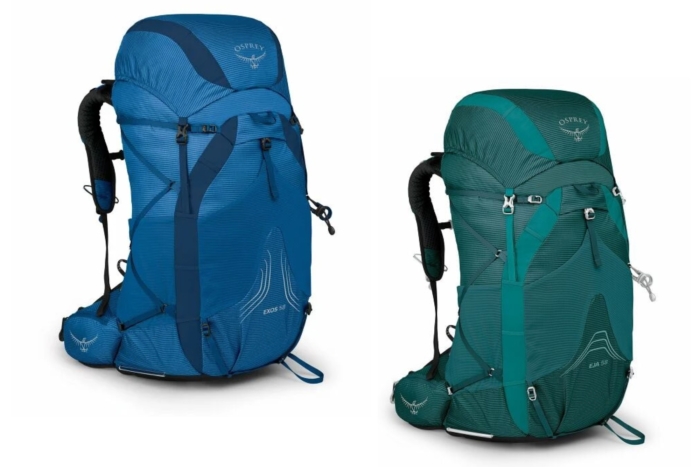
The Osprey Exos and Eja 58L ($285) packs have been top lightweight picks for long-distance backpackers and weekend hikers for years, and the newest iterations don’t disappoint. Offering an extremely well-built, breathable design, the Exos/Eja series is packed with thoughtful features but still manages to keep the pack’s overall weight surprisingly low.
Coming in at almost half the weight of many traditional backpacking bags and approaching the weight of some frameless models, the Exos/Eja delivers supreme comfort in a lightweight, simple package. There’s certainly a tradeoff for the lower pack weight (for example, I tend to think the max capacity on the Exos series is around 35 pounds), but the tradeoff is certainly in overall comfort if you stay below that weight.
The Exos/Eja uses Osprey’s AirSpeed suspension system, which keeps the pack’s weight off your back and maximizes ventilation with an alloy frame and a tensioned, breathable-mesh back panel. During testing on multiple overnights, I found the beefy, perforated shoulder straps and seamless, layered mesh hip belt really worked to balance the load out.
Some additional helpful features of the pack include a removable lid with an integrated flap protecting gear when the lid is off, Osprey’s Stow-on-the-Go trekking pole attachment system, and ice axe attachments with bungee tie-offs. The new Exos addresses a couple of complaints users had with the older model by adding a simple torso adjustment system and bringing back the cherished hip belt pockets.
For the weight-conscious adventurer seeking a mega-light setup, without skimping on comfort or moving to a frameless model, the Exo and Eja packs may just be the perfect compromise.
Hyperlite Mountain Gear Southwest 55
-
-
(Photo/Erika Courtney)
-
(Photo/Erika Courtney)
-
(Photo/Erika Courtney)
-
(Photo/Erika Courtney)
Specifications
Pros & Cons
Pros
- Quite durable given its ultralight construction
- Stable and comfortable compared to other ultralight models
- Side and front external pockets have drain holes and reinforced bottoms
- Can be stripped down to a frameless version for quick and light missions
Cons
- Minimal features
- Expensive
Bottom Line: A weather-resistant pack built from Dyneema Composite Fabric, designed for the high-wear demands of a long-distance thru-hike. The roll-top closure and tube design is simple and effective, but the solid back panel tends to trap heat.
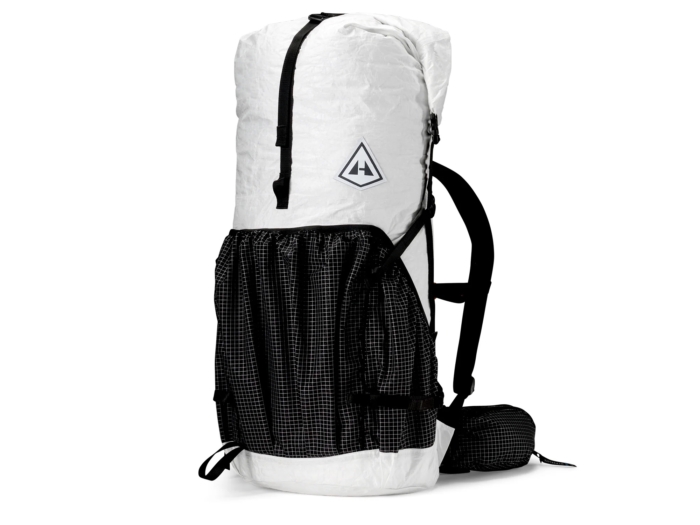
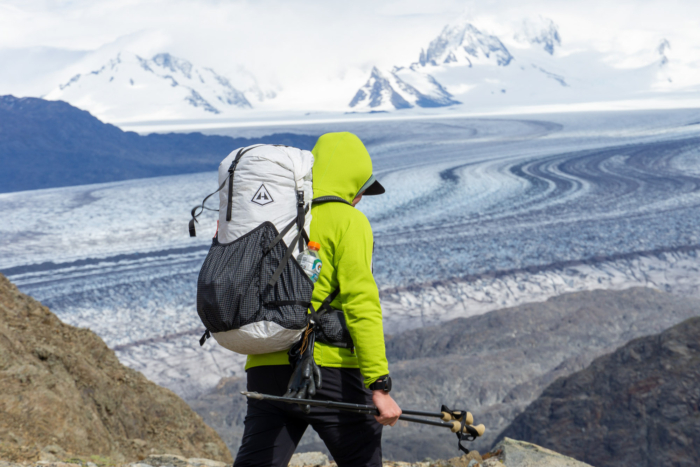
The core line of HMG packs has finally received an update, and it’s a big one. My favorite, the Hyperlite Mountain Gear Southwest 55 ($420), along with the Windrider and Junction packs, are all now trimmed out in brand new Dyneema Woven Composite fabric. The packs also have a redesigned exterior that makes accessing your kit even easier.
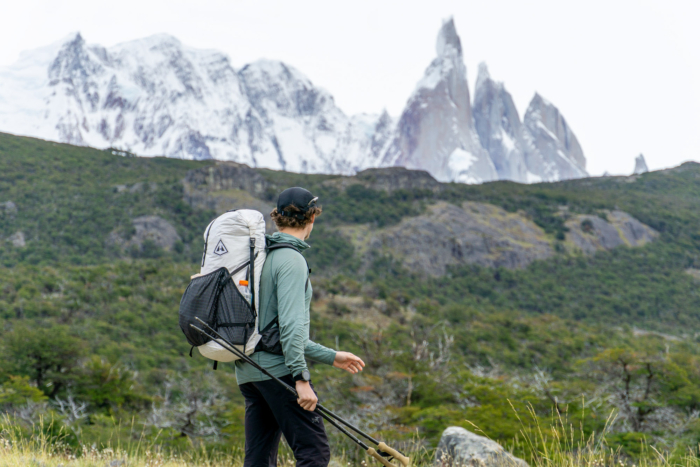
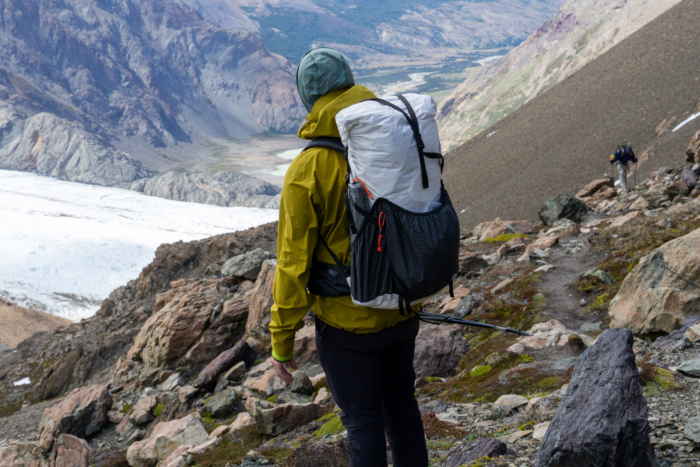
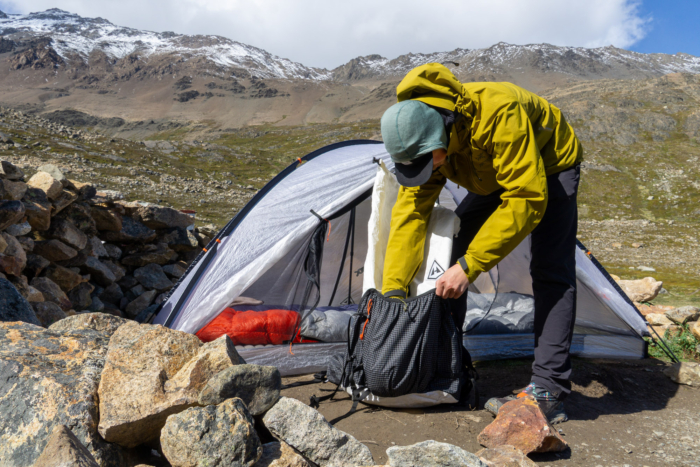
I’ve used a Southwest pack since I hiked the PCT in 2018, and it’s held up well since then, but it’s gathered some bumps and bruises along the way. I took the new Southwest pack to Patagonia for a few weeks to rub some dirt in it and see how the new version compares to my old one, and I came away very impressed.
The new fully woven Dyneema 3.9 fabric is the answer to the rise of Ultra fabrics and has very impressive durability, given its weight — 132 grams per square meter. This is the same as the older 50D white Dyneema that the packs previously used, but now the woven face is 200D. Hyperlite worked with the Dyneema manufacturer to develop this new textile. My verdict: After 50 miles of rugged off-trail use in Patagonia, there’s not a scratch on it.
Hyperlite also somehow heard my grumbles mid-PCT about the need to strip the compression straps from the pack, as they are now attached with larkshead knots. The outer pocket, too, is now pleated to gain some extra real estate. The bottle pockets have been lowered for easier access to bottles.
This revised ultralight pack is simple in the best way possible. It is supported by twin aluminum stays and a sewn-in foam back panel. Without load lifters, I believe these packs are best enjoyed at the 55-liter mark and below, but many will find utility in the 70-liter version as well.
Trimmed out in the new fabric, the Southwest 55 is going to put other UL packs on notice. I’ve got the bag in regular rotation through the summer to test long-term durability, with a section of the PCT on the books. We’ll see how it holds up, but my hopes are high.
ULA Equipment Ultra Circuit
-
-
(Photo/Jackson Sims-Myers)
-
(Photo/Jackson Sims-Myers)
-
(Photo/Jackson Sims-Myers)
-
(Photo/Jackson Sims-Myers)
Specifications
Pros & Cons
Pros
- Very durable water-resistant ULTRA 400X and 200X fabric
- Super comfortable and highly adjustable
- Customizable ordering for personal sizes — shoulder straps in particular
- Roll top with Y strap that can be replaced
- Roll top buckles clip both ways
- Fits bear cans both inside and on top
Cons
- Not seam taped/waterproof
- Strap connections aren't secured completely; can come off
- Expensive
Bottom Line: A utilitarian design constructed with Ultra 400X fabric for improved abrasion resistance. It offers a solid bridge between traditional support and ultralight weight, focused more on long-term durability than modern aesthetics.
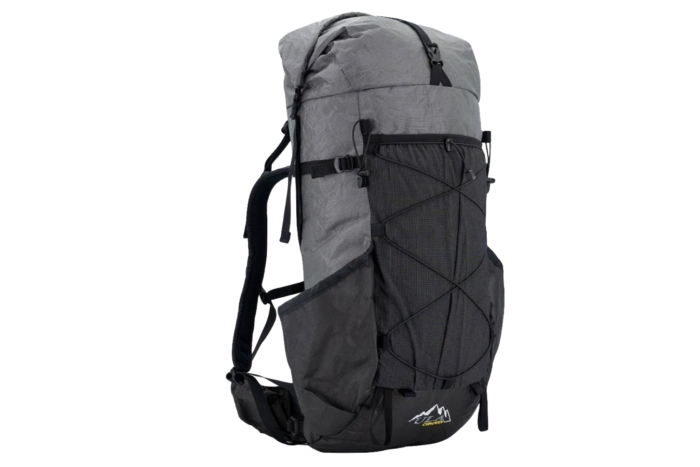
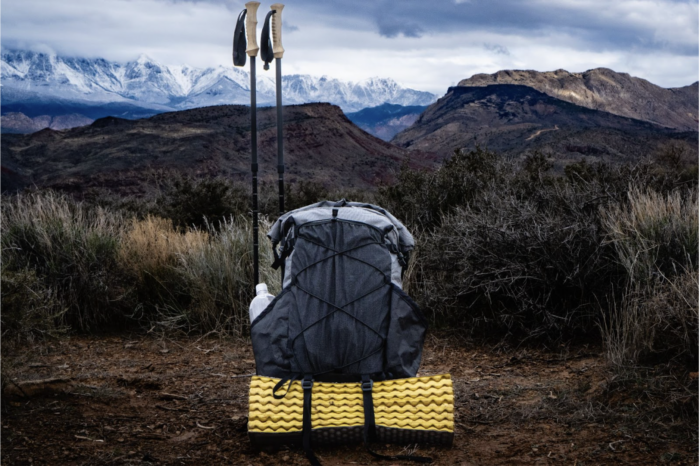
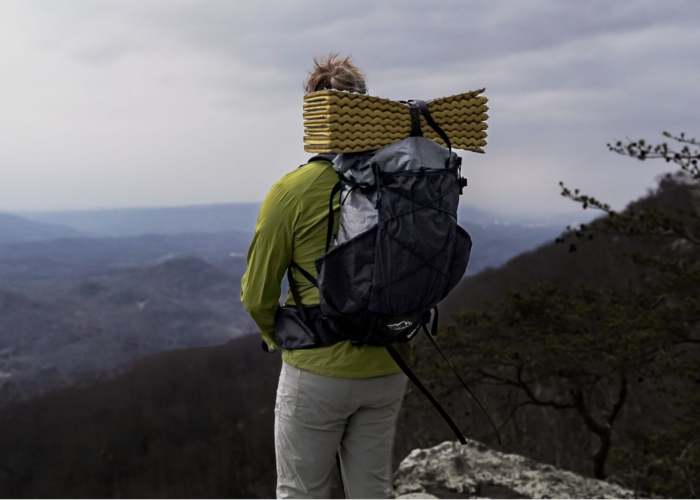
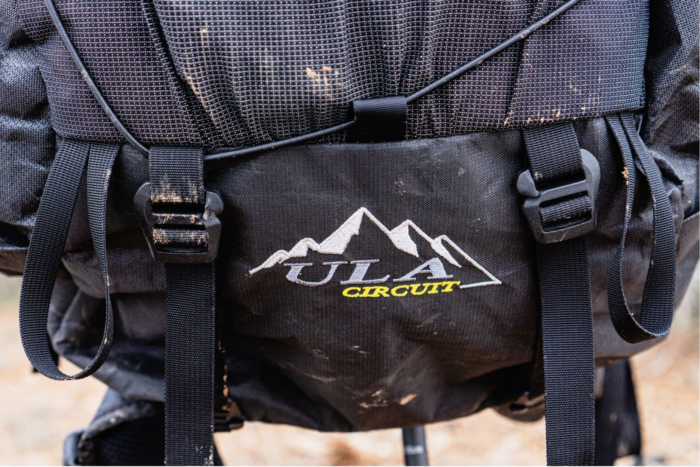
ULA Equipment has rightfully earned its reputation for comfort and durability the hard way — on the backs of thru-hikers over thousands of miles. Based on a classic design but trimmed out in a new ultra-rugged material, the ULA Circuit Ultra ($380) is one tough backpack and even accomplishes it at a lower weight than our top pick.
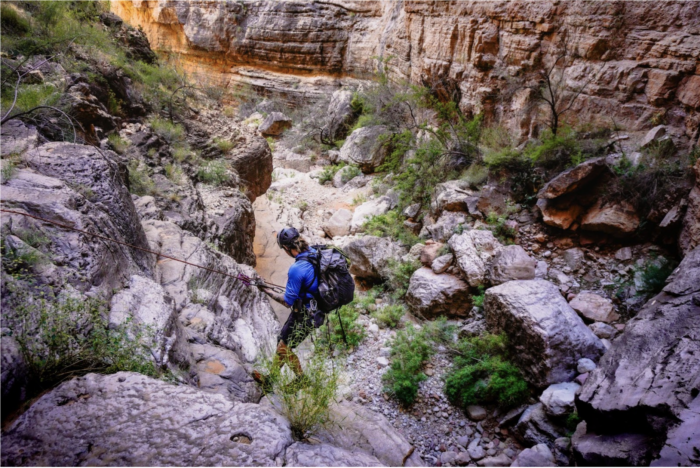
ULA packs already lean toward the overbuilt side, but the use of Ultra 400X in this pack (a composite fabric similar to Dyneema — only tougher) really puts a thumb on the ‘burly’ scale. This textile claims to be 15x stronger than steel by weight, and after dragging this pack down into and out of the Grand Canyon, we’re liable to believe it. This version of Ultra is tougher than the 200X used in the Durston Kakwa and has double the tested abrasion resistance.
Weighing in at just 37 ounces, the Circuit can still handle loads up to 35 pounds, making this pack a go-to choice for the weekend hike with a bear bin and fishing pole, or a summer-long adventure on the Appalachian Trail. When canyoneer guide Jackson Sims-Myers recently used this pack to tote all the technical equipment he needed to rappel into the Grand recently, he reported it swallowing it with ease.
The Circuit Ultra carries weight with a remarkable 1.2-ounce carbon fiber and Delrin suspension hoop, a dense internal foam frame, and a single aluminum stay. It’s not totally perfect — Sims-Myers took issue with the lack of internal seam taping and price — but if you’re after a pack you can wail on, it’s tough to go wrong here.
Gregory Baltoro 100 Pro
-
-
(Photo/Nick Belcaster)
Specifications
Pros & Cons
Pros
- Huge internal space for anything you want to carry
- Suspension system is very capable and robust
- Impressive suite of accessories
Cons
- Heavy pack by itself
- Not very versatile for lighter trips
- Price
Bottom Line: An expedition-worthy pack with an enhanced frame to carry heavy loads. Its specialization means it isn’t for most backpackers. But if you need the space, it’s the one to grab.
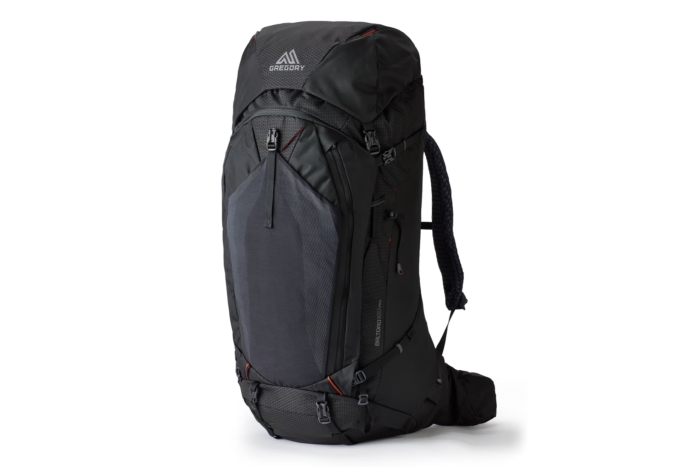
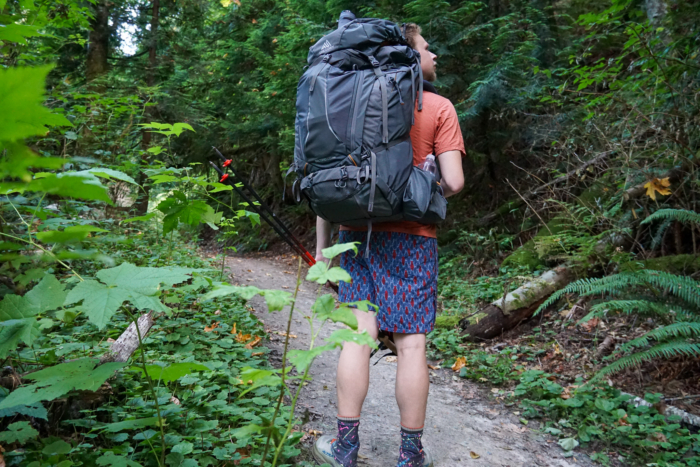
The Gregory Baltoro 100 Pro ($460) is designed for the haul-it-all crowd whose gear lists include things like packrafts, SLR kits, or expedition-worthy tents. During my testing in the Picket Range, this pack functioned less like a sack and more like an extension of my body. At over six pounds empty, it isn’t winning any awards from ultralighters, but when I crossed the 50-pound threshold, that extra internal framing became necessary.
The key is the FreeFloat A3 suspension. While side-hilling across loose scree this spring, the rotation of the hip belt and shoulder harness kept the 100-liter load from acting like a pendulum, and instead of fighting the weight, the pack followed my lead. Gregory reinforced the Pro version with a beefed-up perimeter alloy frame and a thicker HDPE frame sheet, specifically to prevent barreling.
Organization is where this pack earns its keep for the long-haul trekker. The U-zip main opening saved me from grappling for my stove during a trailside break. Meanwhile, the SideWinder bottle holster remains a favorite touch, and being able to grab a Nalgene one-handed is a boon for staying in motion while hiking. I also made heavy use of the oversized hip belt pockets, which comfortably swallowed my Garmin inReach Mini without feeling cramped.
The trade-off for this capability is, of course, the mass. Carrying a pack that starts at 6 pounds (for the Large) is a deliberate choice. On a lighter weekend trip to an alpine lake, the suspension felt like overkill: almost too rigid for a sub-30-pound load. However, the durability of the 210D and 630D nylon pack body meant I didn’t have to baby the pack when dropping it onto sharp granite.
For the gear-intensive missions where you’re carrying the big kit, the Baltoro 100 Pro is a specialized workhorse. It doesn’t pretend to be light, but it aims to be stable. If your objective requires 100 liters of volume and a 75-pound weight limit, this pack provides the structural integrity to make that experience manageable rather than miserable.
Mountain Hardwear AMG 75
-
-
(Photo/Nick Belcaster)
-
(Photo/Nick Belcaster)
Specifications
Pros & Cons
Pros
- Hardened design puts up with carrying sharps and bulky kit like ropes
- Very cushioned frame and pivoting hip belt
- Sport-specific features such as an avalanche tool pocket and sled-rigging points
- Volume reduces well when it isn't needed
Cons
- Heavy backpack at 4+ pounds
- Not a wide size range offered
Bottom Line: A specialized pack built for mountaineering and heavy expeditions. It hangs on a suspension system tailored for moving weight, making it highly capable for niche alpine use but unnecessary for standard trails.
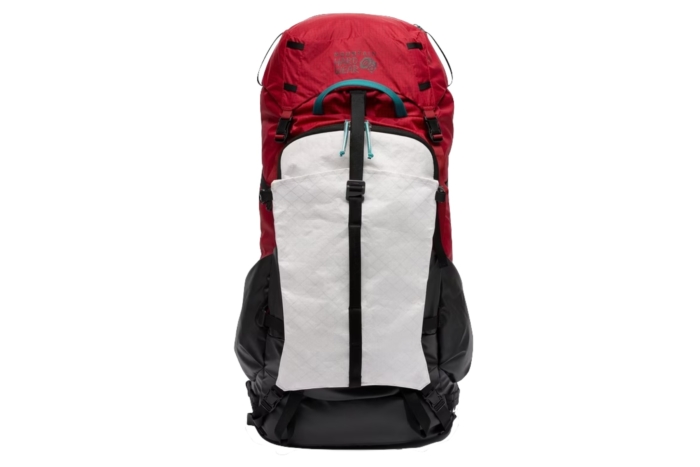
The Mountain Hardwear AMG 75 ($470) is a more sport-specific load hauler designed for carrying large loads to remote locations. This is the pack we’d grab out of the closet for equipment-heavy adventures like mountaineering, where the robust frame is up to the task of carrying gear like ropes, crampons, or avalanche tools.
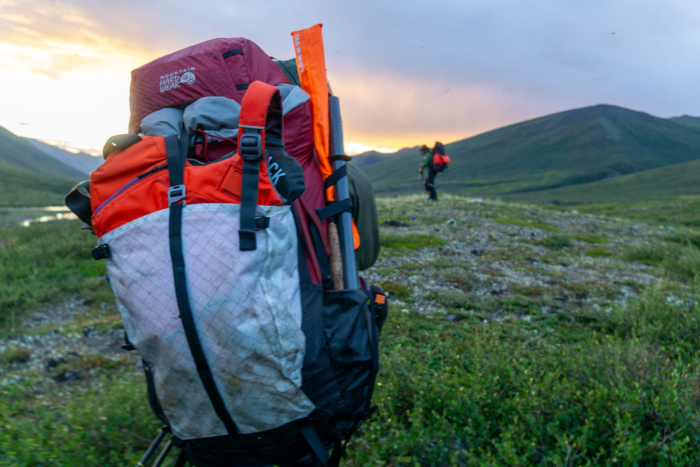
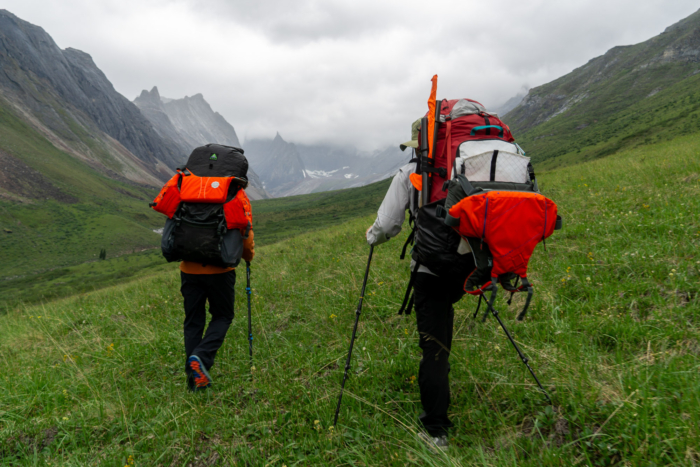
We most recently took the AMG on a packrafting expedition across Alaska’s Brooks Range, where it was packed to the brim with eight days of provisions and all the necessary kit for remote whitewater paddling. Even with this full loadout, tester Scott Wilson was able to keep all of his gear inside the pack, save for the bulky PFD.
The frame, back panel, and hip belt are the stars of the AMG series (which also has a 105-liter size), and are amply padded with different density foams and contoured to provide the maximum in load transfer. The hip belt, in particular, is noteworthy for how it mounts to the bottom of the frame hoop and pivots with you. This direct connection truly made a difference when carrying 50 pounds over a 6,700-foot mountain in Alaska, and it’s why this pack is frequently seen trudging up the Kahiltna Glacier en route to the summit of Denali.
The AMG 75 isn’t afraid of being tossed around, either. The bottom of the packbag is a silly-thick 840D nylon, and the rest is a UHMWPE-infused 200D ripstop that didn’t show a mark after 110 miles in Alaska. Smart lashing options round it out, with a compression system that wraps around the pack entirely and allows it to scrunch down when you don’t need the entire volume. Our favorite little features include the quick-zip avalanche tool pocket on the front, along with the little loops on the hip belt for towing a sled across a glacier.
Size range is one area where the AMG 75 falls short, with only two available sizes (S/M and M/L). This provides a range of torso and waist sizes that cover most folks, but not all, and some smaller adventurers like Wilson found the hip belt just a bit too baggy on even the smallest offered size. The nearly 5-pound weight is also something to consider for those who think that this bag might make a do-it-all option.
The Black Diamond Mission 75 is a more affordable alternative pack for climbing-oriented adventures at $350, and is a good bit lighter at just under 4 pounds. The trade-off is in comfort, and the AMG 75 truly reigns here. We’re looking forward to strapping skis to this pack this coming winter, and will update our review once we’ve got a handle on how it does. All signs point to success on this expedition-ready backpack.
Other Backpacks That’ll Carry Your Kit
While the seven packs above are my top choices for backpacking bags, there are certainly more out there. I’ve been testing packs for more than a decade now, and the line-up below is well worth it if you’re in the market.
Specifications
Pros & Cons
Pros
- Quite comfortable at a wide load range
- Customizable sizing
- Tough 420D exterior fabric
- Lots of options for outside storage
- Pretty much any accessory feature you could want included
Cons
- On the heavier side
- Not a lot of upper-body mobility
- Doesn't like to be under filled
Read Review: Osprey Aether 55 and Ariel 55: The Cadillac of Backpacks
Bottom Line: A traditional heavyweight pack that excels in fit through highly adjustable shoulder straps and hip belts. It offers a stable carry for 50-pound loads, though the 420D nylon construction makes it heavier than modern lightweight alternatives.
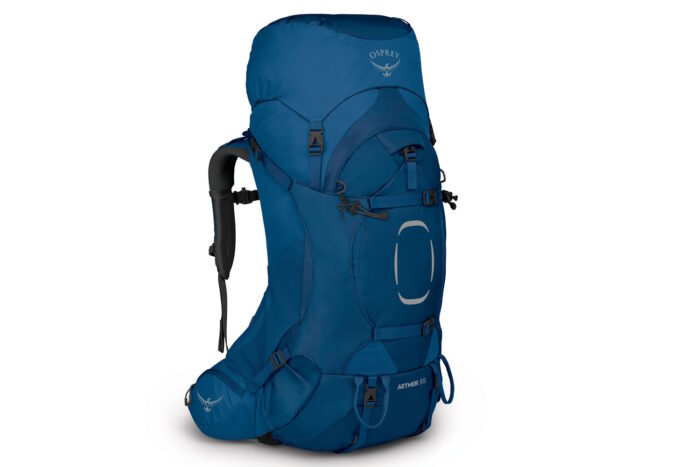
The Osprey Aether and Ariel 55 ($350) are recently updated versions of two of Osprey’s bestselling styles. Packed with features and thoroughly well-designed, the functionality and comfort of these supportive packs make them one of our first choices when packing a few extras along with us.
Although these packs are classic-style top-loaders, a large front zippered access point allows you to get into the depths of your gear without having to fully unpack. For heavy loads, the burly materials and easy, on-the-go adjustability make the Aether and Ariel strong and reliable carriers.
I like that Osprey has combined some tried-and-true backpack design elements with clever and innovative features of its own creation. For quick access to bits of essential gear, these packs offer dual-zippered hip belt pockets, stretch-mesh water bottle pockets, and a front “shove-it” pocket. The suspension system is also classic Osprey, and is super adjustable and supremely padded.
Although Osprey also makes a 65L version of the Aether and Ariel, I like the 55L version for its compact profile and slightly reduced weight. For long weekend trips, these packs will offer plenty of space for most users.
They can also handle longer trips with some thoughtful packing. Yes, the Aether and Ariel are heavier than other packs of their size, but they are ultrareliable and feel stable on the trail. While I’m more likely to recommend the Osprey Exos and Eja packs for most folks, if you’re carrying heavier loads more often, this may be the perfect fit.
-
-
(Photo/Bergen Tjossem)
-
(Photo/Bergen Tjossem)
-
(Photo/Bergen Tjossem)
-
(Photo/Bergen Tjossem)
Specifications
Pros & Cons
Pros
- Pros
- Competitively priced
- Lightweight
- Highly adjustable torso length
- Excellent pocket layout
Cons
- Not the best for heavy loads
- Small lumbar pad
- Hip belt struggles above 35 lbs.
Bottom Line: A streamlined, roll-top hauler that strikes a balance between sub-3-pound weight and foundational frame support. It’s an ideal entry for hikers seeking a durable design without crossing the $300 threshold.
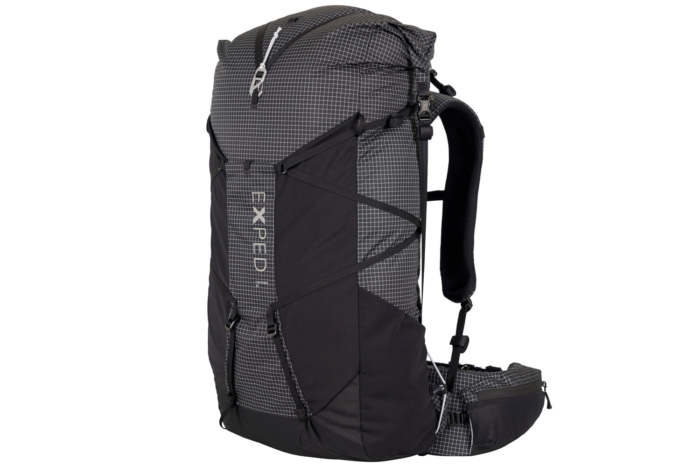
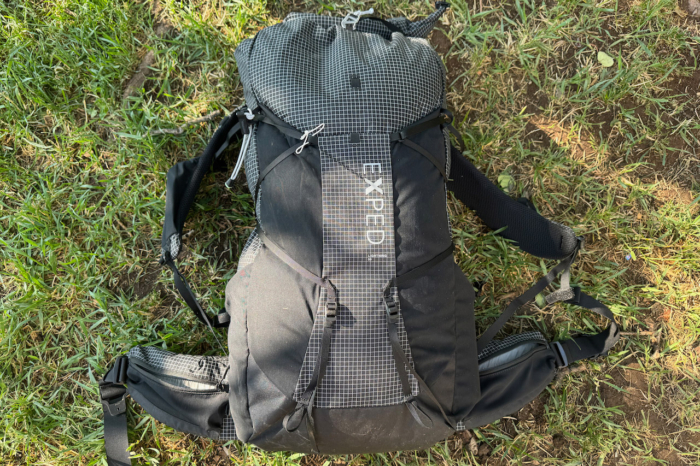
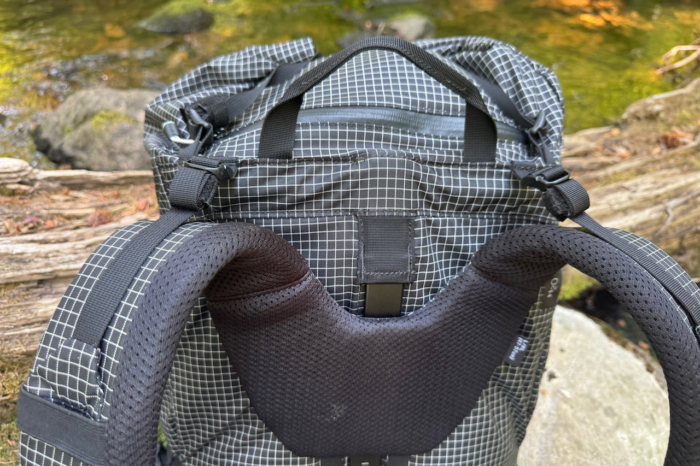
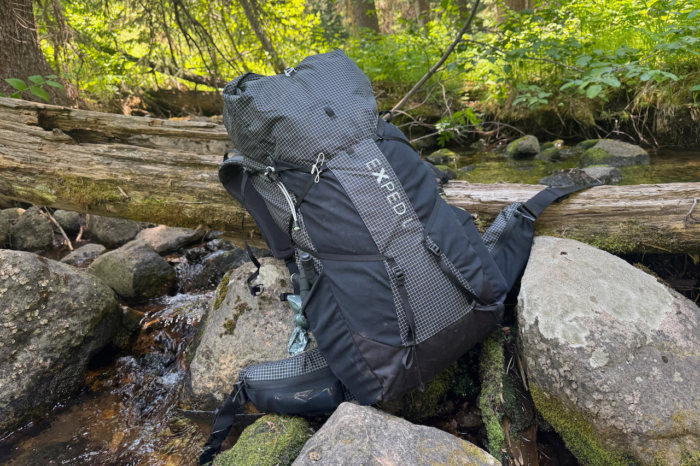
When tester Bergen Tjossem heaved a fully loaded EXPED Lightning 50 ($270) into a Colorado campsite, it was packed to the absolute limit. With a new baby in tow, Tjossem had become the family’s designated gear mule, and out spewed camp chairs, alpine charcuterie, and a deployed diaper-changing station. Over three months of rigorous testing in the central mountains, the Lightning 50 proved it could handle these bulky loads with ease, utilizing a cavernous main compartment and a roll-top closure that cleanly shrinks or expands depending on the payload.
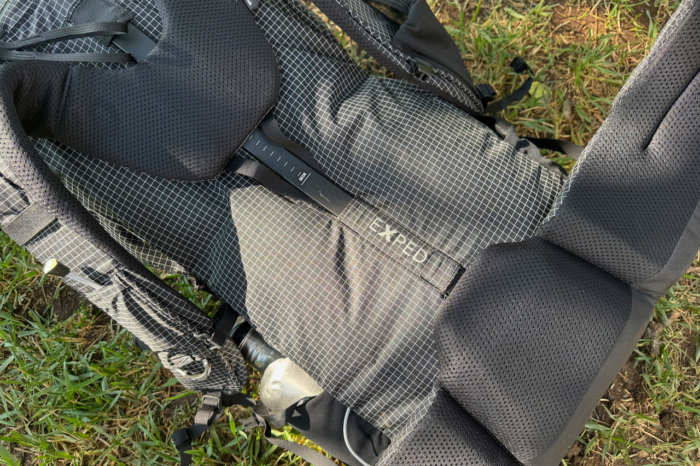
What separates the Lightning 50 from the ultralight fray is its ‘T-Rex’ frame suspension, which is a single vertical aluminum backbone that refuses to barrel out, even when stuffed full. We loved the minimal surface area of the back pads, which provided exceptional breathability during the early summer heat. However, that minimal contact does come with a tradeoff.
While EXPED claims an aspirational 48.5-pound max load, Tjossem found that the small lumbar pad and hip belt start to struggle and pinch above 35 pounds. If you regularly haul heavier loads, you’ll be much better off stepping up to the robust, load-bearing suspension of the Gregory Paragon 60.
At 2 pounds, 10.5 ounces and $270, the Lightning 50 sits in a highly competitive middle ground. It’s just a hair lighter than our budget pick, the REI Co-op Flash 55, but hosts an alpine-inspired exterior that stays entirely snag-free when bushwhacking through overgrown forests. Instead of ultralight materials, EXPED opted for a utilitarian 210-denier ripstop nylon that easily shrugged off rogue branches and clumsy dragging.
The primary drawback here is access. Without any side zippers or bottom sleeping bag compartments, retrieving a layer buried at the bottom often necessitates a mid-trail yard sale. The pack also skips an included rain cover, so you’ll want to supply your own. Still, if you organize your kit thoughtfully, it’s a remarkably capable, comfortable bag that handles lightweight overnights without breaking the bank.
-
-
(Photo/Nick Belcaster)
-
(Photo/Nick Belcaster)
-
(Photo/Nick Belcaster)
-
(Photo/Nick Belcaster)
-
(Photo/Nick Belcaster)
-
(Photo/Nick Belcaster)
-
(Photo/Nick Belcaster)
-
(Photo/Nick Belcaster)
Specifications
Pros & Cons
Pros
- Pivoting hip belt moves with you as you hike
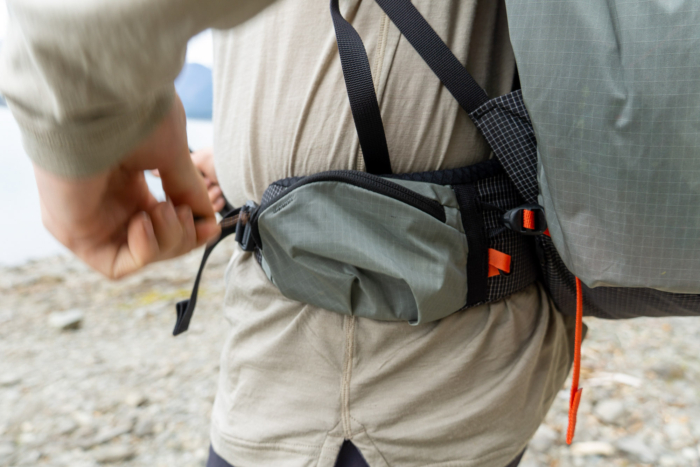
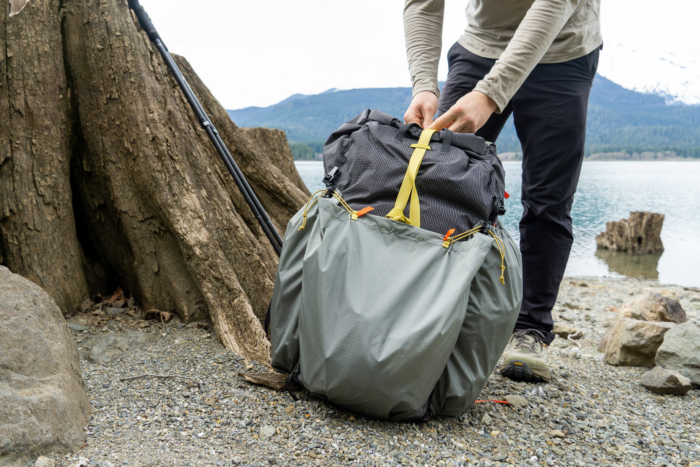
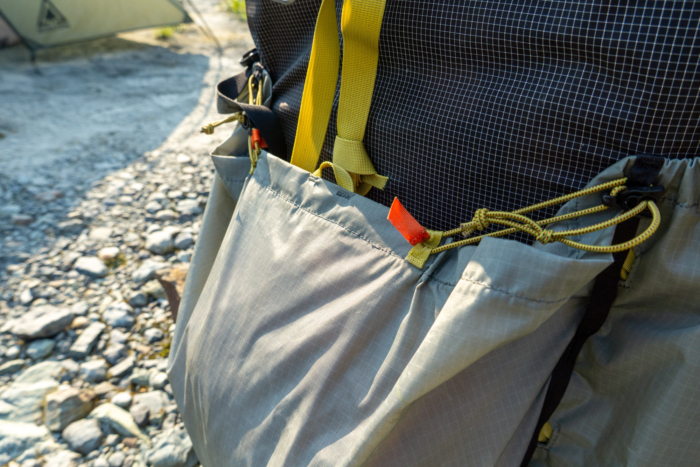
- Deep and expandable side pockets swallow gear
- Vest-style suspension straps work well
- Versatile accessory attachment systems
Cons
- Sternum straps can come loose for those with a bust
- Hip belt isn't the most supportive, and the pockets are small
Bottom Line: A high-volume hauler that pairs lightweight materials with real frame support. It’s built for heavy, awkward loads (like packrafts and bear canisters) without sacrificing agility on technical terrain.
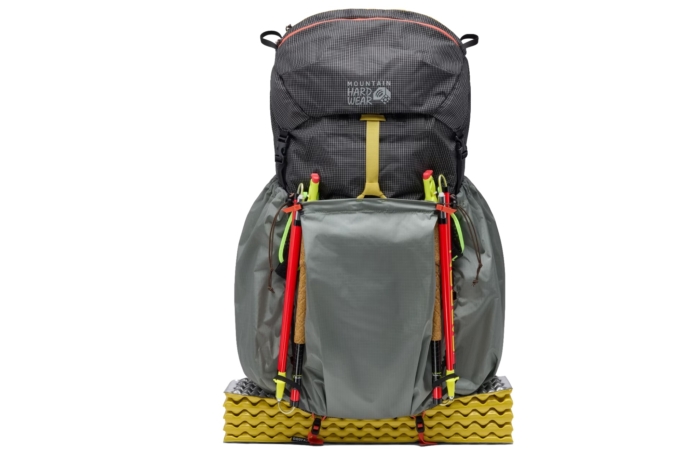
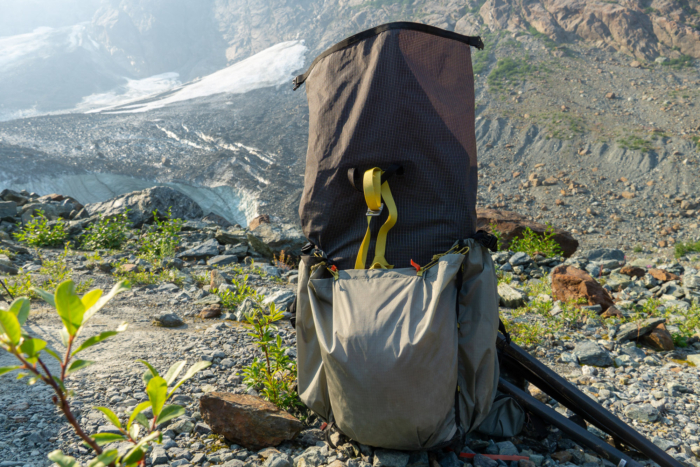
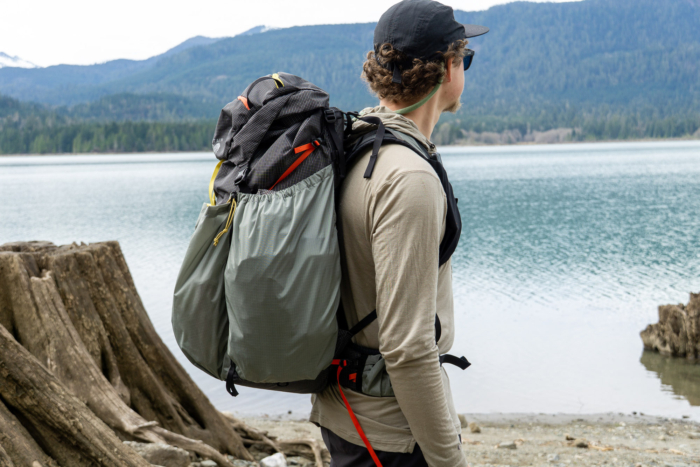
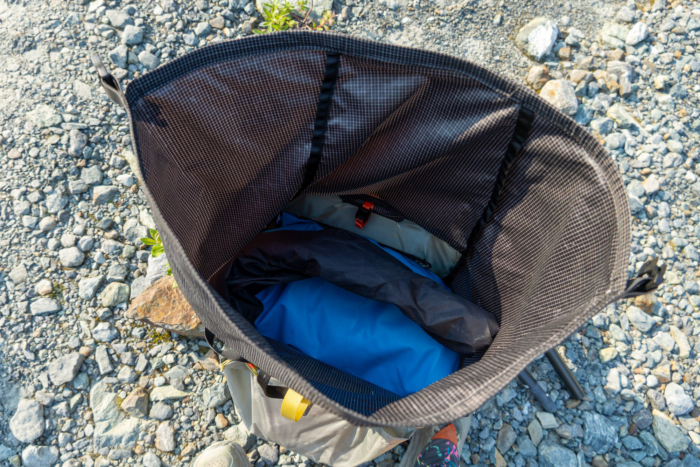
The Mountain Hardwear Kazam 60 ($315) hits a sweet spot in pack design: a high-capacity, sub-3-pound rucksack that refuses to compromise on load-hauling structure. Designed for backpackers who push into multi-sport or shoulder-season territory, it combines weather-resistant fabrics with an aggressive frame system built to carry heavy payloads comfortably.
At the heart of the Kazam is a V-shaped aluminum frame that anchors directly into a pivoting hip belt. Unlike typical packs that transfer weight statically, this setup allows the pack body to shift dynamically with your stride, keeping your center of gravity tight without pulling against your shoulders.
I put this suspension through a test in Washington’s backcountry, packing the Kazam to its 60-liter collar with a rolled packraft, breakdown paddle, and a full overnight kit. The total rig tipped the scale to nearly 38 pounds. Where most packs would push you around with that kind of weight, the Kazam stayed balanced over slick roots and granite scrambles.
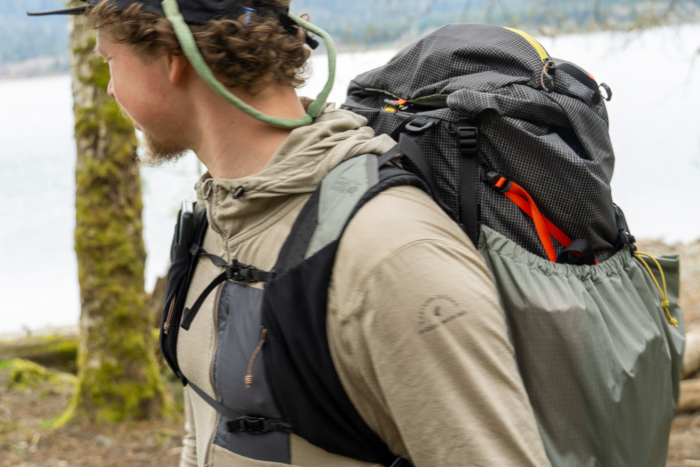
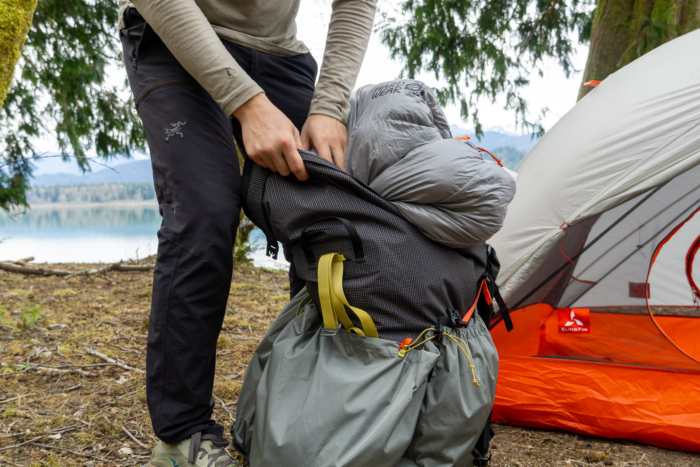
The TPU-laminated ripstop body also effortlessly shrugged off steady Pacific Northwest drizzles without requiring a separate pack cover. Up front, the running-vest-style shoulder harness keeps a Garmin inReach, energy gels, and small electronics close by. Mountain Hardwear also nailed the compression system; once I launched the raft and reduced internal volume, the bag cinched down flat and carried tightly.
The design isn’t without a few minor frustrations. The hip belt pockets are cut small, making it a squeeze to fit much of anything. Additionally, separate testers found that the pack’s sternum straps had an annoying tendancy to pop off if the wearer has a bust.
Compared to packs in our guide, the Kazam offers significantly more mobility for the capacity carried, and feels far more agile and weather-resistant than traditional heavy-haulers like the Osprey Aether or Ariel 55. For technical backcountry missions requiring dexterity alongside real hauling muscle, the Kazam 60 is a top-tier contender.
-
-
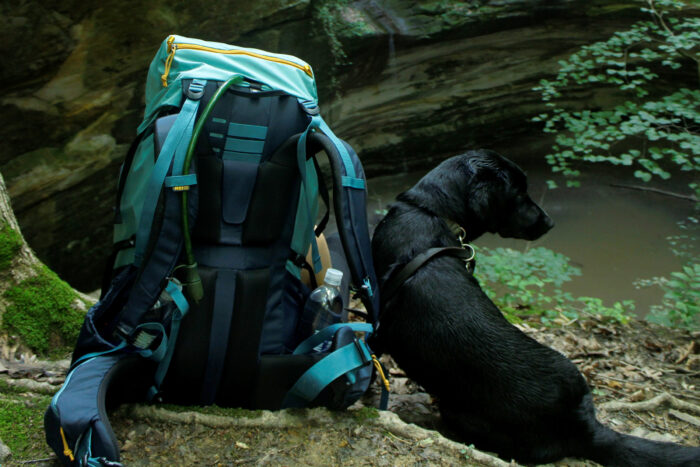
Testing the pack while hiking through a canyon; (Photo/Ian Graber-Stiehl)
-
-
(Photo/Ian Graber-Stiehl)

Specifications
Pros & Cons
Pros
- Price
- Comfortable hip belt with wide range of sizes
- Easy torso adjustment
- Easy on the budget
- Low-angled water bottle pockets
Cons
- Relatively small front pocket
- Non-removable lid
- No side mesh pockets
Bottom Line: A budget-friendly entry point built with robust materials and straightforward design. While reliable for beginners, the basic suspension lacks the breathability and plush feel of higher-end models when pushed to its limit.
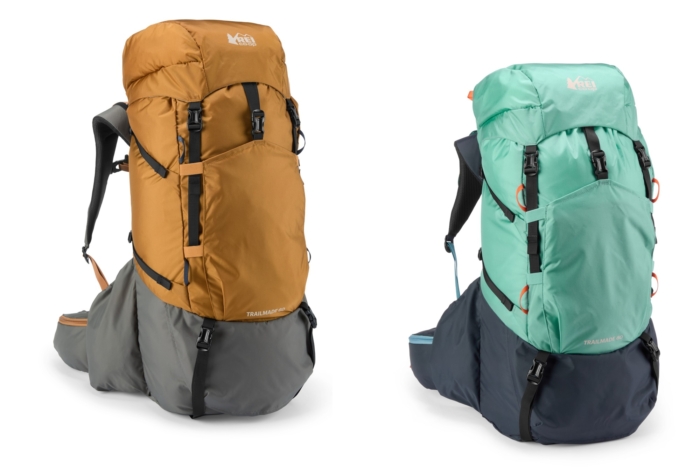
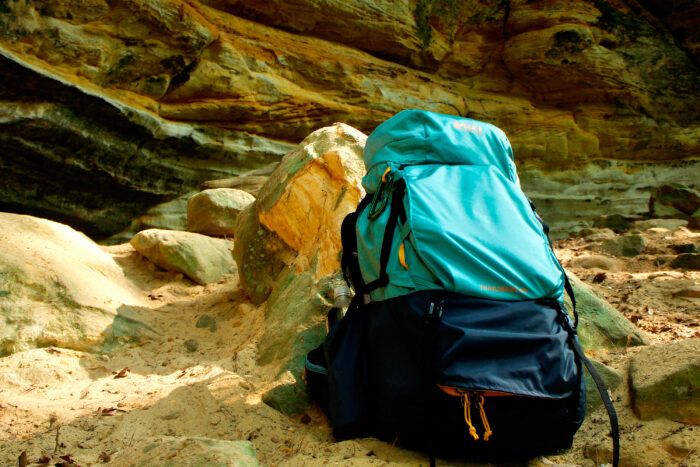
Made to shoulder the weight on your back and not your wallet, the REI Co-op Trailmade 60 Pack ($179) isn’t studded with features, but it easily carries a full weekend’s kit. If you’re dipping a toe into the activity (or have a whole flock at home to outfit), this pack is for you.
Designed to be approachable, the Trailmade 60 has no patented tech, just years of REI know-how in building a good backpack. Starting with the frame, the pack is surprisingly accommodating, with an adjustable torso that fits 17-21″ torso lengths. Two broad hip belt size ranges back that up, meaning just about anyone should be able to saddle up.
The pack body is a classic top-loading and drawstring-closure design, and it has a capacity of around 60 liters of space. The separate zippered sleeping bag compartment feels a bit dated, but thankfully, the internal divider can be dropped to open up the main compartment to full capacity. There’s also a hydration reservoir sleeve inside, keeping water weight close to your back where you want it.
The external organization on the Trailmade 60 is fairly spartan, but you still get the classics. You’ll find a large front stuff pocket for things like a rain jacket or tent fly, and two angled water bottle pockets that provide easy access on the go. When outdoorsman Ian Graber-Stiehl tested the Trailmade extensively on the trails of the Southeast recently, he didn’t feel shortchanged by the setup.
Sized up against the REI Co-op Flash 55, there are a number of reasons you might elect for the hardier build and extra $20 investment. For one, the Flash packs are built with more durable nylon, which will mean a longer trail life. There’s also a bit more external storage, adding side stuff pockets and a removable brain. But if you’re saving for lunch, the Trailmade 60 makes the grade in our book.
Specifications
Pros & Cons
Pros
- More durable exterior fabrics than most Gregory packs
- Extremely breathable back panel design
- Comfortable design carries heavy loads well
- Deep feature set
- Side zipper panel access is large and easy to use
Cons
- On the heavier side
- Only one side mesh pocket
- Best used with a full pack, and isn't the most mobile for off-trail use
Bottom Line: Uses FreeFloat Flex mesh to provide ventilation without the bounce of trampoline frames. It manages 45-pound loads with stability and easy side-zip access, though the overall weight is high for the category.
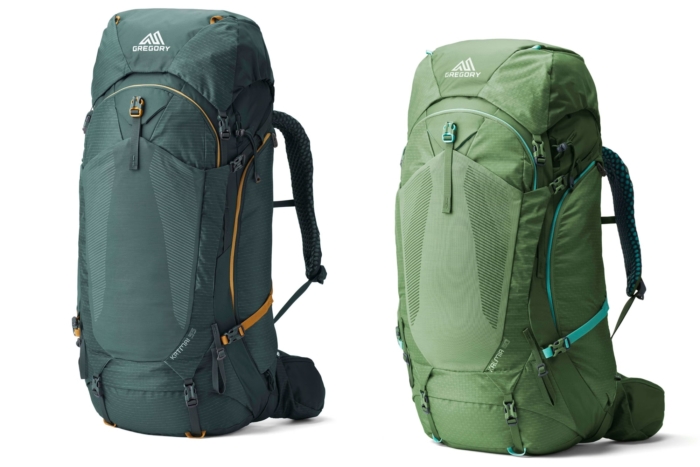
The Gregory Katmai 65 & Kalmia 60 ($330) are comfort-first backpacks with well-padded straps and belt, as well as a suspension system that adjusts to your natural movement when walking, especially under load. Flex panels and rotating shoulder straps move independently with the shoulders and waist while walking.
With its FreeFloat 360 ventilated back panel, it almost eliminates the inescapable problem of lower back sweat. Gregory even added Polygiene odor treatment to the moisture-wicking back panel, so if you do sweat through it, your pack will stay smelling fresh.
The Katmai has side and bottom access zips to the storage for quick access, which also helps you see inside more of the bag. That’s a bit of a love/hate feature, but we leaned toward love. The lid has a large zippered pocket on the top and a smaller one inside for stashing valuables away from the elements.
A large, shallow, front compartment makes a good place to store meal packets, maps, or guidebooks, and is covered by a stretchy mesh pocket for a layer. Additionally, it has long-trip essentials you’d expect, such as a hydration sleeve with a hanger, trekking pole loops, and a sleeping bag compartment.
The shoulder harness and hip belt are easy to adjust and stay in place. It has an adjustable steel alloy internal frame, ranging from 18 to 22 inches in the M/L size (15-19 inches for the S/M).
If weight isn’t your biggest concern and you’re looking to maximize comfort on the trail, the Katmai 65/Kalmia 60 could be a great addition to your arsenal. The Gregory Paragon and Maven packs are exceptionally similar to this duo, save for the fact that they use slightly less burly exterior fabrics and are a pound lighter in the same volumes. You’ll save $40 by pivoting, but if long-term durability is key to you, best to stick with these.
Specifications
Pros & Cons
Pros
- Solid performance for the price
- Inclusive sizing
- Floating lid doubles as a hip pack
- Included rain cover
- Side bottle holders are easy to access with the pack on
Cons
- A bit on the heavier side
- Doesn't carry heavy loads the best
Bottom Line: A pack with a large J-zip entry and a compression system that keeps the load tight. It’s built for heavy-duty organization, and the sheer number of straps and buckles can feel like overkill for minimalists.
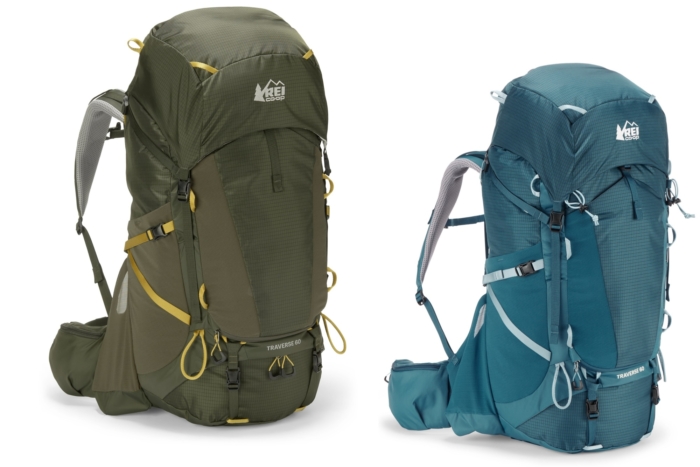
For balancing comfort, capacity, and affordability, it’s easy to see that the REI Co-op Traverse 60 ($269) was designed by backpackers for backpackers. Crafted for rugged days on the trail when organization is essential, this pack should be on the radar of adventure enthusiasts looking for a pack that combines comfort and streamlined features.
With 60 liters of capacity, this pack comfortably hauls heavy loads — 35 to 45 pounds felt solid in testing. The FreeFlow ventilated back panel kept air moving away from our backs on long, sweaty days, while the thickly padded hip belt minimized pressure points.
We dragged this pack through dense brush and into damp alpine conditions (thanks to the included rain cover), and it held up well, resisting abrasion and moisture from snow and mist. We ended up rigging splitboards to the outside of this pack, and though it was able to hold the added external weight without jeopardizing durability, we did notice discomfort as the shoulder straps began to slide out toward our armpits.
We loved the multi-divisional pockets in the brain, which doubles as a day pack. The only downside of this system for us was that we had to constantly empty gear from the brain that we didn’t use on day trips, as opposed to packs like the Mountain Hardwear PCT, which comes with an independent daypack system.
Even though this pack has all the features we love, like top-loading, bottom-loading, and front-loading access, as well as a large front stuff pocket and trekking pole/ice axe loops, we still consider the Traverse streamlined as it doesn’t have the bulk other similarly decked out packs have. That said, with these features, the Traverse weighs in at 4 pounds 7 ounces and certainly isn’t an ultralight pack.
Backpackers who prioritize comfort over weight savings will love this pack, especially for heavier loads on multi-day treks or gear-heavy adventures. We think it’s a great contemporary to REI’s Flash pack line, and better for those who might want to carry a bit more weight or head out on longer adventures with more time in between towns.
-
-
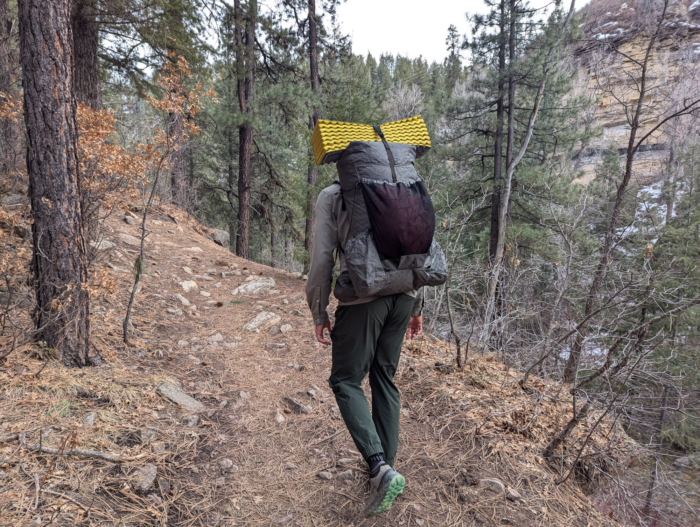
The Durston Kakwa 55 may be the most well-balanced ultralight pack available today; (photo/Ian Atkinson)
-
(Photo/Ian Atkinson)
-
(Photo/Ian Atkinson)
-
(Photo/Ian Atkinson)
Specifications
Pros & Cons
Pros
- Impressive load carrying for the UL pack weight
- Ultra 200X material is supremely tough, while still being light
- Cottage industry attention to detail and frequent design updates driven by feedback
- Easy-to-access shoulder strap pockets
Cons
- Not the lightest UL pack out there, and 55 L is a lot for some summer load-outs
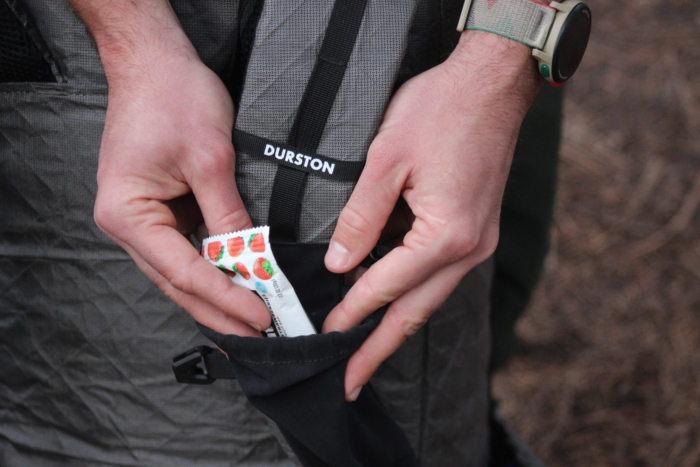
- No stretch bottom pocket for snacks
- Availability can sometimes be tough
Bottom Line: A modern standout that weighs under 2 pounds while offering a legitimate frame. The Ultra 200X fabric is tough for its weight, but cottage-industry availability can make it difficult to find in stock at times.
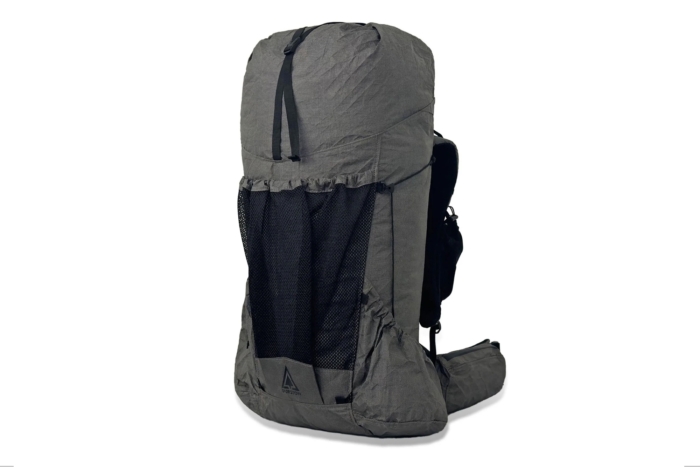
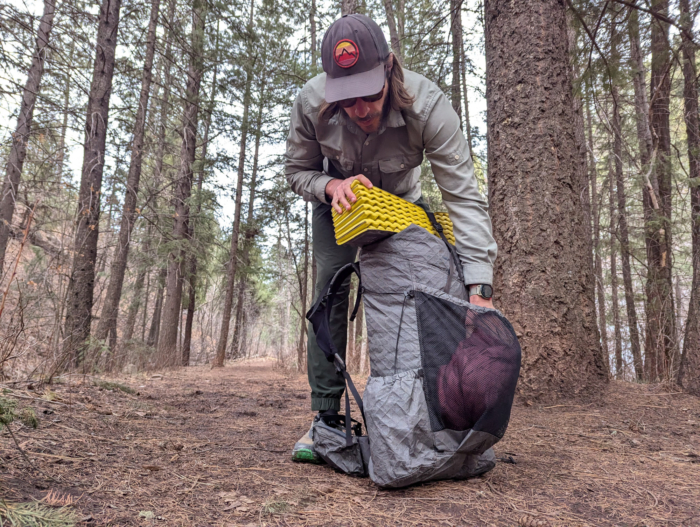
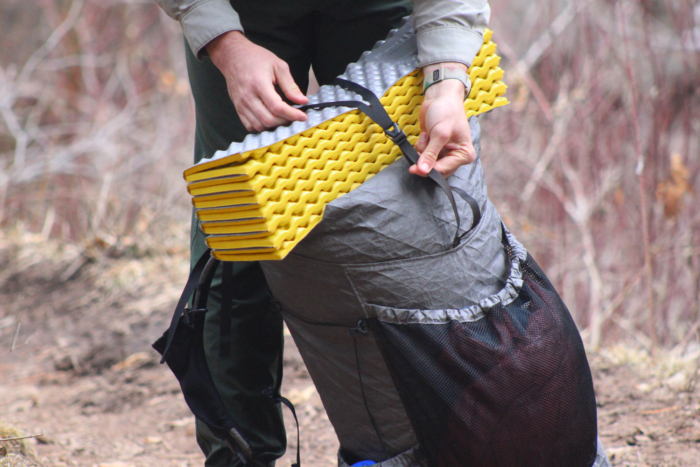
The Durston Kakwa 55 ($279) is our top choice for a thru-hiking pack in our Best Ultralight Backpack guide, and it’s easy to see why: It’s made from light (but tough) Ultra fabrics, has enough frame to carry it through extended thru-hikes, and keeps the feature-set to just what you need — no bloat here.
At 1 pound, 14 ounces, the Kakwa is the lightest pack in the lineup by a magnitude. However, it accomplishes the feat while still offering a healthy 55 liters of space for your kit. While thru-hiker Ian Atkinson still had to be discerning when loading this pack for testing, he also didn’t have to forgo warm meals to make it work. It’s no sub-1-pound frameless sack, but it nails the average load range well, and there’s plenty of room for bulkier kit in winter if you need it.
The Ultra 200X material (also available in a cheaper UltraGrid) is the latest vogue fabric in ultralight packs. It goes beyond Dyneema to shore up its main deficiency: abrasion. Suffice it to say, the new stuff accomplishes this, and when I inspected a Kakwa that had recently walked the entire Pacific Crest Trail, it had held up great. Atkinson’s own long-term testing is ongoing in the deserts of Colorado, and we’ll update our review as the seasons tally up.
Unlike some ultralight packs, the Kakwa retains load lifters in its suspension system, which makes carrying a full load out comfortable. Atkinson found the Kakwa to be a versatile multisport pack with this capacity and has used the bag to carry everything from quick trail-running overnight kit to full trad racks for southwest tower climbing.
As a cottage industry brand, you still might deal with the occasional stock delays, but the upside is worth it, in our opinion. Durston has proven itself to be a nimble brand with an ear to the ground, and the small design tweaks that the Kakwa has benefited from seem to be community-driven. At $279, the Kakwa also ducks almost all comparable UL packs by about $100.
If you want to keep the weight on your back to a minimum, the Kakwa 55 is one of the better options currently available.
-
-
(Photo/Samuel Martin)
-
(Photo/Samuel Martin)
-
(Photo/Samuel Martin)
-
(Photo/Samuel Martin)
Specifications
Pros & Cons
Pros
- Pre-curved frame provides excellent comfort
- UHMWPE fabric is uber tough
- Water bottle pockets are front-angled and easy to snag
- Top Y-strap wrangles bulky items like bear canisters
- Compatible with REI Packmod accessories
Cons
- Back panel doesn't have the best ventilation
- Not fully waterproof design — will need other waterproofing solution
- Not the lightest option out there at nearly 2 pounds
Bottom Line: A technical upgrade to the Flash series using UHMWPE ripstop to shave weight and stay durable. It’s an ideal gateway ultralight pack with a familiar feel, but the snug shoulder pockets ding it.
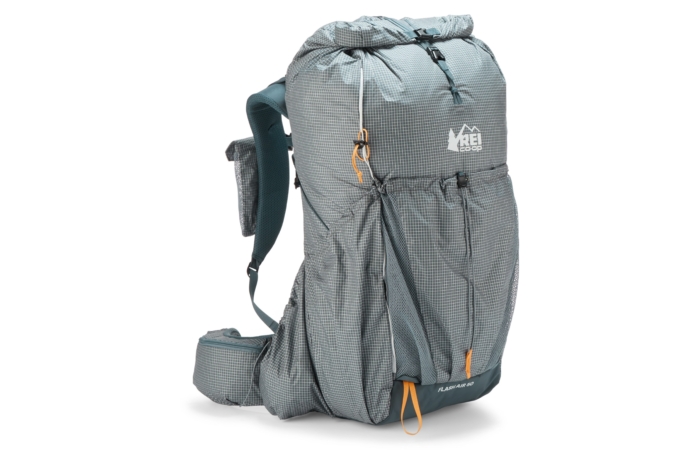
Take the popular Flash 55 pack, strip out a pound of weight, the floating lid, and lose a few liters of internal space, and you’ve got the REI Co-op Flash Air 50 Pack ($299). This ultralight-leaning backpack takes cues from the best UL bags to produce something that will make your transition to lightweight backpacking a breeze.
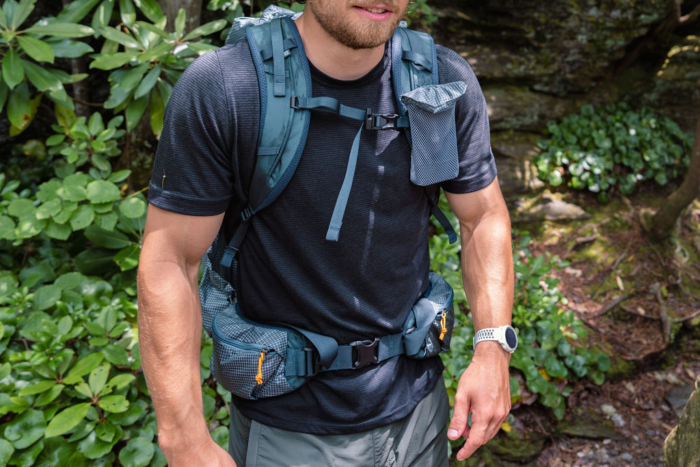
REI hit all the high notes with this pack, getting it under 2 pounds while still building out a well-padded suspension system supported by spring steel stays. The UHMWPE (a Spectra laminate) ripstop nylon pack body is certainly a nod to big-name ultralight packs and is more durable than the nylon used in the Flash series.
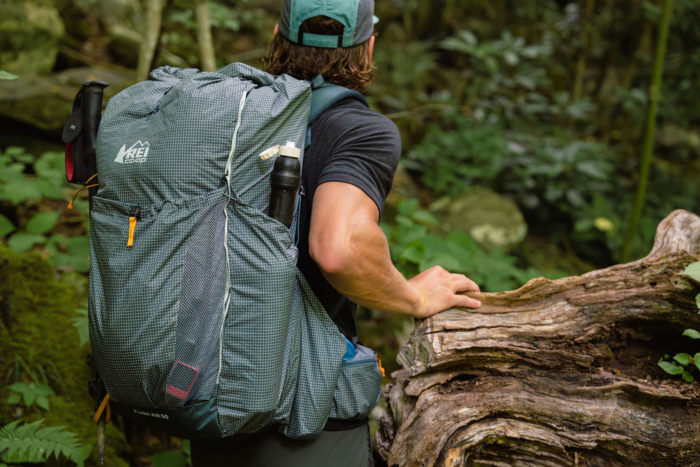
Those 50 liters of space are enough to fit an ultralight loadout and food for a week, reported Samuel Martin, who took the Flash Air into North Carolina’s Linville Gorge Wilderness for a proper shakedown. Comparing against his beloved Hyperlite packs, Martin found the pack’s suspension to be quite comfortable at 18 pounds, and reckoned it could take another 10 pounds with no problem.
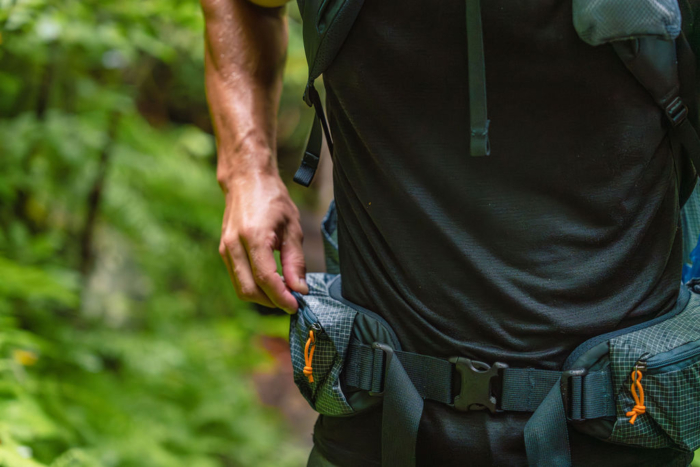
The main pack rolltop entry is easy to load through and compresses unused space down to keep your load well centered. The Flash Air also has multiple external pockets, including forward-facing bottle sleeves between the pack body and hip belt that make grabbing your bottles easy.
REI rates the load capacity at 25 pounds, which is a bit limited for a pack of this size. The bag also has removed a number of the niceties that those coming from a kitchen-sink pack like an Osprey Atmos will miss, such as a floating lid or adjustable torso lengths, and so it lands in a bit of an awkward spot.
We think the Flash Air is best for ultralight-curious people who are not ready to fully commit to a pricey bag made of the latest and greatest materials.
Specifications
Pros & Cons
Pros
- Lightweight for its carrying capacity
- Well-ventilated
- Carries heavy loads comfortably
Cons
- Takes some time to figure out how to adjust shoulder straps and hip belt
- Still uses a DWR finish with PFAS
Bottom Line: Hosts a stiff frame sheet that allows this 3-pound pack to haul 50+ pounds comfortably. It offers wide adjustability, though its tall, narrow profile requires careful packing.
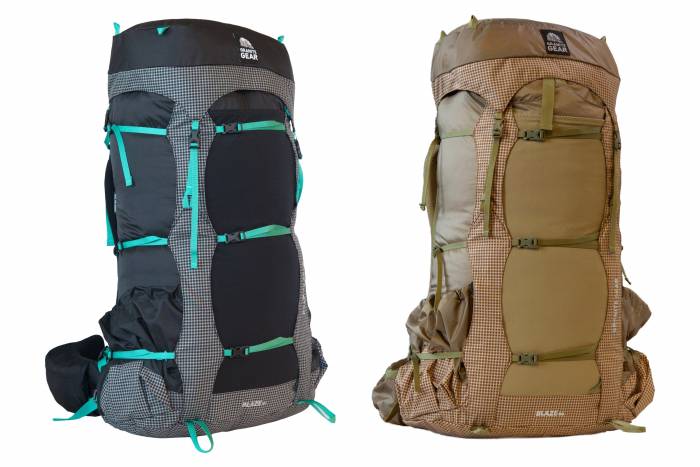
The Granite Gear Blaze 60 ($300) is a lightweight pack that can easily carry heavy-duty loads. It’s difficult to find a pack that remains comfortable even when fully weighed down with a week’s worth of gear, but with tons of classic and innovative features and pockets, the Blaze 60 is one of the true gems of the backpack market.
At 3 pounds, this pack is slightly lighter than average for its capacity. Although it performs well across the board, the Blaze 60’s most striking characteristic is its phenomenal suspension system.
No matter what you need to carry, this pack will handle it with stability and grace. The internal frame that enables the pack’s stability is designed with effective airflow channels that help keep your back cool. Of all the packs with breathable back panels out there, the Blaze 60 stands out.
The shoulder and hip straps are mesh-free and tend to feel a bit sweaty. This pack features durable material in high-wear zones, and it saves weight with thinner fabric in areas of less concern. We’ll also note here that the Blaze 60 is still made with a PFAS DWR finish in 2026, and while the brand is pivoting to a PFAS-free design, the pack can’t be sold in certain states. We look forward to testing the next iteration once it arrives.
The ROBIC fabric that covers much of the pack’s body is both light and tear-resistant. For backpackers who plan to carry full and heavy loads but don’t want an ultra-bulky pack, the Blaze 60 is a top pick.
Backpacking Backpack Comparison Chart
| Compare |
|
|
|
|
|
|
|
|
|
|
|
|
|
|
|
|
|---|---|---|---|---|---|---|---|---|---|---|---|---|---|---|---|---|
| Price |
$300
|
$229
|
$285
|
$420
|
$380
|
$460
|
$470
|
$350
|
$270
|
$315
|
$179
|
$330
|
$269
|
$279
|
$299
|
$300
|
| Access |
Drawcord closure
|
Roll top
|
Drawstring top
|
Roll-top
|
Roll top
|
Drawstring
|
Drawcord top
|
Drawcord closure
|
Roll-top
|
Roll-top
|
Drawstring top
|
Drawcord top and side zipper panel
|
Drawcord closure
|
Roll-top
|
Roll-top
|
Drawcord top and zippered panel access
|
| Tested weight |
3 lbs., 8 oz. (men's S/M); 3 lbs., 8 oz. (women's XS/S)
|
2 lbs., 12 oz.
|
2 lbs., 13 oz. (S/M); 2 lbs., 15 oz. (L/XL)
|
1 lb., 15 oz. (medium)
|
2 lbs., 1.8 oz.
|
5 lbs., 12 oz. (men's medium)
|
4 lbs., 13.1 oz. (S/M frame)
|
4 lbs., 13.2 oz. (S/M); 4 lbs., 13.9 oz. (M/L, tested)
|
2 lbs., 10.5 oz.
|
2 lbs., 10 oz. (medium)
|
3 lbs., 6 oz. (Regular, tested); 3 lbs., 11 oz. (Extended)
|
4 lbs., 11.2 oz.
|
4 lbs., 10 oz. (men's M/L); 4 lbs., 7 oz. (women's S/M, tested)
|
1 lb., 14.3 oz.
|
1 lb., 15 oz.
|
3 lbs.
|
| Volume |
60 & 58 L
|
55 L
|
58 L (S/M); 61 L (L/XL)
|
55 L
|
68L total; 39L internal, 21L external
|
100 liters
|
75 L
|
55 L
|
50L
|
60 L
|
60 L
|
65 & 60 L
|
60 L
|
61L total – 46 L internal, 15L external (medium)
|
50 L
|
60 L
|
| Material |
100D/210D nylon ripstop body + 300D bottom, 135D polyester lining
|
100-denier ripstop nylon main body; 210-denier nylon bottom
|
100- and 400-denier high-tenacity recycled nylon (both Bluesign-approved)
|
Dyneema Woven Composite 3.9
|
ULTRA 400X/ULTRA 200X Fabric + UltraStretch Mesh
|
210D/420D nylon
|
200D UHMWPE nylon and Ultra 400X accent, 840D nylon base
|
420HD nylon packcloth, 210-denier nylon Diamond (Bluesign-approved)
|
210D HMPE ripstop nylon, recycled 600 D 82T polyester
|
105D nylon ripstop, 200D polyethylene, 150D polyester blend pack body; 100D nylon ripstop lining
|
Recycled nylon, unspecified denier
|
210-denier 40% recycled nylon/420-denier 45% recycled nylon
|
210D and 400D ripstop nylon exterior, and lining: 200-denier recycled polyester lining
|
Ultra 200X with a heavy-duty polyester knit mesh
|
UHMWPE ripstop nylon (87% nylon/13% polyethylene)
|
100-denier ROBIC high-tenacity nylon with Barrier DWR (main body); 210-denier ROBIC UHMWPE (Ultra High Molecular Weight Polyethylene) triple ripstop nylon (reinforcements)
|
| Outside storage |
Two hip belt pockets, two side bottle pockets, one rear stash pocket, and one floating lid pocket
|
Removable hip belt pockets, 2 side water bottle pockets, 2 larger side mesh pockets, ice axe attachments, breathable mesh front pocket
|
Two zippered hip belt pockets, two dual-access stretch mesh side water bottle pockets, ice axe attachment with bungee tie-off, and stretch mesh front shove-it pocket
|
2 side pockets, 2 zippered hip belt pockets, ice axe attachment, front shove-it pocket
|
Two zippered hip belt pockets, two adjustable side water bottle pockets, front shove-it pocket, ice axe/trekking pole attachments
|
Two hip belt pockets, two side bottle pockets, one rear stash pocket, two rear zippered pockets, one floating lid pocket
|
Two side pockets, one front avy tool pocket, two floating lid pockets
|
2 zippered hip belt pockets, 2 dual-access stretch mesh side water bottle pockets, ice axe attachments, and fabric-reinforced front shove-it pocket
|
Two side pockets, two zippered hip belt pockets, front shove-it pocket
|
Two side pockets, two zippered hip belt pockets, front shove-it pocket
|
Hip belt pockets, 1 front shove-it mesh pocket, 2 side water bottle pockets
|
Hip belt pockets, 1 side mesh pocket, 1 SideWinder water bottle holder that can be put away when not in use, ice axe/trekking pole attachments, front shove-it pocket, large zippered front pocket with mesh divider
|
Two hip belt pockets, four stretch mesh side pockets, one rear stretch pocket, and two floating lid pockets
|
Two zippered hip belt pockets, two cinchable shoulder strap pockets, two side water bottle pockets, one front stash pocket
|
Two zippered hip belt pockets, two side water bottle pockets, two exterior side pockets, one front stash pocket, ice axe/trekking pole tether
|
2 side pockets, 2 zippered hip belt pockets, front mesh stash pocket, ice axe attachments
|


How We Tested the Best Backpacking Backpacks
Our backpack testing aims to cover both in-field impressions and bench measurements to provide a comprehensive picture of the product’s performance. Here’s the breakdown on how we rate them.
- Field testing: We don’t render a verdict until a pack has survived a full season. Our team of thru-hikers and mountain guides rucked these packs across the abrasive granite of the High Sierra, the humid thickets of the Appalachians, and the unpredictable rain of the Pacific Northwest. We look for wear and tear, how a foam hip belt compresses over time, or how a zipper tracks after being coated in trail dust for a month.
- In-house ping pong protocol (volume testing): To ground-truth manufacturer claims, we utilize thousands of ping-pong balls to replicate ASTM volume tests. This allows us to measure the actual usable space in the main compartment versus the bonus volume in the mesh pockets. We also perform a Bear Canister Fit test, ensuring a standard BV500 fits vertically and horizontally without creating a painful bulge in the back panel.
- The overload sag test: We intentionally load every pack to 15% past its manufacturer-recommended limit and hike a 5-mile loop with 1,500 feet of vertical gain. We measure frame sagging and monitor for squeaking or hardware failure under duress. If a heavy-hauler can’t handle a 55-pound water carry without the hip belt slipping, it loses points.
- The bushwhack abrasion trial: Modern technical fabrics like Ultra 200X and UHMWPE claim to be indestructible, so we verify it. We take these packs off-trail into dense scrub oak and blackberry brambles, and see how vulnerable areas such as bottle pockets and pack bottoms fare in the long run.
- Our backpack rating system: We take all of our in-field and bench testing feedback and use it to rate each backpack on a set of four essential metrics:
- Comfort: 30% weighted. A 10/10 means the pack disappears on your back at 45 pounds. We look for zero hip belt slippage, no shoulder pinch, and a suspension that pivots with your natural stride.
- Volume & Organization: 30% weighted. A 10/10 allows you to reach a stove at the bottom of the bag without a full pack explosion. We reward dual-access side pockets and reach-around water bottle holsters.
- Weight: 20% weighted. A 10/10 requires a total weight under 3 pounds for a fully framed 60L pack. We penalize heavy-haulers that exceed 5.5 pounds unless they provide an objective increase in support.
- Durability: 20% weighted. A 10/10 requires 400D+ high-tenacity nylon or technical Ultra/DCF fabrics. The bottom must be reinforced to survive being dropped on sharp talus repeatedly without a puncture.

Our Expert Testers
The GearJunkie team comprises a diverse group of backpackers. From weekend warriors to seasoned thru-hikers, we’ve collectively spent many years on the trail.
I, Senior Editor Nick Belcaster, now lead our backpack testing efforts. Also a veteran of the Pacific Crest Trail, I’ve racked up many trail miles since, and worked my way through a not small number of backpacks in the process — hiking long trails from Iceland to Alaska and Patagonia. My pack needs range from carrying ultralight load-outs to an entire packraft and 8 days of food, and I’m behind our current bench testing program.
Tester Chris Carter has also made significant contributions to this guide. He has extensive experience putting various backpacks through torture and torment, having thru-hiked the Triple Crown of long trails in America: the Pacific Crest Trail, the Continental Divide Trail, and the Appalachian Trail. He’s navigated the sinking sadness of a mid-hike pack failure and knows the importance of choosing a model that fits your needs and will last the distance.
Staff writer Austin Beck-Doss has clocked countless miles under the weight of bulging backpacks. A prolific rock climber, hiker, and all-around outdoorsman, he knows the value of a cozy pack for schlepping heinous loads to the far-flung corners of the world. He led the charge with this guide, accruing our initial selection of nine packs in May 2021. Additionally, tester Bergen Tjossem (a conservation professional and Colorado resident) assisted in our pack testing last summer.

Our Testing Process & Testing Grounds
This list of product recommendations above results from thorough field testing. When testing packs, we pay careful attention to ease of use, long-term durability, comfort, and overall value. Impressive-sounding features might look good on paper, but they don’t always translate to actual performance.
Our testing has taken us pretty far. From the Huemel Trek in Argentina to off-trail bushwhacks deep in the Brooks Range, our team goes deep while testing these backpacks, aiming to get some serious trail miles on them before rendering our verdict. When out in the field, we’re looking at a few specific metrics: maximum comfortable weight, gear organization, suspension adjustability, and durability.
Beyond the field, we also dig into the nitty-gritty and conduct a series of bench tests. These include standard measurements such as pack weight and checking fit on several different body types, as well as our in-house volume testing, where we utilize ping-pong balls to confirm the volumes of these backpacks. Ground-truthing information like this allows us to stack packs head-to-head and cut through marketing claims.

Buyer’s Guide: How to Choose a Backpacking Pack
Purchasing a backpack — especially for the first time — can be challenging. Reliable gear is the foundation of a successful backpacking trip, and a good pack may be the most important item in your whole kit.
The ideal pack should feel balanced and comfortable while hiking. In camp, a well-designed pack helps keep your systems organized and efficient.
In this how-to-choose guide, I will discuss all the important considerations that will help you choose the right pack. Everything from padding and water protection to sizing and capacity is explained in detail. By the end, I hope that you’ll feel confident about choosing the perfect pack to support your backpacking adventures.
What Backpack Is Right for Me?
I’ve dug deep into backpacking packs in this guide, but there are a number of other pack designs out there that may potentially fit your needs better. Check out our Best Ultralight Backpacks Guide if you’re really trying to cut weight and carry less on your back, or our Best Daypacks Guide if your trips into the woods are often confined by 24 hours.

What Size Backpacking Pack Do You Need?
Choosing a pack volume isn’t just about the length of your trip, it’s about the bulk and displacement of your specific kit. A 50-liter pack might feel overwhelming for a minimalist but claustrophobic for a winter explorer. To avoid frustration, I recommend performing a volume displacement test before you buy.
- How to Calculate Your Pack Volume: This method bridges the gap between manufacturer specs and your real-world gear. Gather your Big Three kit (tent, sleeping system, and pad) along with your stove, filtration, and layers. Place everything into a cardboard box, compressing them as you go. Measure the length, width, and depth of the occupied space in inches, multiply them, and divide the total by 61.02 to convert to liters. Always add roughly 10 liters to this final number to account for food, fuel, and a bear canister.
Backpacking Pack Size Ranges:
- Minimalist Packs (35–45 Liters): To successfully use a sub-45L pack, your kit must be compressible and low-bulk. These packs are ideal for thru-hikers and fast-packers who prioritize speed and agility. However, this volume leaves zero margin for overpacking. If your gear isn’t dialed in, you’ll find yourself struggling to close them. The Hyperlite Mountain Gear Southwest 40 remains one of my top recommendations here, as its DCF construction offers the weather resistance and durability that long-distance hikers demand.
- The Standard Backpacker’s Range (50–70 Liters): This volume serves the majority of weekend warriors and 3-to-5 day explorers. It provides enough room for synthetic sleeping bags, extra layers, or even a luxury item like a backpacking chair. When loading a pack of this size, always keep the 20% Rule in mind: for optimal safety and comfort, your total pack weight should not exceed 20% of your body weight. For those seeking a balance of weight and support, the Gregory Paragon 58 (and women’s Maven 60) are prime examples of packs that offer enough suspension to make a 35-pound load feel significantly lighter.
- The Heavy-Haul Category (70–90+ Liters): When your adventures require specialized equipment, you move into the realm of the load haulers. These packs are designed with overbuilt suspension systems and reinforced frames to prevent the pack from sagging under the weight of gear-intensive trips. The Gregory Baltoro 100 Pro is the pack I lean on most frequently when the scales will tip past 50 pounds, as its pivoting hip belt manages heavy weight without bruising the iliac crest.

Dialing in the Fit: Measuring Your Torso & Hips
A backpacking pack suspension system isn’t worth much if the frame doesn’t match your body. Because torso length can vary between two people of the same height, selecting a pack size based on “tall” or “short” is a mistake. To ensure the load transfers to your legs rather than crushing your shoulders, you need to measure two specific metrics: your Torso Length and your Iliac Crest (Waist) Circumference.
The Torso Length Test
This is the most critical factor for pack sizing. If the torso is too long, the pack will pull away from your shoulders. Too short, and it will put 100% of the weight on your trapezius muscles.
- The Measurement: Tilt your chin to your chest and have a friend locate the C7 vertebra, the prominent bone protruding at the base of your neck. Measure from that point down your spine to the center point of your back (the spot level with the top of your hip bones).
- The Result: Most adults fall between 15 and 22 inches. If you’re between sizes, I generally recommend sizing down for a more secure fit, provided the load lifters still maintain a proper 45-degree angle.
The 80/20 Rule: Proper Hip Belt Sizing
While your torso determines the frame size, your waist measurement determines the hip belt. For optimal comfort, 80% of the pack’s weight should be carried by your hips.
To find your size, wrap a tape measure around the highest point of your hip bones (the iliac crest) rather than your natural waistline. The padded center of the belt should sit directly atop these bones. If you have a mismatched build (such as a long torso and a narrow waist), look for brands like Gregory or Osprey that offer interchangeable hip belts.
Tester’s Tip: “Never trust the fit of an empty pack. I always recommend testing a bag with at least 25 pounds of weight, as an empty frame can easily mask a torso that is too long or a belt that fails to cinch tight enough.” — Lead Gear Tester Nick Belcaster

Backpack Suspension Components
While a pack may look like a simple bag from the outside, the frame and suspension work in tandem to carry all of your gear, food, and water. Understanding these parts allows you to troubleshoot discomfort on the trail and properly adjust your pack as your pack’s weight changes along the trip.
- The Internal Frame & Framesheet: The frame is the backbone of your pack. Most modern packs utilize an aluminum hoop or dual stays to provide rigidity. This structure prevents the pack from barreling when stuffed full and ensures the weight is transferred directly down to the hip belt. In lighter packs, you may find a framesheet (a thin plastic or carbon fiber panel) which provides a barrier between your gear and your back while offering just enough structure for medium loads.
- The Hip Belt & Lumbar Pad: The hip belt is the most critical component for long-term comfort. Its job is to wrap firmly around your iliac crest, allowing your legs to carry the load.
- The Lumbar Pad: This is the cushioned area at the base of the spine. A well-designed lumbar pad prevents the pack from sliding down and helps maintain the natural curve of your back.
- Dual-Pull Buckles: Look for hip belts that pull inward toward the center; this mechanical advantage makes it significantly easier to get the belt tight enough to stay in place.
- Shoulder Harness & Sternum Strap: The shoulder straps should follow the contour of your chest and shoulders without gapping or pinching. Their primary role is to keep the pack from falling backward, rather than lifting the weight.
- The Sternum Strap: This small strap connects the two shoulder pads across your chest. It prevents the shoulder straps from sliding outward toward your armpits and helps stabilize the load on uneven ground.
- Load Lifter Straps: When pulled to a 45-degree angle, load lifters pull the top of the pack toward your spine. This shifts the center of gravity closer to your body, instantly relieving the pulling sensation on your shoulders and making the load feel lighter and more integrated with your movement.

Backpack Organization & Access
A backpack’s layout dictates your trail efficiency, or how quickly you can find your rain shell when a storm breaks or access a snack without dropping your pack. Organization styles generally fall into two camps: Minimalist and Feature-Rich.
Primary Closure Systems
The way a pack closes at the top affects its weather resistance and volume flexibility.
- Top-Lid (The Brain): This is the traditional design featuring a large cinched opening covered by a zippered compartment. It provides immediate access to small essentials (headlamps, maps) and acts as a compression flap for stowing a climbing rope or foam pad underneath.
- Rolltop Closure: Adopted from dry-bag technology and seen on packs like the Hyperlite Mountain Gear Southwest, this design is now the standard for ultralight trekking. These designs allow for variable volume. As you consume food over a 5-day stretch, you can roll the top down further to keep the load compact and stable. It also offers superior water resistance compared to traditional lids.

Main Compartment & Access Points
While most packs are top-loaders, certain models include secondary entry points to prevent gear explosions at camp.
- Top Access Only: Common in ultralight packs to save weight. This requires a disciplined packing strategy (e.g., sleeping bag at the bottom, snacks at the top).
- Peripheral Zippers (Front/Side/Bottom): Found on heavy-haulers like the Osprey Aether, J-shaped or U-shaped zippers allow you to pull a stove or puffy jacket from the bottom of your pack without removing everything above it.

External Storage & Pockets
- Hip Belt Pockets: These are essential for on-the-go items like lip balm, GPS units, or calories. Pro Tip: Look for overbuilt zippers here, as these pockets take the most abuse from sweat and abrasion.
- Hydration Sleeves: Most modern packs include an internal sleeve and port for a water bladder. If you prefer bottles, prioritize side pockets with a forward-leaning cutout so you can grab your water without dislocating a shoulder.
Compression Straps: Stability vs. Lashing
Compression straps are often misunderstood as mere gear loops, but their primary function is load stabilization.
- On Frameless Packs: Without a rigid structure, these straps serve mostly as lash points for trekking poles, tent poles, or wet rain flies.
- On Framed Packs: These straps pull the load closer to the internal stay, shifting the center of gravity toward your spine. This prevents the pack from swaying, which is the leading cause of lower back fatigue.

Rain Protection
Keeping your gear dry is a non-negotiable safety priority. Moisture doesn’t just add weight; it can lead to dangerous heat loss if your insulation (sleeping bag and layers) gets soaked. To combat this, hikers generally choose between External Protection and Internal Protection.
External Protection: Rain Covers
A rain cover is a form-fitting waterproof shield, typically made of silnylon or polyester, that cinches over the pack’s exterior.
- Integrated vs. Aftermarket: Some packs, like those from Gregory or Osprey, include a dedicated pocket (usually on the bottom) housing a built-in cover.
- The Trade-off: While effective against vertical rain, covers leave the back panel exposed. In heavy storms, water can seep down your back and pool at the bottom of the pack. They are also prone to snagging on branches during off-trail travel or blowing away in high winds.
Internal Protection: Pack Liners
Many experienced thru-hikers have moved away from rain covers in favor of internal liners. This method involves lining the entire main compartment with a waterproof bag before packing your gear.
- The Benefit: This is the most reliable way to ensure your Big Three stays dry. Because the protection is inside, you don’t have to stop and scramble to fix a cover when a flash storm hits, as your gear is already shielded.
- Types of Liners:
- Nylofume Bags: Transparent, odor-resistant, and incredibly lightweight. These are the pro’s choice for long-distance hiking because they don’t tear as easily as standard plastic.
- Polyethylene Bags: Often sold by brands like Gossamer Gear, these are tougher than a standard trash bag and specifically sized to fit backpacking volumes.
- The Contractor Bag Hack: A heavy-duty, 3-mil contractor trash bag is the cheapest, most durable budget option, though it lacks the transparency and custom fit of technical liners.

What Are Modern Packs Made From?
The modern backpack market is a battle between tensile strength, abrasion resistance, and weight. To understand a pack’s longevity, you must look past the brand name and evaluate the technical composition of the textiles.
Traditional Nylon & Ripstop
Most legacy packs utilize high-tenacity nylon treated with a Durable Water Repellent (DWR) coating.
- Denier (D) Explained: This measurement indicates the fiber thickness. A 210D nylon is standard for lightweight packs, whereas bombproof models like the Mountain Hardwear AMG 75 utilize 840D nylons and Ultra 400X accents.
- The Benefit: High-denier nylon is incredibly affordable and excels in sliding abrasion (dragging a pack over granite).
- The Trade-off: Nylon is hydrophilic (it absorbs water weight) and will eventually wet out regardless of the coating.

Technical Laminates: Dyneema & Ultra
High-end and ultralight (UL) packs have shifted toward high-tech fabrics that laminate a face fabric to a waterproof film.
- Dyneema Composite Fabric (DCF): Used by Hyperlite Mountain Gear, this is a non-woven laminate. It is 100% waterproof and has a high strength-to-weight ratio but can be prone to pinhole punctures over time.
- Ultra (UHMWPE): The current industry standard found on the Durston Kakwa 55. Ultra weaves Ultra-High Molecular Weight Polyethylene with high-tenacity polyester.
- Expert Insight: Contrary to the original text, modern Ultra200 and Ultra400 fabrics are actually more abrasion-resistant than many heavy nylons. They do not need to be babied; in fact, they are preferred for off-trail bushwhacking because they do not absorb moisture or stretch when wet.
Spectra & Gridstops
- A middle ground between nylon and full laminates, Gridstops (like 210D HDPE Gridstop) use a nylon base reinforced with a white spiderweb of Spectra or Dyneema threads. If the nylon base tears, the high-strength grid stops the rip from spreading. This is the most cost-effective way to get UL performance without the $400+ price tag of full laminates.

Price & Value
Backpacking packs vary in price and value. High-quality options range from around $200 to well over $500. More expensive packs may include higher-quality materials or extra features, but sometimes, simpler is better when weight is the biggest concern.
Budget
You’ll typically pay between $150 and $250 for a budget backpacking pack, and while you’re likely to get fewer features, these packs can still do some serious work. The REI Co-op Trailmade 60 ($179) is widely adjustable to a number of body types, and while there are scant bits of flash, its 60 liters of capacity will carry our overnight kit and then some. Value-oriented packs like the REI Co-op Flash 55 ($219) do a lot for the money, and we think this is one of the best packs for new hikers looking to invest a bit more.
Mid-Tier
Spending a little bit more on your backpacking pack will net you not only a few more features, but also undoubtedly some comfort and adjustability, too. The $260 you’ll pay for the Osprey Exos & Eja 58 is common in this range, and for the money, you’ll get into a nicer suspended back panel frame and enough pockets and lash points to secure dang near anything.
This price range will also host most specialized packs, like the Gregory Katmai 65 & Kalmia 60 ($330), which are both comfort-first packs with extra padding to accommodate heavier loads. The tradeoff, of course, is weight.
Premium
Spending north of $350 on a pack means it’ll leave little on the table, or you’re chasing ounces and after an ultralight pack. The Hyperlite Mountain Gear Southwest 55 ($399) is certainly in the latter camp, and weighs in at an impressive 1 pound 15 ounces. The Dyneema Composite Fabric used on this pack is the reason for the price, but if you’re headed out on a thru-hike, we think it’s worth it.
The ULA Circuit Ultra ($380), on the other hand, uses another cutting-edge textile, Ultra 400, and gains durability for it. Here, too, the material is the main driver of price, but you’re also paying a bit of a premium for going with a cottage industry brand. The attention to detail is unmatched, in our opinion, so it’s well worth it.

Frequently Asked Questions
The best backpacking pack is ultimately the one that fits your unique body shape and aligns with your trail objectives. Because comfort is paramount when logging high-mileage days, you should prioritize a pack that matches your exact torso length, waist size, and expected gear volume.
For a versatile option that suits most hikers, our top choice is the Gregory Paragon 60 (and women’s Maven 58). This series hits the ideal sweet spot, offering a lightweight design paired with a heavy-duty suspension system that comfortably stabilizes loads up to 50 pounds.
However, the right pack depends on your specific hiking style. If you want a lightweight, budget-friendly option, the REI Co-op Flash 55 offers an approachable price point and a modular design that sheds weight. For hot climates, the Osprey Exos and Eja 58 use a suspended trampoline-style mesh back panel for unmatched breathability. Finally, long-distance hikers looking to cut weight without sacrificing durability will favor the Hyperlite Mountain Gear Southwest 55, which utilizes tough, weather-resistant materials built for the long haul.
We recommend measuring your torso carefully and trying on a few options fully loaded to find your perfect fit.

The ideal size of your pack depends on your own dimensions, as well as on the amount of gear that you plan to carry. For trips up to 3 days, a 50-70L pack is usually enough. For longer trips, look for a pack that can carry at least 60L.
Some backpackers have truly mastered the art of thinning down their kit to the bare essentials. However, for most people, a 40L pack will not be large enough for trips longer than a single overnight excursion.

Packing your backpack properly will help you maximize its capacity and ensure that you feel balanced while hiking with a heavy load. The more organized your initial packing process is, the less you will have to rummage around looking for stuff during your trip. Knowing how to pack properly and efficiently is an essential part of a successful adventure.
Generally, you’ll want to pack items that you won’t need while hiking near the bottom of your pack. This includes your sleeping bag and extra clothes. The middle of your pack is where you should keep heavier items like food and water. The closer the heavy items are to your back, the better.
Keep frequently used items like rain layers and toiletries near the top of your pack where they will be easily accessible. In your hip strap and top lid, you’ll want to keep things like maps, lip balm, a GPS device, etc.