Living next to a ski resort is the dream, but a luxury not many can afford. I recently moved down the valley from Crested Butte to Gunnison. Now, instead of a quick bus ride from my house to the lifts, I join the masses of skiers who commute at highway speeds between home and the mountain. So this winter season, I put hundreds and hundreds of miles on testing the Thule SnowPack M ski rack for my ski resort commute.
My drive is short, roughly 40 minutes, with most at highway speeds. Since I’m now commuting more, I also purchased a more fuel-efficient, smaller hatchback instead of my truck for my daily journey to the ski hill.
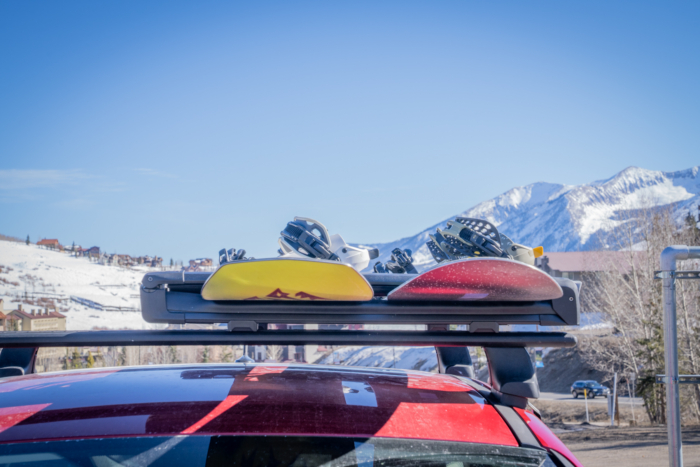
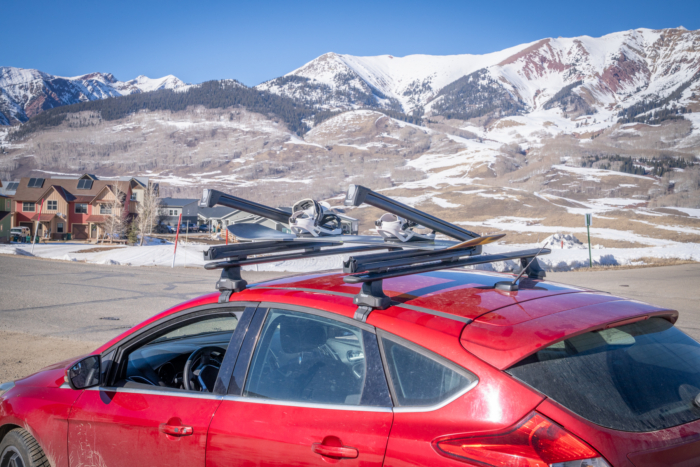
On my commuter car, the SnowPack hauled a mix of skis, snowboards, splitboards, and even Nordic skis for the 60-mile round-trip. Installed on my Ford Focus, I tested the rack for 2 months in every type of weather, from 75-degree heat waves to 2-foot powder storms.
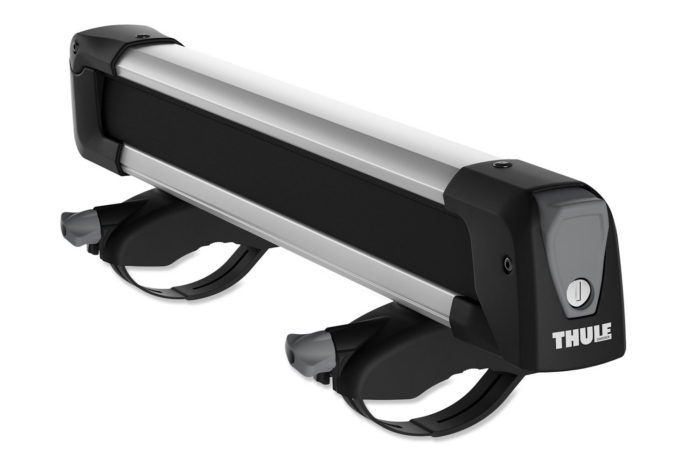
In short: The Thule SnowPack M ($370) is a durable, sleek, and functional roof rack from one of the most trusted names in racks. The rack holds up to four pairs of skis in the M version. You can also upgrade to the L version ($420) for six pairs of skis. It has integrated ski and crossbar locks for ultimate security and is very easy to install or remove from your vehicle on the fly.
Check out how this rack compares to our other field-tested favorites in the Best Ski and Snowboard Racks.
Specifications
Pros & Cons
Pros
- Integrated crossbar and ski locks
- Easily expands for double-stack skis or snowboards
- Easy installation with Thule crossbars
Cons
- Non-extender version may be hard to access on taller vehicles
- Instructions for installation are visual only — lack of captions complicates the setup
- Doesn't hold itself fully open when released, making it harder to access skis in the back
- Slight whistle at speed
Installation

Straight out of the box, the SnowPack comes pretty much ready to go. The only thing you need to do is decide which way to mount it, either with the universal adaptor on any crossbars or with a T-channel insert directly to a Thule-compatible crossbar.
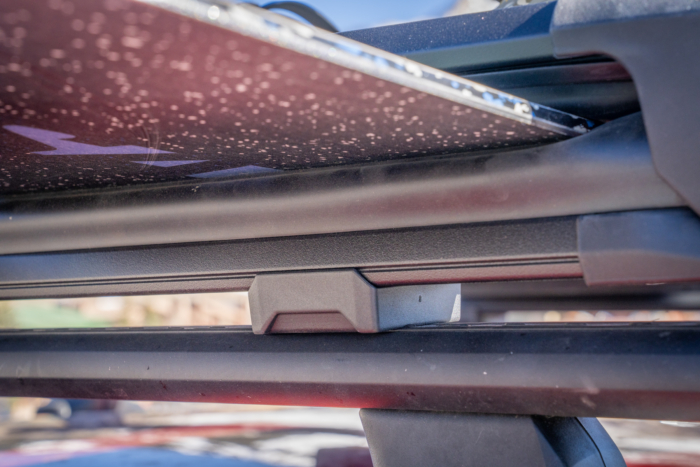
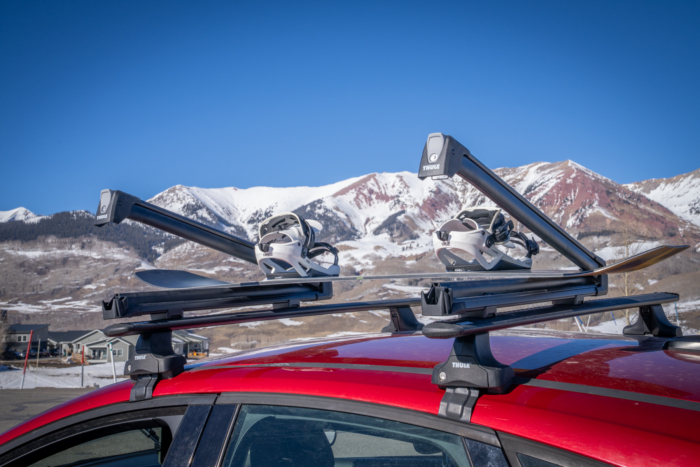
I previously installed Thule Wingbar Evo crossbars on my roof, so I was able to mount the rack directly to the rack’s T-channel without the bulkier universal mount. Mounting the rack this way means there is only one set of locks (the ski locks) needed to secure it to the crossbars. Installation took just a few minutes.
One thing to note is that the Swedish company sells racks worldwide, and its instructions only use pictures. There are no captions or words, and it takes a little extra time to figure out. However, a quick trip to YouTube answered all my questions.
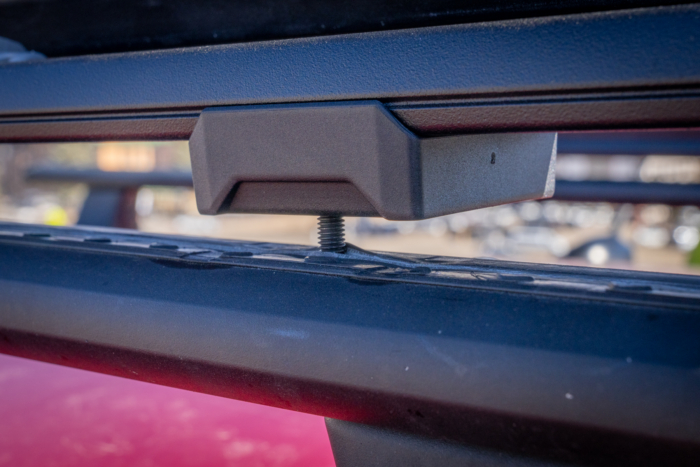
To access the mounting points, simply pull the bottom rubber up and fold it to the side, revealing the mounting holes. The large handle quick-release knobs make it easy to hand-tighten the rack down. Once I understood the system, I was able to completely remove both racks from my crossbars in under 2 minutes.

When using the bulkier universal adaptors, the rack is also pretty simple. Simply attach the rubber clamp around the crossbar. Then twist the tightening knob until it is tight, lock the mechanism closed with a second set of keys and locks, and install the rack to the base.
Streamlined Locks and Solid Security

The SnowPack comes with both integrated ski locks and crossbar locks. That means a thief cannot open the ski rack and steal your skis from the rack, and that a thief cannot just steal the entire locked rack and skis off of your car.
The rack comes with one set of metal keys on a keychain and four lock cores. During testing, I used a Thule Wingbar Evo crossbar, which has a third keyed lock (for the crossbars to the car). Thule includes extra lock cores with the key set, so I was able to set up my crossbar locks and ski rack locks with a single set of keys.
With this lock system, I felt confident leaving my expensive skis and snowboards out in public. I frequently parked on the street overnight with skis on my rack, locked my extra skis to my car during my ski days, and didn’t have to worry about a thief easily getting access to my equipment. Thieves could technically still break a lock or cut the rack off your vehicle, but it would take considerable effort.

When locking the ski rack into the closed position, it has three clicks before it is fully closed. It was fairly easy to get the first click. But once fully loaded, it required me to use both hands and my body weight to complete the next two security clicks for closure. I always kept the rack locked with a key closed when driving or parked.
Aerodynamics, Noise, and Fuel Efficiency

I spent years driving trucks with camping setups in the back, where mileage was an afterthought. Adding a ski rack to what was otherwise a box going down the highway didn’t seem to make a difference. Since commuting in a small, lightweight, aerodynamic car, I’ve spent a lot more time feeling how aerodynamics affect mileage and even counting how high my mpg is during my same commute.
Without crossbars, keeping my skis inside my car, I was getting roughly 39+ mpg on my round-trip to the ski resort and back home, over a 60-mile round-trip route. Adding the crossbars cost me roughly 0.5-1 mpg. Adding a ski rack loaded with skis, I’ve noticed a 2-3 mpg loss in efficiency, getting around 36-37 mph per gallon round trip. I also felt significant aerodynamic drag, meaning I was affected by headwinds and crosswinds more.
There was significant wind noise. While driving with skis on the rack, I heard a faint whistle that I thought came from the air between the rack’s rubber.

All this goes to say that ski racks change your vehicle’s aerodynamics. Roof carriers are always less efficient than keeping your gear stored inside. An already non-aerodynamic vehicle like a large pickup truck with a truck camper won’t notice a decrease in mpg or aerodynamic drag. It already has poor aerodynamics and fuel efficiency.
In a smaller, fuel-efficient car like my Focus, the effects feel greater from a loaded roof rack. The SnowPack, unlike the Kuat Switch, does not fold down when not in use. To maximize fuel efficiency during ski season, I recommend unmounting the rack between ski area trips. The process only requires a few minutes at most.
Minor Gripes

After spending the season with the SnowPack, I have a few minor gripes about using the rack. Though again, these are minor. The first is the slight whistle at highway speeds. I can’t hear it over the radio, but with that off, I can hear the SnowPack whistling.
I do have a slight gripe with the picture-only instructions. My first time assembling and installing took slightly more time than usual, because I had to figure out the puzzle of the pictures.
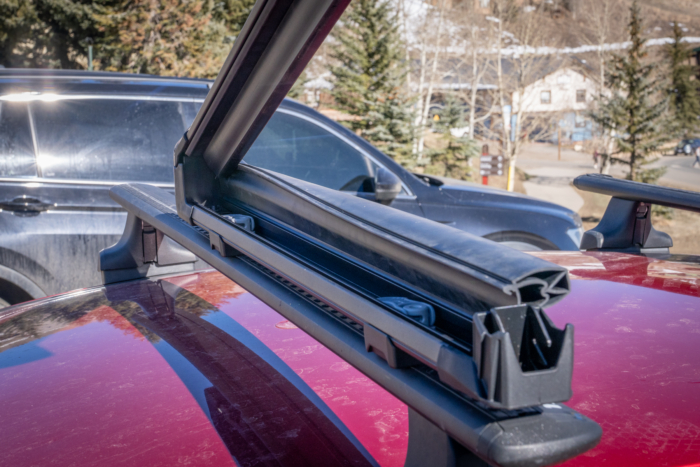
My significant gripe with the rack is that when it’s unlocked and opened, it does not hold itself open fully — say, 25 degrees, although it opens all the way to 45 degrees. This makes it hard to grab anything near the back hinge of the rack. One hand is required to push the rack fully open and the other to pull the skis. It’s easy to manage on a shorter vehicle where the rack is head height or lower. But with a taller SUV or truck, it can be difficult to hold the rack open and grab skis.
Thule has recognized this is a problem. That’s why you can purchase the Extender version of the SnowPack for $150 more. The upgrade allows the entire ski rack to slide out and over the edge of the vehicle for better access. If you plan to use the SnowPack on a taller vehicle, the Extender version is well worth the extra money.
Who Is It For?

I firmly believe anyone using Thule-brand crossbars should pair them with a Thule SnowPack ski rack. Mounting your ski rack directly to your crossbars with one bolt makes the entire system much lower profile than any other rack-crossbar combination.
For skiers and boarders who want a rack that is easy to use, durable, and secure, it’s hard to beat this time-tested Thule brand of ski racks. The regular SnowPack is perfect for those with cars and smaller SUVs, and the Extender version is better suited for higher-profile vehicles.