The hardest part of any ski day is getting your gear and friends to the hill. We have fond memories of being jammed in the back seat with skis poking around our heads, but honestly, technology has improved and skiers will enjoy getting with the times. That’s where ski and snowboard racks come in.
During our most recent 2-month winter test cycle, rack expert Eric Phillips examined two builds while driving hundreds of miles throughout Gunnison Valley and beyond. Your options include hitch or roof mounts, compact or extended, and modularity for year-round use.
Concerned about aerodynamics? Check out the Küat Switch 6, which folds down 90 degrees when it’s not in use. Powder hounds can invest in the Yakima FatCat EVO 6: the elbow hinge expands for wide skis and snowboards. To avoid grime while loading, the Küat Grip 4 slides out for easier roof access. If your car is full of mini shredders, opt for a ground-level hitch rack with a cargo box to stash gear, like the modular Yakima EXO SnowBank ExoSystem Snow Mount via the EXO SwingBase.
Editor’s Note: We updated our Ski and Snowboard Racks guide on October 31, 2026, updated signposts, bottomline summaries, and a rewritten and streamlined service section.
The Best Ski and Snowboard Racks of 2026


Küat Grip 4
-

-
(Photo/Eric Phillips)
-
(Photo/Eric Phillips)
-
(Photo/Eric Phillips)



Specifications
Pros & Cons
Pros
- Convenient slide-out loading system
- Clear locking and unlocking mechanism with large handle
- Grippy GripLock rubber securely, gently holds both skis and snowboards
Cons
- Pricey
Read Review: Powerful Grip, Slide-Out Tray: Küat Grip 6 Ski and Snowboard Rack Review
Bottom Line: The Küat Grip 4 pairs head-turning looks with genuinely smart design, from grippy, ski-friendly padding to a slide-out tray that keeps you from leaning against a dirty car. It’s pricey, but this is a premium rack you’ll happily leave on your roof winter after winter.
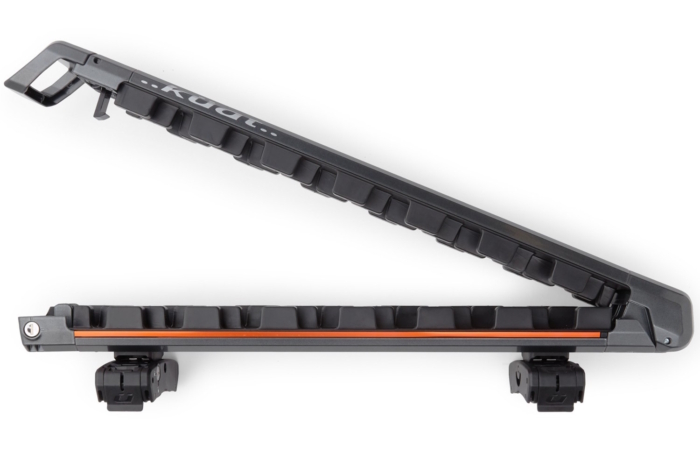
Elevating roof racks to the next level, the Küat Grip 4 ($429) deserves stadium applause. It looks fantastic with its glossy metallic powder coat, and it has the function to back it up. Two features set it apart from the pack: Küat’s GripLock rubber padding and a slide-out design that makes loading and unloading a breeze.
The Tech: At its core, a ski rack has one job: holding your skis or snowboards safely on your vehicle. Küat’s GripLock rubber lines the inside of the base and swinging arm, using a pattern of interlocking rubber “teeth” to pad and grip your bases and topsheets without damaging them, while still fitting skis and boards of different lengths, widths, and shapes. Once you unlock the rack and swing the arm open, a release tab lets the bottom tray slide out about two feet, so the rack extends away from the roof. An oversized handle (rather than a button) opens the rack, and a horizontal slider with clear pictorials confirms whether it’s locked. The Flip Mount system at the base includes a crossbar lock to secure the rack to your vehicle and a ski lock to secure your gear. The Grip 4 comes in three color combos: black metallic with gray anodize, gray metallic with orange anodize, and pearl with silver anodize.
What We Like: The GripLock teeth, which remind us of cartoonish gap-toothed grins, held our gear more securely than racks with a single long strip of rubber, and they look cool, too. The slide-out tray solves one of the most annoying parts of using a roof rack: leaning against a wet, grimy car to reach your skis. With the Grip, your gear comes to you, and your outfit stays clean. The Flip Mount was easy to install and use, and the keys are our favorite of any rack we’ve tested. They come on a key ring (unlike every other rack we tried) and have plastic-coated heads that are easier to grab and more comfortable in cold weather or with gloves on. Combined with the oversized handle and easy-to-read lock, this rack is simple to use even with mittens on. It’s the simple things.
What We Don’t: The only real downside is the price. At $429, the Grip 4 sits at the premium end of the ski rack market, and stepping up to the six-pair Grip 6 pushes the cost to $498.
Should You Buy? If you want a ski rack that’s as easy to use as it is good-looking, the Grip 4 is worth the investment. Need more room? Upgrade to first-class legroom with the Küat Grip 6. Either way, you’re getting a top-shelf rack you’ll want to leave on your car all winter long. And next winter. And the winter after that.
Malone LiftLine Compact Ski Carrier
Specifications
Pros & Cons
Pros
- Very affordable
- Opens fully for ease of use
- Very lightweight and compact
Cons
- No crossbar locks
- Quality of materials reflects affordable price point
- Carries only 3 sets of skis compared to industry standard 4
Bottom Line: The Malone Liftline Compact Ski Carrier is the cheapest and lightest ski rack we’ve tested, and it does the basic job of keeping your skis or boards secure at highway speeds. Just know that the low price comes with cheap-feeling materials, limited capacity, and no crossbar lock.
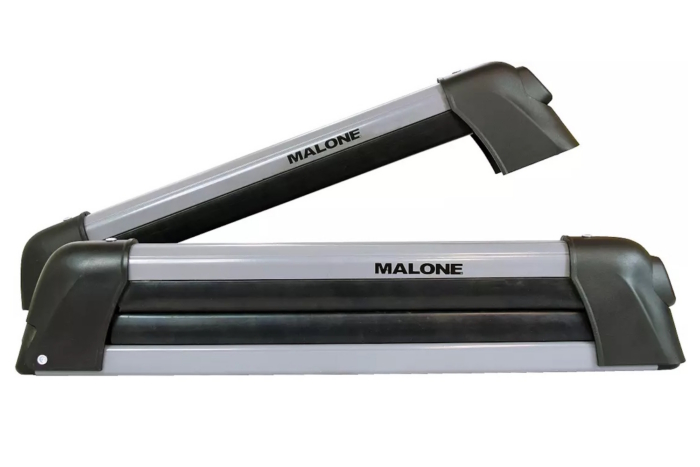
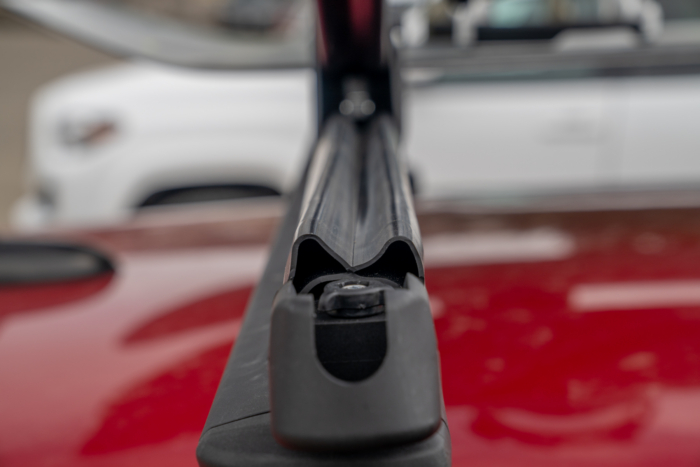
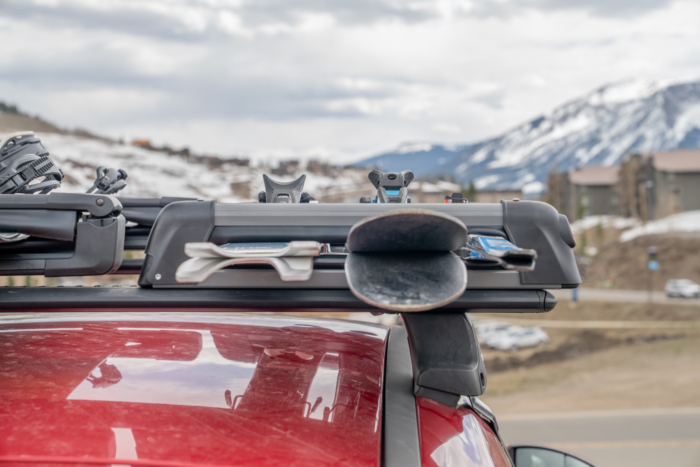
If you’re looking to get your skis on your roof without draining your bank account, the Malone Liftline Compact Ski Carrier ($150) packs a punch for your pocketbook. It’s small, and it’s not built from the most premium materials, but it’s still a great option for skiers who want a low-cost rack that gets the job done.
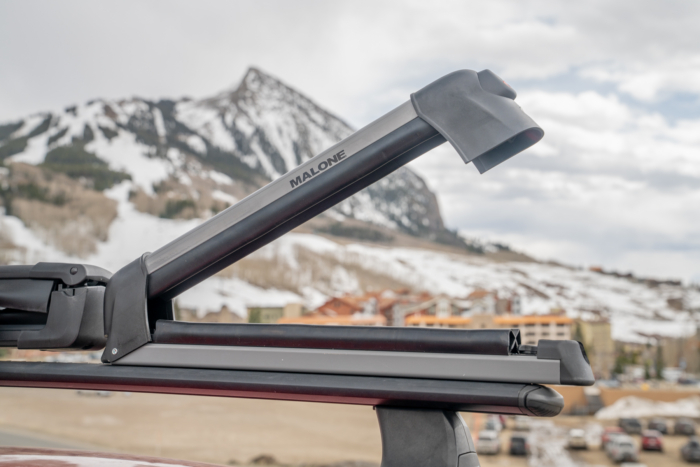
The Tech: The Liftline comes fully assembled out of the box and weighs just under 5 pounds. You can mount it two ways: with a universal adapter that attaches to your crossbars using hand screws, or directly to a compatible T-channel crossbar like the Thule AeroBlade. A large push button opens the rack, which holds itself open at 35 degrees and can extend past 90 degrees. Two clicks close it, and a lock keeps your gear secured. The rack is rated for three pairs of skis or two snowboards stacked.
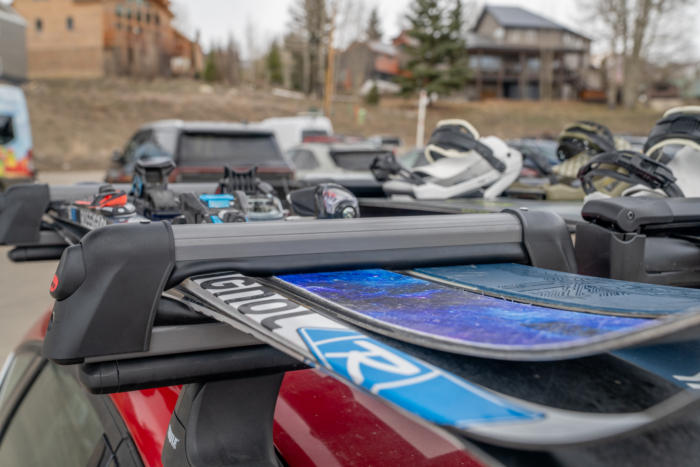
What We Like: For the price, this rack does exactly what it needs to. It held our skis and boards securely at highway speeds, and the wide-opening arm makes loading and unloading easy. The install was simple for veteran ski rack tester Eric Phillips, and at under 5 pounds, it’s the lightest rack we’ve tested. Most importantly, it’s one of the most affordable racks on the market.
What We Don’t: The low price shows. There’s no crossbar lock, so someone could easily remove the rack from your car, even if it’s closed and locked. Tight clearance around the mounting knobs makes it hard to tighten them fully, and the rack has sharp plastic edges (we learned that the hard way with a paper-cut-style pinch). Capacity is tighter than advertised, too: we couldn’t fit three pairs of powder skis side by side without them rubbing, so plan on two powder skis and one narrower pair. The single, non-expanding hinge makes it tough to fit and close the rack over stacked snowboards, and the stiff rubber padding let our skis slide side to side even when locked down, which could lead to rubbing.
Should You Buy? If you want the lightest, cheapest rack on the market and can live without a crossbar lock or premium materials, the Liftline is a solid pick, and your bank statement won’t be disappointed. If you’re hauling multiple pairs of fat skis or want more security and refinement, it’s worth spending more.
Küat Switch 6


Specifications
Pros & Cons
Pros
- Straightforward to use and install
- Folds to a low-profile, aerodynamic orientation
- Budget-friendly
Cons
- Can be hard to close
- One tester's rack wouldn't stay upright when unloaded
Bottom Line: The Küat Switch 6 is a thoughtfully designed, bombproof ski rack that installs in minutes, locks down your gear and the rack itself, and flips flat against your roof when you’re not hauling skis. It doesn’t have the Grip’s slide-out convenience, but at $298, it’s the best combination of design and value we’ve found.
Every piece of Küat gear we’ve tested sparks the same reaction: “Wow, they really thought this through.” It’s clear the brand’s gear is designed by people who actually use it, from the clean aesthetic to the small details that make everyday use easier. The Küat Switch 6 ($298) is no exception, pairing a sleek design and easy installation with a price that’s tough to beat.
The Tech: The Switch’s standout feature is its folding design. The rack pivots 90 degrees, so it can stand upright to carry gear or fold down flush against your roof for a low-profile, aerodynamic ride when it’s empty. It arrives fully assembled, includes the tools you need to install it, and uses universal mounts compatible with round, square, and aero crossbars. The Switch 6 holds six pairs of skis or four snowboards, and an integrated ski lock and crossbar lock secure both your gear and the rack itself. If you need less space, the Küat Switch 4 ($219) carries four pairs of skis or two snowboards.
What We Like: Most of us leave our racks on all winter, but we spend far more time driving around town than heading to the hill. Folding the Switch flat makes those everyday drives quieter and more aerodynamic, which can help save on fuel while keeping road grime off your skis. Installation was quick and painless, and we found the capacity accurate, even with wider skis and snowboards. The keys and tools are best-in-class, with sturdy construction, plastic grip covers, and key rings that make them easy to use every day. And with both ski and crossbar locks, you can park anywhere without worrying about your gear.
What We Don’t: One of our testers had an issue with the rack not locking into its upright position when empty, though it didn’t affect how well it held gear. The Switch also lacks the slide-out tray of the Küat Grip 4, so you’ll need to reach over your roof to load and unload.
Should You Buy? If you want a secure, well-built rack that’s easy to install and stays out of the way when you’re not skiing, the Switch 6 is a fantastic value. If you’re willing to spend more for easier loading, the Küat Grip 4 is worth a look, but for most skiers, the Switch delivers everything you need at a much friendlier price.
Yakima FatCat EVO 6


Specifications
Pros & Cons
Pros
- Aerodynamic design helps with air sound and looks sharp
- Double-joint hinge expands for thicker or stacked skis and boards
Cons
- Hard to close when fully loaded
- Locking mechanism is a challenge to fully engage
- Keys don't come on a ring like others do
Bottom Line: Built for skiers and riders whose gear keeps getting wider, the Yakima FatCat EVO 6 swallows up to six pairs of powder skis or four wide snowboards, thanks to an expandable hinge that makes room for big loads. It can be a wrestling match to close when it’s full, and the keys feel flimsy, but for powder hounds hauling fat planks, it’s one of the best racks around.
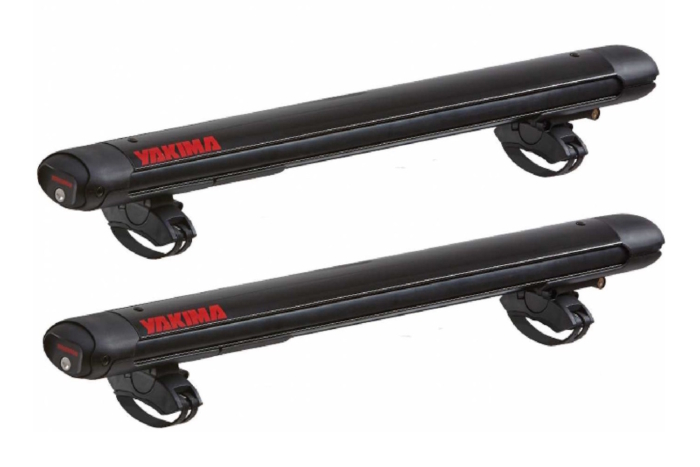
Do you love powder, and does the waist width of your skis grow each season? The Yakima FatCat EVO 6 ($399) stands out for its ability to carry fat skis and wide boards, and it’s proven itself to be one of our favorite racks out there. Yakima claims the FatCat has the widest range on the market, and in our testing, it backed that claim up.
The Tech: The FatCat holds up to six pairs of powder skis with tips as wide as 136 mm, or four snowboards. The key to that capacity is Yakima’s DoubleJoint hinge. Where a typical clamshell rack bends at a single hinge, like an elbow, the FatCat’s interior hinge bends and then pops up like an accordion, extending to make room for thick or stacked skis and boards. The rack’s sleek, low-profile shape is designed to be quieter and more aerodynamic, and it’s compatible with Yakima’s Same Key System (SKS), which lets you use one set of keys across all your Yakima products. It includes both ski locks and crossbar locks to deter theft.
What We Like: Capacity is the headline. Tester Eric Phillips, a snowboarder with big feet who rides wide boards, fit four powder boards with no problem. The DoubleJoint hinge lets you nestle gear close to the inner hinge and make the most of every inch. The aerodynamic design means you can leave the rack on unloaded without worrying about extra wind noise or drag, and its sleek black finish looks good on a wide range of vehicles.
What We Don’t: The expandable hinge relies on heavy springs, which made the rack tough to close and lock when it was fully loaded. The keys also don’t come on a key ring and feel flimsy compared to Küat’s sturdier keys with rigid heads.
Should You Buy? If you’re going wide underfoot, the FatCat EVO 6 is an easy pick. It maximizes space the way wide planks maximize float on a powder day. If you mostly ski narrower skis and want an easier-closing rack, there are simpler options, but for powder hounds with a growing collection of fat skis, this rack is hard to beat.
Yakima EXO SnowBank Exo System Snow Mount


Specifications
Pros & Cons
Pros
- 90-degree arm-swing for full use of the back of the rig even with a stuffed rack
- Modular accessories install in seconds using the tool-free EXO Cleat system and locking SpeedKnobs
- Heavy-duty, longstanding materials
- Year-round use with bike carrier (separate purchase)
Cons
- Hefty so the rack is tough to install and remove alone
- Security concerns where EXO SwingBase mounts to hitch receiver
- Without SKS upgrade, system requires four sets of keys
- Hit to the wallet
Bottom Line: The Yakima EXO SnowBank system is the most robust and versatile hitch setup we tested, swinging a full 180 degrees out of the way for unrestricted trunk access while hauling skis, boards, and a lockable 180-liter cargo box. It’s heavy, expensive, and comes with a pocketful of keys, but for families and full crews, it’s built to last a decade or more and works year-round.
Looking for a hitch ski rack that still gives you full access to your trunk? The best hitch racks tilt or swing away to let you reach the hatch, but many only open a narrow window, just enough to grab a few things. The Yakima EXO SnowBank ExoSystem Snow Mount ($2,206) is the only setup we’ve found that swings a full 180 degrees, giving you completely unrestricted access to the back of your vehicle.
The Tech: The EXO System is modular, and this setup stacks four separate pieces. The EXO SwingBase ($699) attaches to your hitch, and the EXO TopShelf ($479) adds an elevated second level. The EXO SnowBank ($379) ski and snowboard mount sits up top, while the EXO GearLocker ($649) cargo box rides below, adding 180 liters of enclosed storage. Like Lego bricks, the pieces clip together in whatever configuration you need. If you just want to get skis to the hill, the SwingBase and SnowBank alone will do the job. And with attachments like the EXO DoubleUp bike carrier and BackDeck, the system works year-round.
What We Like: Moving gear outside the vehicle frees up room for kids and passengers, which makes packing for a ski day far less of a puzzle. You can load skis and snowboards without lifting them over your head, and the GearLocker keeps helmets, boots, backpacks, and shells protected from the elements while staying within easy reach when the rack is swung open. As we’d expect from Yakima, every piece feels high quality, and this was the most robust construction of any rack we tested. We’re confident it could handle a decade or more of heavy use. We also prefer the elevated position the TopShelf provides, which keeps skis farther from road grime and flying debris than mounting the SnowBank directly on the SwingBase.
What We Don’t: Securing the full system takes a lot of keys, seven locks in all across the SwingBase and TopShelf arms, the ski mount, and the GearLocker lid. We’d recommend adding Yakima’s Same Key System (SKS) so one key fits everything; an eight-pack of lock cores runs just over $100. This was also the heaviest rack we tested and took two people to mount. With the TopShelf installed above it, the GearLocker’s lid couldn’t open all the way, though there was enough space to get inside, and the box lifts off easily if you need full access. Finally, we’d like to see a beefier hitch lock to keep the whole rack from being stolen off the vehicle.
Should You Buy? If you’re a family or a five-person crew looking to move gear out of the cabin, and you can swallow the price, this setup won’t disappoint. Its bombproof build, versatility, and year-round usefulness go a long way toward justifying the cost. If you just need to haul a few pairs of skis, a roof rack or a simpler hitch setup will save you serious money.
Thule Tram and Apex XT Swing


Specifications
Pros & Cons
Pros
- Buttery swing-arm function even when mounted to a car hitch
- Multi-function rack from bike to ski for year-round use
Cons
- Must have a compatible bike rack to mount the ski rack to — will not work on its own
- Hard install, extra tools needed: a T20 hex key and Phillips Head screwdriver
- Ski and snowboard rack feels cheaply made compared to the base hitch rack
- Took a few tries to learn to load and lock-in skis in an apex
Bottom Line: Pairing the Thule Tram ski carrier with the Apex XT Swing bike rack gives you a hitch setup that hauls skis and snowboards all winter, then converts to carry four bikes once the snow melts. Setup is a bit of a puzzle and vertical loading takes some getting used to, but at roughly half the price of Yakima’s EXO system, it’s a smart, year-round investment for skiers who also ride.
If you’re a mountain biker who skis, this hitch combo is built for you. Together, the Thule Tram ($450) and Thule Apex XT Swing ($700) make a great hitch-mounted ski and snowboard rack with all the features you need, including a smooth swing-away arm for easy access to your hatch. And when spring arrives, you can convert it back to a bike rack and keep using it all summer.
The Tech: This two-piece system starts with Thule’s Apex XT Swing, a swing-away hitch bike rack. Add the Tram, and the bike rack converts to carry winter gear. The Tram uses an uncommon vertical A-frame design: Up top, horizontal arms close like a clamshell around your skis or snowboards, while the lower arms are lined with ultra-soft rubber strips that cradle the tails and use friction to hold everything in place once the top arms are cinched. An ergonomic push button opens and closes the rack, and a dual lock works with a single key that’s compatible with the Thule One-Key System. The setup carries four bikes in summer, or up to six pairs of skis or four snowboards in winter.
What We Like: Versatility is the big win here. One system covers bikes, skis, and snowboards, so you can use it nearly 365 days a year. At about half the price of the Yakima EXO SnowBank setup, it also won’t drain your savings. The push button was easy to operate with gloves on, and we appreciated not having to lift gear overhead like with a roof rack. Even on a Subaru Outback with tight bumper clearance, we could easily swing the arm open and lock it, giving us full access to the back of the car.
What We Don’t: Assembly was a slog. Thule’s pictograph-only manual took time to decipher, and we needed a T20 hex key and a Phillips-head screwdriver that weren’t included in the box. Loading skis and snowboards vertically also took a few tries to get used to, though we adapted quickly.
Should You Buy? If you bike in summer and ski in winter, the Tram and Apex XT Swing are a solid investment in a rack you’ll use year-round. If you don’t ride bikes, though, you’re paying for features you won’t use, and a dedicated ski rack will likely be a better value.
SeaSucker Classic Rack


Specifications
Pros & Cons
Pros
- Easily attachable and detachable via vacuum mounts
- Mounts to a variety of vehicles including campers and sports cars
- Durable construction
Cons
- Must have a flat mounting surface — won't work on wavy roofs
- No lock for mounting system
- Expensive
Bottom Line: The SeaSucker Classic Ski Rack uses powerful vacuum mounts instead of crossbars, so it attaches to almost any smooth vehicle surface in under a minute and comes off in seconds. It lacks a lock and is easy to steal, but if your vehicle doesn’t have crossbars or you only want a rack on ski days, it’s a clever, versatile solution.
Not every vehicle has crossbars, and not every skier wants a rack on their car all winter. The SeaSucker Classic Ski Rack ($425) solves both problems with an all-in-one rack and vacuum mounting system. We were skeptical at first, but these things really stick.
The Tech: Instead of clamping to crossbars, the SeaSucker uses vacuum mounts, each pull-rated for 210 pounds. They attach to any smooth, nonporous surface, including glass and metal, and work on slightly curved surfaces too, so the rack fits most cars, trucks, SUVs, convertibles, sports cars, and even campers or RVs. A simple finger pump on each mount creates the suction, and pull tabs release it instantly.
What We Like: Installation couldn’t be easier. We mounted the rack in under a minute, and removing it took just a second. That makes it perfect for skiers who’d rather not leave a rack on their vehicle all season: Just pop it on when you grab your skis. The mounting options are impressively flexible, too. We tried it on the side of our camper (though the roof worked much better), and its ability to handle slightly curved surfaces makes it a great fit for sports cars. Most of all, we were impressed by just how strong the suction is.
What We Don’t: The rack’s opening angle is a bit narrow, which made it tough to slide skis or snowboards into the back of the rack when it was mounted overhead, like on the roof of a truck or camper. Security is the bigger issue: The rack comes with a hole for a lock but no actual lock, and there’s no way to lock the vacuum cups, so someone could pop off the racks and your gear in seconds. And while it fits most vehicles, it needs a smooth surface; it wouldn’t work on the ribbed roofs of two of our test vehicles.
Should You Buy? If your vehicle doesn’t have crossbars, or you only want a ski rack on the day of your trip, the SeaSucker is a fantastic option. If you need a secure rack you can leave on your car while you’re on the hill, look for one with built-in ski and crossbar locks.
Other Field-Tested Ski Racks Carrying Our Gear to the Hill
Specifications
Pros & Cons
Pros
- Integrated crossbar and ski locks
- Easily expands for double-stack skis or snowboards
- Moderately easy installation with Thule crossbars
Cons
- Non-extender version may be hard to access on taller vehicles
- Instructions for installation are visual only — lack of captions complicates the setup
- Doesn't hold itself fully open when released, making it harder to access skis in the back
- Slight whistle at speed
Bottom Line: The Thule Snowpack M isn’t the flashiest rack on the market, but it’s secure, durable, and compatible with a wide range of crossbars, and it simply works. It doesn’t stay fully open on its own and can be tough to reach on taller vehicles, but for skiers who want a dependable rack that will last for years, it’s a smart, well-rounded pick.
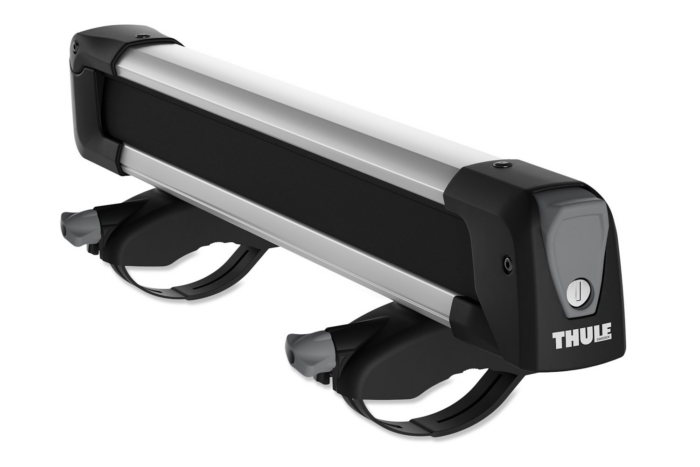
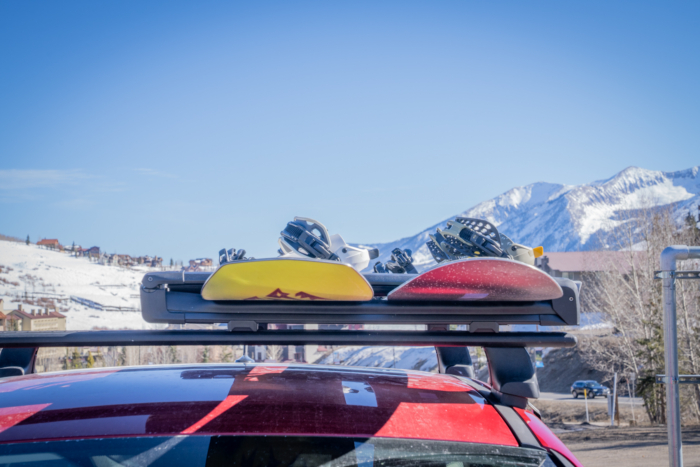
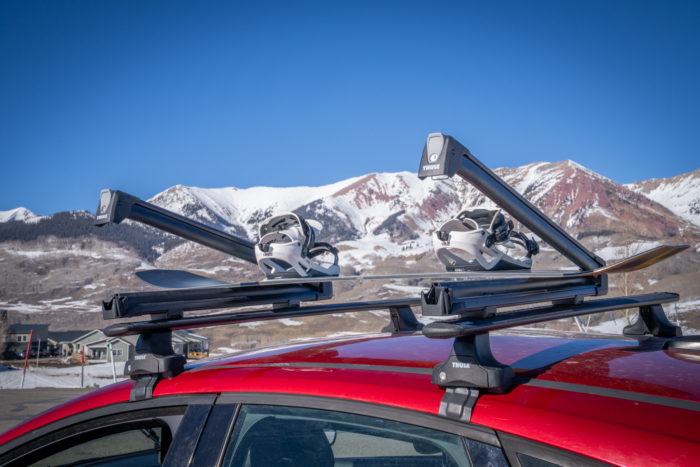
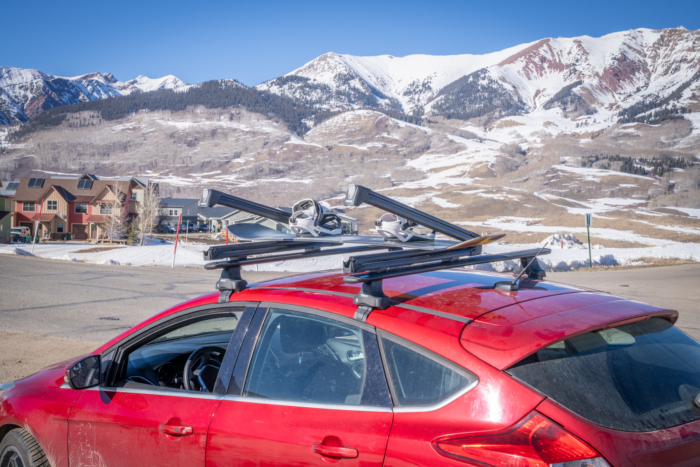
Some racks win you over with flashy features. The Thule Snowpack M ($370) wins you over by doing its job, day after day. Crested Butte-based gear tester Eric Phillips paired it with Thule aero crossbars on a Ford hatchback and logged hundreds of miles over a ski season hauling alpine skis, snowboards, and Nordic skis. The result? A polished, well-rounded rack that’s perfect for cars and SUVs, with beefy security and a sleek design.
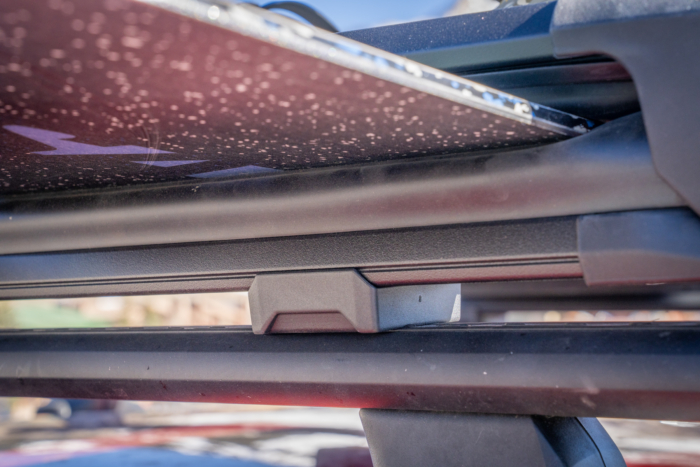
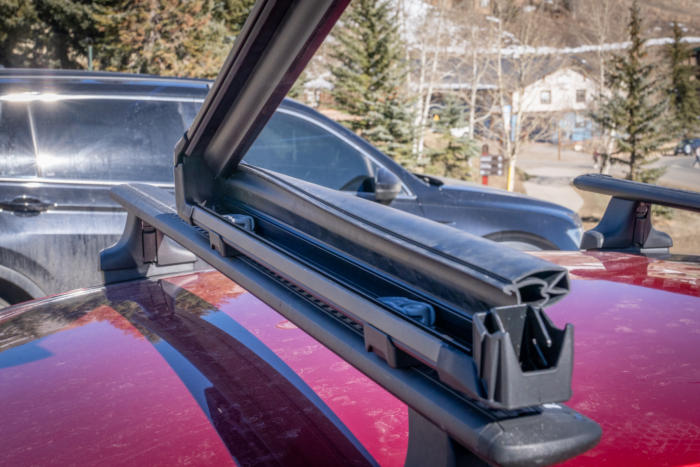
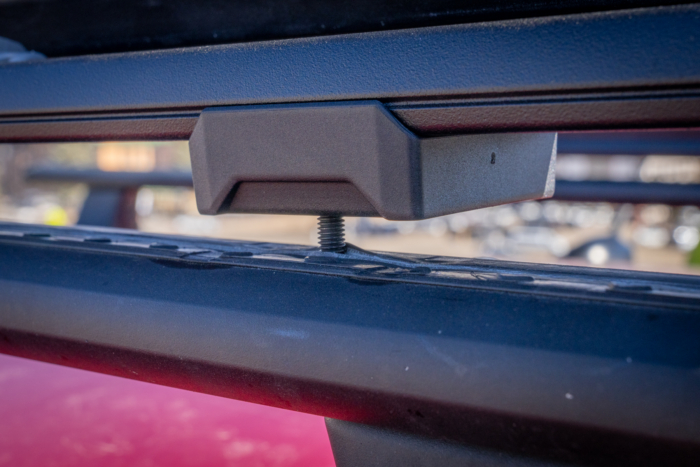
The Tech: The Snowpack comes in two sizes: the M, which we tested, carries four pairs of skis, while a six-pair version runs $420, so you can match capacity to the number of seats in your vehicle. To mount it, you peel back the bottom layer of rubber to reveal the hardware, then tighten it down with a simple hand screw. On Thule crossbars, the rack mounts directly, and because the hardware is only accessible when the rack is unlocked, the ski lock secures the whole setup. For other crossbars, Thule includes an adjustable strap that grips nearly any bar, tightens with a knob, and locks with a second set of included lock cores. Optional low or high risers lift the rack off the roof for extra clearance, and an expanding hinge lets you double-stack skis or snowboards. The rack closes with three clasp settings for a secure hold.
What We Like: Above all, the Snowpack is dependable and durable. Installation was easy, especially with Thule crossbars, and the rack can be removed in under a minute. It attaches securely to both Thule and non-Thule bars, and the expanding hinge made double-stacking gear a breeze. We always locked it with all three clicks before hitting the highway, and our gear stayed put mile after mile.
What We Don’t: Thule’s instructions are pictures only, with no written captions, which left us scratching our heads at times (a quick YouTube video helps). When the rack was fully loaded, Phillips had to put his full weight into it to get all three clicks. The rack also doesn’t hold itself fully open, making it hard to reach skis or boards closest to the hinge, and on a taller SUV or truck, those can be tough to reach at all. Thule’s Extender version ($150 more) slides outward for better access. Finally, we noticed a slight whistle and a small drop in fuel economy at highway speeds when the rack was loaded.
Should You Buy? If you want a rack that mounts securely to Thule or aftermarket crossbars and will hold up for years, the Snowpack is a great choice. If you drive a tall vehicle or want easier access to every pair of skis, consider stepping up to the Extender version.
Specifications
Pros & Cons
Pros
- Gentle on the pocketbook
- Comes with locks
Cons
- Flimsy materials
- Locking mechanism hard to engage when fully loaded
Bottom Line: The Rhino-Rack Ski and Snowboard Carrier #576 is an affordable, lightweight rack that installs easily, opens with a glove-friendly button, and holds its claimed six pairs of skis or four snowboards. It feels a bit flimsy and lacks a crossbar lock, but if saving money is your priority, it will reliably get your gear to the mountains.
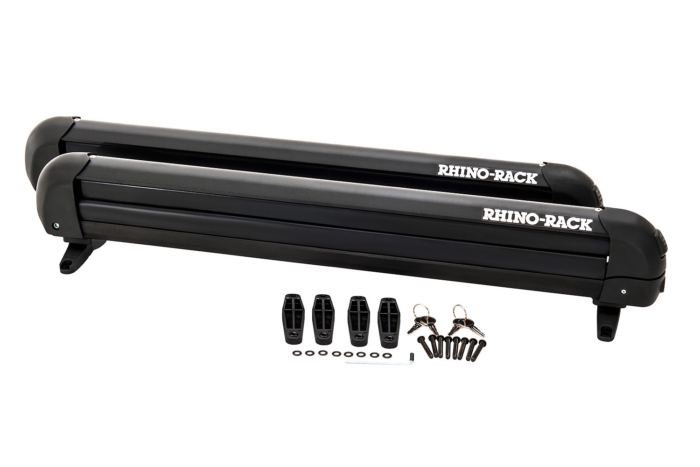
Looking for a dependable roof rack that won’t break the bank? The Rhino-Rack Ski and Snowboard Carrier #576 ($230) is your right-hand man. It arrives fully assembled, weighs just 8.8 pounds, and packs a handful of thoughtful features into a budget-friendly package.
The Tech: The #576 comes fully assembled with tools included, and its universal mount attaches to most crossbars. A single large button (rather than a lever, like on the Küat Grip 4) and locking mechanism open and close the arm. The rack carries up to six pairs of skis or four snowboards, and its ski lock comes with simple metal keys and a lock core. If you own or plan to buy other Rhino-Rack gear, you can upgrade to Rhino-Rack’s MasterKey system, which lets one key work across all of your Rhino-Rack locks, similar to Yakima’s Same Key System (SKS). The rack is backed by a five-year warranty.
What We Like: Setup was painless. The lightweight design made it easy to lift and mount on our crossbars, and our shoulders thanked us for it. The big button and lock were easy to use with gloves on, which we especially appreciated during snow squalls and frigid temps. The rack lived up to its capacity claims, comfortably fitting six pairs of skis or four snowboards, and the five-year warranty adds peace of mind.
What We Don’t: There’s no crossbar lock, so anyone with the right tool could remove the entire rack from your car, even with your skis locked inside. The materials, including the universal crossbar mount, also feel a bit flimsy, though the rack stayed put and held our gear without issue.
Should You Buy? If you’re on a budget and want a simple, easy-to-use rack that holds plenty of gear, the Rhino-Rack #576 is a solid value. If you often leave your car parked in busy lots, consider stepping up to a rack with a crossbar lock for extra security.
-
-
(Photo/Eric Phillips)
-
(Photo/Eric Phillips)


Specifications
Pros & Cons
Pros
- Uncomplicated loading and unloading
- Rock-solid durability
- Olympic-quick, obvious assembly and installation
Cons
- Doesn’t fit snowboards
- No ability to lock skis to rack
Read Review: Simple, Straightforward, Low to the Ground: Gravirax GR-4 Ski and Snowboard Rack System Review
Bottom Line: The Gravirax GR-4 Adjustable Ski Rack is the easiest hitch rack we tested: Drop your skis into the tubes and go, no locks, latches, or lifting required. It has no integrated locks, carries skis only unless you add accessories, and is best for shorter drives, but for families shuttling skis around ski towns, it’s hard to beat for speed and simplicity.
Simple and straightforward, the Gravirax GR-4 Adjustable Ski Rack ($999) is the easiest hitch rack to use of any we tested. Around ski towns, you’ll spot these racks all over full-size SUVs running shuttles, and it’s easy to see why. Loading is as simple as dropping a pair of skis into a tube. That’s it. Even the kids can help.
The Tech: The GR-4 uses four heavy-duty plastic tubes with open tops, relying on gravity to hold up to four pairs of skis. It arrives ready to mount and attaches to your hitch receiver with a single bolt. Pull a simple pin, and the rack tilts away from your vehicle so you can reach the cargo area. The newly updated version is now adjustable, offering 72 hitch configurations to work around a rear-mounted spare tire or skip the tilt entirely to access your trunk, and it weighs 10 pounds less than the original. Gravirax also offers add-ons, including the Gravi Steel Snowboard Sleeve ($279), which holds one snowboard (up to two per rack), and the Gravirax Waterproof Adjustable Cover ($111), which keeps out road grime and snow and works with a cable lock. Need more capacity? Gravirax also makes six-ski and 10-ski models. Note: We’re currently testing the updated adjustable version and will share more findings soon; the rest of our impressions come from the previous model.
What We Like: Ease of use is unmatched. There’s no fiddling with locks, opening and closing clamps, or hoisting skis onto the roof. Assembly was also the simplest of any rack in our guide, requiring just one bolt. One person can easily tilt the rack down and back up, even when it’s fully loaded. And it’s built like a tank: You could leave this on your car year-round and probably use it as a bumper (but please don’t).
What We Don’t: The GR-4 is highway-safe, but for long drives at highway speeds, we’d trust a clamping hitch rack or roof rack more. There are no integrated locks, so leaving skis unattended at the trailhead or gas station is a gamble, and while the cover works with a cable lock, a fabric cover can still be cut. Without the cover, the open tubes collect road grime and can fill with snow while you’re out skiing. Snowboarders will need to buy the add-on sleeves, since the rack only holds skis on its own. On lower-clearance vehicles, the rack can hit the ground when fully tilted. Finally, the cover only fits the GR-4 (with or without snowboard sleeves) or the GR-6 without sleeves.
Should You Buy? If you’re a family of skiers looking to quickly shuttle alpine or Nordic skis short distances, the GR-4 is a fantastic, low-hassle option. If you regularly drive long highway miles, need built-in security, or ride a snowboard, a more traditional hitch or roof rack may be a better fit.
Specifications
Pros & Cons
Pros
- Extendable for loading/unloading, eliminates stretching over shell
- Low profile
Cons
- Instructions for installation are visual only — no captions puzzles the setup
- Locking mechanism feels flimsy when fully loaded
Bottom Line: The Thule SnowPack Extender slides out from the roof so you can load skis and boards without climbing on your running board or leaning against a dirty car. It’s not as far-reaching as the Küat Grip, the picture-only instructions are frustrating, and the latch feels flimsy when fully loaded, but it’s a secure, well-built rack that makes roof loading far less of a chore.
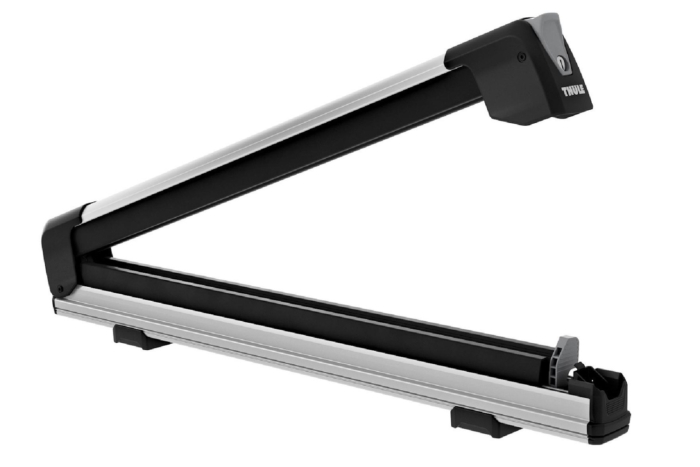
Also joining the no-sweat-to-load crowd is the Thule SnowPack Extender ($570). Like the Küat Grip, it uses a slide-out design that makes loading and unloading a roof rack far easier than the usual hoo-ha. And as you’d expect from Thule, which has been making roof racks for decades, it’s built with high-quality materials designed to last.
The Tech: The Extender’s headline feature is its slide-out design, which pulls the rack toward you so your gear is within easy reach. It carries up to six pairs of skis and features ultra-soft rubber arms that grip without scratching, oversized push buttons that are easy to use with gloves on, and high roof clearance for bulky bindings. Integrated ski and crossbar locks are compatible with the Thule One-Key System, and the rack fits most factory and aftermarket crossbars. (Quick refresher: Crossbars run side to side across your roof, and they’re what ski racks mount to. Roof rails run front to back, and they’re what the crossbars attach to.) Thule also puts its racks through extreme testing, including simulated wear and tear, crashes, and severe heat and cold.
What We Like: The slide-out makes a real difference. It doesn’t extend as far as the Küat Grip, but it reaches far enough that we didn’t have to lean against the vehicle or climb up its side, and our 5’9″ tester could load gear standing on the ground instead of the running board. The soft rubber arms protected our skis, the big buttons were easy to use with gloves, and the integrated locks gave us peace of mind at the trailhead.
What We Don’t: Installation was the biggest headache. Thule’s instructions use illustrations only, with no text, and we found them hard to follow, turning what should have been an easy install into a drawn-out ordeal. When the rack was fully loaded, the locking mechanism also felt flimsy as we cranked it closed.
Should You Buy? If you want a secure, durable roof rack that makes loading easier, especially on a taller vehicle, the SnowPack Grip is a solid way to get your gear to the groomers. If you want maximum reach, the Küat Grip slides out even farther, and for less money.


Specifications
Pros & Cons
Pros
- Innovative design positions rack closer to edges of vehicle for easier loading and unloading
- Universal mounting system for crossbars
Cons
- Feels like budget materials
- Stripped bolts when installing hardware
- Pensive install
Bottom Line: The INNO L INA951 takes a fresh approach to roof racks, with two shorter, adjustable arms that open toward each side of the vehicle so you don’t have to stretch across the roof to load gear. The materials feel cheap and installation can be frustrating, but for occasional skiers in milder climates, it’s an affordable, secure, and easy-to-load option, especially on taller vehicles.
Traditional roof racks use two long clamshell arms that span the roof, which means you often have to stretch to tuck skis or snowboards in near the hinge. The INNO L INA951 ($249) flips that script with an uncommon two-sided design aimed at bigger vehicles and shorter skiers. You’ll load from both sides of the car, but you won’t have to reach nearly as far to do it.
The Tech: Instead of one long rack, the INA951 uses two shorter clamshell arms with their hinges facing each other in the center of the roof, each opening toward the running board on its side of the vehicle. The gap between the arms is adjustable, so you can position each one close to the edge of your roof for easier reach. A universal clamp attaches to most crossbars, tightened with a plastic handle. The rack sits a bit higher than most, leaving plenty of room for tall bindings or double-stacked snowboards, and it includes integrated ski and crossbar locks. INNO also sells spare parts for every piece of the rack directly.
What We Like: The two-sided design really shines on deeper or taller vehicles, like full-size trucks, where you’d otherwise have to climb halfway up the side to load or unload. Instead, just walk around to the other side, or better yet, load your skis while your passengers load theirs. The extra roof clearance is a welcome bonus for bulky bindings and stacked boards, and the integrated ski and crossbar locks provide peace of mind. We also appreciate being able to order replacement parts straight from INNO.
What We Don’t: The materials, including the hardware and rack body, feel low-end. This was the only rack where bolts stripped during assembly, which dinged its install rating. The clamp also didn’t feel as secure as other roof racks, thanks largely to a flimsy plastic handle that bowed under the leverage needed to tighten it down. Nerve-wracking.
Should You Buy? If you’re careful during installation, ski a few times a season, and live somewhere with milder winters, the INA951 is a functional, load-friendly design at a good price, especially for taller vehicles. If you ski often or deal with harsh winter conditions, a more robust rack will be worth the extra money.
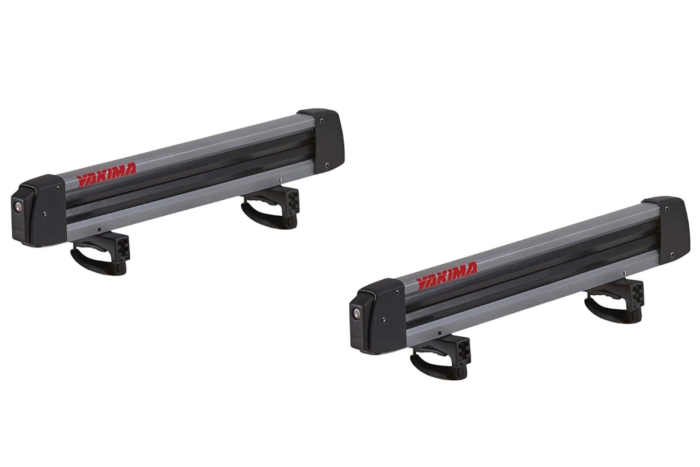
Specifications
Pros & Cons
Pros
- Affordable
- Smooth install
- Includes lean-to add-on arm for greater clearance
Cons
- While you can lock your skis to the rack, there's no lock from the rack to the crossbars
- Feels a bit feeble
- Hard to fit wide skis or snowboards
Bottom Line: The Yakima FreshTrack 4 is an affordable, lightweight roof rack that installs without tools, fits most crossbars, and includes a clever riser for extra binding clearance. It lacks a crossbar lock, so the whole rack is easy to steal, but for skiers who want a simple, budget-friendly way to get gear to the hill, it’s a solid pick.
Simplicity is the name of the game with the Yakima FreshTrack 4 ($269). This lightweight roof rack offers an affordable way to get four pairs of skis or two snowboards, side by side, to the powder stash, and it’s about as easy to install as roof racks get.
The Tech: The FreshTrack 4 uses a universal, tool-free clamp that works with round, square, factory, and most aero crossbars. Its integrated SkiLift attachment raises one side of the rack a few inches, tilting it into a triangular profile for extra clearance over tall bindings or stacked snowboards. To use it, you’ll need to install a fixed riser, which stays in place rather than folding down on the fly. Integrated ski locks are compatible with Yakima’s Same Key System (SKS), so one key can work across all your Yakima gear, handy if you add a second rack for another vehicle.
What We Like: Installation is a breeze, with no tools required, and the universal mount fits most vehicles. We love the SkiLift, which adds welcome clearance for bulky bindings or snowboards. The rack’s light weight makes it easy to handle, and its price is easy on your savings account.
What We Don’t: While the FreshTrack 4 locks your skis or boards to the rack, it has no crossbar lock, unlike the Yakima FatCat EVO 6. That means anyone with a hex wrench and 10 minutes could make off with the whole setup. The SkiLift also requires a fixed riser, so you can’t raise or lower it on the fly.
Should You Buy? If you want an affordable, easy-to-use rack that fits most vehicles and carries a modest load, the FreshTrack 4 is a great choice. If you often park in busy lots or want to leave gear unattended for long stretches, consider a rack with an integrated crossbar lock.

Ski and Snowboard Racks Comparison Chart
| Compare |
|
|
|
|
|
|
|
|
|
|
|
|
|
|---|---|---|---|---|---|---|---|---|---|---|---|---|---|
| Price |
$429
|
$150
|
$298
|
$399
|
$2,206
|
$450
|
$425
|
$370
|
$230
|
$999
|
$570
|
$249
|
$269
|
| Type |
Roof rack
|
Roof
|
Roof
|
Roof
|
Swing arm hitch
|
Hitch swing-arm
|
Suction roof
|
Roof
|
Roof
|
Hitch
|
Roof
|
Roof
|
Roof
|
| Weight |
18 lbs.
|
4.75 lbs.
|
14 lbs.
|
12 lbs., 12 oz.
|
143.3 lbs — 68.5 lbs (EXO SwingBase), 33.5 lbs (EXO TopShelf), 27.8 lbs (EXO GearLocker), 13.5 lbs (EXO SnowBank)
|
68 lbs., 12 oz. — 42 lbs (Apex XT Swing), 25 lbs., 9.6 oz. (Tram)
|
13 lbs.
|
10.6 lbs.
|
8 lbs., 12.8 oz.
|
65 lbs.
|
12 lbs
|
20 lbs.
|
7 lbs., 15 oz.
|
| Carrying Capacity |
4 skis or 2 snowboards
|
3 pairs skis / 2 snowboards
|
6 skis or 4 snowboards
|
6 Skis or 4 Snowboards
|
5 skis or 4 Snowboards
|
6 skis or 4 snowboards
|
4 skis or 2 snowboards, also 6 fly rods
|
4 pairs / 6 pairs of skis
|
6 skis or 4 snowboards
|
4 skis
|
6 skis or 4 snowboards
|
6 skis or 4 snowboards
|
4 skis or 2 snowboards
|
| Locks |
Integrated ski lock and crossbar lock
|
Integrated ski lock
|
Integrated ski and crossbar lock
|
Integrated ski and crossbar lock
|
Integrated ski lock, rack lock, box lock, hitch lock
|
Integrated ski lock and hitch lock
|
None
|
Integrated ski lock and crossbar lock
|
Integrated ski lock
|
None
|
Integrated ski lock and crossbar lock
|
Integrated ski lock and crossbar lock
|
Integrated ski lock
|
| Ease of Installation |
Easy
|
Moderate
|
Easy
|
Moderate
|
Difficult
|
Difficult
|
Easy
|
Moderate
|
Moderate
|
Easy
|
Difficult
|
Difficult
|
Easy
|


How We Tested Ski and Snowboard Racks
The folks behind GearJunkie spend a lot of time in the mountains. From daily resort rips to cross-country ski laps, we love taking our skis and snowboards to the corduroy and beyond. Like most skiers and snowboarders, we often use our vehicles to get to the start point. We’ve mounted our roof and hitch ski racks onto sedans, SUVs, trucks, and everything in between.
Our Expert Testers
Our lead tester and photographer is Eric Phillips, an avid skier and snowboarder based in Crested Butte, Colorado. Phillips — who’s also an automotive enthusiast and specializes in our motor content — has used a plethora of vehicles and racks to get his gear to the snow in all types of weather. That includes short trips to his local hill and multi-day powder missions. Tinkering with vehicles is one of his favorite hobbies, and ski racks are the perfect accessory for life in a ski town and for a powder hound.
Our Testing Grounds
Phillips used these racks for road trips statewide and to Crested Butte Mountain Resort and Telluride Ski Resort. The test vehicles included a Subaru Forester, Toyota Tacoma, and Ford F-150.

Our Testing Process
We dive deep into the installation, opening and closure systems, materials, locks, and more so that you don’t get lost in all the details. We’ve weighed dozens of racks against these standards.
A ski and snowboard rack should be easy to load, unload, open, close, and lock. We also want our rack to be ergonomic, sleek, sturdy, quiet, durable, secure, well-padded, and grippy against our gear. We pay attention to the ease of installation, aerodynamics, weight, crossbar and hitch locks, versatility and modifiability, availability of aftermarket accessories and upgrades, and overall functionality.
Our Ski and Snowboard Racks Rating System
When choosing a ski and snowboard rack, we assess four essential design details: Ease of Install, Aerodynamics, Adjustability & Use, and Security. We score each rack on a 1–10 scale.
- Tracking the ease of installation lets readers plan ahead for the amount of time each rack requires to be unboxed, assembled, and installed.
- We assess each rack’s aerodynamics, which helps reduce wind noise and drag, improving fuel efficiency and maintaining a quieter ride on the highway.
- Each rack’s adjustability and use refers to how well the rack accommodates different ski and snowboard sizes, as well as the ease of loading and unloading for riders of various sizes.
- Security and anti-theft designs protect the rack and gear, an essential feature for those who leave equipment unattended at resorts, their house, or trailheads. This includes locks for the hitch or crossbar (for the rack), as well as integrated locks for the carried gear. Locks are not all created equal: Some are sleeker, easier to operate, and have better key designs.
The Overall Rating is based on contextual, editorial judgment, and the complex user experience across various scenarios and conditions. It is not an average of the scores in the above four categories.

For this guide, we timed each rack installation and rated them as easy (<15 minutes), moderate (15-30 minutes), and difficult (30+ minutes).
Many of the ski and snowboard racks featured here have been with us for many seasons. Even after regular exposure to the elements and racking up miles on rough roads, they’re still going strong. Whether you’re a downhill skier, snowboarder, Nordic skier, or somewhere in between, we’re confident you’ll find a rack to help get your gear to the mountains. As new racks roll out, we’ll keep testing and updating our list to reflect the current market.

Buyer’s Guide: How to Choose a Ski and Snowboard Rack
All styles of ski and snowboard racks provide the benefit of keeping your sharp edges away from the car’s interior while keeping the seats open for passengers — and skis away from their heads.
Two styles of ski and snowboard racks dominate the field. The first of which is a roof rack, which mounts on the roof of your vehicle using factory or aftermarket crossbars. The second is a hitch rack, which connects to your rig via the hitch receiver.
If you can’t or don’t want to lift gear overhead, and price is no object, choose a hitch ski and snowboard rack. If you want to save money and aren’t concerned about lifting your gear or potentially getting sullied by the dust and muck on the car, then a roof rack is for you.
Read more of the pros and cons below, as well as the style differences within each category.

Types of Ski and Snowboard Racks
Roof Racks: Pros
Roof racks have the benefit of nestling your gear lengthwise along the pinnacle of your vehicle, keeping them away from road grime. The list of contaminants is pretty extensive, spanning unburnt fuel, tar, salt, grease, and cement dust, to name a few.
Another advantage of roof racks is that they don’t compromise access to the trunk.
Roof racks are generally less expensive and weigh far less than hitch racks since they require fewer materials.

Roof Racks: Cons
Depending on the height of your vehicle, one downside is that roof racks can be a physical stretch to load and unload. Loading often involves lifting skis or snowboards above your head and then fully extending your arms to place the gear on the rack.
Certain conventional designs offer a sliding feature to bring the loading zone farther to the edge of the vehicle. But in general, hitch racks are considerably easier to load.
They are often single-purpose, whereas hitch racks are more often modular, so you can convert the base to hold bikes in the summer with additional accessories.
Some roof racks with skis loaded can hinder the hatch from opening, depending on the length of the vehicle and the gear.

While one of our favorite ski and snowboard roof racks — the Küat Switch 6 — can flip down for aerodynamics and a quieter ride, most roof racks stick up and dock fuel efficiency. Like wind blowing through sails, some can add noise to your car ride, such as a mild whistle.
Hitch Racks
Hitch racks for your skis and snowboards attach to the vehicle beneath the back bumper using a factory or aftermarket hitch. Our consensus is that hitch racks are much easier to load and unload, as they are much closer to the ground and don’t involve lifting your snow equipment overhead.
Under the umbrella are two styles of hitch racks: swing-arm or swing-away and tilt. The subcategory refers to how the rack can be repositioned so that you can access your cargo space in the vehicle.

Tilt Hitch Rack
Tilt racks like the Gravirax GR-4 Hitch Mounted Ski Rack can allow the rack to lean back at an angle, enabling you to open a hatchback or drop down a tailgate. This makes it possible to lean in and grab a ski backpack or cooler, or let your dog hop out. Tilt racks are often lighter and less expensive than swing-arm racks.
While they are dipped away, they don’t offer completely unrestricted access to the rear of the vehicle.

Swing-Away Hitch Rack
Swing-arm or swing-away racks utilize a heavy-duty arm that can be locked into a fixed position behind the vehicle while you’re driving. But it offers the ability to unlock and swing the rack away from the rear of the vehicle to get to all your luggage.
Generally, a swing-away operation tends to move the rack farther from your ride than a tilt hitch rack. This yields greater access to the primary storage space of the vehicle. It also moves the rack out of the way, so that you can more easily pull out heavy or cumbersome items.
Our favorite swing-away rack is the Yakima EXO SnowBank Exo System Snow Mount. The excellent structure swings a full 180 degrees away from your vehicle, giving you unobstructed access to whatever’s back there.

Hitch Rack: Pros
Hitch racks are heavier-duty and have more moving parts than roof racks. The benefit? They can hold considerably more weight than roof racks and offer more versatility. Most swing-away ski and snowboard hitch racks can be converted for summer use, including the ability to carry bikes, cargo boxes, and more.
While many hitch racks and roof racks can hold around 4 snowboards or skis, some hitch orientations can bring more along. The Gravirax GR-4 Adjustable Ski Rack has a 10-ski model. But hitch racks usually max out at 2 snowboards, whereas roof racks can fit up to 4 snowboards.
Most importantly, hitch racks are much easier to load, unload, and generally operate compared to roof racks. You don’t need to lift your skis or snowboard overhead or, for some, climb onto a tire or seat to reach the locking mechanisms.

Hitch Rack: Cons
Broadly speaking, hitch racks for skis and snowboards come with bigger price tags than roof racks. Robustness and more materials come at a cost.
Additionally, hitch racks are often heavy and can be hard to install or move alone.
Otherwise, the downside of hitch racks is that dirt, muck, salt, and other road grime can build up excessively along the back of a vehicle (and your gear) compared to the roof, especially if a rack is low to the ground. This is due to the air vortex that occurs behind a vehicle as it moves, sucking grime from the road and swirling it behind the vehicle. Greater mass leads to the issue being exacerbated for vans, trucks, and SUVs.
Hitch-mounted racks hold your cargo directly in this vortex, which leads to dirty skis and snowboards after driving at highway speeds. If you live or drive somewhere where they salt the roads, this could lead to rust forming on the metal ski edges.
That’s one reason why we suggest configuring the Yakima EXO SnowBank Exo System Snow Mount with the EXO TopShelf, so that the skis and snowboards can be more elevated above the ground.

Rack Capacity
One of the first things to consider when choosing a winter gear rack is how many skis or snowboards you typically take with you. Racks generally carry anywhere from four to six skis or two to four snowboards, so you have some options. Some designs carry even more. The max quantity we’ve found is 10 skis (in the 10-ski model of the Gravirax GR-4 Adjustable Ski Rack) plus two snowboards with the aftermarket sleeves.
Generally, a snowboard takes up the same room as 1.5 pairs of skis, meaning a rack that can hold 6 pairs of skis can only hold 4 snowboards. You can mix and match both skis and snowboards on one rack, but your carrying capacity will go down.

Remember, you can always carry fewer skis than a rack’s capacity, but never more than a rack’s capacity. And you never know when you’re going to pick up a few more buddies to ride with.
Some hitch racks have optional add-ons that will add more ski or snowboard capacity to the rack. Roof racks do not have aftermarket add-ons for capacity.
Vehicle & Travel Compatibility
Both types of ski and snowboard racks in our guide require certain criteria from your vehicle to securely mount the racks.

Crossbars
Roof racks require factory or aftermarket crossbars to be on or installed onto your vehicle’s roof prior to rack installation.
Crossbars usually come in square or round shapes. They extend from the driver’s side across the roof to the passenger side and are what a ski rack mounts to. Don’t let that confuse you with roof rails, which are standard on most vehicles. Roof rails reach vertically, toward each bumper, and are perpendicular to the crossbars. Roof rails are what crossbars mount to.
Most racks offer universal crossbar compatibility, but some, like the Yakima FatCat EVO 6, are designed to work with Yakima-specific crossbars.
If your car doesn’t have crossbars, don’t worry. They are fairly easy to install yourself like in our DIY guide, or have your local auto shop install them for you.

Hitch Receiver
Hitch racks require your car to have a hitch receiver on your vehicle, which is where the hitch rack can bolt into place. Vehicles usually come with a hitch receiver, which is a metal tube that is mounted to the frame. But don’t worry, aftermarket hitches are very common, and you can find one for almost every make and model. Most are DIY installs, but a reputable auto shop can help you install one properly.
Hitches generally come in 1.25-inch and 2-inch sizes. It’s important that you verify the size of your vehicle hitch receiver prior to purchasing a rack. A larger, 2-inch hitch can carry heavier loads, which is great if you plan to carry a swing-away hitch rack. It’s also worth noting that some racks come with an adapter to fit either size.
One thing to note is that even with a hitch installed on your vehicle, the rack might not always function perfectly. For example, the Yakima EXO SwingBase hitch rack would not open on our tester’s Subaru Outback with an aftermarket hitch installed because it was too close to the bumper, but the rack worked just fine on our Ford F-150 and Toyota Tacoma.

Ease of Use: Ski and Snowboard Racks
Most of the ski and snowboard racks in our guide are relatively easy to use, but each has trade-offs.
Hitch racks are often easier overall as they don’t involve lifting skis or snowboards above your head and then fully extending your arms to place them on the rack. You don’t need to risk getting filth on your clothes, which can sometimes happen with a roof rack.
Locking a roof rack involves reaching even higher or potentially stepping on the tire or a seat with the door open to reach the rack, so that you can pull down with enough force to engage the locking mechanism.

Some smart racks now offer a sliding feature to bring the loading zone beyond the edge of the vehicle and above the ground. However, operating a roof rack always involves some level of reaching up.
Hitch racks bring the loading zone from the top of the vehicle down to chest height or lower, meaning you won’t have to get on your tiptoes or climb your vehicle to reach the rack with your equipment. They can also swing open to allow complete use of your rear hatch. Some roof racks with skis loaded can hinder the hatch from opening.
Certain roof rack release buttons are larger or more ergonomic than others, which we find are easier to operate with gloved hands.

Pads
Pads are the rubber material that comes into contact with your skis or snowboards along the base and top sheet. Nearly all the racks in our guide use a rubber pad to secure your skis in place, whether that’s on the hitch or roof.
Most of the pads are either curved or rectangular in shape, and a single strip stretches from one side of the arm to the other. The rubber compresses around your skis to grip them and prevent movement once the arm is shut.
We were impressed with the GripLock rubber on the Küat Grip 4. The GripLock rubber uses a zipper-like layout with alternating rubber teeth that fit together flush when the rack is closed. We found the grip to be superb, and it gripped skis and snowboards tighter than other designs, no matter how wide or narrow.

Locks
There are two main types of locks when it comes to ski and snowboard racks. Locks that secure the entire rack system to your vehicle, known as crossbar or hitch locks, and locks that secure your equipment to the rack, known as ski locks.
Overall, locks play an important role in deciding which rack is best for your needs. Do you plan on living on the road or keeping your skis and snowboards on your vehicle for extended periods of time? Go with a roof rack that has an integrated crossbar lock. If you’re just doing day trips to the ski resort and won’t have gear camping overnight on the rack, you may not need to invest in a rack with integrated locks.

Rack Ski Lock
Being able to lock the rack when your skis or snowboard are inside is an important component. Not only does it prevent your skis or snowboards from being stolen, but it can also make sure the rack doesn’t pop open when you’re zooming down the highway.
Most racks in our guide integrate the lock into the closure function, essentially requiring the rack to be locked before you drive away. The only rack without a ski lock is the Gravirax GR-4 Hitch Mounted Ski Rack.

Crossbar or Hitch Lock
After spending your hard-earned bread on a ski roof rack, the last thing you want is your rack to get stolen from your vehicle. That’s why integrated crossbar locks are an important aspect of a ski rack.
The racks we’ve tested without these locks are the Gravirax GR-4 Hitch Mounted Ski Rack (which attaches via hitch receiver), and the Yakima FreshTrack 4 and Rhino-Rack Ski and Snowboard Carrier #576, which affix to a crossbar. Even with the ski lock engaged, anyone with a simple set of tools, a few minutes, and muscle would be able to remove the entire rack from the vehicle.

Integrated Aftermarket Locks
Several brands offer aftermarket upgrades to unify and customize the key cores between your equipment. We recommend the investment for ease of use and not needing to manage as many keys, especially if you have a collection of racks or accessories.
Brands with universal key-and-lock-core upgrades include:
- Rhino-Rack: MasterKey
- Yakima: Same Key System (SKS)
- Thule: One-Key System
We liked that the Yakima FreshTrack 4, Yakima FatCat 6, and Yakima EXO System all have the SKS upgrade option. As does the Rhino-Rack Ski and Snowboard Carrier #576.

Keys & Key Rings
We were most impressed with the locks and keys on the Küat Grip 4 and Küat Switch 6, which came on a sturdy key ring and with sturdy plastic-coated heads for easier grip with gloves on and in the cold.
Most other racks offered rather meager metal keys with no reinforcement or key ring.

Open & Closure
One of the biggest pains with ski and snowboard roof racks is opening and closing them in cold and snowy conditions.
Release Button
Opening the rack with gloves involves first unlocking the ski lock, and then pressing the release button or pulling the release handle.
Our favorite design was on the Küat Grip 4, which uses a handle to open the rack as opposed to a button. We never had problems opening this rack, even with heavy-duty mittens in freezing conditions.

Closure Latch
Closing the rack, on the other hand, takes a lot more effort and usually involves stepping up — for shorties, maybe onto the tire or running board of the vehicle — to be able to reach the open rack’s arm and fasten it down.
When fully loaded, certain roof racks can take a bit more grit to clamp down. Most roof racks have a multi-stage closure mechanism, meaning you’ll need to firmly press until you hear two or three clicks.

Functionality: Open & Closure
We found that with the ski and snowboard hitch racks being closer to the ground, they were much easier to close and lock into place than any of the roof racks.
The easiest rack to open and close overall was the EXO TopShelf, which are the arms that secure skis and snowboards on the Yakima EXO SnowBank Exo System Snow Mount. This was because the orientation of the rack was horizontal, and we could easily reach it while standing in our winter boots.

Locking Mechanism
It’s worth mentioning that the Gravirax GR-4 Hitch Mounted Ski Rack has no locking, opening, or closing mechanism. Skis rest vertically inside the tubes like bats hanging in a cave. Also, we were disappointed with how hard it was to close and lock the Yakima FatCat EVO 6 and the Küat Switch 6 when those two roof racks were loaded to their scripted volume.
Extender Bars
Extender bars are a more modern feature emerging in the ski and snowboard roof rack space. These inserts are like stilts, extending the vertical space between the car’s roof and the rack.
The higher gap allows room for bulkier ski or snowboard bindings. One rack we tested, the Yakima FreshTrack 4, has an optional extender bar that places the rack at an angle, taking a triangular form, to create more space for bindings.
If you plan on stacking snowboards — one facing up and the other facing down — you’ll need enough ceiling for the bindings. When bindings rub the roof, that can cause excess wear, scratches, or dents on both.
If you have low-hanging crossbars or large bindings, we recommend going with a rack that has extender bars.

Assembly
Assembly refers to the time from opening your package to having the rack ready to install. Some racks in our guide like the Küat Switch 6 come ready-to-go straight out of the box with no assembly required! You gotta love time-savers. Most other racks require some sort of assembly, though, so grab your mocha.
Certain designs, like the Thule SnowPack Extender, required 30 minutes of assembly before the rack was ready to install. That’s on the higher end of a build. If you do plan on storing your rack in the original box during the off-season, keep in mind the assembly times. You’d need to disassemble the rack to fit it back into the original box.

Installation
Installation comes after the rack assembly. This step refers to the time needed to mount your ski rack on your vehicle.
We rated the installation of each ski and snowboard rack between easy, moderate, and difficult based on how long it took to install the rack. The other factor was the comprehensiveness of the tools provided. If we needed to hunt down tools, that was a shortfall.

Difficulty Ratings: Installation Test
Easy installs took 15 minutes or less, from the unboxing to having the rack fully mounted — including the assembly. Now, that’s pretty good. A moderately challenging installation lasted anywhere between 15 and 30 minutes. Difficult installs were 30 minutes or more. Ouch.
While some installations required more elbow grease, all the racks in our guide can be assembled and installed at home without the help of a professional. Just make sure to read the instructions thoroughly before you start and follow each step. Also, install your ski rack before it starts snowing or do it in a garage to avoid making your installation harder.
Easy: <15 min
Moderate: 15-30 min
- Rhino-Rack Ski and Snowboard Carrier #576
- Yakima FatCat EVO 6
- Malone LiftLine Compact Ski Carrier
- Thule Snowpack M Ski Rack
Difficult: 30+ min
- Yakima EXO SnowBank Exo System Snow Mount
- Thule SnowPack Extender
- Thule Tram
- INNO Ski/Snowboard Rack L INA951

Tools
Of all the installation tools included with racks, the Küat Switch 6 and Küat Grip 4 had the best quality. On the other hand, the INNO L INA951 tools felt very economically made. They flexed when tightening, causing our tester to have one go flying. This was also the only rack where we experienced a bolt stripping during the install.
Our longest installation time was 46 minutes for the Thule SnowPack Extender, partly due to the absence of the required tools. A T20 bit and Phillips-head screwdriver were needed per the instructions but not provided. Keep this in mind if ordering this rack. The instructions were also not the most clear, because they lacked text.

Aerodynamics
For those who want the best gas mileage, this section is for you!
Generally, hitch racks are more aerodynamic than roof racks, which means they support better gas mileage. Even the most aerodynamic roof racks get worse gas mileage than hitch racks. Roof racks lead to drag caused by wind hitting the rack as it flows over your vehicle.
Hitch racks have less drag because they sit behind the vehicle in a pocket of reduced wind and drag. The more you can get your gear behind your vehicle and out of the wind, the better aerodynamics your rig will sport.

You could travel slower to increase your gas mileage while hauling gear, but we recommend going the speed limit for safety. According to the U.S. Department of Energy, highway speeds above 50 mph drastically reduce gas mileage.
You could remove your roof rack when it’s not in use, but that would also be time-consuming. and get hitch racks as low as possible on your vehicle.
Some racks, like the Küat Switch 6, can be folded down flat when not in use to improve aerodynamics and gas mileage.
Hitch racks help because the more you can get your gear low and behind your car, the more efficient your travel will be in terms of gas mileage. You can enhance this by mounting your hitch rack on a low setting or even using a drop hitch when driving taller vehicles like 4×4 trucks.

Price & Value
Ski and snowboard racks cost from $230 to more than $1,000, depending on additional accessories, the number of skis and snowboards that can be carried, technical features that improve ease of use and durability, and whether or not the rack is for your vehicle’s roof or hitch.
Budget
On the lower end ($200 to $400), our most economical build is the Rhino-Rack Ski and Snowboard Carrier #576 – 6 skis ($230), which can fit six pairs of skis or four snowboards. It’s not a measly or small rack by any means. The ease of installation was moderate, and the rack doesn’t have any fancy modifications to make the loading process easier. But as a simple, straightforward design, the rack felt durable and included ski arm locks.

But adding another $50, you can get the Küat Switch 6 ($249), which holds the same quantity of goods but includes a crossbar lock, has an easier installation, is sleeker, and also flips down 90 degrees for better aerodynamics when its not in use. A little bump goes a long way: That seems like a good $50 investment.
Mid-Tier
Mid-tier racks will cost between $400 and $800. Racks like the Küat Grip 4 ($429) are a couple of hundred dollars more. Even though cheaper racks can hold more skis — the Küat Grip only holds four pairs — this one has a fancy, unique construction that helps make roof access more accessible for taller vehicles or shorter people. The bars actually slide out so that you don’t need to lean against any grime on the side of your rig. The rack also has what’s called GripLock rubber, which is super plush and grippy for grabbing your ski base.

Premium
Premium racks will cost more than $900. The highest-cost ski and snowboard racks are hitch-mounted, which are easier to load and unload once they’re on your vehicle — like the Gravirax GR-4 Hitch Mounted Ski Rack ($999). Some hitch designs also can provide after-market upgrades like durable cargo boxes or can be adapted for summer-time use as a hitch bike rack, such as the Thule Tram ($450).
For this setup, you also need the Thule Apex XT Swing ($700) base for an initial investment of $1,150. But if you also mountain bike, this could be a great two-for-one deal rather than owning two different rack systems. We love that the arm on the Apex swings open, so we can open our vehicle’s hatch.

Frequently Asked Questions
The short answer is, usually. The vast majority of hitch-mounted or roof rack designs can hold either skis or snowboards. The Gravirax GR-4 Adjustable Ski Rack is a more ski-centric design that does need an additional accessory to hold a snowboard: the Gravi Steel Snowboard Sleeve ($279).
Snowboards take up more space on a rack than skis, meaning a rack that can carry six pairs of skis can only hold four snowboards. Make sure to check the carrying capacity of any rack before you purchase.

Yes! Both skis and snowboards can be stacked on your ski roof rack. Stacked refers to having a pair of skis or snowboards sandwiched with their bases together. Technically, that’s one single set of skis and two snowboards, for instance. This saves space on your roof rack as opposed to placing the equipment side by side.
We wouldn’t recommend having sticking two skis with a snowboard layered on the other side. It’s best to only stack skis with skis and snowboards with snowboards, due to the ski brakes and base compatibility.
Just make sure there is enough clearance for your snowboard bindings or ski bindings on the bottom between the rack and the roof of your vehicle, in order to avoid unnecessary wear on both. If they do hit, you can get extender bars to raise the height of the roof rack and free up space for stacking like with the Yakima FreshTrack 4.
Keep in mind, when talking about rack capacity, manufacturers are referring to a single set of skis being stacked and snowboards being situated side by side, but it’s perfectly okay to stack snowboards.

Crossbars are the bars that run from the driver’s side to the passenger’s side, across the vehicle’s roof. They are essential for mounting a roof rack.
All roof racks require crossbars for mounting. Some cars come with crossbars. Otherwise, aftermarket crossbars are very easy to install yourself along with your ski rack. They come in a set of two, and you’ll need both to mount a ski roof rack.
You’ll also want to check that the crossbar shape is compatible with the roof rack. Each brand manufactures their own specific shapes with particular material composites and finishes. But in general, there are oval, square, heavy-duty (HD), and aerodynamic bars. Yakima, for instance, offers four crossbar styles that they’ve labeled JetStream (aerodynamic aluminum), HD Bar (heavy-duty), CoreBar (aerodynamic steel), RoundBar (oval).
There are some vacuum mount ski racks, too, like the SeaSucker Classic Rack.

Yes, you can carry both skis and snowboards simultaneously on one ski and snowboard rack.
A rack that holds six skis or four snowboards can hold a mixture of both, like three skis and two snowboards. The width of a snowboard is approximately the width of 1.5 sets of skis side-by-side.
If you want to accommodate wide skis and snowboards, we suggest checking out the Yakima FatCat EVO 6, which has a DoubleJoint hinge that pops up to accommodate fatter or stacked hardgoods.

We have all seen the pictures and heard horror stories of skis being lost on the highway after someone forgot to lock their roof rack before driving off.
Ski and snowboard roof racks, when used correctly, are one of the safest ways to transport equipment to the ski resort.
The padded arms clamp down securely on your skis or snowboards without hurting them. Highway speeds won’t harm the rack or gear, either. Just make sure to follow all the instructions during the installation process and when loading the gear. Before driving, always double-check that your rack is locked, whether there’s gear inside or not.