Winter outside can be magical — but only if your fingers don’t go numb. The best hand warmers can turn a frigid day into a comfortable adventure, and today’s options are nothing like the flimsy packets of the past. Longer run times, hotter heat, multiple settings, and even rechargeable electric warmth mean you can dial in exactly how cozy you want to be.
We got our hands on the top-selling and most intriguing warmers, tore open the packaging, and tested them in Colorado and the Tetons. After hours of skiing, sitting, tailgating, and waiting in hunting blinds, we know which ones actually stay hot, where each falls short, and which are worth carrying this winter.
Whether you crave 12 hours of reliable heat from a rechargeable like the OCOOPA UT3 PRO or prefer the instant, disposable comfort of our top pick, the Ignik Hand Warmer, our guide to the best hand warmers will keep your fingers happy all season long.
Editor’s Note: We updated this buyer’s guide on February 14, 2026, adding the Riapow Rechargeable for adjustable, long-lasting heat and the Lifesystems Reusable Hand Warmers for quick, low-waste warmth. We also refreshed the comparison chart and awards to make choosing the right hand warmer easier.
The Best Hand Warmers of 2026


Ignik Hand Warmers
-

-
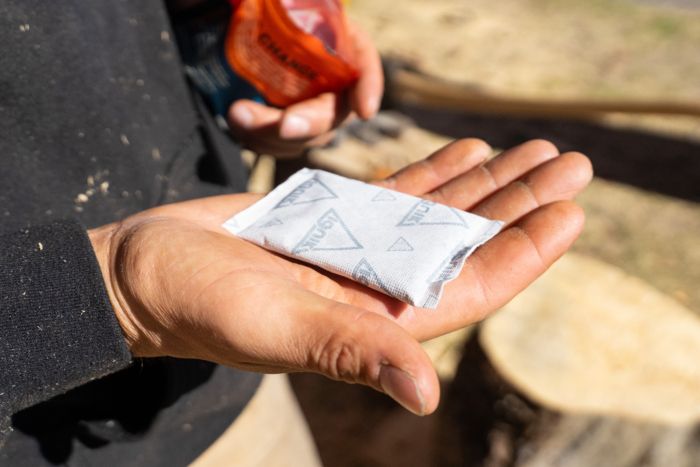
Our top overall pick, the Ignik Handwarmer, is simple yet effective; (photo/Matt Bento)

Specifications
Pros & Cons
Pros
- Comes in resealable packaging
- Can extend 10-hour life span by cutting off O2 supply
- Inner material is compostable
Cons
- Expensive if you don’t take advantage of the resealable packaging
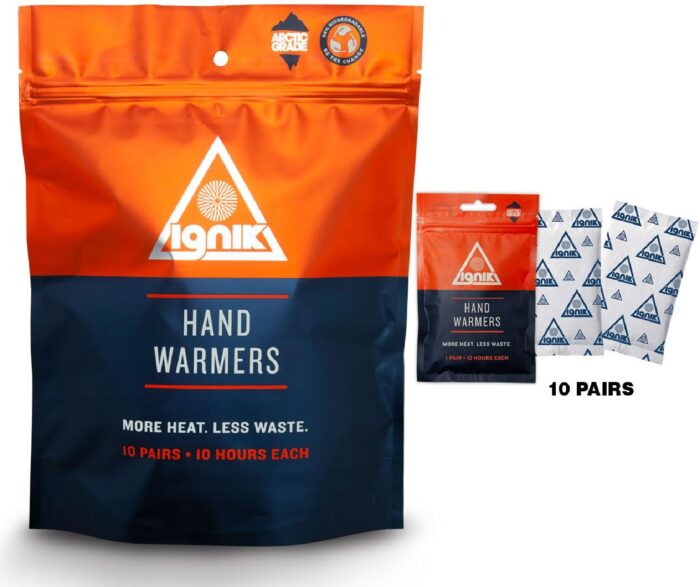
Ignik Hand Warmers ($10 per 10-pack) take the convenience of traditional disposable hand warmers and put an eco-friendly spin on the whole package. The result is a product that creates less waste, is more useful, and arguably better priced.
The brand asserts that the warmers can effectively be “turned off” by removing them from oxygen, thus halting the oxidation process to be used again later, for a maximum of 10 hours. We put these claims to the test and are pretty stoked to find that they perform as advertised, maybe even a little better.
Each pair of warmers is packaged in a tiny ziplock bag. Don’t rip it open and throw the packaging away, as this little bag is your ticket to days — not hours — of intermittent use. To stop the oxidation process and return the warmers to room temperature, simply place them back in their package, squeeze out as much air as you can, and reseal the ziplock.
Ignik says the warmers can be re-exposed to air for reuse up to 72 hours after opening, but in reality, we were still able to get some warmth out of them six days after first opening the package.
Our “in the pocket” temperature tests put this warmer at 127 degrees, with a surface temperature of 140 on the warmer itself. This is hotter than any of the other disposable hand warmers we tested.
With 10 hours of continuous warming time, the Ignik Hand Warmers can compete with any of the other disposable hand warmers on our list, but the resealable packaging significantly ups their value. While they aren’t reusable to the extent of a rechargeable battery-powered warmer, they are light, soft, and effective and can easily do their job stuffed into pockets, a roomy pair of muck boots, or a muff. If disposable warmers are what you need, we don’t see any reason to purchase any disposable hand warmers other than Ignik.
HotHands Hand Warmers
Specifications
Pros & Cons
Pros
- Affordable
- Lightweight
- Easy-to-use
Cons
- Single-use
- Short lifespan
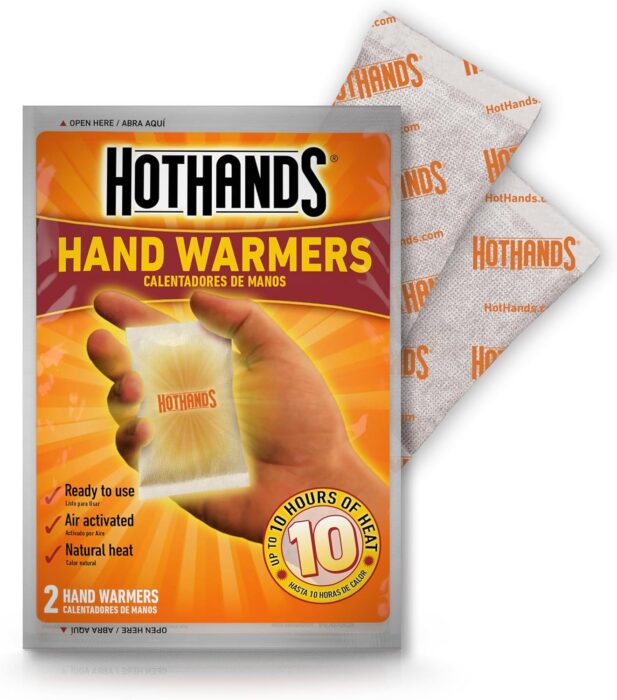
HotHands ($10 per 10-pack) are what most folks envision with they think of a disposable hand warmer — cheap, miraculously warm, and destined for a garbage can 5-10 hours after you open the package. In our experience, this all still rings true today. However, rechargeable models can compete with or surpass HotHands in their heating ability, and the Ignik hand warmers are superior in their runtime thanks to their storage baggie.
If you do want to save some money and order a big package of these warmers, we recommend purchasing the hand or toe warmers only. We went with a variety pack that included hand and toe warmers, along with an additional warmer that has an adhesive backing.
While the package includes a warning advising against applying the adhesives directly to your body, we failed to see the danger, as the adhesive-backed warmers failed to get hotter than 90 degrees F.
The hand and toe warmers in the package did the trick nicely, performing identically to the Grabber Hand Warmers, but at a lower price. The specs listed above apply only to the hand warmer version of HotHands.
Long story short, there’s nothing special to see here, but there are deals to be had with the HotHands Hand Warmers. Avoid the adhesive-backed warmers, and you’ll get what you’re looking for, along with a lot of packaging.
OCOOPA UT3 PRO Magnetic Rechargeable Hand Warmers
-
-
Close up Ocoops
Specifications
Pros & Cons
Pros
- Rechargeable
- Includes two units
- Heats up quickly
- Gets very hot
Cons
- Won't fit in gloves or boots like disposable warmers
- Somewhat pricey
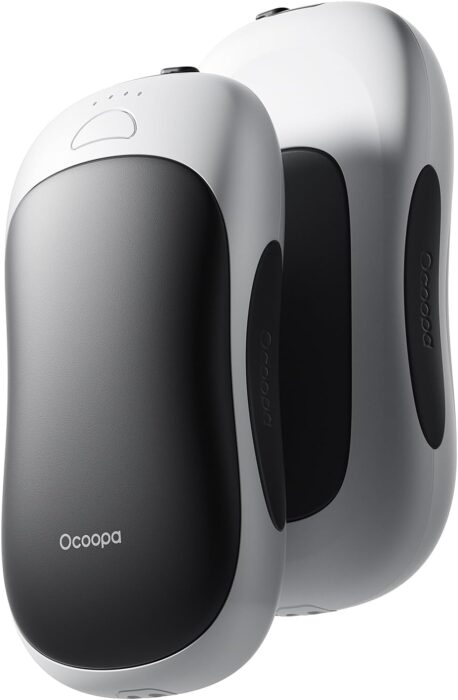
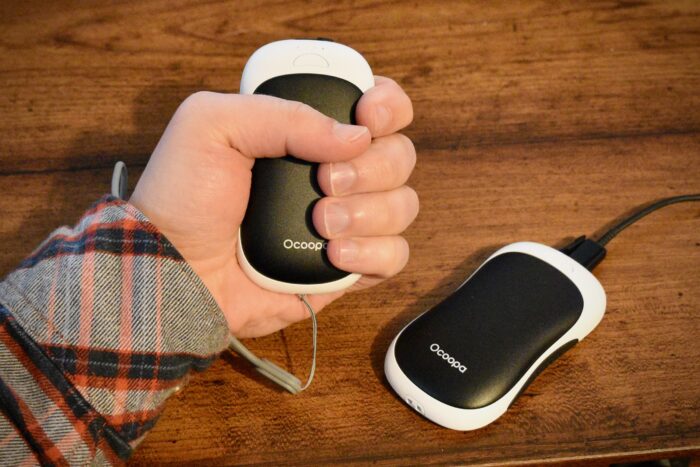
Unlike most rechargeable electric hand warmers, the OCOOPA UT3 PRO Rechargeable ($43) includes two units that both heat up and recharge independently yet can be magnetically attached when needed. These units have four different heating levels, heat up very quickly, and can reach an impressive 136 degrees F. The UT3 PRO also includes thoughtful extras like dual USB-C charging cords, dual wrist straps, and a soft carrying case.
Like all rechargeable electric hand warmers, the UT3 PRO’s battery life can be impacted by severely cold or damp conditions. Like any electronic device, extra care must be taken to prevent drops or damage. But these two units are the perfect size and shape to keep stashed in your jacket pockets, where they will be protected and most effective.
When compared to other rechargeable electric hand warmers, the OCCOPA UT3 PRO is notably missing an output port to charge other electronic devices like your phone. This limits its utility a bit, but we still prefer its price, performance, and simple effectiveness compared to other rechargeable models. Each unit includes a single operation button, a heat-level indicator light, and a charging port with a protective rubber cover.
When used independently, each unit heats up on all sides, but when magnetically attached to each other, only the outside panels heat up, a unique energy-saving feature. While this magnetic attachment is a nice bonus feature, we found it primarily useful for storage, as we preferred to use each unit independently in our hands or in separate jacket pockets.
UNIHAND Rechargeable Hand Warmers
Specifications
Pros & Cons
Pros
- Long battery life
- Multiple heat settings
- Lock together for a dual-sided hand warmer
- Perfect size to fit in your hand
- Recharge quickly
Cons
- They get really hot on upper settings
- Only one side heats
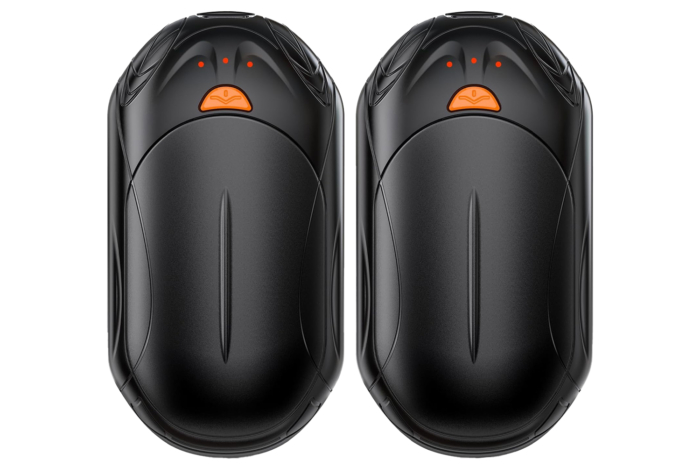
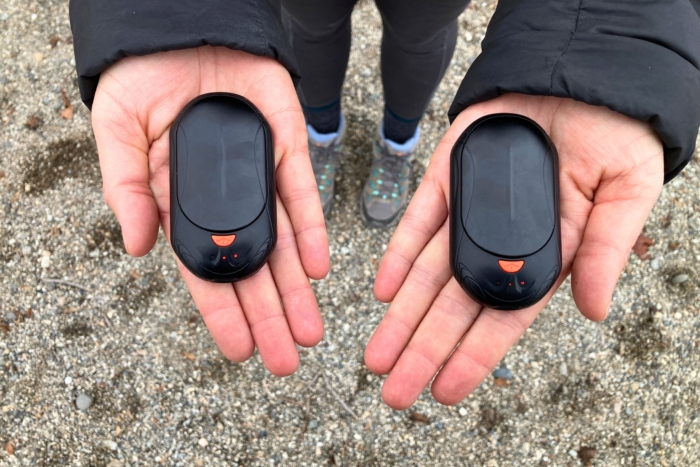
The UNIHAND Rechargeable Hand Warmers ($30) are an affordable and effective option for anyone looking for an electric hand warmer. While they only heat on one side, they have a unique locking option that allows you to store or lock them together for two-sided heat.
We find them easy to hold in your hand, nearly the perfect size for us, and they hold a charge way longer than we expected. We used these daily for 2 weeks, anywhere from 45 minutes to 2 hours at a time, on a medium heat setting before the first blue light alert for a low battery alerted us to recharge.
The heat output on these was also impressive, but it was arguably too hot, depending on the person. It was almost too hot on level two to hold with bare hands, and level three was definitely too hot. We like the temperature variation so the heat can penetrate a thin glove while the lowest setting is suitable for bare hands.
It would be nice if, like the OCOOPA UT3 PRO, the heat mechanism were on both sides, but they get the job done. The UNIHAND warmers are more affordable than many other rechargeable hand warmers, so if you’re on a budget and want a long-lasting heat duration, these are a great choice.
HotSnapZ Hand Warmers
-
-
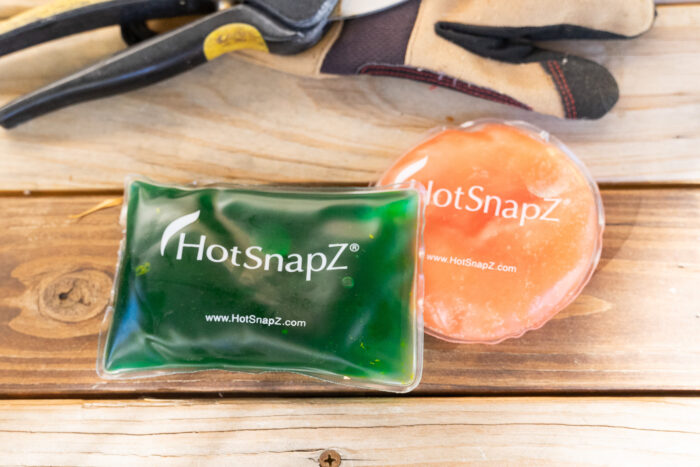
HotSnapZ heat up quickly thanks to a chemical reaction, but they only maintained heat for 2 hours; (photo/Matt Bento)
Specifications
Pros & Cons
Pros
- Reusable
- Rapid heating
- Watching the chemical reaction is admittedly fun
Cons
- Short heating time
- Plastic casing could be punctured and make a mess in your bag
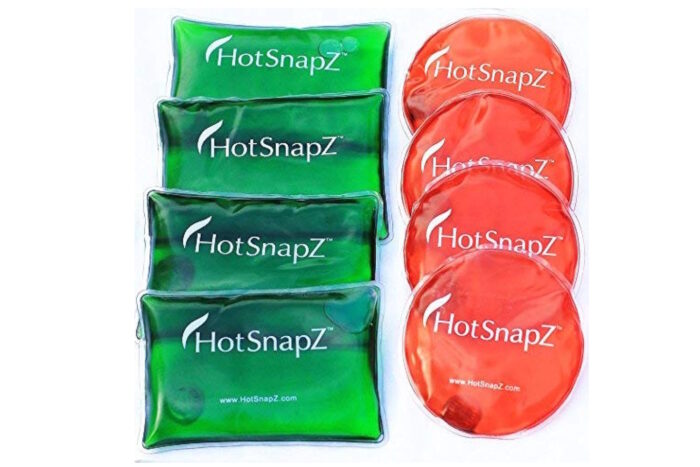
HotSnapZ Hand Warmers ($23 per eight-pack) use a chemical reaction to create rapid heating up to 130 degrees F. Using your thumbs, you bend an activation device until it clicks within the warmer pouch to start the reaction.
Our testers (and their kids) really enjoyed watching this process. The goo inside the clear plastic pouch quickly becomes cloudy after clicking the activator, followed by sweet, relieving heat. Fun!
In the practical sense, HotSnapZ are not our favorite hand warmers because the largest size only provides heat for 2 hours, with the smaller pocket-sized warmers giving off heat for only 30 minutes. Not a strong showing, considering that most of the hand warmers we tested last at least 8 hours. However, the HotSnapZ did hold heat longer than the similar low-tech option, Hot To Go Reusable Heat Packs, which only retained heat for about 20 minutes.
We’re also concerned about the durability of the plastic casing, as a car key easily punctured it. If one of these warmers rips open inside your backpack, it creates quite a mess. The Hot To Go version has arguably weaker materials than the HotSnapZ, and upon opening one package, they were already leaking. For both options, don’t store other items in your pockets while in use, and be cautious of where you store them to prevent punctures or tears!
We do appreciate that the HotSnapZ are reusable. Boiling them for 10 minutes reverses the reaction and after they’ve cooled off they are ready to be clicked on again, though the “recharged” warmer diminishes in efficacy with each boil.
We noticed that the chemical reaction was slower and less complete than the first go-round. Our HotSnapZ arrived in a pack of eight with two different sizes, with the larger size still easily fitting in a big jacket pocket.
Zippo HeatBank 6+ Pro Hand Warmer & Power Bank
-
-
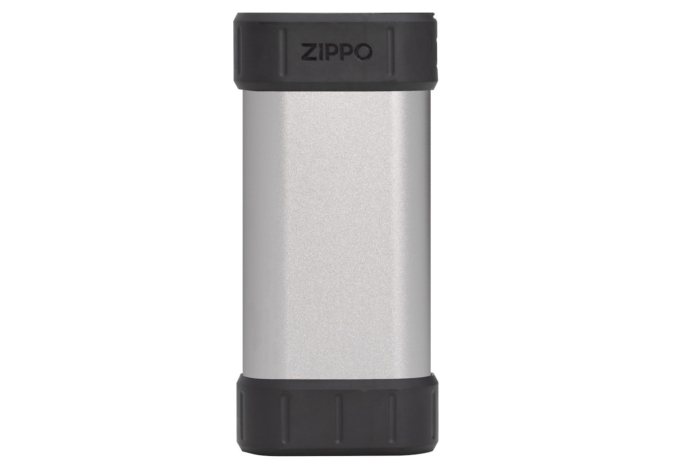
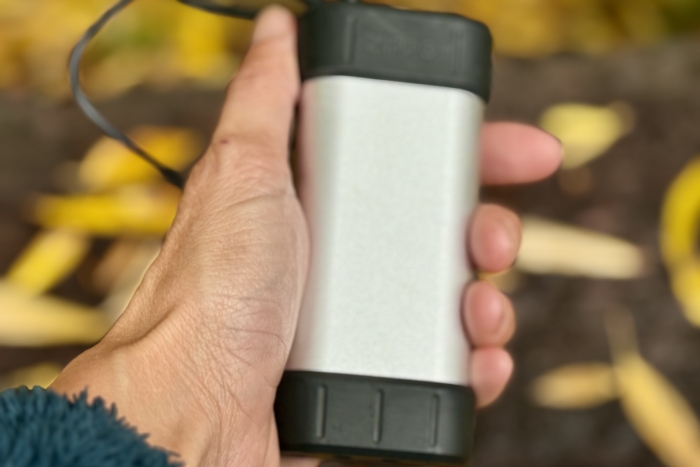
The Zippo Pro 6+ is a versatile, but premium option with a flashlight and charging capabilities; (photo/Elk Raven Photography)
-
(photo/Elk Raven Photography)
Specifications
Pros & Cons
Pros
- Hand warmer, power bank, and flashlight in one
- Adjustable dual-sided heat up to 6 hours
- 6,000 mAh battery charges phones and cameras
- Reusable and rechargeable—less waste
Cons
- Bulkier and heavier than chemical warmers
- Only charges one device at a time
- Heat can feel uneven with hot spots
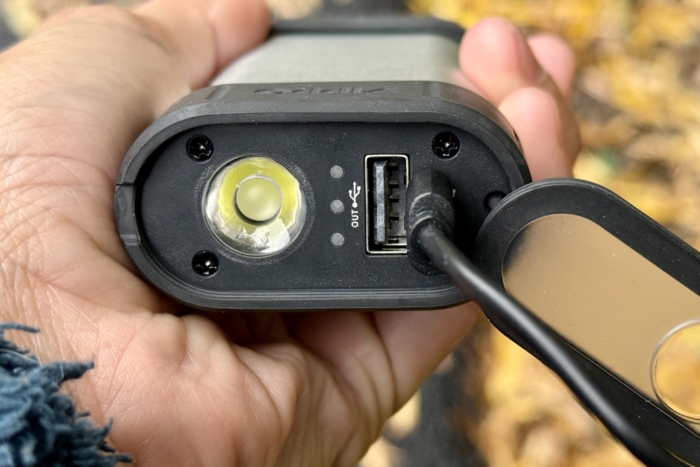
Combining a rechargeable hand warmer with a portable power bank, the Zippo HeatBank 6+ Pro ($51) gives you three essential cold-weather tools in one. It delivers up to 6 hours of adjustable heat on both sides (with multiple temperature settings up to about 120 °F), the built-in 6,000 mAh battery charges your phone or GPS via USB, and it even has an integrated flashlight for finding gear in the dark.
During our winter testing in Colorado and the Tetons, it kept fingers toasty on pre-dawn ski tours and topped off a drained phone before we could shoot sunrise photos. Because of its multi-use design, the HeatBank is bulkier and heavier than a simple chemical warmer. It can only charge one device at a time with modest output, and the heat sometimes forms “hot spots” instead of spreading perfectly evenly. It will fit in a pocket or glove, but it’s much more noticeable than most reusable warmers. Still, its rugged feel and reliable performance made it a piece we kept reaching for on cold mornings. For anyone who wants an all-day, reusable warmer that can also give life to your electronics in the cold, the HeatBank 6+ Pro is a smart, sustainable upgrade over disposable packets.
Other Trusted Hand Warmers to Keep Us Toasty
-
-
The Dnaleao Rechargeable Hand Warmers are a budget-friendly rechargeable option that delivers a good deal of warmth for a long time; (photo/Elk Raven Photography)
-
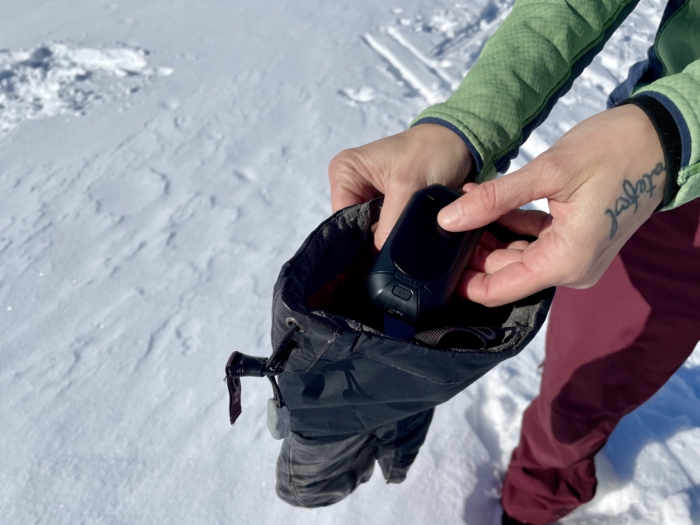
Throw the Dnaleao Rechargeable Hand Warmers into your mittens for extra warmth; (photo/Elk Raven Photography)
Specifications
Pros & Cons
Pros
- Extremely fast to warm up
- Very warm
- Adjustable
- Ergonomic fit for hand or pocket
Cons
- Don’t fit in gloves like disposable warmers
- Heat doesn't last as long as advertised
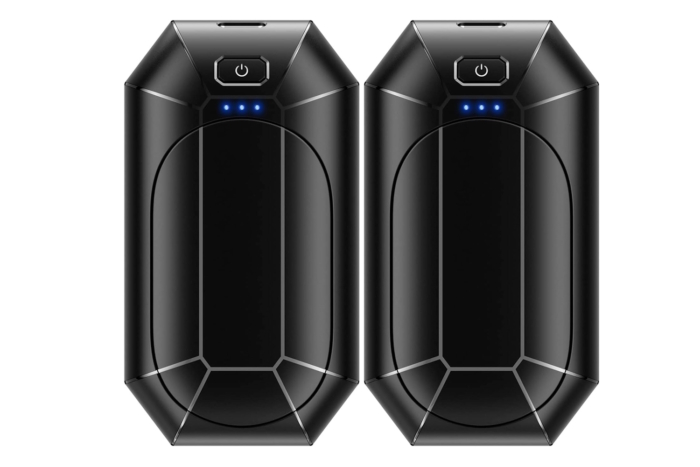
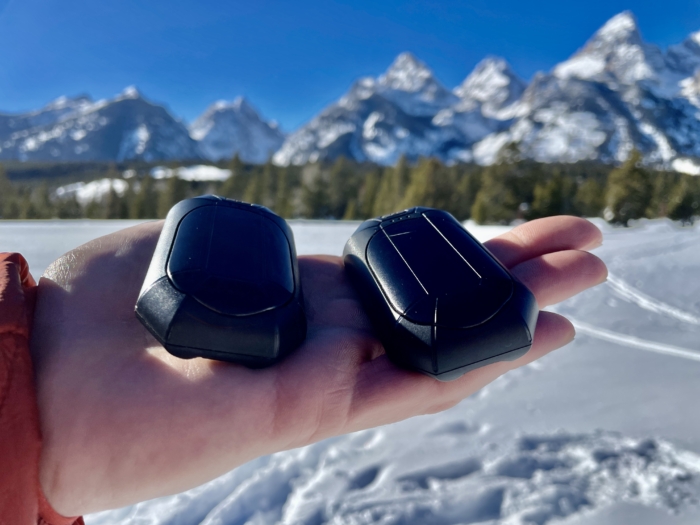
Compact, portable, and extremely warm, the Dnaleao Rechargeable Hand Warmers ($20) are ideal for tossing in your pocket on cold days when you’re enjoying time outside. They heat up in seconds, last all day, and have 3 temperature settings to manage the warmth you need based on the conditions outside and your activity level.
While testing these on Teton ski adventures and Yellowstone wildlife-watching days where the Mercury dipped below -30 degrees, we were impressed with how quickly they warmed up. In mere seconds, we got sweet relief, which is so fast compared to many other hand warmers like the Ignik Hand Warmers, where you need to plan ahead. However, we did find that warmth output was less than reported (more like 6 hours than 12) when we went on a a day-long snow coach trip into Yellowstone on an absolutely frigid day.
One of the biggest benefits of the Dnaleao Hand Warmers is the convenience of turning these on when we are already cold, knowing they will warm us up almost immediately. We also really appreciate the temperature adjustability. With a range of 95-130 degrees, we can dial in the warmth needed for each situation. Couple that with a battery that lasts all day, and these are extremely reliable, effective, efficient, and simple to use.
Getting two rechargeable units that crank out the heat for just $20 (often on sale for less) is a stellar bargain. Plus, they come with dual USB-C charging cords and wrist straps and a 2-year replacement warranty. The website says they’re dust, drop, and water-resistant, but we haven’t tested these claims yet.
Though they can clip together to create one unit, we found this feature more useful for storage since we prefer one in each pocket or glove. We rarely went above the second level on these hand warmers and found the third level too hot when our gloves contained the heat. They do come with a built-in protection system to safeguard them from short-circuiting or scalding, so we never felt like the heat level got dangerous.
These warmers are a bit big for small gloves, but we could put them in our mittens when needed effectively. They’re slightly bulky and heavy when your hands move a lot (think backcountry or Nordic skiing). But we didn’t even notice them in our gloves when riding lifts, downhill skiing, or watching wildlife. They’re also great for sports games, camping, fishing, and dog walks. If you’re looking for hand warmers that don’t quit but won’t break the bank, the Dnaleao Hand Warmers are a tremendous rechargeable option.
-
-
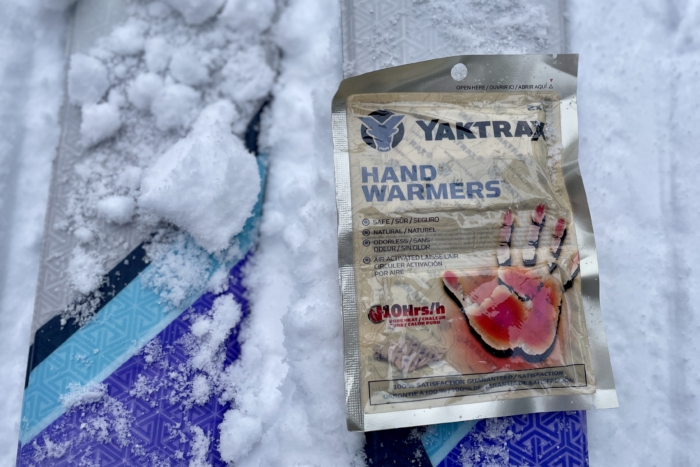
The Yaktrax disposable handwarmers held their own on cold ski tours; (photo/Elk Raven Photography)
Specifications
Pros & Cons
Pros
- Made with 50% recycled materials
- Up to 6 hours of steady warmth
- Slim and soft for easy pocket or glove use
- Ready to use—no charging or boiling
Cons
- Still single-use; creates waste
- Can’t match the heat output of catalytic or electric warmers
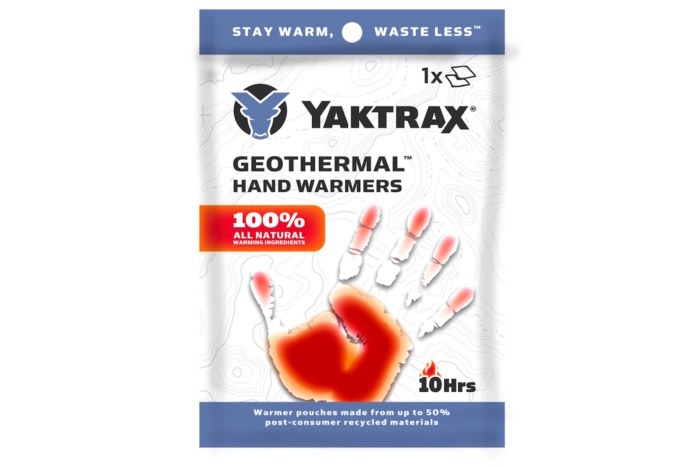
The Yaktrax Geothermal Hand Warmers ($1.75 for 1 pair, $11.95 for 10 pairs) are the brand’s more environmentally conscious take on the classic single-use packet. Rather than the standard all-new materials you see in most disposable warmers, these are made with 50% recycled content — including the pouch and packaging — reducing the footprint of an otherwise throwaway product.
In our testing on frosty mornings in the Tetons and on snowy hikes in Colorado, each pair produced a steady, gentle warmth for about eight hours once activated. The slim rectangular shape slid easily into gloves or jacket pockets and felt softer and less gritty than many other disposables, which made a difference during long periods of contact against bare skin. We found them especially handy for quick dawn photography sessions, cold-weather dog walks, and keeping toes or fingers comfortable during lift rides.
Because these are still air-activated and single-use, you do have to plan ahead. Once opened, they start producing heat and can’t be turned off. They also won’t match the intense output of a catalytic or electric warmer on its highest setting. But for casual winter activities or as a backup in your pack, they’re affordable, widely available, and more sustainable than the standard packet.
Specifications
Pros & Cons
Pros
- Rechargeable
- No plastic packaging waste
- Doubles as small device charger
- Rapid heat delivery
Cons
- One heating unit; you’ll need to get two if you want heat in two pockets
- Bulky
- Rigid
- Expensive
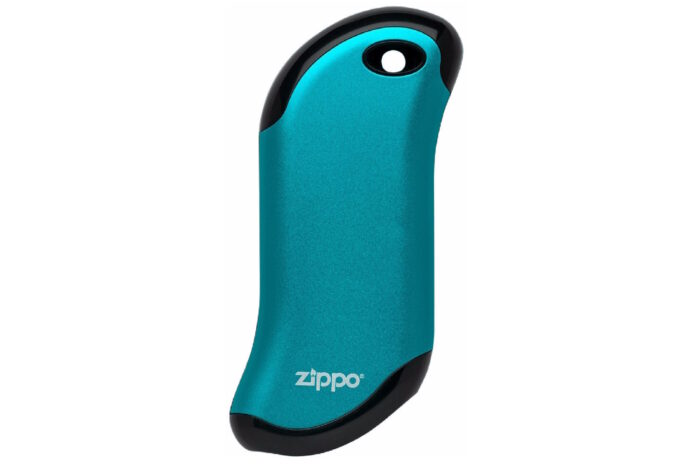
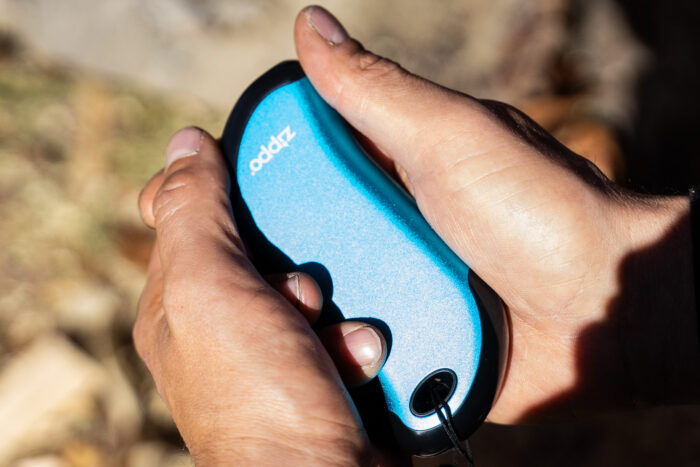
If you’re on the lookout for a hand-warming strategy that doesn’t involve a lot of plastic packaging, warms up fast, and delivers a little more heat than the average disposable warmer, then the Zippo Heat Bank 9 ($50) is a great alternative.
We found that the Heat Bank achieved its max temperature of 120 degrees in about a minute, quite a bit faster than the average disposable warmer since it doesn’t require waiting for oxidation to start. It feels hotter than any disposable hand warmer we tested, thanks to the direct conduction from the aluminum housing straight to your hands.
This warmer also doubles as a small device charger, with a 5,200mAh lithium-ion battery bank and about enough juice to charge your phone one and a half times. Just know that the charging capabilities will decrease if you’re also using it as a warmer.
This adds some “off-season” value to the Heat Bank since you could keep it in your pack, purse, or glove box year-round in case you need to charge your phone without a power source. However, the Zippo didn’t make our award list because it’s bulky to carry, pricey (especially since you need to buy two!), and it doesn’t contour to your hands due to its rigidity.
Specifications
Pros & Cons
Pros
- Easy to use
- Lightweight
Cons
- Heat intensity doesn’t last the entire time
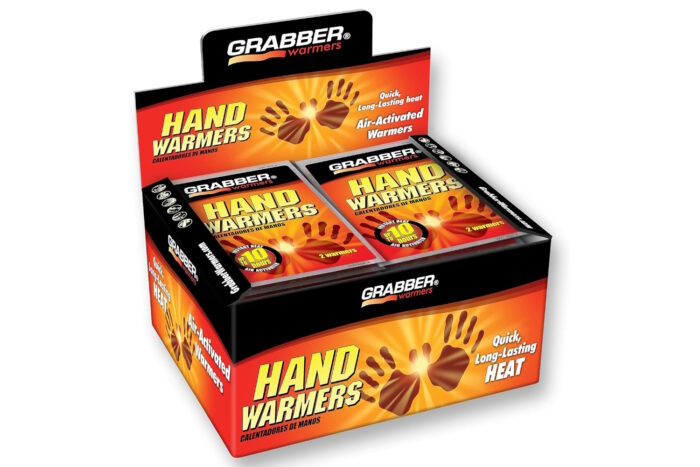
The Grabber Hand Warmers ($37 for 40 pairs) employ a similar color scheme to HotHands, and at the checkout counter or in your online shopping cart, they may seem like exactly the same product. While it’s true that they are very similar, our hands-on experience highlights some nuances.
These warmers maxed out in our pocket testing at 120 degrees F after 30 minutes of air exposure. How? We’d guess it has something to do with their particular chemical ratio, which causes a faster oxidation rate than the HotHands, but we’re speculating here. So, if you’re looking for a quick source of heat that lasts, the HotHands beat out the Grabbers by the amount of heat and how long they lasted.
Like the HotHands, the Grabber Warmers create a fair amount of trash, with each warmer wrapped individually. Meanwhile, Ignik doubles up, with two warmers per baggie. Also, like HotHands, you can often find them on sale in bulk, so if you burn through a lot of warmers during the winter season, let the price help you make your decision between the two.
Specifications
Pros & Cons
Pros
- Reusable
- Affordable price
- Quick and easy activation
- Works as a hand warmer or mini heat pack for muscles
Cons
- Short heat time
- Heat duration shortens with reactivation
- Reactivation takes over 30 minutes
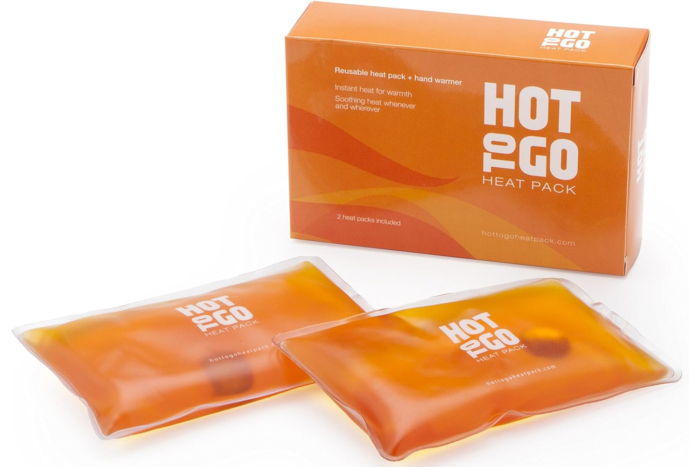
The Hot To Go Reusable Heat Packs ($25 per eight-pack) are extremely similar to the Hot SnapZ Hand Warmers and are a great low-tech budget hand warmer option. The biggest differences between the two are the heat duration and overall durability.
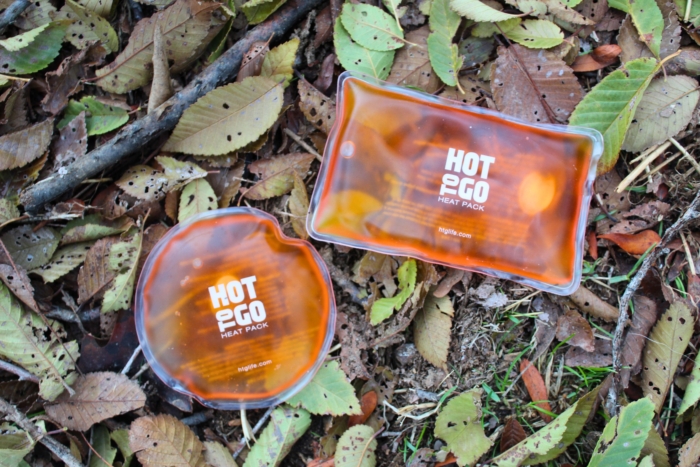
Hot To Go’s eight-pack has four circular pocket heat packs and four larger rectangular heat packs. We find the circular packs best as hand warmers for pockets or mittens, while the rectangular ones are too large for most pockets but are pretty nice as a heating pad for minor muscle aches.
Our primary use case for these hand warmers was for chilly dog walks, and during the few weeks we used these hand warmers, the average outside temperature was around 34 degrees F. When using Hot To Go warmers outdoors in that temperature range, the longest heat duration we could get was 24 minutes before they began to harden and cool down. They were completely cooled off within 34 minutes. That duration was only after the initial activation.
With every reactivation, the heat duration shortened slightly because the crystalization process was less prominent. When using either size indoors for muscle aches, they lasted slightly longer (around 30 minutes).
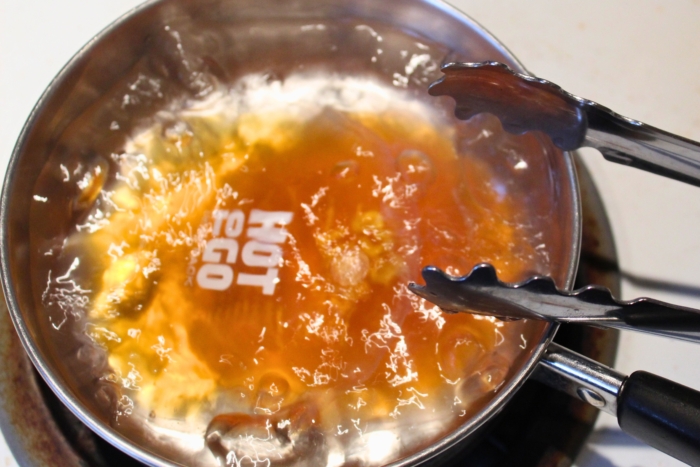
They are simple to reactivate. The instructions on the back of the heat pack detail how to do this and mention that it should take around 10 minutes. We found it averaged around 6 minutes for all the crystals to disappear. The longest part of the reactivation process was waiting for them to cool to room temperature, but we used them as hand warmers after boiling to extend the use time, and once cool, we reactivated the crystals.
Overall, these are an affordable heat pack option. We like that they are versatile and can be used as more than just hand warmers, but they’re not the most effective or longest-lasting. We can see these being ideal when your kids wait for the bus on cold mornings or for short dog walks in the winter.
Specifications
Pros & Cons
Pros
- Reusable
- Long-lasting heat
- Durable
- Affordable
Cons
- Messy to fill
- Takes extra work to maintain
- Can’t turn off
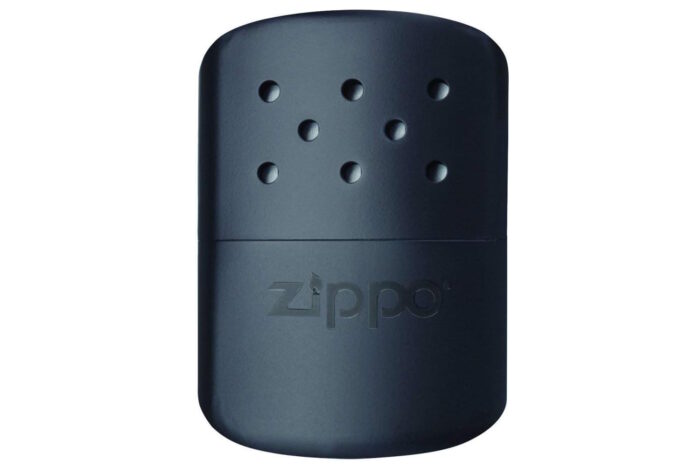
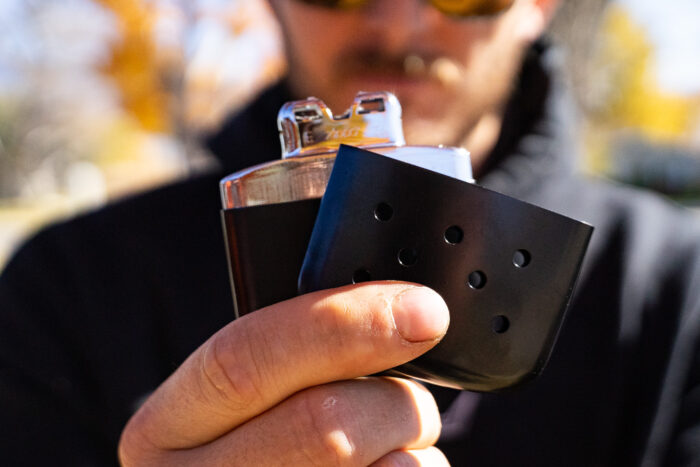
While it may seem a bit strange to keep a lit canister of lighter fluid in your pocket, in this case, you won’t regret it. The Zippo 12-Hour ($22) lives up to its name. And in some cases, it will even run beyond 12 hours.
To start the catalytic heating process, fill the fuel funnel, remove the catalytic burner, fill the tank, replace the burner, and ignite it with a lighter. Yes, it takes a little extra time to set up, but we found the effort worthwhile. Once lit, the warmth radiates consistently, making it a reliable companion during long days outdoors.
Tuck the Zippo hand warmer into your jacket pocket on a winter hike or a frigid evening at camp. One thing to remember is that once you light the Zippo, the flameless combustion cannot be stopped or turned off. We learned to gauge the amount of fluid we poured in according to how long we’d be out, careful not to run short.
Unlike electric, battery-powered, or disposable hand warmers, the Zippo 12-Hour works continuously, even in the coldest conditions where a battery can drain quickly. We find it to be one of the longest-lasting designs on the market. Whether on a winter camping trip or just trying to stay warm during a late-season football game, the Zippo 12-Hour Hand Warmer delivers dependable heat when you need it most.
Specifications
Pros & Cons
Pros
- Instant heat in seconds
- Precise temperature control with LED display
- Comfortable, palm-friendly feel
- Rechargeable and reusable
Cons
- Runtime drops on high heat in extreme cold
- Heavier than disposable hand warmers
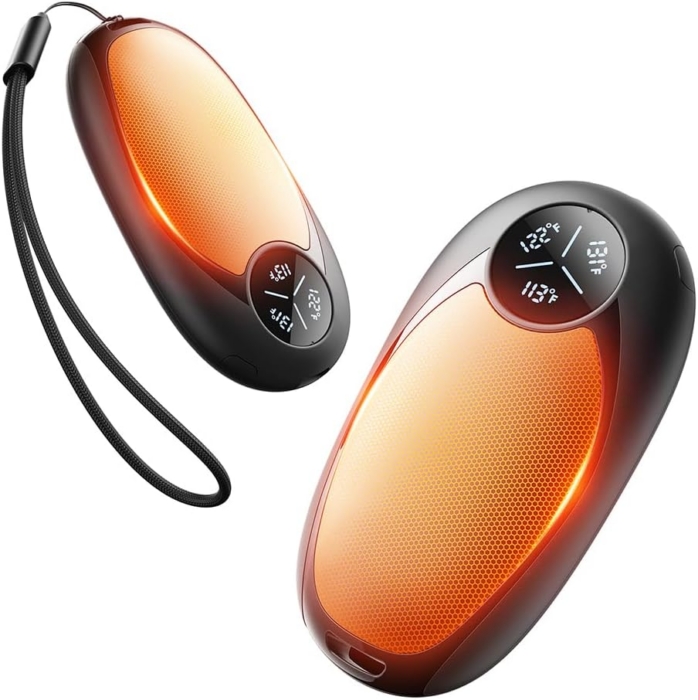
The Riapow Rechargeable Hand Warmers ($25) bring adjustable, rechargeable heat to cold-weather outings where disposable warmers fall short. With push-button activation, they warm quickly and let you choose between three heat levels, while the LED screen keeps tabs on both temperature and remaining battery life. Internal temperature management helps keep output steady rather than spiking or fading as conditions change.
Each warmer weighs 2.2 ounces and sits comfortably in the hand, with a compact shape that’s easy to hold or slip into a pocket or glove. The two units attach magnetically and can be used together or separately, adding flexibility for solo use or sharing. Sleek wrist lanyards make them easy to keep accessible during long days outside even if you’re wearing gloves.
Battery performance depends heavily on conditions. While the manufacturer lists up to 24 hours of heat, during a January day photographing wolves in Yellowstone at roughly minus 30 degrees Fahrenheit, we recorded closer to 10 hours on the higher settings. Even so, that’s enough for most extended winter days, and the ability to fine-tune heat makes these a practical choice for photographers, spectators, commuters, and anyone who wants reusable warmth with more control than chemical hand warmers.
Specifications
Pros & Cons
Pros
- Reusable and budget friendly over time
- Instant heat with click activation
- Compact and easy to carry
- Low-waste alternative to disposable warmers
Cons
- Shorter heat duration than many disposable options
- Requires boiling to recharge
- Not ideal for full-day or multi-day trips
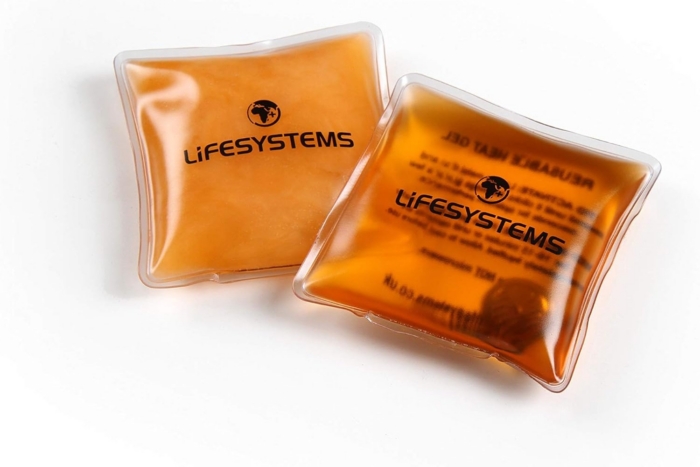
Lifesystems Reusable Hand Warmers ($30) are a simple, reusable solution for quick warmth on cold days. Using a click-activated metal disc inside a sodium acetate solution, they heat up in seconds and provide steady warmth for roughly 60 minutes. Once they cool, you can reset them by boiling in water, making them a budget-friendly and eco-conscious alternative to disposable warmers. They are compact enough to stash in pockets, gloves, or a daypack, and they are especially handy for winter walks, commuting, spectating, or short outdoor outings.
The main limitation is runtime. With about an hour of heat per activation, they do not last as long as many single-use warmers for full-day adventures, and the need to boil them to reset can be inconvenient on multi-day trips without easy access to a stove. Still, for everyday winter use and repeat value, they are a reliable, low-waste option.
Hand Warmers Comparison Chart
| Model | Price | Heat Type | Runtime | Weight | Best Use | Key Feature |
|---|---|---|---|---|---|---|
| Ignik Hand Warmers | $10 (10-pack) | Air Activated | 10 Hours | 4.5 oz. (pair) | Eco-conscious skiing & camping. | Biodegradable contents + Resealable bag. |
| HotHands Hand Warmers | $1 (per pair) | Air Activated | 10 Hours | 1.6 oz. (pair) | Skiing; Emergency kits; Bulk use. | Thin profile fits inside tight gloves. |
| OCOOPA UT3 PRO Magnetic | $43 | Rechargeable | 15 Hours | 8.3 oz. | Long days outdoors; Sharing. | Magnetic split design + Power bank. |
| UNIHAND Rechargeable | $25 | Rechargeable | 8-20 Hours | 2.5 oz. | Budget tech buyers. | Best “Bang for Buck” magnetic split. |
| HotSnapZ Hand Warmers | $30 (set) | Chemical Gel | 30-60 Mins | 4-7 oz. | Short walks; Stadium events. | Instant “snap” heat; Boil to reuse. |
| Zippo HeatBank 6+ Pro | $50 | Rechargeable | 6 Hours | 6.4 oz. | Camping; Tech-heavy travel. | Reliable power bank + Flashlight built-in. |
| Dnaleao Rechargeable Hand Warmer | $20 | Rechargeable | 12 Hours | 6.0 oz. | Budget daily use | Ergonomic design for a low price |
| Yaktrax Geothermal | $2 (per pair) | Air Activated | 8 Hours | 4.6 oz. | Skiing, hiking, snowshoeing. | Environmentally safe materials. |
| Zippo Heat Bank 9 | $60 | Rechargeable | 9 Hours | 5.0 oz. | Spectator sports; Gifting. | 6 heat settings + Ergonomic curve. |
| Grabber Hand Warmers | $1.50 (per pair) | Air Activated | 7+ Hours | 2.0 oz. | General winter use. | The “Original” reliable air-activated brand. |
| Hot To Go Reusable Heat Packs | $15 (varies) | Chemical Gel | 20-30 Mins | 3.5 – 6 oz. | Emergencies, Short adventures Muscle relief. | Moldable gel fits sore necks/knees. |
| Zippo 12-Hour Hand Warmer | $25 | Catalytic Fuel | 12 Hours | 2.6 oz. (empty) | Hunting; Extreme cold; High altitude. | Burns hotter than any battery warmer. |
| Riapow Rechargeable | $25 | Rechargeable | 6 Hours | 4.0 oz. | Wet winter hikes; Rainy commutes. | IP67 Waterproof (survives drops in snow). |
| Lifesystems Reusable Hand Warmers | $13 | Chemical Gel | 45 Mins | 4.1 oz. | Short emergency heat. | Simple, durable boil-to-reset design. |

How We Tested the Best Hand Warmers
Our Expert Testers
Contributor Matt Bento was the original lead tester for this Buyer’s Guide. He took each model hiking and climbing in the High Sierra, even leaving an Ignik Warmer in his chalk bag for some on-demand heat while sport climbing, and enlisted friends to try them out at local football games and while working on vehicles in the cold.
Editor Chris Kassar is now the current lead tester, adding new options to the list and updating products as more testing is completed alongside contributing writer Meg Carney. Most of their recent testing has taken place in the Tetons, Yellowstone, and Central Washington while hiking, skiing, and watching wildlife. If you’re in the market for other winter gear to keep you warm and dry, check out our buying advice on the best ski bibs, ski pants, ski gloves, face coverings, and base layers.
Our Testing Grounds & Process
Our editors and gear testers are no strangers to long winters, and we eagerly anticipate ski season every fall. However, we’re about as adverse to numbed-out, cold fingers as anybody out there, so we’ve spent considerable time finding and testing out the best winter gloves and the best winter mittens in addition to the best hand warmers. And hand warmers go best in the cozy pockets of the best and warmest winter jackets.
Hand warmers have a simple job to do, and while they can’t replace your own body (Eat! Hydrate!) as a heat source, they can provide a little relief when you need to be out in the cold and stationary.
To find the best hand warmers, we ordered a variety of disposable and electronic warmers, along with one catalytic model, and tested them with a stopwatch and a thermometer. We placed each warmer in the pocket of a highly insulated down jacket and measured the ambient temperature in the pocket after half an hour.
While this gave us a little numerical data, we also considered the overall user experience. The HotSnapZ Hand Warmers, for example, delivered heat on command but didn’t last for more than 2 hours. The electronic heaters don’t perform as well in super cold environments, so we can’t recommend them for long days in the backcountry.

Our Handwarmer Rating System
We score each hand warmer across Value, Heat Output, Run Time, and Ease of Use to reflect how it actually performs outside. Value weighs performance, features, and durability against the price so readers know what kind of return they’re getting. Heat Output measures both peak and sustained warmth in real-world conditions like hiking, skiing, or standing still. Run Time tracks how long that heat remains at a usable level, which can matter more than maximum temperature. Ease of Use looks at how simple it is to activate, charge, refill, or slip into a glove or pocket.
The Overall Rating is not a straight average — it’s our editorial judgment of the complete user experience.

Buyer’s Guide: How to Choose the Best Hand Warmers
Types of Hand Warmers
We’re no longer limited to just disposable warmers, as there are now several alternatives to the old standbys, including the very effective rechargeable electric hand warmers. It is never a bad idea to have a few disposable hand warmers in your glove box for emergencies.
But if you use them regularly during the winter, a rechargeable electric model like the Dnaleao Rechargeable Hand Warmers or the OCOOPA UT3 PRO Magnetic Rechargeable is a worthwhile investment. They both provide more heat for longer durations than the disposable types, and you’ll create less waste.
Some folks are just looking for added comfort, but for people dealing with Raynaud’s syndrome or poor circulation, keeping your hands warm is critical in daily life during colder months. Maintaining dexterity is key for many outdoor activities, from tying on a fishing lure to general vehicle maintenance. So consider this when you’re looking at what you need and how much you’re looking to spend.

Rechargeable Electric
Rechargeable electric hand warmers are usually powered by a lithium-ion battery. These models heat up quickly, typically have multiple heating levels, can get very hot, and can last a long time in the right conditions. Some electric warmers also double as a handy battery pack you can use to charge your phone on the go.
Downsides include susceptibility to moisture or impact damage, potential reduced battery life in the cold, and longer recharging periods. Rechargeable electric hand warmers are also usually a bit more expensive than traditional disposable models.
The OCOOPA UT3 PRO Magnetic Rechargeable is our favorite rechargeable electric hand warmer, but the Dnaleao Rechargeable Hand Warmers have an excellent battery life at a cheaper price. It includes a set of two units, so you can keep one in each pocket or hold one in each hand. The units heat up very quickly and have four different heating levels, with the top level reaching up to 131 degrees F.

The two units also magnetically stick together to create one larger unit, which can come in handy in certain situations. This model has an input port to recharge but does not include an output port to charge other devices like your phone.
Other rechargeable electric models like the Zippo Heat Bank 9 and the OCOOPA Rechargeable Hand Warmer both include output ports, allowing these devices to double as a battery pack for your phone or other small electronic devices, ensuring they will be able to be used year-round.
We love utilitarian, multi-use devices like electric hand warmers since they are effective and let us cut down on our waste stream. However, there are a few advantages to disposable, chemical-powered hand warmers. They are generally smaller and softer, allowing them to be shoved into a glove or a sock.
They come in pairs, so you can have one for each pocket, and depending on how many hand warmers you go through in a year, they can be a much less expensive option.

Reusable
Low-tech reusable hand warmers are compact devices that provide instant heat through a chemical reaction in a sodium acetate gel solution. A small metal disc inside the warmer acts as the trigger; when snapped, it initiates crystallization, releasing heat up to 130 degrees F (54 degrees C). These warmers are designed for portability and can be reused by reactivating the gel through boiling.
To reset, the solidified gel must be submerged in boiling water for 5 to 10 minutes until it reverts to liquid form. However, they tend to lose some heat duration with each reactivation process.
Among the popular options are Hot To Go and HotSnapz. Hot To Go warmers are affordable and compact but provide heat for a shorter duration, around 20 to 30 minutes. HotSnapz offers longer heat retention, a wider variety of sizes, and superior durability. We prefer HotSnapz because they seem to last longer, and since both are around the same price, they are a better value overall.
While these are an affordable and low-waste alternative to classic disposable hand warmers, they have among the shortest heat duration of any hand warmers tested which limits their use case. We see these being useful for some individuals, but they are not our top choice.

Catalytic
Catalytic hand warmers run on liquid fuel and require a flame to start flameless combustion. Because these warmers generate heat via combustion, they never need to be charged and work well even in very cold temps. Though catalytic warmers provide a consistent heat source for longer periods of time, they can be messy and somewhat complicated to fill. This really only applies to the Zippo 12-Hour Hand Warmer.
We think the majority of folks won’t want the hassle of needing to keep lighter fluid on hand and the potential mess of refilling the unit, so they should go with the rechargeable electric model. But the Zippo could be useful for folks at hunting camps or in other scenarios without access to electricity, where the reliability of using lighter fluid outweighs the potential downsides.

Disposable
Disposable hand warmers are the cheapest, easiest to use, and usually the most reliable. They take a while to heat up but have a pretty consistent temperature for their run time. They can only be used once, so if you need hand warmers often, either purchase them by the pack or consider another type of warmer.
Our favorite disposable hand warmers by far are the Ignik Hand Warmers. Not only did they get hotter than the other disposable warmers we tested, they also come in a resealable baggie, so if you use them for 5 hours of their 10-hour runtime, you can put them back in their package.
This cuts off the oxygen, stopping the oxidation process and effectively “turning them off” until you need to use them again. The insides are compostable, and we’re generally psyched about the brand’s commitment to making a disposable product as environmentally friendly as they can.

Heat Output
When shopping for effective hand warmers, heat output is most people’s top priority. If a hand warmer isn’t warm enough, it’s rendered useless. However, it’s important to understand the relationship between heat output and other factors, including run time, reliability, and price.
As a general rule, lithium-ion-powered warmers tend to offer the highest maximum temperatures and have several settings. For instance, the Dnaleao Rechargeable Hand Warmers have three settings ranging from 95 to 131 degrees Fahrenheit.
While battery-powered warmers are great, they tend to be less effective in cold conditions. It’s important to note maximum temperatures are generally only achievable for most hand warmers in relatively moderate conditions.
Other types of hand warmers, including catalytic and most disposable warmers, are usually able to perform at their maximum temperature, no matter the surrounding air temperature. While these types of warmers may not boast the same maximum temperatures as battery-powered warmers, they’re less condition-dependent and perhaps more reliable.

Tips for Getting the Most Out of Your Hand Warmers
While all the hand warmers on our list are pretty easy to operate, we’ve found a few tricks that will make them go farther.
Disposable warmers take a few minutes to heat up as they rely on oxidation to catalyze the chemical reaction that generates heat. So, if you’re looking to get them cooking more quickly, keep them outside of your pockets initially, and give them a good shake to get the process going.
Electronic devices like cellphones and cameras can suffer from extreme cold as their batteries struggle to hold a charge. To improve performance in the winter, you can take a disposable hand warmer like the Ignik Hand Warmer and tape it to the back of your device or chuck a few in an insulated pouch with your camera batteries.
Price & Value
Hand warmers typically cost between $10 and $60. Cheaper options are most often disposable and come in a pack. The larger the pack, the more expensive it will be. Features like heating time and whether they are reusable increase the price.
Budget
Most budget hand warmers are single-use but still deliver reliable and adequate warmth. You may not get as much longevity, and you’ll sacrifice eco-friendliness, but budget hand warmers are highly convenient and practical.
Our budget pick for this guide is the HotHands Hand Warmer, ranging in price from $10 to $15 — $10 for a pack of 10. We find these an excellent option for short trips in late fall and early spring, but in the dead of winter, we gravitate to something with a longer heat duration.
For the same price, our overall pick, the Ignik Hand Warmers are $10 for a 10-pack. While both options have a 10-hour warm time, the Ignik can be “turned off” by removing them from oxygen, extending their lifespan to be used again later. Both are disposable, budget hand-warming options if convenience is your top priority.

Mid-Tier
Spending just a little bit more money is likely to get you a product with better heat retention and more features. Mid-tier hand warmers cost anywhere from $20 to $40, and warm times are 12 or more hours.
The Dnaleao Rechargeable Hand Warmers are a rechargeable option that heats up quickly, lasts 12 hours and costs only $20. In some cases, it can run more than 12 hours, and the reusability is more reliable than an electronic battery out in the cold. It is slightly less convenient than a disposable, and refilling it can be a pain, but if you want something that packs heat all day and can be used again and again, it’s worth the investment.
The Hot To Go and HotSnapZ are other reusable options that are around $30 for a pack of eight. These only have a heat duration of around 20-30 minutes, which limits their effectiveness, but they are low-tech and versatile reusable hand warmers or heat packs. However, for the same price, you can also get a rechargeable electric hand warmer set from UNIHAND, which has an 8- to 20-hour heat duration.

Premium
The best hand warmers cost around $40-60. It may seem difficult to justify paying upward of $50 for hand warmers, but premium options provide better technology and extended heating times. They’re an excellent investment for serious cold-weather outdoor enthusiasts or those who need a boost of heat on a blustery job site.
The OCOOPA UT3 PRO is a rechargeable hand warmer priced at around $40. Compared to our other picks, this runs hotter and longer, plus you can use quick recharge capabilities. While we feel the added features outweigh the cons, rechargeable hand warmers tend to be less convenient than single-use alternatives.

Frequently Asked Questions
Most hand warmers are safe if used properly. Some people, usually children, have very sensitive skin and should not let hand warmers come into direct contact with their skin.
Some hand warmer varieties, like catalytic burner warmers, prove to be more dangerous than others. To safely use these, you must ensure the correct fuel is used and there’s no excess fluid on the outside before you light it.
If not sealed properly, there is also a risk of carbon monoxide leaking, which poses a danger if used in a confined space. An insulated sleeve can also be a useful safety measure when using catalytic warmers.
To decide which hand warmer is best for you, ask yourself one question: What is my intended use?
If you are a climber, maybe Grabber Hand Warmers will be the best choice. These warmers are quick to warm and very compact. Also, they can fit easily into a chalk bag and allow you to warm up your fingers mid-route.
If you’re a hunter with cold hands, a longer-lasting reusable hand warmer is likely to be the best choice. Or if you want to keep your hands warm as you watch your kids play outside, opt for the HotSnapZ.
All types of warmers have their pros and cons. It just depends on the application.
On this list, the Zippo 12-Hour Hand Warmer earns the top prize for total runtime. Because this warmer runs on lighter fluid, its runtime is determined by how much fluid is used. In some tests, a unit filled with maximum fluid stayed warmed for upward of 20 hours.
In the disposable category, HotHands Hand Warmers are known to stay warm for up to 10 hours — an impressive stat for such a small and affordable warmer.