Keeping your hands warm with winter gloves makes snowy days memorable — for the right reasons. Frozen fingers can halt a day on the slopes, end a hike or walk early, and just be painful and uncomfortable.
For outdoor work and play, Senior Editor Morgan Tilton and professional freeskier Dane Tudor spent dozens of hours testing four new cold-weather pairs across four months of winter’s core in Crested Butte, Colorado, and British Columbia.
We found the best premium waterproof-breathable gloves like the Black Diamond Legend. But you might be looking for a lightweight lifestyle pair, like The North Face Etip Recycled, which is touchscreen compatible.
Editor’s Note: We updated our Winter Gloves buyer’s guide on August 14, 2026, with the Gordini MTN, Smartwool Ridgeway, Smartwool Liner, and Black Diamond Tour LT. We added rating details to reflect our field-testing results for each pair.
The Best Winter Gloves of 2026


Smartwool Ridgeway Glove
-

-
Morgan Tilton testing Smartwool Ridgeway Glove; (photo/Dane Tudor)
-
Morgan Tilton testing Smartwool Ridgeway Glove; (photo/Dane Tudor)
-
Morgan Tilton testing Smartwool Ridgeway Glove; (photo/Dane Tudor)
-
Morgan Tilton testing Smartwool Ridgeway Glove; (photo/Dane Tudor)
-
Morgan Tilton testing Smartwool Ridgeway Glove; (photo/Dane Tudor)

Specifications
Pros & Cons
Pros
- Functional touchscreen capability
- Durable goat leather
- Soft merino lining
Cons
- Sizing runs long
- Not fully waterproof
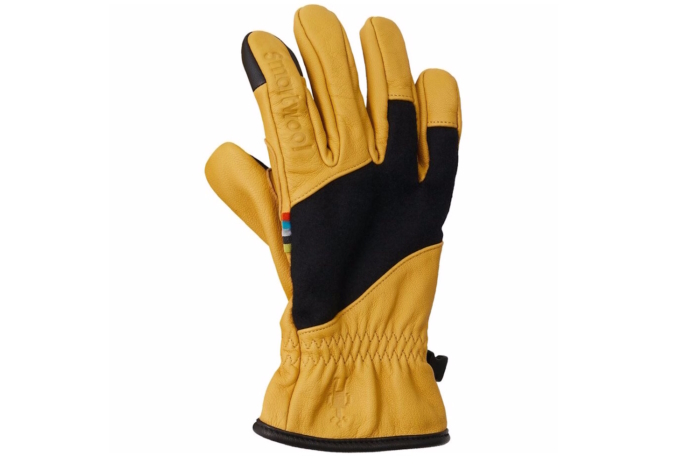
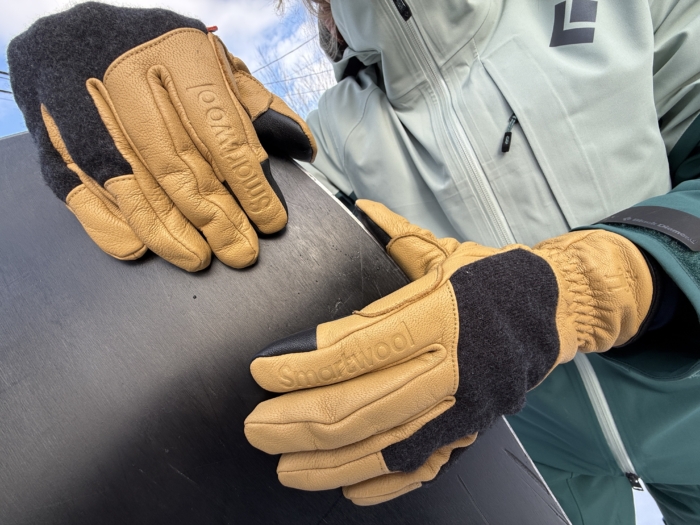
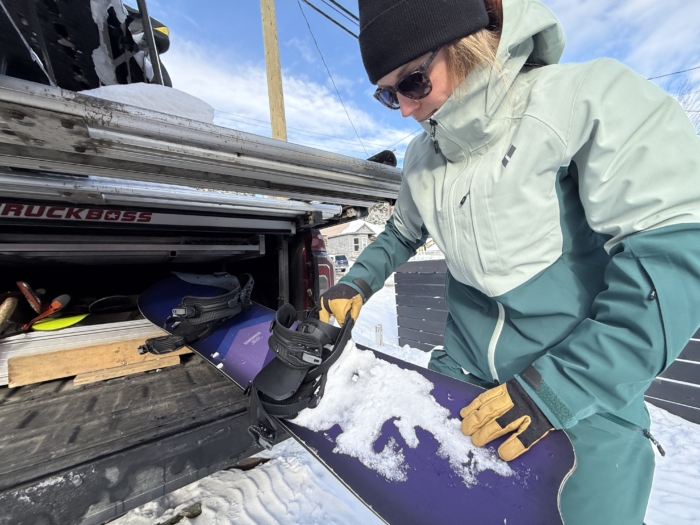
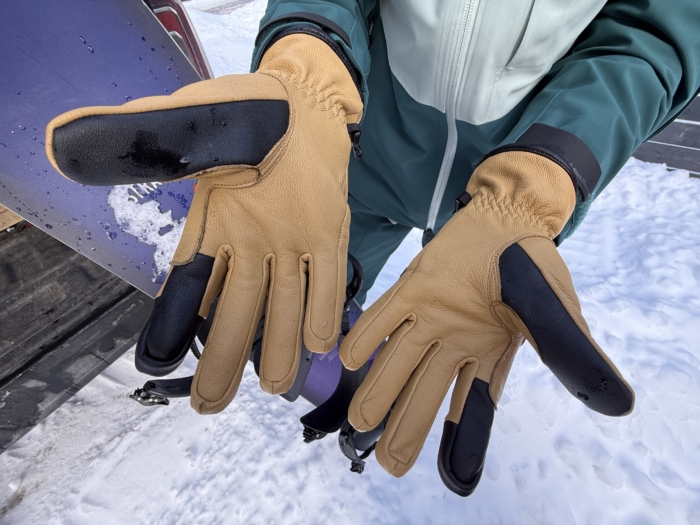
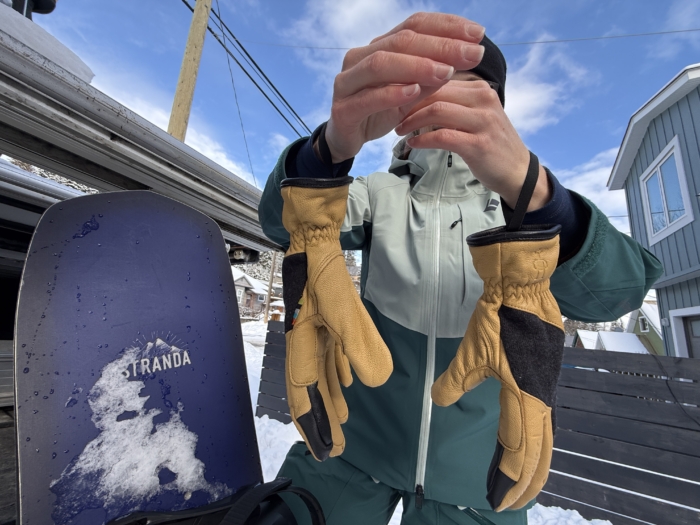
Hallaleujah, a pair of gloves with functional touchscreen power! Our fingers rejoice. Made with a soft-brush merino liner, the Smartool Ridgeway Glove ($90) is a comfortable everyday winter glove for shoveling, driving, and grabbing grocery bags. Highly dexterous, simple, and clean-looking, the Ridgeway is our new favorite go-to for cold season errands.
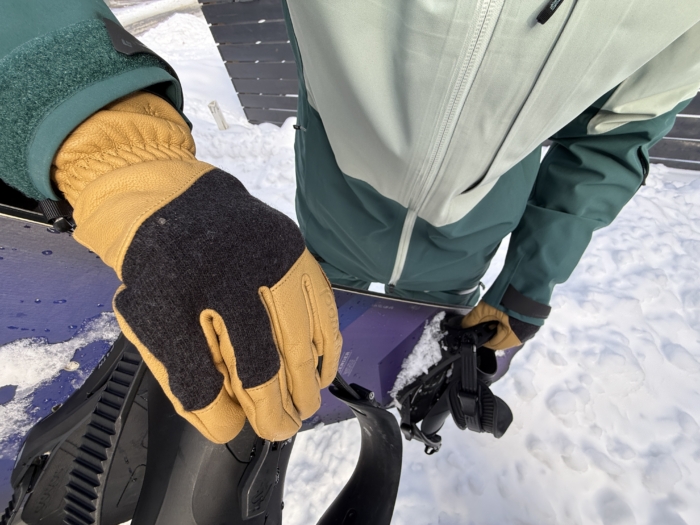
The Ridgeway offers smooth merino next to skin, and a fully goat leather exterior. Across the back of the knuckles is a wool panel that is soft and convenient for wiping away moisture from sunglasses or the face, as Senior Editor Morgan Tilton found while testing these gloves throughout the season in Colorado and British Columbia. A simple, slender elastic band is fixed to each rib-knit cuff, making it easy to pull the gloves on and off without losing them.
So far, the Ridgeway proves to be water resistant, wind resistant and durable. A leather insert in the first web space helps prevent deterioration in a high-friction zone. The comfortable elastic band around the wrist helps seal out cold air. Plus, a cute buckle keeps the gloves paired when you toss them onto the passenger seat. Tilton tested a size small and noticed the fingers are a bit long, as the sizing is likely better suited for guys (size down, ladies).
If you’re looking for a durable five-finger liner that’s well-constructed with touchscreen capability, go for the Smartwool Liner Glove. And while we wouldn’t recommend this glove for downhill skiing and riding, it’s a perfect combo of qualities for everyday tasks in cold conditions — plus it looks good, too.
Smartwool Liner Glove
-
-
Morgan Tilton winter testing the Smartwool Liner Glove; (photo/Jason Hummel)
-
Morgan Tilton winter testing the Smartwool Liner Glove; (photo/Jason Hummel)
Specifications
Pros & Cons
Pros
- Natural thermal warmth
- Reliable touchscreen capability
- Durable, stylish fit
Cons
- Zero waterproofness
- Not windproof
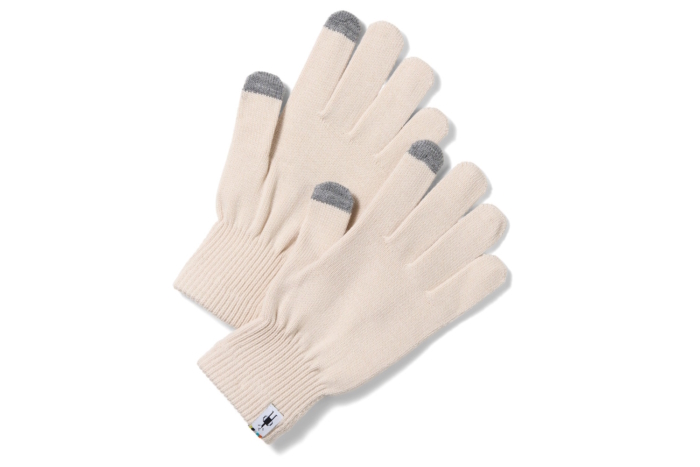
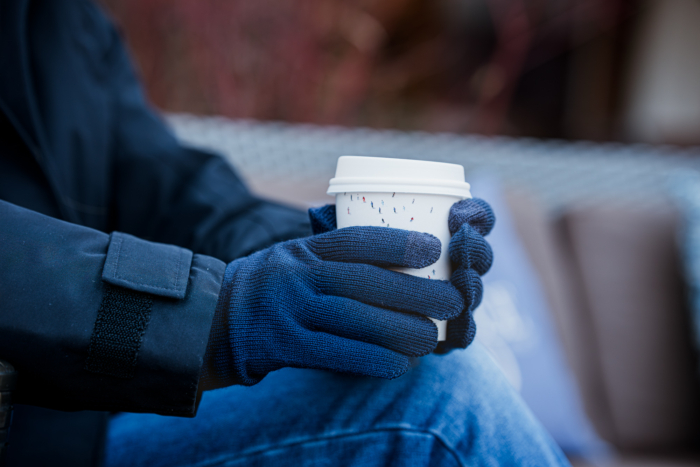
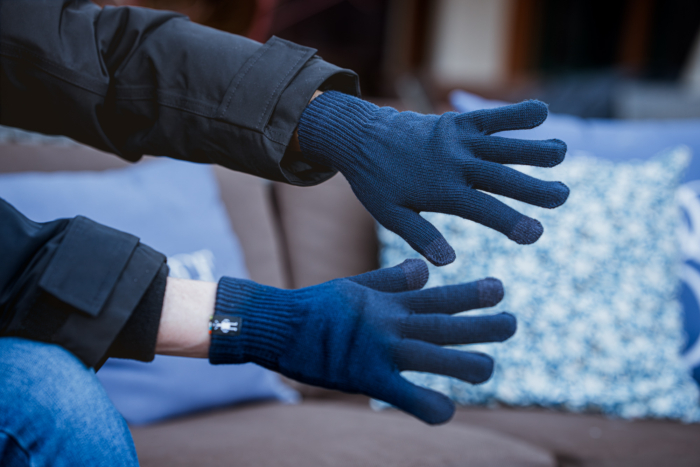
Sometimes simplicity is preferred. The Smartwool Liner Glove ($28) isn’t waterproof or windproof but is as tenacious as a knit glove liner gets. This woven liner is a well-made and attractive lifestyle pair for everyday walks and errands when the temps drop. Plus, the thumb and index finger on each hand are touchscreen-compatible (yes, they work!) so you can operate a phone without needing to pull the liners off.
Most of the low-profile glove liners in our bin are made with technical fleece or a synthetic blend (like recycled polyester and spandex), which are quick-drying and slender for slipping beneath ski gloves. This Smartwool set rounds out the options with a merino wool weave, which is topped off with recycled polyester. The result? A slightly heavier fabric, which Senior Editor Morgan Tilton especially noticed in the palm when gripping, like around the steering wheel. The blend also offers a bit more warmth and odor resistance than synthetic-centric counterparts.
Let it be understood, these are liners. The limitation arrives when clearing a foot of snow off the rig, found Tilton: Her digits got cold when these liners were dampened in below-freezing temperatures, because they aren’t waterproof. Wind would also rip through these puppies. If weather was upon us, we wouldn’t opt for these gloves while biking in winter flurries; We’d suggest the wind-resistant and water-resistant Black Diamond Tour LT, which offer slightly more protection without being a fully waterproof design.
We love the elongated ribbed cuff, which reaches further and feels denser than slender ski glove liners. For chilly days running around town, the Smartwool Liner is a lightweight knit layer that feels sturdy and offers screen functionality while accenting our winter wardrobe.
KUIU Northstar Glomitt
-
-
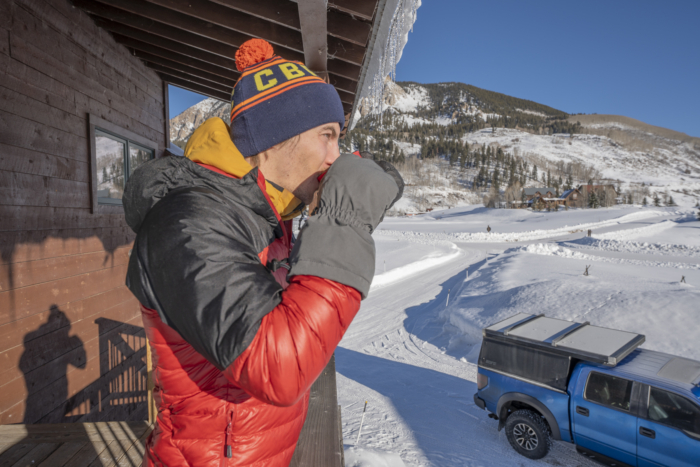
These gloves use a mix of PrimaLoft and wool lining to trap heat, staying warm even when temperatures plunge; (photo/Eric Phillips)
-
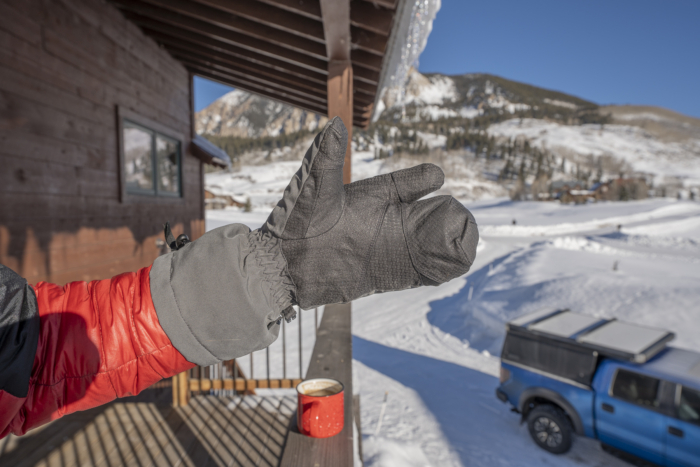
A wide cuff and secure gauntlet make it easy to slide these gloves over layers while blocking out the cold; (photo/Eric Phillips)
-
(Photo/Eric Phillips)
Specifications
Pros & Cons
Pros
- Heavy-duty lobster mitts for below-freezing environments
- Lobster claw design maximizes warmth and finger dexterity
- Lifetime warranty
Cons
- Pricey
- Index finger can feel cramped
- Not offered in a size small
Read Review: Heavy-Duty Lobster Mittens for Frigid Conditions: KUIU Northstar Glomitt
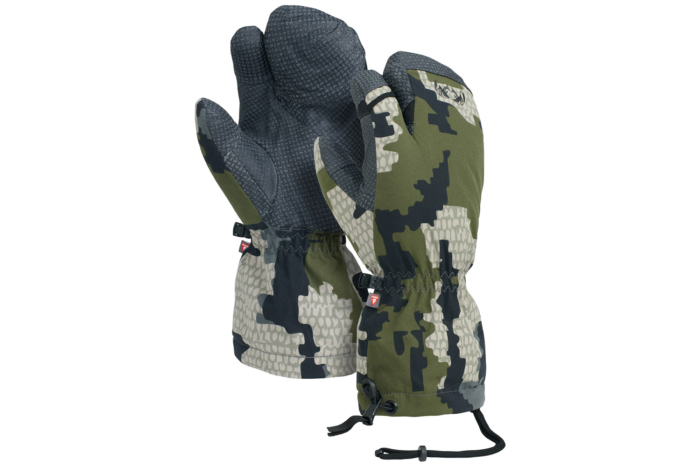
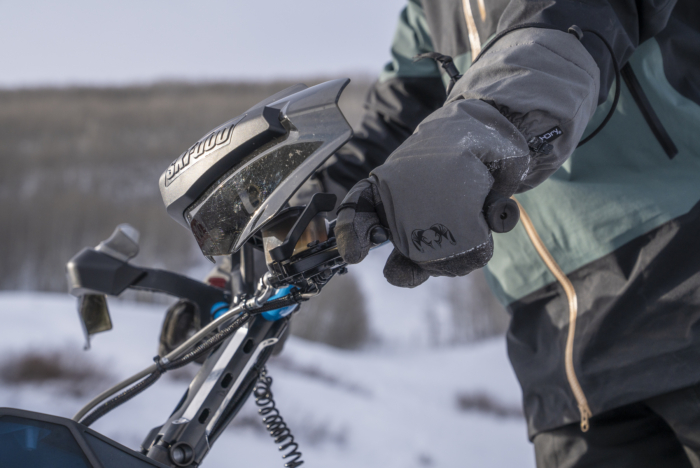
The hunting industry is known for creating gear for rugged environments, and the KUIU Northstar Glomitt ($139) does just that. Designed for below-freezing conditions, the Glomitt walks the line between warmth and dexterity, between a glove and a mitten. We found this design to be the best of both worlds. Beyond hunting and glassing, we were able to do specific tasks across other four-season sports, like strapping in snowboard bindings or using zippers on a backpack, without sacrificing warmth.
That’s thanks to a lobster claw design where the thumb and index finger get their own insulation (like a five-finger glove provides) while the middle, ring, and pinky fingers are lumped together in their own pocket, like a mitten. This design adds the dexterity you would normally get with a glove while keeping some fingers side-by-side for extra warmth. If our index finger got cold, we could easily slide it into the central pouch with the rest of our fingers to get a boost.
These glove-mitts quickly became an essential part of our winter adventures, whether we were wearing them or had them in our pack as an emergency backup pair. They compress well in a backpack. The Northstar also easily slid on over our jacket cuffs thanks to a large, cinchable gauntlet-style silhouette. These lobster mitts also have removable wrist tethers, so we didn’t need to worry about dropping them on the chair lift when checking our phone. After days in the backcountry, skiing or hunting, we found that the Glomitt held up to their windproof and waterproof ratings. And the leather palms seemed durable enough for any kind of activity.
When things got really cold — we’re talking sub-0 degrees — we could feel our index finger getting cold in the individual finger pocket. That’s because it’s the least insulated part of the glove.
The snug fit of the index finger compartment also prevented warm air from circulating that digit. This detail led us to mostly use the glove as a full mitten in super-cold weather, ergo only using the index finger when it was necessary on those frigid days.
Additionally, these gloves are only designed for men, with sizing starting at medium. Folks with small hands are out of luck, although sizing up wouldn’t hurt, in our opinion. These gloves are pricey at more than $100, but that tag comes with a no-questions-asked lifetime warranty, meaning you don’t have to baby these. If they don’t hold up, just send them in under the warranty and get a fresh pair.
Overall, the Glomitt is a fantastic option for any cold-weather activity, whether hunting, skiing, snowmobiling, hiking, chopping wood, or anything in between. While they do come with camouflage options, the brand also offers solid tones.
Black Diamond Tour LT
-
-
Testing the Black Diamond Tour LT while shoveling; (photo/Morgan Tilton)
-
Testing the Black Diamond Tour LT while shoveling; (photo/Morgan Tilton)
-
Testing the Black Diamond Tour LT while shoveling; (photo/Morgan Tilton)
-
Testing the Black Diamond Tour LT while shoveling; (photo/Morgan Tilton)
Specifications
Pros & Cons
Pros
- Exceptional finger dexterity
- Durable leather grip
- Lightweight, breathable design
Cons
- Seams leak water
- Minimal winter insulation
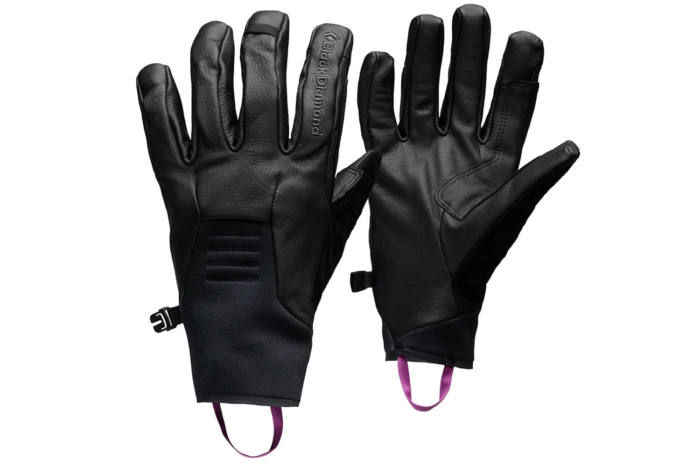
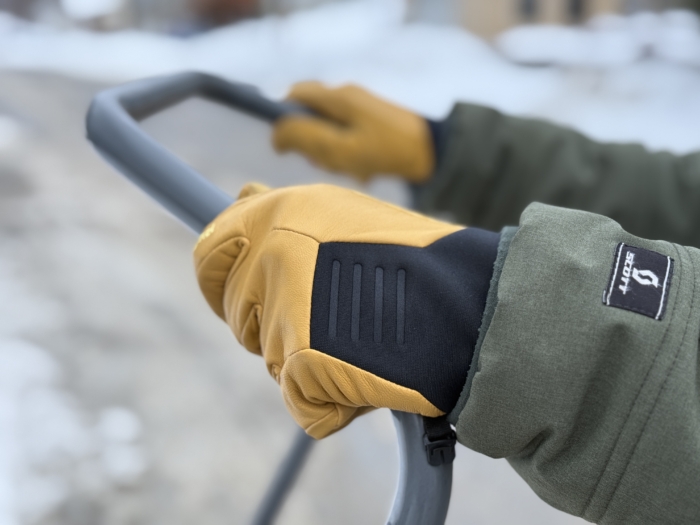
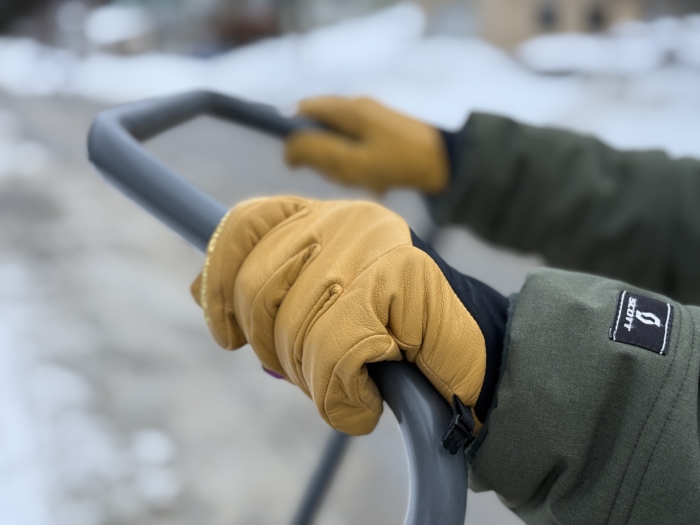
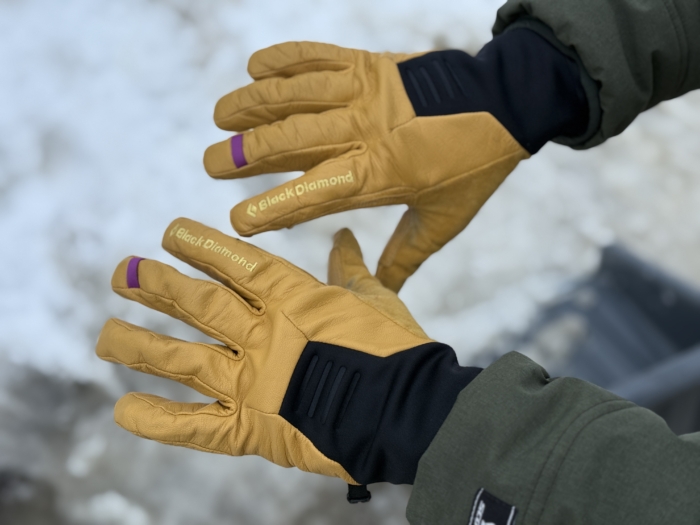
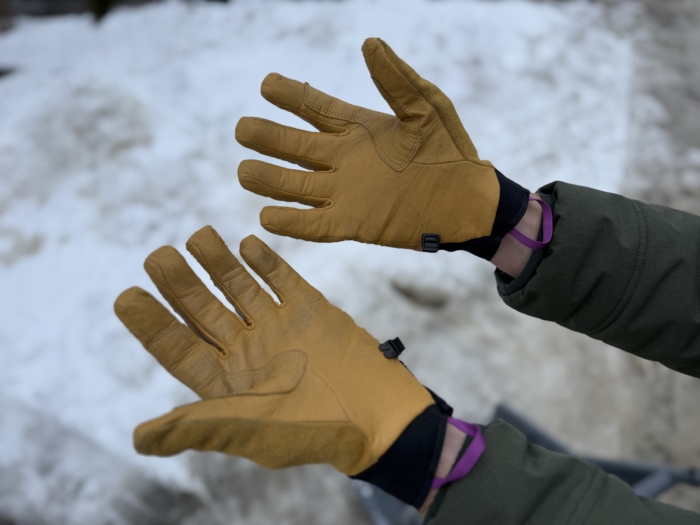
The Black Diamond Tour LT ($90) is a minimalist, high-performance glove that trades bulky insulation for supreme dexterity. Hosting a classic work-glove aesthetic, it is constructed from 100% goatskin leather with the addition of sleek black neoprene that adds both flair and function. Albeit aimed at the ski crowd, this pair works exceptionally well as utility gloves for tasks like shoveling snow, handling tie-down straps on a snowmobile, or hiking.
In the field, the Tour LT proves to be a specialized tool. While it looks the part of a traditional ski glove, its lightweight fleece lining is a bit too thin for resort days in the dead of winter. However, for spring riding or high-output activities like cross-country skiing, it excels. Skimo racers and mountain athletes will appreciate the snug but stretchy fit provided by the neoprene on the top of the hand and around the wrist, which makes the glove easy to pull on without compromising its secure feel. We also liked pulling on the Tour LT for loading the truck or doing maintenance on the snowmobile.
Weighing in at approximately 63g (2.2 ounces) per pair, the Tour LT is lightweight. Functionally, the glove offers an impressive grip on ski pole handles and gear. We noted excellent dexterity for technical tasks, reinforced by durable overlays around the thumb and index finger. A soft suede nose wipe on the thumb is a welcome addition for cold days.
The primary trade-off for this agility is weather protection. The Tour LT lacks a waterproof membrane, opting instead for breathability. During testing, water seeped through the seams when placed under a faucet, and the leather can wet out in heavy snow. For this reason, we wouldn’t choose it for a deep-day ski tour where moisture management is critical. But the Tour LT became our go-to everyday winter glove, providing durable, form-fitting, and comfortable protection for our hands — and it looks good, too.
Dakine Leather Titan GORE-TEX Gloves
Specifications
Pros & Cons
Pros
- Good dexterity for a heavily insulated glove
- Zipper stash pocket
- One-hand cinch gauntlet
- Nose-wipe panel
Cons
- Thumb mobility is limited
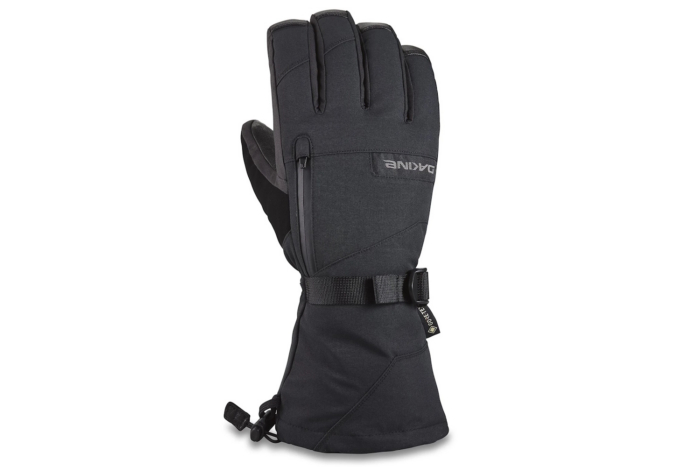
Even though mitts are usually warmer than gloves, they can sacrifice the use of your fingers if you don’t take them off. The long-cuffed and fully waterproof Dakine Leather Titan GORE-TEX Gloves ($116) offer the best of both worlds: top-notch warmth and dexterity. For a larger gauntlet fit and removable toasty liner, check out the Hestra Army Leather Heli Ski Gloves.
The gloves are equipped with Hi-Loft insulation and a waterproof and breathable GORE-TEX membrane. Seams stitched on the outside, not the inside, reduce pressure points if you’re poling while splitboarding. On the palm, you get full coverage with durable goat leather for a better grip whether it’s for a grab or ratcheting your binding.
As a bonus, the removable and stretchy glove liner of the Leather Titan GORE-TEX Gloves is touchscreen-compatible. Gone are the days of chilly fingers resulting from cold air exposure after sending a quick text. For all-day shredding on the mountain, these are the best winter gloves for the job.
Black Diamond Legend Gloves
Specifications
Pros & Cons
Pros
- Warm
- Durable, flexible leather in the palm and fingers
- Wrist-leash with wide band
Cons
- Not touchscreen-compatible
- Pricey
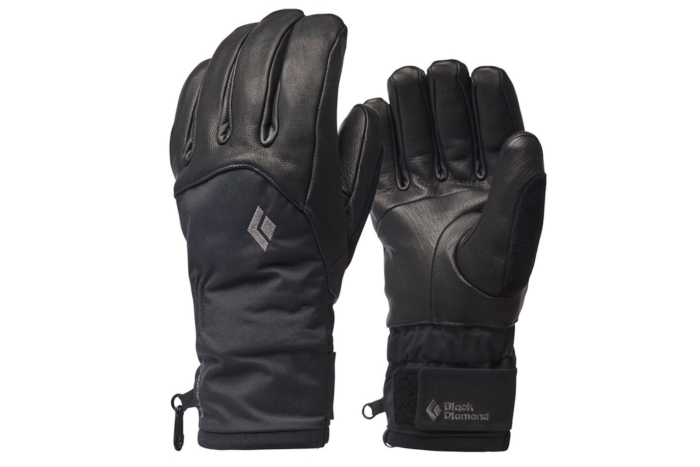
Designed by professional snowboarder John Jackson, the Black Diamond Legend Gloves ($160) are — no surprise — high-quality with all the features that you need. They are completely waterproof and breathable with an inserted GORE-TEX membrane, so they’ll hold up even on the snowiest of days or while digging pits in the backcountry. If it’s more than 20 degrees and sunny outside, opt for a thinner independent hand liner, as the interior can get a bit swampy during activity.
With 170 g of PrimaLoft Gold on the back of the hand and 60 g on the palm, we found our hands stayed warm with these puppies on, though dexterity was a bit compromised. Regardless, clipping in and out of snowboard bindings was still easy, thanks to the palm’s grippy goat leather. Plus, the gloves have removable wrist straps, so the chance of dropping and losing one is slim.
Depending on the day or athlete, an undercuff might be preferred over a larger gauntlet. The Legend Gloves will keep you comfortable and happy on snowy, deep-powder days with a sturdy, neoprene undercuff that easily and efficiently slides under jacket sleeves with little bulk. There isn’t a pull tab to get these on quicker, but there is a large hook-and-loop closure strap to tighten and seal out any cold air or snow.
Vermont Glove Tuttle
Specifications
Pros & Cons
Pros
- Extremely durable
- Exterior seams keep the interior very smooth and comfortable
- Double-stitched fingertip seams
Cons
- Pricier choice
- A bit stiff out-of-the-box
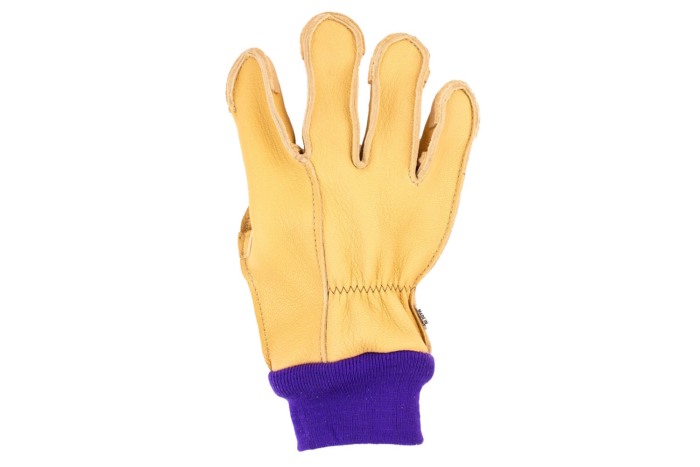
With a classic leather work glove inspiration, the Vermont Glove Tuttle ($150) is the silhouette with a ribbed, woven undercuff that’s stretchy and wrist-hugging, which is great for sliding beneath a jacket cuff or sweater sleeve. Plus, debris can’t fly inside. Tried and true, Vermont Gloves has been hand-making goat leather gloves in Randolph, Vermont, since 1920 — more than 100 years of craftsmanship.
While this leather is rugged for everything from yard work to handling skis with metal edges, it’s not inherently waterproof and will saturate with water in wet climates, so it needs to be conditioned with an aftermarket waterproof treatment ($15). Alternatively, the Give’r 4-Season Gloves is a bit less maintenance because the all-leather cowhide exterior is paired with a 100% waterproof and breathable Hipora membrane.
While other models are in the brand’s lineup, the Tuttle is a colder-weather choice with a liner made of 50-50 wool and recycled polyester. Although it’s not as soft as brushed fleece, it’s certainly not coarse and proved to be warm while shoveling, driving, and running errands in below-freezing conditions. Plus, the seams are stitched on the exterior of the glove, which helps keep the interior smooth. Wrapped around the base of the thumb is a double wall of material for durability.
Also reinforcing the durability, the Tuttle’s fingertips are double-stitched. A heavy-duty nylon thread was used to tie all the pieces together by hand. The brand’s so-called vein protector helps to keep the glove’s seam from straining when you snug it up by the cuff. In step with the hands-on craftsmanship, the Vermont Glove team offers a print-out glove sizing chart to help you narrow down the best size for your hands.
Alternatively, they provide directions for measuring your hands without the print-out, but if your index finger is between sizes, they provide customer support to help you select the best option.
While we’ve only tested these Vermont gloves for a winter season, we anticipate they should last for many, which is also evidenced by the stiff, supportive, and strong feel of the glove. It takes time to break in and is anything but a soft liner glove.
That said, be sure to consider sizing down if you’re between sizes because the leather stretches and conforms to your hand over time. Meaning that some parts of the glove that are more spacious could become more fitted while spots that are tighter loosen up.
For us, this meant there was initially quite a bit of space above our pinky and ring fingers that’s dissipating a bit as our knuckles pack out the backside of the glove. Periodically, the lanolin — the natural oil found in goat leather that keeps it supple — needs to be retreated with a conditioner ($16), too.
Other Worthy Winter Gloves In Our Gear Closet
While these seven sets of winter gloves didn’t make the cut for our accolades, we keep each of these pairs in our mud room, car, or pack as a backup.
-
-
Photo/Dane Tudor
-
Photo/Dane Tudor
-
Photo/Morgan Tilton
-
Photo/Morgan Tilton
Specifications
Pros & Cons
Pros
- Soft interior liner
- Includes removable wrist leash
- Functional flexibility across leather palm
- Knit cuff blocks cold air and wind
Cons
- Synthetic leather outer wets out and is not waterproof
- Insulation value reaches limit around 15 degrees Fahrenheit
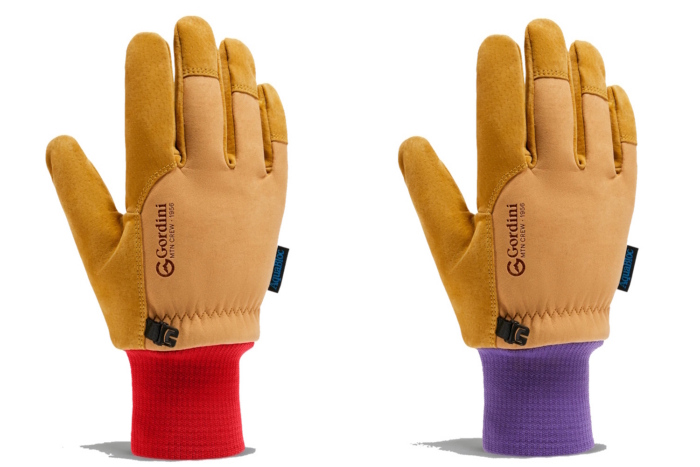
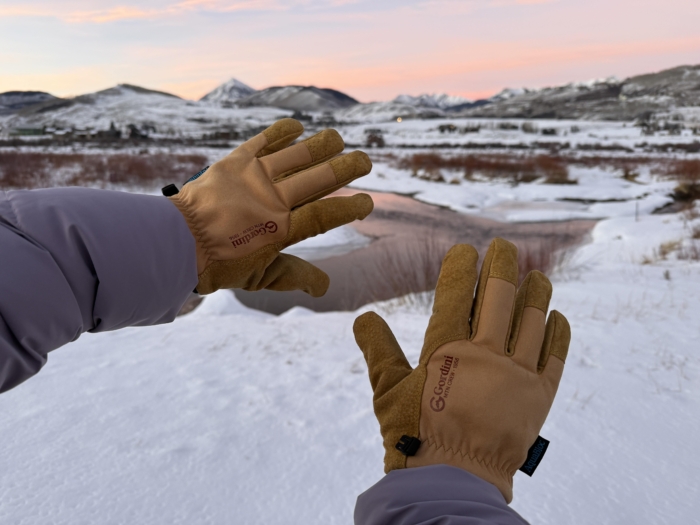
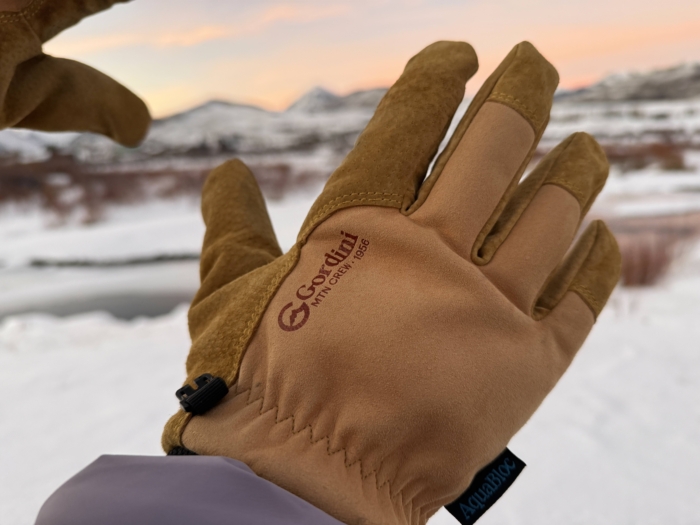
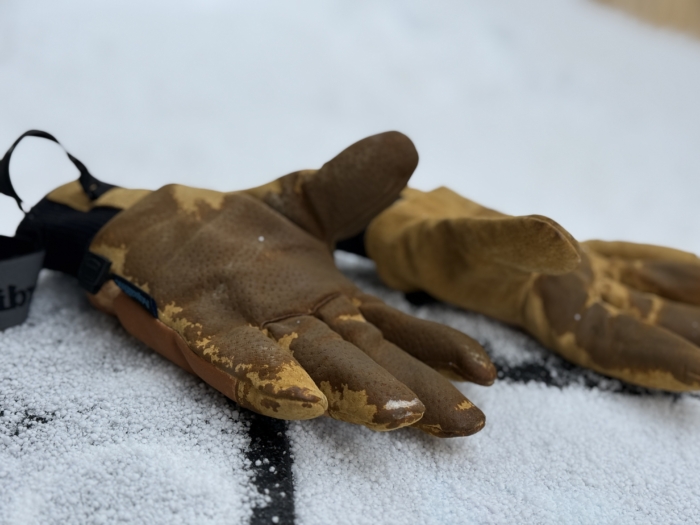
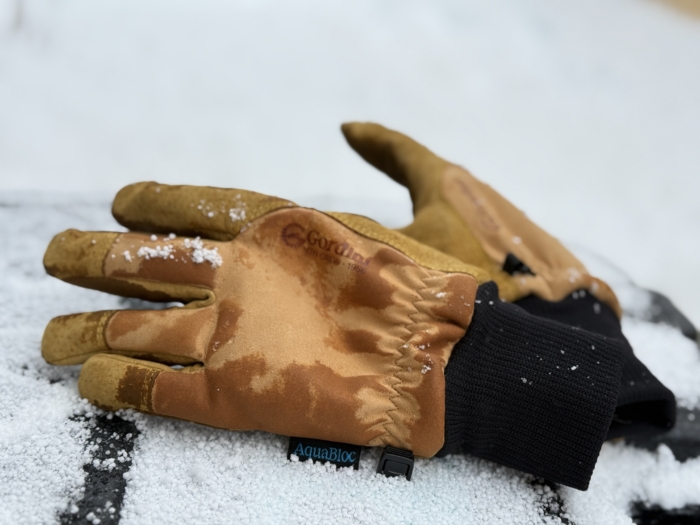
Some winter gloves are built for lift lines and powder days. Others are simply meant to live by the front door. The Gordini MTN Guide Glove ($50) falls firmly into the latter — a do-it-all, throw-it-on pair we kept reaching for to run errands, scrape windshields, shovel the trailer, and take evening walks.
Based in a blustery high-altitude town with overnight lows down to -20, Senior Editor Morgan Tilton rifles through winter gloves daily. For everyday tasks, she appreciated that the MTN Guide includes a (removable) wrist leash, increasing functionality. The long knit cuff is easy to slide on and inherently keeps out gusts or powder bombs while clearing snow.
Inside, the moisture-wicking polyester liner is relatively soft, while synthetic insulation provides warmth. During wintry sunset walks or shoveling the rigs, Tilton found that these puppies reached a warmth ceiling at around 15 degrees Fahrenheit. Though the MTN Guide has a waterproof, windproof, breathable insert (AquaBloc), the exterior synthetic leather shell and boar leather palm absorb moisture, which was visible after Tilton’s hour of shoveling.
A strip of leather on the cuff helps you easily pull them on, and the material feels flexible out of the box. With little resistance, Tilton could create a fist and wrap her hand around tools. For only fifty bucks, the MTN Guide is a comfortable, pliable winter glove for everyday tasks. If you need an everyday winter glove that’s more durable, consider the Vermont Glove Tuttle, but be aware that it’ll be stiffer and three times the cost. For a more waterproof pair, scope out the Dakine Leather Titan GORE-TEX Gloves.
Specifications
Pros & Cons
Pros
- Clean, elegant style
- Good value
- Quite warm for their weight
Cons
- Not ideal for active use
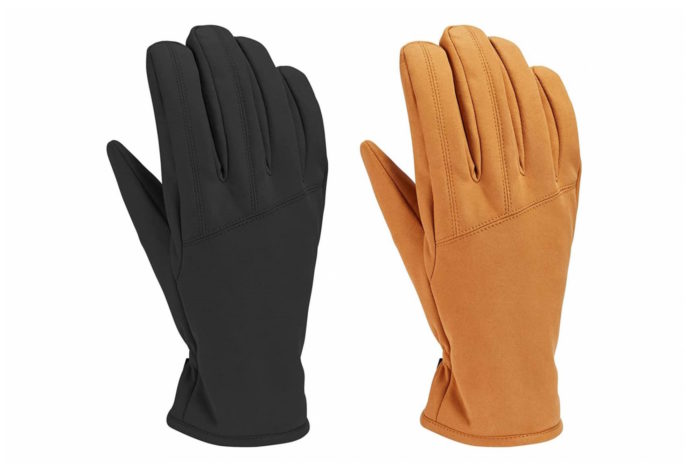
The Gordini Fayston Gloves ($72) are simple, elegant, and a solid value. For running errands in Breckenridge, Truckee, and the rest of the great mountain towns, the Fayston is perfect everyday attire.
As this glove is more in the lifestyle category, it isn’t really meant for heavy outdoor activities but is a great pick for running around town. The Thindown insulation and moisture-wicking lining are designed to keep your hands cozy while walking to the bar, going for a stroll, or shopping at the resort base area.
We tested the Fayston Gloves on chilly morning walks in the Colorado Rockies and were impressed with the elegant design and general comfort. For such a thin glove, the Fayston kept our hands comfortable in temps as low as 10 degrees. Men’s and women’s sizes are available.
Specifications
Pros & Cons
Pros
- Touch screen compatible
- Made from recycled materials
- 4-way stretch for dexterity
Cons
- Not for extremely cold weather
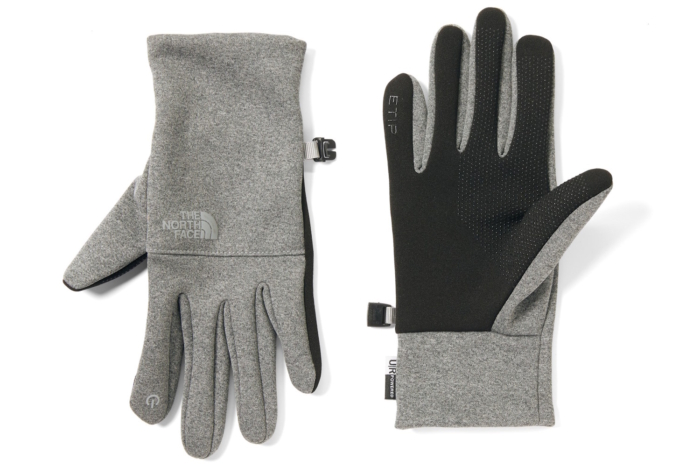
Though they aren’t ideal for the coldest of winter days, The North Face Etip Recycled Glove ($45) is perfect for wintertime active use and is made from 93% recycled polyester. From trail running to skiing, these lightweight yet warm gloves are highly versatile and can serve as a glove liner when you need a little extra insulation. There’s also a broad size range from XS to XXL.
It’s difficult to strike a balance between insulation and breathability, but the Etip Recycled Gloves are up to the challenge. During high-intensity winter activity, these gloves allow ample airflow and prevent sweating. Silicone texture added to the palms provides solid holding power on ski and trekking poles, while the stretchy fabric allows for freedom of movement.
Of all the touchscreen-compatible gloves on the market, the technology of Etip Recycled Glove is among the most consistent and reliable. Wearers of these gloves will appreciate frustration-free smartphone operation.
Specifications
Pros & Cons
Pros
- Very warm
- Leather repels water but is fully breathable so hands don’t get sweaty
- Extended wrist cuff
Cons
- Not touchscreen-compatible
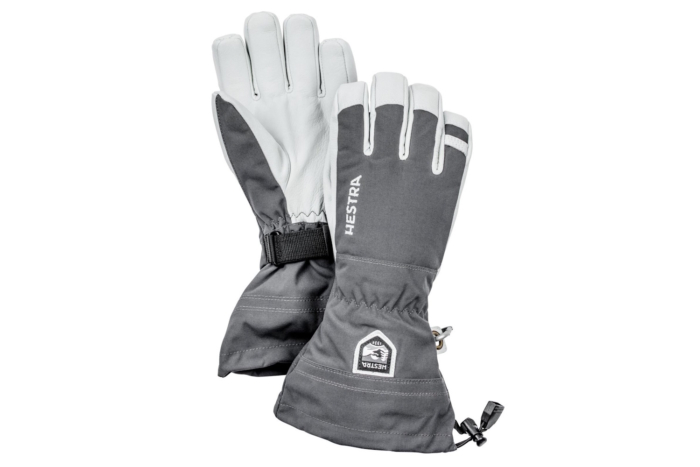
Designed for the rough conditions faced by professional ski guides in Western Canada, the Hestra Army Leather Heli ($185) winter gloves are like putting on your favorite sweater and most durable safety vest at the same time. The three-layer dobby polyester melange is soft and molds to your hand over time. The proofed goat leather palm material is durable and water-resistant. There’s a snow lock on the collar to close the opening and shield snow, as well as a Velcro strap on the wrist to block elements.
This reliable five-finger glove is fully equipped for harsh conditions. Inside, the removable liner is deliciously cozy and warm but not bulky. That’s in addition to the integrated liner: a medium-heavy polyester fleece with a brushed surface.
We like the extended wrist cuffs and integrated Velcro cinch. Even on the deepest of days, these gloves keep bits of snow from entering at the opening.
We also appreciate the included eyelet on the ring finger, which the included carabiner can swoop through to attach your gloves to your harness or ski pants or to hang them up inside — a great convenience. As yet another mark of Hestra’s attention to detail, the finger design is pre-curved, resulting in a wonderfully anatomical fit.
Ultimately, we recommend the Army Leather gloves to skiers who spend lots of time in cold conditions with lots of snowfall. They are certainly on the more expensive end of the spectrum, but if you’re looking for high performance and durability, the Heli Ski is a solid value.
But if you’re looking for a glove with a touchscreen-compatible liner, check out the Dakine Leather Titan GORE-TEX Gloves, which also has a slightly more narrow, slimmer gauntlet.
Specifications
Pros & Cons
Pros
- Well-made
- Durable
- Great dexterity
Cons
- Relatively expensive for lightweight gloves
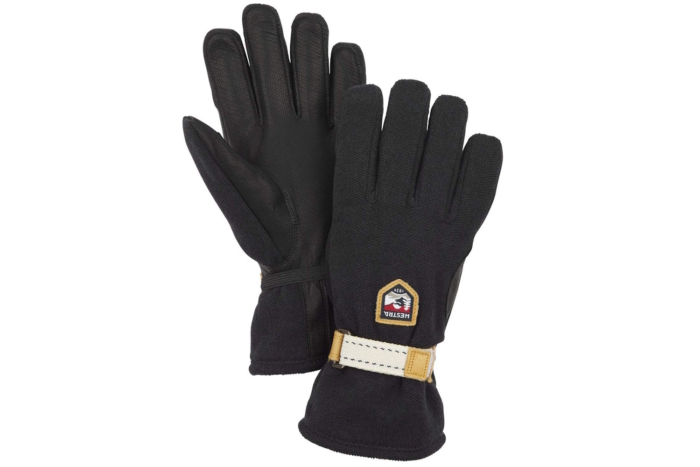
For Nordic skiing, less is more. We picked the Hestra Windstopper Tour ($75) for its lightweight profile, grippy goat leather palm (that never got saturated with snowmelt or sweat), and stylish look.
This Windstopper pair is internally lined with GORE-TEX Infinium micro-check material, which keeps the windchill out without sacrificing breathability. Though these gloves include minimal insulation, a layer of fleece on the backhand provides just enough warmth for cross-country touring and other active outdoor activities.
Like all Hestra products, the Windstopper Tour is well-made and plenty durable for regular use. From a versatility standpoint, we love that these gloves also work well for jogging, running errands, and simply getting your hands warm throughout the winter.
Specifications
Pros & Cons
Pros
- Warm
- Reinforced with leather in high-wear areas
- Lighter and less bulky than most other gloves in the category
Cons
- Not touchscreen-compatible
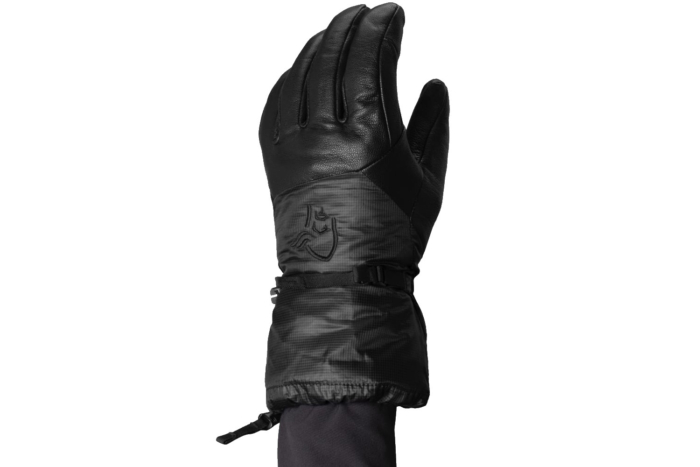
If you want warm hands this winter regardless of what you’re doing, the Norrøna trollveggen GORE-TEX ($249) is our pick for the best winter glove. It’s made for mountaineering with a mid-length cuff and goat leather palm. Particularly noteworthy is the shell, which is made out of a recycled Cordura ripstop blend that’s rather flexible but extremely tenacious at 30-denier. But you don’t need to have big-mountain summits on your bucket list to wear them.
These gloves are significantly lighter and more supple than other big mitts. They also have a tough, light, flexible, and trim cuff that makes them easy to slip on. On blustery days, keep the warmth in with the low-profile, one-hand tighten-and-release wrist strap, or seal your hands inside with a pull tab on the cuff.
A wool-polyester liner (with 53% recycled polyester) under the synthetic-insulated shell wasn’t as fuzzy as fleece but gave the gloves dexterity for gripping a ski pole, a mountaineering axe, or holding onto a sled handle. It also kept the inside from ever feeling sweaty. Use the stretchy, removable wrist straps to prevent dropping them in the snow when you take these off to send a text or snap a pic.
Overall, this Norrøna pair tops our list as a formidable, versatile, and comfortable glove that still allows for dexterity. Not to mention, there are several tags of sustainability including Oeko-Tex fabric, PFC-free DWR, Bluesign accreditation, and inclusion on the Open Factory List.
If you’re looking for a lower-cost option for sports, including skiing, check out the Hestra Army Leather Heli Ski Gloves, which cost $70 less. The Army Leather five-finger has a removable liner, so it’s more adaptable across a temperature range.
Specifications
Pros & Cons
Pros
- Durable
- Good dexterity
- Warm
Cons
- Requires a short break-in period to reach optimal feel
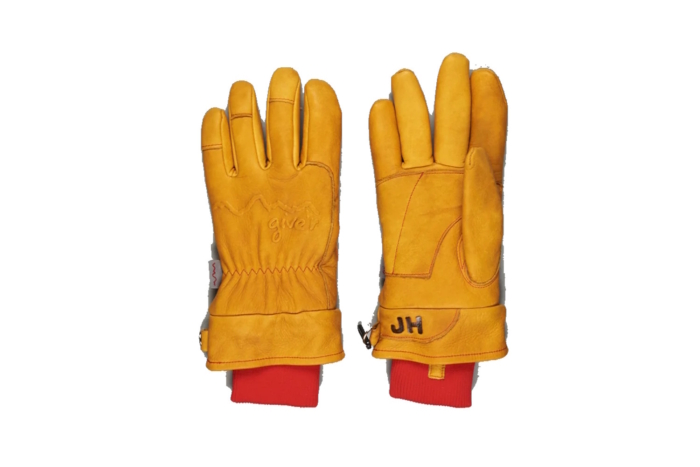
The Give’r 4-Season Gloves ($119) have been such a hit with wearers over the years that they made a pair of mitts, too. The versatile gloves have a following, and it’s no surprise why. The Give’r Gloves have the old-school aesthetic but with all the features and tech that a solid winter glove needs.
The all-leather cowhide exterior is paired with a 100% waterproof and breathable Hipora membrane, so your fingers will stay dry in whatever condition you wear these in. For warmth, the gloves have a Thinsulate inner layer, 150 g of insulation on the palm, and 260 g of insulation on the outside. A reflective heat shield is also on the front of the glove. If you want a bit less insulation in a work-like leather winter glove, check out the Vermont Glove Tuttle.
At first, the leather mitts feel a bit stiff, and take some break-in time to truly feel the most comfortable and malleable. To keep the 4-Season Gloves lasting for as long as you plan to use them, wax them every season with a waterproofing wax, like Sno Seal Beeswax Waterproofing. Although a solid winter glove, the elastic undercuff with the short leather cuff did feel a bit bunchy under a ski and snowboard jacket.

Winter Gloves Comparison Chart
Scroll right to view all of the columns: Price, Shell/Material, Cuff Type, Insulation, Waterproof.
| Winter Gloves | Price | Shell/Material | Cuff Type | Insulation | Waterproof |
| Smartwool Ridgeway | $90 | 100% Goat leather, wool knuckle panel, web space reinforcement | Rib-knit cuff with slender elastic band and snap pairing buckle | Soft-brushed Merino wool blend lining (70% Merino wool, 30% nylon) | Water-resistant and wind-resistant leather (not fully waterproof) |
| Smartwool Liner | $28 | 48% merino wool, 48% recycled polyester, 1% elastodiene, 1% elastane, 2% other fiber | Rib-knit cuff | Uninsulated/natural merino wool thermal regulation | None |
| KUIU Northstar Glomitt | $139 | PrimeFlex Polyester, Pittard’s OilTac Leather | Gauntlet style for over-the-cuff use | Primaloft Gold with Cross Core (340 g on the back; 170 g on the palm) | HDry Waterproof Membrane |
| Black Diamond Tour LT | $90 | 100% Goatskin leather with neoprene back-of-hand and thumb/index finger overlays | Form-fitting neoprene slip-on cuff with pull loop | Lightweight fleece lining | Water-resistant leather; no waterproof membrane |
| Dakine Leather Titan GTX | $116 | Goat leather palm with a polyester fleece lining, synthetic insulation, and a waterproof membrane | Long gauntlet cuff | 280g high loft synthetic | No |
| Black Diamond Legend | $160 | GORE-TEX insert, goat leather, fleece lining | Neoprene undercuff | 170g PrimaLoft Gold on the back; 60g PrimaLoft Gold on the palm | Yes, GORE-TEX |
| Vermont Tuttle | $150 | 100% full-grain leather | Undercuff, woven | 50% wool, 50% polyester liner | No, but waterproof treatment can be added |
| Gordini MTN Guide | $50 | Synthetic leather shell with durable boar leather palm; moisture-wicking lining | Low-profile knit undercuff | Megaloft synthetic insulation | Yes — Aquabloc waterproof, windproof, breathable insert |
| Gordini Fayston | $72 | Synthetic leather shell (nylon) and a polyester lining | Short gauntlet cuff | 45g Thindown insulation | No |
| The North Face Etip Recycled | $45 | Recycled polyester and elastane softshell | Short under-sleeve cuff | Thin fleece layer | No |
| Hestra Army Leather Heli | $185 | Water-resistant leather and polyester with a removable polyester liner | Long gauntlet | 100% Polyester G-Loft | No |
| Hestra Windstopper Tour | $75 | Melange fleece with a goat leather palm | Short gauntlet cuff | Fleece and micro check liner | No |
| Norrøna trollveggen GTX | $249 | GORE-TEX insert, goat leather, PrimaLoft, OEKO-TEX-certified fabric, PFC-free DWR, Bluesign-certified fabric | Medium-length gauntlet cuff | 130g PrimaLoft Gold | Yes |
| Give’r 4-Season | $119 | All leather cowhide exterior | Elasticated undercuff | Thinsulate and polyester fleece lining; 150g on the palm side with 260g on the external hand | Yes, waterproof membrane, with wax coating for additional leather protection |

How We Tested the Best Winter Gloves
Our GearJunkie winter crew of five testers has put dozens of winter warmers through the wringer since this guide was first published in 2021. This guide has been updated eight times.
Our Expert Testers
- Senior Editor Morgan Tilton specializes in snowsports buyer’s guides and grew up playing in snow at 9,000 feet. Based in the frigid, snowy wonderland of Crested Butte, she uses winter gloves daily to run errands, shovel, commute, manage her snowmobile trailer, and drive.
- Professional big mountain freeskier Dane Tudor uses winter gloves daily in his home base of British Columbia.
- Gear tester, reviewer, and photographer Eric Phillips is a splitboarder, search-and-rescuer, hunter, and snowmobiler based in the Colorado Rockies.
- Gear tester Mattie Schuler is no stranger to cold weather — she grew up in Wisconsin and teaches kids at a Colorado-based outdoor school — in cold, windy, and wet weather. She’s tested dozens of winter gloves and is admittedly picky about things like the nose wipe and wrist leash length.
- Contributor Austin Beck-Doss is based in Wyoming.

Our Testing Grounds
We have tested more than 30 pairs of winter gloves in the American Northeast, Southeast, and Southwest, as well as the Rockies, Canada, and Iceland. Temperatures ranged from -20 degrees to the 40s (Fahrenheit).
We worked outside and in the yard, shoveled mounds of snow, and ran errands in storm flurries. We played: alpine, backcountry, and Nordic skied, snowboarded, hiked, fat biked, snowshoed, skated, sledded, dog walked, and had snowball fights.
Our Testing Process
While testing to find the best gloves for winter, our team considers the waterproofness, breathability, durability, dexterity, how well they kept the weather out, ease of entry and exit, and taking a phone photo.
We also consider gripping a ski pole, steering and opening a vehicle door, riding a bike, leveraging a shovel, and packing a snowball.
Before field tests, we take into account the most popular, innovative, and acclaimed winter glove designs across applications and price points.

Our Winter Gloves Rating System
We score each pair of winter gloves on a 1–10 scale for Warmth and Insulation, Weatherproofing, Dexterity and Grip, Durability and Reinforcements.
- Warmth and Insulation: Based on the type of insulation (down, synthetic, hybrid), insulation weight, and removable liners. We test every pair for the intended insulation value.
- Weatherproofing: While considering weatherproofing, we take into account how the winter gloves shield from moisture and wind.
- Dexterity and Grip: Examines the overall fit and how it translates to hand control with shovels, door knobs, bike handlebars, snow blowers, dumpsters, and other outdoor equipment. We take note of pre-curved fingers, articulated seams and panels, materials that enhance grip, and stretch panels for flexibility.
- Durability and Reinforcements: Considers how the winter gloves endure abrasion from scraping ice off the windshield or hooking up a snowmobile trailer: are there reinforced palms, knuckles, or fingers? Are the seams double-stitched?
The Overall Rating is based on contextual, editorial judgment, and the complex user experience across various scenarios and conditions.

Buyer’s Guide: How to Choose Winter Gloves
Winter gloves are a massive category that encompasses many different types and styles. The recommendations that we’ve included on this list represent a broad spectrum of options, and it can be tricky to identify the best pair for you.
Overall, in your go-to collection of gloves, you should have a few pairs that range from super warm to lightweight, with a medium warmth in the middle. That way, you aren’t sporting a thick, heavy glove when it’s a 35-degree sunny day outside. You’ll have a pair that fits exactly the conditions you need, whether that be a warmer, waterproof pair during super cold temps or a lighter design or liner during warmer winter days.
While some winter gloves are versatile enough for all sorts of applications, others are specifically designed for a singular purpose.
When choosing a pair of winter gloves, there are many important factors to consider. In this handy how-to-choose guide, we break down each of these factors to help you streamline — and hopefully enjoy — the selection process.

Active & Passive Activities
If you’ll be using your gloves as an activewear accessory — such as holding onto a ski pole, ice axe, or chainsaw — choose a glove that offers dexterity. The most dexterous gloves will allow you to articulate each finger independently for improved grip and active functionality. On this list, The North Face Recycled Etip Gloves offer uninhibited dexterity.
If you’ll be using your gloves strictly to keep your hands warm while commuting or walking outside, dexterity and workability are less important. If this is the case for you, we recommend gloves that are warm and well-insulated.
If you don’t need dexterity, you may as well take advantage of maximum warmth.

Lobster Claws & Mittens
We focus on winter gloves here. But for those who regularly suffer from uncomfortably cold hands, mittens are the warmest form of hand protection. When encased in a mitten, your fingers are able to keep each other warm by proximity.
The major downside to mittens is loss of dexterity. When you need the use of your fingers while walking around town or snowboarding, for example, mittens are great, but for manual labor or gripping a ski pole, mittens aren’t ideal.
Lobster claws are the middle ground between gloves and mittens. Usually, one or two fingers are isolated from the other three or four, resulting in two separate claws that can move independently. This style may be a good option for those who have chronically cold hands but still need some dexterity.
Still, lobster claws are significantly less dexterous than traditional gloves. Winter mountain bikers commonly choose to wear lobster-style gloves.

Skiing & Snowboarding
While all of the gloves on this list are high-quality options and well-qualified for winter use, not all of them are ideal for skiing and snowboarding. Skiing and snowboarding gloves need to be reliably waterproof and durable enough for active use, including ample friction with ski poles and bindings or backpacks and carrying gear. They also need to be comfortable in a wide range of conditions, because you’ll be out there with ’em on for a while and the weather can turn upside down.
On this list, the Dakine Leather Titan and the Hestra Army Leather Heli Ski Gloves are solid choices for bell-to-bell shredding at the ski resort or in the backcountry. Otherwise, read more about our favorite ski gloves.

Ski Pole Connectivity
One very niche feature of some winter gloves, and specifically ski gloves, is their ability to connect to ski poles, like with those from Leki.
Leki has the Trigger System, which offers a built-in, tiny loop in the thumb saddle of some of their mittens and gloves that then connects to the brand’s ski poles. This helps provide more user control and a quick and easy on-and-off, but is also supposedly safer with a rapid-release mechanism.
If you’ve got LEKI poles but aren’t a fan of the brand’s gloves, you can also use the Trigger S straps, which is a harness that goes over your gloves to still be able to connect to the poles.

Durability & Materials
Durability is an important consideration when choosing winter gloves. Our hands make contact with surfaces more than any other part of our body, and the constant movement and action can cause gloves to wear rapidly.
Ultimately, a glove’s durability comes down to its construction and materials. The longest-lasting gloves tend to be made of high-quality leather, and many have added reinforcements. The Norrøna trollveggen has additional leather in high-wear areas, like the palm and fingertips.
On this list, the Norrøna trollveggen leather gloves and Give’r 4-Season Gloves are among the most durable we’ve ever tested. The downside of leather gloves is that they require regular maintenance. A waterproofing treatment such as Sno-Seal or Nikwax can significantly help maintain the waterproofing ability and general quality of a pair of leather gloves.
Nylon outer shells can also offer long-lasting durability. Though not as supple as leather, nylon is hardy and requires less maintenance.
Aside from nylon and leather, many thinner winter gloves are made from wool, fleece, and cotton. Generally, cotton is not ideal, as it takes a long time to dry and tears easily.

Cuffs & Gauntlets
Choosing a glove that has a large gauntlet cuff or a small undercuff comes down to the amount of protection you need from snow, wind, and cold temperatures, as well as personal choice and style plus your layering system.
With a larger gauntlet cuff, the cuff goes over the cuffs of your winter coat, like with the Hestra Army Leather Heli Ski Gloves. Then, tightening the wrist cinch makes it so no snow or wind gets in during a long day. Wrist cinches also help to ensure a secure, proper fit on your hands.
With an undercuff, like the 4-Season Give’r Gloves, you’ll have less bulk around your wrists, but a higher chance of snow or wind getting near your wrists and into your coat.
If your coat or midlayer has built-in wrist covers and thumb holes in the sleeves, then a gauntlet or undercuff comes down to personal preference, as your wrists will be covered and protected from any snow getting in.

Type of Insulation
Insulation is the part of the gloves that adds that extra padding and warmth around your fingers, palms, and back of your hand. There are two main types of insulation, down and synthetic, or a product can include a mix of both.
The majority of our favorite winter gloves are made with synthetic insulation, which has a strong resilience to getting wet or damp, so the gloves can retain their warmth properties.
Down
Natural down fill is often made of duck down or geese down (the finest, lightest feathers), and is extremely lightweight, very packable (like what you want in a down jacket), and is overall warmer than synthetic down. The Gordini Fayston gloves use natural down.
The down is technically Thindown, a natural goose down fabric that is RDS-certified or post-consumer recycled. The material is packed into a streamlined, flat layer that resembles a piece of fabric, rather than the down being stuffed inside stitched-together fabric.

Synthetic
Synthetic insulation, however, keeps you warm even when damp because it is made from polyester, and keeps its insulation power and ultimately dries faster. Many more companies are opting for recycled synthetic fill.
Hybrid
Winter gloves can include a mix of insulation with both synthetic material and down fill.
Amount of Insulation
When you see a number in grams next to a pair of gloves, that’s the amount of synthetic insulation.
If the glove is made with natural down feathers, the most common notation is the fill power, like 800-fill mittens for hunting. Typically expressed in the hundreds, the value reflects the loft of down inside the product. That volume is calculated based on the number of cubic inches that one ounce of that particular down can take up. Loftier down will have a higher fill, which means more warmth at a lighter option.

None of our selected winter gloves on this top picks list have down fill. Here is a side-by-side comparison of the amount of synthetic fill offered in each pair:
Amount of Synthetic Insulation (Grams):
- Dakine Leather Titan GORE-TEX Gloves: 280g high-loft synthetic
- Black Diamond Legend Gloves: 170g PrimaLoft Gold on back, 60g PrimaLoft Gold on palm
- Give’r 4-Season Gloves: Thinsulate and polyester fleece lining, 150g on palm, 260g on the external hand
- Norrøna trollveggen GTX: 130g PrimaLoft Gold
- Gordini Fayston: 45g Thindown insulation

Warmth
Not every activity warrants the warmest glove. If your gloves are too hot, you’ll end up with hands somewhere between sweaty and swampy. Ultimately, you will want to pick gloves based on your body’s comfort level and temperature regulation, as well as the outside temperature and your chosen activity.
Offering adaptability, the Dakine Leather Titan GORE-TEX Gloves have a small zipper pocket on the top of the glove, so you can either open it for some extra ventilation or pop in a handwarmer for added warmth.
Some companies provide a warmth rating in degrees, while others have a rating system to rate the warmth of the gloves to other gloves in their brand’s lineup. Warmth can be tricky, as materials and fill do influence the amount of overall insulation value and heat retention, but so does a person’s physical ability to generate heat and their personal preferences.

Here is the warmth value of our selected winter gloves based on ambient temperature:
- 4-Season Give’r Gloves: -40 deg. F
- Black Diamond Legend Gloves: 0 to 30 deg. F
- Norrøna trollveggen GTX: 14 to 40 deg. F
To give us a more general idea of functionality, here is the warmth value for our selected winter gloves based on how those models compare to other products within their brand’s family (warm, warmer, warmest):
- The North Face Etip Recycled Glove: Warm
- Vermont Glove Tuttle: Warm
- Gordini Fayston: Warmer
- Hestra Windstopper Tour 5-FingerFleece Gloves: Warmer
- Dakine Leather Titan GORE-TEX Gloves: Warmest
Extra-Warm Options
If you seem to always have cold hands regardless of how thick your gloves are, we recommend that you try a battery-powered self-warming option. They can be a game-changer for people who have Raynaud’s disease or chronically cold hands.
Some designs are self-warming gloves with plush comfort and solid battery life.

Waterproofness & Water Resistance
Depending on your needs, waterproofing may be a non-negotiable priority. If your primary winter pursuit is manual labor, snowball fights, or clipping in and out of your snowboard bindings in deep snow, consider choosing a glove with a waterproof membrane, such as the Norrøna Trollveggen or the Black Diamond Legend Gloves. Waterproof membranes help keep water out but aren’t quite as breathable as a glove without a waterproof membrane.
If you’ll be actively generating heat while running or Nordic skiing, consider a glove without a waterproof membrane, such as The North Face Etip.
If you are using the gloves for something right in the middle — not too wet but not completely dry — you can opt for a glove with water resistance. A waterproof glove aims to never let water in, so the gloves stay dry all the time. With water resistance, water can eventually seep in, but only after long periods of time or a high volume of water.
You can also apply waterproofing to your gloves, like Nixwax, which includes options like a wash, a spray, or waterproof creams for leather gloves. The Give’r team with the all-leather 4-Season Give’r Gloves recommends using Sno Seal Beeswax Waterproofing on leather gloves once a season.

Breathability
The best winter gloves should keep your hands warm. But if your hands get too warm and sweaty, that can actually make them feel colder. That’s where breathability is important. Heavy-duty winter gloves are made with a waterproof and breathable membrane, which keeps water droplets out but allows for vapor to seep through.
If you aren’t going to be using gloves in extremely wet weather, but want something that is super breathable, opt for The North Face Etip Recycled Glove, which strikes a near-perfect balance between warm insulation that is still breathable.

Ventilation
Alternatively, some gloves have ventilation options in the form of small zipper pockets, like on the Dakine Leather Titan GORE-TEX Gloves. Zip it open to let some air in if your hands are hot, or use it to stash a hand warmer for extra heat.
Cuff Loop
On gloves with shorter cuffs or undercuffs, getting them pulled on all the way can be a bit tricky. Thankfully, the Norrøna trollveggen gloves have a streamlined cuff loop, so you can easily pull the winter gloves on for a secure fit.

Wrist Leashes
Wrist leashes are your best friend if you tend to take your winter gloves off often.
With a wrist leash, you get a stretchy leash that attaches to your glove and then goes around your wrist, so even if you let go of your gloves, it’s still securely attached to you.
Some wrist leashes are sewn on and not removable, while others are easy to remove and use from glove to glove.
You’ll also find wrist leashes that might be too short for your liking or the wrist cuff feels too tight or too large. If the leashes are removable, you can easily change these out to your liking.

Touchscreen Compatibility
Not all winter gloves are touchscreen-compatible. If you will need to access your phone or tablet in cold conditions, look for a pair labeled with “touchscreen compatible” or “e-tips.” Meaning, the construction includes conductive fabrics that transfer your body’s electric current into the device.
Constantly taking your gloves on and off gets old (and cold) fast. Being able to text your buddy from the chairlift comfortably is a welcome asset, like with the exterior coatings on the fingers of the Dakine Leather Titan GORE-TEX Gloves, which come with a touch-screen compatible glove liner.

Glove Sizing
It is important to choose properly sized gloves. As always, we recommend trying gear on before purchase to ensure a good fit. If you can’t try on the glove, most websites have accurate sizing guides and charts where you simply measure the circumference of your hand and the length from wrist to fingertips.
Be sure to pay attention to the specific metrics on the chart, as well as the difference between men’s and women’s gloves, which can differ from product to product and brand to brand.
Extra space inside an oversized glove is additional air that your hands have to heat before they feel warm, which isn’t necessarily good but isn’t detrimental. However, gloves that are too big can feel more cumbersome, sloppy, or flop off.
When gloves are too tight, they may restrict blood flow, worsen circulation issues, and cause pain. One way to tell if gloves are too small is if getting them on and off hurts or rubs. You should be able to slip them on and off with relative ease.

Sustainability & Eco-Friendly Materials
More companies are moving toward using sustainably sourced materials as well as recycled materials.
Responsible Synthetic Fill
PrimaLoft is a leader in sustainable fill options, as seen in the Norrøna trollveggen and the Black Diamond Legend Gloves.
The brand PrimaLoft has a few different iterations — Gold, Grip, and more — and produces synthetic fill that doesn’t require animal-sourced materials. Rather, the process takes retired plastic bottles and turns that rubbish into fibers that insulate gear. Plus, gear with PrimaLoft fill can also be recycled and turned into another piece of gear. Pretty cool, right?

Responsible Down Fill
Thindown is another fill option, though it is composed of naturally occurring down. The down is sourced ethically and certified RDS (Responsible Down Standard) and is able to be recycled, meeting the Global Recycled Standard.
Recycled Materials
Taking an inspection of the exterior textiles and interior liners, we’re starting to find more gear with recycled polyester, like in The North Face Etip Recycled Glove.
Other companies use fabric that is Bluesign-certified, like the Norrøna trollveggen, which means you are getting a product with fabric that has been tested to not be harmful to humans or the environment. Similar certifications include OEKO-TEX-certified fabric and Fair Trade sewing.
Nontoxic Treatment
Topically, materials are often treated with chemicals for water repellency. When you see PFC-free water repellency, that means the application is free of toxins or perfluorochemicals, which are harmful to human health and the environment.

Maintenance & Care
To help your winter gloves last from season to season, washing and treating is also a good end-of-season practice, but make sure to follow the instructions for each pair.
For pairs with removable liners, you can wash the liners in a gentle cycle with cold water and a mild detergent, like a fine fabric wash, then air dry. Do not use bleach, fabric softener, or a harsh detergent.
Those pairs that don’t have removable liners or are mostly leather: Use a damp rag to spot clean and wipe away any dirt or debris. If they still need to be cleaned more, hand wash with a mild detergent and let air dry.
Then, leather gloves can be treated once they are dry with a waterproofing treatment such as Sno-Seal or Nikwax. That routine can significantly help maintain the waterproofness and quality of leather gloves.

Price & Value
Budget: Lightweight & Work Winter Gloves
As you’re leveling up, winter gloves that are economic and well made are still below $100, but use more durable materials for a higher-quality glove.
That includes the touchscreen-compatible The North Face Etip Recycled Glove ($45), the lifestyle glove Gordini Fayston ($72), or the Nordic touring glove Hestra Windstopper Tour ($75).

Mid-Tier: Winter Gloves for Activities
For gloves that are more ski and snowboard-ready with higher insulation, durable leather, and necessary features (like wrist leashes and nose wipes), this third bucket rounds up the Dakine Leather Titan GORE-TEX ($116), which is a superb deal for a GORE-TEX glove. For a bit more, there are the full-leather 4-Season Give’r ($119) and the Black Diamond Legend ($160).

Premium: Warmest, Most Durable Winter Gloves
The Hestra Army Leather Heli ($185) are just a bit more pricey than some of the other gloves and have similar features and insulation: Check the overall fit and comfort to see what your personal best choice is. The Norrøna trollveggen GTX ($249) cost more than the other gloves in the guide. That’s because they are made for the coldest pursuits in the mountains and don’t disappoint.
While we don’t have a top choice at the moment, typically battery-powered gloves are the most expensive: They will truly withstand cold temperatures — they can be rated to keep your digits warm down to -20 degrees Fahrenheit, well below zero.

Frequently Asked Questions
On this list, the Norrøna Trollveggen are extremely warm and highly durable gloves. If you suffer from Raynaud’s disease or simply deal with chronically cold hands, it may be worth considering upgrading to battery-powered self-warming gloves.
For warm winter gloves, you can also look for a pair that has added synthetic or down insulation in the back of the hand and on the palm, like with the Black Diamond Legend Gloves. Down insulation is warm and light, but loses its insulation power when wet, while synthetic insulation still works when wet and dries much faster.
Choosing between gloves and mittens is a matter of personal preference. Each option has pros and cons, and it is important to understand these before choosing.
Gloves offer improved dexterity but reduced warmth. Because every finger can move independently while wearing gloves, this option is better for gripping ski poles, swinging ice axes, or performing manual labor.
Mittens are very warm, but they seriously reduce dexterity. We don’t recommend mittens for activities that require you to use your hands to grip or squeeze.

On this list, we have included many high-quality winter gloves with a broad range of price tags.
Though affordable winter gloves do exist, cheaper options tend to be less effective and durable. Premium materials and construction cost more, but they also add up to a higher quality product. It is worth considering making a greater initial investment in your winter gloves so that you won’t have to replace your new pair in just a season or two.
If you are going to play in the snow with your gloves, make sure to get a pair that has a waterproof and breathable membrane to keep you dry and warm. GORE-TEX is known for superb waterproofness that doesn’t compromise breathability.
If you don’t select a waterproof glove, at least choose a glove that is treated with DWR (durable water repellency) on the exterior, and preferably, a PFC-free DWR treatment that is void of harmful chemicals also known as perfluorochemicals.
Also consider a pair that has a long gauntlet cuff, so you can use the wrist cinch to tighten it over the coat sleeves and deter any snow from getting in.

If your hands are warm and dry in your pair of winter gloves, adding a liner isn’t necessary.
But if you find that your hands are still cold in your go-to pair of winter gloves or you are heading out on a bone-chilling day, consider putting on a slim, moisture-wicking liner beneath your winter glove.
This layering system can be similar to what you do for your core on a cold day: Pull on a base layer against the skin first, then a midlayer that insulates, followed by an outermost layer that is waterproof or windproof.
While wearing the liner, if your hands are getting too hot, you can simply ditch those compressible liners in a pocket. Using an extra liner is also helpful for a day of touring, where you’ll be hot and sweaty on the ascent and want to drop the outer glove.
Liners can be useful at the ski area if you need to take your hands out of your glove — but don’t want to expose your skin to the cold air or wind or precipitation — to operate a phone, fix laces or buckles, adjust your hair under your helmet, or any other fine movements that require fingers.
Technical glove liners are touchscreen compatible, which works very well, and some of our favorite winter gloves even include a pair with purchase.
Cotton gloves are easy to repair yourself, as the material is thinner and a simple sew job can bind a hole. You can also easily repair holes in thin leather gloves, or other materials with a similar thickness, where the edges of rips can easily connect back together. Afterward, add a waterproof sealant like Seam Grip Waterproof Sealant by Gear Aid.
For heavier-duty gloves made from leather or synthetic material, mending a hole yourself might not be the way to go. Jordan Martindell is an avid outdoorsperson and owner of SewBo, a fabric store in Boulder, Colo., that offers sewing classes, camps, and more. Martindell recommends not mending high-quality gloves yourself. “If something can be fixed with the no-sew patch, then yes,” she says, give it a try yourself. “If you can’t do it with that, though, hire someone, especially if the gloves need to remain waterproof,” she adds.