Chilly breezes can be a showstopper on a winter commute — don’t let them be. Whether you’re making the trek into work or just making it between the parking lot and the ski lodge, the best winter jackets will keep you toasty when it counts.
Across our most recent winter testing season, guide manager and tester Nick Belcaster broke in three of 2026’s newest and best winter jackets to keep our recommendations honed and ready for the upcoming snow season. These forays ranged from simple firewood-chopping sessions to entire winter day hikes in Washington’s North Cascades, and spanned temperatures from the mid-30s down to a nippy 15 degrees.
If you’re simply looking for the best, the L.L.Bean Maine Warden’s 3-in-1 Parka is our top pick with premium materials and construction quality. The versatile and budget-friendly REI Co-op Stormhenge Down Hybrid Parka proves you don’t have to spend big bucks to stay warm.
Editor’s Note: We updated our Winter Jackets guide on October 31, 2026 to ensure our jacket selection and prices are refined for the upcoming winter, and removed some more function-over-fashion picks. We also added an updated Comparison Chart and quick-look ‘Bottom Line’ takes to each jacket.
The Best Winter Jackets of 2026


L.L.Bean Maine Warden’s 3-in-1 Parka
-

-
(Photo/Erika Courtney)
-
(Photo/Erika Courtney)
-
(Photo/Erika Courtney)
-
(Photo/Erika Courtney)



Specifications
Pros & Cons
Pros
- High-quality waterproofing built-in
- Warm inner down jacket
- Impressive number of hand and storage pockets
- Classic L.L.Bean look
Cons
- Separating the jacket layers is a bit involved
- Heavy weight
- Zipper can be a bit fussy to get started
Bottom Line: A true winter parka that combines GORE-TEX protection with a classic ‘Warden’ styling and layering versatility. Mix and match the layers, or combine them all for the maximum in winter warmth.
The L.L.Bean Maine Warden’s 3-in-1 Parka ($450) was inspired by feedback from, yes, Maine State Game Wardens, and is a premium all-in-one parka that’s among the brand’s warmest. Comprised of an outer GORE-TEX shell, inner down jacket, and even a removable snow skirt, this winter jacket feels game for any Nor’easter.
This parka has all the bells and whistles for winter wear. For one, the entire parka is protected by a GORE-TEX membrane and a thick ripstop nylon shell, ensuring it’s well-equipped to keep you dry. Most other winter jackets that incorporate GORE-TEX tend to demand higher price tags as well, such as the $899 Patagonia Stormshadow, meaning this is high-quality protection at a relative bargain.
Inside the shell, a zip-in 650 fill-power goose down jacket provides your insulation, and when protected behind the thick exterior jacket, it works overtime to pump out warmth. The jacket itself can be separated from the shell when conditions are warmer or drier, but there are a few tricky little toggles to disconnect before you fully part the pair.
A synthetic-insulated snow skirt rounds out the any-weather-forecast build on this parka, and means that even wading in hip-deep unconsolidated snow isn’t out of the question. Year-round explorer Nick Belcaster tested this parka at the beginning of winter in Washington’s North Cascades, where it effectively shielded him from the worst of the weather when he hiked off-trail.
The weight of the men’s medium-sized parka was 4 pounds, 8 ounces on our scales, making this the heaviest winter jacket we’re recommending here. That said, all-in-one jackets tend to be on the heavier side, and while wearing it, Belcaster didn’t find the jacket encumbered him any more than the weather already was. Because it’s a fairly bulky jacket as well, getting the zipper started can take a couple of attempts, but the long zipper pulls make it easy once you get it.
If you live somewhere that will do justice to the pedigree, the Maine Warden’s Parka is the one winter jacket to consider.
REI Co-op Stormhenge Down Hybrid Parka
-
-
The Stormhenge Down Hybrid Parka has many features found in higher-priced jackets, but comes at a fraction of the price; (photo/Tucker Adams)
-
The parka's hood is separate from the collar, providing more comfort and better protection around the neck; (photo/Billy Brown)
-
The sleeves have very comfortable and stretchy inner cuffs that help seal out the cold; (photo/Billy Brown)
-
The chest pocket is easily accessible and can fit a modern smartphone; (photo/Billy Brown)


Specifications
Pros & Cons
Pros
- Great warmth and protection for the weight
- Great price and value
- Includes 5 total pockets (2 hand-warmer, 1 external chest, 1 internal chest, 1 internal stash)
- Includes two-way waterproof zipper, elastic cuffs, and hood and hem adjustments
Cons
- Extended length can feel a bit bulky
Bottom Line: A relative steal at less than $300 for a fully waterproof build and quality 850-fill-power down insulation.
Our testing team has tested dozens of winter jackets through the years, and the REI Co-op Stormhenge Down Hybrid Parka ($299) is one of the few that we’d buy again with our own personal money. It’s also the one we reach for most often when we’re heading out the door to walk the dog, run errands around town, or do chores in the garage.
The Stormhenge shares many of the same features as several much more expensive winter jackets, like the Patagonia Stormshadow above, but is available for one-third the price. It has lofty 850-fill-power down insulation, REI’s HydroWall waterproof/breathable shell material, and a generous thigh-length cut. This great-value parka is well-equipped for cold, wet, and windy conditions.
So what makes the Stormhenge so much more affordable? First, high-end models use GORE-TEX shell material, which is the original and still the premier waterproof/breathable fabric on the market.
The Stormhenge uses REI’s proprietary HydroWall waterproof/breathable shell material, which doesn’t have the pedigree, the performance statistics, or the price tag of GORE-TEX. The Stormhenge also weighs less and is noticeably less lofty — and therefore not as warm — as these other models.
Still, the Stormhenge is a great choice for most people. It fits well, is easy to wear, and is warm enough for most uses while still feeling plenty light at just under two pounds. Tester Matt Bento put three entire winters on the jacket before forming an opinion, and it kept him comfortable in frigid locales like Crested Butte, Colo., Bishop and Mammoth Lakes, Calif., and Lake Tahoe.
REI also makes the Stormhenge Down Hybrid Jacket ($279) with a similar design and specs as the parka, but it is 4 ounces lighter and 4 inches shorter. The jacket also has a slightly different hood and sleeve cuff style than the parka. We’ve tested both versions and would highly recommend either option for their performance and value.
The North Face McMurdo Down Parka
-
-
The McMurdo is one of the warmest winter jackets that we've tested; (photo/Matt Bento)
-
The faux fur hood ruff is removable, but also helps fend off wind and rain or snow; (photo/Matt Bento)
-
The McMurdo includes seven total pockets, including one internal zippered chest pocket; (photo/Matt Bento)
-
The velcro sleeve cuffs aren't as comfortable as other models that have soft, fleecy inner sleeve cuffs, but they do a great job of sealing out the cold; (photo/Matt Bento)


Specifications
Pros & Cons
Pros
- Good warmth and protection for the price
- Versatile and sporty style
- Includes 7 total pockets (2 zippered hand pockets, 2 external cargo pockets, 2 external chest pockets, 1 internal chest pocket)
- Two-way front zipper with storm flap
Cons
- Heavy
- Hand pockets are at a weird angle
Bottom Line: A super-warm cut that stays stylish and city-savvy for those who need a few extra BTUs (without looking like a marshmallow).
The North Face McMurdo Down Parka ($450) is one of the warmest winter jackets we’ve ever tested. It is also waterproof with The North Face’s DryVent waterproof/breathable fabric, has a simple, sporty style that we like, and has a relatively affordable price in today’s market.
Although the McMurdo’s down insulation has a relatively low fill-power rating of 600 (increased from 550 fill-power in previous versions), the total amount of down filling makes up for this. The North Face doesn’t disclose its insulation fill weights, but with a total weight of over three and a half pounds, the McMurdo is among the heaviest jackets we tested. With thick down baffles and a tough outer material (70 x 160-denier fabric thickness), it is substantial, robust, and confidence-inspiring when heading out into the elements.
One design feature that tester Billy Brown particularly liked is the front storm flap, which protects the main zipper. It closes against the jacket with a series of Velcro patches, rather than with buttons or snaps seen on most other storm flaps. The Eddie Bauer Superior Down Parka is the only other jacket he’s tested with this Velcro design. This subtle difference makes getting in and out of the coat much easier, especially with gloves on. You don’t have to line up and snap eight or 10 snaps like you do on other models. Just slap the storm flap shut, and it stays put.
Other noteworthy features include a two-way front zipper with the aforementioned storm flap, a comfortable insulated hood with detachable faux fur lining, concealed chest pockets, and fleece-lined hand-warmer pockets. The only feature Brown didn’t like is the design of the outside hand-warmer pockets.
These two-in-one pockets have cargo pockets that open from the top — which are great — and hand-warmer pockets that open from the side. This angle is awkward and uncomfortable for your hands and wrists. If these pockets had a more ergonomic opening angle, the McMurdo may have taken our top overall spot.
Patagonia Jackson Glacier Parka
-
-
The Jackson Glacier Parka has protection down to the mid thigh, and a simple, classic design; (photo/Penney Garrett)
-
The two-way front zipper can be opened from the bottom to provide extra mobility; (photo/Penney Garrett)
-
The fitted, insulated hood has three adjustment points — one in the rear and two in the front; (photo/Penney Garrett)
-
A view from behind this comfortable, cozy parka; (photo/Penney Garrett)
-
The Jackson Glacier Parka and the Jacket version both have two external hand-warmer pockets, and one internal zippered pocket; (photo/Penney Garrett)
-
The Parka has only one small, monochrome Patagonia logo on the left sleeve; (photo/Penney Garrett)


Specifications
Pros & Cons
Pros
- Classic design is simple and sleek
- Great warmth at a reasonably light weight
- Full-length (mid-thigh) waterproof protection
- Excellent construction quality
- Minimal logos or other aesthetic distractions
Cons
- Only three total pockets
- Main zipper can be a little finicky
- A little pricey
Bottom Line: An understated parka design that packs on the warmth and asks a pretty penny to do so. We did wish it had a storm flap on the main zipper, however.
The Patagonia Jackson Glacier Parka ($619) packs some pretty serious technical performance into a casual, understated design that is perfect for daily wear. It packs plenty of 700-fill-power recycled down inside Patagonia’s H2No waterproof and windproof shell material, while providing a generous 35.5-inch (mid-thigh) center back length and a minimalist aesthetic — with only one tiny monochrome Patagonia logo on the left sleeve.
Available in a variety of simple and classic colors, the Jackson Glacier is warm and protective enough to wear while shoveling snow, walking the dog, or watching an outdoor sporting event, yet stylish enough for daily wear at work or around town, or even a fancy night out in the city. Tester Nick Bruckbauer loved the simple and sleek aesthetic during his winter of use, with no visual distractions like big pocket flaps, extra zippers and snaps, fur trim, or big logos.
It has two hidden hand-warmer pockets, an inside zippered pocket, and three well-concealed hood adjustments. It also has notably comfortable elastic cuffs inside the sleeves. Note that there is no hem adjustment to cinch around the waist or thighs.
One main drawback (but not a deal breaker) is that there is no external storm flap to protect the main zipper (though there is an internal wind flap). Instead, the zipper has much smaller teeth and a small water-resistant cover — similar to what you might see on a waterproof shell jacket — but is definitely a bit finicky. Bruckbauer would have preferred a larger, easier-to-operate zipper with a protective storm flap on a jacket, as we see on other full-length parkas like the REI Co-op Stormhenge.
Patagonia also makes the Jackson Glacier Jacket ($519) that has the same exact design except for a Patagonia logo on the chest instead of the left sleeve, and a much shorter 28-inch center back length. Bruckbauer tested both the Jacket and the Parka. The Jacket is noticeably shorter — barely reaching past the waist — so he strongly preferred the mid-thigh length of the Parka.
Fjällräven Nuuk Parka
-
-
The Nuuk is a warm and well-built jacket that boasts an impressive 13 pockets; (photo/Matt Bento)
-
Among the 13 total pockets is a zippered chest pocket hidden alongside the outer storm flap; (photo/Matt Bento)
-
The Nuuk's sleeves are a bit bulky, but the velcro sleeve cuffs can help bring in any extra material around the wrists; (photo/Matt Bento)
-
The oversized hood includes a removable faux fur ruff; (photo/Matt Bento)


Specifications
Pros & Cons
Pros
- Best and most pockets of any jacket we tested
- Great protection with long coverage and oversized hood
- Very warm
- Stylish design
Cons
- Heavy and bulky
- Fit is a bit large
Bottom Line: A pocket-heavy parka with all the other bells and whistles you’d want for winter. It is a bit heavy, and not the most technical piece for truly bad weather, though.
The Fjällräven Nuuk Parka ($500) is a warm, protective, and well-constructed winter coat that has almost every feature imaginable, including an astonishing 13 total pockets! We also like the casual, utilitarian style that can be dressed up or dressed down to match your circumstances.
The Nuuk has two fleece-lined hand-warmer pockets, two outside zippered chest pockets, four outside top-loading cargo pockets, two internal zippered chest pockets, two internal elastic stash pockets, and finally, one more zippered chest pocket that is hidden under the storm flap.
Most people don’t need that many pockets, right? Well, some might. Parents of young children, certain types of professionals who work outdoors with lots of handheld gadgets, and everyday-carry enthusiasts will appreciate all the cargo space.
Beyond all the pockets, the Nuuk also hosts an oversized two-way main zipper protected by a triple-layer storm flap, dual hem adjustments that cinch at the waist, Velcro sleeve cuffs, and an oversized, adjustable, faux fur-lined hood. All of these features make it one of the warmest and most useful jackets that tester Billy Brown has ever used, but also one of the heaviest and bulkiest.
Brown personally weighed it at 4 pounds, 1 ounce, which ties with the Eddie Bauer Superior Down Parka as the second-heaviest winter jacket we tested (the L.L.Bean Maine Warden’s Parka is the heaviest). It also fits a little large, leaving plenty of room for extra layers, but it can feel a bit loose if you’re only wearing a T-shirt underneath, Brown reported.
All of this is to say that the Nuuk is built for serious protection in serious weather conditions. With its weight and bulk, it’s not going to be the best jacket for everyday use in milder conditions, or when you’re out and about and regularly moving between indoors and outdoors. But when the wind, rain, or snow pick up and the temperature drops, the Nuuk has you and your gear well-protected.
Patagonia Tres 3-in-1 Parka
-
-
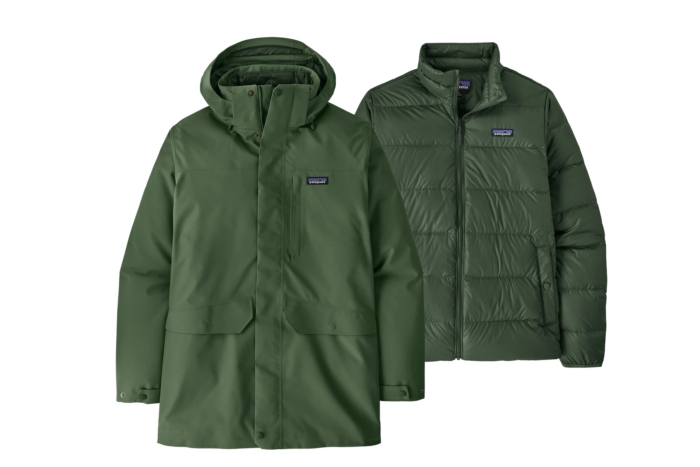
We really like the simple, casual style of the Patagonia Tres; (photo/Matt Bento)
-
The inner puffy jacket has a convenient zippered chest pocket; (photo/Matt Bento)
-
The Tres Parka features a burly outer shell jacket with a well-insulated down puffy liner that can be worn on its own or as part of a system; (photo/Matt Bento)
-
The inner liner of the Patagonia Tres 3-in-1 has hand-warmer pockets, but no hood; (photo/Matt Bento)


Specifications
Pros & Cons
Pros
- 3-in-1 versatility; includes removable down jacket
- Burly 150D outer material with H2No waterproof membrane
- Sleek style and fit
- Includes dual front zippers with dual storm flaps
- Includes adjustable zip-off hood
Cons
- Fairly expensive
- Hood is not insulated
- Somewhat heavy
Bottom Line: A versatile alternative to our best overall pick that has a slightly slimmer cut. It’s fairly expensive, but worth it for those looking for a one-and-done winter option.
The Patagonia Tres 3-in-1 Parka ($699) is a warm, protective, and versatile winter jacket. With a clean and simple style, it’s great for everyday around-town use, but the 3-in-1 design also makes it versatile for variable conditions and activities.
Going for a hike on a sunny, cold winter day? Just wear the 700-fill-power internal puffy jacket to stay warm and save some weight. Running errands on a milder rainy day? Use just the burly 150-denier H2No waterproof outer shell for burly wet-weather protection. Combine them both for the ultimate warmth and protection when conditions are really poor.
The latest version of the Tres is described as a regular fit compared to the slim fit of past versions, but it still has a snugger feel than most other models that Billy Brown tested (when both jackets are worn together). However, the outer shell jacket feels a bit bigger and looser when worn without the inner puffy jacket, since it is sized to accommodate that extra layer underneath.
Because this jacket consists of two separate jackets that get zipped and snapped together, it also feels a little heavier and bulkier than most insulated jackets, Brown found. Also, note that the inner puffy jacket does not have a hood, and the hood of the outer shell jacket is not insulated.
Overall, we really enjoy the clean style and comfortable fit of the Patagonia Tres 3-in-1 Parka and highly recommend it for everyday around-town wear or for those looking for extra versatility.
Patagonia Stormshadow Parka
-
-
The Stormshadow has the perfect blend of warmth, weight, weather protection, and style; (photo/Penney Garrett)
-
The Stormshadow has one of the best zippers we've tested — big, smooth, and easy to operate; (photo/Penney Garrett)
-
The main two-way zipper is protected by dual storm flaps — one external and one internal; (photo/Penney Garrett)
-
The well-insulated hood has one rear and two front adjustment points; (photo/Penney Garrett)
-
The main hand-warmer pockets have soft fleece lining and internal elastic sleeves to help contain a phone or wallet; (photo/Penney Garrett)


Specifications
Pros & Cons
Pros
- Excellent warmth and loft
- Fully waterproof GORE-TEX membrane
- Includes dual front zippers with dual storm flaps
- Includes draft tubes at neck and hem
- Simple, classic style
Cons
- Expensive
- Not the most stylish
Read Review: Patagonia Stormshadow Parka Review
Bottom Line: An impressive (and expensive) winter jacket that uses GORE-TEX and warm down fill to keep your backside covered.
Little else compares to the Patagonia Stormshadow Parka ($899) and its combination of warmth, weather protection, and attention to detail, all in a reasonably lightweight package. This jacket uses premium materials throughout and has the most thoughtful features of any winter jacket that we tested.
A waterproof and breathable 75-denier GORE-TEX ePE shell and the 700-fill-power recycled down insulation highlight this jacket’s materials list. It is one of the warmest and loftiest winter jackets that tester Will Brendza has ever tested, with thick, puffy insulation throughout — even in places other brands or models might skimp — like the arms and the hood. Despite all these fancy materials, the Stormshadow still weighed in at a respectable 2 pounds, 8.8 ounces on Brendza’s scale.
Other winter jackets we’ve tested — like the REI Co-op Stormhenge, The North Face McMurdo, and the Patagonia Jackson Glacier — have a similar combination of down insulation protected by a proprietary waterproof shell material, but these don’t include GORE-TEX, the industry’s premier waterproof/breathable shell material. The Outdoor Research Stormcraft also uses GORE-TEX material, but doesn’t have the same level of warmth as the Stormshadow.
Brendza found the notable design features to include a two-way front zipper, dual storm flaps on the inside and outside of the front zipper, fleece-lined and zippered hand-warmer pockets with inner phone sleeves, two interior pockets, and comfortable inner sleeve cuffs. The puffy, well-insulated hood has two front and one rear adjustment cords. He was also very impressed with the down-filled draft tubes along the collar and along the inside waist over the hem adjustment. This helps ensure a snug fit and seals out any cold drafts from above and below.
The Stormshadow’s only notable downside is its hefty price tag. But given its premium materials, best-in-class performance, and classic style, as well as Patagonia’s famous Ironclad Guarantee, we recommend it as a solid long-term investment for discerning users who appreciate top-notch design and craftsmanship. If you’re the buy-it-for-life type of person, this is the winter jacket for you.
More Great Winter Jackets We Tested
We tested nearly 30 different winter jackets throughout the past three seasons, regularly adding new models to our rotation each winter. In addition to the Top Pick winners above, the following jackets are additional standouts we liked that we think you should consider.

Specifications
Pros & Cons
Pros
- Highly protective with GORE-TEX membrane and 150D outer material
- Includes 8 total pockets
- Includes dual front zippers and dual storm flaps
- Adjustable hem and adjustable hood
Cons
- Fits large — we had to go down one size
- Not as warm as similar styles
- Dual hand pockets have awkward entry angles
Bottom Line: A rugged exterior makes this parka look almost like workwear, and while the sizing is a bit odd, it’s a solid option for those who don’t need absolute warmth in all circumstances.
The Outdoor Research Stormcraft Down Parka ($700) is a great winter coat that packs lots of high-end features into a relatively affordable package. It includes a hem adjustment, three adjustment points on the well-insulated hood, an easy-to-use two-way front zipper with dual storm flaps, eight total pockets, and a comfortable fleece lining along the chin, sleeve cuffs, and hand-warmer pockets.
There are a few minor reasons why we didn’t rank the Stormcraft higher. First, it’s just not quite as warm as most of our Top Pick winners, like the L.L.Bean Maine Warden’s Parka, The North Face McMurdo, or the Fjällräven Nuuk Parka. It’s probably most comparable in warmth to the Patagonia Jackson Glacier.
It comes in at a middle-of-the-road weight of 2 pounds, 11 ounces, but a lot of that weight is taken up by the burly outer material and all the pockets and flaps, leaving less overall insulation than other models.
Second, when tester Matt Bento wore it for an entire eastern Sierra winter, he found the sizing to be a bit odd. We tested all of these jackets in our normal men’s size medium, and Bento ended up having to size down a full size in the Stormcraft for it to fit properly. If you’re in between sizes, we recommend sizing down for a natural fit, or size up for an oversized fit that will leave plenty of room for extra layers.
And finally, we’re not a fan of cargo-style outside hand-warmer pockets on jackets like the Stormcraft. These side-entry pockets are at an unnatural angle, and it feels a bit awkward to try to slide your cold hands in there. Top Pick winners, The North Face McMurdo and the Fjällräven Nuuk Parka, also have similar pocket styles, so it’s certainly not a dealbreaker in our eyes.
We’d recommend the Stormcraft for those prioritizing the toughest outer material and weatherproof protection.

Specifications
Pros & Cons
Pros
- Tough as nails
- Stylish
- Synthetic insulation remains warm when wet
Cons
- Needs wax treatment to maintain waterproofness
- Thick shell fabric isn’t very packable
- Lightly insulated
Bottom Line: A stylish and rugged winter jacket that is more appropriate for milder climates, but otherwise impresses with its quality and construction.
The Fjällräven Skogsö Padded Jacket ($365) looks great, feels tough, and performs like workwear with its burly G-1000 outer material. For folks who are hard on their coats and live in places with milder winters, this is a great option. If you live somewhere with more brutally cold winters, we’d recommend a loftier down-filled jacket like the Patagonia Stormshadow or The North Face McMurdo.
We test winter jackets for their cold-weather performance, but we also consider how jackets will look and perform on a daily basis around town, and not necessarily on a backcountry expedition. After six months of testing in temperatures down to 20 degrees, tester Matt Bento found the Skogsö definitely oriented more for daily wear with its style and durability.
When comparing its specs to contenders with heavy down insulation and waterproof breathable membranes, it’s easy to see why it doesn’t make the top of our list. It’s heavy, it needs a wax treatment to stay waterproof, and it’s lightly insulated compared to most of the bigger, down-filled jackets we tested.
With that said, it still deserves a nod for its solid craftsmanship, durability, and style. With the insulated hood on and the zipper all the way up, Bento was protected against wind and light rain. In his shower tests (so simple yet so revealing), the Greenland wax treatment held up fairly well and repelled the homemade torrent for about 3 minutes before it wet out.
Then the shell fabric became heavy and saturated, but no moisture could be found inside the jacket or the pockets after 10 minutes in the shower. It’s safe to say that the Skogsö can handle most winter precipitation you’ll find in the lower 48.
This jacket is form-fitting, as mentioned, and not heavily insulated, although there’s enough room to layer a sweater underneath for extra warmth. Friends agreed that it looks slick, so if you’re eyeing the Skogsö with style as your main consideration, be aware of its limitations, but know you’ll be getting a solid, stylish coat that should last many winters.
Best Winter Jackets Comparison Chart
| Compare |
|
|
|
|
|
|
|
|
|
|---|---|---|---|---|---|---|---|---|---|
| Price |
$450
|
$299
|
$450
|
$619
|
$500
|
$699
|
$899
|
$700
|
$365
|
| Measured Weight |
4 lbs., 8 oz.
|
2 lbs., 3.2 oz.
|
3 lbs., 8.8 oz.
|
2 lbs., 11.4 oz.
|
4 lbs., 1.1 oz.
|
2 lbs., 14.9 oz.
|
2 lbs., 8.8 oz.
|
2 lbs., 14.6 oz.
|
2 lbs., 5 oz.
|
| Insulation |
650-fill goose down
|
850-fill Bluesign-approved down, 80 & 180g polyester
|
600-fill recycled down
|
700-fill-power 100% recycled down
|
250g Supreme Micro Loft (synthetic)
|
700-fill 100% recycled down
|
700-fill 100% recycled down
|
700-fill responsibly sourced down
|
PrimaLoft Black
|
| Outer Material |
3L GORE-TEX with 100% ripstop nylon shell
|
2-layer HydroWall recycled nylon
|
70D x 160D 2-layer DryVent 100% recycled nylon
|
100% recycled polyester plain weave
|
100% recycled polamide
|
150D 2-layer H2No 100% recycled polyester
|
75D 2-Layer GORE-TEX 100% recycled polyester
|
150D 2-Layer GORE-TEX 100% polyester canvas
|
G-1000 Lite 65% polyester/35% cotton
|
| Waterproof |
Yes
|
Yes
|
Yes
|
Yes
|
Yes
|
Yes
|
Yes
|
Yes
|
No
|
| Center back length |
33"
|
35.5"
|
32"
|
36"
|
35"
|
33"
|
32"
|
35"
|
31.8"
|


How We Tested the Best Winter Jackets
From cold and damp shoulder season conditions to white-out blizzards to sub-zero stretches in the thick of winter, we personally tested each of the winter jackets in this Buyer’s Guide in many of the same conditions that you’ll face this winter. Here’s a breakdown of how we measured these jackets:
- Field testing: Our winter jacket testing relies most heavily on field testing, which stretches from town to trail. During use, we consider all facets and aim to get out in the full range of weather. When possible, we pass these jackets around to multiple testers to gain a comprehensive understanding of where they excel and where they fall short.
- Water resistance testing: Outdoor testing is effective in proving waterproofing, but we also subject each of these jackets to a 10-minute shower test to ensure they withstand moisture. We pay close attention to common entry points such as shoulder seams, zippers, and wrist cuffs.
- Our winter jacket rating system:
- Warmth: Weighted 30%. Defense against the cold is our primary concern in winter jackets, and we consider whether the jacket keeps us warm in temperatures above or below freezing, as well as when it’s wet.
- Fit: Weighted 30%. Does the jacket have a long drop tail for warmth and protection? Do the sleeves sit well on the wrists? Is the sizing block appropriate compared to similar jackets?
- Style: Weighted 20%. While subjective, we crowdsource opinions on the style of these jackets to get a relative feel of how fashion-forward they are. Would you wear this jacket to the office? Around town?
- Durability: Weighted 20%. After a solid winter’s worth of use, we tally up the wear that these jackets have accumulated. Do the zippers run smoothly? Has the jacket been stained? Has it lost any loft?

Our Expert Testers
Our lead winter jacket tester is year-round Washington resident Nick Belcaster, who keeps busy in the winter months by backcountry splitboarding, chopping wood to warm his home (and wood-fired sauna), and getting outside on day and weekend trips into the snow. His poor-weather apparel experience stretches from his time as a mountaineering guide-service equipment manager to today as testing manager for a range of Buyer’s Guides, including Hardshell Jackets, Rain Jackets, and Winter Boots.
Previously assisting in our coverage was Lake Tahoe resident Nick Bruckbauer. Nick grew up in the great state of Wisconsin, where it’s not uncommon to see cars driving on frozen lakes in the winter, nor is it out of the question to get a freak blizzard in the month of May.
After living in Santa Barbara, Calif., for over 10 years in his 20s and 30s, he decided he’d had enough sunshine and paradise, and moved to Lake Tahoe in late 2020, just in time to experience Tahoe’s snowiest season on record in 2022-2023. Now, Nick spends his winters skiing, shoveling and plowing snow, walking the dog, and sitting by the fire, and spends his summers swimming, paddling, running, hiking, and splitting wood to prepare for winter.
Gear tester Matt Bento also contributed to our guide and resides in the Eastern Sierra town of Bishop, Calif. He spends his summers rock climbing and trail running in the nearby mountains, and spends his winter skiing up the road at Mammoth Mountain Resort. Matt doesn’t let cold or snowy weather interrupt his adventures, so he’s always on the lookout for the best winter jackets to keep him cozy before, during, and after each outing.
Finally, gear tester Billy Brown rounds out our line-up of winter jacket testing contributors. His testing mostly took him out of the heat of Sacramento and into the winter chill of the Sierra Mountains, where he tested jackets on day hikes and during (sometimes extended) bouts of driveway shoveling.
Our Testing Process and Testing Grounds
During our systematic testing process, we paid careful attention to overall warmth and insulation quality, fit and comfort, weather protection, functionality, and style. From daily city commutes in Minneapolis to mountaineering expeditions in the Tetons and plowing snow in Lake Tahoe, we’ve put dozens of winter jackets through the wringer to help guide you in your product research and purchase decision.
Similarly, our teams have tested the best winter jackets for women, and other winter necessities like the best winter boots, the best down puffies, and the best winter gloves and mittens.
In addition to Lake Tahoe, our GearJunkie testing team has expert testers on hand who dwell in the frigid Rocky Mountains of Colorado and Wyoming, the snowy Eastern Sierra of California, and the frozen midwestern plains of Minnesota. We live, work, and play in regions known for seriously cold winters, and we put each of these winter jackets to the test in many of the same conditions that you might face.

Buyer’s Guide: How to Choose the Best Men’s Winter Jacket
The term “winter jacket” is very broad and should really be divided into a few key subcategories depending on your climate and intended use. In this Buyer’s Guide, we focused primarily on winter jackets ideal for everyday use in cold to moderately cold climates. We also included a few lighter-weight pieces that are more specific for active uses or milder climates.
Types of Winter Jackets
Everyday Use
Winter jackets made for everyday use are ideal for casual daily wear in cold climates and can be used for low-intensity activities like commuting to work or school, running errands around town, walking the dog, or going out to dinner.
Typically, these jackets have plenty of insulation and are made from heavier materials that prioritize warmth, protection, and features. Because of this, they are more likely to restrict dynamic movement and are less likely to breathe well, making them poor choices for high-output activities like running or hiking.
Everyday winter jackets often include plenty of comfort-oriented features like cozy wrist cuffs, draft collars around the neck, fleece-lined hand pockets, and adjustable hems and hoods. They also typically have plenty of pockets to carry your wallet, keys, phone, or other necessities.

These features inevitably add a little bit to the jacket’s weight, but for casual everyday use, the benefits of the added comfort and convenience outweigh any minor additional weight. The Fjällräven Nuuk Parka has the most features of any winter coat we tested, but it is also among the heaviest.
The Patagonia Stormshadow Down Parka is very warm and puffy with plenty of 700-fill down insulation and boasts a waterproof GORE-TEX shell. It also has a simple and classic style that makes it great for daily wear around town, and is light enough that it could be used for more technical uses like cold-weather camping or hiking.
For simpler, lightweight options great for daily use when it’s not quite as cold, consider the Outdoor Research Coldfront Down Hoodie, which has a relaxed fit that makes it versatile for a variety of uses.

Performance Use
While everyday winter jackets prioritize warmth, protection, and convenient features, performance-oriented winter jackets will often balance warmth and protection with a lighter-weight design and more specific technical features aimed at active uses like running, hiking, or cross-country skiing.
These jackets will often have loftier down and lighter shell materials in order to save weight and make them more compressible for stuffing into a duffel bag or backpack, and will usually have a more fitted style that allows more body movement with less restriction.
Most everyday winter jackets and parkas use 600- to 700-fill-power down insulation and burly 75- to 150-denier shell materials, while performance-oriented winter jackets will often use loftier 800- to 1000-fill-power down or high-tech synthetic insulation, and will have thinner 7- to 30-denier shell materials.

Performance jackets often have fewer pockets, but will include features like dual zippers to accommodate wearing a climbing harness, and either a fitted hood to wear under a climbing helmet, or an oversized helmet-compatible hood.
Performance-use jackets typically have very breathable materials designed to dump extra heat and dry quickly, so you don’t have to remove the jacket during vigorous activity. Many will have synthetic insulation that breathes a little better than down and will retain its insulating properties even when wet from external moisture or perspiration. These jackets will usually have a water-resistant finish but will not be fully waterproof, so most people will also bring along a thin, non-insulated waterproof shell jacket.

Shell Jackets
Shell jackets are designed to protect you from harsh weather conditions. Like wearable shields that defend against wind and rain, hard shells are meant to be your outermost layer. Skiers, climbers, and mountaineers use hardshells for their windproof and waterproof protection, and will usually wear a shell as part of a multilayer system that may include a base layer, an insulated midlayer, and a waterproof out shell. Depending on where you live, a burly hard shell may be the most sensible winter jacket option.
Many of the winter jackets that we tested include a waterproof outer layer, making an additional shell jacket unnecessary. The Patagonia Stormshadow and the Outdoor Research Stormcraft all use down insulation shielded by a waterproof/breathable GORE-TEX. This combination provides the best blend of warmth and protection that is ideal for everyday use in cold climates, but is not as versatile as a multilayer system for changing weather conditions.
Other winter coats like the REI Co-op Stormhenge, the Patagonia Tres 3-in-1, the Patagonia Jackson Glacier, and The North Face McMurdo have proprietary waterproof shell materials made by their respective companies. While these materials provide waterproof and breathable protection, their performance specifications aren’t as well-documented as those of GORE-TEX. For general daily use in normal winter conditions, we had no issues with the waterproof performance of these jackets.
Some models, like the Patagonia Tres 3-in-1 Parka, include a removable inner insulated jacket and an outer waterproof shell jacket. Depending on the conditions, each respective jacket can be worn independently, or the inner jacket can be zipped and snapped into the outer jacket for the ultimate warmth and protection.

Warmth and Insulation
When considering a new winter jacket, overall warmth is obviously one of the most important factors to consider. All of the jackets that we tested contain either down or synthetic insulation, or both. It’s hard to definitely compare overall jacket warmth and comfort since these features are so user-dependent and can be influenced by the wearer’s gender, body type, activity level, and whether they typically run hotter or colder.
Having said that, three jackets that we tested stand out for their exceptional warmth: the Patagonia Stormshadow, the Fjällräven Nuuk Parka, and The North Face McMurdo. Each of these jackets has a large amount of down insulation protected by a waterproof shell material, providing the ultimate combination of warmth and weather protection.
The Stormshadow is pretty pricey with its combination of down insulation and a GORE-TEX shell. So, if you’re looking for luxurious warmth without breaking the bank, the McMurdo and the Nuuk are great options.

Down Insulation
Made of goose or duck plumage, down is the warmest, lightest, and most compressible type of insulation on the planet. Almost all of the winter jackets that we tested for this buyer’s guide are insulated with down. When considering the warmth-to-weight balance, down continues to be better insulation than any human-made alternative. However, due to a few key drawbacks, down does require careful ownership and handling.
Down insulation works by trapping warm air in the small spaces between the down feathers. However, down insulation does not repel water, and it loses its fluffy loft — and thus loses most of its insulation properties — when it gets wet.
To combat this, many down jackets treat the down with a hydrophobic coating, or add a waterproof or water-repellent outer shell fabric. Some models will also strategically replace the down with synthetic insulation in specific areas of the body — like the shoulders or arms —that are prone to moisture from your body.
Synthetic Insulation
Synthetic insulation is designed to replicate the lightweight insulation of down and retain its performance when wet. The quality of synthetic insulation is constantly improving, but it still generally lags behind down in its overall warmth-to-weight ratio.
Synthetic insulation is typically not as compressible as down, and can lose its loft or fluffiness over time. For those on a budget, synthetic insulated jackets are usually more affordable than down. The Fjällräven Nuuk Parka is the warmest winter coat we tested with synthetic insulation.
The main benefit of synthetic insulation is that it’s far more resistant to moisture than down. Even when synthetic insulation does become wet, it still provides a reasonable percentage of its ultimate warmth. Synthetic insulation also dries quickly, especially when exposed to wind and sun.
This makes synthetic insulation popular for performance-oriented winter jackets where an active user will likely be producing a lot of heat and potential moisture from sweat.
If you know you’ll be wearing your winter jacket in soggy environments such as the Pacific Northwest, consider purchasing a synthetic-filled jacket instead of down.

Fill Power and Fill Weight
The overall warmth of a down jacket is generally a function of the fill power and the fill weight of the down insulation that is used. Fill power represents a volume-to-weight ratio (expressed in cubic inches per ounce), and fill weight represents weight (in ounces). By multiplying the fill power by the fill weight, you can get an overall volume of insulation.
Keep in mind that other factors like jacket materials, fit, and baffle shape, size, and construction can also impact the overall warmth of a jacket.
Fill Power
Fill power is a technical specification that generally refers to the quality or loftiness of down insulation. This is determined by a standardized lab test that calculates the volume (in cubic inches) taken up by 1 ounce of down. A higher fill power number means that the down has greater loft (meaning it’s fluffier or puffier), which means that it will have better thermal efficiency and provide a better warmth-to-weight ratio.
Keep in mind that a higher fill power does not automatically mean that a jacket will be warmer. It just means that it uses loftier down insulation that will be able to provide better thermal efficiency and warmth at a lighter weight.
Most down jackets — including all of the winter jackets that we tested for this Buyer’s Guide — will have a fill power rating somewhere between 600 and 900. Casual-wear down jackets generally have a fill power rating between 600 and 750, while high-end performance jackets will have a fill power rating of 750 to 900 or higher.
Of the winter jackets that we tested for this Buyer’s Guide, the REI Co-op Stormhenge has the highest fill power rating at 850, and The North Face McMurdo has the lowest fill power rating at 600. However, the McMurdo is warmer overall than the Stormhenge but weighs almost a pound and a half more. The McMurdo weighs 3 pounds, 8.8 ounces, compared to the Stormhenge at 1 pound, 14.3 ounces.

Some ultralight down jackets today use insulation with a fill power rating of 1000. Keep in mind that this value only represents a warmth-to-weight ratio and not the overall warmth of a jacket. Jackets with a fill power rating between 900 and 1,000 will typically weigh 10 ounces or less and are intended for fast and light technical pursuits. These down jackets will not be nearly as warm as any of the winter jackets in this buyer’s guide, but will be much lighter and more packable.
Fill Weight
As its name suggests, fill weight refers to the total weight of the down insulation inside a jacket. While fill power is often marketed more prominently than fill weight, both are equally important to the performance of a jacket.
All other factors being equal like jacket materials, fit, and baffle construction, a jacket with 5 ounces of 700-fill-power down (total volume of 5 x 700 = 3,500 cubic inches) will likely be warmer than a jacket with 3 ounces of 900-fill-power down (total volume of 3 x 900 = 2,700 cubic inches), but it will weigh more and be less compressible.
The higher the fill power (quality or loftiness), the less fill weight is needed to create the same relative warmth. This is because the higher-loft down takes up more volume per ounce and is able to trap more air and warmth than a lower fill-power down.
A jacket with 4 ounces of 900-fill-power down (total volume of 4 x 900 = 3,600 cubic inches) and a jacket with 6 ounces of 600-fill-power down (total volume of 6 x 600 = 3,600 cubic inches) should have about the same warmth, but the 900-fill-power down jacket will be lighter, more compressible, and likely more expensive.
Down jackets are typically available with anywhere between 4 ounces and 20 ounces of fill weight. Comparing fill weight is most useful when all jackets in question have a similar fill power rating.

Weather Protection
While warmth is typically the top consideration when looking for a winter jacket, protection from the elements is also vital. Cozy down or synthetic insulation will help keep you warm, but a wind- or waterproof outer shell, a sufficient length, and a protective hood will help seal out cold wind, rain, and snow.
For wet conditions such as rain and sleet, prioritize a jacket with a waterproof shell. Waterproof jackets come with taped seams and heavy-duty exterior material. Jackets in this category are also great for wind protection. The Patagonia Stormshadow Parka stands out here for its waterproof GORE-TEX shell and its adjustable insulated hood.
If you plan to wear your jacket in freezing conditions where it’s more likely to snow than rain, or you’ll be in a dry cold, a fully waterproof shell may not be necessary. Many highly insulated jackets, while not completely waterproof, come with a quality DWR treatment that sheds light moisture.
Features
Useful features can be the difference between a good jacket and a great jacket. Comfortable hoods, handwarmer pockets, and cuff closures are some of the winter jacket features we consider to be the most valuable. When combined, these design details add significant warmth, versatility, and protection from cold conditions
Hood
Winter jacket hoods come in a wide range of shapes and sizes. During stormy weather, a protective hood is mandatory. Well-designed hoods offer ample customization and adjustability. Additional hood features, such as a fur lining and a stiff brim, are also worth seeking out.

On the other end of the spectrum, most of the winter jackets we tested have well-insulated hoods with two front and one rear adjustment cords. This allows the user to dial in a more customized fit, and often allows the hood to be worn over a ski or climbing helmet. Note that the Patagonia Tres 3-in-1 has a non-insulated hood since it is part of the outer shell jacket.
The Eddie Bauer Superior Down Parka, the Fjällräven Nuuk Parka, and The North Face McMurdo include a removable faux fur ruff around the hood that helps protect from driving wind and precipitation.

Two-Way Zippers
Two-way zippers allow you to open the front of your jacket from both the bottom and the top. In extra-long and thigh-length jackets, two-way zippers are essential for enabling leg mobility while sitting or stepping into a vehicle. On more technical jackets, a two-way zipper makes it easier to wear a climbing harness while wearing the jacket.
Most of the jackets we tested have a two-way front zipper. On full-length parkas like the Patagonia Jackson Glacier Parka and the REI Co-op Stormhenge Down Hybrid Parka, the two-way front zipper allows extra mobility when sitting down or when moving around.

Pockets
All of the jackets we tested have a varying assortment of pocket designs, ranging from handwarmer pockets to external gear pockets to chest pockets to internal zippered or stash pockets. More fully featured parkas typically have the most varied and useful pockets, but this also adds to the weight of the jacket.
Lighter-weight jackets like the Outdoor Research Coldfront might be limited to hand-warmer pockets and maybe an accessory pocket or two.
The Fjällräven Nuuk Parka has the most pockets (13) out of any winter jacket we tested. There are multiple internal and external zippered and stash pockets for every type of cargo imaginable.
Hand pockets probably have the biggest impact on comfort and convenience, but not all hand pockets are created equal. Some — like the Outdoor Research Coldfront — have cozy fleece-lined hand pockets that are at just the right angle to rest your arms. But others — like the Eddie Bauer Superior Down — have oversized pockets that are at an awkward angle and aren’t as comfortable.

Cuff Closures
Cuff closures allow you to create a seal around your wrist that prevents wind and snow from entering through your sleeves, and typically include a Velcro strap or a snap attachment point. Jackets can also include interior wrist gaiters for extra warmth and soft, cozy protection. Wrist gaiters can be difficult to wear with a wristwatch or bracelet but definitely help the overall comfort.
The Eddie Bauer Superior Down Parka has some of the coziest wrist cuffs. Theirs is a soft internal gaiter that feels like a cozy sweater, and an adjustable Velcro strap on the outer cuff.


Price & Value
Shell material and insulation quality/quantity are the primary variables that will impact the price of a winter jacket. Higher-end features like insulated hoods, fleece-lined pockets, fitted cuffs, and adjustment cords can also hike up the price. For the most part, you get what you pay for, but there are some more affordable options that perform nearly as well as their more expensive counterparts.
Budget
The most affordable jackets that we tested ($300 or less) will typically employ lower-grade materials, or will simply have less insulation or fewer features on them. The Outdoor Research Coldfront Down Hoodie ($279) is a simple, no-frills option with a relaxed fit that will keep you warm in all but the most frigid conditions. It’s not waterproof, and it’s not parka length — so it’s not blizzard material — but if you’re looking for a cozy puffy for general everyday wear, it’s one of our top choices.
Our best value pick — the REI Co-op Stormhenge Down Hybrid Parka ($299) — is warm, waterproof (with REI’s more affordable HydroWall material), and contains high-quality 850-fill-power down insulation. It’s not quite as warm as some heavier parkas since it weighs just less than two pounds, but it provides a great fit and excellent all-around performance.
We’ve tested the Stormhenge through three winters and consider it nearly equal to some of our favorite coats that are two to three times the price. If you’re not drawn to some of the more fashion-forward jackets from Arc’teryx or Patagonia, do yourself a favor and just buy the Stormhenge.

Mid-Tier
Spending $300 to $600 will get you some great-looking, warm, weather-resistant jackets from top brands like Patagonia, The North Face, and Fjallraven. Here you’ll start to see proprietary waterproof/breathable membranes, down with hydrophobic treatments, and extra features like fancier pockets, nicer hoods, and better construction.
The McMurdo Down Parka ($400) from The North Face is one of the warmest winter coats we’ve tested and is completely waterproof. TNF uses its proprietary DryVent waterproof/breathable material, foregoing the higher-end GORE-TEX material in order to keep the price a bit easier to swallow. Its 600 fill-power down isn’t the best warmth-to-weight ratio, but there is enough of it in the jacket that we stayed plenty toasty while testing it.
More great options in this price range include the Fjällräven Nuuk Parka ($500) with the most pockets and best features of any model we tested, and the sleek and stylish Patagonia Jackson Glacier Parka ($619) that is our favorite full-length parka design.
Premium
Pull out all the stops (and your wallet), and you get top-of-the-line materials, construction, features, and big-name brand credibility. The Patagonia Tres 3-in-1 Parka ($699) combines a waterproof shell layer with a detachable insulated layer, so for the hefty price tag, you do get three nice options to take you through the season — a shell for the warmer, wetter times, a packable puffy for when it’s cool and dry, and a full storm-ready parka for the thick of winter.
The Patagonia Stormshadow Parka ($899) is a thigh-length parka with GORE-TEX material and thick baffles stuffed to the gills with 700-fill-power recycled down. It combines premium materials throughout with some thoughtful design details and top-notch construction quality. We have sticker shock from looking at the price tag, but we could see this jacket lasting a long time if properly cared for.
Frequently Asked Questions
Warmth is perhaps the most important consideration when choosing a winter jacket. If you’re seeking maximum warmth, you’ll want to pay attention to the length, insulation quality (fill power), and insulation quantity (fill weight).
On the fill power spectrum, any rating over around 600 can be considered a relatively high insulation value. On this list, we’ve featured jackets with a fill power rating of up to 850. When comparing jackets of equal fill power, it’s likely that the one with the greater fill weight will ultimately be warmer. The North Face McMurdo Down Parka has a relatively lower 600-fill-power rating, but is one of the warmest winter jackets that we tested, thanks to its heavier weight.
Other factors play a role in the overall warmth including baffling, cuff closures, and exterior materials. Fill weight is a good starting point for research but not the only indicator of warmth. Extra-long and thigh-length jackets will often be warmer than standard jackets of equal fill power.
The Patagonia Stormshadow and the Fjällräven Nuuk Parka are two other models that stand out for their exceptional warmth.
Some winter jackets are waterproof while others are only water-resistant. The key difference between these labels is that truly waterproof jackets have fully taped seams and a waterproof membrane. Jackets like the Patagonia Stormshadow and the Outdoor Research Stormcraft have fully waterproof GORE-TEX shells that can reliably keep you dry, even in a severe downpour.
Also, winter jackets with synthetic fill are more resistant to moisture than down, which becomes ineffective when it wets out.
It depends on your style and preferences. With that said, hoods can offer lots of protection against various weather conditions including wind, rain, and snow.
While hoods aren’t a substitute for a warm hat in terms of insulation, they are very useful — especially during storms. All of the jackets we’ve included on this list come with hoods.
Some winter jackets include hoods that are removable, which is the best of both worlds.
Winter jackets can be expensive relative to other kinds of jackets and winter clothing. On this list, we’ve included jackets that range in price from less than $300 to nearly $1,000.
Though it’s not strictly necessary to buy a top-end and expensive jacket, you should consider that higher-quality jackets often prove to be a better value in the long run.
Features such as taped seams, handwarmer pockets, durable DWR coating, and two-way zippers will increase the price of a jacket.