Don’t let an arctic blast crash your plans. Whether you’re braving frosty commutes or strolling through a snow globe, these women’s winter jackets have your back.
We test the coziest silhouettes for everyday adventures — not hardcore gear meant for scaling peaks or shredding backcountry lines. Think warmth, comfort, and style that keeps you moving when the temps plummet. Over our most recent 6-month test window, SnowSports Senior Editor Morgan Tilton and gear expert Meghan LaHatte tested nine jackets for hundreds of days and thousands of hours in Colorado, New York, and British Columbia.
Rab Deep Cover is a calf-length masterpiece with toasty recycled down, while the extra-long Columbia Pike Lake III has recycled synthetic fill. Cropped designs — like the TNF 1996 Retro Nuptse — are fashion-forward for commutes (especially lacking wind or snowfall), while showstoppers like Lands’ End Expedition offer a waterproof, windproof barrier.
Editor’s Note: We overhauled our Women’s Winter Jackets guide on September 1, 2026, with TNF 1996 Retro Nuptse, Patagonia Down With It, L.L. Bean Mountain Classic, Mountain Hardwear Nevadan Long, OR Highveil Stretch, Lands’ End Expedition Waterproof, Canada Goose Mystique, and the updated Rab Deep Cover.
The Best Winter Jackets for Women of 2026


Best Waterproof & Warmest Winter Jacket for Women

Lands’ End Women’s Expedition Down Waterproof Winter Parka
Rab Women’s Deep Cover Down Parka
-

-
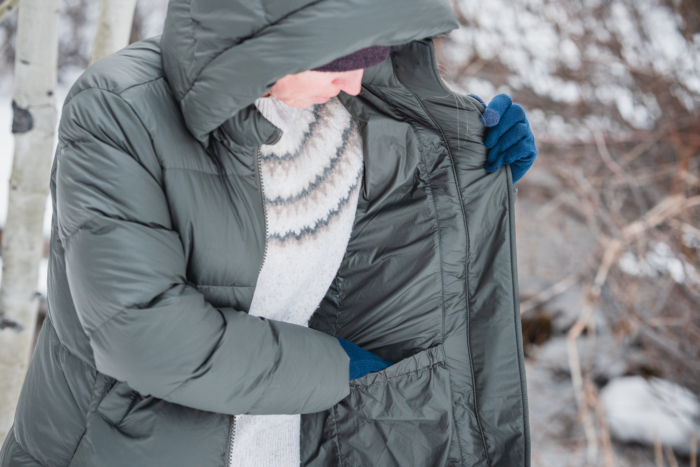
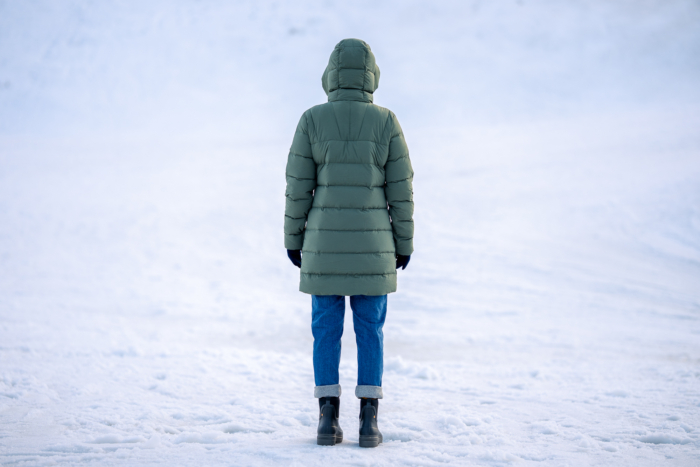
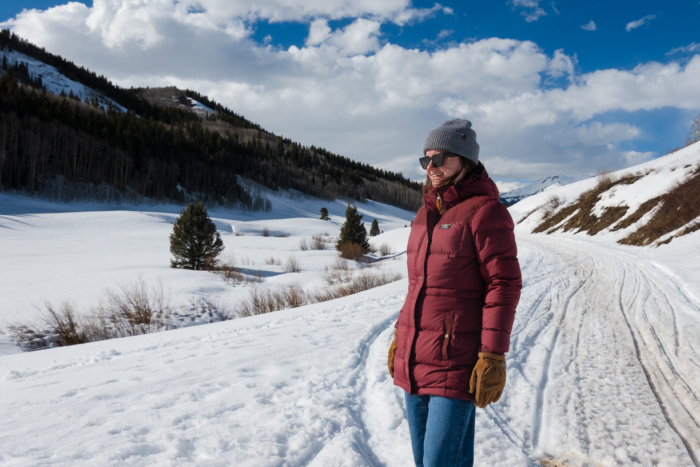
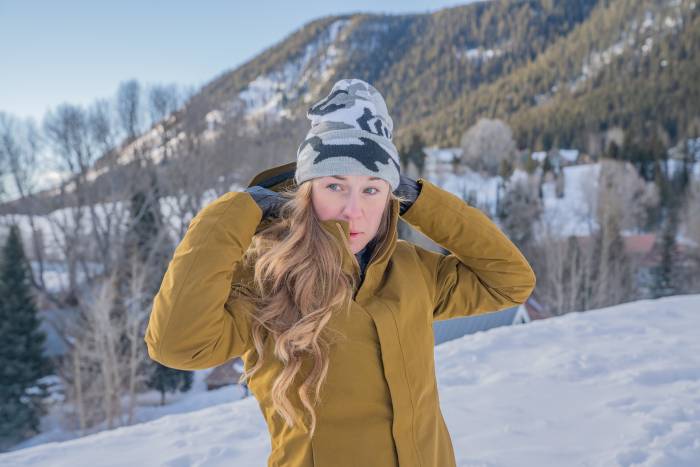
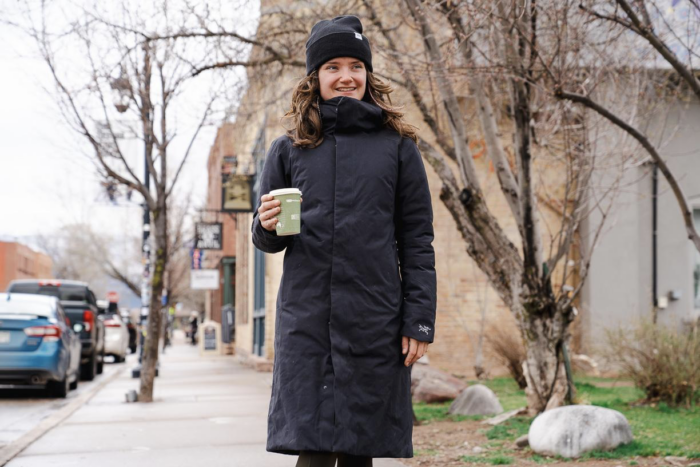
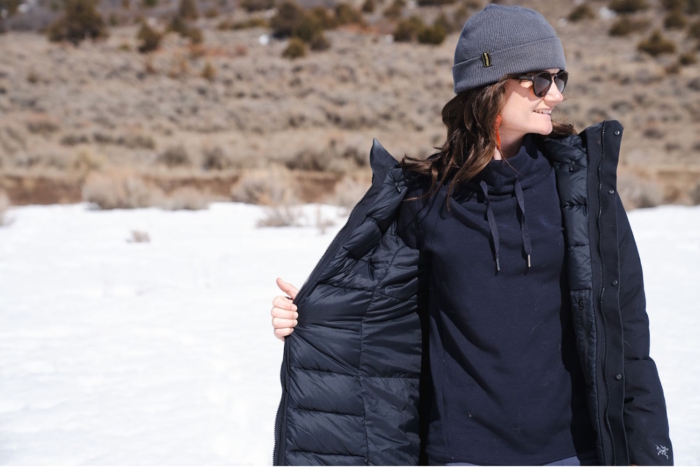
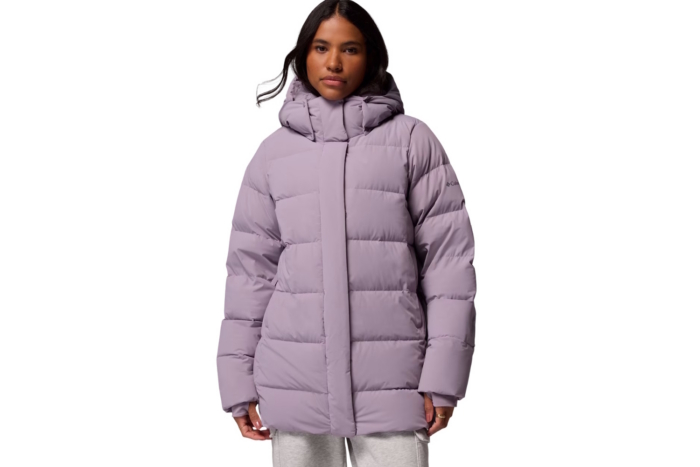
Morgan Tilton testing the Rab Women’s Deep Cover Down Parka; (photo/Jason Hummel)
-
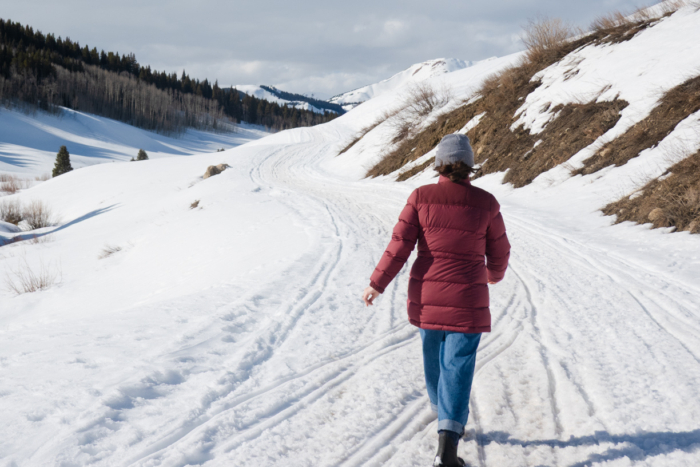
Morgan Tilton testing the Rab Women’s Deep Cover Down Parka; (photo/Jason Hummel)
-
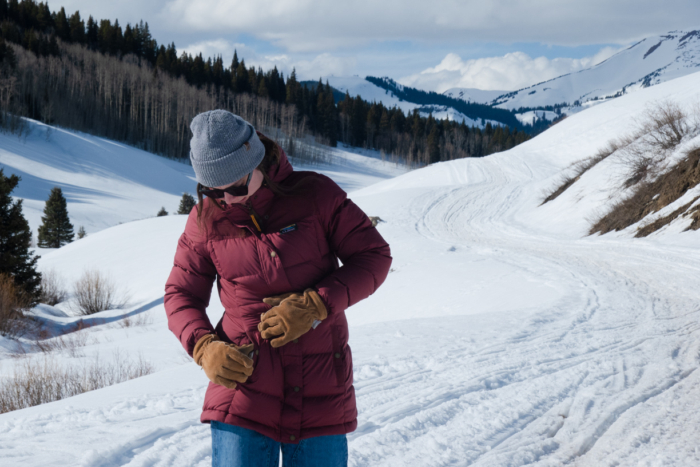
Morgan Tilton testing the Rab Women’s Deep Cover Down Parka; (photo/Jason Hummel)
-
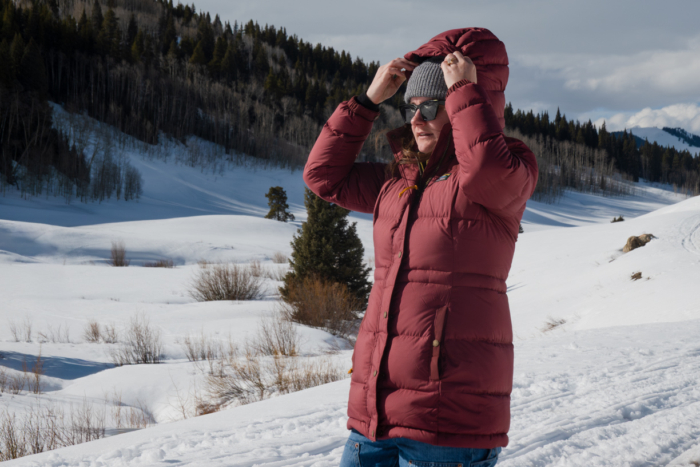
Morgan Tilton testing the Rab Women’s Deep Cover Down Parka; (photo/Jason Hummel)
-
Morgan Tilton testing the Rab Women’s Deep Cover Down Parka; (photo/Jason Hummel)
-
Morgan Tilton testing the Rab Women’s Deep Cover Down Parka; (photo/Jason Hummel)
-
Morgan Tilton testing the Rab Women’s Deep Cover Down Parka; (photo/Jason Hummel)
-
Morgan Tilton testing the Rab Women’s Deep Cover Down Parka; (photo/Jason Hummel)
-
Morgan Tilton testing the Rab Women’s Deep Cover Down Parka; (photo/Jason Hummel)
-
GearJunkie contributor Morgan Tilton testing the Rab Women’s Deep Cover Down Parka in frigid temperatures in Colorado; (Photo/Eric Phillips)
-
-
GearJunkie contributor Morgan Tilton stays warm in the (Photo/Eric Phillips.)


Specifications
Pros & Cons
Pros
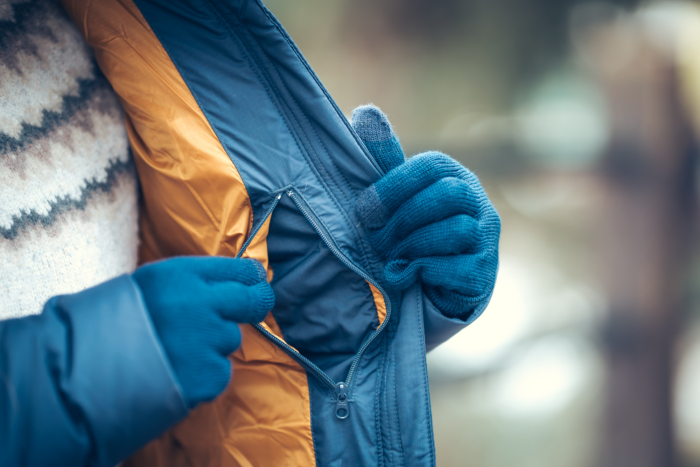
- Two exterior hand pockets and the single interior chest pocket are all roomy
- Interior chin guard and collar feature a super soft liner
- Very windproof
- Made with 100% recycled down and 100% recycled fabric
Cons
- A looser silhouette than the trimmer fit some women might want
- Not waterproof for those high water-content coastal storms
- No bungee cord to snug up hood
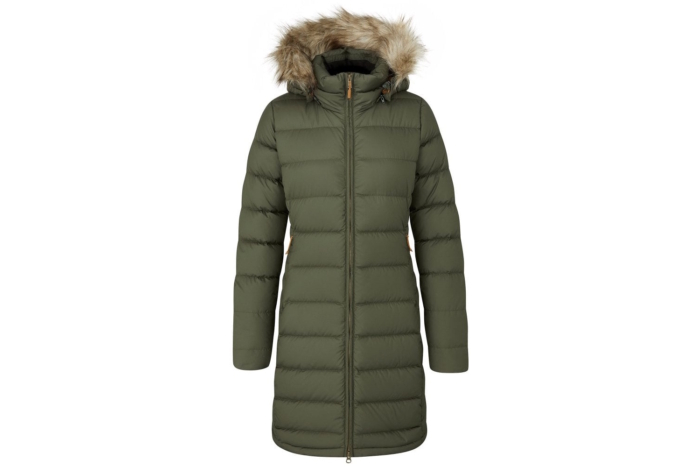
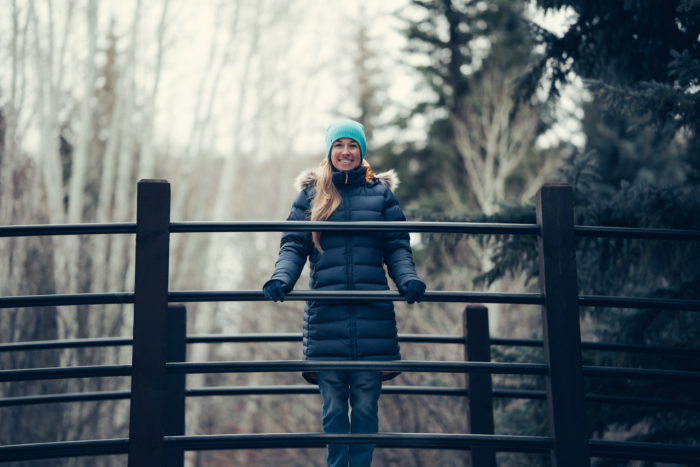
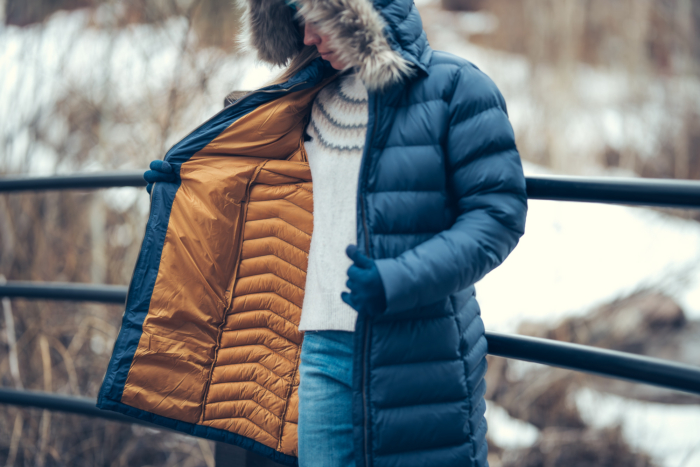
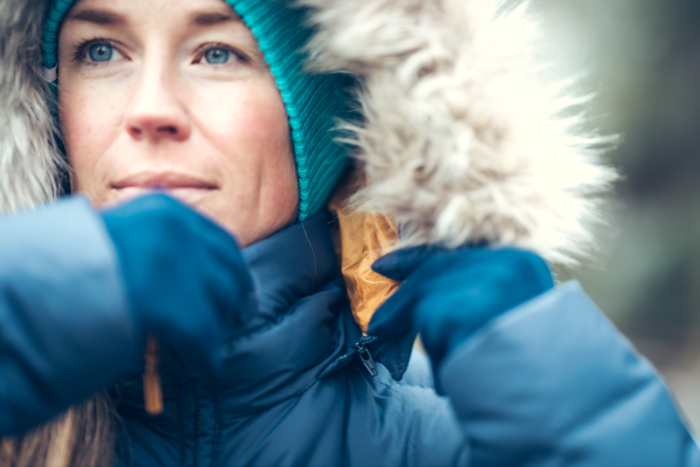
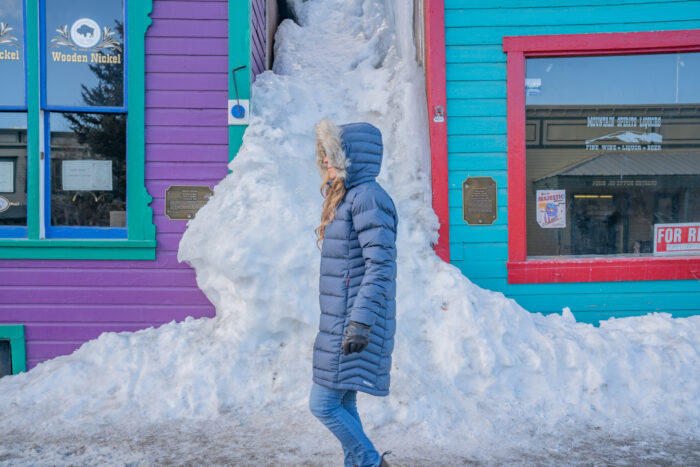
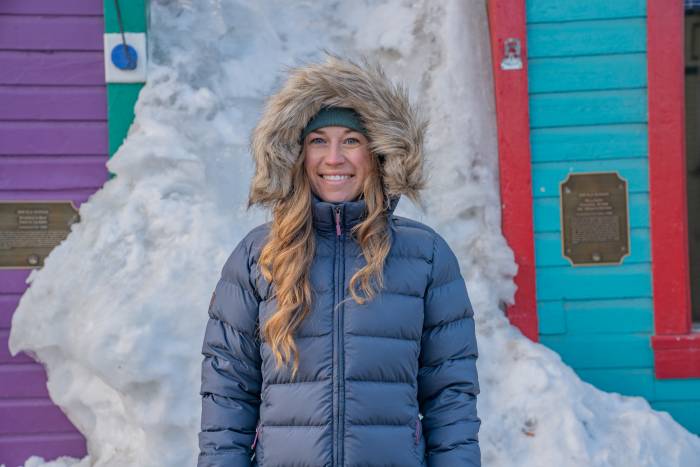
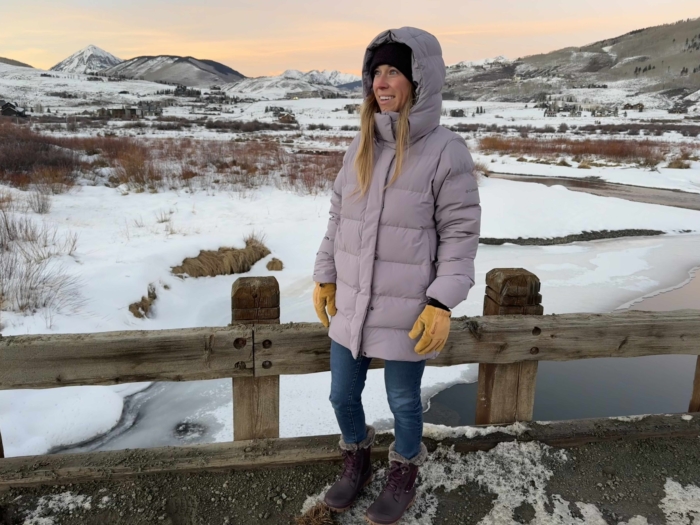
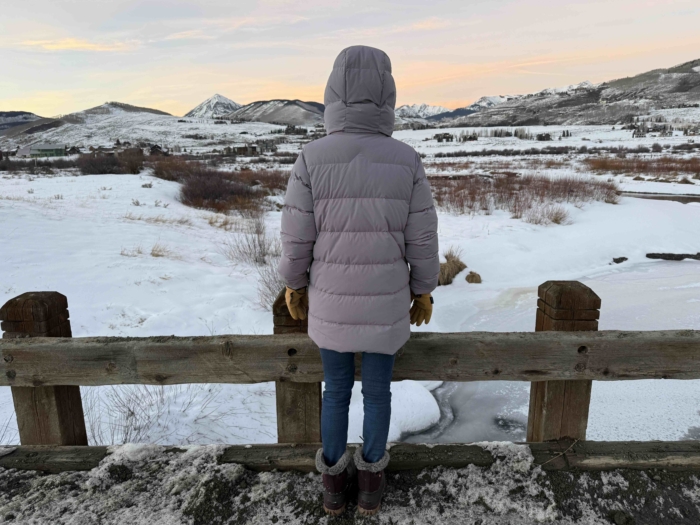
It’s hard to overtake a throne. The Rab Deep Cover Down Parka ($350) remains our favorite everyday winter pick with a more refined fit for the 2026/2027 season. The updated articulation lessens space in the roomy shoulders and chest, offering a more flattering cut and less space for draft. Several other upgrades include a PFAS-free construction and an extended size range (XXS to 3XL). We appreciate the Material Facts sheet that Rab provides on products, including a breakdown of the recycled content: While 100% Hydrophobic Down is recycled, the total content that’s recycled is 77%, for instance. Plus this interior liner is now bright gold — an attractive hint of style. Who doesn’t like a little dazzle?
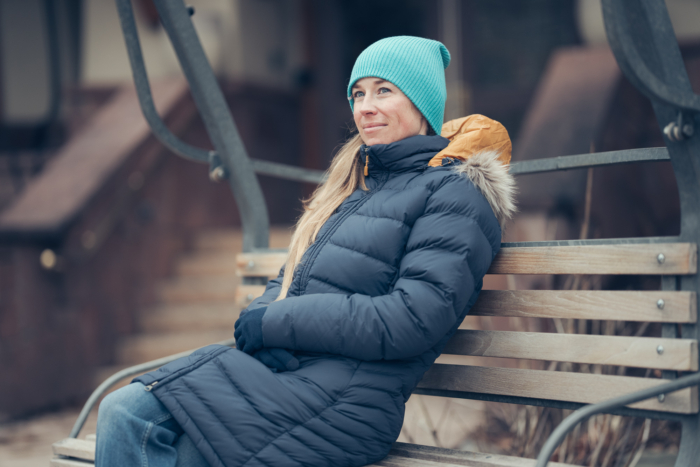
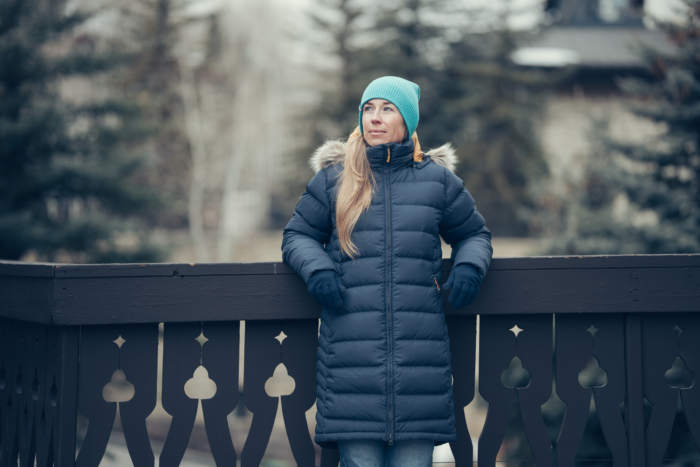
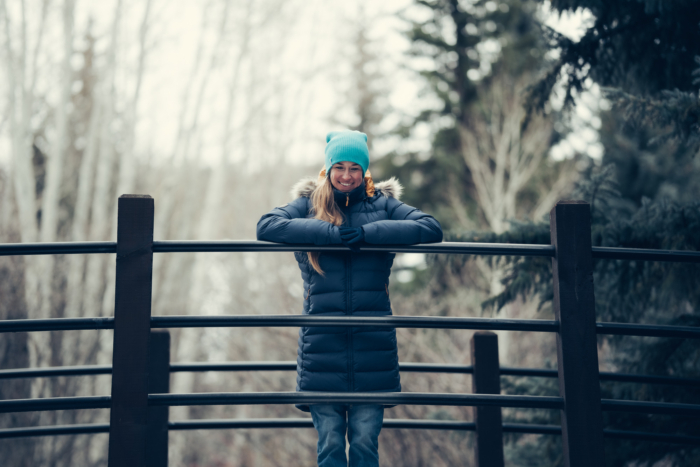
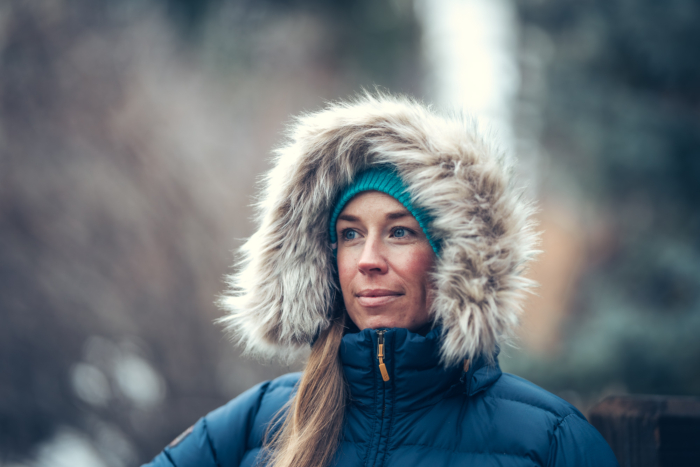
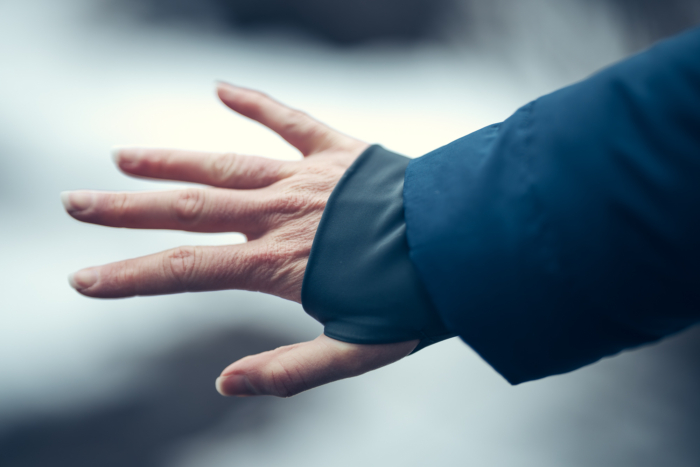
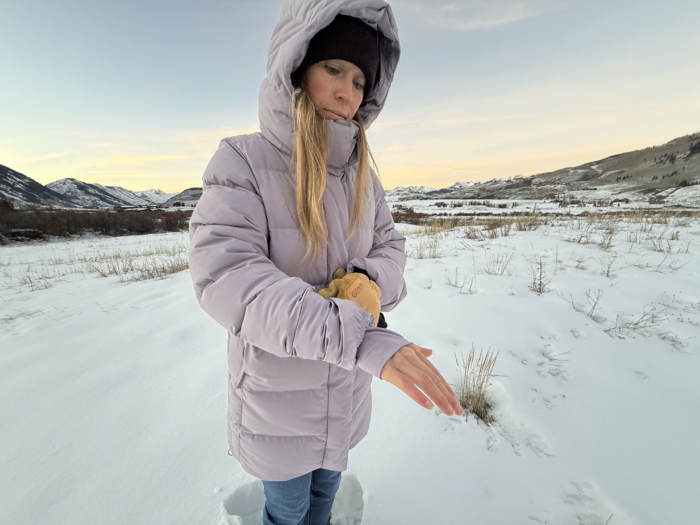
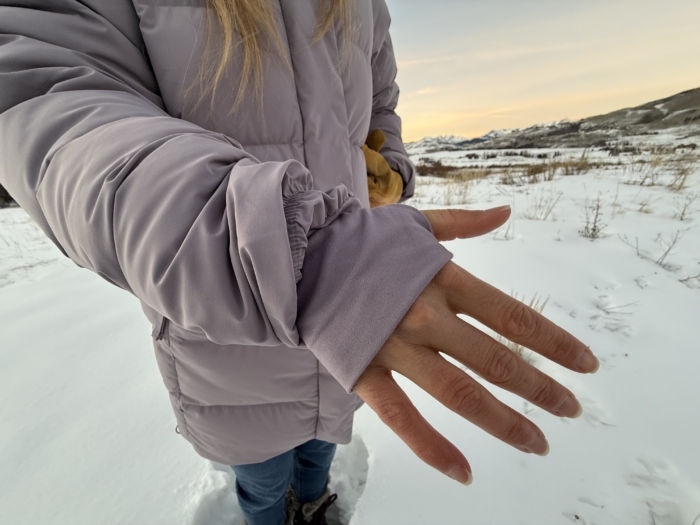
Among our lead testers, SnowSports Senior Editor Morgan Tilton — who lives in one of the coldest places in the Lower 48 — loves the Deep Cover’s tall insulated collar and removable hood, optional faux fur, and arm length. The oversized pockets and malleable wrist gaiters with thumbholes — which help block wind and never felt too tight — are a must day to day. Topped off with a functional 2-way front zipper, water resistance, and stretchy fabric, everything on this piece checks our box. (Unless you need complete waterproofness for mixed rain.) With stellar high-grade, recycled materials, this jacket punches above its price.
This cut isn’t boxy, though layering beneath is easy — we never feel restricted in it. A 700 fill power and a fill weight of 340 g mean this jacket packs high-quality down and delivers top-tier warmth. The baffles feel fully loaded and distribute the insulation beautifully. When the temps drop to 10 degrees or less in Tilton’s home of Crested Butte, Colo., the Deep Cover is what she grabs. Pulling this windproof piece on over a long-sleeved shirt in blustery conditions always kept her warm, yet the jacket could easily slide over a midlayer.
Deep Cover’s exterior is treated with fluorocarbon-free DWR, preventing moisture from being absorbed. The downfill retains its loft even when the conditions are damp and wet, thanks to being dressed with a hydrophobic, fluorocarbon-free treatment. Furthermore, 100% of the European Goose Down, 20-denier liner, and 50-denier exterior fabric is recycled — helping to keep waste out of landfills. Aesthetically, the sheen fabric isn’t overly glossy, and it’s quiet, too. Chiefly, the Deep Cover Down Parka is our top pick for the best winter jacket for women and day-to-day use.
REI Co-op Women’s Campwell Down Parka
Specifications
Pros & Cons
Pros
- 6" side vents add mobility and an easy way to dump heat
- Fleece-lined hood
- Reasonable price
- Very warm, even in frigid conditions
Cons
- Loose silhouette isn't flattering for everyone
- Very heavy and not packable
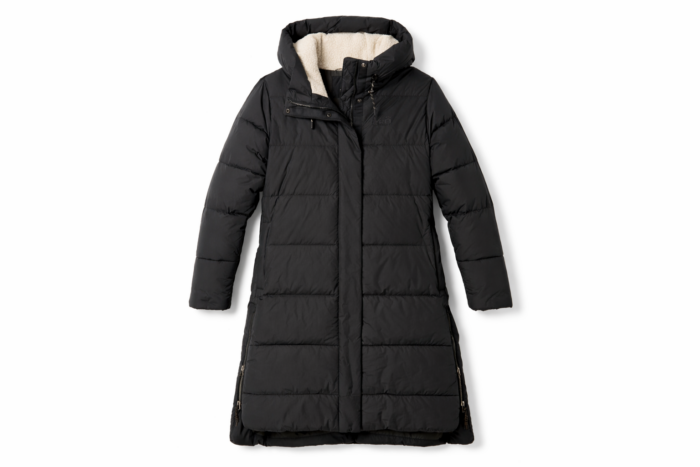
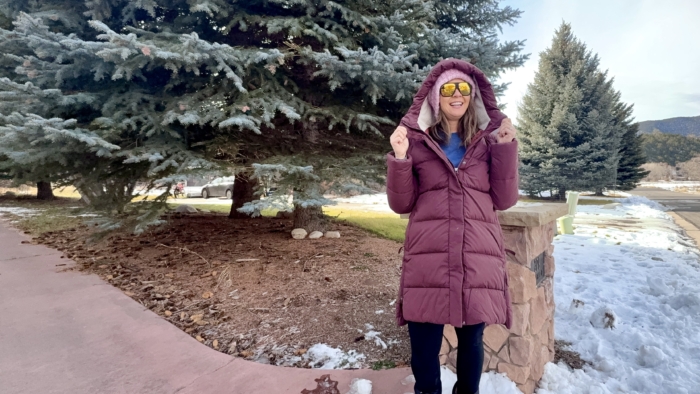
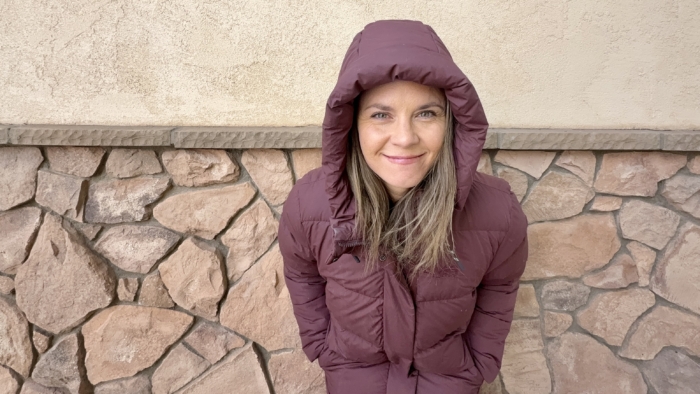
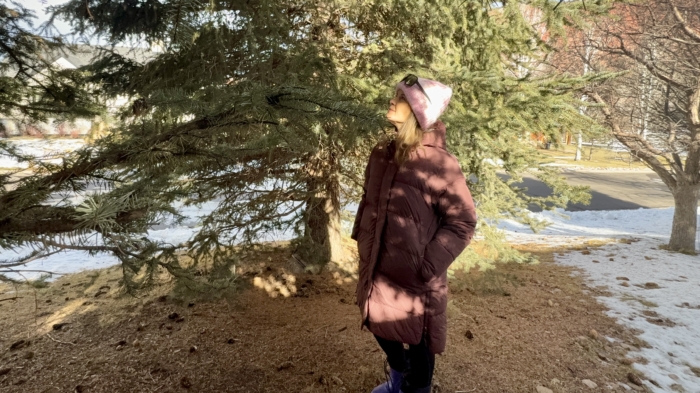
The REI Co-op Campwell Down Parka ($229) is built for cold-weather living, and that’s exactly where it shines. Tested by GearJunkie contributor Heather Balogh Rochfort around Colorado’s Roaring Fork Valley, this parka proved itself as a warm, comforting layer for winter errands and long stretches spent standing around outside doing very little.
This Campwell replaces REI’s older Norseland Parka. While the name has changed, the endgame has not. This is a lifestyle parka that prioritizes warmth and comfort over sleek lines or technical performance.
Warmth is the headline. The parka uses 650-fill-power down through the main body, paired with synthetic insulation in moisture-prone areas like the hood and lower body. During a town Christmas tree lighting with temperatures hovering between 15 and 20 degrees Fahrenheit, Balogh Rochfort was relatively sedentary while watching her daughter with Santa. Still, she stayed comfortably warm the entire time. The longer cut helped seal in heat through her hips and upper thighs, while knit cuff gaskets kept cold air from creeping up her arms.
Comfort features round out the Campwell. When sitting down, the 6-inch, zippered side vents added unexpected mobility. Once unzipped, Balogh Rochfort didn’t have to worry about the parka pulling tightly through the hips or legs. And the fleece-lined hood felt uber cozy and soft, making it easy to throw on for extra warmth during snowy evenings.
The fit is relaxed, verging on boxy. This won’t appeal to everyone and isn’t very flattering. But for pure warmth at an approachable price and a dash of sustainability, the Campwell Down Parka is tough to beat.
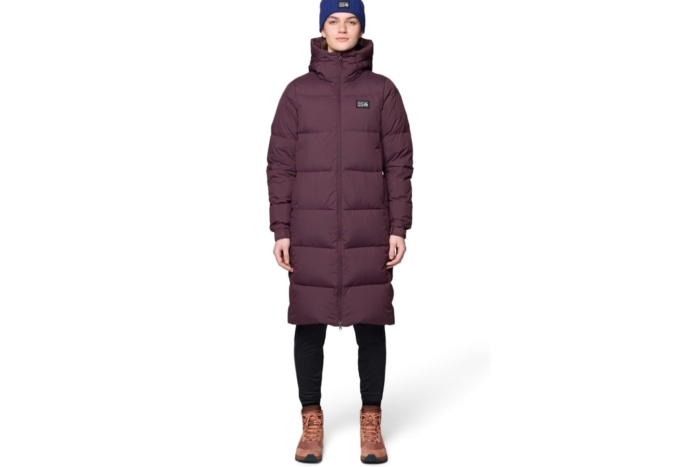
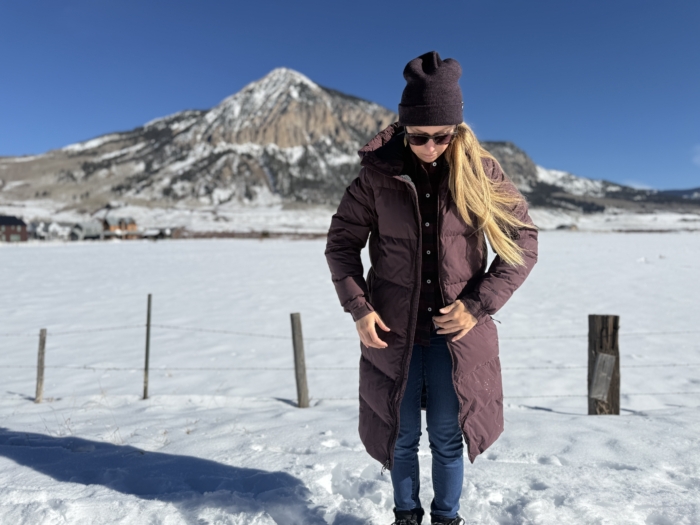
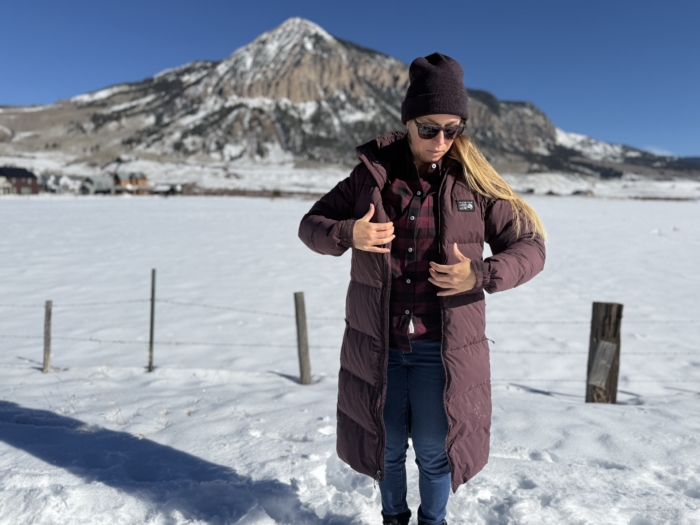
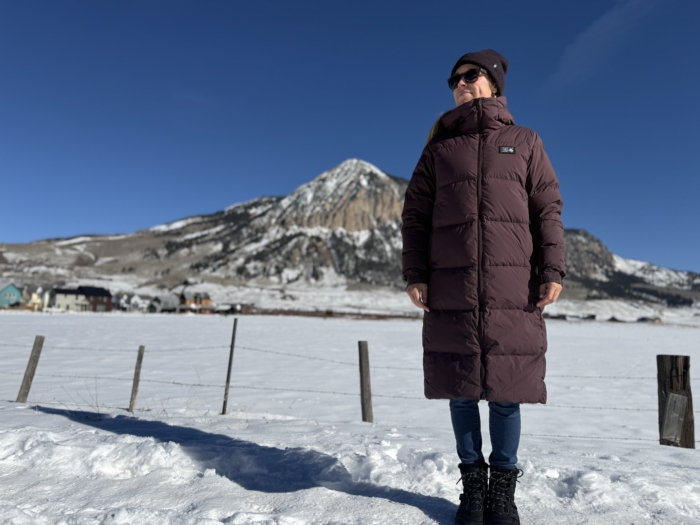
Mountain Hardwear Nevadan Down Long Parka
-
-
Morgan Tilton testing the Mountain Hardwear Nevadan Down Long Parka; (photo/Dane Tudor)
-
Morgan Tilton testing the Mountain Hardwear Nevadan Down Long Parka; (photo/Dane Tudor)
-
Morgan Tilton testing the Mountain Hardwear Nevadan Down Long Parka; (photo/Dane Tudor)
-
Morgan Tilton testing the Mountain Hardwear Nevadan Down Long Parka; (photo/Dane Tudor)
-
Morgan Tilton testing the Mountain Hardwear Nevadan Down Long Parka; (photo/Dane Tudor)
-
Morgan Tilton testing the Mountain Hardwear Nevadan Down Long Parka; (photo/Dane Tudor)
-
Morgan Tilton testing the Mountain Hardwear Nevadan Down Long Parka; (photo/Dane Tudor)
-
Morgan Tilton testing the Mountain Hardwear Nevadan Down Long Parka; (photo/Dane Tudor)
-
Morgan Tilton testing the Mountain Hardwear Nevadan Down Long Parka; (photo/Dane Tudor)
-
Morgan Tilton testing the Mountain Hardwear Nevadan Down Long Parka; (photo/Dane Tudor)
Specifications
Pros & Cons
Pros
- Exceptional warmth-to-weight ratio with full knee-length coverage
- Ample storage including dual internal drop pockets and beverage stash pockets
- Durable, snag-resistant 45D ripstop nylon face fabric
Cons
- Not fully waterproof; loses loft and insulating power if exposed to heavy rain
- Relaxed/boxy fit lacks internal waist cinch controls
- Can feel bulky or restrictive during high-exertion outdoor activities
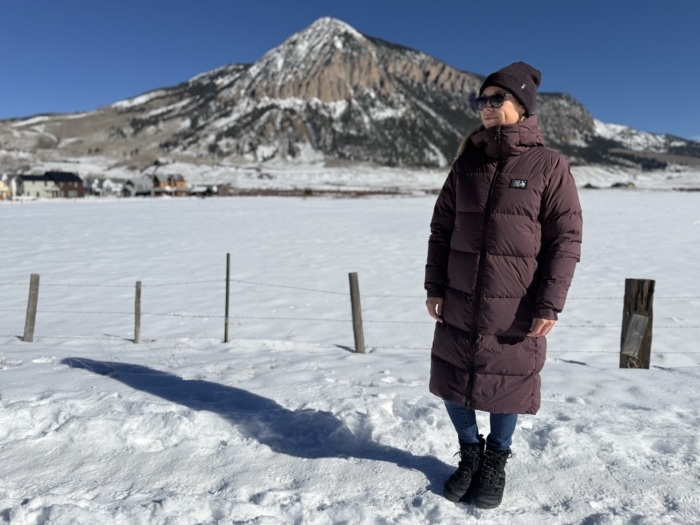
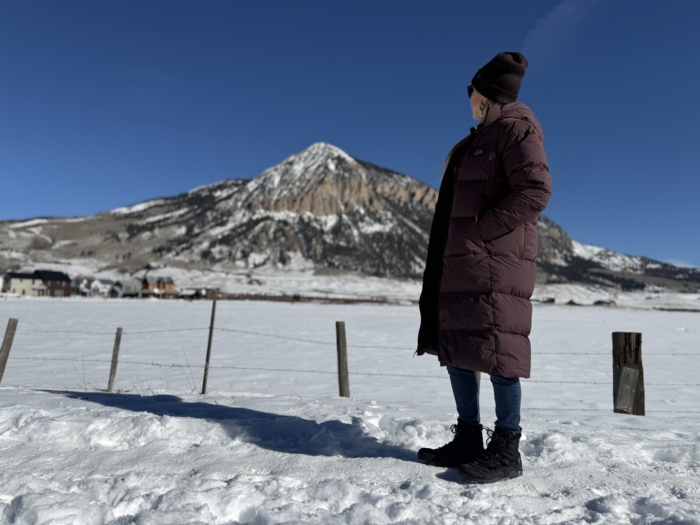
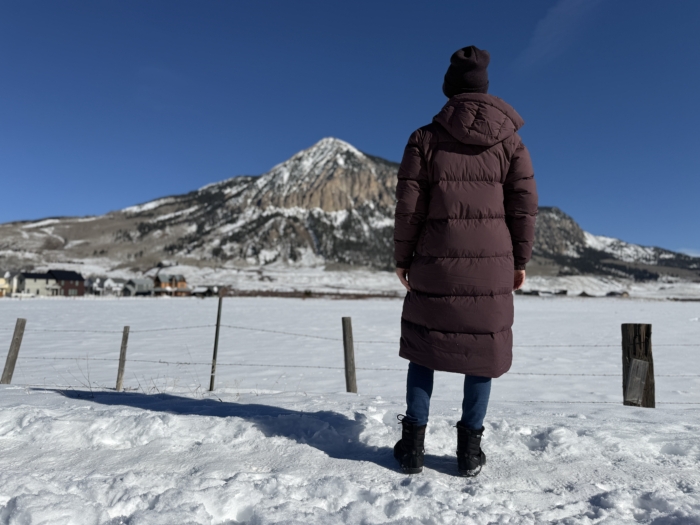
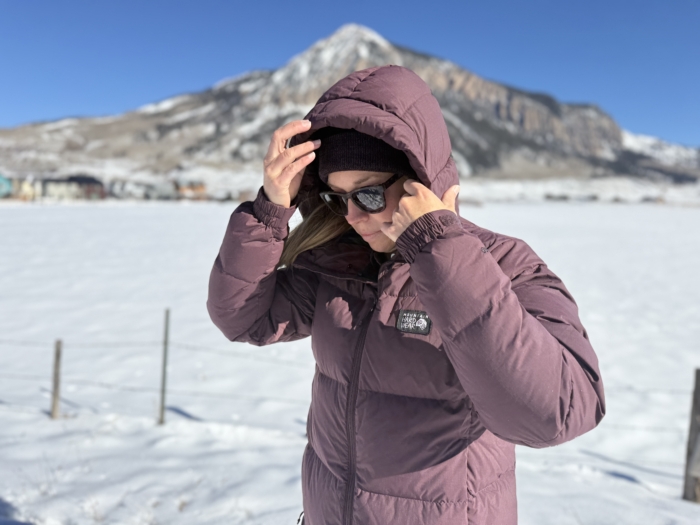
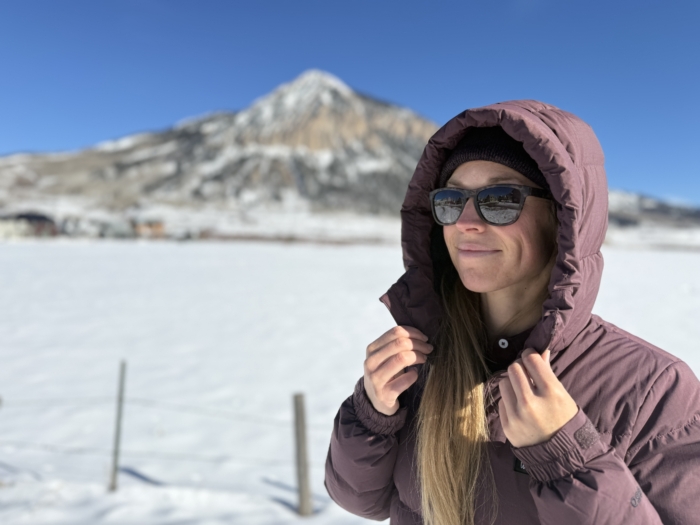
Surrounded by dogs, trucks, snowmobiles, or strollers? Look no further than the Mountain Hardwear Nevadan Down Long Parka ($375). Not only does this knee-length parka offer utility for working women, but the Nevadan has one-of-a-kind pockets and a tenacious face that can take a scrub. To boot, this jacket is made from fully recycled materials.
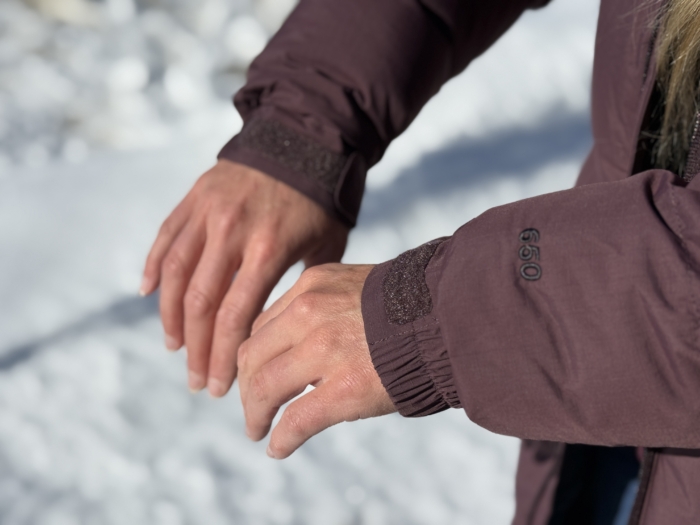
SnowSports Senior Editor Morgan Tilton tested this jacket for several months including zero-degree, wind-ridden days in Colorado’s Elk Mountains and freezing, high-humidity days in British Columbia. Rest assured, this jacket is toasty, as is the insulated hood, one of Tilton’s favorite details. When fully zipped, the tall collar nests the nose and cheeks while the hood cups the back of the head. Cozy. And yes, the 650-fill down is recycled and RDS-certified.
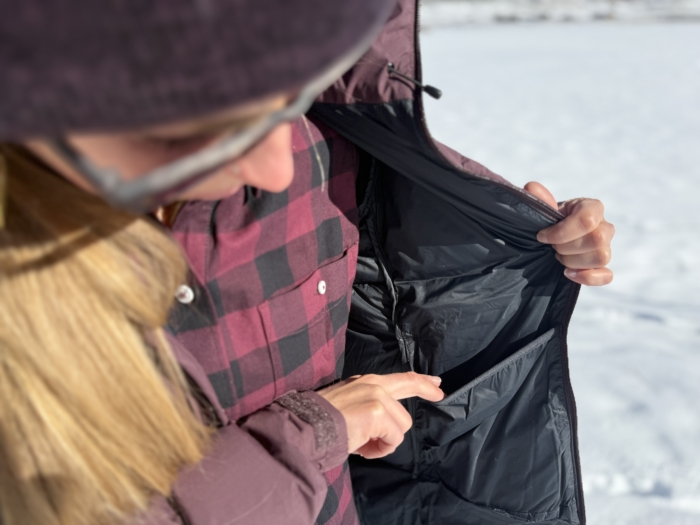
We’ve never seen pockets like these. Two roomy hand pockets are lined for coziness with secure zippers, and both can fit a large phone. At each hip, a second set of zippered pockets is a perfect spot to stash a credit card or keys: It can fit a medium-sized hand or can of La Croix. An internal zippered chest pocket and two drop pockets for glove liners round out the collection.
For stepping into vehicles, the lowermost slider zips open, widening the hem. Though if you’re looking for a hip-length daily driver that’s equally practical and stylish, don’t overlook the Outdoor Research Highveil Stretch Down Parka. Otherwise, the Nevadan’s elasticized cuffs have hook-and-loop closures, which can be tightened more than others Tilton has tested, a notable trait if you’re trying to block wind from entering or pull your sleeves up.
Drawbacks? Tilton wishes that the interior collar was lined with fleece to greet the face. The cuffs, too, would be friendlier with a liner. The back of the hood can be tightened down with a webbing and buckle adjuster: Albeit functional, it’s not very aesthetic. But overall, Mountain Hardwear nailed this design — it’s no wonder it’s so popular among mountain dwellers. The Nevadan is a truly functional, stylish, and eco-friendly package at a reasonable bill.
Canada Goose Mystique Puffer Tonal Label
Specifications
Pros & Cons
Pros
- Floor-length 49.5" cut provides maximum head-to-toe body warmth
- Premium 750-fill down delivers high thermal efficiency in a lightweight shell
- Internal backpack straps offer hands-free carrying when moving indoors
Cons
- Extremely long full-length silhouette can restrict natural stride when moving quickly
- Water-resistant shell is not seam-sealed for heavy, wet downpours
- Very high price point compared to similar technical parkas
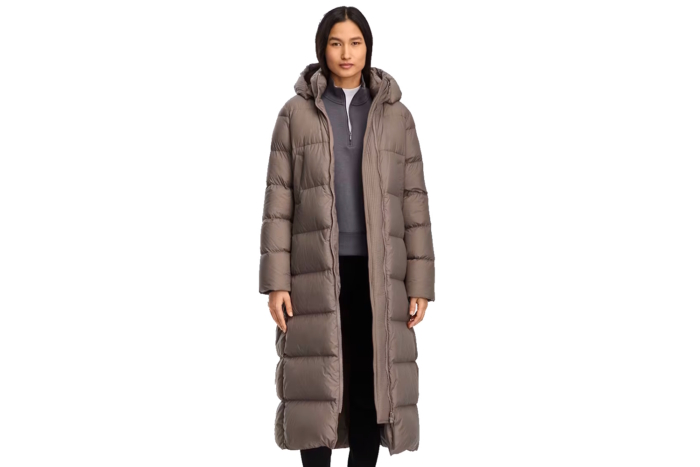
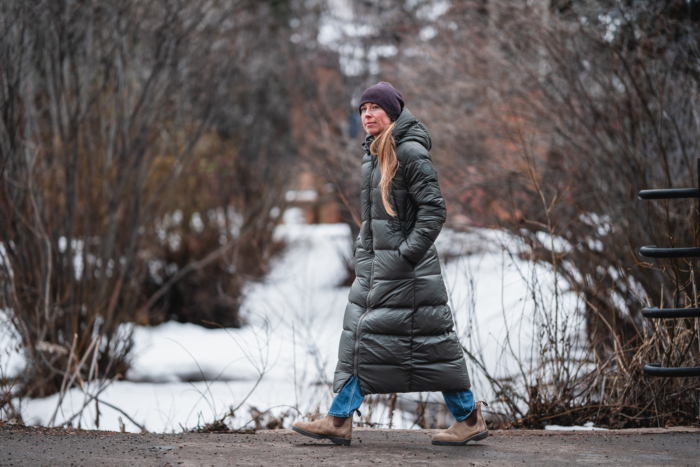
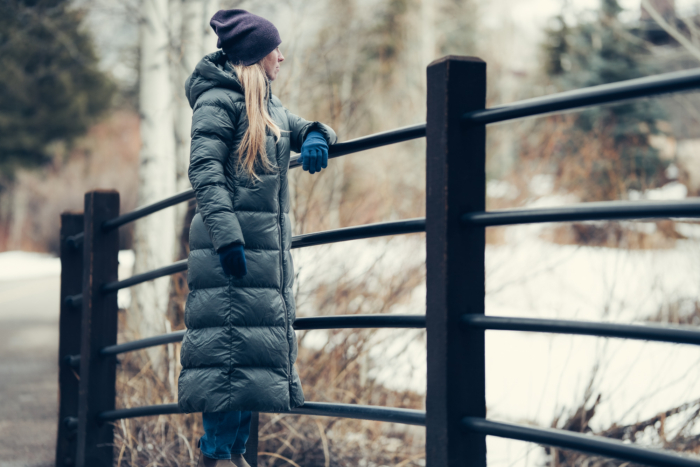
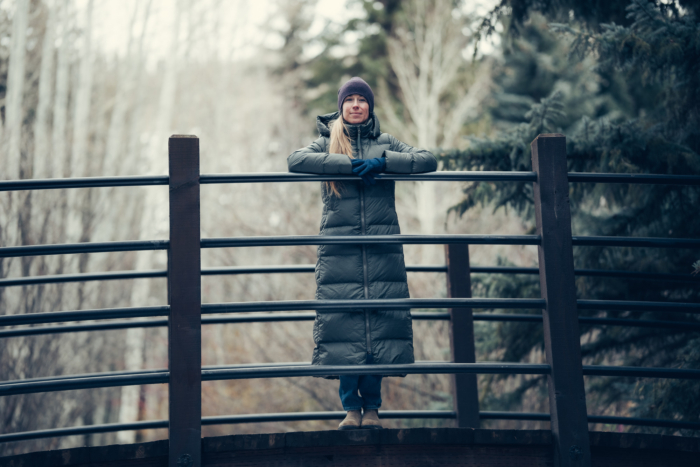
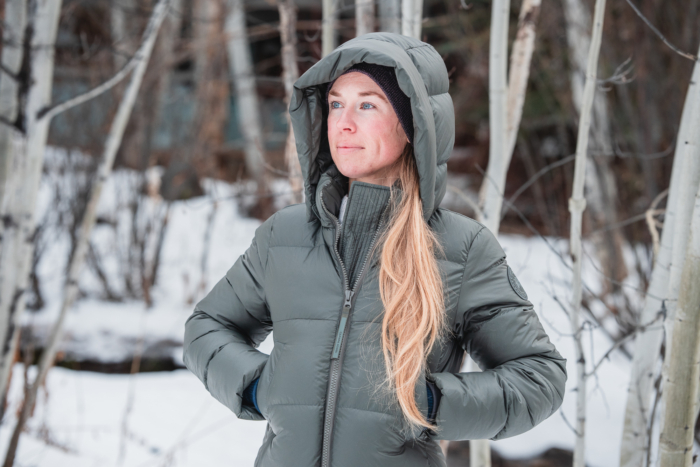
To everyone else who couldn’t imagine the words sexy and sleeping bag in the same sentence, we agree — yet, the luxurious Canada Goose Mystique Puffer Tonal Label ($1,695) has proven us wrong. This masterful calf-length parka is designed for the harshest environments and everyday use. Loaded with 750-fill power — 90% responsibly-sourced down, and 10% feathers — the Mystique is exceptionally lofty and miraculously soft. We almost didn’t gawk at the price, which is nearly double that of the top-selling waterproof Arc’teryx Patera Parka. Almost.
Hand feel is a clear deviation for the Mystique’s exceptionally shiny face fabric: How a winter jacket could be this smooth baffles us. This stylish stove is made from the brand’s proprietary fabric, Lumina, a 100% recycled polyamide (nylon). It’s created with ultra-fine filaments, high-density weave, and a cire finish: a finishing technique where the fabric is passed through heated rollers under high pressure to flatten the fibers, creating a highly polished, sleek surface. While other winter jackets have a heavy-duty, rugged fabric, which feels more coarse — like the Mountain Hardwear Nevadan Down Long Parka — this fashion-forward piece has a silken touch.
A wall against the elements, SnowSports Senior Editor Morgan Tilton felt nothing but cozy warmth while wearing the Mystique Puffer in Crested Butte, Colorado. The parka is rated 4 on the brand’s TEI (Thermal Experience Index), meaning it’s engineered to easily withstand a range of 5°F to -13°F. Tilton loved the stand-up thermal collar — an inner ring around the neck — and integrated hood that wraps around the collar, providing a double layer of protection against wind and cold. The hood is perfectly articulated and removable (via snaps). To protect the wrists, the recessed rib-knit cuffs block wind yet are non-restrictive. While there’s no fleece lining against the face, Lumina is so smooth that Tilton didn’t dock points (historic, we know).
An extremely generous storm flap — nearly 3 inches wide — helps barricade gusts. We appreciated the large, easy-to-handle zipper pull. While it’s typically too cold in Crested Butte to use the integrated shoulder straps, two seamless suspender straps are fixed inside the jacket for ladies to don the layer like a cape if they need a breeze. Six pockets provide plenty of space for carry — including two zippered hand pockets, two chest pockets with snap closures, and two interior drop pockets. The hand pockets are spacious enough for a large phone. All but the drop-ins are softly lined with high-pile fleece. We only wish there was an interior zippered pocket for a small wallet.
There’s no arguing that the $1,695 price tag is a significant investment. If you’re not looking for a workhorse piece — with a rougher, rugged fabric and shorter length or more pockets — we view the ultra-warm Mystique Puffer as a practical, beautiful jacket that shields against deep-freezing winters and will last for decades. With a high-fashion, streamlined silhouette, this timeless style is one that can be passed down.
Outdoor Research Highveil Stretch Down Parka
-
-
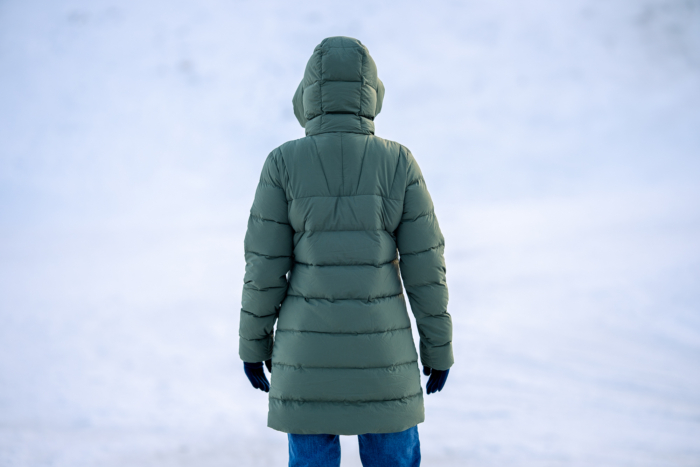
Morgan Tilton testing the Outdoor Research Highveil Stretch Down Parka; (photo/Jason Hummel)
-
Morgan Tilton testing the Outdoor Research Highveil Stretch Down Parka; (photo/Jason Hummel)
-
Morgan Tilton testing the Outdoor Research Highveil Stretch Down Parka; (photo/Jason Hummel)
-
Morgan Tilton testing the Outdoor Research Highveil Stretch Down Parka; (photo/Jason Hummel)
-
Morgan Tilton testing the Outdoor Research Highveil Stretch Down Parka; (photo/Jason Hummel)
Specifications
Pros & Cons
Pros
- Exceptional mobility and range thanks to the full-stretch channel-weave shell fabric
- Lightweight mid-thigh construction delivers solid warmth without bulk
- Clean, tailored silhouette layers easily over workwear and daily street clothes
- Water-resistant DWR finish and 700+ fill RDS down provide protection in brisk cold
Cons
- Not fully waterproof for heavy, wet coastal downpours
- Provides slightly less total warmth than longer, heavy-duty arctic-style parkas
- Slimmer athletic fit leaves less room for thick, bulky midlayers underneath
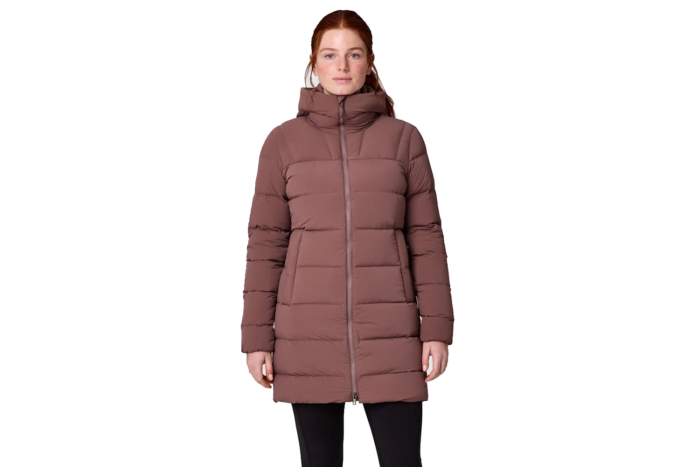
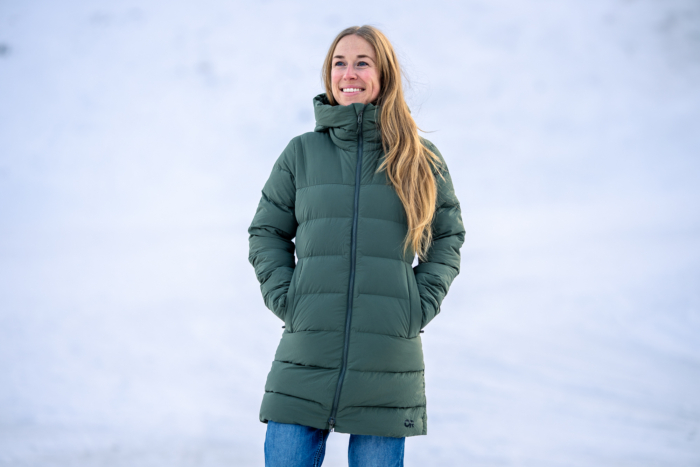
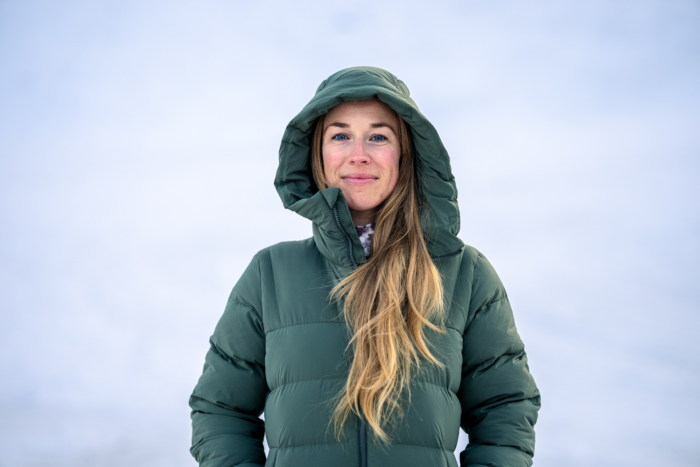
If you struggle to walk out the door on sub-zero mornings, the Outdoor Research Highveil Down Parka ($425) is your new solution. Packed with 700-fill responsibly sourced down, this parka provides fortress-level warmth without the rigid, restrictive feel of traditional heavy winter coats. Highveil’s standout feature is its mobile, stretchy shell (88% nylon and 12% elastane), which feels more like pulling on our favorite hoodie than a parka.
Highveil allows for a full range of motion, as found by SnowSports Senior Editor Morgan Tilton — perfect for wrangling grocery bags or lifting bikes on the hitch rack. Airy and smooth, this channel-weave construction keeps the insulation in place while maintaining an accentuating silhouette that defies the marshmallow look.
Channel-weave is the magic here. The baffles have no stitching, no holes: Heat can’t escape, and feathers can’t poke out. This stitch-free design is key for the stretch, plus it’s lighter, more weather resistant, and more durable (despite the face feeling delicate). Two layers of fabric are woven simultaneously and at pre-programmed intervals, the loom weaves the top and bottom layer together, creating an interlaced seam.
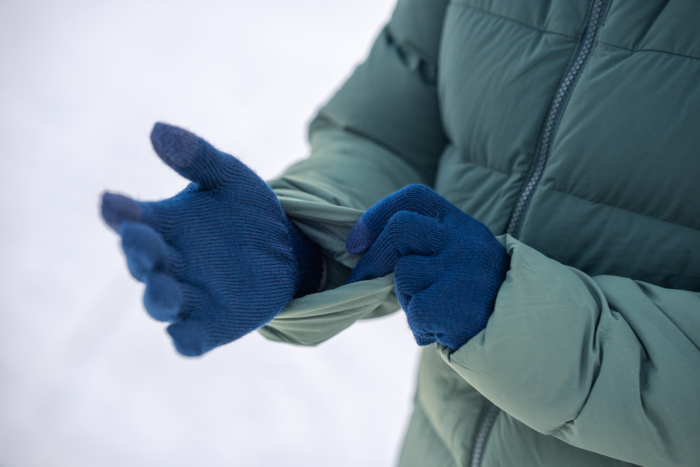
Unlike the Lands’ End Expedition — which relies on a heftier, seam-sealed waterproof shell — the Highveil focuses on a weather-resistant finish and high-loft mobility. While it won’t be your first choice for a freezing rainstorm, it wins on comfort and sheer cozy factors, like the tall insulated collar and hood. Rather than hook-and-loop closures, the cuff closures are a simple, lean elastic band that ends at the wrist: Depending on your glove choice, the simplicity could be beneficial.
While we love the brushed tricot in the zipped hand pockets, we wish the smooth fabric lined the underside – it’s just nylon. Two drop-in pouches round out the storage, so we wish a zipped chest pocket was included. And if pelts are firing, there’s no brim on this hood. For $425, it is a mid-to-premium investment optimized for dry, freezing climates and everyday routines. It’s the ideal choice for women who prioritize movement and warmth-to-weight ratio over heavy-duty waterproof armor. Plus, the silhouette helps maintain a feminine style when the temperature drops.
The North Face Women’s 1996 Retro Nuptse Jacket
Specifications
Pros & Cons
Pros
- Large baffles with 700-fill down provide excellent warmth
- Adjustable waist and wrists for added insulation
- Packs into pocket for easy stowage
- Variety of colorways and styles
Cons
- Hand pocket entries are too small — zippers rub uncomfortably on hands
- Shorter length provides less warmth to the hip area
- Not waterproof for heavy snow cycles
- Expensive
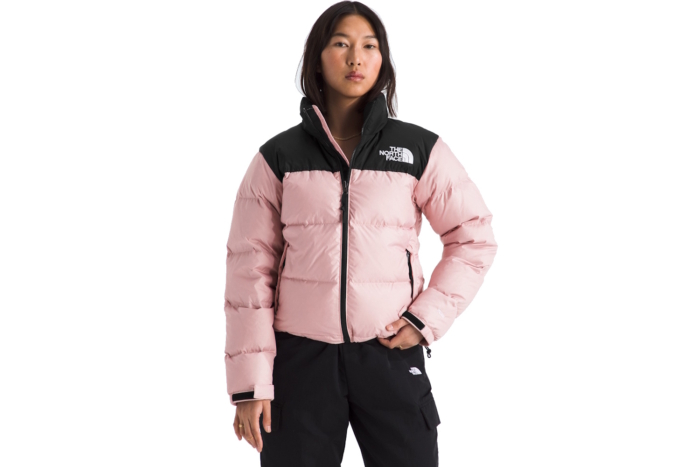
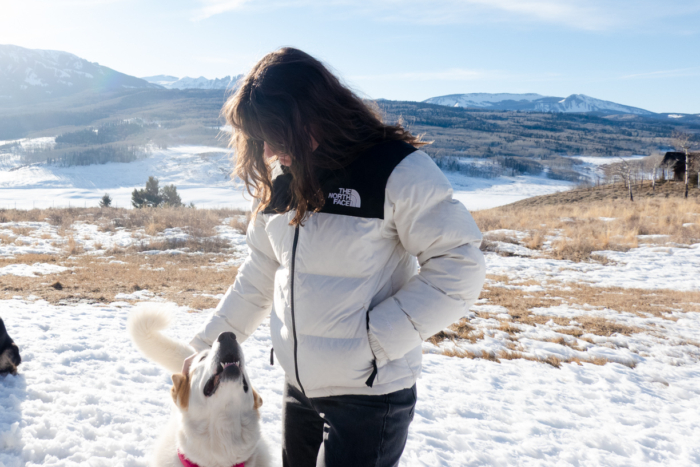
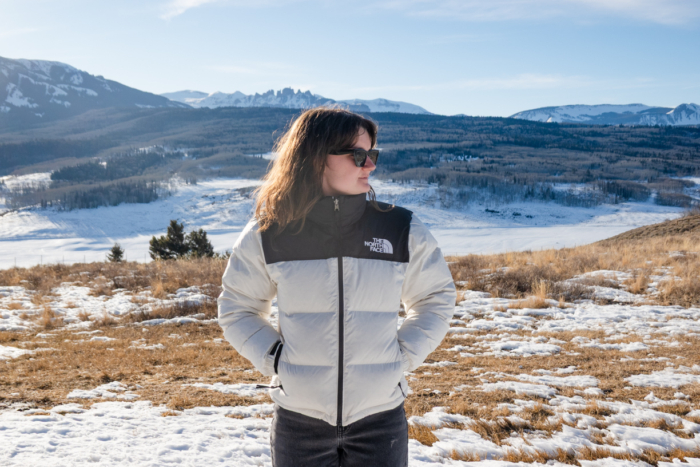
Retro puffers are everywhere right now, especially the cropped, extra-lofty versions that nod to late 90s and early 2000s style. The North Face Women’s 1996 Vintage Nuptse Jacket ($380) leans fully into that look, with a boxy cut and oversized down baffles. Style aside, we were mainly curious how this throwback piece would hold up during real winter use.
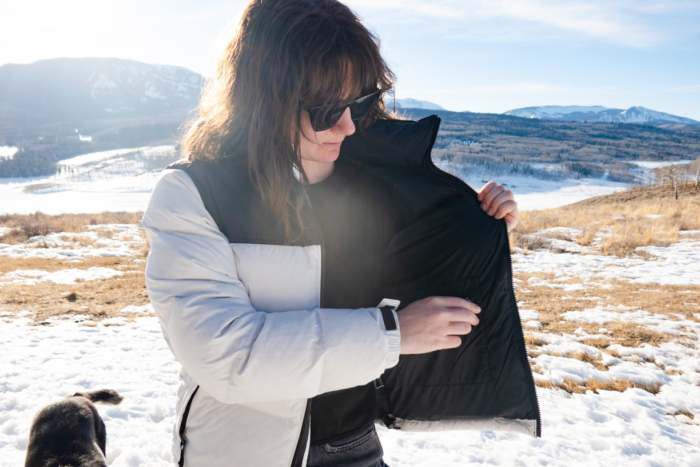
The Nuptse has been around for decades, originally built around The North Face idea that “lighter gear performs better.” This updated version stays true to that concept. It weighs just under 2 pounds and compresses easily thanks to its lofty down fill. Wearers can stuff the jacket into its right hand pocket, which makes it convenient to stash in a pack or car when you do not need it.
Gear aficionado Meghan LaHatte tested the Nuptse in midwinter in the Gunnison-Crested Butte Valley of Colorado, where temperatures regularly drop well below freezing. Contributor Meghan LaHatte wore it on morning and evening dog walks, early work commutes, and short strolls around downtown Crested Butte. The coldest test came during a local bonfire, where she stood outside in 0 degree Fahrenheit conditions for over an hour and a half during 25 mph gusts. In those scenarios, the jacket consistently delivered reliable warmth.
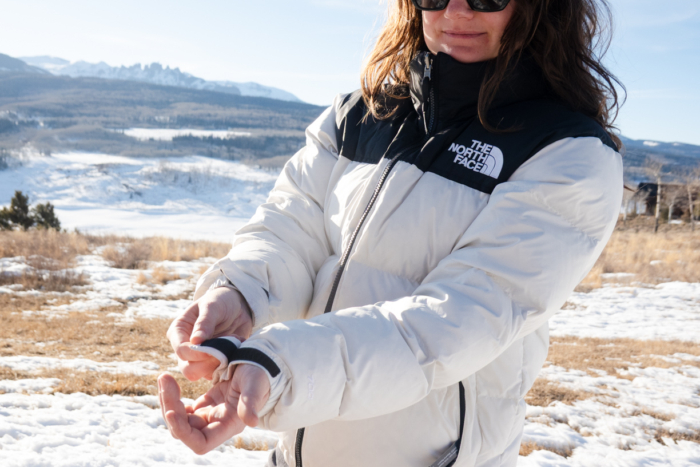
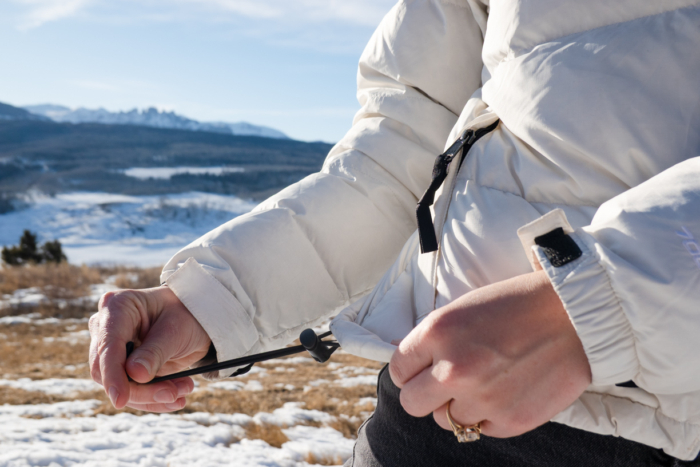
Much of that warmth comes from the large baffles filled with 700-fill recycled waterfowl down. This type of natural insulation performed especially well in cold, slightly moist conditions. Adjustable wrist cuffs and a drawcord at the hem help seal in heat and limit encroaching drafts. For such a lightweight jacket, it also handled wind better than expected when storms started pushing snow sideways during testing. The recycled nylon ripstop shell, finished with a PFC-free DWR treatment, shed light moisture and snow without quickly wetting out.
Performance was strong overall, but a few design details stood out negatively during testing. The hand pocket openings felt tight, particularly when wearing gloves or mittens, and the zipper edges were noticeable against bare hands. The stowable hood adds versatility, though in use it felt thin and sat a bit awkwardly. These issues did not impact warmth, but they were noticeable in day to day wear.
At a lower price point than the $380 Nuptse, users who want a similar casual style might consider the REI Co-op Campwell Down Parka, which retails for $239. It delivers a relaxed vibe with generous baffle insulation and high-quality down for significantly fewer dollars. After weeks of use in true mountain winter conditions, the 1996 Vintage Nuptse proved to be more than just a trendy vintage piece. It is a warm, lightweight option that works well for everyday cold weather, especially in dry to mildly wet, windy climates where insulation matters more than full waterproof protection.
Lands’ End Women’s Expedition Down Waterproof Winter Parka
-
-
Morgan Tilton testing the Lands' End Women's Expedition Down Waterproof Winter Parka; (photo/Jason Hummel)
-
Morgan Tilton testing the Lands' End Women's Expedition Down Waterproof Winter Parka; (photo/Jason Hummel)
-
Morgan Tilton testing the Lands' End Women's Expedition Down Waterproof Winter Parka; (photo/Jason Hummel)
-
Morgan Tilton testing the Lands' End Women's Expedition Down Waterproof Winter Parka; (photo/Jason Hummel)
Specifications
Pros & Cons
Pros
- Fully waterproof seam-sealed construction keeps moisture completely out
- Deep temperature rating handles severe freezing conditions effortlessly
- Soft Sherpa fleece lining inside hood and pockets adds high contact warmth
Cons
- Heavier and bulkier to pack down compared to non-waterproof down alternatives
- Relaxed fit offers minimal waist shaping
- Zipper can be tricky to engage initially due to storm flap coverage
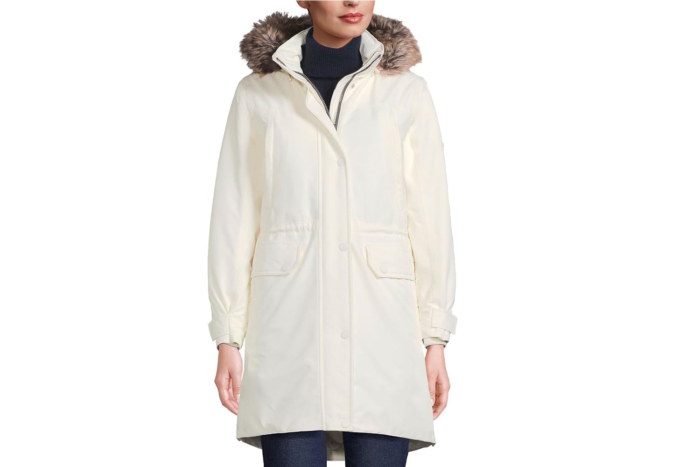
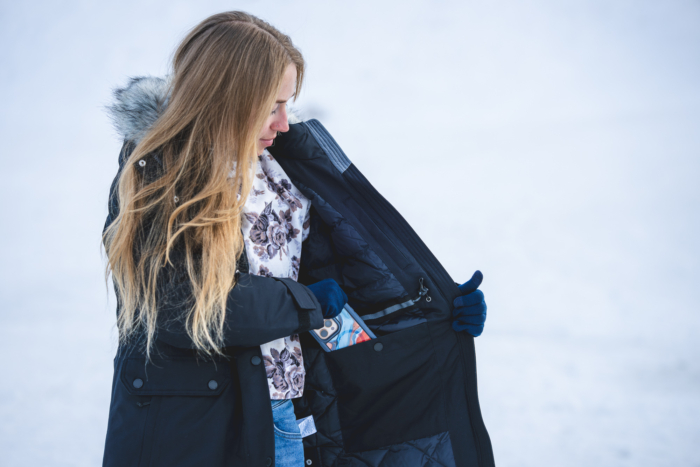
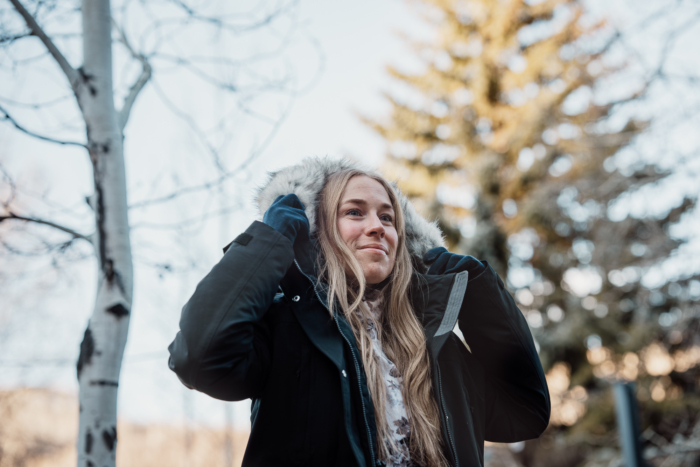
Packing serious heat, the fashion-forward Lands’ End Women’s Expedition Down Waterproof Winter Parka ($350) surprised us as a heavy-duty contender for those who prioritize absolute weather protection over weight. Designed as a true fortress against the elements, this parka has a seam-sealed, 100% waterproof face that shrugs off freezing rain and wet snow. Inside, 600-fill down provides substantial loft, while the removable hood with a thick faux-fur ruff creates a cozy cave for the face during biting windchills.
While wearing around Crested Butte, SnowSports Senior Editor Morgan Tilton found that the primary tradeoff for this level of protection is bulk. With the Expedition’s rugged shell and extensive feature set — including a two-way zipper and collection of pockets — it feels significantly heavier (1,616 grams) and less packable than more compressible jackets like the lighter Outdoor Research Highveil Stretch Down Parka, which has 700-fill down.
What most surprised Tilton was the luxurious touchpoints of the Expedition. The hand and chest pockets, as well as the hood, are lined with plush fleece (a warm invitation). Spacious drop-in pockets are secured with snap closures, which are layered beneath the hand pockets in an intelligent design. Three internal pockets are available for storage including a chest pouch with a snap closure.
We loved the three snaps on each hem for expanding the jacket’s width for our hips and high-steps, like when we need to step up into a vehicle. A storm flap and dense-yet-pliable rib-knit wrist cuffs help to keep weather out.
While the 600-fill down is very toasty, this Lands End piece lacks the high-performance warmth-to-weight ratio found in other layers, making it an essential piece for waits at the bus stop or stadium games. If you’re heading into sub-zero temps, this stylish, moderately-priced powerhouse will protect you in snowfall, gusts, and extreme temps below zero.
7 More Field-Tested Winter Jackets for Women That Keep Us Toasty
These seven silhouettes don’t carry accolades but remain our top recommendations for friends due to high marks for style, comfort, pockets, price, and overall fit.
Specifications
Pros & Cons
Pros
- Lightweight, packable jacket
- DownTek insulation is water-resistant and dries quickly
- Extended sizing for petite, regular, and plus
- Budget-friendly
Cons
- Handpockets are too shallow
- Zipper is challenging to get into place
- Collar is abrasive on facial skin
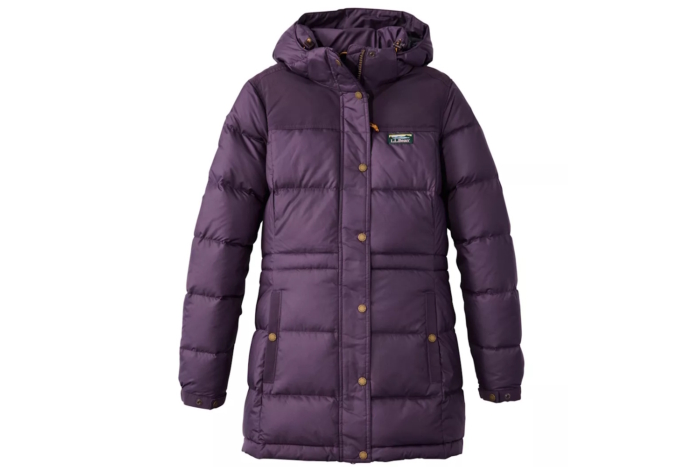
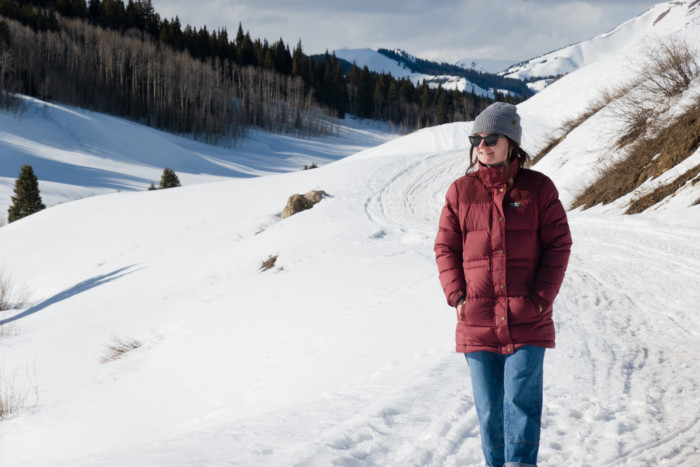
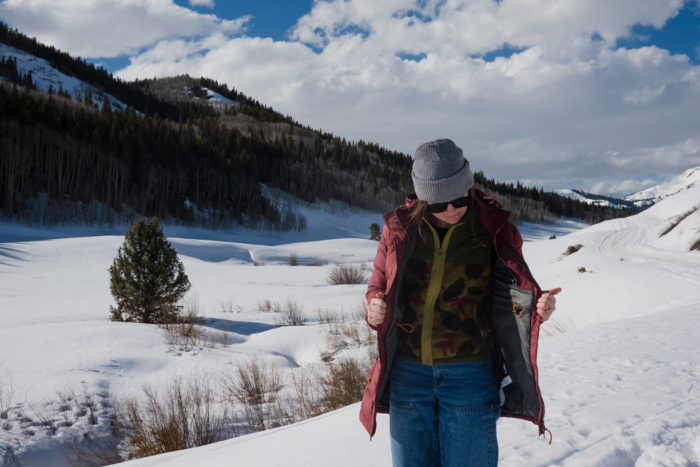
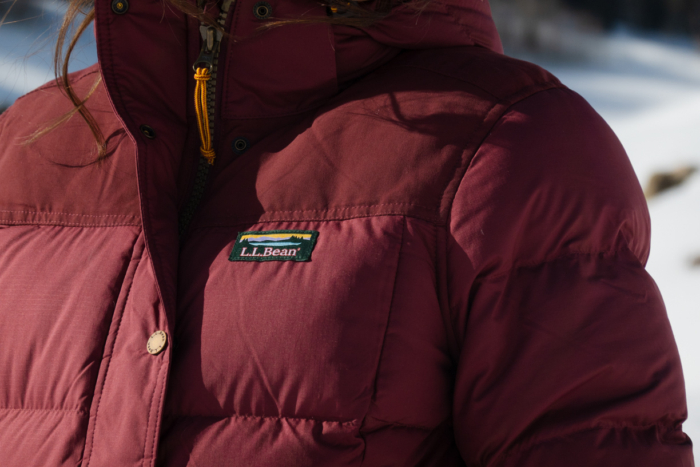
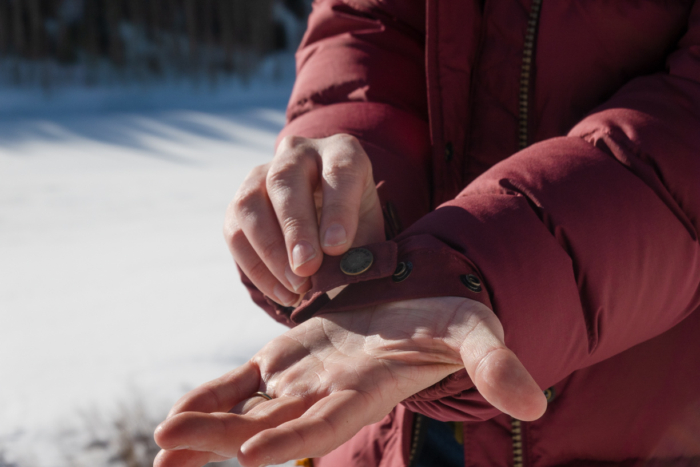
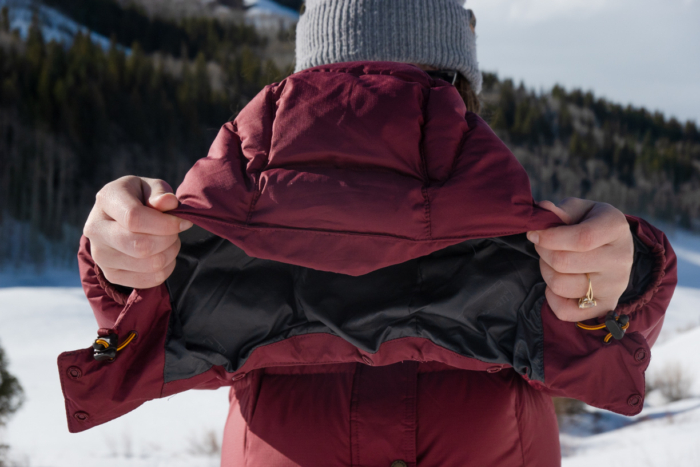
A winter parka doesn’t have to exceed your budget, and the L.L Bean Mountain Classic Down Parka ($200) is proof. At $200, this jacket punches above its weight, delivering dependable warmth and weather protection without creeping into $300+ territory. Winter jacket expert Meghan LaHatte put it through a full Gunnison Valley winter, where temps routinely hover between -6°F and -10°F at night and swing into the 40s or even 50s on sunny afternoons. From subzero dog walks to blustery porch hangs and quick town runs, the Mountain Classic held its own.
The headline feature is L.L.Bean’s DownTek insulation, an in-house responsibly sourced down treated with a water-repellent finish. In heavy, wind-driven snow, the parka kept its loft and stayed impressively dry inside. It’s not an expedition-grade belay coat, but for everyday winter wear in truly cold climates, it delivers reliable, steady warmth.
Fit is where this parka shines. The slightly A-line silhouette, paired with an adjustable waist, gives it shape without restricting movement. It’s offered in petite, regular, and plus sizing, a major win for buyers needing options in length. On 5’3” LaHatte, the mid-thigh length struck the sweet spot: enough coverage for real winter protection without limiting stride or mobility.
That said, it’s not perfect. The hand pockets are frustratingly shallow. Small essentials like keys had a habit of sneaking out, and stuffing gloved hands inside felt cramped. The front zipper also takes patience — it can snag or resist lining up, which isn’t ideal when you’re already standing in the cold or in a rush to get out the door.
At the $200 price point, the Mountain Classic is comparable to the $299 Columbia Amaze Puff Mid Hooded Jacket in terms of silhouette and fill. You’ll sacrifice a bit of pocket depth and maybe some loft, but you’ll also save nearly $100, which is a nice chunk of change to hold onto. Bottom line: The Mountain Classic Down Parka is a no-frills winter coat built for cold, snowy climates where you need real insulation but not advanced-level tech. For the price, it’s a workhorse with classic styling and enough performance to justify a permanent hook by the door.

Specifications
Pros & Cons
Pros
- Mid-thigh length design offers extended coverage through the hips and thighs
- Made with 100% recycled down insulation, plus a fully recycled shell and lining
- Chevron baffles and contoured princess seams create a streamlined, flattering shape while maintaining warmth
- Has a removable hood for adaptable coverage and styling options
Cons
- Lack of wrist cuffs and small baffles decreased arm insulation
- Slim fit may be less accommodating for thicker layers
- Water-resistance could benefit from improvement
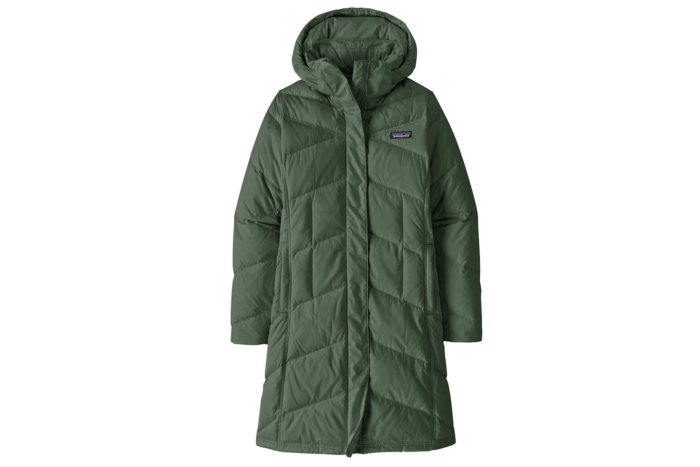
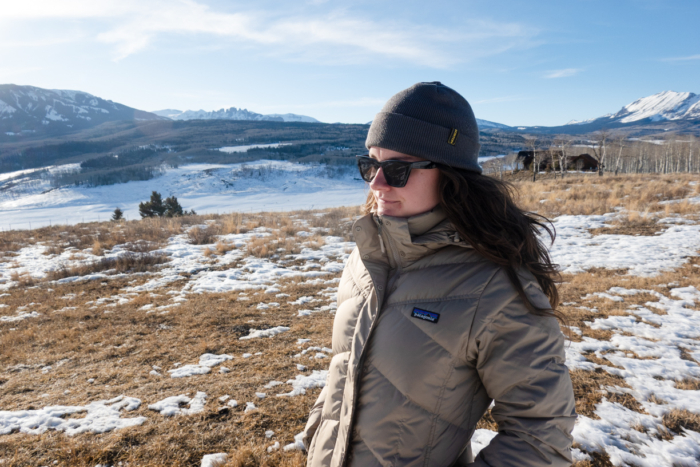
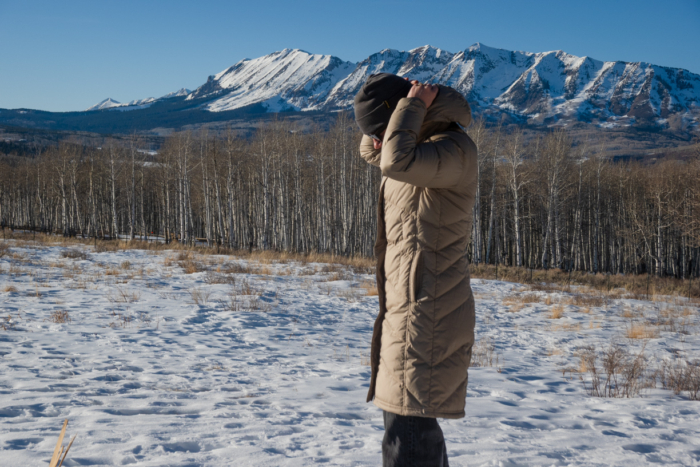
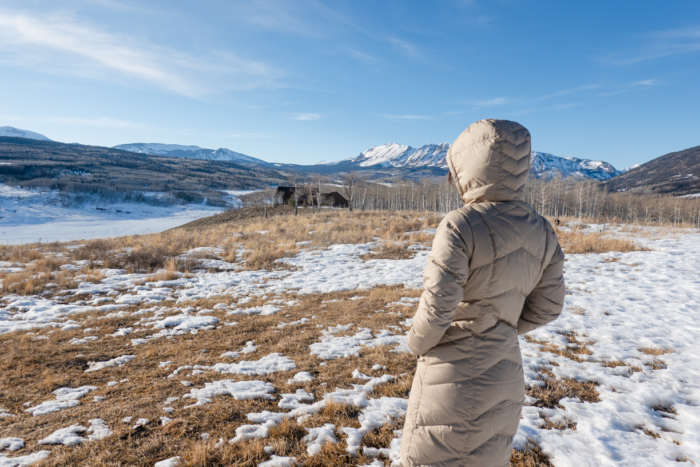
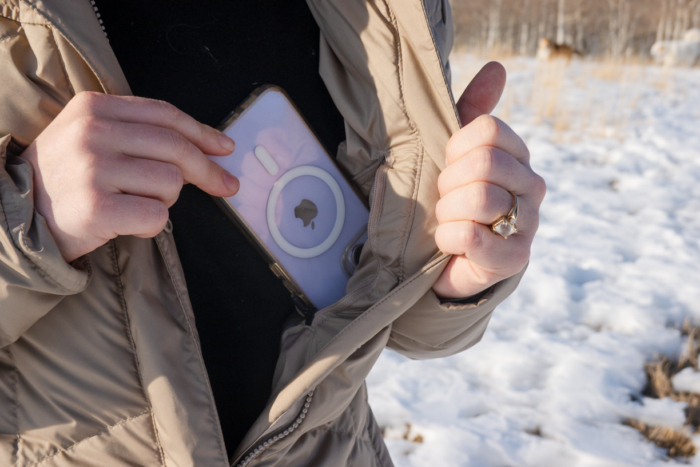
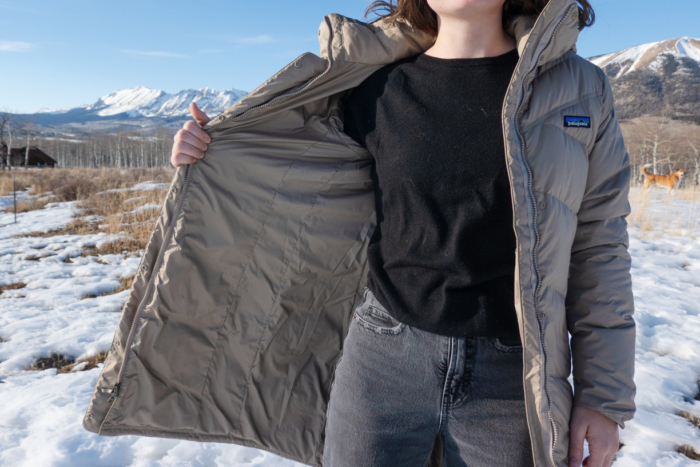
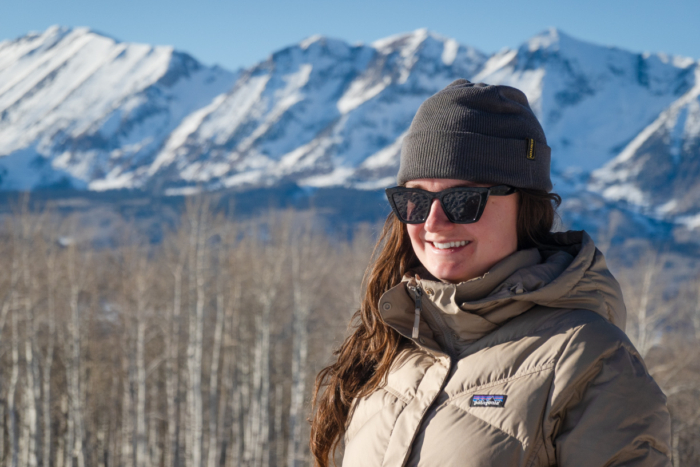
Although it has a slim profile, the Patagonia Women’s Down With It Parka ($365) doesn’t give up much in terms of practicality. The shell, lining, and insulation are all made from recycled materials, which matters if you try to be mindful about what your gear is made from.
Gear analyst Meghan LaHatte tested the jacket during an unusually dry, warm winter in Gunnison Valley, Colo., so most days felt more like late fall than midwinter. Then one storm finally rolled through and dumped heavy, wet snow for hours. The PFAS-free DWR treatment handled it somewhat well, but only for a few minutes. Moisture piled on the surface, but the shell did dry quickly once we got inside.
The fit is distinctly tailored. Princess seams pull the waist and hips in, and the chevron baffles give it a clean shape. Walking around town felt comfortable, but bigger movements like stepping into a tall truck or climbing stairs two at a time felt a bit restricted. Patagonia also removed the side snaps in the latest version, which takes away some of the flexibility older versions had. The 600-fill recycled down keeps the torso consistently warm. The arms felt cooler by comparison, especially when standing around outside for long stretches. Adjustable cuffs and added insulation would probably help seal in heat there.
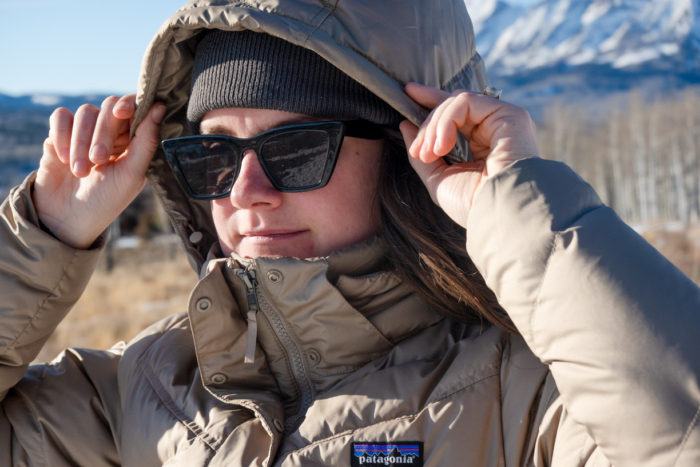
Small details ended up mattering heavily in 15 to 45°F conditions. The zipper draft flap and microfiber-lined collar blocked wind surprisingly well, and the hand pockets were warm enough that gloves stayed in pockets more often than expected. And with a removable hood, it was easy to throw a scarf around the collar without it feeling impossible to wrap. With a knee-length hem, sitting in snow or on cold benches was no issue in the Down With It Parka. LaHatte appreciated this during après at mountainside patios and during freezing outdoor hockey games, especially when the metal bleachers were frozen solid.
At $365, it is a commitment, though the materials and construction feel in line with the price. If you want something similar for less, the REI Co-op Campwell Down Parka has a comparable casual style at a lower cost.
Overall, this parka makes the most sense for cold towns with regular winter weather. It works well for everyday wear, walking, and standing outside for a while, as long as you are okay trading a bit of mobility for a cleaner, more tailored fit.
-
-
GearJunkie contributor Morgan Tilton testing out the Patagonia Tres 3-in-1 Parka; (Photo/Eric Phillips)
-
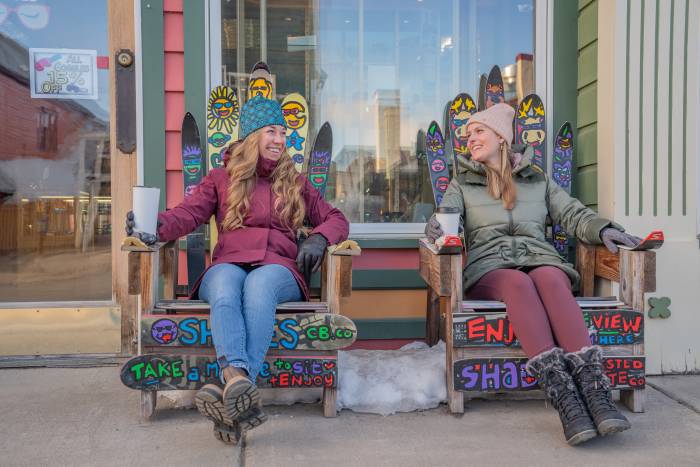
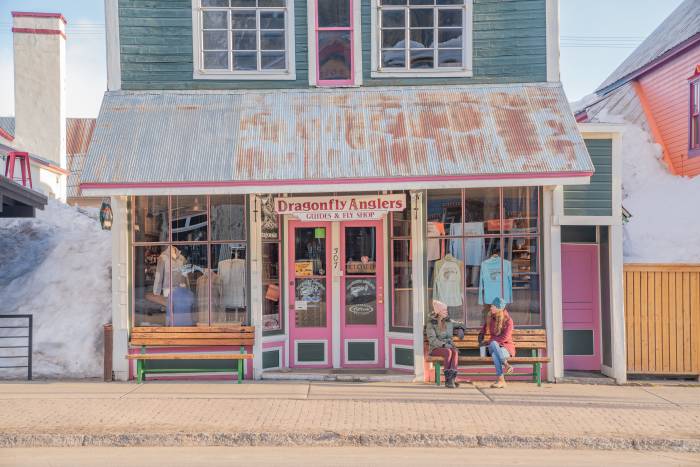
GearJunkie gear testers Morgan Tilton and Mary Murphy testing women's winter parkas on a frigid morning. (Photo/Eric Phillips.)
-
GearJunkie gear testers Morgan Tilton and Mary Murphy sit in the frigid morning weather testing out women's winter jackets. (Photo/Eric Phillips.)

Specifications
Pros & Cons
Pros
- Fixed brim on shell hood helps block rain
- Shell sheds rain extremely well and keeps interior parka dry
- Articulated fit plus room for midlayers
- Essentially three jackets in a single package
Cons
- No interior chest pocket on rain shell
- Arm cuffs lack wrist gaiters if that's a preference
- Isn't the most flexible fabric or roomiest cut on our list
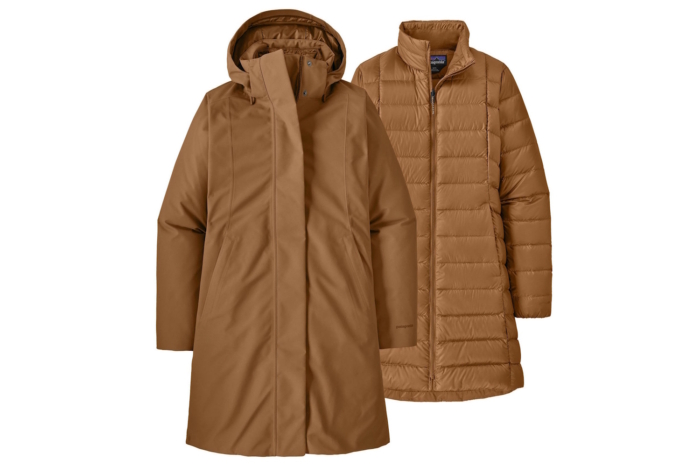
With sleek style, the Patagonia Women’s Tres 3-in-1 Parka ($699) is a fully functional down parka or standalone shell. The two pieces zip together for the most warmth and protection from precipitation. While the piece costs and weighs more than other jackets on our list, you’re essentially getting two jackets that can be worn three ways. The silhouette is straighter rather than the former slim, hourglass shape, allowing for more range of motion, stepping into the truck, mounting a cruiser, and simply layering beneath. The length was increased and remains above the knees but below the backend, so our hindquarters can stay warm when we sit on a cold seat. The baffle design along the sides was altered from chevron to more vertical to help increase warmth.
If you’re running around town, heading to work meetings, or want to look good at an outdoor winter (or rainy summer) concert, this jacket has style and function for a range of weather conditions. SnowSports Senior Editor Morgan Tilton tested the jacket in single digits on winter mornings in Crested Butte, Colorado, navigating a blizzard and ice-coated sidewalks in downtown Ogden, Utah, and at a monsoon-showered summer music festival at 9,000 feet in Telluride. The jacket never got drenched while keeping us very cozy. The outer shell repelled drops of rain and didn’t soak through, and the shell’s ergonomic hood fits well over a front-brim hat or a beanie. The knee-length design helped protect our thighs and backside from the rain, which was perfect when we forgot rain pants. We love the brushed tricot lining in the two hand pockets, which are super roomy and can easily fit a large phone.
The shell is made from 100% recycled polyester, up from 50%, which is sourced from collected plastic bottles. The Tres’s sustainability features don’t stop there. This exterior shell’s lining is 100% recycled. The interior insulation layer is filled with duck and goose down that’s reclaimed from retired products. The insulated jacket’s shell and lining are both 100% recycled polyester. All of the textiles are Bluesign-approved, made in a Fair Trade Certified factory, and coated with a PFAS-free DWR (durable water repellent) for water resistance. The jacket also meets Patagonia’s in-house H2No Performance Standard, following multiple years of testing for waterproofness, breathability, and durability.
Lovely fleece lines the shell’s interior collar, brushing the face as well as around the entire insulated neck of the down jacket. We love that the cuff on each arm has a slender zipper, so you can expand the width for larger gloves to slide beneath. A side zipper also lets you expand the circumference of the jacket if you need to sit at a wider stance. Overall, this 3-in-1 retains a flattering cut. The shell alone also offers a nice amount of warmth — more than a typical lightweight rain shell.
When paired with the down parka, the set is warm for frigid days. For supreme versatility, the Women’s Tres 3-in-1 Parka is one of the best winter jackets you can find. While single-piece waterproof options like the Lands’ End Expedition Parka lock you into heavy insulation every time it rains, the Tres has a separate 2-layer waterproof-breathable shell you can wear on its own during milder, wet weather. If you live in the Pacific Northwest, or another equally rainy climate, we’d recommend the Tres.
-
-
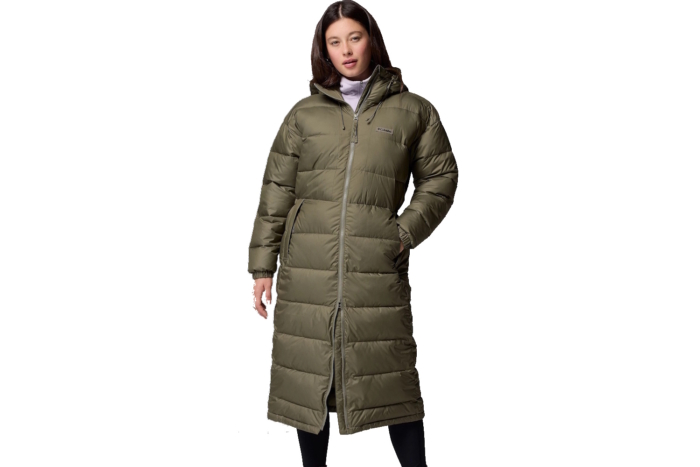
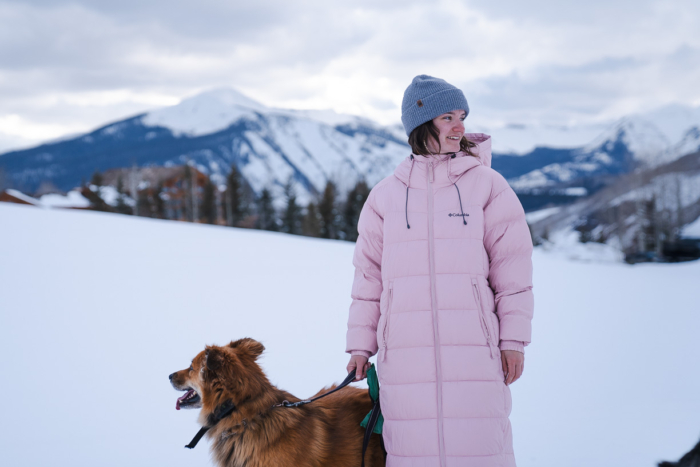
An ultra-puffy and long jacket can be the perfect match for super-cold winters; (photo/Meghan LaHatte)
-
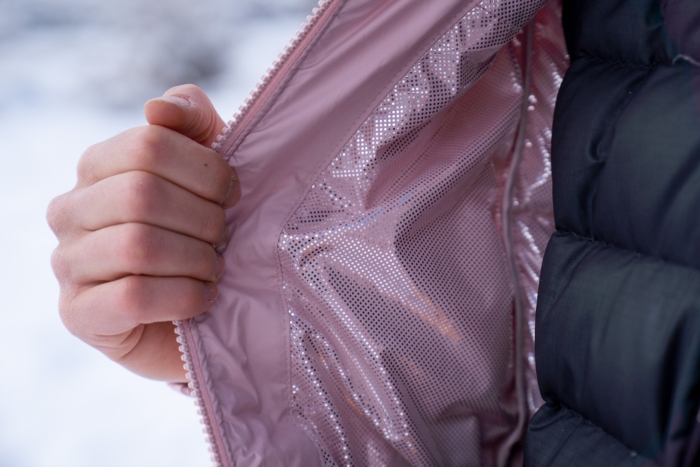
The Omni-Heat lining on the Pike Lake II helps insulated body heat without adding bulk; (photo/Meghan LaHatte)
-
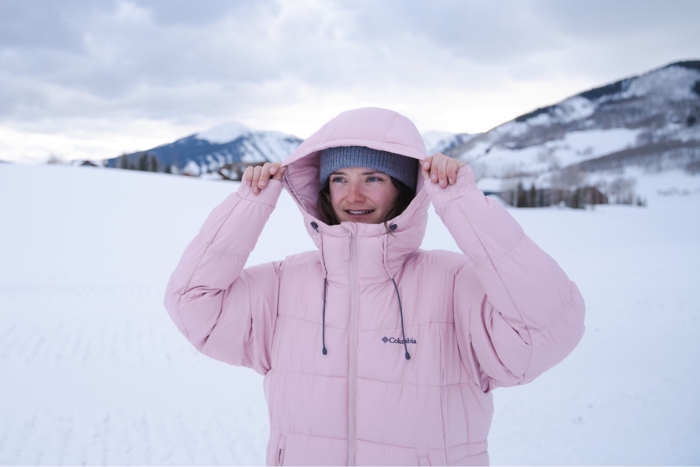
The Pike Lake II’s hood is not only spacious and insulated, but also adjustable; (photo/Josh Boulton)
Specifications
Pros & Cons
Pros
- Full-coverage length
- Snappable leg slits helps with range of movement
- Hood has drawstring for customized fit
Cons
- Might be too bulky for some folks
- Heavier and not as packable as other options
Read Review: Like Wearing a Sleeping Bag: Columbia Pike Lake III Long Winter Jacket Review
The Columbia Women’s Pike Lake III Long Jacket ($220) is a robust coat with plenty of length and fever for blustery days when you want to bundle up completely. Lined with Columbia’s Omni-Heat, the thermal-reflective layer retains body heat and keeps us well-insulated during some frigid Colorado evenings and mornings.
In terms of fit, this jacket runs slightly big, but has a uniform silhouette that allows for plenty of layering. This coat has a generous center back length of 45 inches that reaches our shins. The bottom of the Pike Lake has three vertical snaps that, when opened, offer more range when needed. The additional mobility was especially nice for hikes and jumping into the car.
Let’s dive into the details. The Pike has two spacious zippered pockets located at the hips. These are great hand warmers, as well as a good spot to stash keys and other little must-haves. There’s an internal pocket discretely located near the chest for a cell phone or wallet. If you want to adjust the fit of the Pike Lake, simply cinch the internal waist drawstrings. When the wind and snow ramp up, the hood is also easily tightened with the pull cords located at the collarbone of the coat. These adjustable parts of the jacket can play a huge role in keeping your body protected and firing while you’re outside, facing gnarly elements.
The insulation and shell of the Pike Lake III are 100% recycled polyester. On Columbia’s warmth scale, this piece scores a 3, which is the highest number their jackets can achieve. Less robust coats like the Columbia Women’s Heavenly Long Hooded Jacket score a 2. Even on 20-degree Fahrenheit nights in the dead of winter, the Pike Lake III did a remarkable job at keeping us comfortable. It’s hard to beat the Pike Lake III Long Jacket, thanks to its insulation, generous length, and adaptability. While it isn’t waterproof, we feel that the water resistance and wind blockage are perfect for cold, mildly wet winters.
Specifications
Pros & Cons
Pros
- Plenty of pockets for storage
- Highly durable design
- Removable faux fur collar
- Extremely warm for cold-weather use
Cons
- A bit too heavy and bulky for travel-use
- Expensive
- Exterior shell attracts pet hair and lint
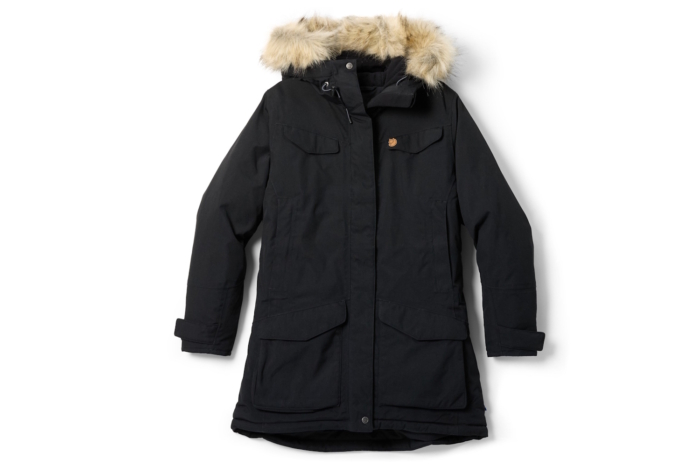
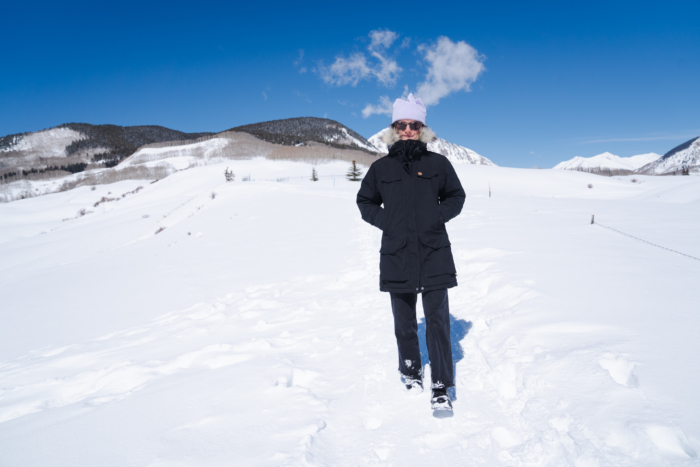
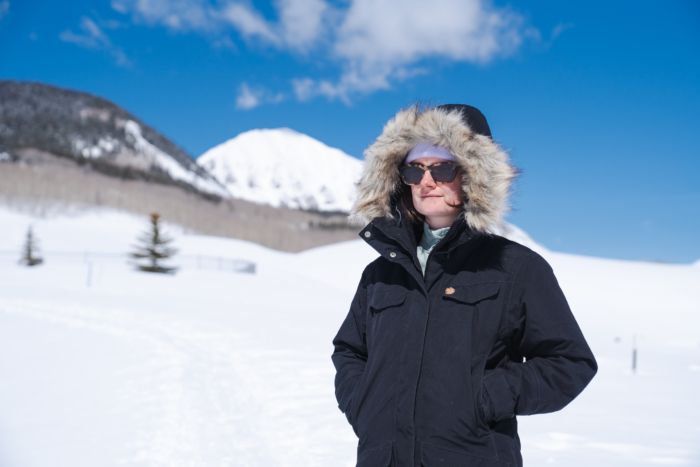
If you endure the coldest, most brutal winters but refuse to sacrifice style for functionality, the Fjallraven Nuuk Parka ($500) is a top contender. While it’s a hefty investment, this jacket is fully waterproof, windproof, and built to handle extreme conditions. It’s loaded with pockets — the highest number we’ve tested in a winter jacket. Additionally, the Nuuk is PFAS-free and has a recycled liner, shell, and synthetic fill, making it an ideal choice for shoppers who prioritize sustainability.
Winter apparel expert Meghan LaHatte put the Nuuk through its paces during a typical winter in Gunnison-Crested Butte, CO, where temperatures regularly drop below zero, and biting winds make even a short walk feel like an expedition. Thanks to the 100% recycled outer and polyester fill, we stayed warm and dry no matter the conditions. The Nuuk became our go-to for morning dog walks before work, when the conditions were the coldest and dampest.
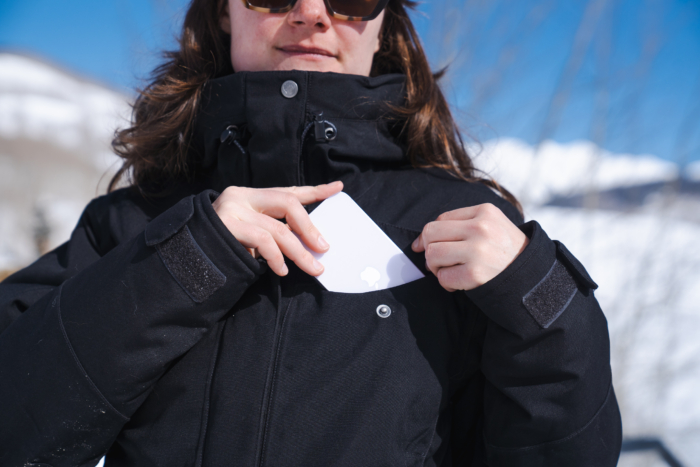
Where the Nuuk really stands out is its storage capacity. Women’s garments often lack functional pockets, but this coat offers a whopping ten — enough to carry a wallet, phone, keys, lip balm, and more, with room to spare. It’s like wearing a well-organized satchel, eliminating the need for a bag on casual outings. One small drawback we noticed was its ability to attract dog hair and lint. If you have pets, expect to keep a lint roller handy — especially after coming home to enthusiastic greetings. That said, this minor inconvenience didn’t take away from this parka’s stellar performance in harsh weather.
At around 4 pounds, the Nuuk isn’t particularly packable. But for those living in brutal winter climates — think high humidity, harsh wind, low temps, or heavy snowfall — it’s a worthy trade-off for durability and warmth. We especially appreciated the adjustable hood and removable faux fur trim. Reattaching the trim can be tricky at first, but the buttons become easier to maneuver.
Much like the Patagonia Women’s Tres 3-in-1 Parka, the Nuuk is made with recycled materials and avoids animal-based down. As one of the warmest jackets in our lineup, it’s a reliable choice for days when stepping outside feels like a battle against the elements. For anyone facing subzero temperatures and relentless wind, and ladies who prefer to stroll without a purse, the Fjällräven Nuuk is an investment worth making.
-
-
GearJunkie contributor Morgan Tilton tests the hood out on the Arc'teryx Patera Parka. (Photo / Eric Phillips.)
-
We tested the Arc'teryx Patera Parka to see if the quality hits the mark; (photo/Meghan LaHatte)
-
The Patera’s insulation consists of both an RDS-certified goose down and strategic use of synthetic materials; (photo/Jess Gresho)
Specifications
Pros & Cons
Pros
- GORE-TEX shell protects against wind, snow, and rain
- Taped seams for extra moisture protection
- Hood brim helps block rain and wet snow
- Manufactured with 100% RDS certified down
Cons
- Tiny snaps on front zipper storm flap are difficult to push closed with gloves on
- Internal wrist gaskets do no have thumbhole
- Internal collar isn’t rough but isn’t softly lined
- Pricey
Read Review: A Winter Jacket to Withstand It All: Arc’teryx Patera Parka Review
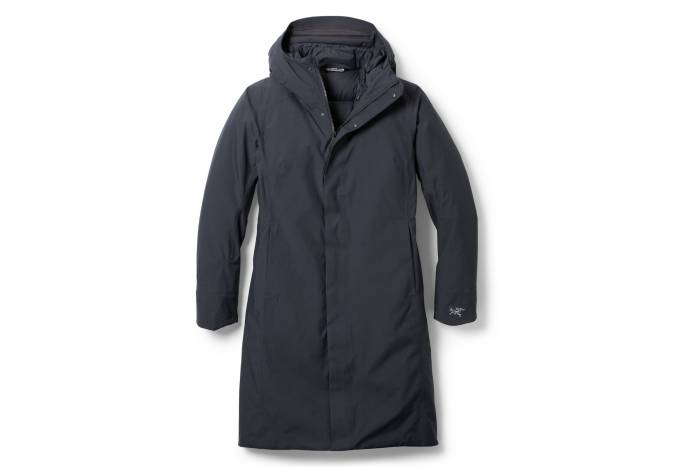
Living up to the high-end hype, the sophisticated yet tenacious Arc’teryx Patera Parka ($800) is one of the most solid winter jackets for ladies out there. This waterproof-breathable and windproof parka is perfect for gust-pushing, moisture-intensive places with sub-freezing temps.
While SnowSports Senior Editor Morgan Tilton tested an earlier iteration of this jacket, we donned the current Patera over one of the wettest, coldest winters Colorado has seen in recent years. From very low temps to blustery conditions, this coat held up well and kept us quite warm, even with minimal layers beneath. Gear tester Meghan LaHatte donned this layer while working several 12-hour shifts photographing the Aspen X Games. The gig entailed climbing up the superpipe, running between venues, and standing for countless hours with a camera in hand despite single and negative digits — this jacket delivered excellent insulation and coverage for the job, plus the look was sleek.
We liked that the jacket had targeted zones to help withstand the weather. For instance, Arc’teryx utilizes toasty 750-fill-power goose down combined with strategically placed synthetic insulation in parts of the coat subjected to more moisture, like the collar and hood. That Coreloft polyester fill ranges from 60 to 80 grams, is 80% recycled, and is Bluesign-approved — so it’ll provide insulation even if in wet snow, but hopefully, that synthetic fill offsets the cost a bit. Also, for the eco points, Arc’teryx employs RDS-certified down. Rounding out the sustainability, the 2-layer GORE-TEX membrane and fabric meet Bluesign criteria, and the liner has recycled nylon, all of which is a variable that adds to the cost.
Minimalist and contemporary, this coat has no flashy elements, and the silhouette is streamlined, providing plenty of room in the torso and waist for layering. We appreciated the modern, timeless colorways this jacket is available in. Not only is this coat designed with waterproof GORE-TEX, but the lining is DWR-treated, further increasing this jacket’s ability to fight off moisture and retain insulation. Even while walking and hiking in blizzard conditions, the Patera did a superb job at keeping the snow out and heat in. As for arm length, the cuffs reach the wrists but no farther, which can be good compatibility with gloves, avoiding a traffic jam.
We appreciated the broad, sturdy brim that’s integrated into the insulated hood to help block precip. The two-way zipper on the front allows you to expand the width around your legs if needed, like if you’re mounting a bike. The zip closures on the hand pockets are super water-resistant. While this jacket is very expensive, it’s a technical gem, providing top-tier protection, a clean look, and environmental peace of mind. With a two-way zipper that is easy to open and close, a classic silhouette, and a highly durable, waterproof construction, the Patera Parka is a winter jacket that continues to impress us. Invest in this parka if you live in a wet, freezing climate that requires a long-lasting winter jacket that’ll serve many seasons.
-
-
Photo/Dane Tudor
-
Photo/Dane Tudor
-
Photo/Dane Tudor
-
Photo/Dane Tudor
-
Photo/Dane Tudor
Specifications
Pros & Cons
Pros
- Lusciously soft and long wrist gaiters
- Buttery fleece-lined hand pockets
- Interior shoulder straps and hood are removable
Cons
- Interior collar has a tiny strip of fleece inside zipper — that's it
- Chunky zipper pull can be a bit finicky to thread
- Only three pockets
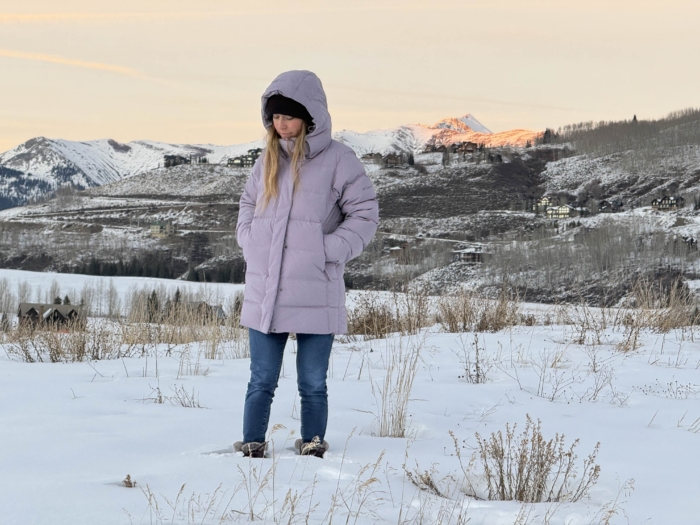
Cozy and truly puffy, the wallet-friendly Columbia Amaze Puff Mid Hooded Jacket ($260) is packed with down fill that delivers a warm, squishy hug in sub-freezing temps and frigid gusts. But what’s most memorable about this wardrobe fixture? The buttery soft wrist gaiters, which are slender and far-reaching with thumbholes, nearly graze the middle knuckles. Dubbed the “comfort cuffs,” the luxurious fabric blocks cold air without wrist claustrophobia.
This winter season, Columbia launched the Amaze Puff capsule in three lengths — short, mid, and long — topped with a hood that’s toasty, roomy, and removable via snaps. From the billowy collar to the hem, the Amaze boasts 650-fill RDS-certified down insulation, providing ample warmth for most wintry conditions. SnowSports Senior Editor Morgan Tilton pulled on the mid-length (which reaches a bit below the toosh) for a dozen walks and errands around Crested Butte, Colorado, with temps hitting a wide spectrum of 10 to 40 degrees Fahrenheit plus biting windchill.
The verdict? The Amaze is truly plush, soft, and snug but roomy. The fleece-lined hand pockets and interior chest pocket are one of Tilton’s favorite qualities of the jacket. “Colorado winter is synonymous with dryness, so brushing my dehydrated, cold hands next to such soft fabric is a detail I didn’t know I needed,” said Tilton. While the exterior fabric is a nylon blend, it also sounds and feels relatively smooth. Plus, the face is treated to repel moisture and stains.
While the Amaze doesn’t boast wind resistance, Tilton found that when a breeze picked up, the jacket did a fairly good job of blocking. The wrist gaiters also help stop drafts. With a boxier, puffier silhouette, she noticed cold air easily snuck in from beneath — thankfully, the hem has a drawcord to help. The roomy hood easily pulled over beanies and billed hats.
Drawbacks are hard to find, but a few critiques surfaced during Tilton’s freezing tests. The chunky zipper pull is a bit cumbersome to thread, but the zip operates smoothly once initiated. The three pockets are sizable, but other favorites, such as the Fjallraven Nuuk Parka, offer more storage with 10 pockets. The removable suspenders work fine, but we’ve been hard-pressed to find a time when we personally need them. We would, however, love to see an extended fleece liner inside the collar for comfort against our cheeks.
Other fits pack more heat or a more fitted silhouette, such as the Arc’teryx Patera Parka. But few quality women’s winter jackets are available at less than $300 — and with down insulation, no less. As long as you don’t mind a classic puffy cut — straighter and boxier — and don’t need a waterproof winter jacket, the Amaze Puff has incredibly fine touchpoints and plenty of warmth at an inviting price.

2026 Women’s Winter Jacket Comparison: Price & Specs (Budget to Premium)
Scroll right to view all of the columns: Price, Weight, Fill, Center Back Length, Climate.
| Winter Jackets for Women | Price | Weight | Fill | Center back length | Climate |
|---|---|---|---|---|---|
| Rab Deep Cover Down Parka | $350 | 824 g | 700 | 35.4″ | Dry to mildly wet winter conditions |
| REI Co-op Campwell Down Parka | $229 | 992 g | 650 | 36.5″ | Dry to mildly wet winter conditions |
| Mountain Hardwear Nevadan Down Long Parka | $375 | 856 g | 650-fill-power RDS-certified recycled down | 42″ | Frigid, dry cold, and windy winter conditions |
| Canada Goose Mystique Puffer Tonal Label | $1,695 | 1,280 g | 750-fill-power RDS-certified 90/10 down | 49.5″ | Extreme cold, frigid winds, and sub-zero winter environments (-13°F / -25°C rating, TEI 4) |
| Outdoor Research Highveil Stretch Down Parka | $425 | 629 g | 700+ fill power RDS-certified goose down | 33” | Dry to mildly wet winter conditions |
| The North Face Women’s 1996 Retro Nuptse Jacket | $380 | 685 g | 700-fill recycled waterfowl down | 23.75” | Dry to mildly wet and freezing winter conditions |
| Lands’ End Women’s Expedition Down Waterproof Winter Parka | $350 | 1,225 g | 600-fill-power RDS down | 35″ | Extreme cold, snow, and wet freezing conditions (-2°F to +26°F rating) |
| L.L.Bean Women’s Mountain Classic Down Parka | $200 | 998 g | 650-fill DownTek | Petite 30.25″, Regular 31.75″, Plus 33″. | Cold and wet winter conditions |
| Patagonia Women’s Down With It Parka | $365 | 1,049 g | 600-fill 100% recycled down | 40” | Dry to mildly wet cold winter conditions |
| Patagonia Tres 3-in-1 Parka | $699 | 1,446 g | 700 | 33″ | Dry to the wettest coastal winter conditions |
| Columbia Pike Lake III Long Jacket | $220 | 1,095 g | Recycled polyester | 45” | Dry to mildly wet winter conditions |
| Fjallraven Nuuk Insulated Parka | $500 | 1,732 g | Synthetic (polyester) | 33.8″ | Dry to the wettest coastal winter conditions |
| Arc’teryx Patera Parka | $800 | 905 g | 750 | 37″ | Dry to the wettest coastal winter conditions |
| Columbia Amaze Puff Mid Hooded Jacket | $260 | 819 g | 650 | 30″ | Cold to damp winter conditions |

How We Tested The Best Winter Jackets for Women
Four winter apparel experts have tested dozens of women’s winter jackets across North America and updated this guide nine times since 2021, when this guide debuted.
Our Expert Testers
- GearJunkie SnowSports Senior Editor Morgan Tilton leads the crew and specializes in snowsports content. She’s been an outdoor industry journalist for more than a decade, including reporting at nearly 16 outdoor industry trade shows for several publications, such as the Snow Show Daily. She served as Snowboard Editor at Teton Gravity Research.
- In our most recent 2026 test round, Tilton examined five winter jackets in temperatures ranging from -10 to 50 degrees Fahrenheit — plus windchill in Crested Butte, Colo., and noticeable humidity in British Columbia. She racked up thousands of hours and hundreds of days in these coats, wearing each one daily.

- Contributor Meghan LaHatte has lived in the Rockies of Southwest Colorado for over five years. The cold climate has allowed her to explore many winter sports and daily life that require the warmest jackets possible. From chilly morning commutes to the ski area to blizzardly afternoon dog walks, she tests women’s winter coats to their fullest potential.
- For the 2026 test window, LaHatte tested three winter jackets across 27 days and 42 hours in temps ranging from 0 to 52 degrees Fahrenheit. Her lab work took place in Gunnison–Crested Butte, CO, and New York, NY.
- Gear tester Heather Balogh Rochfort is a writer and editor based outside of Aspen, Colo.
- In the 2026 test window, Balogh Rochfort put one winter jacket to the grindstone.
- Based in Colorado, journalist and former GearJunkie editor Mary Murphy has also contributed to testing for this guide.

Our Testing Grounds
Tilton primarily tests winter jackets in Crested Butte, Colorado, pulling on a warm winter coat before and after ski outings. She tests jackets while running errands and shoveling the truck, trailer, snowmobile, and walkway — you name it. Living in a frigid ski town, Tilton puts these winter coats to the ultimate test.
LaHatte’s testing has primarily spanned Carbondale’s Roaring Fork Valley and Gunnison Valley, the home of Gunnison and Crested Butte. As a photographer for the X Games in Aspen, she tested jackets for 12-hour shifts throughout the event. Her tasks included climbing up the superpipe, running between venues, and photographing for many hours regardless of the single digits. She also travels to wintry landscapes, including Canada.

Our Testing Process
We examine each jacket’s big picture, including insulation, protection from precipitation and wind, comfort, functionality, durability, ergonomics, ease of use, adaptability, and style. We also look at the finer details, including the pocket design, collar, hood, cuff, gaiters, and jacket and pocket liners.
In the most recent testing round, LaHatte and Tilton field-tested two new winter jackets and re-tested two models that had noteworthy updates. They paid extra attention to the temperatures they tested them in while making note of the significant details that outshone — or dampened — the experience.
Beyond field tests, we strongly consider the most popular, highly acclaimed, legacy, sustainable, and size-inclusive winter coats for women across various price points and applications.
What we like most about this selection is that each winter jacket can be worn for morning dog walks, running errands around town or for a night out to dinner. We’re confident these women’s winter jackets are among the best on the market.
Check out our Guide to the Best Winter Jackets to learn more about men’s styles.

Our Women’s Winter Jackets Rating System
We score each winter jacket for women on a 1–10 scale for Warmth, Hood and Collar, Weather Protection, and Pockets.
Warmth is straightforward and inspects the fill power, fill weight, and type of insulation: synthetic, down, or hybrid.
While considering Weather Protection, we take into account how the jackets shield moisture and wind.
As we consider the Hood and Collar, we look at if the hood is removable, adjustable, insulated, or has a faux fur trim to help block wind and snow. How high does the collar reach and is there a storm flap or closure to help block wind? Also, we look for material against the chin and mouth that’s soft, quick drying, and durable.
The Pockets in each jacket are rated based on the functionality, placement, variety, and closure style.
The Overall Rating is based on contextual, editorial judgment, and the complex user experience across various scenarios and conditions.

Buyer’s Guide: How to Choose the Best Winter Jackets for Women
Brands make a wide variety of winter jackets for women. This lifestyle collection spotlights insulated outerwear that provides incredible warmth, coverage, and cold-weather protection. These jackets are excellent for everyday use, whether you’re watching a hockey game or taking the daily commute.
What They Are: Insulated Jackets & Parkas
While we’ve included hip-length models, most of our picks are parkas, a longer-length version of an insulated winter jacket. These designs provide the heavyweight, insulation, and protective accents — like insulated hoods, wrist gaiters, and faux fur — needed to keep women from dropping body heat.
You should feel comfortable even if you’re not moving while wearing the coat. These winter jackets work best in cold, frigid, and negative temperatures. They’re built to thrive during snowstorms and, for some of these outer layers, during rainstorms. While some winter jackets have underarm vents or breathable textiles, ventilation and breathability are not key elements.

What They Aren’t: Down Jackets & Ski Jackets
Another function-forward winter jacket not featured in this guide is the women’s down jacket, often called a puffy or puffer. While many of our top winter jackets pack in down plumes, our down jacket collection includes hip-length pieces that support movement, stretch with you, breathe well, and feel lightweight and compressible.
For the most weather protection, you’d layer one of these puppies over your base layer or midlayer and throw a shell on top. While many women pull on these down jackets to run errands, most grab them for activities like alpine skiing, backcountry touring, or snowshoeing. These layers perform well in mild, moderate, or cold weather.
Alternatively, brands design athletic winter jackets for performance and active use. Like women’s ski jackets, they use breathable, packable, lightweight materials. While some designs in that category include insulation, many outer shells skip it.

Women’s Winter Jacket Lengths
Women’s winter jackets come in various lengths ranging from the hips to your ankles. While length could be fashion-oriented, it dramatically influences a jacket’s warmth and protection from the elements and your available range of motion. A longer jacket can help protect the backside when sitting on a cold, frosty, wet bench or bike seat. The back of the jacket hem is often articulated with extra length, like a tail, for additional warmth.
Here are the general lengths of our favorite winter jackets:
- Short: Hip to upper thigh length (20-30 inches)
- Mid-length: Lower thigh to below the knee (30-40 inches)
- Long: Mid-calf to above the foot (40-50+ inches)
Short Winter Jackets
Shorter winter jackets that come to your hip area can be harder to find since they often teeter the line between a traditional parka and a more performance-oriented down jacket. The North Face 1996 Retro Nuptse Jacket is in this category with a 23.75 inch center back length. Remember that shorter winter jackets provide more mobility but less coverage for your lower extremities.

Mid-length Winter Jacket
The most common winter jacket length is 30-40″. These silhouettes reach your mid-thigh, knee, or just below the knee. Mid-length options are great for providing room for stepping up into your vehicle, throwing a leg over a bicycle, or walking around town. This length usually still covers the hips, upper thighs, and hamstrings, providing plenty of warmth and insulation.
The mid-length options we tested for this guide and the center back lengths, from shortest to longest, are:
- Patagonia Tres 3-in-1 Parka: 33”
- Fjallraven Nuuk Parka: 34”
- Arc’teryx Patera Parka: 35”-39”
- Rab Deep Cover Down Parka: 35.4”

Long Winter Jackets for Women
If you live in a very windy, freezing place or want to spend your winter days in what feels like a mobile sleeping bag, invest in a longer winter jacket, which delivers more insulation and protection than mid-length options. These full-coverage jackets can fall to the feet, providing head-to-toe warmth.
Our picks for longer winter parkas include the Columbia Women’s Pike Lake III Long Jacket (45″).
Longer winter jackets will most likely limit your leg movement and stride, but many designs come with side zippers or snaps that can be opened to expand the jacket’s circumference, helping you cruise around town or step onto a bus more easily.
Remember that depending on your height, shape, torso, and leg length, a winter jacket’s overall and center-back length may fit you differently than the published measurements. We recommend trying a few different jacket lengths to gauge your most comfortable length.

Temperature Rating & Warmth
When choosing the best winter jacket, temperature ratings are a guideline and vary based on individual circulation, physical output, and environmental conditions like wind.
Temperature ratings for winter jackets indicate the lowest ambient temperature at which the coat can keep you warm. Since no universal metric or third-party testing system exists for temperature ratings, brands determine their standards — so ratings vary. Several factors influence the final number, including the type, quality, and quantity of insulation. The fabric density, liner materials, and extraneous factors — like faux fur around the hood — play a role, too.
Some manufacturers rate jacket warmth based on how the jacket performs in specific temperature ranges (degrees Fahrenheit). For example, Lands’ End rates the Women’s Down Maxi Winter Coat for -25°F to 10°F, meaning the brand designed it to keep you warm in temperatures as low as -25°F. Above 10°F, you might find the jacket too warm.
Other brands operate on an internal sliding scale of warmness, comparing its products side by side for the warmest option.
Factors that influence a jacket’s temperature rating and warmth include:
- Down vs. synthetic insulation
- Fill power
- Fill weight

Down vs. Synthetic Insulation
Our favorite insulated winter jackets use natural down — brands source it from geese, ducks, or recycled materials — and other designs have synthetic insulation that mimics down. Some designs blend the two insulations with targeted zones of synthetic fill. Manufactured fill works well where the jacket experiences the most precipitation or perspiration on the shoulders or underneath the arms.
Synthetic insulation is made from polyester fibers and designed to imitate down clusters and properties with a few key differences. If you compare two equal-weight jackets, down is warmer than this alternative.

But synthetic insulation retains warmth even when wet. It’s also easier to wash and usually comes at a lower price point.
Pros of Down
- Excellent warmth-to-weight ratio
- Fluffy rebound
- Compressibility
- Lighter weight
- High inherent warmth
Cons of Down
- Inability to insulate when wet
- More challenging to wash than synthetic
- Pricier than synthetic fill

When to Choose Down vs. Synthetic
Overall, in super-wet snowfall or rain and when weight isn’t an issue, synthetics can be a better, safer choice. Synthetic insulation can also be a more breathable choice in zones where you’d typically sweat, like in the underarms and along the sides. Some climates experience lower water content in its snow, meaning the snowflakes are drier and the overall humidity is lower, so waterproofness isn’t always essential.
Down can be treated with a coating that helps prevent moisture absorption, such as the Nikwax Fluorocarbon-Free Hydrophobic Finish applied to the down fill of the Rab Women’s Deep Cover Down Parka or the water-repellent HyperDry down in the Lands’ End Wanderweight Ultralight Packable Down Coat. The exterior construction can be waterproof and protect the fill like the Arc’teryx Patera Parka.
Thanks to down’s supreme warmth, we pair most of our top winter jackets with down insulation. The Patagonia Women’s Tres 3-in-1 Parka also uses down fill, and Patagonia sources 100% of that down from recycled, retired products.
Alternatively, Fjallraven equips the Nuuk Parka with synthetic insulation, as does Columbia with the Pike Lake III Long Jacket.
One natural down alternative is Kapok, which is made from fibers of Kapok tree seeds and combined with recycled materials. This silky-soft insulation is excellent for folks who want a more eco-friendly option.

Fill Power
Fill power measures the loft and quality of down. A 1-ounce sample of down is compressed in a cylinder to calculate fill power. Generally speaking, the higher the number, the warmer the jacket — though the fill power isn’t the only variable affecting a jacket’s warmth.
But the higher the fill quality, the less down is needed to create the same warmth. This is because the jacket can trap more air and warmth. Higher fill power is more compressible, loftier, lighter, and pricier.

The fill power ratings range from 300 to 900 and some are even higher. Most of the jackets on this list are in the 600- to 800-fill range. Generally, the quality increases with the fill number:
- 400-500: fair quality
- 600: good quality
- 700: great quality
- 800: excellent quality
- 900 and above: highest quality
Fill Weight
Brands typically label a jacket’s fill power with terms like 600-fill or 800-fill. The fill weight — measured in ounces — shows how much down they’ve packed into the jacket. However, manufacturers rarely disclose the fill weight, even though it significantly affects how warm the jacket feels.
For example, an 800-fill jacket with 150 g of down delivers roughly the same warmth as a 400-fill jacket with 300 g of down. But the 800-fill version compresses more easily.

Comparing Winter Jackets With Different Fill Power
Comparing jackets with different fill powers can be tricky. In general, lower fill powers provide less loft and warmth. And while we often know the quality of the down (fill power), brands rarely share how much down they use in insulated jackets — the fill weight.
If two down jackets weigh the same but have different fill powers (such as two 900g jackets with 650 fill and 800 fill), the one with the higher fill power will feel less bulky and pack down more easily.
When two 700-fill jackets differ in weight, the heavier one usually feels warmer — but remember that other factors, including length, pocket count, hood size, and zippers, affect the jacket’s overall weight.
Other factors also influence warmth, such as jacket length and baffle design — including the shape, size, and placement — and how the manufacturer distributes down fill throughout the jacket.
Although it doesn’t pack down as small, the 700-fill Rab Deep Cover Down Parka delivers more warmth overall — keeping you protected in temperatures between -10 and 10 degrees Fahrenheit. Several factors contribute to this: The Deep Cover Down Parka is longer with large baffles and a greater volume of down fill. The Spyfire is made to be lightweight, packable, and warm yet breathable with thermal body mapping.

Water Repellency: Choosing Winter Jackets for Different Snow Climates
There are four general snow climates: coastal, transitional, intermountain, and continental. Generally, the closer you are to the coast, the more precipitation you’ll experience, and the water content will be higher in the snow, which will be wetter and heavier. In contrast, the snow in continental climates is drier and lighter and accumulates less than the coast. That includes most of the Rocky Mountains, such as in Colorado. Intermountain regions show characteristics of both. Transitional areas are similar to the coast but with less rain and snow.
Four snow climates exist across wintry locations, according to the Utah Avalanche Center:
- Coastal (wettest): California, Washington, Oregon, coastal Alaska, coastal British Columbia
- Transitional (moderately wet): Areas and targeted locations in Montana, northern Idaho, Oregon
- Intermountain (mildly wet): Utah’s Wasatch Range, most of Idaho, Montana, and portions of Northeast Oregon and Southwest Colorado
- Continental (mostly dry): Colorado, Wyoming, New Mexico, interior Alaska, interior British Columbia
For wetter environments, the Patagonia Women’s Tres 3-in-1 Parka includes a removable exterior waterproof shell, and the Arc’teryx Patera Parka is likewise waterproof. You can wear waterproof winter jackets in drier climates, too. But they generally cost more.
Other factors that can help make a jacket waterproof or water-resistant are the fill or face fabric treatments, which can be eco-friendly formulas or toxic chemicals to humans and the environment. Jackets can also have sealed seams to block moisture.

Hydrophobic Down
Down doesn’t perform well when it gets wet — and that’s where synthetic jackets often have the upper hand. Over the past decade, more brands have started using hydrophobic down. For example, Rab coats the recycled down in the Deep Cover Down Parka with Nikwax Fluorocarbon-Free Hydrophobic Finish to improve moisture resistance.
Essentially, manufacturers coat the down feathers in a water-resistant polymer. While this doesn’t offer the same level of water resistance as synthetic insulation, hydrophobic down works well in light precipitation. Brands also use waterproof face fabrics or treat them with a DWR finish to help block moisture.

Waterproofness
A full-on waterproof jacket is ideal in wet snow, rain, or drizzly weather. The top-tier waterproof standard is GORE-TEX, a membrane integrated into various 2-layer and 3-layer designs. The material is waterproof, windproof, and breathable. Many brands likewise have a proprietary version of waterproof fabrics.
Waterproofness is measured by the amount of water placed atop a fabric before leaks. The rate of waterproof jackets varies from 5,000 to 20,000 mm or greater. The latter end of the spectrum generally leads to a less breathable fabric. The more waterproof and breathable a jacket is, the more technical it is to manufacture and the pricier it will be.
- 0-5,000 mm: Resistant to light rain, dry snow
- 6,000-10,000 mm: Waterproof for light rain and dry, non-heavy snow
- 11,000-15,000 mm: Waterproof for moderate rain and dry, non-heavy snow
- 16,000-20,000 mm: Waterproof for heavy rain and wet snow
- 20,000 mm and greater: Waterproof for heavy rain and dense, heavy snow
Many down and synthetic winter jackets are not waterproof but offer a degree of water resistance, which works fine in dryer winter climates and where the snow water equivalent (the amount of liquid water in the snow) is lower.

DWR (Durable Water Repellent) Treatments
Many women’s winter jackets have an exterior face fabric that brands treat with DWR (Durable Water Repellent) to boost water repellency and, in some cases, stain resistance. This treatment causes rain and water to bead up and roll off the surface. Over time, however, the application wears off, and you’ll need to reapply it to maintain performance.
Traditional DWR treatments rely on PFCs (perfluorinated compounds), toxic chemicals that harm the environment and human health and don’t break down naturally. These compounds bond synthetic chemicals and fluorine atoms to carbon chains, making them highly resistant to degradation.

Eliminating Chemicals: PFC-Free DWR
Although PFCs repel moisture effectively, their environmental impact has led to strict regulations and bans in some countries. These compounds don’t decompose in water or nature, are toxic to animals, and release substantial emissions. The EPA began working to phase out PFCs in 2006 because of its clear environmental and health consequences. Traditional PFC-based DWRs fall into two categories: long-chain and short-chain. Some brands choose short-chain PFCs because they pose less environmental risk, even though they don’t last as long.
Fortunately, more companies in the outdoor industry are transitioning to PFC-free DWR alternatives. For example, Rab uses Pertex Quantum, a fluorocarbon-free DWR, on the Women’s Deep Cover Down Parka. Patagonia also eliminates PFCs from the Women’s Tres 3-in-1 Parka fabrics, including the membrane and surface coatings.
Our top jacket picks rely on fluorocarbon-free hydrophobic down treatments to fend off moisture. For example, Lands’ End uses HyperDry in the Wanderweight Ultralight Packable Down Coat and the Women’s Down Maxi Winter Coat. Rab treats the down in the Deep Cover Down Parka with a Nikwax Fluorocarbon-Free Hydrophobic Finish.

Windproofness
Choosing a winter jacket that blocks bone-chilling breezes is essential if you live in a gusty climate. Many brands design jackets to be windproof, meaning the fabric and construction prevent cold air from penetrating the layers.
Manufacturers measure a jacket’s windproofness by its wind resistance or windproof rating, usually expressed in cubic feet per minute (CFM). A high CFM rating means the fabric lets more air through and is less windproof. For instance, fabrics with a 60 CFM rating offer little to no wind protection, while those with a 0 CFM rating completely block the wind.
Although many brands don’t share the exact CFM rating, they often label a jacket as windproof if it meets that performance standard.

Collar & Hood
An ergonomic collar and hood shield your face, head, ears, neck, and hair from sun, snow, sleet, hail, wind, and rain. When you pull up a hood, your body retains more heat in cold conditions. Jacket collars vary in height, and the best ones include an interior chin guard that rests softly against your face — an essential feature on a windy day.
Many of the hoods on our top winter jackets include insulation, though some designs use non-insulated hoods. Designers often add an elastic cinch at the back to fine-tune the fit or along the hood’s hem to narrow the opening around your face. Some hoods remain fixed, while others detach with a zipper.
Several designs also include removable faux fur that zips or snaps onto the edge of the hood. This detail provides extra protection from wind and snow flurries while adding a stylish touch.
Jackets built for wetter conditions often have hoods with an integrated rain brim. These slightly rigid brims block moisture from dripping down onto your face. You’ll find this feature on models like the Arc’teryx Patera Parka and Patagonia Women’s Tres 3-in-1 Parka.

Women’s Winter Jacket Pockets
Most women’s winter jackets include two exterior hand pockets with zip closures. Traditional hand pockets have an angled side entry, while alternative designs offer a top entry for hand pockets. We most appreciate hand pockets lined with a soft micro fleece, like the Lands’ End Women’s Down Maxi Winter Coat. Some hand pockets only have a snappable flap, which is less secure than a zipper.
Also, most winter jackets for women include at least one interior chest pocket with a zip closure, which works well for stashing a credit card, ID, or key. Some designs also have an exterior zippered chest pocket for quick access. Many jackets incorporate dump pockets — long, open-topped compartments inside the torso — so you can easily slide in a pair of glove liners or a beanie.
Though relatively rare for women’s winter parkas, the highest number of pockets among our top picks is in the Fjallraven Nuuk Parka, which has 11 pouches: There are two fleece-lined exterior pockets, two chest pockets, two top-loading pockets, a media pocket on the sleeve, two large interior stretch mesh storage pockets, and another interior media pocket plus an interior chest pocket.

Winter Jacket Sleeve Cuffs
On some women’s warm winter jackets, the sleeve cuffs have a Velcro strap, so you can tighten down the opening once you pull the coat on. A handful of cuff designs have a zipper along the side that can widen and narrow the circumference. Other cuffs simply stretch when you slide your hands through.
The shape of a jacket cuff can be tapered or straight across your wrist area. Specific designs are lengthier, offering extended shelter for the dorsal side of your hands. No matter the design, pulling the jacket on is easier before putting on your winter gloves.
A handful of higher-end designs have an integrated wrist gaiter and a storm cuff. Knit ribbing or a stretchy synthetic blend makes a storm cuff inside the sleeve, which blocks moisture and wind from penetrating the sleeve. While the densities and lengths can vary, this cuff-within-a-cuff provides warmth.
Some designs are leaner, stretchier, and have thumbholes to pull the internal cuff over the dorsal side of the hands. While storm cuffs and thumbholes can be an excellent addition for warmth, you’ll need to consider how the jacket pairs with your winter gloves and midlayer since the interior sleeve will be tighter against the skin.

Zippers
The overall functionality and ease of using a winter jacket can be significantly influenced by its front zipper and pocket and hood zippers. Most winter jackets utilize YKK zippers, an industry standard for its self-lubricating properties and durability. The Rab Women’s Deep Cover Down Parka has YKK zippers, and that parka is easy to throw on and off, given the pulls do not snag or get jammed.
The width and size of a zipper and its pull tab can vary. We typically prefer a larger pull tab over a smaller one because it’s easier to grab, especially with gloves on.
A handful of silhouettes integrate double two-way zippers in the front so that you can open the bottom for more mobility and breathability. The Arc’teryx Patera Parka has this feature, which is great for walking up steeper slopes or hopping in and out of a truck bed. Other designs offer side zippers at the hem with gusseted inlays, which widens the width for greater range.
A storm flap often covers the center zipper to protect it from precipitation and block wind. The zipper can be free or attachable to the jacket via magnets or snaps.

Weight & Compressibility
A winter jacket’s weight and compressibility can be essential variables for cargo space, airline travel, and storage and closet space. Otherwise, a coat used for everyday errands and social events will generally weigh more than a lightweight technical down jacket made for athletic pursuits. A lightweight design for an everyday coat is typically less of a priority because the comfort, ergonomics, and high warmth factors are most important.
The longer a jacket is, the more it will weigh and the more space it will take up. Generally, the heavier a coat is, the more fill power and fill weight it’ll have and the warmer it will be. If you don’t need a warm winter jacket built for arctic conditions and one for milder winter temperatures that hover above or around freezing, then the jacket will most likely weigh less.
The heaviest options are the Patagonia Women’s Tres 3-in-1 Parka at 1,446 grams and the Fjallraven Nuuk Parka, which is 1,732 grams. Those heavy-setters offer the most protection against precipitation, cold, and wind and are also built out with various customizable features and ample pockets. Weight isn’t necessarily a bad thing, especially for a lifestyle piece.

Adjustability
Winter jackets can include adjustable waists, hoods, and side openings. These tools for personalization can alter and improve the overall fit of the coat, as well as the warmth, insulation, ability to block out the elements, and range of motion based on the moment’s needs.
Fine-tuning the detailed elements of a winter coat can transform the garment, adding versatility to your closet and the conditions you can comfortably wear your winter coat in.

Fit & Size
Women’s winter jackets are generally either trimmer with a more streamlined fit, or they can be roomier and boxier with a more relaxed yet articulated silhouette.
Both options can be comfortable. A roomier jacket is better if you need a greater range of movement — like picking up kids or shuffling loads between vehicles or shoveling — or if you plan to wear midlayers. You can still add layers beneath a fitted style, but you might want to consider sizing up because the arm, shoulder, or chest areas often get snug with a midlayer or two beneath.
Each manufacturer has its own size charts. Be sure to take your personal measurements and match them with the size charts for a specific product.
Some companies provide more size inclusivity with broader offerings. That includes The North Face, which has a size run of XS to XXL. Rab offers XXS to XXL. Lands’ End has XS to XXXL, including petite and tall options. The North Face, Lands’ End, Columbia, and REI Co-op offer plus or extended sizes in 1X-3X.
Everyone’s body is unique, so check the exchange and return policy before you buy.

Sustainability
In terms of sustainability, we were particularly impressed by the following winter jackets for the design’s overall environmental and ethical standards:
- Arc’teryx Patera Parka: RDS-certified down fill, GORE-TEX shell meets Bluesign criteria, recycled nylon shell, 80% recycled down
- Patagonia Tres 3-in-1 Parka: 100% recycled polyester shell that supports First Mile, an initiative that focuses on providing low-income folks financial help in exchange for plastic bottle collection. Furthermore, natural insulation is also 100% recycled by reclaiming goose and duck feathers from previous down products.
- Rab Deep Cover Down Parka: 100% recycled material, PFC-free recycled down, fluorocarbon-free DWR
Other winter jackets with sustainable elements include:

Responsibly Sourced Down
Brands at the forefront of sustainable change are swapping out new down for recycled down. The Rab Women’s Deep Cover Down Parka and Patagonia Women’s Tres 3-in-1 Parka are both filled with 100% recycled down. Outdoor industry brands have also made an effort to source new down ethically without animal cruelty and create transparency in the global supply chain.
Various certifications exist such as The Global Traceable Down Standard (Global TDS) and Responsible Down Standard (RDS), which are offered via the National Sanitation Foundation (NSF). ALLIED Feather & Down launched the TrackMyDown program, which won a 2019 ISPO Gold Award, allowing everyday users to research where and how their winter jacket’s down feathers were sourced.
It’s quite simple to use — just type in the lot number found on your jacket’s hang tag. The TrackMyDown database provides information regarding the farms where the birds were raised, as well as how to properly care for and increase the longevity of your insulation.
Without establishing transparency and down standards, animal abuse can persist within the supply chain. A synthetic winter jacket can be a more comforting choice if you want to avoid animal byproducts, like the Fjallraven Nuuk Parka.

RDS-certified Down Picks
A wide variety of our choice winter jackets have RDS-certified down, including:
- Arc’teryx Patera Parka
Recycled Materials
Some winter jacket designs are made with recycled materials like recycled down and recycled polyester for the shell and liner. A few spots where we see jackets lag with recycled materials are the wrist cuffs or zipper pulls. Among our top picks, we’re also impressed by the 100% recycled down fill and 100% recycled 50-denier fabric of the Rab Women’s Deep Cover Down Parka.
The Patagonia Women’s Tres 3-in-1 Parka checks the box for sustainability on a stack of levels: 100% recycled polyester shell, 100% recycled shell lining, 100% recycled polyester zip-out shell and lining, 100% recycled down fill, and Bluesign-approved fabrics treated with PFC-free DWR. Plus, it’s made in a Fair Trade Certified factory.

Fair Trade Certified
Fair Trade Certified products ensure that garment manufacturers are rightfully compensated and ethically treated in their working environment. This requires meeting certain safety and environmental standards, providing benefits along with appropriate wages, respecting social and cultural values, and promoting fair labor practices.
The Patagonia Women’s Tres 3-in-1 Parka is made in a Fair Trade Certified factory, which helps to alleviate poverty in the supply chain. By purchasing this jacket or any other Fair Trade Certified products, consumers are contributing positive social and environmental impacts.
Bluesign-Certified
This textile label is given to products that meet strict manufacturing guidelines. Bluesign-approved products adhere to strict safety and environmental standards. The process involves analyzing and improving resource use, reassessing safety hazards within work environments, meeting stringent requirements for water and air pollution, and ensuring that the end products are safe to use for consumers.
A portion of a design can meet Bluesign standards, or an entire product can. The Arc’teryx Patera Parka’s GORE-TEX has this label.

How to Layer
Layering effectively under a winter jacket is essential to staying warm and comfortable on chilly days.
Base Layer
Start with a moisture-wicking women’s base layer to keep your skin dry and warm. Choose a fabric like merino wool, synthetic materials, or a blend that fits snugly to your body. This layer should be close-fitting but not so tight that it restricts any movement.
Midlayer
For extra warmth, you can add a midlayer over your base layer. Materials such as down, fleece, or synthetic insulation work well if you’re looking for insulation. A sweater, vest, or jacket all work, depending on the weather conditions and what fits best with your outer layer. If your women’s winter jacket already includes an insulating midlayer, such as the Patagonia Tres 3-in-1 Parka, you can probably omit to add the extra garment — but also, multiple midlayers can be fine.
Remember, the key to layering is to find a balance between warmth and mobility. Too many layers can restrict your movement and make you feel cumbersome — like how we imagine the Michelin Man feels — while too few layers can leave you feeling cold. By layering to your needs, you can stay warm and comfortable no matter what the winter weather brings.

Price & Value
Budget
Winter jackets hovering around $200 are a great deal. You’ll get warmth and style, and these cuts are usually articulated with removable hoods, pockets, and a DWR treatment for water resistance. At this level, the durability of the fabric will be lower, you likely won’t have a windproof or full waterproof fabric. You might not have a nicely lined interior collar or hand pockets.
You will be hard-pressed to find recycled materials, Bluesign-approved materials, PFC-free construction, or down-treated materials for moisture resistance. Also, the down fill power and fill weight will be lower, and you’re more likely to find a synthetic fill instead of a down fill.
Our picks in this lineup include the Columbia Pike Lake III Long Jacket ($220).
Mid-Tier
As the down fill power and fill weight increase, the warmth increases, and you’ll see the price go up to $300-500. That’s one reason why super lightweight, technical down jackets are pricy. Waterproofness and windproofness creep in. You’ll see more sustainable construction at this rung.
On this list of lifestyle winter jackets for women, the longer parkas also inherently cost more because they require more resources and materials to develop. A huge variety of warm winter jackets exist at this mid-tier including the Rab Deep Cover Down Parka ($350).
Premium
At full price, the most expensive jacket on our list is among the warmest and offers the most coverage against the elements: the Arc’teryx Patera Parka ($800). Jackets that are more expensive have more technical design features, materials that are more robust against a range of weather conditions and materials, as well as high-end sustainable materials. You’ll find more adaptable designs, like the Patagonia Tres 3-in-1 Parka ($699), which is essentially three jackets in a single package.

Frequently Asked Questions
After you learn the different types of snow jackets, you might need to get one of each. This guide focuses on winter jackets that are the warmest and stylish for lifestyle pursuits: everyday commutes, shoveling, errands, and casual activity.
Some of these designs are cross-functional for activities like hiking or snowshoeing. They’ll protect you in the weather on your bike ride to the post office, walking the dogs, or going to and from the gym.
Here’s how winter jackets as a whole are each a bit different:
Down Jackets
- Provides warmth — some are warmer than others
- Compressible
- Athletic, performance-oriented
- Great for winter activities like ice climbing, rock climbing, backcountry skiing, alpine skiing
- Length typically reaches the hip
- Crossover for lifestyle use
- Midlayer or outer layer
- For cold, moderate, and mild winter temperatures
- Example: Patagonia Down Sweater Hoodie
Synthetic Jackets
- Midlayer in cold conditions, outer layer in moderate conditions
- Suitable for wet environments and perspiration
- Good choice for aerobic activities like uphill skiing, nordic skiing, winter running
- Example: Norrona Trollveggen PrimaLoft100 Zip Hood
Active Insulation Jackets
- A lightweight, streamlined, athletic jacket that is breathable yet insulated
- Nice for cardio activity in moderate or mild conditions like Nordic skiing or running
- Hybrid design with strategically placed insulation and breathable textiles
- Typically have panels of synthetic insulation but are more breathable than full synthetic jackets
- Example: Helly Hansen LifaLoft Hybrid Insulator Jacket
Shells
- Outer layer
- Waterproof or water-resistant and block wind
- These jackets are most often not insulated
- Offer more range of motion than insulated synthetic jackets
- Great for high-output cardio activity like shoveling, backcountry snowmobiling, or powder skiing
- Example: Ortovox 3L Deep Shell Jacket
3-in-1 Jackets
- A waterproof or water-resistant shell zips into a separate jacket liner
- The interior jacket could be a fleece, synthetic fill, or down fill
- You can wear the two jackets separately or together
- Good budget option
- Example: Columbia Bugaboo II Fleece 3-in-1 Interchange Jacket

For everyday use, choose a winter jacket that has enough insulation to keep you comfortable and warm in that environment. Choose a jacket with the appropriate amount of water resistance or waterproofness and windproofness. Consider how much body heat you’ll build during your typical activity.
You’ll want to think about your preferred length — the longer a jacket, the warmer, but the less freedom you’ll have for big movements like if you’re shoveling the deck. You also might not need the warmth of a calf-length jacket.
Mull over your choice style. Do you want a more tailored fit or a more relaxed profile? There will be features to consider, too, like the hood, wrist gaiters, and aesthetics.
At the end of the day, finding the best women’s winter jacket is a matter of personal style, weather conditions, end use, and budget.
The warmest winter jackets are down jackets, closely followed by synthetic-filled winter jackets.
Among down jackets, the higher the fill power and the higher the fill weight, the warmer the product will be. The longer the down jacket, the more heat it will hold and weather it can barricade. Also, if a jacket is waterproof and windproof, the warmth increases.

A technical women’s down jacket, or puffy, holds heat around your body’s core in order to maintain a comfortable level of warmth when the temperatures drop. Though we don’t include them in this guide, down jackets are lighter and packable designs for year-round backcountry adventures. The length is typically hip level.
The winter jackets we highlight in this guide are often made with down fill, but they are lifestyle-oriented with an emphasis on warmth, plushness, and comfort.
A jacket’s fill power is the down’s quality and amount of loft. You’ll see jackets labeled as 600-fill or 800-fill, for instance. The fill weight, which is measured in ounces, reflects the density or amount of that down stuffed inside the jacket. Often, brands list the fill power but not the fill weight, but both details greatly influence the warmth of a jacket alongside other factors like fabric density, textile breathability, and the liner.
When two 700-fill jackets have different weights, we can speculate that the heavier one is warmer. On the other hand, if two down jackets weigh the same with different fill power (such as two 15-ounce jackets with 650 fill and 800 fill), the higher fill jacket is going to be less bulky, lighter, and more compressible.
It’s tricky to compare jackets with differing fill power. But in general, the lower the fill power, the less loft and warmth are provided.

Down-filled jackets have a huge variance of warmth. We focus on the warmest winter jackets for women in this guide.
While some winter jackets are made to withstand below-freezing or sub-zero temperatures, others are a match for summer, spring, and fall backpacking or camping trips.
Here are the broad categories of down-filled jackets depending on their fill weight:
- Lightweight: 85-113 g (3-4 ounces) of down fill, three-season jacket, skiing midlayer
- Moderate weight: 141-170 g (5-6 ounces) of down fill, more warmth for sub-freezing temperatures
- Heavier weight: More than 170 g (6 ounces) of down fill, tenacious design for winter conditions
The combination of the fill weight and fill power changes how warm a jacket is. The higher the fill power and higher the fill weight, the more heat the jacket retains.
Winter lifestyle jackets are generally heavier than performance-oriented winter jackets because the priority is warmth and for some design, head-to-toe protection. The lengthier the winter jacket, the heavier it will be.
In contrast, super lightweight and lightweight down jackets are very compressible and a great choice for cramming into your pack for emergency use – you can easily carry one in your backpack, purse, or car. They often cost more.
Those weights range from 226-425 g (8-15 ounces). Midweight options bump up to the 567g (20-ounce) range. Heavier-set down jackets are around 850 g (30 ounces).

You don’t want a winter jacket to fit tight, because activities like sledding, shoveling, unloading groceries from the car, or picking up the kids require a lot of freedom of movement. Plus, it’s nice to wear a comfortable long-sleeve beneath the jacket or even a fleece or wool midlayer or two if the temperatures plummet.
Some women’s winter jackets on the market are more tailored and fitted, offering less room around the circumference of the arms, shoulders, and chest.
Though relatively streamlined, the revised fits of both the Arc’teryx Patera Parka and Patagonia Women’s Tres 3-in-1 Parka are intended to allow more layers beneath than their inaugural versions while offering a moderately slender shape.
Even more relaxed winter jackets have more room for thicker or additional layers beneath like the Rab Women’s Deep Cover Down Parka. Some textiles are stretchier than others. One of our favorite stretch jackets is the Stio Women’s Colter WINDSTOPPER Down Jacket.
Size-wise, each manufacturer has its own size charts. Be sure to check the size charts and make your personal measurements to match up your size, which can differ across brands.

Women’s winter jackets are long-term investments and worth the money for the protection and comfort they provide in a cold, wintry environment. The most economical options usually range from $200 to $300, and the average cost is $300-500. The higher tier of women’s winter jackets on our list ranges from $500 to $900. The highest-end, hardiest, warmest, and longest parka designs can reach up to $1,150 or more.
A warm winter jacket breaks down for a multitude of reasons including exposure to sunshine, rain, and snow. The materials wear due to the rub points of backpack and purse straps, brushing against the bike seat or car door, and even contact with human skin. Frequency of use, roughness of the activity, and overall user care are factors that dissolve a jacket, too.
If you use your warm jacket for every day and live in a place with lengthy winters, the jacket will deteriorate faster. Be sure to follow the care instructions, which are unique for each jacket and located on the interior label.
With so many variables, the exact lifespan of each jacket can’t be predicted. We typically find ourselves using our favorite well-constructed winter jackets for 5 or 6 years but less if we’re harder on it.
If you take good care of your jacket or use it for select activities, you can easily assume the product life will be longer — maybe a decade.

Washing a winter jacket requires careful consideration of the material and insulation.
Before washing, check the care label for specific instructions from the manufacturer. In general, it’s best to wash your winter coat on a gentle cycle in a washing machine with a mild detergent purposed for washing products with down fill. Avoid using any fabric softeners, bleach, or harsh chemicals that can damage the material or insulation.
Before washing a winter jacket, start by zipping or buttoning up all the pockets and closures. Spot-treat any stains with a mild stain remover before placing the jacket in the washing machine.
Use a gentle cycle with a cold water setting to prevent any damage to the textile and insulation. Hot water can severely damage the feathers by causing the feathers to clump together, thus losing their insulation properties.
After the cycle is complete, use the tumble mode on your dryer, adding a tennis ball can help fluff the material. It is crucial to never use the dryer’s hot air as the high heat can damage the jacket’s insulation and cause shrinkage. Finally, fluff the jacket to restore its shape and loftiness.
Following these steps will help ensure your winter jacket is looking fresh and staying clean for many winters to come.

Some of the best women’s winter jackets are relatively packable for travel, but this trait varies depending on the specific jacket and insulation. Lifestyle jackets designed for extremely cold temperatures won’t be as packable as other technical designs — extra insulation and material mean extra bulk.
Down insulation is generally more compressible than synthetic insulation. Longer jackets and those with a lower down fill power will be less compressible. Generally, the larger the baffles, the harder the jacket can be to compress.
Certain snow jackets come with a stuff sack or can be packed into their own pockets for easy transportation, but generally, those designs are found among women’s down jackets rather than bulkier women’s winter jackets. Jackets that are lightweight and compact can be great for travel, as they won’t take up too much space in your luggage.
If you’re planning a trip to a very cold destination, you may need to prioritize warmth over packability. In general, it’s a good idea to research the climate of where you are going, as well as your chosen airline’s baggage rules in case you’ll need a larger suitcase.