Equal parts pack mule and backside bestie, women’s ski pants carry your snacks and can help keep you warm on ice-cold lifts. We found the most durable pairs — to protect against sharp edges and branches — for backcountry tours, well-insulated designs for resort laps on powder days, and everything in between.
For our most recent 4-month laboratory sessions, SnowSports Senior Editor Morgan Tilton and gear authority Heather Balogh Rochfort field-tested 19 pairs of women’s ski pants across 80 days in Colorado, British Columbia, and Italy.
At a mid-tier price, don’t overlook the queen Patagonia PowSlayer as a non-insulated women’s ski pant for sunshine or winter storms at the resort or on backcountry tours. Or opt for a basic build at one-third the price: The North Face Women’s Freedom Insulated Pants, which is finely articulated but focuses on insulation over blizzard-worthy windproofing, waterproofing, and breathability.
Editor’s Note: We updated our Women’s Ski Pants buyer’s guide on September 3, 2026, with the REI Co-op Powderbound Insulated Snow Pants, our new budget pick, plus the Patagonia Insulated Powder Town and The North Face Freedom Insulated Snow Pants.
The Best Women’s Ski Pants of 2026


Patagonia PowSlayer Pants

Specifications
Pros & Cons
Pros
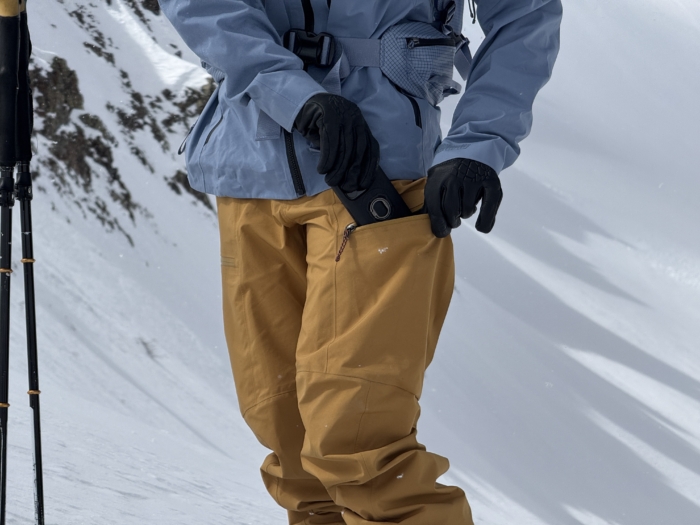
- Large bellowed thigh pockets are roomy (and fit a large phone)
- Robust reinforced hems
- Supremely articulated fabric around hips and glutes for freedom of movement
- Feels very lightweight
Cons
- Hard to keep stains out of the light colored fabric
- Expensive
- Light-feeling fabric does not block cold wind well — wear a heavier base layer on blustery days
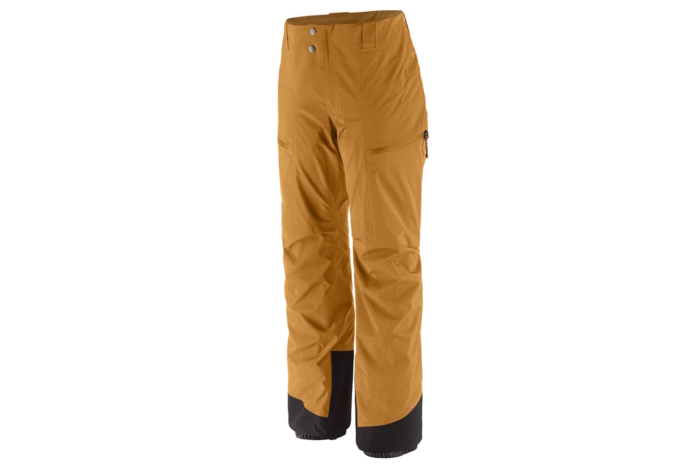
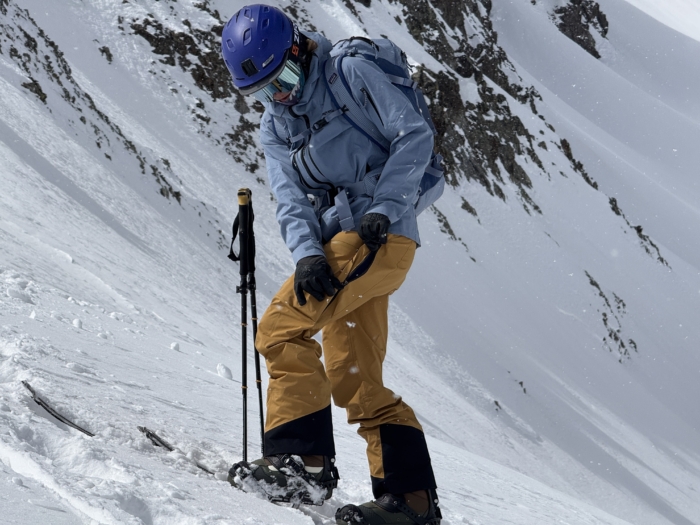
For riders who push deep into the mountains, the lightweight Patagonia Women’s PowSlayer Pants ($649) provide premium weather protection, supreme articulation around the hips and quads, and optimal thigh pockets. While testing in Silverton, Colo., SnowSports Senior Editor Morgan Tilton found that there’s little these ski pants can’t handle from resort days to long tours in storms or sunshine. Now in its fourth iteration, this adventure-ready snow pant offers full range of motion and is 30% lighter than its predecessor, thanks to GORE-TEX Pro ePE — a PFC-free, eco-conscious upgrade that maintains waterproofing while nixing chemicals and without added weight.
One of the most notable design details is the bellowed cargo pockets on the thighs. Designers previously prioritized knee mobility but had overlooked articulation in the hips and upper thighs — that’s now resolved. These spacious pockets make it easy to grab essentials, even while climbing the skintrack. Inside, a stretchy inner sleeve keeps gadgets from bouncing around, while elastic loops offer extra security to clip in gear.
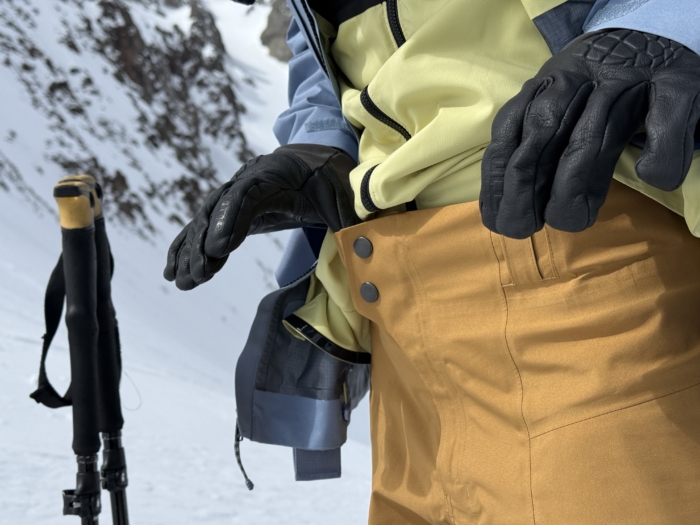
A 3-layer, 80-denier recycled nylon shell delivers durability and protection from precip, excelling on bluebird days and in whiteout conditions. That said, this material feels lean with windchill, so consider wearing a heavier base layer if you’re taking the sled out or expect blustery weather. The PFC-free DWR finish fends off moisture, while reinforced cuffs prevent wear. Exterior vents efficiently shed heat, though the hidden zipper pulls (which are blocked by the bellowed pockets) can be tricky with gloves.
With a roomy fit that’s just-right, these pants are a top choice for high-output riders tackling long climbs or booting up a ridge to snag the goods. Topped with a low-profile and adjustable waist (there’s an integrated velcro belt plus slender belt loops), the PowSlayer is storm-proof, breathable, and built to perform. They’re also made in a Fair Trade Certified factory. Keep them fresh with regular wash-and-dry care, but beware — oil stains on lighter shades are tough to remove.
Yes, these are pricey pants and could be overkill for weekend warriors. But if you’re looking to invest in a pair that will stand the test of time, feels and looks good, this is your crowned jewel.
REI Co-op Powderbound Insulated Snow Pants
Specifications
Pros & Cons
Pros
- Modern fit compared to past REI snow pants
- Plenty of warmth, without bulk
- Insane value; these are truly a steal
Cons
- Sleek styling may not work for every body
- Limited pocket functionality
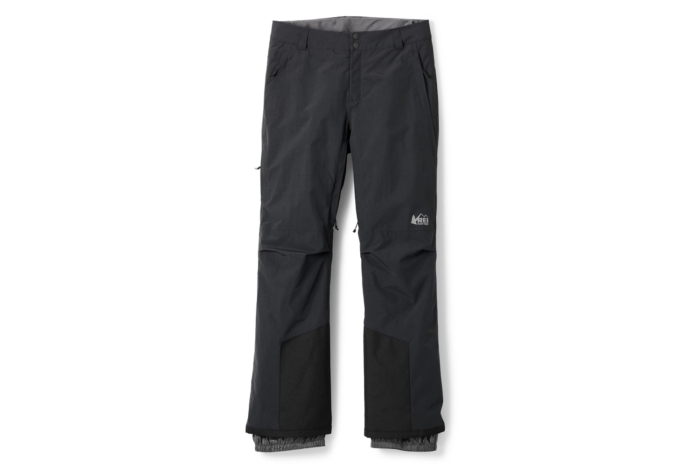
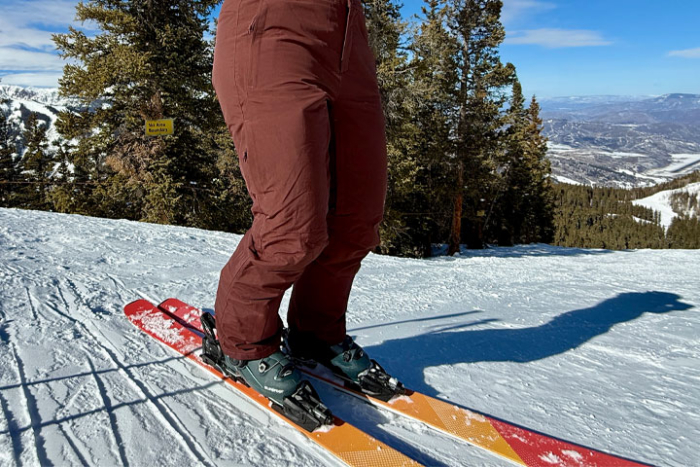
The REI Co-op Powderbound Insulated Snow Pants ($169) don’t fit like the REI snow pants you remember — and that’s a (mostly) good thing. After years of boxy, functional silhouettes from REI Co-op, the Powderbound pants are much slimmer. GearJunkie contributor Heather Balogh Rochfort found the fit sleeker and more modern than expected, with a trimmer silhouette that looks more like contemporary resort ski pants than a budget fallback. Tested over two days of resort skiing at Aspen Snowmass and a winter hike in Colorado’s Roaring Fork Valley, the Powderbound pants delivered solid performance — with a few caveats.
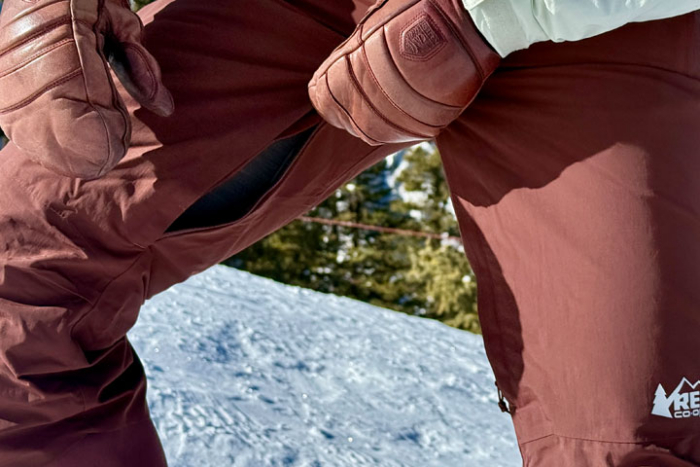
Built for resort skiing, the Powderbounds use a two-layer waterproof/breathable laminate paired with 40 grams of synthetic insulation. TL;DR version: You get reliable warmth on a 20-degree Fahrenheit ski day without excessive bulk. While they aren’t the most breathable pants out there, Balogh Rochfort still thought they were tolerable on a much warmer 34-degree Fahrenheit day. (The inner thigh vents helped).
Fit proved to be both a highlight and a drawback. Balogh Rochfort appreciated the cleaner cut through the legs and hips but found the waistband ran snug in her usual women’s medium (5’5”, 145 pounds). In fact, they were tight enough that the snap popped while bending over. Skiers who fall between sizes or prefer extra room in the waist may want to size up.
Feature-wise, the pants are mostly effective. Pocket storage is the biggest miss; the thigh pocket won’t fit a phone. But the smooth recycled polyester is awesome, easily sliding over base layers and tall ski socks.
Overall, the Powderbound Insulated Snow Pants are a screaming value for pretty much anyone who uses a chairlift. While they don’t come with a lot of bells and whistles, the price tag and basic performance make them a strong pick for any skier.
Columbia Sportswear Platinum Peak II 3L Snow Pant
Specifications
Pros & Cons
Pros
- Affordable for a 3-layer waterproof pant
- Relaxed fit through the legs for unrestricted movement
- Solid weatherproofing for storm days or slushy spring laps
Cons
- Sizing is tricky
- No RECCO
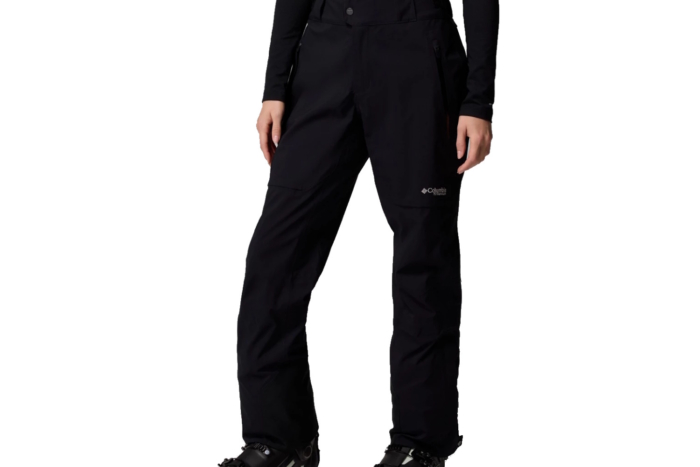
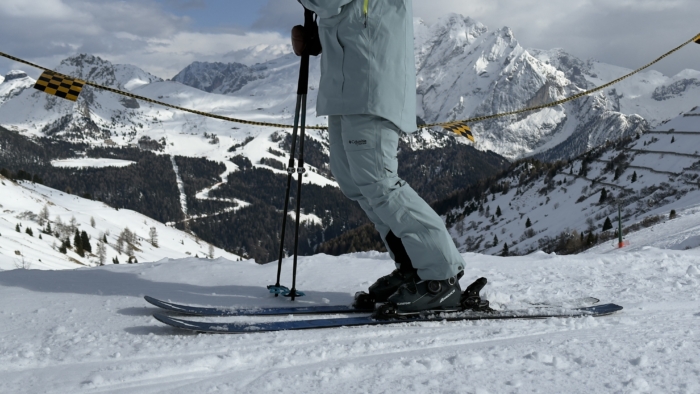
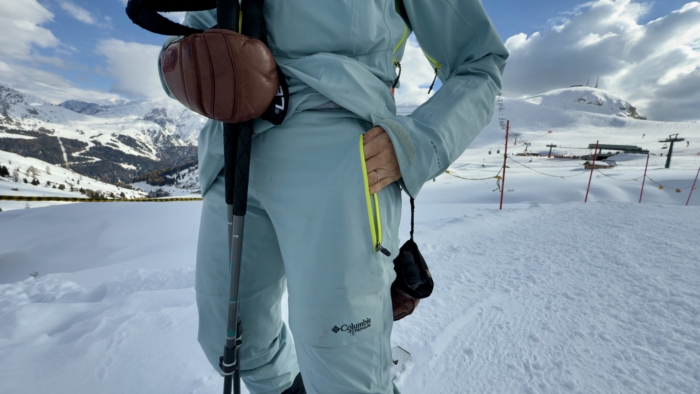
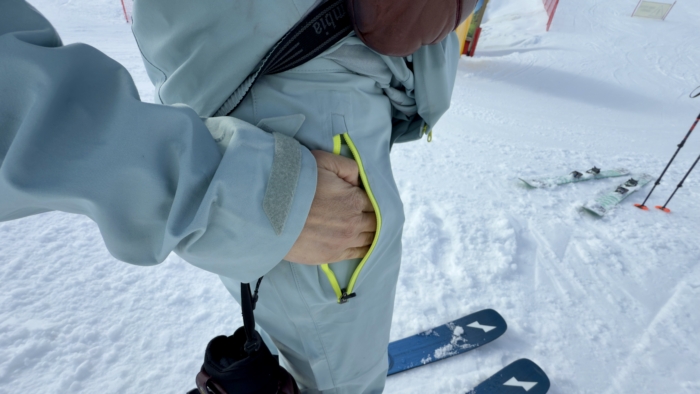
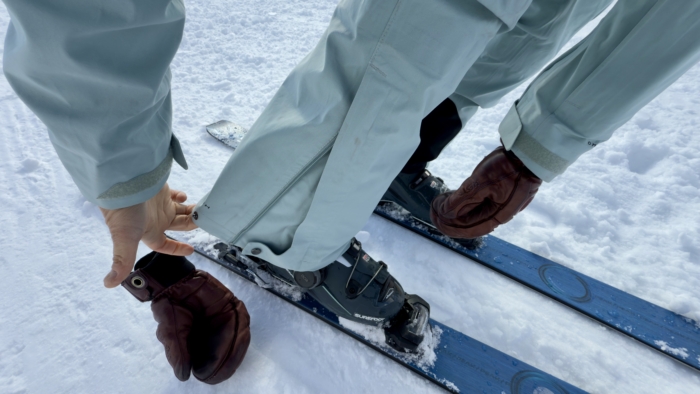
If you’re looking for a fully waterproof, storm-ready ski pant without dropping half your paycheck, Columbia’s redesigned Platinum Peak II 3L Pant is a standout. These women’s-specific pants are a bit of a unicorn: 3-layer weather protection, mobility, and thoughtful features at an approachable price. The Columbia Platinum Peak II 3L Pant ($250) is friendly on the pocketbook.
During testing in Colorado and the French Alps, pro gear examiner Heather Balogh Rochfort found that these pants stayed bone dry through wet chairlifts, windy groomers, and deep powder wipeouts. Columbia’s Omni-TECH membrane isn’t as breathable as the Arc’teryx Sentinel pant, but it held its own during an uphill tour in warm spring conditions — at less than half the price.
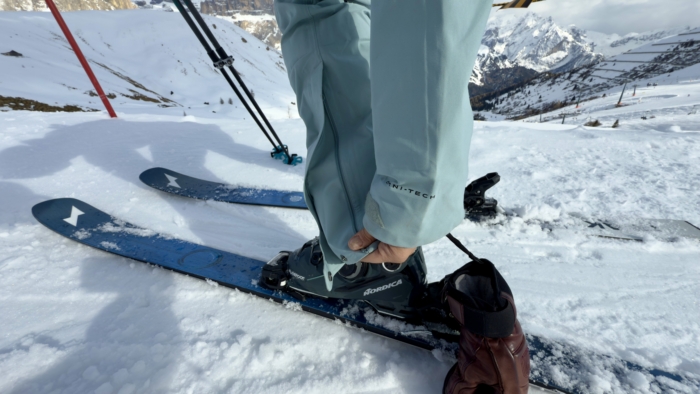
The relaxed fit through the legs allows for easy movement whether you’re booting Highland Bowl, skinning Tiehack, or bending to buckle ski boots. Our favorite feature? The zippered bottom leg openings that adjust to fit both bulky touring boots and resort setups. Waist adjustment tabs are also clutch for dialing in the fit—especially since sizing can be tricky. Fit note: We waffled between sizes, so consider sizing up if you’re in between.
Tradeoff: Unlike the Picture Exa snow pants or the Mountain Hardwear Cloud Bank pants, the Platinum Peak isn’t dealing in recycled fabrics. However, at $250, the Platinum Peak II offers serious bang for your buck.
Outdoor Research Women’s Powderverse Pants
Specifications
Pros & Cons
Pros
- Clip inside pocket could be used for keys or ski pass (instead of a beacon)
- Insulation on the rump (45g/m2)
- Roomy thigh pockets easily fit a large phone
- Pouch inside designated beacon pocket nicely fits beacon
Cons
- No mesh lining on leg vents
- Some skiers might prefer even more insulation on the backside
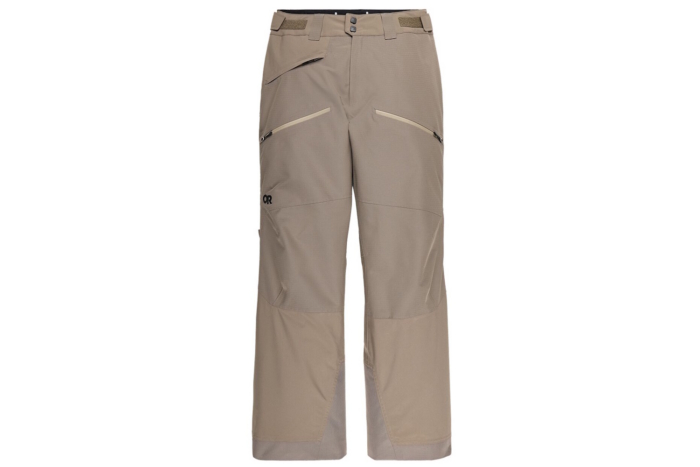
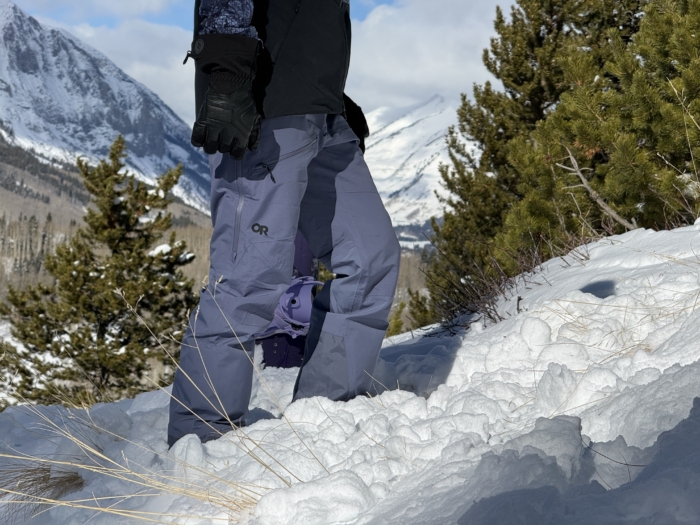
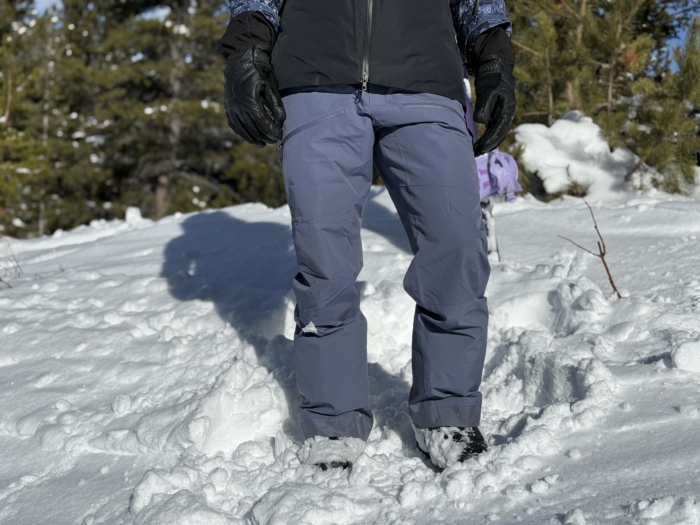
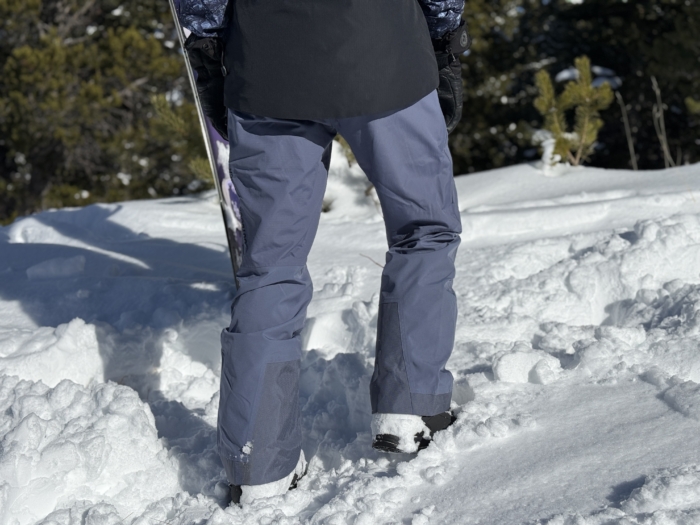
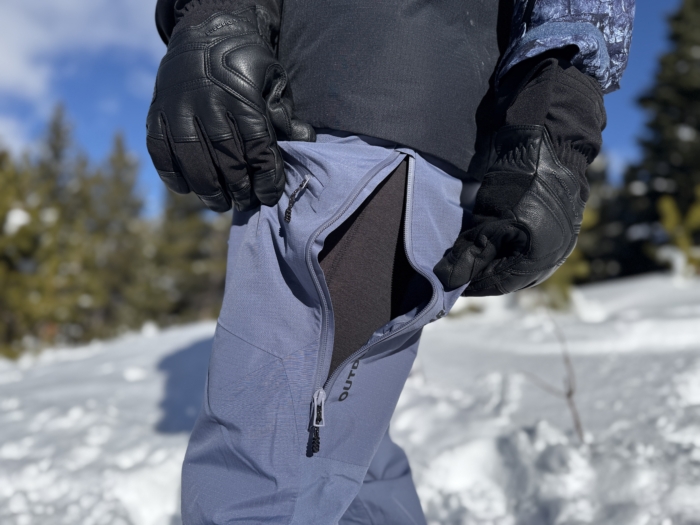
We love the fit and functionality of this season’s Outdoor Research Powderverse ($325), which is a hybrid insulated design that’s perfect for cold chairlift rides. The waistband and legs are slightly tailored and the roomy pockets are magic. At a middle-of-the-road price, the Powderverse includes integrated, targeted insulation across the backside and are downright comfortable ski pants.
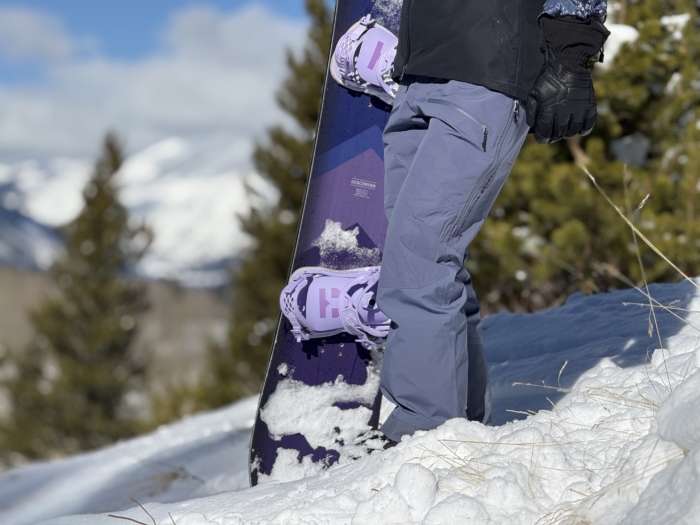
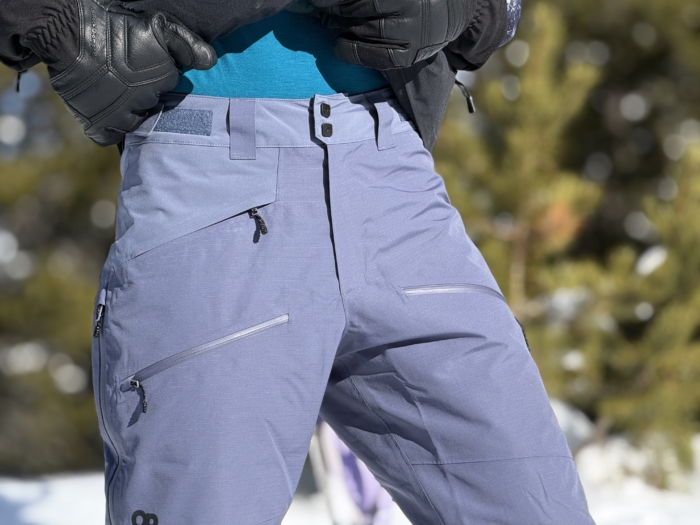
Scoring high points, the two thigh pockets each easily fit a large phone even while sitting on the chair lift. They’re deep and wide with a smooth taffeta liner. With 20K waterproofing and 15K breathability, the Powderverse is made for weathering a storm on the ski lift or while touring. SnowSports Senior Editor Morgan Tilton tested this kit at Crested Butte Mountain Resort on blustery, cold, and sunny days alike, and found the fabric to be protective against snowfall, wind, and fairly breathable.
Targeted insulation in the seat is so lean it’s not perceptible. Made from 85% recycled materials, the VerticalX Eco insulation amounts to 45g/m2, so it’s a modest degree of warmth. For ladies that get cold on the chairlift, we don’t think this’ll replace your need for heavy weight base layers or down shorts but it’s a nice addition. If you’d like more insulation in your ski pants, The North Face Women’s Freedom Insulated has 60g of Heatseeker Eco insulation but less waterproofing and breathability at 10K/10K.
A third zippered pocket sits near the right hip, which is intended for a beacon. Inside, there’s a large plastic clip with a metal gate, as well as a mesh pouch to keep the beacon separate from other contents. While Tilton found that the pouch securely fit a Black Diamond Guide BT (and she didn’t need to wrestle it in there), there’s minimal room left inside the pocket itself. The hand pocket (layered slightly above the beacon pocket) is still usable. Be sure to check that your beacon can attach to the clip (the Guide BT wasn’t compatible). Also, beacon manufacturers typically recommend that skiers wear a beacon harness.
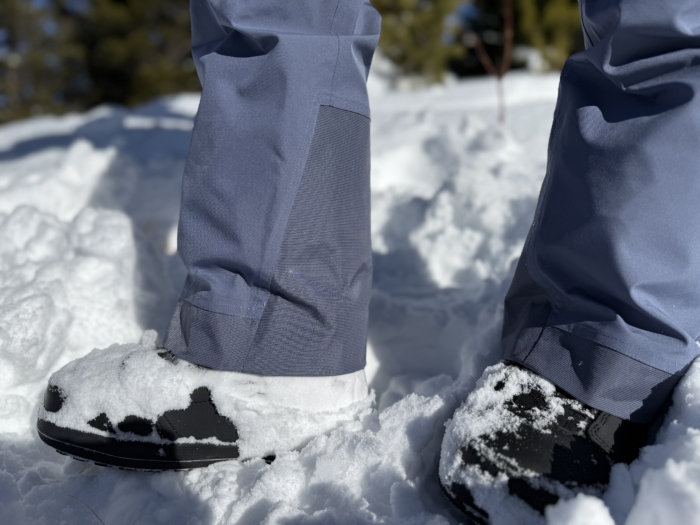
Other minutiae we appreciate includes the fleece-lined wide waistband, which has belt loops and adjustable velcro tabs to customize the fit. Side vents dump heat on the outside of each leg (no mesh included). The durable hems are reinforced plus scuff guards reach 8.5 inches up the leg. If you prefer a traditional fit, a bit of insulation on the hindquarters, and appreciate spacious, functional thigh pockets, the Powderverse is a great pick with a moderate tag.
Mountain Hardwear Cloud Bank GORE-TEX Pant
Specifications
Pros & Cons
Pros
- Eco-friendly recycled fabrics
- Body-mapped insulation that adds warmth without extra bulk
- Plenty of pockets
Cons
- Some may find the pants run big
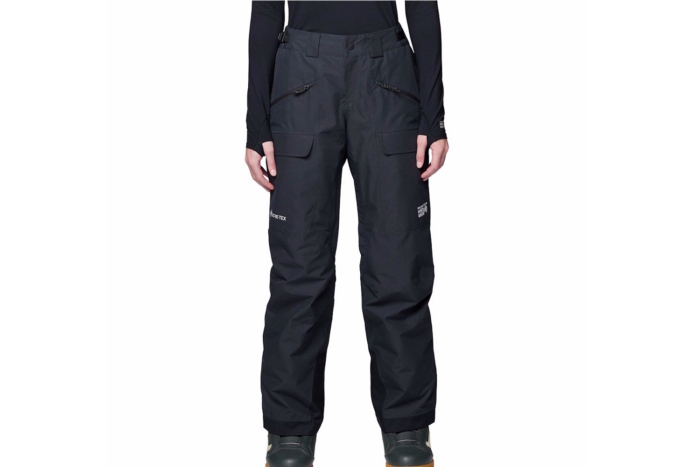
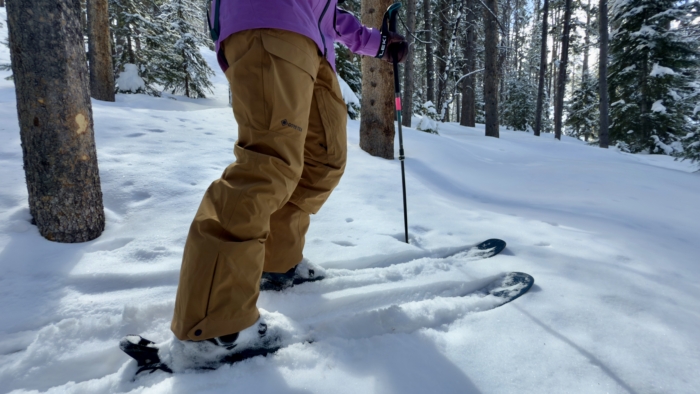
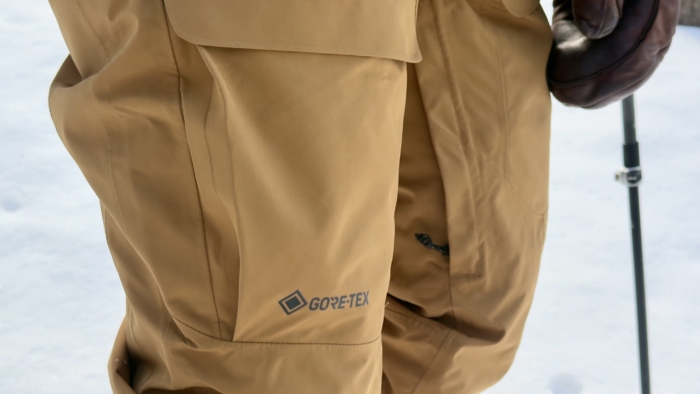
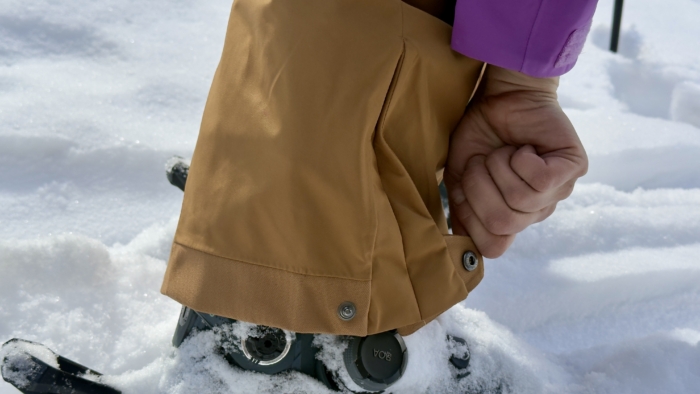
If you’re looking for an insulated ski pant that balances eco-friendly materials with real-world performance, the Mountain Hardwear Cloud Bank GORE-TEX Pants ($400) deliver. Ski apparel tester Heather Balogh Rochfort wore these on chilly ski days at Aspen Snowmass and loved how the body-mapped insulation — 60 grams in the butt and knees and 40 grams on the legs — kept her warm where she needed during brisk lift rides, but didn’t overheat her once she started carving downhill.
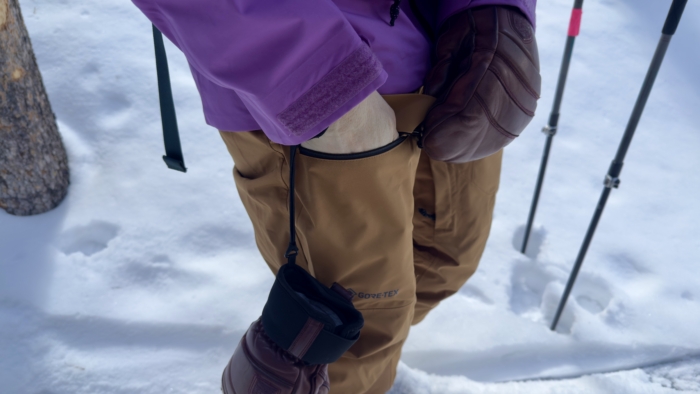
Mountain Hardwear opted for a GORE-TEX ePE membrane, a PFAS-free fabric that has a lighter carbon footprint and weighs less than the old school GORE-TEX. The recycled face fabric also makes these a win for skiers who want to reduce their environmental footprint. Bonus: Storage is fantastic, too. Two hand pockets and two generously sized thigh pockets provided ample space for snacks, chapstick, and a trail map — all within easy reach.
The relaxed fit feels accurate to size for our 5’5” and 145 lb. tester, though we noticed that the medium was more relaxed than others brands like Columbia Sportswear’s Peak Platinum II 3L pants. While some may prefer a snugger cut, Rochfort appreciated the extra mobility for deep knee bends and quick boot adjustments.
Rab Women’s Khroma Diffuse GORE-TEX Pants
Specifications
Pros & Cons
Pros
- Soft, durable fabric
- Belt loops or external integrated velcro belt to cinch waist
- Functional pockets
Cons
- Not the most quiet material
- Top-shelf investment
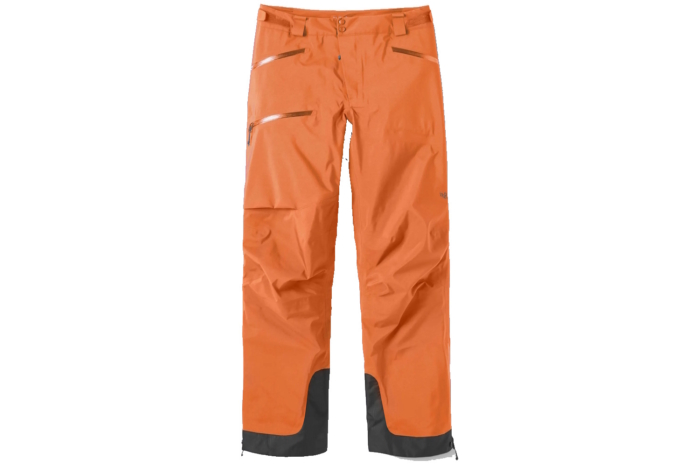
During our test laps, the Rab Women’s Khroma Diffuse GORE-TEX Pants ($495) quickly gained the ranking of one of the best ski pants we’ve tested. To boot, the pants advance the traditional Khroma collection with a 100% recycled face fabric in that 3-layer durable sandwich. We found the material to be malleable, extremely protective throughout stormy blasts — including heavy snow and wind — and comfortable to rip around in. They remain just as rad for the upcoming season, sporting 28K waterproofness and the equivalent of 20K breathability. Compared to the Patagonia PowSlayer, the fabric is denser and heavier, offering greater durability and wind-blocking power but the fabric feels less breathable.
SnowSports Senior Editor Morgan Tilton really enjoyed the silhouette of the Diffuse with articulated knees and roomy enough upper legs that don’t leave her quads gasping for air. The hem circumference is plenty wide to fit over the necks of her ski or snowboard boots but also includes a functional 9.5-inch-long exterior lower-leg zip as an additional window. In a detailed twist, the internal gaiters have a soft pull-tab but ditched a metal hook, so you can’t snag your hand but also can’t double-secure the gaiter on your boots. Of course, the elastic band and interior grip strip typically keep the layer pulled down just fine.
Up at the waist, Tilton appreciated the option of using belt loops or the exterior integrated Velcro belt to tidy up the fit. (Based on the waist, we’d not recommend sizing up.) The pants close-up with a fly and two strong snaps.
Nodding at the collection of pockets, those cannot be overlooked. Rab included two hand pockets — where you can actually fully submerge a hand — plus a deep lower thigh pocket that spaciously bags a large phone with some space to spare. Inside the lowermost pocket is another small interior media pocket. While we’re on the fence about these types of hammocks — they’re typically too small for a phone, in our experience — they could be a good spot to slide a slender item like a driver’s license or ID.
To clarify, these pockets are roomy but not big enough for skins, in Tilton’s experience, especially for splitboarders, but also for skiers. Also, we wouldn’t recommend sticking your skins in an external pocket on the descent if it’s super cold out. Put those in an interior pocket where the glue can stay warm in case you need to slap ’em back on. Or use a skin saver between the two in your pack, so you can quickly pull them apart later.
The lower legs are truly beefy for 360 degrees with tall kick patches and a reinforced hem, so those bones won’t be breaking while you’re taking narrow steps with crampons or tight pivots with sharp ski edges. It’s a unique design: A secondary fabric amps up the hem, reaching 2 inches high on the interior and exterior, and also stretches 8 inches up the inside of the leg.
In a trapezoid shape, that kick patch is 7.5 inches at its widest and 5 inches at its narrowest. There are also two crampon patches on either side of the lower-leg zipper (5.5 x 8 inches and 4.5 x 8 inches). The crampon patches feel like super-lean knee pads and are fully integrated into the fabric, so they’re not aesthetically obvious. While you don’t need to be concerned about holes any time soon, know that your pant legs won’t be easy to roll up but they’ll not sag and stay upright.
For a clean look and a top-notch pair of women’s ski pants that won’t wear out any season soon, we’ll keep pulling on the Women’s Khroma Diffuse GORE-TEX Pants, especially for a pair that can rock resort days followed by long weekends out-of-bounds in any terrain, any weather, and at any time of the season. Plus, if you get steamy, there are two generous side leg vents to assist. If these are overbuilt for your needs, or you prefer a warmer pair, check out the 686 Aura Insulated Cargo Pants for a fraction of the cost.
-

-
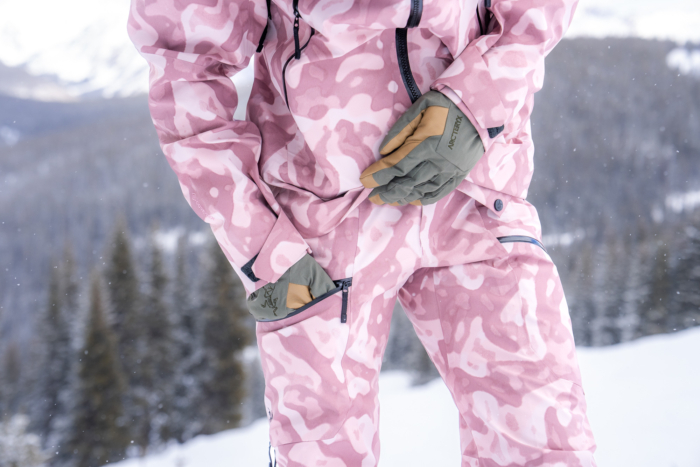
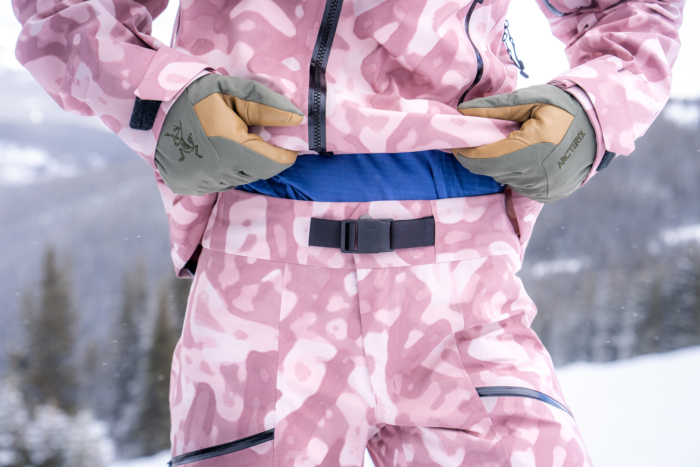
SnowSports Senior Editor Morgan Tilton testing the hand pockets on the Arc'teryx Sentinel Women's Ski Pants at Vail Ski Resort; (photo/Jason Hummel)
-
-
-
-
Specifications
Pros & Cons
Pros
- ePE GORE-TEX fabric is PFAS-free
- Flannel-lined for light insulation
- RECCO included
- Anti-odor treatment
Cons
- No mesh backer on the side vents
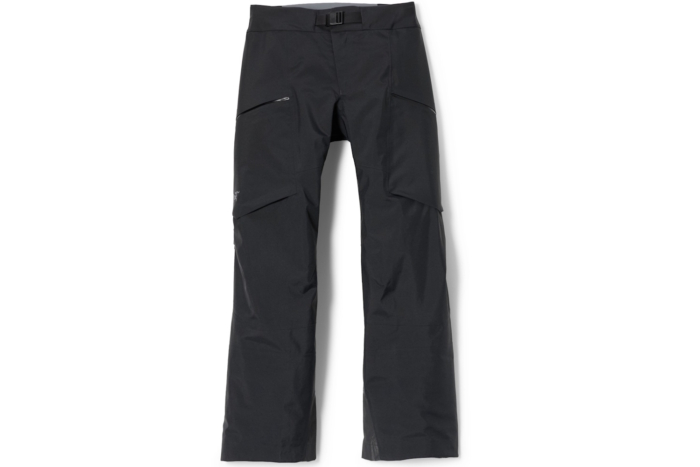
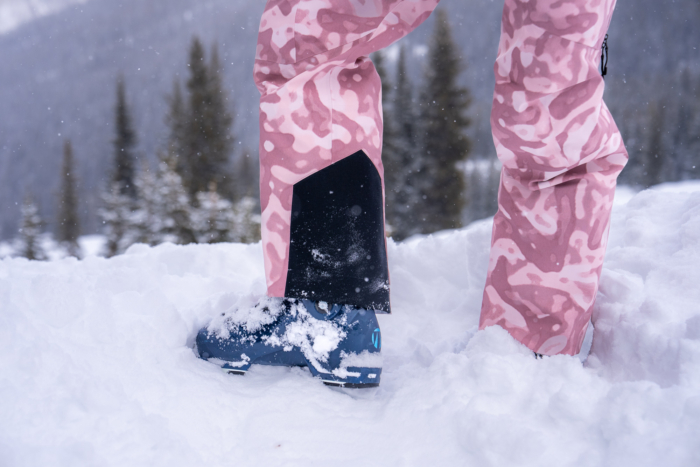
There’s not much this pant can’t withstand. The Arc’teryx Sentinel Pant ($600) is a super-premium build intended to be tenacious for big mountain freeride missions compared to mellower backcountry tours. Lined with brushed flannel, the pants also provide a bit of warmth. The tradeoff? The durable design only weighs 510 g, and the beefy construction is reflected in the cost. These pants feature an embedded RECCO reflector, an anti-odor treatment, and have been a new 80-denier 3-layer ePE GORE-TEX, a PFAS-free textile. There’s not much that could make them better.
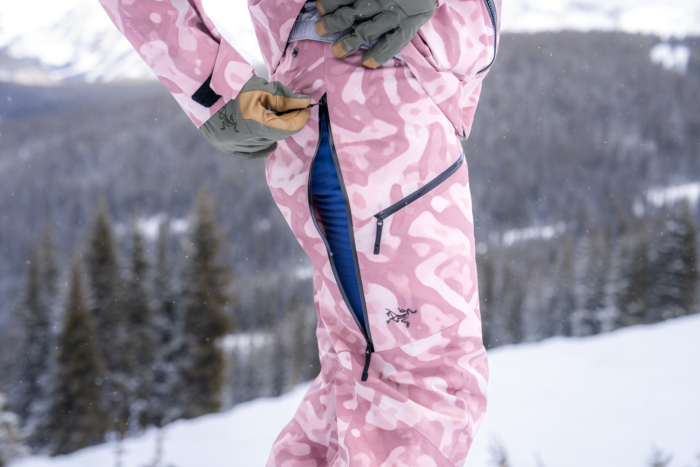
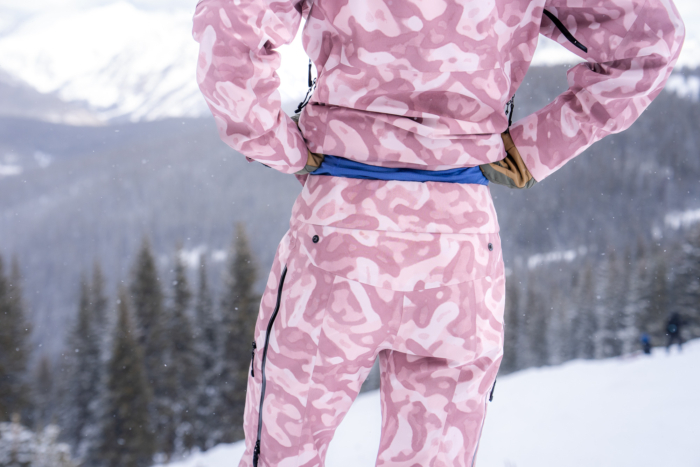
The sides have double zippers along the vents, which reach 14 inches in length, offering ample room for catching a breeze. But they don’t have mesh inserts, which we wish were added for a bit of protection. On each thigh, the wide, deep pockets are super spacious for holding a big phone or snack bars. There’s also a small, hidden stash pocket in the right-hand pocket. Those thigh pocket zippers are water-resistant (but not waterproof). Both a comfortable integrated waist belt plus wide belt loops provide the opportunity to adjust size and fit.
Among our favorite perks, SnowSports Senior Editor Morgan Tilton loves the high-reaching and tenacious interior cuffs for hem and pant leg protection. To reinforce the fabric of the interior pant leg against ski edges, crampons, and abrasion, the stout Keprotec interior patches on the cuffs stretch 8 inches across and 8.5 inches high at their peak. The cuffs have super-stout 100-denier Cordura. Tilton appreciated the protection while touring around Colorado’s Elk Mountains.
The waterproof-breathable Sentinel Pant has taped seams and is as durable and as comfortable as ski pants come. They’re a perfect option for mission-oriented and avid skiers who want to invest in a single pair for the long haul. But if you’re looking for a robust pair that’s hardy for wind-worn days at the ski area, but don’t need a mountaineering-level design, check out the Rab Women’s Khroma Diffuse GORE-TEX Pants for $100 less.
7 More Women’s Ski Pants We Love: Field-Tested & Approved
These seven pairs of women’s ski pants don’t carry accolades but we still recommend each one to our friends and keep them as backups. These designs are all durable, stylish, and cost effective with smart pockets.
-
-
-
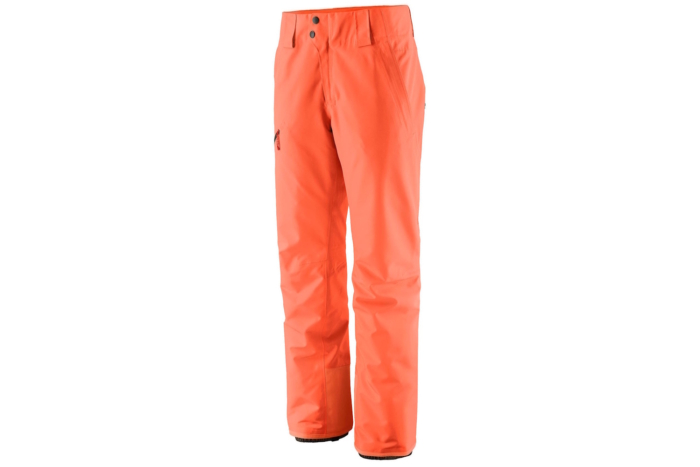
I’d say the Powder Town Pants run slightly large for the stated size; (photo/Heather Balogh Rochfort)
-
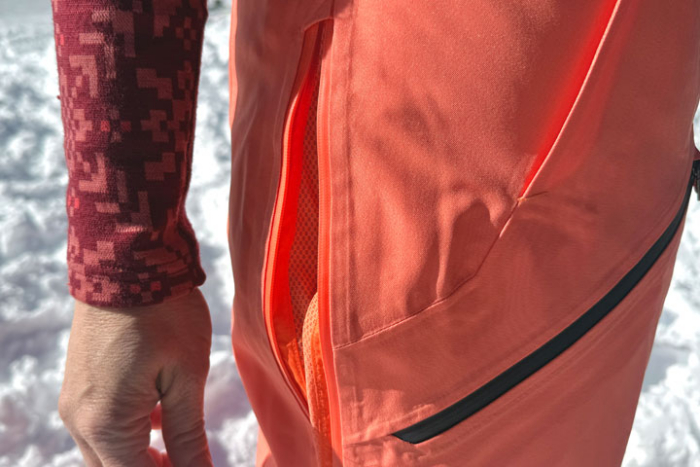
I tested the Powder Town pants with long chairlift laps and plenty of downhill skiing; (photo/Heather Balogh Rochfort)
Specifications
Pros & Cons
Pros
- Eco-friendly materials that are easier on the planet
- Relaxed fit works for athletic body types
- Quite warm and toasty for frigid ski days
Cons
- Too hot during warm, spring skiing days
- Sizing runs a touch large, which can be tricky when online ordering
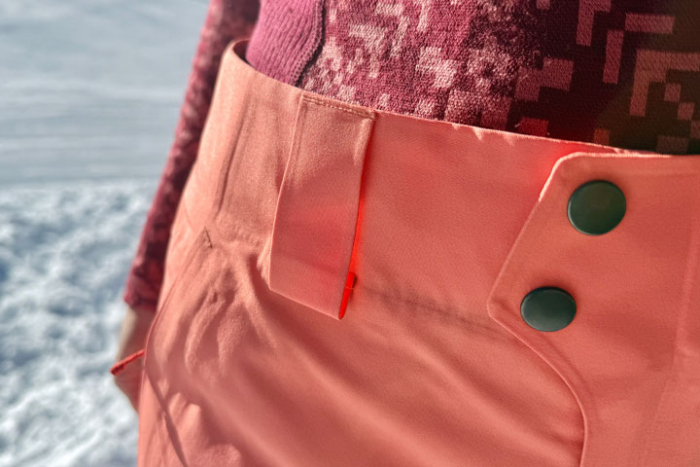
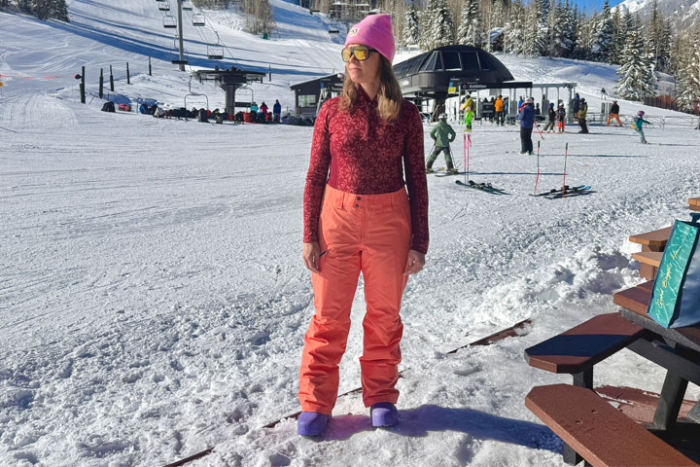
The Patagonia Insulated Powder Town Snow Pants ($269) are classic insulated resort pants designed to keep skiers warm, dry, and comfortable during long chairlift laps. After several days testing them at Aspen Mountain and Snowmass, ski gear expert Heather Balogh Rochfort found the pants deliver exactly what they promise: dependable warmth, cruisey mobility, and Patagonia’s strong sustainability credentials.
The pants use 60 grams of Thermogreen insulation, which is made from 100% recycled polyester. This provided plenty of warmth during a ski day in the low 20s (Fahrenheit). Balogh Rochfort especially appreciated how warm her legs felt on descents — even typically cold chairlift rides kept her quads comfortable. Two mesh-lined thigh vents help dump heat when needed, though these pants are definitely best suited to colder resort days rather than high-output skiing.
Fit leans slightly generous. At 5’5″ and 145 pounds, Balogh Rochfort found a medium roomy through the hips and thighs, but the waist required tightening with the adjustable tabs. Once dialed in, the articulated design moved naturally while skiing, and the smooth taffeta liner made layering easy.
Features are straightforward: two hand pockets, one thigh pocket, gaiters, scuff guards, and long thigh vents. The recycled H2No shell fabric, PFAS-free DWR, and Fair Trade Certified manufacturing round out the package. Tradeoff: The hand pocket is so deep that it sits behind the thigh pocket, causing some of your goods to bang around while you’re on the move.
Specifications
Pros & Cons
Pros
- Noticeable warmth on brisk days
- Relaxed, forgiving cut that will work for the majority of skiers
- Thigh vents help manage heat
- Great value with an affordable price
Cons
- Inconsistent sizing
- Limited breathability
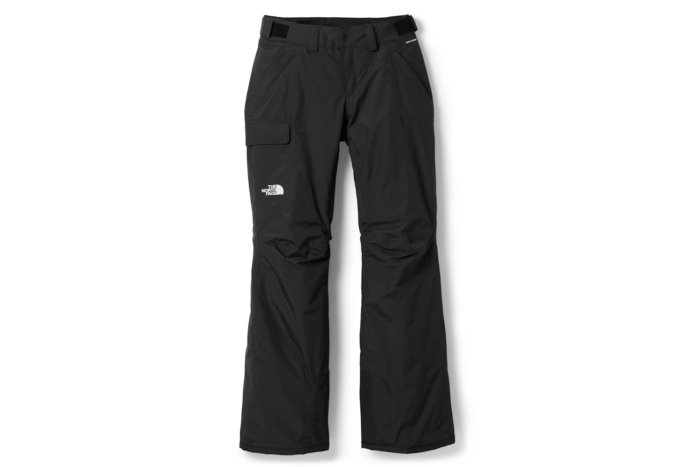
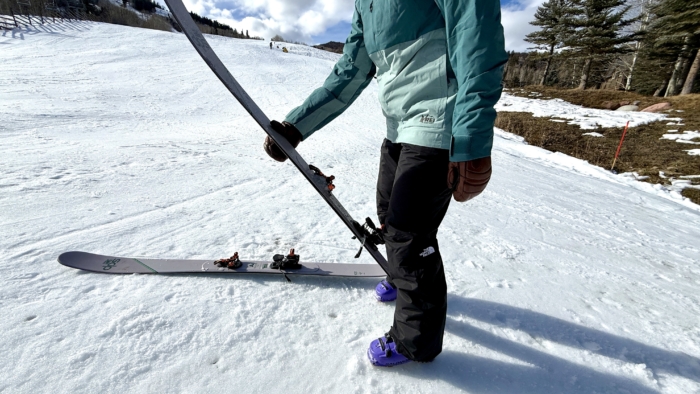
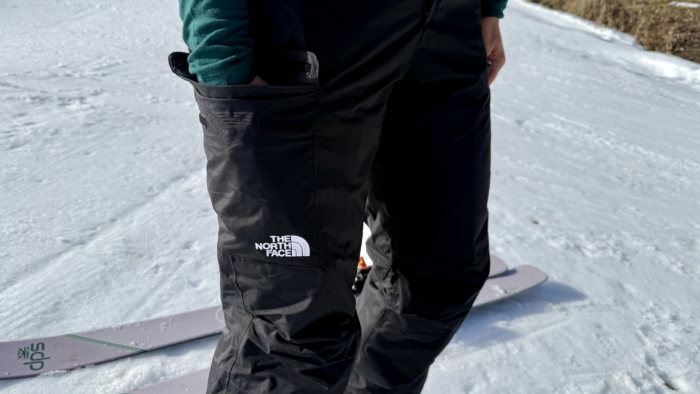
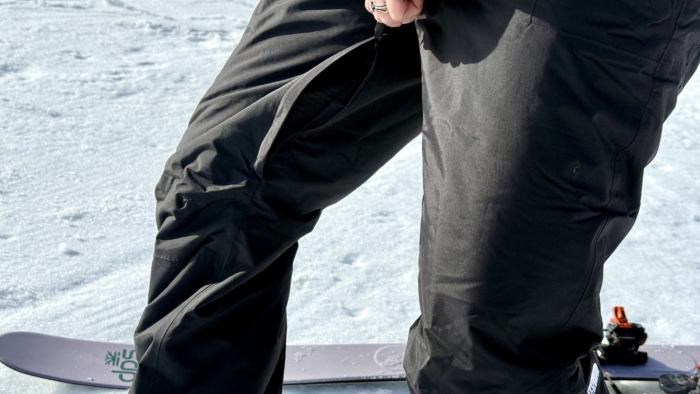
The North Face Freedom Insulated Snow Pants ($200) are a value-oriented resort pant designed for skiers who prioritize warmth, comfort, and affordability over cutting-edge technology or breathability. GearJunkie contributor Heather Balogh Rochfort tested the pants over a warm, early-season weekend at Aspen Snowmass, skiing both Highlands and Buttermilk in variable conditions that highlighted exactly who these pants are — and aren’t — for.
Built with a 2-layer DryVent shell and 60 grams of Heatseeker synthetic insulation, the Freedom pants deliver plenty of warmth. Balogh Rochfort noted that on the coldest day of testing (30 degrees Fahrenheit and a brisk wind chill), the insulation prevented the cold seep that often creeps into her thighs and backside on lift rides. She only saw light snowfall, but the pants had no issues shedding the delicate moisture. She even spent a decent amount of time sitting and crawling around in the snow at the base with her daughter, and was pleased to see that the knees and butt of the Freedoms never wet out.
On a warmer, 30-degree Fahrenheit day, however, breathability became a limiting factor. Even while cruising mellow groomers, heat built quickly. While the mesh-backed inner thigh vents helped dump some heat, they couldn’t fully offset the realities of a 2-layer insulated construction. But that tradeoff is largely expected at this price point.
Fit is comfortable and forgiving once dialed, with wide legs that easily slide over ski boots and internal gaiters that aren’t overly restrictive. Sizing, however, runs tricky. At 5’5” and 145 pounds, Balogh Rochfort found the medium unusually tight through the hips. Ultimately, she sized up, relying heavily on the adjustable waist tabs to cinch down the pant size.
Bottom line: The North Face Freedom Insulated Snow Pants are worth a look for everyday resort skiers who want reliable warmth, solid weather protection, and approachable pricing.
Specifications
Pros & Cons
Pros
- Extremely comfortable for freezing days thanks to the insulation
- Innovative cinch for hem stowaway (accessed via hand pockets)
- Super comfortable and stylish
- Circular polyester's upcycled fabrics avoid landfill
Cons
- At 770 g, the pants might feel a tad heavier than other pairs
- Insulation could be too much on super sunny, warm spring days
- High-reaching waistband might not be everyone’s choice style
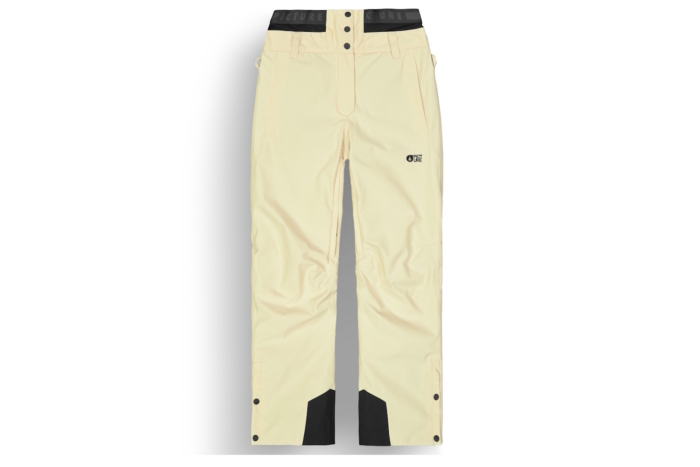
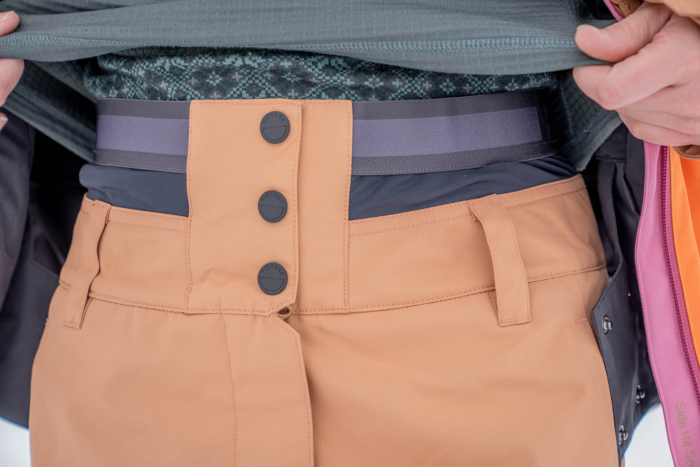
For women who want warmth, sustainability, and smart design all in one pair of pants, the women’s Picture Exa Pants ($240) hit the mark. These insulated snow pants stood out during testing at Aspen Snowmass by contributor and gear tester Heather Balogh Rochfort. Across seven days of skiing — ranging from cold storms at Highlands to slushy spring laps and even a hot uphill day with a 7-year-old in tow — the Exa kept her dry, warm, and completely comfortable. Field notes from Crested Butte-based SnowSports Senior Editor Morgan Tilton match that experience.
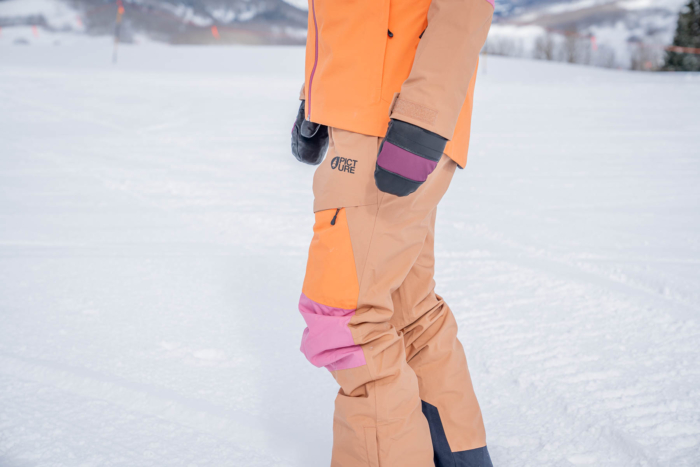
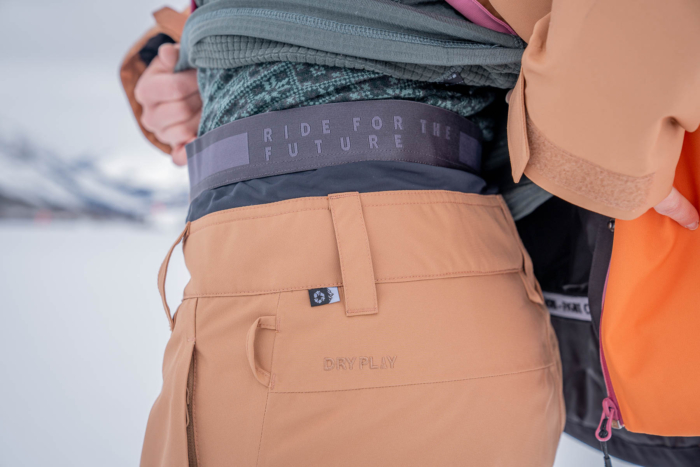
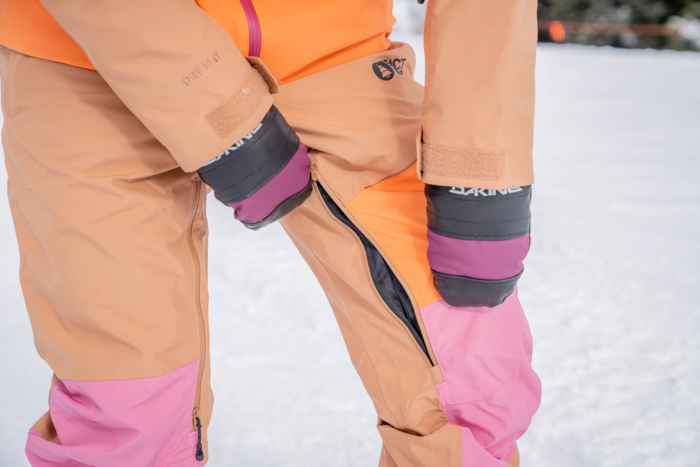
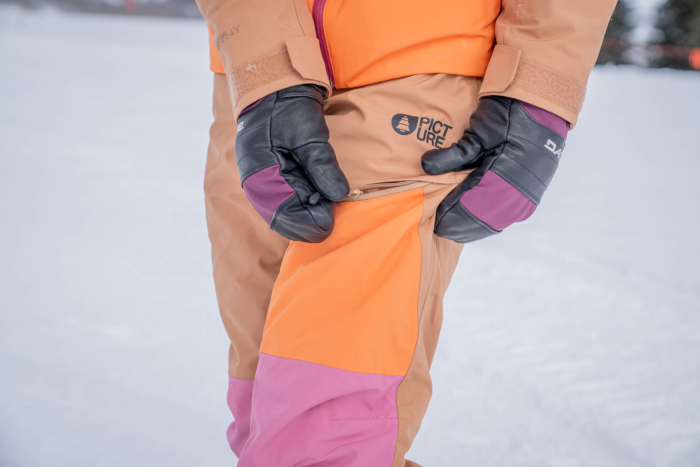
Made with 100% circular polyester from textile waste and insulated with 40g of recycled synthetic fill, the Exa lives up to Picture’s reputation for eco-conscious outerwear. But what really impressed us were the standout design details: the built-in waist gaiter, which seals out snow without the need for bibs, and the I-Fit system, which lets you draw the pant cuffs up via hidden pocket pull cords. These thoughtful attributes are rare in women’s ski pants and genuinely useful.
Despite the insulation, the pants never felt bulky or restrictive. The straight-yet-relaxed fit allowed room for movement and layering, while still flattering the silhouette. The wide and high-reaching interior waistband wasn’t too tight. Vent zips, lace-hook gaiters, and reinforced cuffs round out what we’d consider to be a solid set of design elements.
Our only complaint? We wish they had more pockets — especially a cargo or thigh stash for storing essentials. Still, for women who want performance, comfort, and environmental responsibility in one good-looking package, the Exa Pants are a great choice.
-
-
Testing the Stio Women's Environ Pant; (photo/Morgan Tilton)
-
Testing the Stio Women's Environ Pant; (photo/Morgan Tilton)
Specifications
Pros & Cons
Pros
- Excellent fit, articulation, and shape
- Functional, spacious, well-placed pockets
- Comfortable, adaptive waistband
Cons
- Only three pockets might be a drawback
- Not your baggy freeride option
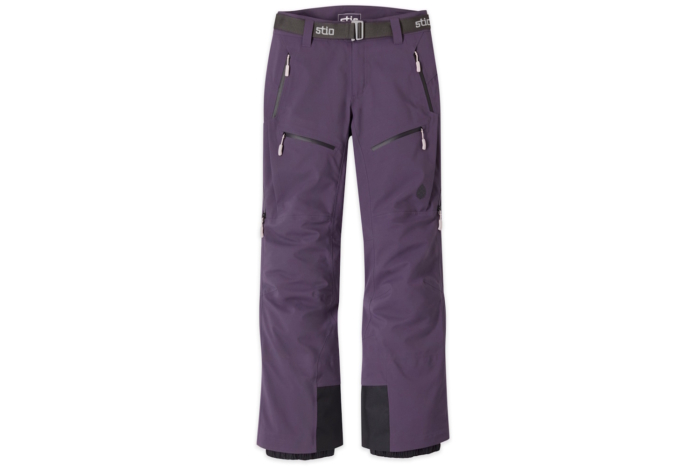
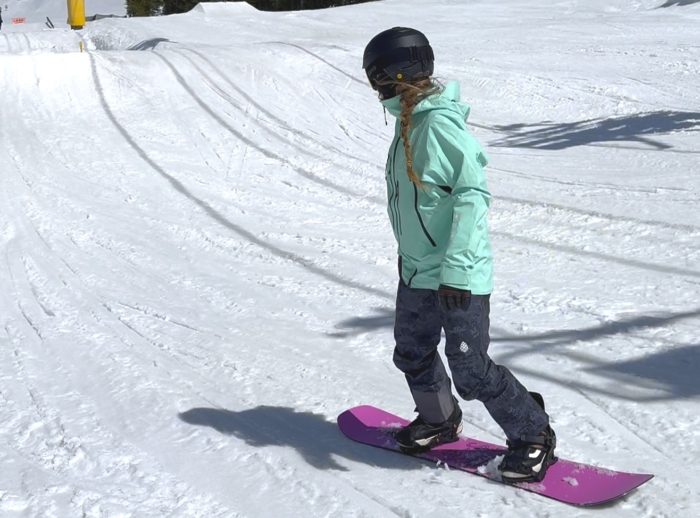
Like the best honey, the cut of the Stio Women’s Environ Pant ($429) is just right. The first thing we noticed when pulling on these pants is how well articulated the design is around the knees, quads, and backside without being overly baggy or too tight. Plus, this hybrid workhorse is built for mountain missions whether you’re skinning in the backcountry, lapping sidecountry lines, or hammering lift-served runs. Looking great and settling in as a top performer, the Environ is one of our favorite women’s ski pants to date. And as of this year, the Environ is now offered in extended sizes ranging from XXS to XXL and a variety of inseams: regular (30.5″ – 31.5”), short (28.5″ – 29.5”), or long (32.5″ – 33.5”).
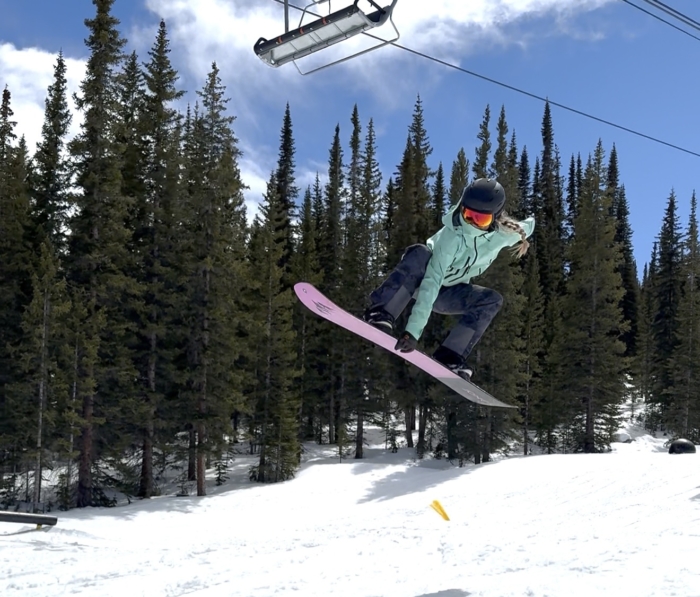
Made with Stio’s in-house PeakProof 3-layer recycled fabric, the Environ delivers a level of waterproofing and breathability that’s vetted in the Tetons. After riding around Colorado from Copper Mountain to Crested Butte Mountain Resort, SnowSports Senior Editor Morgan Tilton can affirm this textile has a lovely hand feel, isn’t too loud or crunchy, yet feels stout. With 20,000mm of waterproofness and 10,000g of breathability, plus PFAS-free DWR to bead moisture off the surface, this shell handles snow flurries, sleet, and sweat with finesse. It even does well to barricade wind. To dump heat on the skintrack or on spring days while riding the jib park, the exterior leg vents are retrofitted with burly dual, two-way zippers.
There might only be three of them, but they serve us well. Each oversized hand pocket is well-angled and fully lined with a buttery soft fabric. A roomy, bellowed thigh pocket can fit a large phone, and doesn’t feel like the device is slamming around inside. The zip closure is protected by a snappable flap. The super comfortable, wide waistband is another detail that fits our jam. The design includes wide belt loops, an adjustable Velcro band, plus a double-snap (with easy-to-use, deep snaps) and Velcro closure. The pants even come with an in-house designed wide belt with a simple hook-and-loop system: Not many snow pants come with belts! One potential drawback, though: The belt is stitched into place at the center back. If you don’t like belts, consider a different pant.
We also appreciate the reinforced hems, which have large Cordura kick patches, to elongate the fabric’s lifespan and resist abrasion from crampons, ski edges, or boot buckles. While the pants aren’t the easiest to roll up, due to the patches, they aren’t stiff, either. The internal boot gaiters don’t have a metal hook, which we don’t mind, and keep the fluff out on blower days. To hang to dry at the end of the day, the internal hanger loop is wide enough to dangle the pants off a sizable wall hook.
If you want a baggier cut, check out the 686 Aura Insulated Cargo Pants, which are insulated and have double the number of pockets. If you’re looking for a lightweight ski pant with an equally awesome fit and well-made, roomy pockets, scope out the Patagonia Women’s PowSlayer Pants, which are 496 g compared to the burlier 652-gram Environ. Whether you’re slashing pow, booting couloirs, or riding chairs, these pants are built to keep up — and look good doing it. For riders that prefer one pair of pants that can do it all, the Environ is one we keep reaching for, whether it’s stormy or bluebird.
Specifications
Pros & Cons
Pros
- Pockets are roomy and functional
- Belt loops or an integrated/interior velcro belt help secure waist
- Insulation keeps you cozy on lift rides and gusty days
Cons
- Insulation could be too much for warmer and spring days
- Zippered vents are a tad short and on exterior leg (some prefer interior placement)
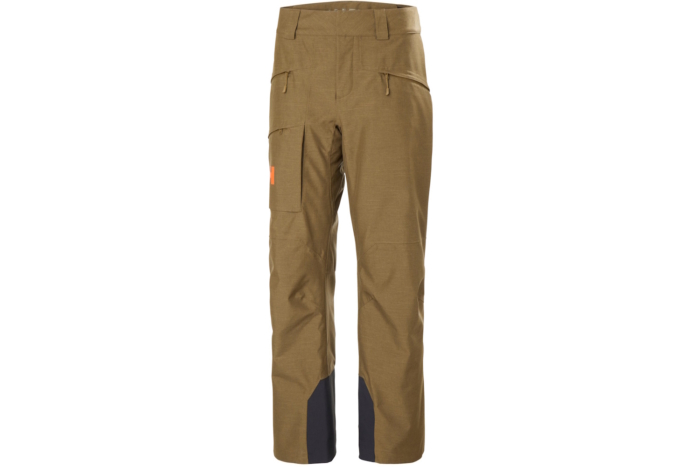
If you relish freedom of movement and baggy as a fashion statement, don’t kick this pair of freeride ladies’ ski pants to the sidelines. A steadfast option in the lineup, the Helly Hansen Women’s Powderqueen Ski Pants ($310) brings the brand’s popular bib silhouette into a suspender-free option for the gals. While the bibs have been in the lineup, some shredders prefer a bit more freedom and less fabric than what a bib offers.
What’s more, the Powderqueen is loaded with 40 g of insulation, which is lightweight but powerful: SnowSports Senior Editor Morgan Tilton definitely noticed the warmth and felt far more relaxed on icy, damp, and windy lift rides at Crested Butte Mountain Resort. The designers opted for the PrimaLoft Black Eco, which is 100% recycled: Helly Hansen converts plastic bottles into fibers. Among PrimaLoft’s classic lineup of insulation — Gold, Silver, and Black — the Black Eco offers up the equivalent of 350-fill power down. The CLO value, which is a metric used to measure the thermal insulation of clothes, is 0.65. Comparatively, nude skiing would be 0, and ripping turns in a highly insulated onesie would be more than 1.
In a 2-layer design, the material is Helly Hansen’s longstanding proprietary waterproof-breathable and windproof membrane, called Helly Tech, which initially hit the market in 1984 — four decades ago. While we’ve ridden through blizzards more than a few times while wearing this fabric over the years, we’re still confident it works based on test laps in these pants.
Tilton digs the pockets on these pants. Helly made sure to offer two hand pockets plus a deep pocket on the upper right quad. The waist is secure thanks to a triple-secure closure: fly, two snaps, and a slider. She’s not coming undone. In addition to wide belt loops, the pants also include a smooth, integrated Velcro belt along the interior of the waistband, so you can tailor the circumference.
While keeping us warm, we can’t overlook the mobility of these pants between the baggy legs — freeing our thighs — adjustable waist, articulated knees, gusseted crotch, and 2-way stretch. A couple of other perks include the integrated RECCO for safety if a rescue is needed, PFC-free DWR, internal gaiters, and 8×8-inch durable kick patches on the interior hems. Bringing business and steez, don’t sleep on the Women’s Powderqueen Ski Pants.
Specifications
Pros & Cons
Pros
- Baggy yet feminine shape for ultimate comfort and aesthetic
- So many pockets!
- Lightly, strategically insulated with interior leg vents is the perfect combo
- Excellent price
Cons
- Internal hang loop is small and inflexible, making it hard to hang dry pants off larger hooks
- Hand pockets have fleece liner above digits — we’d like that material on the hand’s underside
- 10K waterproofing might not provide long-term or enough protection for heavy coastal storms
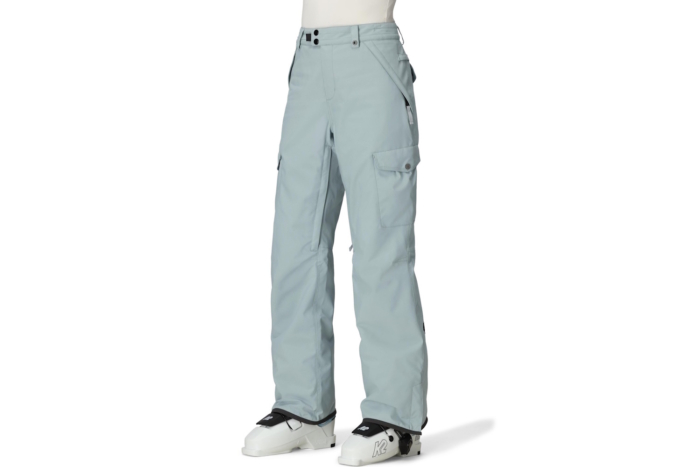
A walking piece of art, the 686 Aura Insulated Cargo Pants ($190) boast articulated style that makes us want to shred. Alongside ample cargo space, the Aura are lightly insulated in all the right spots, keeping us comfortable all day on the lift, yet also have ventilation and adequate weather protection for the occasional squall. The best part? These pants don’t break the bank.
Designed with windproof infiDRY 10K fabric, these pants provide waterproof and breathable protection, while a PFAS-free DWR coating helps shed moisture without harmful chemicals. While there’s not enough waterproofing for week-long, watery PNW-level storms, this degree provides plenty of waterproofing for fair-weather riders, bluebird weekends, and in drier snow climates.
Keeping us warm, the infiLOFT insulation is strategically placed with 40g of mapping at the seat and knees. Above the knees, an internal fleece liner covers our quads, hamstrings, and glutes. The whole package delivers warmth where it’s needed sans bulk. On warmer days or during high-output skiing, the internal leg vents enable temperature regulation, preventing overheating on boot-packs or park laps.
Per the name, SnowSports Senior Editor Morgan Tilton loved the cargo pockets. In total, there are six pouches including two on the back, traditional hand pockets, and two cargo hammocks on the hammies. The most secure closures are the zips for the hand pockets, otherwise the designs latch with Velcro plus a snap on the cargo pockets. A key clip is inside the front hand pocket. Beyond belt loops, an internal waist adjustment lets us dial in the fit without a belt. Also, three horizontal loops placed below the belt loops offer a pant-jacket connection to help keep the jacket locked down on pow days.
A few details are on our short wish list. It’d be nice for the bottom side of the hand pockets to also be lined with fleece, not just the top. And the waistband closure is two shallow snaps surrounded by scratchy Velcro. It works OK, but isn’t comfortable against our fingers, and deeper snaps would be quicker to secure. Thoughtful details balance out the critiques like a lift ticket eyelet on the left-front belt loop and the expandable dual-snap lower-leg hems. Without going overkill, a narrow strip of 500-denier fabric reinforces the lowest boundary of the hem. And the boot lace hook has a garage when it’s not in use, while the gaiters are lined with four rows of grip, keeping them down over our boots.
As a B Corp–certified brand, 686 also meets high standards for environmental responsibility and ethical manufacturing. For resort skiers seeking warm, functional, stylish, and eco-conscious pants, the Aura Insulated is a top choice loaded with storage opps and at a sweet price. In need of a performance-oriented pair that’s more waterproof, lightweight, and ready for backcountry days? Scope out the Patagonia Women’s PowSlayer Pants.
Specifications
Pros & Cons
Pros
- Belt loops
- Soft, lightweight lining for extra comfort
Cons
- Only two standard hand pockets
- Could be too much insulation on warmer days
- Straight cuff is a snug fit over ski boots
- Cuffs are not reinforced
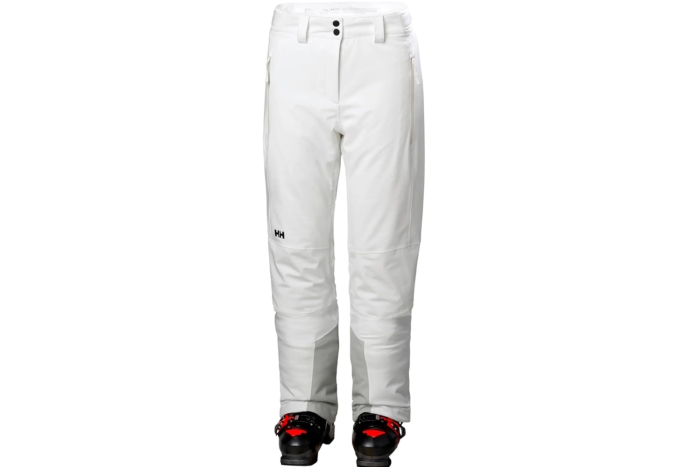
Anyone seeking a minimalistic, lighter-weight, insulated pant — sans the puffy look and feel — will delight in the Helly Hansen Alphelia Insulated 2.0 Pant ($310). Filled with Primaloft Black Eco insulation, these pants feel featherlight while being incredibly warm and fluffy, keeping us comfortable in teen temps on slow chairlifts and after the sun set while gathering at the tailgate with friends.
These Alphelia ski pants have a slimmer-fitting, modern look. We found the design to be true to size, offering a wide range in waist size (23 inches to 37 inches) but lacking in length variation. If you want to go longer, you have to go bigger, which could be a problem for taller ladies looking for longer inseams.
The pant sits high on the waist, providing an adjustable Velcro belt band and gives a flattering, tighter fit from the waist through the glutes and thighs. There are also belt loops, should you need to throw on a belt.
Topped off with articulated knees, the four-way stretch HELLY TECH Performance fabric gave us ample freedom of movement while carving turns and lunging around moguls. The waterproofing also kept us dry in a wild spring snowstorm. These pants come with an embedded RECCO rescue reflector and fully sealed seems.
One drawback: The cuff width is in line with the pants’ slim leg fit and does not have a zipper to widen, and we found it fit pretty snuggly over our ski boots. And we struggled to fully stretch the fabric over a snowboard boot.
The minimalistic design of the Alphelia Insulated pant means there are only two standard-size hand pockets with waterproof zippers, no more and no less. We found ourselves relying on jacket pockets to carry essentials like a cellphone. And while the zippered, mesh ventilation on the inner thighs helped us with cooling off in the lift line on warm days, these pants would be far too warm for uphilling or backcountry exploration due to the insulation.
The Alphelia are form-fitting, lightweight, insulated pants with a high-waisted design and are ideal for gals trying to stay toasty at the resort while avoiding a baggy aesthetic.

Women’s Ski Pants Comparison Chart
| Women’s Ski Pants | Price | Construction | Waterproofing | Weight | Best For |
| Rab Khroma Diffuse | $450 | 3L ePE GTX, 70-Denier, PFCed-free DWR | 28K GTX recycled | 586 g | Backcountry, Heavy Storms |
| 686 Aura Insulated | $190 | 2L Insulated, 40 g in backside and knees | 10K infiDRY | 725 g | Value Warmth |
| REI Co-op Powderbound Insulated | $169 | 2L Peak, 40 g synthetic insulation, PFAS-free DWR | 10K | 641 g | Best Budget |
| Outdoor Research Powderverse | $325 | 3L Hybrid Insulated, 45 g VerticalX Eco 85% recycled in backside, 100% recycled polyester, 55% recycled polyester plain weave | 20K Pertex Shield | 629 g | Best Hybrid Insulated |
| Patagonia PowSlayer | $649 | 3L GTX Pro, 80D Recycled Nylon, Gore micro grid backer | 28K GTX Pro ePE | 496 g | Best Backcountry |
| Picture Exa | $240 | 2L Insulated, 40 g Recycled Thermal STD, 100% upcycled and recycled polyester | 20K Dryplay | 700 g | Best for Curvy Figures |
| Patagonia Insulated Powder Town | $269 | 2L H2No shell, 60g Thermogreen synthetic insulation | 20K | 680 g | Resort, Cold/Wind |
| Stio Environ | $429 | 3L Shell, 100% recycled polyester | 20K PeakProof | 652 g | Best Short Lengths |
| The North Face Freedom Insulated | $200 | 2L Insulated, 60 g in thighs, 40 g in legs | 15K DryVent | 800 g | Best Budget Insulated |
| Arc’teryx Sentinel | $600 | 3L 80-Denier GTX, 100% recycled plain-weave nylon, PFC-free DWR (FC0), 100% Polyester Flannel Backer, 100D Cordura PowderCuffs, Keprotec scuff guards | 28K GTX ePE | 545 g | Premium, Backcountry |
| Mountain Hardwear Cloud Bank | $400 | 2L insulated, 60 g in thighs, 40 g in legs | 28K GTX ePE | 677 g | Best Extreme Cold |
| Columbia Platinum Peak II | $250 | 3L Shell (100% recycled polyester) | 10K Omni-Tech | 610 g | Best Value Technical |
| Helly Hansen Powderqueen | $310 | 2L Insulated (40 g recycled PrimaLoft Black Eco) | 20K Helly Tech | 598 g | Freeride |
| Helly Hansen Alphelia Infinity 2.0 | $310 | 3L Insulated (80 g PrimaLoft Black Eco, 100% recycled fabric) | 28K Lifa Infinity | 540 g | Slimmer Fit |
How We Tested the Best Women’s Ski Pants
Five on-snow gear experts test women’s ski pants for GearJunkie. Our crew includes downhill and backcountry skiers testing in-bounds and hut-to-hut all over North America and in Europe.
Since this guide was first published in 2020, we’ve updated it ten times.
Our Expert Testers
GearJunkie Snowsports Senior Editor Morgan Tilton has more than 30 years of snow pants experience as a lifelong skier and snowboarder.
- For the 2026 test sessions, Tilton examined 13 snow pants across 63 days with 445,000 vertical feet of descent. Those trousers traveled on snow for 832 miles and 149 hours via snowmobile, descents, and backcountry tours. Her primary test days took place at Crested Butte Mountain Resort and RED Mountain Resort, as well as Whistler Blackcomb, Vail Ski Resort, and Whitewater Mountain Resort — all of which delivered whiteout blizzards.
Gear tester Heather Balogh Rochfort is a writer and editor based outside of Aspen, Colo.
- Throughout our most recent 4-month test period, Balogh Rochfort tested six pairs of women’s ski pants across more than 105 hours and 17 days of downhilling at the four Aspen ski hills, plus uphilling at Buttermilk Ski Resort, Nordic skiing at Spring Gulch, and a ski trip to the Italian Dolomites. The temps swung from 0 degrees Fahrenheit plus wind chill to 55 degrees.
Former contributing gear testers include Kaylee Walden, an American Mountain Guides Association (AMGA) Advanced Ski Guide and avalanche course instructor. Gear writers Mary Murphy and Jessi Hackett are skiers based in Colorado.

Our Testing Grounds
Our testing has included bell-to-bell resort powder days, ski-to-surf trips on Vancouver Island and in California, and backcountry hut adventures.
Tilton is based in Crested Butte, Colo., one of the coldest, windiest, snowiest places possible for ski gear testing. She tests apparel on ski trips across North America, including Montana, Wyoming, and British Columbia. Walden is based in Southwest Colorado and goes home to Montana each winter, too.
Hackett works and plays in Colorado’s Roaring Fork Valley. She tests ski pants at Aspen Snowmass, in local SkiMo races, during sunrise and moonlit skins, laps in Highland Bowl, and top-to-bottom turns on Aspen Mountain. Off-piste, she Nordic skis or ski tours in the surrounding Elk Mountains.

Our Testing Process
We test ski pants while skiing and ski touring in sub-zero temperatures, blizzards, blustery wind, intense sun, and even rain.
While testing women’s ski pants, we assess the durability, material, overall fit, ease of movement, density, protection against the elements (including waterproofness, windproofness, and insulation) fabric feel, breathability, ventilation, and functionality. We look at specific details, including the pocket size, quantity, function, and placement, as well as the zippers, zipper pulls, vents, gaiters, waistband, belt loops, and cuff.
When we examine ski pants, we also consider the size range, including the inseam lengths. We do groundwork, research, and interviews to find and test the most innovative, sustainable, legacy, popular, and bestselling women’s ski pants on the market. These ski pants represent a broad range of price points and designs for a variety of applications and needs.

Our Women’s Ski Pants Rating System
We score each pair of women’s ski pants on a 1–10 scale for Weather Protection, Fit and Mobility, Durability and Construction Quality, plus Breathability and Ventilation.
While considering weather protection, we take into account how the pants shield moisture, wind, and cold. Fit and mobility examines how effortlessly the pants move with us while going uphill, downhill, sitting, and bending over, as well as if there are any snag points. We pay particular attention to the zones around the thighs, hips, and midriff, as well as how seamlessly the pants slide over the top of our boots. Durability and construction quality considers the overall material, stitching, hems, waistband, zippers, and pockets. The breathability and ventilation takes a look at how effectively the design releases moisture and heat during high-output activity, including the material and mechanical vents.
The Overall Rating is based on contextual, editorial judgment, and the complex user experience across various scenarios and conditions.

Buyer’s Guide: How to Choose the Best Women’s Ski Pants
Snow pants aren’t hard to find, but finding the right pair can be harder than you think. Designs for winter sports like backcountry or downhill skiing each have different details, fit, and style that make those pants more comfortable and functional.
Many women’s ski pants work splendidly for a range of other winter activities, from sledding to shoveling or fat biking and ice skating — you name it.
Of course, the available size and inseam range will also play a huge role in which ski pants you’ll choose.
Insulated versus Non-insulated
You’ll want to decide if you need insulated ski pants or non-insulated women’s ski pants.
We prefer insulated snow pants for days at the ski resort that are in the teens or less and windchill. If we’re backcountry skiing or downhill skiing when it’s warm and sunny, we definitely only need a basic shell that’s not insulated.
Get What You Need: Weather Protection
From that point, you can spend more on ski pants that are more waterproof and breathable, which we recommend for Pacific Northwesterners or zones that get heavy or wet snowstorms you plan to ski bell-to-bell in.

Waterproofing & Breathability
Two-layer and three-layer fabrics have different weights, waterproofness, and breathability ratings. Three-layer textiles are generally the benchmark of weather protection, offering more waterproofness and windproofness.
For powder days, riding lifts during a snowstorm, or while skiing in a wet snow climate, it makes sense to invest in a fully waterproof fabric that has a GORE-TEX membrane or a similar integrated layer of protection sandwiched inside that 3-layer design. Otherwise, pants can be water resistant: The face fabric is treated with DWR, which repels water but wears off over time and needs to be reapplied. DWR can also be applied to 3-layer waterproof layers to further enhance protection.
Climate and Weather
The climate where you ski is an important variable for selecting the appropriate waterproofness. There are three snowpack climates:
- Maritime: Closer to the ocean, has higher water content, and the snow is wetter, such as in coastal B.C., Alaska, or Washington
- Intermountain
- Continental: Lower humidity, more sun, and typically colder temperatures, like in Colorado, which typically has less water content and is generally much drier and sunnier

Waterproofness
Waterproofness is often measured by millimeters, based on the amount of water a 1-inch diameter of fabric can withstand over 24 hours before being soaked. So, 5,000 mm would suggest resistance to light rain or dry snow, whereas anything greater than 20,000 mm would imply waterproofing in heavy rain and dense, wet snow. Our picks for a wetter climate would be a more waterproof hardshell GORE-TEX pant, like the Arc’teryx Sentinel.
Breathability
Breathability is the fabric’s ability to encourage perspiration and excess heat to move through it to equalize temperature. With more breathability, you inevitably sacrifice some waterproofing capability and protection from the wind. Breathable fabrics, like DWR-coated softshells, are ideal for backcountry skiing in dry climates where the snow isn’t as wet. Softshell pants have maximum breathability, for instance.
The metric for breathability is based on how many grams of moisture can pass through the inside to the outside of a square meter of fabric in 24 hours. For high-output days on the slopes, pants with breathability of 10,000-15,000 g do the trick. Backcountry skiers and uphill athletes will need to expel more water vapor through the fabric and should aim for 20,000 g or more.

Breathability can also be measured using the Thermal Evaporative Resistance (RET) coefficient measuring a fabric’s ability to stop water vapor from getting through. The lower the number, the more breathable the fabric.
Here’s how the waterproofness and breathability compare across our favorite women’s ski pants:
- Arc’teryx Sentinel Pant: 28K / 25K
- Rab Women’s Khroma Diffuse GORE-TEX Pants: 28K / Ret<9
- The North Face Women’s Freedom Insulated Pants: Unavailable


Leg Vents
Most of our favorite ski pants have leg ventilation. When you ski from one season’s end to the next, chances are you’ll face a wide temperature swing, so it’s great to have the option to vent. That said, not all ski pants inherently have vents, so if it’s important to you, double-check.
Usually, the zippers are located along the interior thigh, and you simply tug the zipper pull to open each one. Vents can also be located on the external side of the legs. Some have a layer of mesh inside, while others are open to your leg. The length of the vent varies widely from pant to pant.
For instance, the interior leg vents on the Rab Women’s Khroma Diffuse GORE-TEX Pants are a whopping 9.5 inches in length: This is great for backcountry skiing, when you’re working up a sweat on the climb. The Arc’teryx Sentinel Pant is 14 inches long, lacks a mesh insert, and is located on the exterior leg.


Fit & Waist
Ski pants can range between four general fits:
- Baggier freeride silhouettes
- Slightly relaxed, regular, middle-of-the-road fit
- Slightly trimmer, more athletic fit
- Performance, hugging fit; usually, this material is very stretchy or a softshell
A relaxed but still athletic silhouette would be the Arc’teryx Sentinel Pant. On the baggier end, we really like the Helly Hansen Women’s Powderqueen Ski Pants.
While fit is a personal preference, a slightly more streamlined fit is often more comfortable and ergonomic for skinning uphill as well as activities like fat biking. But if you want an unencumbered range of motion, maybe go with a relaxed fit. If you run cold and wear more or thicker base layers, consider an insulated pant or sizing up — but always check the size charts, because sizing varies from one brand to the next.
Most of the ski pants on our list have a snap closure and zipper fly, plus an adjustable waist like a velcro belt or integrated elastic belt. But you may find that pants that sit at the waist aren’t what you want on the slopes or that you’d like more coverage, in which case, Women’s Ski Bibs may be a better option.

Ski Pant Pockets
Pockets are a must-have on ski pants: They need to be functional, deep, wide, and easy to open and close. The majority of our favorite ski pants have two traditional hand pockets, which have angled access. Some pants, like The North Face Women’s Freedom Insulated Pants, feature fleece-lined hip pockets to quickly warm up your hands.
Other designs have one or two cargo pockets on a thigh, which have a top entrance. While some pockets have a fabric flap, which protects the zipper and adds style, it requires more time to access the pocket, which can be annoying if it’s cold and snowy outside. Among our choice ski pants, the Arc’teryx Sentinel have roomy, useful thigh pockets that are made with enough space to store a snack bar, cellphone, or other essentials.
Some thigh pockets are tall and deep enough to accommodate larger devices like a cellphone.
There’s a trend of brands putting stretchy pockets inside the thigh pockets, which are intended to hold a cellphone. But in our experience, those elastic hammocks are frequently too small to slide our phone in and out easily, or our phone snags on the hem when we’re trying to use the pocket, blocking us from quickly putting our phone away when we’re on the go.


Reinforced Cuffs
The hem of your ski pants is more important than you think. Reinforced cuffs provide massive returns in durability by protecting the base of the pants from your ski boots, sharp ski edges, walking, or climbing in the backcountry. Sharp metal edges or crampons can easily slice into pant fabric.
To prevent cuts and tears that ruin your pants, most ski pants integrate kick patches or reinforced cuffs, which are made from a more robust material than the rest of the pants. One of the most common textile reinforcements is Cordura, which is an incredibly durable, abrasion-resistant synthetic material made from nylon.
Cordura ranges in weight and, at its most robust, is used for military-grade body armor. Some gear expertly integrates Cordura, making the fabric tough against abrasions while keeping a low profile. These patches are usually sewn along the interior hem and lower pant leg and can extend all the way to the top of your ski boots.


Gaiters
Integrated gaiters are a fairly standard feature on ski pants. When pulled down over your ski boots, they prevent snow from getting in at the cuff, especially when you’re bootpacking or on a powder day. Ski pant gaiters are integrated inside the pant, so they’re invisible from the outside. They’re made from nylon then finished with an elastic band, which keeps the bottom of the gaiter (and pants) cinched down around your boots.
Gaiters can also help block snow and ice from building up on the upper boot buckles, compression strap, BOA dial, or on some snowboard boots and laces.
We’ve noticed that the circumference of gaiters can vary from pant to pant, so don’t be surprised if some are snugger than others, especially with a boot that has a larger shaft circumference, like a snowboard boot.

Fully Taped Seams
Fully taped seams may seem like a minor detail, but they’re an important design feature to look for in your ski pants. The name is self-explanatory: all of the seams on the pants are backed up with additional tape to increase waterproofing and wind protection so that the elements can’t sneak through any of the thousands of tiny holes where the pants are sewn.
Seam taping is an important feature of any waterproof gear, and you can find this manufacturing technique employed on everything from rain jackets to backpacking tents. Fully taped seams mean that every part of the garment is sealed so that you can expect superior waterproofing and protection.

RECCO
An upgrade in ski pants is an integrated RECCO, a small reflective patch that consists of a diode and an antenna. The device is sewn into your ski pants and is used by search and rescue personnel to help find you in the event of an avalanche burial or getting lost.
Keep in mind that RECCO is not a replacement for an avalanche transceiver. RECCO reflectors are searchable beneath the snow — but only when used in conjunction with a professional radar detector (imagine a beam from a flashlight). When the signal hits the reflector, it bounces back to the rescuer, letting them know the location of a person in need. The range is a total of 80m by air (262 feet) or a 20m burial (65 feet) under snow.
If there is elevated avalanche hazard and you plan on riding steep terrain — especially in a place like the Alps where anything ungroomed is often not explosive mitigated — RECCO is a good additional piece to add to your gear to increase your chances of being found in the event of an accident. RECCO provides additional security for in-bounds use or near a ski area. Also, a reflector doesn’t age and doesn’t need activation.
These days, you’ll find RECCO in ski pants as well as ski jackets, ski boots, ski packs, and ski helmets.

Sustainability
Third-Party Certifications
In the past, the ski industry hasn’t been the most environmentally friendly. But today, many brands are implementing new environmentally sound practices, such as utilizing Fair Trade-certified sewing, recycled materials, or toxic-free materials.
Recycled Insulation
Some insulated ski pants have proprietary insulation, like Flylow’s Greenloft, which is made from 100% recycled, post-consumer plastic.
PFC-Free DWR
Meanwhile, an increasing number of pants use PFC-DWR — the majority of ski pants in our guide.

PFCs (Perfluorinated Compounds)
Patagonia led the charge with 2-layer and 3-layer ski apparel constructed without harmful PFCs — including the membrane, material, and topical treatment — with ePE GORE-TEX, which integrates 100% recycled materials.
Most recently, it launched the Patagonia Women’s PowSlayer Pants. But in 2022, Patagonia was the first to launch a GORE-TEX ePE 2-layer shell. In 2023, Patagonia debuted a 3-layer collection with GORE-TEX ePE.
Now, more brands are bringing winter apparel online with ePE fabric including the Mountain Hardwear Cloud Bank GORE-TEX Pants and the Arc’teryx Sentinel Pant.
GORE-TEX ePE Fabric: What Is It?
GORE-TEX ePE membrane is a progressive waterproof, breathable material that’s very lightweight — it even feels a bit feathery compared to traditional textiles.
But, it’s extremely durable and made without PFCs (perfluorinated chemicals), which are found in traditional technical outerwear. PFCs are pesky, because they don’t break down, are toxic, and can leach into humans, soil, and water systems.
A legal push in recent years calls for a reduction or elimination of PFCs in consumer products, including outdoor gear and outerwear. Many companies are introducing alternative technologies that offer similar performance without the environmental risks associated with PFCs.
To that end, GORE-TEX ePE fabric was awarded Gear of the Year in 2023 by GearJunkie for its innovation in sustainability.

How to Wash & Dry Your Women’s Ski Pants
You might need to start washing — and machine drying — your ski pants more than you’re used to.
That’s because more brands are using ePE fabric in women’s ski pant designs.
Today’s GORE-TEX ePE fabrics are PFAS-free and more vulnerable to oils from skin, sunscreen, the ski chair, or a tasty breakfast sandwich. Meaning, the waterproof-breathable performance breaks down. The good news? It can be reactivated through simple care.
“PFAS-free DWR coatings require more frequent wash and care to maintain water repellency on face fabrics,” explained GORE-TEX expert Marshall Balick during an outdoor industry presentation SnowSports Senior Editor Morgan Tilton attended in Nelson, British Columbia.
- When your ski pants stop shedding water as droplets that bead and roll off the surface, that’s the cue to wash your pants.
2. The best option is a technical wash without additives, Balick emphasized. If that isn’t on hand, a conventional, scent-free detergent without fabric softeners, like Seventh Generation, will do. Even if the only option is a scented detergent with softener, such as Tide, it’s still better to wash your jacket than skip the wash — just double-rinse. Later, follow up with a technical detergent to flush out leftover additives.
3. After cleaning, hang the ski pants to dry.
4. Once they’ve air-dried, toss the ski pants in the dryer for 20 minutes on medium heat to fully reactivate the durable water repellent (DWR).
5. If the face fabric still fails to bead water, it’s time to reapply an aftermarket treatment such as Nikwax.
6. Fair warning: These fabrics are more likely to experience oil-based stains, so be sure to wear a chef’s apron while you’re cooking breakfast.

Price & Value
Depending on how often you hit the slopes, price can be a big factor. You may find that an affordable non-insulated pant is the way to go because you’re getting a shell pant that can do the work without breaking the bank.
Budget
Quality snow pants with a classic, simple fit and basic waterproofness range from $120 to $250. That starter kit includes options like The North Face’s Freedom Insulated Pant ($220).
You’ll also find athletic, softshell designs for performance and workouts.

Mid-Tier
Next, you’ll see higher quality snow pants that are more robust for weekend warriors of the ski area, like the Helly Hansen Women’s Powderqueen Ski Pants ($310). These pants offer a bit more style, articulation, and robustness, as well as additional pockets, RECCO reflectors, lightweight insulation, and excellent stretch.
Typically, these pants are made with more sustainable materials like a PFC-free DWR finish. Some of these designs are good hybrid options for the resort and backcountry, but we don’t recommend wearing an insulated pair of ski pants while touring.
Premium
Pulling out all the stops, the most premium ski pants are constructed for backcountry, mountaineering, and the stormiest bell-to-bell resort days. These ski pants look incredible, feel incredible, and last season after season. Take the Arc’teryx Sentinel Pant ($600), which has benchmarks of superior design, protection, fit, feel, and long-lasting quality, and uses the new PFAS-free GORE-TEX ePE membrane.

Frequently Asked Questions
If you’re new to the sport, pick a pair that is budget-friendly: $250 or less. If you have a ski pass and plan to ski throughout the season or in different locations and climates, it’s worth investing in a pair with more waterproofness and comfort: $300 or more. If you are already a committed skier and will hit the slopes in all conditions, or you’re a backcountry skier, consider investing in a premium pair of pants around $500.

Non-insulated ski pants are a protective fabric that can be waterproof and windproof. Insulated ski pants are the same, but are made with insulation for warmth. The insulation can be synthetic or down — but usually it’s a synthetic fill — and can be targeted in different areas of the pant (like the upper thighs and glutes). Each pant can also have various quantities of insulation, so some pants are warmer than others.
Insulated ski pants are great for sitting on cold, long, or snowy lift rides, as well as waiting in the lift line when it’s freezing and gusty out. If the temps drop into the teens and wind picks up, we prefer insulated ski pants.

RECCO is an avalanche safety system used by ski teams and rescue professionals to help find people buried in an avalanche. The system includes a small metal reflector plate sewn into outerwear apparel to help a buried skier be detected under the snow. A RECCO reflector doesn’t transmit any signals or need any batteries. To locate the reflector, the RECCO detector transmits an active signal, with a range up to 120 m through the air and 10-20 m through snow.
A RECCO reflector does not replace an avalanche transceiver, also known as an avalanche beacon. If you plan to go into the sidecountry (slackcountry) such as out the boundary gate at your local ski area, or into the backcountry, be sure to wear and know how to use your avalanche transceiver. Likewise, be sure that your ski partners wear and know how to use their avalanche transceiver.

Ski pants shouldn’t be so tight that they restrict movement, but should not so loose that there’s extra space between the pants and your body (you’ll get cold more easily plus the fabric will feel too cumbersome or potentially get caught). If you wear thicker or more bottom baselayers, consider sizing up to ensure that the pants fit properly.
With women’s ski pants, it’s super important to check the size charts for the waist and length dimensions. Some brands offer short, tall, petite, and plus or extended sizes to accommodate more bodies.
Stylistically, a freeride cut provides a baggier fit while a performance-oriented pant is slimmer and more form-following for cardio activity.
GORE-TEX is a waterproof, windproof breathable membrane that is part of the fabric. For a long time, GORE-TEX has been the gold standard in waterproofing. However, there are a few similar apparel membranes out there. Some brands have their own version of waterproof-breathable fabrics.
Whichever ski pants you buy, make sure they are waterproof or at a minimum water resistant. Fabrics have varying levels of waterproofing, from 5,000mm to 10,000mm to 25,000mm water column ratings. Get a pair with at least a 10,000-15,000mm waterproofness for ski areas like Keystone and for a snowier climate, like Crested Butte, go for a 20,000mm rating.
A higher waterproofness sacrifices the breathability. For resort skiing, it’s OK to sacrifice some breathability for the sake of waterproofness if you plan to be out in a blizzard. But if you’re hiking in-bounds terrain, traversing runs, backcountry skiing, or generally work up a sweat while linking moguls and weaving trees or eating pow runs, you’ll want breathability in your pants.

Typically, backcountry skiers wear an avalanche transceiver (a.k.a. beacon) in the manufacturer’s approved and included chest harness. The harness system is designed to protect the display, prevent accidental mode switching, and release the system while keeping the beacon attached to the person. A harness offers a bit of padding and keeps the beacon on the body and close to the airway.
The pocket method can be tempting, because it can feel more comfortable, depending on your layering system. It can potentially enable quicker access if you need to go into search mode, because you don’t need to unzip your jacket. To that end, many brands are explicitly or non-explicitly designing beacon-specific pockets in snow bibs or snow pants. While there’s no established industry guideline, you want to be sure that a beacon-advertised pocket is internal (versus external), so it’s fully sewn in and integrated into the pant. There should be a secure zipper. And there needs to be an internal attachment point, like an integrated clip, to attach your beacon’s tether.
You don’t want to put your beacon in the pocket of your ski jacket, which could be ripped off in an avalanche (technically, so could ski pants) or stuffed in your ski pack mid-climb.
Skiing uphill demands more breathability from your ski pants than resort skiing. For that, we tend to prefer something that allows for better temperature regulation. Softshell pants allow us to exert ourselves while going uphill without overheating, so they’re nice for a workout at the resort, but they don’t offer as much waterproof protection and durability as other 3-layer fabrics.
Our favorite backcountry ski pants include the Rab Women’s Khroma Diffuse GORE-TEX Pants, which are extremely waterproof at 28K and offer a very breathable rating of Ret<9. Those pants function well in-bounds, too.