Climbing shoes are incredibly nuanced and diverse in shape and feel. Finding the right shoe depends a lot on what type of climbing you’re doing and what type of rock you’re doing it on. Add in the fact that sizes, rubber type, and fit vary wildly from brand to brand, and it’s no wonder that finding the right shoe can be a challenge.
That’s why we’ve spent months seeking out and testing best climbing shoes to meet your climbing needs and goals, examining factors like the shoe’s profile, closure system, fit and feel, comfort, performance, and sensitivity.
These shoes smeared up multipitch slab, jammed into a range of crack widths, withstood drizzle, and hit the crag during 90-degree Fahrenheit summer heat. The routes were scattered from Canada to Colorado, on various North American granite, and ranged between trad climbing, sport climbing, and toprope.
Editor’s Note: This guide is fresh for a fall and winter of sending temps as of November 14, 2024, with the addition of a price value analysis.
The Best Women’s Climbing Shoes of 2026

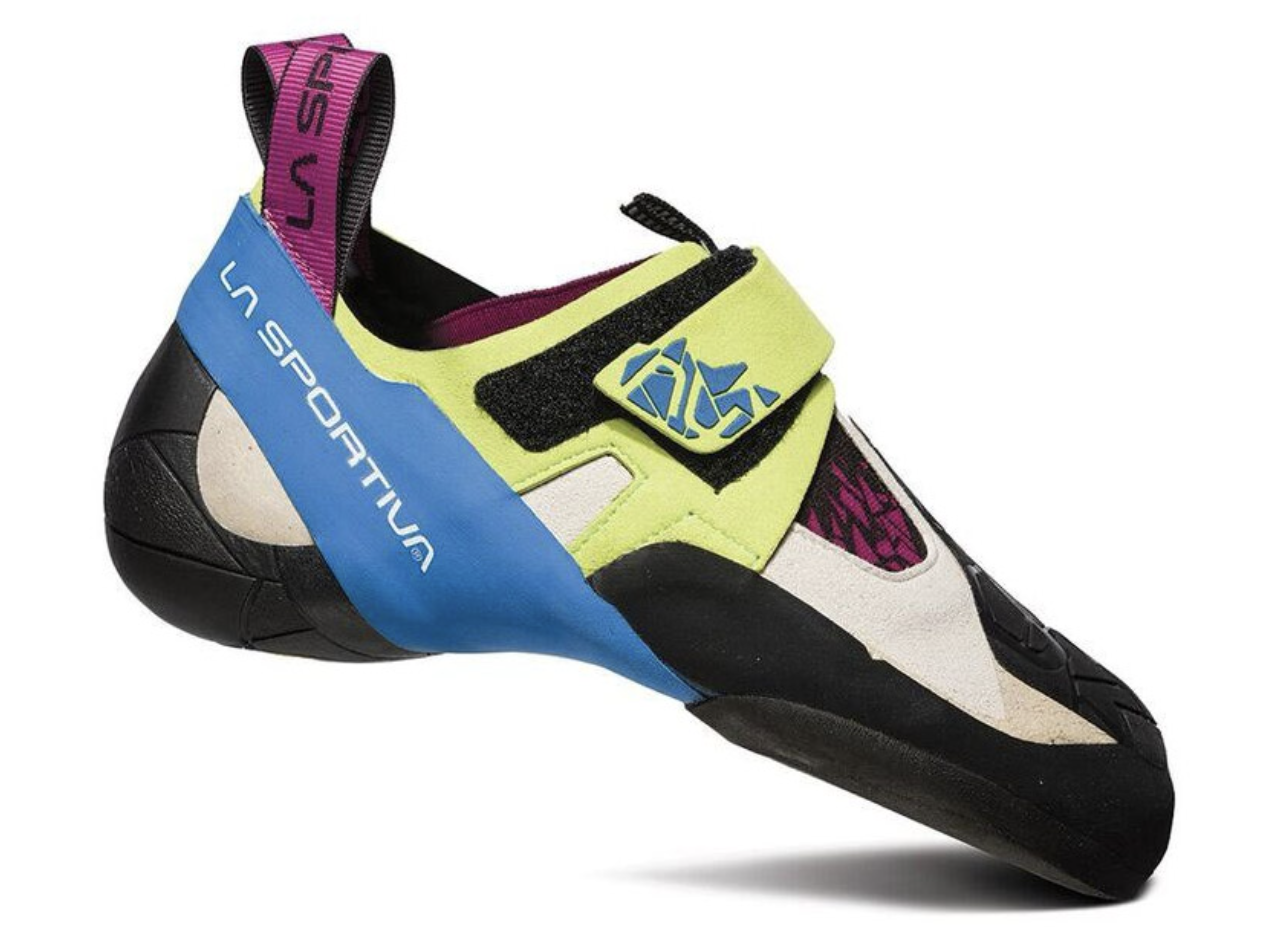
La Sportiva Women’s Katana

Specifications
Pros & Cons
Pros
- Great on a variety of rock and terrain
- Mild downturn makes it versatile for vertical and overhangs
- Edges and pulls well
- New women’s version comes with a split sole for increased sensitivity
Cons
- Must size differently for updated version
- Expensive
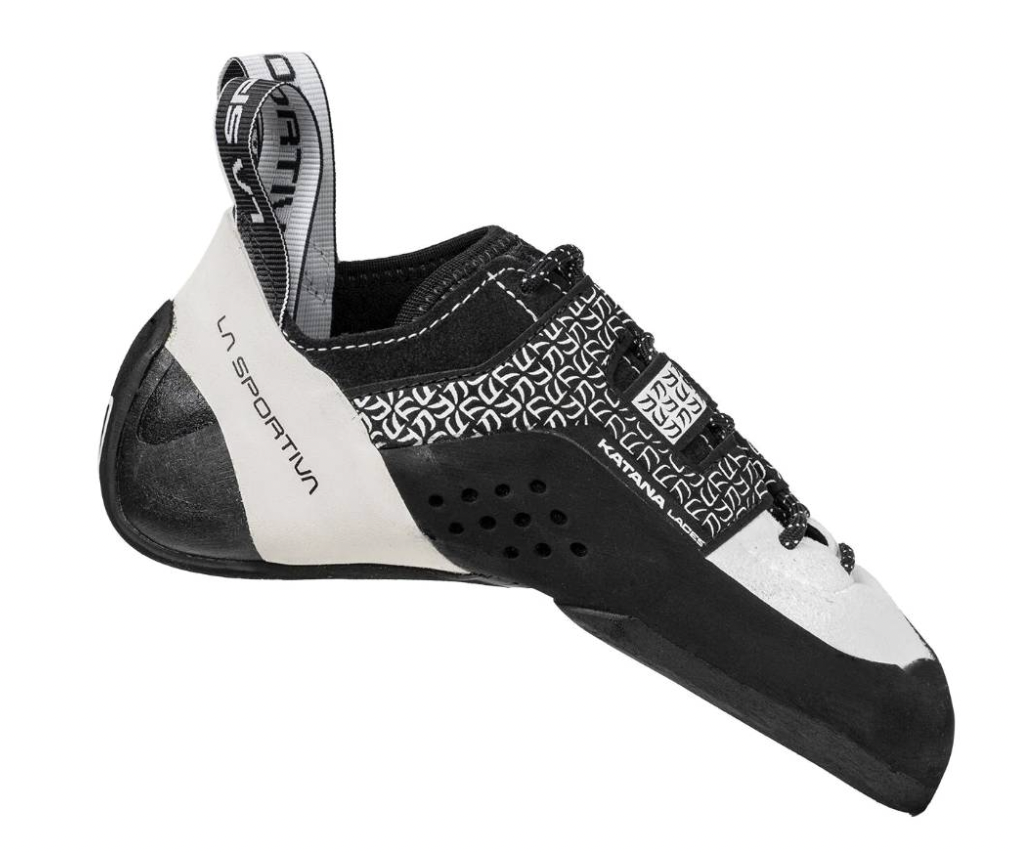
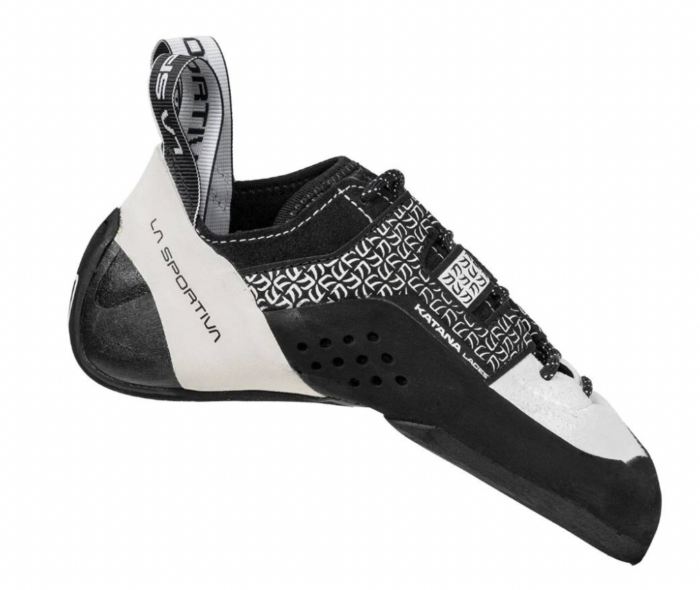
The Women’s Katana Lace from La Sportiva ($219) is one of the best all-around, high-performing shoes on the market. The Katana has been a beloved shoe by many for years, and La Sportiva just came out with an updated version in 2022 with slight improvements to key elements of the shoe.
The Katana is a mildly downturned, stiff shoe known for its precise edging and pocket performance while also being soft enough to smear on small granite footholds and twist into cracks. The updated model has a reconstructed heel cup, with a thinner strip of rubber that hugs the Achilles, as well as rubber on the sides of the heel for better sensitivity and performance, and now comes in both a men’s and women’s version.
The toe box is noticeably longer and thinner, which improves its crack-climbing capabilities but messes with its sizing. This version seems to run half a size larger than the previous model, which is something you’ll want to account for before purchasing.
Like the award-winning La Sportiva TC Pro, the Katana Lace is constructed with 4mm Vibram XS Edge rubber. This contributes to the overall stiffness of the shoe, making it a high-performing, edging machine.
This shoe might not be the best for beginner climbers, however, as it has a very high price tag, and has performance qualities that are better suited for the intermediate to advanced climber. The Katana Lace performs exceptionally on all but steeper terrain, where you would want a more aggressively downturned shoe to better pull on holds.
Read Review: The La Sportiva Women’s Katana Lace
La Sportiva Finale
Specifications
Pros & Cons
Pros
- Inexpensive
- Stiff Vibram rubber gives it support and edging capabilities
- Great for beginner and intermediate climbers
Cons
- Soft leather upper can be susceptible to wear
- Not a sensitive shoe, which may make it less applicable to modern climbing gyms
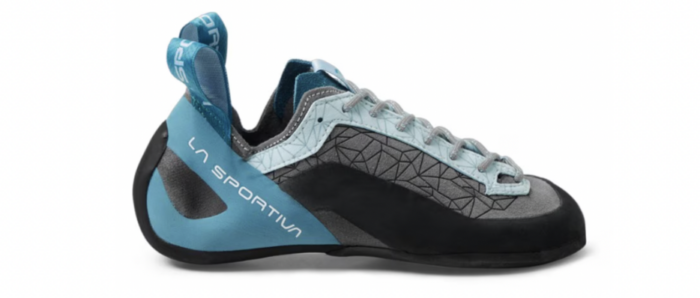
An entry-level shoe seen on beginners and intermediate climbers alike, the La Sportiva Finale ($130) is not only an amazing bang for your buck but an extremely well-made shoe for all-day climbing from gym to crag.
Designed with comfort in mind, the soft, unlined leather upper does a good job molding to the contours of your foot. Introductory climbers don’t require the vice-like fit of super downturned, high-performance shoes, and the Finales are made to be comfortable and perform well on a variety of terrain, from edges to pockets and cracks.
Tensioned rands and a slightly downturned shape make this shoe worlds better than the floppy rental shoes you get at your local climbing gym, and 5mm Vibram XS EDGE rubber allows you to toe into small footholds with a decent amount of support underfoot. Because the rubber is so stiff, it’s not the most sensitive shoe. But having that support means your feet won’t get tired after a long day of climbing, and the rubber will last longer than the thinner stuff found on more expensive shoes.
Our lead tester, Miya Tsudome, once climbed quite frequently in the Finale s, taking them from the granite cracks and slabs of Yosemite Valley, to the big holds and edges of the Owens River Gorge, to the vertical sandstone cracks of Indian Creek. She climbed some of her first 5.11 granite crack climbs in these shoes, attesting to their capabilities beyond just the beginner level.
She did notice that over time the soft leather upper started to get worn down, especially in the area around the pinky toe, which is frequently twisted into cracks. If you plan on primarily crack climbing, we recommend the La Sportiva TC Pro for its higher rand and better crack climbing capabilities, though its price point is much higher.
Another thing worth mentioning is that as modern climbing gyms move away from old-school hard edging and crimping and into more volume and big hold climbing, a more sensitive shoe like the La Sportiva Solution is going to be a better choice if you are primarily a gym climber.
Overall, the Finale is a great, stiff, beginner shoe that could last you well into your intermediate years of climbing, and only gets better with time as La Sportiva updates it with more eco-friendly production means, giving it high points in our book.
SCARPA Instinct VS
Specifications
Pros & Cons
Pros
- Slipper-like fit
- Moderately downturned, asymmetric shape great for bouldering or steep sport climbing
- Rubber toe patch for toe hooking power and protection
- Low-volume heel hook for better fit and sensitivity
Cons
- Wider toebox may fit some better than La Sportiva models
- Not a great all-around shoe due to aggressive shape and fit
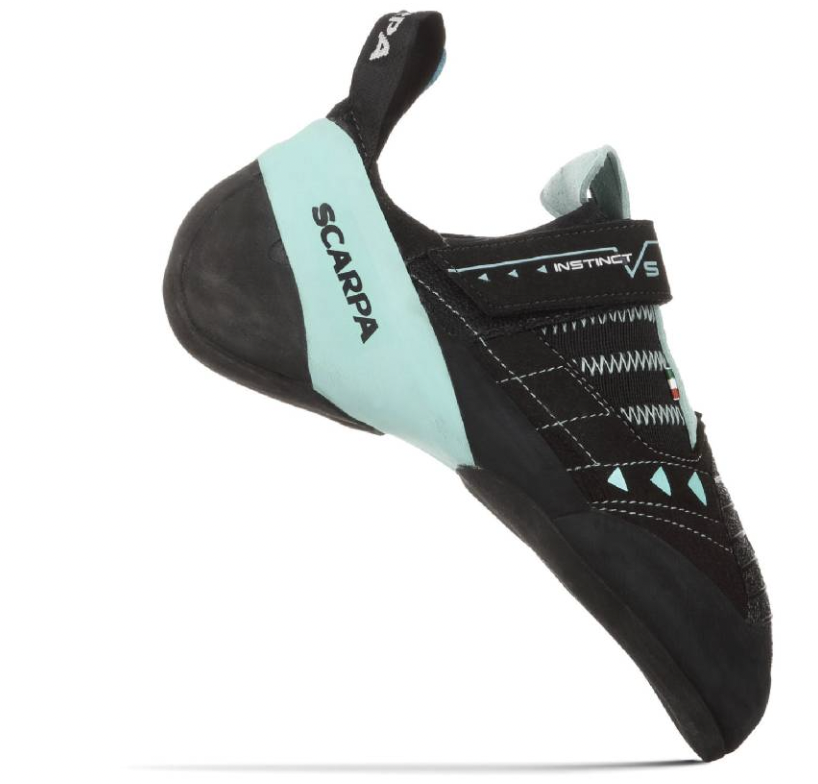
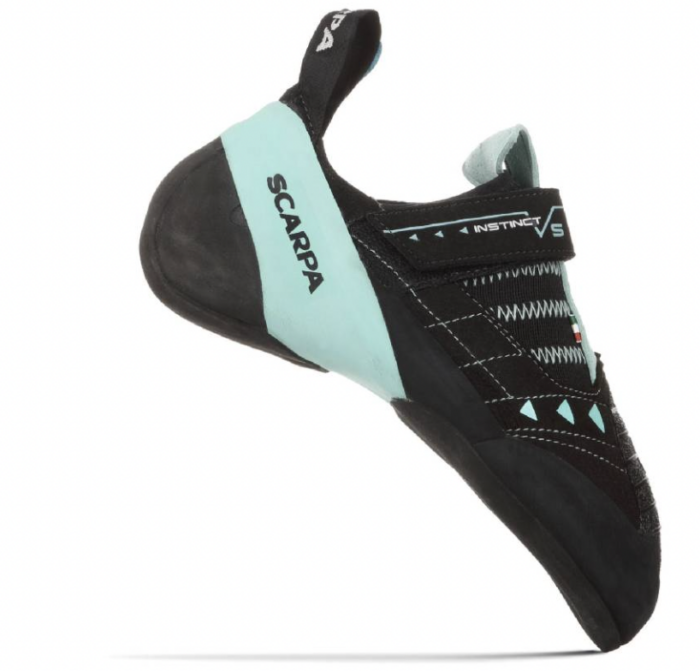
There are a lot of great things we could say about the SCARPA Instinct VS ($209). First, they are the most comfortable aggressive shoes right out of the box one of our testers has ever climbed in. A very low-profile shoe, the Instincts feel a lot less bulky than some of the other La Sportiva models we’ve tested. And with a slightly wider toebox than the general La Sportiva design, these could be a great fit for those who don’t have the narrowest of feet.
Made with XS Grip 2 rubber, which strikes a good balance between stiffness and sensitivity, the Instincts are fantastic for toeing into limestone pockets and edging into small footholds. And where the Instincts really shine is in their heel cup — the SCARPA design sports much less rubber than La Sportiva shoes, fitting snugly around your heel so you can really feel the rock underneath and power through on those important moves.
Rubber completely encases the front toebox, allowing you to pull into toe hooks with confidence. These features combined make this our top pick for a bouldering and sport-climbing shoe where the terrain is steep and precision is paramount. Though for really steep or pocket-y terrain, you might want to check out the La Sportiva Solution which is more downturned and therefore has more pulling power.
Because of the downturn shape, we don’t recommend the Instincts for slabby terrain. They also seem to fit the best when they are sized tightly, so that all the air is sucked out of the shoe for a slipper-like fit, making them not a top contender for multipitch or trad climbing. But for those who spend a lot of time pulling hard on small rocks or sport climbing on gently overhanging to steep terrain, these shoes are superb performers.
La Sportiva TC Pro
Specifications
Pros & Cons
Pros
- Versatile (with a strong preference for granite trad climbing)
- Supportive
- Durable
Cons
- A bit heavy and clunky
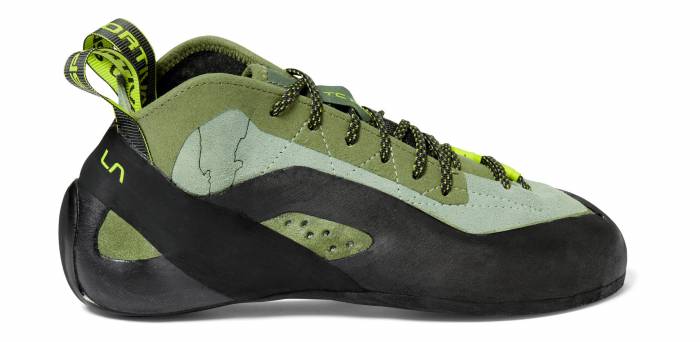
The La Sportiva TC Pro ($219) has been the trad climber’s shoe of choice for over a decade now, and that hasn’t changed. Though not a women’s-specific model, we have to give a nod to this versatile shoe that seems to fit a lot of the climbing population.
An updated model released in 2021 makes great improvements to the tried-and-true classic. It has a continuous rand that is less prone to delamination, a wider tongue that is less prone to rolling, as well as a small plastic shoelace protector on the inside of the shoe to help resist abrasion from cracks.
This stiff shoe is made with 4 mm of Vibram XS Edge rubber, which lets you stand on the tiniest dime edges on vertical terrain. Its flat sole allows for all-day comfort on long routes and in cracks. Being so stiff, it has a tendency to feel “clunky” on your feet, especially if you are used to wearing softer, more sensitive shoes like many of the other models in our lineup.
You won’t be able to “feel” footholds underneath your toes as much as with the La Sportiva Skwama, per se, but the stiffness is what makes the TC Pro so reliable at standing on tiny edges. This is also another expensive shoe, and beginners might want to start off with a more versatile, less pricey shoe to take them from the gym to the crag. But if you’re looking for the highest-performing shoe for granite climbing, it doesn’t get better than the TC Pro.
La Sportiva Women’s Skwama
Specifications
Pros & Cons
Pros
- Sensitive and aggressive for harder climbing
- Very comfortable slipper design
- S-Heel construction for superior heel hooking
Cons
- Not good for all-day vertical edging
- Leather upper stretches over time
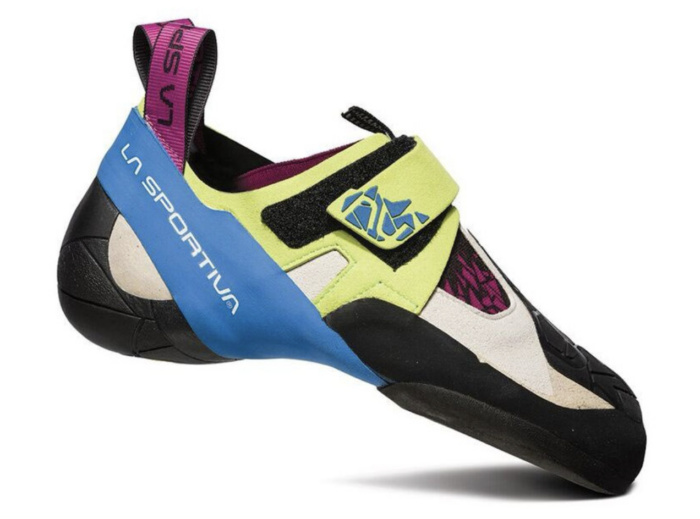
The La Sportiva Women’s Skwama ($199) pairs the sensitivity and flexibility of a slipper with the downturned action of a much more aggressive shoe. These excellent shoes are high performers on boulders and sport routes and work just as well in cracks with their low-profile build.
Their sensitivity makes these shoes shine, as they flex and press on the smallest footholds on everything but the most vertical terrain. Their patented S-heel construction ensures secure heel hooking action, and their Velcro enclosures allow for easy on-and-off at the boulders or crag. We loved these shoes on all types of rock and terrain, from overhanging slabby granite crags to sandstone cracks and boulders to pocketed limestone.
While these shoes excel at climbing pockets, toeing into finger cracks, and smearing on granite slabs, they fall short when real vertical edging comes into play. The softness that makes these slippers so comfortable and shine in other ways doesn’t make for the best shoe for serious face climbing — you’d want to opt for a stiffer shoe like the La Sportiva Women’s Miura VS with better edging capabilities if that’s your primary type of climbing.
With that said, the Skwama is so good at every other style of climbing, which makes it one of our favorite women’s climbing shoes.
Other Climbing Shoes We Trust
Specifications
Pros & Cons
Pros
- Very close fit and comfortable inner materials
- Low-volume, sensitive heel
- Good shoe for big edges, crack climbing, and gym climbing
Cons
- Very soft
- Slightly lower performance compared to other slippers
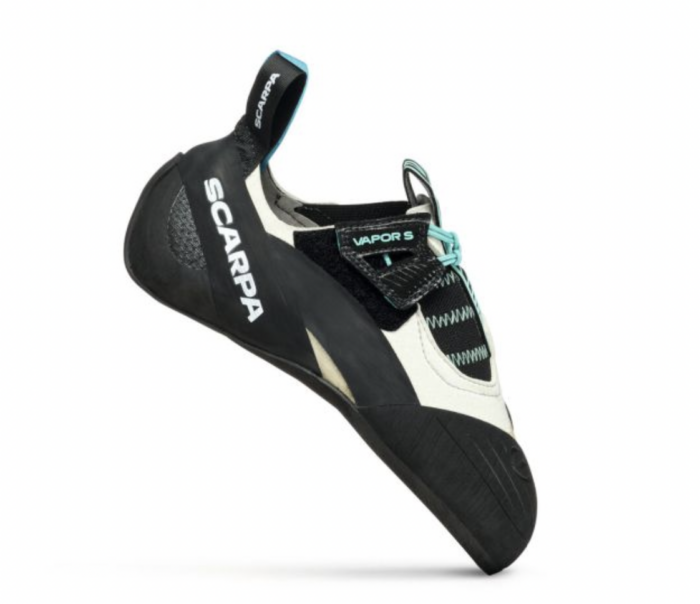
The SCARPA Vapor S ($199) is SCARPA’s version of a high-performance climbing slipper and the newest addition to the Vapor family. Slippers are all the rage these days, as their sensitivity and Cinderella-like fit allow you to do everything from toeing into granite cracks to smearing on comp-style volumes.
Our lead tester, Miya, has always been partial to the fit of SCARPA climbing shoes, and the Vapor S is no different. The inside material of this synthetic shoe is unbelievably soft against your skin, and the fit is so snug that you can hear the air being sucked out of the shoe as you pull the heel on.
The heels on SCARPA shoes are low-volume compared to those from La Sportiva and, therefore, more sensitive, giving shoes like the Vapor S excellent heel hooking capabilities. The shoe is fastened by a Velcro strap that can be customized in three different ways for slightly different fits.
3.5mm Vibram XS Grip rubber, plus a 1.0mm Talon midsole make this a very soft and sensitive shoe, as most slippers tend to be. We tested the Vapor S on small edges on slightly overhanging rock in Pine Creek Canyon, in Bishop, California, and on granite cracks and slabs of Tioga Cliff in Lee Vining Canyon, California.
We appreciated the sensitivity of this shoe, and it excelled when twisting its asymmetrical profile into granite cracks. However, it is a much softer shoe than we expected, and this was noticeable on slabs where there was a lack of support under the midsole for gripping tiny edges and smearing for long pitches.
We would not recommend this shoe for vertical edging, which requires more stiffness and support, but it is a good choice for climbing on bigger edges, smearing on volumes in the gym, and for use in cracks.
In the end, we still prefer the La Sportiva Skwama as our slipper of choice, due to its slightly more supportive performance, precision of the forefoot, and amazing versatility on all different rock types. But the Vapor S is still a great choice, as it has an overall better heel and a more comfortable, close-to-skin fit.
Specifications
Pros & Cons
Pros
- Awesome high-arch support
- Aggressive shoe for bouldering and steep sport climbing
- High-performance shoe
Cons
- Velcro closure is long for narrow feet
- Not comfortable for all-day use
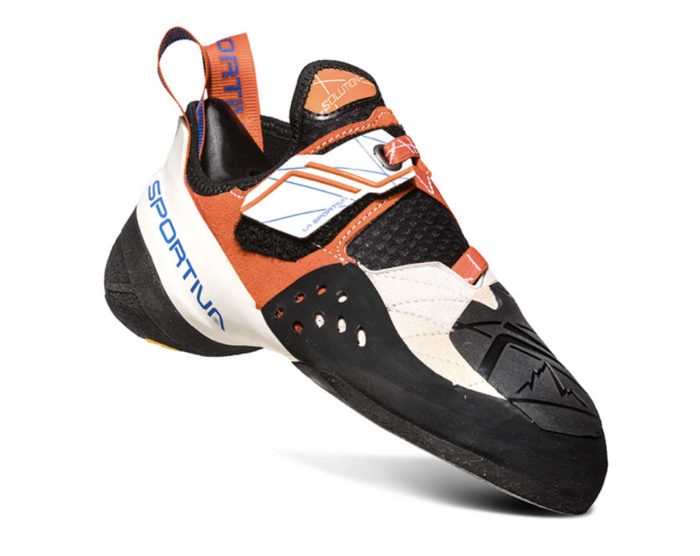
The La Sportiva Solution ($199) is an aggressive performance shoe best suited for sport climbing and bouldering. With a drastically downturned arch, pointy rubber toes, and a P3 power platform randing system, these shoes are powerful tools to help you send your next project.
High asymmetry in the design allows you to focus power over your front toes, for precise placement on dime-sized footholds and credit card edges. The tongue is part of a harness system that surrounds your foot and binds to the upper for a slipper-like fit, and a single Velcro strap allows you to quickly get up and go.
Their arched profile allows you to pull in with your toes, and plenty of rubber on the toe box and the heel allows you to show off your footwork technique at the boulders. Because of their intense downturn, these aren’t our top pick for crack climbing, and we definitely don’t recommend them for long multipitch routes where comfort is paramount. The heel cup is also constructed with a lot of rubber, which makes it feel bulbous and insensitive. We much prefer the heel cup of the SCARPA Instinct VS, which is far less bulky and overall more sensitive for a more confidence-inspiring performance.
Overall, the Solution isn’t the most versatile shoe, and it’s not our favorite for bouldering because of its bulbous heel. But it’s still a very well-adored, aggressive classic.
Specifications
Pros & Cons
Pros
- Nice intermediary choice for progressing climbers
- Excellent breathability
- Moderately downturned for versatility
Cons
- Squarish
- Slimmer toebox is not super-conducive for edging power
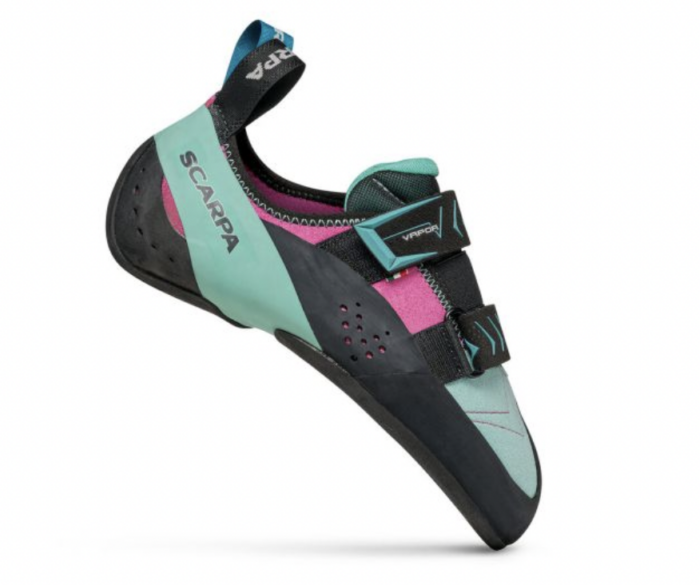
The SCARPA Vapor V ($199) is another great all-arounder, but it doesn’t shine in any category in particular for us to call it a top pick. With Vibram XS Edge rubber, this moderately stiff shoe does well edging onto small footholds or toeing into pockets. The bi-tension rand provides good tension throughout the shoe, making it perform well and remain comfortable at the same time.
A split sole even allows this shoe to smear fairly well, and the heel cup is another great example of a sensitive, well-fitting SCARPA design.
“The edging and precision were tricky for small pockets because of the toebox shape, but the flexibility is amazing,” added the tester.
This is a great step up from the flatter-profiled shoes at the beginning of this review, as the Vapor V is moderately downturned but not aggressively so. This allows for more versatility on varying rock types and terrain. They may not win a specific category, but they’re a decent choice if you want something that’s a good transition shoe from beginner to intermediate.
Specifications
Pros & Cons
Pros
- Edging and pocket-pulling machines
- Very stiff
- Asymmetric build
Cons
- Not good for slab or crack climbing
- Can be a slightly painful shoe, allow for some time to break in
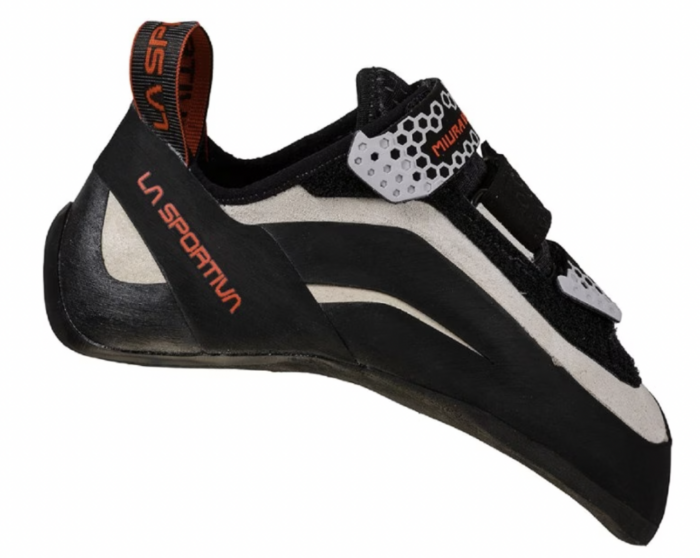
The La Sportiva Women’s Miura VS ($199) are pocket-climbing, vertical-edging machines. The stiffness of this shoe allows for precision on technical granite face climbs in California, to the long limestone sport routes of Mexico.
Built for pushing on micro edges and small pockets, your confidence on thin routes will surely improve with the Miura VS.
The downturned shape of this shoe makes it excel in steep climbing as well. This is a highly asymmetrical model, which combined with its downturn, provides tension throughout the shoe and places the toebox directly over your big toe for top-notch pulling and pushing power. These shoes are workhorses for vertical faces as well as steep boulders and routes.
Sizing can be a little trick, as stiff shoes tend to be less forgiving and take longer to break in. One of our testers prefers to size these a half size up from her normal size. This makes the Muiras just comfy enough for crack climbing and long days on the big granite, while still being able to take advantage of their edging power. Because they are more limited in their climbing applications, by being specifically edging machines, they didn’t land in our top picks but that doesn’t mean they aren’t some of the best shoes out there at what they do.
Specifications
Pros & Cons
Pros
- Competitive price
- Great shoe for beginners
- Flat and comfortable
Cons
- Missing top-notch rubber, so indoor climbing gets slick
- Climbers may want a higher-performing shoe after some time
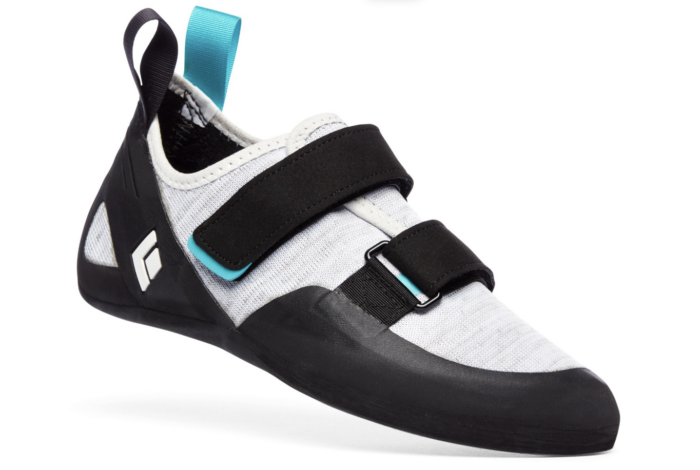
The Black Diamond Momentum ($100) is an incredibly affordable choice for the beginner climber. With climbing shoes getting more and more expensive by the year, it’s nice to see Black Diamond help break down the barrier to entry with a more cost-effective model.
This shoe doesn’t stand out performance-wise in any way, but that doesn’t mean it can’t do an excellent job for the gym-goer to casual outdoor cragging enthusiast alike. gets a thumbs-up for breathability. Its synthetic knit upper provides great airflow. And the shoe’s ability to flex and mold to the foot makes for a comfortable fit. And its flat profile makes it great for all-day climbing, as more downturned shoes tend to be uncomfortable for long periods.
Comparison Chart
| Climbing Shoes | Price | Closure | Weight | Upper Material | Rubber Type |
| La Sportiva Katana | $219 | Laces | 15.2 oz. (pair) | Microfiber/leather | Half-sole 4mm Vibram XS Edge Rubber |
| La Sportiva Finale | $130 | Lace | 15.6 oz. (pair) | Leather/microfiber | 5mm Vibram XS EDGE rubber |
| SCARPA Instinct VS | $209 | Velcro | 14.2 oz. (pair) | Microsuede and leather | Vibram XS Grip2 |
| La Sportiva Women’s Skwama | $199 | Velcro | 12 oz. (pair) | Leather/microfiber/rubber toe cap | 4mm Vibram XS Grip2 |
| La Sportiva Solution | $199 | Velcro | 17 oz. (pair) | Leather/Lorica | 4mm Vibram XS Grip |
| SCARPA Vapor S Women’s | $199 | Velcro | 14.2 oz. (pair) | Synthetic | Vibram XS Grip |
| La Sportiva TC Pro | $219 | Lace | 1 lb., 1 oz. (pair) | ECO leather/microfiber | 4mm Vibram XS Edge |
| SCARPA Vapor V | $199 | Velcro | 14.8 oz. (pair) | Microsuede and leather | Vibram XS Grip2 |
| La Sportiva Women’s Miura VS | $199 | Velcro | 16 oz. (pair) | Leather | 4mm Vibram XS Grip2 |
| Black Diamond Momentum | $100 | Velcro | 13.2 oz. (pair) | Synthetic knit | 4.3mm rubber |

How We Tested Women’s Climbing Shoes
Our Expert Testers
Miya Tsudome is one of the primary gear testers of this review. An avid rock climber of over ten years and experienced gear reviewer of over five, she brings her expertise in evaluating gear to bring you this comprehensive review of the best women’s climbing shoes.
Miya has climbed El Capitan in Yosemite Valley, and has sport climbed in far-flung destinations like Greece, Mexico, and Spain. She is also a former rock climbing guide for the Yosemite Mountaineering School, putting in many long days of climbing on glacier-polished granite walls.
Whether she’s standing on tiny granite pebbles, shoving her feet into splitter sandstone cracks, or heel hooking on volcanic tuff, she knows how much a good climbing shoe is vital for success. She’s also tested categories such as women’s climbing harnesses and climbing ropes, so you know she really knows her stuff.
Years of climbing on different terrain and in different disciplines have guided her to know what she is looking for in her climbing shoes, and she hopes to bring an objective view to the strengths and weaknesses of popular shoes for women today.
Our Testing Grounds
Living in Bishop, Calif., on the flanks of the Sierra Nevada mountains, Miya spends all of her free time climbing rocks, whether single-pitch sport climbing, multi-pitch alpine climbing, or sunny days out bouldering. She spent a month with several of the models in our lineup, taking them out for multiple, 6+ hour climbing days where she put them up to the test.
Miya went sport climbing in Bishop’s Owen’s River Gorge and Lee Vining’s Tioga Cliff, trad climbing in Yosemite Valley, multipitch alpine climbing in the High Sierra mountains, and bouldering in Utah’s Joe’s Valley. She feels lucky to live somewhere where she has so much amazing access and can really put climbing shoes through the wringer. It’s important to test climbing shoes on different types of rock and on different styles of climbing, and she did it all to bring you the best review possible.
Our Testing Process
Miya and the other testers on this guide spent weeks assessing the shape, fit, lacing systems, softness vs. stiffness, and strengths and weaknesses in performance to help you make the most informed decision for your next climbing shoe purchase. It’s crucial to test climbing gear in real-world scenarios, so we took each shoe out on our climbing days over the course of a month to test their capabilities.
It’s crucial to get the fit of your climbing shoes correct, and this will vary from person to person. We tested the fit of each model by purchasing our preferred performance size, which, for Miya, is 1.5 sizes down from her street shoe size. Fit also varies from brand to brand, so we made sure to note this in each of our reviews.
We examined the soles of each shoe to evaluate their softness vs. stiffness and noted what type of rubber was used and how many millimeters thick the rubber was. We tested the performance of each shoe by climbing on multiple different rock types and angles and noting how well they toed in on small holds or edged on tiny crimps, and which discipline of climbing they felt like they excelled the most in.
GearJunkie has been testing women’s climbing shoes since 2021 and stays as current as possible on all the new models hitting the market today.
Buyer’s Guide: How to Choose Women’s Climbing Shoes
Identify Your Climbing Style
“To choose a rock climbing shoe, analyze the terrain where you’ll take the shoes and determine where you’ll be doing 70-80% of your climbing. Then dial in the right fit,” said Stefanie Kamm, athlete manager and digital marketing coordinator for SCARPA North America.
Kamm started climbing in 2012 and climbs weekly in Boulder Canyon, Colo. So, she knows a thing or two.
One of our testers, Miya Tsudome, a former rock climbing guide in Yosemite National Park who has been climbing for 8 years, also has some advice to give:
“It’s nice to have a shoe that can do it all, but more often than not us rock climbers will have many different types in our quiver. If you like to boulder and climb overhanging sport routes sometimes, it will benefit you greatly to have a more aggressive shoe.

“If at other times you like to do long multipitches or go crack climbing, you’ll want a more comfortable pair. If you’re serious about climbing, don’t be afraid to buy a few to round out your arsenal.”
Shoe Shape & Fit
The shape, or last, of a climbing shoe greatly determines its purpose. In general, bouldering, overhanging, or vertical single-pitch routes need shoes with a tight, performance-type fit, also known as aggressive, down-cambered, downturned, or slightly downturned. The La Sportiva Skwama, La Sportiva Solution, and SCARPA Instinct VS are good examples of aggressive shoes.
A flatter last, like in the La Sportiva TC Pro, or La Sportiva Finale, might be more comfortable for multipitch and low-angle, sub-vertical climbs. Commonly, rock climbing guides and new climbers choose a flatter shoe for all-day comfort. As you progress or are drawn to harder styles of climbing, you may look to upgrade to a more aggressive model.
Shoe softness refers to the pliability of the rubber in the outsole, which increases sensitivity, or a climber’s ability to feel the rock features. The slipper-like La Sportiva Skwama is a good example of a sensitive shoe.
Comparatively, harder rubber provides more foot support and can be better when you need to stand on very small footholds on vertical terrain. The stiff La Sportiva Miura VS shoes are the wizards of this style of climbing.
A good fit is greatly determined by foot compatibility with that last shape and the shoe size. This is also a subjective measure, as everyone has a different foot shape. Make sure there are no air pockets around the foot or heel. Toes will curl under in a downturned shoe compared to a flat shoe.

Most people also size down from their street shoe size. If you haven’t done so before, try sizing down in half-size increments and see how that feels.
Your toes should always curl slightly, and your shoes should always feel tight for the best performance. If you prioritize all-day comfort, find a flat shoe where your toes barely curl.
Whether you choose a Velcro or lace closure system will alter the feel and fit, so try out both. Lace closure systems are typically more adjustable, while Velcro systems make it easier to take your shoes on and off. Also, a shoe’s materials affect the fit over time, as shoes with a leather upper will stretch while synthetic uppers will not.
Leather vs. Synthetic
Leather uppers are generally more durable than synthetic uppers. If you’re mostly trad climbing or spend a lot of time with your toes jammed in cracks, leather is the way to go. However, sizing can be tricky, as leather uppers stretch over time. Synthetic uppers stretch much less, and the fit you get out of the box is pretty much the fit you can expect for the life of the shoe.
Vegan footwear addresses leather uppers and footbeds. Some brands, like Evolv, are known for their vegan products.
When trying on shoes with leather uppers, be aware that they can stretch over time, sometimes up to a half-size larger. This is important when considering what size to buy, and sometimes it will benefit you to buy a size that feels a bit too tight, knowing they will stretch in the future.
Women’s-Specific Shoes
Overall, women’s-specific models have a lower-volume heel, narrower last, and softer or thinner rubber for easier flex and more sensitivity. We encourage you to try on a ton of shoes to find the foot mold that fits your foot the best.
Be open to wearing any shoe regardless of gender. Men with a lower-volume heel often prefer the women’s version. Women’s shoes also tend to have thinner or different types of rubber so that they are more sensitive for lighter climbers.
The women’s SCARPA Instinct VS, for example, uses XS Grip 2 rubber, which is softer and stickier. The men’s version uses XS Edge rubber to accommodate the typically higher weight of the male climber with a little extra stiffness.

Velcro vs. Lace-Ups
Climbing shoes with Velcro straps are easy to take on and off, making them a good choice for bouldering, gym climbing, and single-pitch climbing. Some models, like the La Sportiva Solution, have one integrated Velcro strap that zig-zags over the tongue of the shoe and can be easily pulled tight and attached via its Velcro tab. This ensures a nice, snug fit.
Other models, like the SCARPA Force V, have two Velcro straps across the top so you can dial in the fit over two parts of your foot.
Shoes with laces, on the other hand, can be cinched tight, and those who are very concerned with having their shoes fit as perfectly as possible for high performance will opt for models with laces such as our top pick, the La Sportiva Katana.
While either type can be and is used in all different styles of climbing, each will still have certain limitations. Velcro straps can work fine for many types of cracks, but may make it harder to fit into hand cracks and larger. Modern shoes with Velcro straps allow room for rubber on top of the toebox, which will greatly aid in toe hook maneuvers.
Lace-ups will have a slimmer profile overall and may be more appropriate for crack climbing. While lace-ups ensure that you’re able to fine-tune your fit, they may not be the best for steep bouldering where the laces can get in the way of toe-hooking.
Soft vs. Stiff
Soft versus stiff shoes come into play when you’re getting serious about finding a shoe to match the terrain you’ll be climbing on — and pushing yourself to try harder grades, making this more applicable to intermediate climbers.
Our best recommendation for beginners is the La Sportiva Finale for its comfortable, flat profile and softer feel. Having a softer shoe is good if you’re just starting out because it’ll allow you to feel footholds more and learn better technique.
If you’re graduating from your beginner shoes, you’ll wonder what direction you need to go in for your next pair. The Scarpa Vapor V strikes a great balance between stiffness and sensitivity, with a moderate downturn that makes it a good all-around, nonspecialized shoe. The La Sportiva Katana could be the next upgrade after this, for its high-performance rating across a variety of terrain and stiffer construction, which allows you to learn to stand on small edges.
Soft shoes like the La Sportiva Skwama are great for steep or off-vertical terrain because, paired with their aggressive downturn, they allow you to pull in on small footholds and smear on bad feet and small cracks.
Stiff shoes, like the La Sportiva Miura VS or the La Sportiva TC Pro, are made more so for edging and climbing on small pockets. With so much stiffness throughout the shoe, you are able to more easily stand on dime-size edges than with a flexible shoe like the Skwama. This is because your whole foot is supported.
In summary, if you find yourself climbing on steeper routes or, conversely, slabby routes and cracks, a softer shoe like the Skwama would be a good match. If you’re more into vertical routes with pockets or tiny edges, a stiffer model like the Miura VS would be the shoe for you.
Price & Value
Climbing shoes can range in price from anywhere between $100 to $220. Most of the climbing shoes in our review are priced around the $200 range, which is typically what you can expect to spend for a high-quality pair of shoes these days.
Budget
The budget category for climbing shoes ranges between $100 and $130. These climbing shoes are typically reserved for beginner or casual climbers who don’t need high-performance footwear and don’t want to spend too much money on something they might only use from time to time.
The La Sportiva Finale ($130) is our favorite shoe in the budget category, because not only is it affordable, but it performs exceptionally well for such a low price point. The Black Diamond Momentum ($100) is the least expensive shoe in our lineup and is a great choice for the casual gym climber. Both of these shoes have a flat profile, aren’t the most sensitive, and lack the higher-quality rubber found in more expensive climbing shoes.
Mid-Tier
Most of the climbing shoes in our review are in this mid-tier category, which is right around $200. For this price, you’re guaranteed to get a high-quality climbing shoe that can range from an all-around workhorse to a more specified performer. The La Sportiva Women’s Skwama ($199) is one of our lead tester’s favorite shoes for its versatility in performance whether sport climbing, crack climbing, or bouldering.
The La Sportiva Solution ($199) is another popular choice for its strengths in steep sport climbing and bouldering with its ultra-downturned design and robust heel. There are so many shoes to choose from in this price category, and most every climber will find something to suit their needs without having to spend much more. Though if you want an even more specific type of shoe for a style of climbing, you can expect to pay around $20 more for a premium pair.
Premium
While there is a big jump from budget to mid-tier in terms of price and performance, there isn’t that big of a jump between mid-tier and premium. The most expensive climbing shoes on the market right now are around the $210-220 range. For some shoes, like the La Sportiva TC Pro ($219), this price increase makes sense due to there being more material for ankle protection, and perhaps the eco-leather upper is more expensive to produce.
Our top pick, the Katana Lace ($219) is also the same price but without these same characteristics. Both of these shoes are powerful edging shoes with 4mm Vibram XS EDGE rubber which could perhaps be more expensive to manufacture, justifying the higher price tag. All in all, most climbers will be happy with mid-tier priced climbing shoes, but if you are looking for more specified edging performance, you will only have to pay a little more for these premium models.
Frequently Asked Questions
The best climbing shoe is the one that fits well and supports your climbing style and goals. Some of the leading climbing shoe brands — like Tenaya, La Sportiva, and SCARPA — are generally well-regarded, but personal preference is the most important factor.
On this list, we’ve named the SCARPA Force V as our favorite beginner climbing shoe. The Force V is comfortable, durable, and adaptable to a wide variety of foot shapes and climbing styles.
For new climbers, comfort is more important than advanced features like a downturned last or a massive patch of toe rubber. The Force V is precise enough to progress in the gym or at the crag, but ultimately it was designed for comfort. With the Force V, new climbers can focus on learning the sport, improving, and having a good time.
Most climbers prefer not to wear socks with their climbing shoes. It’s generally accepted that wearing socks decreases sensitivity and reduces the effectiveness of your climbing shoes.
These days, climbing shoe companies are working hard to make thinner, more sensitive shoes, and wearing socks is often seen as a step backward.
However, when climbing in cold conditions, some climbers find a pair of socks can be an essential way to maintain warm feet. In the end, it’s all personal preference. If you like to wear socks, wear socks!
That depends. Many advanced shoes are designed to be worn with the toes curled to maximize precision and toe power.
When the toes are slightly curled, many climbers find it easier to transfer power to the point of the shoe and stand comfortably on tiny footholds. This is especially important in shoes that are both stiff and aggressive.
However, curled toes are not comfortable, and such an aggressive fit is unnecessary for many climbers. For all-day comfort in the gym or on multipitch routes, a roomier fit is probably the way to go. Beginning climbers should prioritize comfort above all else.