After field testing this winter, the Ridge Infinity 2.0 felt less like a gamble and more like a valid alternative. After multiple days skiing variable Colorado resort conditions at Vail, Arapahoe Basin, and Breckenridge — from dry powder to wind-affected storms to soggy spring sleet — it proved that Helly Hansen’s in-house waterproofing tech can compete.
Like most high-end ski jackets, the initial impression is one of burly protection. But after a handful of days, the novelty fades and what matters is consistency.
Does it keep you dry, block wind, and hold up to abuse? In my analysis, the Ridge Infinity 2.0 answered “yes” across the board — albeit with a slightly different feel and personality than other options from Helly Hansen and its rivals.
In short: The Helly Hansen Ridge Infinity 2.0 ($725) is a durable, freeride-fit shell for skiers that prioritizes weather protection and long-term reliability over weight savings and minimalism. It’s not the lightest or most breathable option, but for skiers who want a tough, storm-ready all-mountain ski jacket without quite paying top-tier GORE-TEX Pro prices, it’s a compelling alternative.
Scope out how this ski jacket stacks up to our other top picks in The Best Ski Jackets buyer’s guide.
Specifications
Pros & Cons
Pros
- Top-tier weather protection
- Durable, resort-ready construction
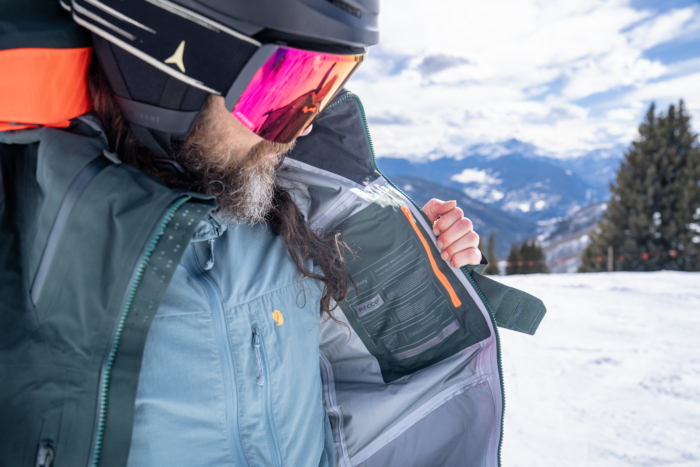
- Ski-specific features, including a unique phone leash system
Cons
- Heavier and less packable than touring-oriented shells
- Bold styling won’t appeal to everyone
Helly Hansen Ridge Infinity Jacket 2.0 Review

The Ridge Infinity Jacket 2.0 is Helly Hansen’s answer to the premium freeride shell category dominated by GORE-TEX PRO pieces. Instead of licensing GORE membranes, Helly Hansen uses its proprietary LIFA INFINITY construction — a waterproof-breathable system that’s positioned as a GORE-TEX Pro competitor featuring a waterproof-breathable membrane and durable water repellent coating.
Testing over multiple storm days from midwinter through steamy spring in variable Colorado conditions, the jacket resisted wetting out and maintained solid protection against snow and wind. I live and ski primarily in Colorado, where heavy rain isn’t common, but even in mixed spring precipitation, I found it performed on par with high-end shells in real-world resort conditions, even if it lacks the reputation (and perhaps the long-term durability) of GORE-TEX PRO.
Fit and Aesthetics

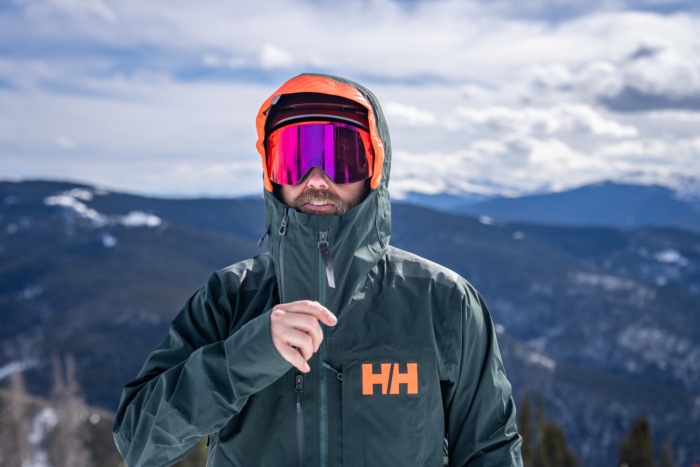
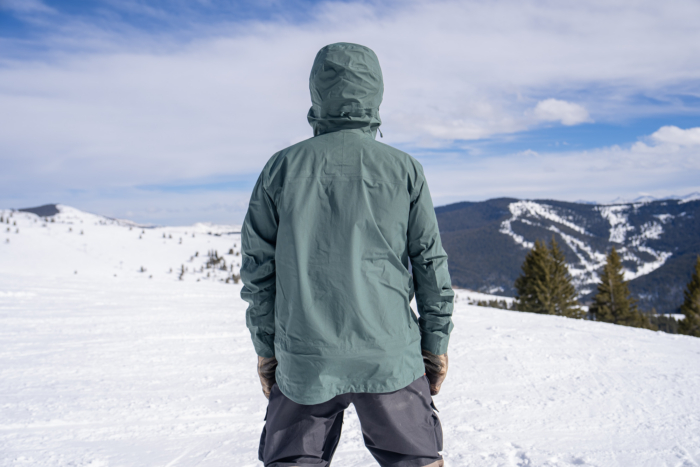
The fit lands squarely in modern freeride territory. It’s relaxed without being oversized, with enough room to layer comfortably underneath. I layered it up with everything from a light fleece to a midweight puffy layer without the fit feeling restrictive. If you like a tailored ski outerwear kit, this will feel baggy, but it’s not teenager baggy.
Despite the lack of stretch fabric in this type of shell, mobility is solid. Articulated sleeves and a well-executed cut, reportedly refined with input from pro skiers, help the jacket move naturally on the hill.
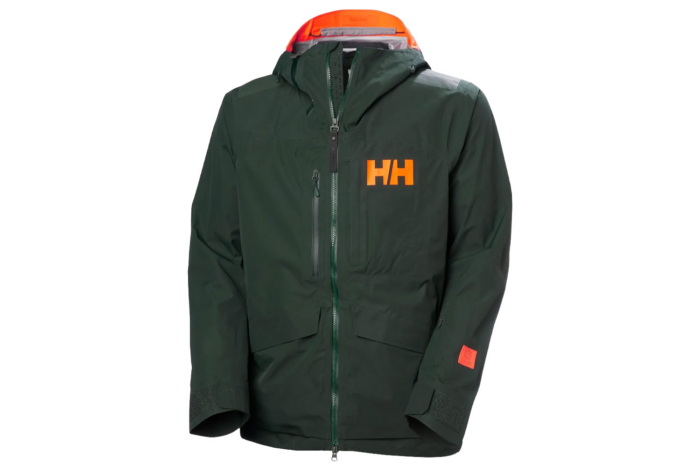
Visually, the Ridge Infinity 2.0 stands out. Fluorescent orange accents on the hood, logo, and Ullr wrist patch give it a distinctive look that’s easy to spot on the mountain. It’s functional and bold, though not everyone will appreciate the high-visibility styling.
Weather Protection

The LIFA INFINITY membrane is the defining feature, and it delivers strong protection against the elements. The jacket is fully windproof and reliably waterproof, with performance that held up through repeated use without any noticeable degradation over a few months of testing.
Helly Hansen has a ton of trademarked names for their fabric tech, so it’s worth noting that this is LIFA INFINITY, not LIFA INFINITY PRO. The PRO instantiation uses a DWR-free water-repellent fabric that doesn’t require reapplication, as all modern chemical DWRs do. (For a Helly Hansen ski jacket with that LIFA INFINITY PRO tech, check out the Helly Hansen Odin Mountain Infinity 3L Shell.)
The Ridge Infinity (with LIFA INFINITY fabric) likewise uses PFC-free DWR.

Over several months and roughly a dozen ski days testing the Ridge Infinity 2.0, water continued to bead rather than wet out the thick and durable fabric, contributing to an “armor-like” feel in bad weather. But knowing modern DWR, that performance will eventually fade and require washing and reapplication with an aftermarket DWR treatment.
Compared to the GORE-TEX PRO in the Arc’teryx Rush Jacket, protection is effectively the same in most scenarios, but the feel is different. The Arc’teryx Rush is lighter and thinner but more traditionally crinkly and noisy, while the Ridge Infinity 2.0 has a softer, quieter hand feel with a thicker face fabric.
Breathability and On-Snow Performance

Like most 3-layer hardshells, breathability is solid but not exceptional. The Ridge Infinity 2.0 handles moderate activity well in cold conditions, but during higher-output bootpacks or warmer days, it can run warm. Pit zips help regulate temperature, but this isn’t a shell designed for long, sustained touring missions.
For its intended use — resort skiing and occasional sidecountry — it performs exactly as expected. It’s a jacket you wear all day when the weather is bad, not one you stuff in your pack for just-in-case scenarios.
Features and Durability

This jacket leans heavily into durability and real-world usability, perhaps a result of consulting those professional skiers for the 2.0 version. The construction feels robust across the board, from the face fabric to the beefy zippers and seams.
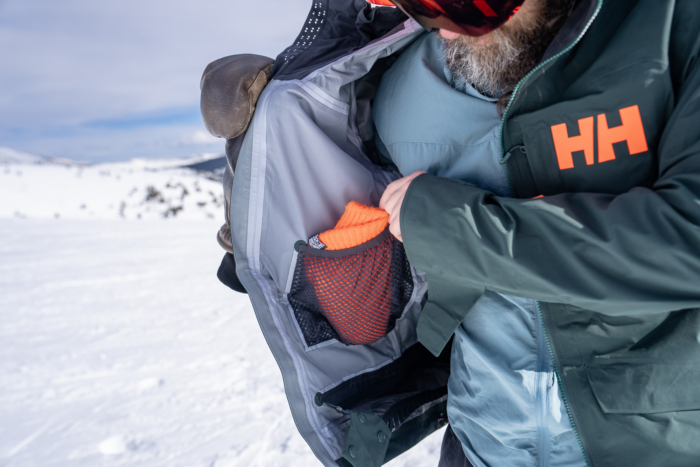
One standout feature is the integrated phone leash, a small but thoughtful addition that addresses a very real problem. I’ve dropped many a phone from an open ski jacket pocket, so I appreciated the extra security, especially when pulling out a phone on the lift or while skiing. It takes some minor effort to put the phone in the leash, but it’s far better than losing it in deep snow.
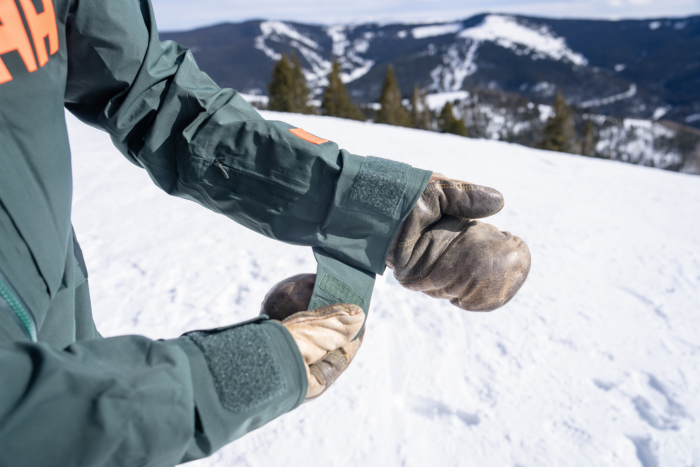
Other details, like the large, easy-to-use wrist cuffs, reinforce the jacket’s practicality. Everything feels designed with gloved hands and harsh conditions in mind.
Critiques

As much as this jacket feels like a capable GORE-TEX PRO competitor, it feels like consumers should get a bit more of a discount from those premium sticker prices. The Ridge Infinity saves you $150 from the Arc’teryx Rush, for example, but Helly Hansen’s Odin Mountain Infinity gets their latest DWR-free waterproofing tech for only $50 more. I’d like to see this tech brought into the Infinity Ridge at its current price or knock that price down a bit more.
My other main criticism might be an idiosyncratic one, but I wish the Helly branding were more subtle. If I’m paying $725 for a ski jacket, I don’t want to feel like a billboard. The fluorescent orange highlights are cool, and I actually think it’s a sign of good design that their outerwear is so recognizable and consistent in aesthetic across models. But the size of the blaze orange “HH” logo on the chest is egregious, and I often felt like I was skiing for a club wearing it.
Conclusion

The Helly Hansen Ridge Infinity Jacket 2.0 is a tough, reliable ski shell that prioritizes durability and weather protection over weight and minimalism. Its LIFA INFINITY construction proves that high-end waterproofing doesn’t have to rely on GORE-TEX, delivering strong performance for the price.
It’s heavier and less breathable than some GORE-based competitors, and its bold styling won’t be for everyone. But for skiers who spend most of their time riding lifts in challenging conditions, it offers a dependable, well-built alternative.