Not every first-aid kit needs to be expedition-ready. Sometimes, you just need an organized, affordable pack to toss in a daypack, car door, or family gear bin before heading out.
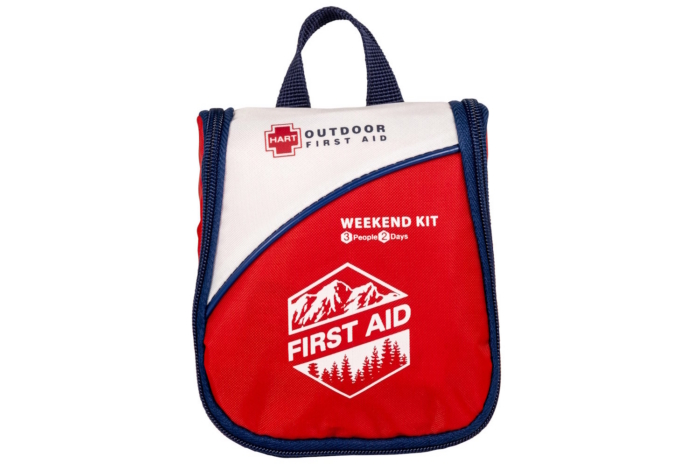
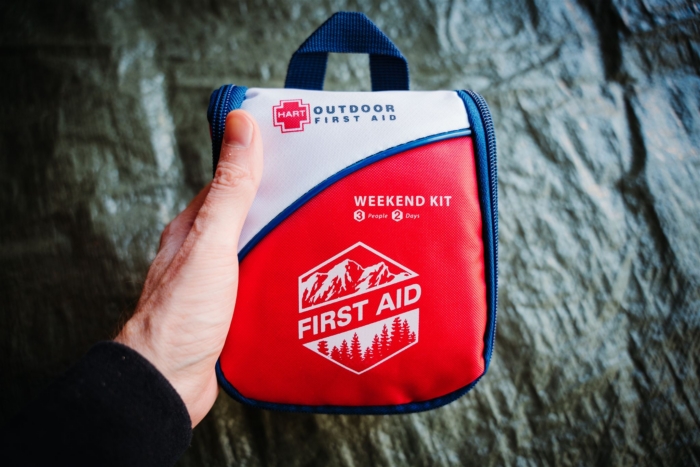
I tested the HART Outdoor Weekend First Aid Kit ($30) over several months of quick hikes, car camping weekends, and road trips to see if it could handle minor emergencies without taking up much room. I wanted to know if this budget-friendly option could compete with more expensive, outdoor-specific kits.
The issue with many entry-level kits is that they cut corners on either the supplies or the internal layout. This HART kit keeps things simple without feeling like a random bag of bandages. Designed to support up to three people for 2 days, it lacks major emergency gear and waterproof protection. However, for cuts, scrapes, blisters, and headaches, it delivers a highly functional starting point at a reasonable price.
In short: The HART Outdoor Weekend First-Aid Kit is a compact, value-packed option with a clear layout and a sensible mix of standard medical supplies. I liked it most for weekend hikes, road trips, and home-adjacent emergency prep, but its lack of waterproofing and trauma gear limits its backcountry utility. Bring something more robust for multiday trips, larger groups, or remote objectives.
Compare the HART Outdoor Weekend First-Aid Kit with others I tested in our guide to the best first-aid kits.
Specifications
Pros & Cons
Pros
- Good packable size
- Fairly lightweight
- Great organization and labeling
Cons
- Low contents of certain items
- We wish that more tape was included
HART Outdoor Weekend First-Aid Kit Review

Quality & Versatility
The HART Outdoor Weekend First-Aid Kit costs less than many premium outdoor-specific alternatives, and that’s clearly part of the design. HART created this package as a reliable, no-frills option for brief adventures and travel without adding unnecessary cost or complexity.
The supplies reflect that intent. Inside, you’ll find commonly used items like adhesive bandages, gauze, antiseptic wipes, topical ointments, and over-the-counter medications. Everything here leans toward minor injuries. Do not expect much gear for severe emergencies. For standard wound care, mild allergic reactions, stomach discomfort, and small cuts, the kit covers the common stuff incredibly well.
Its usefulness also extends beyond the trail. I found it highly functional for bike rides, RV storage, and keeping in the car trunk. It would also make sense in a stroller for trips to the neighborhood park. The pouch is small enough to move easily between bags, but organized enough that it doesn’t feel like a cheap, disposable backup.

Organization & Contents
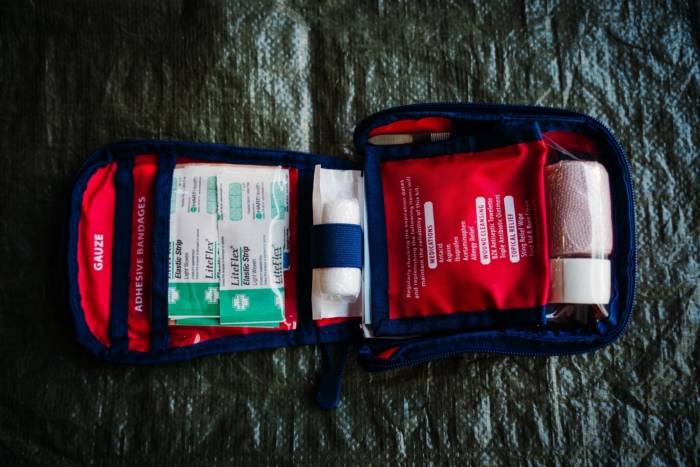
The internal layout is one of this kit’s absolute best attributes. Some entry-level first-aid kits rely on a single pouch that forces you to rummage through a jumbled mess when you need a single item. The HART kit uses clearly labeled compartments and transparent pockets, making it incredibly easy to locate supplies quickly.
That matters in stressful situations. Instead of digging through a loose pile of medication packets and ointments, you can visually identify most items at a glance. The design is significantly cleaner than expected for a $30 kit, making the contents feel much more accessible in real-world scenarios.
The assortment makes sense, but quantities are limited. If multiple people need care, or if you use the kit several times without restocking, items like tape, bandages, and ibuprofen will run low very quickly.

Full contents include:
- Adhesive Bandages: 4 butterfly closures, 3 strip bandages (3/4 x 3 in.), 4 strip bandages (1 x 3 in.), 2 fingertip bandages, 2 knuckle bandages
- Gauze Items: 1 gauze roll (2 in. x 4.1 yds.), 2 gauze pads (2 x 2 in.), 2 gauze pads (3 x 3 in.), 1 gauze sponge (4 x 4 in.), 1 non-adherent pad (3 x 4 in.), 1 ABD combine pad (5 x 9 in.)
- Medications: 2 antacid packets, 1 aspirin packet, 2 ibuprofen packets, 2 acetaminophen packets, 1 allergy relief packet
- Wound Cleansing & Topical Relief: 4 BZK antiseptic towelettes, 3 triple antibiotic ointments, 2 sting relief wipes, 1 first-aid and burn cream, 1 hydrocortisone cream
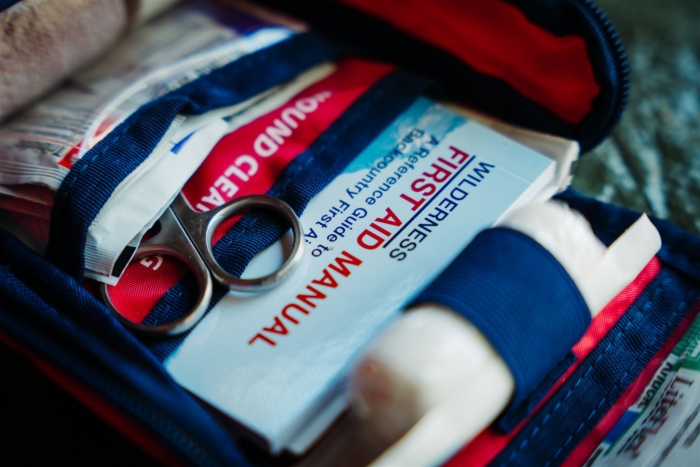
- Other Items: 1 moleskin sheet (3 x 4 in.), 1 roll of tape (1 in. x 2.5 yds.), 1 pair of scissors, 1 pair of forceps, 1 elastic bandage (2 in. x 5 yds.), 1 wilderness first-aid guide

Weight & Durability
Hitting my scale at exactly 9.5 ounces, this kit strikes an excellent balance between portability and supply volume. It’s light enough to toss into a backpack without much thought, yet it never feels under-equipped for day outings. I frequently packed it for quick overnights and felt well covered for essential medical needs.
The 6.5 x 5.5 x 2-inch case is easy to stash in a vehicle console or a cabin drawer. It features a loop to clip to the outside of a pack, though I found the size worked much better tucked inside a backpack brain.
The outer shell holds up well to typical wear and tear. It easily survived being shoved in and out of my gear bins during testing. However, the zipper is the most likely weak point. It hasn’t failed on me yet, but compared with burlier expedition kits I’ve used, it’s the component I’d watch most closely over time.

Weather Protection
The lack of weather resistance is a notable drawback. The HART Outdoor Weekend First-Aid Kit is not waterproof, leaving the contents vulnerable in wet environments.
For rainy hikes, paddling trips, or snowy conditions, you must stash it inside a dry bag or resealable plastic bag. It’s an easy workaround, but it is an extra step you don’t have to worry about with fully sealed competitors.

Room for Improvement
Despite its strengths as an inexpensive weekender, this kit has clear limits. The most glaring is the lack of advanced emergency supplies. It omits items such as a CPR face shield, dedicated splinting materials, or irrigation tools necessary in serious backcountry scenarios.
The compact case also restricts how much you can add. You can easily squeeze in personal prescriptions, extra moleskin, or a few more bandages. However, there simply isn’t room to turn this into a comprehensive backcountry medical kit without transferring everything into a larger pouch.
Additionally, as mentioned above, the lack of weather resistance means you have to be mindful of moisture management in wet conditions.

HART Outdoor Weekend First-Aid Kit: Who Is It For?
The HART Outdoor Weekend First-Aid Kit is best for people who want an affordable, highly organized medical pack for lower-risk outings. It excels during day hikes, frontcountry camping, bike rides, and home or vehicle emergency preparedness.
It is not the right choice for serious backcountry travel, large groups, or wet environments where integrated waterproofing is mandatory. For those scenarios, you will want a larger, more robust medical kit equipped with greater quantities and advanced trauma-focused supplies.