Pure merino wool apparel is luxurious, but has one annoying issue: it tends to lose its shape and wear thin faster than synthetics. Going with a 100% merino T-shirt often means trading long-term durability, and for someone who wears through active shirts like they’re going out of style, that can be a problem.
That is why finding the right fabric blend changes everything. The secret to a great daily-wear wool shirt is pairing natural fibers with just enough reinforcement to make them last. After long-term testing, I’ve found that the Ridge Merino Journey Tee nails this balance, and so much so that I’d load up on as many as your closet allows.
At the heart of the Journey Tee is Ridge Merino’s (m)Force technology, which wraps 87% merino wool around a 13% nylon core in a lightweight 145 GSM fabric. That specific ratio gives you the perfect balance of temperature regulation and the stink-fighting benefits of pure wool against your skin, while the nylon core adds serious stretch, recovery, and abrasion resistance.
I’ve worn the same Journey Tee for about three years (and just snagged another for myself). Here’s how this blend has stood the test of time and why its construction (and reasonable $65 price tag) sets it apart from the pack.
In short: The Ridge Merino Journey shirts are some fine daily-wear tees, engineered with an ideal fabric blend that’s built to last. Here’s the rundown.
Looking for a new merino wool top? Check out GearJunkie’s Best Merino Wool T-Shirts Buyer’s Guide for more of our favorites.
-

-
(Photo/Nick Belcaster)
-
(Photo/Nick Belcaster)
-
(Photo/Nick Belcaster)
-
(Photo/Nick Belcaster)
-
(Photo/Nick Belcaster)
-
(Photo/Nick Belcaster)
-
(Photo/Nick Belcaster)
-
(Photo/Nick Belcaster)
-
(Photo/Nick Belcaster)
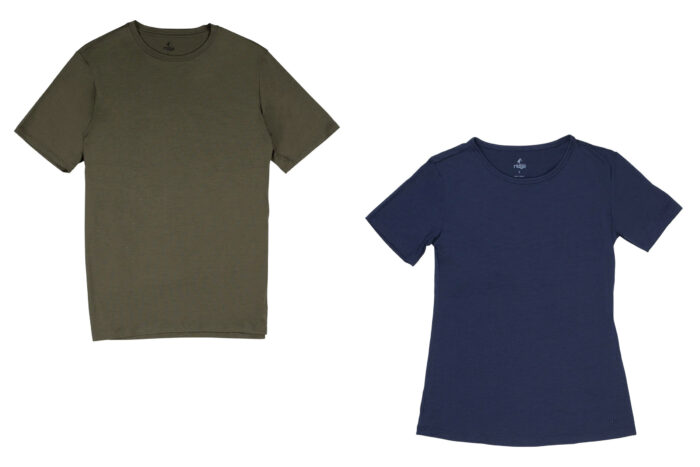




Specifications
Pros & Cons
Pros
- Cozy soft to the touch
- Generous cut
- UPF 50+ sun protection
- Added nylon weave improves durability
Cons
- Will shrink up a bit in the wash
- Sizing gives some people trouble
Ridge Merino Journey T-Shirt: Review

Next-to-Skin Comfort and Fit
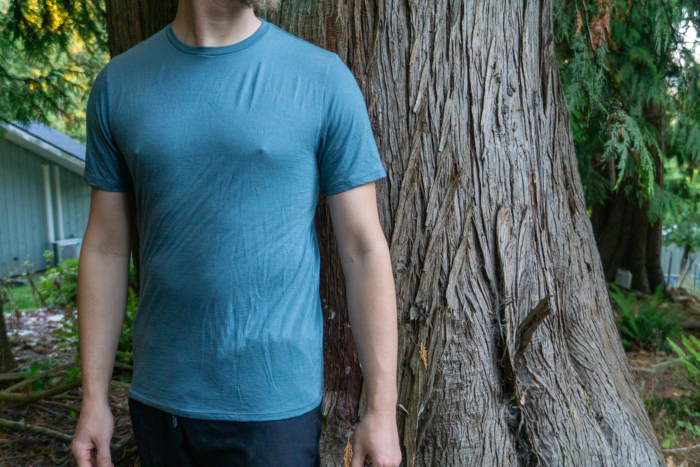
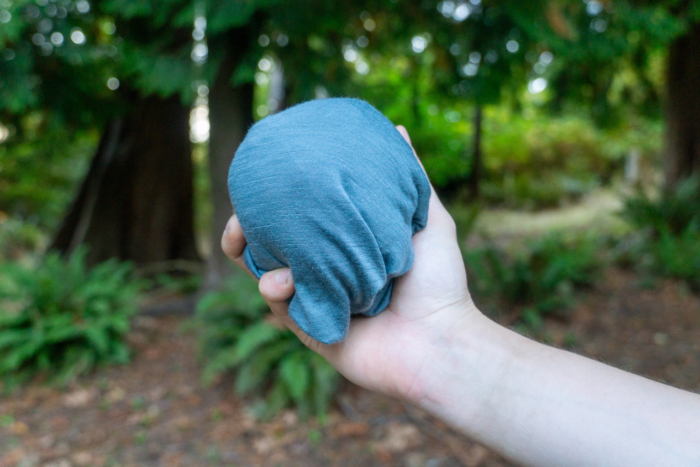
First, let’s talk wool. A lot of cheaper wool or heavily blended wool can have a tickle, but this extra-fine 17.5-micron merino is wildly soft. There’s zero itch, even when it’s totally glued to your back with sweat. The seams are low-profile, and even those running over the shoulders are unnoticeable under pack straps.
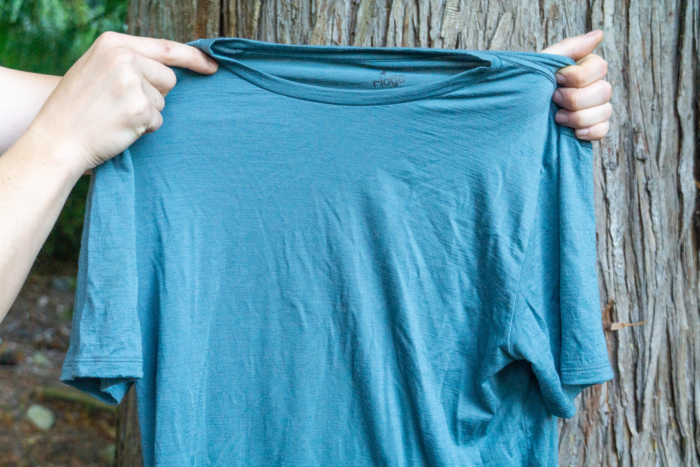
Fit-wise, the Journey runs true to size: more forgiving through the chest and midsection than trimmer cuts like Icebreaker, without looking boxy. After three years of regular wear and washes, the ribbed crew collar still lies flat against my collarbone instead of stretching out into a wavy neck, which is usually the first thing to go on lightweight wool tees.
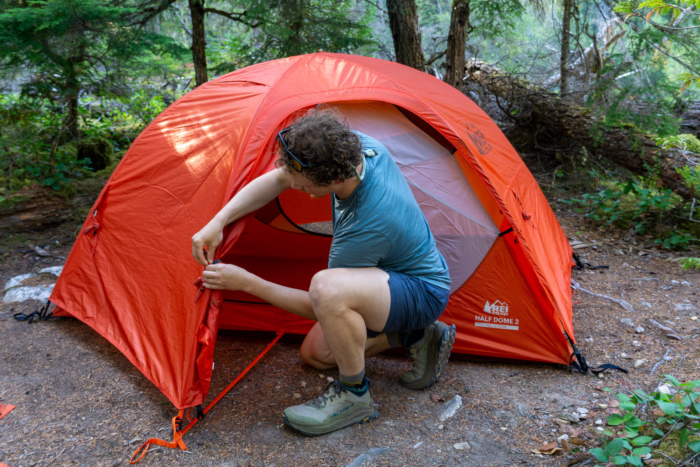
The cut hits that sweet spot between athletic and casual. It’s got a slightly longer drop-tail hem, which tailors it to the outdoors. It stays tucked under a heavy backpack hip belt or a climbing harness without constantly riding up and exposing your lower back to the wind. The seams at the shoulder and neck are also double-stitched for added durability.
Plus, the branding is super low-profile, and it just looks like a normal, clean crew-neck tee. You can hop off the trail, head straight into town for a beer, and blend right in.

Field Performance & Durability
100% merino wool tees are luxuriously soft and get 100% of that temperature-regulating, warm-when-wet quality that merino excels at. It’s also not the best way to wear merino (at least not in a T-shirt). Typically, a minor blend is wise to shore up durability concerns with pure merino, and the Journey tee does it well.
The brand calls it ‘(m)Force core-spun technology’. Basically, Ridge wraps those merino fibers around a tough nylon core. Conceptually, it achieves a goal very similar to Nuyarn, another well-known performance wool technology used by brands like Ibex, KUIU, and Black Diamond, which pairs merino fibers with a synthetic filament to boost stretch, loft, and tear strength.
The biggest practical difference comes down to cost: Nuyarn is a proprietary, licensed textile technology that drives up the retail price of shirts that use it, whereas Ridge’s in-house (m)Force core-spun approach delivers comparable real-world durability and performance without the licensing markup.
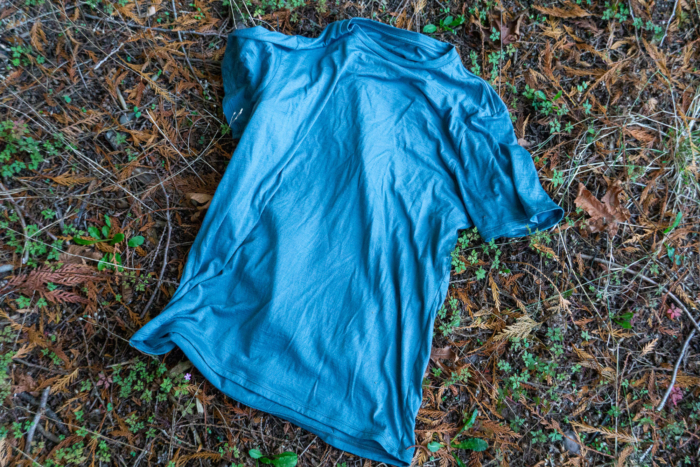
After three years of steady rotation (including backpacking, trail running, and daily wear), my original Journey tee has held up remarkably well for a 145 GSM fabric. Aside from some minor fading and a single pinhole near my waist, the fabric hasn’t pilled or lost its stretch. Just keep in mind that 145 GSM is an ultralight summer weight: it breathes like a dream and offers modest sun protection (roughly UPF 20–25), though lighter colorways can turn slightly see-through once they’re drenched in sweat.

The Catch
It’s not entirely perfect. Because it’s a wool blend rather than a pure synthetic, if you get completely soaked in a downpour or sweat through it, it takes a bit longer to dry than a standard polyester running shirt.
You also have to pay attention on laundry day. While Ridge’s care tag technically allows tumble-drying on low, lightweight merino blends are notorious for losing an inch of torso length if they hit high heat. Sticking to a cold wash and hang-drying on a rack keeps the drop-tail hem where it belongs. Finally, because it’s a thin 145 GSM tee, it isn’t meant to pull double duty as a cold-weather layer. Once temperatures dip into the 40s, you’ll want a heavier 200+ GSM layer over top.

Ridge Vs. The Big Brands
When you compare the Journey tee to the entry-level options from brands like Smartwool and Icebreaker, the value shift becomes pretty obvious.
The Smartwool Merino Short Sleeve typically runs around $95, and the Icebreaker Merino 150 Tech Lite III Short Sleeve sits around $85. Both are fantastic shirts, but wearing them one day after another, it’s hard to honestly say there’s an exceptional difference between them. The Icebreaker does stay stink-free a little longer, but it also wears out faster. The Smartwool and Ridge tees really only differ in cut through the torso (a bit slimmer in the Smartwool), hem length, and price.
There’s a good reason the Smartwool and Ridge feel so similar on the trail: Smartwool uses an almost identical 88% merino / 12% nylon core-spun fabric at 150 GSM, whereas the Icebreaker is 100% pure merino (150 GSM). That explains why the Icebreaker edges out both in multi-day odor resistance, while the Ridge and Smartwool hold up better against pack straps and brush. Paying $65 instead of $95 for virtually the same fabric recipe makes the Journey an easy win.

Ridge Merino Journey T-Shirt: Conclusion
The Ridge Merino Journey T-Shirt is for anyone who loves high-end wool but hates retiring it prematurely. The merino/nylon blend is just about the sweet spot for activewear, and at $65, it undercuts almost every Nuyarn shirt on the market today. Plus, with its low-key crewneck cut, you can roll right off the trail without looking like a total dirtbag.
If you’re doing high-output runs in humid heat, a synthetic shirt will still dump moisture faster, and the 145 GSM fabric is strictly warm-weather weight on its own. But for three-season hiking, travel, climbing, and everyday wear, getting big-league core-spun durability and next-to-skin softness for $30 less than the legacy brands makes the Journey a no-brainer for your gear closet.