The ideal travel backpack is more than luggage. To find the best, I, tester Nick Belcaster, spent six months living out of four packs, logging over 5,000 miles. I subjected these bags to 30+ hours of overhead bin shuffles, packed them to their 35-pound limits, and sprinted through terminal transfers.
Our team’s testing highlighted the gold standard of travel architecture, including the organization of the Peak Design Travel Backpack 45L and the durability-to-dollar ratio of the $95 JanSport Journey. From cavernous haulers to slim-profile commuters like the TimBuk2 Never Check, we’ve vetted the designs that make transit easier.
This guide is built on five years of travel testing, during which our team has evaluated over 50 silhouettes and navigated the personal item size restrictions of more than 10 airlines. I’ve sifted through the noise to curate the best travel backpacks of 2026, ensuring your gear survives the baggage carousel and beyond.
Editor’s Note: We updated our Travel Backpacks guide on August 27, 2026, to add the Pelican PX25 Aegis, Patagonia Black Hole Mini MLC, and the Bellroy Transit Workpack 20L. All three are lower-volume bags that excel as personal items on flights and are worth your consideration.
The Best Travel Backpacks of 2026


Peak Design Travel Backpack 45L
-

-
(Photo/Erika Courtney)
-
(photo/Nick Belcaster)



Specifications
Pros & Cons
Pros
- Compresses down to maximum airline carry-on size, and then expands once you’ve hit your destination
- Burly construction
- No details are overlooked in the design
Cons
- Price
- Side-carry handles are offset in an awkward position
Bottom Line: The standard for one-bag travel. It offers a clever 35L-to-45L expansion and a magnetic strap-stowage system that’s among the best available. It’s also pricey, so consider your needs wisely.
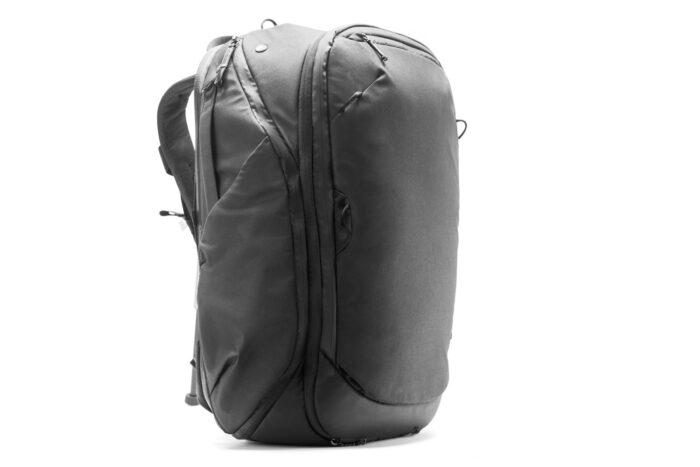
Perfect is a dirty word in product design, but I’m hard-pressed to find fault with the Peak Design Travel Backpack 45 L ($300). This redeye-ready clamshell design is made to the highest of standards.
It’s made of quality materials, utilizing aluminum hardware and a burly 400-denier nylon canvas — and it easily ticks all our boxes for the best overall travel backpack. The interior of the bag is split into two compartments: a larger main area for storing most of your kit and a secondary front sleeve with five zippered pockets. The main pocket also sports a foam-padded laptop sleeve and three more pockets.
One of the more impressive aspects I discovered during the bag’s inaugural leg from Seattle to Anchorage was how easily the straps stow. Two foam panels on the back of the bag flip away to secure them and then close with a magnetic closure — very slick.
Then there are the little details. An ID-sized sleeve on the back panel provides all the information in case your bag gets separated from you. Zipper pulls thread through one another to keep your gear safe. And a collapsible system also adjusts the bag from 45 to 35 liters.
In my review, there’s little about the Peak Design pack that misses the mark. The company leans heavily toward the camera-toting travelers among us, but the 45 L Travel Backpack makes no compromises and works just as well for any user group. The high price is undeniable, but for the scope of the travel pack, it’s a buy-once, cry-once purchase I would make again.
JanSport Journey Pack
Specifications
Pros & Cons
Pros
- Compact and clean profile
- Plush foam back panel and shoulder straps
- Large stretch mesh rear pocket can accomodate bulky kit like jackets or helmets
- Smooth-running zippers
- Good internal organization
Cons
- Laptop sleeve won't fit some large modern laptops
- Water bottle pockets sized for slimmer vessels
Bottom Line: A sub-$100 choice that simply works. Built with rugged recycled materials and plush EVA foam, it’s a comfortable, low-profile personal item.
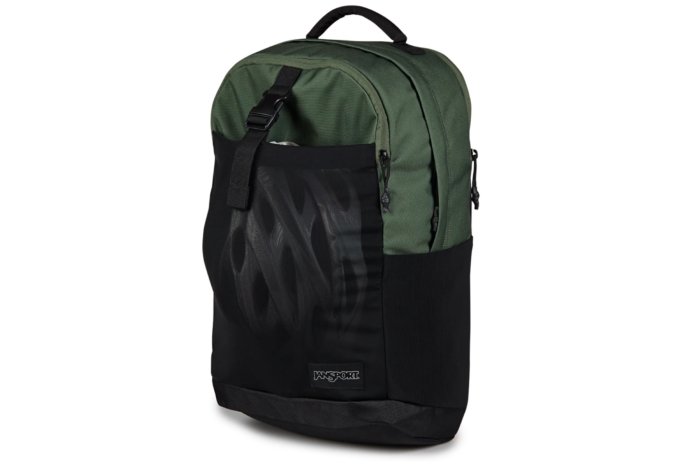
At $95, the JanSport Journey Pack offers significant value. As a commuter or personal item, this pack leverages a versatile design for everyday use. Part of JanSport’s new travel trio, the Journey surprised us with a higher-end build than expected, making it an excellent, affordable travel companion.
While it lacks boutique fabrics, it is solidly built with 1680D ballistic material and a 600D polyester shell that wears well. Thick EVA foam provides a cushy back panel and straps. Inside, a tricot-lined laptop sleeve and organizer pocket protect tech and accessories.
The organization is uncompromising, featuring a spacious main compartment, front stash pocket, and a 15″ laptop sleeve. As a carry-on, I fit multiple layers, a travel pillow, and flight essentials with room to spare for water bottles.
The 28-liter capacity lacks alternate sizing or a hip belt, though light loads don’t require one. Bottom compression straps double as a gear dock for jackets or blankets. Like its competitors, the side pockets are best for slim flasks; a Nalgene is a tight squeeze.
For under $100, JanSport didn’t phone it in. With a dedicated sleeve for almost everything, the Journey stashes easily beneath airline seats. If you want to save your budget for big-ticket luggage and just need a pack that works, this is the bag for you.
Osprey Farpoint & Fairview 40 Travel Packs
Specifications
Pros & Cons
Pros
- Supreme suspension system offers the best carry of any pack we tried
- External compression straps limit the volume well
- Comfortably padded grab handles
Cons
- Not much internal organization
Bottom Line: An expedition harness disguised as a carry-on. With a LightWire frame and adjustable torso, it offers the most comfortable carry for long treks.
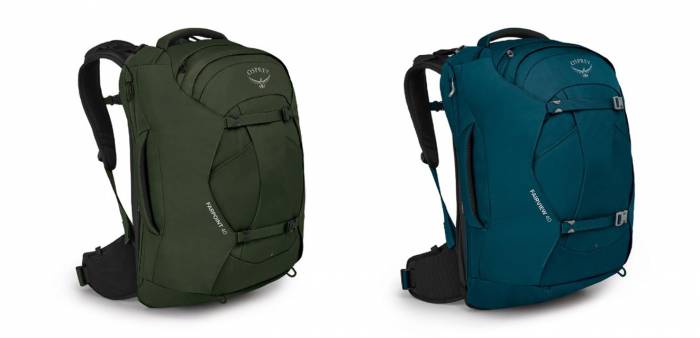
Osprey injected its comfortable suspension tech into the 40L Farpoint and Fairview Packs ($200), which sport LightWire frames, load lifters, and breathable straps. In my testing, the Farpoint was the best load carrier and a close contender for best overall travel backpack.
The pack even allows torso-length adjustment, which is typically unheard of in travel packs. Recently updated, these packs sit between traditional backpacks and functional luggage.
The 40-liter capacity hits the sweet spot for domestic carry-on limits. I easily packed a long weekend’s worth of essentials with space to spare.
While other packs stash straps into the body, Osprey uses a deployable cover that seals the suspension for safekeeping when checked. This produces a clean profile, though it’s not as quick as Peak Design’s magnetic panels since you must unclip straps to tuck them away.
The interior is simple, incorporating one zippered pocket, a laptop sleeve, and two compression straps. I’d prefer more built-in organization, like those from Matador or Topo Designs. Still, for those who stuff more than pack, these may punch the ticket.
With one foot on the platform and one on the trail, these Osprey packs carry a trip’s worth of gear with ease.
Matador SEG45 Travel Pack
Specifications
Pros & Cons
Pros
- Excellent storage organization options
- High-quality, strong, and lightweight construction
Cons
- No frame to speak of
- Shoulder straps don’t pack away
Read Review: Dresser in a Backpack: Matador SEG42 Review
Bottom Line: A pack with a unique segmented architecture that lets you organize gear by type without digging through a main cavity. The minimal frame means you’ll need to watch how much weight you carry.
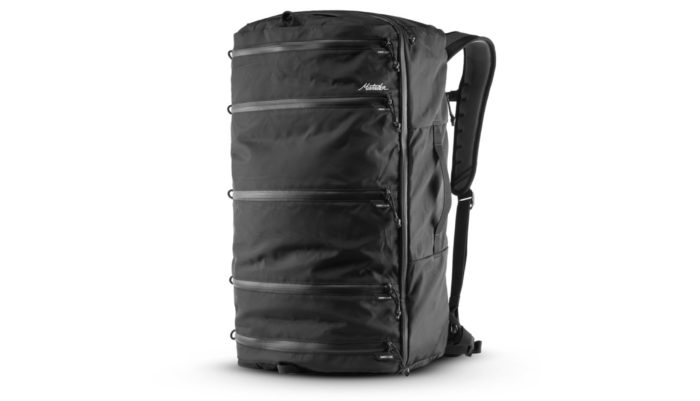
Aiming to do more with less, the Matador SEG45 Segmented Backpack ($219) proposes a future free of packing cubes and splits up the bag for you, making organization a breeze.
The full 45 liters of volume is shared among the five segments (6, 9, 15, 9, and 6 L) and trades volume between the full clamshell compartment and the segments. Each of these segments is accessible via its own water-resistant zippers and can be collapsed as your needs change.
Organizing by clothing type made the most sense to me, but you could also pack by day of the week or by use. The clamshell-accessed main compartment was ideal for holding larger items like spare shoes or quarantining spent outfits.
Known for its overbuilt yet lightweight bags, Matador didn’t spare the SEG45, using 420-denier, synthetic-reinforced nylon in the pack body and 100-denier, abrasion-resistant nylon (called Robic Dynatec) for the interior weave. It should be noted that this travel backpack doesn’t have a frame and will rely on being packed well to carry properly. Because of this, this pack won’t carry as well as bags like the Osprey Farpoint/Fairview, so consider packing mostly clothing in the SEG45.
I found that this bag excelled as a travel bag once you’ve hit your destination, especially since it easily packs away in larger bags. Unfortunately, the shoulder straps don’t pack away into the bag itself, so you’ll have to wrangle them to keep things tidy.
No matter what you’re up to, everything has got a spot to live in the SEG45. Need a bit less space? Matador offers the SEG28 ($250) for that.
Patagonia Black Hole MLC 45L
-
-
(photo/Erika Courtney)
-
(Photo/Rebecca Parsons)
-
(Photo/Rebecca Parsons)
-
(Photo/Rebecca Parsons)
-
(Photo/Rebecca Parsons)


Specifications
Pros & Cons
Pros
- Multiple ways to carry the pack
- Many different storage and internal organization options
- Burly external fabric
Cons
- Doesn’t carry the best as a backpack
- No hip belt
Read Review: Patagonia Black Hole MLC Bag Review: An Organized, Carry-On-Size Wonder
Bottom Line: A time-tested fan favorite, and weather-resistant to boot. This maximum-legal carry-on shrugs off rain with its durable, water-resistant shell and converts between a backpack and shoulder bag.
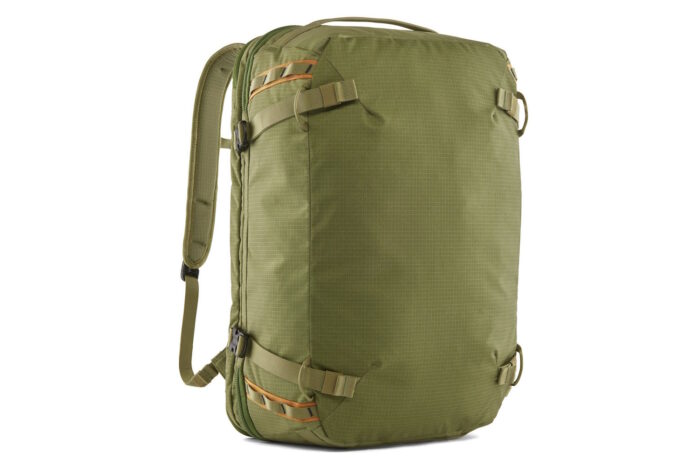
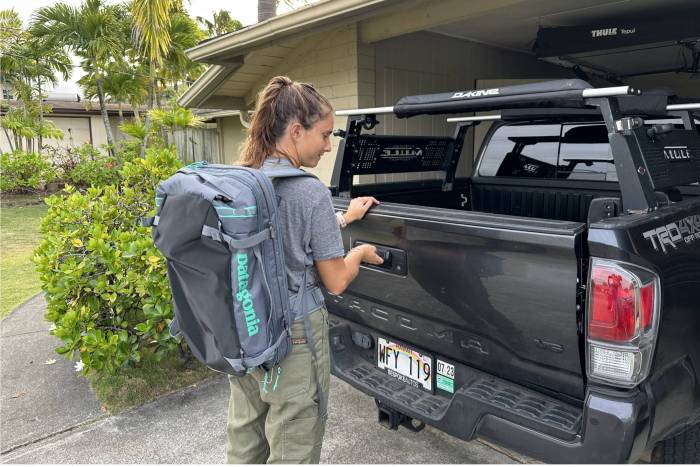
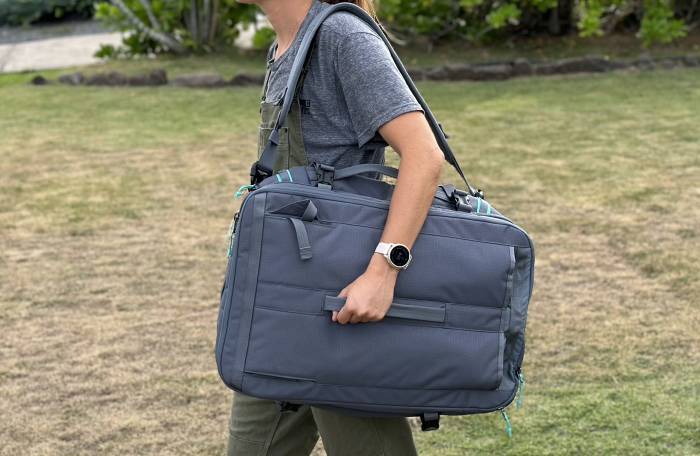
Looking to squeeze out every last liter of allowed space? Patagonia named this pack in honor of the cause: the Patagonia Black Hole Maximum Legal Carry-On 45 L ($239). This bag can be carried in several ways, but I found it shone as a shoulder bag during travel.
Borrowing fabric from Patagonia’s line of burly Black Hole Duffels, the MLC 45 is made for the long haul. The 900-denier polyester ripstop is coated in a TPU laminate and feels ready to take on the surliest baggage carrier. I felt no remorse in tossing the bag around.
At 45 L, the MLC is certainly right at the cusp of the maximum allowed size. Thankfully, that space is well divided. Inside the main clamshell-accessed compartment is a slew of zippers, mesh pockets, and dividers. Anything I tossed inside was well-stabilized.
Because there isn’t much of a frame, the Black Hole MLC doesn’t carry well when slung over both shoulders and sags when not full. But worn over the shoulder with the included shoulder strap, this pack feels great and is easy to access on the go. This is one of the only packs in my testing to feature a shoulder strap.
I also appreciate that the Patagonia Black Hole MLC 45 L is made with 100% recycled body fabric, lining, and webbing. It’s an easy grab-and-go option that’s ready for travel.
Evergoods Civic Panel Loader 24L
Specifications
Pros & Cons
Pros
- Functions as both a laptop backpack and suitcase
- Well-structured and protected
- Full panel loading access
Cons
- Limited colorways
- Expensive
Bottom Line: Perfect for remote office workers. It offers a sophisticated look with a technical fit that hugs your back, though capacity requires disciplined packing.
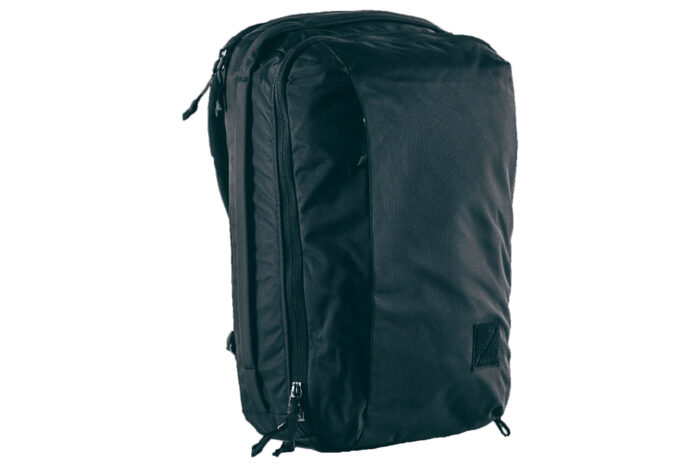
With an understated look that hides impressive functionality, the Evergoods Civic Panel Loader 24L ($285) reliably totes your kit through travel or daily commutes. I consider this bag my top commuter-style travel backpack.
Evergoods clearly nerded out on materials. The 840-denier ballistic nylon exterior is as burly as it sounds and coffee wipes right off. This complements the thick zippers and a spacer-mesh back panel. Even the low-key logo is a simple 2×2” patch; I dig it.
The CPL24 features the best laptop sleeve I’ve used. The side-access aperture holds a 17” MacBook Pro within a suspended, fully padded rear space. An aluminum stay protects the laptop from side impacts while supporting the bag’s side handle. Genius.
This pack’s high-polish finish rivals the Tom Bihn Synapse 25, but I prefer the CPL24 for its superior side carry. The reinforced broad handle makes it easy to maneuver through bustling terminals.
Inside, two large pockets and smaller sleeves are oriented for side access. After a month of remote work, this became my go-to pack. It’s hard not to love a pack that makes your life easier.
Alongside GORUCK and Tom Bihn, Evergoods prioritizes intelligent design and smart materials. The Civic Panel Loader 24L is the final word in daily travel packs. I certainly carry it every day.
Timbuk2 Never Check Expandable Backpack
Specifications
Pros & Cons
Pros
- Dang good looking
- High-quality trim and details, including anodized G hooks and supple webbing
- Supper cushioned back panel
Cons
- Exterior expandable water bottle pocket is a bit slim
- Pack straps don't stow away.
Bottom Line: A sleek, expandable specialist that fits under almost any airline seat. It stays slim in transit but expands for last-minute souvenirs.
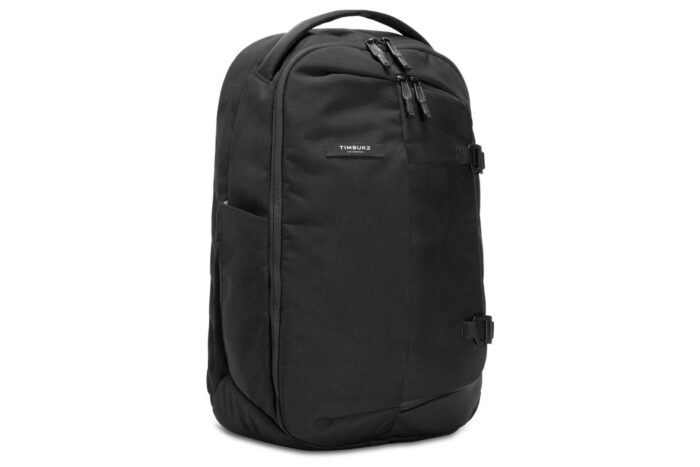
Pulling off a good expandable backpack is tough. Fabric accordion folds often eat up valuable interior space when collapsed. That’s not the case with the TimBuk2 Never Check ($245). It keeps a clean silhouette and elevates it with premium materials and a thoughtful design. I found it to be one of my favorite travel backpacks for tucking under an airliner seat.
Unlike many of the boxier bags, the Never Check is a real looker; easily one of the best styled in my testing. I’d have no qualms bringing it along as a business bag. Small details — such as rubber-covered zipper pulls, anodized G hooks, and supple webbing — keep it looking sharp. The 27.5-liter size is dead-on for most airline ‘personal item’ size requirements, and it easily slides under a seat.
The main compartment opens via a clamshell zipper at the front of the bag and is gusseted to stay open while loading. On multiple flights, I had more than enough space for everything I needed. And for everything else, the front pocket is lined with multiple drop and zip pockets to organize small gadgets like chargers or keys.
The back panel of the Never Check uses ½-inch plush foam. Paired with the equally padded shoulder straps, it carried comfortably for a bag of this size. The straps don’t stow, but on a lower-volume pack like this, that’s not a major drawback. One of my favorite features: the wide laptop sleeve. This 15” opening easily fits larger laptops and is suspended off the bottom to ensure bumps don’t turn into bruises.
True to its name, the Never Check Expandable Backpack means your bag can always stay with you — even at the office. Its clean profile and attention to detail impressed me, and it would make an excellent work-to-weekend bag.
Other Travel Backpacks We’ve Checked & Carried On
These packs aren’t first-class picks, but they’re still solid travel companions.
Specifications
Pros & Cons
Pros
- High-end materials and components like YKK zippers and Woojin buckles
- 40 liter volume makes the full use of the allowed carry-on sizes for most airlines
- Water-resistant zippers and waterproof sailcloth makes this pack highly water-resistant
- Simple internal organization doesn’t get too finicky and small
- Load lifters really help support a fully-loaded weight
Cons
- Hip belt is fussy to work with when stashing the pack away
- Organizer sleeve is mostly helpful, but the card sleeves don’t get used
Bottom Line: Rugged materials meet a high-volume carry-on capacity. It maximizes space with a smart clean vs. dirty layout, though the hip belt can be annoying to stow.
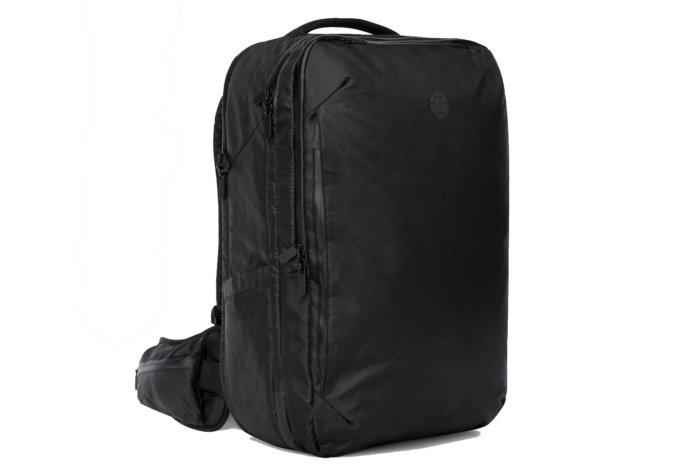
Competing with luxe brands like Peak Design and Evergoods, the Tortuga Travel Backpack Pro 40L ($350) is a top recommendation for high-end travel backpacks. A wishlist of materials and a smart layout define this build.
The 40-liter volume maximizes carry-on space. While it lacks exterior compression, I easily loaded it for domestic flights. Interior organization avoids fiddly pockets, instead splitting the main compartment into clean and dirty sides.
The trim is equally nice; burly polyester sailcloth is laminated in three plies to increase wear resistance. Smooth-running YKK zippers, Woojin buckles, and a subtle logo complete the package.
Beyond the main compartment, day-access pockets include a fleece-lined sleeve (fitting a 16″ MacBook Pro) and an essentials organizer. I could lose the card sleeves, but they don’t detract much.
Unfortunately, the magic fades with the hip belt. It’s cumbersome, and the pockets dangle, snagging during overhead transitions. While removable, it’s sorely missed when the bag is heavy.
Coupled with non-stowable shoulder straps, this pack excels at carrying but fumbles in transitions. I prefer the Peak Design Travel Pack for its streamlined, stowable profile. But for those on their feet more, the Tortuga makes perfect sense.
-
-
(Photo/Nick Belcaster)
-
(Photo/Nick Belcaster)
Specifications
Pros & Cons
Pros
- EVA-molded front shell guards electronics
- Tough 500D CORDURA fabric handles rough travel
- Padded quick-access laptop sleeve and luggage passthrough handle
- Exterior MOLLE webbing lets you attach extra gear
- Breathable air-channel back panel keeps you cool
Cons
- Weighs ~3 pounds empty, which is heavy for a 25L pack
- Relies on add-on pouches or packing cubes for small-item organization
- Backed by a 5-year warranty instead of Pelican’s classic lifetime guarantee
- Outer fabric easily picks up lint and pet hair
Bottom Line: A rugged and armored pack that will protect your valuables through the worst global transits. It’s a heavier pack for it; however, some will find it a worthy trade.
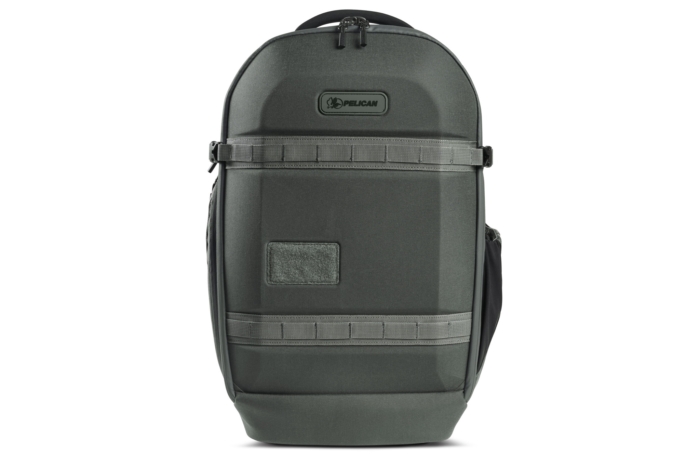
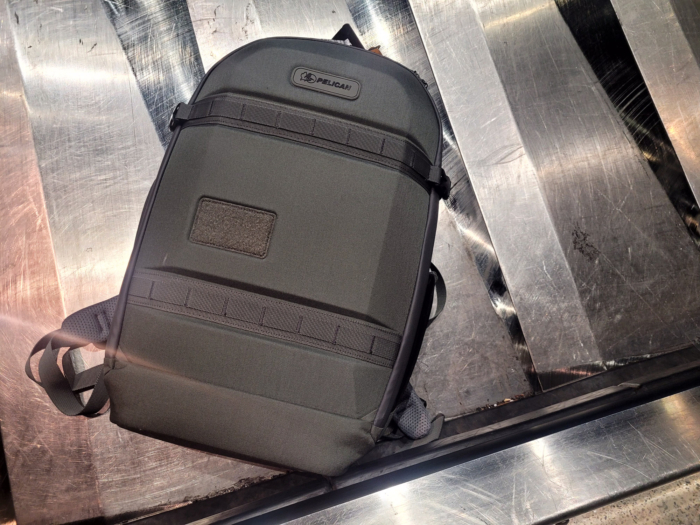
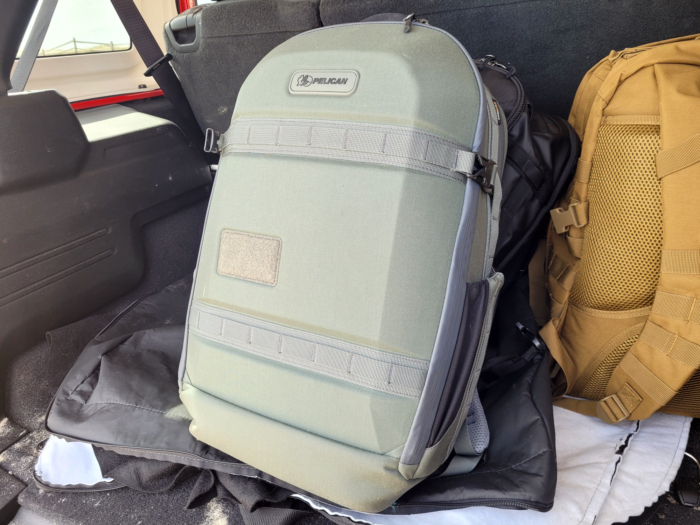
Pelican built its reputation on rugged hard cases, so when the brand released the Pelican PX25 Aegis Pack ($230), I wanted to see if that translated into a nimble travel bag. The 25L Aegis combines an EVA-molded front shell with a burly 500D CORDURA chassis. It delivers a hybrid build designed specifically for travelers who refuse to worry about sensitive gear getting crushed in transit.
To put the Aegis through its paces, I hauled it on a cross-country testing trip from Washington state out to North Carolina this spring. The streamlined 25L footprint slid under airline seats as a personal item, while the padded laptop sleeve made pulling tech at TSA security checkpoints effortless. Throughout terminal transfers, shuttle rides, and being tossed onto tarmac concrete, the molded front shield gave me total peace of mind that my fragile electronics were fully protected.
When stacked up against other top picks in our travel guide, the PX25 carves out a distinct niche. While our top overall recommendation, the Peak Design Travel Backpack 45L, offers expandable volume for full one-bag travel, the Aegis is a more agile option tailored for shorter pushes or carrying high-value tech. And compared to soft-sided haulers like the Patagonia Black Hole MLC 45L, which prioritize squishable duffel-style flexibility, the Aegis provides rigid structural impact defense that soft bags can’t match.
That hard-wearing build does come with a few compromises. Weighing nearly 3 pounds empty, it’s certainly heavier than many minimalist travel packs, and the interior layout leans simple. However, if your travel routine involves moving expensive equipment across airport terminals, the PX25 Aegis is an exceptionally tough, reliable sanctuary for your gear.
-
-
(Photo/Nick Belcaster)
-
(Photo/Nick Belcaster)
-
(Photo/Nick Belcaster)
-
(Photo/Nick Belcaster)
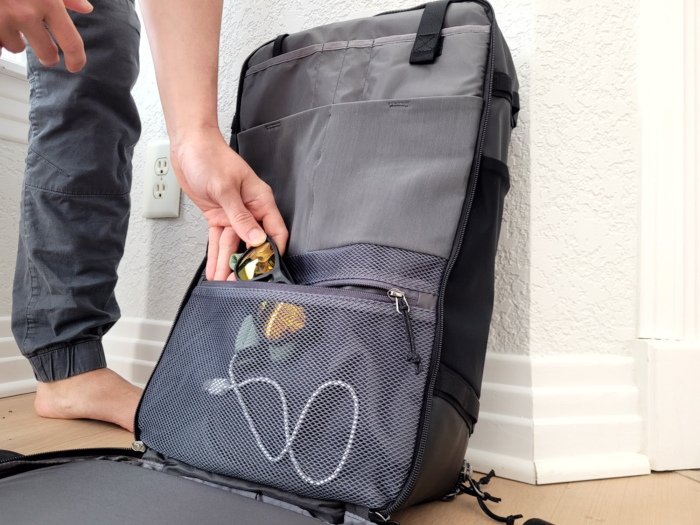
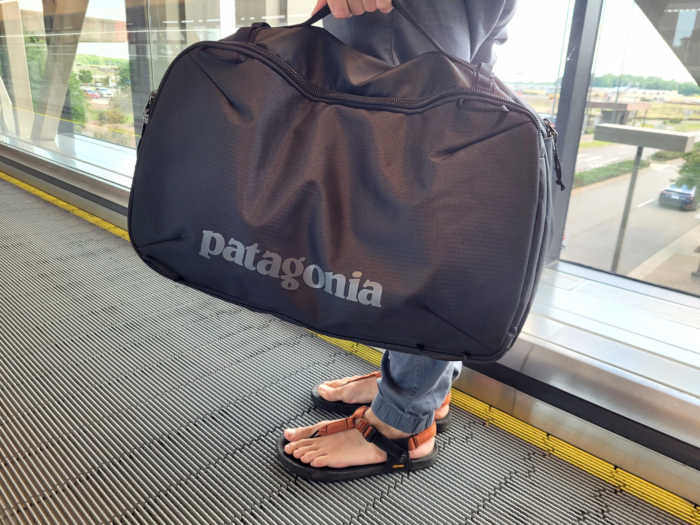
Specifications
Pros & Cons
Pros
- Excellent front and back access to the interior of the pack
- Rugged TPU-coated exterior shrugs off abuse
- Chunky zippers run smoothly
Cons
- Not the maximum carry-on size
- Only one exterior bottle pocket
Bottom Line: A shrunk-down MLC pack that is perfect for everyday carry. Not the most protective pack, but very versatile otherwise.
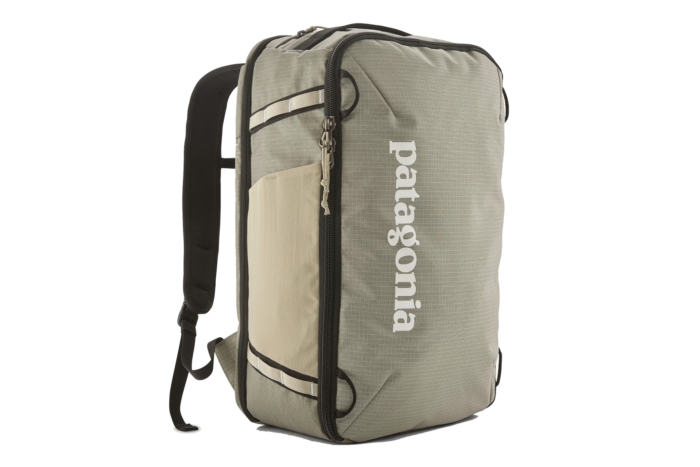
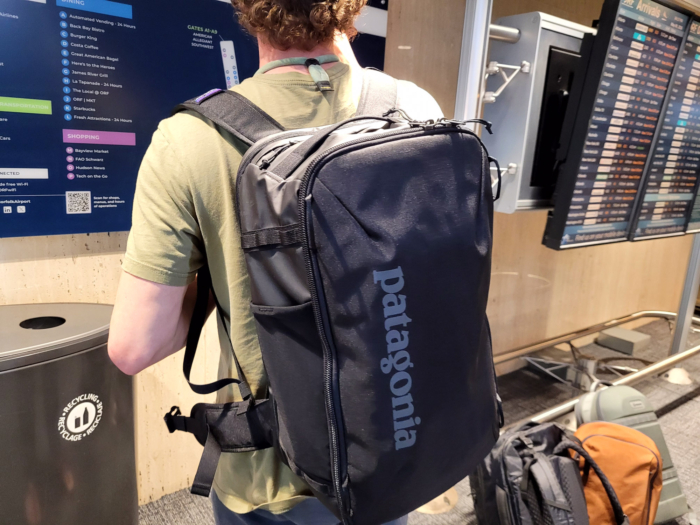
For travelers attempting a single-bag itinerary, 30 liters represents the sweet spot. Patagonia took their legendary “Maximum Legal Carry” blueprint and scaled it into the Patagonia Black Hole Mini MLC 30L ($199). Constructed from 100% recycled 300D polyester ripstop with a weatherproof TPU laminate, it strikes a balance between eco-conscious durability and sleek, airport-ready utility.
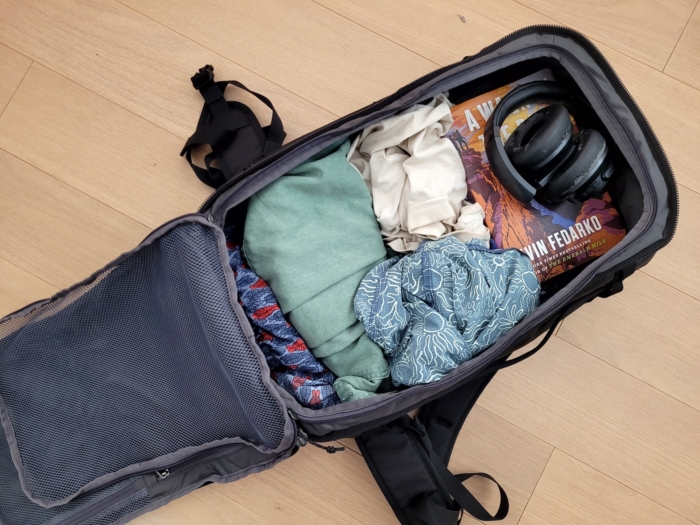
What elevates the Mini MLC above standard travel packs is its versatility. Patagonia added a fully stowable harness system, allowing you to convert the bag from a backpack to an over-the-shoulder duffel or side-handle briefcase. Inside, a clamshell main compartment keeps clothing organized like a suit bag, while a flat-lay rear tech compartment houses up to a 16-inch laptop, tablet, and charger cables.
I put this pack through its paces on a journey from Washington state out to North Carolina, and the Mini MLC proved its worth in high-friction environments. During tight terminal layovers, the luggage pass-through sleeve slung securely over a rolling suitcase handle, while the weather-resistant shell shrugged off East Coast rain. Whether crammed into an overhead bin or tucked under the seat on a red-eye flight, the pliable 30-liter shape comfortably swallowed five days of clothes, a secondary pair of sandals, and a full tech kit without a care.
When set side-by-side with tougher options like the Pelican PX25 Aegis, the Mini MLC trades rigid shell impact protection for layout efficiency. It lacks the hard-sided defense required for loose, delicate camera lenses, and it won’t hold multi-week loads like the cavernous Peak Design Travel Backpack 45L. However, for organized travelers seeking a highly adaptable pack, the Mini MLC 30L is a capable travel companion.
-
-
(Photo/Nick Belcaster)
-
(Photo/Nick Belcaster)
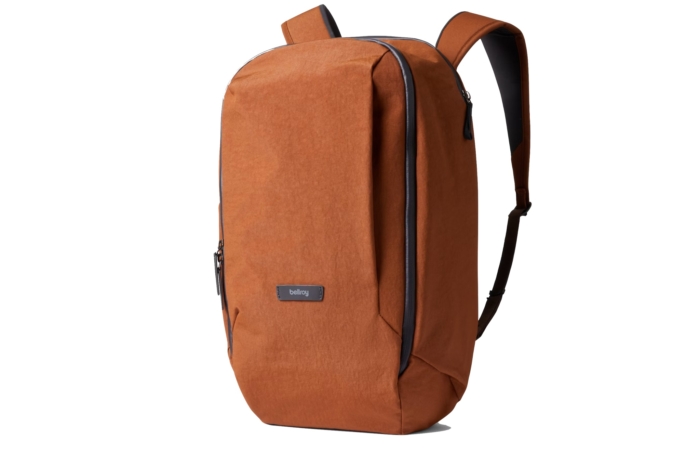
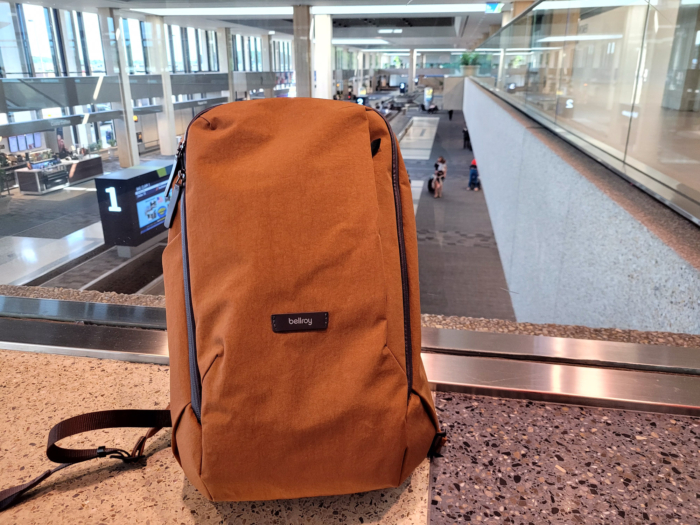
Specifications
Pros & Cons
Pros
- Very sharp-looking pack that easily does double-duty as a work bag
- Large 16" laptop sleeve
- Luggage pass-through handle
- Plenty of tech organization
- Interior Apple AirTag sleeve
Cons
- Not the most protective bag
- Exterior fabric stains easily
Bottom Line: A tech-savvy carry-on that looks as good as it works. The good looks won’t hold up well to rugged environments or hiking, however, so keep this pack moving between the office and home.
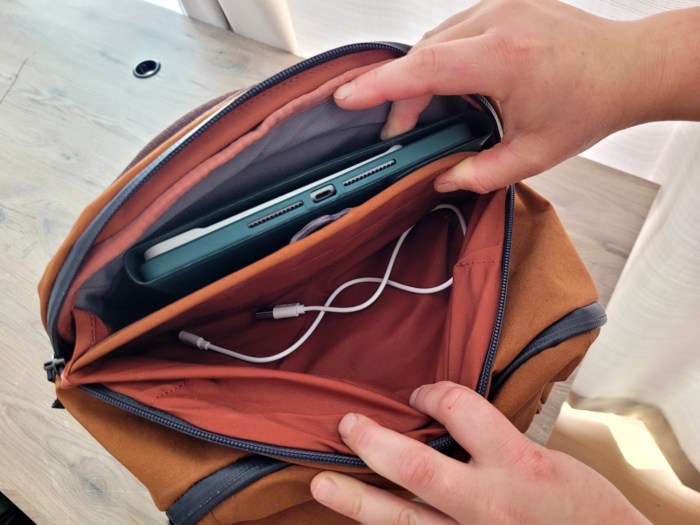
Commuters who want an office-ready aesthetic without sacrificing smart organization will find a lot to love in the Bellroy Transit Workpack 20L ($189). Built with water-resistant fabric and a low-profile silhouette, this bag excels at bridging the gap between office work, gym sessions, and daily urban travel. Its full-clamshell main compartment opens completely flat, making it easy to pack an extra layer, gym clothes, or a lunch box without rummaging around in the dark.
In my daily testing over six months, the bag’s organization scheme shone for tech-heavy setups. A separate rear laptop compartment swallows up to a 16-inch device with room for charger cables, while a soft-lined drop pocket keeps sunglasses safe. Rather than cluttering the exterior with bulky mesh, Bellroy integrated hidden side pockets for water bottles and small essentials. The contoured foam back panel and padded shoulder straps distribute weight cleanly, keeping long city walks or crowded transit commutes completely comfortable.
The minimalist design does come with a few trade-offs. Because the side water bottle pockets expand inward rather than outward, inserting a bottle steals space directly from the main cavity, and the tapered base means the pack won’t stand upright on its own.
When set side-by-side with travel-focused options like the Timbuk2 Never Check Expandable Backpack, the Bellroy lacks the gusseted zip expansion to flex from 21L up to 25L for unexpected overnight gear or souvenir overflow. However, for urban professionals seeking a refined, tailored daily driver that keeps its slim shape everywhere it goes, the Transit Workpack 20L is a top-tier choice.
Specifications
Pros & Cons
Pros
- High-quality fit and finish with top-shelf materials
- Dedicated work compartment is well organized and padded
- Shoulder straps and back panel are cushy Zotefoam
- Fits 17" laptops
Cons
- No hipbelt can be nice for storing, but needed for heavy carries
- On the higher end for travel pack pricing
Bottom Line: A technical pack for digital nomads. It features a dedicated tech-zone and a premium feel, though it’s heavier than most 30L competitors.
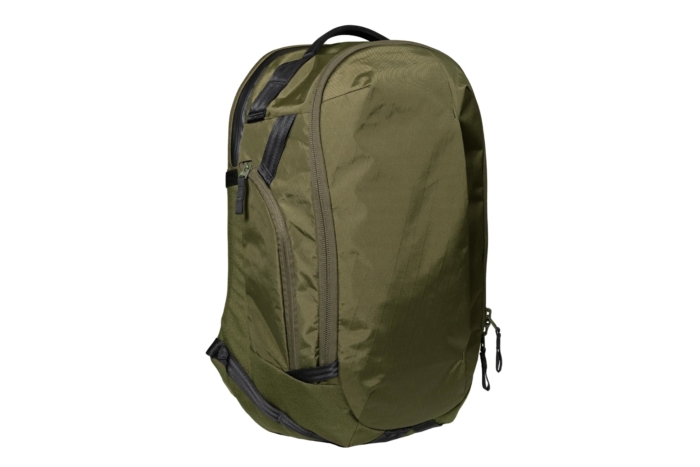
Sporting features similar to those of the leading travel packs in this review, the Able Carry Max Backpack ($278) leaves little on the cutting room floor. Decked out in ultra-durable CORDURA and X-Pac, this pack can be kicked or thrown across the airport to no ill effect.
At 30 liters, capacity is the only thing not ‘maxed’ out (pun intended!) While less than the domestic carry-on maximum, it is ideal for global travelers with smaller carry-on limits.
Space is wisely organized between the laptop and main compartments. The laptop sleeve hosts up to 17″ models and is flanked by an accessories pocket with four stretchy sleeves for chargers, cords, and a mouse.
The main compartment is accessed through a broad clamshell opening. While Able Carry doesn’t supply straps, interior daisy chains let you wrangle unruly items. The back panel hides zippered pockets, and a water bottle pocket collapses when not needed.
Exterior seatbelt webbing appeals to those needing modular attachments. The VX21 X-Pac weave is as weather and abrasion-proof as the Peak Design canvas. I also appreciated the 1000-denier CORDURA boot, making shuffling the pack a worry-free exercise.
Many high-quality 30-liter packs get the job done, but the construction of the Able Carry Max keeps drawing me back. Exact, plentiful stitching holds premium materials together in a thoughtful design. Fully loaded, I occasionally wished for a hip belt, but the Max still lives up to its name.
Specifications
Pros & Cons
Pros
- Maxes out on carry-on-compliant space
- Internal roll-top TPU bag separates the clean from the to-do laundry
- Waxed canvas exterior has a classy look
- Centered side handle carries well
- Well-cushioned back panel
Cons
- No shoulder strap stowage option
- No hipbelt on a 40L is pushing it
Bottom Line: Rugged waxed-canvas style with a unique TPU-lined internal pocket. Perfect for separating damp gear, though the eco-friendly material can be stiff in cold weather.
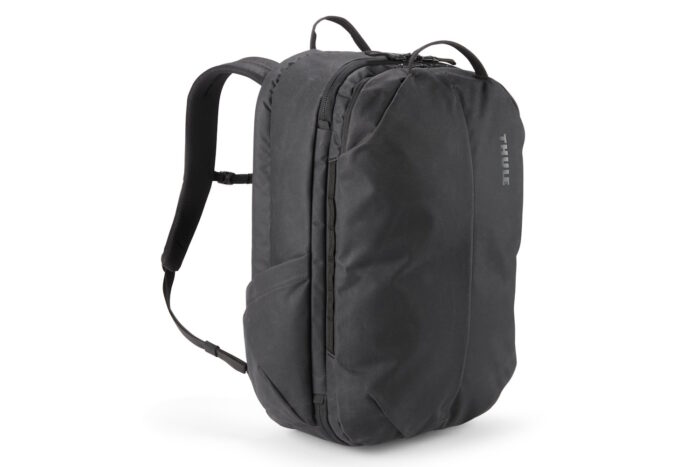
Better known for roof boxes and racks, Thule knows travel. The smart, organized, and comfortable Thule Aion 40L ($210) is a finely honed travel bag, decked out in high-class materials.
Like the Patagonia Black Hole MLC, the Aion 40L aims to reach the maximum allowed capacity. Measuring 21.5” x 15” x 8”, the pack sits just under the typical 45 linear inches allowed. Space is split into two main compartments plus a laptop sleeve, with the larger opening via a full clamshell zip.
The inner compartment hosts zippered pockets and compression straps, but the star is the integrated TPU rolltop bag. This sack separates liquids or laundry. It’s similar to the Gregory Border Traveler, but I liked the removable feature here better.
At the back, the spacer-mesh laptop sleeve rivals the Evergoods Civic Panel Loader and includes a sleeve for tablets or chargers. The back panel and shoulder straps are impressively cushioned —arguably the most luxe in testing.
Unfortunately, there is no strap-stowage system. While I typically skip hip belts on smaller packs, their absence on a 40-liter bag is puzzling. Fully loaded, the Aion would benefit from one, but the compatible sling bag costs an extra $50.
Ranking with Peak Design and Osprey, the Thule Aion 40L nails style and materials. With 40 liters of space, it has all the room needed for week-long trips; no roof box required.
-
-
(Photo/Kendra Smith)
-
(Photo/Adam Ruggiero)
-
(Photo/Adam Ruggiero)
Specifications
Pros & Cons
Pros
- Extra-tough exterior fabric with carbonate coating
- High-polish details such as seatbelt webbing straps
- Mini-wing hipbelt tucks away easily when not needed
- Smart internal storage pockets that lay flat when not needed
Cons
- Laptop sleeve opening is a bit too snug
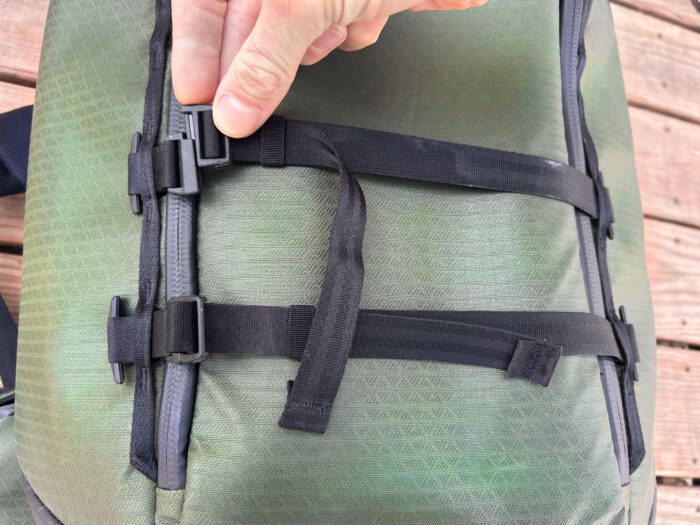
- Compression straps lay over the main zipper
Read Review: Hack Carry-On Rules: Osprey Archeon Kit Gives Power Back to Passengers
Bottom Line: A ballistic nylon tank. It offers extreme abrasion resistance and premium seatbelt-webbing details, but the compression straps hinder zipper access.
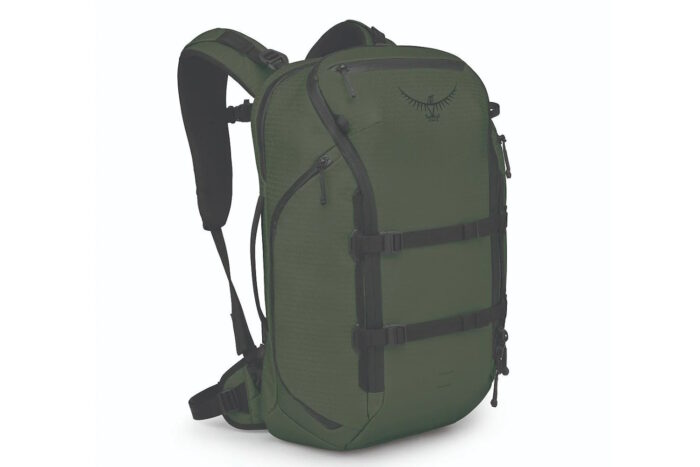
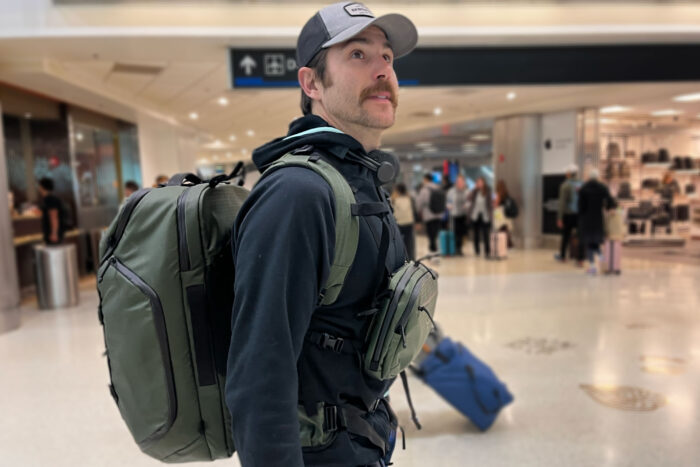
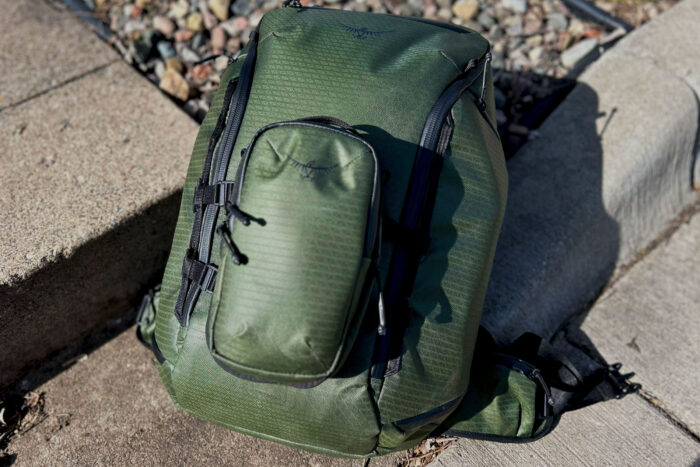
One word: rugged. The Osprey Archeon 40L ($300) is a high-end build that looks dang good. The 30-liter size makes this bag weekend-travel-ready, and I greatly appreciated its fit and finish.
The overall design of the Archeon reminds us a good bit of the Peak Design Travel Bag; namely the all-waterproof exterior zippers and curved side-entry pockets. But it’s the exterior fabric that really impressed. The 840-denier ballistic polyester features a synthetic coating that significantly increases durability compared to traditional PU coatings. In testing, I wore out before putting a dent in it.
The pack itself breaks down into two main compartments, with the main pocket opening behind a curved clamshell zip. Tradeoff: I struggled with the zipper passing behind the exterior straps. Removing them fixed that. Inside, three expandable tech pockets tuck away your small kit and do a good job of keeping things tidy.
On the exterior, Osprey doesn’t disappoint with its suspension straps, which are comfortable, adjustable, and stashable. The mini wing-style hip belt earns special praise on packed flights. When combined with the slick shoulder-strap stash pocket, the Archeon converts to minimal mode in under a minute.
Major gripe: The Archeon could certainly use a slightly larger opening to the laptop/tech compartment. As is, the zipper doesn’t quite extend far enough to fully open the pocket, so it takes a lot of rummaging to find what you want. Extending these zippers down to the middle of the pack would fix the issue, and I hope to see that in a future version.
Travel Backpack Comparison Chart
| Compare |
|
|
|
|
|
|
|
|
|
|
|
|
|
|
|---|---|---|---|---|---|---|---|---|---|---|---|---|---|---|
| Price |
$300
|
$95
|
$200
|
$219
|
$239
|
$285
|
$245
|
$350
|
$230
|
$199
|
$189
|
$278
|
$210
|
$300
|
| Capacity |
45 L (collapses to 35 L)
|
28 L
|
40 L
|
45 L
|
45 L
|
24 L
|
27.5 L
|
40 L
|
25 L
|
30 L
|
20 L
|
30 L
|
40 L
|
40 L
|
| Weight |
4 lbs., 8 oz.
|
1 lb., 13.6 oz.
|
3 lbs., 7.6 oz.
|
2 lbs., 8 oz.
|
3 lbs., 10.3 oz.
|
3 lbs., 1.6 oz.
|
2 lbs., 9 oz.
|
4 lbs., 8 oz.
|
2 lbs., 14.4 oz.
|
2 lbs., 13.5 oz.
|
2 lbs., 1.5 oz.
|
3 lbs., 14.4 oz.
|
3 lbs., 3 oz.
|
5 lbs.
|
| Dimensions |
22" x 13" x 9.5" standard, 22" x 13" x 11" expanded
|
19.5" x 12.5" x 7"
|
22" x 14" x 9"
|
22" x 13.4" x 10.2"
|
22.8" x 8.6" x 14.5"
|
18" x 7: x 11.5"
|
18.9" x 11.4" x 5.9"
|
21.7" x 13.8" x 7.9"
|
11.8" x 7.4" x 19.7"
|
20" x 12" x 7"
|
19.3" × 14.2" × 5.9"
|
20.4" x 12.6" x 7.9"
|
13" x 9.1" x 20.5"
|
21" x 13.6" x 13"
|
| Compartment Access |
Back panel clamshell design with #10 zipper
|
Zippered top access
|
Zippered back panel clamshell design
|
Full clamshell interior, additional front zippered access
|
Back panel zippered clamshell design
|
Zippered clamshell
|
Zippered top access
|
Zippered clamshell opening
|
Clamshell zipper
|
Two full clamshell zippers
|
Clamshell zipper
|
Zippered clamshell design
|
Zippered clamshell
|
Zippered top-access
|
| Material |
Weatherproof, 100% recycled 400-denier nylon canvas shell; 900-denier waterproof bottom
|
100% 600D recycled polyester + 1680D ballistic boot
|
Bluesign-approved 450-denier recycled polyester
|
420-denier nylon exterior, 100-denier Robic Dynatec interior
|
900-denier recycled polyester ripstop with a TPU laminate
|
840D ballistic nylon 6, 420D HT nylon
|
420x2000D Cordura nylon, 135D polyester
|
SHELL200, a recycled polyester sailcloth
|
500D CORDURA
|
300D polyester ripstop with TPU coating exterior; 200D polyester lining
|
80% recycled polyester, 10% nylon, 5% polyester, 5% other materials
|
X-Pac and 1000D nylon face fabric, ripstop 420D nylon interior
|
Waxed P600 polyester canvas
|
420D ballistic polyester with carbonate coating
|


How We Tested Travel Backpacks
Surely any old bag can carry your gear. But having a dialed travel backpack can turn a stressful situation into a manageable one. GearJunkie testers have been testing travel backpacks since 2009 and have put the market slice through the wringer on thousands of miles of travel to weed out the best of the best.
- Field testing: Our travel backpack testing relies most heavily on in-field testing during travel. We aim to get at least one round-trip national flight in with these packs before forming an opinion, and frequently get three or four flights with each pack to ensure we’ve got the full picture.
- In-house volume testing: We replicate ASTM volume testing by filling each of these packs with ping-pong balls in order to verify internal volumes of all compartments. This is especially important in travel packs, as every liter of space can count.
- Carry comfort survey: Finally, we pass these packs around to testers of different frames to get a survey on the relative comfort when regularly and full-to-the-brim loaded.
- Our travel backpacks rating system:
- Volume (30%): We prioritize carry-on-ability. 45 liters is the gold standard for maximum legal carry-on size, and we grade each pack on how efficiently it uses that space and how well it compresses for smaller loads.
- Organization (30%): Earning a high score here requires a smart balance of internal and external pockets, dedicated laptop compartments, and intuitive access points (like clamshell openings) that eliminate the need to dig for your passport.
- Durability (20%): We inspect every bag for long-term wear, looking for high-denier fabrics, reinforced stitching, and smooth-running, burly zippers (like #10 YKKs) that won’t fail in a foreign city.
- Value (20%): We evaluate whether a pack’s features and longevity justify its price tag. A premium $300 bag must offer significantly better performance than a $100 budget pick to earn a top score.

Our Expert Testers
I, Senior Editor Nick Belcaster, have a zeal for international travel and lead our current travel pack testing, logging almost 15,000 flying miles since the beginning of testing. From Iceland to Utah, I’ve lived out of them for weeks, relying on them to support back-to-back travel excursions.
In testing, I looked for a number of features in travel backpacks, including overall capacity, carry style, durability, and aesthetics. It’s important to think about how you’ll use your travel pack. As such, every pack on our list is carry-on compliant in the worst case.
No trip will be like the next, so I took a broad swath of the travel backpacks on the market in order to create a list that will suit many different travelers. Packs in hand, over shoulders, or on backs, the team and I hit the four corners and tested the best travel backpacks of 2026.
Curious about what I pack in my travel backpacks? We’ve put together a list for both domestic and international trips.
Senior Editor Morgan Tilton, the North American Travel Journalist of the Year, also tests travel backpacks on trips worldwide and contributes to this guide.

Buyer’s Guide: How to Choose a Travel Backpack
Capacity & Volume Architecture: Selecting Your Travel Footprint
Determining the ideal capacity for a travel backpack involves balancing your itinerary, destination, and logistical constraints. In my 2026 evaluations, I’ve categorized volume into two distinct functional tiers we most commonly use: the Max-Carry and the Personal Item.
- The Max-Carry Standard (35L–45L): For trips exceeding a few days (or for winter travel where bulky insulation is a necessity), a volume of 40 to 45 liters is the standard for domestic and international carry-on limits. Packs like the Patagonia MLC are engineered to maximize every square inch of the overhead bin. However, volume alone isn’t everything; I prioritize packs with expansion and compression systems that allow the bag to adapt. The Peak Design Travel Backpack 45L remains the benchmark here, utilizing a clever dual-zipper system to transition from a streamlined 35L to a cavernous 45L.
- The Under-Seat Personal Item (25L–30L): If your goal is to bypass the boarding-gate sizer entirely, a 25L to 30L pack is the sweet spot. Bags such as the Timbuk2 Never Check are designed with a slim profile to fit snugly beneath airliner seats. These smaller volumes move through crowded urban centers with far more grace than their 45L counterparts and double effectively as Everyday Carry (EDC) bags once you reach your destination.
- The Suspension-to-Volume Ratio: A critical expert takeaway is that as volume increases, so does the demand on the pack’s frame. A 40L bag loaded with tech and clothing can easily exceed 25 pounds. While the Osprey Farpoint/Fairview 40 gives up a few liters of internal space to accommodate its bulky frame, the tradeoff is a professional-grade suspension system that makes a two-mile trek to a hostel feel effortless.

Space Efficiency & Carry-On Compliance: Mastering the Sizer
Navigating airline restrictions is a game of millimeters. To maximize your one-bag travel potential, you must balance internal volume against the rigid external dimensions of overhead bins. The most successful designs prioritize rectangular geometry and low-profile hardware to ensure you aren’t forced into gate-checking your bags.
- The Geometry of Volume: While rounded packs may look more natural, they create dead space in the corners of an overhead bin. Rectangular silhouettes, such as those found on the Matador GlobeRider45 and Patagonia MLC, are engineered to match the dimensions of a standard hardside carry-on. This boxier shape allows you to utilize every liter of capacity, making it far easier to pack structured items without wasting space.
- Understanding the 45 Linear Inch Rule: In the U.S., the standard carry-on ceiling is typically around 22″ x 14″ x 9″ (totaling 45 linear inches). This footprint generally supports a maximum volume of 40L to 45L. However, expert travelers know that international carriers often enforce much stricter depth requirements (sometimes as low as 7 or 8 inches). If your pack barrels when overstuffed, it will fail the sizer. We recommend choosing a pack with external compression straps to compress the load and maintain a compliant depth.
- Managing Protrusions: It is a common misconception that only the bag’s body matters. Gate agents look at the entire footprint, including dangling shoulder straps, hip belts, and bulky grab handles. To avoid being flagged, prioritize packs with integrated harness stowage.
- The Peak Design Travel Backpack 45L uses magnetic panels for a near-instant tuck-away.
- The Osprey Farpoint/Fairview hosts a zippered fabric cover that fully encases the suspension.
- The Matador GlobeRider45 utilizes a hybrid panel system to create a snag-free, luggage-like profile.

Access & Entry: Efficiency in Transit
In the world of travel, how you access your gear is just as important as how much you can carry. A poorly designed entry system can turn a simple security checkpoint into a disorganized nightmare. We’ve evaluated three primary access styles based on their packing efficiency and on-the-fly retrieval speeds.
- The Clamshell: This is the standard for dedicated travel packs. By utilizing a perimeter zipper that allows the bag to lie flat, models like the Peak Design Travel Backpack and Tortuga Travel Backpack Pro 40L allow for intentional, modular packing. This design eliminates bottom-digging and works perfectly with internal compression straps or dividers. If your pack lacks built-in organization, we strongly recommend pairing a clamshell design with packing cubes to maintain a mobile dresser workflow throughout your trip.
- The Zippered Top-Loader: Common in smaller personal item bags like the Tom Bihn Synapse 25 and the Timbuk2 Never Check, this style mimics a traditional backpack. While it offers less visibility for a full wardrobe, it provides superior structural integrity and is often faster to zip shut when you’re in a rush. These bags are ideal for travelers who stay packed during transit and only need to reach in for a laptop or a tech kit.
- The Drawstring & Hybrid Entry: While less common in the travel category, drawstring closures offer the unique ability to overstuff the pack with an extended collar. However, they lack the security and weatherproofing of a sealed zipper. Some technical hybrids, such as the Osprey Farpoint 40, combine a main clamshell opening with secondary top-zip pockets, providing the best of both worlds.

Transport & Carry Ergonomics: Managing the Load
In the travel category, carry is a spectrum ranging from heavy-duty technical suspensions to streamlined, multi-way configurations. My testing focused on weight distribution and stowability, ensuring the bag is as comfortable on your back as it is sleek in the overhead bin.
- Stowable Straps & Clean Profiles: A major pain point in air travel is strap snag, or backpack buckles getting caught in X-ray machines or overhead bin hinges. I prioritize packs with a stow-away harness system. The Peak Design Travel Backpack 45L set the benchmark here; its magnetic closure flaps allow the shoulder and hip straps to disappear behind the back panel in seconds, instantly transforming the pack into a streamlined duffel.
- Internal Frame Suspensions: If you plan on walking long distances with a 40L+ load, a frame is a mechanical necessity. The Osprey Farpoint/Fairview series remains the gold standard in this category, utilizing a LightWire peripheral frame and an AirScape back panel to transfer weight directly to your hips. Similarly, the Matador GlobeRider45 uses aluminum frame stays to provide a rigid structure that prevents the bag from sagging, making it feel significantly lighter than its actual weight.
- The Multi-Way Sling: Hybrid bags like the Patagonia Black Hole MLC 45L offer a three-way carry system: backpack straps, a suitcase-style grab handle, and a padded shoulder sling. While slinging 40 liters of gear over one shoulder provides excellent accessibility for retrieving documents on the move, it is wise to save this for short transits. For any walk longer than 15 minutes, the asymmetrical load will cause fatigue that a dual-strap backpack setup avoids.

Organization & Internal Geometry: The Logic of Packing
In the pursuit of the perfect travel kit, there is a fine line between well-organized and over-engineered. While it is tempting to seek out a bag with dozens of compartments, I found that excessive pocketing often leads to spending more time hunting through zippers than you do enjoying your destination. We advocate for and prioritize packs that offer between three and six high-utility compartments.
- The 3-1-1 Strategy: Navigating liquid restrictions is a universal travel pain point. Rather than relying on small, integrated pockets that may not fit a standard toiletry kit, I prioritize packs with a dedicated quick-access volume at the top or front. This allows you to stash a separate 3-1-1 compliant bag and produce it instantly at the screening line.
- Integrated Modular Systems: Some of our top-rated packs, like the Cotopaxi Allpa and Topo Designs Global Travel Bag, utilize an internal mesh clamshell system. These built-in zippered dividers act like permanent packing cubes, keeping your wardrobe separate from your tech without adding the bulk of a dozen exterior pockets. For those who want more radical organization, the Matador SEG45 is a standout; it utilizes a segmented architecture accessible from the exterior, allowing you to categorize your gear by day, activity, or clean/dirty status.
- Tech Protection & TSA Compliance: For the modern traveler, the laptop sleeve is the sanctuary of the pack. To maximize protection, I look for sleeves that are suspended (meaning the bottom of the sleeve doesn’t touch the floor when you drop your bag) and nestled directly against the back panel. If you want to breeze through security, look for TSA-compliant sleeves that butterfly open or zip away entirely, allowing the laptop to be scanned without being removed from the bag.

Durability & Material Integrity: What We Look For in 1,000-Mile Packs
Travel luggage is subjected to a unique cycle of abuse, from being dragged across asphalt and crammed into overhead bins to the high-frequency friction of transit conveyor belts. In my testing, I’ve prioritized over-built specifications that ensure your bag survives the next decade of departures. In this category, the textile’s denier and surface coating are the primary indicators of a pack’s lifespan.
- High-Denier Engineering: A pack’s burly factor is measured by its denier (D), or the thickness of its individual fibers. While standard daypacks hover around 200D, a travel-grade hauler should push significantly higher. The Patagonia Black Hole MLC 45L remains a masterclass in this field, utilizing a 900D ripstop nylon that is specifically designed to resist punctures and tears. When a bag is built with this level of density, it moves beyond disposable luggage into the realm of an investment piece.
- TPU Laminates and Weather Resistance: Durability isn’t just about abrasion; it’s about protection from the elements. We look for TPU (Thermoplastic Polyurethane) laminates, which provide a rubberized, water-resistant shield that causes moisture to bead off instantly. This coating also makes the bag incredibly easy to clean—a crucial feature if your pack doubles as a hiking or climbing bag and frequently comes into contact with trail grime or airport floor spills.
- Reinforced Stress Points: An expert evaluation also looks at the invisible durability. We examine the zipper gauge (look for YKK #10 for main compartments) and the stitching at the shoulder strap load points. If you are paying a premium for a pack, it should feature bar-tack reinforcement in high-stress areas to prevent the straps from pulling away when the bag is maxed out at a 35-pound carry weight.

What Is One Bag Travel?
The ‘One Bag Travel’ ethos and travel backpacks go hand-in-hand. Simply put, to travel in a one-bag style is to be minimalist in your luggage choices and only take what you can carry onto the plane/train/pack animal. Not only does this do away with the fuss of deciding what exactly to bring along with you, but it also allows for breezing through airports — skipping the need to check baggage, wait at baggage claim, or fear for lost luggage.
In order to travel most effectively with one bag, be sure to read up on exactly the baggage size allowances provided by your transportation. This can affect both overall size and weight, and having an expandable pack is a large benefit here. In this way, you can carry just enough to skirt through under the limit and then expand the bag when you’ve hit your destination for more breathing room. If you aim for a 35-40 liter backpack, you’ll be right on the money for one-bag travel.
Finally, remember that this bag is going to be the only item of luggage you’ve got, so ensure it’ll be comfortable enough for the long haul. Look for padded back panels and hip belts that’ll transfer the load correctly, and if they stash away, all the better.

Price & Value
Travel backpacks run the gamut of prices — from affordable to downright pricey. Several factors play into what you get for the money.
Budget ($50–160)
In this tier, you’ll find minimal designs that often utilize traditional top-loading or simple zippered entries. To keep costs down, manufacturers typically use standard polyesters or mid-grade nylons. The JanSport Journey Pack ($95) is a prime example. It offers a familiar, school-bag silhouette with updated recycled materials and basic laptop protection.
Mid-Tier ($160–230)
This is the prime zone where we see the introduction of full clamshell designs and technical suspensions. These packs are built to maximize carry-on limits while providing the comfort needed for mile-long terminal walks. Standouts like the Osprey Farpoint 40 ($200) and the Patagonia Black Hole MLC ($239) offer max-capacity volumes paired with robust frames. At this price point, you also gain the internal organizational mesh of the Cotopaxi Allpa 35L ($230) or the unique external segmenting of the Matador SEG45 ($219). You are paying for a bag that is as much a piece of engineering as it is a container.
Premium ($230–370+)
When you move above $250, you are investing in elite textiles and hyper-specialized design. The Peak Design Travel Backpack 45L ($300) utilizes custom aluminum hardware and high-grade 400D nylon canvas, offering a level of modularity that few others can match. For extreme durability, the Matador GlobeRider45 ($369) incorporates UHMWPE-reinforced materials, the same high-tech fibers used in climbing gear. Conversely, the Tom Bihn Synapse 25 ($265) commands a premium not for its size, but for its artisan, hand-made construction and use of ultra-premium textiles like 1050D ballistic nylon. These are buy-it-for-life investments.

Frequently Asked Questions
Our team unanimously agrees that the best travel backpack is the Peak Design Travel Backpack 45L. It’s extremely durable, and it offers plenty of organizational pockets to stash your kit away in. The clamshell opening makes packing a breeze, and we really appreciated the unique shoulder strap storage options available to turn the pack into a stripped-down bag that would slide into any overhead compartment.

The best size bag for traveling depends largely on your travel itinerary and mode of transport. The Cotopaxi Allpa packs range from 28 to 42 liters.
The 28-liter option makes for a compact and comfortable backpack that easily fits in overhead airplane compartments. The 42-liter option is a bit more like carrying a duffel bag on your back, but it still manages to fit in overhead compartments. It’s a great option for maximizing carry-on capacity in backpack form.
While both have their place in travel, a backpack can offer some advantages over a suitcase. Since they’re much more portable, backpacks can be brought to many more places where a suitcase won’t work. Suitcases can be your large load carriers, but a good travel backpack gives you the freedom to strike out on daily adventures.
Travel backpacks absolutely can be carry-on luggage, given they meet the size requirements. In the U.S., the most common maximum size is 22 inches x 14 inches x 9 inches, or 45 linear inches (length + width + height). But this is only a common size, and different airlines will have different specifics. Consult with your airline specifically to determine what they allow.
While different body types will find different travel packs comfortable, we can all agree that a good support system and ample foam make for a comfortable carry. In our own testing, we found the Osprey Farpoint 40 and Fairview 40 Travel Packs were by far the most comfortable due to their plush suspension systems.
Because many different airlines operate a slate of different planes, there isn’t a standard under-seat luggage size, although there is an average: 16 inches x 12 inches x 6 inches. Some airlines allow personal items larger than this, but you should consult with their customer service for specifics. Our favorite personal item-sized travel pack was the Timbuk2 Never Check Expandable Backpack, which, at 24 liters compressed, easily slides under a seat.