From frozen Teton trailheads to windblown Colorado fourteeners, the best down jackets prove themselves as year-round essentials. Because mountain weather is notoriously fickle, your puffy needs to be light enough for a daypack, warm enough for sub-freezing mornings, and tough enough to handle shifting forecasts.
Over the past 10 months, two experts tested 10 products: GearJunkie Senior Editor Chris Kassar and lead tester Ryan Kempfer. The duo logged 100 days and 600 miles skiing the Tetons, hiking Alaska, bagging fourteeners, and braving frigid Yellowstone conditions to confirm how these jackets deliver.
In the last five years, eight experts have tested 60 down jackets to find the most dependable options. Our top pick, the Patagonia Down Sweater Hoody, delivers a near-perfect balance of warmth, durability, and versatility. Meanwhile, the REI Co-op 650 Down Jacket is a top choice for its approachable price and reliable everyday insulation.
Editor’s Note: We updated this guide on August 10, 2026, adding the Patagonia Durable Down Parka as our new Best Down Jacket for Climbing for its serious warmth, abrasion-resistant construction, and belay-friendly design.
The Best Down Jackets of 2026


Patagonia Down Sweater Hoody
-

-
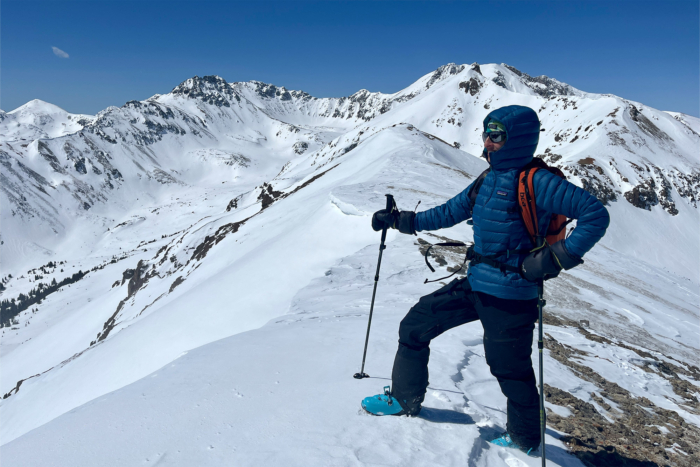
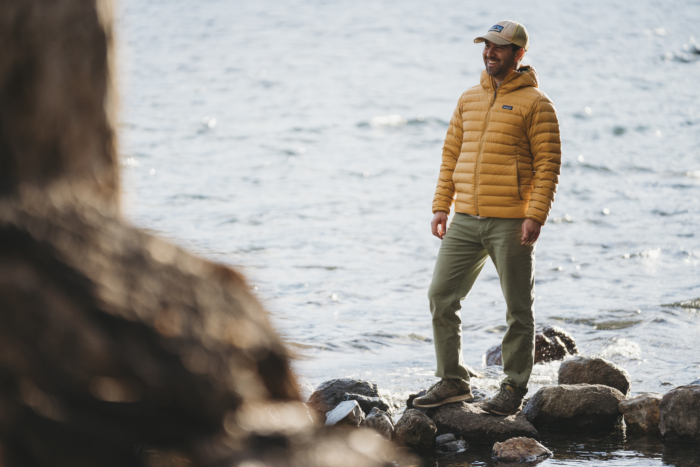
Testing the Down Sweater on a windy ski tour in Colorado’s Sawatch Range; (photo/Elk Raven Photography)
-
-
-
-
(Photo/Elk Raven Photography)
-
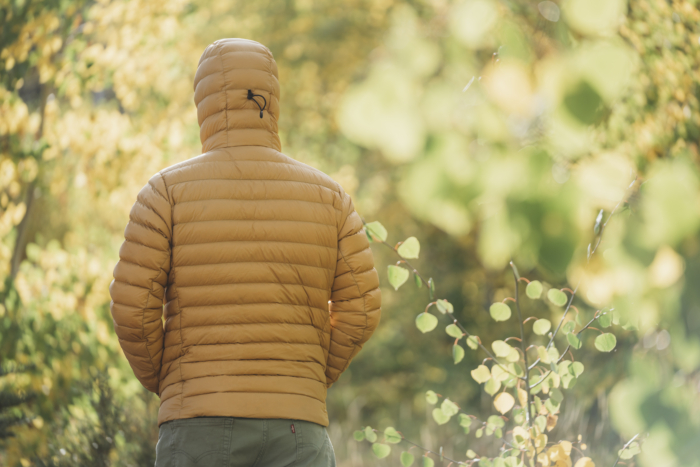
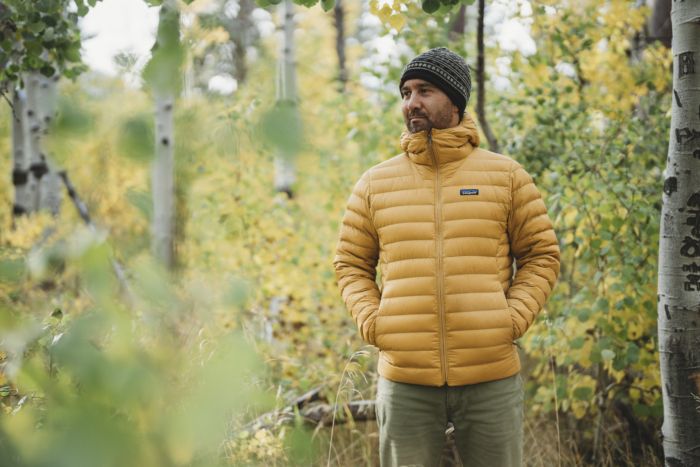
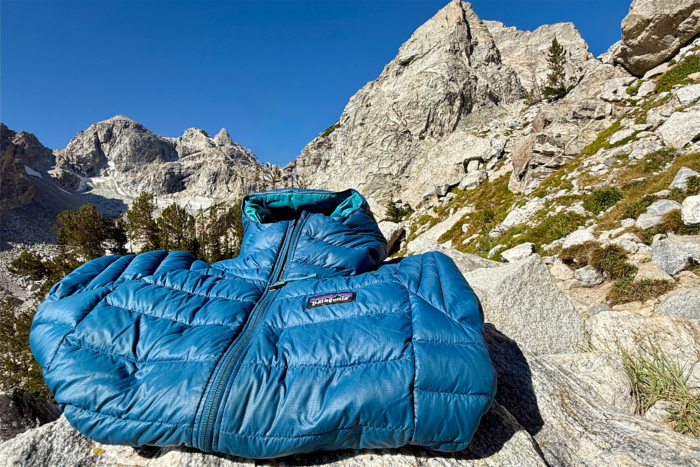
The Patagonia Down Sweater Hoody keeps you warm from sun up to sun down; (photo/Elk Raven Photography)
Specifications
Pros & Cons
Pros
- Durable, weather-resistance
- Simple, classic style
- Comfortable fit
- Includes 5 total pockets
Cons
- On the heavier side for a technical piece
- Hood snug over helmet
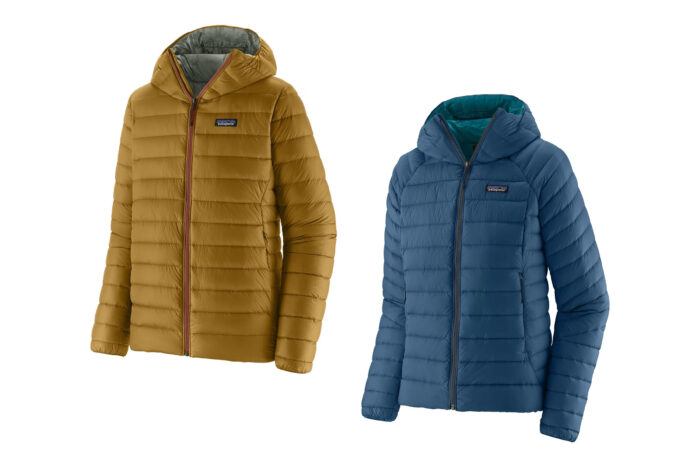
If there’s a gold standard for a do-it-all down jacket, the Patagonia Down Sweater Hoody might be it. We’ve worn it everywhere from snowy hikes in Colorado’s Elk and Sangre de Cristo mountains to windy summits and everyday town laps, and it consistently delivers dependable warmth without overcomplicating things. The latest version is warmer than ever, making it a true four-season workhorse that balances performance, durability, and clean style.
The Tech: Patagonia packs this jacket with 800-fill-power down and now includes 5.3 ounces of insulation for a noticeable bump in warmth. The NetPlus shell is made from recycled fishing nets, adding durability and wind resistance while reducing ocean plastic waste. The updated fit is more tailored than past versions but still allows plenty of room for layering. It stuffs into its own internal chest pocket for packing.
Fit Profile: The fit lands in a very usable middle ground, with enough room for a midlayer underneath but a trim enough cut to still feel streamlined around town. It layers comfortably under a shell and never feels overly boxy through the torso. The hood runs snug, which helps with weather protection but limits helmet compatibility.
What We Like: The warmth-to-weight balance hits an absolute sweet spot for everyday mountain use. It layers effortlessly over a baselayer or under a shell, allowing full mobility for scrambles, ski transitions, and bike commutes. It is also remarkably tough—one tester even relied on it as his primary insulator for a full Pacific Crest Trail thru-hike, where it handled drizzle, snow, and weeks of heavy wear without a single issue.
What We Don’t: The hood is snug and wind-blocking, but it isn’t comfortable over a climbing or ski helmet. It also isn’t as ultralight or alpine-focused as the Arc’teryx Cerium Hoody, so high-output climbers chasing minimal weight may want something more technical.
Should You Buy It? If you want one highly dependable down jacket that seamlessly transitions from rugged mountain adventures to daily town wear without feeling overly technical or fragile, the Patagonia Down Sweater Hoody is the best investment you can make.
Outdoor Research Helium Down Hoodie
-
-
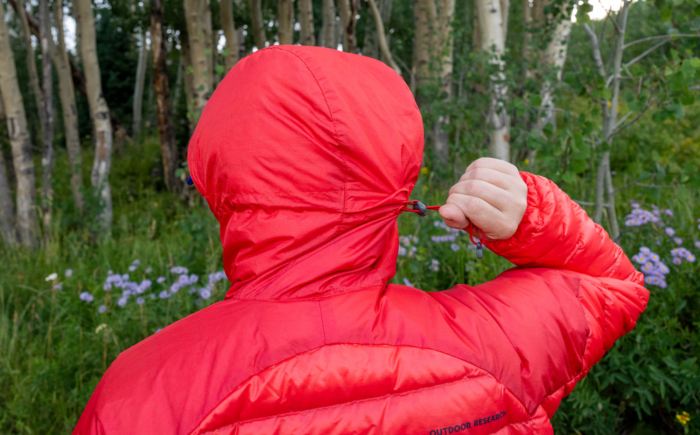
Single-pull hood adjustment cinches down easily for a snug, wind-blocking fit; (photo/Conni Mahoney)
-
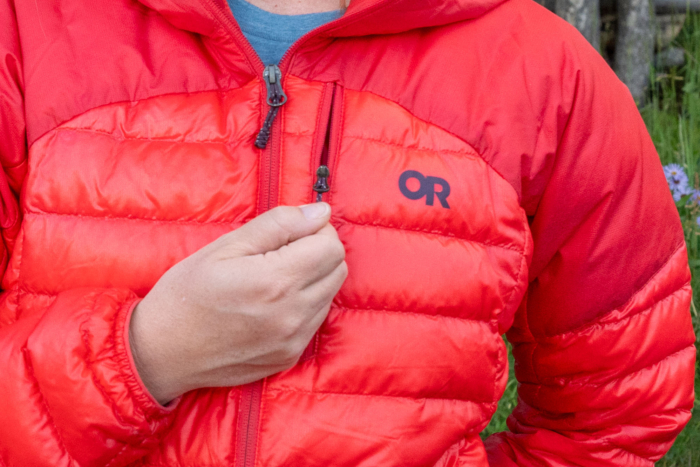
Glove-friendly zipper pulls and smooth-running zippers make for quick adjustment; (photo/Conni Mahoney)
-
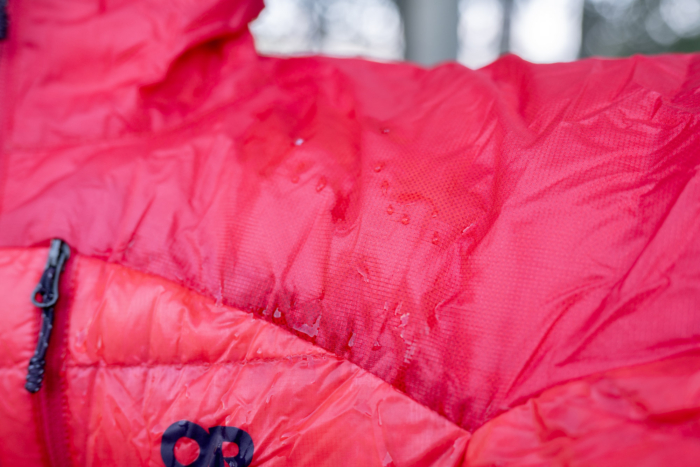
Pertex Quantum Shield sheds light precipitation and resists abrasion; (photo/Conni Mahoney)
-
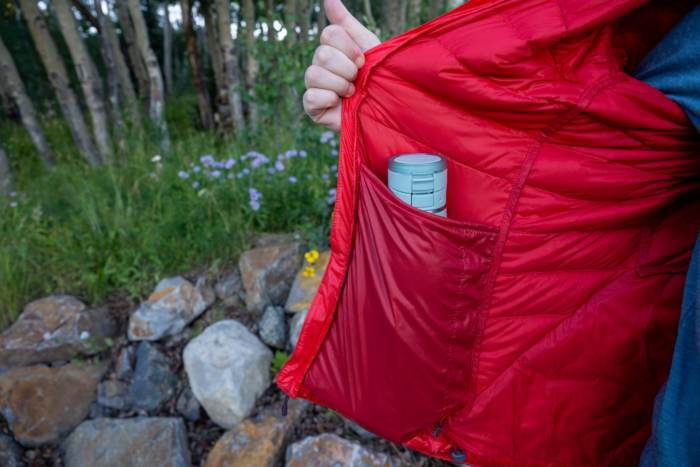
Roomy internal pocket easily swallows a full-size water bottle; (photo/Conni Mahoney)
Specifications
Pros & Cons
Pros
- Incredible weather resistance
- Durable
- Responsible Down Standard (RDS) certified down
- Large amounts of storage
Cons
- Cozy but not built for supreme warmth
- Not super packable
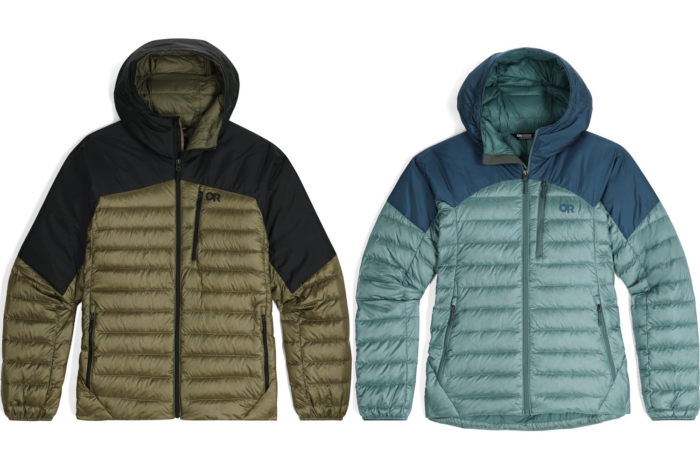
The Outdoor Research’s Helium Down Hoodie ($299) is the jacket we kept reaching for when the forecast looked uncertain. It handled early-winter getaways, shoulder-season hikes, and everyday layering with a reassuring mix of durability, weather resistance, and all-day comfort. It’s not built for the harshest cold in this lineup, but it thrives in that broad middle ground where conditions can shift fast.
The Tech: The Helium pairs 800+ fill down with a hybrid Pertex construction. The hood and shoulders use Pertex Shield 30D ripstop for added abrasion resistance and waterproof protection where precipitation hits first. The body features Pertex Diamond Fuse fabric, which uses interlocking diamond-shaped filaments to boost durability without adding weight. This combination makes it one of the most rugged “active” puffies in our testing lineup.
Fit Profile: The athletic cut layers easily under a shell or over a light fleece without feeling tight through the torso. It’s trimmer than casual puffies, but not so trim that it loses everyday versatility. The overall shape feels clean and balanced, which is a big part of why it works so well from trail to town.
What We Like: Weather resistance is the big selling point here. Compared to the Patagonia Down Sweater, the Helium offers better protection in mixed conditions thanks to its reinforced waterproof shoulders, and the overall durability feels especially confidence-inspiring for such a lightweight jacket. It is a true technical workhorse that can handle repeated use without feeling fragile.
What We Don’t: It’s not the warmest jacket in the lineup and works best in mild to moderately cold conditions. Because of the hybrid shell, it doesn’t have the same cloud-like loft or plushness as the Rab Mythic Alpine Down Jacket, which is the better pick for deeper cold and more static use.
Should You Buy It? If you want a durable, weather-resistant everyday puffy that handles variable conditions without delicate handling, the Helium Down Hoodie is a reliable choice. It is a versatile and protective layer that earns its keep on any unpredictable mountain adventure.
Arc’teryx Cerium Hoody
Specifications
Pros & Cons
Pros
- Hybrid insulation design is helpful in wet weather
- Solid warmth-to-weight ratio
- Comfortable, stylish fit
Cons
- Expensive
- No integrated stuff sack
Read Review: Safe for Sweat: Arc’teryx Cerium Down Jacket Is Ideal for High Output.
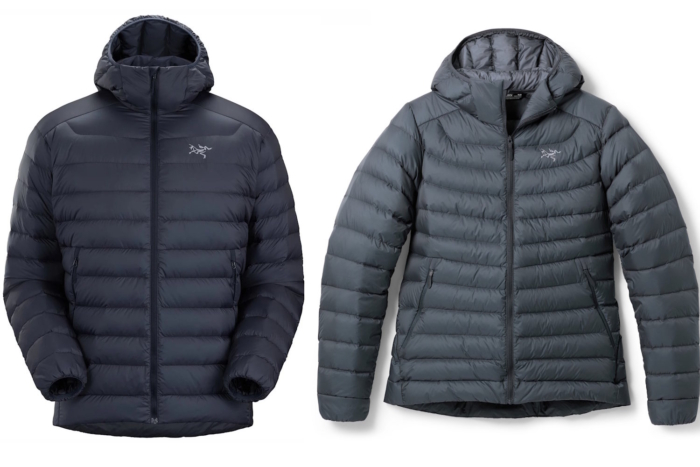
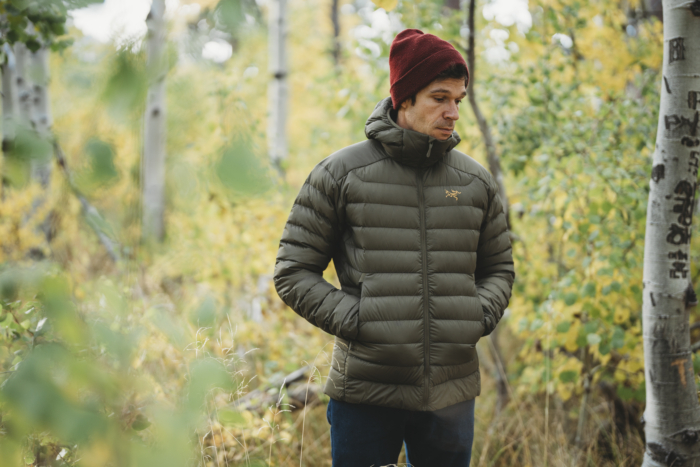
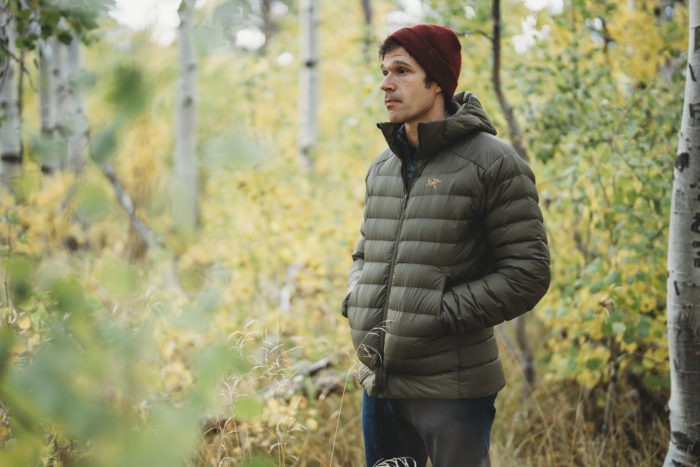
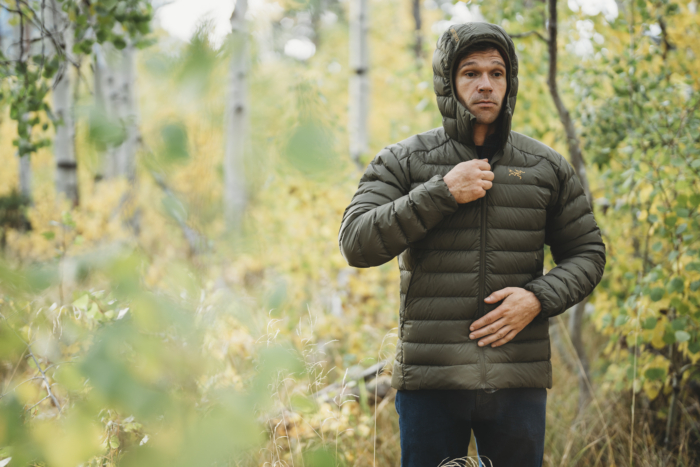
We’ve worn the Arc’teryx Cerium Down Hoody ($400) everywhere from windy spring belays in the desert to freezing alpine starts in the Cascades, and it consistently delivers an unmatched warmth-to-weight ratio. Redesigned to be more sustainable while maintaining its legendary fit, the Cerium strikes a rare balance between technical alpine performance and sleek, everyday wearability.
The Tech: Arc’teryx uses Down Composite Mapping, strategically placing premium 850-fill-power European white goose down in the core and hood for maximum warmth, while utilizing synthetic Coreloft insulation in moisture-prone areas (like the shoulders, underarms, and cuffs). The Arato 15D nylon shell is incredibly light but features a dope-dyed yarn to reduce environmental impact. It comes with a separate stuff sack for packing.
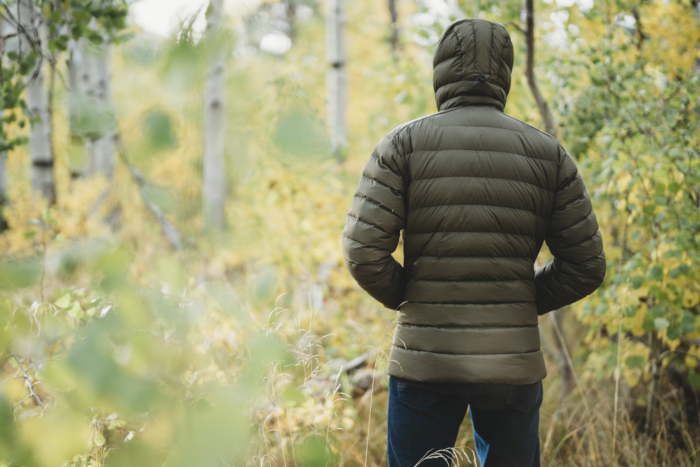
Fit Profile: This is one of the trimmest and most alpine-ready fits in the guide. It sits close to the body and layers beautifully under a shell or over a light baselayer without bunching. The articulation is excellent, especially through the shoulders and arms, which makes it feel especially dialed for climbing and ski touring.
What We Like: The fit and articulation are flawless; it moves with your body rather than bunching up under a shell or a harness. The strategic use of synthetic insulation means you don’t instantly lose all your warmth if you sweat through the underarms or get caught in a light drizzle. Plus, it packs down to the size of a grapefruit.
What We Don’t: It comes with a steep Arc’teryx price tag. The ultra-lightweight 15-denier face fabric also requires more care around sharp branches or campfires than the Mountain Hardwear Stretchdown Hoody, which feels much burlier for daily use and abuse.
Should You Buy It? If you are an active hiker, climber, or skier who wants a meticulously tailored, exceptionally warm jacket that layers perfectly and weighs next to nothing, the Cerium is worth the investment.
Mountain Hardwear Ghost Whisperer Hoody
-
-
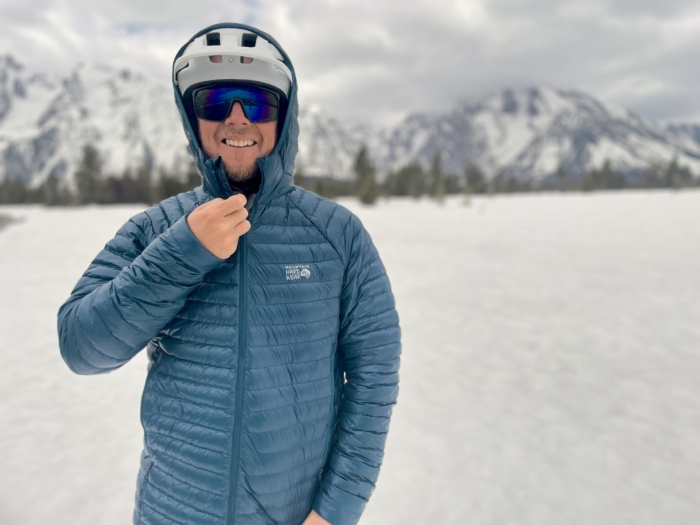
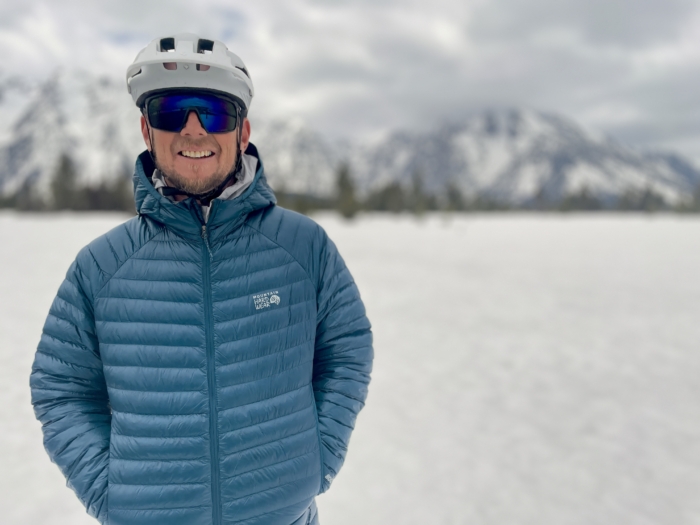
The Mountain Hardwear Ghost Whisperer is so light, yet it's ideal for hikes or bike rides during spring, summer and fall; (photo/Elk Raven Photography)
-
-
The Mountain Hardwear Ghost Whisperer is so light, yet it's ideal for hikes or bike rides during spring, summer and fall; (photo/Elk Raven Photography)
-
Specifications
Pros & Cons
Pros
- Legendary warmth-to-weight ratio
- Packs down ridiculously small
- Breathable
- Recycled fabrics
- Improved hood and cuffs
Cons
- No chest pocket
- Ultralight shell feels delicate
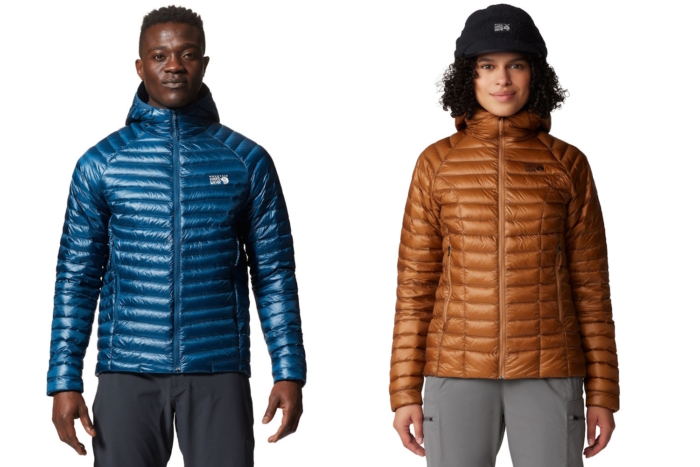
No down jacket roundup is complete without the legendary Mountain Hardwear Ghost Whisperer ($380). More than a decade after it redefined the ultralight category, it still earns its place for fast-and-light missions where every ounce matters. We’ve worn it on pre-dawn ski tours in the Tetons, windy Colorado summits, and snowy spring bike rides through Grand Teton National Park, and it continues to deliver an elite warmth-to-weight ratio in a barely-there package.
The Tech: The latest version weighs just 8.8 ounces and packs 3 ounces of 800-fill RDS-certified down into a fully recycled 10D ripstop shell. The updated design adds a touch more durability and warmth while maintaining its ultralight identity. An adjustable hem and slim cut make it ideal for streamlined layering, and it compresses into its pocket into a package smaller than almost anything else we’ve tested.
Fit Profile: The fit is slim and highly streamlined, which helps it disappear under a shell or into a pack. It doesn’t leave much room for bulky layers underneath, but it feels efficient and mobile rather than restrictive. This is a jacket built to shave bulk, not one designed around roomy everyday comfort.
What We Like: The packability is unmatched. It disappears into a pack and still provides surprisingly effective warmth on active days. Breathability is excellent for a down jacket, making it one of the few puffy jackets we can comfortably wear while moving uphill. Compared to heavier options, it feels dramatically lighter and more efficient for high-output objectives.
What We Don’t: It’s noticeably less warm than midweight puffies and isn’t built for prolonged static cold, especially compared to the Rab Mythic Alpine Down Jacket. The ultralight shell, while tougher than it looks, still feels delicate, and we’d welcome a chest pocket for small essentials.
Should You Buy It? If you’re an alpinist, ski tourer, or weight-conscious hiker who prioritizes minimal bulk and maximum efficiency, the Ghost Whisperer remains one of the best ultralight down jackets ever made. For deep winter or rugged everyday wear, you’ll want something burlier—but for fast missions where weight is everything, this classic still delivers.
Rab Microlight Windstopper Down Hoody
-
-
(photo/Elk Raven Photography)
Specifications
Pros & Cons
Pros
- Exceptional wind and weather resistance
- Durable recycled materials
- Trim, articulated fit with comfortable hood and cuffs
- Warm yet breathable
Cons
- Shell can soak through in sustained rain
- Slightly stiffer feel than standard Microlight
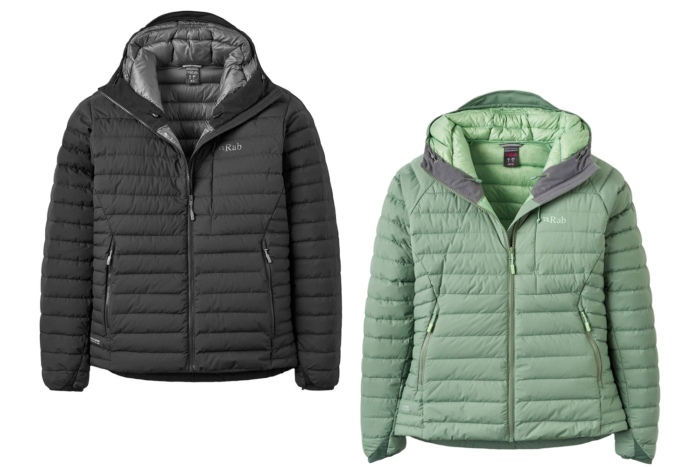
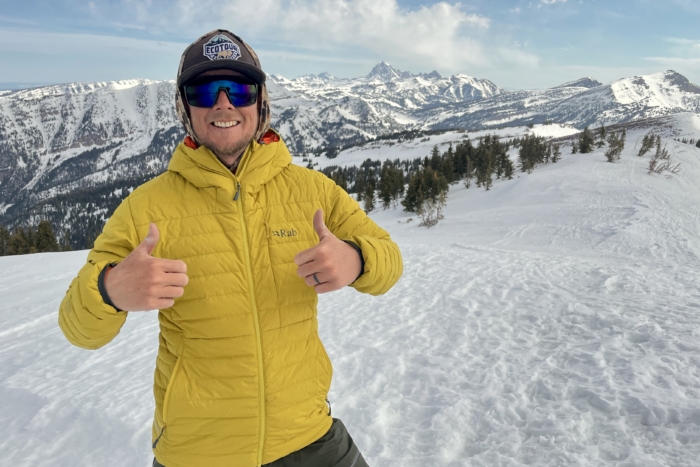
The Rab Microlight Windstopper Hoody ($340) takes a proven favorite and adds an “armored” feel against the elements. By integrating a Gore-Tex Infinium Windstopper membrane, Rab gives this 1-pound puffy a noticeable bump in weather resistance without sacrificing breathability. We’ve worn it on backcountry ski tours in the Tetons and across four seasons of western hiking, where it consistently handled biting gusts and light snow that would have cut right through a standard down jacket.
The Tech: This jacket pairs 700-fill recycled down with a completely windproof shell. A rigid-brim hood, fleece-lined chin guard, and reliable YKK zippers round out a feature set built for rugged mountain use. Despite the added membrane, it remains impressively packable and stuffs easily into its own sack for storage in a pack.
Fit Profile: The fit is athletic without being restrictive, and it strikes a nice middle ground between a trim alpine layer and a more relaxed all-around puffy. It leaves enough room for a light midlayer underneath while still feeling tidy under a shell. The hood and collar create a snug, protective feel around the face, which reinforces its wind-focused identity.
What We Like: The wind protection it provides is a game-changer on exposed ridgelines. While the Mountain Hardwear Storm Whisperer is the better choice for actual rain, the Rab is significantly more breathable. It’s the superior pick for high-output movement in freezing winds, providing total blockage without the internal moisture buildup or “clammy” feel of a fully waterproof jacket.
What We Don’t: Because it prioritizes breathability, it lacks the taped seams of a true hardshell. If maximum wet-weather protection matters more than windproof breathability, the Mountain Hardwear Storm Whisperer is the better choice.
Should You Buy It? If you want a down jacket that excels in cold, windy conditions and feels more protective than a standard puffy without going fully waterproof, the Rab Microlight Windstopper is a great pick. It stands out for shoulder-season hikes, exposed ridgelines, and winter days when blocking wind matters more than shaving every last ounce.
Mountain Hardwear Storm Whisperer
Specifications
Pros & Cons
Pros
- Fully waterproof down insulation
- Excellent breathability for a waterproof jacket
- Durable construction
- Functional features including pit zips and interior pockets
Cons
- Expensive
- Not as bombproof as GORE-TEX in prolonged multiday rain
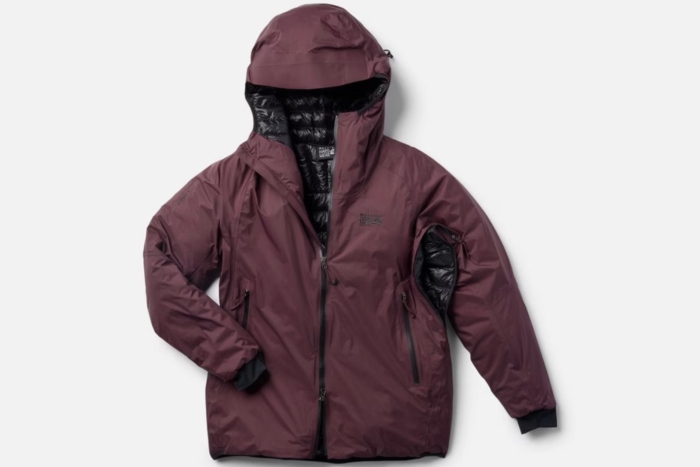
When the forecast calls for true mountain weather, the Mountain Hardwear Storm Whisperer ($600) is the jacket we reach for. Unlike traditional puffies that require a shell in wet conditions, this fuses fully waterproof protection with high-loft down—effectively giving you two jackets in one. We tested it through heavy Teton snow and relentless wind-driven rain; the down never wetted out or lost its loft.
The Tech: The Storm Whisperer pairs premium down with a breathable, seam-sealed shell that seals out sustained precipitation while allowing excess heat to escape. Pit zips dump heat on high-output climbs, adjustable cuffs seal over gloves, and interior drop pockets add real backcountry functionality. The sizing runs true, layering comfortably over a midlayer without feeling bulky.
Fit Profile: The fit is true to size and leaves enough room for a midlayer underneath without turning bulky or awkward. It has more structure than a traditional puffy thanks to its waterproof shell, but it still moves well and doesn’t feel boxy. This is a functional mountain fit that favors protection over sleek minimalism.
What We Like: The weather protection is the differentiator. It sheds heavy snow like a dedicated hardshell while maintaining the comfort of down. While not quite as “bombproof” as traditional Gore-Tex, it breathes better and lacks that stiff, crinkly feel. During rainy ski days in the Tetons this winter—yes, we were desperate and skied in the rain—it kept us dry and warm without internal clamminess.
What We Don’t: Like any shell, sustained rain over multiple days will eventually saturate the face fabric. It’s also less supple and less packable than the Rab Microlight Windstopper, so it makes the most sense when true wet-weather performance is the priority. At $600, it’s a serious investment. While it effectively replaces two separate layers, the price still requires significant budget consideration.
Should You Buy It? If you regularly ski, backpack, or climb in wet, stormy conditions and want a single, streamlined layer that simplifies your kit, the Storm Whisperer earns its place. It performs when the weather turns ugly.
Patagonia Durable Down Parka
-
-
(Photo/Erika Courtney)
-
(Photo/Erika Courtney)
-
(Photo/Andrew McLemore)
-
(Photo/Mary Andino)
-
(Photo/Mary Andino)
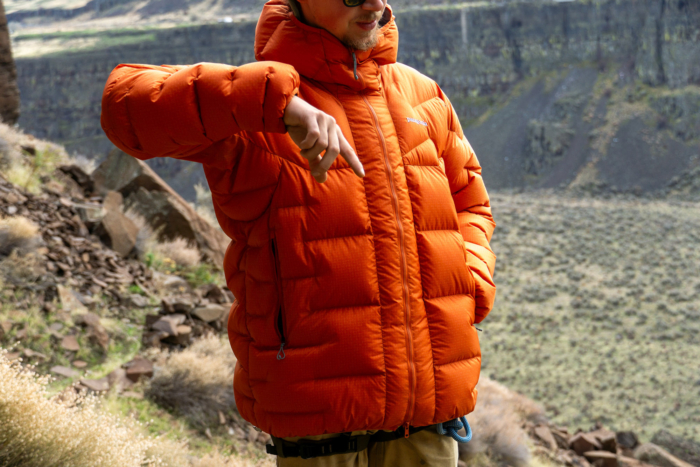
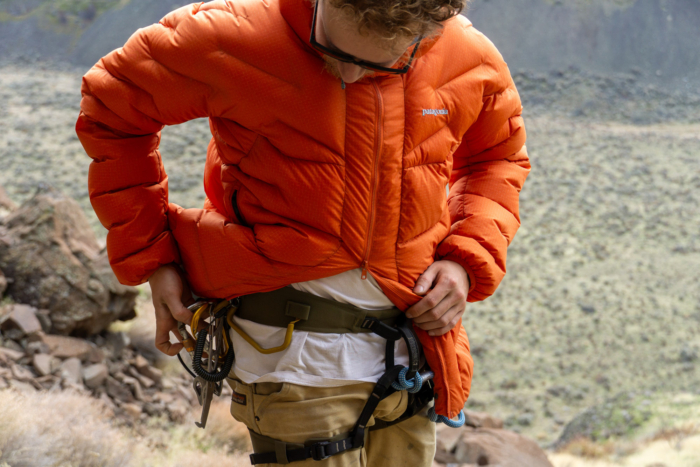
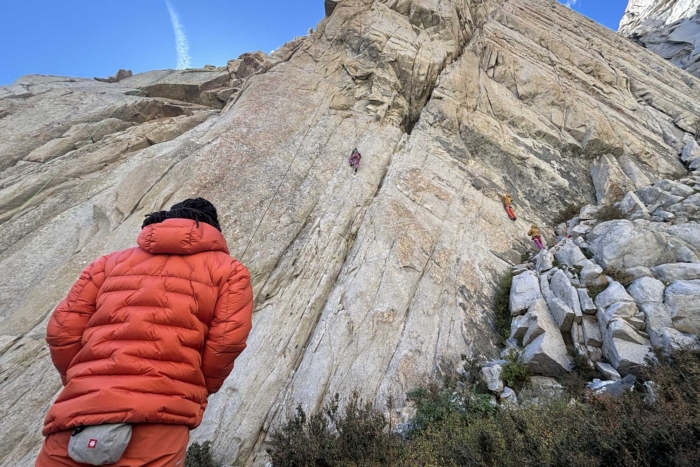
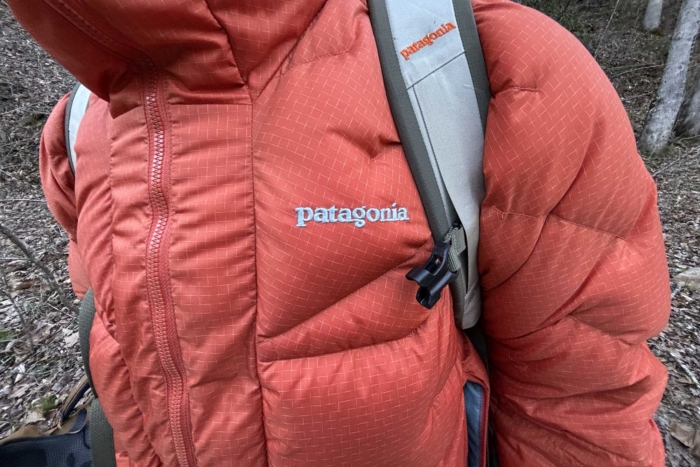
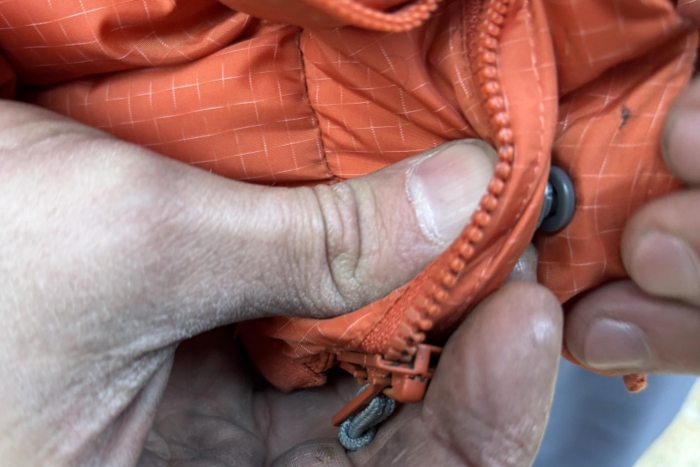
Specifications
Pros & Cons
Pros
- Super-warm
- Extra-durable
- Decently packable
- Lots of mobility
Cons
- No cinches for wrist, waist
- Expensive
Read Review: A Belay Parka Designed to Take a Beating: Patagonia Durable Down Parka Review
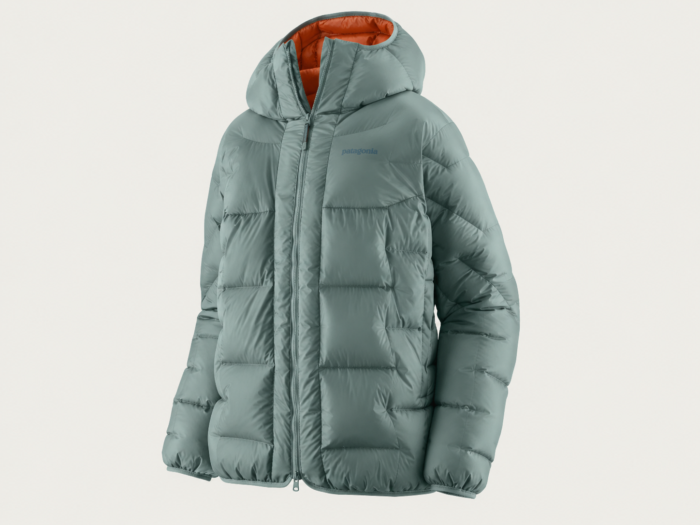
Cold belays, exposed ledges, and abrasive rock can make ordinary puffies feel woefully underprepared. The Patagonia Durable Down Parka ($575) answers with serious warmth, unusually tough materials, and a climbing-focused design that handles rough approaches and long stretches of standing still. It’s heavier and bulkier than most down jackets in this guide, but few offer the same combination of insulation, mobility, and durability.
The Tech: Patagonia fills the parka with 800-fill-power duck down and wraps it in a recycled high-tensile nylon shell reinforced with Ultra-PE ripstop polyester. The lighter Pertex Quantum lining uses recycled ocean plastic, while PFAS-free DWR treatments on the shell and lining help shed light moisture. Climbing-specific details include a helmet-compatible hood, broad shoulders, discontinuous quilting for unrestricted movement, oversized interior dump pockets, and a two-way zipper that opens from the bottom for easier access to a harness.
Fit Profile: The cut is roomy enough to pull over climbing layers and broad through the shoulders for overhead movement. It feels puffy and substantial rather than trim, but the articulation keeps it from becoming restrictive. The longer, belay-friendly shape adds coverage during static periods, though there are no hem cinches or adjustable wrist closures to seal out gusts.
What We Like: Over six months, our tester wore the Durable Down Parka while climbing in California’s Pine Creek Canyon, camping and climbing at Red River Gorge, and hiking through single-digit winter weather in Atlanta. The warmth proved especially valuable during long belays, freezing mornings, and nights when sleeping gear alone wasn’t enough. Compared with the Rab Mythic Alpine, the Patagonia is far heavier and less packable, but it offers considerably more abrasion resistance and stationary warmth.
What We Don’t: At 21 ounces, it takes up meaningful space in a pack and feels excessive for high-output movement. The lack of hem and cuff adjustments can also let cold air creep in during strong winds.
Should You Buy It? Climbers who regularly face cold belays, rough rock, and long days on exposed walls will appreciate the Durable Down Parka’s warmth and resilience. It’s overkill for casual hiking, but for demanding climbing environments, its specialized design earns its weight.
More Down Jackets That Deliver
-
-
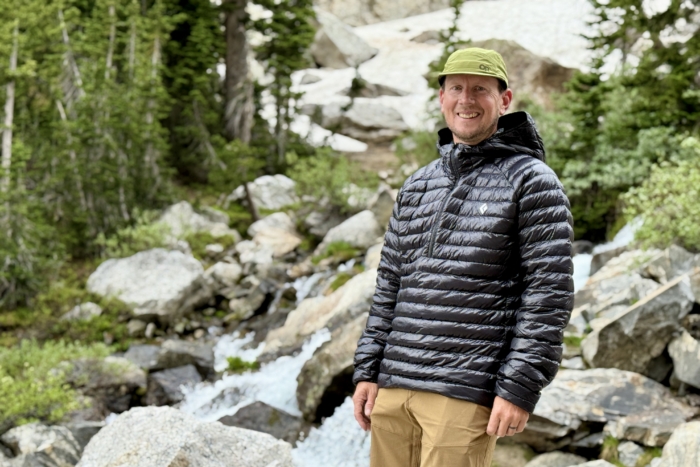
This ultralight hoody delivers surprising warmth when the alpine air turns cold, making it a four-season staple; (photo/Elk Raven Photography)
-
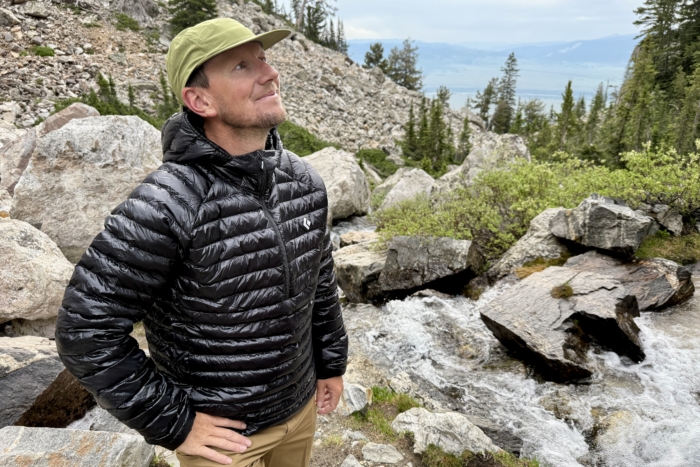
The Deploy nails ultralight alpine performance, but we do miss having a place to stash our hands; (photo/Elk Raven Photography)
-
(Photo/Elk Raven Photography)
-
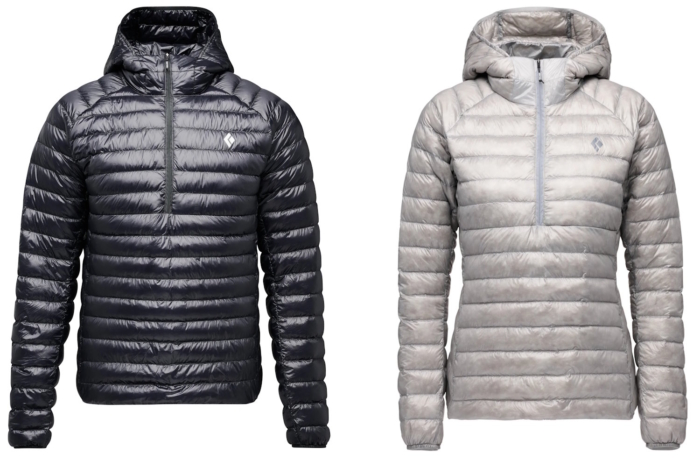
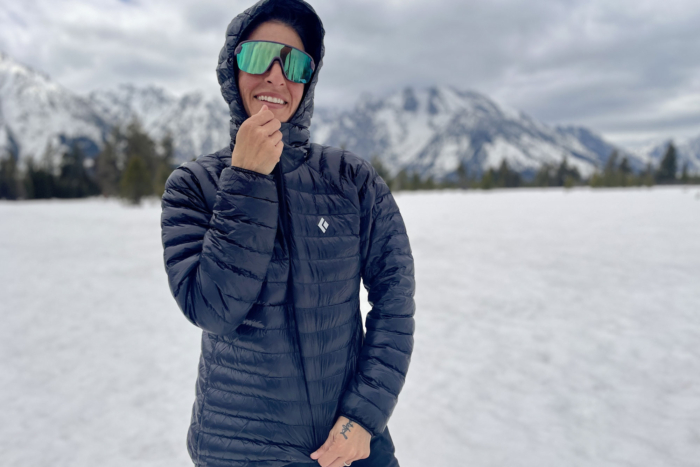
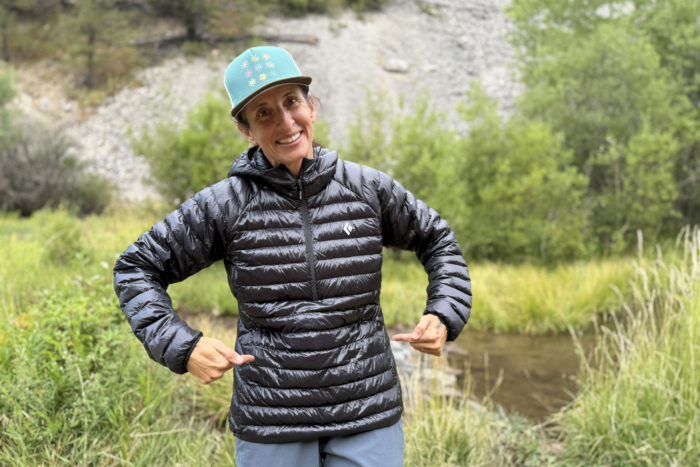
Specifications
Pros & Cons
Pros
- Incredibly ultralight
- Very packable
- Impressive warmth in small package
- Pullover style works well
Cons
- Expensive for such a specific jacket
- Delicate outer fabric
- No pockets
When Black Diamond announced the Black Diamond Deploy Down 0.5 Pullover Hoody ($499) as the lightest down jacket in the world, we were skeptical. At just 5.2 ounces, it’s barely heavier than a wind shirt. But after wearing it on windy fall hikes in the Tetons and fast-moving spring ascents in Colorado, we came away impressed. For such a feathery layer, it delivers surprising warmth and thrives during high-output alpine missions where speed and minimal weight are the only priorities.
The Tech: The Deploy uses premium 1,000-fill-power down wrapped in an ultrathin 4-denier nylon, making it one of the most minimalist puffies ever built. The half-zip pullover design eliminates the weight of a full zipper, layers smoothly under a climbing harness or backpack, and maintains a trim, athletic fit. It is stripped of almost every traditional feature to achieve its record-breaking weight.
Fit Profile: The fit is very trim and highly specialized, sitting close to the body for efficient layering under a shell or harness. It doesn’t offer much extra space through the torso, and the pullover design reinforces that stripped-down, performance-first feel. This is a purpose-built alpine fit, not an all-day casual one.
What We Like: The warmth-to-weight ratio is staggering. It disappears in a pack — compressing into its own internal chest pocket to the size of a small apple — yet provides meaningful insulation during shoulder-season objectives and fast summit pushes. The streamlined design feels purpose-built for climbers and alpine athletes who move light and fast and don’t want to be weighed down by redundant zippers or heavy fabrics.
What We Don’t: The 4-denier fabric is essentially see-through and demands extreme care around abrasive rock, trees, and sharp gear. It also lacks hand pockets, and the $500 price tag is steep for such a stripped-down specialty piece. Compared to the Mountain Hardwear Ghost Whisperer, it’s dramatically lighter but sacrifices significant durability and usability.
Should You Buy It? If you’re an alpine climber, mountain runner, or ounce-counter chasing big objectives where every gram matters, the Deploy is an elite specialty tool. For general hiking or rugged everyday wear, a slightly heavier and more feature-rich jacket like the Patagonia Down Sweater will make much more sense.
-
-
(photo/Elk Raven Photography)

Specifications
Pros & Cons
Pros
- Lightweight & packable
- Comfortable
- Perfect fit
- Stellar warmth-to-weight ratio
- Solid weather-resistance
Cons
- Needs more pockets
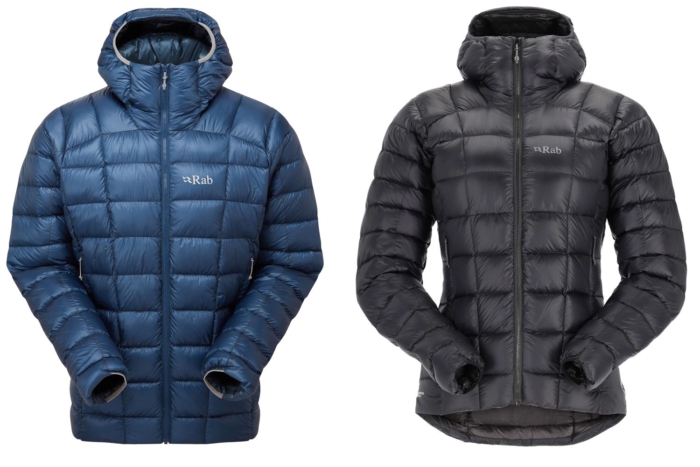
The Rab Men’s Mythic Alpine Down Jacket ($390) minimalist masterpiece that punches far above its weight. At just 11 ounces, it delivers a warmth-to-weight ratio that few competitors can touch. Stuffed with 900-fill RDS-certified European goose down—treated with Nikwax for moisture resistance—it quickly became our go-to for high-elevation backpacking and chilly alpine starts where every gram matters.
The Tech: Rab utilizes a smart zoned construction: box baffles in the core and hood maximize heat retention, while slimmer stitch-through baffles in the arms preserve mobility for technical movement. The 10D Pertex Quantum shell is impressively ultralight and sheds light spindrift with ease. It comes with a separate stuff sack for packing.
Fit Profile: This is a trim, alpine fit with very little extra room through the torso and sleeves. It layers beautifully under a shell and feels efficient on technical terrain, but it is less forgiving than roomier everyday puffies.
What We Like: We felt the warmth of this jacket immediately. It’s significantly loftier than other jackets in the 11-ounce class, yet it packs down to the size of a large grapefruit. Details like the pre-curved sleeves and the stiffened hood peak reveal its climbing heritage. It feels less like a casual jacket and more like a precision tool for the mountains.
What We Don’t: The pursuit of ultralight performance comes with some tradeoffs. There is no hood adjustment, and storage is sparse — we frequently found ourselves wishing for an internal stash pocket for a phone or snack. The 10D fabric is also thin, so you’ll want to be more careful around sharp granite or stray embers than you would with the Patagonia Down Sweater.
Should You Buy It? If you prioritize minimalist efficiency and serious alpine warmth over extra pockets and “lifestyle” features, the Mythic Alpine is a standout. It’s an elite insulator for those moving fast in big mountains.
-
-
-
-
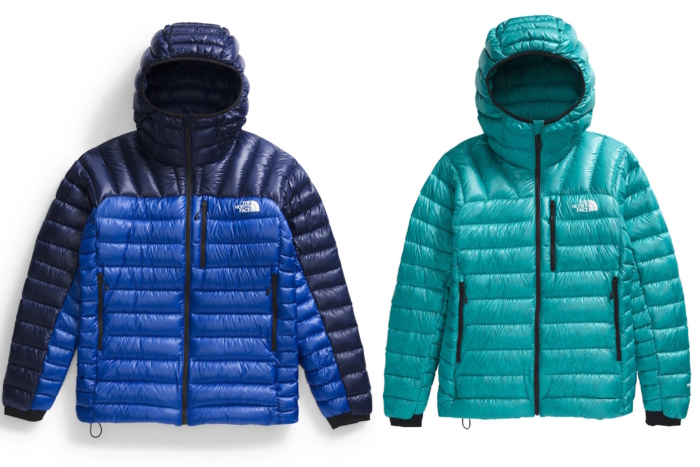
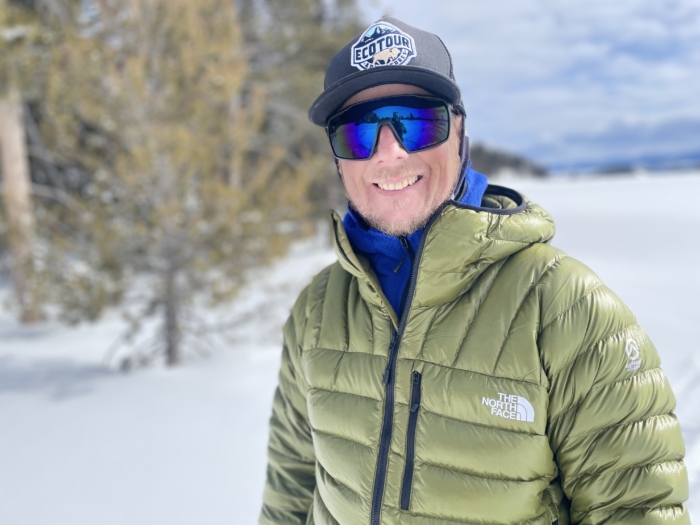
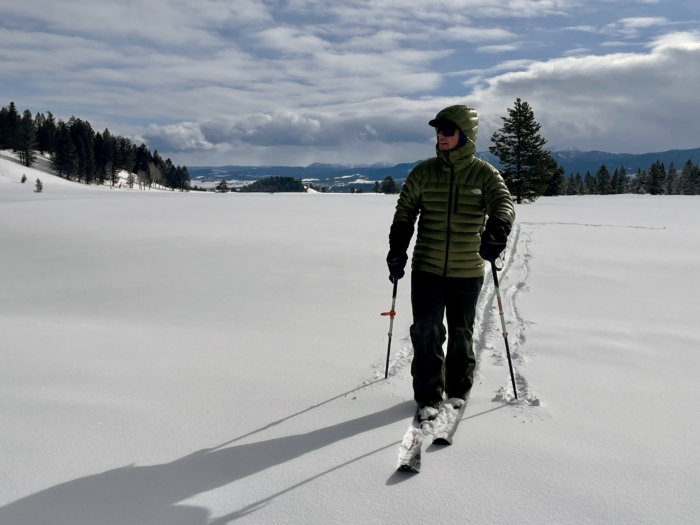
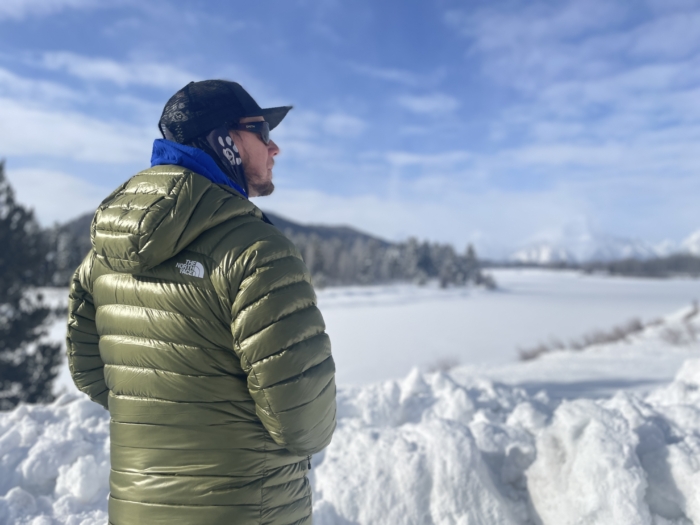
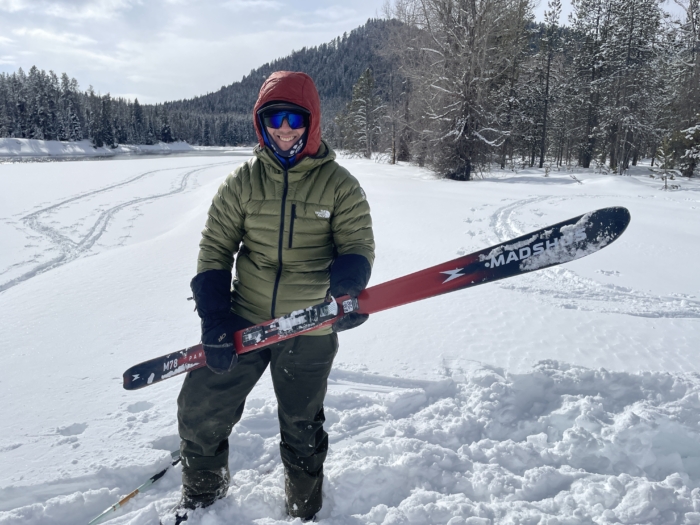
The North Face Breithorn Hoodie is a super warm, comfy jacket that employs water-resistant down; (photo/Elk Raven Photography)
-
Specifications
Pros & Cons
Pros
- Excellent warmth-to-weight ratio
- Ultimate mobility
- Keeps you warm when slightly wet
- 5 well-placed generous pockets keep necessities accessible
- Packable
- Extremely comfortable
Cons
- Slim fit makes layering underneath difficult
- Soft outer material raises durability concerns
- Pricey
The North Face Summit Series Breithorn Hoodie ($430) is a warm, lightweight alpine layer that blends elite technical performance with surprising everyday comfort. Stuffed with 800-fill ProDown, it’s designed to resist moisture better than traditional down. In our testing during misty hikes, sweat-heavy climbs, and snowy wildlife tours in the Tetons, it retained its loft and warmth impressively well, proving its worth as a reliable midlayer for variable spring and fall conditions.
The Tech: This jacket uses 800-fill ProDown paired with a recycled 15-denier ripstop shell and a non-PFC DWR finish for solid weather resistance. The feature set is clearly built for technical mountain use, including water-resistant zippers, a helmet-compatible hood, and a generous five-pocket layout with two internal drop-ins for drying out gloves. Despite the technical pedigree, the fabric feels noticeably soft against the skin, and the entire jacket packs down easily into its own hand pocket.
Fit Profile: The fit is slim and alpine-minded, yet not so restrictive that it loses everyday appeal. It layers well under a shell and still allows decent freedom of movement through the shoulders. Depending on your build, heavy layering options may be limited, especially compared to the roomier options in this guide.
What We Like: The warmth-to-weight ratio is solid, and the fabric stretches comfortably during intense activities without feeling rigid or crinkly. It handles light moisture better than most conventional down jackets, making it suitable for all-day wear. We also value the well-designed pocket layout, which simplifies organizing essentials while on the go.
What We Don’t: The slim fit limits layering options depending on your build, so if layering is important, consider the Cotopaxi Fuego. We also noticed some spots where feathers started to escape early in testing, and the 15D shell shows wear after moderate use.
Should You Buy It? If you want a lightweight alpine down jacket that balances comfort, mobility, and improved moisture resistance, the Breithorn is a strong choice. It’s an ideal “mountain-to-town” piece for big days in variable conditions where you need performance that still looks and feels good at the brewery afterward.
Specifications
Pros & Cons
Pros
- Extremely durable
- No stitches or glue to degrade or restrict movement
- Sheds water and resists winds like no other
- Versatile
- Zippered hand and chest pockets
- Super stylish
Cons
- Heavy
- Not as packable as others
Read Review: The Best Puffy of All Time, According to A Lifelong Adventurer
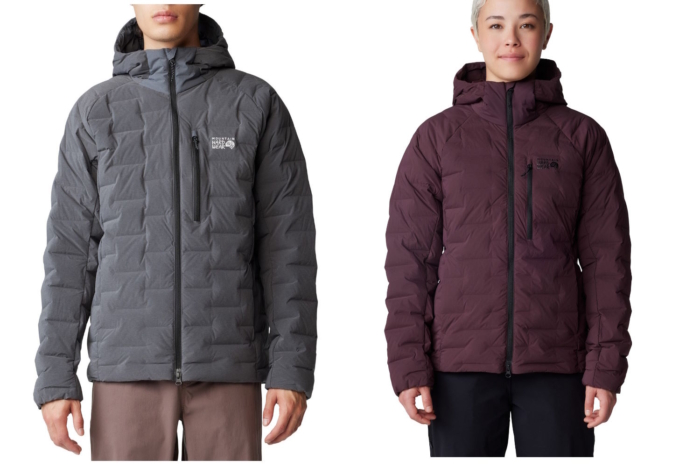
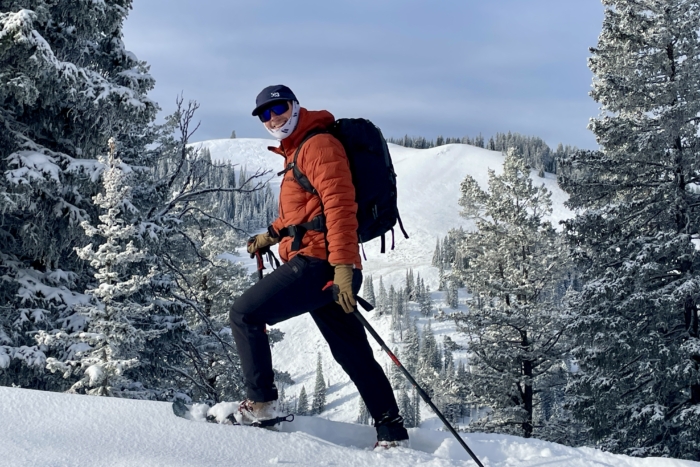
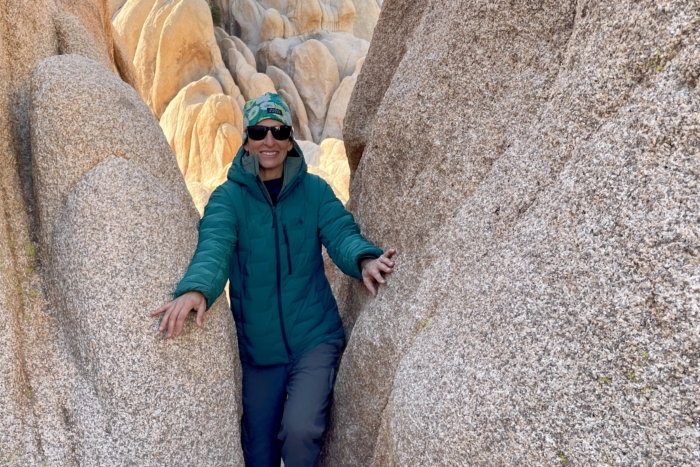
The Mountain Hardwear Stretchdown Hoody Down Jacket ($320) is one of the most comfortable and mobile down jackets we’ve tested. Designed to blend the warmth of down with the flexibility of a softshell, it moves effortlessly through ski tours, alpine climbs, bike commutes, and daily wear. We’ve worn it in sub-freezing temps at 10,000 feet, on windy summits, and during surprise spring rainstorms, and it handled it all without the restrictive feel of a traditional puffy.
The Tech: The Stretchdown uses 700-fill RDS-certified down and a durable 20D stretch nylon shell with stitch-free baffle construction. The stretch-woven fabric allows for natural movement while improving abrasion resistance and weather protection. Thoughtful features include a roomy stretch hood, three fleece-lined zip pockets, an internal drop pocket, elastic cuffs, and an adjustable hem to seal out the elements.
Fit Profile: The fit is slightly roomier than most technical alpine puffies, but the stretch fabric keeps it feeling mobile instead of bulky. It layers easily over a baselayer or fleece and doesn’t fight your body on high-reach movements. Rather than a super trim silhouette, it prioritizes comfort, articulation, and all-day wearability.
What We Like: The mobility is unmatched. It stretches and articulates naturally during high-output movement, making it far more comfortable than traditional puffies. Compared to the ultralight Ghost Whisperer, which is built for minimal weight, the Stretchdown is a much more rugged and durable piece that shrugs off wind, snow, and light abrasion with ease. Water beads effectively off the surface, and the entire jacket feels built to handle a lifetime of hard use.
What We Don’t: The tradeoff for that comfort and durability is packability. It doesn’t pack down nearly as small as minimalist options like the Black Diamond Deploy, and ounce-counters may find it heavier than more technical alternatives.
Should You Buy It? If durability, mobility, and all-day comfort matter more than shaving every possible gram, the Stretchdown Hoody is a versatile, hard-wearing layer built for active mountain use. It’s the perfect choice for anyone who wants a “daily driver” that can still handle a technical summit push.
-
-
(photo/Elk Raven Photography)
Specifications
Pros & Cons
Pros
- Comfortable, soft to the touch
- Stylish
- Perfect fit
- Versatile uses
- RDS-Certified Down
Cons
- Soaked up more water than others
- Average warmth for the weight
- Outer fabric showing wear and tear with little use
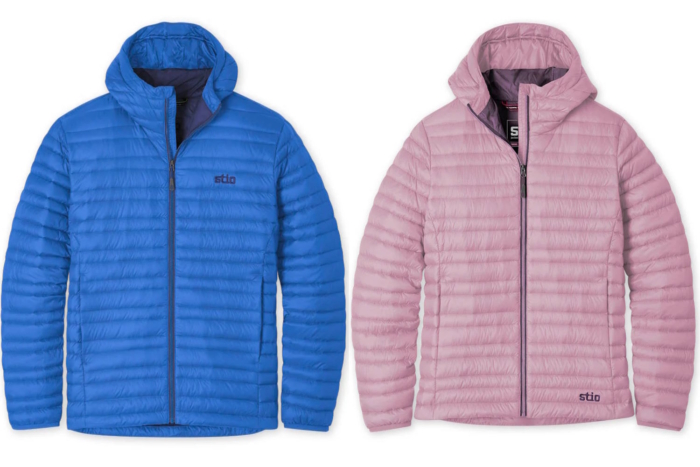
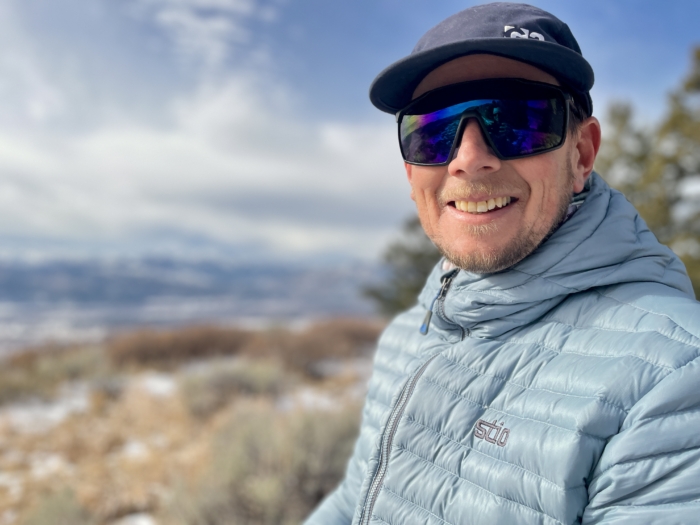
We all want to look good while putting in real mountain miles, and the Stio Pinion Down Hooded Jacket ($299) strikes that balance better than most. We tested it in the Tetons on spring ski tours, windy Nordic outings, and snowy driveway sessions in Jackson, and it transitioned easily from backcountry objectives to town wear without skipping a beat.
The Tech: The Pinion uses 800-fill Allied Feather + Down HyperDRY insulation wrapped in a recycled 20D Pertex Quantum Shadow Ripstop shell. This combination provides excellent wind resistance and water-resistant insulation, maintaining loft even when damp. The feature set includes an adjustable hood, zippered hand pockets, and an interior security pocket that doubles as a stuff sack.
Fit Profile: This cut strikes a smart balance between mountain functionality and everyday comfort. It has enough room for a light midlayer and feels less restrictive through the torso than trim alpine pieces, while still staying streamlined enough to layer under a shell.
What We Like: The soft hand feel, flattering fit, and clean design make it one of the most stylish options in this lineup. It blocks wind effectively and performs well during high-output use, from uphill ski laps to those sleet-filled Nordic tours where moisture management is key. Compared to the Patagonia Down Sweater, the Pinion feels more supple and “active,” making it comfortable and versatile enough to wear all day long.
What We Don’t: It’s not warm enough for long summit hangs or extended static cold in sub-zero temp so if that’s a priority consider the warmer Arc’teryx Cerium. We also noticed some minor early abrasion on the face fabric during testing; the durability simply doesn’t feel on par with tougher, more “rugged” options.
Should You Buy It? If you want a versatile, good-looking down jacket for active use that moves easily from trail to town, the Pinion is a solid pick. It is the perfect choice for the mountain athlete who values everyday appeal as much as technical performance
Specifications
Pros & Cons
Pros
- Packs into its own pocket
- Increased bust circumference on women’s jacket for improved fit
- 20-denier ripstop nylon liner
Cons
- Not premium construction for rugged outdoor play
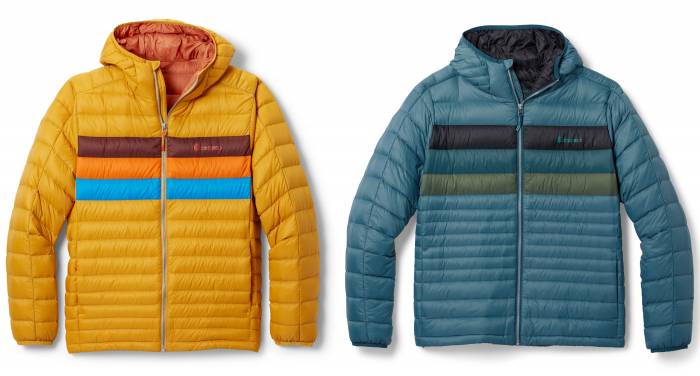
Of all the down jackets we tested, the Cotopaxi Fuego ($295) drew the most “ooh, nice jacket” comments. Cotopaxi has built its reputation on bold design and responsible manufacturing, and the Fuego carries that identity forward with a retro-inspired aesthetic that transitions effortlessly from mountain trails to town laps.
The Tech: The Fuego uses 800-fill water-resistant down wrapped in a 20D ripstop nylon shell with a DWR finish for light weather resistance. Two zippered hand pockets and internal stash pockets add practical storage for daily use. It packs into its own internal pocket.
Fit Profile: The Fuego has a classic, slightly boxy fit that feels comfortable and easy to layer. It is roomier and less alpine-specific than many jackets here, which makes it a natural everyday piece. The tradeoff is that it feels less streamlined for fast-moving technical use.
What We Like: It strikes a strong balance between warmth, weight, and everyday style. It’s comfortable into the low 30s with a simple base layer and handles autumn wind and light winter snow with ease. The shell feels surprisingly durable for daily wear, and the signature color-blocked look stands out in a sea of monochrome outdoor gear. It feels playful and relaxed while still offering reliable thermal performance for mountain life.
What We Don’t: It’s not built for serious alpine cold and doesn’t match the deep-winter warmth of more technical “pro” options like the Rab Mythic Alpine Down Jacket. The boxier cut also feels less precise for fast-moving mountain use. If you love the Fuego’s style but need significantly more insulation for sub-zero temperatures, the newer Fuego Max offers a much warmer alternative with significantly more down fill.
Should You Buy It? If you want a stylish, responsibly made down jacket that handles shoulder-season adventures and everyday life with personality, the Fuego is a fun and functional choice. It’s the ideal pick for someone who wants a technical-leaning puffy with style.
Specifications
Pros & Cons
Pros
- Affordable
- Quite durable given the price
- Simple and sleek design looks good around town
Cons
- Somewhat heavy for the lack of features
- Not much adjustability
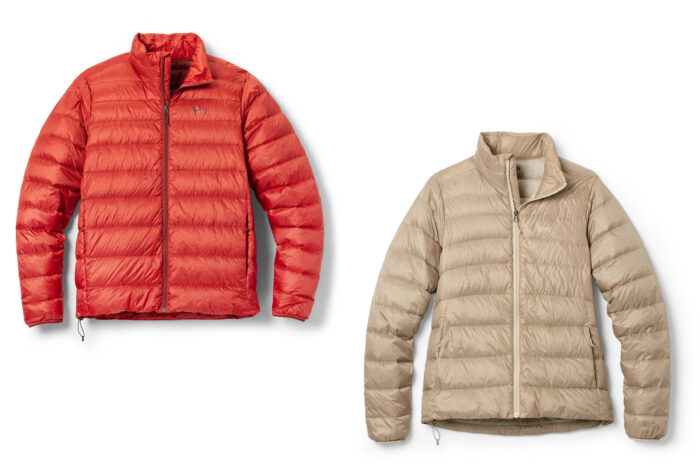
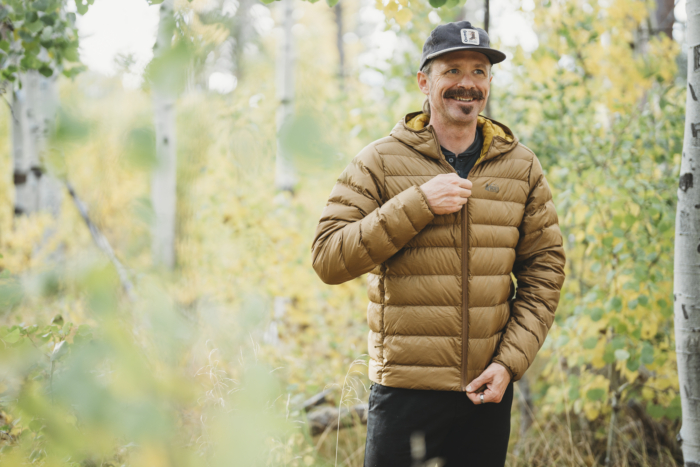
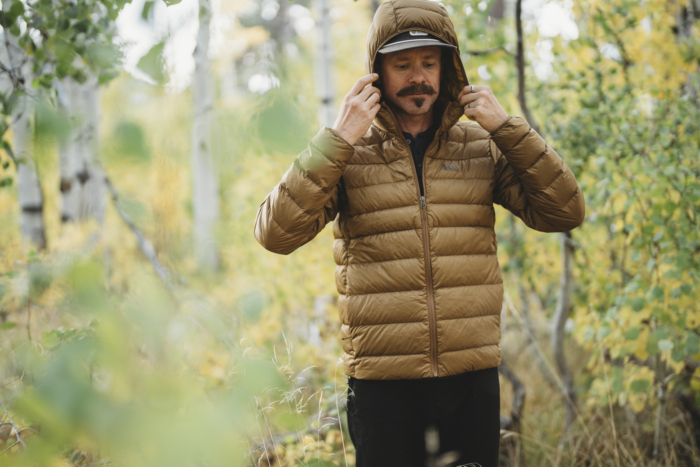
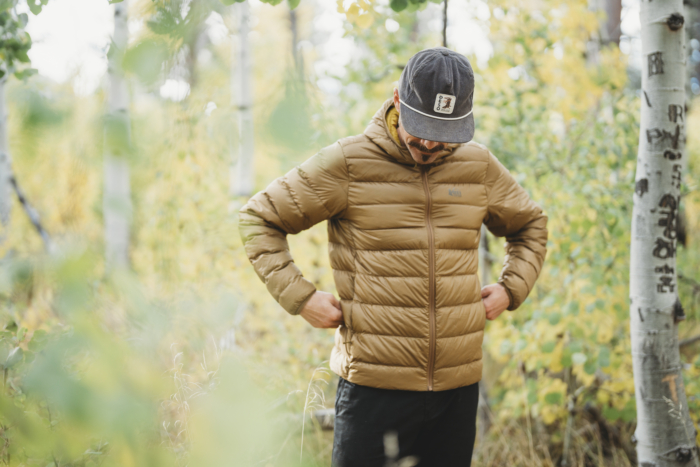
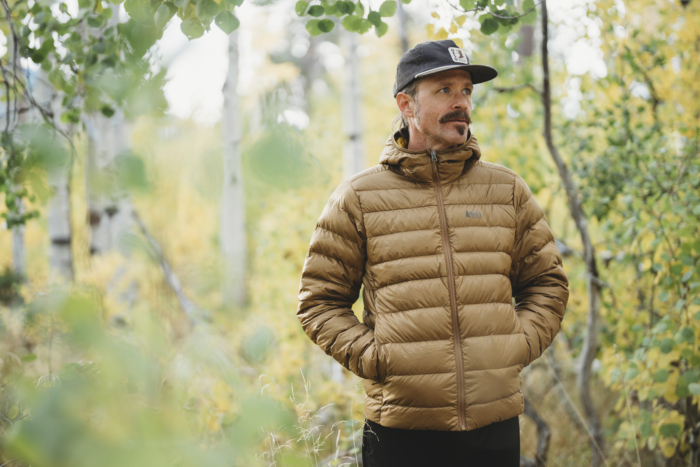
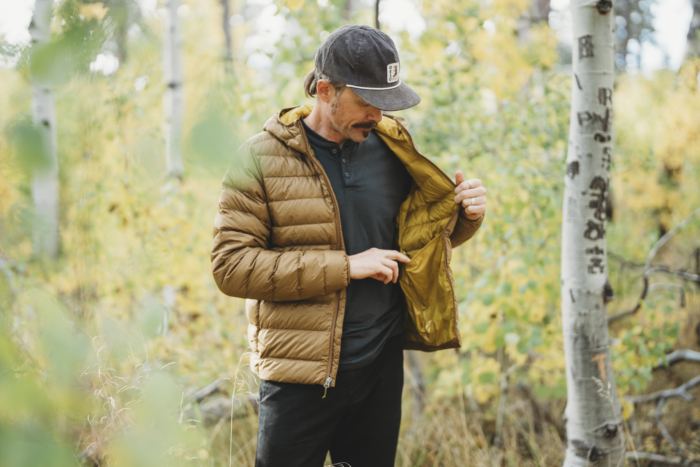
If you want dependable warmth without draining your wallet, the REI Co-op 650 Down Jacket ($129) is hard to beat. It’s not flashy or ultra-technical, but it delivers highly consistent performance for hiking, camping, backpacking, and everyday wear. We’ve thrown it on for chilly summer mornings making coffee outside the tent in temps hovering in the high 30s, and it provided more than enough warmth to start the day comfortably.
The Tech: This jacket uses 650-fill-power down—the lowest fill rating in our lineup—paired with a fully recycled ripstop nylon shell treated with a DWR finish for light weather resistance. At roughly 11 ounces, it’s reasonably light, and despite its budget price tag, it still packs down into its own left-hand pocket.
Fit Profile: The fit is relaxed and easygoing, making this jacket approachable for everyday wear and casual layering. It has enough room for a sweater or light fleece underneath, and the cut doesn’t feel especially trim or technical. Because it lacks a hood and keeps the silhouette simple, it feels more town-friendly than mountain-specific.
What We Like: The value-to-performance ratio is simply outstanding. It offers reliable warmth for shoulder-season hikes and casual mountain use at a fraction of the cost of premium models like the Arc’teryx Cerium. The shell has proven impressively durable through regular wear, and the broad size range makes dialing in a good fit easy. It’s versatile enough to move from trail to town without making you look like you’re about to summit a peak.
What We Don’t: The 650-fill down isn’t as lofty, efficient, or compressible as higher-end jackets, so it takes up more space in your pack than the Patagonia Down Sweater. Because it lacks a hood, it also isn’t the right tool for deep winter, prolonged cold exposure, or biting winds.
Should You Buy It? If you’re a budget-minded adventurer who wants a highly reliable, everyday down jacket for shoulder seasons, light backpacking, and around-town wear, the REI 650 offers exceptional value and dependable warmth.
The Best Down Jackets Comparison Chart
| Jacket | Price | Warmth | Weather Protection | Packability | Fit | Best For |
| Patagonia Down Sweater | $329 | Midweight | DWR-treated | Moderate | Regular | All-around mountain + everyday |
| OR Helium Down | $299 | Light–Mid | Reinforced DWR | Moderate | Athletic | Athletic |
| Arc’teryx Cerium | $400 | Midweight | DWR | Very packable | Slim athletic | Technical alpine layering |
| MHW Ghost Whisperer | $380 | Light | DWR-treated | Ultra packable | Slim athletic | Ultralight backpacking + “always in the pack” |
| Black Diamond Deploy 0.5 | $499 | Light | Minimal DWR | Elite packable | Slim performance | Specialized elite alpine speed missions |
| Rab Microlight Windstopper | $340 | Midweight | Windproof membrane | Moderate | Trim | Windy hiking + ski touring |
| MHW Storm Whisperer | $600 | Midweight | Fully waterproof | Moderate | True-to-size | Wet-weather skiing + storm missions |
| Patagonia Durable Down Parka | $575 | Midweight | DWR-treated | Low | Regular | Climbing, scrambles |
| Rab Mythic Alpine | $390 | Midweight+ | DWR-treated | Very packable | Athletic | Lightweight alpine warmth |
| TNF Summit Breithorn | $430 | Midweight | Water-resistant | Moderate | Slim | Technical alpine use |
| MHW Stretchdown | $320 | Midweight | DWR | Moderate | Trim active | Mobility + rugged use |
| Stio Pinion | $299 | Midweight | DWR-treated | Moderate | Casual-athletic | Trail-to-town versatility |
| Cotopaxi Fuego | $295 | Midweight | DWR-treated | Moderate | Regular/Boxy | Everyday + shoulder season |
| REI Co-op 650 Down | $129 | Light–Mid | DWR-treated | Moderate | Slightly roomy | Budget hiking + casual use |

How We Tested the Best Down Jackets
We evaluate down jackets based on warmth-to-weight efficiency, weather resistance, durability, packability, fit, and overall value. Each jacket is worn across multiple outings and layered in different systems to assess performance during both high-output movement and static cold. We examine loft retention, moisture management, wind resistance, and real-world usability — from pocket layout to hood function and long-term durability. This guide is continuously updated as new technologies and models emerge.
Our Expert Testers
This guide builds on years of testing. Editor-in-Chief Adam Ruggiero launched the original lineup in 2020, and Senior Editor Chris Carter expanded it through extensive thru-hiking and alpine testing beginning in 2022.
Since 2025, Senior Editor Chris Kassar and lead tester Ryan Kempfer have led the guide from their base in Jackson, Wyoming. As daily mountain users — ski touring, climbing, hiking, biking, and guiding — they evaluate each jacket in demanding, real-world conditions.

Our Testing Grounds & Process
Most of our testing happens in the Tetons and across the Greater Yellowstone Ecosystem. These jackets see storm skiing in wet snow, sub-zero dawn starts, wind-scoured ridgelines, wildlife tours, and shoulder-season hikes. If a jacket can handle a sleet-filled ski tour in Jackson or a windy summit push above 10,000 feet, it earns its place here.
Beyond Wyoming, we’ve tested these layers on Colorado peaks, desert shoulder seasons, and multiday backpacking routes across the West — pushing each model in real mountain weather to understand its strengths and limits. If you’re looking for women-specific recommendations, check out our guide to the best women’s down jackets. For wet climates, check out our guide to the best synthetic insulated jackets. If you’re in the market for something cozy, check out our guide to the best fleece jackets.

Our Down Jacket Rating System
We rated each down jacket on a 1–10 scale for Warmth, Durability, Packability/Weight, and Weather Resistance, along with an Overall score that reflects our editorial judgment rather than an average of the other numbers.
Warmth measures how well a jacket traps heat in cold and windy conditions, factoring in fill power, fill weight, and baffle design.
Durability looks at fabric toughness, construction quality, and how well the jacket holds up over repeated use.
Packability/Weight considers how light the jacket feels and how small it compresses for travel or backcountry storage.
Weather Resistance reflects wind-blocking ability and water repellency, as well as how well the down stays protected from moisture. These ratings are based on extensive real-world testing in conditions ranging from alpine expeditions to shoulder-season hikes, paired with an in-depth review of design features and materials to highlight each jacket’s strengths and trade-offs.

Buyer’s Guide: How to Choose the Best Down Jacket
Understanding Down Warmth: Fill Power vs. Fill Weight
Unlike sleeping bags, down jackets don’t come with standardized temperature ratings, which makes comparing warmth tricky. Most people are familiar with fill power, a measure of down quality and loft, but fill weight is just as important when it comes to real-world warmth.
There are certainly other factors that contribute to a down jacket’s warmth, like baffle shape, design, construction, jacket materials, size, fit, and other features like hood, hem, or cuff closures. All things being equal, however, the down fill power and fill weight will have the most direct impact on a jacket’s warmth.

Fill Power
Fill power measures the loft of down in cubic inches per ounce. Higher fill power means fluffier, lighter, and more compressible insulation:
- 400–500: Fair
- 600: Good
- 700: Great
- 800: Excellent
- 900+: Premium
Higher fill power traps more air per ounce, offering better warmth for less weight. But, fill power is only part of the equation.

Fill Weight
Fill weight is the total amount of down inside the jacket, measured in ounces or grams. To get a reasonable estimate of a jacket’s overall warmth, you can multiply the down’s fill power (expressed in cubic inches per ounce) by the jacket’s fill weight (expressed in ounces), which will yield a number that represents the three-dimensional volume of the jacket’s insulation, or loft, in cubic inches.
On paper, we can, therefore, estimate that the Patagonia Down Sweater Hoody (5.3 ounces of 800-fill-power down) will be warmer than the Feathered Friends Eos (4.0 ounces of 900-fill-power down). Even though the Eos has a higher fill power of 900, the Down Sweater has a higher fill weight of 5.3 ounces.
Patagonia Down Sweater Hoody: 800 cubic inches per ounce x 5.3 ounces = 4,240 total cubic inches of insulation
Feathered Friends Eos: 900 cubic inches per ounce x 4.0 ounces = 3,600 total cubic inches of insulation
While the Eos uses higher quality down, the Down Sweater is warmer overall due to more insulation.

Warmth-to-Weight
The Eos is lighter (10.8 versus 15.0 ounces), so it offers a better warmth-to-weight ratio. But if you’re prioritizing warmth alone, especially for long belays or cold alpine starts, heavier jackets like the Rab Neutrino Pro (7.5 ounces of 800-fill down) are the way to go.
Lighter jackets like the Mountain Hardwear Ghost Whisperer (3 ounces of 800-fill, total weight 8.8 ounces) are great for fast-and-light missions but fall short in prolonged cold or when you’re standing still.
Fill weight isn’t always advertised as readily as fill power. But, fill weight is — in our opinion — a much more crucial stat to consider when gearing up for any adventure. While other factors, such as face fabric, sewn-through seams versus box baffles, and other features, play a role in how warm a jacket is, a higher fill weight will almost always indicate a toastier puffy. Note: We would like to include fill weight in our specifications for each product, but have found it challenging to find for most products, even when asking brands.
Bottom line: Fill power tells you how efficient the down is. Fill weight tells you how much insulation you’re actually getting. Together, they’re your best indicators of how warm a jacket will be.

Durability
The shell fabric is an important factor for both durability and packability. Ultralight jackets tend to be made with a lighter, thinner shell material. Denier is the measurement used here. A lower denier rating means the outer fabric is lighter and, therefore, more prone to tears.
For backcountry excursions, the lower weight can be a worthy tradeoff. But for daily use, we recommend a higher denier like we see in the Mountain Hardwear Stretchdown Hoody. Most of the jackets we tested have a 10-denier or 20-denier shell fabric, with some 30-denier models. And if you do get a tear or campfire burn hole, there’s always the reliable duct tape, Tenacious Tape, or Noso Puffy Patch repair options.
Most of the jackets we tested have a 10-denier or 20-denier shell fabric, with some 30-denier models.
We categorize these into three distinct performance tiers:
- Ultralight (4D–10D): Includes fast and light pieces like the Black Diamond Deploy and Ghost Whisperer. These are incredibly light but require extreme care around sharp gear.
- Standard (15D–20D): Includes the Arc’teryx Cerium and Patagonia Down Sweater. This is the sweet spot for 90% of mountain users.
- Workhorse (30D): Includes rugged models like the OR Helium and Rab Windstopper, built to handle abrasion from rock and heavy brush.

Water Resistance & Hydrophobic Down
Down insulation has one clear weakness: it loses loft when wet. That’s where synthetic jackets traditionally have the edge. Over the past decade, most brands have moved toward hydrophobic down, coating the feathers with a water-resistant treatment to help them retain loft longer in damp conditions. While this improves performance in light precipitation, it still doesn’t match the moisture resilience of synthetic insulation.
For 2026, however, we’ve seen a meaningful evolution. Rather than relying solely on treated down, some brands are pairing insulation with fully waterproof shells. The Mountain Hardwear Storm Whisperer represents the most complete execution of this approach, combining 800-fill down with a fully seam-taped Pertex Shield shell. The result is a legitimately waterproof insulated jacket that can replace the traditional puffy-plus-hardshell combo in wet climates like the Pacific Northwest or during rain-soaked ski days in the Tetons.
Most down jackets still rely on DWR-treated face fabrics to shed light moisture. Models like the Patagonia Down Sweater use a durable water-repellent finish to block light snow or drizzle, while the he North Face Summit Series Breithorn Hoodie pairs water-resistant ProDown with a treated shell for improved wet-weather reliability. These designs handle passing showers well, but they are not substitutes for a true waterproof system.

Fit: Finding the Right Jacket for the Job
The way a down jacket fits should match how you plan to use it. Some are trim and athletic for layering and mobility, while others are boxier or longer for casual use and added coverage.
Technical Pursuits
For technical pursuits like climbing, ski touring, or alpine travel, a trim, athletic fit works best. Jackets like the Rab Microlight Windstopper and Black Diamond Deploy Down Hoody are designed with movement in mind. The Mythic Alpine fits close to the body but still allows room for a midlayer, making it perfect for backcountry missions and high-alpine backpacking.
The Deploy Hoody is even more minimal, incredibly light, and form-fitting; it shines on fast-and-light peak pushes where every ounce matters. The ultralight Mountain Hardwear Ghost Whisperer is ideal for day hikes where you don’t want a ton of added weight, but need the protection of an extra layer.

If comfort and mobility are a priority, the Mountain Hardwear Stretchdown Hoody stands out. With its flexible fabric and more forgiving cut, it moves effortlessly through big reaches, shoulder rotations, and scrambles. It’s ideal for hiking, climbing, and everyday wear where breathability and freedom of motion matter.
Trail-to-Town
For more casual use or mixed urban-to-trail wear, the Stio Pinion Down Hoody and Cotopaxi Fuego offer relaxed fits with solid warmth and style. Both look good enough to wear around town but are built to handle shoulder-season hikes or winter campouts. The Patagonia Down Sweater Hoody also nails the balance, as it is more fitted than previous versions but still roomy enough to layer, and works equally well on snowy trails or under a shell at the resort.

If you’re looking for maximum warmth and space to layer underneath, the Rab Neutrino Pro delivers. It has an expedition-ready fit with extra room in the torso and arms, making it a great belay jacket or outer layer in truly frigid conditions. On the flip side, the Arc’teryx Cerium Hoody has a much trimmer fit, ideal for high-output activities or minimal layering.
Why Fit Matters
Fit also impacts warmth. A jacket that’s too loose will let heat escape, while one that’s too tight might compress the down and limit mobility. Try to find the sweet spot for your body type and activity level, and if in doubt, check whether the jacket is designed as a midlayer, outer layer, or standalone insulator. Whether you’re hiking ridgelines, commuting by bike, or sipping coffee after a tour, choosing the right fit makes all the difference in comfort and performance.

Down vs. Synthetic
Most of the jackets in this guide are made with down, though a handful are filled with synthetic insulation that mimics down or a blend of the two. For example, both Arc’teryx models we tested, the Cerium and the Thorium, use synthetic insulation in places that tend to get wet, so they stay loftier and keep you warm even when you get wet.
Synthetic insulation, on the other hand, is made from polyester fibers and designed to imitate down clusters and properties with a few key differences. If you compare two jackets of equal weight, down is warmer than this alternative. But synthetic insulation retains warmth even when wet. It’s also easier to wash and usually comes at a lower price point.
- Pros of down: Excellent warmth-to-weight ratio, comfort, compressibility, lightweight, high inherent warmth
- Cons of down: Inability to insulate when wet, not super breathable, more difficult to wash, pricier

Within synthetic jackets, active insulation is another progressive subcategory to know. These technical garments are designed to dump extra heat and dry fast, so you don’t have to remove the jacket during vigorous activity. But these layers also need to be durable, warm, and wind-resistant. It’s a tricky balance.
Overall, synthetics can be a better, safer choice in wet or mixed weather and when weight isn’t an issue. Active insulation is best for high-output action. If it’s cold and dry, down is optimal despite its higher cost. This guide lists a wide variety of the best down jackets to keep you covered in the cold.

Sustainability
Many down jackets now balance performance with eco-conscious design. Look for certifications like the Responsible Down Standard (RDS) or Patagonia’s Traceable Down to ensure ethically sourced insulation. Without them, animal welfare in the supply chain isn’t guaranteed.
Brands are also stepping up with recycled fabrics, PFC-free DWR coatings, and Fair Trade Certified sewing. The Mountain Hardwear Ghost Whisperer uses fully recycled materials and RDS down, while the Patagonia Down Sweater and Fitz Roy use recycled down and responsible labor practices. These thoughtful choices make it easier to stay warm while minimizing environmental impact.
The biggest manufacturing shift in 2026 is the industry-wide move to PFC-free (or PFAS-free) DWR coatings. Legacy water-repellent chemicals are being phased out for more environmentally friendly alternatives. Brands like Patagonia and Rab are leading this charge. While these new coatings are better for the planet, they require slightly more frequent ‘re-upping’ with a technical wash like Nikwax to maintain that water-beading performance on your jacket’s shell

Weight
The down jackets in this guide range from 6.7 ounces at the low end to more than 30 ounces on the heavy side. The median weight is around 15 ounces, and the most common weight is closer to 20 to 23 ounces.
As you might expect, the warmest down jackets are typically also on the heavier end, as the down fill weight has a big impact on overall warmth. This is where fill power comes in. Jackets with a higher fill power can achieve an equivalent warmth level at a lighter overall weight.
The Rab Mythic Ultra, with its 900-fill-power down insulation, really stands out for its excellent warmth for the weight. We weighed the men’s size Large that we tested at 17.4 ounces — and this jacket is as warm or warmer than many others in the 20- to 23-ounce range.

Super-lightweight down jackets typically come with a premium price tag, but the investment can be worthwhile for adventurers with limited space looking to trim ounces. Models like the Feathered Friends Eos strike a solid balance between lightweight simplicity and premium performance.
If speed and efficiency are of utmost importance, jackets like this won’t hold you back. Make sure to research the full range temperatures you will encounter on your trips before leaving, however, and don’t prioritize an ultralight base weight so much that you put yourself in danger.
Storing and Caring For Down Jackets
Some of these down jackets can compress to the size of a water bottle or smaller, while others are bulkier — influenced by the fill, face fabric, and overall design. A tiny pack size can allow you to carry a smaller, lighter load on lightweight excursions, but make sure to not leave your down jacket smushed up for long periods of time. This can greatly impact the down’s lofting and insulating abilities, and reduce the jacket’s overall lifespan.

It’s fine to keep your jacket in its stuff sack for one or two days at a time, but try to pull it out of the sack regularly and let it loft up fully over the duration of your trip. When storing your jacket after you get home, hang it in your closet — and don’t mash it too tightly between your other clothes. Washing your jacket with down-friendly detergent can also prolong its life. We gravitate to Nikwax’s Down Wash Direct for this purpose.
Other Key Features
The finer details of a down jacket can have a big impact on performance. Look for helmet-compatible hoods or tall collars for weather protection, and wire-brimmed hoods for improved visibility in wind and snow. High-quality zippers (like YKK), adjustable hems, and secure cuffs — whether elastic, Velcro, or with thumb loops — help seal in warmth.
Most jackets include zippered hand pockets, often placed high for harness compatibility, along with chest or internal stash pockets. Some stuff into their own pocket for easy packing. Technical options may also offer pit zips, powder skirts, or two-way zippers for belaying.
These small features add up, especially when you’re active in the mountains or layering up for cold-weather missions.

Price & Value
It’s easy to spend $300–$600 on a down jacket, and that’s no small investment. To help you navigate the cost, we’ve broken the market into three clear tiers:
Budget ($150 or less)
There aren’t many options in this category. If you’re regularly packing into the backcountry, an ultralight, super-packable, rather expensive jacket may be necessary. If you’ll mostly wear it around town or for light trail use, the REI 650 Down Jacket ($129) is the gold standard for value.

Mid-Tier ($250–$400)
This is the sweet spot where you find high-quality 800-fill down and technical shell fabrics. Top picks like the Patagonia Down Sweater ($329), Rab Microlight Windstopper ($340), and Outdoor Research Helium ($299) fall squarely in this range.

Premium
These are specialized tools designed for high-alpine efficiency or extreme weather. The Arc’teryx Cerium ($400), Black Diamond Deploy ($550), and our top waterproof pick, the Mountain Hardwear Storm Whisperer ($600), define this elite tier.

Frequently Asked Questions
A down jacket holds heat around your body’s core in order to maintain a comfortable level of warmth when the temperatures drop. A spectrum of down jackets exists from plush and stylish for everyday use to lighter, packable designs for year-round backcountry adventures.
A jacket’s fill power is the down’s quality and amount of loft. You’ll see jackets labeled as 600-fill or 800-fill, for instance. The fill weight, which we measure in ounces, reflects the density or amount of down stuffed inside the jacket.
So when two 700-fill jackets have different weights, we know the heavier one is warmer.
On the other hand, if two down jackets weigh the same with different fill power (two 15-ounce jackets with 650-fill and 800-fill), the higher fill jacket is going to be less bulky, lighter, and more compressible.
It’s tricky to compare jackets with differing fill power. But in general, the lower the fill power, the less loft and warmth.

Down jackets have a huge variance of warmth. Some jackets are constructed to withstand freezing or sub-zero temperatures, while others are a match for summer, spring, and fall backpacking trips. Here are the broad categories of jackets, depending on their fill weight:
- Lightweight: 3-4 ounces of down fill, three-season jacket, skiing midlayer
- Moderate weight: 5-6 ounces of down fill, more warmth for sub-freezing temperatures
- Heavyweight: More than 6 ounces of down fill, tenacious design for winter conditions
The combination of the fill weight and fill power, which is the loft and quality of the down, changes how warm a jacket is. The higher the fill power and higher the weight, the more heat the jacket retains.

The best down jacket for you is based on where and how you’ll use it. If the weather is relatively dry and super cold, a down jacket with greater down fill that will retain more heat could be worth the investment. If you’ll be in a really wet environment, a synthetic down jacket might be a better choice.